Apo Reef
Apo Reef, Philippines
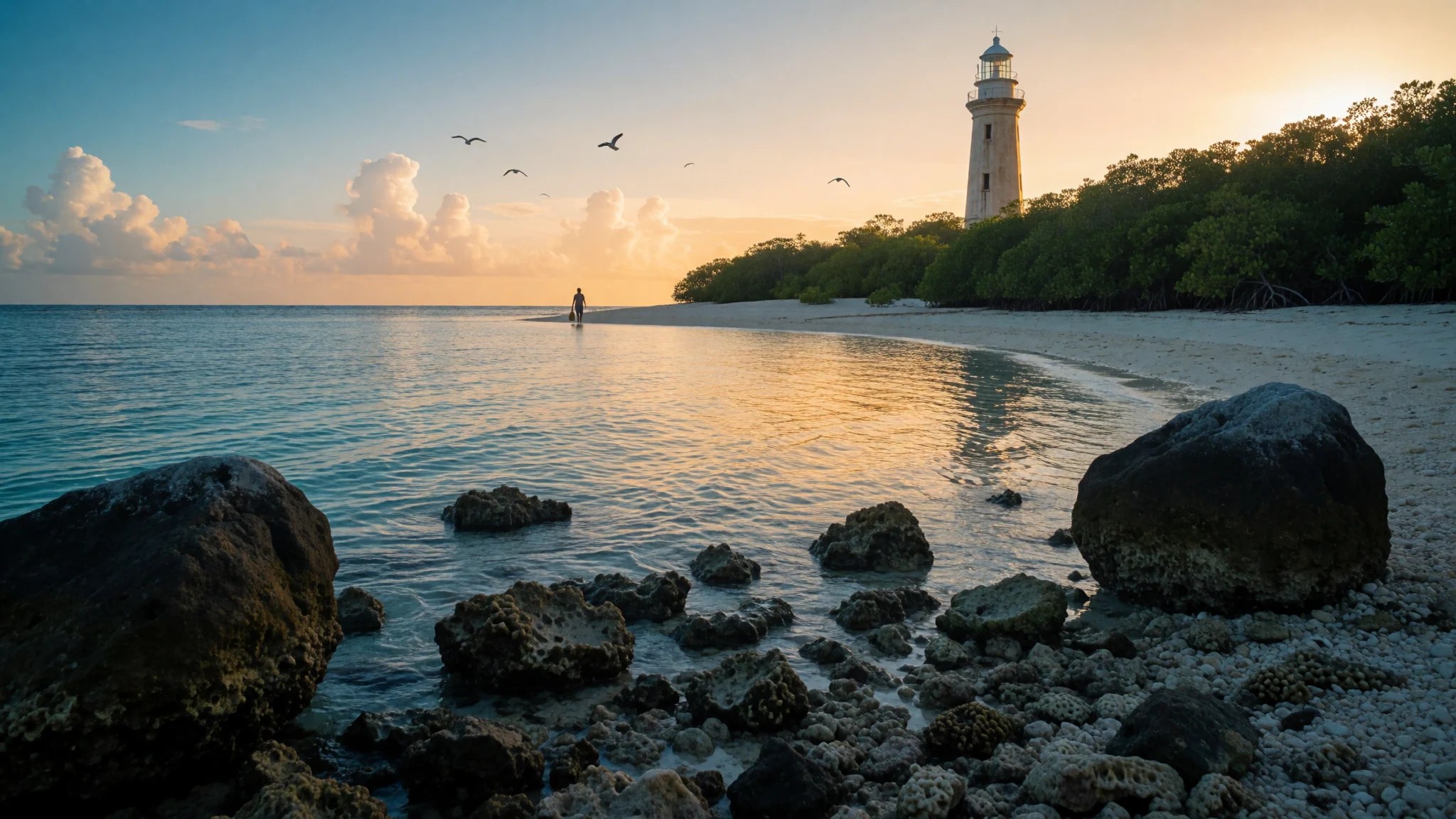
Apo Reef is a remote pair of coral platforms far off Mindoro, where sharks, napoleon wrasse and clear white-sand water reward the long boat ride.
The place
Apo Reef lies in the Mindoro Strait, about 28 km west of the Occidental Mindoro coast, and falls under the municipality of Sablayan. It is better pictured as two triangular reef platforms, one north and one south, with a sandy channel between them that opens to the west. Together they cover about 34 square kilometres, nearly all of it underwater. The north lagoon is shallow and partly exposed at low tide, while the south lagoon is deeper and more enclosed. Dry land amounts to a few small islands. Apo Island carries a lighthouse and a patch of mangrove, and Apo Menor is a smaller, rockier outcrop. There are no villages, no shops and very little shade, so a visit works as a day trip, or as an overnight stay if the park rules allow it, arranged through operators in Sablayan. The reef is run as the Apo Reef Natural Park, with the local government and the Department of Environment and Natural Resources sharing the management, and everyone who enters pays an environmental fee. Divers come for sharks, giant napoleon wrasse and manta rays, and snorkellers for the shallow coral gardens. It is also a seabird site, and it sits on the Philippines' tentative list for World Heritage status. The crossing from the mainland can be rough and the sun on open water is fierce, so a trip needs planning rather than a casual decision.
Its story
Apo Reef's story is one of slow growth followed by recent protection. Studies suggest the living reef built itself on top of an older reef during the last glacial cycle, with the modern structure taking shape about 19,000 years ago. As ice sheets melted and the sea rose, corals kept pace by growing upward, leaving a pair of platforms standing in deep water far from the mainland. Sand and rubble gathered on the highest patches and formed the small islands. For most of human history the reef was known to fishing boats working the Mindoro Strait rather than to travellers, and its remoteness helped keep it intact. Attention grew as divers reported clear water, white sand and big animals, and the area was set aside as a protected natural park. Management now sits with the Sablayan local government and the regional environment department, and the entry fee is part of that arrangement. Seabirds added another layer of status: BirdLife International lists the park as an Important Bird Area, with at least 10,000 breeding pairs recorded. The place on the tentative list for UNESCO World Heritage shows the ambition, though a tentative listing is a first step and not an inscription. The pressure points are familiar ones: boat anchors, careless fins, illegal fishing and rubbish carried in by the sea.
What to see
- Apo Island — Centre of the reef
Apo Island is the main landmark of the reef and the usual landing point. A lighthouse stands on it, mangroves grow in its interior, and rangers keep a station near the shore. Sand edges the island and shade is thin, so a hat matters. It is also where the park's seabirds are easiest to notice.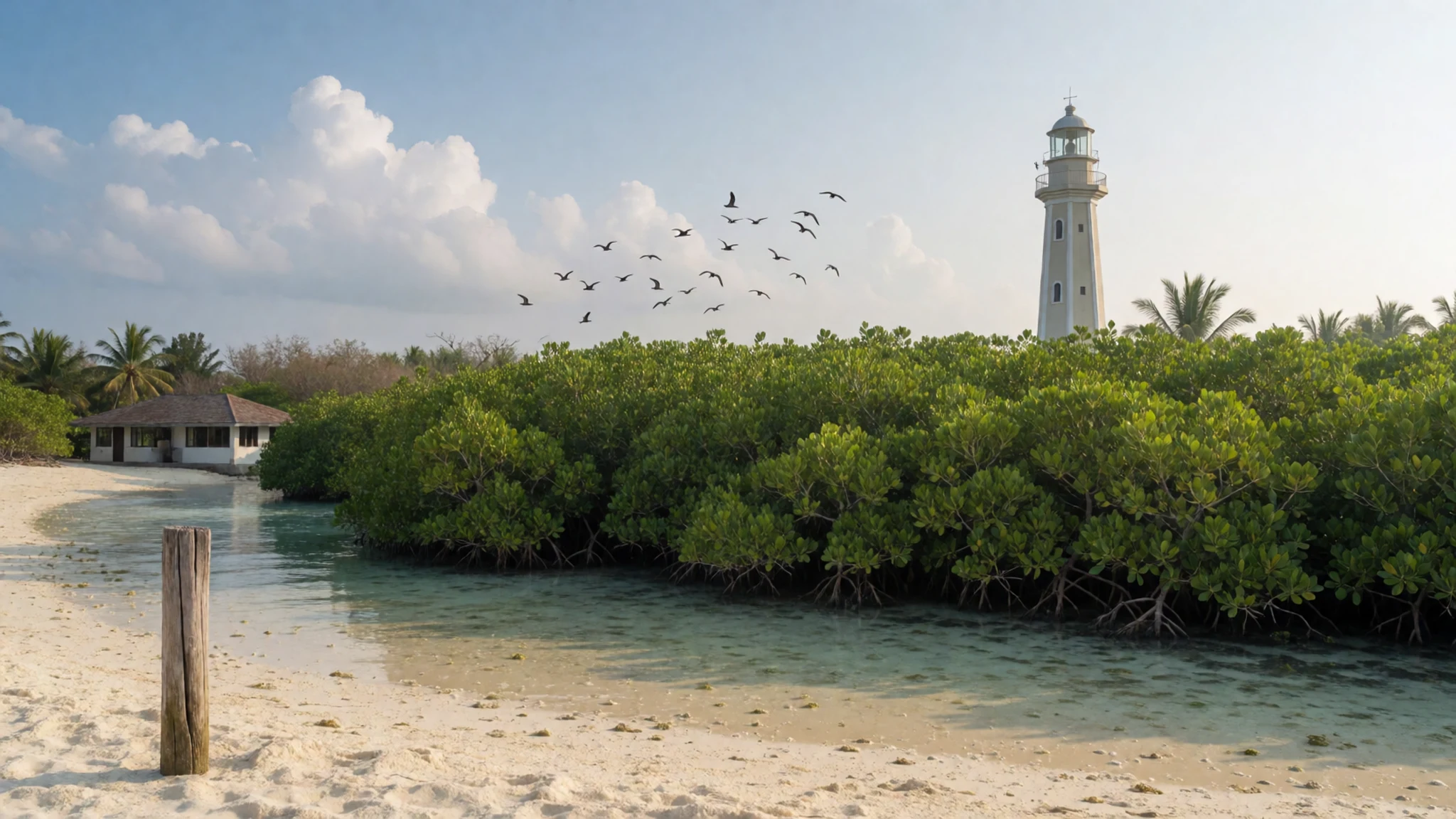
- Apo Menor — Reef islands
Apo Menor is the second-largest island on the reef and is mostly bare rock rather than sand and palms. Visits are mainly by boat, and the outcrop is best seen from the water in low morning light. The drop-offs around it draw divers, who should go with a local guide.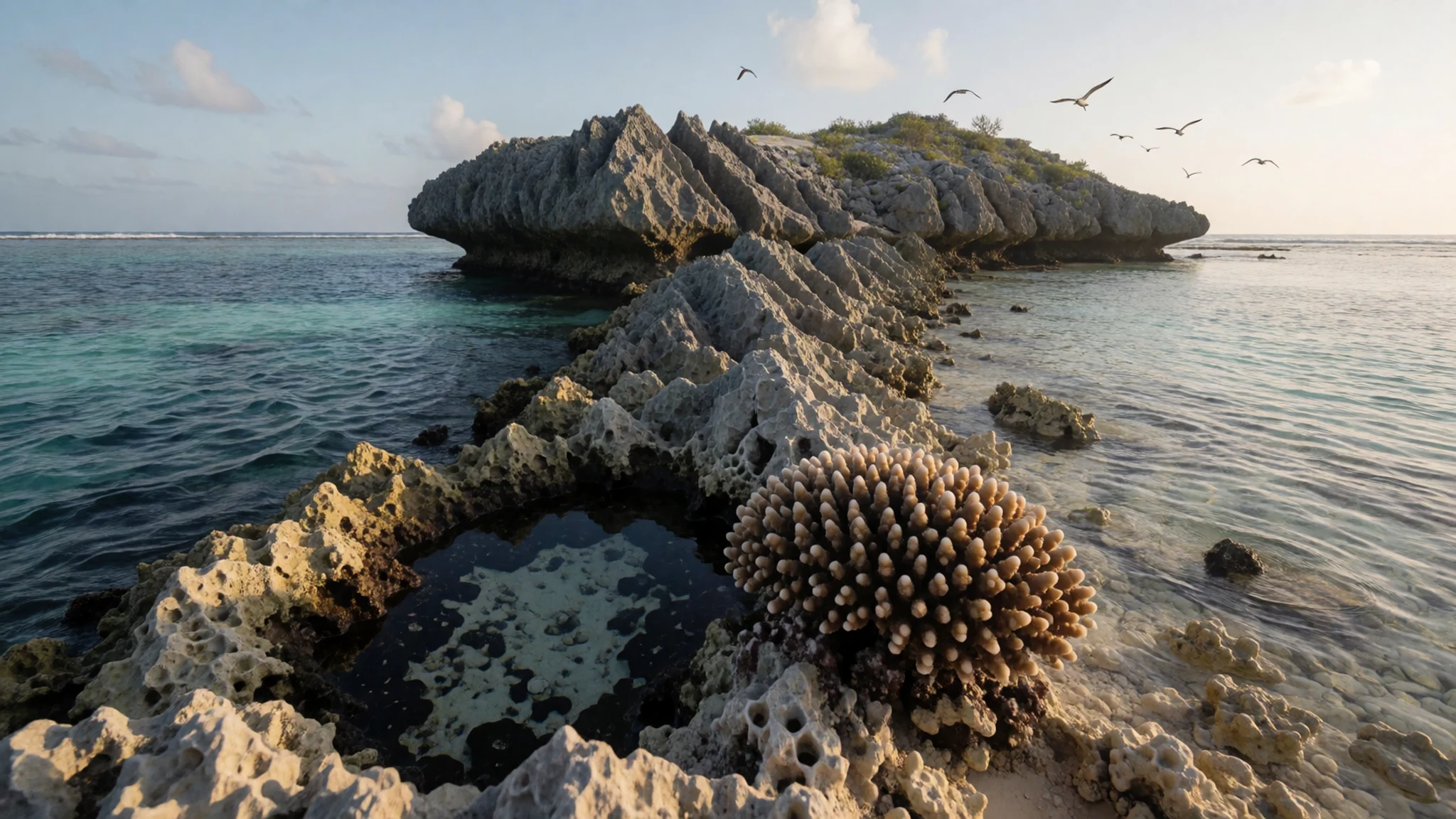
- Shark Point — Dive site on the reef
Shark Point is a named dive site where the larger animals are the draw. The photograph shows a giant napoleon wrasse, a thick-lipped fish that often approaches divers calmly. Sharks and manta rays are also reported around the reef, though sightings depend on the day, the current and some luck.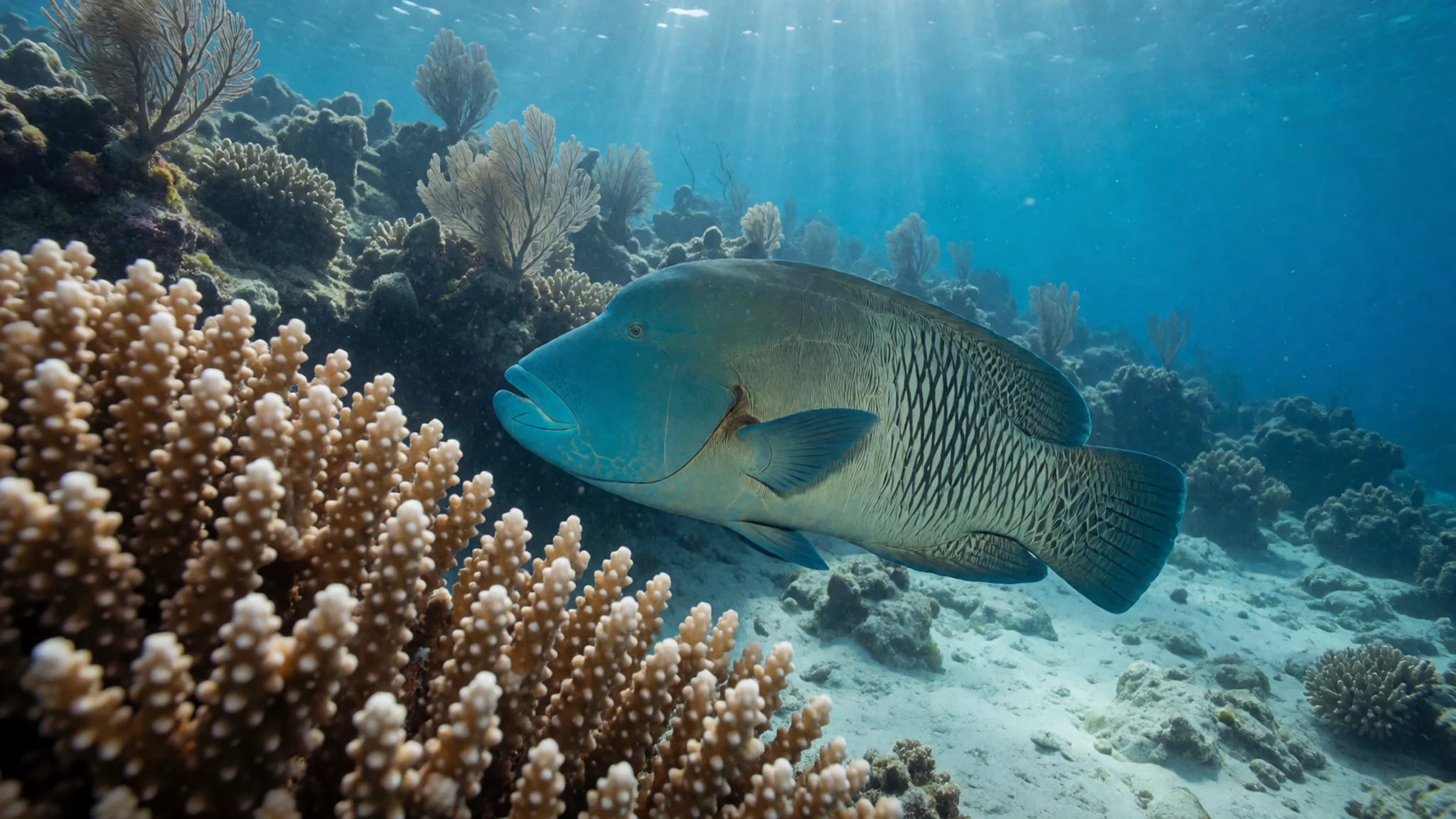
- The sand channel — Between the north and south lagoons
The channel between the two lagoons runs east to west over a floor of fine white sand, dotted with coral mounds and branching patches. Depth runs from very shallow to deep, so snorkellers and divers both use it. The pale sand makes the water look strikingly clear. Currents can be strong, so go with a guide.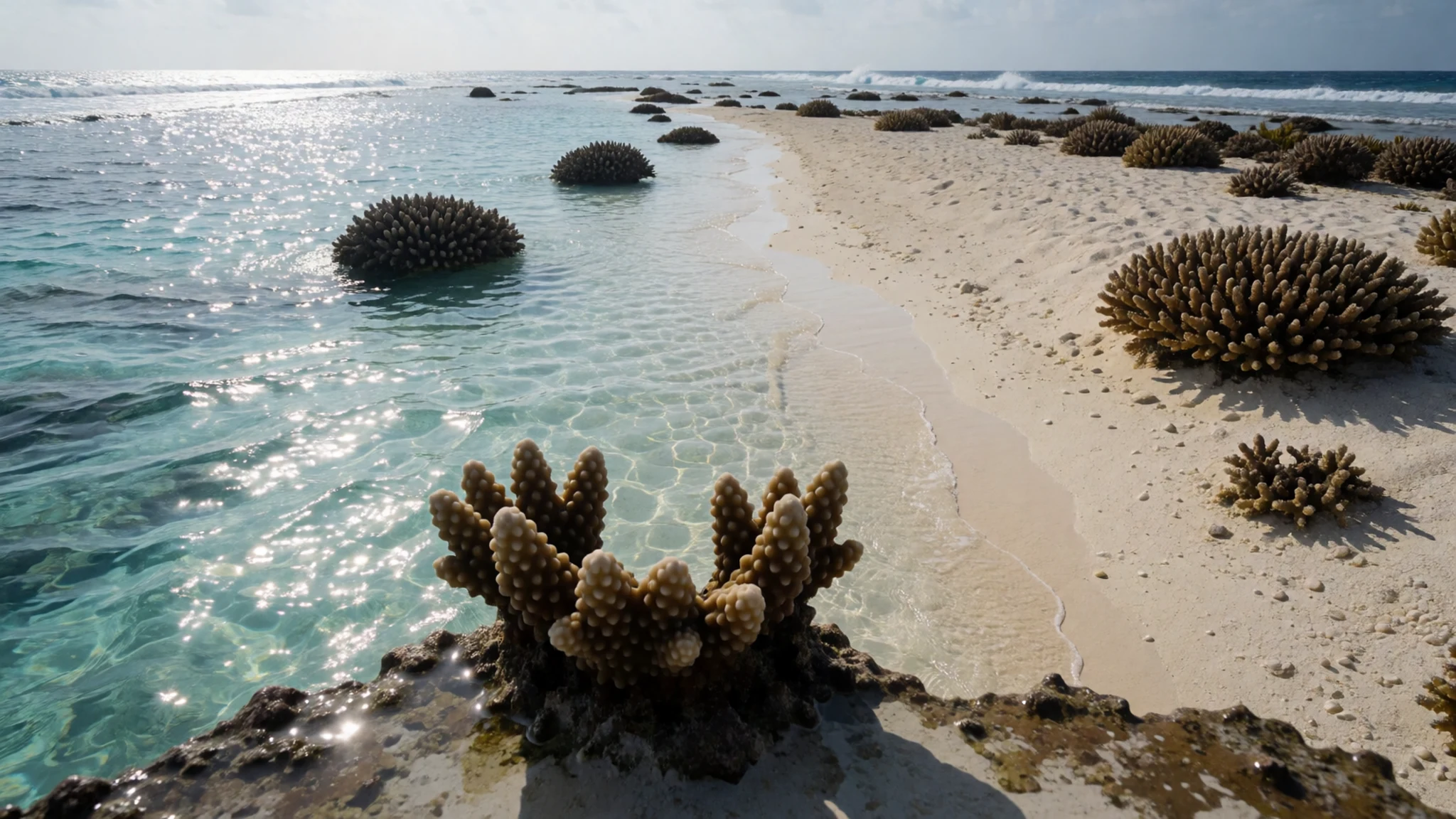
- North lagoon shallows — Northern part of the reef
The north lagoon is a shallow, triangular platform that partly dries at low tide. Snorkellers drift over soft corals, cushion stars, triggerfish and crinoids, all photographed here by marine researchers. Operators plan swims around the tide, so ask before getting in, and keep fins well clear of the bottom.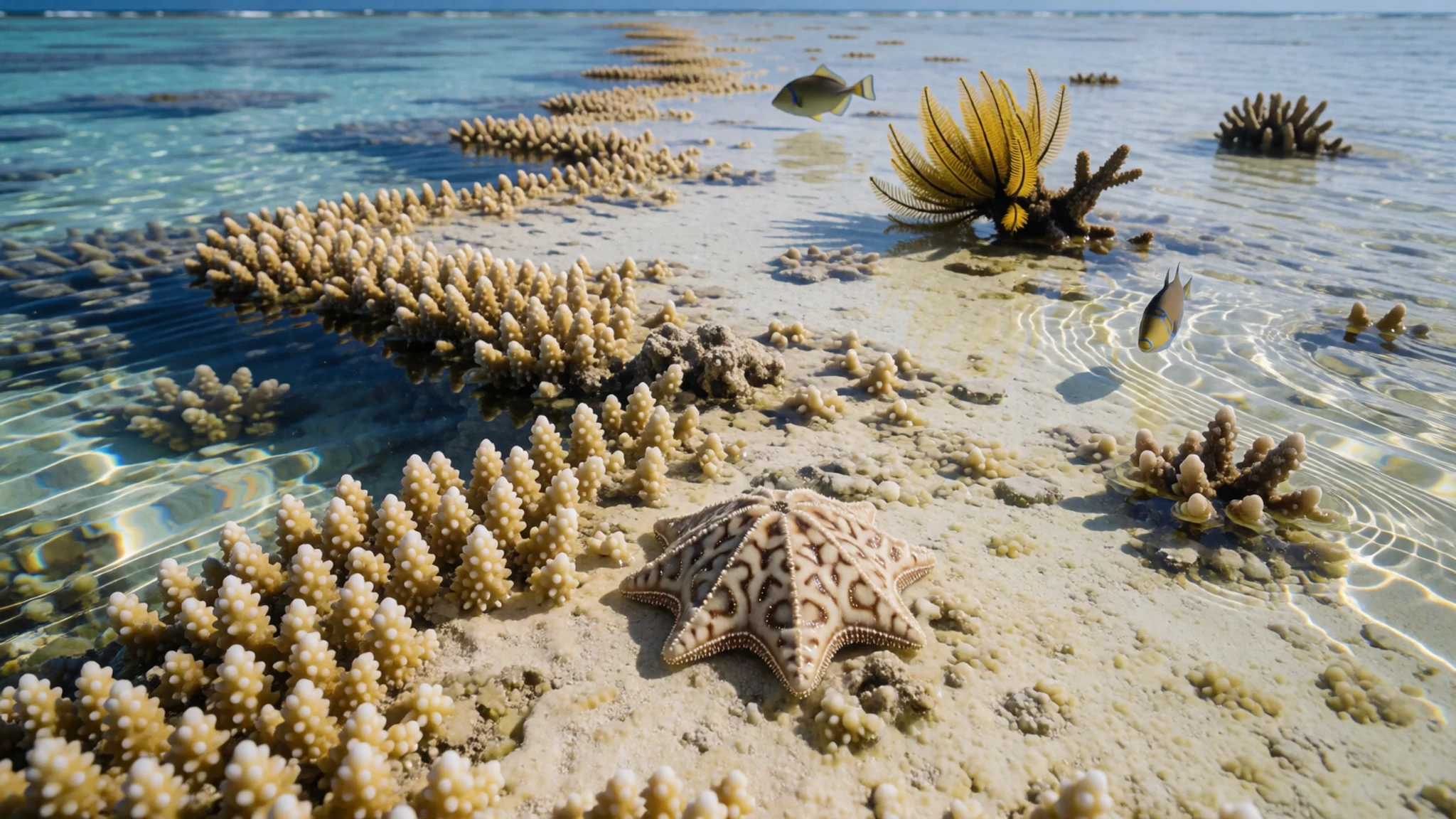
Culture
Apo Reef has no resident community, so its culture is that of the Sablayan coast opposite, and of the rangers and boat crews who work between the two. Sablayan is a Mindoro town where Catholic fiestas, fishing and farming set the rhythm of the year. Mangyan communities, the island's indigenous peoples, live mostly in the uplands and keep their own languages, weaving and poetry traditions. At the reef itself, conservation is the strongest local theme. The park is protected, access is by fee, and rangers brief visitors on the rules before landing. That reflects a local view of the reef as a livelihood as much as a sight, feeding fishing families and supporting a small dive trade. Filipino hospitality is easy to feel in Sablayan. Boat crews often share snacks, ask where visitors come from and expect some conversation in return. English is widely understood, Tagalog works as a common language, and a word like salamat (thank you) goes a long way. A long day in a small boat is a shared space, so patience, tidiness and a willingness to wait out the weather are part of good manners. Do not touch, stand on or collect anything from the reef or its islands, and listen to the ranger's briefing before you land.
What to wear
Apo Reef has no residents, so its fashion is that of Sablayan, Mindoro and the wider Philippines. Formal traditional dress is the barong tagalog, a light embroidered shirt worn untucked by men, traditionally in piña (pineapple fibre) or jusi, and the baro't saya or Maria Clara gown for women, with its stiff butterfly sleeves. These appear at weddings, fiestas and civic occasions rather than daily life. Mindoro's Mangyan peoples have their own traditions of woven cloth, beadwork and baskets, with patterns that differ between groups. Day to day, people in Sablayan wear T-shirts, shorts, rubber sandals and caps, with light long sleeves against the sun on boats and farms. Visitors should dress for open water, not the town. A long-sleeved rash vest, quick-drying shorts, a wide hat and sunglasses with a strap protect against strong reflected sun, and reef-safe sunscreen is the kinder option for the coral. Water shoes help on coral rubble and hot sand; flip-flops are fine on the boat but easy to lose. Bring a dry bag and a light layer for the crossing, since spray and wind cool quickly. In Sablayan itself and in churches, covered shoulders and knees are the safe default, and swimwear stays on the beach.
What to eat
- Kinilaw — Fish landing and seafront eateries, Sablayan
Raw fish cured in vinegar or calamansi with onion, ginger and chilli, similar to ceviche but sharper. Tuna and mackerel are common. Eat it where the catch comes in, such as the fish landing and seafront eateries in Sablayan, and on the day it is made.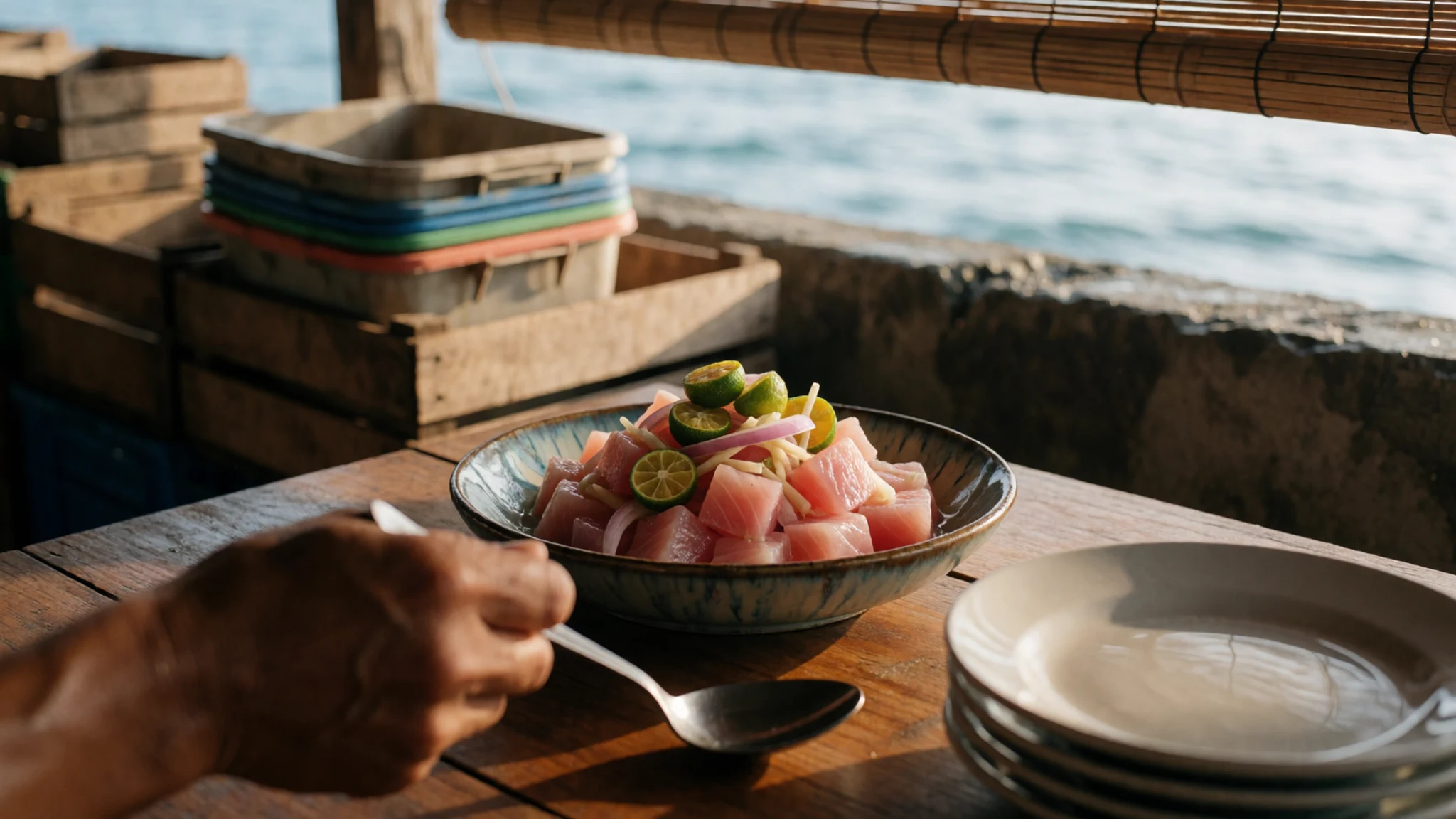
- Inihaw na isda — Boat lunches and waterfront grill stalls
Whole fish grilled over charcoal, often stuffed with tomato and onion, and served with rice and a vinegar-soy dip. Dive and snorkel trips often include a grilled lunch, so ask the operator, and grill stalls near the waterfront serve it in the evening.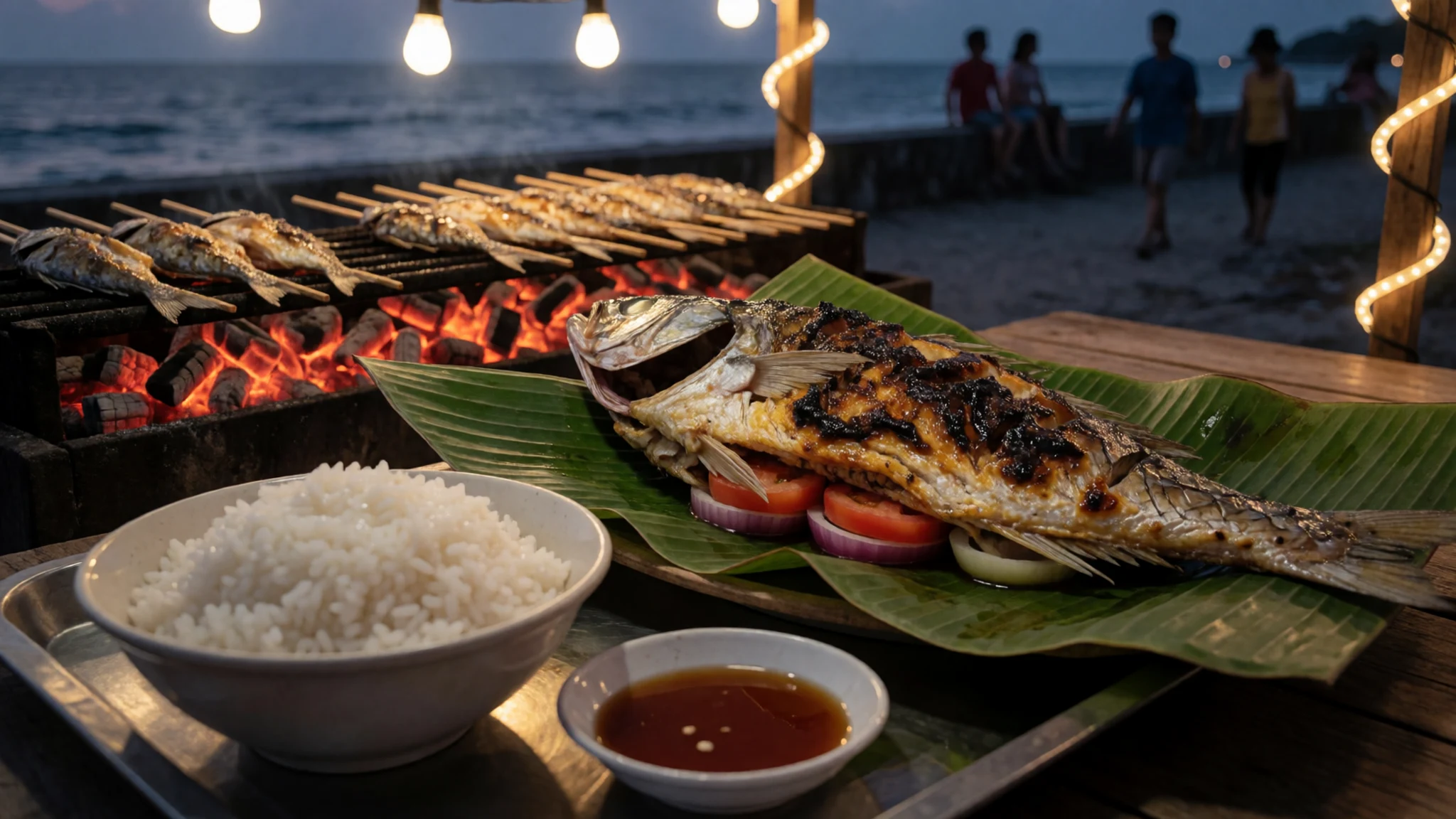
- Sinigang na isda — Carinderia lunch counters in Sablayan town
A sour fish soup soured with tamarind or calamansi and filled with vegetables such as water spinach and radish. It suits a day of salt and sun. Look for it at the small lunch counters, called carinderia, in Sablayan town, served with plenty of rice. - Chicken adobo — Carinderia counters and packed boat lunches
Chicken braised in vinegar, soy sauce, garlic and bay leaf, a staple of Filipino home cooking. It holds up well in the heat, so it often turns up in packed boat lunches. Ask at the carinderia counters in town for a version made that morning. - Halo-halo — Market stalls and bakeries in Sablayan town
Shaved ice layered with sweet beans, jelly, fruit and leche flan, topped with evaporated milk. It is the usual answer to a hot afternoon back on the mainland. Look for it at market stalls and bakeries around Sablayan town centre.
Plan it
Best time. March to June usually brings the calmest seas and best visibility for diving and snorkelling. From about July to November the southwest monsoon and typhoon season bring rough crossings and cancelled trips, so build in spare days.
How long. 2–3
Getting there. Fly to Manila, then travel overland and by ferry across to Mindoro and on to Sablayan, the usual base. The last leg is a boat from Sablayan across the strait to the reef, weather permitting. Check current road, ferry and boat options before booking.
Budget. mid
Tips
- Book boats and the park permit through a Sablayan operator well ahead, and ask what the environmental fee covers
- Keep spare days in the schedule, as trips are cancelled when the sea is rough
- Carry enough cash for the fee, boat and meals, as card machines and cash points are limited around Sablayan
- Bring plenty of drinking water, a hat and long sleeves, because the islands have little shade
- Take a seasickness tablet before the crossing if the sea is unsettled
Etiquette
- Do not touch, stand on or collect coral, shells or marine life
- Carry all rubbish back to the mainland and keep clear of nesting birds
- Follow the ranger's briefing and your guide's instructions on currents and landing spots
Nearby
Sources
- Wikidata Q445786 (CC0)
- Wikipedia: Apo Reef (rev 1384592473) (CC BY-SA 4.0)
- Apo Reef map (Briarfallen) (CC BY-SA 4.0)
- Apo Island of Apo Reef Natural Park (macoy.mejia) (CC BY-SA 4.0)
- Apo Menor Island of the Apo Reef (Ervin Malicdem) (CC BY-SA 4.0)
- Giant Napoleon Wrasse in Shark Point Dive Site (Ervin Malicdem) (CC BY-SA 4.0)
- Yellowmargin triggerfish (Dr. Dwayne Meadows, NOAA/NMFS/OPR) (CC BY 2.5)
- Cushion star (Dr. Dwayne Meadows, NOAA/NMFS/OPR) (CC BY 2.5)
- Yellowish white soft coral (Dr. Dwayne Meadows, NOAA/NMFS/OPR) (CC BY 2.5)
- Yellow crinoid (Dr. Dwayne Meadows, NOAA/NMFS/OPR) (CC BY 2.5)
- Wikivoyage (CC BY-SA 4.0)


Wildlife
- Giant manta (animal)
Imagine the biggest ray in the world gliding past like a great underwater kite: that is the giant manta ray. It roams warm seas around the globe. Around Apo Reef, mantas are reported alongside sharks, but whether you meet one depends on the day, the current and a little luck, so be patient. Stay calm and quiet in the water, keep a respectful distance, follow your guide, and never feed it.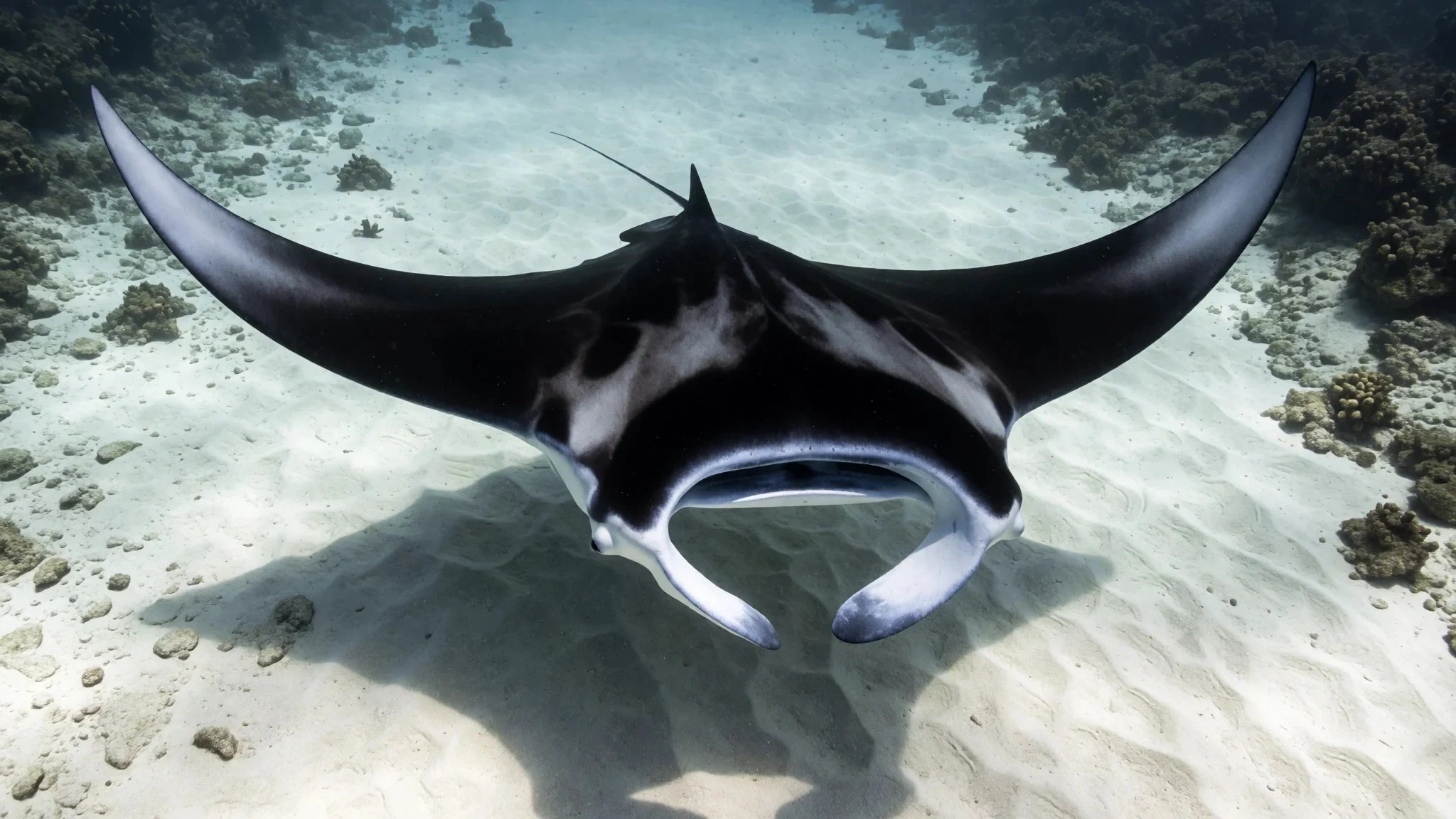
- Giant napoleon wrasse (animal)
Picture a big, gentle fish with thick, chunky lips and a calm air: that is the Napoleon wrasse, the biggest of all the wrasses, also called the humphead or Māori wrasse. It lives on coral reefs across the warm Indian and Pacific oceans, and at Apo Reef it often swims up to divers without fuss. Ask your guide about the best time to look. Stay relaxed, let it come to you, and enjoy its company.