Bohol
Bohol, Philippines
Bohol pairs cocoa-brown cone hills, old coral churches and a palm river with the pale beaches of Panglao.
The place
Bohol is a limestone island in the central Philippines, set in the Visayas with Cebu to the northwest and sea on every side. The provincial capital, Tagbilaran, sits on the southwest coast and is linked by bridges to the smaller island of Panglao, where the airport and the main stretches of pale sand lie. Inland the ground rises into karst: steep, grass-covered cones known as the Chocolate Hills, green through the rains and the colour of cocoa when dry months bake the slopes. Rivers cut the same stone. The Loboc is the channel most visitors follow, slow and green between palms, with villages and a church tower at the bends. The coast changes quickly. Panglao’s south shore is beach and reef, while the north and east of Bohol are fishing towns, mangroves and quieter coves. Forest remains in pockets, including a roadside mahogany plantation near Bilar that people call the man-made forest, and in those pockets the Philippine tarsier still spends the day asleep on a trunk, a tiny nocturnal primate. Towns such as Carmen, Loay and Baclayon organise life away from the capital, with a plaza, a market and a church. Heat is constant. Drier months bring hard light and brown hills; wetter months bring short heavy showers, greener slopes and fewer people on the sand. Bohol suits a slow road loop: hills in the morning, a river towards midday, a church town, then the beach once the glare eases.
Its story
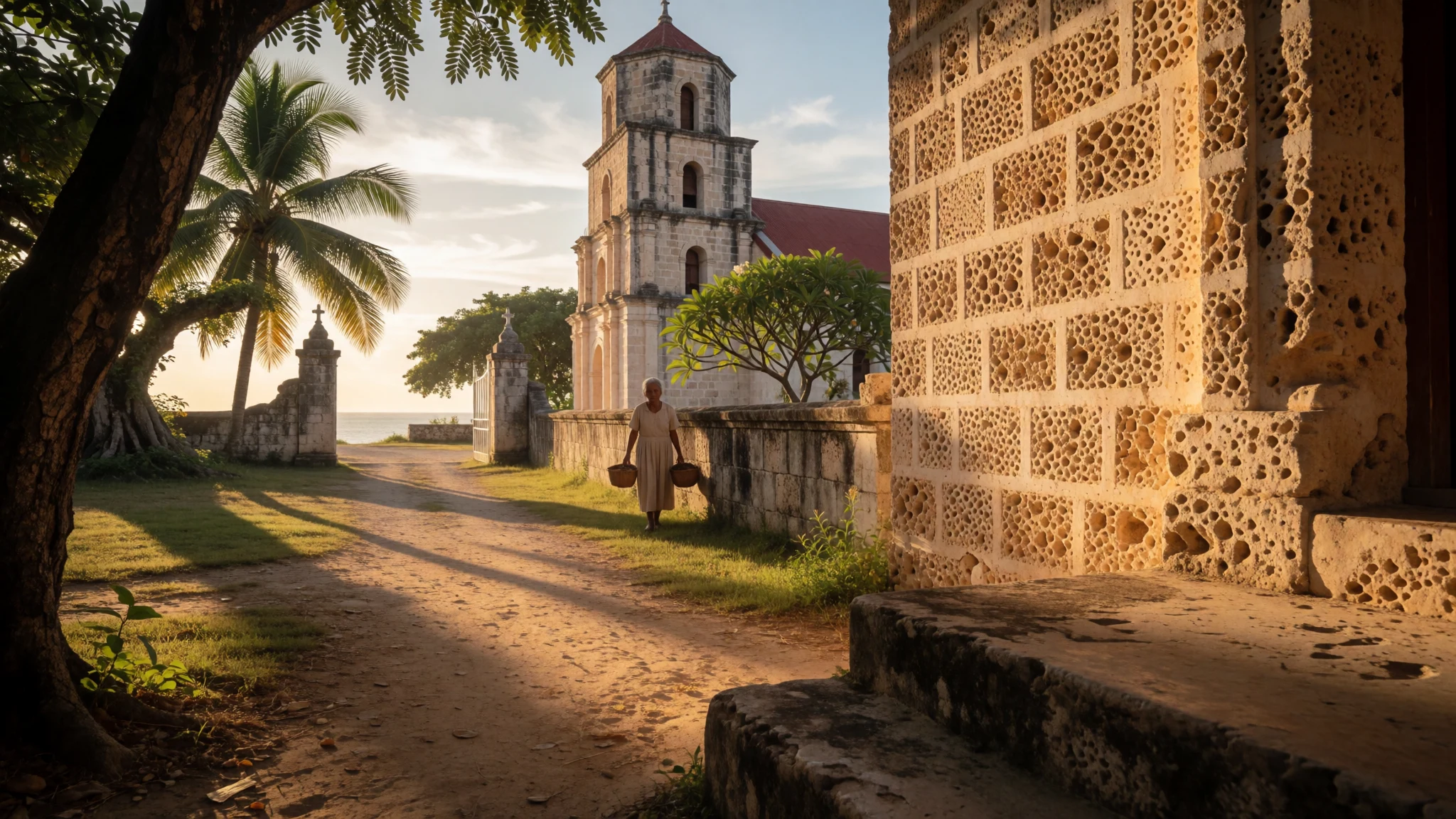
Bohol’s story is usually told from the coast inland. Before Spanish ships moved through the Visayas, the island already held small polities, rice fields, fishing settlements and chiefs who traded with other islands. The meeting the towns still recount is the Sandugo, a blood compact between the Boholano chief Sikatuna and the Spanish commander Miguel López de Legazpi: each man drank a few drops of the other’s blood mixed with wine. Tagbilaran’s festival keeps that name, and a monument on the city front shows the two figures. Colonial rule left a pattern still easy to see: a stone church and convent on a plaza, streets with saints’ names, and livelihoods of coconut, rice and fishing. Augustinian Recollects and other missionary orders raised the thick coral-stone churches of Baclayon, Loboc, Loay and the neighbouring towns, built against storms and raids. Prosperous families later put up wooden ancestral houses with shell-pane windows; the Clarin house in Loay is one that still stands. Independence made Bohol part of the Philippine republic, and Tagbilaran grew as port and capital. A powerful earthquake in living memory cracked and brought down many of those old churches. Communities rebuilt some, braced others, and left a few towers as they fell. Visitors came in numbers only afterwards, for the brown hills, the tarsier, the river and the reefs off Panglao. What remains in the towns is a stack of those layers: a blood-compact monument, a repaired nave, a mahogany aisle and a beach road laid long after the churches.
What to see
- Chocolate Hills — Carmen
The Chocolate Hills are the grass-covered limestone cones spread across the interior of Bohol around Carmen. Rain keeps them green; dry months turn the grass the colour of cocoa. Most people stop at the viewpoint above the town, early, before the heat and the coaches. From the deck the cones repeat towards the horizon. Paths below the viewpoint are hotter and quieter.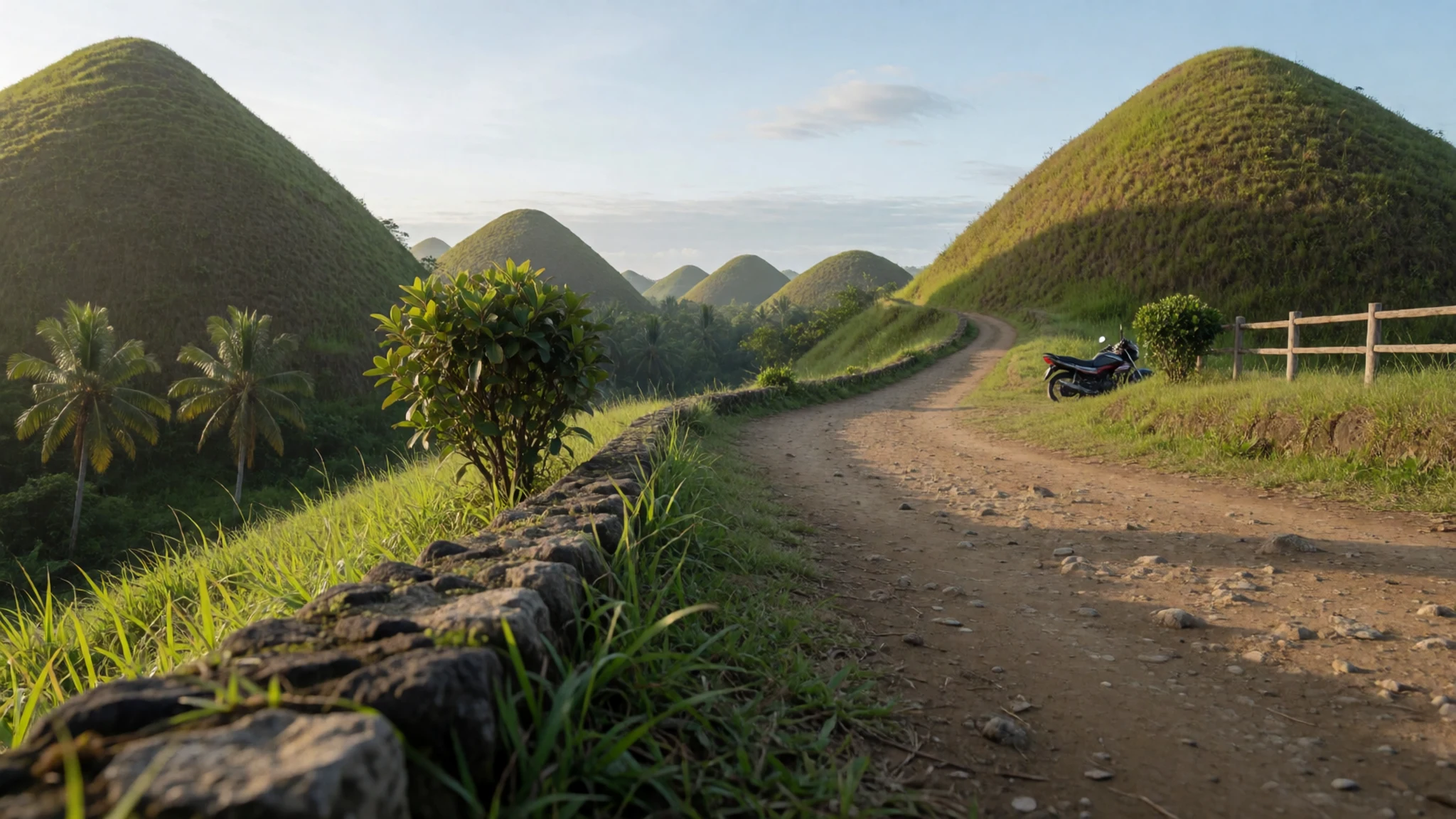
- Panglao — Panglao
Panglao is the small island off southwest Bohol, joined to Tagbilaran by bridges and edged with pale beaches and coral reef. Alona and the Dumaluan shore draw the crowds; other coves are quieter on weekdays. People stay for the water: snorkelling on the house reef, boats heading out to dive, and a swim after a morning in the hills.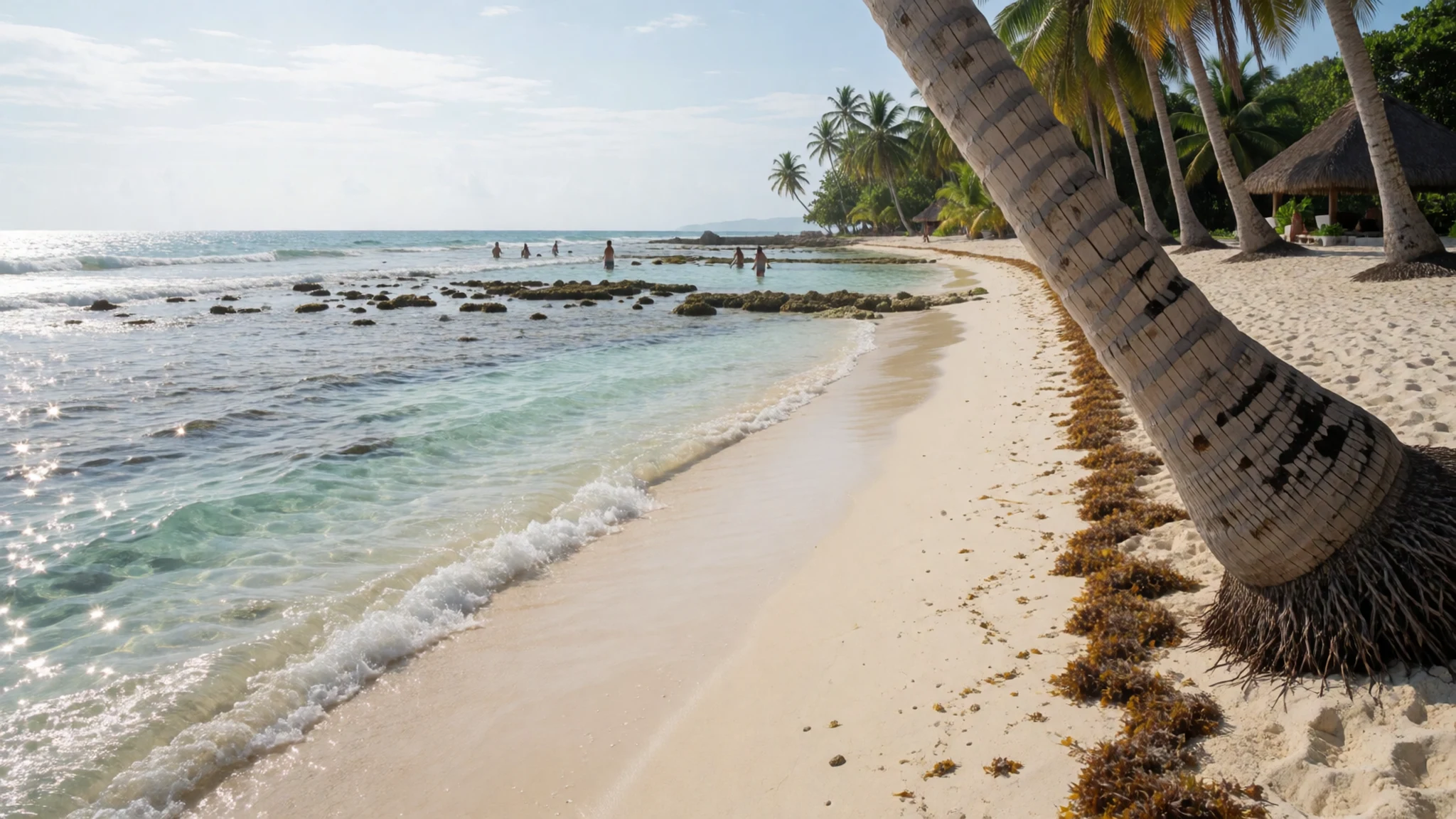
- Baclayon Church — Baclayon
Baclayon’s Immaculate Concepcion church, on the east road out of Tagbilaran in Bohol, is a coral-stone church and convent open to the sea breeze. It belongs with the old Recollect churches of the island: a heavy façade, a long nave and a convent that has held religious art. An earthquake in living memory damaged the complex, and restoration has brought regular worship back.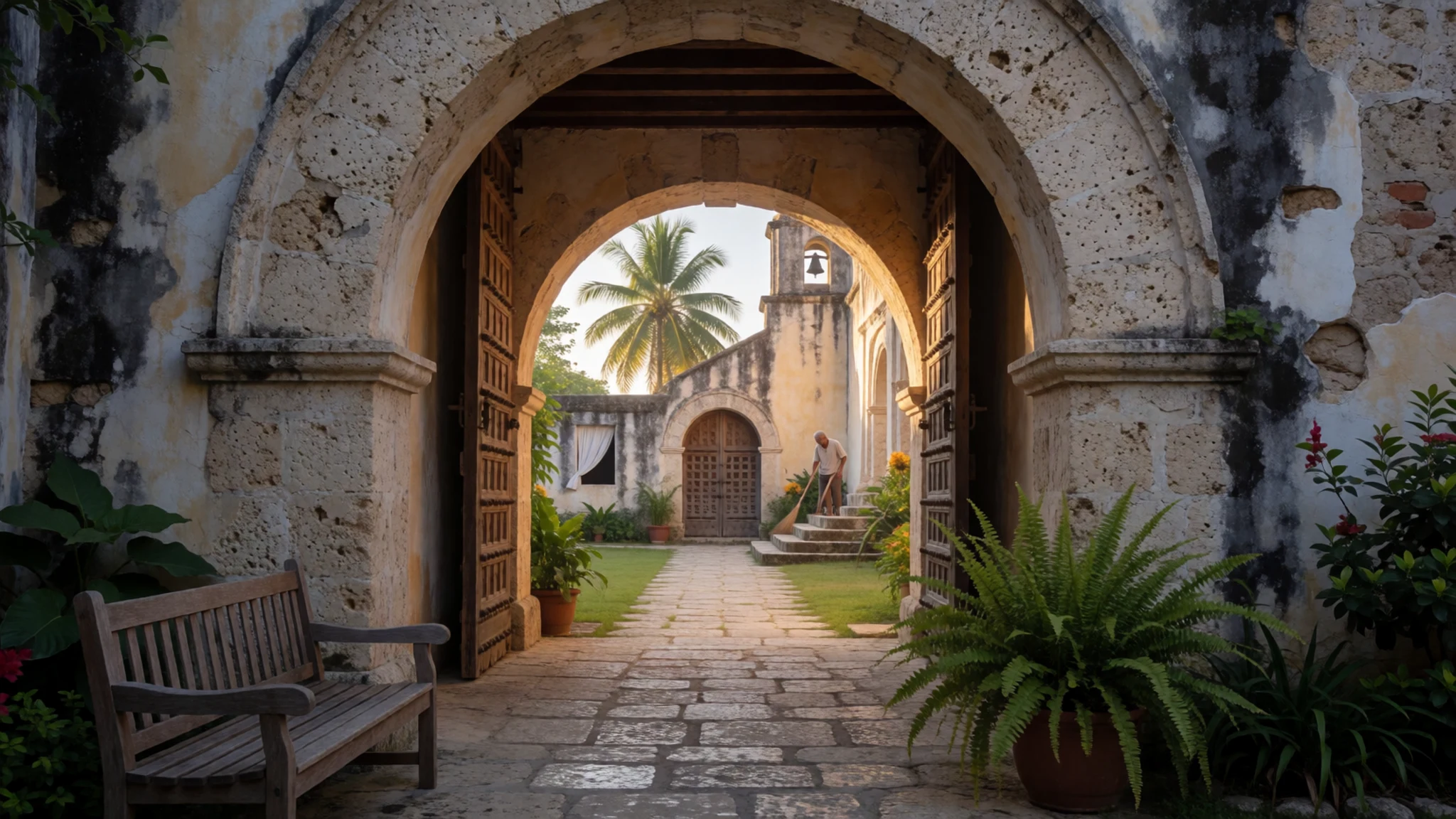
- Loboc River — Loboc
The Loboc River winds through the town of Loboc, inland from the south coast of Bohol, under palms and past bamboo and village landings. Boats head upstream towards a small fall, often with a meal on board and music at a stop. The ride is gentle, and the banks are the point: houses on stilts, footbridges, and the tower of the town church near the landing.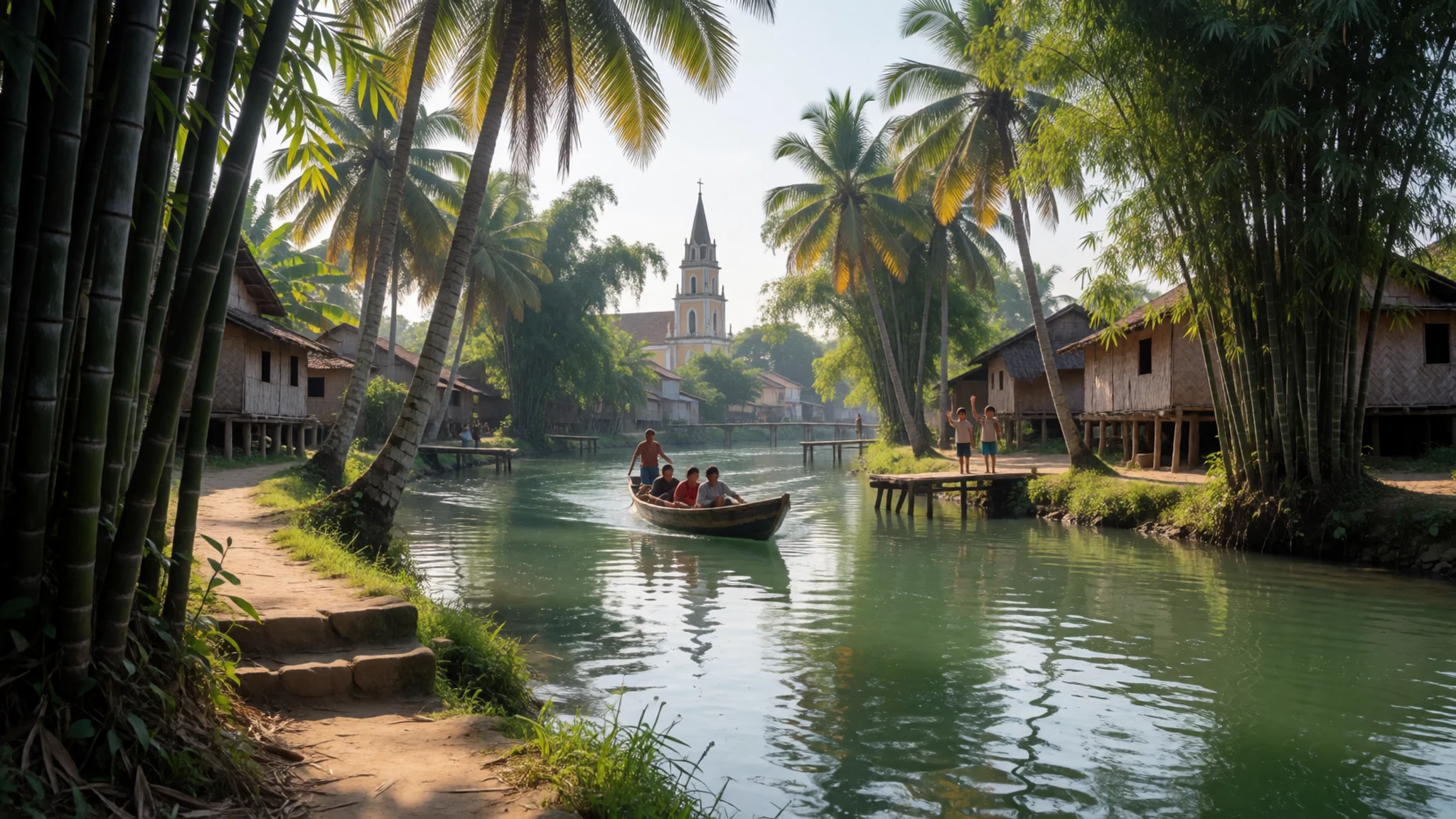
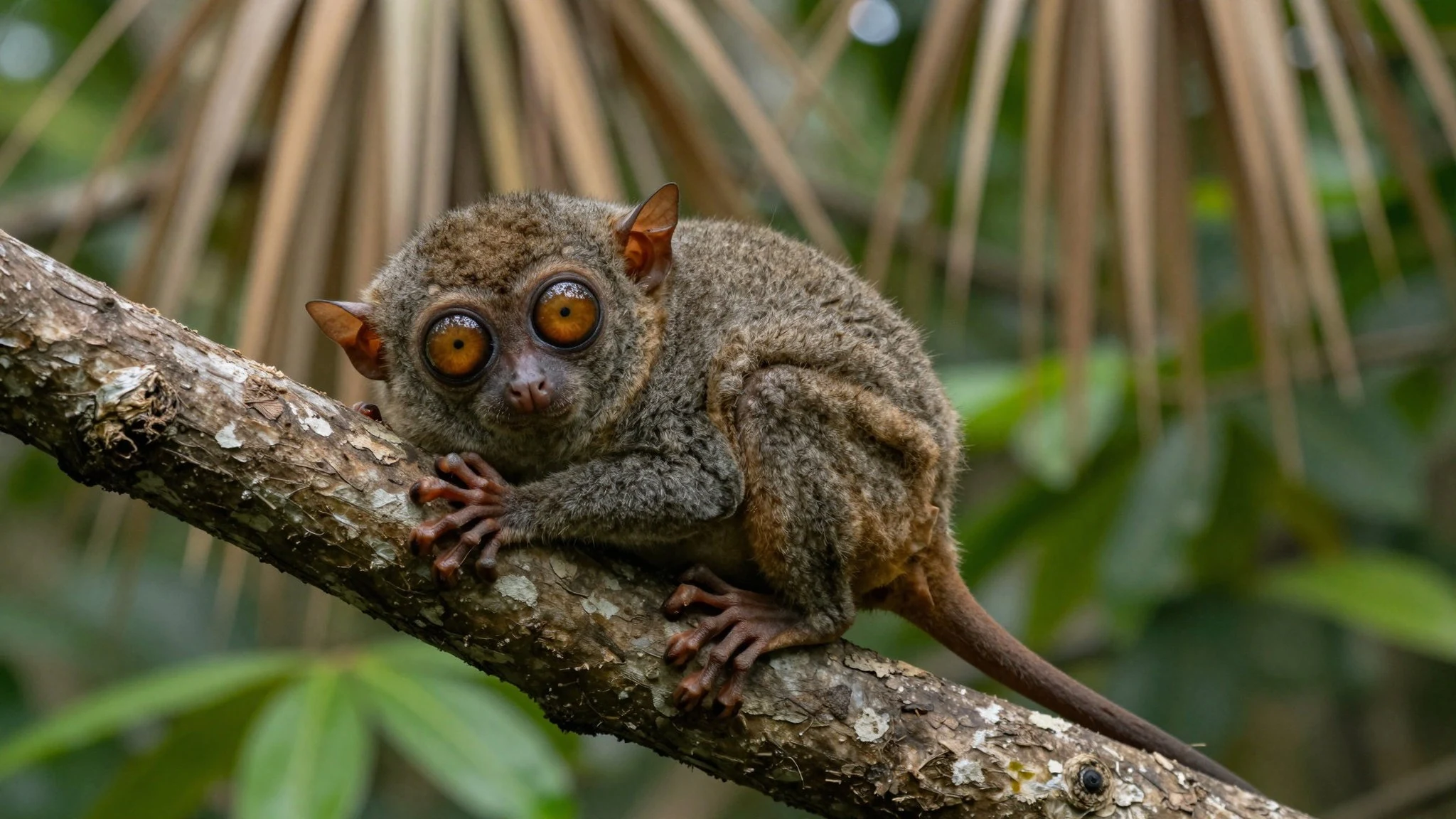
- Philippine tarsier sanctuaries — Corella
Bohol’s tarsier sanctuaries, around Corella and the Loboc and Bilar area, are the careful way to see the Philippine tarsier. The animal is tiny, with large eyes, and it sleeps upright on a trunk through the day. Serious sanctuaries keep visitors on a path, ban flash and refuse any handling. A sighting is a still shape in the leaves, and the guide should move people on quickly.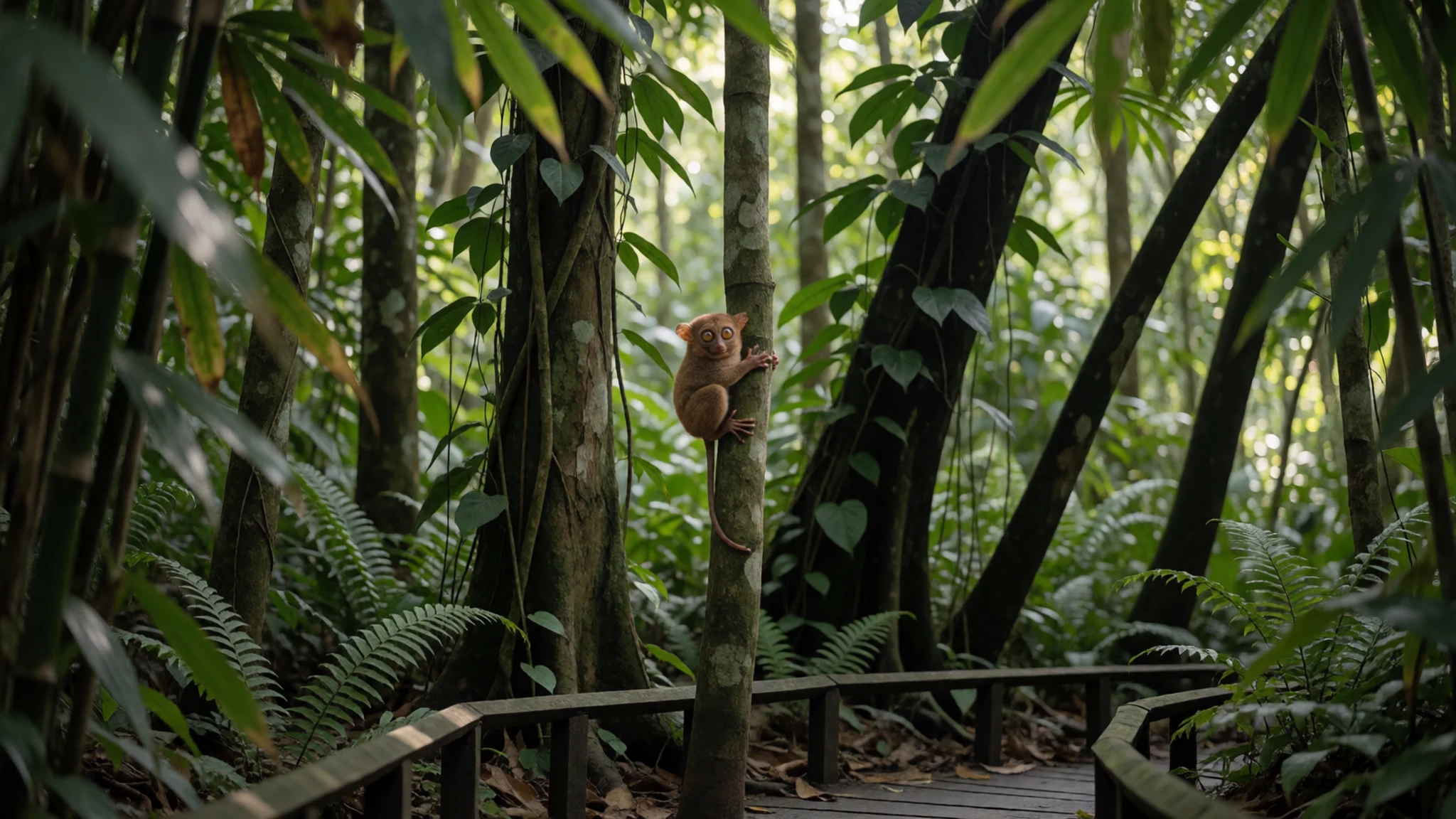
- Man-made forest — Bilar
The man-made forest is a mahogany plantation lining the road through Bilar, on the inland highway that crosses Bohol between the coast and the Chocolate Hills. The trees meet overhead and turn the carriageway into a shaded aisle, which is why drivers slow and people step out. It is planted forest, with a thin understorey, and the visit is a short pause in the shade.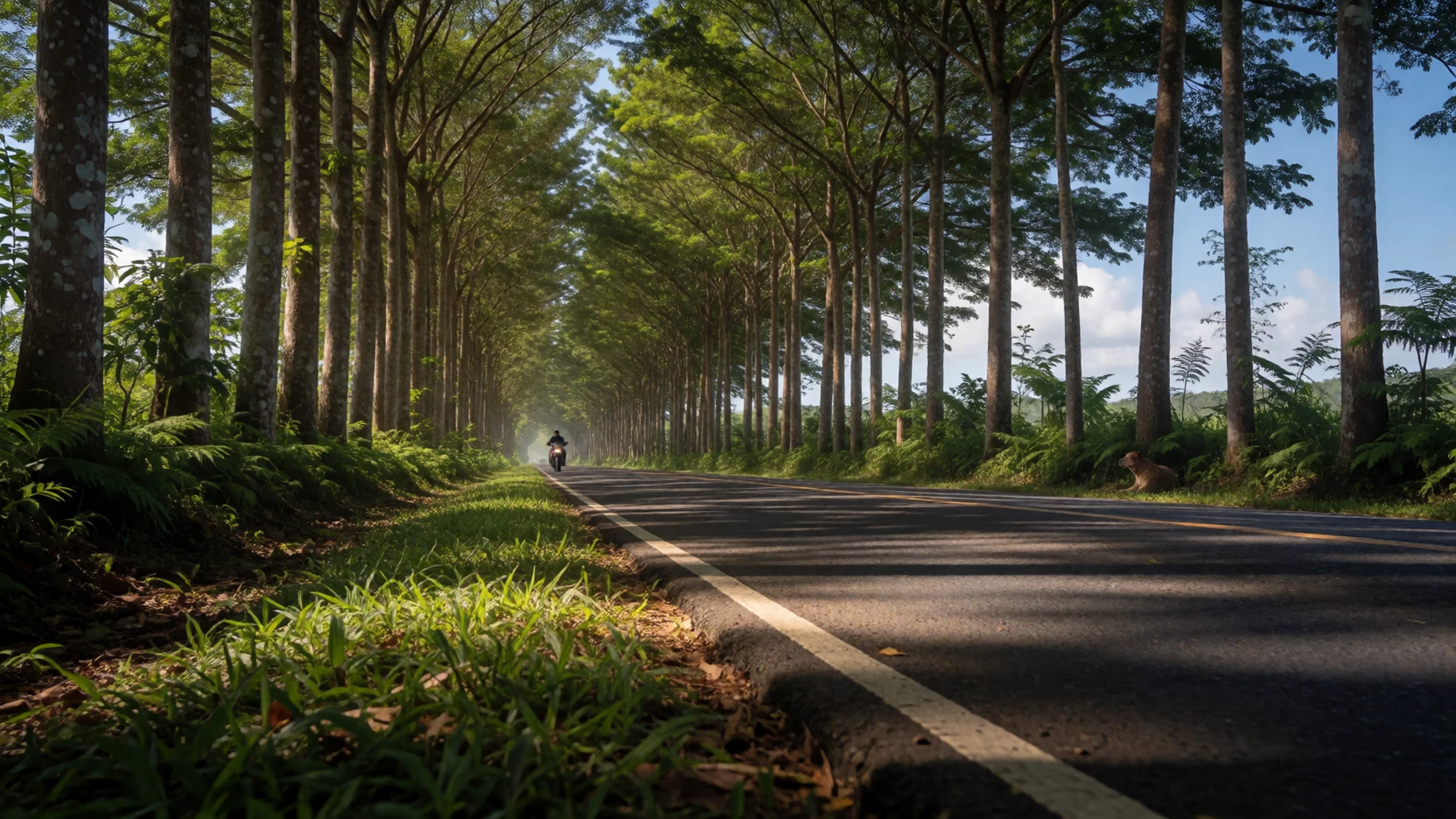
Culture
Bohol’s public life is Visayan and Catholic, paced by the town fiesta as much as by the beach calendar. Each parish honours a patron saint with processions, brass bands and food shared from houses around the plaza. Tagbilaran’s Sandugo festival recalls the blood compact, with street dancing and a civic programme that fills the capital. Family gatherings spread across cousins and neighbours; a visitor invited in will be fed, and refusing a plate can read as cold. Music runs through fiesta week, from marching bands to karaoke once the formal programme ends. The tarsier has become a provincial emblem, printed on shirts and signboards, so sanctuaries ask people to treat the living animal as wildlife rather than a mascot. Church and home still set manners: a greeting to elders, a quieter voice inside a nave, and clothes that cover shoulders and knees at mass. Panglao’s resort strip is more informal than the inland towns. Fiesta week is when a household will often welcome a stranger who arrives with a greeting. Ask before you photograph people in Bohol, and never touch or use a flash on a tarsier.
What to wear
Bohol shares the formal dress of the lowland Philippines. For weddings, fiestas and official events, men wear the barong tagalog, a sheer embroidered shirt of piña, jusi or a modern blend, worn untucked over trousers. Women wear the baro’t saya or, for a grander entrance, a terno with its paired butterfly sleeves, in piña, silk or a crisp synthetic that survives the heat. Those clothes are for occasions, not for the market. Day to day, people in Tagbilaran and the coastal towns wear light cotton shirts, blouses, jeans or shorts, sandals, and a cap against the sun; school and office uniforms appear on weekday mornings. Visitors should dress for the climate first: breathable cloth, a hat, and shoes that can take a church floor, a boat deck and a hot viewpoint. Swimwear belongs on the beach at Panglao, with a shirt and shorts for the walk to a shop or to mass. At Baclayon, Loboc and the other old churches, covered shoulders and knees are expected, and beach cover-ups look out of place. A light rain jacket is enough in the wet months; the hills and the mahogany aisle are shaded but still humid, so heavy clothing is a burden.
What to eat
- Kalamay — Tagbilaran public market and stalls on the road to Carmen
Kalamay is Bohol’s rice sweet: glutinous rice cooked with coconut milk and muscovado until dense and glossy. It is packed into coconut shells or small tubs as a gift to carry home. It is sold at Tagbilaran’s public market and from stalls on the road to Carmen.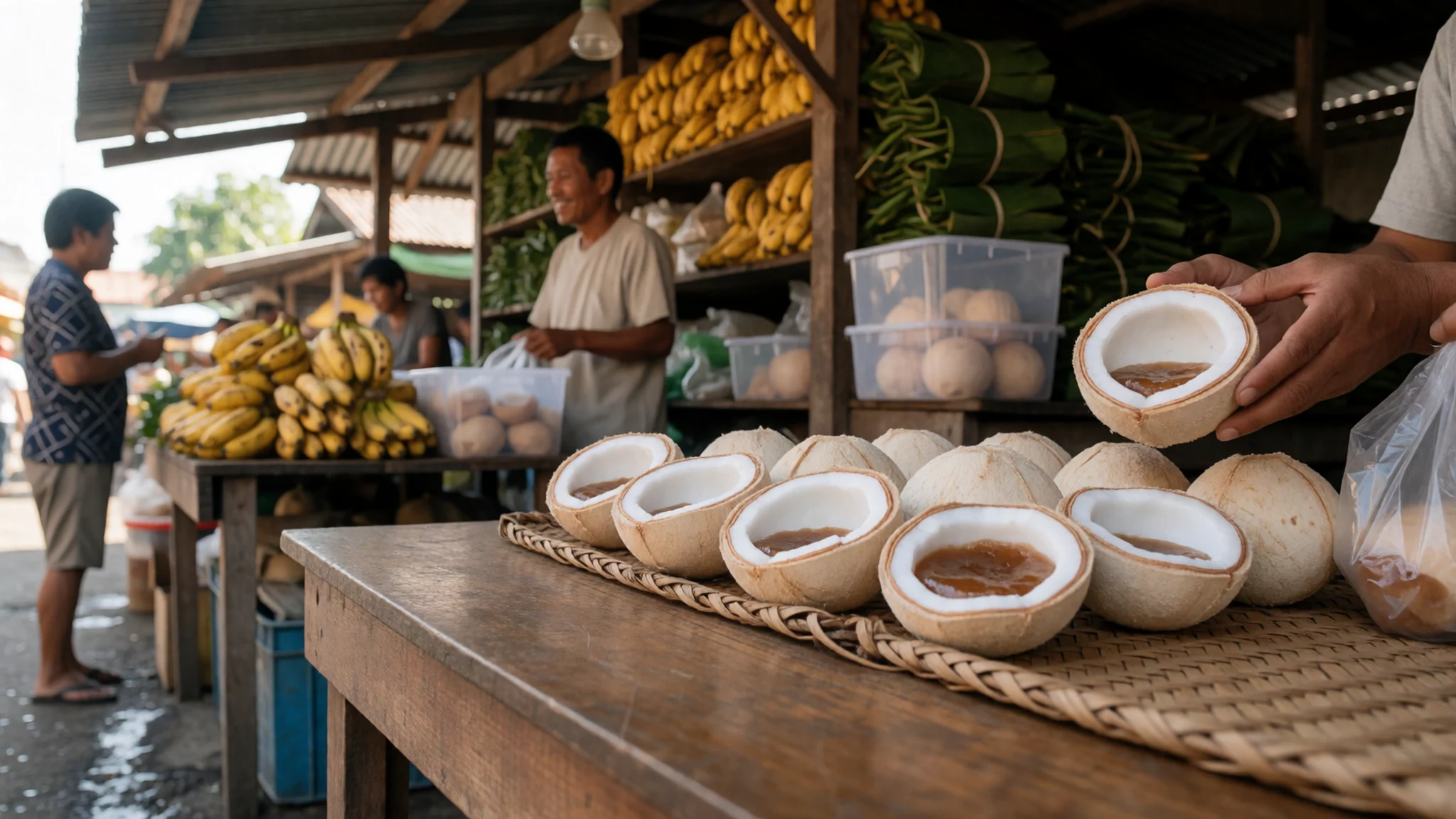
- Peanut kisses — viewpoint stalls and shops in Carmen
Peanut kisses are small sweets from Carmen, in the Chocolate Hills country of Bohol: peanuts bound into bite-sized pieces and sold in jars and boxes. They travel well and sit beside the kalamay as the usual edible souvenir of a hills day. The bite is crunchy.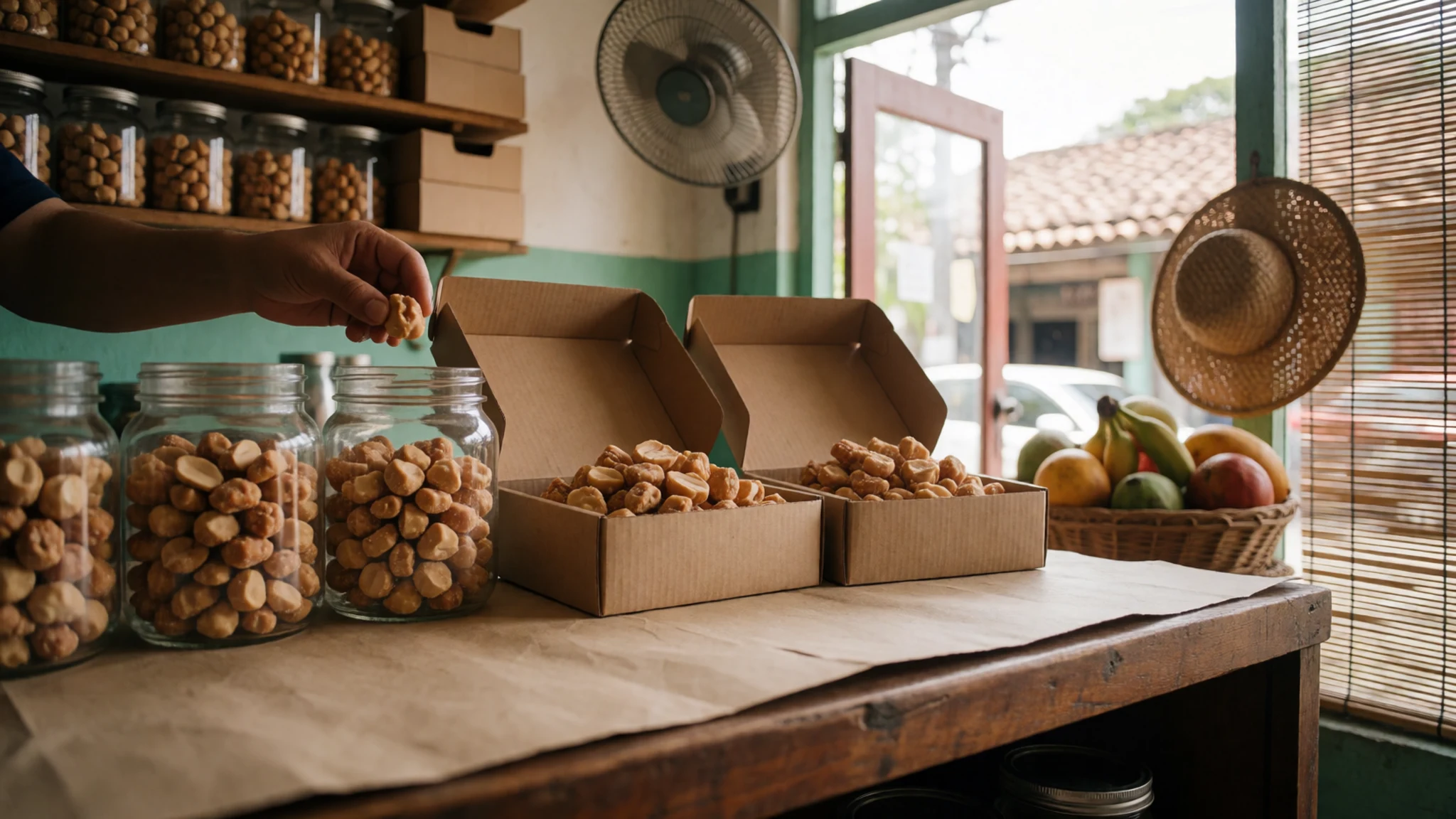
- Kinilaw — eateries on Panglao and stalls in Tagbilaran market
Kinilaw on Bohol is raw fish cured in vinegar with ginger, onion and chilli, eaten while the flesh is still translucent. Coastal kitchens serve it as a morning plate or beside grilled fish, using the landing from that day. The vinegar should taste sharp and the fish cold. - Humba — carinderias in Tagbilaran and south-coast towns
Humba in Bohol is pork belly braised slowly with vinegar, soy, garlic and black beans until the fat softens. It appears at fiestas and in ordinary eateries, usually with rice. Carinderias in Tagbilaran and the south-coast towns keep a pot on the counter through the day. - Grilled seafood — beach eateries and stalls behind Alona, Panglao
Grilled squid, fish and prawns are the ordinary feast on Panglao in Bohol, salted simply and served with rice, a vinegar dip and green mango. Beach eateries and the stalls behind Alona cook to order in the evening, once the boats are back.
Plan it
Best time. Bohol is at its easiest from March to May, when rain is lighter, the Chocolate Hills turn fully brown, and the sea is generally calm enough for snorkelling; April and May are the hottest months, and December, October and January the wettest. June to November brings heavier showers and greener hills, with fewer visitors on the sand, though the later months carry more risk of tropical storms. Check a marine forecast before any boat day.
How long. 3–4
Getting there. Bohol is reached by air at Bohol–Panglao International Airport on Panglao, a road transfer from the beaches and a longer ride inland to the hills. Ferries from Cebu arrive at Tagbilaran and at ports along the north coast. From the pier the last leg is by road, or over the bridges when the stay is on Panglao. Confirm sailings and flights on the operator’s own site.
Budget. mid
Tips
- Book a Panglao room and an inland driver ahead for the drier months.
- Go to the Chocolate Hills viewpoint early, before coaches and hard sun.
- Carry cash for markets, tricycles and small eateries; cards are more readily accepted in Tagbilaran and resort areas.
- Choose reef-safe sun protection and drink sealed or boiled water away from resorts.
- Refuse any outing that lets visitors hold a tarsier or photograph one with flash.
Etiquette
- Cover shoulders and knees in churches, and wait at the side if a mass is in progress.
- Ask before photographing people, above all at a fiesta or in a private house.
- Do not touch, feed or shine a light on a tarsier.
- Leave coral, shells and sand on the reef.
Nearby
Sources
- Wikidata: Bohol (CC0)
- Wikipedia: Bohol (CC BY-SA 4.0)
- Wikivoyage: Bohol (CC BY-SA 4.0)
Wildlife
- Philippine tarsier (animal)
The Philippine tarsier is a tiny night-roaming primate whose name comes from its unusually long ankle bone. In Bohol it lives on in scattered patches of woodland, including a mahogany plantation beside the road near Bilar, nicknamed the man-made forest. By day it dozes on a trunk, so daytime is when you may spot it. Watch quietly from a respectful distance, ideally with a local guide, and never touch it or offer it food.