Bacolod
Bacolod, Philippines
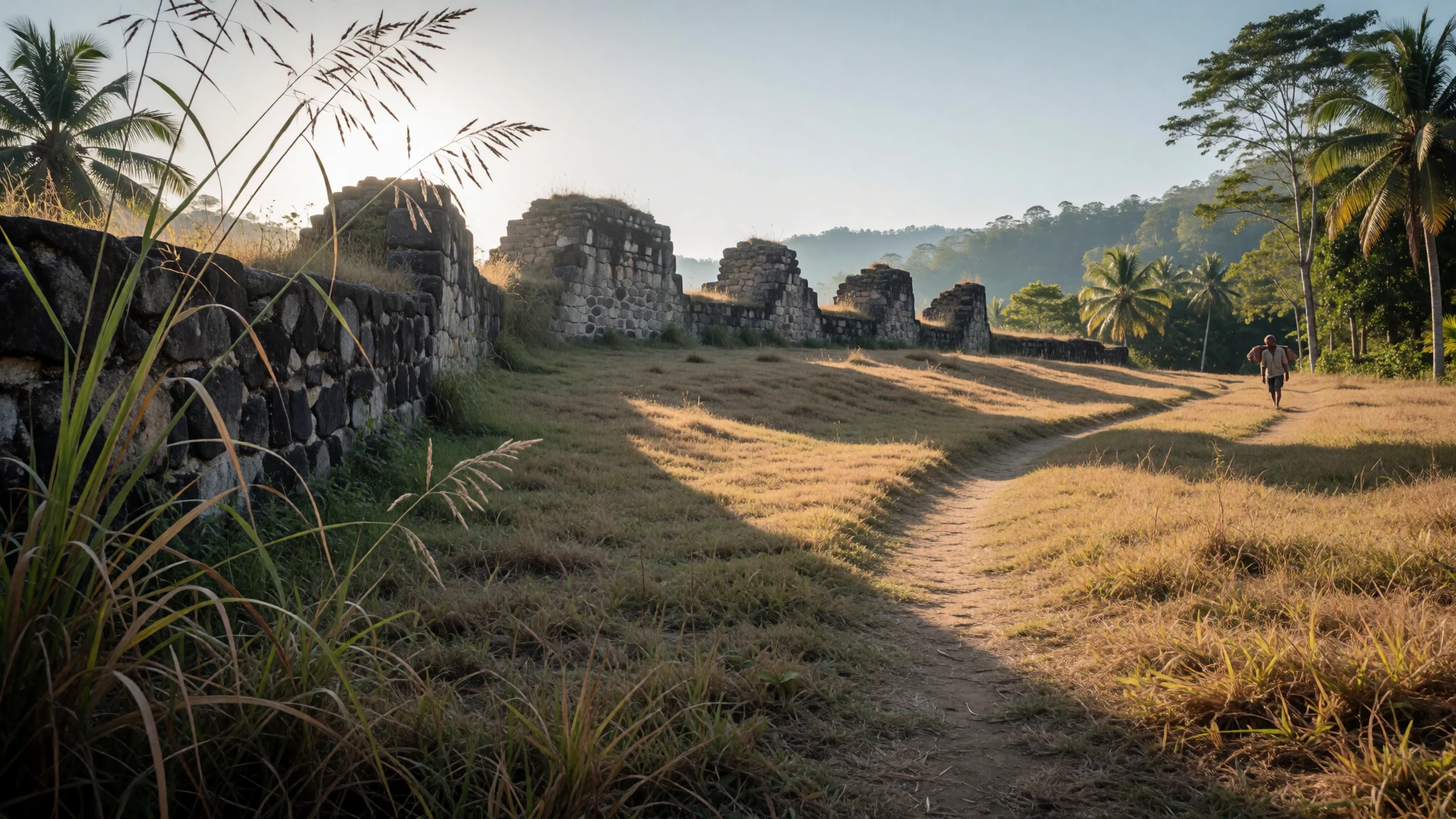
Bacolod in Lanao del Norte is a small Mindanao town where Maranao and settler histories meet, with an old Spanish fort in ruins.
The place
Bacolod is a municipality in Lanao del Norte province, on the northern side of Mindanao in the Philippines, and it is not the large city of the same name on Negros. The town lies about 45 metres above sea level and counted 24,963 residents in the 2024 census, so it is a place of farms, market days and small shops rather than a sightseeing circuit. Local government divides it into 16 barangays, among them Poblacion, which serves as the town centre, along with Alegria, Binuni, Kahayag, Mate, Minaulon, Pagayawan and Rupagan. Each barangay breaks down further into puroks, and some also have outlying sitios. In Maranao the town is called Inged a Bacolod. It belongs to Northern Mindanao, a region that leans on agriculture and trade and has forests, sheltered bays and coral reefs within reach. Most people across the region speak Cebuano and have Visayan ancestry. In Lanao del Norte the Muslim Maranao form a majority alongside Christian Visayans, and the Bukidnon, Kamigin and Subanen are the indigenous groups of the wider region. The one named landmark is Fort Almonte, a ruined Spanish fort still waiting for the conservation work it needs from the National Museum of the Philippines. People come here for the texture of an ordinary Mindanao town and its mixed communities, not for polished attractions, and arriving with that expectation makes for a better visit.
Its story
Bacolod's recorded past begins with the Maranao, who made up most of the population before Spanish rule reached the archipelago. Oral accounts from older community leaders describe a Spanish-era pattern in which groups from the interior of Lanao del Norte crossed by boat from the beach at Kolambugan to the coast of what is now Ozamiz, taking captives to serve as household workers. Many of those taken were Visayans. These are remembered stories rather than documented history, but they show how closely the two shores were tied, for good and ill. The next large change came under American rule, when the Commonwealth government ran the National Land Settlement Administration to move farming families onto Mindanao land. The plan was debated in the legislature, with Congressman Datu Salipada Khalid Pendatun among its opponents, yet it passed and President Manuel L. Quezon signed it. Settlers from Luzon and the Visayas arrived with trades such as farming, engineering, logging and construction. In Lanao del Norte the arrival is remembered as peaceful, smoothed by talks with Maranao leaders and landowners, who gave newcomers a five-hectare plot to begin with. Land then changed hands through labour and barter, and marriages between landowners' sons and settlers' daughters mean that many families in Lanao del Norte and Misamis Occidental have Maranao ancestry. Tension between Muslims and non-Muslims grew later, once Martial Law was imposed, and it still colours how some people speak about the region.
What to see
- Fort Almonte ruins — Bacolod town
The ruins of Fort Almonte are the town's physical link to Spanish rule. The walls are weathered, and the site is still waiting for careful conservation and restoration. Go for the history and the quiet, not for interpretation boards. Ask residents or the municipal office for the current route and access, and watch your footing on uneven ground. - Poblacion — Poblacion
Poblacion is the town centre and a sensible place to get your bearings. Public buildings, shops and everyday market life gather here, and the municipal flag is the local emblem. Walk it slowly in the morning, talk to shopkeepers, and ask which of the other barangays are worth a visit that day.
- The Kolambugan shoreline — Coast near Kolambugan
The shoreline around Kolambugan features in the oral accounts of boat crossings to the Ozamiz side. Standing on the beach and looking across the water makes those stories easier to picture. Ask locally about the best road approach, and remember that conditions on the water change with weather and tide. - The farming barangays — Outer barangays
The outer barangays show the settlement story in practice: smallholdings, farm tracks and households that mix Maranao and Visayan families. There are no formal attractions, so the pleasure lies in slow travel on foot or by local motorbike taxi, asking permission before entering private land, and stopping at roadside stores to talk.
Culture
Bacolod's culture comes from two main communities and a long habit of living side by side. The Maranao, whose name is usually translated as people of the lake, place Islam at the centre of life. They are known across Mindanao for okir, the curling carved and painted motifs, for kulintang gong music and for generous hospitality at family gatherings. Visayan settlers, mostly Cebuano speakers and Christians, brought their own festivals, church calendar and food habits, and the two groups share markets, schools and, through intermarriage, many families. Bukidnon, Kamigin and Subanen heritage belongs to the wider region and may be glimpsed at festivals. Maranao and Cebuano are heard daily, with Tagalog and English used for official business. The tension that followed Martial Law means that religion and land can be sensitive subjects, so visitors do better to listen first and let hosts lead the conversation. Celebrations follow both the Muslim and the Christian calendars, and dates shift from year to year, so the municipal office is the best source for what is on. An invitation to share food or a drink is usually sincere, and a guest who accepts at least a cup of something will be warmly regarded. Ask before photographing people, dress modestly with shoulders and knees covered, and take off your shoes before entering a mosque or a private home.
What to wear
In Bacolod the best-known traditional garment is the Maranao malong, a tube of woven cloth in cotton or silk blends, usually in bright stripes and panels and sometimes with a band of okir-inspired pattern. It can be worn as a skirt or dress, drawn over the head, used as a blanket or wrapped around a baby, and it appears at weddings, religious occasions and festivals, with some older women wearing it daily. Subanen and Bukidnon communities have their own beaded and embroidered clothing, seen mostly at celebrations. Day to day, people wear what suits a warm farming town: T-shirts, jeans or shorts, school uniforms, caps against the sun and rubber slippers. Many Muslim women wear a headscarf with long sleeves and skirts, and many men dress simply in shirt and trousers. Visitors should pack light cotton clothes that cover knees and shoulders, a brimmed hat and a compact rain jacket. Closed shoes with grip suit the fort ruins and farm tracks, while slip-on sandals are handy for homes and prayer spaces. Women may want a light scarf to hand. Beachwear belongs on the beach, not in town.
What to eat
- Piaparan — Family-run eateries in Poblacion and Maranao homes
Piaparan is a Maranao dish of chicken or other meat simmered with grated coconut and palapa, a relish of ginger, chilli and spring onion. It is rich, fragrant and usually eaten with rice. Look for it at family-run eateries and at home-style meals during celebrations. - Pastil — Roadside stalls and the town market
Pastil is a small banana-leaf parcel of rice topped with shredded, seasoned chicken or fish. It is cheap, portable and filling, which makes it a common breakfast or snack. Stalls often sell it wrapped in neat stacks near transport stops. - Kinilaw — Coastal eateries and the fish stalls of the market
Kinilaw is raw fish cured in vinegar or citrus with onion, ginger and chilli, a Visayan favourite along the coast. Freshness matters, so eat it where fishing boats land or where locals queue, and ask when the catch came in. - Grilled fish with puso — Open-air grill eateries and market food stalls
Sinugba, or grilled fish, comes charred and smoky, served with puso, rice boiled in a woven coconut-leaf pouch, and a dipping sauce of vinegar and chilli. It is an easy, honest meal to share after a hot morning of walking.
Plan it
Best time. January to April is usually the drier stretch for northern Mindanao, so it is the safest bet for walking the town and the ruins, though showers can come in any month. The brief carries no local climate data, so check the forecast before travelling.
How long. 1–2
Getting there. Fly to Laguindingan Airport (CGY), served from Manila, Clark, Cebu and Davao. From there continue by road towards Lanao del Norte; long-distance buses also terminate at Cagayan de Oro, and Iligan and Ozamiz have ferry terminals. Ask locally for current bus and van links for the last leg to Bacolod.
Budget. low
Tips
- Check current government travel advisories for Lanao del Norte before you go
- Carry enough cash in small notes, as cards are unlikely to work in a small town
- Start walking early, before the heat builds, and carry drinking water
- Contact the municipality through its official website, http://www.bacolodldn.gov.ph/, for festival dates and access to the fort ruins
- Allow flexibility, as local transport can be infrequent
Etiquette
- Ask before photographing people, especially women and children
- Dress modestly and remove shoes before entering a mosque or someone's home
- Let hosts raise sensitive topics such as religion and land
Nearby
Sources
- Wikidata Q274150 (CC0)
- Wikipedia: Bacolod, Lanao del Norte (rev 1374959845) (CC BY-SA 4.0)
- Wikivoyage: Lanao del Norte (rev 5189924) (CC BY-SA 4.0)
- Flag of Bacolod, Lanao del Norte (Municipal Government of Bacolod, via Wikimedia Commons) (Public domain)
