Banaue Rice Terraces
Banaue Rice Terraces, Philippines
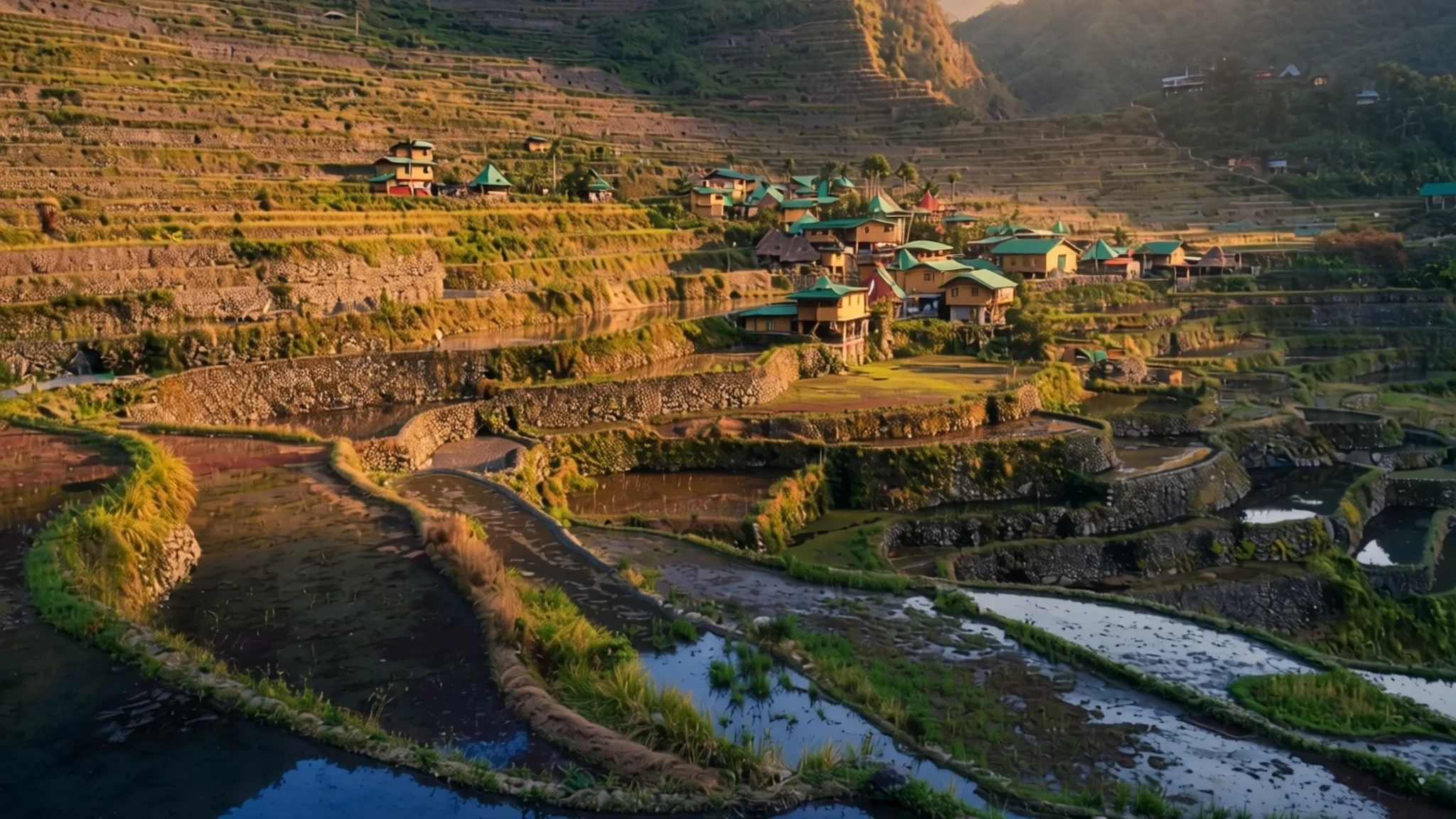
Stepped rice fields carved into Luzon's mountains by Ifugao hands, still farmed and worth the rough road.
The place
The Banaue Rice Terraces sit on the mountainsides around Banaue, in Ifugao province in the Cordillera region of northern Luzon. Ifugao people carved the stepped fields into steep slopes largely by hand, with simple tools and a great deal of labour. The terraces lie roughly 1,500 metres above sea level, so nights are cool, though the days can be hot and the town is not especially mild. Water reaches the fields through an old irrigation system fed by the forest above, which keeps the paddies wet and the mud walls working.
The terraces are still farmed. Families plant rice and, in many places, vegetables instead, and some conservationists argue that this weakens the claim that these are true rice terraces. Many younger Ifugao prefer jobs in guesthouses and tourism to the hard work of farming, so the steps that need constant repair are sometimes neglected. Earthworms, rodents and snails also damage the walls, and drought once dried the fields almost completely.
Most visitors come to the viewpoints above the town, where the terraces fill the valley in curving bands. The colours shift through the year as planting, growing and harvest move across the slopes. The landscape is the reason people come, but it is a living farm, not a museum set, and that is worth remembering when you walk its paths.
Its story
The age of the Banaue terraces is an argument that has not been settled. The anthropologist Otley Beyer estimated that they are over 2000 years old, but several other researchers contend that they were built much later. What is not disputed is the wider story of rice in the Philippines. Austronesian migrations carried the crop into the islands at least 3500 years ago, so paddy farming here is very old even if the carved mountain fields may be younger.
The Cordillera has its own history of independence. Settlements such as Banaue grew up outside Spanish control for a long time. Later, the area came under American administration, which turned the town into a hill station around the start of the 1900s. Alongside the farming, they built roads and drew visitors to the place. From that point the town became known as a destination in its own right, drawn by the terraces.
The Banaue cluster itself is not a UNESCO World Heritage Site, though the nearby Batad and Bangaan terraces are part of a 1995 listing. Local people have kept the farms going through drought, pests and a shrinking pool of younger farmers. The terraces are therefore less a finished monument than an ongoing effort, in which tradition, economy and the slow work of repairing walls all pull in different directions.
What to see
- Banaue Rice Terraces viewpoint — Above Banaue town
The main terrace viewpoint gives the classic picture of the Banaue fields, with the mud-walled steps curving down the valley in layered bands. Go in the early morning, when the light is soft and the slopes are quieter. Sunlight on the slopes can be fierce by midday, so bring a hat and water. The walk to the edges is steep in places, so wear shoes with grip.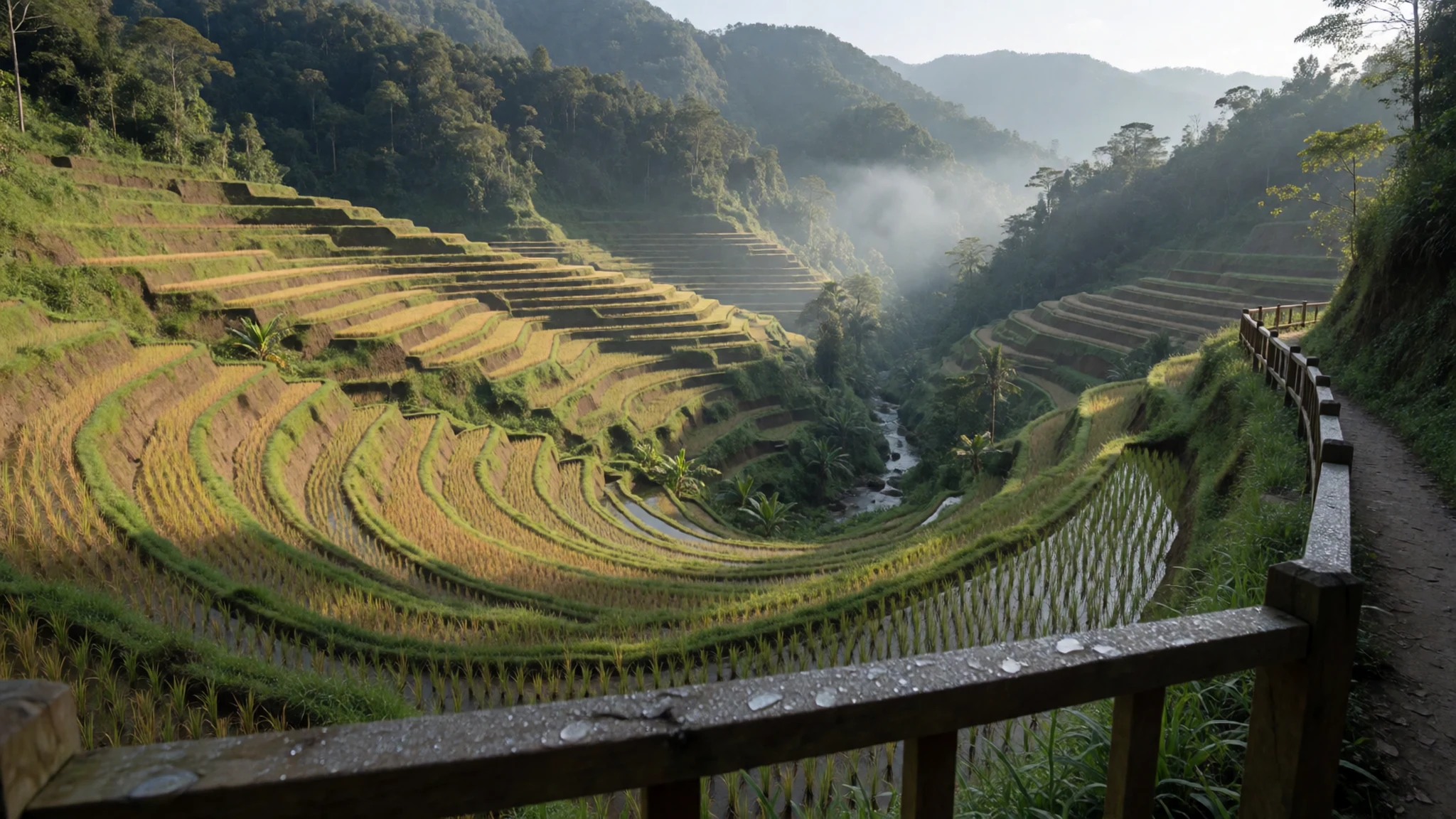
- Main viewdeck — Banaue town hillside
The main viewdeck is the easiest place to see the terraces without a long hike, and it is where most day visitors end up. Arrive before the tour groups build up. Keep to the marked platform, because the outer rims of the fields are crumbling and walking on them damages the walls that farmers repair by hand.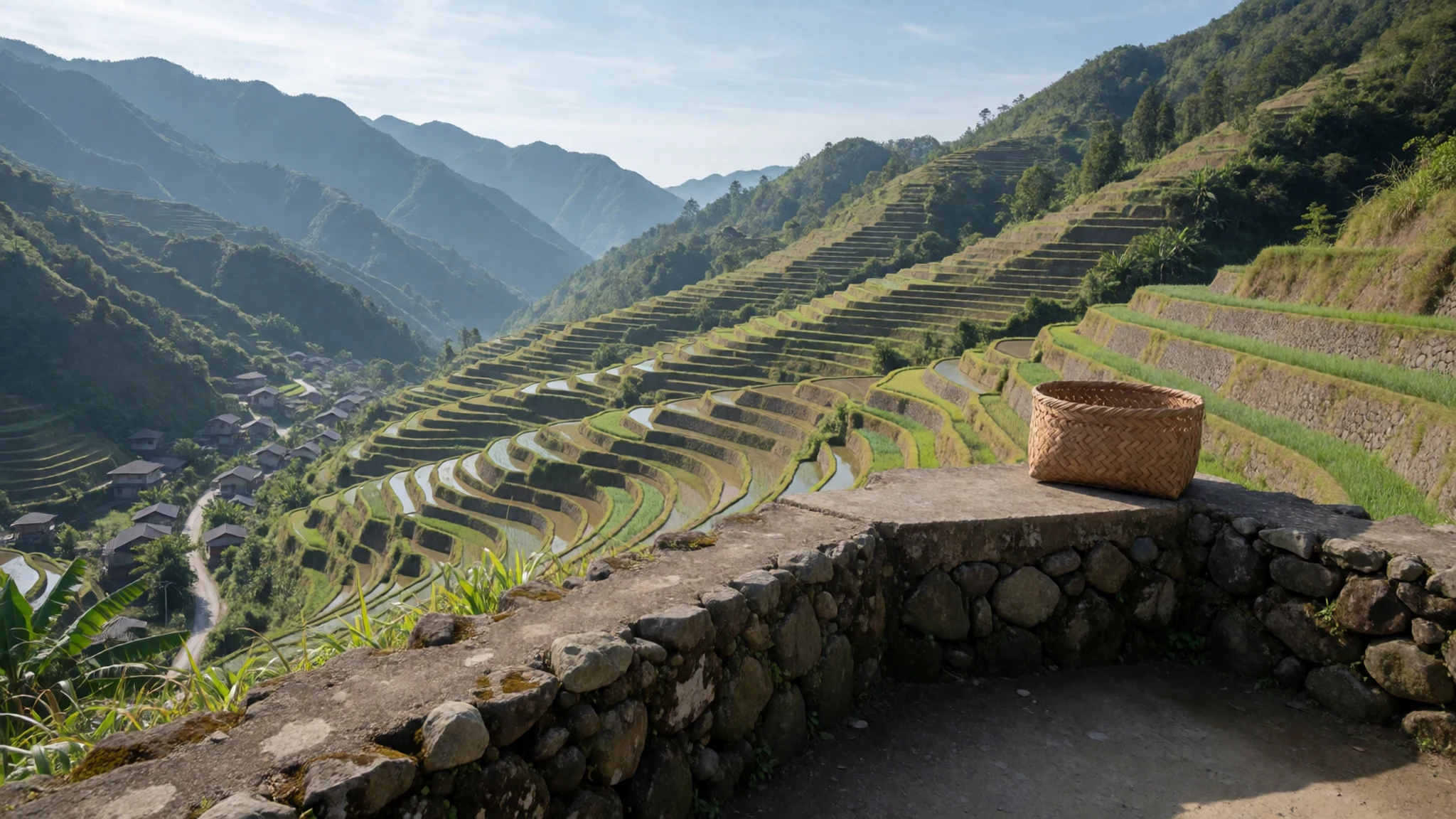
- Banaue Museum — Banaue town centre
A small natural history museum with displays on Ifugao culture, including attire and handicrafts. It is a short visit rather than a full day, and it gives useful context before you walk the terraces. Ask staff about the carved wooden rice figures, the bulol, which are kept as rice gods. Expect modest displays, and treat it as an introduction rather than an archive.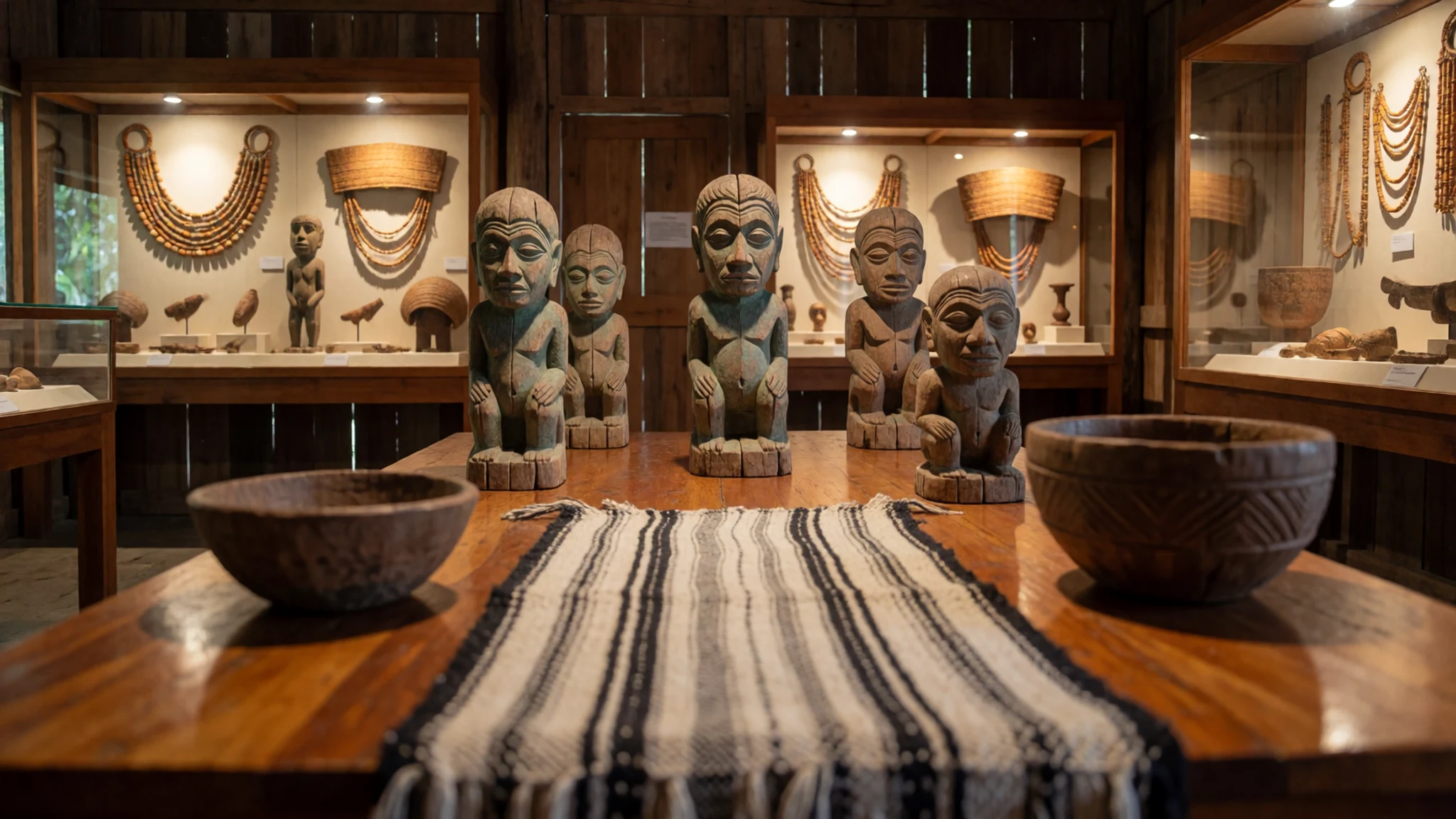
- Museum of Cordilleran Sculpture — Area above Banaue town
A private collection of carved wood from across the Cordillera, started by a couple who wanted to preserve work they feared would be lost. The pieces are a useful look at the figures and motifs found in Ifugao and neighbouring communities. Opening arrangements are not fixed in any guide, so ask locally before walking over. Photograph the carvings only if the staff allow it.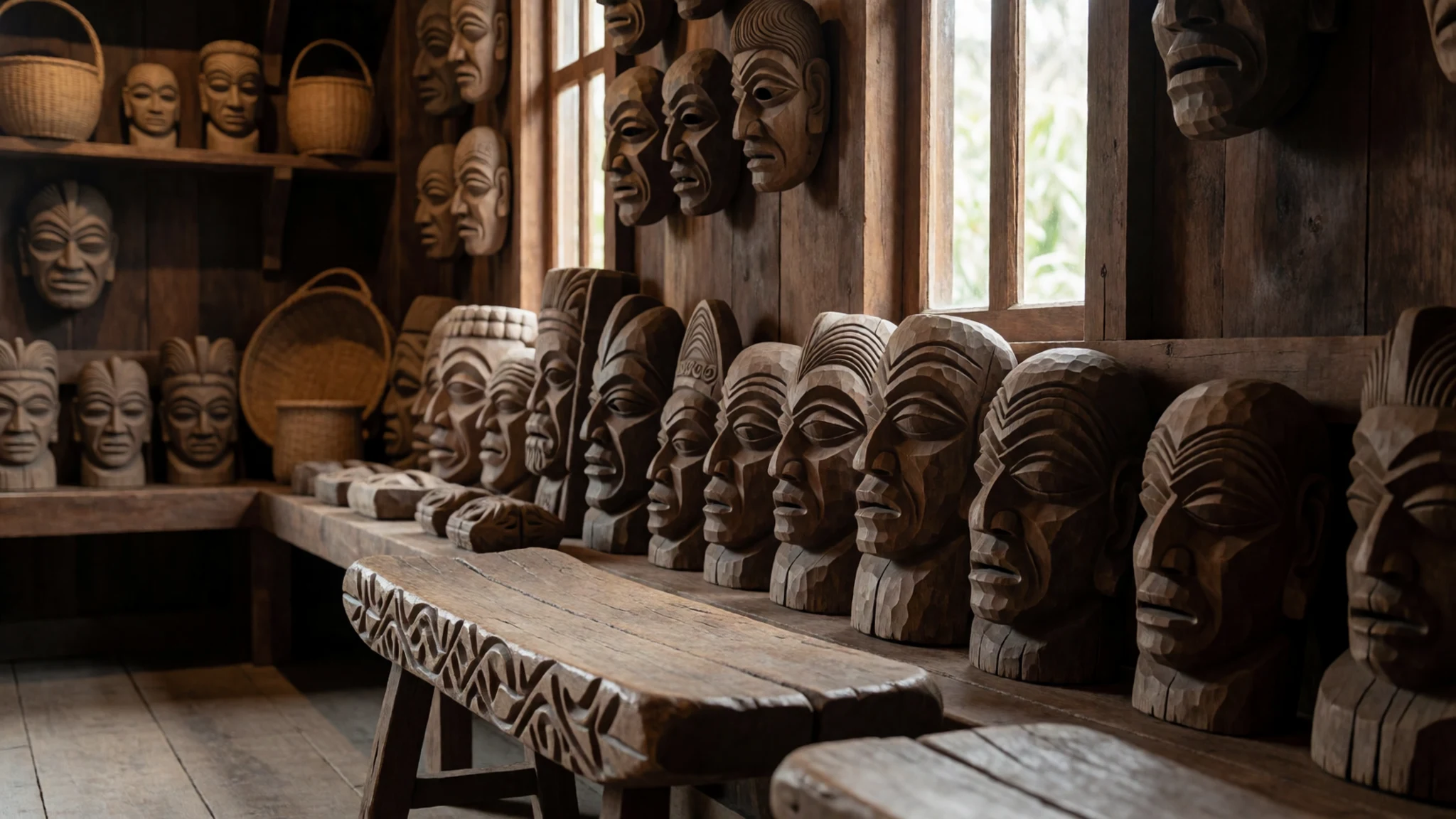
- Hot spring at Hungduan — Hungduan, a short drive from Banaue
A geothermal hot spring beside a river, reached by walking across rice terraces from the Hungduan Elementary School. The road to the school is not yet paved, so expect a rough approach and plan the day around it. Take water, sun protection and a local guide if you are unsure of the path. The setting, with fields and river, is much of the appeal.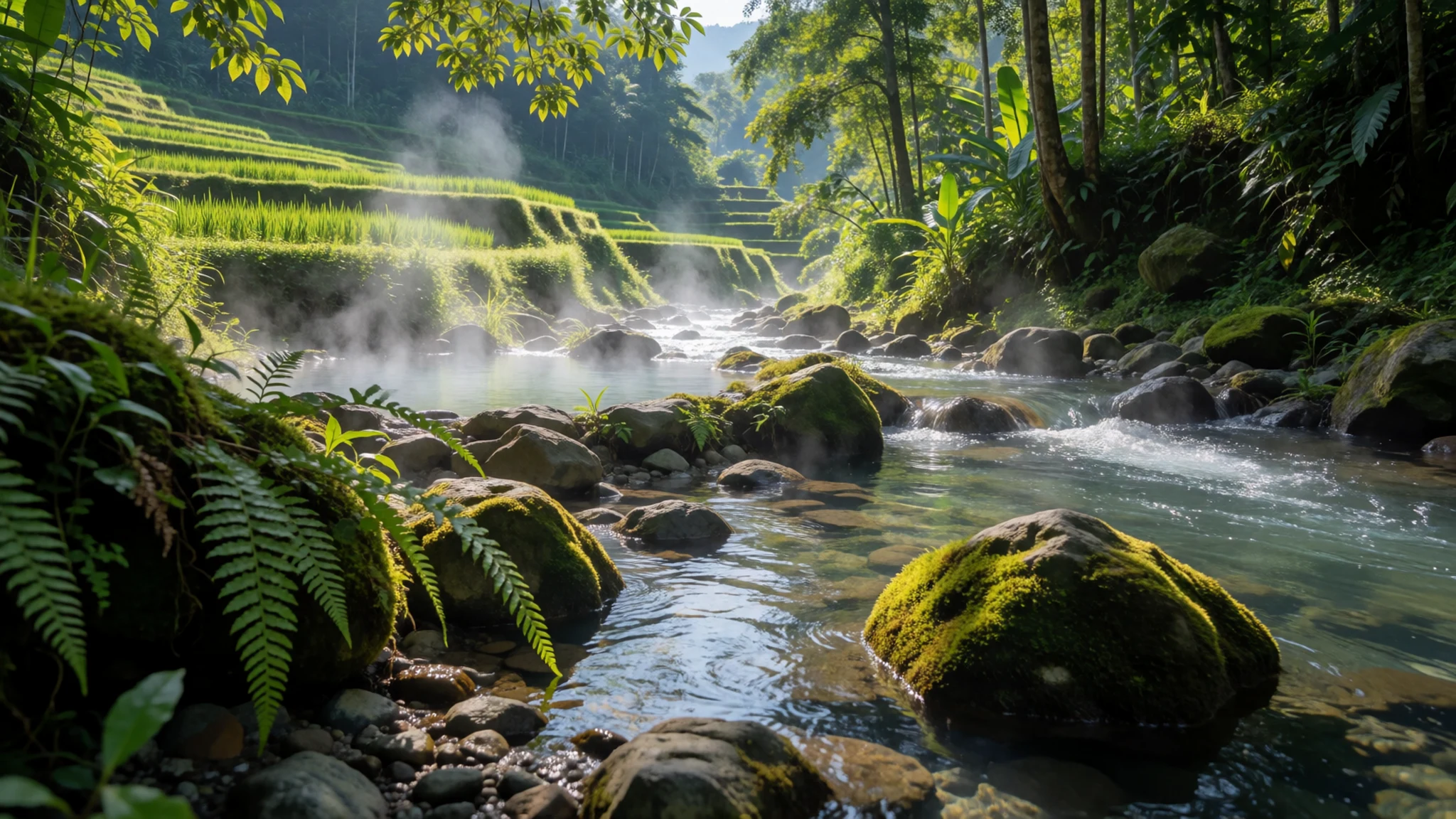
Culture
The terraces are a working landscape, and that shapes how visitors should behave. Families still plant and harvest here, so keep to the paths and stay off planted paddies and crumbling rims. The carved wooden figures called bulol are tied to rice and the household, and many rituals around planting are part of community life rather than entertainment.
Hospitality matters. Guesthouses, eateries and small shops are often family-run, and a friendly greeting goes a long way. Some inns stage cultural shows for visitors, which is different from community events, so ask how a performance is arranged before you book one. The municipal tourism office handles the environmental fee and can arrange guides, so use it rather than paying informally.
Ask before photographing people, especially at ceremonies or while they are working, and accept a no without argument.
What to wear
Traditional Ifugao dress was woven at home on backstrap looms from plant fibres and cotton. Women's wraparound skirts and shoulder cloths carried band patterns in dark and natural colours, and designs varied between communities. Men's clothing was simpler, and ceremonial pieces, decorated with beads or fibre work, marked status and special occasions. Today most people in Banaue wear ordinary clothes from the market. Woven cloth is kept for ceremonies, weddings and tourist performances, where the costumes are often more colourful than everyday wear.
On the terrace paths you will see jeans, T-shirts and rubber sandals, and farmers wear practical clothes for the work. A visitor should dress for sun and hard walking. Pack a wide-brimmed hat, a long-sleeved light shirt and trousers or a long skirt for villages and churches. Shorts are fine at the viewpoints, but cover shoulders and knees when you enter homes or ceremonial spaces. Footwear matters most. Choose closed shoes with good grip for mud-walled paths and steep steps, and carry a light rain layer, because the weather can change quickly in the hills.
What to eat
- Terrace rice and vegetables — Guesthouses and village eateries in Banaue town
Rice grown on the terraces is served at most guesthouses, often with vegetables picked from the same fields. Ask what is in season, since planting varies across the slopes. The taste is plain and filling, the way to eat in a farming community.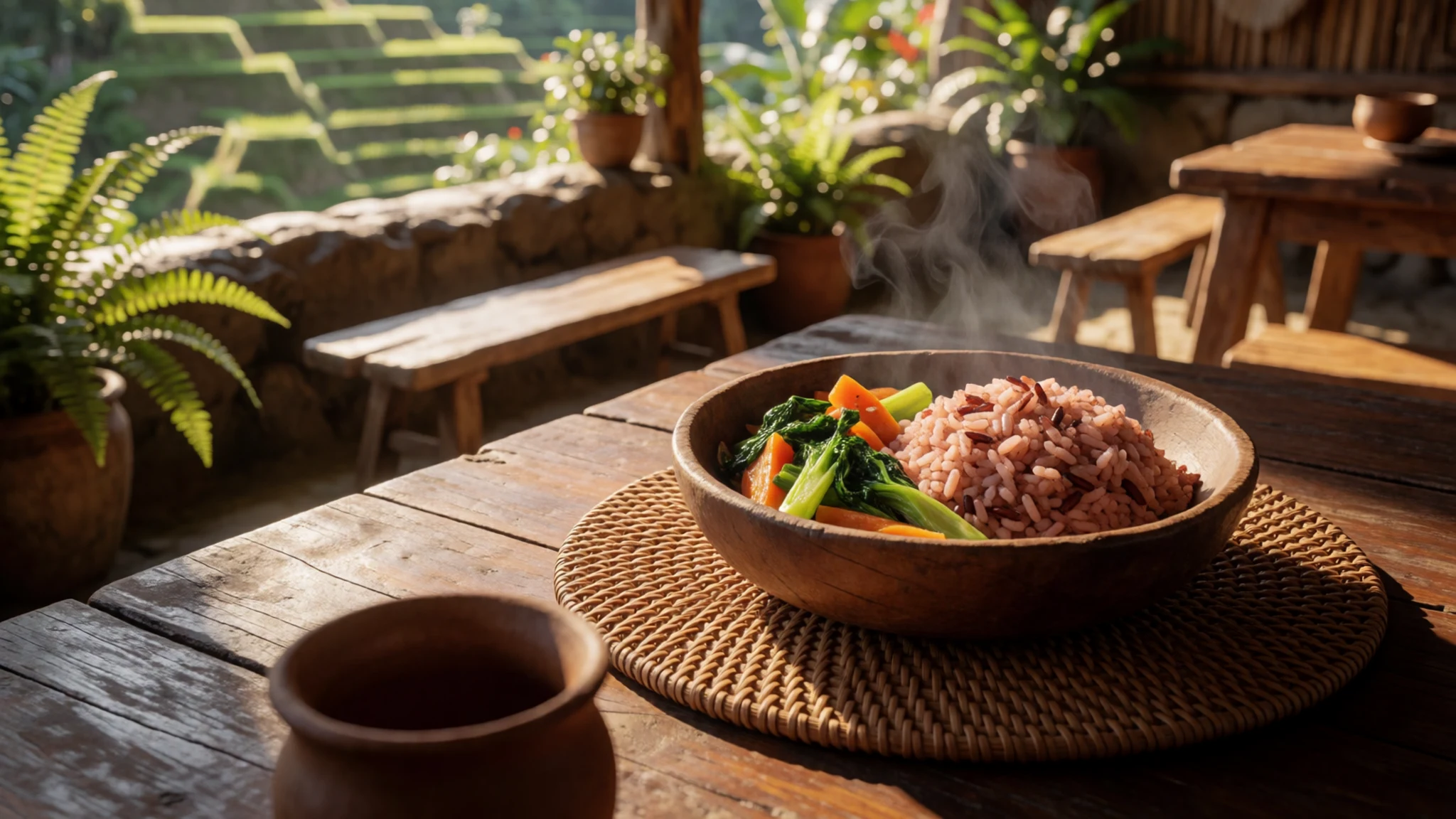
- Veranda meals at a valley-view lodge — A lodge restaurant with a veranda, near the town centre
Set meals with views over the valley, served indoors or outside on a wide veranda. The menu mixes Filipino, Asian and Western dishes, so it suits travellers who want something familiar after long days on the road. Go at a quiet time to get the best seats.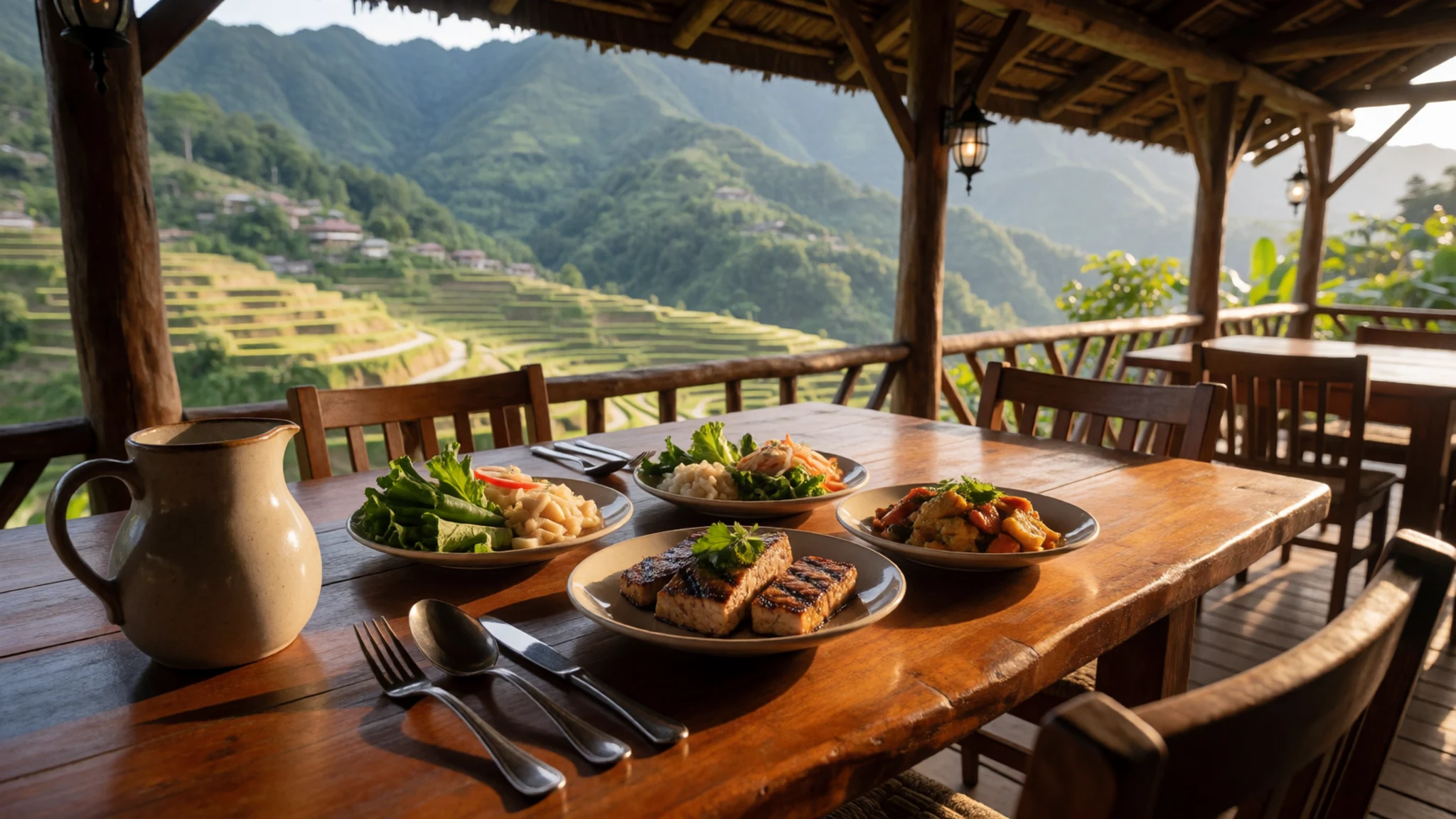
- Ifugao house dinner — A native-style house restaurant on the edge of town
Dishes are served in a traditional Ifugao house surrounded by rice fields. Ask whether a cultural show is running that evening, since some inns offer one on request. It is a good place for a slow meal, and a sensible choice when the weather turns. - Family plates at a small eatery — A family-run eatery in Banaue town centre
Simple main dishes are cooked by a family in a small eatery in the town centre. Ask what is ready, since the choice changes with the day. Tea and coffee are served alongside. Go early, before the lunch rush. - Native rice wine — Inns and lodges around Banaue town
Native rice wine, or sometimes sugarcane wine, is offered at most inns and lodges in the area. Ask for it with a meal and treat it as a social drink. Go easy: the altitude and the heat can make small glasses feel stronger than they are.
Plan it
Best time. January to April is the dry season, and November to May is the usual trekking season, when trails are firmer and the views are clearer. Mornings are usually the clearest. Late in the dry season the afternoon heat can be strong on the exposed slopes, so plan walks for early or late in the day.
How long. 2–3
Getting there. Fly into Manila, then take a long bus north to Banaue, either direct or via Baguio or Bontoc. The last leg is usually a jeepney or minivan from Bontoc or Solano. Mountain roads are slow, and landslides and fog are common.
Budget. low
Tips
- Check bus timetables with the operator and book ahead where you can
- Go to the viewpoints early, before the light flattens and the groups arrive
- Carry cash for guides, small purchases and the environmental fee
- Hire a local guide for the hot spring walk and check permit rules for hikes
- Bring water, a hat and sunscreen, since many slopes face direct sun
- Consider staying in Batad, where the stone-walled terraces form an amphitheatre
Etiquette
- Stay on marked paths and off the planted walls
- Ask before photographing people, especially at ceremonies
- Do not climb or touch carved figures or sacred places
Nearby
Sources
- Wikidata Q826551 (CC0)
- Wikipedia: Banaue Rice Terraces (rev 1375000884) (CC BY-SA 4.0)
- Wikivoyage: Banaue (rev 5406876) (CC BY-SA 4.0)
- Pana Banaue Rice Terraces (Cropped), User:Ori~ (CC BY 3.0)
- Banaue-terrace.JPG, Roundtheworld (Public domain)
- Philippine Island - Luzon Island - NARA - 68157163 (Public domain)
- The Bulol, Shubert Ciencia (CC BY 2.5)
- Ifugao Rice Terraces historical marker, NHCP (Public domain)
- Pana Banaue Rice Terraces, unknown author (CC BY-SA 2.0)
- Photographer at Banaue Rice Terraces, Jon Rawlinson (CC BY 2.5)
- 530 Banawe Rice Terraces, Dec 1980, wilford peloquin (CC BY 2.5)


