Cascade Langevin
Cascade Langevin, France
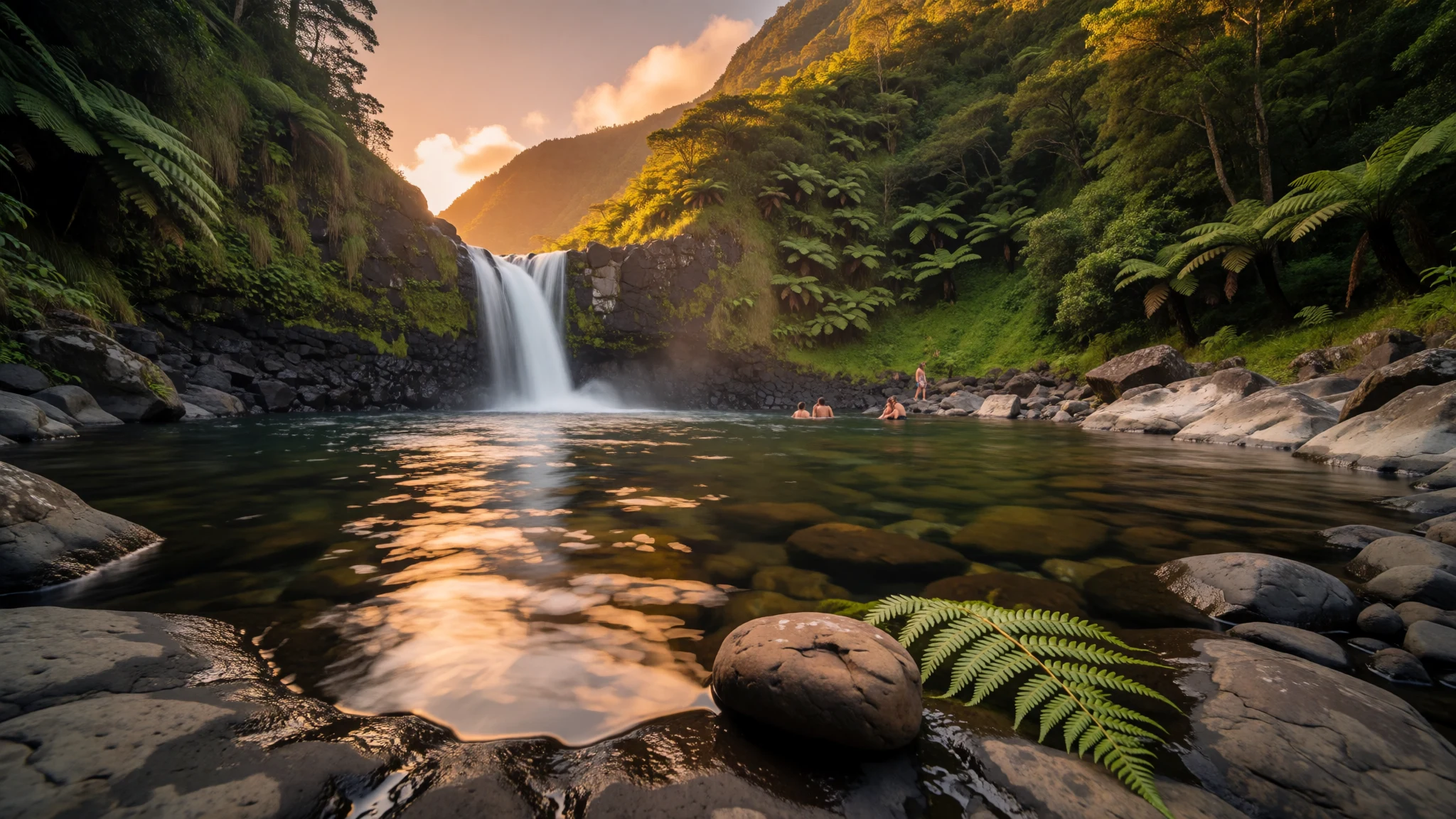
Cascade Langevin is a forest-ringed waterfall and swimming pool on Réunion's south coast, where locals gather and visitors can join them.
The place
Cascade Langevin, also known as the Grand Galet Falls, sits in the commune of Saint-Joseph on the south side of Réunion, a French island in the Indian Ocean. The name depends on who is talking: Langevin comes from the river that feeds the fall, while Grand Galet refers to the big rounded stones that the water has tumbled into the riverbed. Maps and signs use both, and the facts record for the place lists Grand Galet Falls as its label.
The fall lies inside Réunion National Park, so the setting is protected forest and steep volcanic slope rather than a resort. Water drops into a natural pool below, and that pool is the real draw. On weekends and public holidays it fills with families who arrive with coolers, mats and speakers, and the grassy ground nearby becomes a picnic site. On a weekday morning it is far quieter, and the sound of the water carries across the whole clearing.
The approach is short and easy by the standards of an island known for hard hiking, which explains the crowds. Most visitors come by car from the coast road, reach a small cluster of neighbourhoods near the river, and walk in from there. The cool, fresh water comes as a relief after the heat of the coast, but it is mountain water and can be cold at first. The setting suits a half-day better than a full one, and it pairs well with the rest of Saint-Joseph and the southern shore.
Its story
The story of Cascade Langevin is mostly the story of a river and the people who live beside it. The Langevin runs down from the mountainous interior of Réunion towards the Indian Ocean, and like most rivers on this volcanic island it is steep, fast and prone to sudden rises after heavy rain. The fall is one of the places where that descent becomes visible, with water dropping over a lip of dark rock into a deep basin.
For generations the pool has served the surrounding neighbourhoods as a place to cool off, meet and eat outdoors. Nearby communities such as Passerelle and Grand Défriché depend on a single bridge across the river, which is why access has become a local issue. The bridge links homes to the wider road network and is also the route that visitors take to the water. When the authorities reinforced it and renovated the entrance area in recent years, the work was aimed as much at residents as at tourists.
That mix of everyday use and visitor interest shapes the place today. Weekends bring a festive crowd, while weekdays are calmer and closer to what the setting must have been like long before the car park and the picnic tables. The park status also matters. It means the forest around the fall is looked after, and it means rules about behaviour, litter and swimming that visitors are expected to follow.
The river itself can change the plan. After a storm or during the cyclone season the water can turn brown and strong, and local officials may close access. A visit here is best treated as flexible, with the weather deciding the details.
What to see
- The main pool beneath the fall — Langevin river, Saint-Joseph
The natural pool at the foot of Cascade Langevin is the reason most people come. Water drops from a rock lip into a wide basin ringed by boulders and forest. Strong swimmers can approach the curtain of water, but the current and depth change with rainfall, so watch what the locals do first.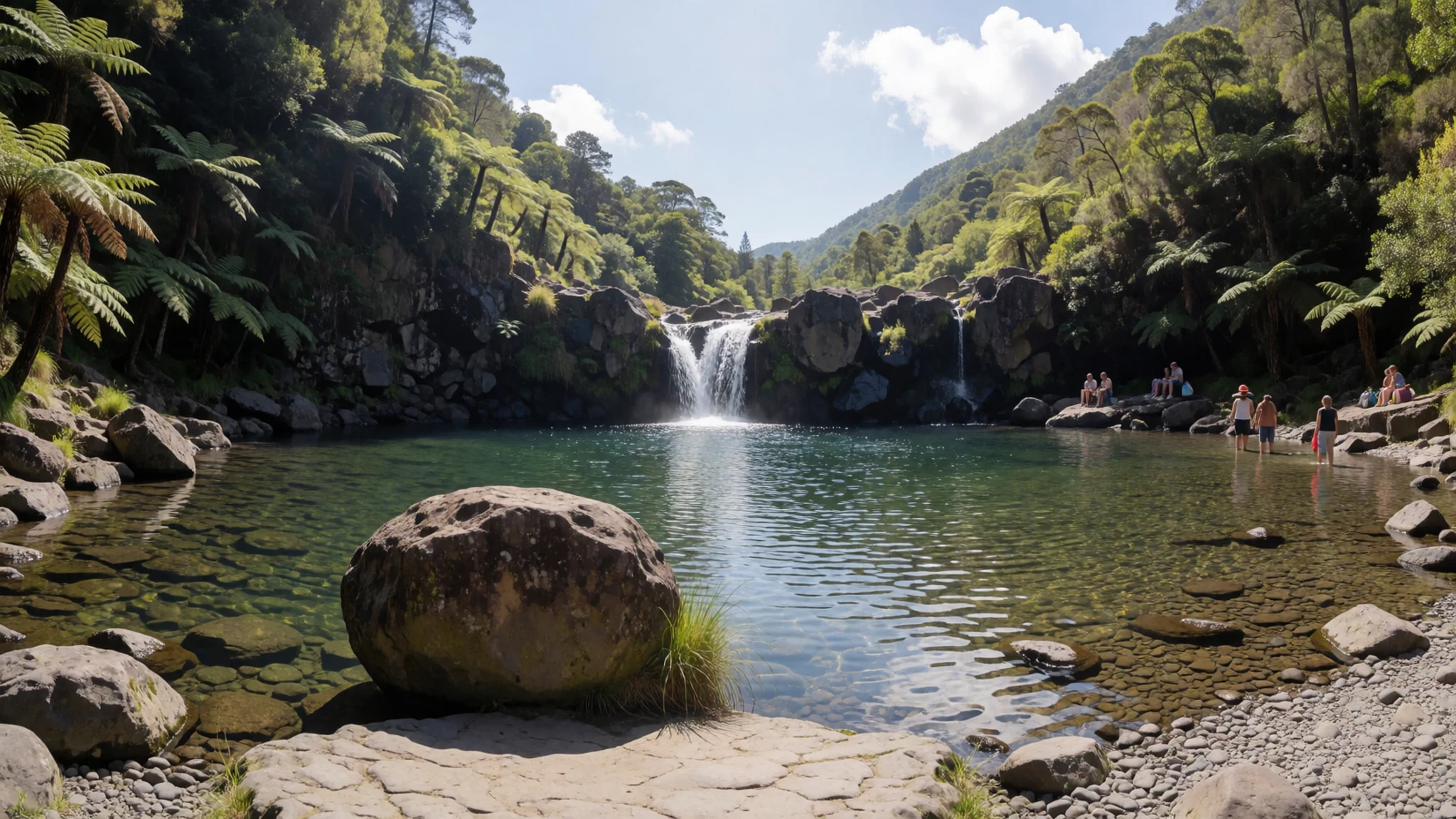
- The viewing angle from the approach — Entrance path, Langevin
Before reaching the water, the path offers a straight view of the whole fall against the green slope behind it. This is the best moment for photographs, particularly in the morning light before the crowds build and spray begins to haze the lens. The wider view also shows how steep the valley walls are.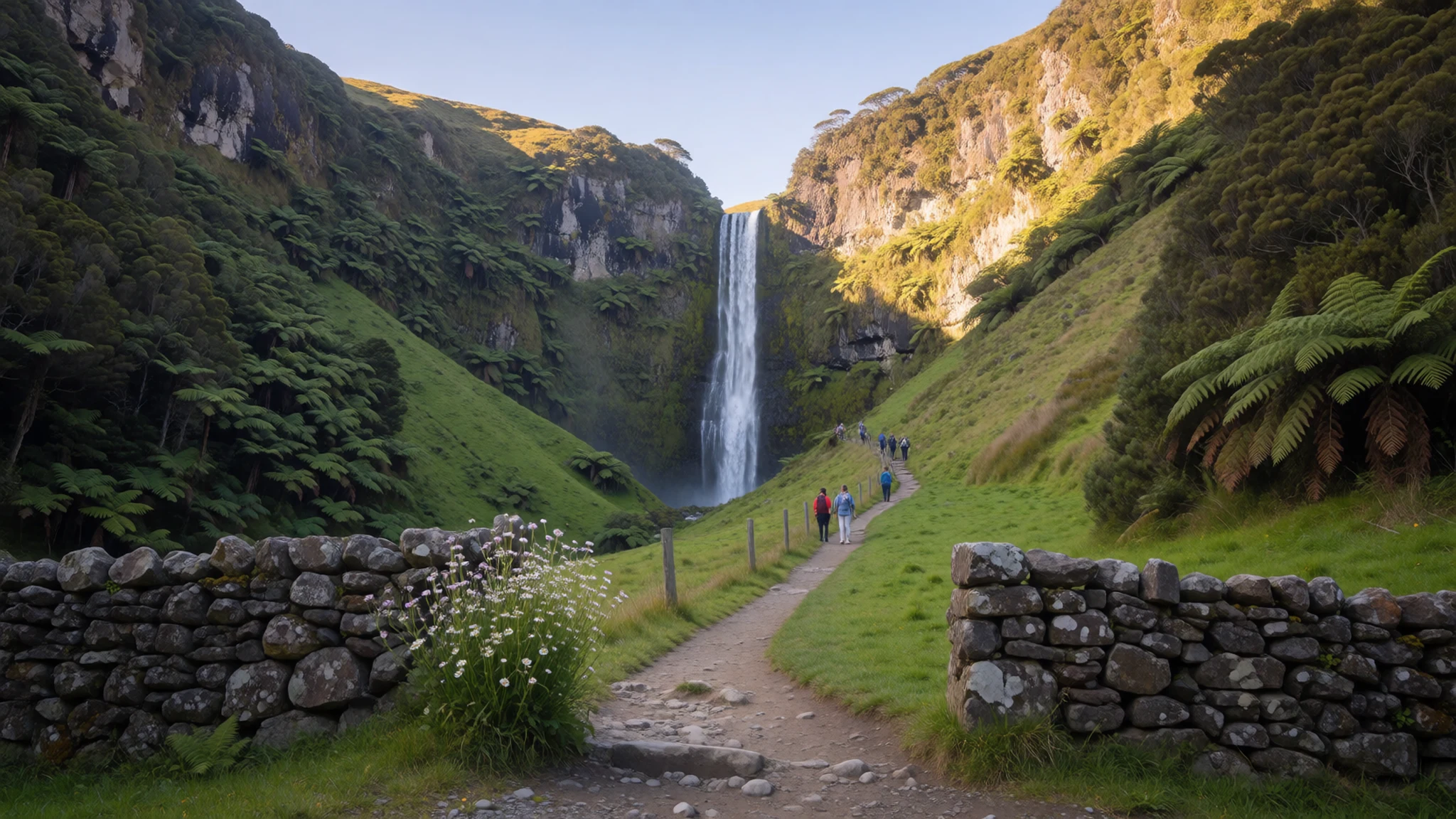
- The bridge and neighbourhoods — Passerelle and Grand Défriché
The single bridge across the river connects the falls area with the neighbourhoods of Passerelle and Grand Défriché. Standing on or near it gives a sense of how ordinary life and visits overlap here. Take care with traffic, leave gateways clear, and remember that these are people's homes rather than a theme park.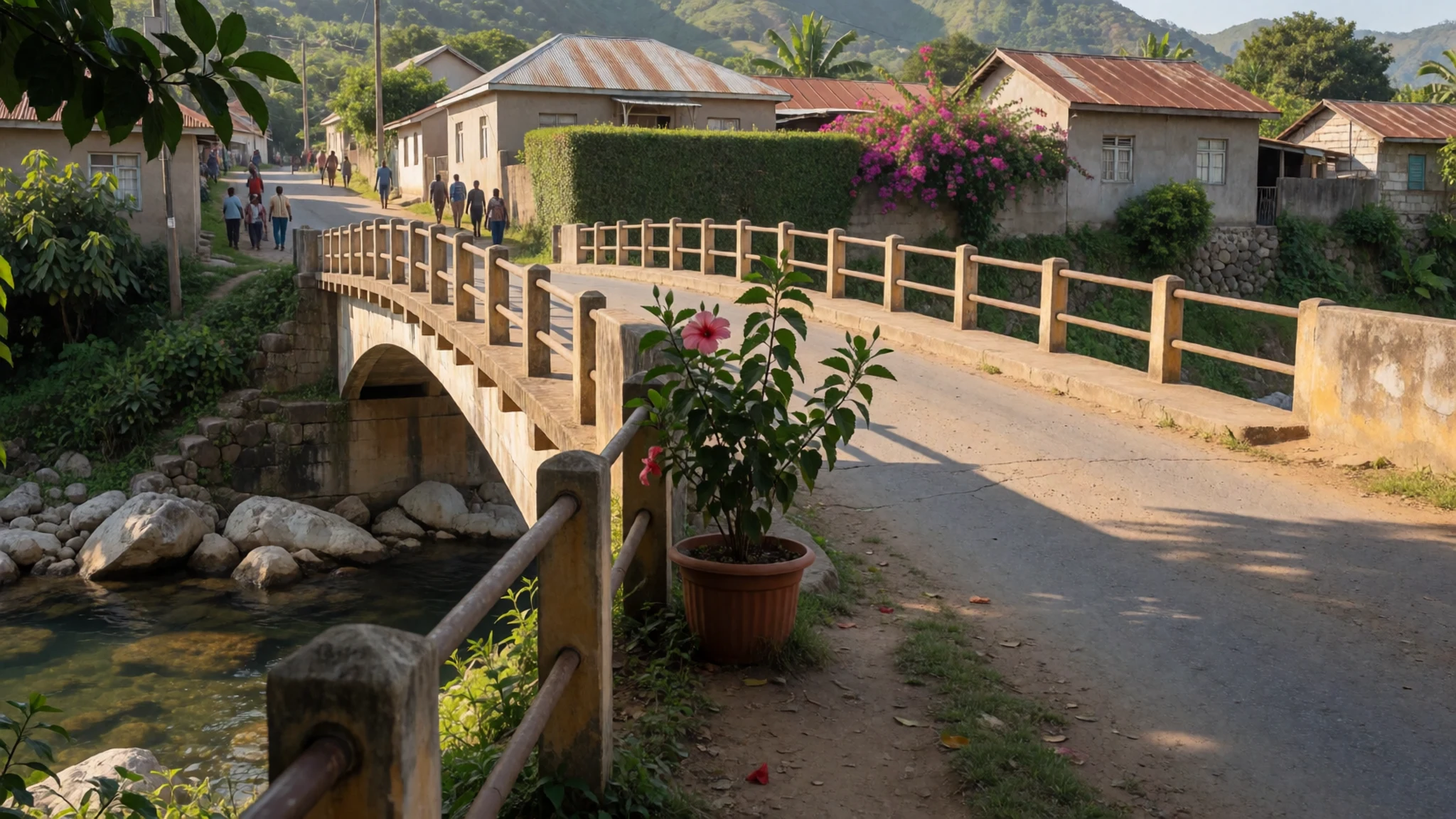
- Canyoning in the Grand Galet gorge — Grand Galet gorge
Operators run guided canyoning trips in the gorge around Cascade de Grand Galet, with abseils, jumps and swims through the rock channel. The photographs of these trips show helmets, wetsuits and ropes, so this is for confident, fit visitors. Book through a licensed guide and check conditions on the day.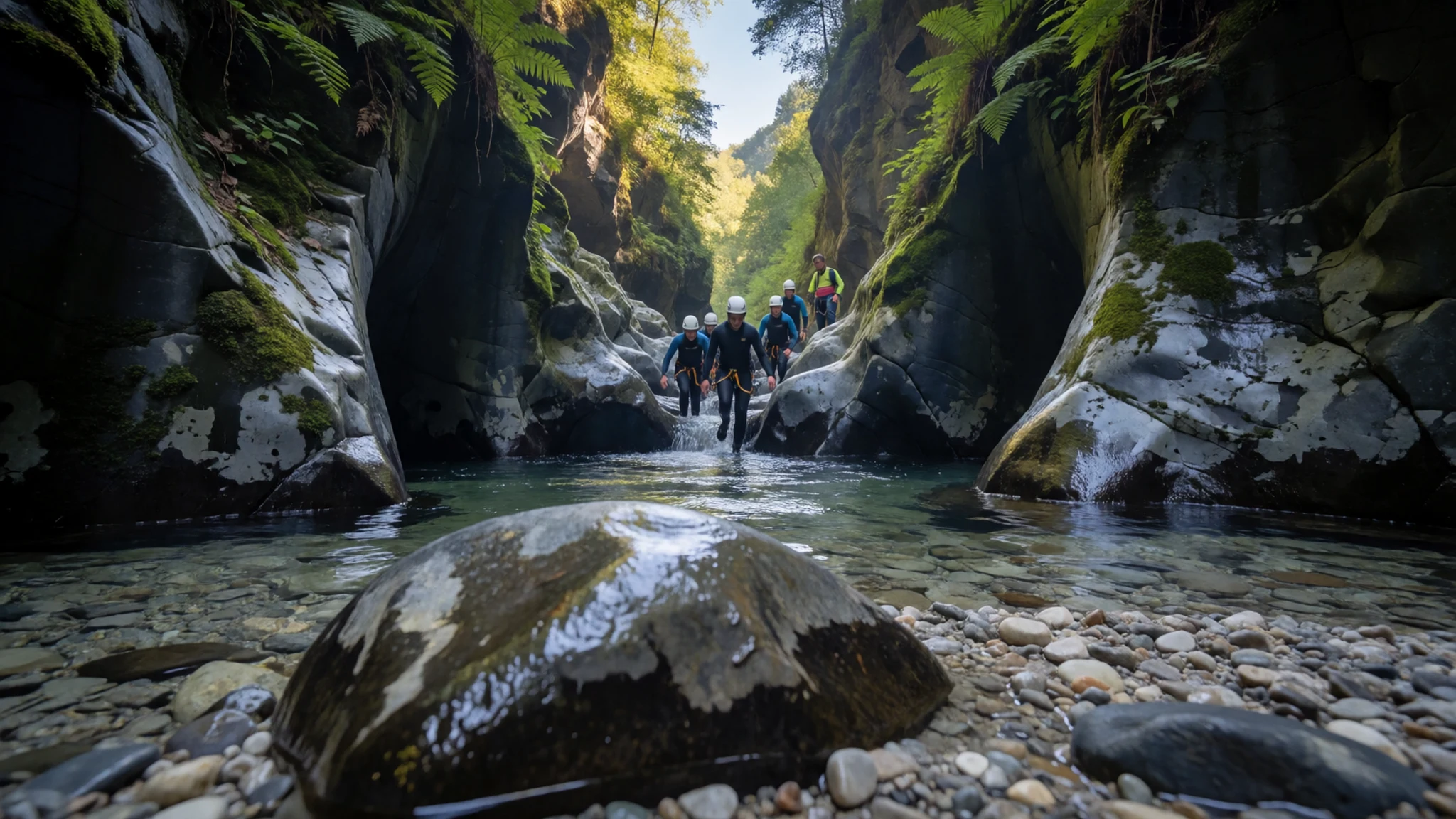
- Cascade Grande Anse — Grande Anse, south coast
A short drive west along the southern coast, Cascade Grande Anse offers a different kind of waterfall, closer to the sea and with a more open landscape. It makes a sensible add-on for a day built around waterfalls and shoreline. Check road and weather conditions before setting out, as the coast road can be busy at weekends.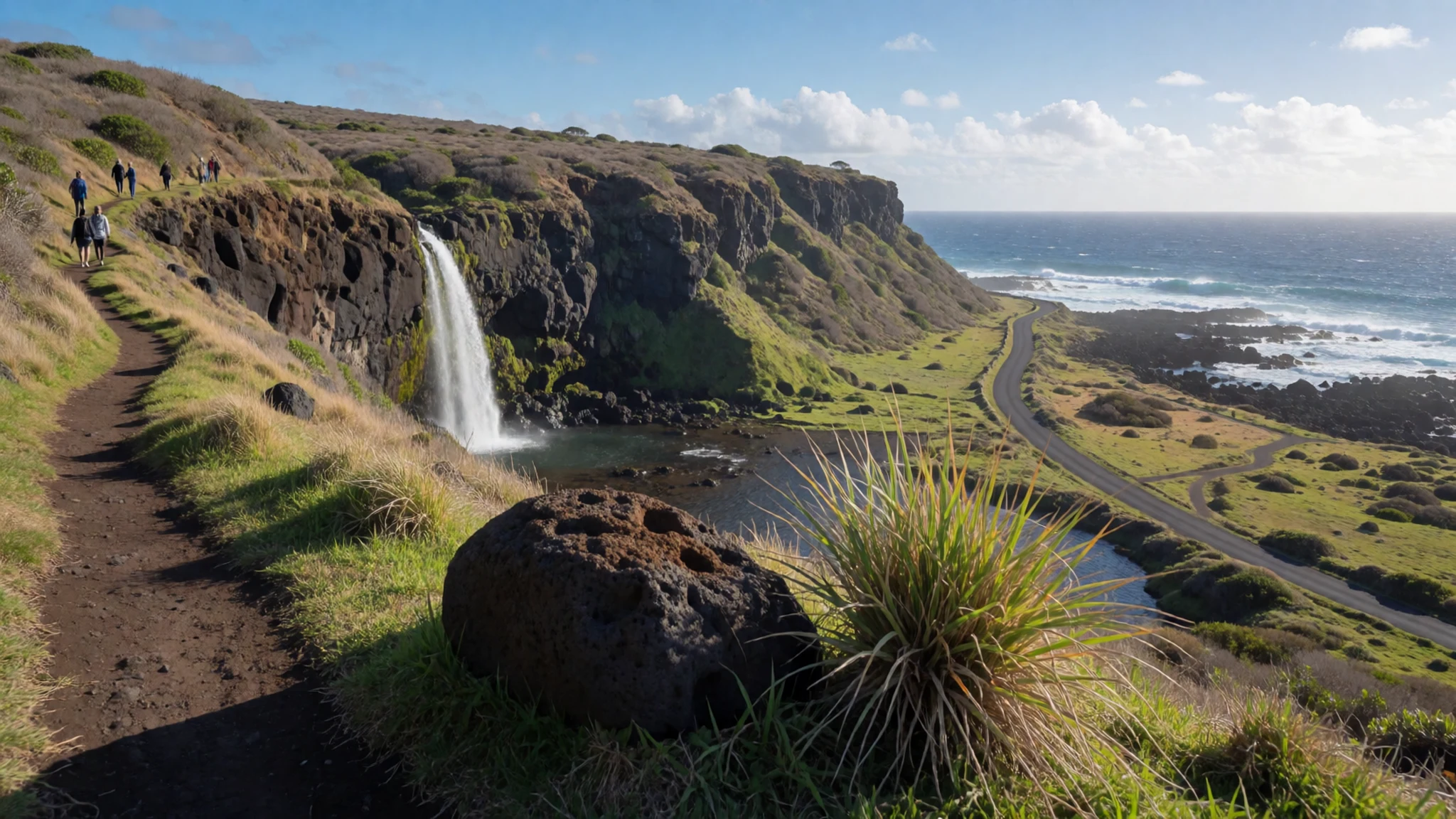
Culture
Cascade Langevin is a Creole place first and a tourist place second, and that shapes the atmosphere. Réunion's culture grew from the meeting of African, Indian, Chinese and European communities, and everyday life here still carries that mix in language, food and festivals. French is the official language, while Réunion Creole is what most people speak among themselves. A greeting in French, even a simple bonjour, goes a long way with families at the pool.
The falls themselves are a weekend institution. Families arrive early to claim a shaded spot, set up grills or open containers of food, and spend most of the day in and around the water. Music, card games and long lunches are part of the scene. Visitors who treat the site as a shared outdoor living room, rather than a sight to tick off, tend to get the warmest reception.
The setting inside a national park adds its own expectations. Plants, rocks and wildlife are protected, and litter is a visible problem when crowds are large. Local residents and park staff care about the area, and they notice who leaves it clean. Simple habits such as carrying rubbish out and keeping music at a modest volume make a difference.
Be prepared for a social, sometimes noisy day at weekends. If peace is the aim, come on a weekday morning. Either way, take all your rubbish with you and ask before photographing people who are swimming or picnicking.
What to wear
Cascade Langevin is a swimwear-and-sandals sort of place, but Réunion's dress traditions are worth knowing before and after a visit. Traditional clothing on the island reflects its Creole and Indian heritage: cotton prints, madras checks and bright headscarves are linked to Creole identity, while saris and other South Asian garments appear at Tamil temple festivals and family events. These outfits are mainly seen at celebrations, markets and cultural occasions rather than at the waterside.
Day to day, people on the island dress for heat and humidity. Light cotton shirts, shorts, summer dresses, flip-flops and football shirts are common, and at the pool most people are in swimwear, rash vests or board shorts, often with a towel wrap or sarong. In town, people dress casually but neatly, and beachwear is usually kept for the beach and the water.
For a visit to the falls, wear a swimming costume under quick-drying shorts or a light dress, and bring a spare change of clothes. Shoes matter more than anything: the rocks around the pool are wet and slippery, so water shoes or sandals with a firm grip are far better than bare feet or smooth flip-flops. A hat, sun cream and a light rain jacket are sensible, because showers arrive quickly in the hills. Carry a cover-up for the walk back through the neighbourhoods and for any stop in a village, church or Tamil temple, where shoulders and knees should be covered.
What to eat
- Cari (Creole curry) — Family-run eateries in Saint-Joseph
Cari is the island's everyday curry, built on tomato, onion, ginger and turmeric, with chicken, sausage, fish or pork. It is served with rice and lentils or beans. Look for it at roadside eateries and family-run lunch places around Saint-Joseph.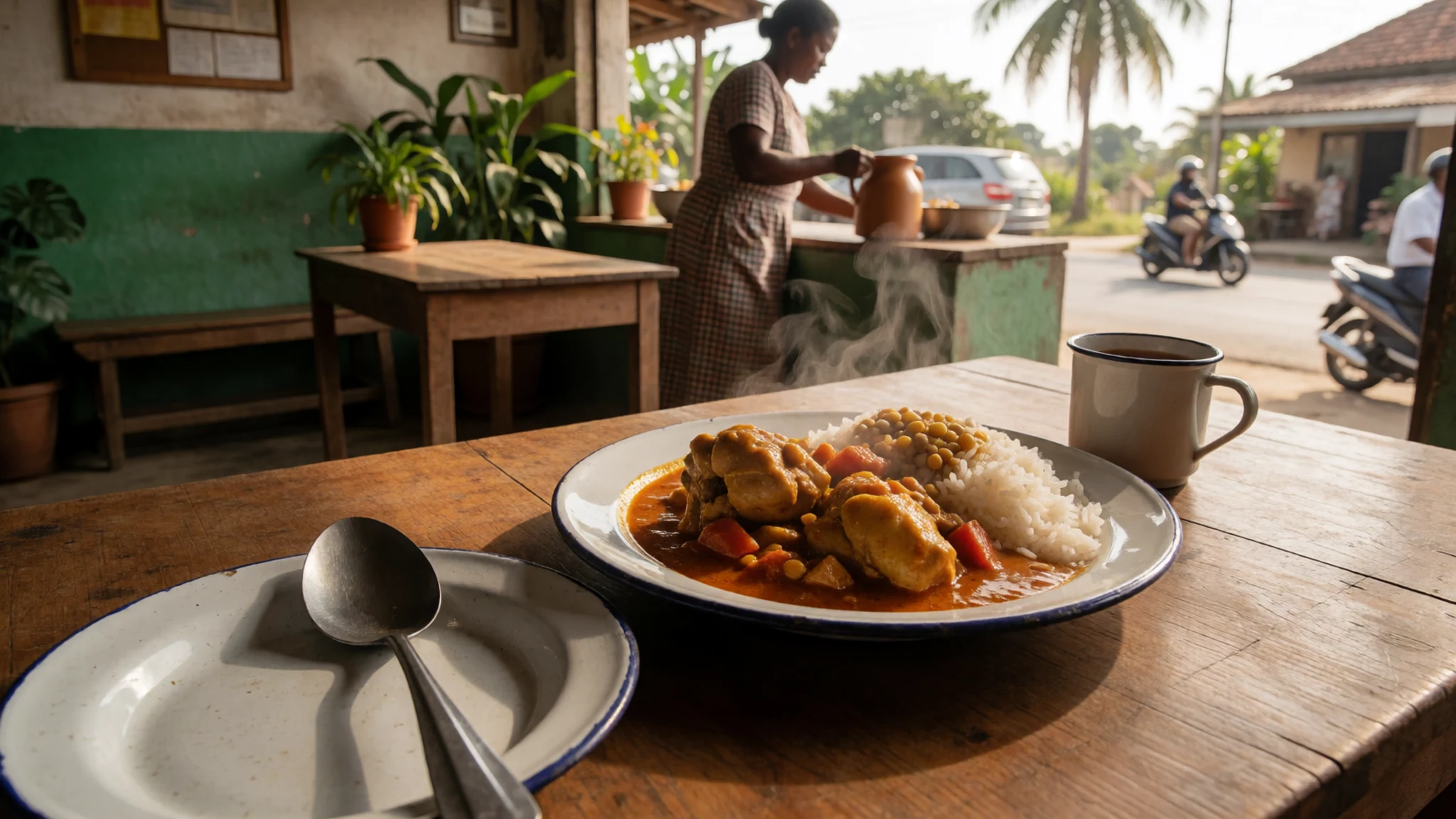
- Rougail saucisse — Weekend picnic spots and market food stalls
Rougail saucisse pairs smoked sausage with a spiced tomato sauce, often with rice and a side of chilli paste. It is hearty, a little smoky and very popular for weekend picnics. Many pool-side groups cook it on portable grills.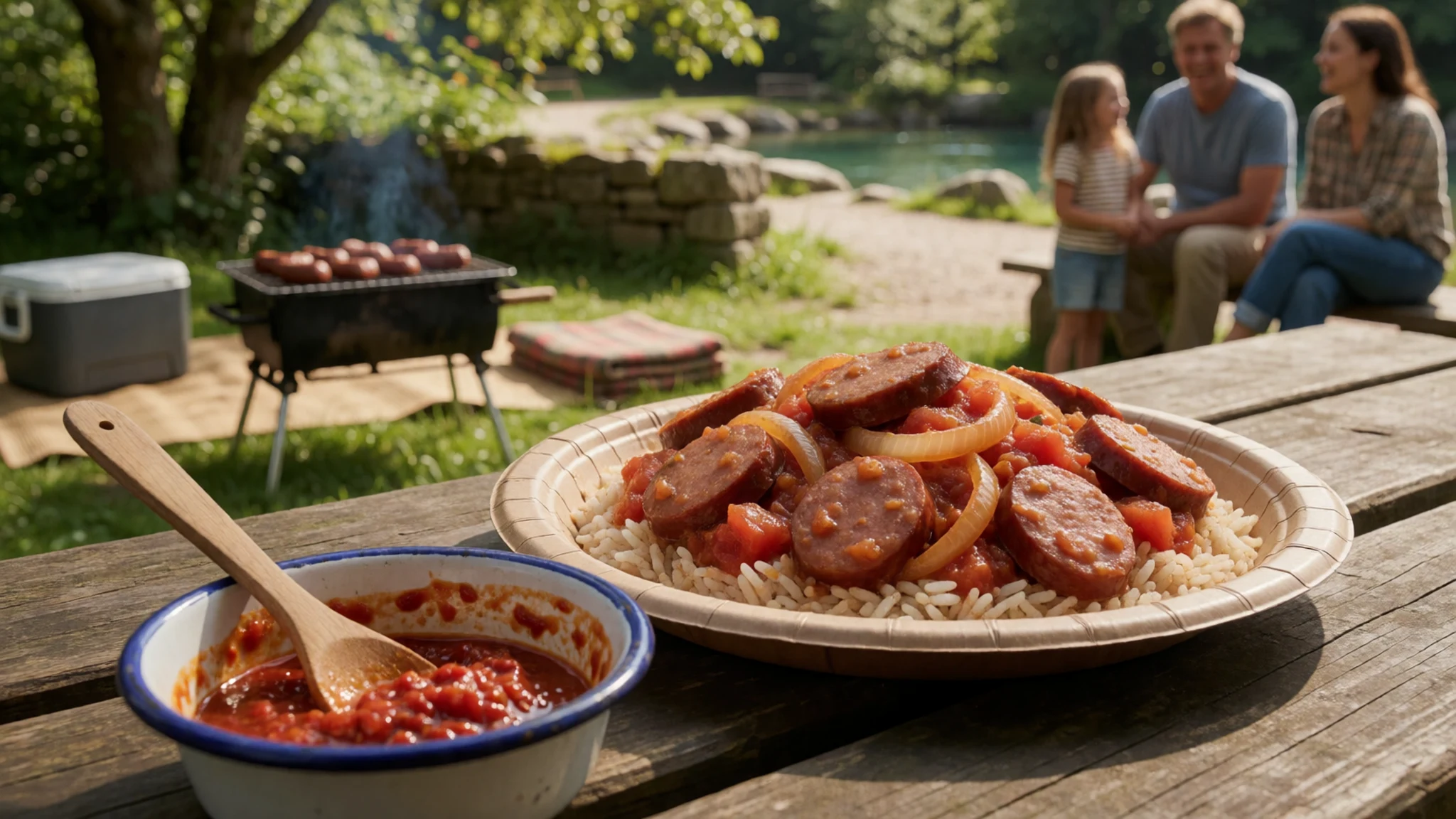
- Samoussas and bouchons — Market stalls and snack counters in town
Samoussas are small fried pastry triangles filled with vegetables, cheese or meat, while bouchons are steamed dumplings, a Chinese-Creole snack. Both are easy to carry to the pool and share. Look for them at bakeries, snack counters and small market stalls. - Fresh tropical fruit — Saint-Joseph market and roadside stalls
Réunion's markets sell pineapple, mango, lychee in season, bananas and other tropical fruit. Pineapple here is often sold peeled and cut, sometimes with a pinch of chilli or salt. It is a cool, sweet stop after the heat of the walk. - Rhum arrangé — Restaurants and rum shops across the south coast
Rhum arrangé is rum infused with fruit, vanilla or spices and sipped slowly after a meal. It is a social drink, usually offered in small glasses. Save it for the evening, not before swimming in a river pool.
Plan it
Best time. May to October is the cooler, drier season on Réunion, so the pool is more reliable and the walk is more comfortable; September and October are especially pleasant. January to March brings cyclone risk, heavy rain and a higher chance of the river rising or access being closed.
How long. 1–2
Getting there. Fly to Roland Garros Airport near Saint-Denis or to Pierrefonds Airport near Saint-Pierre, which is closer to the south. From there, hire a car and take the coast road to Saint-Joseph, then follow signs towards Langevin and the falls. Check local bus options on the regional transport website before relying on them.
Budget. mid
Tips
- Go on a weekday morning for a quieter pool; weekends and public holidays are busy and loud
- Check the weather and the river before setting out, as water levels and access can change quickly after rain
- Wear grippy water shoes, because the rocks are slippery
- Bring water, snacks, sun cream and a bag for rubbish, and check the national park website for current access rules
- Carry some cash for small stalls and snacks, and keep valuables out of sight in the car
Etiquette
- Take all your rubbish away and respect the national park rules
- Keep music low and give picnicking families space
- Ask before photographing people, especially children
Nearby
Sources
- Wikidata Q1046858 (CC0)
- Wikipedia: Grand Galet Falls (rev 1362221206) (CC BY-SA 4.0)
- Wikivoyage: Réunion (CC BY-SA 4.0)
- Photo: Île de La Réunion, France. Waterfall Cascade Langevin — Auregann (CC BY-SA 4.0)
- Photo: Cascade Langevin, Réunion — JoKerozen (CC BY-SA 2.5)
- Photo: Réunion relief location map — Sting (CC BY 3.0)
- Photo: Cascade Grande Anse — JarodFR (CC BY-SA 4.0)
- Photo: Baigneur, Cascade de Grand Galet — Thierry Caro (CC BY 3.0)
- Photo: Canyoning at Cascade de Grand Galet — VillageHero (CC BY-SA 2.0)
- Photo: Canyoning at Cascade de Grand Galet 2 — VillageHero (CC BY-SA 2.0)
- Photo: Cascade de Grand Galet — VillageHero (CC BY-SA 2.0)


