Cascade aux Écrevisses
Cascade aux Écrevisses, France
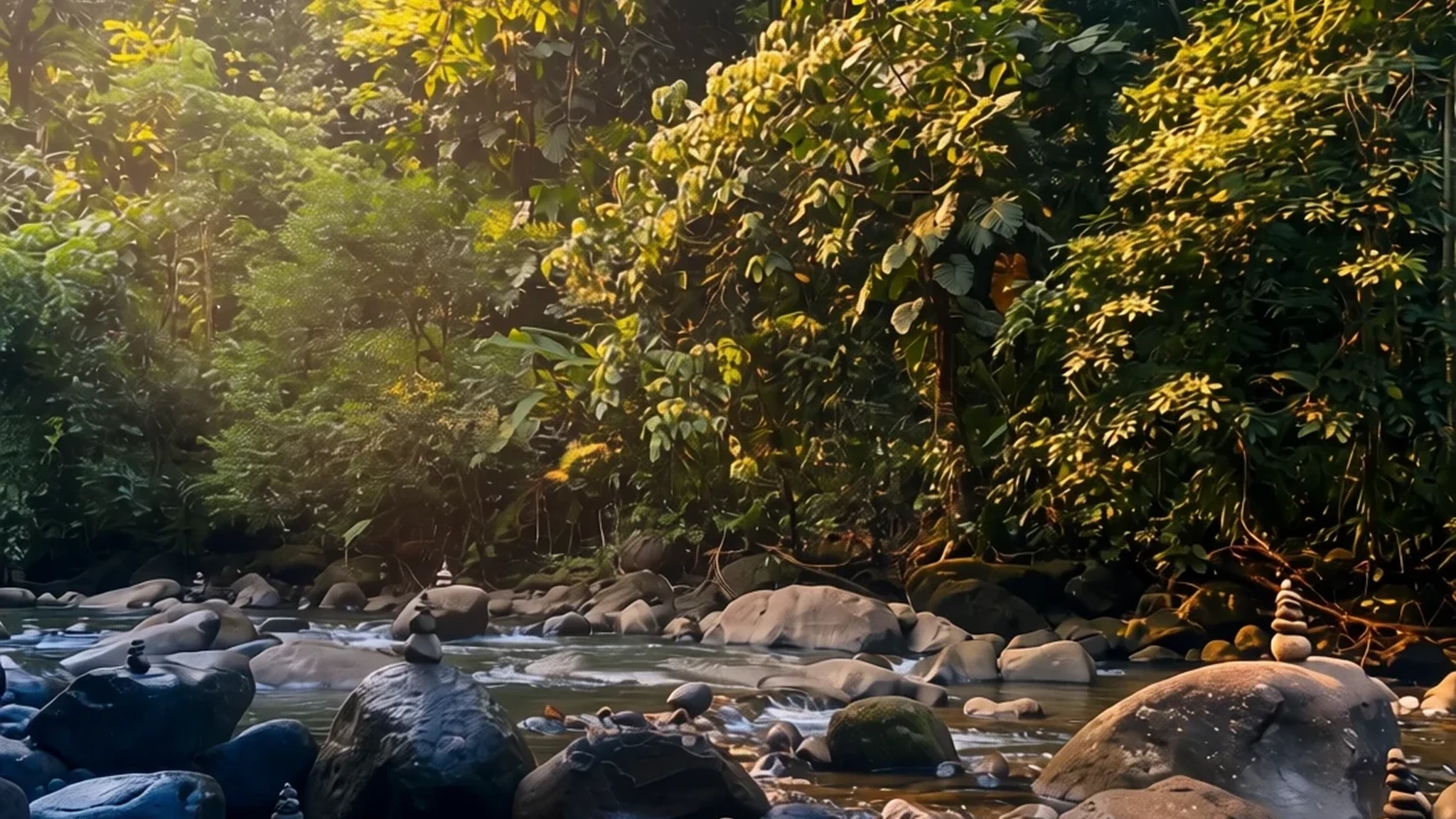
Cascade aux Écrevisses is a cool, forest-ringed plunge pool on Guadeloupe's volcanic Basse-Terre, reached by a short walk into the rainforest.
The place
Cascade aux Écrevisses, the Crayfish Waterfall, lies on Basse-Terre, the western wing of Guadeloupe, within the rainforest of the national park. Guadeloupe is an overseas part of France in the eastern Caribbean, and its two main islands look nothing alike. Grande-Terre to the east is low, flat limestone with beaches and sugar-cane country. Basse-Terre is volcanic, steep and covered in forest, with interior mountains that catch the rain and feed streams like the one that forms this fall.
The volcano La Soufrière rises to 1467 m above this part of the island, and the rivers that run off its slopes are what make the waterfalls possible. The climate is subtropical, softened by trade winds, with fairly high humidity. In practice that means warm days, sudden showers even in the drier months, and a forest floor that is always damp.
The waterfall is a modest, friendly one rather than a roaring spectacle. Its draw is the setting: a small stretch of river, rocks worn smooth, a shaded pool and the sound of water under a canopy of tree ferns and giant leaves. The name comes from the freshwater crayfish that live in these streams. Because it is easy to reach, it works well as a first taste of the interior for visitors who have mostly seen the coast, and it pairs naturally with other forest stops on the same side of the island.
Its story
Cascade aux Écrevisses has no grand founding date or famous battle attached to it. Its story is the story of Basse-Terre's forests and rivers, and of the island that grew up around them.
Guadeloupe has been French since 1635, apart from a short spell under Swedish control that came out of the Napoleonic Wars. Before and after that, the island's economy was built on sugar, and the plantations took the flat, farmable land of Grande-Terre and the lower slopes of Basse-Terre. The steep volcanic interior was harder to cultivate, which is largely why so much of it stayed forested. Today that forest is protected as a national park, and its rivers and falls are among the island's best-known natural sights.
The crayfish in the name tells its own small story. Freshwater crayfish have long been part of Creole cooking in the Antilles, and people who lived near the streams knew exactly where to find them. A waterfall named after them is a reminder that these rivers were once a source of food as well as scenery.
In recent decades the falls have become a standard stop on visits to the park, helped by the fact that the walk in is short and the pool is inviting. Visitors now come from France, the wider Caribbean and further afield, and the place carries the quiet, practical character of a local swimming spot that happens to be on the tourist trail.
What to see
- The waterfall and its pool — Parc national de la Guadeloupe, Basse-Terre
The fall itself is the reason for the trip: a curtain of clear water dropping over dark volcanic rock into a shaded pool. Visitors paddle or swim when the river is calm. After heavy rain the flow can be strong and cloudy, so judge the water before getting in.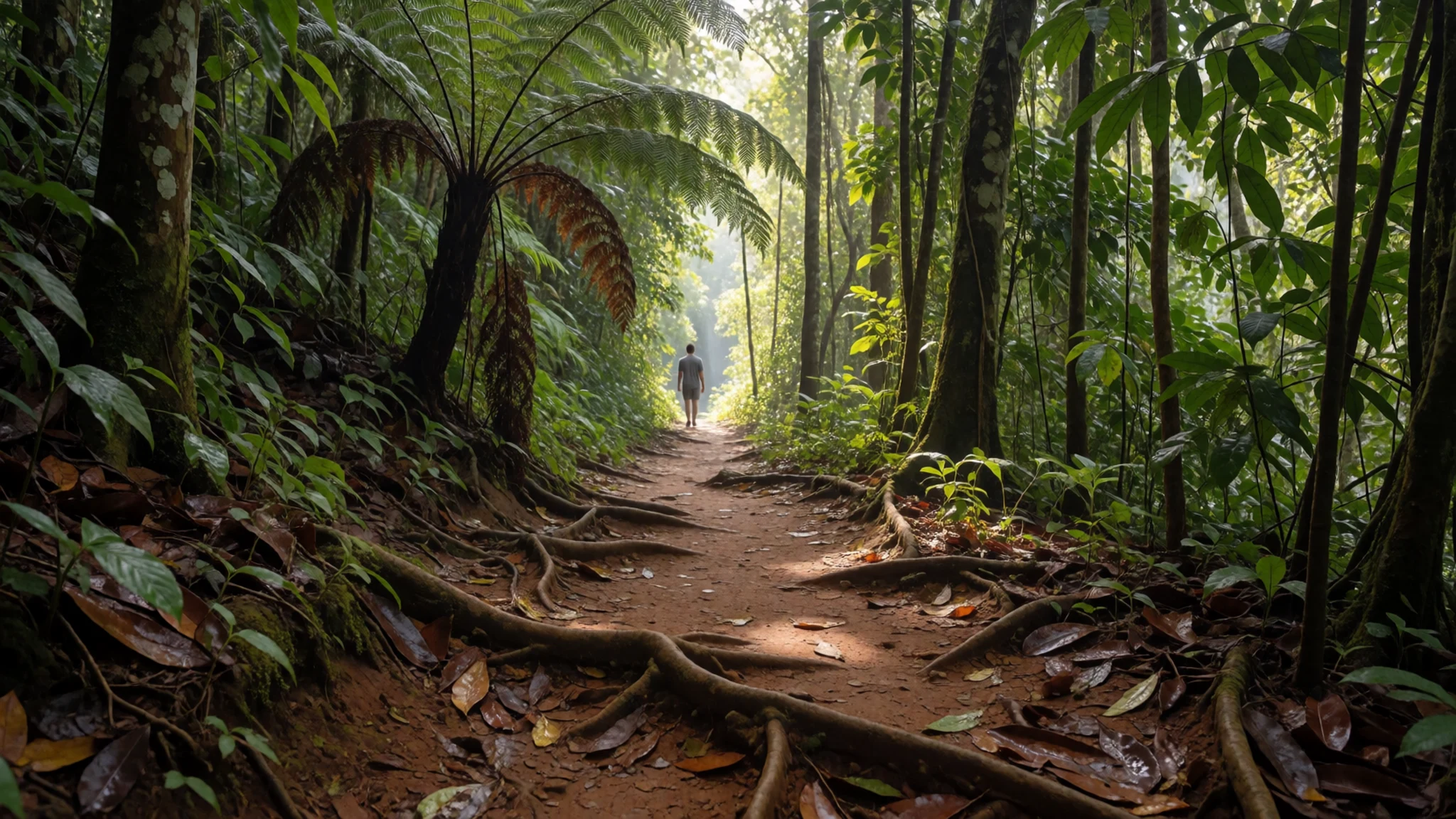
- The forest trail in — Basse-Terre rainforest
The approach is a short walk through rainforest, with tree ferns, tall trunks wrapped in climbers and the occasional bird overhead. Paths are often muddy and roots can be slippery, so proper footwear matters more than distance. It suits families and anyone who wants the forest without a long hike.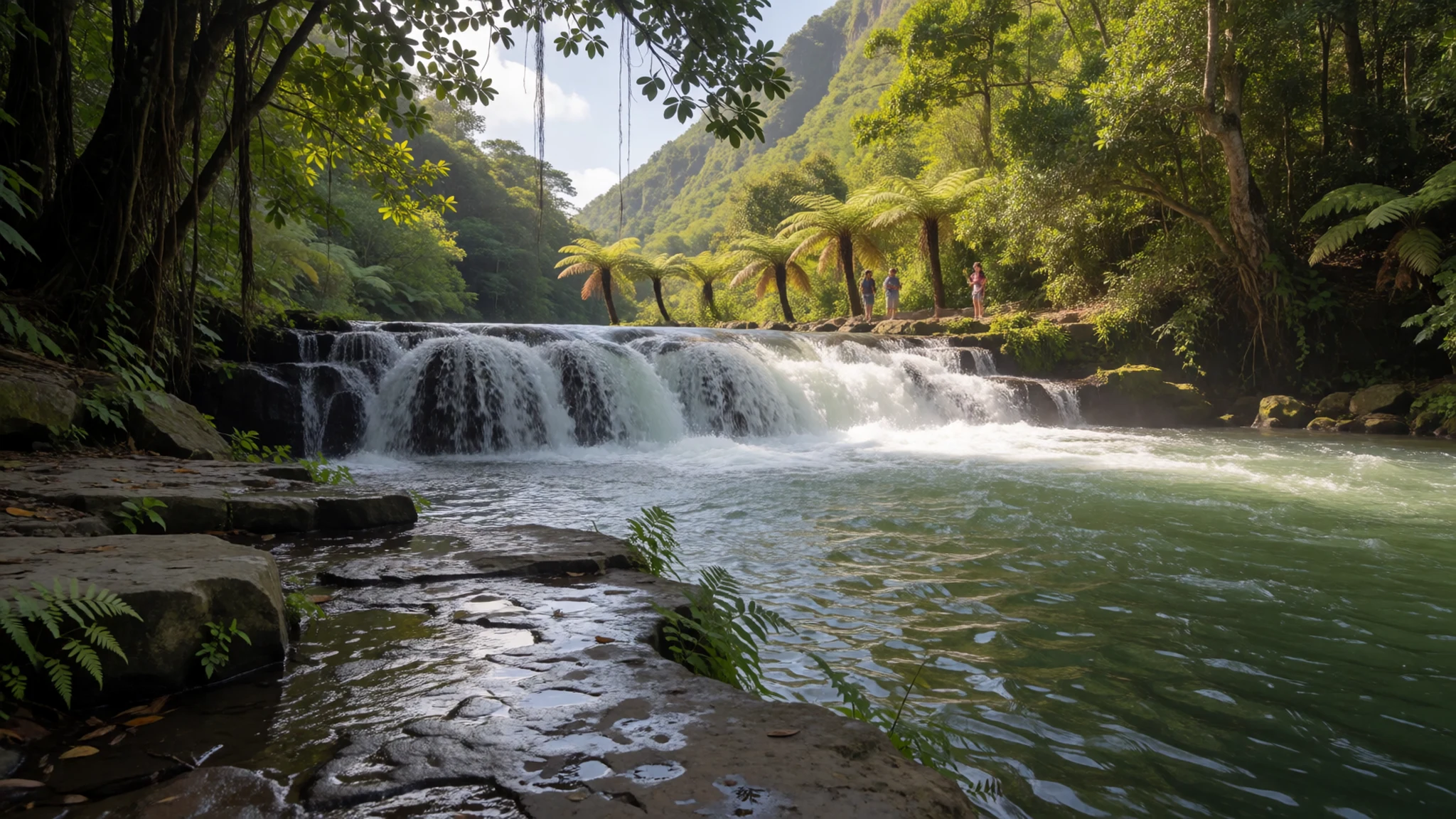
- Carbet Falls — Basse-Terre, below La Soufrière
A series of three waterfalls on the Carbet River, on the lower slopes of La Soufrière, and one of Guadeloupe's main attractions. They make an obvious companion trip for anyone staying on Basse-Terre. Check current access and trail conditions with the park before setting out.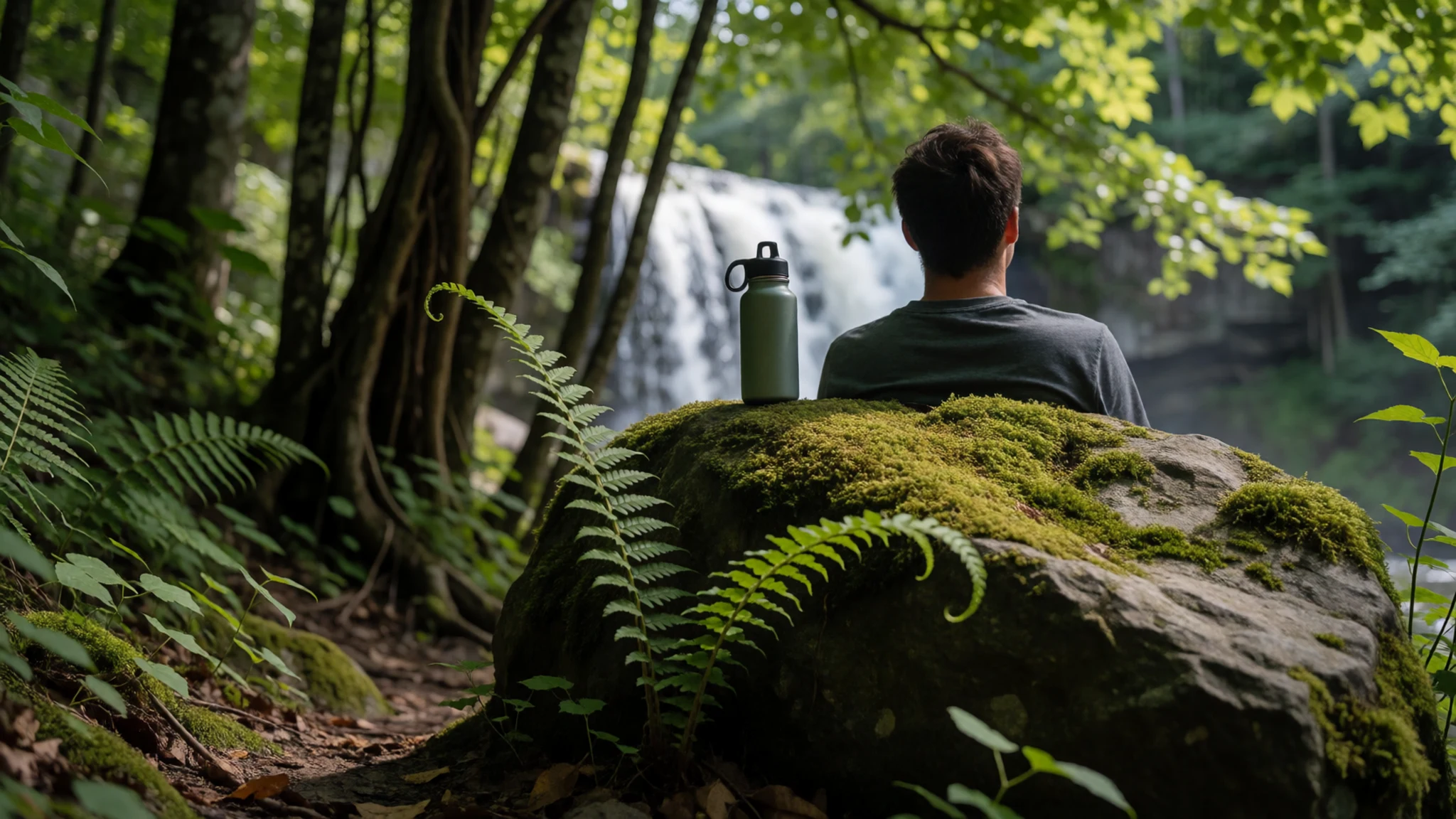
- La Soufrière volcano — Parc national de la Guadeloupe
The summit of this active volcano reaches 1467 m and dominates Basse-Terre. Trails climb through the park for hikers of varying experience. Cloud often sits on the top, so mornings give better odds of a view. Ask locally about conditions before committing to the climb.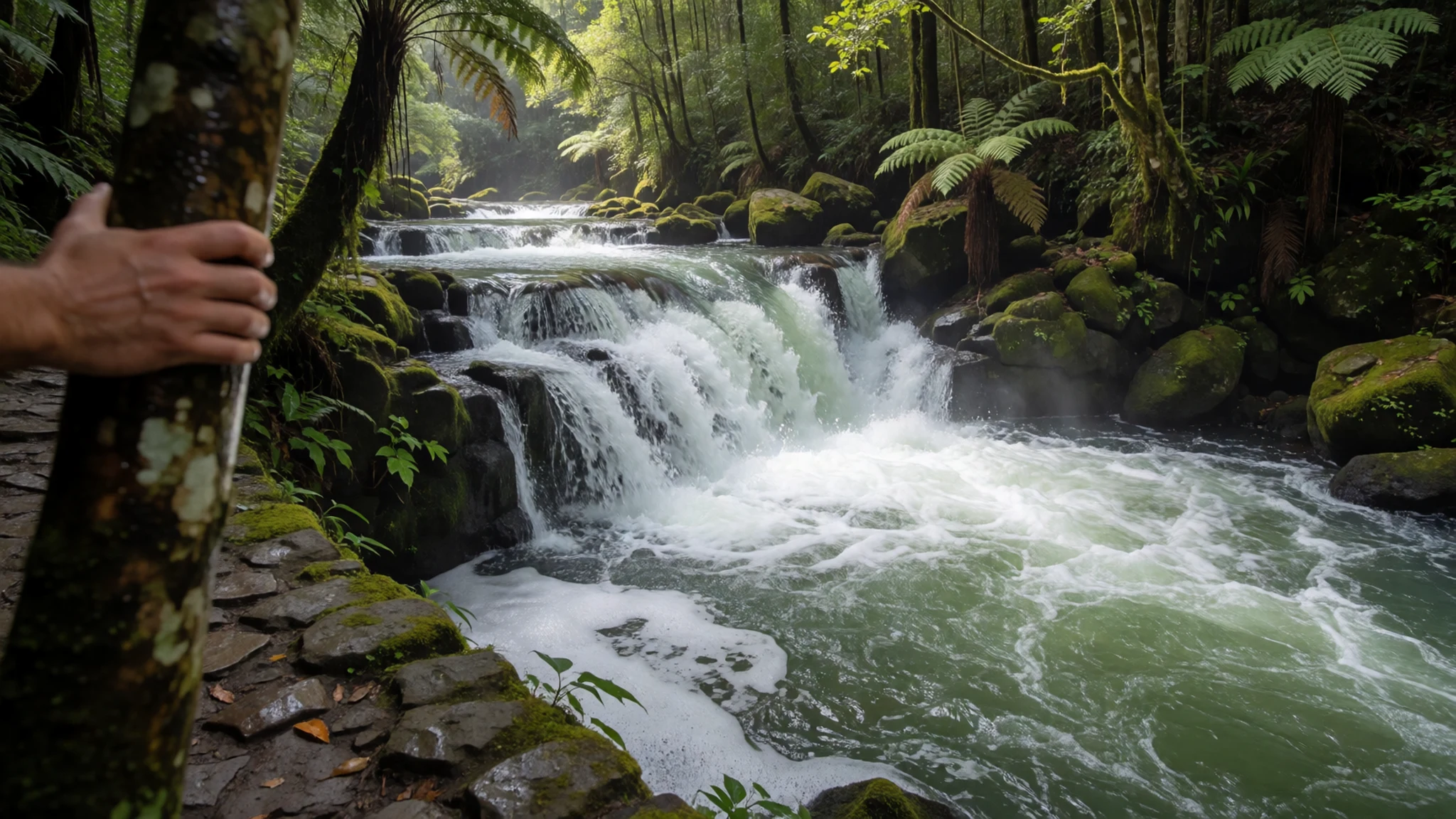
- Mémorial ACTe — Pointe-à-Pitre
A museum in Pointe-à-Pitre devoted to the story of slavery and the slave trade, reaching from early times to the present. It gives essential context for the island's plantation economy and its Creole culture. Allow a quiet, unhurried visit, and check the official site for opening arrangements.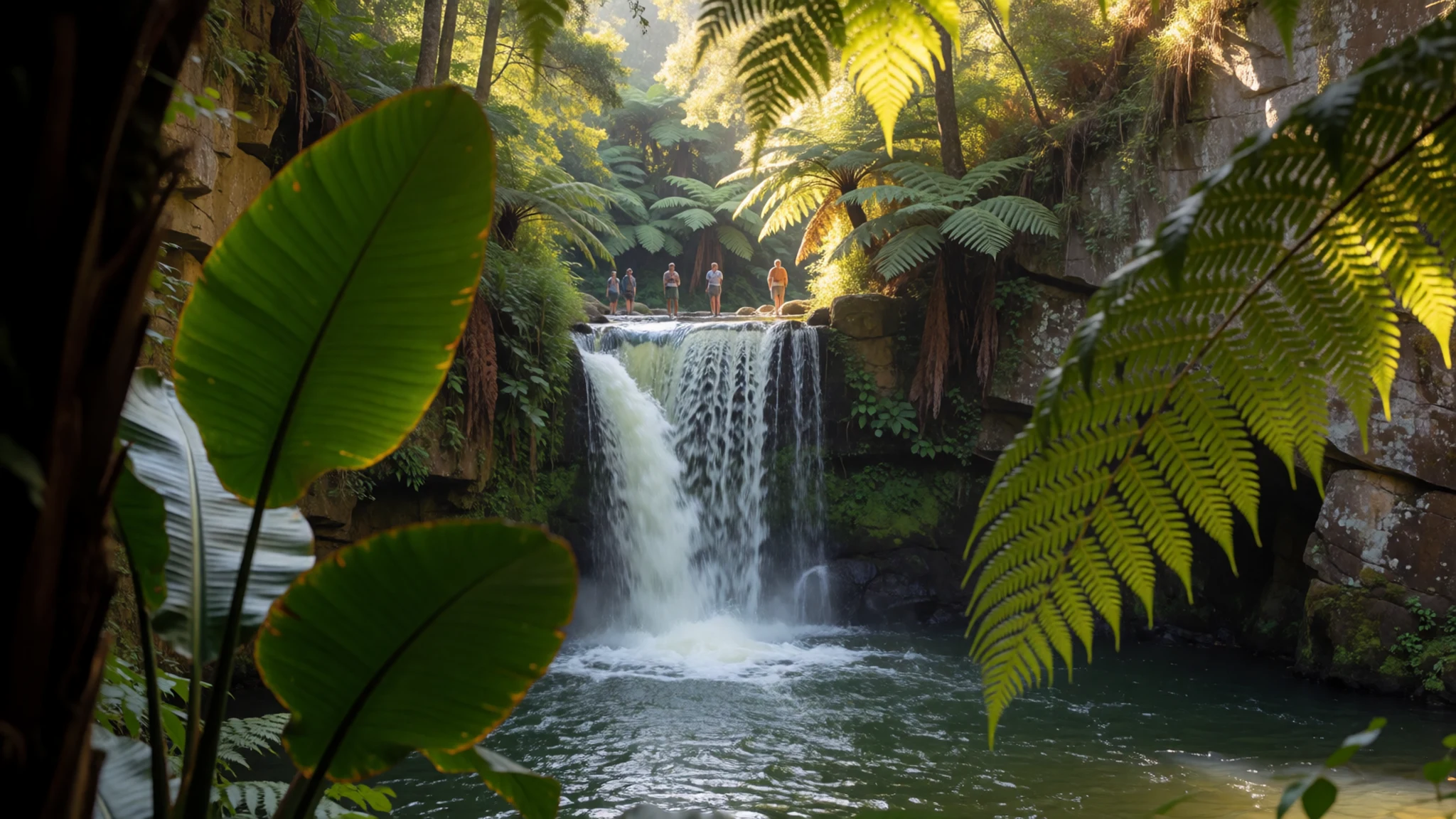
Culture
Cascade aux Écrevisses sits in a society that is both French and Caribbean, and the two run through everyday life. French is the official language and daily manners follow French habits: greetings matter, and Creole speech and humour sit alongside them. The island's food, music and festivals come from a blend of African, European and Indian influences, which is why a dish like colombo, a curry, appears so naturally on local tables.
Street celebrations are a strong part of island life. Parties spill outdoors and can run through the night, with music, dancing and brightly coloured ribbons. Carnival season is the most visible expression of this, and even a short stay can bring a procession or a village event.
The forest and rivers carry their own customs. Many people on Basse-Terre treat streams as shared community spaces, where families swim, wash off after a walk or picnic on a weekend. Visitors who arrive quietly and take their rubbish with them are generally welcomed. The history of plantation slavery is also part of the island's identity, and it is handled seriously in museums and in conversation, so it is best approached with respect rather than as a curiosity.
Greet people with a polite bonjour before asking anything, and leave the pool and path clean, with no soap, sunscreen slicks or litter left at the water's edge.
What to wear
Cascade aux Écrevisses is in a part of Guadeloupe where traditional dress is mostly kept for festivals and cultural events rather than for everyday wear. The classic Creole costume uses madras, a bright checked cotton, made into wide skirts, bodices and elaborately tied headscarves. The way the scarf is folded and knotted once carried meanings understood by those who wore it. Fine lace, gold jewellery and layered petticoats complete the look. It appears at carnival, at folklore performances and on special occasions, and many people still own a piece.
Day to day, islanders dress for heat and humidity: light cotton shirts, shorts, sundresses and sandals, with swimwear common near beaches and rivers. French style shows in neat, casual clothes in towns such as Pointe-à-Pitre and Basse-Terre, and in churches people tend to dress a little more carefully.
For the waterfall, visitors should wear swimwear under quick-drying clothes and bring a towel in a dry bag. Sturdy sandals with a grip or lightweight trail shoes suit the muddy, rooty path far better than flip-flops. A light rain jacket is worth carrying, as showers come quickly in the forest. Insect repellent and a hat help, though dense canopy means sun is less of a problem than damp. In towns and churches, cover shoulders and swimwear when away from the water.
What to eat
- Colombo — Creole restaurants and roadside eateries on Basse-Terre
A chicken, rice and curry plate, brought to the islands by Indian migrants, and now the everyday signature dish of Guadeloupe. The spice mix is mellow and fragrant rather than fiery. It is a sensible lunch after a morning in the forest.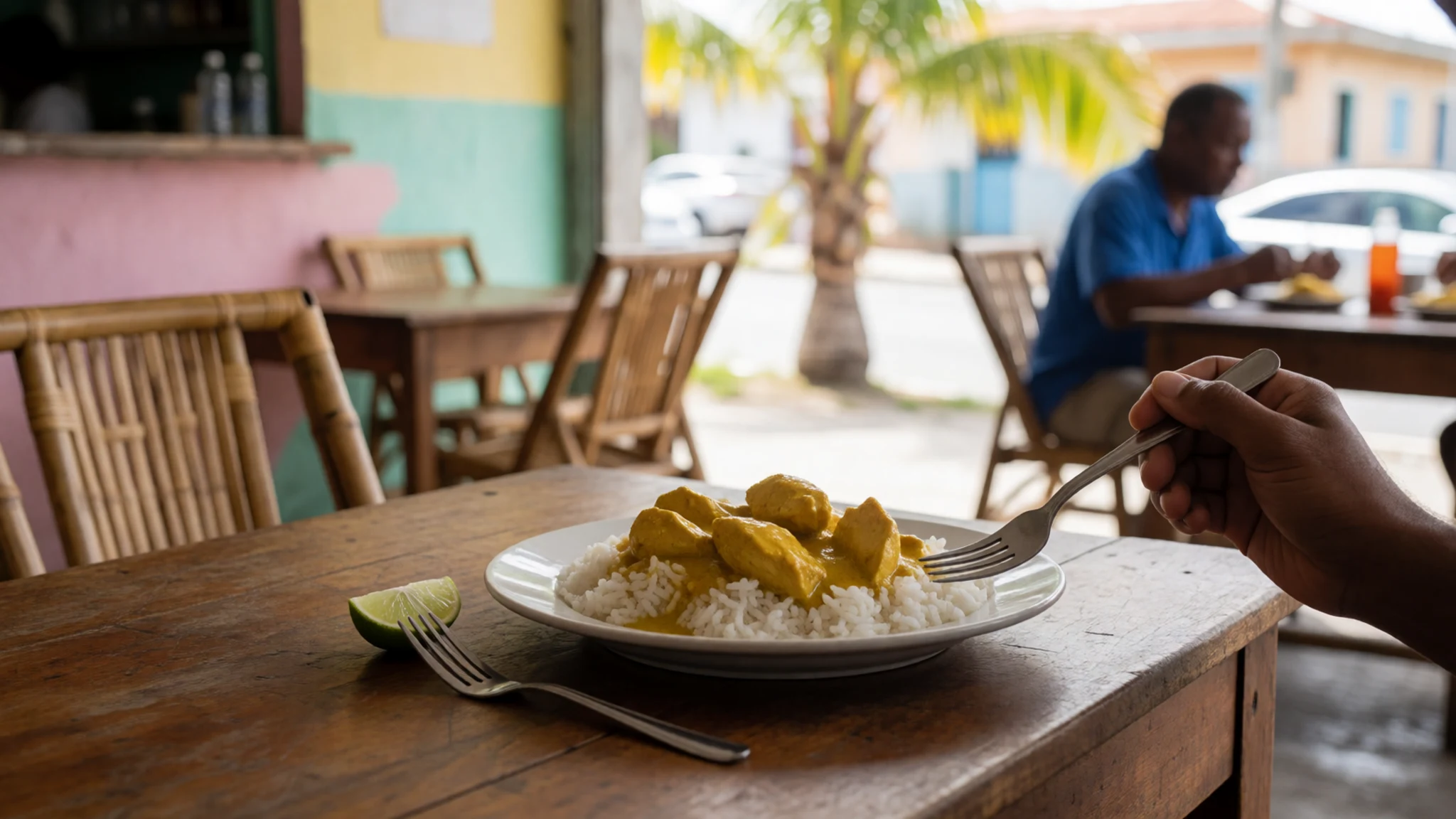
- Accras — Market stalls, snack bars and beach-side eateries
Small, crisp fritters, traditionally made with salt cod but sometimes with other fish, shrimp or vegetables. They are eaten as a snack or starter, often with a hot sauce. Vegetable versions are traditional on Good Friday.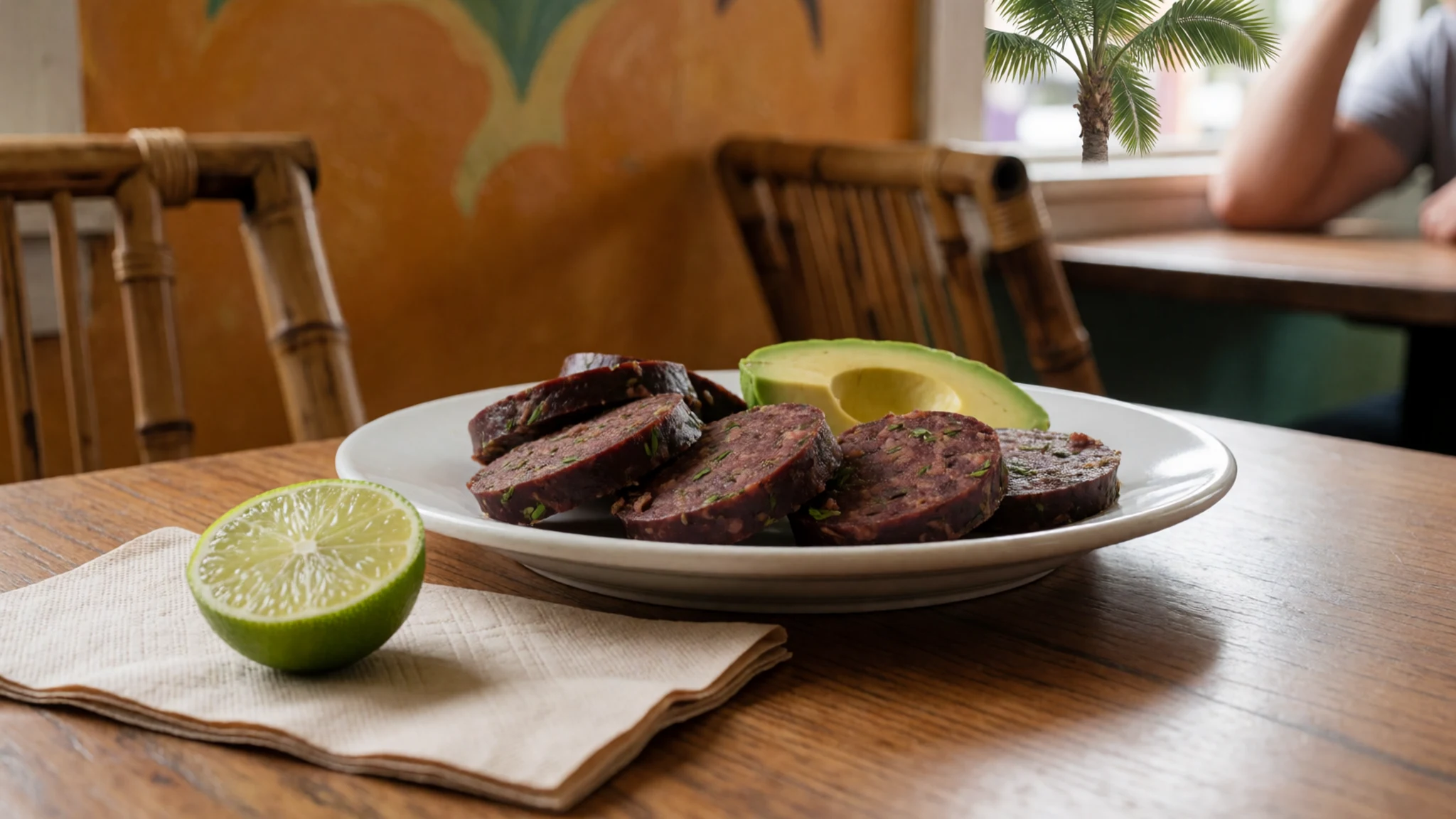
- Boudin créole — Local bakeries, markets and family-run eateries
A spicy Creole black pudding, soft and richly seasoned, usually served warm as a starter or snack. Heat levels vary from cook to cook, so ask before ordering a large portion. - Féroce d'avocat — Creole restaurants and village eateries
A rough-textured avocado spread with a name that is a warning: the seasoning can bring real heat. It is eaten with bread or as part of a Creole starter and works well with a cold drink. - Ti Punch — Bars, restaurants and distillery tasting rooms
The island's classic drink, made from white or agricultural rum, lime and cane sugar. It is often served as the ingredients on the table so guests mix their own. The rum is strong, at least 50 per cent alcohol, so go slowly.
Plan it
Best time. January to April is usually the drier, more comfortable stretch, with trade winds easing the heat. The rest of the year is warmer and wetter, and the forest can see sudden downpours at any time, which can leave rivers swollen and paths slippery.
How long. 3–4 for Basse-Terre and its forest; add time for the coast
Getting there. Fly to Pointe-à-Pitre airport on Guadeloupe, which has links to nearby Caribbean islands and to France. The last leg is by car across to Basse-Terre and into the national park; check the park or Guadeloupe Tourism site for current road and trail information. Most visitors can stay up to 90 days without a visa, but check your own nationality's rules with a French mission.
Budget. mid
Tips
- Go early, before tour groups and the midday heat
- Wear shoes with grip for the muddy trail, and carry a towel and dry bag
- Check river conditions after rain before swimming
- Keep valuables out of sight in parked cars, and carry some cash for small roadside stalls
- Pack insect repellent and a light rain jacket
Etiquette
- Take all rubbish away with you
- Do not use soap or strong lotions in the water
- Greet people with a polite bonjour
Nearby
Sources
- Wikidata Q24874840 (CC0)
- Wikipedia: Guadeloupe (CC BY-SA 4.0)
- Wikivoyage: Guadeloupe (rev 5413121) (CC BY-SA 4.0)