Carnac
Carnac, France
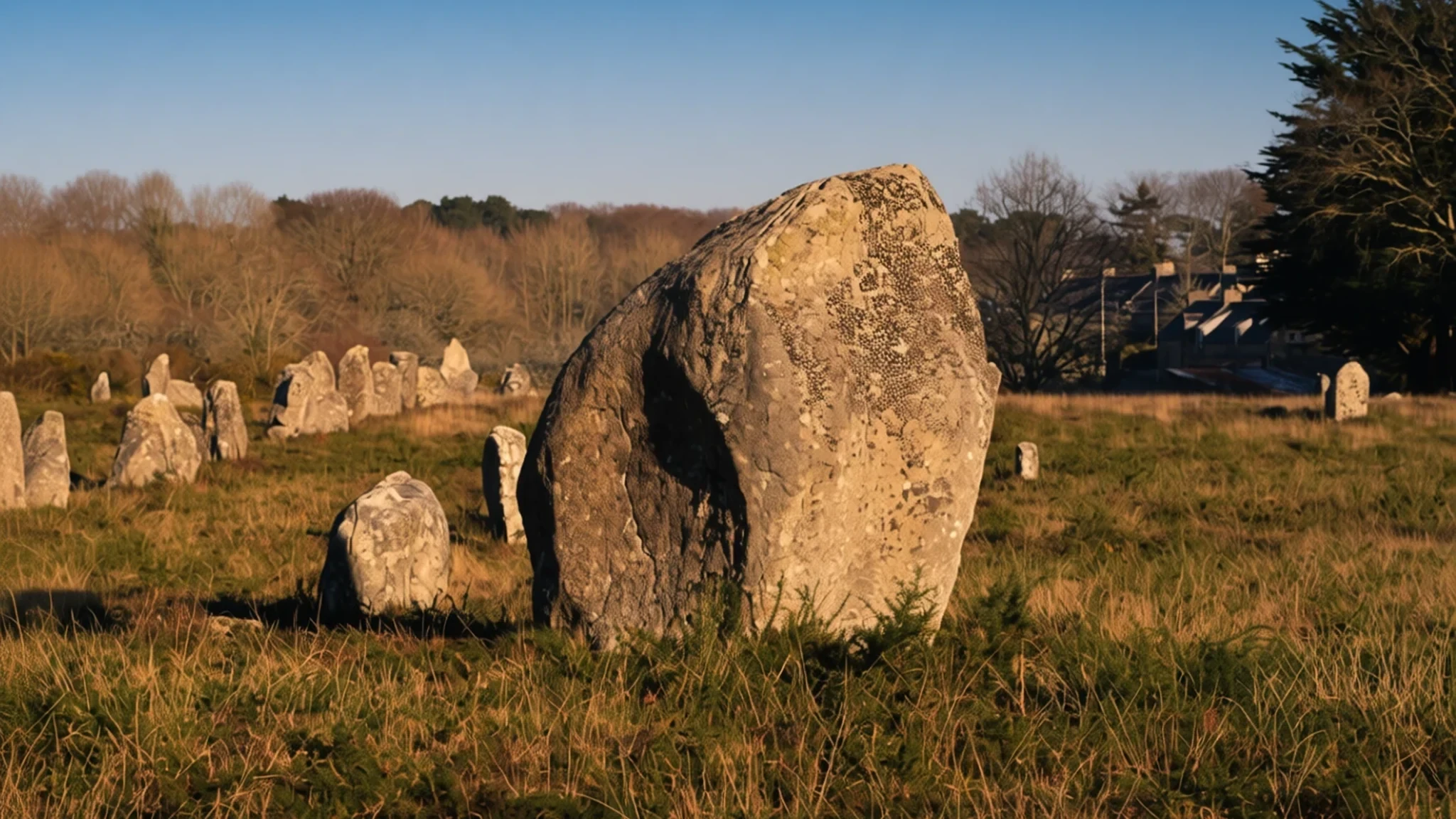
Carnac holds thousands of prehistoric standing stones set in long rows on the Breton coast, a walk through a landscape older than any town nearby.
The place
Carnac sits on the south coast of Brittany, in the Morbihan department, a short drive from the sea. The village itself is a modest seaside resort, but its fame rests on the fields just inland, where more than 3,000 granite stones stand in lines, clusters and burial chambers. Most lie within the municipality of Carnac, with a few to the east in La Trinité-sur-Mer. The wider area is thick with other monuments too, including Locmariaquer, Arzon and the islands of the Gulf of Morbihan, such as Gavrinis.
The main alignments run roughly east to west across heathland and light woodland. Ménec is the best known, followed by Kermario, Kerlescan and the smaller sets at Petit-Ménec, Kerloquet and Toulchignan. Each has its own character: some stones are knee-high, others stand taller than a person, and the rows shift in rhythm as the ground rises and falls.
The name Morbihan comes from the Breton for "little sea", the sheltered gulf nearby dotted with islands and small boats. Just beyond it lies the open Atlantic, the "big sea". That mix of heath, tidal water and beaches gives the visit an easy double shape: stones in the morning, shoreline in the afternoon. The site is listed by UNESCO, and the official site at https://www.menhirs-carnac.fr/en/ is the place to check access arrangements before travelling.
Its story
The stones were raised in the Neolithic, probably around 3300 BC, though some may go back as far as 4500 BC. They were cut from local granite by the pre-Celtic people of Brittany. Why they were set in such disciplined rows is still unknown. Ideas include calendars, processions, territorial markers and ritual avenues, and none has won the argument.
Even who built them is debated. One view, popularised in a BBC series, credits hunter-gatherers rather than farming communities, which would set Carnac apart from Stonehenge. Archaeologists continue to weigh the evidence.
Later centuries filled the silence with legend. A Christian tale says the stones were pagan soldiers chasing Pope Cornelius, who turned them to rock. Another, rooted in Brittany's own Arthurian traditions, says a Roman legion was petrified by Merlin, which is why the ranks look so straight. Neither has anything to do with the real dates, but both show how people tried to explain something so deliberate.
Neglect followed. Dolmens were used as sheep shelters, chicken sheds and even ovens, and stones were taken away for roads and buildings. How the sites should be managed, and how close visitors should be allowed to walk, remains a contested question, which is why some alignments are fenced for much of the year.
What to see
- Ménec alignments — Carnac, west of the village
The best-known rows, at the western end of the main group, with stones that grow taller toward one end. The fencing keeps feet off the vegetation, so views are from the edge. Photographs work best in low light, when the stones throw long shadows over the grass.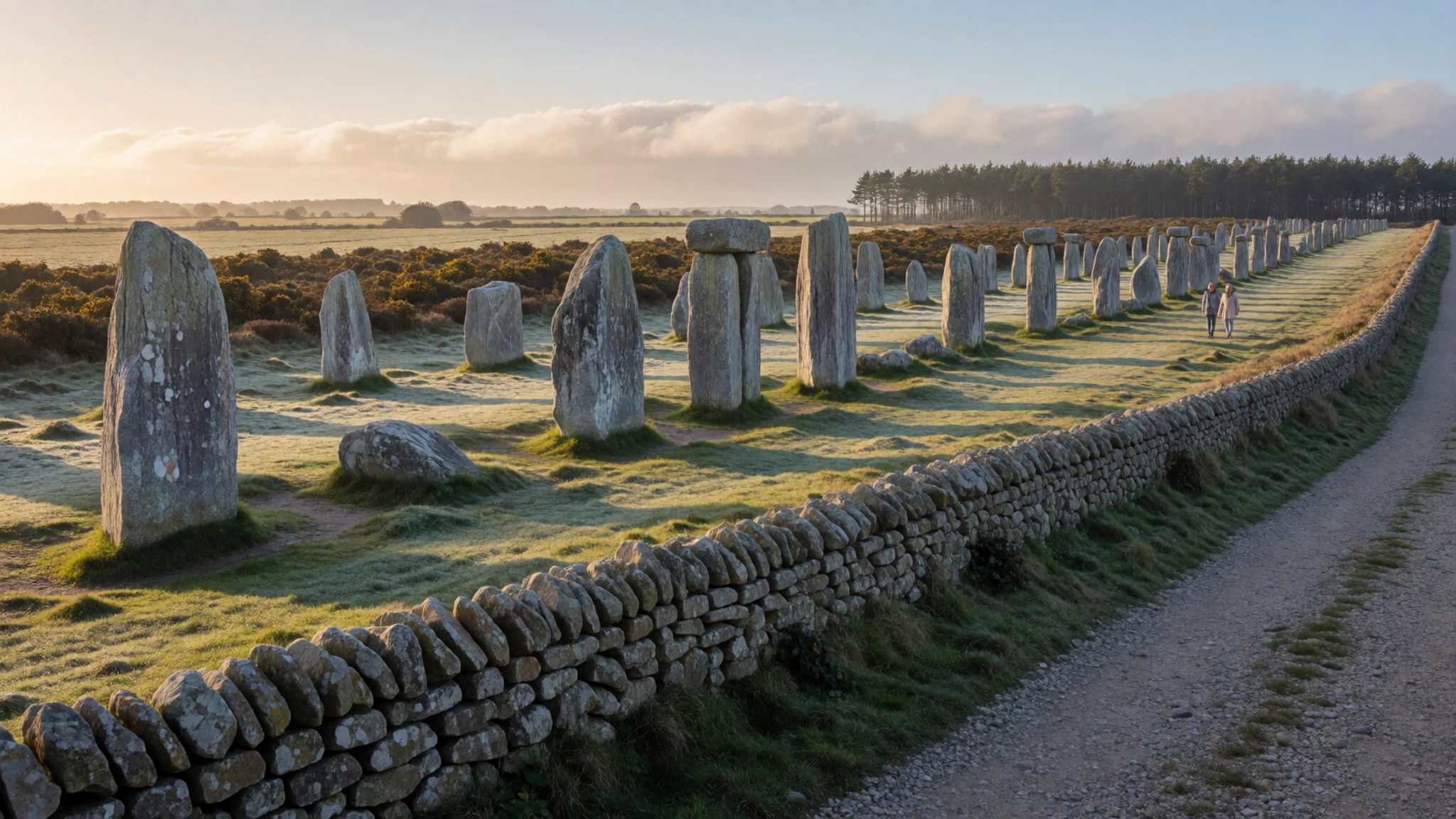
- Kermario alignment — Carnac, east of Ménec
Its name is often translated as the "house of the dead", and the long rows feel quieter than Ménec. Stones are bigger here, and the lines run on across open ground. It is a good place to see how the rows pull the eye toward the horizon.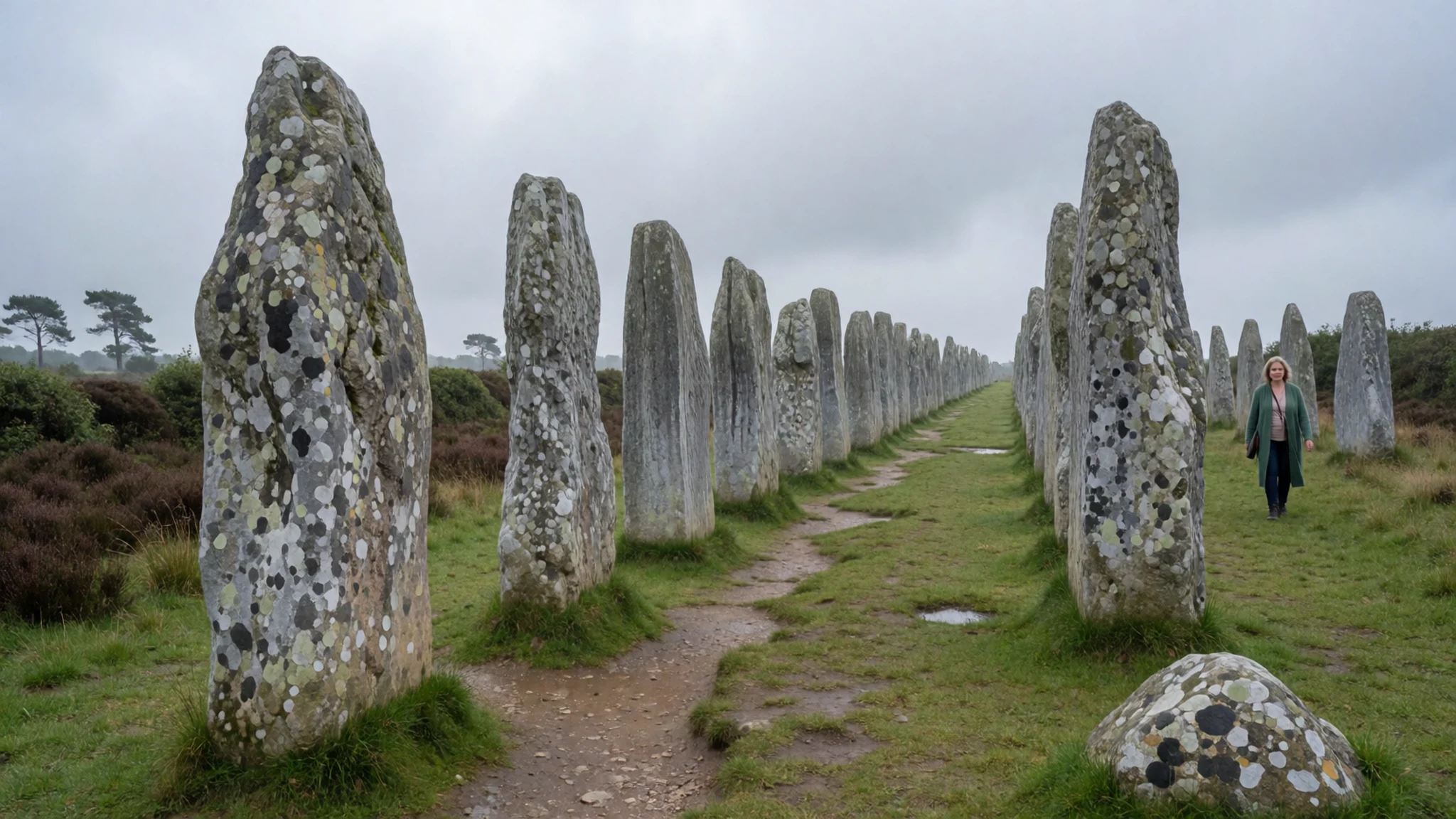
- Kerlescan alignments — Carnac, north-east
A shorter, broader set of rows ending in an enclosure of stones, set among trees. It feels more intimate than the larger fields and is often calmer. Visiting here after Kermario shows how differently the builders arranged the same granite.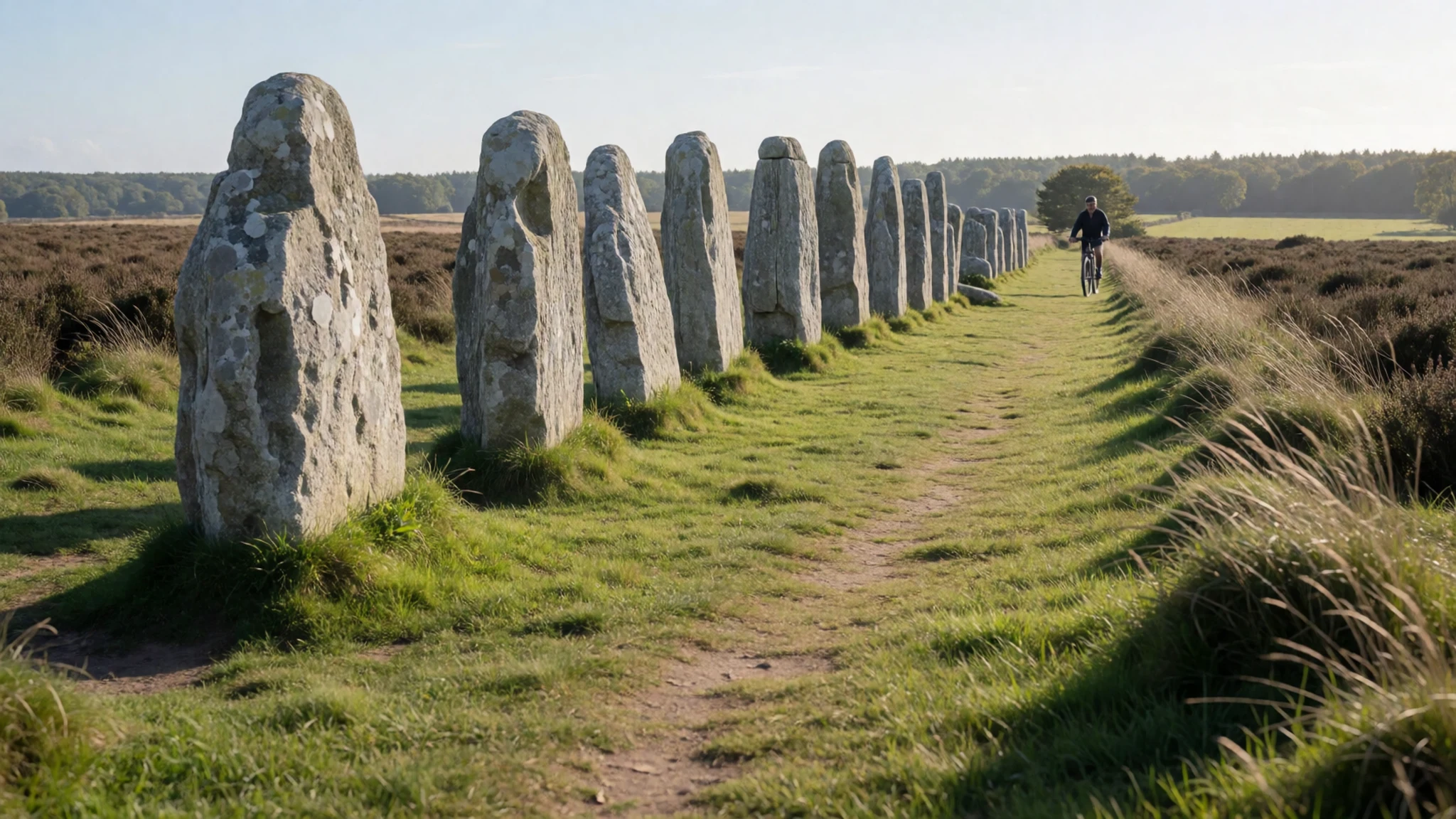
- Saint-Michel tumulus — Carnac, near the village
A burial mound built between 5000 BC and 3400 BC, classified as a monument since 1889. A chapel stands on top, and the rise gives a wider view across the surrounding stones and flat country toward the coast. It is a short climb rather than a hike.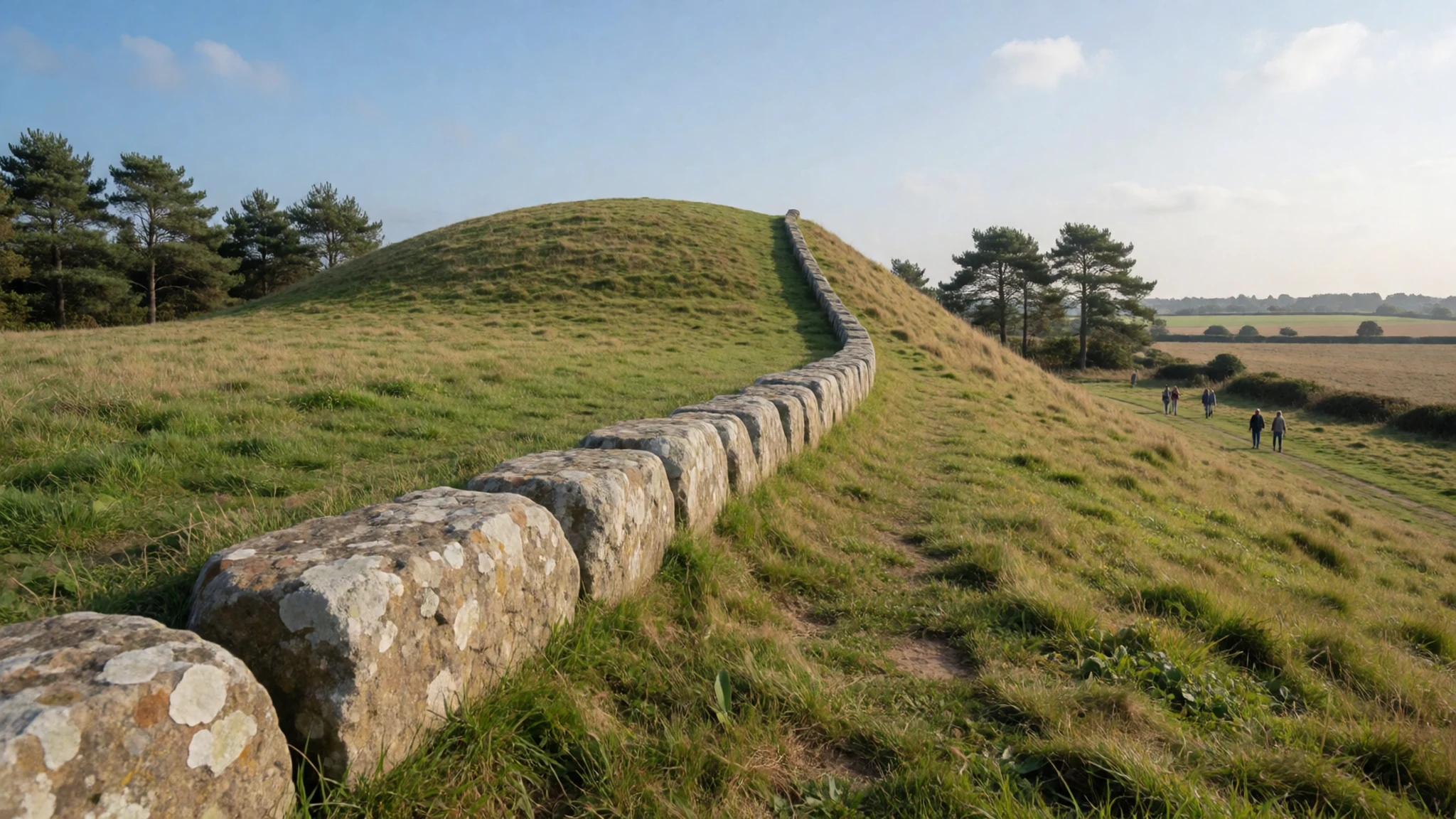
- Petit-Ménec and Kerloquet — Carnac, eastern edge
Smaller, less visited groups east of the main rows, with Kerloquet holding a dolmen among the trees. They suit a slower walk, and a chance to see the stones with fewer people around. Check the official site for current access to each area.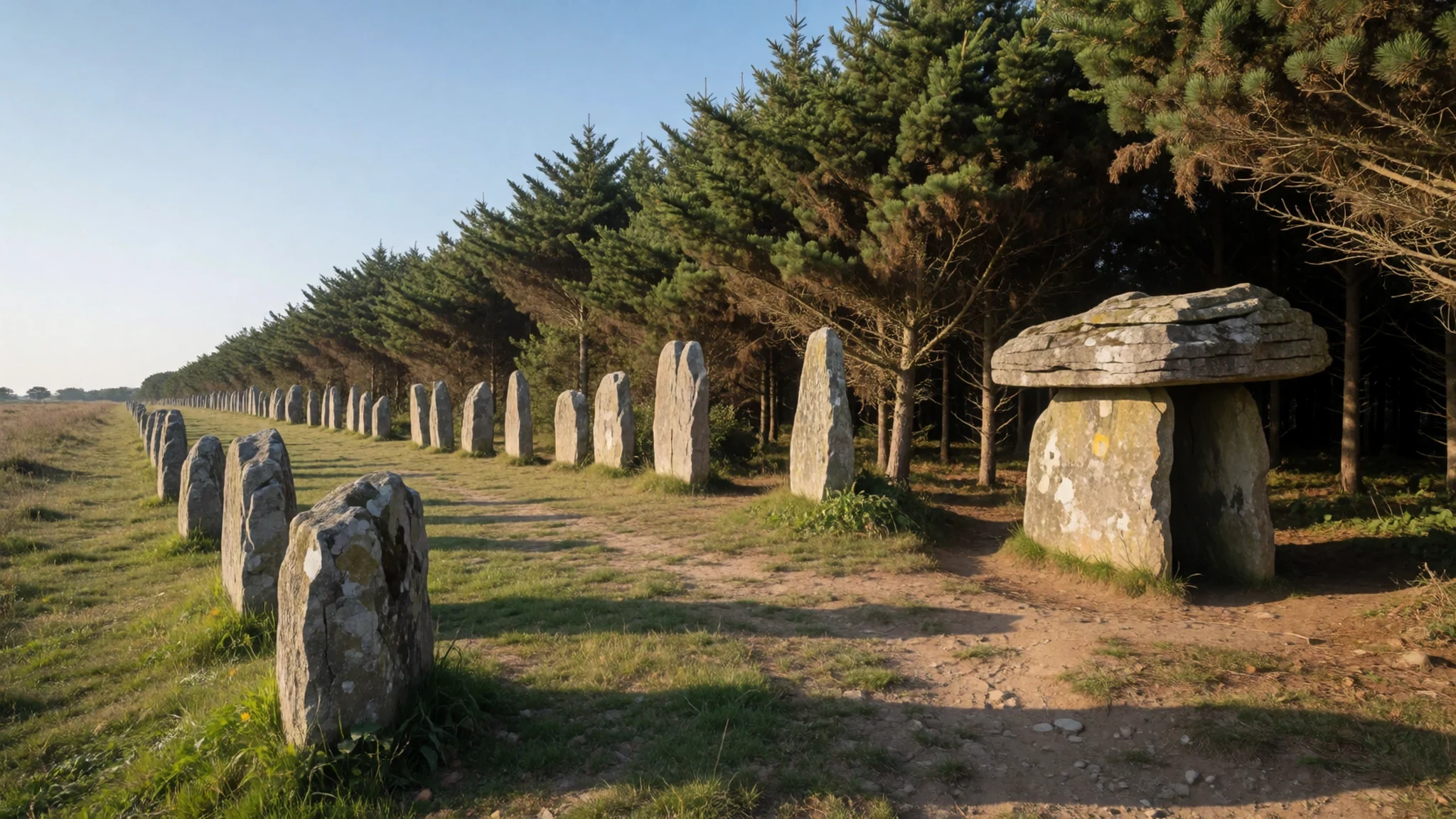
Culture
Carnac is a place where prehistory and Breton identity sit close together. The Breton name, Steudadoù Karnag, appears alongside the French, and Breton language, music and flags are part of everyday life in Morbihan. Locals take pride in the stones but also live with them: farms, villages and roads share the landscape, and the question of how best to protect the sites is discussed openly.
The legends still circulate. Guides and museum displays are happy to tell the story of the stone soldiers and Merlin, usually with a smile, alongside the archaeological view that the rows are thousands of years old and their purpose uncertain. Visitors will meet the same humility in the museum displays, where uncertainty is part of the story.
The coast shapes the culture as much as the stones. Sailing, oyster farming, salt and seafood have long supported villages around the gulf, and summer brings a busy seaside rhythm of beaches, markets and cafés. Out of season, the region quiets down, and many small businesses close for a few weeks.
Stay outside the fenced areas and off the stones, as the vegetation and the monuments are both fragile, and follow the signs for walking routes.
What to wear
Carnac is in Brittany, whose traditional dress is among the most recognisable in France. Women's costumes centred on the tall lace headdress known as the coiffe, whose shape varied from village to village, worn with dark wool dresses, aprons and embroidered bodices. Men wore wool jackets and waistcoats with embroidery, and wide-brimmed hats. Linen and lace were important materials, and the best pieces came out for festivals, weddings and pardons, the religious processions still held in some places.
Today people dress simply. Locals wear practical clothes suited to a coastal climate: breton-striped tops, waterproof jackets, jeans, fleeces and sturdy shoes. The classic striped shirt, associated with Breton sailors, is a common sight, though mostly worn as ordinary casual clothing rather than costume. Traditional dress comes out for folk festivals and dance gatherings.
Visitors should plan for changeable weather. A light waterproof and a warm layer are useful even in summer, since the wind off the Atlantic can be cool and showers arrive quickly. Comfortable walking shoes with grip matter more than anything else, as paths across the alignments are grassy, sandy and sometimes muddy. A hat and sun cream help in summer, when the open heath offers little shade. Swimwear is for the beach only; in the village and at the chapel on the tumulus, ordinary casual clothes are fine, with no special dress rules.
What to eat
- Crêpes and galettes — Crêperies in Carnac village and near the beaches
Thin sweet crêpes and buckwheat galettes with savoury fillings such as ham, egg and cheese are the Breton staple. Find them in any crêperie in Carnac village or along the coast, usually eaten with local cider.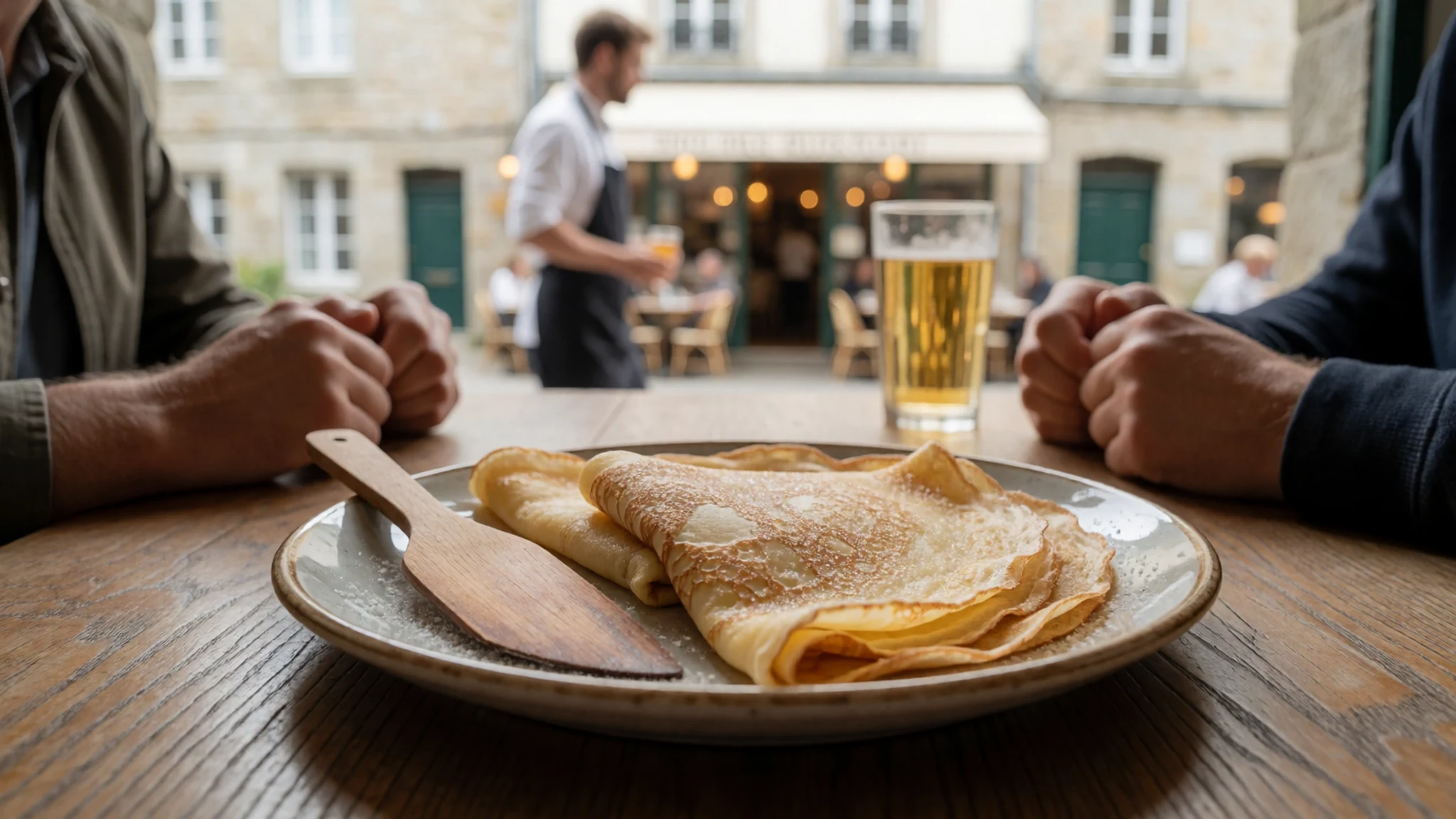
- Oysters — Oyster sheds around the Gulf of Morbihan and La Trinité-sur-Mer
Oysters from the nearby bays are a regional speciality, eaten raw with lemon or shallot vinegar. They are best enjoyed on the coast, where producers sell them straight from their sheds with simple tables and a view over the water.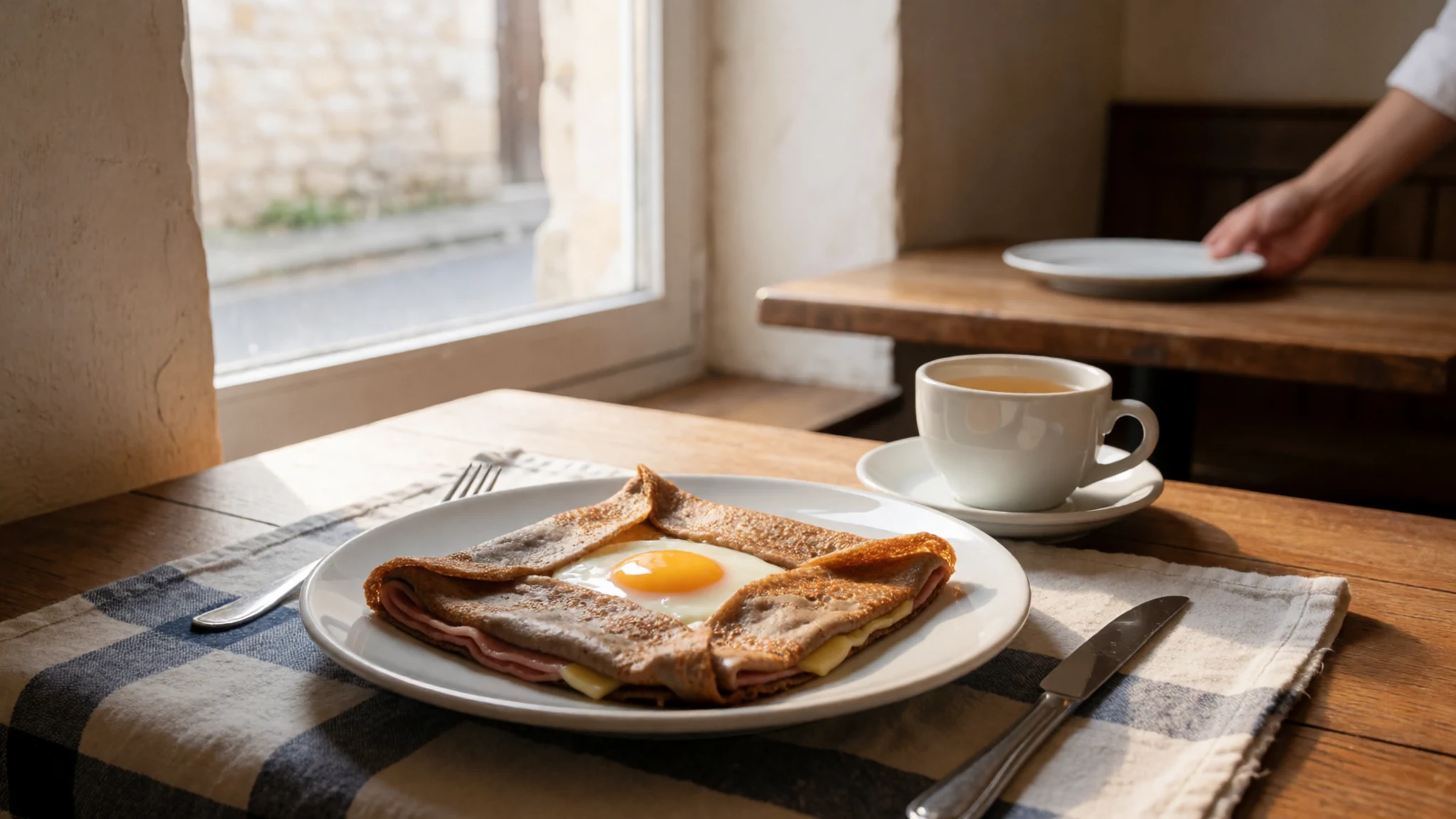
- Kouign-amann — Boulangeries and pâtisseries in Carnac and nearby towns
A rich Breton cake made from layers of dough, butter and sugar, caramelised until crisp outside and soft within. It is sweet and heavy, so it is worth sharing. Buy a slice or a small whole one to carry on a walk.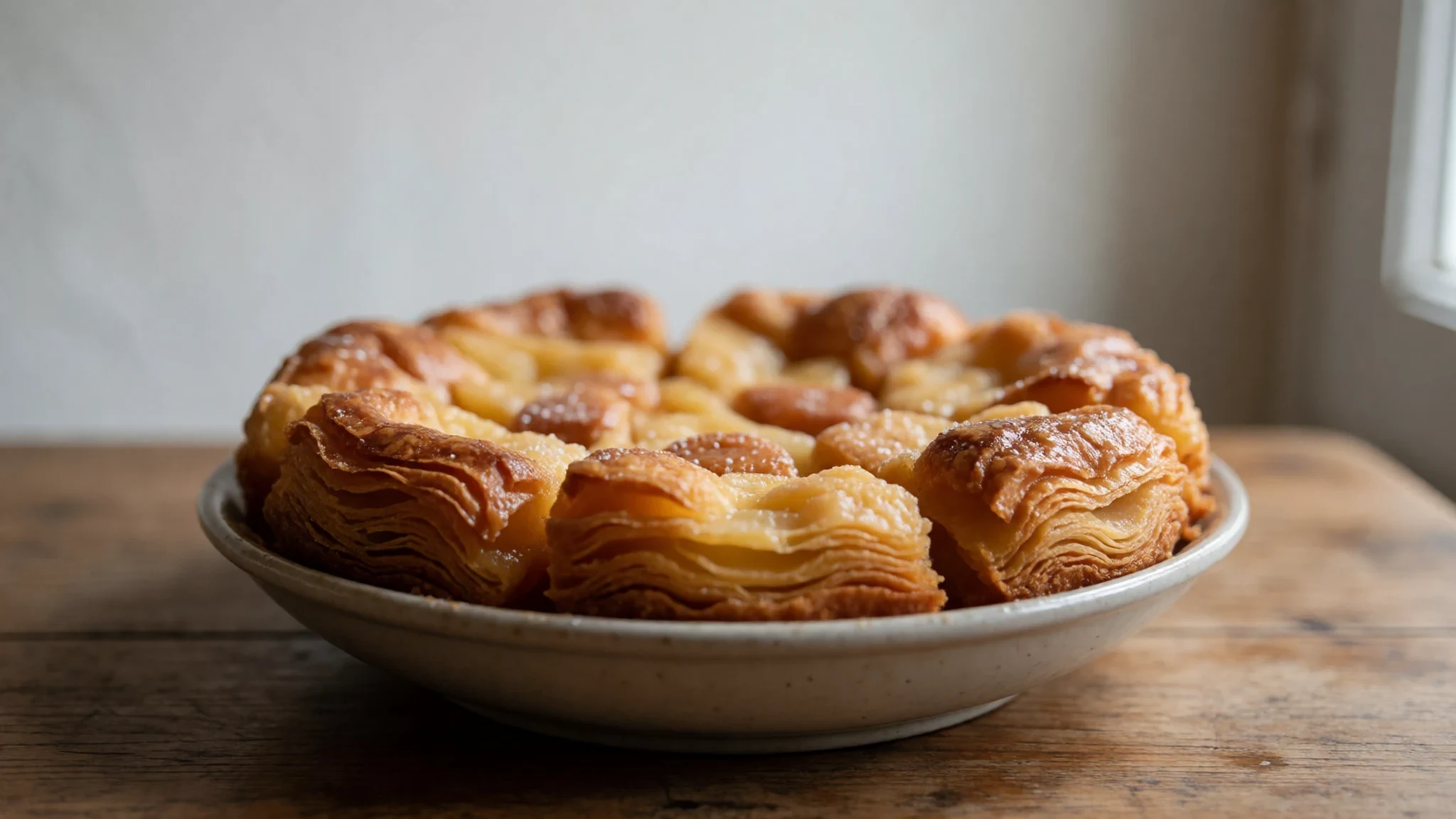
- Fresh fish and moules — Harbour-side eateries in La Trinité-sur-Mer and beachfront restaurants
Mussels cooked in white wine, cream or cider, served with chips, are a simple coastal meal, alongside whatever fish was landed that day. Menus change with the catch and the season, so ask what is freshest.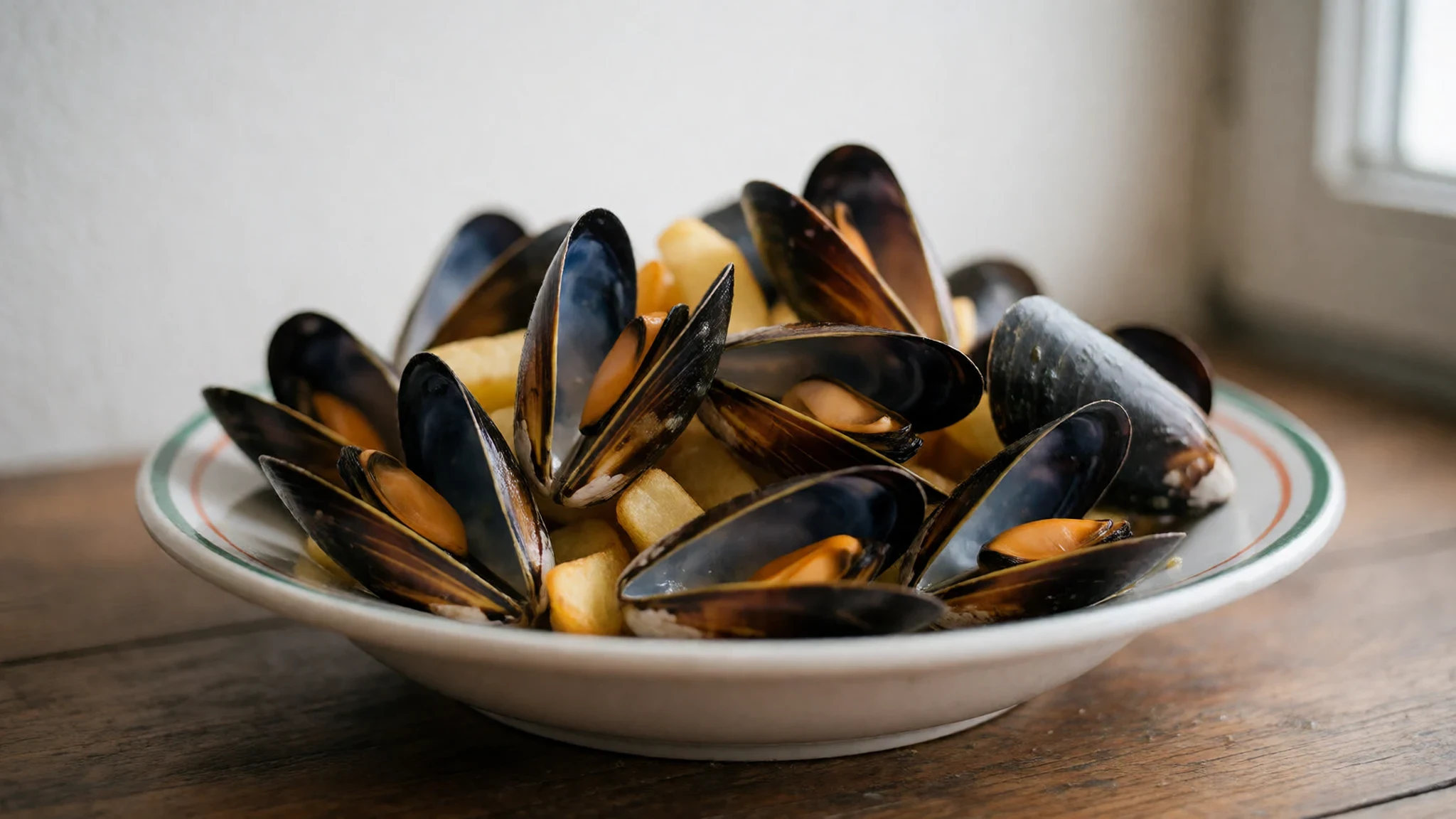
- Salted butter caramel — Confectioners and market stalls in Carnac
Brittany uses salted butter widely, and caramel au beurre salé turns up in sweets, ice cream and sauces over crêpes. Small shops sell jars and toffees that travel well and make easy gifts to take home.
Plan it
Best time. May, June and September are the best balance: mild weather, long light and thinner crowds than July and August, when the coast is busiest. Winter is quiet and often wet and windy, and some businesses close.
How long. 2–3
Getting there. Auray train station is 12 km from Carnac, and from there a bus or taxi covers the last leg. A car is the easiest way to reach the separate alignment sites. Check the official site for current visitor arrangements.
Budget. mid
Tips
- Visit early in the morning or late in the day for softer light and fewer people
- Bring a waterproof layer, as Atlantic weather changes quickly
- Hire a bicycle to link the alignments and the beaches without a car
- Check the official site for guided visits and access, as some areas are fenced
- Take care with strong undercurrents if swimming in the Gulf of Morbihan
Etiquette
- Stay on marked paths and do not climb on or touch the stones where fenced
- Take rubbish home and keep dogs under control
- Be quiet and respectful at burial mounds and chapels
Nearby
Sources
- Wikidata Q833850 (CC0)
- Wikipedia: Carnac stones (rev 1380683240) (CC BY-SA 4.0)
- Wikivoyage: Carnac (rev 5359480) (CC BY-SA 4.0)
- Photo: Kermario, Pinpin (CC BY-SA 2.5)
- Photo: Le Ménec, Steffen Heilfort (CC BY 3.0)
- Photo: Menec Alignment, Snjeschok (CC BY 3.0)
- Photo: Kerlescan alignment, Myrabella (CC BY 3.0)
- Photo: Maison des Mégalithes view, Lionel Allorge (CC BY 3.0)
- Photo: Menec alignments, Marek (CC BY 3.0)
- Photo: Kermario, Marek (CC BY 3.0)
- Photo: Kerlescan, Marek (CC BY 3.0)


