Carcass Island
Carcass Island, United Kingdom
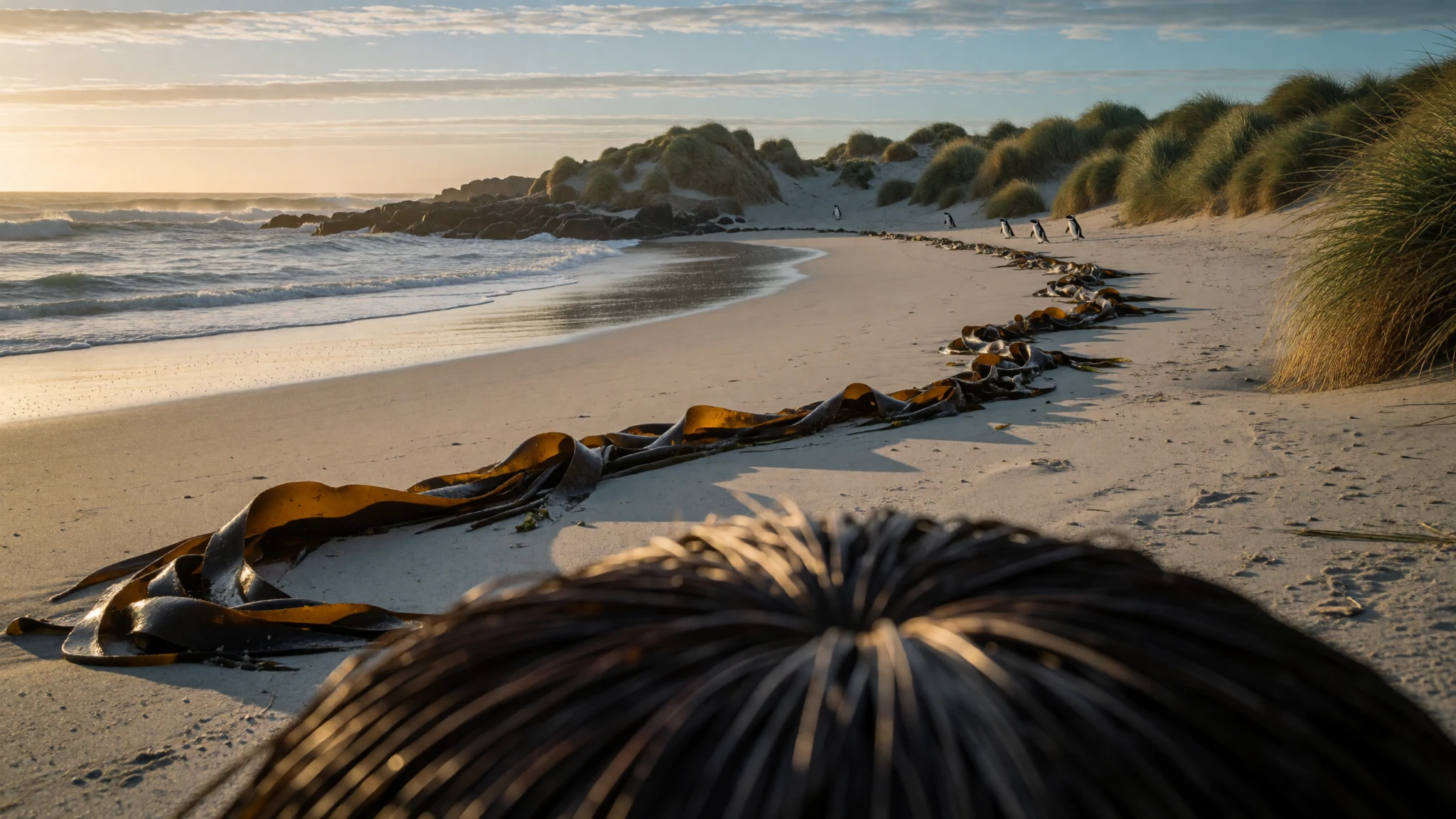
Carcass Island is a predator-free Falklands farm where penguins, tussac birds and open beaches share the ground with sheep.
The place
Carcass Island is a privately farmed outlier of the Falklands, set in cold South Atlantic water off the west of the archipelago, with a sheltered landing, a homestead and a rim of pale beaches. Sheep still graze the coastal grass, and the same household looks after a refuge for birds that nest on the ground. Rats did not take hold here and cats were never part of the farm, so burrows in the turf stay occupied and small birds move through the tussac in plain sight. Wind organises the day: it flattens conversation on the beach, piles kelp along the tide line and turns a clear hour into something visitors plan around. Walks are a free tour of the island on foot. A full day can take the northern half and return over the central ridge, linking the jetty, the colonies and the sand, because the grass itself is cover. In the austral summer the light lingers and boats call; in winter the same shore is grey, wet and almost empty of people. Buildings sit low, built to take weather rather than to frame a view, and the landing is a working edge of craft, stock and kelp. From the taller tussac a walker looks back towards West Falkland and along the island's own curve of sand. Settlement life is audible from the yard: a generator and the radio, then quiet once the path drops to the beach.
Its story
Carcass Island's past is written in grazing and in what was kept off the land, not in ruins. A Royal Navy charting voyage left the island its name, after the ship that worked this corner of the Falklands, and later settlers put sheep on the coastal grass, a jetty in the lee, and a house that still anchors the only settlement. The fortune of the place was an absence: rodents never established a population, and the farm did not keep cats, so the ground remained usable for birds that other islands lost. Owners built on that accident. Fences went around burrows so hooves would not collapse them, paths were shown to guests, and a small lodge grew as a place to sleep rather than as a resort. Wool and birdlife are therefore a single household's work. Visitors arrive in alternating rhythms, and neither rhythm includes a town. A ship anchors, a tender lands, a short spell on the beach ends and the sand empties; or a traveller stays, eats with the farm and wakes to the same wind. There is little to commemorate and a great deal to maintain on Carcass Island: grass, stock, and a nesting season that continues only while the island stays hostile to predators.
What to see
- The settlement — Settlement and harbour
Carcass Island's settlement is a cluster of low buildings beside a sheltered landing, farmhouse at its centre. Visitors pass the jetty, sheds and garden before any walk begins. Arrivals meet the owners here and learn which tracks are open, because the island is a home and a sheep farm before it is a destination. Boats finish at this harbour, while light aircraft use the landing strip.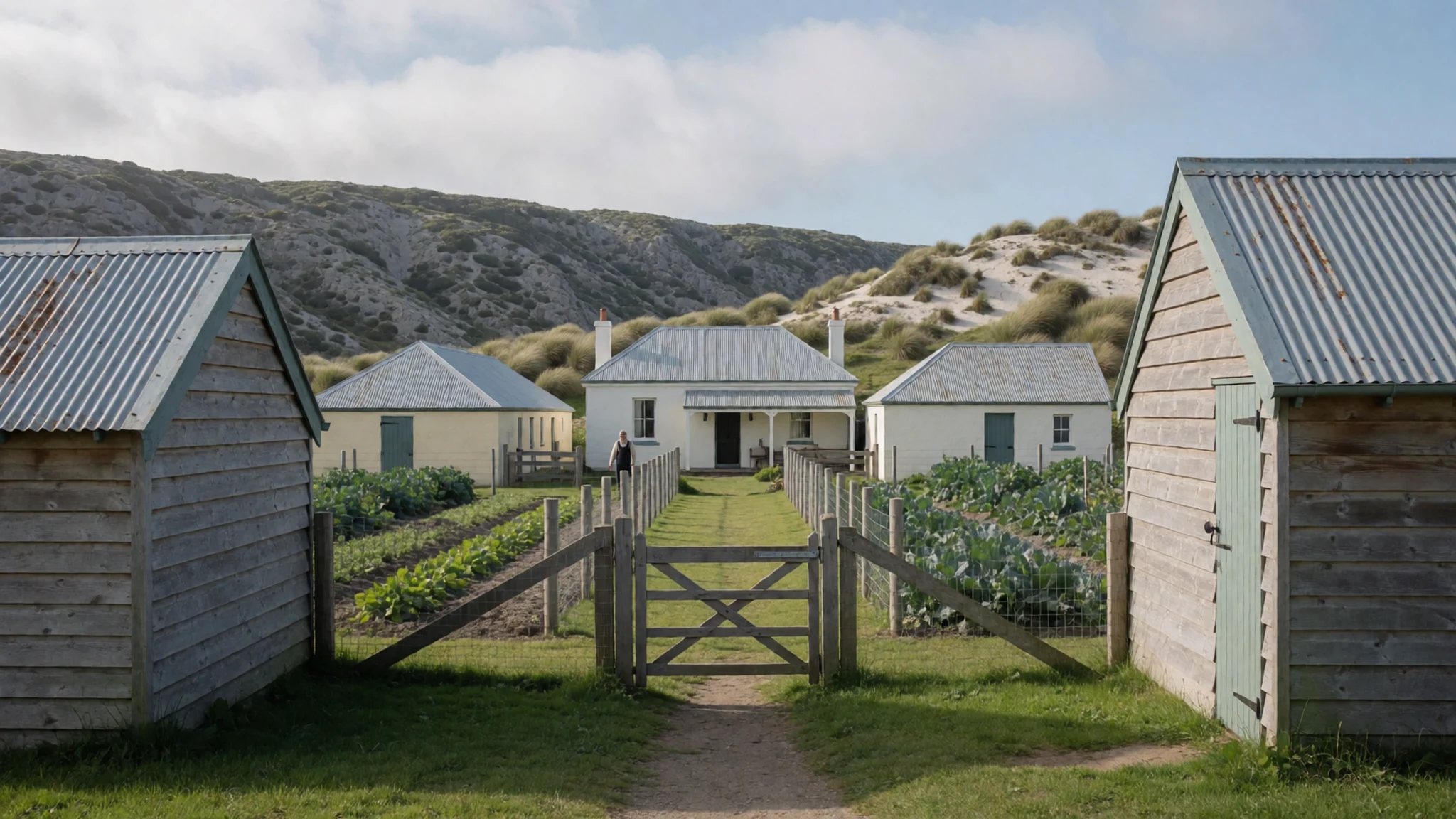
- Magellanic penguin burrows — Turf above the beaches
Carcass Island's Magellanic penguins nest in burrows in the turf above the beaches, near the settlement. Fences keep sheep from collapsing the holes, so a wire line runs beside an otherwise wild colony. Birds stand at burrow mouths and commute down to the sea, tolerating quiet watchers who stay on the path. The colony shows that the ground here is still safe for a bird that nests underfoot.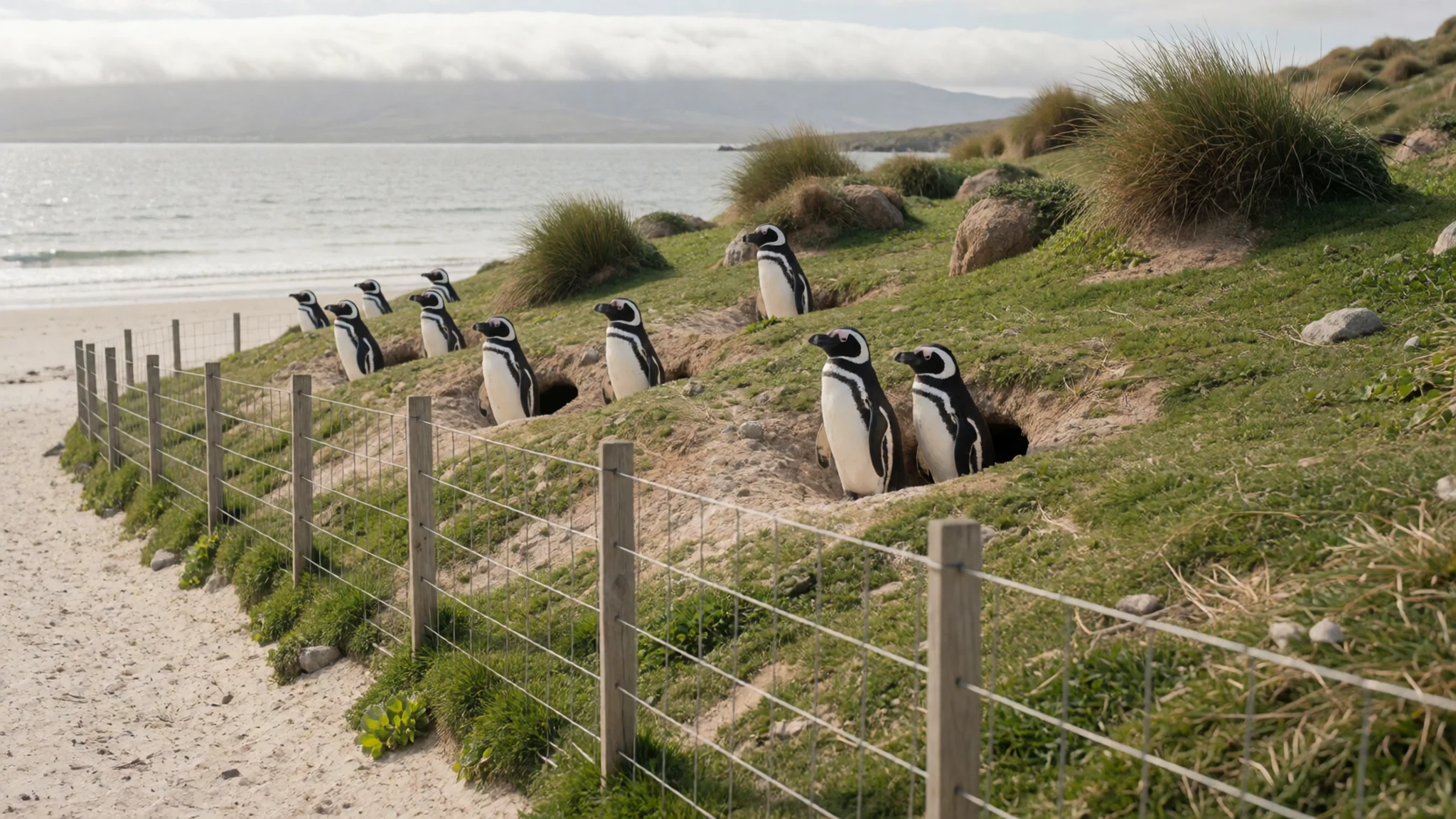
- Tussac and the outer beaches — Outer beaches
Carcass Island's outer coast is pale sand, kelp and tall tussac, a shore that looks empty until the grass moves. Tussac grows in dense stools and hides tracks, small birds and the wind. A beach walk means soft sand, a steep drop into cold water, and nowhere to shelter. Marked routes matter, because the grass is nesting cover and a shortcut through it causes real disturbance.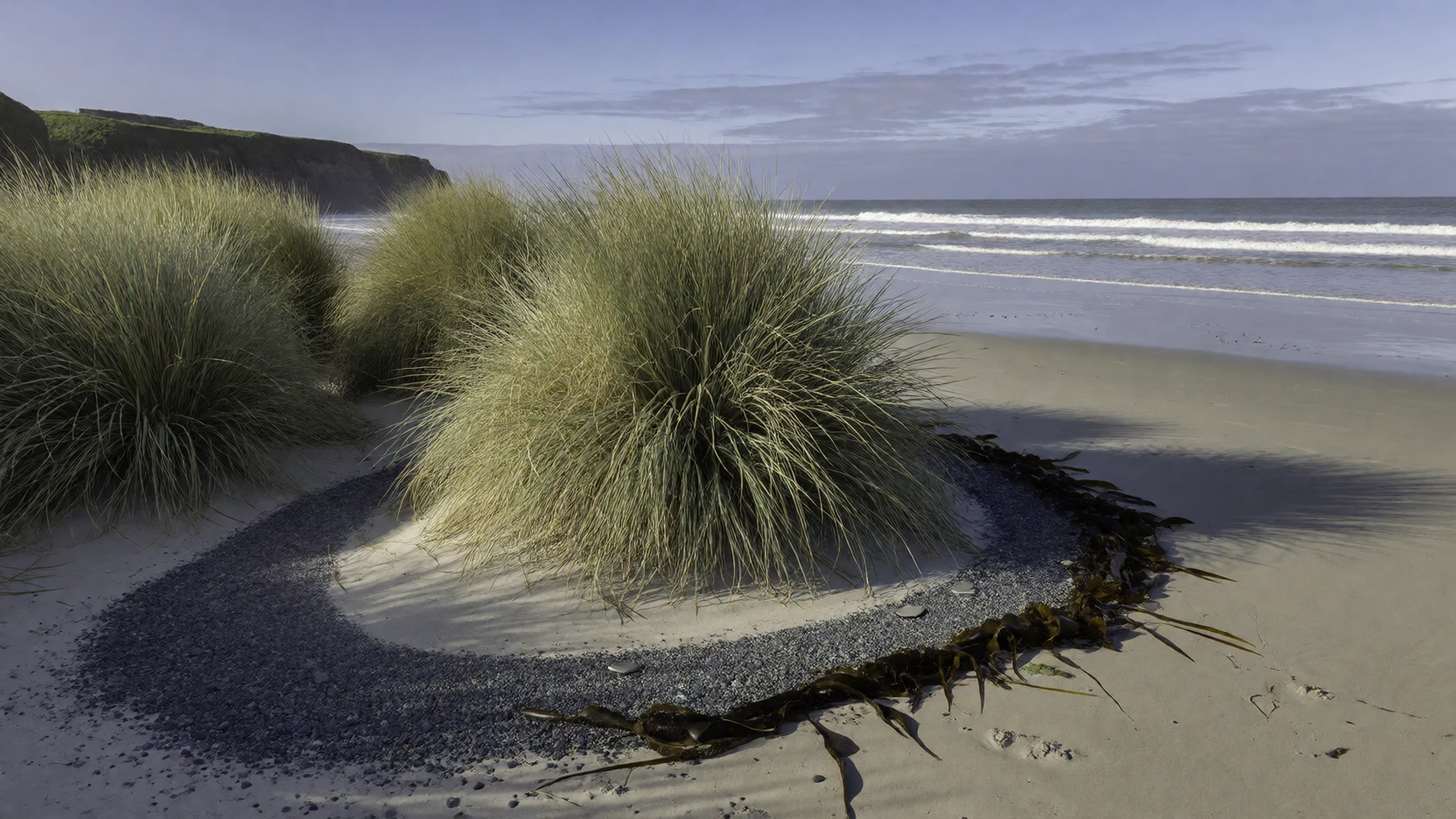
- Blackish cinclodes — Settlement edge and tussac
Carcass Island holds blackish cinclodes, dark ground-loving birds of the tussac and the shore, often called tussacbirds. They hop around buildings, kelp and penguin colonies with little fear, picking food where the grass meets the sand. The same absence of rats that protects burrowing birds keeps them a familiar sight beside the settlement. They are worth a pause on any walk between the harbour and the beaches.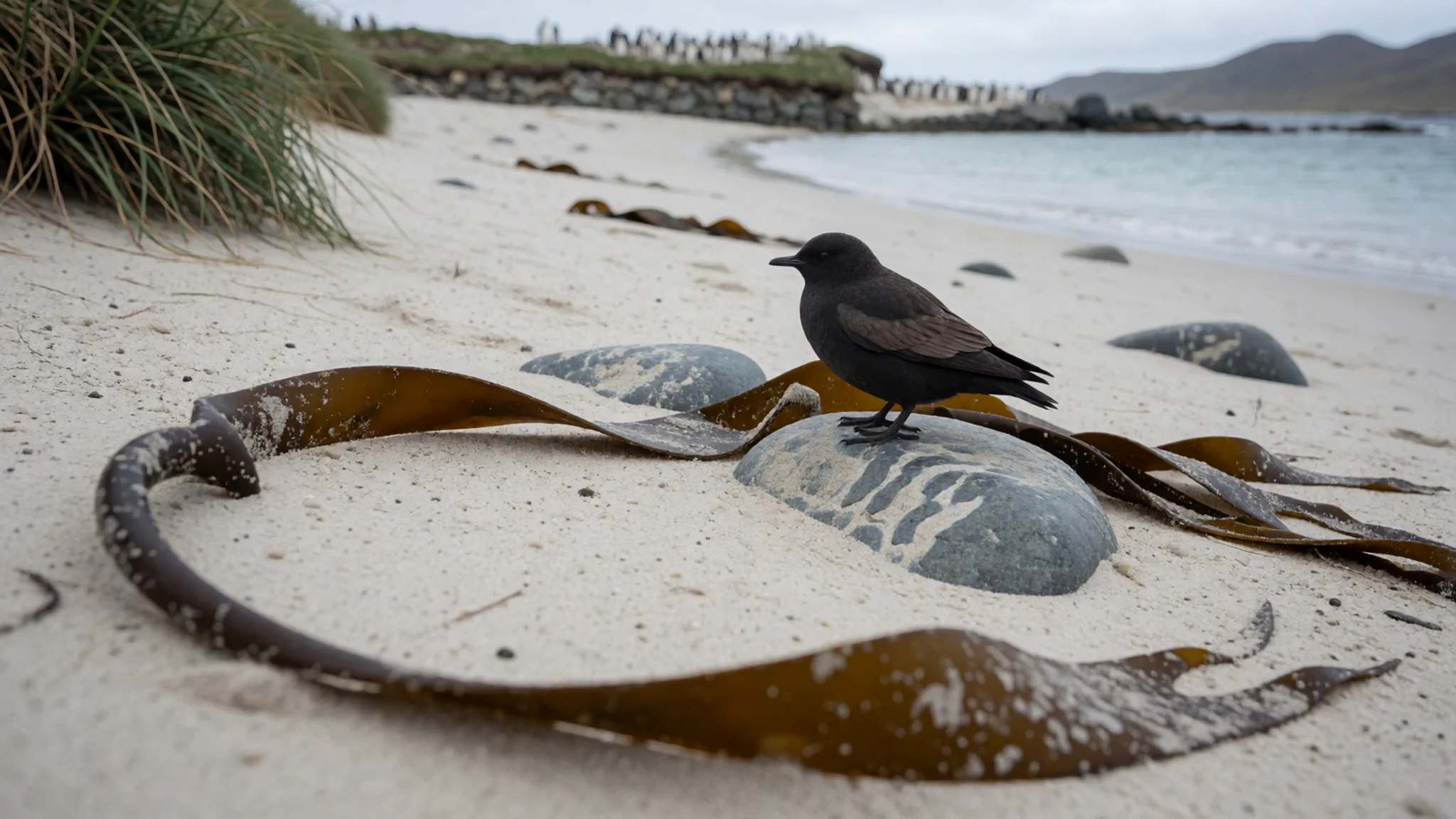
- The landing beach — Landing beach
Carcass Island receives cruise and expedition ships in the bay, passengers coming ashore by small boat. A call is short and supervised, shared with the working farm, so the beach fills and then empties once the ship moves on. The landing itself is the sight: pale sand, kelp, and a line of people walking towards the penguins. Overnight guests meet the same shore in silence.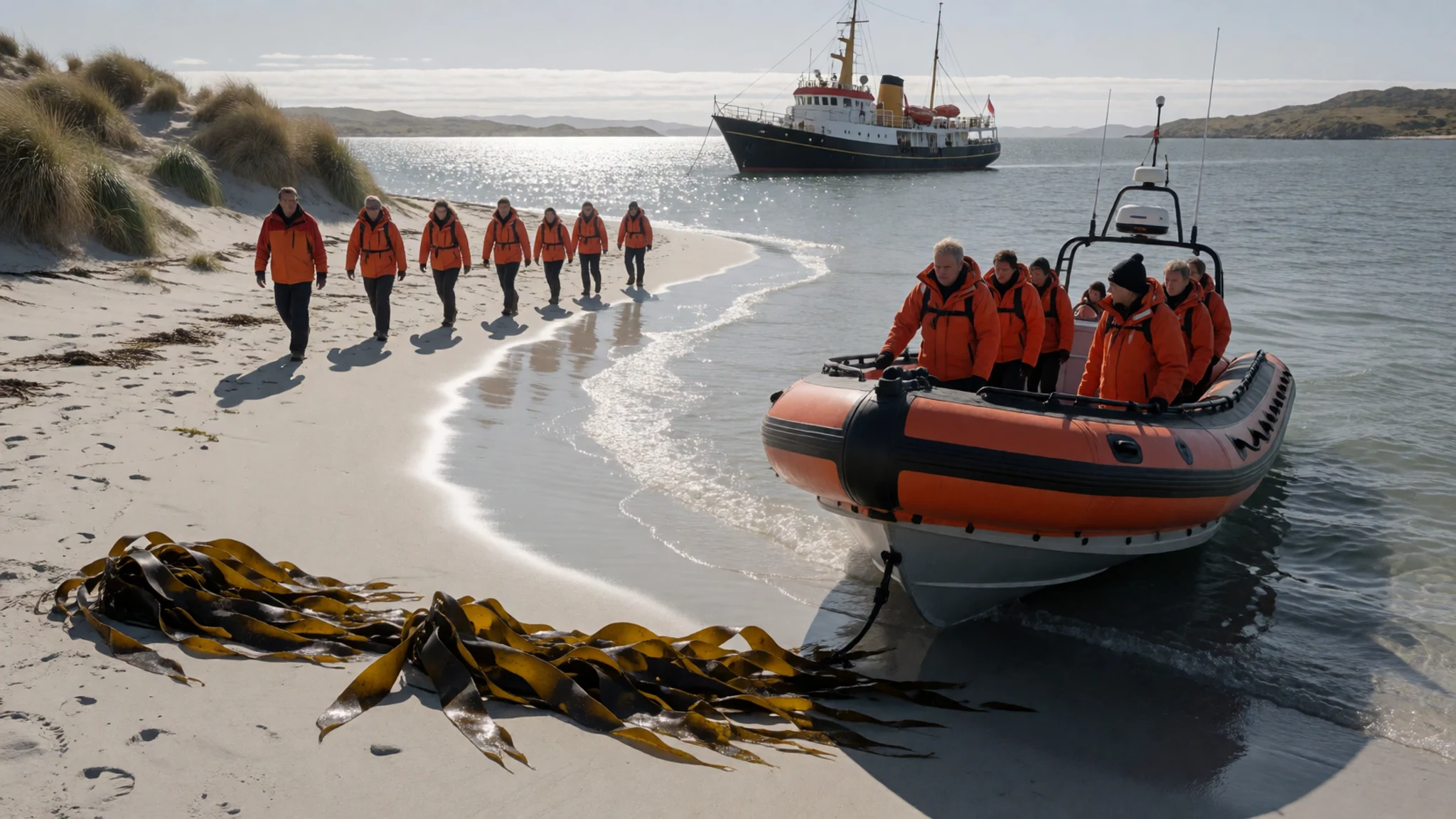
- Johnny rooks — Settlement, tussac and shoreline
Carcass Island's Johnny rooks are striated caracaras, bold birds of prey that walk up to visitors and inspect boots and bags. They thrive without rats or cats, and on this farm they patrol the settlement, the tussac and the penguin colonies. Curiosity is their habit and the hazard: scraps left out teach them to snatch. The encounter means watching them work the shoreline.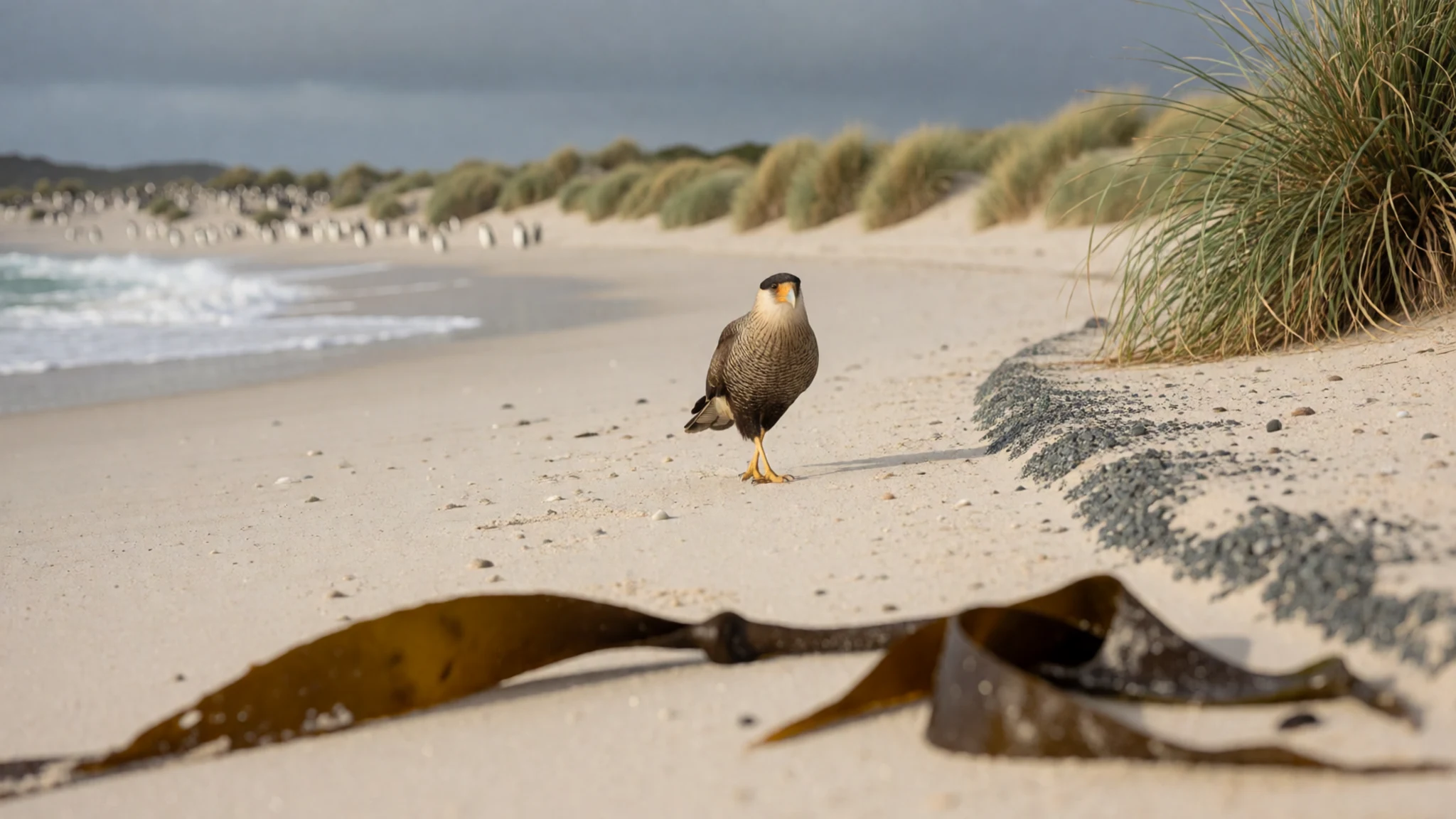
Culture
Carcass Island's culture is farm culture first: a small household, seasonal work with sheep, and a long habit of hosting people who have come a very long way to look at birds. Meals, weather talk and the day's walking plan all happen around the homestead, and guests are folded into that routine rather than kept in a separate visitor village. There is a small grocery shop, but no nightlife and no public square. The social life is the kitchen table, the garden and whoever else has landed that day, whether from a yacht, a light aircraft or a ship's tender. Falkland Islanders speak English, drive on the left, and treat self-reliance as ordinary good manners; on an outer island that means closing gates, reporting a sick sheep, and not assuming a path is public just because it looks open. Wildlife has entered that ethic. The owners' pride is a predator-free island, and visitors are expected to share it: stay out of burrows, keep dogs off the place, and leave the tussac alone. Cruise-day crowds can briefly change the mood, then the farm goes back to wind, radio and routine. Ask before you photograph people at work, and never feed the Johnny rooks.
What to wear
Carcass Island has no folk costume of its own. The textile that belongs here is Falkland wool, spun from the island's sheep and worn, historically and still, as heavy knitwear against a wind that cuts through lighter cloth. Old photographs of farm life show practical British rural dress: woollen jumpers, trousers, boots and oilskins, not ceremonial clothing. People who live and work on the farm now wear the same things any South Atlantic shepherd wears: fleece, waterproof jackets, knitted hats, and boots that can take wet sand and sheep yards. Visitors should copy that, not a holiday wardrobe. Layers beat a single thick coat, because sun, hail and a hard breeze can follow each other in a single walk. A knee-length waterproof, warm hat and gloves earn their place even in the warmer months, and sandals are a mistake on burrowed ground and kelp-covered rock. Modest everyday dress is enough around the homestead; there is no shrine and no dress code beyond being ready for weather and mud. Neutral colours keep a profile low around birds, and bright ceremonial dress has no role on this farm.
What to eat
- Farm lamb — the homestead kitchen
Carcass Island serves lamb and mutton from its own flock, roasted or stewed with potatoes and garden vegetables. The cooking is plain farm food at the homestead, not a restaurant menu, and it usually anchors the evening meal after a day on the beaches.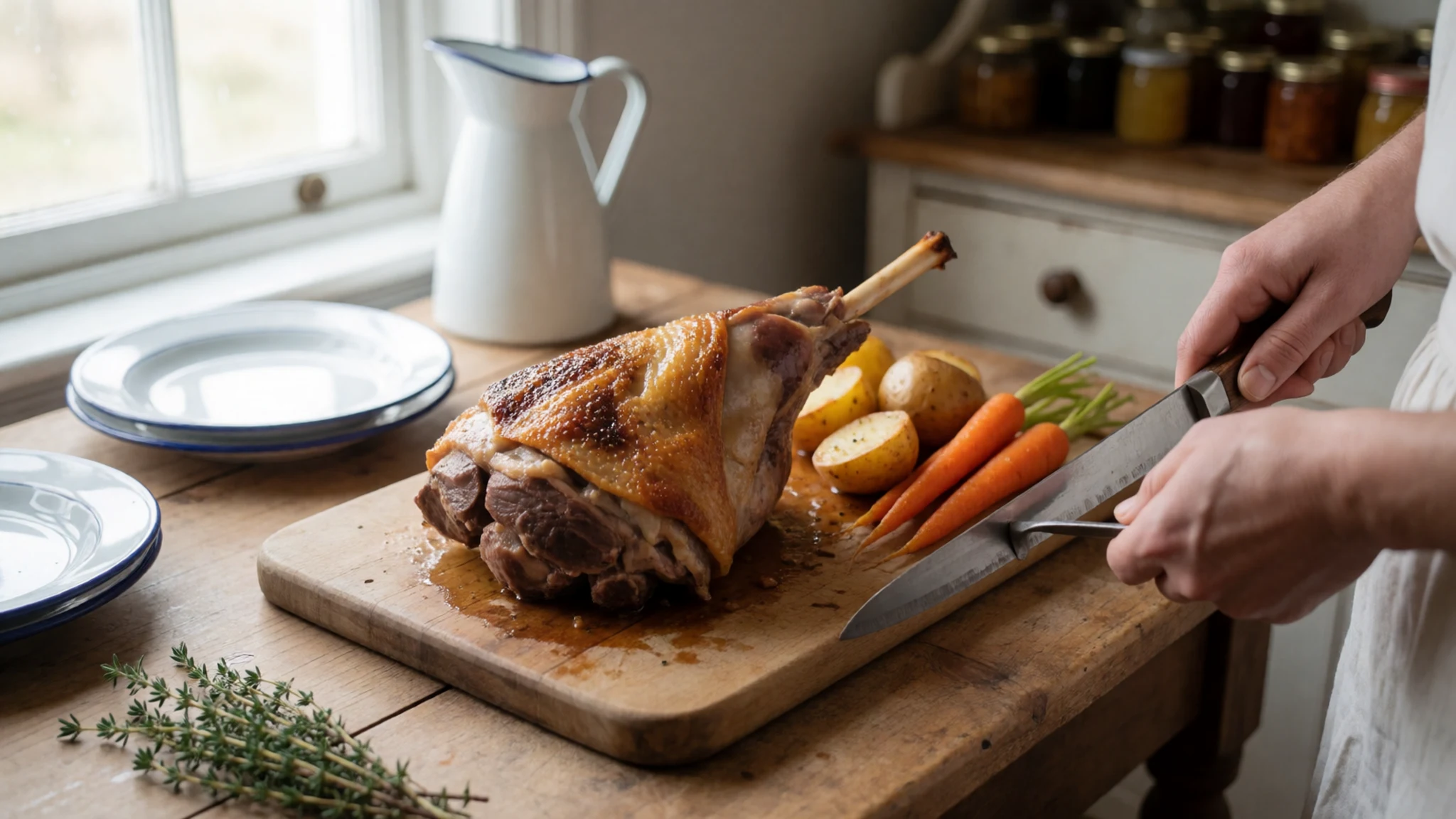
- Smoko — the homestead kitchen
On Carcass Island, smoko is the farm tea break: tea with homemade cake or biscuits at the homestead between walks. Guests share that pause in the kitchen after a cold spell outside. The baking is done there, with no café counter and no posted timetable.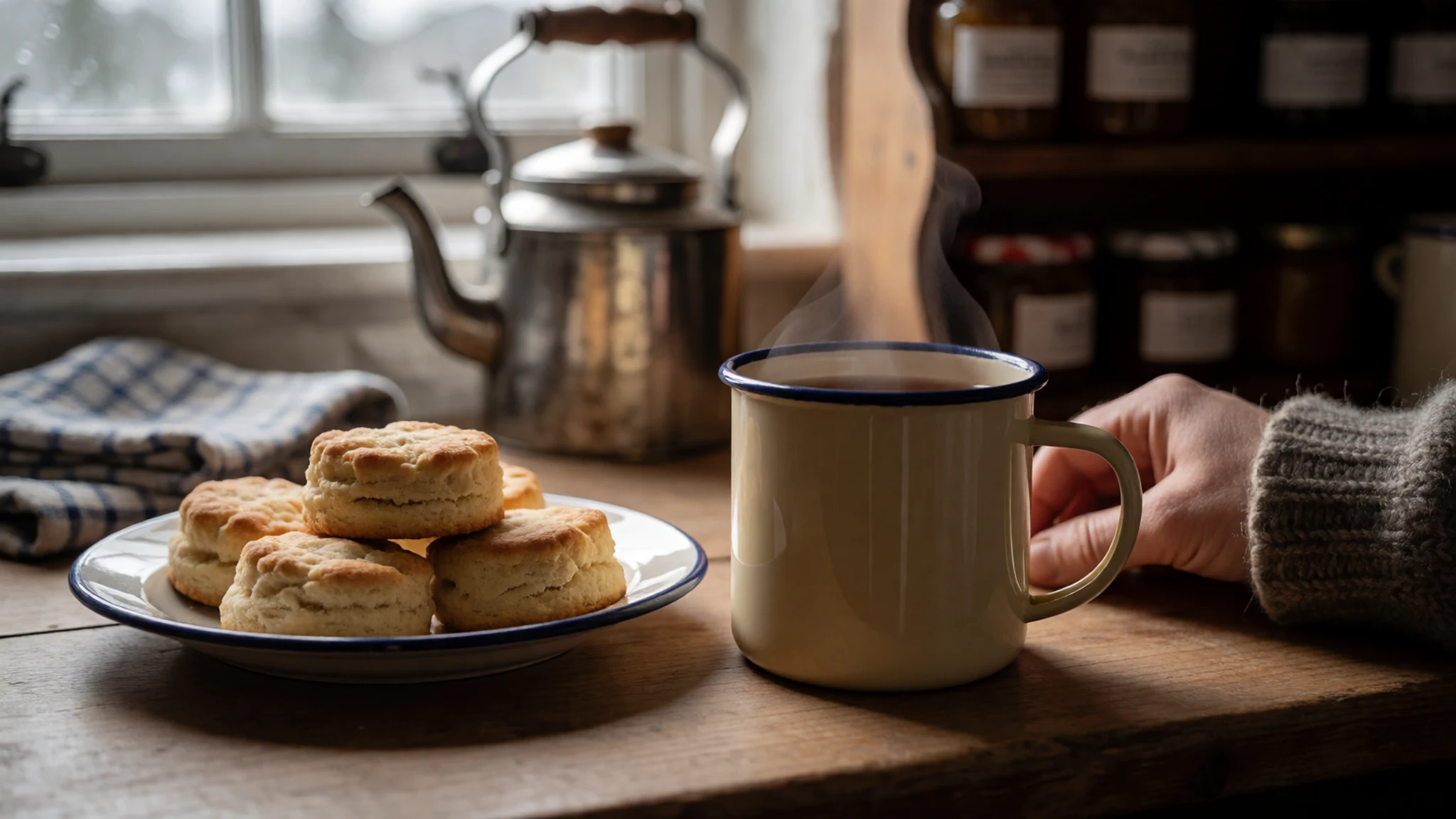
- Diddle-dee berries — the homestead kitchen, from island heath
Diddle-dee is a low Falklands heath, and on Carcass Island its red berries are boiled into jam or a sharp pudding. The fruit comes from the island's own ground and appears at the homestead beside bread. The taste is tart, nearer a wild currant than a shop jam. - Homestead baking — the homestead kitchen
Carcass Island's kitchen bakes its own bread and simple puddings, useful beside the settlement's small grocery. Loaves, scones and cake come from the homestead oven and are eaten there with butter and berry preserve. Guests meet that baking at the table. - Island fish — the homestead kitchen, when a catch comes in
Carcass Island eats fish when a catch comes in from the surrounding water, usually a firm white inshore fish, fried or baked. It is occasional food at the homestead, beside potatoes, not a standing waterfront menu. No stall sells it and no price is posted.
Plan it
Best time. Carcass Island is kinder from November to March: longer days, breeding penguins and milder spells than midwinter, though wind and sudden squalls still arrive. April and May quieten as the birds leave the burrows. The austral winter is cold, short on daylight and short on boats. Whatever the month, confirm arrangements with the island or a Falklands operator, because weather cancels small aircraft and landings.
How long. 2–3
Getting there. Carcass Island has no road to anywhere. Travellers reach the Falklands through RAF Mount Pleasant, then continue by light aircraft from the Stanley area or by boat from West Falkland, weather permitting. Expedition ships anchor off the beach and land by tender. There is no public timetable to quote; confirm the seat or the passage with the operator, and keep a buffer day in Stanley because wind holds aircraft on the ground.
Budget. high
Tips
- Book the homestead or the ship's landing well ahead; Carcass Island has few beds and the connecting flights fill.
- Keep a spare day in Stanley, because wind delays light aircraft and boat landings.
- Carry some cash as well as a card; there is no bank on the island, and the settlement has a small grocery.
- Refill water at the homestead before a long beach walk; there is nowhere along the sand to buy a drink.
- Tell the farm which way you are walking, and do not count on a mobile signal once you leave the settlement.
Etiquette
- Close every gate you open; sheep and wildlife are both managed by those fences.
- Do not feed Johnny rooks or leave scraps outside, or they learn to snatch food from guests.
- Walk the island on foot, and keep out of penguin burrows and tussac nesting cover.
- Ask before photographing people at work, and give the homestead the quiet of a private house.
Nearby
Sources
- Wikidata (CC0)
- Wikipedia (CC BY-SA 4.0)
- Wikivoyage (CC BY-SA 4.0)
Wildlife
- Magellanic penguin (animal)
Meet the Magellanic penguin, a South American penguin named after the explorer Ferdinand Magellan, which breeds along coasts including the Falkland Islands. On Carcass Island it raises its family in burrows under the turf, up from the beaches and not far from the settlement. Watch from a respectful distance, keep your voice low, stay clear of the burrows, and never offer food. A local guide will help you enjoy them without disturbing them. - Blackish cinclodes (animal)
The blackish cinclodes is a dark bird that likes the ground, and in the Falklands it is nicknamed the tussacbird. It is a kind of ovenbird, and it is listed as Near Threatened, so it deserves gentle care. On Carcass Island, look among the tussac grass and along the shore. Stay at a polite distance, move slowly and quietly, let a guide show you where to look, and never feed it. - Magellanic penguin (bird)
Meet the Magellanic penguin, a South American penguin named after the explorer Ferdinand Magellan, which breeds along coasts including the Falkland Islands. On Carcass Island it raises its family in burrows under the turf, up from the beaches and not far from the settlement. Watch from a respectful distance, keep your voice low, stay clear of the burrows, and never offer food. A local guide will help you enjoy them without disturbing them. - Blackish cinclodes (bird)
The blackish cinclodes is a dark bird that likes the ground, and in the Falklands it is nicknamed the tussacbird. It is a kind of ovenbird, and it is listed as Near Threatened, so it deserves gentle care. On Carcass Island, look among the tussac grass and along the shore. Stay at a polite distance, move slowly and quietly, let a guide show you where to look, and never feed it.