Caravelle Beach
Caravelle Beach, France
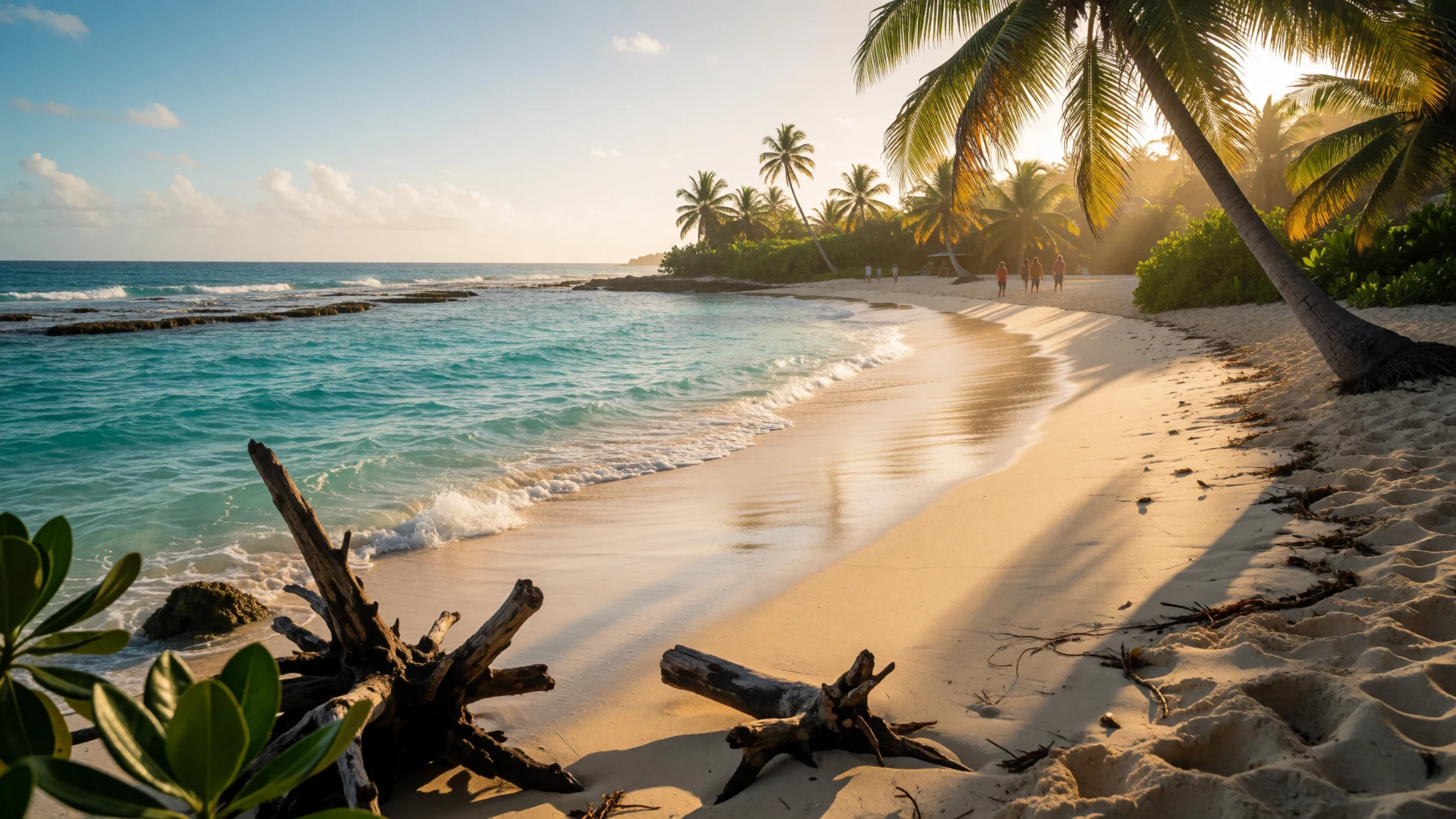
Caravelle Beach offers pale sand, coconut shade and reef-calmed water on Guadeloupe's south coast, in a Creole town with a long sugar history.
The place
Caravelle Beach lies on the south coast of Guadeloupe, an overseas region of France, just outside the town of Sainte-Anne. It is a long curve of pale sand lined with coconut palms, and Wikidata classes it simply as a white sand beach. A reef offshore keeps the water shallow and mostly gentle, which is why families, sailors and snorkellers all end up here. Access runs through the grounds of a large Club Med resort, and that shapes the feel of the place. One stretch is organised around sailing, diving and other water sports, while another section is set aside for naturists. Visitors who are not staying at the resort should expect to ask about the access arrangements rather than just wander in.
The town of Sainte-Anne has its own public beaches, a fishing port, a market and a scatter of Creole eateries. National road 4 links it with Pointe-à-Pitre to the west and Saint-François to the east, so the area is easy to reach and easy to combine with other stops on the island. Mornings are the softest time, when the light is low and the sand is nearly empty. By midday the sun is fierce, and a spot under the palms is worth claiming early. On public holidays local families crowd the neighbouring beaches, which says something: this is a place islanders use for long, unhurried afternoons, not only a stop for visitors.
Its story
Caravelle Beach belongs to the story of Sainte-Anne, which began as a modest fishing village grown around a mission run by Capuchin monks. The earliest written records mention a chapel close to where the parish church stands now. In 1759 English soldiers destroyed the settlement, and it had to be rebuilt. A proper town administration came only in 1837.
The area's fortunes then turned to sugar. Between 1870 and 1940 the district held 34 sugar factories, a denser cluster than anywhere else on Guadeloupe, and the surrounding land was given over to cane. A hurricane in 1928 flattened much of the town, and the architect Ali Tur drew up the plans for the new town hall and church that replaced what was lost. Both still stand and give the centre its look.
When the cane industry went into crisis, the town needed another living. The answer was already on its doorstep: two sandy beaches protected by reef and shaded by coconut palms. Tourism took hold, and the first resort buildings went up in 1970. Today the old fishing port, the sugar-era landscape and the beaches sit side by side, and the beach's quiet reputation rests on that long, uneven history rather than on any single landmark.
What to see
- Plage de la Caravelle — Sainte-Anne, south coast
The beach itself is a broad band of fine pale sand backed by palms, with reef-sheltered water good for swimming and gentle snorkelling. Water sports are available along it, and access is through the Club Med grounds. Go early for empty sand and cooler air, and remember the naturist section.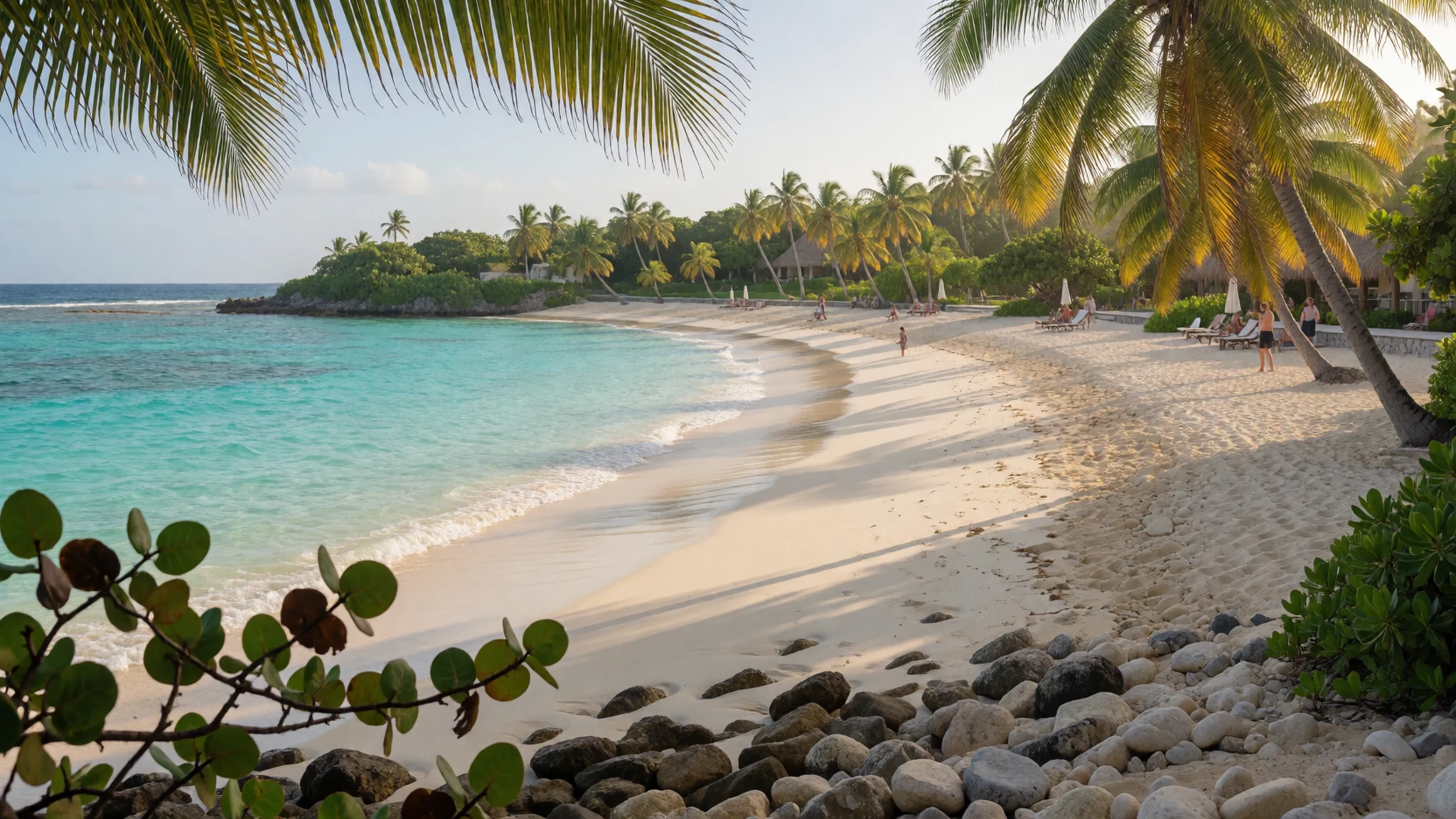
- Plage de Bois Jolan — East of Sainte-Anne
A quieter, more natural beach of fine white sand, with palms for shade and a campsite nearby. The reef offshore keeps the sea shallow and calm, so it suits small children. It fills up with local families on public holidays, so weekdays are more peaceful for a long swim.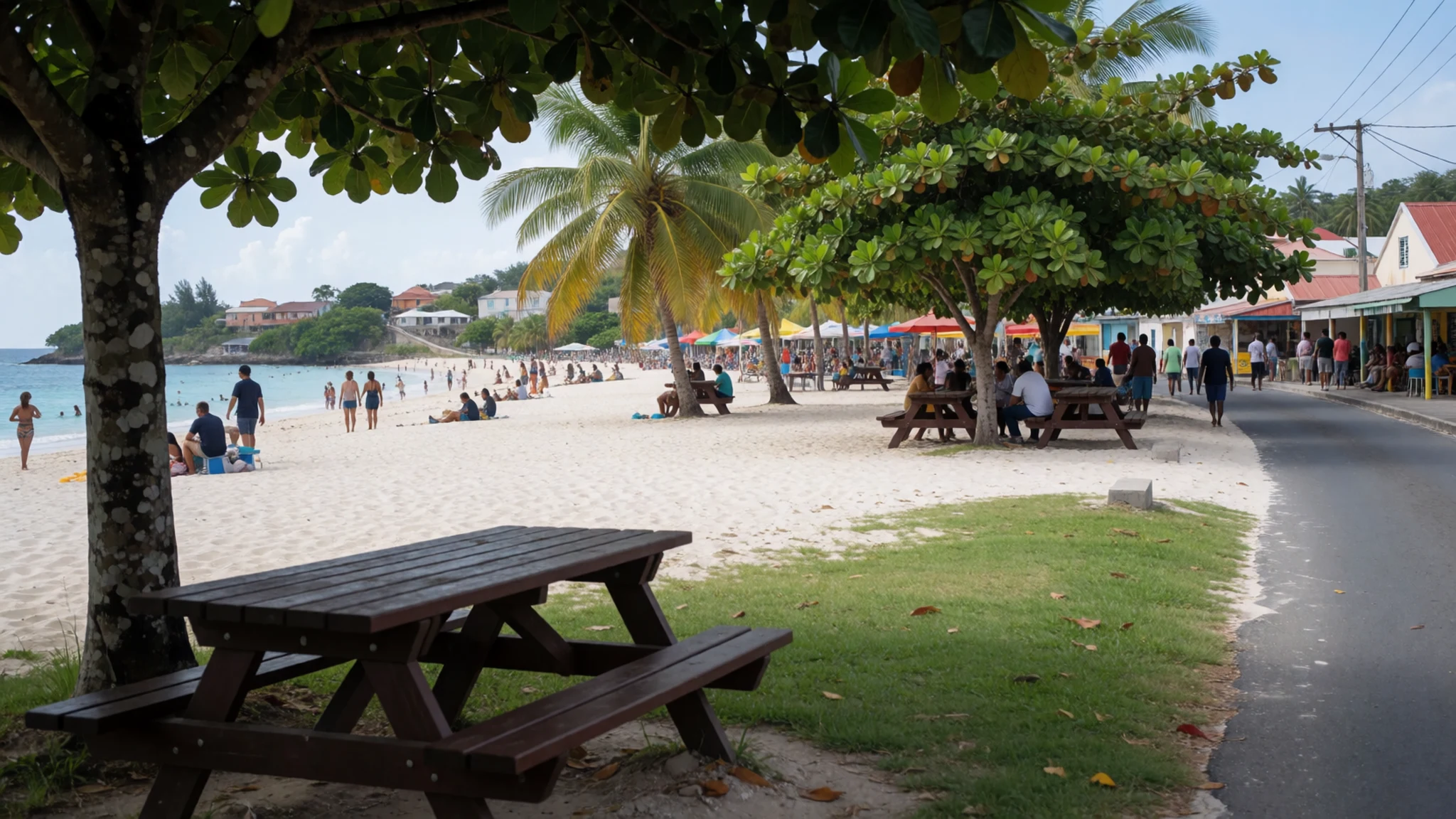
- Plage du Bourg — Sainte-Anne town
The town beach on the eastern side of the village is wide, white and shaded, with picnic spots and water sports close by. It is the easiest place to combine a swim with lunch at a beachfront eatery, and it is busier than the beaches outside the town.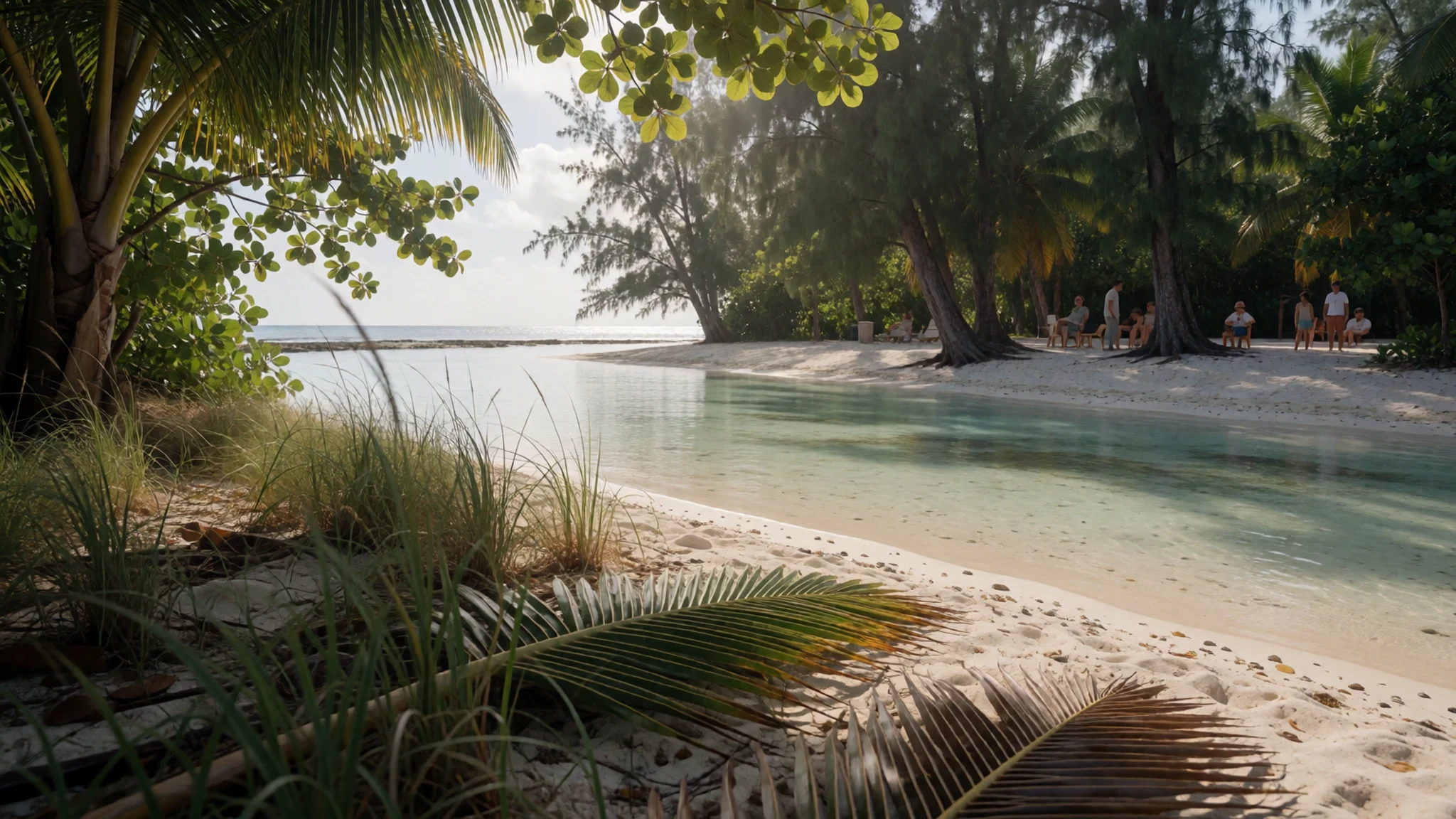
- La Mairie and the church — Sainte-Anne centre
After the 1928 hurricane, the architect Ali Tur designed the town hall and the church that replaced the destroyed originals. They are worth a short walk from the beach to see how the town rebuilt itself. Church interiors may close between services, so a peek from the square is often enough.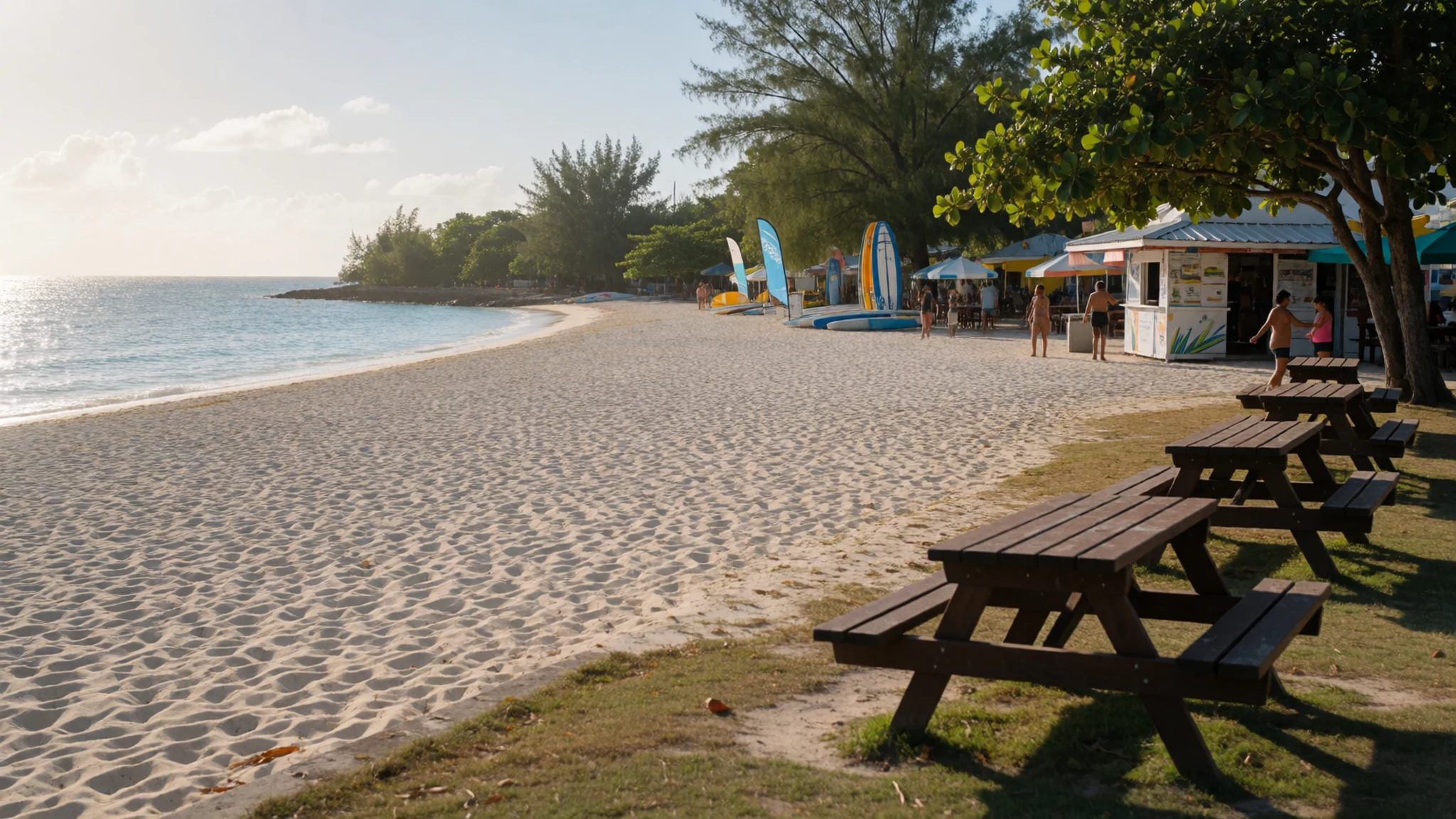
- Boat trips from the fishing port — Galbas, Sainte-Anne
Ferries and boats leave from the fishing port at Galbas for the neighbouring islands of La Désirade, Les Saintes and Marie-Galante, and charter boats, kayaks, jet skis and diving can be arranged locally. Book ahead in the busy season and check sailing times with the operators directly.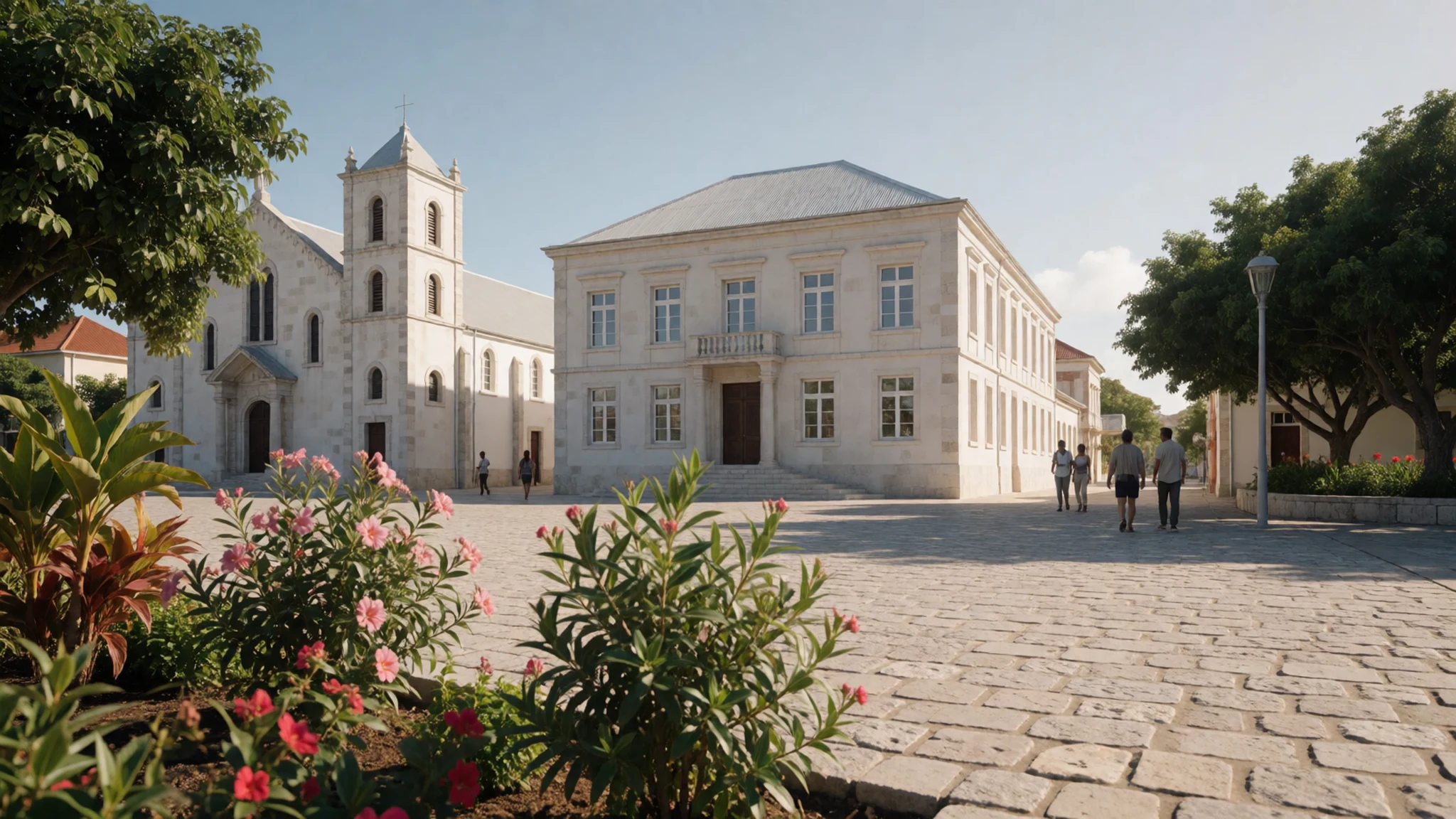
Culture
Caravelle Beach sits in a part of Guadeloupe where French and Creole life are woven together. French is the language of official business, but Guadeloupean Creole (Kréyòl) is what people often speak among themselves, in markets, on the radio and at family tables. The island's culture grew from African, European and Caribbean roots, shaped by the plantation economy that once ruled this coast, and you can still read that history in the old sugar landscape around Sainte-Anne.
Social life revolves around the sea and the table. Weekends often mean long beach lunches, with families spreading out under the palms, and public holidays bring crowds to the local beaches. Church remains a real part of community life in the town, and the rebuilt church in Sainte-Anne's centre is used for worship, not just looked at. Music, carnival and dance are central to island identity, and a Creole lunch with rum punch is as much a cultural event as a meal.
The pace is relaxed, so rushing a conversation or a meal can feel abrupt. Politeness matters more than speed, and small courtesies are noticed. Tourism has been part of local life since the 1970s, which means visitors are used to, and generally welcomed, but that welcome goes best when a few local habits are respected. Say a clear bonjour when entering a shop, market stall or eatery, and keep cameras away from people on the naturist section of the Caravelle.
What to wear
Caravelle Beach is part of Guadeloupe, where the traditional Creole dress is built around madras, a brightly checked cotton cloth. Women's festive costume combines a full madras skirt, a white embroidered blouse, a shawl and a folded madras headtie whose knot was once said to carry a message. Gold jewellery, often in rounded Creole styles, completes the outfit. It is worn today for carnival, folk dance, church festivals and celebrations of island heritage rather than for everyday life.
Day to day, people dress for the heat: light cotton and linen, short sleeves, sandals and sunglasses, with swimwear on the beach and something tidier in town. Evenings are casual but a little smarter, especially for a restaurant dinner. Sainte-Anne is a resort town, so nobody will stare at a swimsuit on the sand, but walking through the centre in just swimwear looks out of place.
Visitors should pack breathable cotton or linen, a wide-brimmed hat and reef-safe sun cream, since the sun is strong all year. Bring a light cover-up or shirt for the town centre, the market and any church visit, where shoulders and knees are best covered. Water shoes are useful where the seabed turns rocky or reefy, and flip-flops or sandals are enough for the sand. A light rain jacket helps in the wetter months.
What to eat
- Accras de morue — Beach eateries and market stalls in Sainte-Anne
Crisp fritters of salt cod in a spiced batter, eaten hot with a dash of chilli. They are the classic Creole starter or beach snack, found at beachfront eateries and snack stalls near the Sainte-Anne market.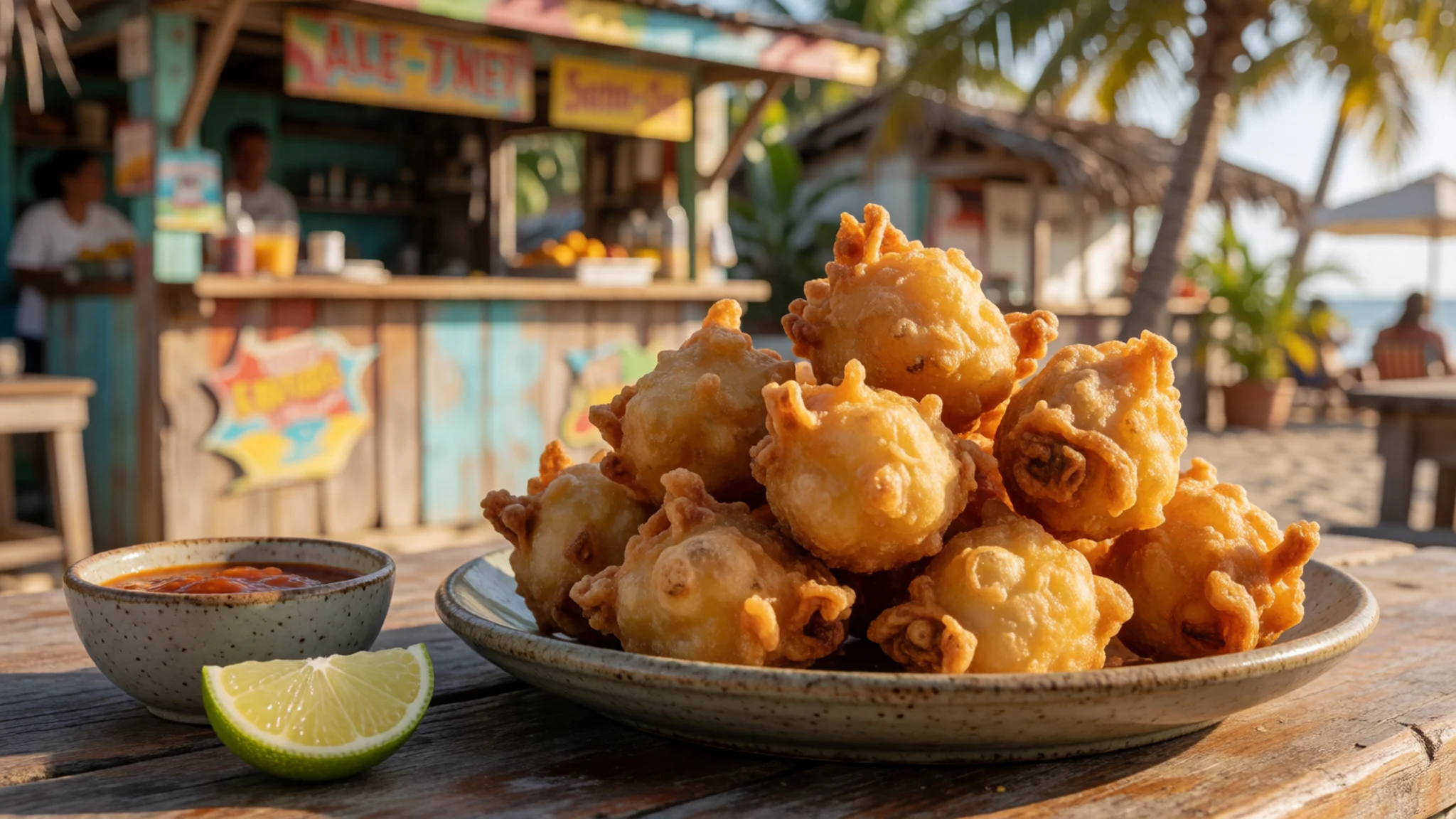
- Colombo — Creole eateries in the town centre
A Creole stew of chicken, goat or fish simmered with a mild curry-style spice blend, served with rice. It is a standard on Creole lunch menus and a good introduction to the island's mixed culinary roots.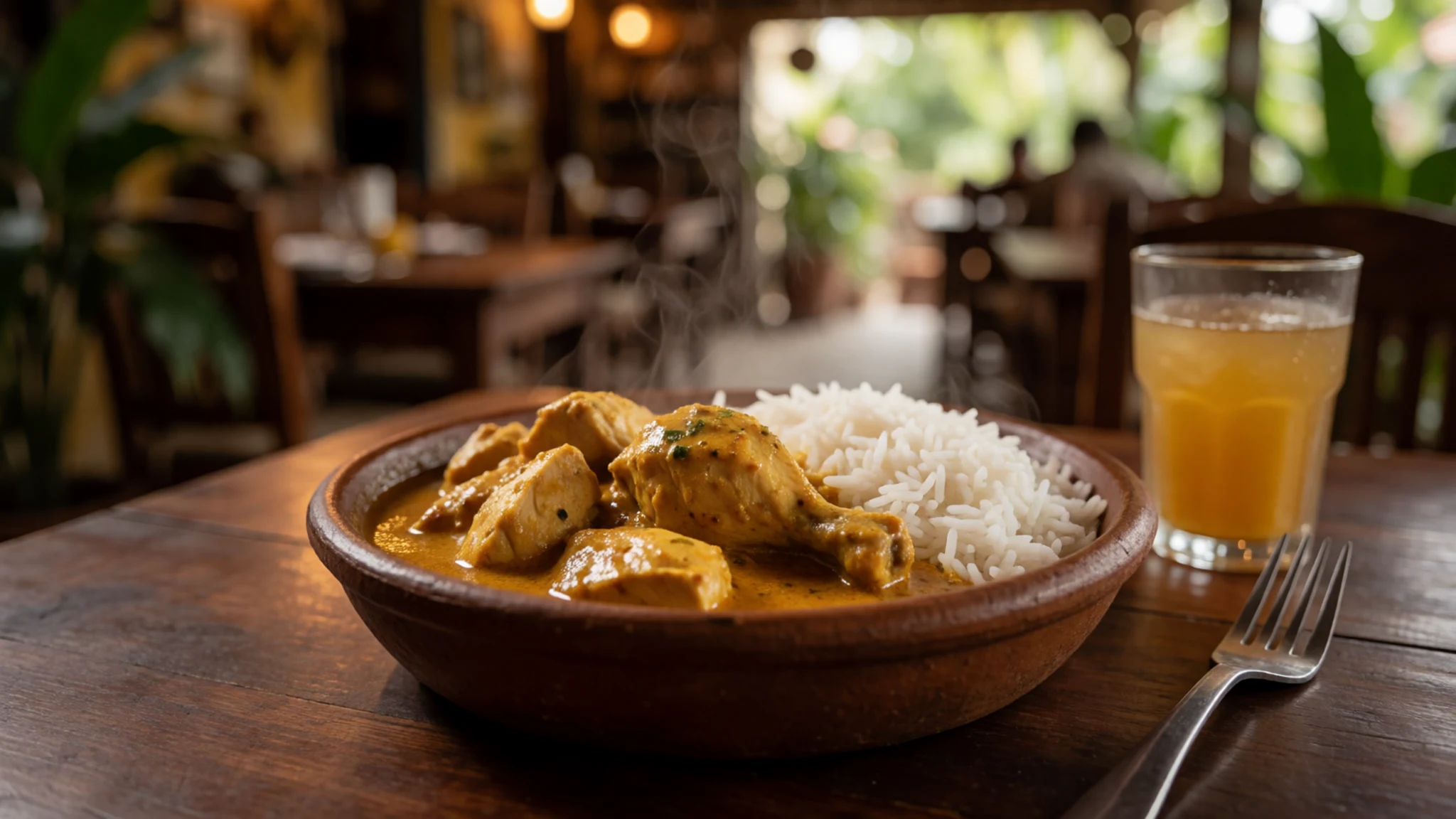
- Court-bouillon de poisson — Seafood places along the beach road and the public beach
Fresh fish poached in a tomato, herb and chilli sauce, usually served with rice or green banana. It suits a beachfront lunch, since the fish comes from the nearby fishing port. - Boudin créole — Market and roadside stands around Sainte-Anne
A spiced Creole blood sausage, rich and peppery, served hot with a squeeze of lime. It is a popular snack at local gatherings and small roadside stands, and best tried where locals queue for it. - Coconut sorbet and ice cream — Kiosks on the public beach in Sainte-Anne
Locally made coconut and tropical-fruit ices are the natural answer to the midday heat. Small kiosks beside the public beach often sell them alongside sandwiches, and the coconut flavour is usually the best.
Plan it
Best time. December to April is the drier, cooler part of the year, with lower humidity and more reliable beach weather. June to November is the wetter, hotter hurricane season, so check forecasts if you travel then.
How long. 2–3
Getting there. Fly to Pointe-à-Pitre, then drive east along national road 4 to Sainte-Anne, about 19 km away, by hire car or taxi. The Caravelle is reached through the Club Med entrance, so confirm access arrangements in advance.
Budget. mid
Tips
- Reach the beach early for soft light, cooler air and empty sand
- Hire a car if you want to see more than one beach, as public transport is limited
- Bring reef-safe sun cream, a hat and plenty of water, as shade runs out by midday
- Book boat trips to the neighbouring islands ahead in busy periods and confirm sailing times with the operator
- Carry some cash for market stalls and small beach eateries, although larger places take cards
Etiquette
- Greet people with bonjour in shops, eateries and markets
- Keep swimwear to the beach and cover up in town and in churches
- Do not photograph people on the naturist section of the beach
Nearby
Sources
- Wikidata Q3390868 (CC0)
- Wikivoyage, Sainte-Anne (Guadeloupe), rev 5355874 (CC BY-SA 4.0)
- Matin à la plage de la Caravelle, 07 2006 (Grook Da Oger, assumed), via Wikimedia Commons (CC BY 3.0)
- Wikipedia (CC BY-SA 4.0)
