Calanques
Calanques, France
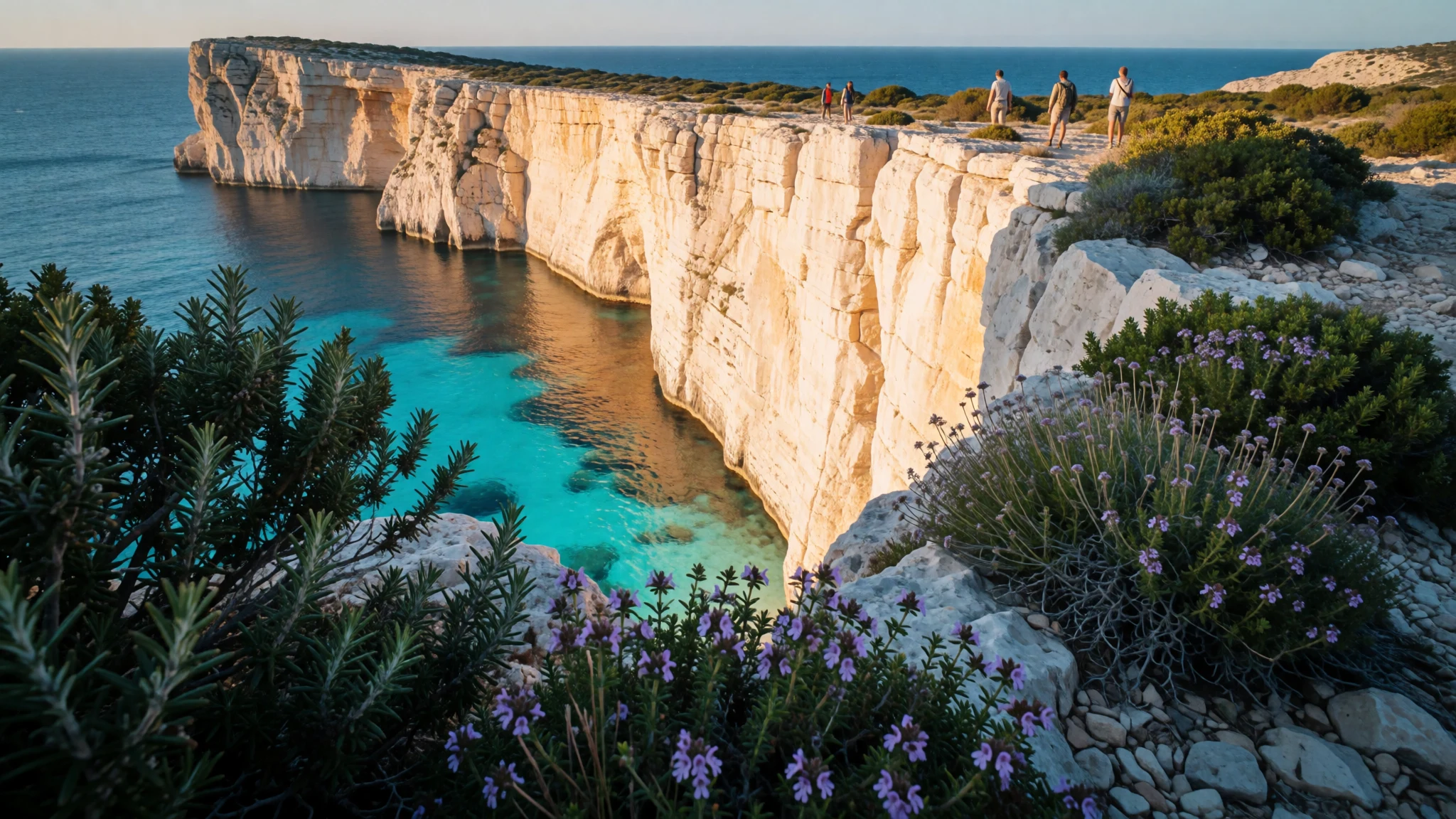
Calanques National Park gives Marseille and Cassis a wild limestone coast of turquoise inlets, reached on foot or by boat.
The place
Calanques National Park sits on the Mediterranean coast of Bouches-du-Rhône, just west of the French Riviera. It was created in 2012 and is unusual because it wraps around the edge of a big city. Marseille's southern districts, the town of Cassis and the port of La Ciotat all touch its borders, so a walker can start the day in a suburb and finish it on a cliff with no road in sight.
Most of the park is water. About 43,500 hectares are sea and about 8,500 hectares are land, and around 2 million visitors come each year. The land is the Massif des Calanques, a ridge of pale rock that drops into narrow, steep-sided inlets. These inlets are the calanques themselves: Sormiou, Morgiou, Port-Miou, Sugiton and En-Vau are the best known. Cosquer Cave, a prehistoric painted cave, also belongs to the park.
The character changes with the approach. Sormiou, Morgiou and Callellongue have small settlements and can be reached by road. Others, En-Vau above all, need a steep walk or a boat. The ground is dry and rocky, shade is scarce, and there are no water points inside the massif. The beauty is real, but so is the pressure: an unspoilt-looking shore close to major cities is under strain, and the rules on access exist because of it.
Summer heat is serious. July and August average around 30°C, and walkers are told to carry at least a litre of water for each hour on the trail.
Its story
The story of Calanques National Park is mostly a story of people arguing to keep things as they were. In 1923 a committee, the Comité de défense des Calanques, was formed to stop industrial development at En-Vau. That early campaign is why the best-known inlet still has a beach with cliffs rather than a works or a quarry behind it.
For decades the coast had protection of a patchy kind, and the pressure of visitors kept growing as Marseille and its neighbours expanded. In 1999 a public interest group, the GIP des Calanques, was set up to prepare a proper national park. Eleven years later it put forward a first draft. A third draft was approved in 2011, and on 18 April 2012 the Prime Minister, François Fillon, signed the decree that created the park.
The result is a hybrid. Most national parks are remote; this one includes suburbs, sea and land together, and that mix is its main difficulty. It has to protect about 140 protected species and fragile ground while thousands of people come to swim, climb and walk, often on the same few hot weekends.
The deep past is here too. Cosquer Cave holds prehistoric paintings, though the cave itself is not an everyday visit and its art is not something walkers will see on the trails. Today the story is still being written, in fire-season closures, booking rules and the daily negotiation between a crowded city and its wild edge.
What to see
- En-Vau — Between Cassis and Marseille
The most photographed inlet in the park: a narrow cove of pale rock walls, pines and a small pebble beach with strikingly clear water. The walk down is steep and rocky, and the beach fills quickly on summer days, so go early or come by boat.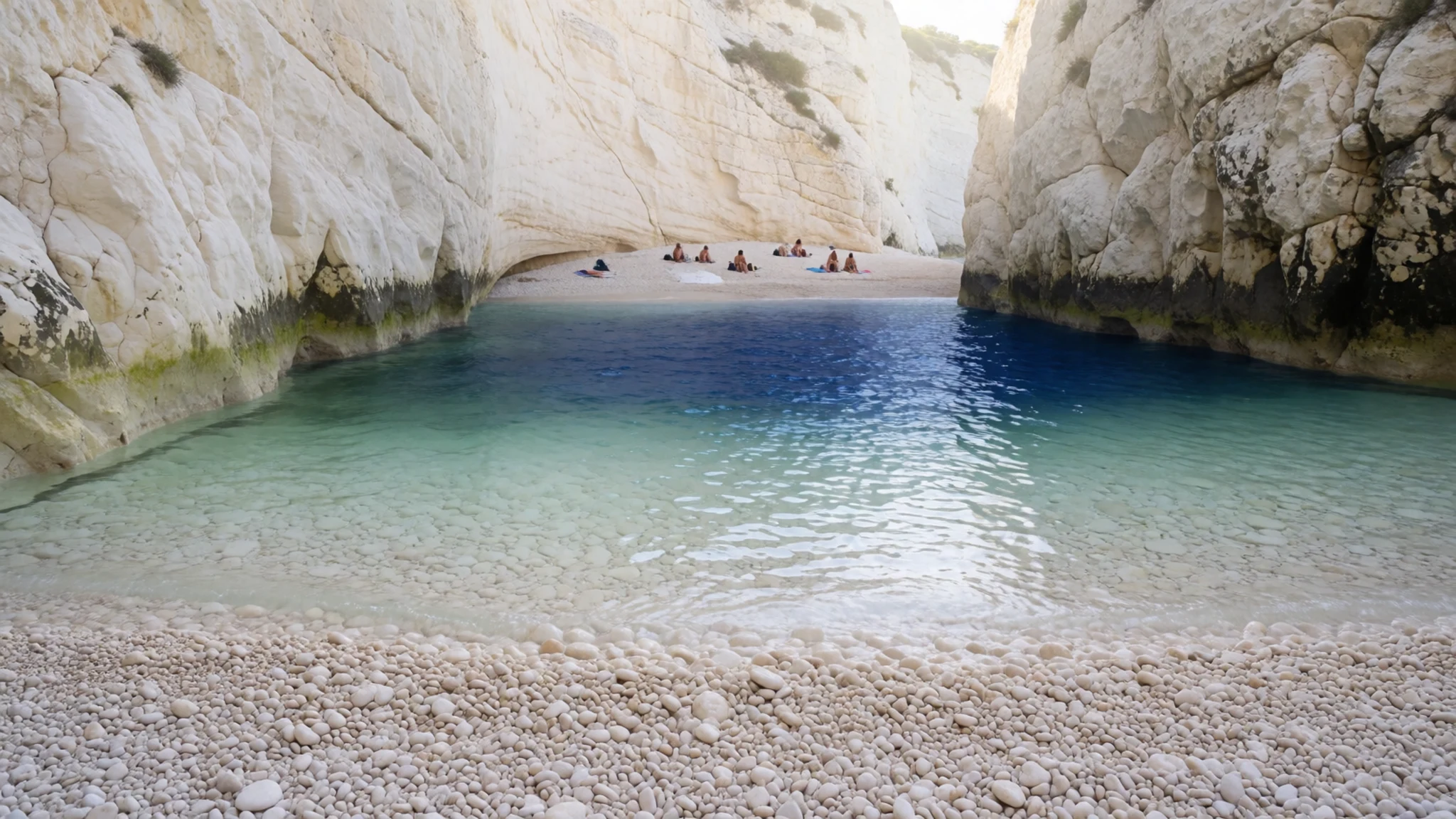
- Sugiton — South Marseille, near Luminy
A calanque on the Marseille side, known for its high viewpoint over a bay of turquoise water. The path is rocky and exposed, with little shade, so it suits a morning walk. Access can be regulated in busy periods, so check the park's rules before setting out.
- Port-Miou — Cassis
The calanque closest to Cassis, long and narrow, lined with moored boats. It is the easiest of the group to reach on foot and a common start for longer walks east. It feels more like a working harbour than a wilderness, which makes a gentle first look.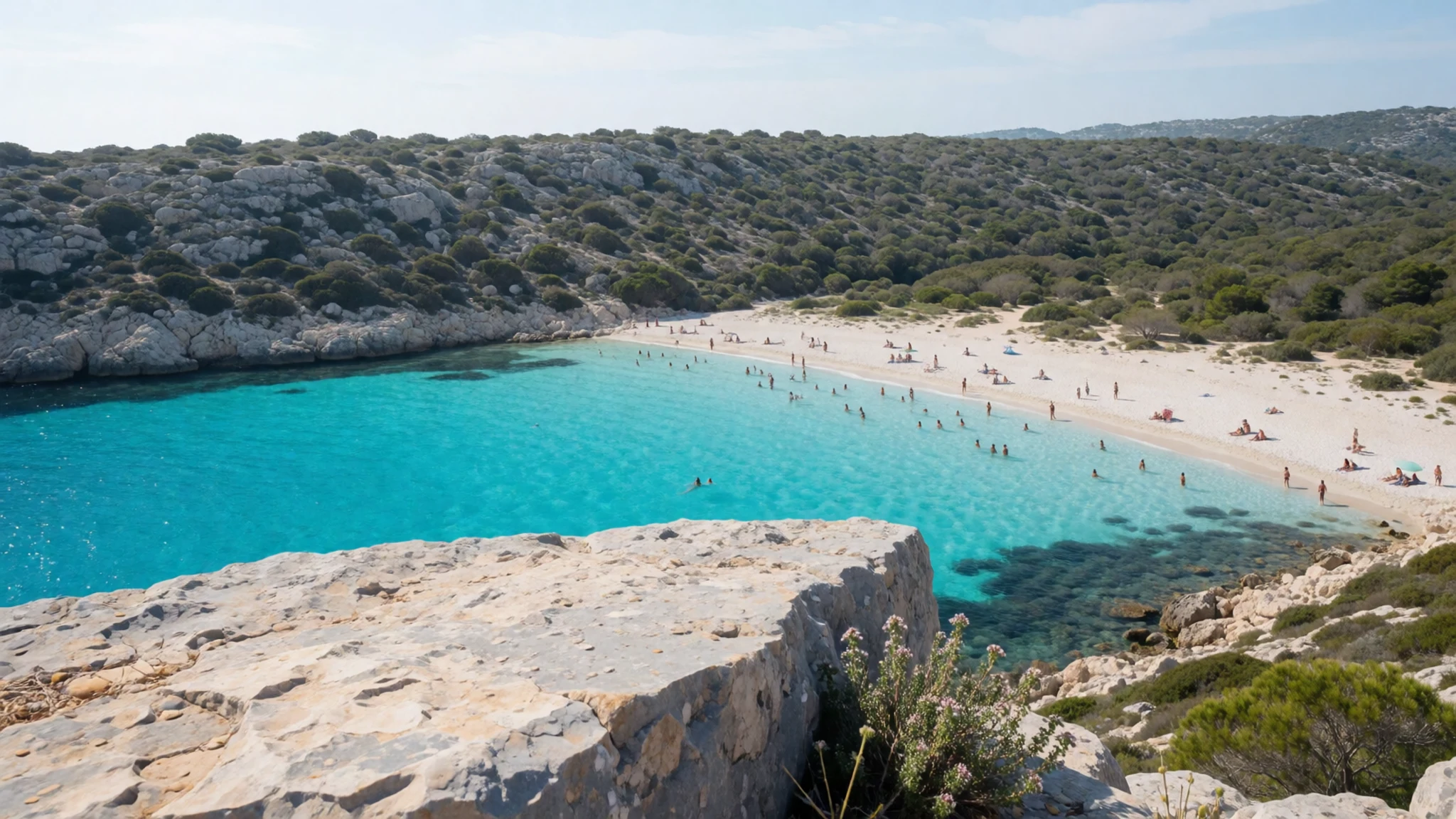
- Sormiou and Morgiou — South Marseille
Two inhabited calanques reached by road from Marseille, each with small houses and a sheltered harbour. Sormiou has a restaurant. Road access can be closed in the fire season, so plan for a long walk in or a boat from the city instead.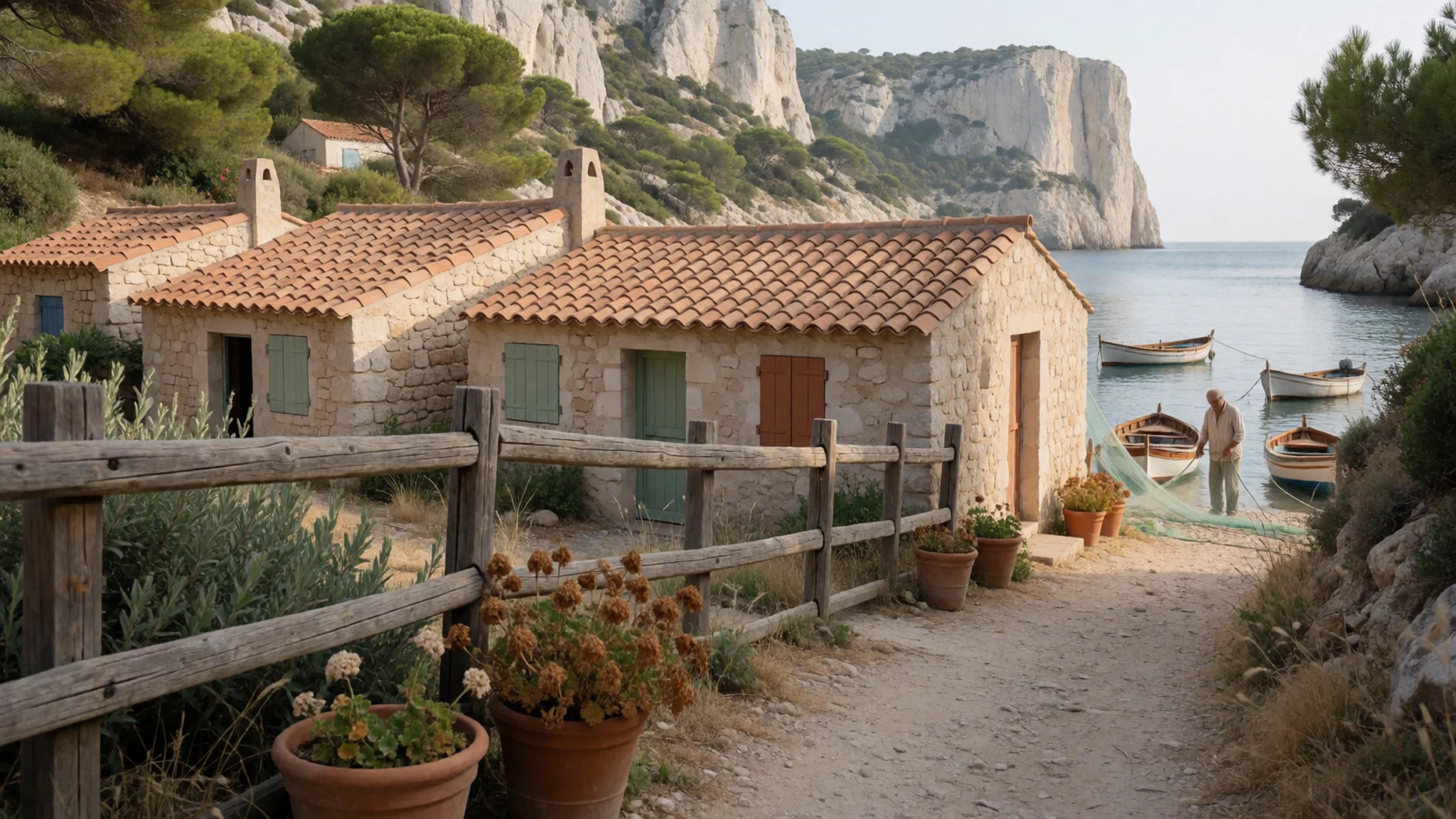
- Boat trips along the coast — Cassis and Marseille harbours
Many boats leave daily from Marseille and Cassis, and in summer they are sometimes the only way in when roads and trails are shut. A trip gives you the cliffs from the water and lets you swim in a bay. It is the sensible choice if the heat or the steep paths worry you.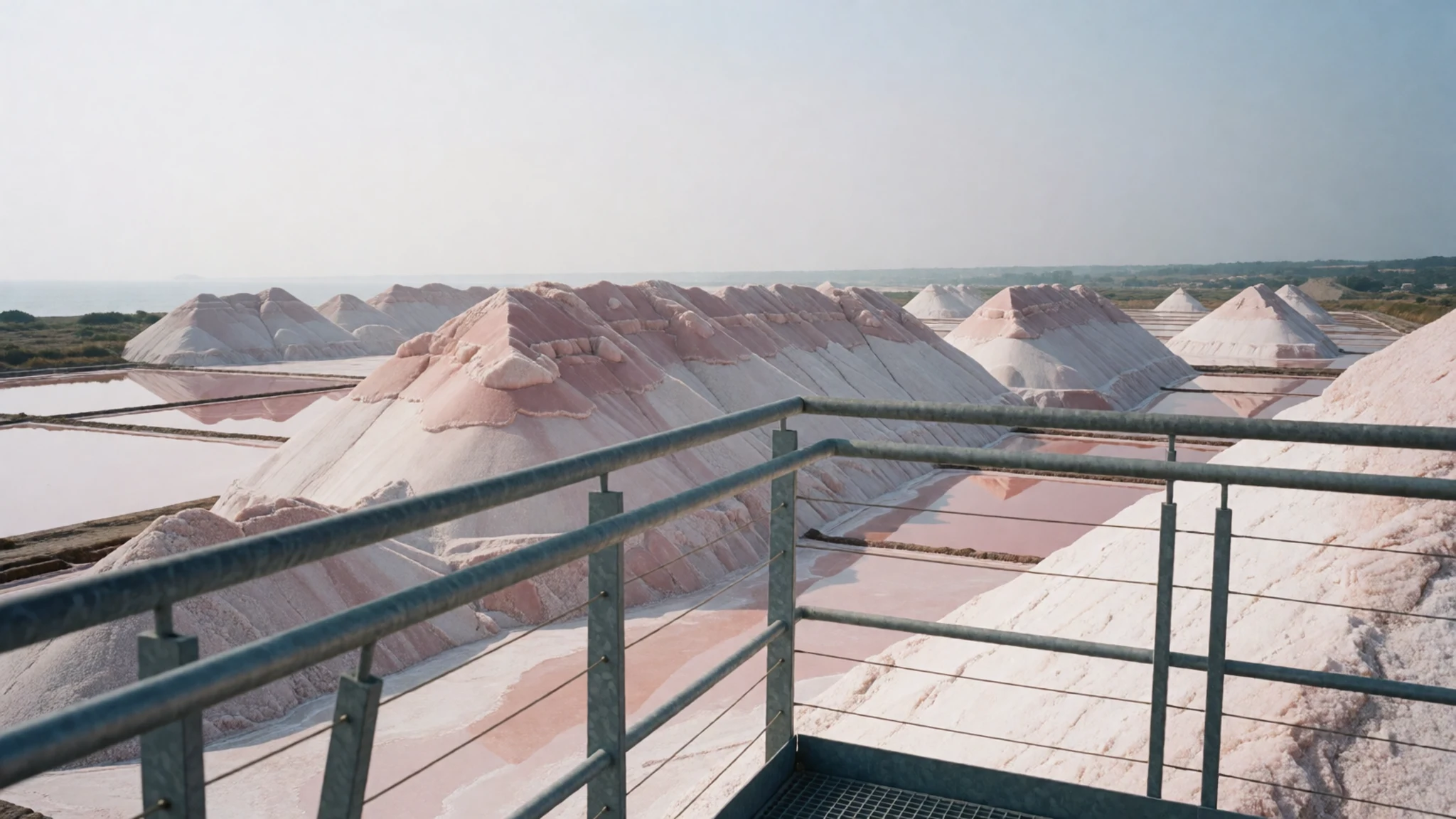
Culture
Calanques National Park is culture of a particular sort: the culture of a city that treats its wild edge as a back garden. Marseille families swim here at weekends, climbers have used the limestone for generations, and walkers treat the long path along the massif as a local classic. People are relaxed about swimming, picnics and sun, but there is a strong sense that the place is borrowed and needs looking after.
That sense comes from history. Residents campaigned from 1923 to keep industry out of En-Vau, and the park, created in 2012, grew from decades of public pressure. The old fishing hamlets in Sormiou, Morgiou and Callellongue still have houses and a few people living year-round, so you are walking through somebody's neighbourhood, not an empty reserve.
The pace follows the summer. In the hot months access to sensitive areas is regulated for fire risk, and a closed trail is a normal part of life, not an insult. Locals read the day's rules before going out, and visitors who do the same fit in easily.
As elsewhere in southern France, lunch is a proper event and the evening starts late, with Cassis and Marseille both busy at dusk. Take your rubbish with you, speak quietly on the paths and in the bays, and between 1 June and 30 September check the official site for the day's access rules before you set out.
What to wear
Calanques National Park has no traditional dress of its own, so Provence is the reference. The historic Provençal costume, worn today mainly at festivals and folk events, uses printed cotton, linen and silk, with shawls, aprons and bonnets. The bright printed cotton known as indienne is still widely associated with the region and appears in tablecloths, scarves and summer shirts.
What people actually wear here is simple and practical. Marseille residents head for the calanques in swimwear under shorts, a light shirt, a cap and sandals or trainers, often with a small rucksack and a towel. Climbers add harnesses and chalk bags, and boat parties dress for the sun rather than the occasion. In town, Cassis is a little smarter, with linen shirts and light dresses for the harbour.
For a visitor, footwear matters most. The paths are steep, loose and rocky, so wear closed shoes with grip, such as trail shoes or light boots, and keep sandals for the beach. Bring a hat, sunglasses and high-factor sunscreen, since shade is rare. Light, breathable clothes in pale colours work best in July and August, when temperatures average around 30°C. In spring and autumn, add a thin windproof layer for exposed ridges and boat decks.
There are no religious dress rules on the trails. A wrap or a spare dry top is useful for the walk back into a restaurant.
What to eat
- Bouillabaisse — Vieux-Port restaurants in Marseille
Marseille's famous fish stew, built on rockfish simmered with saffron, fennel and tomato and served with bread and rouille. It is a long, rich meal rather than a snack, so order it at a harbour-side eatery in Marseille and plan for a slow lunch.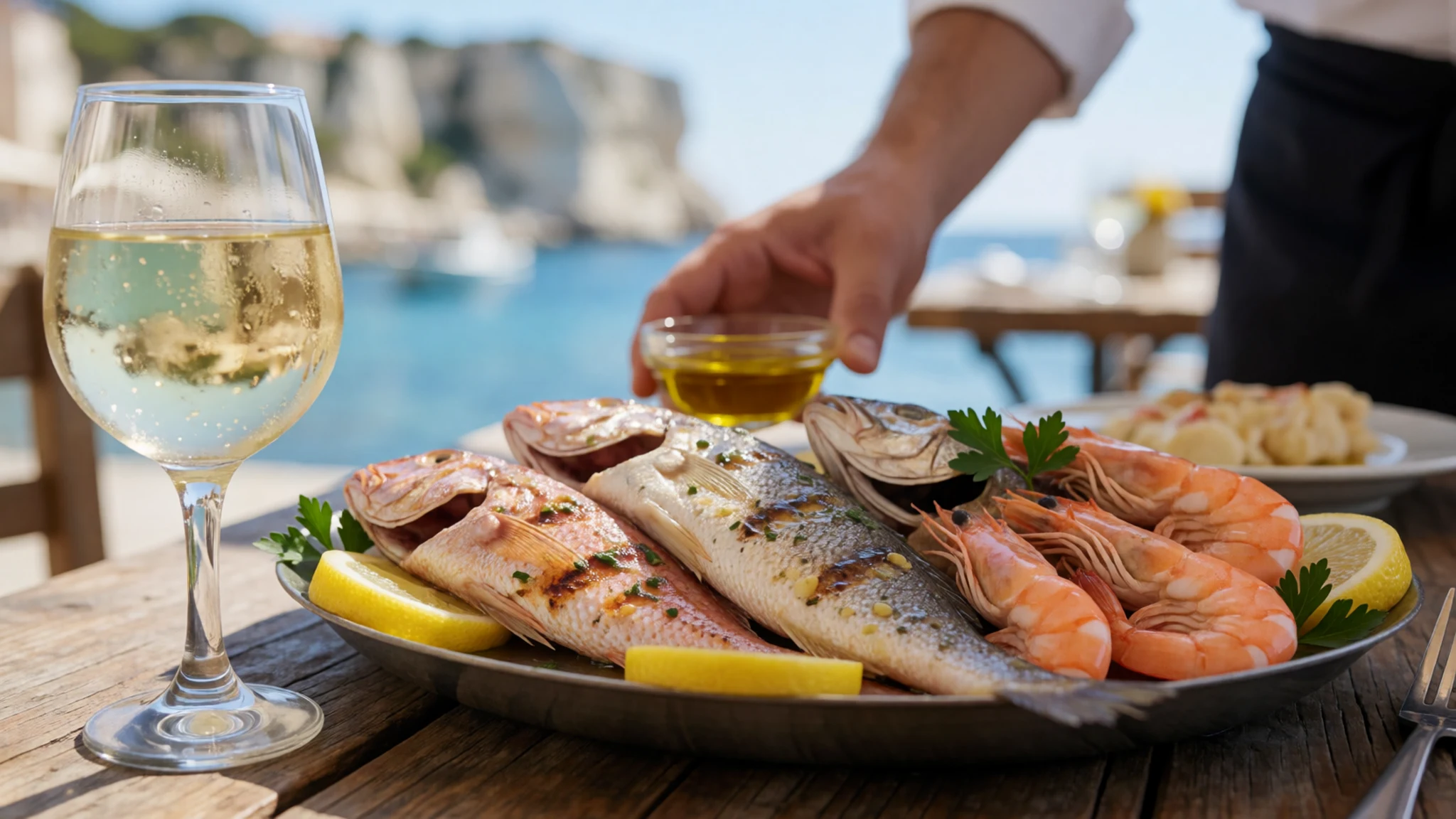
- Grilled fish and seafood — Harbour eateries in Cassis and the calanque of Sormiou
Fish and shellfish from local waters, usually grilled simply with olive oil and lemon. It is the standard order after a swim, and it is how most coastal eateries in the area earn their reputation. Ask what came in that morning.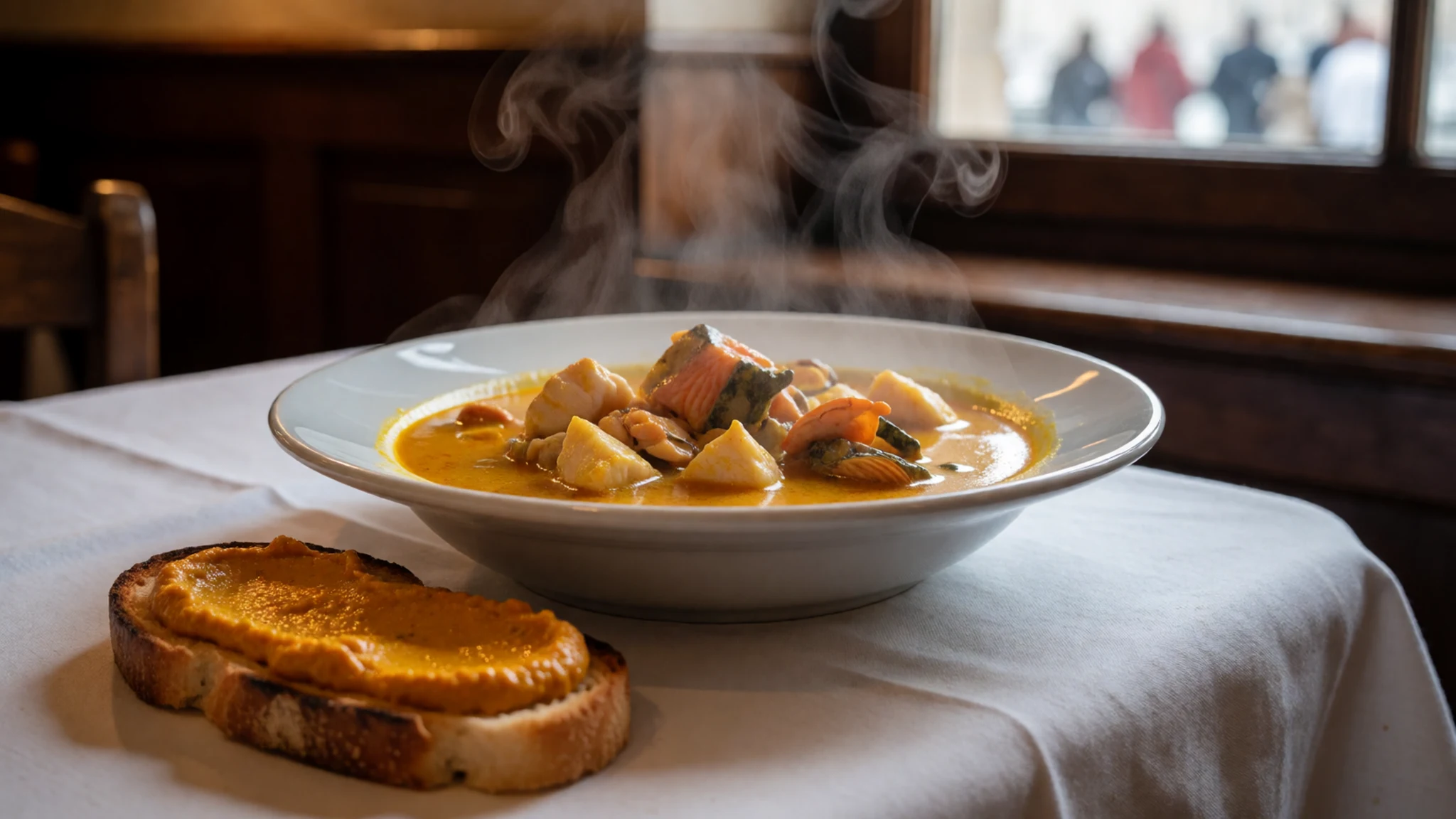
- Panisse — Street stalls and snack counters in Marseille
Fried fingers made from chickpea flour, crisp outside and soft within. They are a Marseille street-food habit and work as a salty snack before or after a walk. Look for them from a stall or a small takeaway rather than a formal restaurant. - Navettes — Bakeries in central Marseille
Boat-shaped biscuits flavoured with orange blossom, a Marseille speciality. They keep well, so they make a light snack in a rucksack and a sensible gift to take home afterwards. Buy them fresh from a traditional bakery. - Cassis white wine — Wine cellars and café terraces in Cassis
A dry, crisp white from vineyards around Cassis, good with grilled fish and shellfish. Ask for a local glass at lunch in the town after a walk, and remember that heat and steep paths do not mix well with several glasses.
Plan it
Best time. April–June and September–October. Spring and early autumn are warm enough to swim but cooler for walking, while July and August average around 30°C and access to sensitive areas is regulated for fire risk from 1 June to 30 September.
How long. 2–3
Getting there. Marseille Provence Airport or Marseille Saint-Charles station, then local transport or a taxi to Luminy, Callellongue or Cassis, which are the usual starting points. Cassis has its own approach to Port-Miou. In summer, boats from Marseille and Cassis may be the only way in.
Budget. mid
Tips
- Check the park's website (calanques-parcnational.fr) for fire-season access rules before every walk between 1 June and 30 September
- Start walks early: shade is scarce and the paths are steep
- Carry at least a litre of water per hour of walking, since there are no water points in the massif
- Allow about two hours each way to reach the coast on foot
- Wear closed shoes with grip, not sandals, on the rocky paths
Etiquette
- Take all rubbish back with you
- Stay on marked paths to protect fragile ground
- Respect closures and regulated access in the fire season
Nearby
Sources
- Wikidata Q2600427 (CC0)
- Wikipedia: Calanques National Park (rev 1362706569) (CC BY-SA 4.0)
- Wikivoyage: Calanques National Park (rev 5382615) (CC BY-SA 4.0)
- En-Vau calanque 1 — kallerna (CC BY-SA 4.0)
- En-Vau calanque 4 — kallerna (CC BY-SA 4.0)
- France relief location map — Sting (CC BY-SA 1.0)
- Calanque de Sugiton — Lionel Aristote (CC BY 3.0)
- Les Calanques — Petra zehner (CC BY 3.0)
- Vue de la calanque d'En-Vau — Bastien Guigue (CC BY-SA 4.0)
- Calanques depuis le sentier de randonnée — DJ Poldoc (CC0 1.0)
- Les Calanques — Lebonfred (CC BY 3.0)


