Cacao
Cacao, France
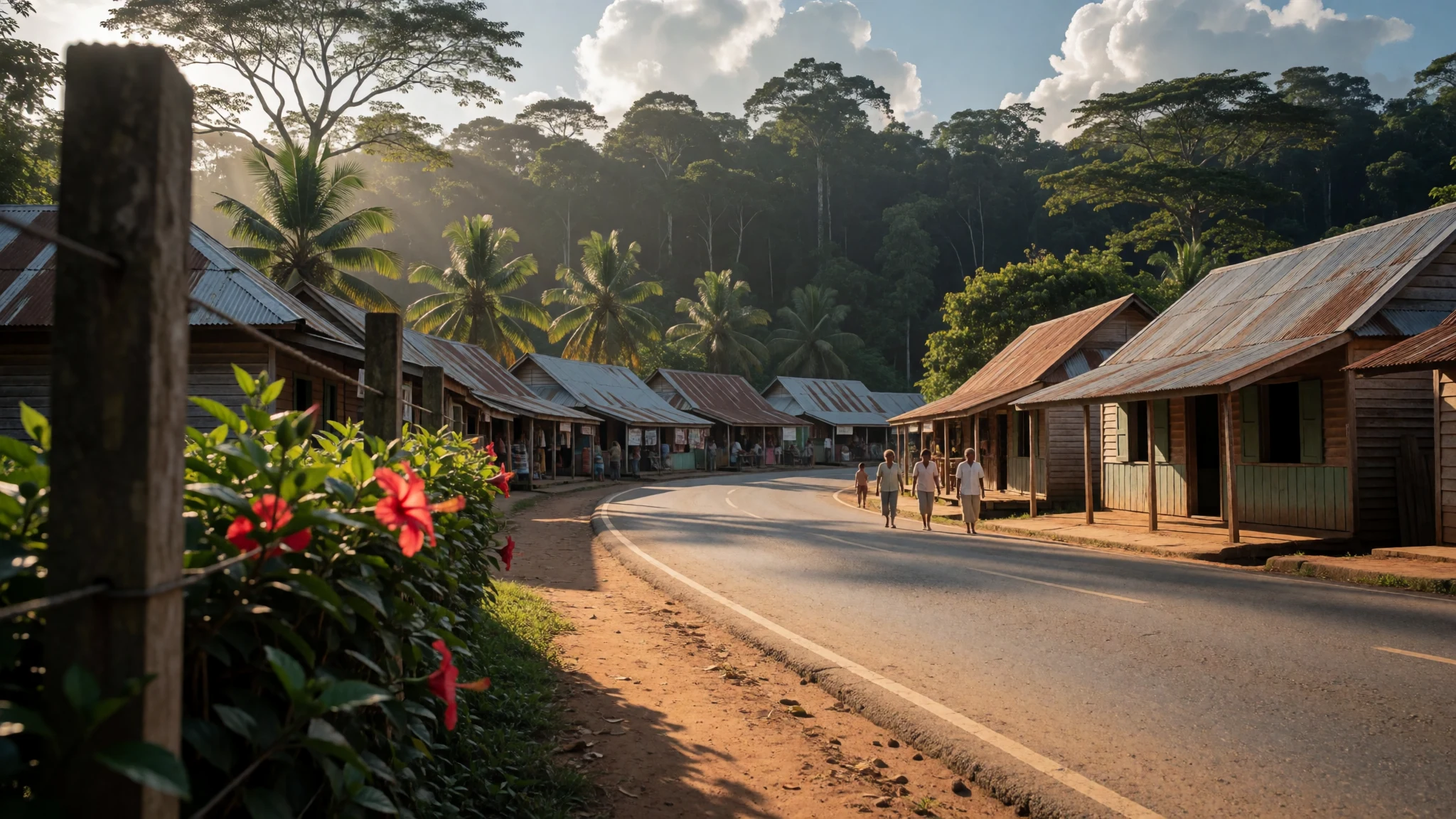
Cacao is a small Hmong farming village on the edge of the Amazon forest, a very different side of French Guiana from the coast.
The place
Cacao is a village in French Guiana, set beside the Comté river south of Cayenne, in the part of South America that is still governed from France. The setting is forest first and settlement second: low hills, dense green and a sky that clouds over quickly. Daily life is shaped by farming, and the community is mostly Hmong, a people whose families came from Laos. That gives the village a character unlike the coastal Creole towns, with its own cooking, its own market and its own pace. The climate is tropical rainforest, hot and wet in every month. The yearly average is about 27 °C, and the gap between the warmest month, October, and the coolest, January, is about five degrees in daily highs. Rain is heavy, more than three and a half metres in a year, with May the wettest month. Cacao is small, with a population recorded at 750 in 2007, so there is no sightseeing circuit to speak of. Its appeal is a quiet look at a community that rebuilt a farming life in a landscape very different from the one it left, with the Amazon rainforest pressing close on every side. Facilities are limited, so a visit works best as a half-day or day trip planned around Cayenne, with the market as the anchor and a walk through the lanes as the rest.
Its story
The story of Cacao begins with a decision made far from the Comté river. In 1977 the French authorities resettled Hmong refugees from Laos in French Guiana. The reasoning was practical: the forest, heat and farming conditions of the interior were thought close to the highlands the Hmong had left, so families could rebuild a life on the land rather than learn a new trade. The village that grew up around them is the result. Behind that settlement lies an older and harder history. The area was home to Kalina, Arawak, Galibi, Palikur, Teko, Wayampi and Wayana peoples before the French colonised the territory in the seventeenth century, over the resistance of Amerindian groups and against rival Portuguese and English ambitions. Later the colony became known abroad for its penal settlements, collectively called Devil's Island, which operated until 1951. Today French Guiana is an overseas part of France and the only mainland South American territory still ruled from overseas; the European Space Agency launches satellites from Kourou on its coast. Cacao sits quietly within all this: a village shaped by migration rather than conquest, whose fields and market are a living reminder that the population of French Guiana has been built from many arrivals over a few centuries.
What to see
- Cacao village market — Village centre
The produce market is the social centre of Cacao and the best reason to come. Hmong growers sell vegetables, herbs and fruit from nearby plots, and the stalls are busiest in the morning before the heat builds. Arrive early, bring small change, and check locally for market days before planning the trip around it.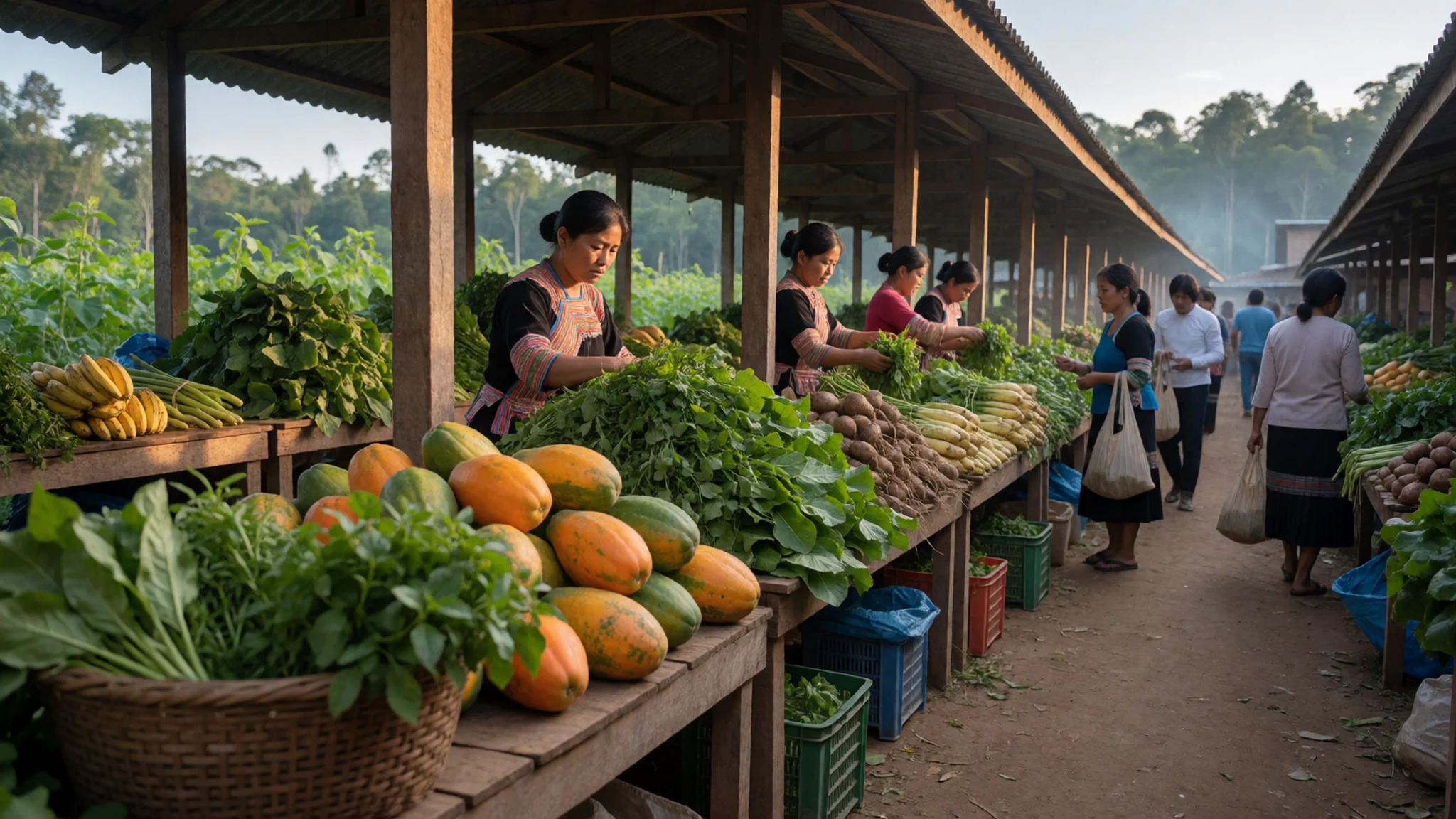
- The main street and village centre — Village centre
A slow walk along Cacao's main street shows the whole village in a few minutes: low houses, garden plots, small shops and the forest close behind. Look for the town-hall annexe and the post office, plain civic buildings that anchor the centre. Go early, and carry water and a rain jacket.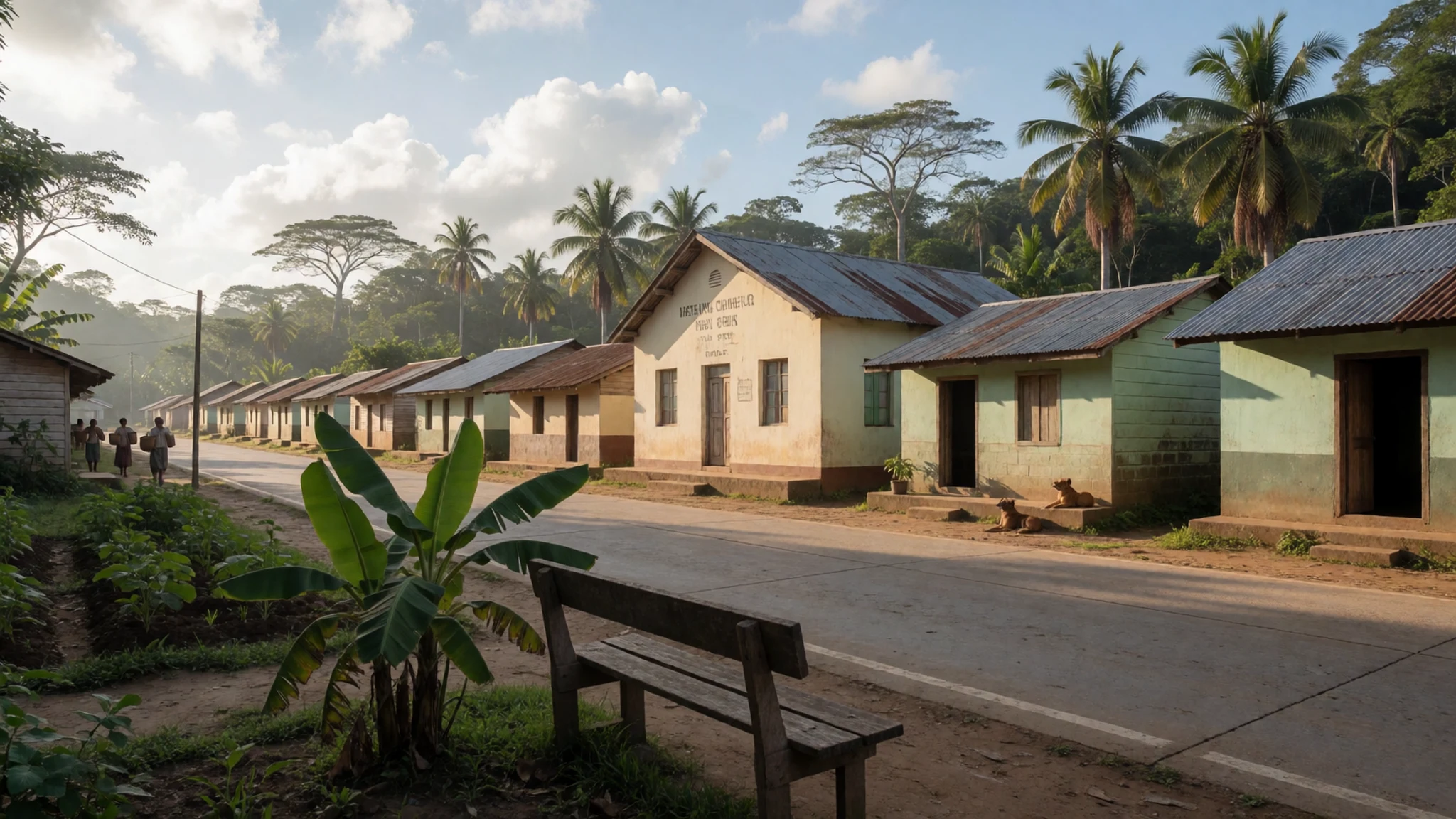
- JARIKU community mural — Cacao
A collective artwork made with pupils from the secondary school at Saint-Paul sur Cacao, signed JARIKU, carries the message 'Aimez-vous les uns, les autres!', roughly 'love one another'. It shows how young people use public space in the village. Ask locally where to find it before setting out.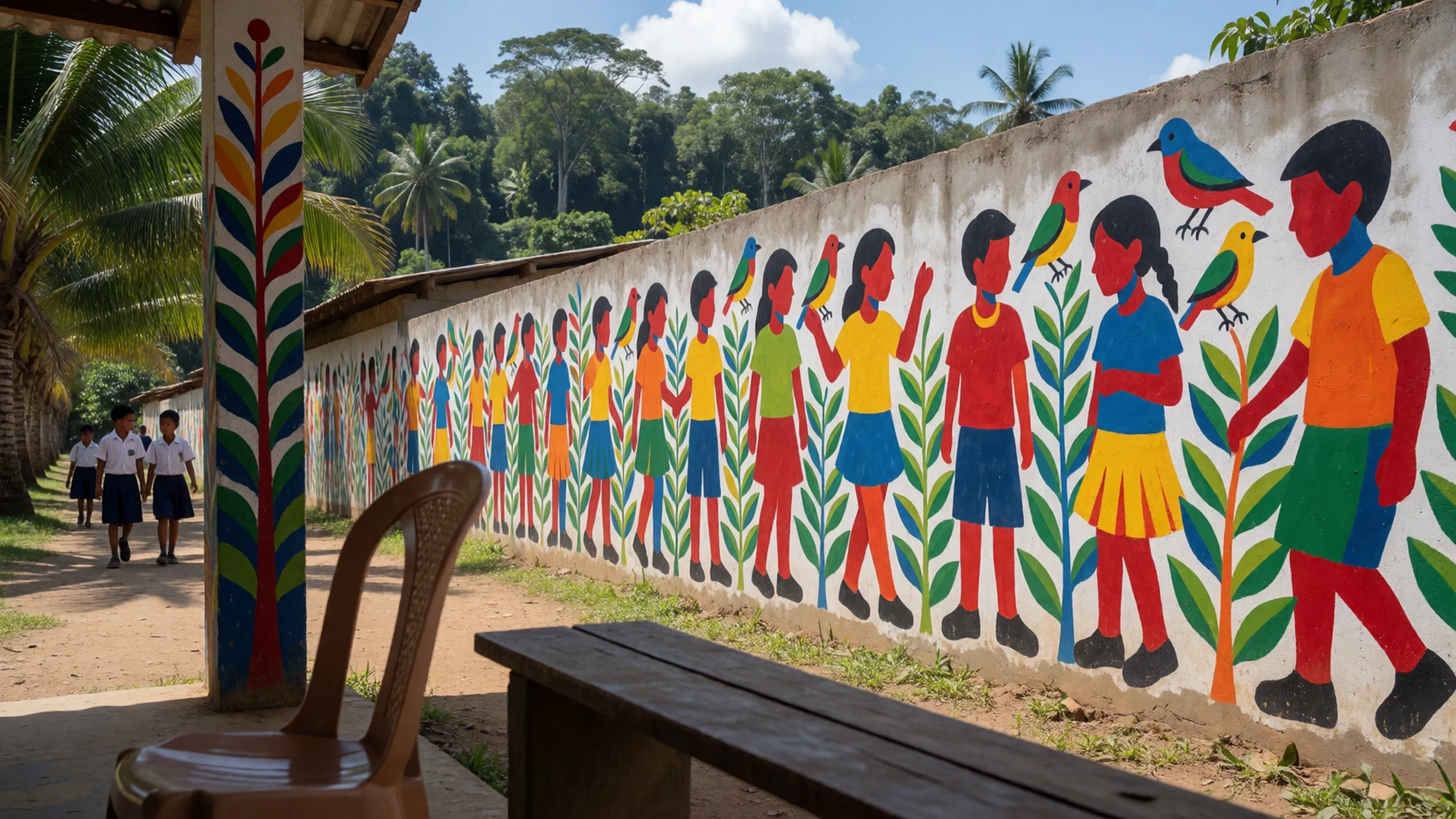
- Rainforest views from the village — Edge of the village
From the edge of Cacao the view opens onto unbroken rainforest, part of the Amazon forest that covers most of French Guiana. It is best enjoyed from the roadside rather than by wandering off: paths turn wet and disorienting quickly, and a local guide is sensible for anything beyond a short walk.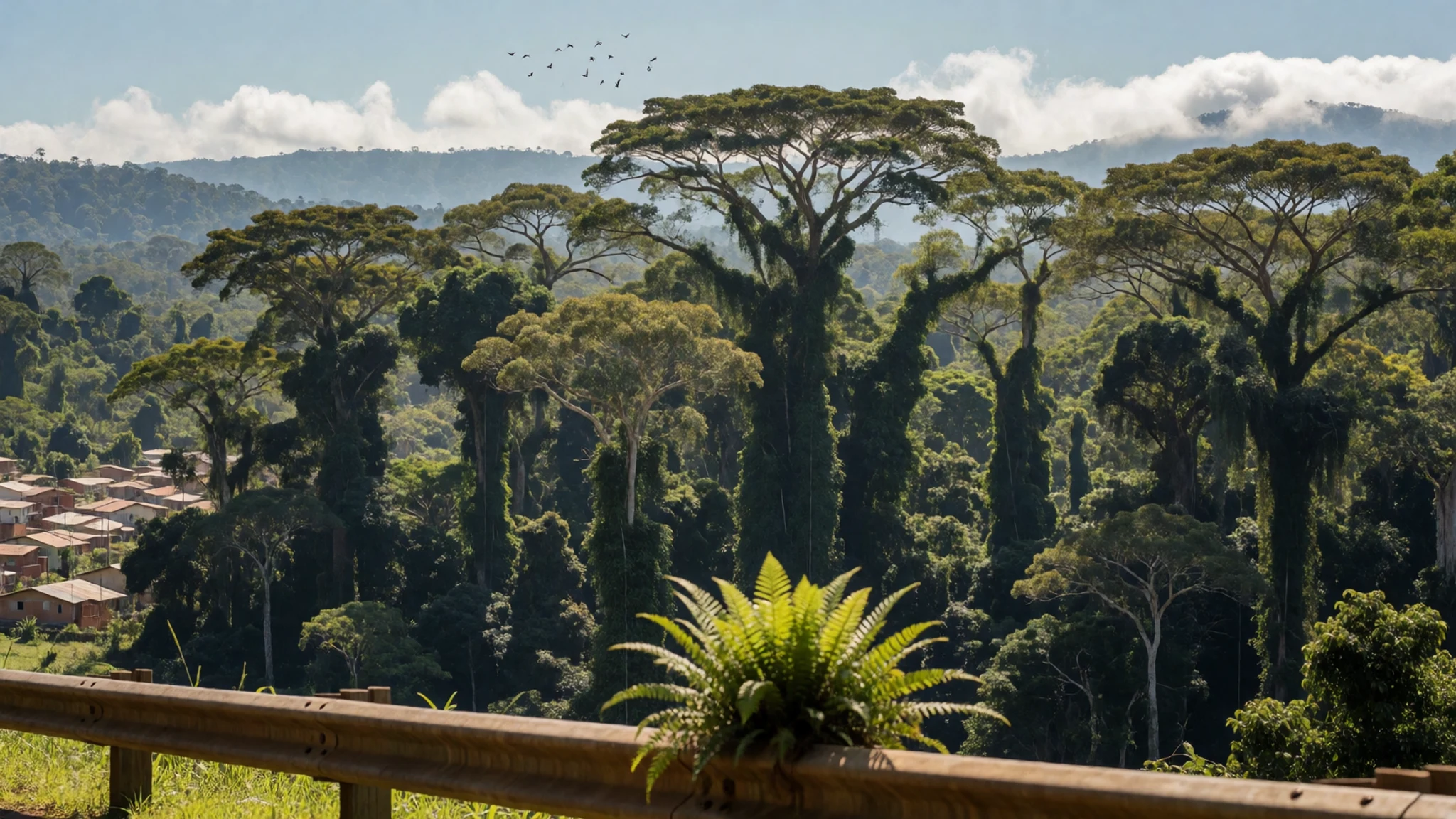
- Cayenne's main market — Cayenne, Place Victor Schoelcher
The market in Place Victor Schoelcher makes an easy companion to a day in Cacao. Stalls sell tropical fruit, spices, perfumes, handicrafts and Asian food, including Vietnamese noodle soup, which reflects the mix of communities that settled in French Guiana. Go in the morning and check opening days locally.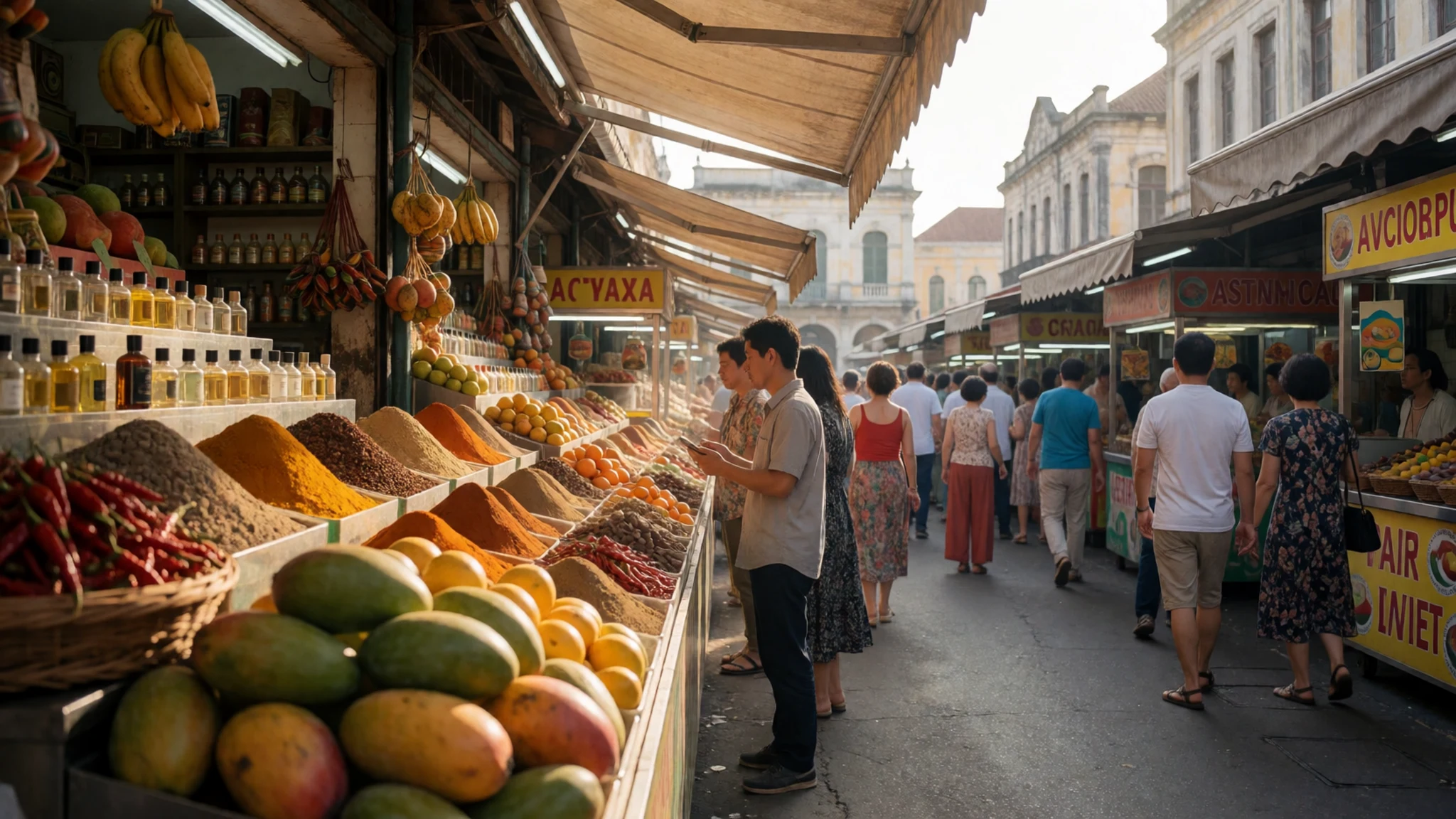
- Plage les Hattes, Awala-Yalimapo — Awala-Yalimapo, north-west coast
On the north-west coast, Plage les Hattes is a major nesting beach for giant leatherback turtles. It is a long journey from Cacao, so treat it as a separate trip. Check the nesting season and any guided-visit rules with local operators, and keep lights off and a respectful distance from any turtle.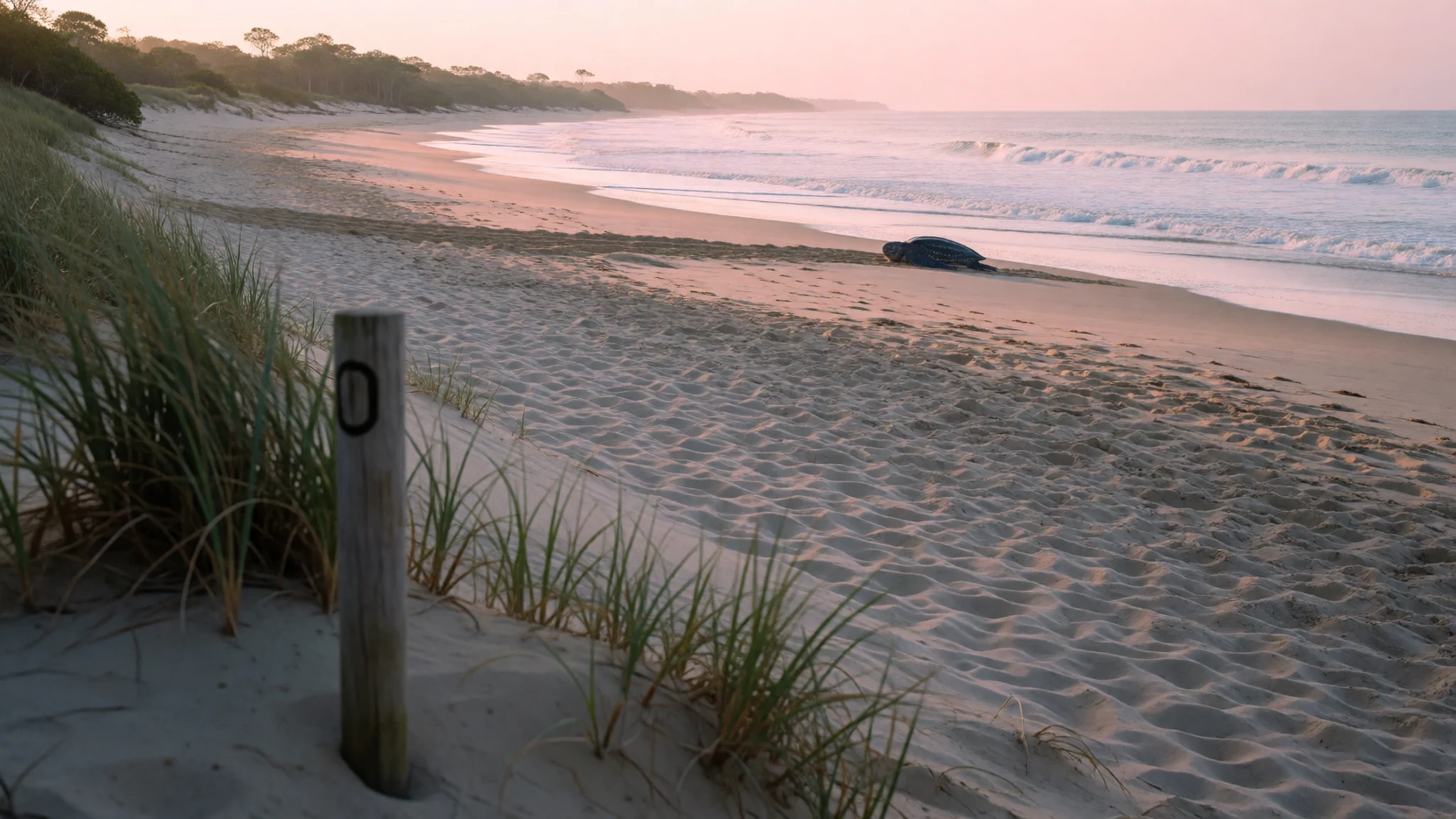
Culture
Cacao carries two cultural layers. The first is Hmong, brought by refugee families from Laos in 1977 and kept alive through farming, cooking and community life. The second is French Guianese: Creole traditions run deep across the territory, and people are proud of being French. In Cacao the two sit side by side, and a visitor may hear French, Creole and Hmong within the same day. Conversation goes best when it is curious and unhurried. People are generally glad to answer questions about their customs, history and religion. A few subjects need care. Slavery is a sensitive topic and best left alone unless a local raises it. Hinting that French Guiana is not properly French causes offence. The village is a working community rather than a heritage site, so the rhythm follows the farming day: early starts, quiet afternoons in the heat, and heavy rain whenever it arrives. The market is where most visitors meet people, and a greeting in French before any question goes a long way. Buying a little produce from a stall is a friendlier introduction than simply looking. Ask before photographing any person, and say 'la métropole' rather than 'France' when speaking about the mainland.
What to wear
Clothing in Cacao has two traditions. Hmong dress is known for embroidery and appliqué on cotton and hemp cloth, often in indigo and bright thread, with silver jewellery; families bring it out for festivals and the new year rather than for fieldwork. Across French Guiana, Creole festive dress includes the kotomisi, a long cotton dress worn with a folded headwrap, seen at celebrations and cultural events. Day to day, people wear what suits heat, humidity and farm work: T-shirts, light long trousers or shorts, wide hats, rubber boots in the fields and sandals in the village. Visitors should dress for a hot, wet climate where temperatures barely change through the year. Light, quick-drying fabrics in long sleeves help against sun and insects, and a compact rain jacket is more useful than an umbrella. Closed shoes with grip are wise on muddy village paths and anywhere near the forest edge. There are no strict dress codes for a visit, but covered shoulders and knees are the polite choice at the market and when meeting families. Pack a spare shirt, since humidity means clothes rarely dry fast.
What to eat
- Market vegetables and herbs — The village market, mornings
Cacao's growers supply fresh greens, herbs, fruit and roots, and the Hmong cooking built on them is simple and bright. Buying from a stall and asking how it is cooked is the easiest way to taste the village's farming.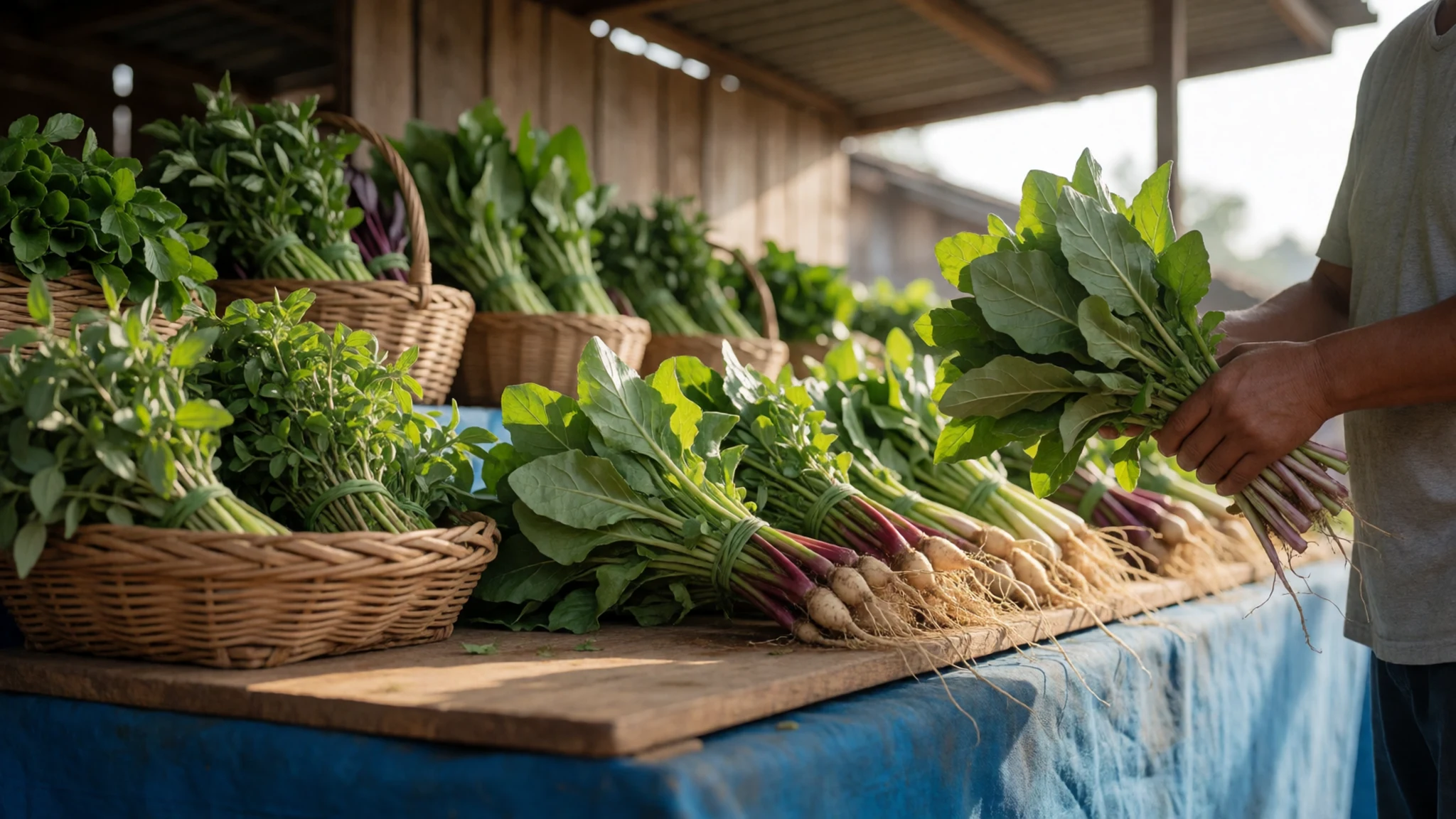
- Bouillon d'awara — Creole eateries around Cayenne
A broth made from the fruit of the awara palm, long associated with French Guianese celebrations. It is rich, slightly bitter and traditionally layered with fish, meat and other ingredients. Expect it to be a substantial, shared meal rather than a quick snack.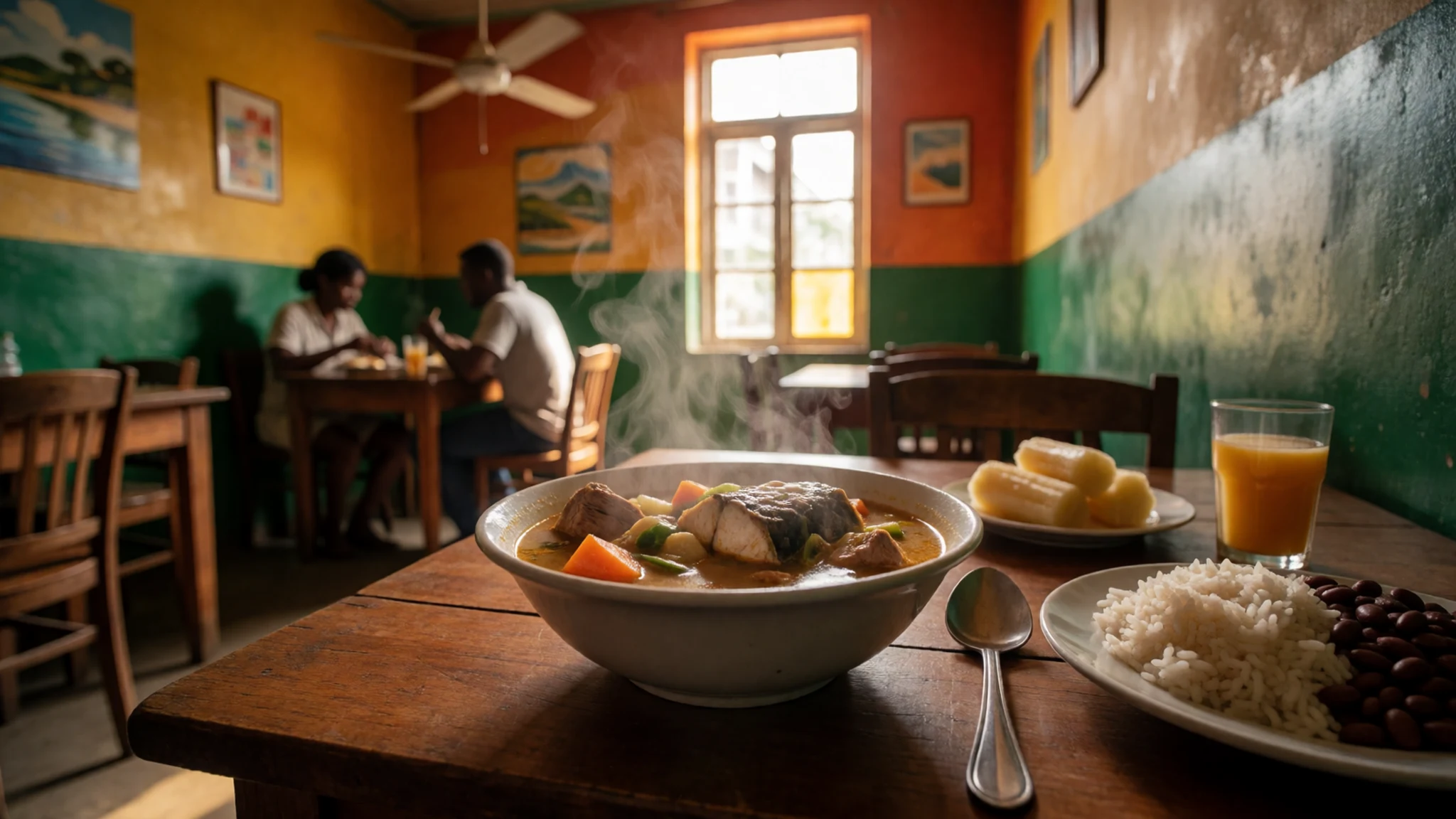
- Colombo — Family-run Creole eateries and market food counters
A Creole stew of chicken or pork, spiced with a blend of ground spices and served with rice. It is warming rather than fiery, and a comfortable first choice for anyone cautious about the local love of chilli. - Blaf de poisson — Coastal eateries and Creole restaurants in Cayenne
Fish poached in a light, seasoned court-bouillon, often with herbs, lime and a little chilli. It is among the milder local dishes and works well with rice or cassava flour, known as couac. - Pimentade — Creole restaurants and market stalls
Fish in a tomato sauce sharpened with lime and plenty of pepper. The name hints at the heat, so ask the cook to ease off the chilli if needed; most kitchens will happily oblige. - Wassaï juice — Juice stalls and the main market in Cayenne
A creamy, deep purple drink made from the pulp of the wassaï palm fruit, the same fruit known elsewhere as açaí. It is served cold, often sweetened with milk, and is a good way to cool down in the afternoon.
Plan it
Best time. Late in the year, roughly September–November, is the drier stretch, though French Guiana is hot, humid and rainy through most of the year. May is the wettest month, with heavy rain, and temperatures barely move, with October slightly the warmest.
How long. 1
Getting there. Fly into Félix Eboué airport (CAY) near Cayenne, which has direct services from Paris. Cacao lies inland, south of Cayenne, so the last leg is by road: arrange a hire car or a transfer with a local operator, and confirm current routes and timings locally.
Budget. high
Tips
- Carry your yellow fever vaccination certificate: it is mandatory for every traveller, and may be checked before boarding.
- Accommodation is expensive across French Guiana, so book early and consider staying in Cayenne and visiting Cacao for the day.
- Bring some cash for market stalls, since small sellers may not take cards.
- Start early, before the heat and the afternoon rain, and carry drinking water, insect repellent and a rain jacket.
- Check the official French Guiana tourism website for current entry rules; the territory is not in the Schengen Area and passports are checked on arrival.
Etiquette
- Greet people in French before asking questions or buying at the market.
- Ask permission before photographing anyone, including stall-holders and children.
- Avoid raising slavery unless a local brings it up.
Nearby
Sources
- Wikidata Q2932480 (CC0)
- Wikipedia: Cacao, French Guiana (rev 1383670521) (CC BY-SA 4.0)
- Wikivoyage: French Guiana (rev 5383674) (CC BY-SA 4.0)
- Photo: Street in Cacao, French Guiana (Cayambe) (CC BY 3.0)
- Photo: Fresh market of Hmong Cacao village (Merwen BA) (CC BY-SA 2.5)
- Photo: JARIKU collective artwork (JARIKU les Ateliers) (CC BY-SA 4.0)
- Photo: Gendarmerie de Cacao (Don-vip) (CC BY-SA 4.0)
- Photo: Cacao, French Guiana, annexe mairie (Chatsam) (CC BY 3.0)
- Photo: Vue depuis le village de Cacao (G.Mannaerts) (CC BY-SA 4.0)
- Photo: Cacao, French Guiana, sculpted coconut (Chatsam) (CC BY 3.0)
- Photo: Cacao, French Guiana, post office (Chatsam) (CC BY 3.0)


