Braunau am Inn
Braunau am Inn, Austria
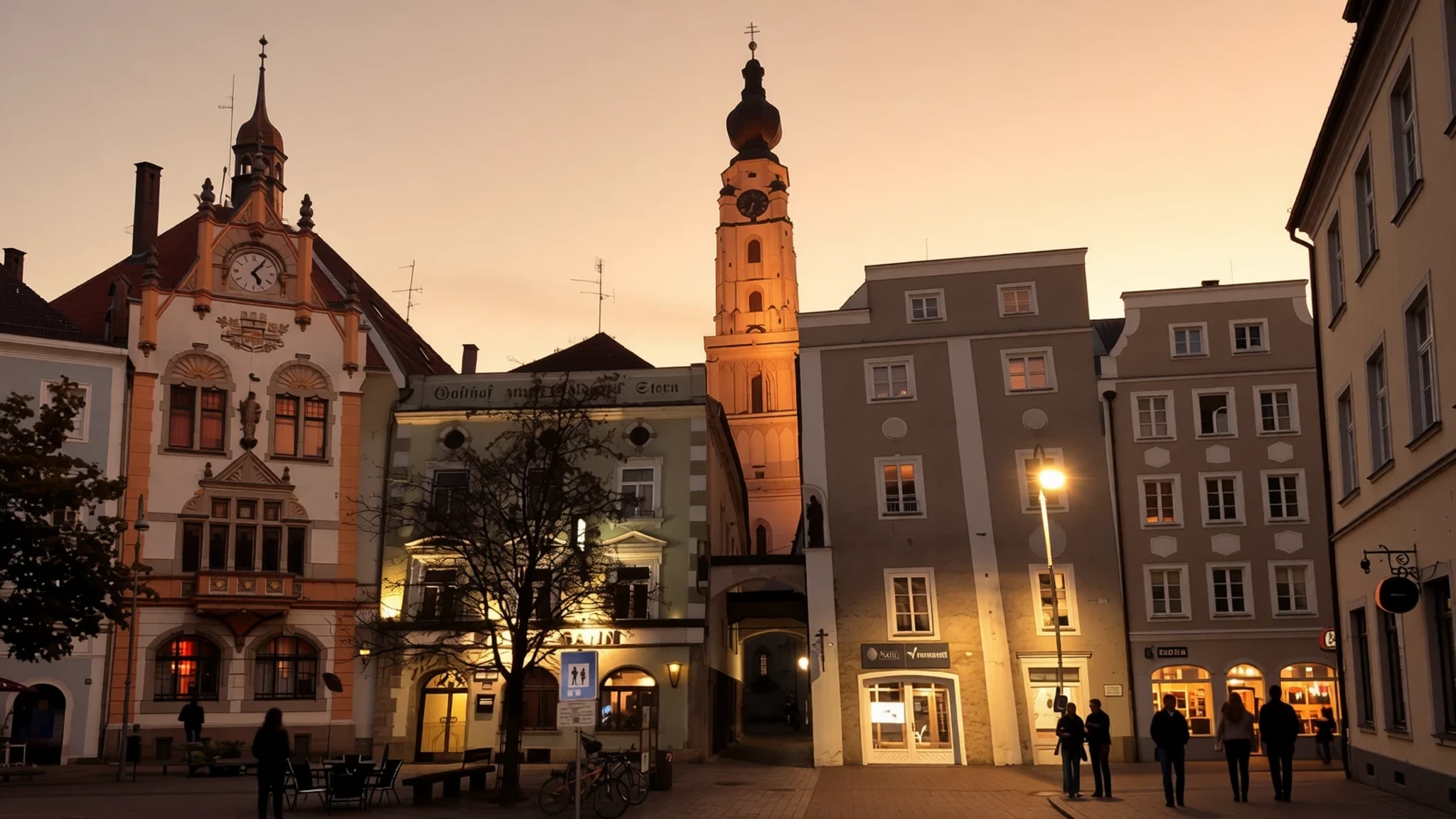
Braunau am Inn is a quiet Inn-river border town with a Gothic spire, a long arcaded square and a difficult history worth facing.
The place
Braunau am Inn sits in Upper Austria on the river Inn, which here forms the border with Bavaria in Germany. The town has about 17,000 people and stands at 352 metres above sea level. It lies roughly halfway along the road between Linz and Munich, and a short drive north of Salzburg. A bridge links it to Simbach am Inn on the German bank, and the two towns feel like one place split by a river. Border posts once stood here, but they disappeared when Austria joined the Schengen area in 1997, so crossing now means little more than a walk over the bridge.
The centre is a long, broad main square lined with tall town houses in pastel shades, their fronts often topped with straight parapets that hide the roofs. Behind them lie narrow lanes, remnants of the old walls and the church spire that guides you back from any direction. Beyond the old core, the municipality also takes in Ranshofen and Osternberg, with its industrial estates, including large metalworks, which give the town its working character.
The climate is borderline continental: warm summers, fairly cold winters, with January averaging just below freezing. Rain falls through the year, rising a little in summer. Braunau is not a place of crowds. It is calm, small and walkable, best seen slowly, with the river never far away.
It is also the birthplace of Adolf Hitler, who lived here only until the age of three. The town has chosen to deal with that openly, and a visit is more rewarding when you know it.
Its story
Braunau am Inn appears in records as Prounaw in a deed of 1120, though the nearby abbey of Ranshofen was already mentioned in 788. In those centuries the Innviertel belonged to the Duchy of Bavaria. Town rights came in 1260, among the earliest in present-day Austria, and the settlement grew rich as a fortress town and a junction for the salt trade and for boats on the Inn.
Its Bavarian identity ran deep. In 1705, during the War of the Spanish Succession, Braunau hosted a provisional Bavarian parliament during the uprising against Austrian occupation. The late Gothic parish church of Saint Stephen was built here in the fifteenth century, replacing an older chapel, and its spire remains the town's landmark.
Then the town began changing hands. It became Austrian in 1779 under the Treaty of Teschen, and in 1806 the Nuremberg bookseller Johann Philipp Palm was arrested in the fortress by French troops and executed on Napoleon's orders. Bavaria regained the town in 1809 through the Treaty of Schönbrunn, and after the Congress of Vienna it passed to the Austrian Empire in 1816. It has been Austrian ever since.
Braunau kept its role as a military base for the Austro-Hungarian army and, during the First World War, housed a large camp for prisoners of war. The naval academy was moved here from Fiume during the war. Hitler's birth in the town came later, and it still shapes how Braunau is seen from outside.
What to see
- Stadtplatz — Old town centre
The main square is the town's spine: a long, wide street of tall, colourful houses with parapeted fronts. It is the best place to get your bearings, find a café table and watch local life, which is unhurried and mostly about errands and conversation.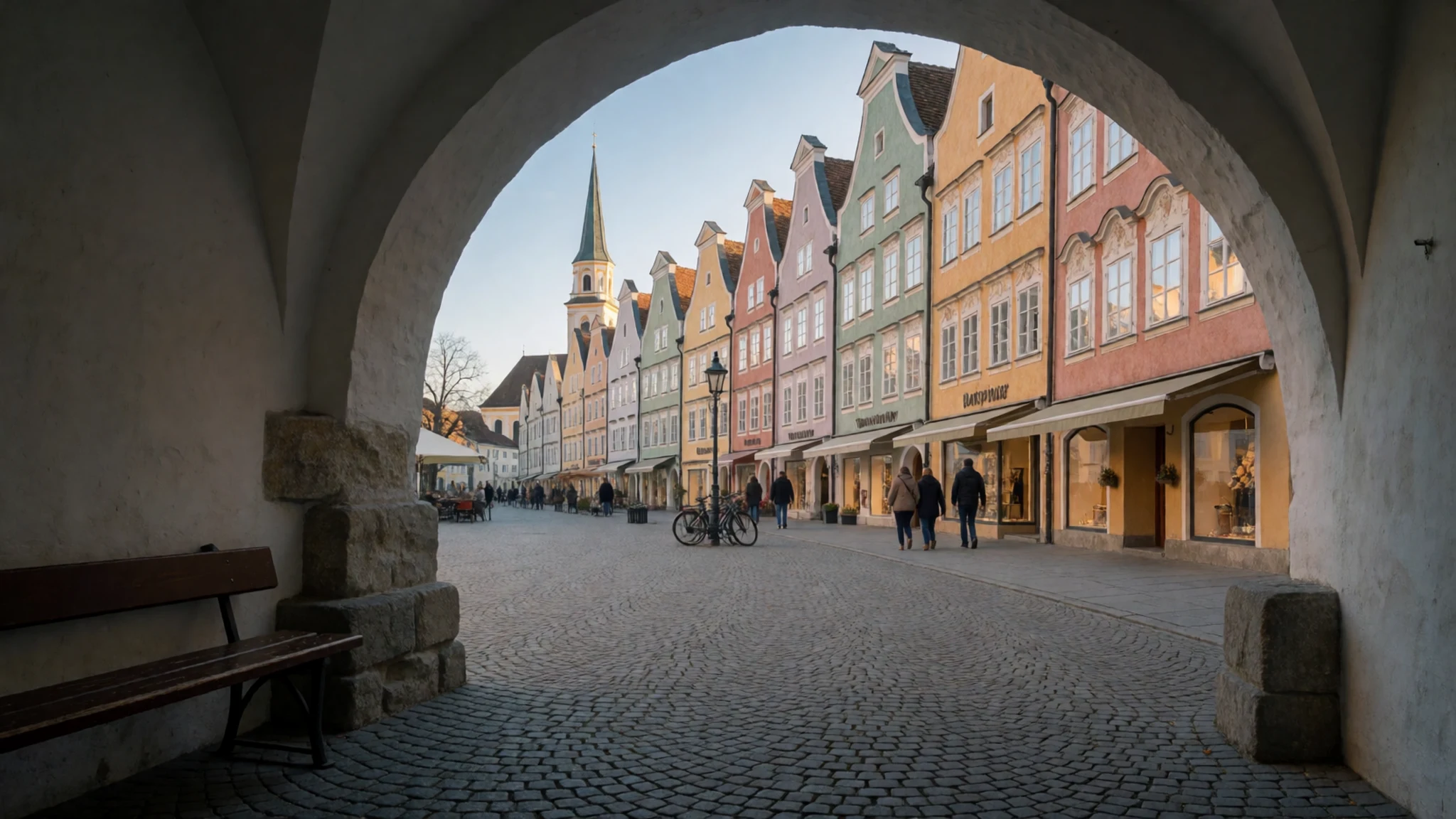
- Saint Stephen's Parish Church — Old town, near the square
A late Gothic church built in the fifteenth century, its spire is among the tallest in Austria and visible from across the town. Step inside for the tall, plain interior and quiet. The tower dominates every photograph of the old town skyline.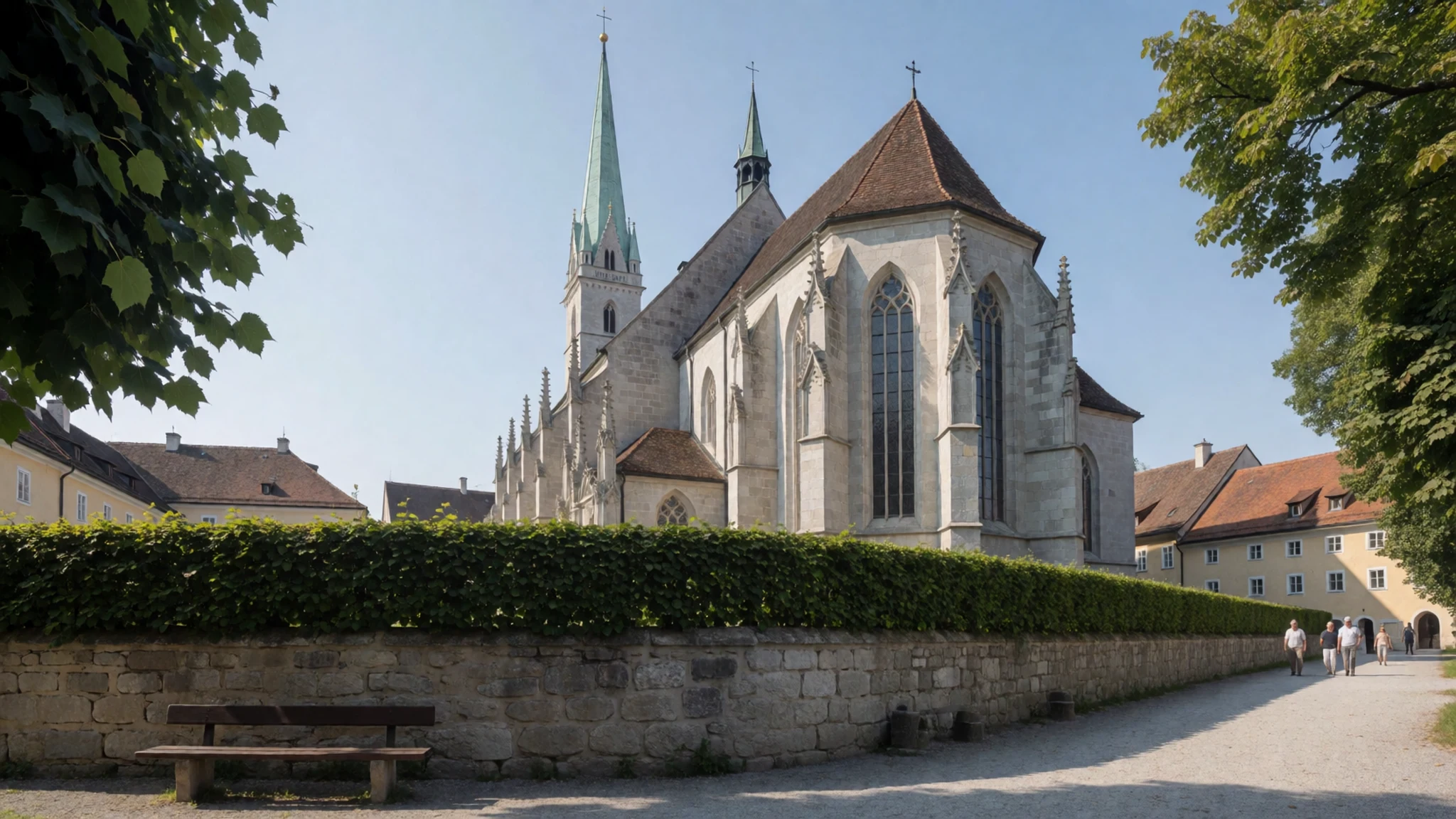
- Memorial stone against war and fascism — Salzburger Vorstadt
Outside the house where Hitler was born stands a stone from the Mauthausen quarry, set there as a warning against war and fascism. It is a sober stop, and a reminder of how the town chooses to remember. Read the inscription, then move on quietly.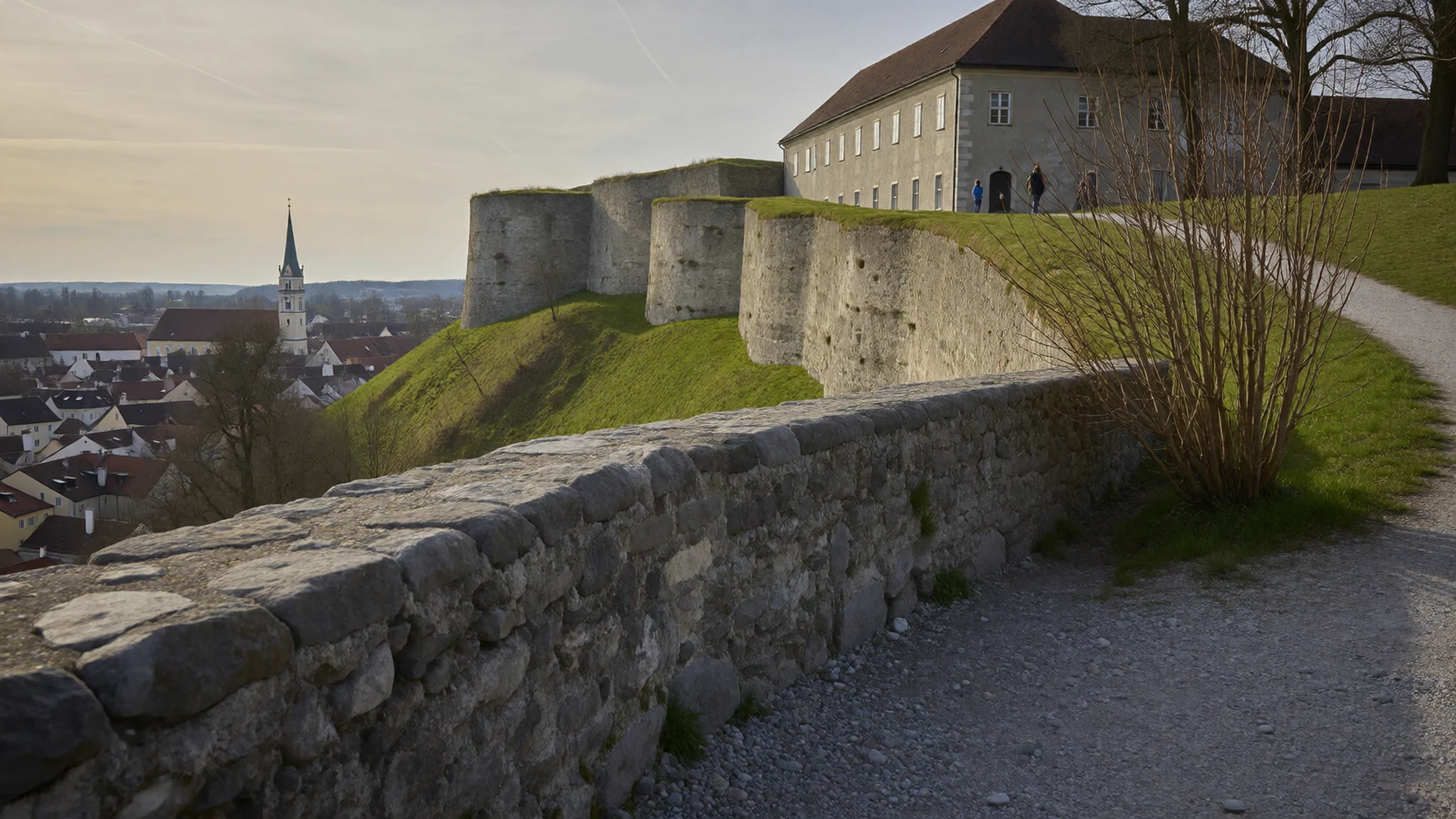
- The Inn bridge to Simbach — Riverside, west of the old town
Walk across the bridge to Bavaria and you pass from Austria to Germany without a checkpoint. An old postcard shows the customs post that once stood here. It is a short, easy walk, and the river views are good in morning light.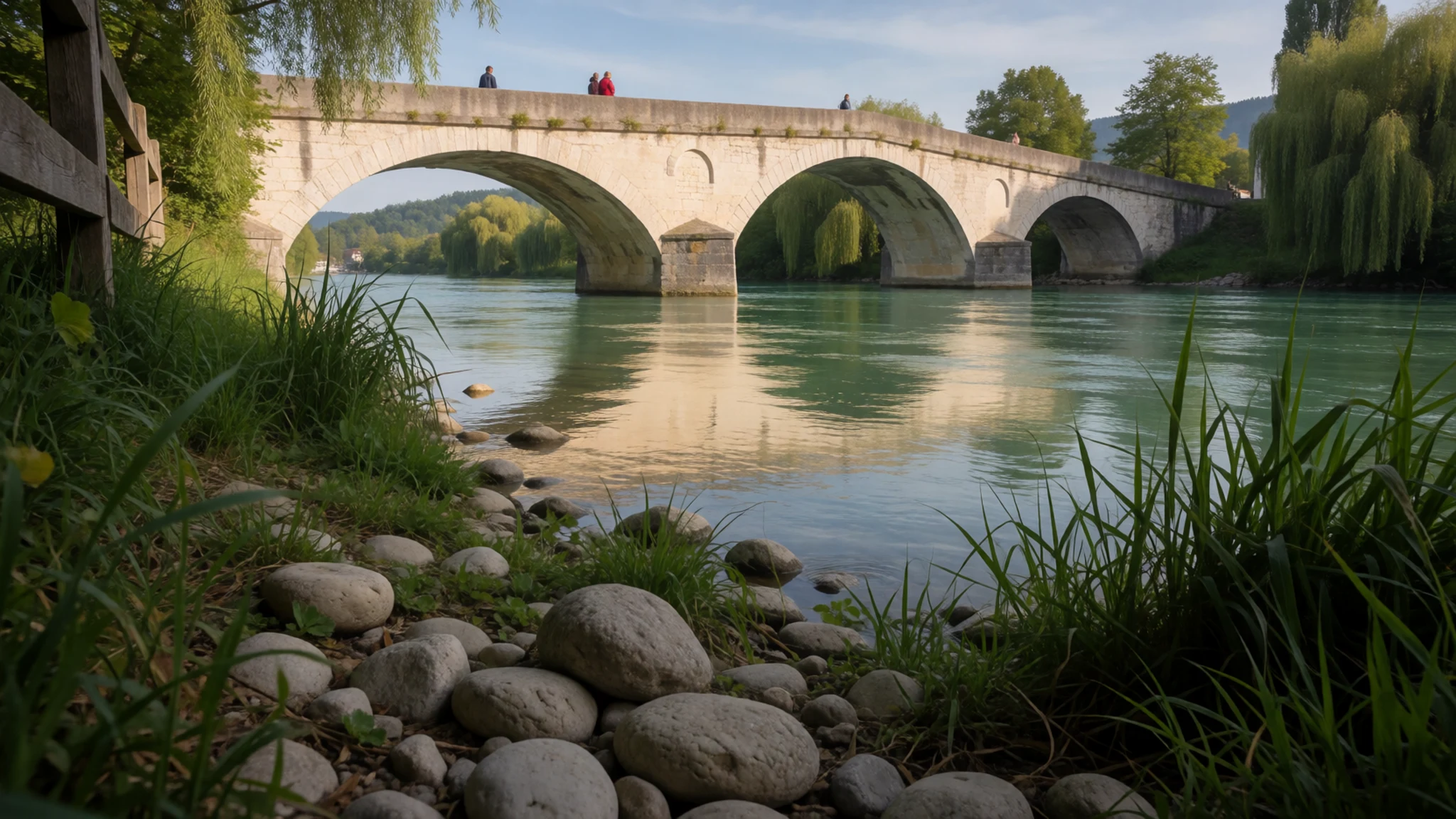
- Museums in the old fortifications — Old town
Parts of the former town walls survive, and the fortress remains house a museum, while another museum occupies refurbished eighteenth-century public baths. Together they tell the town's story of salt, river trade, border changes and garrisons. Check the official town website for opening details.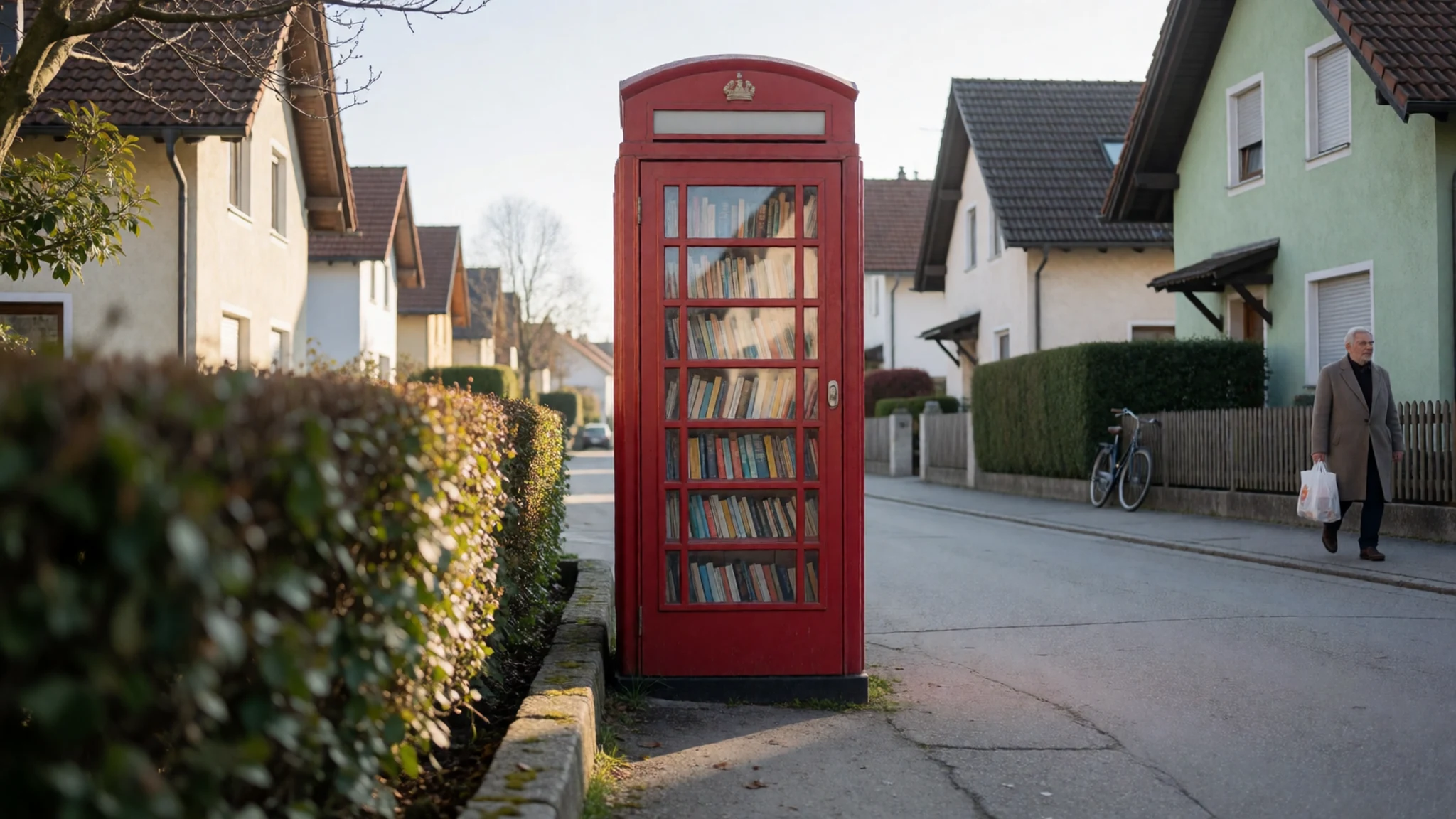
Culture
Braunau am Inn has a culture shaped by its position on a border. Bavarian and Austrian habits blend here: the dialect is close to that across the river, and people cross the bridge daily for work, shopping and meals. Local identity rests on trade, craft and industry as much as on the Gothic skyline, and townspeople tend to be modest and practical rather than showy.
The town's best-known association is a difficult one, and residents have spent decades working out how to face it. Rather than hide the fact, Braunau has put up memorials and held public discussions about the past, and people take that seriously. Visitors who come out of curiosity will find a normal small town that does not want to be reduced to one name.
Everyday life follows Central European rhythms: shops close on Sundays, café culture matters, and greeting with a friendly Grüß Gott or Servus is normal. The church still anchors festivals and the calendar, and bells mark the hours.
When visiting the memorial stone or the birth house, keep your voice low, do not pose for smiling photographs or make gestures, and treat the place with the seriousness locals expect.
What to wear
Braunau am Inn lies in the Innviertel, where the traditional dress is the Tracht of Upper Austria and Bavaria. Women wear the Dirndl, a fitted bodice with a full skirt and apron, usually cotton or linen with silk aprons for best. Men wear Lederhosen of leather, checked or linen shirts, wool jackets in grey or green, and felt hats. These are worn for festivals, church processions, weddings and village celebrations, rather than every day.
In daily life people dress much as elsewhere in central Europe: jeans, practical jackets, trainers or sturdy shoes, and fleece or wool layers in the colder months. Smart-casual is common for dining out. Outdoor wear is popular, as locals walk and cycle along the river.
For a visitor, the main concern is weather. Summers are warm, but evenings by the river cool quickly, and winters are fairly cold with frost and some snow, so bring a warm coat, hat and gloves between November and March. A light waterproof helps in any season because rain is spread through the year. Comfortable shoes with a good grip suit the cobbled lanes and wet pavements. Churches and memorials call for modest, quiet dress: cover bare shoulders if you step inside Saint Stephen's, and avoid anything with slogans. No special clothing is needed otherwise.
What to eat
- Bauernschmaus — Traditional inns around the Stadtplatz
A hearty farmer's platter of mixed meats, usually pork, sausage and smoked cuts, served with dumplings and sauerkraut. It is filling, rooted in farm tradition, and a good test of appetite. Look for it at traditional inns in the old town.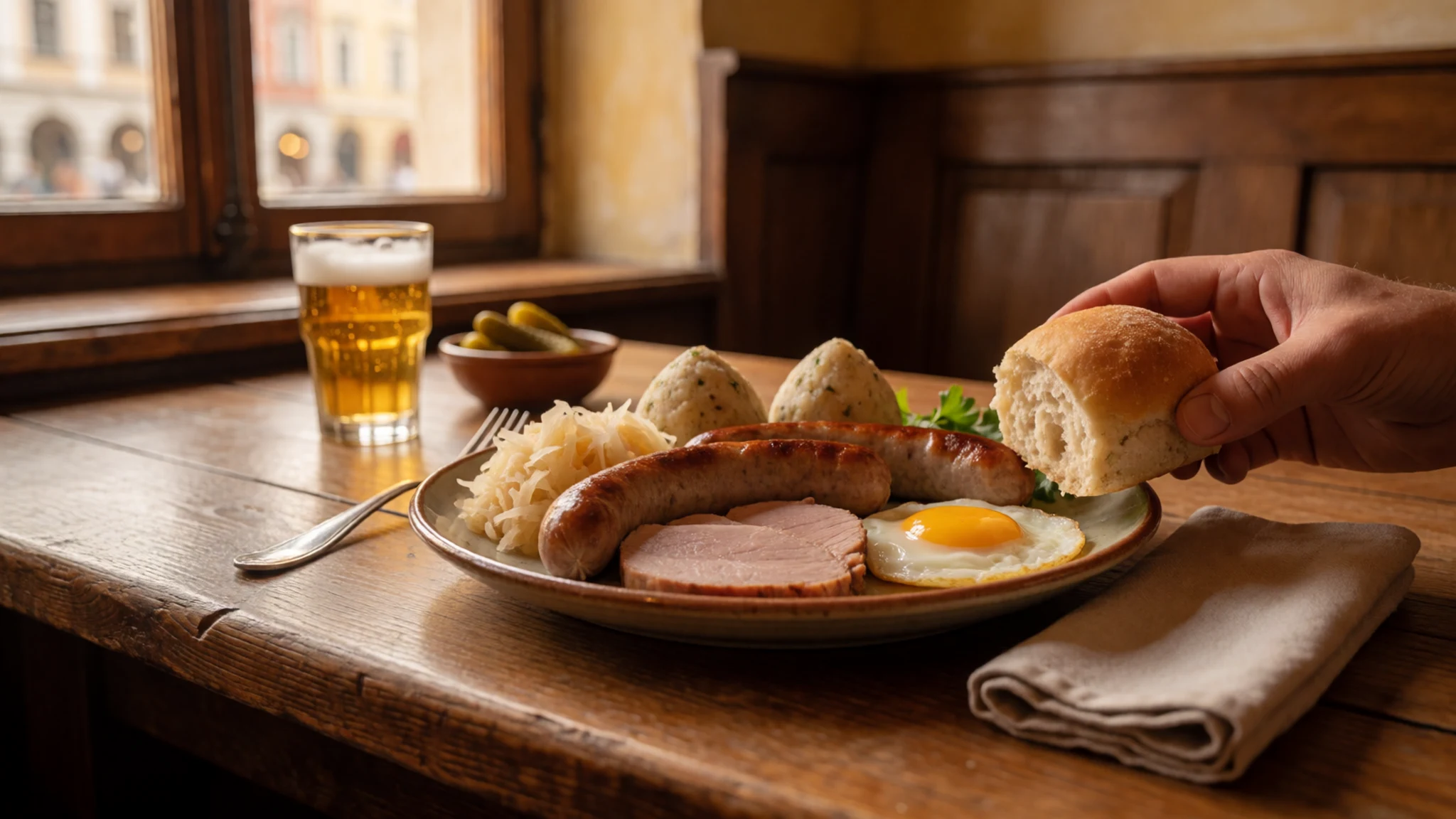
- Knödel — Gasthäuser in town and the surrounding villages
Bread or semolina dumplings are a staple of Upper Austrian cooking, served in soups, with roast meat and gravy, or as a vegetarian plate with mushrooms. They are soft, filling and plain in the best way. Try them in a village-style tavern.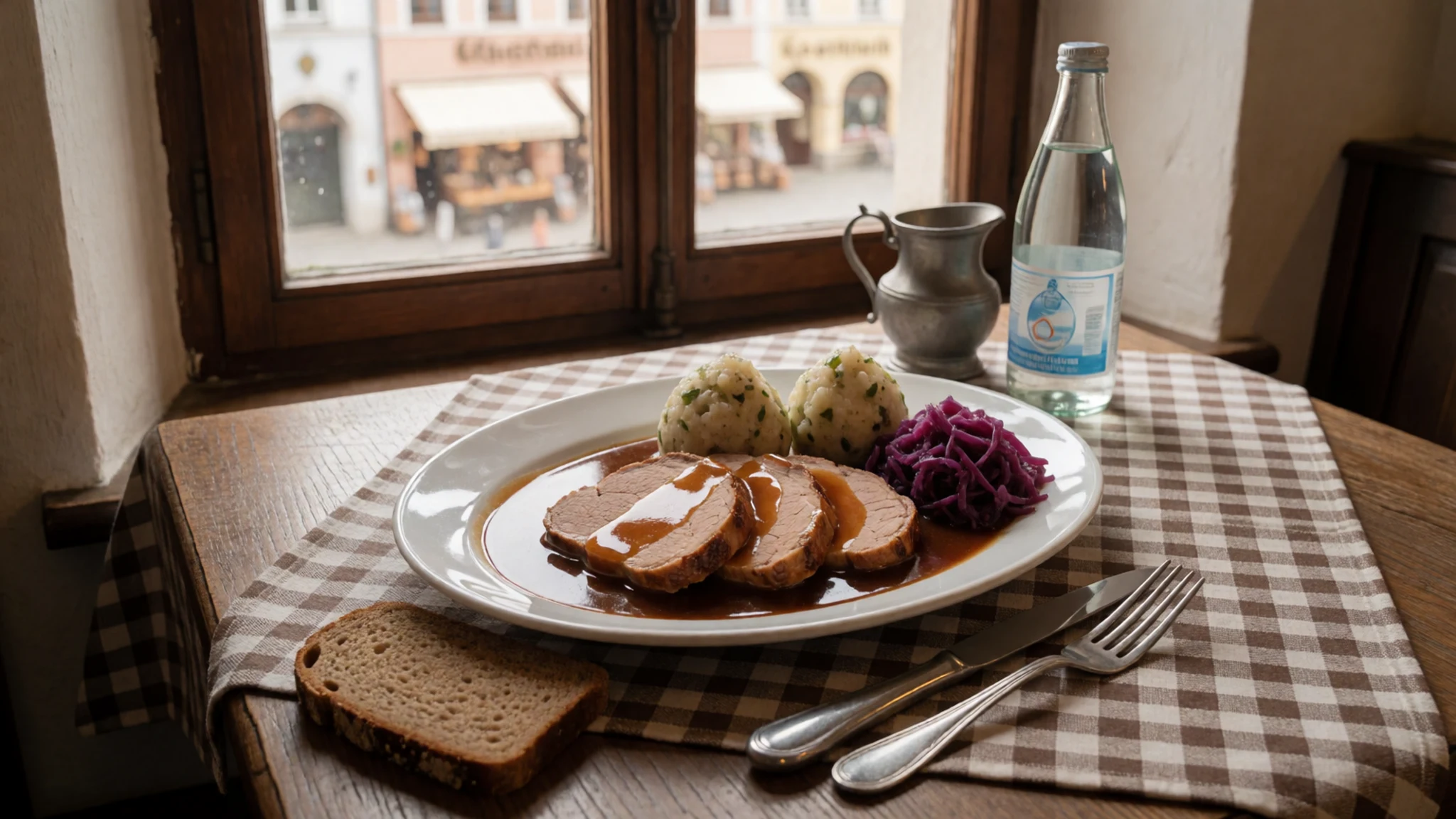
- Schnitzel — Most restaurants and eateries in the centre
A thin cutlet, usually veal or pork, coated in breadcrumbs and fried until golden, then served with lemon and potato salad. It is a dependable order almost everywhere and suits anyone wary of heavier regional plates. - Brettljause — Rustic taverns and Gasthäuser, especially in the countryside
A cold board of cured meats, cheeses, pickles, bread and spreads, eaten as a snack or light supper with beer or cider. It is simple, social and made for sharing, and rooted in farm and tavern tradition. - Strudel and cakes — Cafés and bakeries along the main square
Apple strudel with thin pastry, plus cream cakes and tortes, are the standard afternoon treat in Austria. Order a slice with coffee and sit for a while, as locals do. Cafés fill up in mid-afternoon, especially at weekends.
Plan it
Best time. May to September for the mildest weather: summers are warm and rain is spread through the year, with a little more in summer. Winters are fairly cold, with January averaging just below freezing, frost common and some snow.
How long. 1–2
Getting there. Fly or take the train to Linz, the nearest transport hub, or use Salzburg and Munich as alternatives. From there, reach Braunau by regional train or by road. The town is about halfway between Linz and Munich and roughly 60 km north of Salzburg.
Budget. mid
Tips
- Allow a day trip from Salzburg or an overnight stop between Linz and Munich
- Carry a rain jacket in any season
- Check the official town website for museum opening details
- Walk the bridge to Simbach for a short Bavarian detour
- Cards are widely accepted but carry a little cash for small cafés
Etiquette
- Keep quiet and respectful at the memorial stone and do not pose for jokey photographs
- Greet shopkeepers with Grüß Gott or Servus
- Dress modestly in churches
Nearby
Sources
- Wikidata Q131128 (CC0)
- Wikipedia: Braunau am Inn (rev 1384936128) (CC BY-SA 4.0)
- Wikivoyage: Upper Austria (rev 5245612) (CC BY-SA 4.0)
- Braunau am Inn.jpg (CC BY 3.0)
- City Center Braunau am Inn (CC BY 3.0)
- Saint Stephen's Parish Church in Braunau am Inn (CC BY 3.0)
- Bürgerhaus, Mahnstein gegen Krieg und Faschismus (CC BY-SA 3.0 at)
- Custom checkpoint at Braunau am Inn, c. 1910 (Public domain)
- Natural monument nd087, Braunau (CC BY-SA 3.0 at)
- Bücherzelle, Laab, Braunau am Inn (CC BY-SA 4.0)
- 380kV Deutschlandleitung Masten im Bau (CC0 1.0)


