Klagenfurt
Klagenfurt, Austria
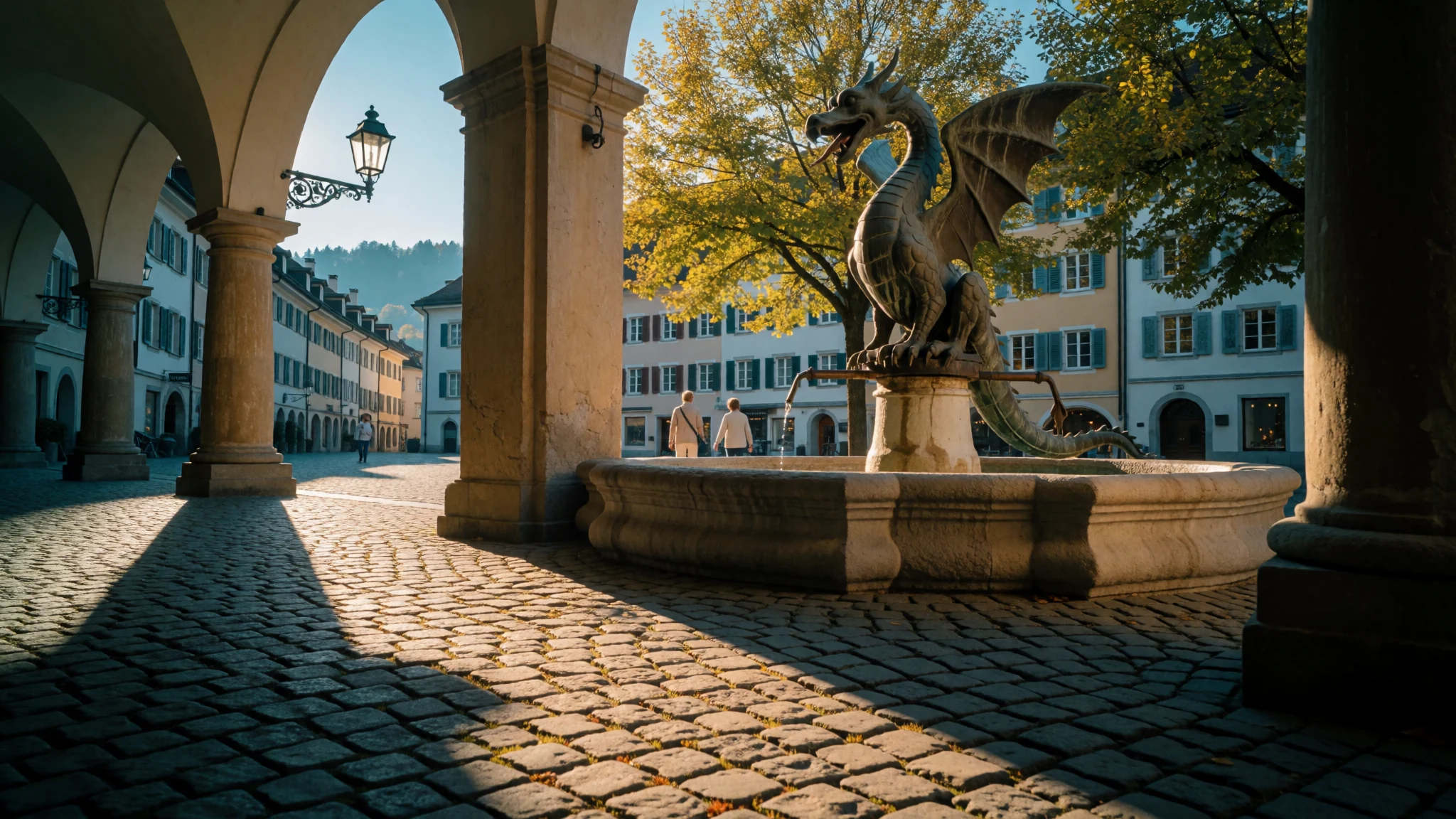
Klagenfurt pairs a compact, arcaded old centre and a dragon legend with easy access to the Wörthersee and the Carinthian hills.
The place
Klagenfurt is the capital of Carinthia, Austria's southernmost corner, and it sits close to the Slovenian border at the eastern end of the Wörthersee. About 101,000 people live here, at an elevation of 451 m. That makes it big enough for an opera house and a university quarter, yet small enough to cover on foot. The lake draws most visitors, but the old centre, built around a few broad squares and lanes with arcaded courtyards, deserves a day of its own. The Glan river belongs to the local geography too, although it is the lake and the hills behind it that shape the views.
The city also works as a church and campus town. The Roman Catholic bishop of Gurk-Klagenfurt has his seat here, and a university, a university of applied sciences and a music university named after Gustav Mahler keep the cafés busy in term time. Klagenfurt is regarded as the cultural centre of the Carinthian Slovenes, one of Austria's long-established minorities, and the Slovene name, Celovec, is still in everyday use.
Seasons matter. Summer brings swimmers, cyclists and full terraces, with the lake as the main draw. Winter is quieter and often grey, and lakeside life slows right down. Spring and early autumn give the best balance of mild days and thinner crowds. Klagenfurt is not a city of vast monuments on the scale of Vienna. Its appeal lies in its unhurried pace, the mix of German and Slovene, and the way water, woods and mountains sit a short walk or bus ride from the main square.
Its story
Klagenfurt has a founding legend that involves a dragon. According to the tale, a winged lindwurm lived in the marshes beside the lake and preyed on the surrounding duchy. A watchtower was raised at the edge of the moor, and a group of brave men baited the creature with a bull fitted with a chain and hook. The beast took the bait and was killed. A village grew on the battlefield, later became a town, and the tower gave way to a castle. The Lindwurmbrunnen, a heavy Renaissance fountain monument in the centre, still celebrates the deed, and the lindworm remains the town's best-known landmark.
The documented story is plainer. Duke Herman of the Spanheim family founded a stronghold here to command the trade routes crossing the region. The earliest written mention dates from the late twelfth century, in a document where Duke Ulrich II excused St Paul's Abbey from paying toll at the market, spelled "Chlagenvurth". That spelling is the first trace of the name, and it shows what the settlement was for: a toll point on roads linking the Alps with lands to the south and east.
The legend and the history fit together neatly. Both describe low, wet ground that had to be tamed, and a crossing worth defending. Whether or not any dragon ever lived in the moor, the tale captures how Klagenfurt began, as a reclaimed patch of dry land between lake and marsh, with a castle and a market on top of it.
What to see
- Lindwurmbrunnen — Neuer Platz, city centre
The Lindwurmbrunnen stands on Neuer Platz in the middle of Klagenfurt and shows the dragon of the founding legend, with a hero figure beside it. Carved in the Renaissance style and weighty in every sense, it is the town's best-known landmark and a convenient meeting point. Early morning gives the clearest photographs, before the square fills.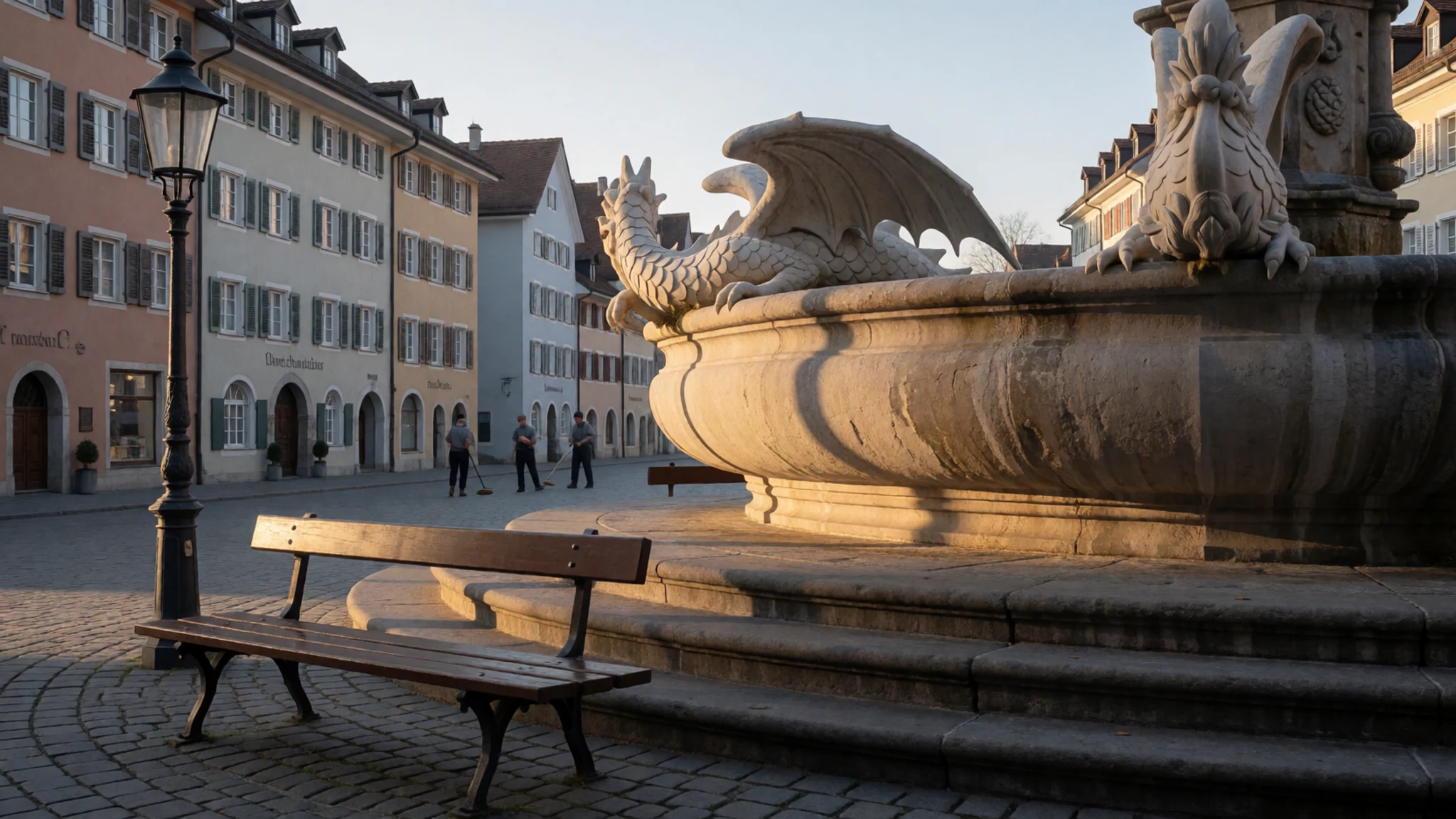
- Landhaus — Inner city
The Landhaus, seat of the Carinthian state parliament, is a Renaissance building with an arcaded courtyard close to the old centre. Its Hall of Arms is covered in painted coats of arms of Carinthian families. Access to the interior varies with parliamentary business, so check the official site, klagenfurt.at, before going.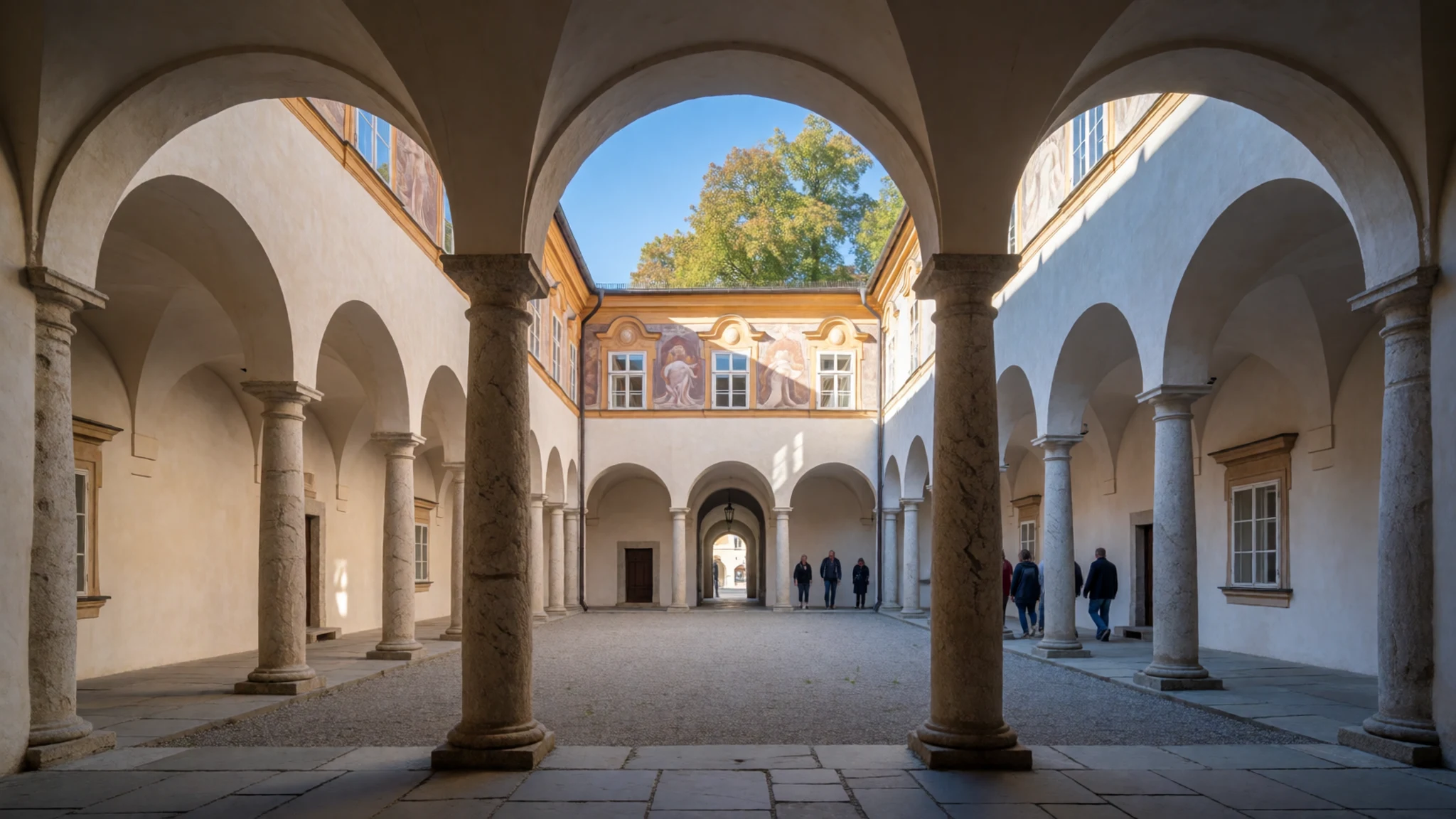
- Cathedral and Domplatz — Domplatz, inner city
The cathedral on Domplatz is the church of the bishop of Gurk-Klagenfurt, and the square around it is one of the calmer corners of the centre. Inside, the nave is a good place to rest from summer sun or winter damp. Services take priority over sightseeing, so keep visits short and quiet.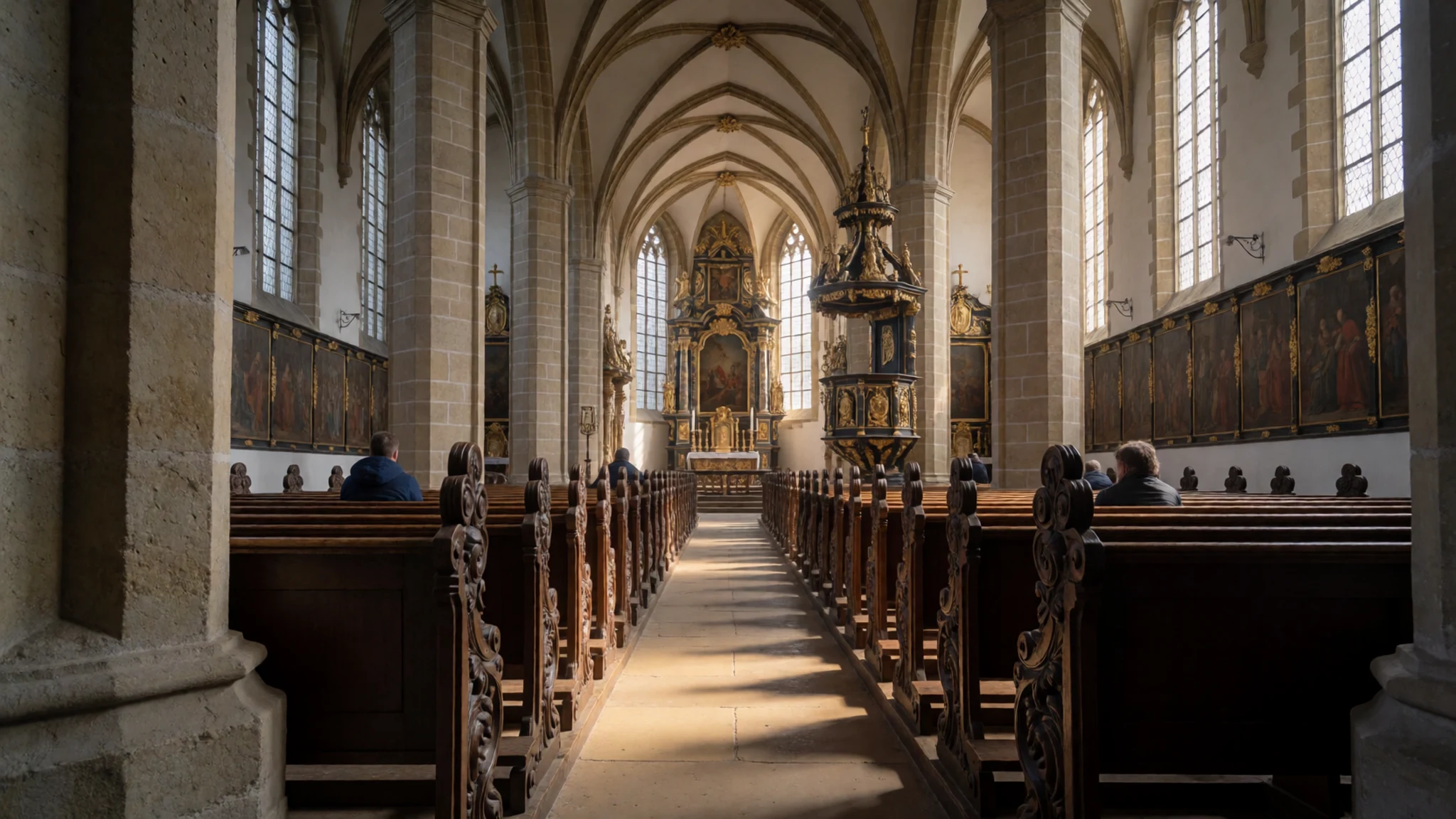
- Robert Musil Literature Museum — Bahnhofstrasse area, east of the centre
This museum occupies the house where the writer Robert Musil was born. It suits readers who want to follow the literary side of Klagenfurt, which also hosts a well-regarded German-language literature competition each year. Opening times change, so check the city's official site, klagenfurt.at, before planning a visit around it.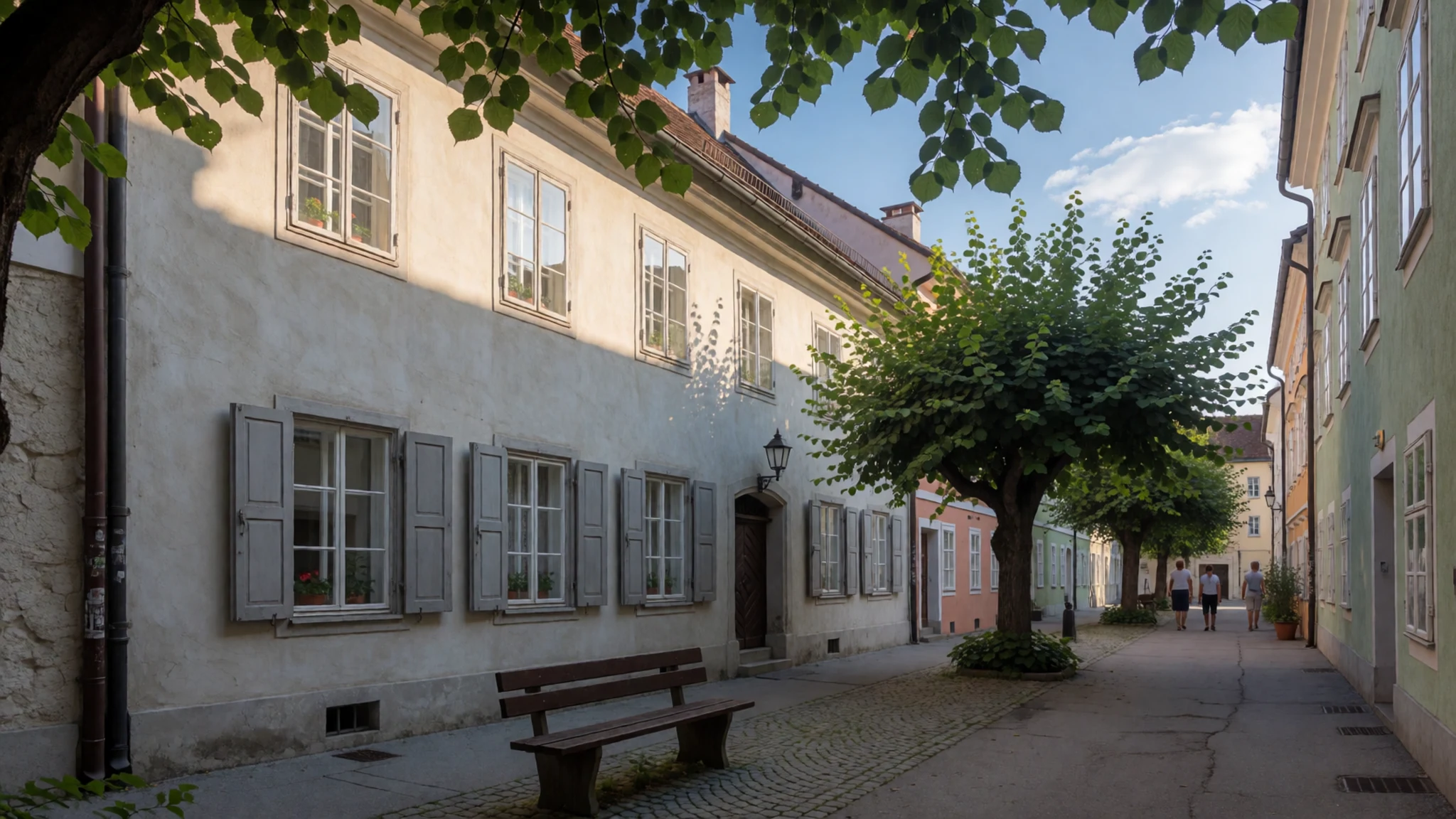
- Lendhafen — West of the old centre, towards the Wörthersee
Lendhafen is the old harbour quarter, where a canal once linked the town with the lake. Today its quays and alleys hold cafés and bars, and on winter evenings the lit lanes feel quietly atmospheric. It is a pleasant place to end a day, and it is also where the lake begins to feel close.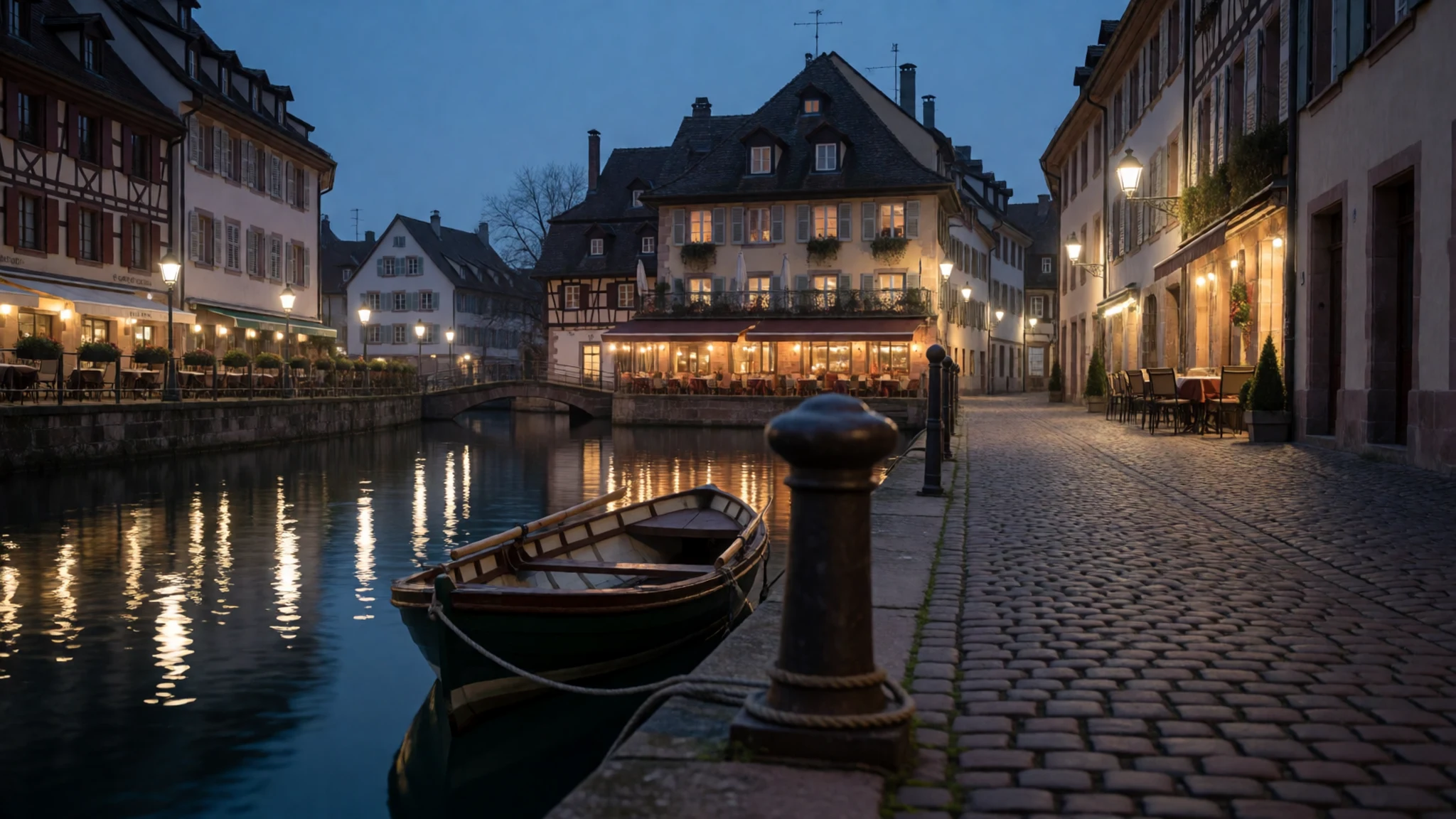
- Kreuzbergl — Western edge of the city
Kreuzbergl is the wooded hill that works as Klagenfurt's town forest, with paths, picnic spots and views over the red roofs towards the lake. It is within walking distance of the centre. Sturdy shoes help on damp trails, and a weekday morning is the quietest time to go.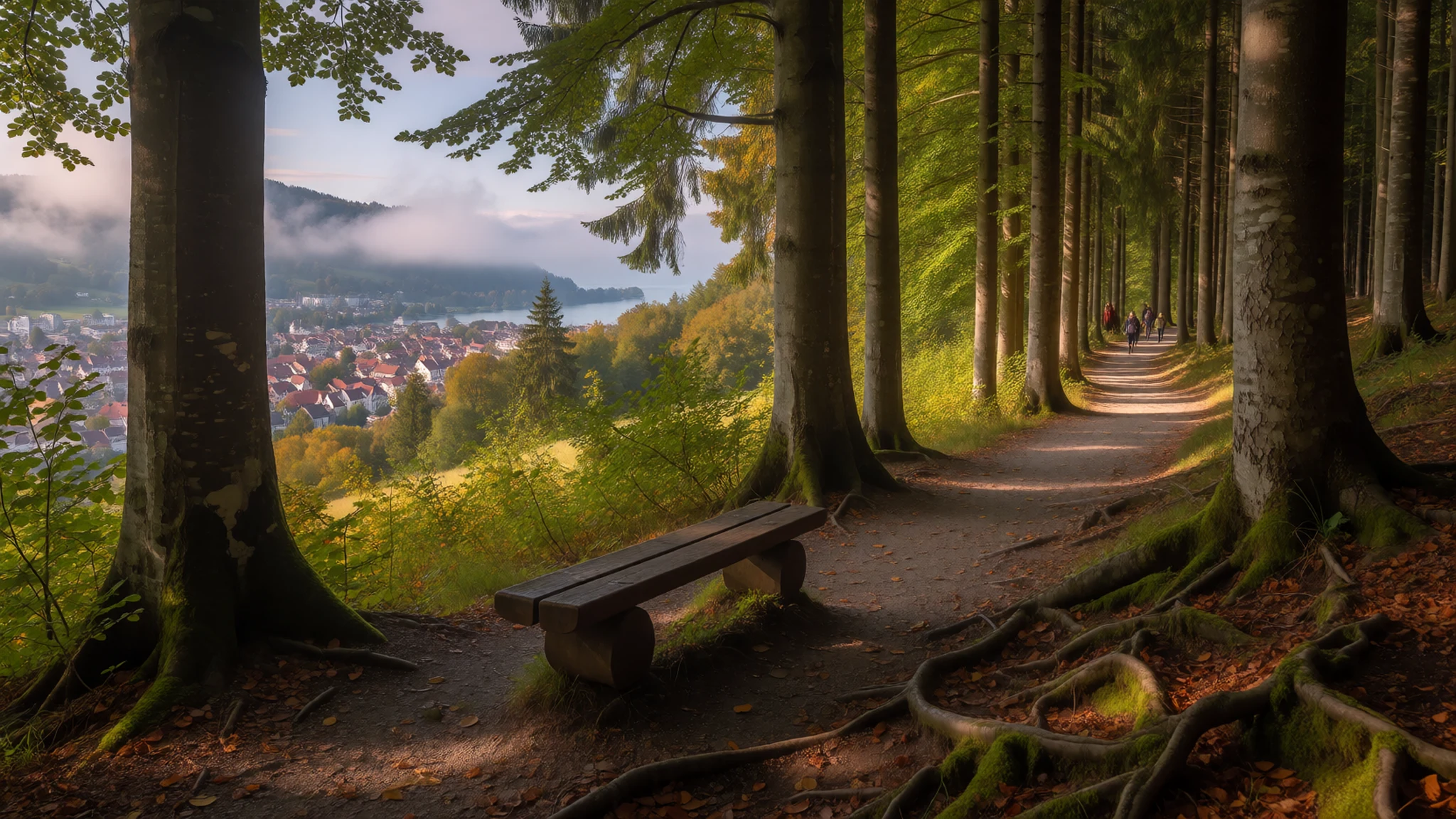
Culture
Klagenfurt's cultural life runs on music, theatre and the written word. The Stadttheater stages opera and plays with its own resident companies, a professional symphony orchestra plays in the city, and the Gustav Mahler Private University for Music brings young performers into the concert calendar. Mahler himself composed in a small hut by the lake not far away, and his name is part of how the city sees itself.
Literature carries equal weight. Robert Musil was born here, and each year the city hosts a German-language reading competition that awards the Ingeborg Bachmann Prize, a fixture for writers and critics. Museums cover Carinthian history, modern art and church art, and several small publishers keep a local book trade alive.
Another thread is bilingual. Klagenfurt is regarded as the cultural centre of the Carinthian Slovenes, so Slovene-language associations and events sit alongside Austrian traditions, and visitors may hear both languages in the street.
Everyday manners are Austrian. People greet each other on entering a shop or café, nobody expects a table to be vacated quickly, and quiet conversation is the norm in public places. Coffee and cake are taken at a leisurely pace, and a lingering afternoon at a café table is entirely normal. Sundays are quiet, with many shops closed, so plan errands for other days.
Greet staff with "Grüß Gott" or "Guten Tag" when you enter a shop or café, and keep your voice low and phone silent in churches, theatres and concert halls.
What to wear
Klagenfurt and the wider Carinthian region have a Tracht tradition, the regional dress worn at church festivals, weddings, parades and village celebrations. Men wear jackets cut from loden or boiled wool in muted greys and greens, often with horn or metal buttons. Women wear the dirndl, a bodice-and-skirt dress with a blouse and an apron in cotton, linen or silk. Details vary between valleys, and some Carinthian Slovene communities have their own variants and headwear.
Day to day, people in the city dress in neat, practical clothes: dark jeans, knitwear, sturdy shoes and a light waterproof. Smart casual is usual for the theatre or a good restaurant, and Tracht-inspired pieces such as loden coats or embroidered cardigans turn up in everyday wear, especially in autumn and winter. Lakeside in summer, swimwear and sandals are normal, and cycling kit is common on the paths.
Visitors should pack for changeable weather. Summers are warm enough for light cotton and sun protection, while winters are cold enough for a proper coat, hat and gloves. Layers and a rain jacket cover spring and autumn. Comfortable shoes with grip are useful on cobbles in the old centre and on the paths of the Kreuzbergl hill. Churches do not enforce a strict code, but covered shoulders and knees are polite when entering, and a scarf or light jacket in the bag makes that easy.
What to eat
- Kärntner Kasnudeln — Traditional Gasthaus-style restaurants in and around the city
Kasnudeln are Carinthia's signature filled pasta: crimped half-moon pockets stuffed with curd cheese and herbs, usually mint or chervil, then served with browned butter. They are hearty and mildly tangy, and a good first taste of the region's cooking.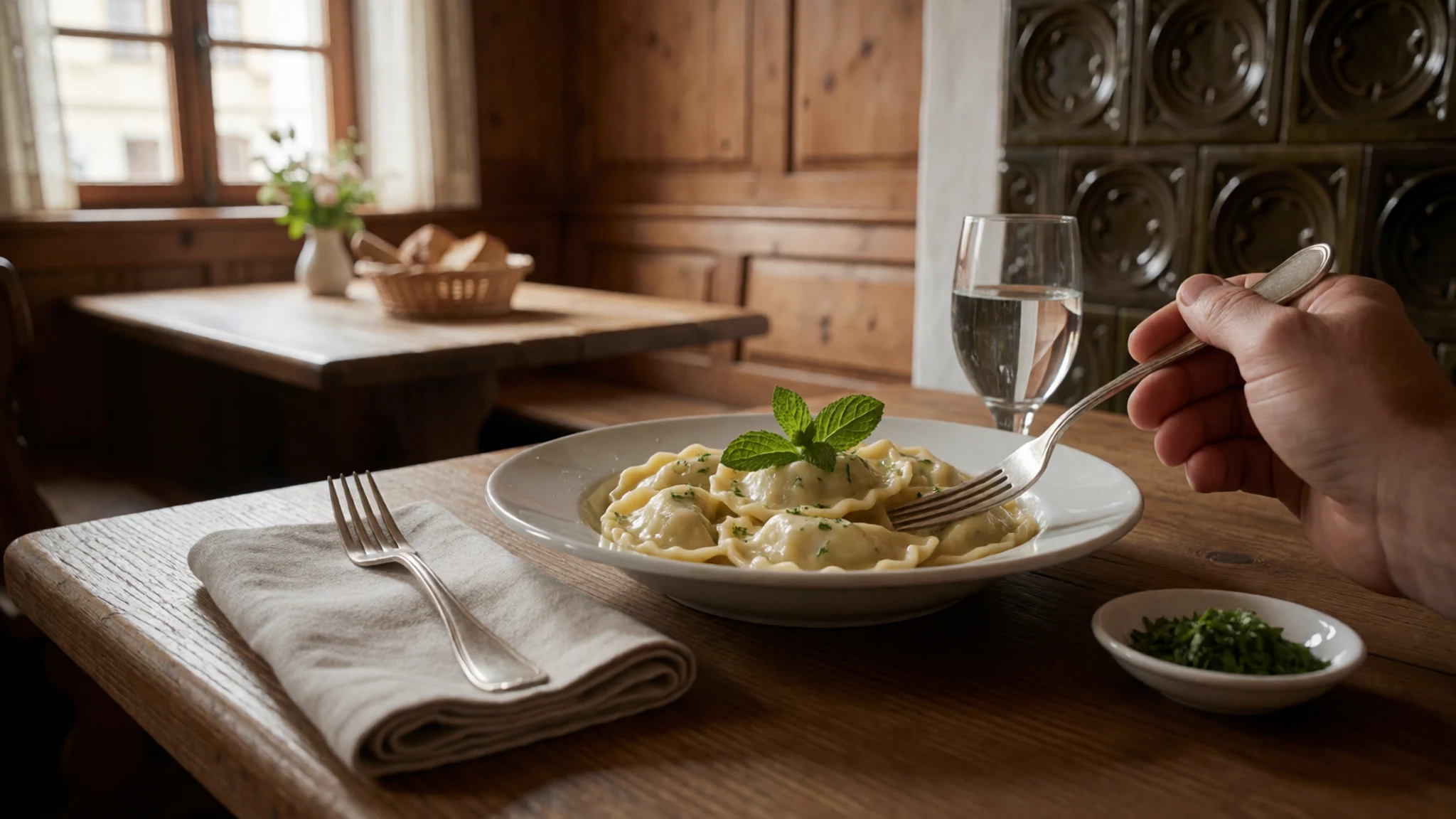
- Würstel and market snacks — Stalls in the covered market and street-food kiosks near the centre
Sausages, grilled or boiled and served with mustard and bread, are the quick lunch of choice. Stalls serving traditional Austrian dishes can be found in the indoor part of the market, which is also a good place to see local produce.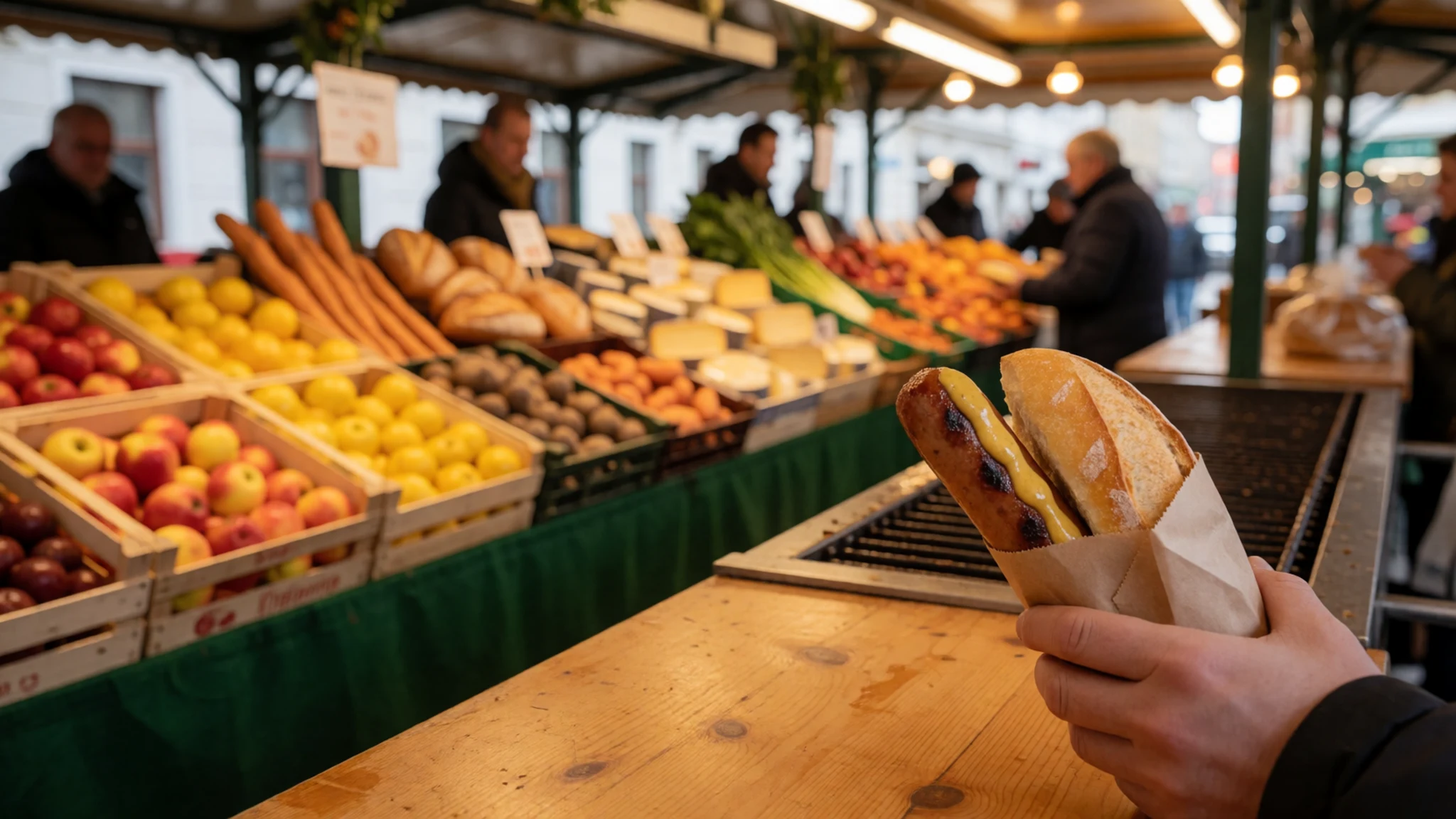
- Reindling — Bakeries and café counters in the old centre
Reindling is a yeasted ring cake rolled with cinnamon, sugar and raisins, and baked until deep gold. It is traditionally associated with Easter in Carinthia but is available year-round as a slice with coffee or as a breakfast bread. - Wörthersee fish — Inns and restaurants along the lakeshore
Lake fish such as whitefish are grilled or pan-fried whole and served with potatoes and a squeeze of lemon. The flavour is delicate, and the best way to eat it is by the water on a warm evening. - Kaiserschmarrn — Cafés in the centre and wooded Kreuzbergl area
Kaiserschmarrn is a fluffy pancake torn into pieces, dusted with sugar and served with stewed plums or apple sauce. It is filling enough to count as a meal, and it is widely offered in cafés and mountain huts alike.
Plan it
Best time. May–June and September for mild days, green hills and a warm lake without the peak-summer crowds. July and August are the warmest and busiest months for swimming and terraces. Winters are cold and often grey, with a quiet city and few lake activities.
How long. 2–3
Getting there. Klagenfurt has its own airport, and Graz, Ljubljana and Venice are other useful gateways, with trains of roughly three to five hours from most of them. From Graz, trains through the new Koralm tunnel run twice an hour, with the fastest journeys taking about 45 minutes. From Villach, trains run every 30 minutes and take about 40 minutes. Klagenfurt Hauptbahnhof is about 1 km south of the centre, with the bus station opposite.
Budget. mid
Tips
- Check opening times of museums and the Landhaus on the official site, https://www.klagenfurt.at, before building a day around them
- Visit the lake on a weekday in summer to avoid the busiest weekend crowds
- Wear shoes with grip for the Kreuzbergl paths and the cobbled centre
- Carry a little cash for market stalls and small cafés, though cards are widely accepted
- Book the private shuttle bus from Ljubljana or Graz airport in advance
Etiquette
- Greet staff when entering shops and cafés
- Keep voices low in churches, theatres and concert halls
- Carry rubbish away from the Kreuzbergl woods and lakeshore
Nearby
Sources
- Wikidata Q41753 (CC0)
- Wikipedia: Klagenfurt (rev 1385015553) (CC BY-SA 4.0)
- Wikivoyage: Klagenfurt (rev 5352512) (CC BY-SA 4.0)
- Landhaus, inner city — Johann Jaritz (CC BY-SA 4.0)
- View from Kreuzbergl — Johann Jaritz (CC BY-SA 4.0)
- Dreifaltigkeitssäule, Pestvotivdenkmal — Geolina (CC BY-SA 4.0)
- Stadttheater Klagenfurt — Thomas Ledl (CC BY-SA 4.0)
- View from the Schrottkogel — Johann Jaritz (CC BY-SA 2.5)
- Domplatz with cathedral — Johann Jaritz (CC BY-SA 3.0 at)
- Klagenfurter Dom, Innenansicht — Zacke82 (CC BY 3.0)
- Lendhafengassen — Eixi (CC BY 3.0)


