Heiligenkreuz Abbey
Heiligenkreuz Abbey, Austria
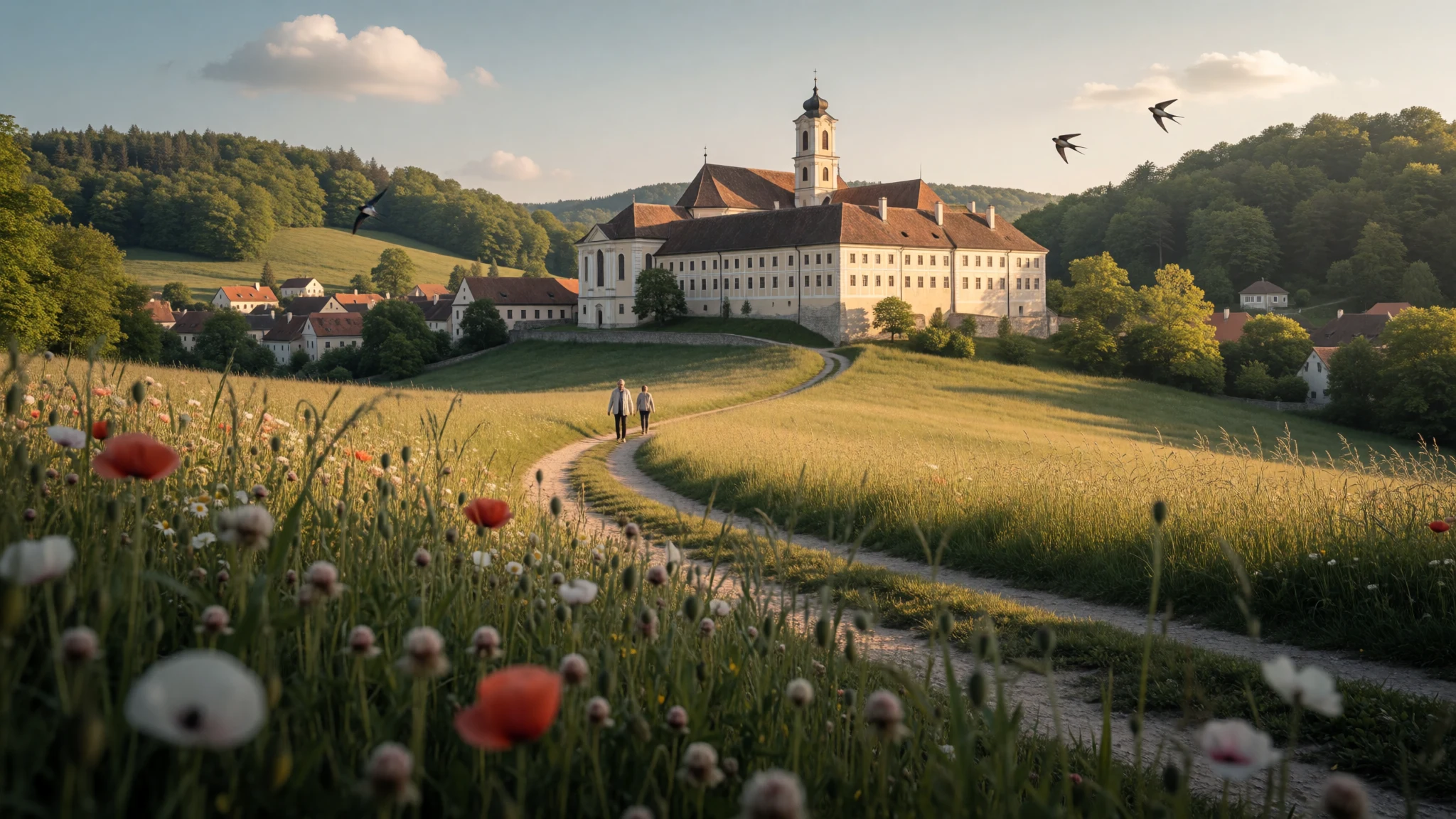
Heiligenkreuz Abbey is a living Cistercian monastery in the Vienna Woods, where monks still pray in a church and cloister that survived centuries of war.
The place
Heiligenkreuz Abbey stands in the village of the same name, in the southern Vienna Woods of Lower Austria, about 13 km north-west of Baden. It is a working Cistercian monastery, so the buildings are a home rather than a museum set. Monks pray, study and teach here, and the abbey also runs a Catholic seminary, which means young men in dark clothes cross the courtyards between lectures. The setting is gentle rather than dramatic: wooded hills, meadows and a small village, with the abbey's roofs and church tower visible well before the gate. Vienna lies to the north-east, so the abbey works as a half-day or full-day trip from the capital, though public transport needs a little planning. Nothing here is a skyline landmark. The pleasure is in the layering of centuries, with a medieval church and cloister beside large Baroque ranges that were rebuilt after wartime damage. The precinct is organised around courtyards and feels closer to a small town than to a single building. Parts of the complex may be open only on guided tours, so check the abbey's official site before setting out. Weekends and fine spring or autumn days bring pilgrims and coach parties, and weekday mornings are noticeably calmer. The village itself offers little beyond the abbey and a few eateries, so the visit fits best as one stop in a longer day through the Vienna Woods and Baden.
Its story
Heiligenkreuz Abbey was founded in 1133 by Margrave Leopold III of Austria, later honoured as a saint, at the urging of his son Otto, who had joined the Cistercians at Morimond in Burgundy. A first community of twelve monks and their abbot, Gottschalk, travelled from Morimond, and the house was consecrated that September. They named it for the Holy Cross, expressing their devotion to redemption through the Crucifixion. The ruling Babenberg family kept the abbey generously supplied with land and gifts, and it became a mother house that sent monks out to start others, among them Zwettl in 1138 and Lilienfeld in 1206. In 1188 Duke Leopold V gave the abbey a relic of the True Cross, which had reached him from Baldwin IV, King of Jerusalem. It has been shown in a dedicated chapel since 1983. The centuries were not gentle. Epidemics, floods and fires troubled the monks in the 1400s and 1500s, and the Ottoman campaigns of 1529 and 1683 hit the abbey hard, the later one burning much of the precinct. Rebuilding under Abbot Klemens Schäfer was on a bigger scale and in Baroque style, which explains the grand ranges around the courtyards today. Heiligenkreuz escaped closure when Emperor Joseph II dissolved many Austrian monasteries, and it also outlasted the Nazi period, when its suppression was planned but never carried out. In 1988 it founded Stiepel Priory in Bochum, in Germany's Ruhr region.
What to see
- The abbey church — Abbey precinct, Heiligenkreuz
The collegiate church is the heart of Heiligenkreuz Abbey and still the place where the monks gather for sung prayer. Stand at the back first and let the long interior settle, then walk the aisles quietly. Check the official site for service times and for when sightseeing is paused.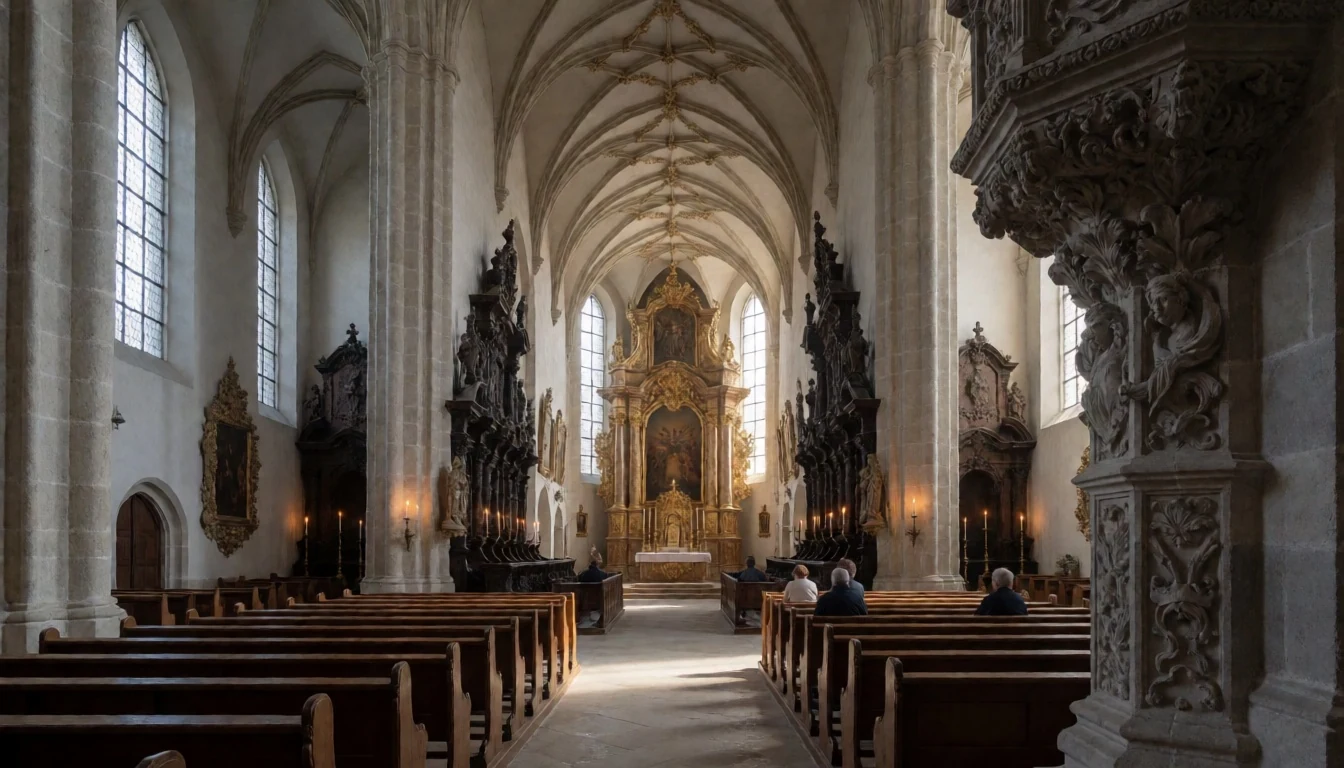
- The Stiftshof courtyard — Abbey precinct, Heiligenkreuz
The main courtyard of Heiligenkreuz Abbey shows the Baroque rebuilding best, with long, pale façades closing in around an open space. It is a good spot to see seminarians and monks going about the day. Early on a weekday it is calm, and the light on the walls is kind to photographs.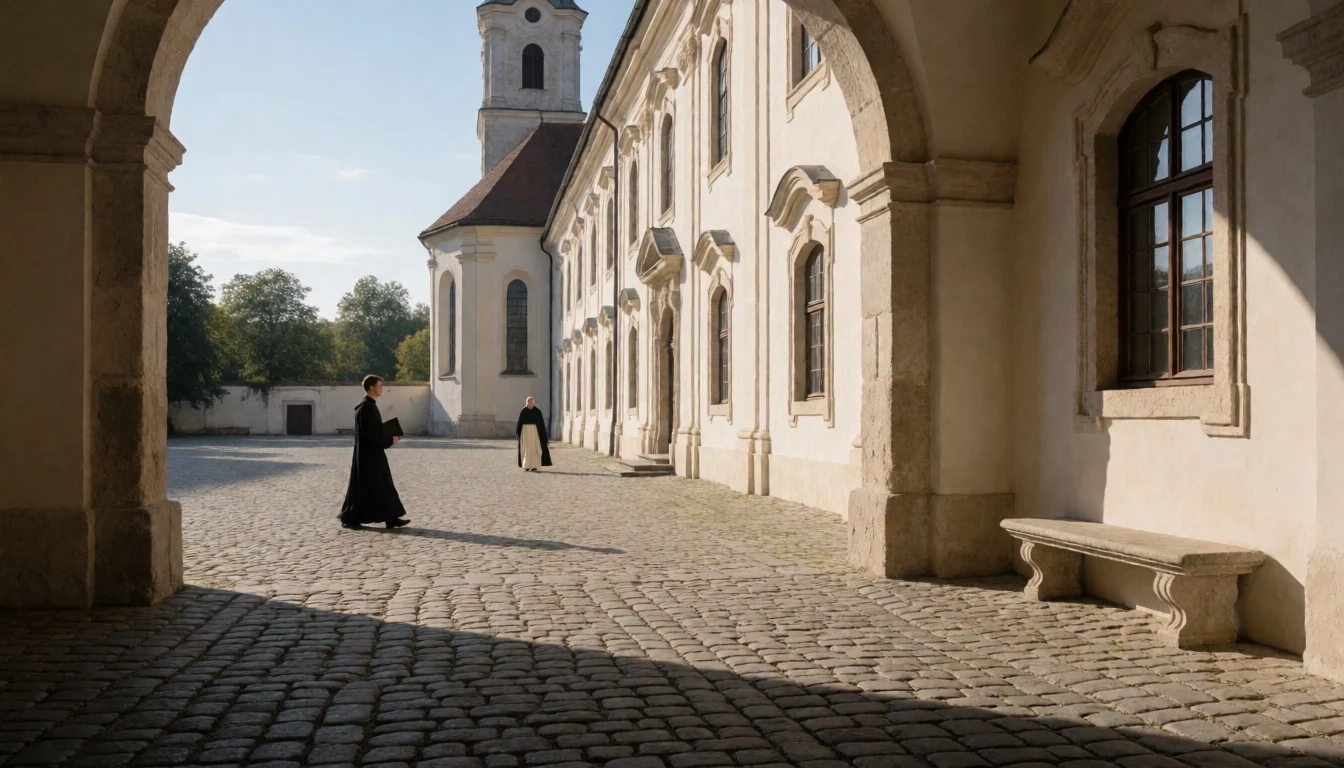
- The Holy Cross relic chapel — Abbey precinct, Heiligenkreuz
The chapel of the Holy Cross at Heiligenkreuz Abbey houses the relic of the True Cross that gave the monastery its name and its pilgrims. Even for visitors who are not religious, the small, hushed space and the long chain of gifts behind the object are worth the pause.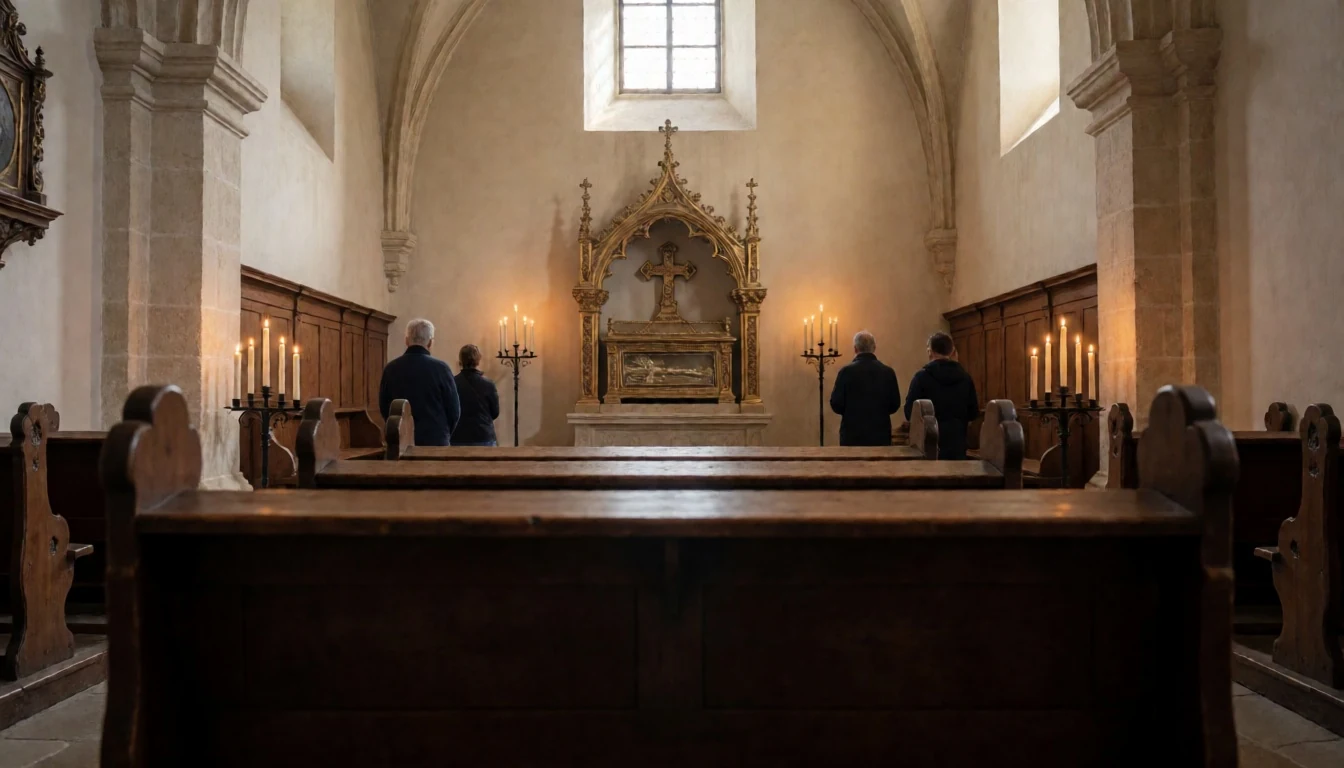
- Cloister and monastic rooms — Abbey precinct, Heiligenkreuz
Guided visits to Heiligenkreuz Abbey usually take in the cloister and some of the older monastic rooms, where the scale drops from grand Baroque to quiet stone walks. A guide helps decode what each space was for. Confirm tour availability and language on the official site, as it can vary.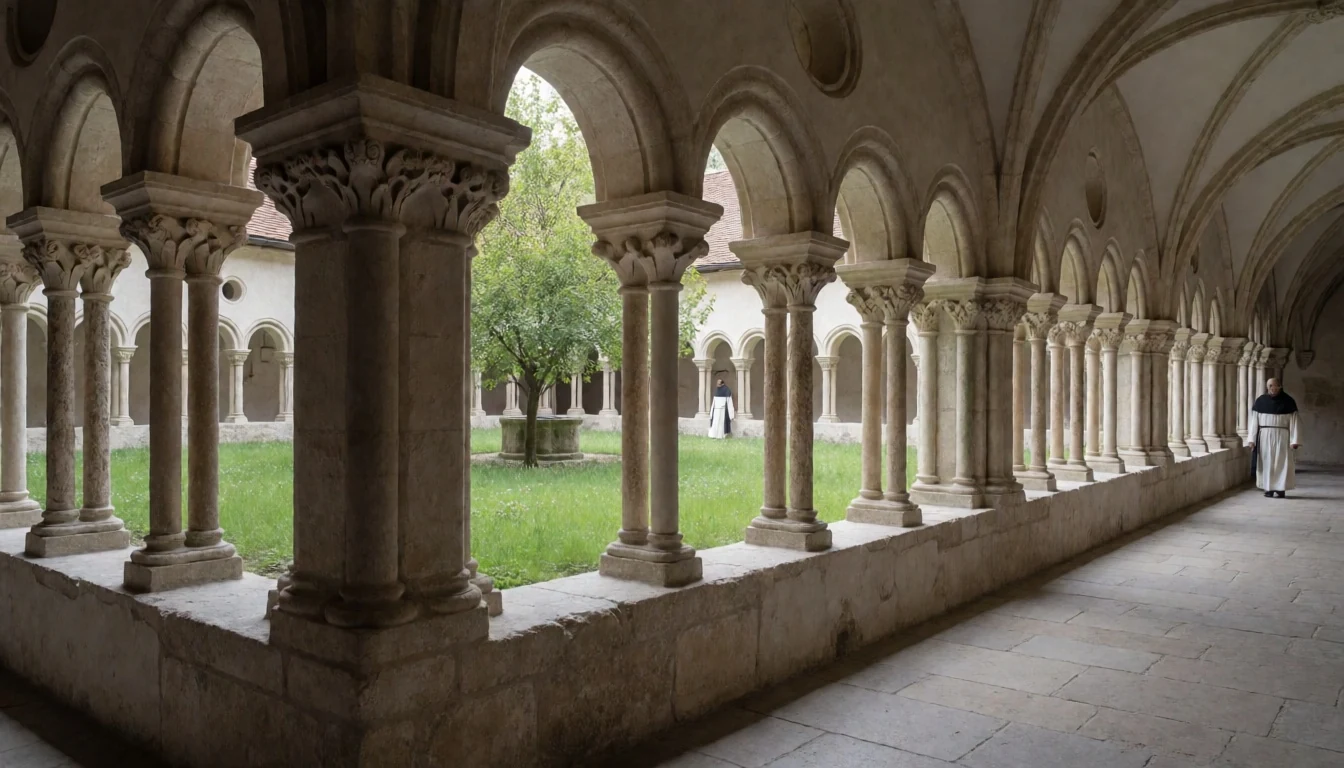
- Walk in the Vienna Woods — Woodland around Heiligenkreuz village
The woods around Heiligenkreuz Abbey suit an easy walk before or after the visit. Paths lead through beech and mixed forest, and the abbey's roofs reappear between the trees on the way back. Take a map or phone download, as signage is patchy, and wear shoes you do not mind muddying.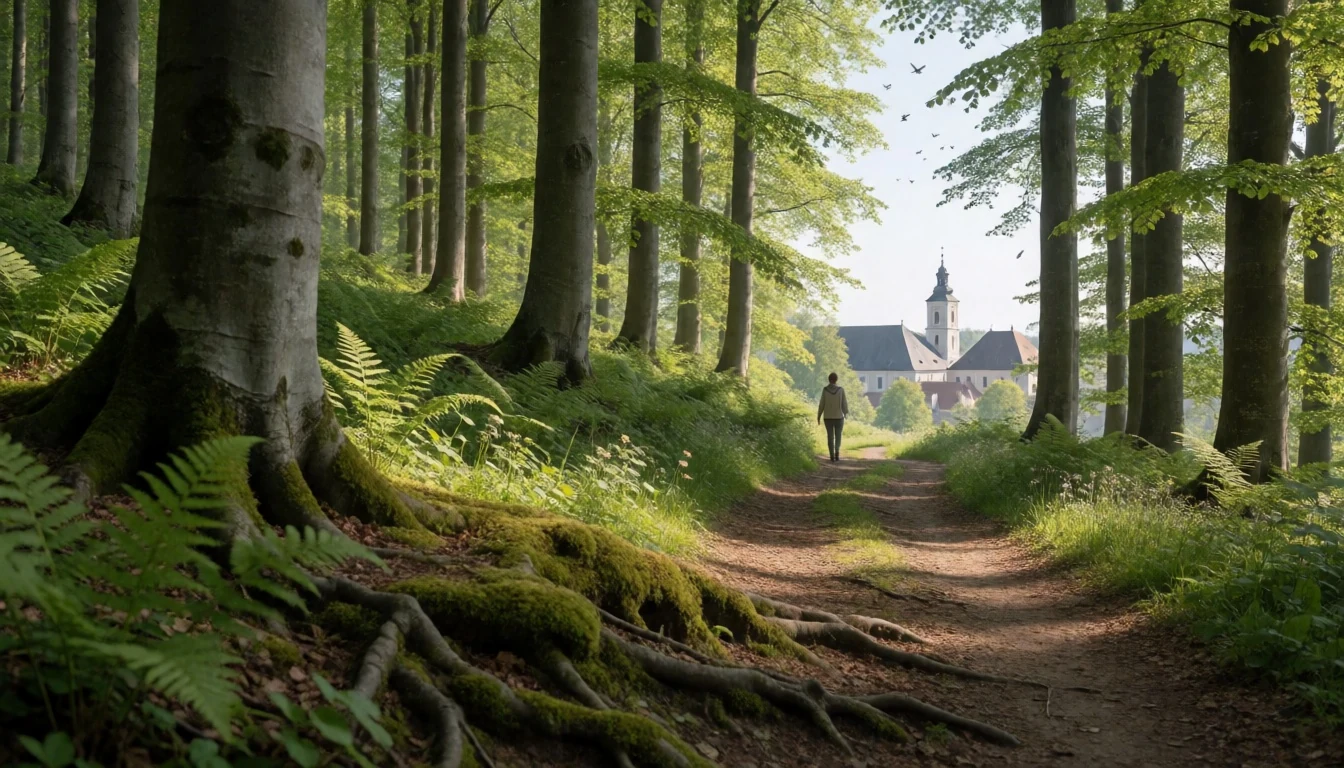
Culture
Heiligenkreuz Abbey is a place where the Cistercian way of life is still the point of the buildings. Cistercians follow the Rule of St Benedict, which shapes the day around communal prayer, reading, study and manual work, and the church is the centre of that rhythm. Much of the prayer is sung, so a service here is as much a musical experience as a religious one, and it is open to visitors who come to listen rather than to watch. The abbey's role as a Catholic seminary means that teaching and formation sit alongside the monks' own routine, and the place has an unhurried, scholarly feel. Its history as a mother house links it to other monasteries across Austria and beyond, and that sense of a wider family of houses is part of how the community sees itself. Religious life in this part of Austria is quieter than in the past, but the abbey still draws local worshippers, pilgrims and curious day-trippers, and the mix is part of its character. Seasonal feasts bring more visitors, and the Holy Cross relic gives the abbey a special place in the church calendar. Visitors will get the most from the visit by treating it as a place of worship that happens to welcome guests. Keep your voice low in the church, dress modestly with shoulders and knees covered, and do not photograph the monks or any service without clear permission.
What to wear
Heiligenkreuz Abbey is one of the few places in Austria where traditional dress means a monastic habit. The Cistercian habit is a white woollen tunic with a black scapular, worn by the monks at prayer and about the house, and the seminarians wear clerical black. Outside the cloister, the regional tradition in Lower Austria is Tracht: the dirndl, a dress with a fitted bodice, full skirt and apron, and for men the Trachtenjanker, a wool jacket in grey or green, often with Lederhosen. These are worn for weddings, feast days and village events rather than every day. Day to day, people in the Vienna Woods dress practically, in jeans, fleeces, walking boots and waterproofs, and locals on a Sunday may add a smart jacket or a Tracht piece for church. A visitor should dress for both the church and the weather. Cover shoulders and knees inside the abbey, and carry a light scarf or shawl if you wear sleeveless tops. Spring and autumn mornings are cool, so bring layers and a rain jacket, and in winter add a warm coat, hat and gloves because the old stone buildings hold the cold. Wear comfortable closed shoes with grip, since the courtyards use cobbles and the wood paths turn muddy after rain. Hats should come off inside the church.
What to eat
- Wiener Schnitzel — Any village Gasthaus near Heiligenkreuz or in Baden
A thin breaded veal cutlet, fried until golden and served with a lemon wedge and potato salad. It is the standard Sunday lunch in Lower Austria, and a plain village inn usually does it well.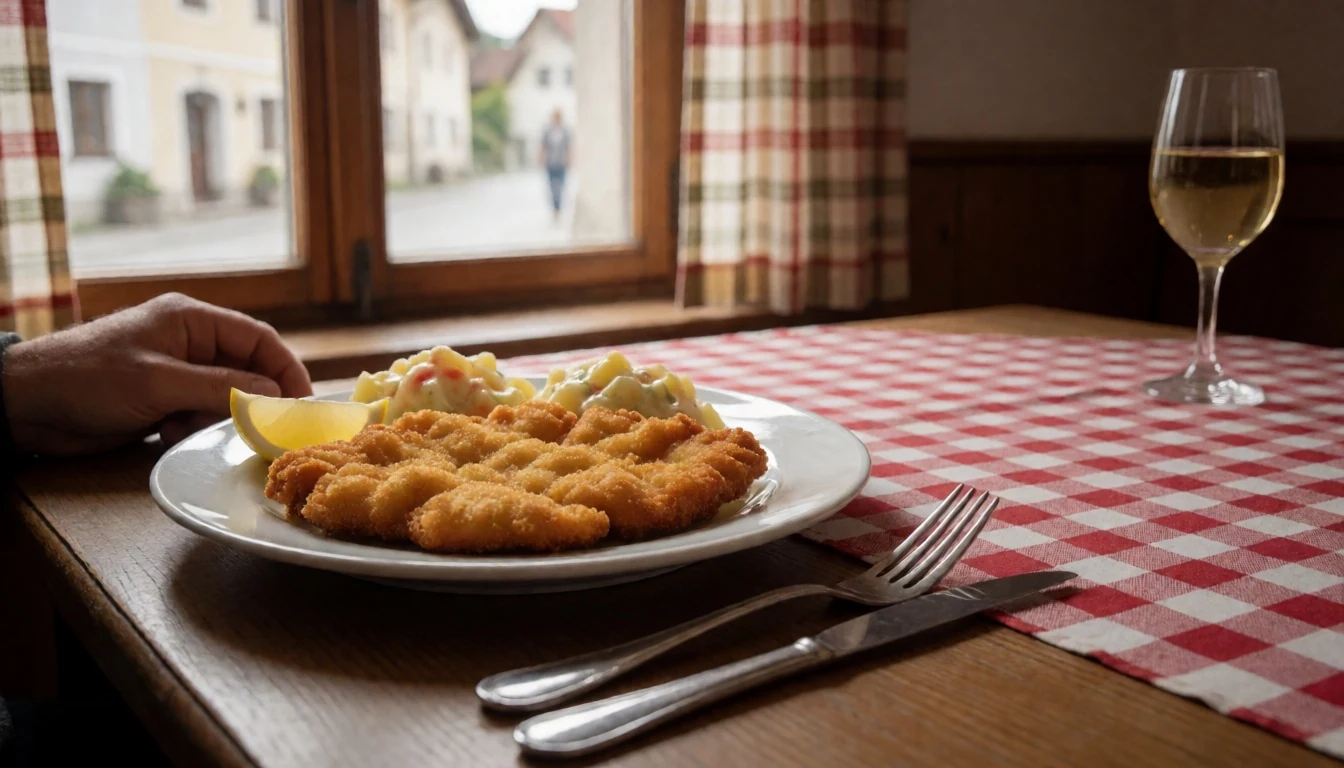
- Tafelspitz — Traditional Gasthaus in the Vienna Woods
Boiled beef served in its broth with root vegetables, apple-horseradish and chive sauce. It is a gentle, old-fashioned dish for a cold day and is often on the menu at inns that cook classic Austrian food.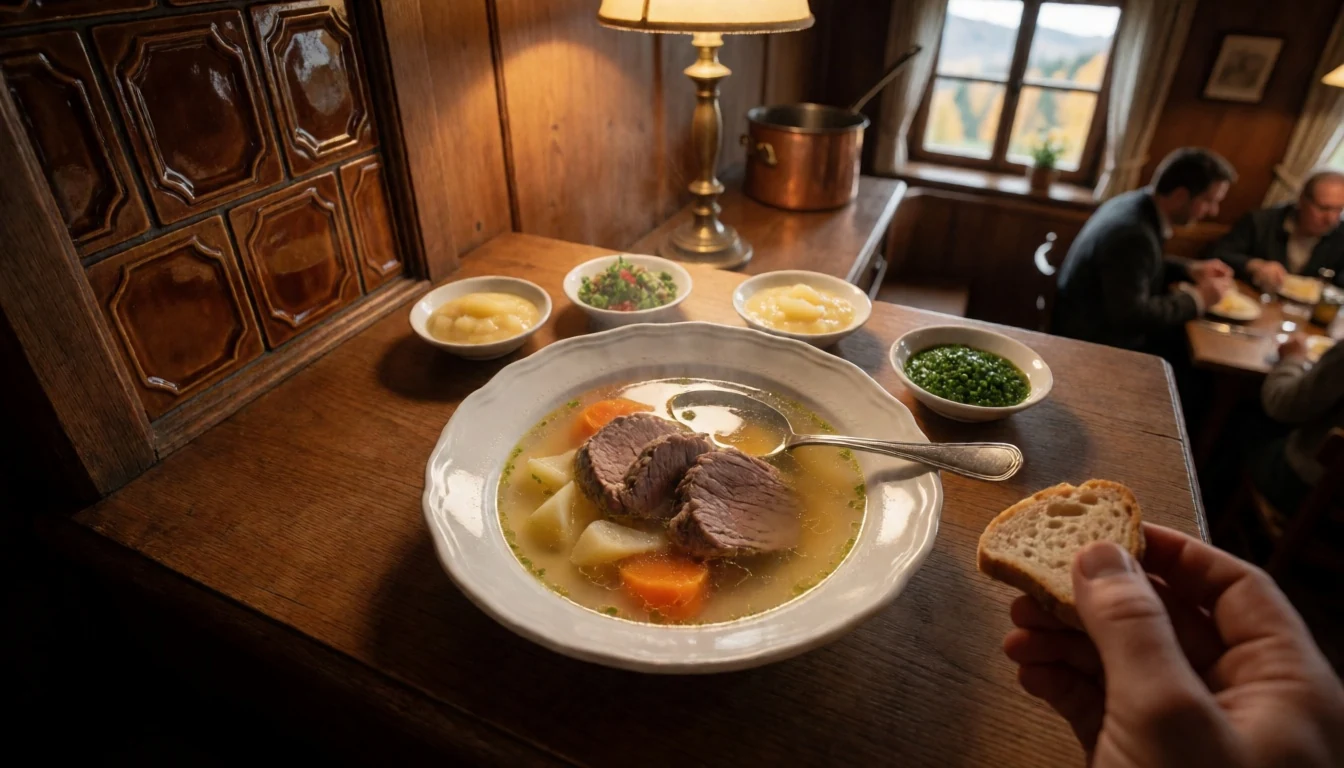
- Kaiserschmarrn — Café or Gasthaus around Heiligenkreuz and Baden
A fluffy shredded pancake, dusted with sugar and served with stewed plums or apple purée. It is sweet enough to share and works as a late-afternoon treat after a walk in the woods. - Heuriger platter and local wine — A wine tavern (Heuriger) in the hills near Baden
A Heuriger is a seasonal wine tavern serving the producer's own young wine with cold meats, cheeses, spreads and bread. It is relaxed, informal and a good way to taste the wine country south of Vienna. - Apfelstrudel — Café in Baden or the village near the abbey
Thin pastry rolled around spiced apples, raisins and breadcrumbs, served warm with vanilla sauce or cream. It is a safe and reliable choice at almost any Austrian café.
Plan it
Best time. May–June and September–October for mild weather and green or golden woods; July and August can be warm and busy, and winter is cold, grey and sometimes snowy, which suits quiet visits but makes the walks less pleasant.
How long. 1
Getting there. Fly into Vienna International Airport, then travel into Vienna and on by regional rail towards Baden or Mödling, finishing with a local bus or taxi to Heiligenkreuz. Check ÖBB and the regional bus timetable before travelling, as services can be sparse outside peak hours. Driving from Vienna is the simplest option.
Budget. mid
Tips
- Check the abbey's official site for tour times, service times and any closures before you set out
- Aim for a weekday morning, when the precinct is calmer than at weekends or on feast days
- Carry some cash and a card, since village eateries can be inconsistent about payments
- Bring layers and a waterproof, because the weather in the Vienna Woods changes quickly
- Combine the abbey with a walk or a stop in Baden to make the journey worthwhile
Etiquette
- Dress modestly in the church, with shoulders and knees covered
- Keep quiet during services and do not photograph monks or worshippers without permission
- Stay out of areas marked as private monastic enclosure
Nearby
Sources
- Wikidata Q697221 (CC0)
- Wikipedia: Heiligenkreuz Abbey (rev 1371966944) (CC BY-SA 4.0)
- Wikivoyage: Lower Austria (rev 5245451) (CC BY-SA 4.0)
- Photo: Heiligenkreuz - Stift, Luftaufnahme (C.Stadler/Bwag) (CC BY-SA 4.0)
- Photo: Heiligenkreuz Stift1 (Welleschik) (CC BY 3.0)
- Photo: Stift Heiligenkreuz (Stiftshof) 2011-09-14 (Se90) (CC BY 3.0)
- Photo: Heiligenkreuz - Stiftskirche, Innenansicht (a) (C.Stadler/Bwag) (CC BY-SA 4.0)
- Photo: A casket inside Heiligenkreuz Abbey (Slyronit) (CC BY-SA 4.0)
- Photo: A lamp inside Heiligenkreuz Abbey (Slyronit) (CC BY-SA 4.0)
- Photo: A room inside Heiligenkreuz Abbey 2 (Slyronit) (CC BY-SA 4.0)
- Photo: A room inside Heiligenkreuz Abbey (Slyronit) (CC BY-SA 4.0)


