Eggenberg Palace
Eggenberg Palace, Austria
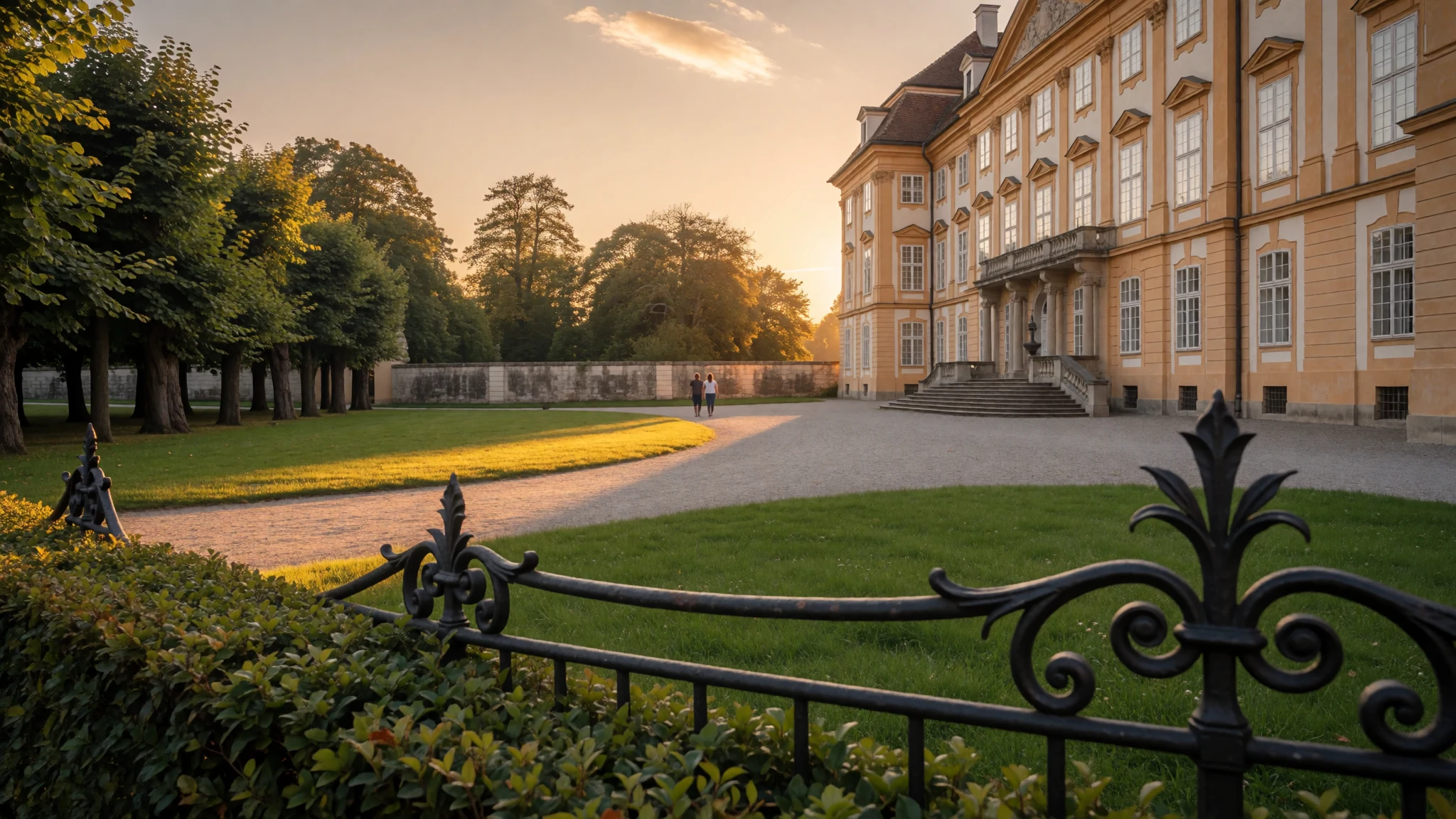
Eggenberg Palace is an early Baroque residence on the edge of Graz, with preserved state rooms, a walled park and museums under one roof.
The place
Eggenberg Palace (German: Schloss Eggenberg) stands on the western edge of Graz, the capital of the Austrian state of Styria, at an elevation of 381 m. It sits inside a walled estate in the Eggenberg district, with a large gateway facing west. The city tram reaches the area, so a car is not needed.
The palace is an early Baroque house that was built as a statement of rank. Its state rooms keep much of their original furnishing, which is why it is treated as a living interior and not only as a façade. The exterior looks like a single, tidy 17th-century design. Parts of the fabric are in fact far older, and building work carried on for generations afterwards.
The grounds are as much of a draw as the house. A landscaped park surrounds the palace, and the northern corner holds the Planetary Garden and a Lapidarium of Roman stonework. Beside them is the entrance to the Archaeology Museum, home to the Cult Wagon of Strettweg. At ground level, the former rooms of the financier Balthasar Eggenberger now hold a Coin Cabinet. These collections belong to the Universalmuseum Joanneum, the museum group that runs the site.
In 2010 the palace was added to the UNESCO listing that already covered the Historic Old Town of Graz. That makes it a natural half-day trip from the old centre, even though it feels more like a country estate than a city sight. Visitors planning a visit should check the official site for which rooms and parts of the park are open in a given season: https://www.museum-joanneum.at/en/palace-and-gardens-schloss-eggenberg.
Its story
Eggenberg Palace began with a banker. Before 1460, Balthasar Eggenberger, a financier who worked for the Holy Roman Emperor Frederick III, bought land west of Graz. It became the family's seat and gave them their name. The house grew in stages over the following decades, and by 1470 a square Gothic chapel dedicated to the Virgin Mary stood in its tower. A papal document of that year mentions it, and it later became the core of the larger building.
The palace that visitors see today is the work of Balthasar's great-grandson, Hans Ulrich von Eggenberg. He was a diplomat and statesman who ran the foreign policy of Emperor Ferdinand II during the Thirty Years War. His counterpart on the French side was Cardinal Richelieu, who did the same job for Louis XIII. Hans Ulrich was effectively the emperor's prime minister and a close personal confidant.
When Ferdinand made Vienna his imperial capital, Hans Ulrich was named Governor of Inner Austria. He wanted a home that matched that new authority, and the result was a grand residence built around the old chapel tower. Planning for the Baroque palace began around 1625, the main structure seems to have been complete by about 1635 or 1636, and decoration continued into the 1640s.
The layers explain why the building looks so unified from outside yet contains medieval fabric inside. The Eggenbergers were among the most powerful dynasties in Styria in their day, and the palace was meant to show it. Today it stands as a record of that ambition, and of how one family's fortune was tied to the fate of an empire.
What to see
- The state rooms — Main palace building
Eggenberg Palace's main draw is its sequence of early Baroque state rooms, which keep their original furnishings and decoration. They are normally seen on a guided visit, and access can change with the season, so check the official site before travelling. Allow time to move slowly, because the detail repays it.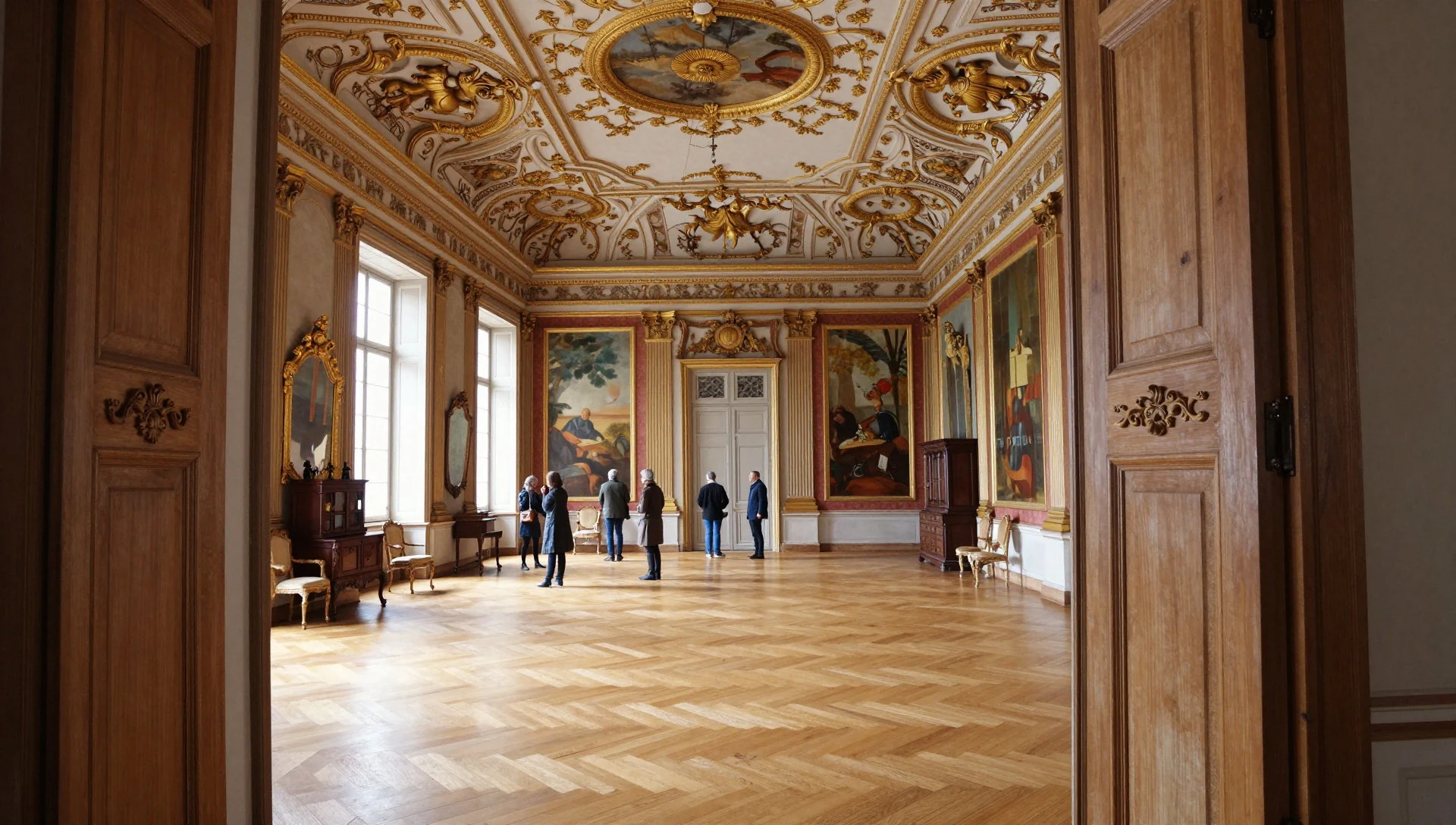
- The park and gardens — Park surrounding the palace
The grounds around Eggenberg Palace are laid out as scenic gardens inside a boundary wall. They suit a slow walk before or after the interior, and are the easiest way to see the palace's full façade at a distance. Spring and late autumn are the most comfortable seasons for strolling.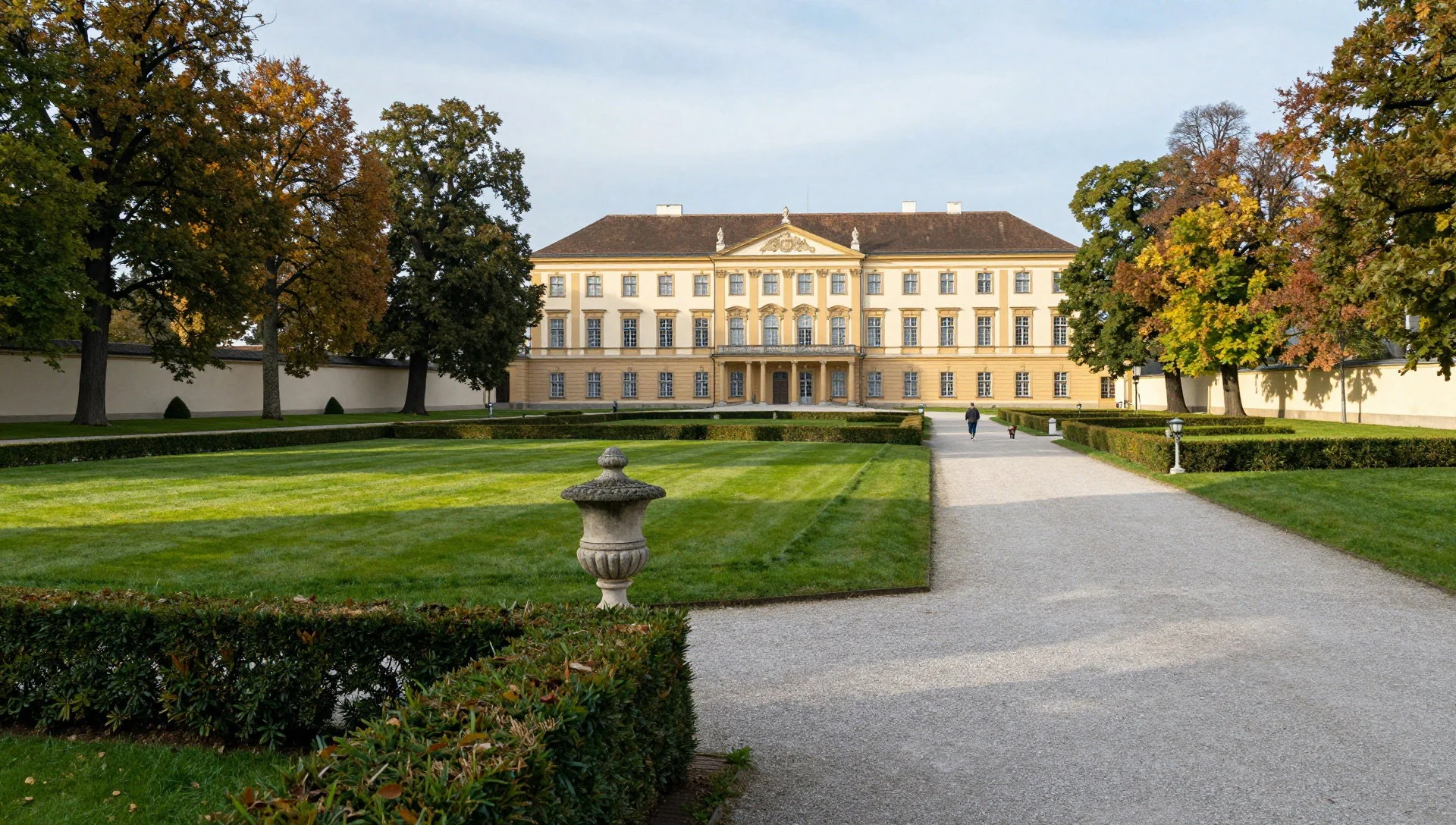
- The west gate — Western edge of the estate
The big portal facing west is the formal entrance to both the palace and its park. It is worth pausing here, since the approach shows how the estate was meant to be entered: through a wall, then across open ground to the house. It is also where most visitors arrive from the tram.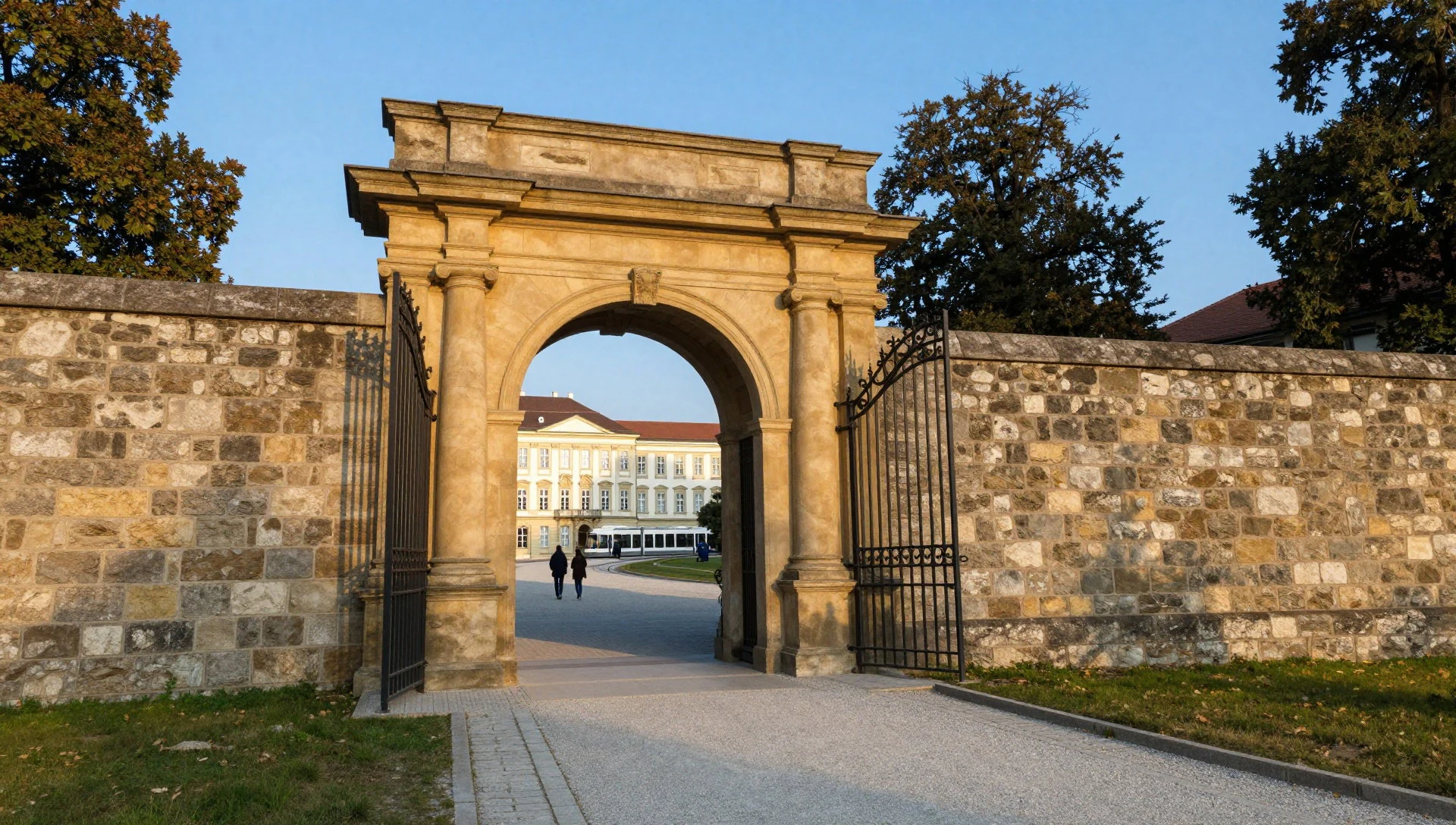
- Archaeology Museum and Cult Wagon of Strettweg — Northern corner of the palace grounds
The entrance to the Archaeology Museum is in the northern corner of the grounds. It houses the Cult Wagon of Strettweg, a well-known early metal object that gives the collection its focus. The museum belongs to the Joanneum group, and is a good indoor stop if the weather turns.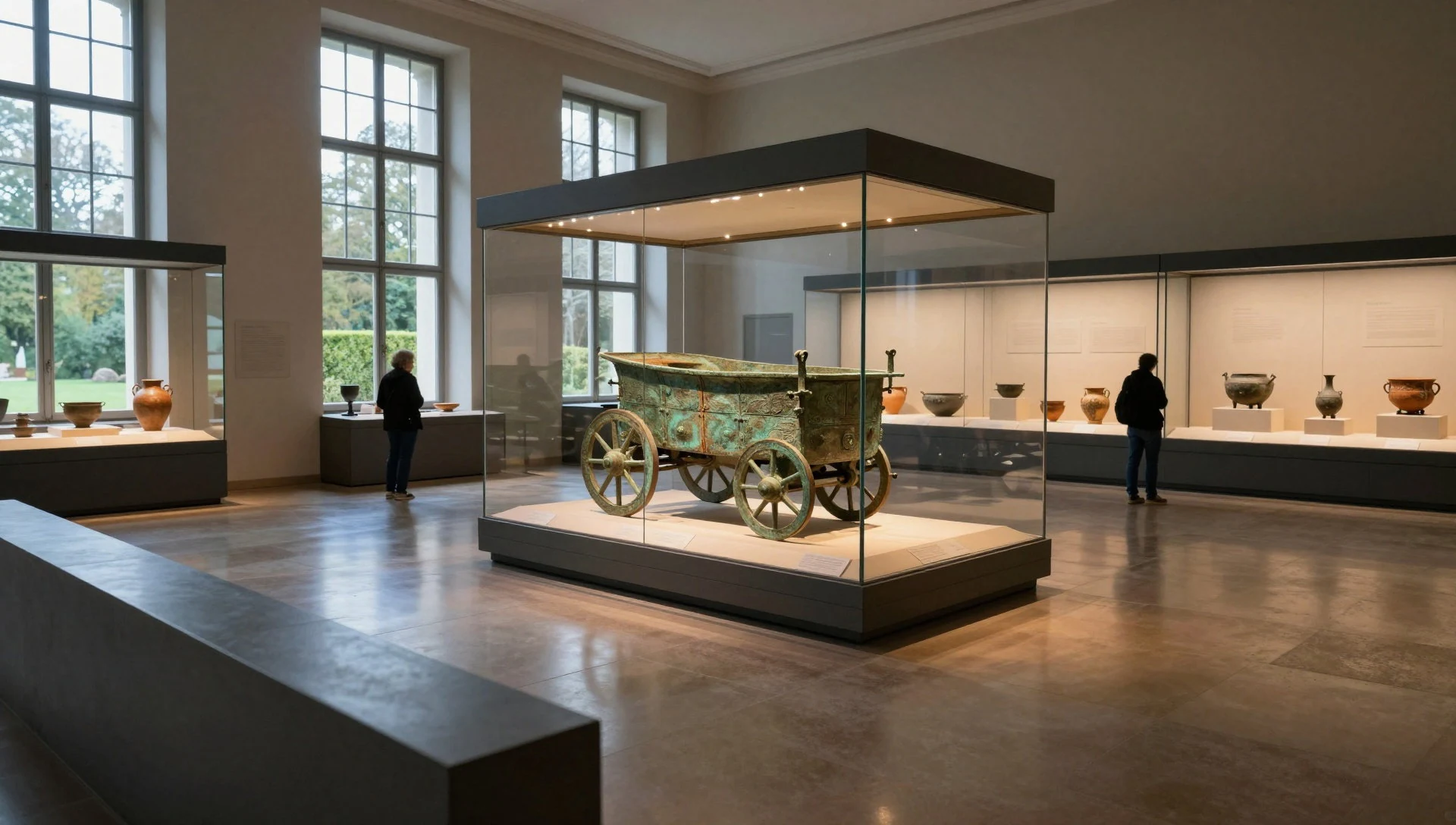
- Planetary Garden and Lapidarium — Northern corner of the palace grounds
In the same northern corner, the Planetary Garden and the Lapidarium sit side by side. The Lapidarium displays Roman stonework, carved blocks and inscriptions collected from the region. Both are outdoors and quick to see, so they fit easily around a palace visit without needing extra planning.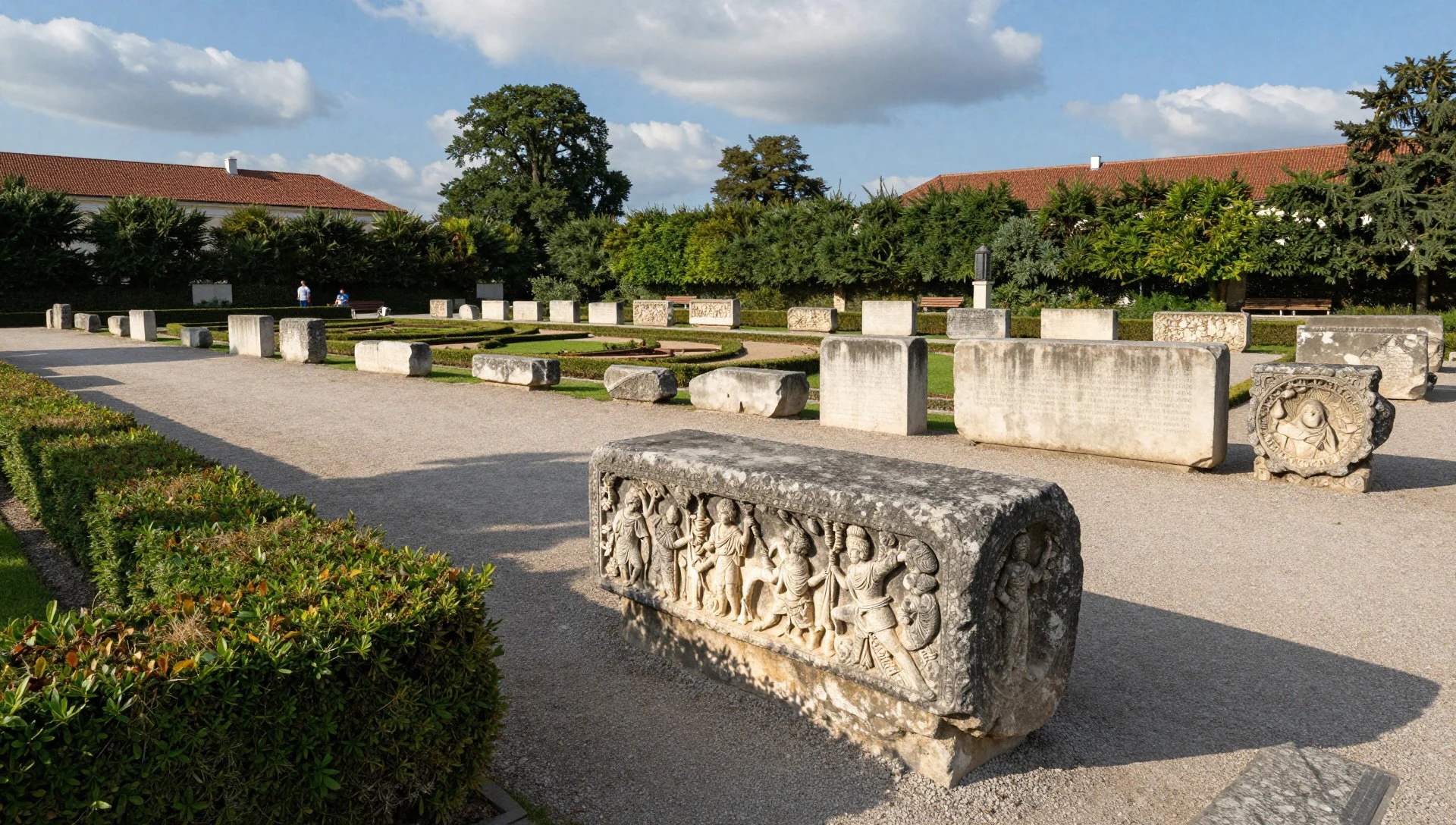
- The Coin Cabinet — Ground floor of the palace
On the ground floor, the Coin Cabinet occupies the former rooms of Balthasar Eggenberger, who held the imperial minting licence in the late Middle Ages. It is a small, specialist collection, and a pleasing link back to the money that first built the family's fortunes.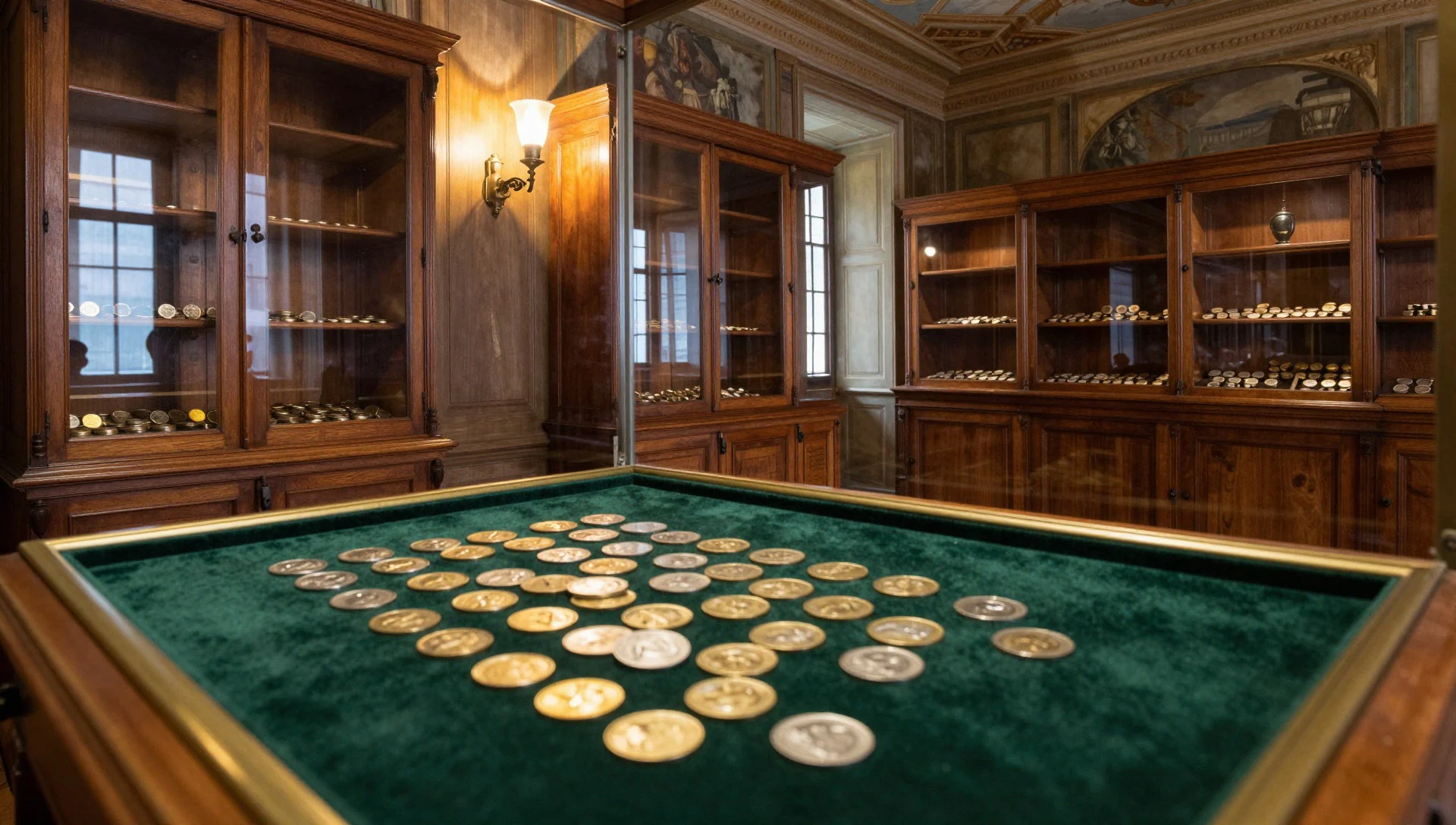
Culture
Eggenberg Palace belongs to Styrian and wider Austrian court culture, in which noble houses used architecture to announce rank. The Eggenbergers rose through finance and diplomacy rather than inherited titles alone, and the palace shows a family that wanted its power read at a glance. Even the layout, with a walled estate and a formal gate, tells visitors to treat the place as a stage.
Today the site is run as a museum landscape. It is part of the Universalmuseum Joanneum, which looks after collections across Styria, and the palace is as much a place for archaeology and coins as for Baroque interiors. Locals use the park for walks and quiet time, so it is a working part of Graz life and not only a monument.
Graz is a university city with a strong coffee-house habit, and a visit to the palace pairs easily with a slow coffee in town afterwards. Austrian museum culture tends to be orderly and quiet. Guided visits start at set times and guides expect groups to stay together. People tend to speak softly in historic rooms, and German is the first language of most tours, though English is widely understood in the city.
In the state rooms, follow the guide's instructions about where to stand and what not to touch, and check the site's photography rules before taking out a camera or tripod.
What to wear
Eggenberg Palace sits in Styria, where traditional dress is called Tracht. Men's Styrian dress is often a grey or green jacket in loden, a dense boiled wool that sheds rain, trimmed with green piping and worn with a hat. Women wear the dirndl: a fitted bodice, a full skirt and an apron, usually in cotton, linen or wool. These are worn at festivals, weddings, folk events and by some people on Sundays or in the countryside.
Day to day, Graz dresses like most central European cities. Students and office workers favour jeans, trainers and practical jackets, and people tend to look neat without being formal. Traditional dress appears mainly on festival days and in rural parts of the region, not on city streets.
Visitors should dress for the weather and for walking. The park involves gravel paths and lawns, so comfortable closed shoes are better than sandals, and a light waterproof is sensible in any season. Winters are cold and summers can be very hot, so layers help. Inside the state rooms there is no formal dress code, but modest, tidy clothes feel right in a historic house. Large rucksacks are often not allowed in museum rooms, so travel light or expect to leave a bag at the cloakroom.
What to eat
- Styrian pumpkin seed oil (Kürbiskernöl) — Traditional Styrian restaurants and delicatessens in Graz
A dark green oil pressed from roasted pumpkin seeds, with a nutty, almost smoky flavour. It is drizzled over salads, soups and even ice cream. Look for it in Styrian restaurants and food shops across Graz.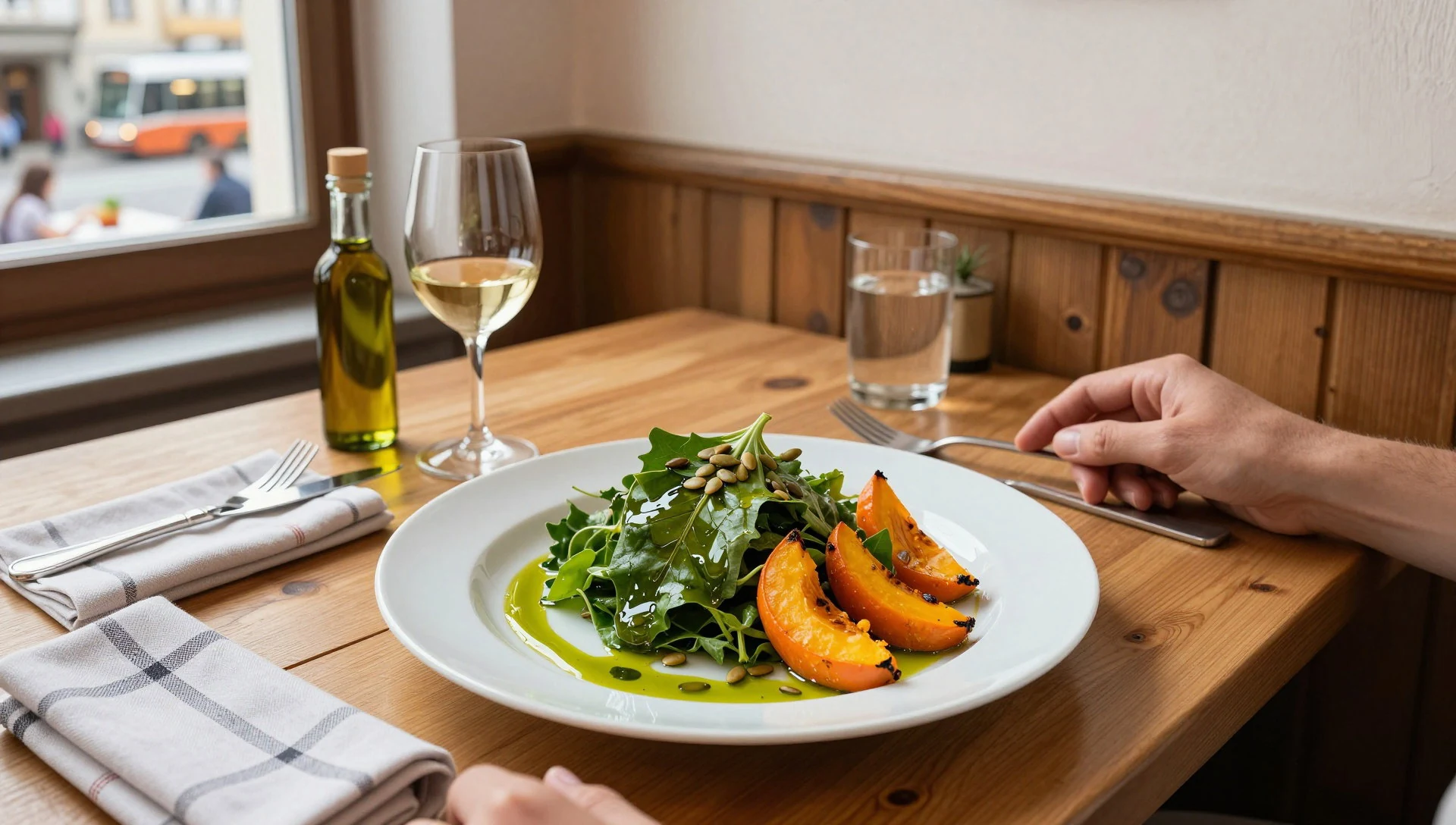
- Backhendl — Inns and traditional restaurants, especially at lunchtime
Breaded and fried chicken, a Styrian classic served crisp with potato salad and often a dressing of pumpkin seed oil. It suits a hearty lunch after a morning in the park.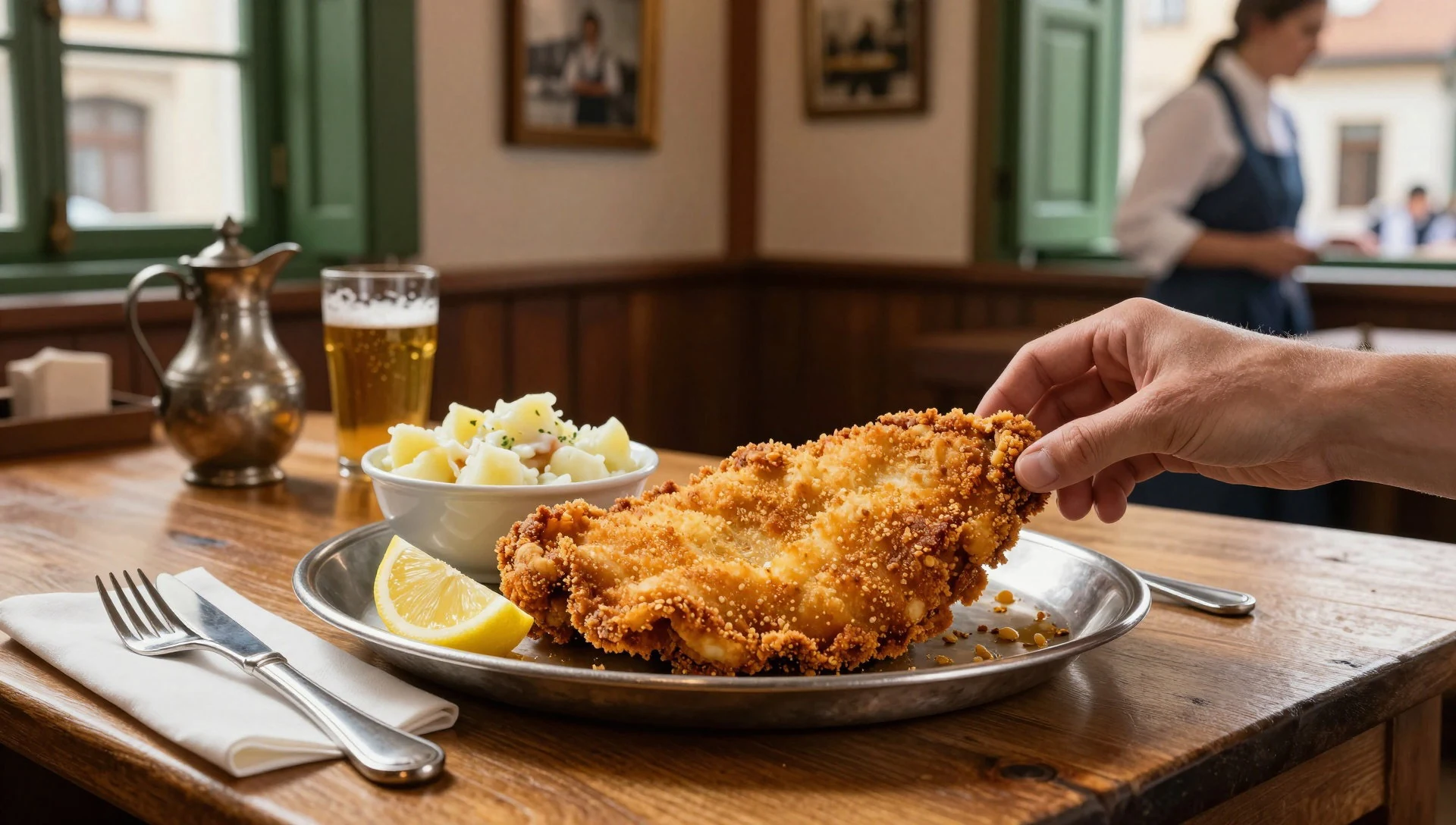
- Mittagsmenü — Restaurants across the city centre, at lunchtime
Many restaurants in Graz offer a fixed lunch set or a dish of the day on weekdays, with a soup or starter attached. It is usually fresh and good value, and a reliable way to eat well without a big bill. - Coffee and cake — Coffee houses and cafés in the old town and around the main squares
Austrian coffee-house culture is alive in Graz. Order a melange (milky coffee) or a small black coffee with a slice of cake, and stay as long as you like. No one will hurry you out. - Bakery breakfast — Neighbourhood bakeries and the busier city squares
A bakery breakfast of fresh rolls, pretzels and pastries is the cheap, quick way to start a day. Local chains such as Bäckerei Sorger have branches in several parts of Graz.
Plan it
Best time. March–April and October–November, when the weather is mild and the park is at its best for walking. Winters are cold and the gardens are bare, and July and August are very hot, so check the official site for seasonal opening of the state rooms.
How long. 1
Getting there. Fly to Graz Airport and take the airport rail link to Graz Hauptbahnhof, or come by train from Vienna on the scenic Semmering route. From the city centre, the last leg is a tram west to the Eggenberg district, then a short walk to the west gate.
Budget. mid
Tips
- Check the official site for opening days, guided-tour times and ticket prices before you go: https://www.museum-joanneum.at/en/palace-and-gardens-schloss-eggenberg
- Combine the palace with a morning in the park and a coffee in the old town to make a relaxed day
- Wear comfortable closed shoes, since the park paths are gravel and lawn
- Carry a card and a little cash, as small cafés may prefer one or the other
- Arrive early on dry days to enjoy the gardens before the busiest hours
Etiquette
- Follow the guide's instructions in the state rooms and do not touch furnishings or walls
- Keep voices low inside the palace and check photography rules before using a camera
- Stay on the paths in the park and keep dogs under control if the rules allow them
Nearby
Sources
- Wikidata Q203797 (CC0)
- Wikipedia: Eggenberg Palace, Graz (CC BY-SA 4.0)
- Wikivoyage: Graz (CC BY-SA 4.0)
- Photo: Schloss Eggenberg samt Park — Henry Kellner (CC BY-SA 4.0)
- Photo: Graz, Schloss Eggenberg — Allie_Caulfield (CC BY 2.5)
- Photo: Schloss Eggenberg, Nordwest Ansicht — Henry Kellner (CC BY-SA 4.0)
- Photo: Graz, Schloss Eggenberg — Allie_Caulfield (CC BY 2.5)
- Photo: Graz, Schloss Eggenberg — Allie_Caulfield (CC BY 2.5)
- Photo: Palace Eggenberg gate — Herzi Pinki (CC BY-SA 3.0 at)
- Photo: Graz, Schloss Eggenberg — Allie_Caulfield (CC BY 2.5)
- Photo: Graz, Schloss Eggenberg — Allie_Caulfield (CC BY 2.5)


