Hohenwerfen Castle
Hohenwerfen Castle, Austria
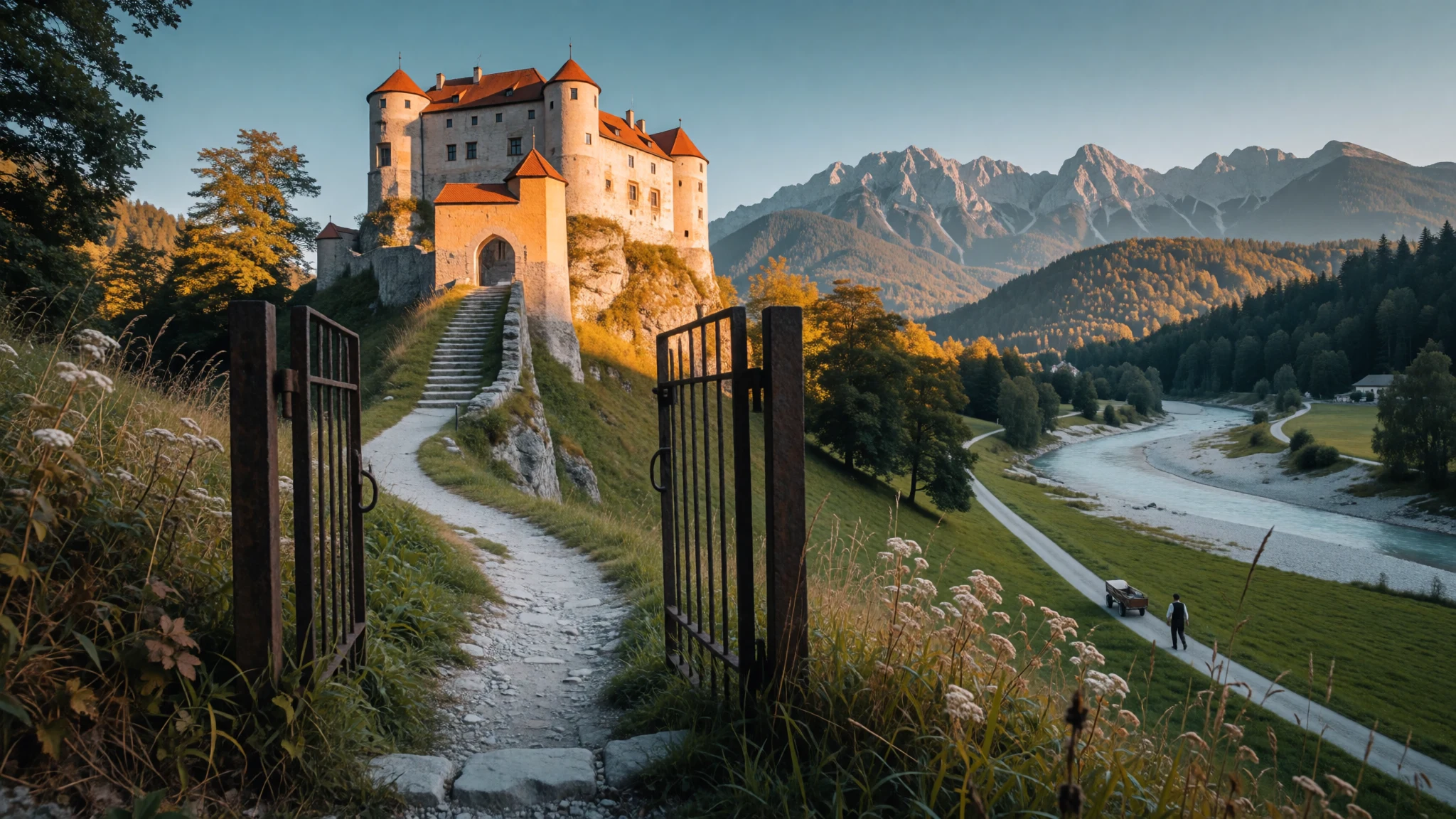
Hohenwerfen Castle is a rock fortress guarding an Alpine valley, with prison cells, a weapons collection and live falconry, an easy day from Salzburg.
The place
Hohenwerfen Castle stands on a steep rock above the market town of Werfen, in the Salzach valley south of Salzburg, at about 688 m above sea level. Limestone ranges close in on both sides, the Berchtesgaden Alps on one flank and the Tennen Mountains on the other, so the fortress looks less like a building on a hill and more like a stopper in a bottle. That was the intention. Whoever held this rock controlled the narrow route through the valley towards the Alpine passes. Building began in 1075, and the castle is a sister to Hohensalzburg, the fortress above Salzburg city, both raised for the archbishops of Salzburg. Today it is run as a museum. The rooms hold a weapons collection and displays on the castle's long use as a prison, and there is a falconry centre with flying demonstrations in season. Film fans recognise the silhouette from Where Eagles Dare, the wartime adventure that used the castle as its mountain stronghold. Werfen itself is small and quiet: a street of houses under the rock, a railway station and a handful of guesthouses. Ice caves in the hills nearby draw many summer day-trippers, so the village and the path up to the castle can feel crowded around midday in July and August. Mornings and the shoulder months are calmer. Opening dates and show times change with the season, so the official site is the place to check before setting out.
Its story
Hohenwerfen Castle was born out of a quarrel between pope and emperor. Archbishop Gebhard of Salzburg sided with the reforming pope in the Investiture Controversy, and between 1075 and 1078 he strengthened three fortresses to hold the Alpine route along the Salzach against King Henry IV. Hohenwerfen was one of them. The gamble did not go well at first. Henry had the archbishop driven out in 1077, and Gebhard could not return to Salzburg until 1086. He died at Hohenwerfen not long afterwards. Over the following centuries the castle served the prince-archbishops as a garrison, a residence and a base for hunting. It was enlarged in the 12th century. In 1525 rebellious farmers and miners rose in the Peasants' War and set the castle on fire, which led to repairs and some rebuilding. Its darker role was as a state prison. Noblemen and rulers were locked up here, among them Prince-Archbishop Wolf Dietrich Raitenau, who died in 1617 after six years in captivity. Fire struck again in 1931, during the ownership of Archduke Eugen of Austria, who had held the castle since 1898. The fortress was sold to the regional administration in 1938 and then used as a Nazi training school during the Second World War. The museum today tells this layered story without much softening.
What to see
- The approach and courtyards — Werfen, Salzach valley
Hohenwerfen Castle is reached by a climb from Werfen, and the walk is part of the experience. The path winds up under walls that grow taller at each bend, then opens into a series of courtyards and gateways. Allow time to stop and look back down the valley.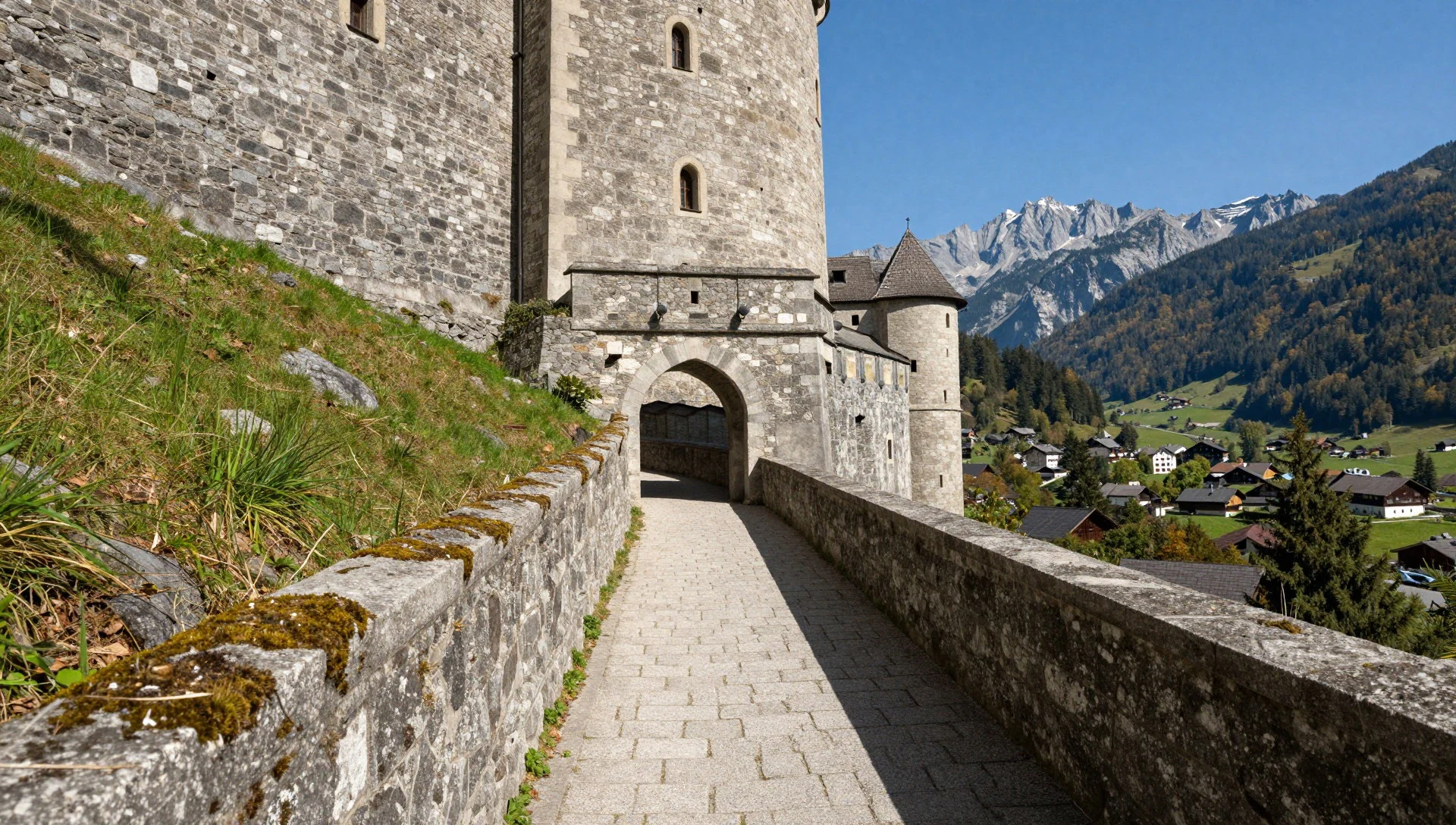
- Falconry centre and flight displays — Castle grounds
The castle keeps birds of prey and stages flying demonstrations in season, with falcons and other raptors swooping over the courtyard and the valley below. Show times vary through the year and can be cancelled in poor weather, so check the official site before planning around them.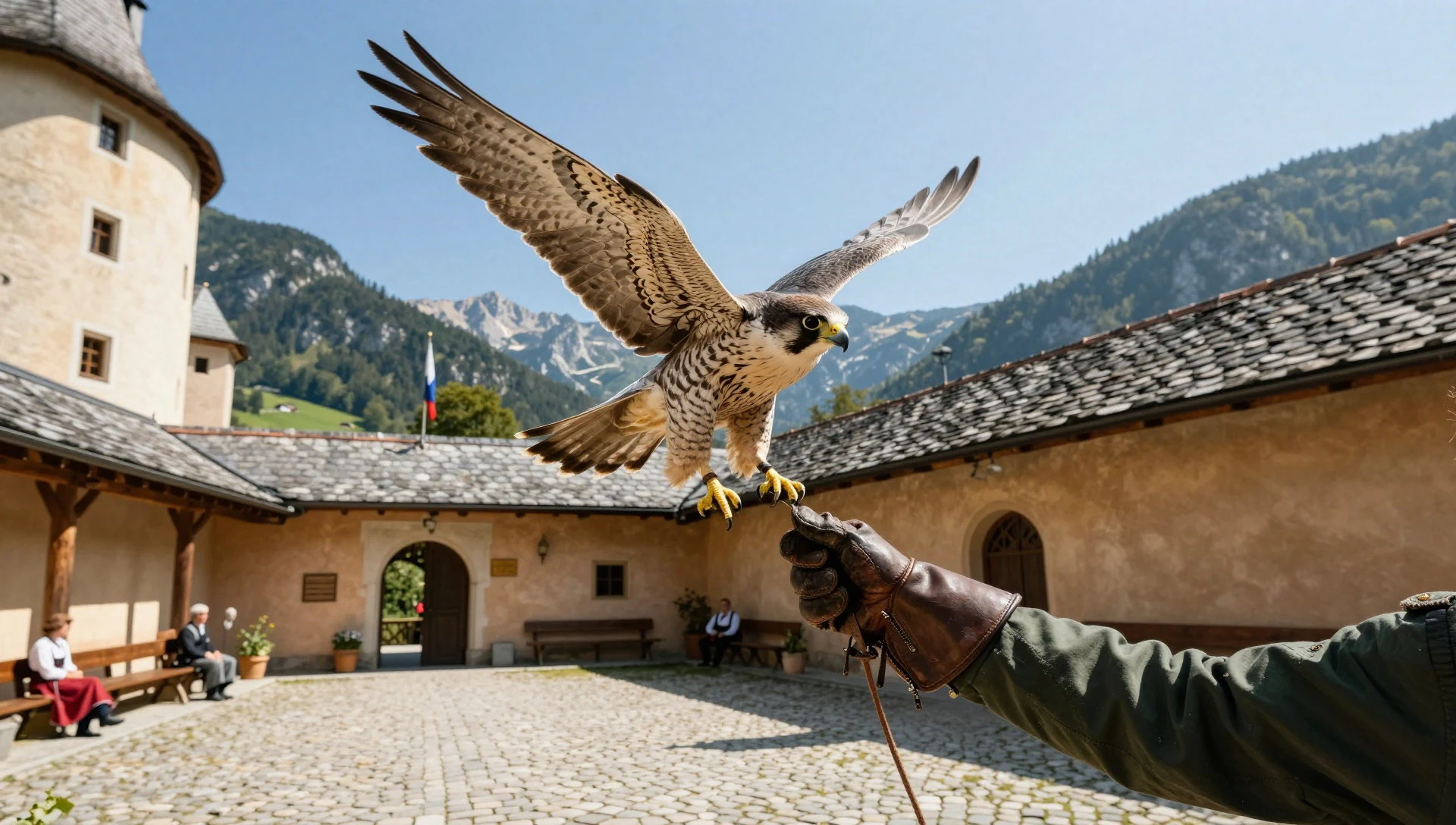
- The weapons collection — Castle museum rooms
Inside the fortress, a large display of arms and armour shows how a mountain stronghold was defended and equipped. Crossbows, polearms and firearms fill the cases. The collection suits anyone curious about military history, and it is useful context for why this rock mattered.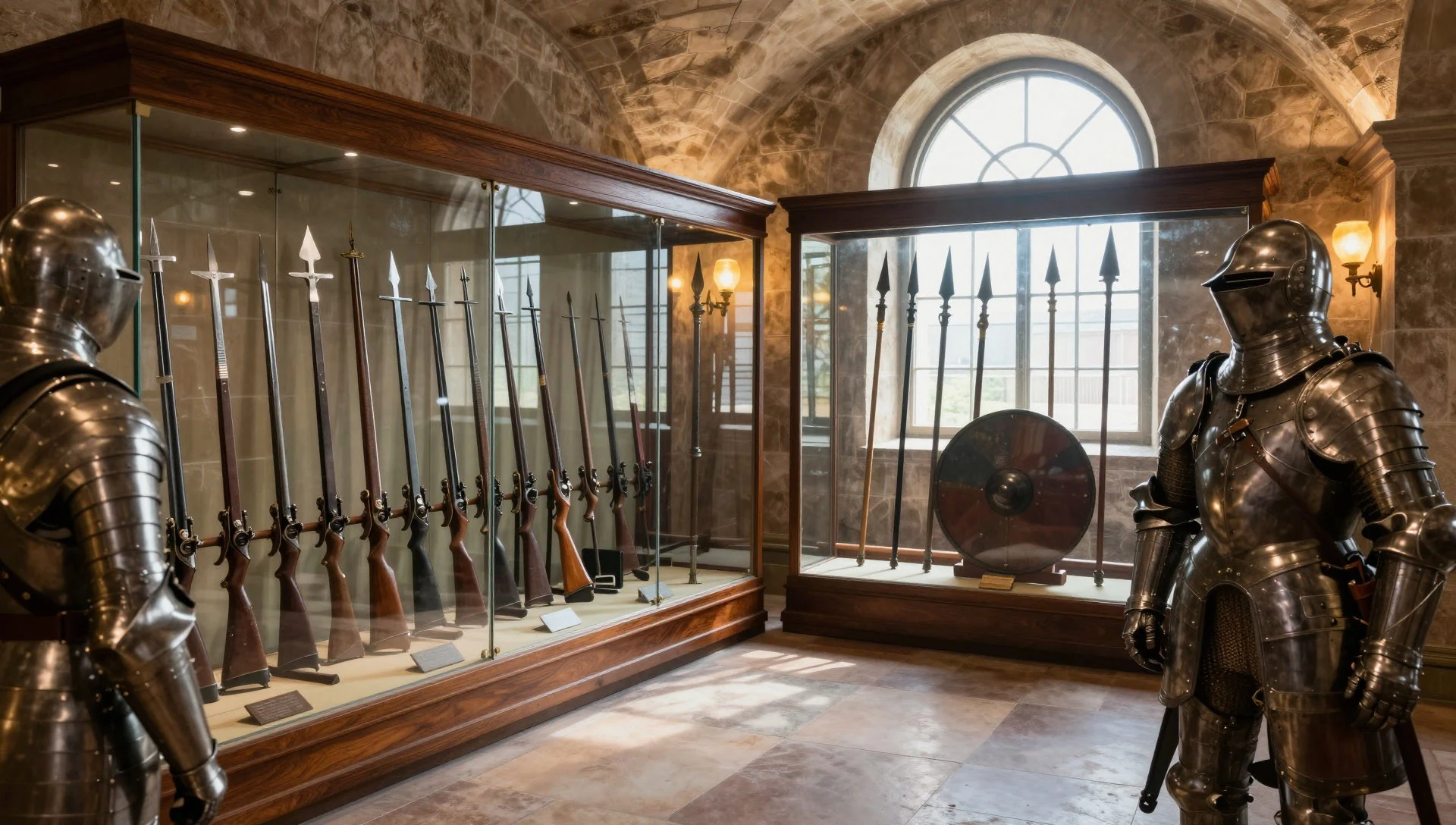
- Prison rooms and castle history — Castle interior
Parts of the museum deal with Hohenwerfen's long life as a state prison, where noblemen and rebels were held in cold, cramped cells. The displays are sober rather than sensational. They are worth the time for the human stories behind the fortress walls.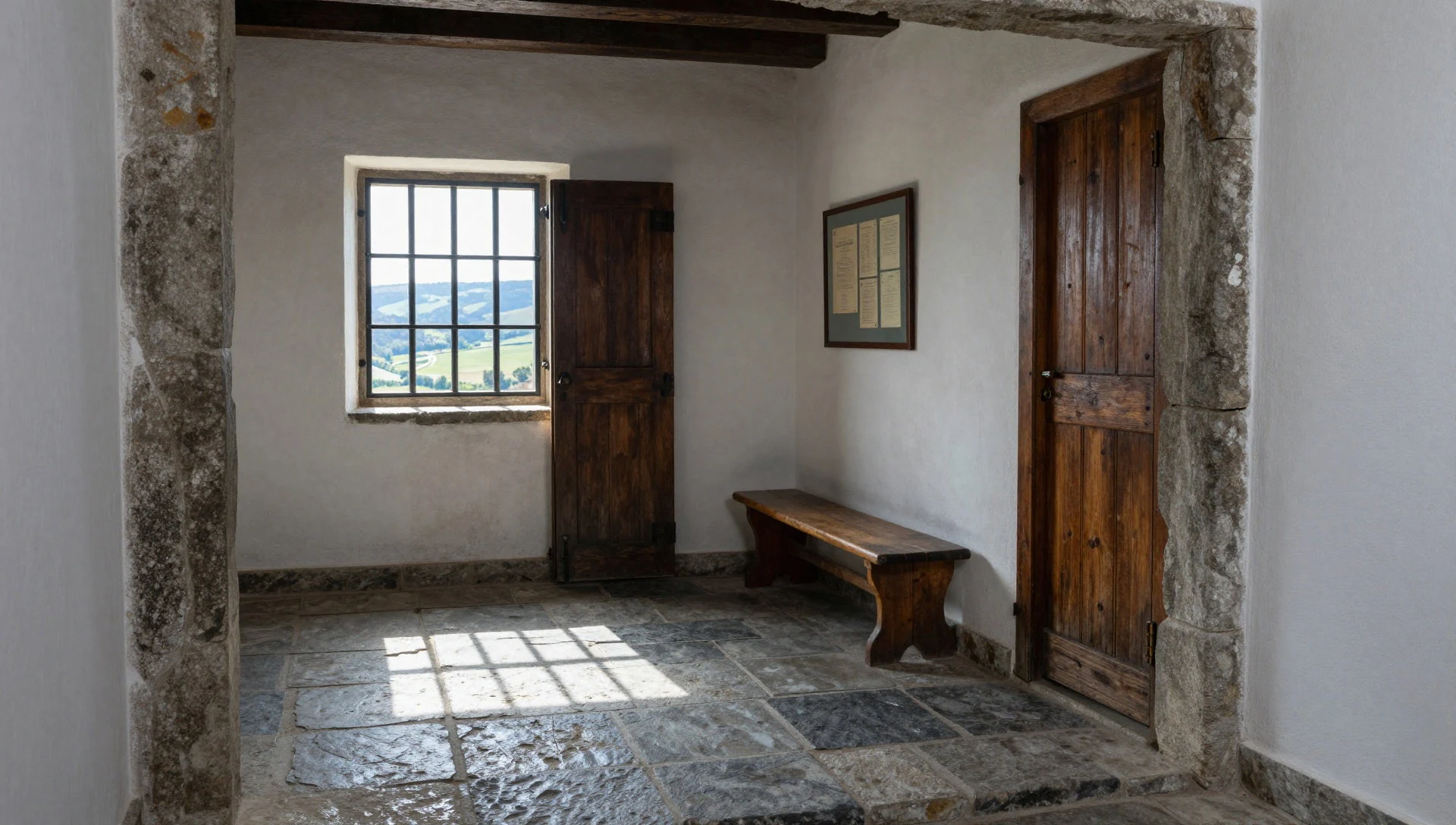
- Ramparts and valley views — Upper castle terraces
From the upper terraces and walls, the Salzach valley stretches out between the mountain ranges, with Werfen's roofs directly below. Late afternoon light softens the limestone. The viewpoints also give the best sense of how the castle commands the route through the valley.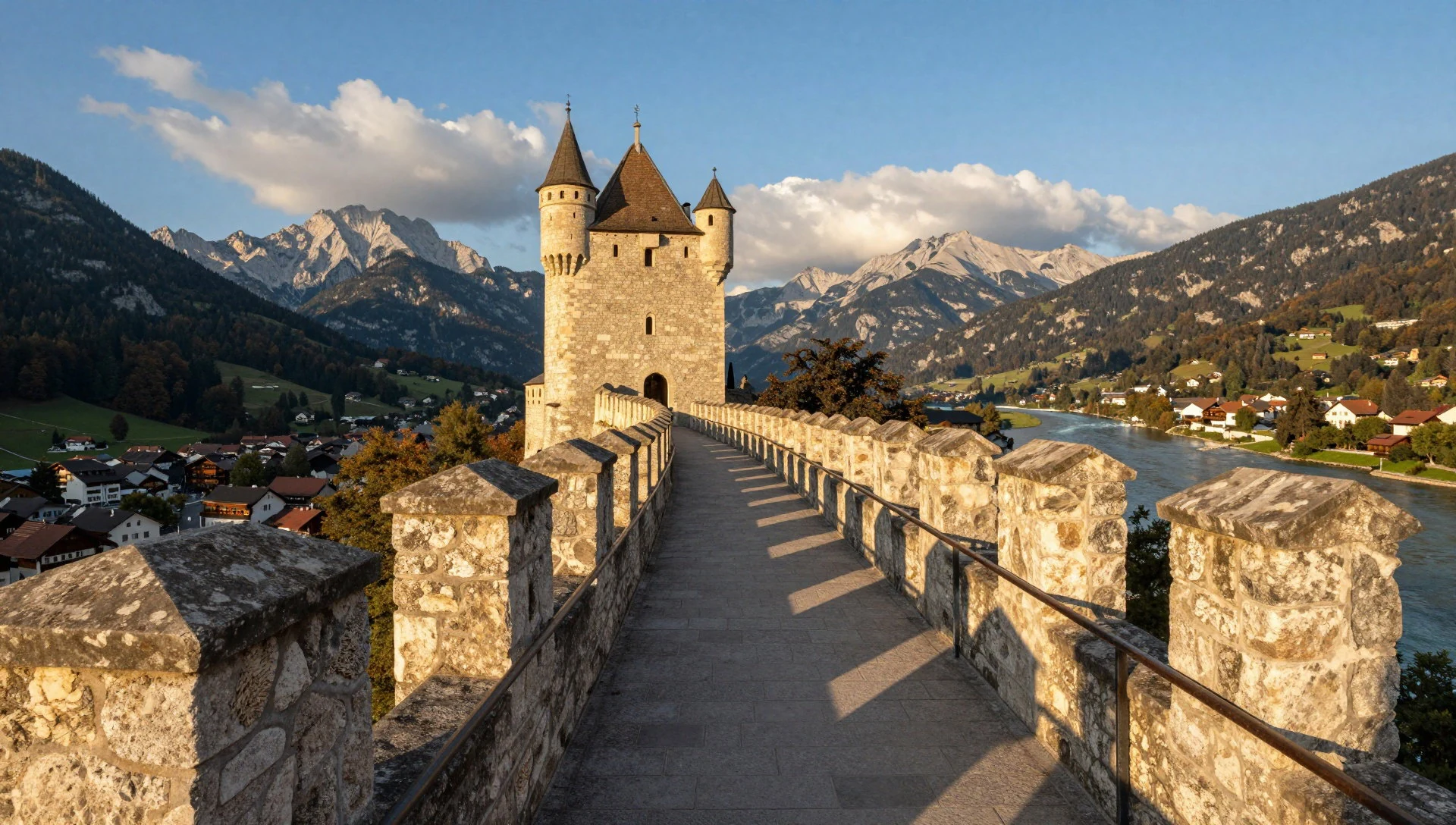
Culture
Hohenwerfen Castle sits in the Catholic, Alpine heartland of Salzburgerland, where village life still follows church holidays, brass bands and seasonal customs. Greetings are friendly and unhurried: a simple Grüß Gott or Guten Tag on entering a shop, guesthouse or small museum is the norm, and it is taken as basic politeness. The castle itself carries a heavy history. It was a seat of power for the archbishops, a prison for noblemen and rebels, and later a Nazi training school, and the museum treats these chapters seriously. Visitors tend to move through the rooms quietly and read the panels. Falconry is a living tradition across the Alpine countries and Central Europe, rooted in the hunting culture of courts like the archbishops', and the demonstrations here continue that heritage with trained birds rather than staged spectacle. Werfen is a working market town rather than a resort, so evenings are early and quiet, and Sunday opening hours in shops are limited. Alpine regions also value punctuality, so guided tours and shows generally start on time. Mountain weather can turn quickly, and locals plan around it with sensible kit. Stay behind the barriers during the falconry flights, keep your voice low so the birds are not startled, and follow the handlers' instructions.
What to wear
Around Hohenwerfen Castle, the traditional dress is Tracht, the Alpine costume of Salzburgerland. Women wear the dirndl, a fitted bodice and full skirt in cotton, linen or silk, topped with an apron whose bow position is a long-standing local signal. Men wear Lederhosen of tough leather, often with embroidered braces, plus checked shirts and a Janker, a jacket of boiled wool or loden, the dense water-resistant cloth made in the Alps. Felt hats, sometimes with a feather or badge, complete the outfit. Tracht comes out for church festivals, weddings, brass-band parades and harvest celebrations, and many people also keep a toned-down version for ordinary Sundays. Everyday clothing in Werfen is practical: jeans, fleece, walking boots and waterproof jackets, since many locals hike, ski or work outdoors. Visitors should dress for mountain weather and for stone. The climb to the castle is steep, with cobbles and uneven steps, so closed shoes with good grip suit better than sandals. Bring layers, because the valley can be cool in the shade even in summer, and carry a rain jacket and sun hat. The castle has no dress code, but if you step into a village church, cover bare shoulders and remove any hat.
What to eat
- Salzburger Nockerl — Traditional inns and café-restaurants in Werfen and Salzburg
A tall, airy baked soufflé of egg whites, sugar and a little flour, traditionally shaped like the hills of Salzburg and served warm. It is sweet and meant for sharing. Look for it in traditional Gasthäuser and café-restaurants in Werfen or Salzburg.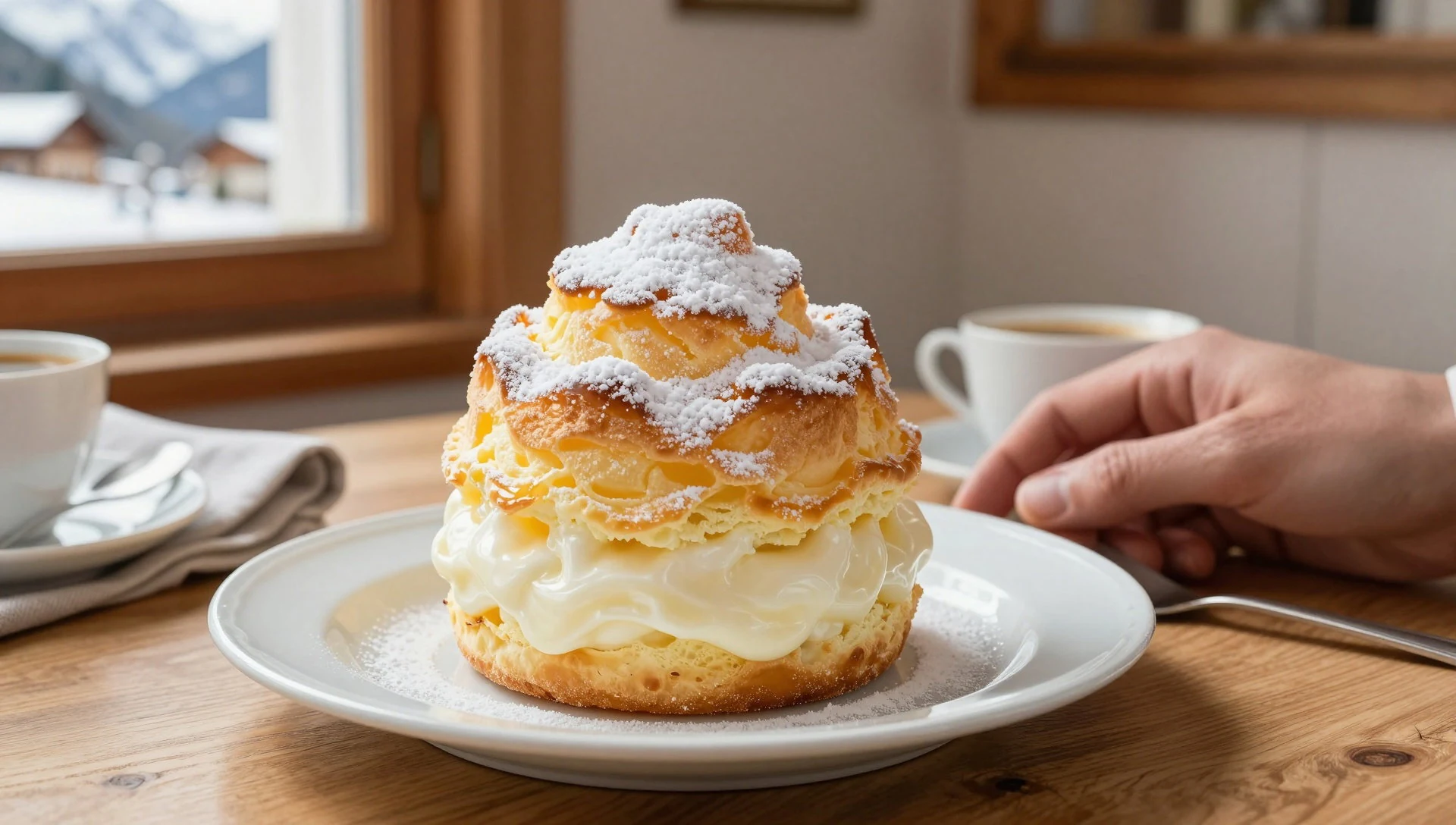
- Kasnocken — Alpine inns and mountain huts in the Salzach valley
Small, soft dumplings tossed with melted Alpine cheese and topped with crisp fried onions, often served with a green salad. The Pinzgau valley is known for it. It is hearty, filling food after a day of climbing and walking.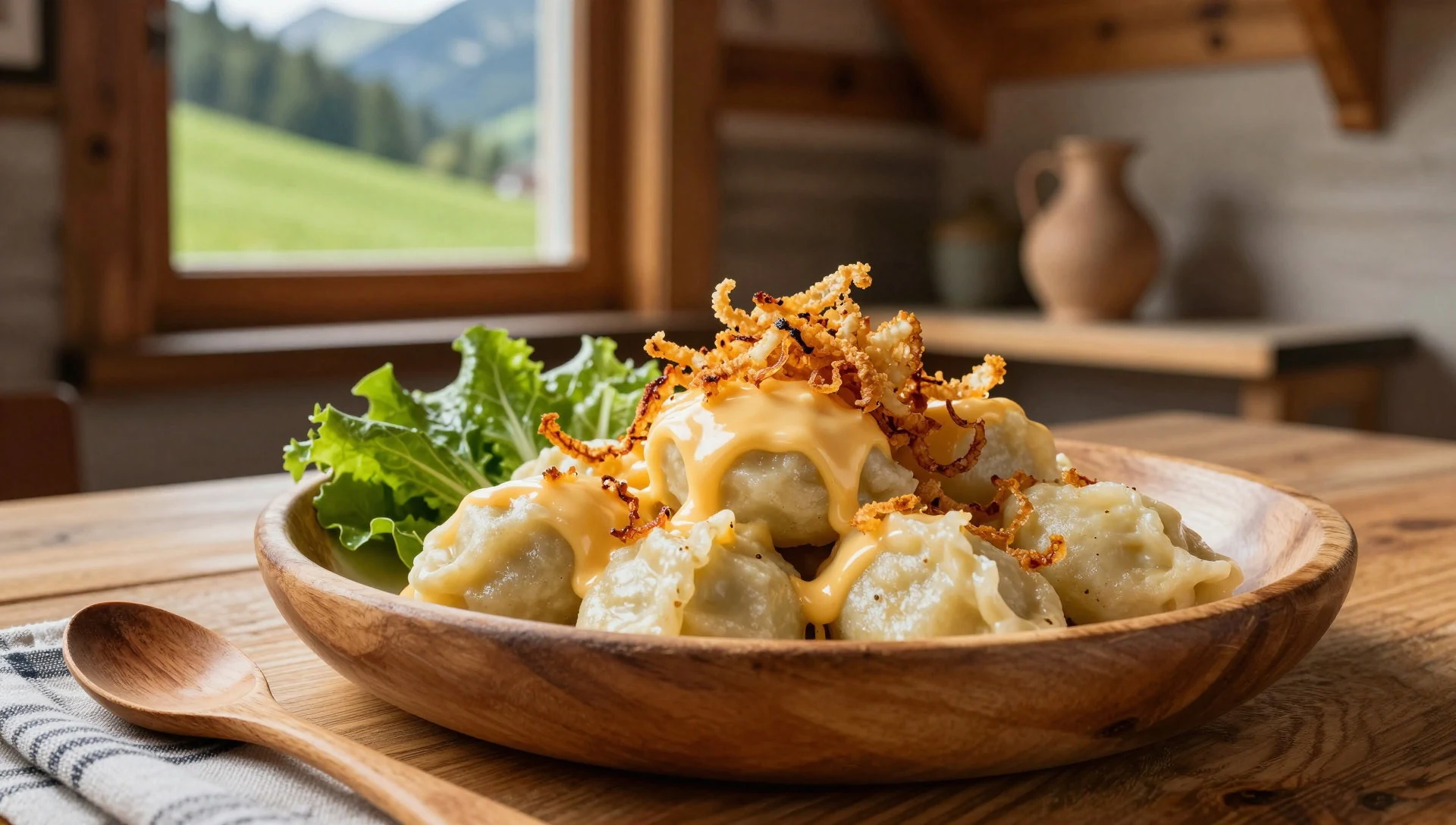
- Brettljause — Farm shops and rustic inns around Werfen
A wooden board of cured ham, smoked sausage, farmhouse cheeses, pickles, horseradish and dark bread, eaten at a relaxed pace with beer or apple juice. It is the classic Alpine snack, and a good way to taste local producers. - Forelle (river trout) — Gasthäuser and village restaurants near the Salzach
Freshwater trout from the region's streams, usually pan-fried with butter and parsley or served blue, with boiled potatoes. It is light and simple, and the fish tends to be sold locally in season. - Kaiserschmarrn — Mountain huts and traditional inns in the Salzburg Alps
A thick shredded pancake, caramelised in butter and often dotted with raisins, then dusted with sugar and served with plum compote or apple sauce. It is a hearty dessert or even a mountain lunch, and portions are generous.
Plan it
Best time. May to June and September to October, when the valley is green or golden, days are mild and the castle's season is in full swing; July and August are warmest but busiest, and winter brings snow and shorter or reduced opening, so check the official site.
How long. 1–2
Getting there. Fly to Salzburg Mozart Airport, with Munich Airport as a larger alternative. From Salzburg Main Station, take a regional train on the Bischofshofen line to Werfen. The last leg is a short, steep walk up from the village; check the official site for any shuttle.
Budget. mid
Tips
- Go early or late in the day to avoid coach groups, especially in July and August
- Check the official site, https://www.salzburg-burgen.at/de/burg-hohenwerfen/, for current opening dates, ticket options and falconry show times before travelling
- Wear sturdy shoes with grip, as the approach is steep and the stone can be slippery after rain
- Carry some cash and a card, since small village cafés may prefer one or the other
- Pair the castle with the nearby ice caves in the same trip, but book ahead in summer
Etiquette
- Keep to the marked paths and behind barriers, especially around the falconry area
- Greet staff and shopkeepers with a friendly Grüß Gott
- Keep noise low in the museum rooms and listen to guides and handlers
Nearby
Sources
- Wikidata Q877023 (CC0)
- Wikipedia: Hohenwerfen Castle (rev 1365030081) (CC BY-SA 4.0)
- Wikivoyage: Salzburg (state) (rev 5347896) (CC BY-SA 4.0)
- Photo 01: Werfen – Burg Hohenwerfen (1), C.Stadler/Bwag (CC BY-SA 4.0)
- Photo 02: Hohenwerfen castle, Arne Müseler (CC BY-SA 3.0 de)
- Photo 03: Castillo de Hohenwerfen, 2019-05-18, Diego Delso (CC BY-SA 4.0)
- Photo 04: Castillo de Hohenwerfen, 2019-05-17, Diego Delso (CC BY-SA 4.0)
- Photo 05: Castillo de Hohenwerfen, 2019-05-17, Diego Delso (CC BY-SA 4.0)
- Photo 06: Castillo de Hohenwerfen, 2019-05-17, Diego Delso (CC BY-SA 4.0)
- Photo 07: Hohenwerfen Castle (07), Borderman (CC BY-SA 4.0)


