Hochosterwitz Castle
Hochosterwitz Castle, Austria
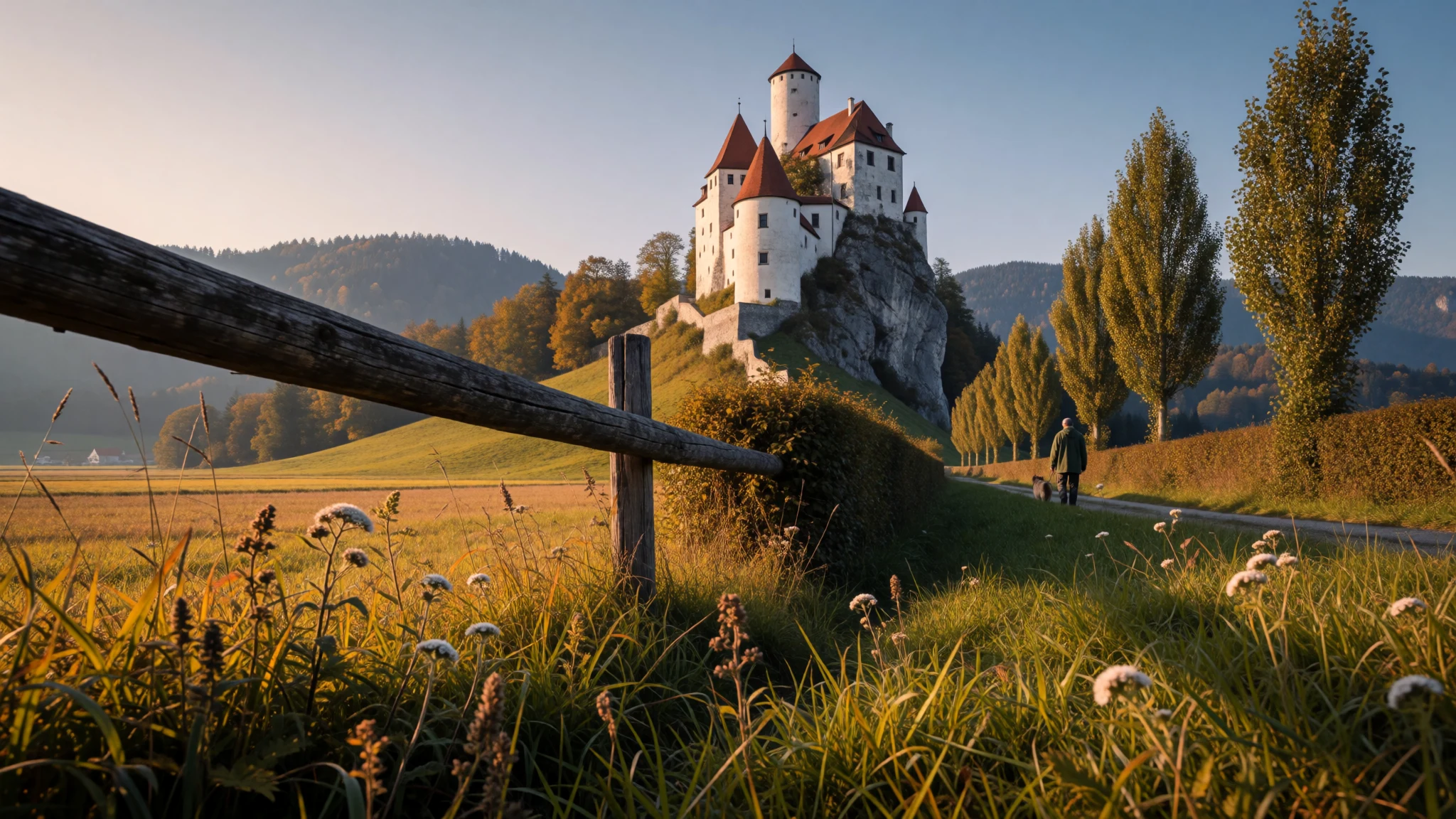
Hochosterwitz Castle stands on a lone dolomite rock in Carinthia, reached by a climb through fourteen gates, and rewards the effort with wide views.
The place
Hochosterwitz Castle (German: Burg Hochosterwitz, Slovene: Grad Ostrovica) sits in Carinthia, southern Austria, on a steep dolomite rock that rises about 172 metres above the surrounding land near Sankt Georgen am Längsee. Wikidata gives its elevation as 670 metres. The town of Sankt Veit an der Glan lies roughly 7 km to the west, and the rock stands on the edge of the old Zollfeld plain, north of the Magdalensberg. Because little else rises nearby, the castle's silhouette is recognisable from about 30 km away on a clear day. Up close it reads as a run of white walls and towers stacked along a narrow ridge, with the main buildings crowning the summit. There is one way up: a path that climbs in turns through fourteen defensive gates, each a chance to stop an attacker. Carinthia itself is mountainous country, with the Alps to the north and the Karawanken range to the south, and it borders both Italy and Slovenia. Its geography has kept it somewhat apart from the rest of Austria, and Carinthians have a name for local pride and for friendliness. Lakes dot the landscape, including the Längsee close to the castle. The setting is rural, green and quiet rather than urban, so a visit is mostly about the walk, the stonework and the view.
Its story
Hochosterwitz Castle stands on a rock that people have used since the Bronze Age, though its written history begins in 860, when Louis the German, ruler of East Francia, gave a bundle of estates in the old principality of Carantania to the Archdiocese of Salzburg. The deed calls the rock Astarwiza, and scholars have argued for Celtic, Slavic and Germanic roots for that name. Salzburg held it until the 11th century, when Archbishop Gebhard passed it to the heirs of Count Siegfried of Sponheim, buying their loyalty in the Investiture Controversy, the long quarrel between popes and rulers over who appointed bishops. After Siegfried's grandson Henry IV became Duke of Carinthia in 1122, the Sponheim family no longer answered to Salzburg. They granted the castle as a fief to the Osterwitz family, household officials who may have been a younger branch of the Sponheims. One of them, Herman, was the duke's hereditary cup-bearer at Sankt Veit, and in 1209 he travelled with Duke Bernhard to Rome for the coronation of Emperor Otto IV. A folk tale also clings to the rock: a siege by Margarethe Maultasch, Countess of Tyrol. The psychologist Paul Watzlawick retold it in his book Change. In the usual version, the defenders, close to starving, fed their last ox and threw it over the wall, and the puzzled attackers decided the castle could outlast them and left. It belongs to legend rather than the record.
What to see
- The path through the fourteen gates — The approach path, Sankt Georgen am Längsee
Hochosterwitz Castle is approached on foot along a single path that zigzags up the rock, with a defensive gate at every stage. The battlements near the base are the first sign of what is to come. The climb takes time, so go at an easy pace, stop often and use the turns to look back over the plain.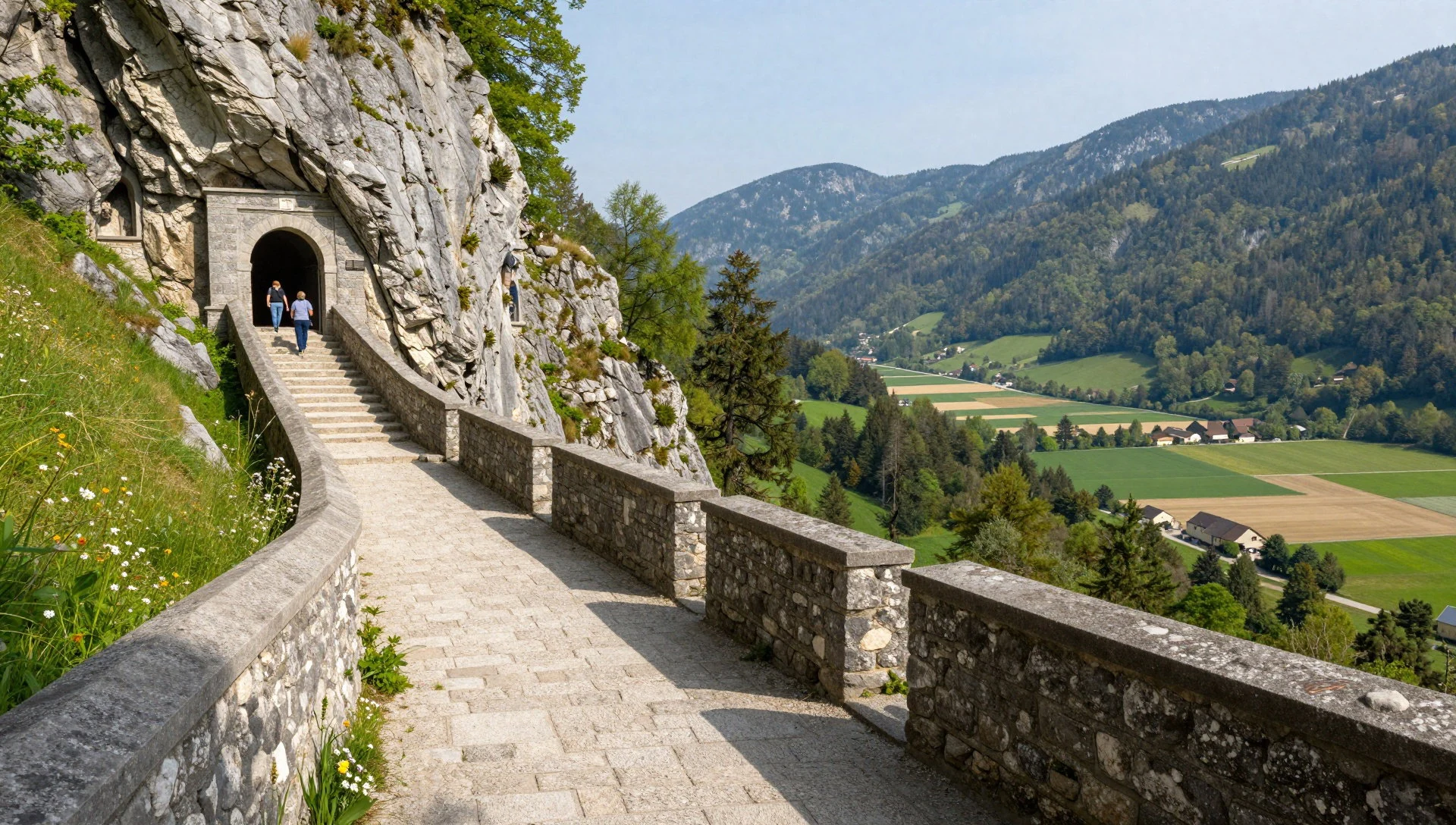
- The summit buildings and courtyard — Castle summit
At the top, the inner buildings of Hochosterwitz Castle gather around a compact courtyard, and the white walls seen from the plain are now close enough to touch. Check the official site for what is open inside, as access varies by season. Even from outside, the courtyard shows how small the last refuge was.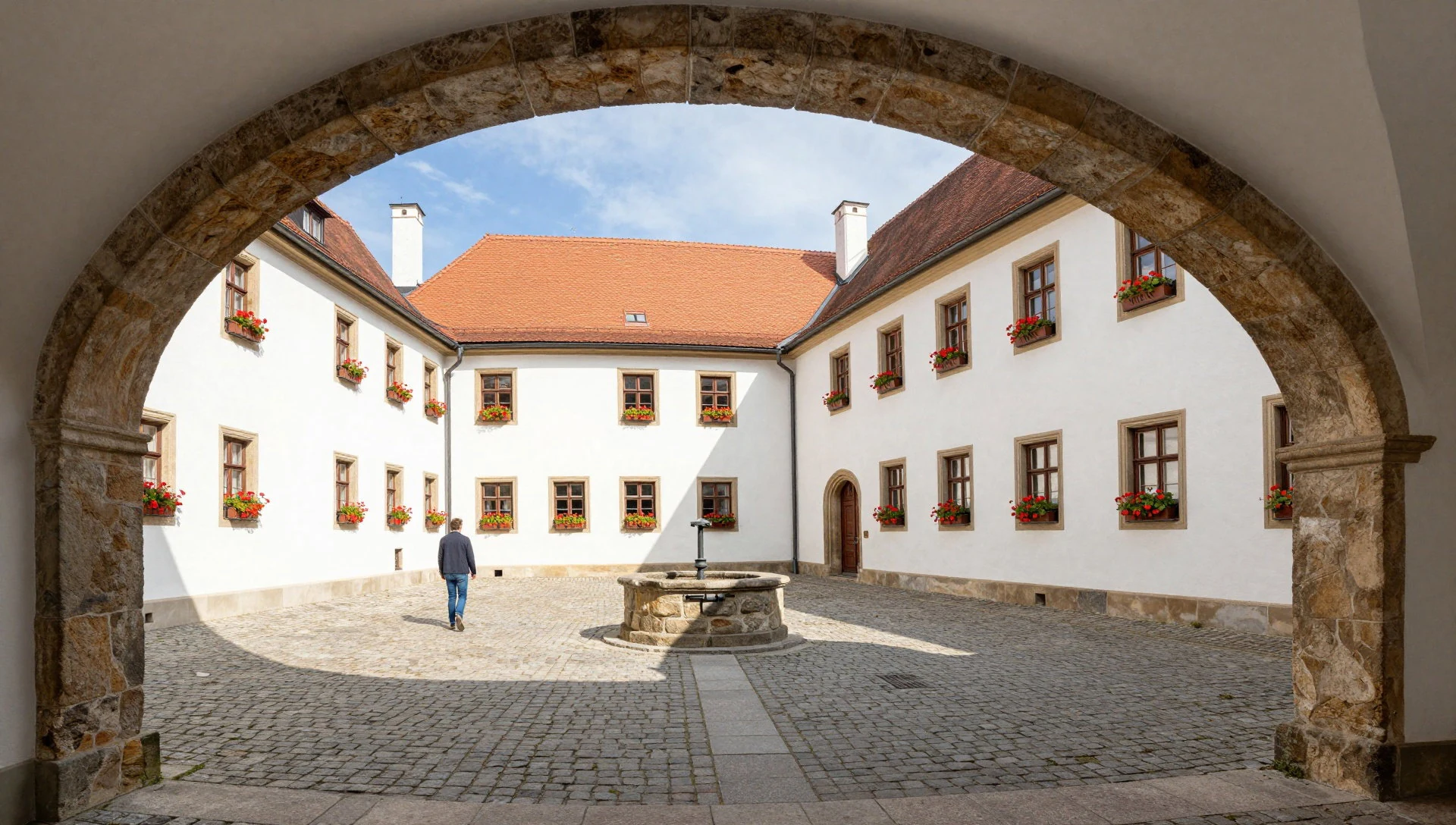
- The view from the top — Castle summit, west and north sides
From the summit of Hochosterwitz Castle the outlook runs across the Zollfeld plain, the lake country and the hills beyond, with mountain ridges on the horizon in clear weather. Haze can flatten the view in summer, so a crisp autumn morning or a day after rain tends to give the longest sightlines.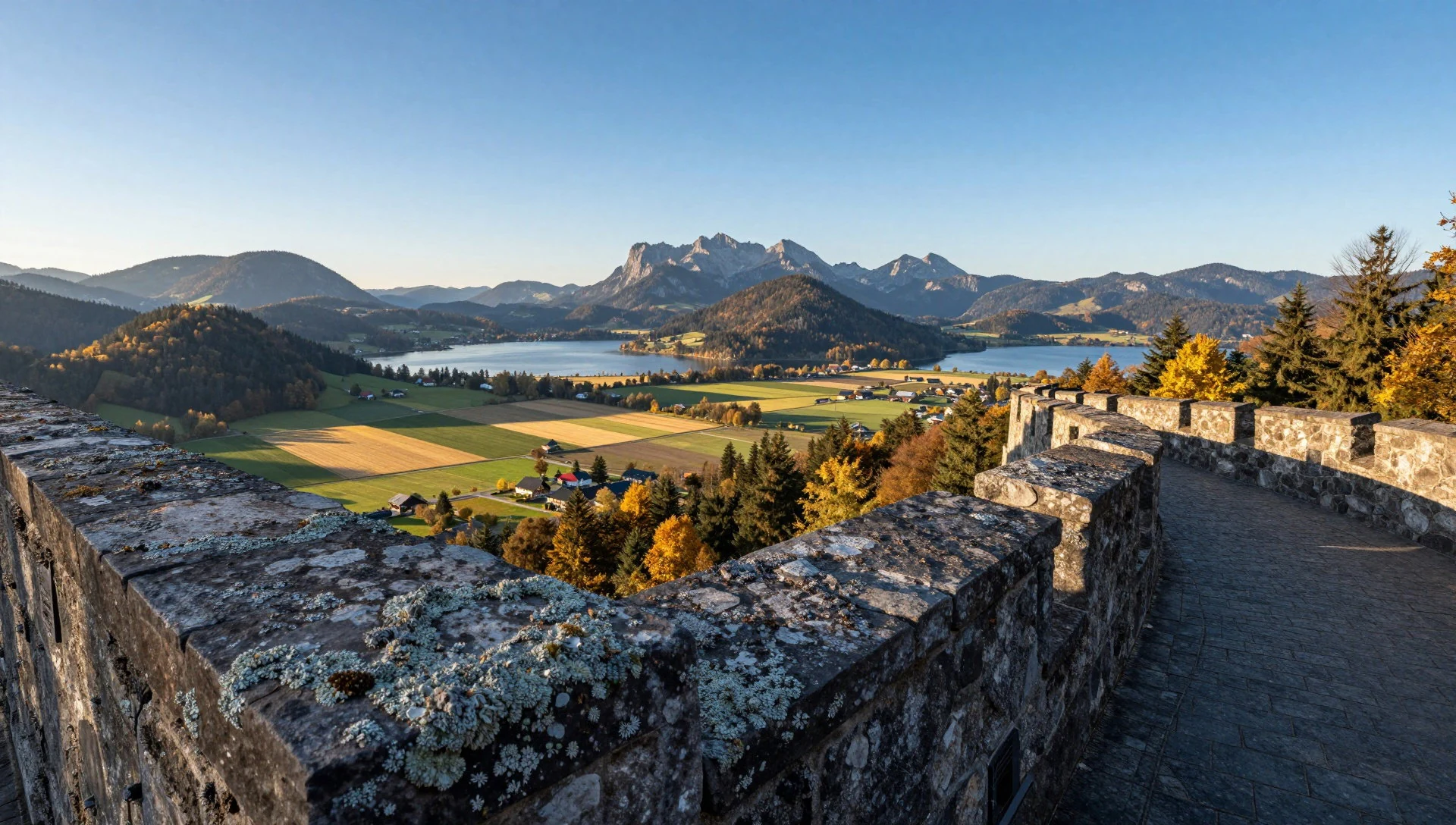
- The castle seen from below — Sankt Georgen am Längsee
The lanes and fields around Sankt Georgen am Längsee give a clear idea of the castle's scale: a single white-walled outcrop with towers along its spine, rising from open farmland. The west side is well suited to photographs. A short walk on quiet roads before the climb is worth the time.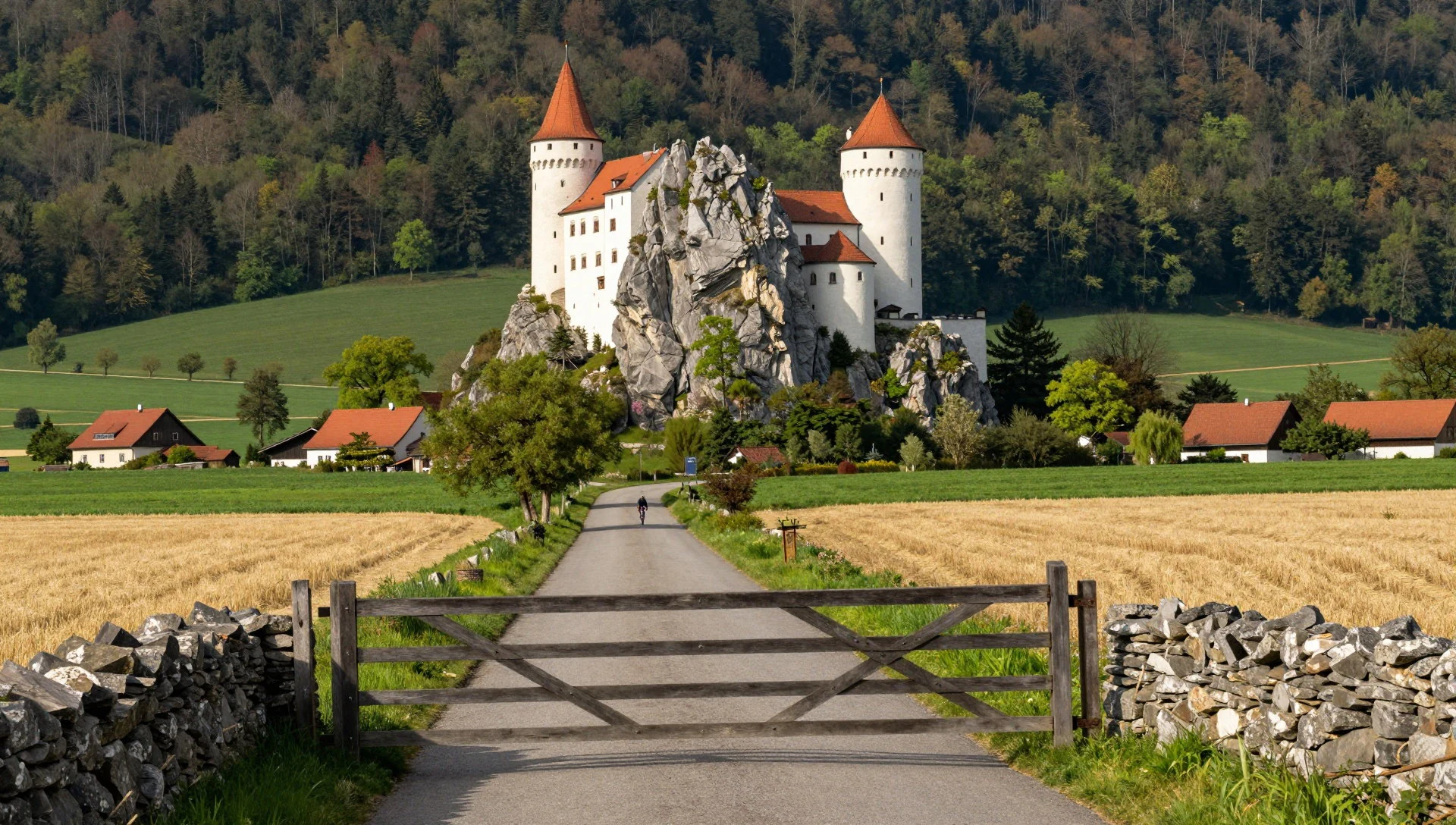
- The castle garden — Within the castle grounds
Hochosterwitz Castle has a small cultivated garden, a calm contrast to the military stonework along the climb. Whether it is open, and when, depends on the season, so check the official website before relying on it. It makes a pleasant pause point once the gates are behind you.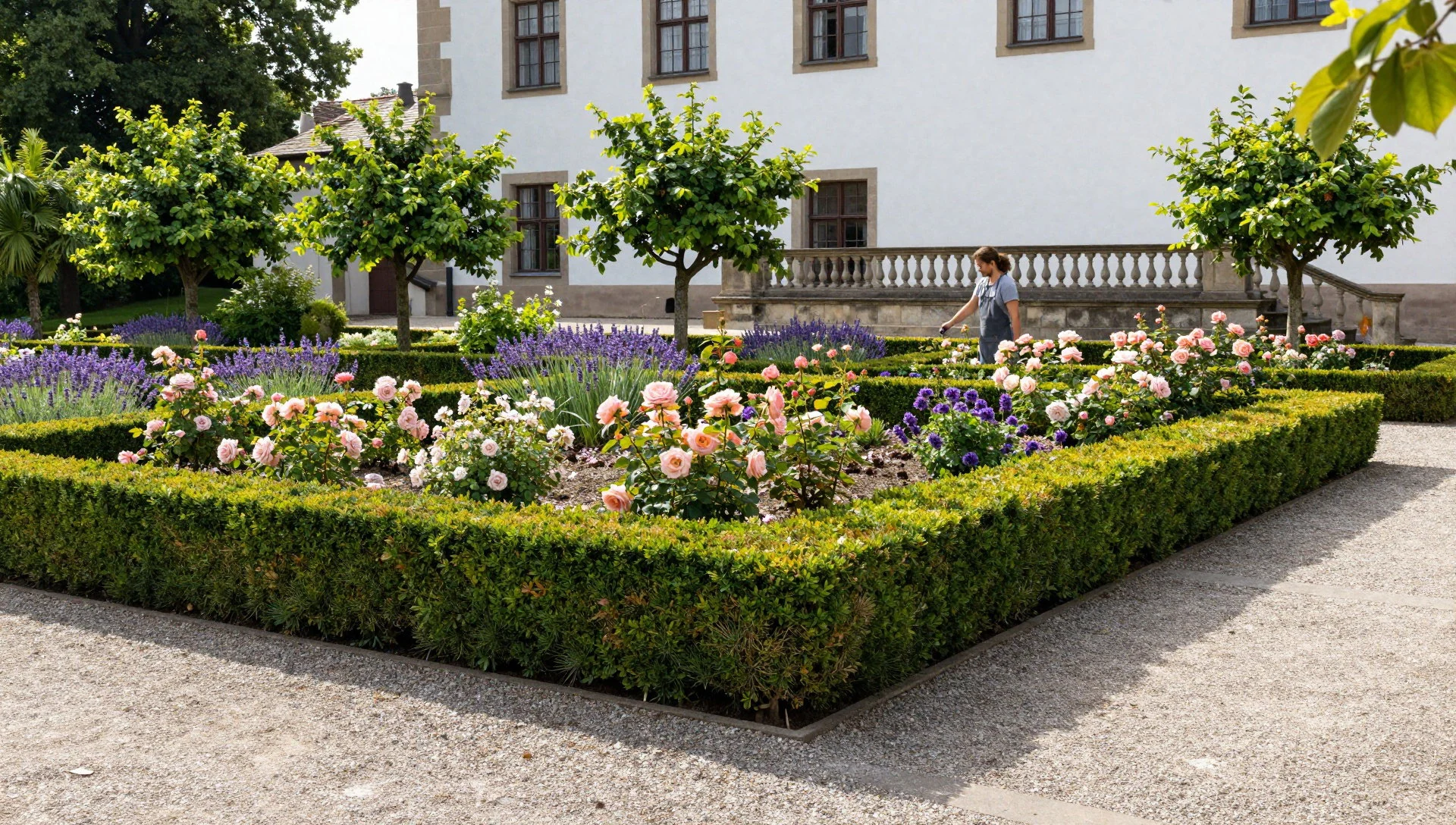
- Landskron ruin — Near Villach
Landskron ruin, a few kilometres from Villach, is a different sort of castle stop: a ruined hilltop fortress known for its birds of prey. It suits a second visit for anyone based in southern Carinthia, though it lies a fair drive from Hochosterwitz Castle, so plan the day around the road.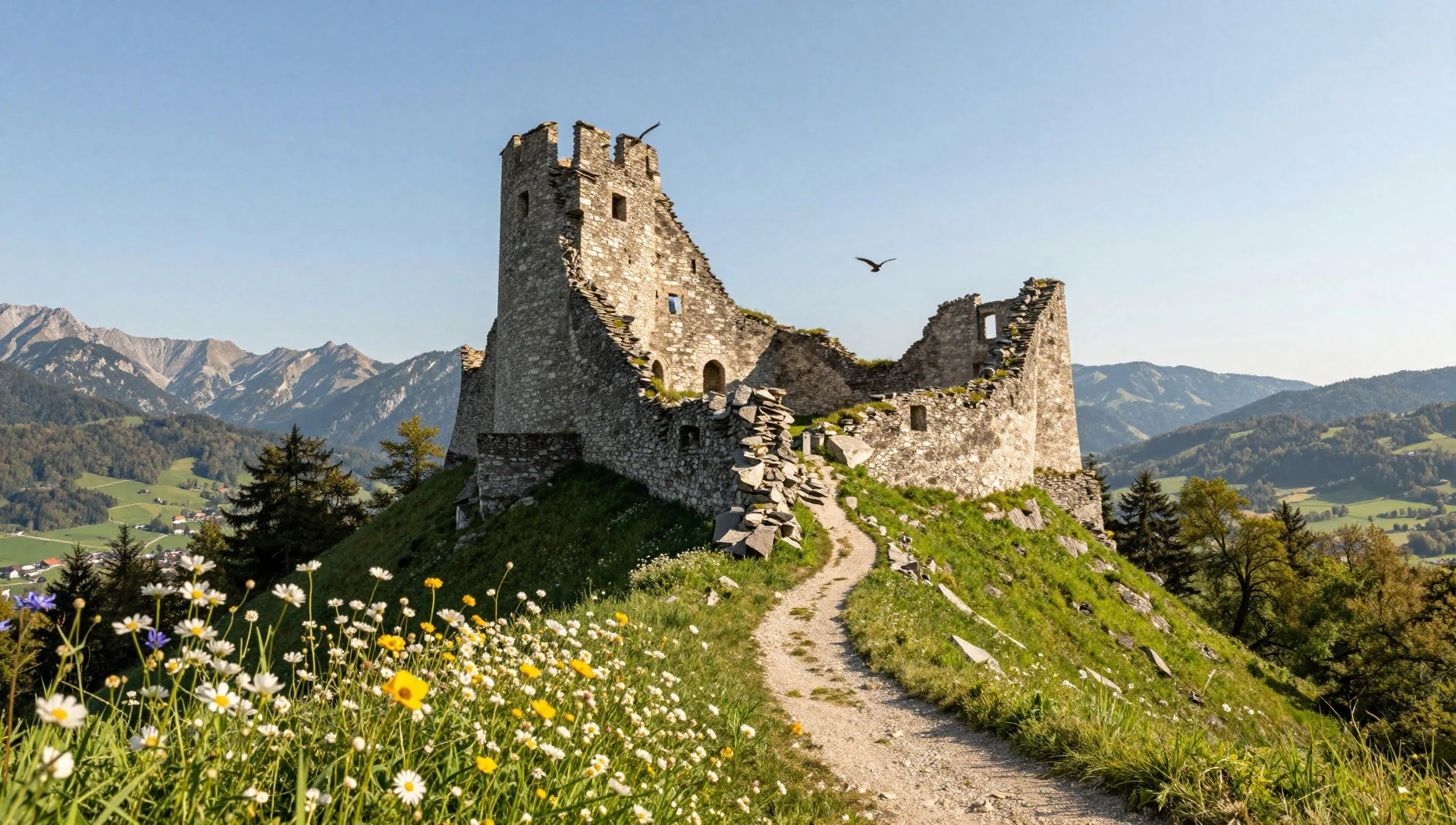
Culture
Hochosterwitz Castle belongs to a corner of Austria with a strong sense of its own identity. Carinthia is hemmed in by the Alps to the north and the Karawanken to the south, and that relative isolation has helped it keep a distinct local character. The castle's Slovene name, Grad Ostrovica, is a reminder that southern Carinthia has long been shared with Slovene speakers, and both Slovenia and Italy are close. Locals are proud of their home and have a reputation for warmth, so a simple German greeting such as Grüß Gott is well received in villages and shops. Everyday culture here follows the church calendar, village festivals, brass bands, hiking and the lakes. Food follows the same pattern, with an Italian-leaning love of filled noodles alongside Alpine cheese and cakes baked for Easter. The castle is a visitor site with its own rules on access and seasons, so check the official website at https://www.burg-hochosterwitz.com/en/ for current guidance before travelling. Keep to the marked path up through the gates, step aside for people coming down on the narrow stretches, and do not climb on the old walls or battlements.
What to wear
Hochosterwitz Castle sits in a region where traditional dress belongs to the wider Alpine Tracht family and still appears on festival days. A well-known men's outfit is the Kärntner Anzug, a suit of grey loden, a dense boiled wool that sheds rain, typically trimmed with green. Women wear the dirndl, a fitted bodice and full skirt with an apron, made in cotton, linen or wool, with silk or brocade for special occasions, and a Trachtenjanker, a short jacket, when it turns cool. These clothes come out for church feasts, weddings, village fairs and brass band performances rather than for daily life. Day to day, people in Carinthia dress for the outdoors: practical jackets, fleeces, jeans and walking boots, with something smarter for restaurants and church. Visitors should dress for a steep walk. Wear shoes with real grip, since the path is stone and can be slick after rain, plus layers for a cool breeze at the summit, a hat and sun protection in summer, and a waterproof for sudden showers. In winter, add warm socks and boots for ice. There are no strict modesty rules at the castle, but in a village church, cover bare shoulders and keep voices low.
What to eat
- Kasnudel — Village inns and country eateries across Carinthia
Kasnudel are filled noodles, stuffed with potato, soft white cheese and aromatic herbs including black spearmint, then served with hot melted butter. The filling differs from kitchen to kitchen, as nearly every Carinthian cook keeps a private recipe.
- Kletzennudel — Traditional country inns and village cafés
Kletzennudel are sweet noodles filled with dried pears, a reminder that Carinthian cooking leans towards Italian pasta traditions. They suit the end of a meal or an afternoon stop, and are best sampled where a kitchen makes them in-house.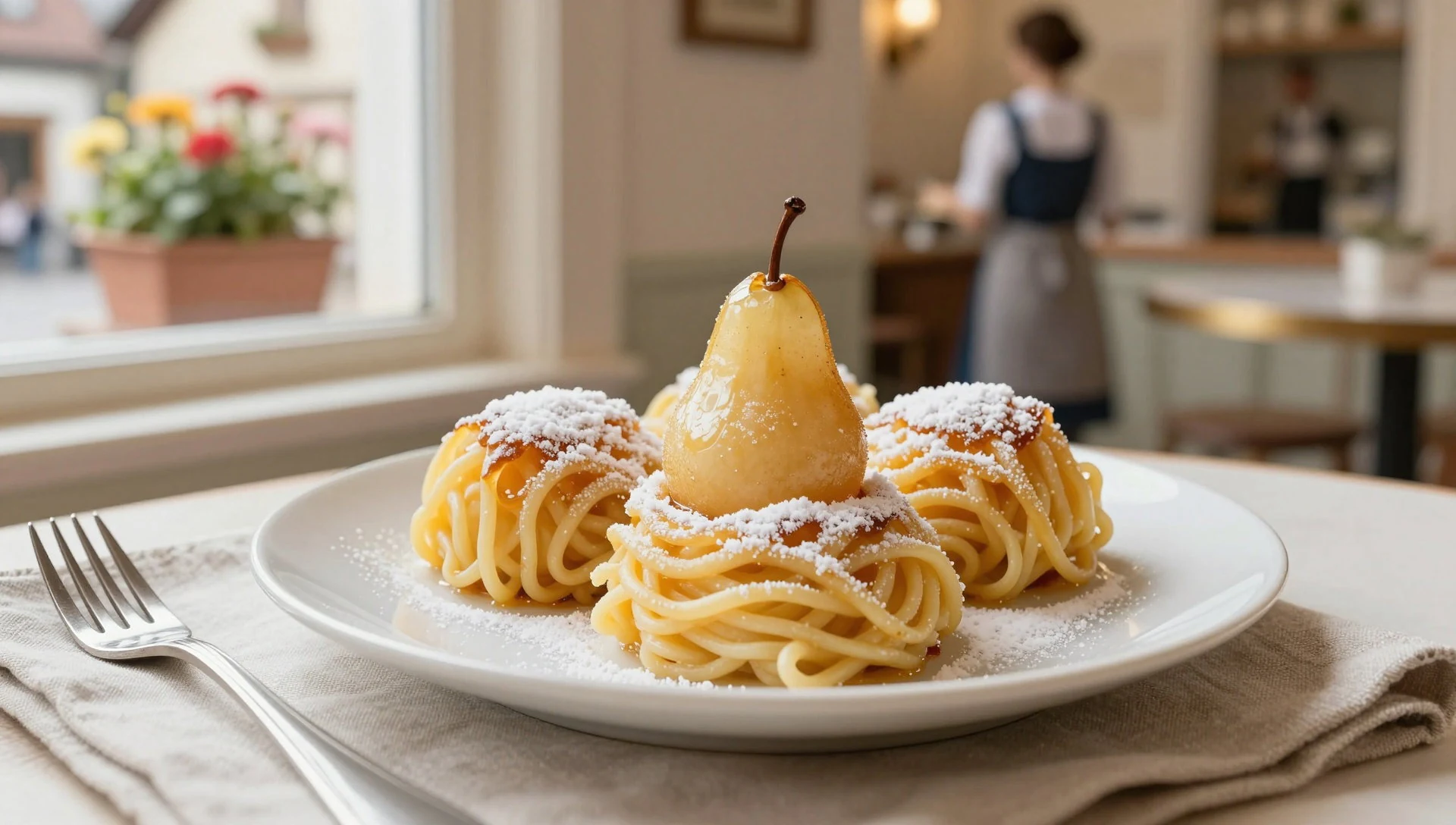
- Glundner Kas — Farm shops, local markets and country inns
Glundner Kas is a cooked cheese made from mature curd cheese and butter, seasoned with caraway. It has a sharp, savoury character and is typically eaten with bread as a simple snack or part of a cold platter. - Reindling — Village bakeries, especially in the weeks around Easter
Reindling is a yeasted cake rolled around raisins, sugar and cinnamon, baked above all around Easter. Slices are sweet, soft and fragrant, and the cake is easy to carry, so a bakery slice makes good fuel for the climb up to the castle. - Hirter beer — Local inns and beer gardens
Hirter Pils and Hirter Märzen come from a brewery at Hirt, near Friesach, and turn up in local inns. In Villach the local pick is Villacher beer. Both suit a long lunch after the climb.
Plan it
Best time. Late spring and early autumn, roughly May–June and September–October, for comfortable walking weather and clear views. July and August can be hot on the exposed climb. Winter can bring snow and ice to the path, and opening dates change, so check the official site first.
How long. 1
Getting there. Klagenfurt and Villach are the main rail gateways in Carinthia, with trains from Vienna and Graz about every two hours. From there, continue towards Sankt Veit an der Glan or Sankt Georgen am Längsee, where the castle is a short last leg by car or taxi; check local bus options. For flights, Ljubljana has wide international connections, and Graz airport is a little over an hour by car from eastern Carinthia. By road, take the A2 motorway from Vienna or Styria.
Budget. mid
Tips
- Check the official website, https://www.burg-hochosterwitz.com/en/, for opening dates and ticket details before setting out
- Start early: the climb has little shade and the light is better in the morning
- Wear shoes with grip and carry water for the walk up through the gates
- Carry some cash as well as a card for small village eateries
- Allow time for the climb and the summit rather than treating it as a quick photo stop
Etiquette
- Keep to the marked path and step aside on narrow stretches for people coming down
- Do not climb on or lean over the old walls and battlements
- Greet people with a simple Grüß Gott in village shops and inns
Nearby
Sources
- Wikidata Q679248 (CC0)
- Wikipedia: Hochosterwitz Castle (rev 1379819726) (CC BY-SA 4.0)
- Wikivoyage: Carinthia (rev 5368128) (CC BY-SA 4.0)
- Photo 01: West view of Hochosterwitz Castle, C.Stadler/Bwag (CC BY-SA 4.0)
- Photo 02: West view of Hochosterwitz Castle, C.Stadler/Bwag (CC BY-SA 4.0)
- Photo 03: Hochosterwitz Castle, Marek (CC BY 3.0)
- Photo 04: View northwest from the top, Barry Lawrensen (CC BY 3.0)
- Photo 05: Battlements at the start of the path, Basianov (Public domain)
- Photo 06: Castle Hochosterwitz, Johann Jaritz (CC BY-SA 1.0)
- Photo 07: Castle Hochosterwitz, Johann Jaritz (CC BY-SA 4.0)
- Photo 08: Garden of Hochosterwitz Castle, Marek (CC BY 3.0)


