Forchtenstein Castle
Forchtenstein Castle, Austria
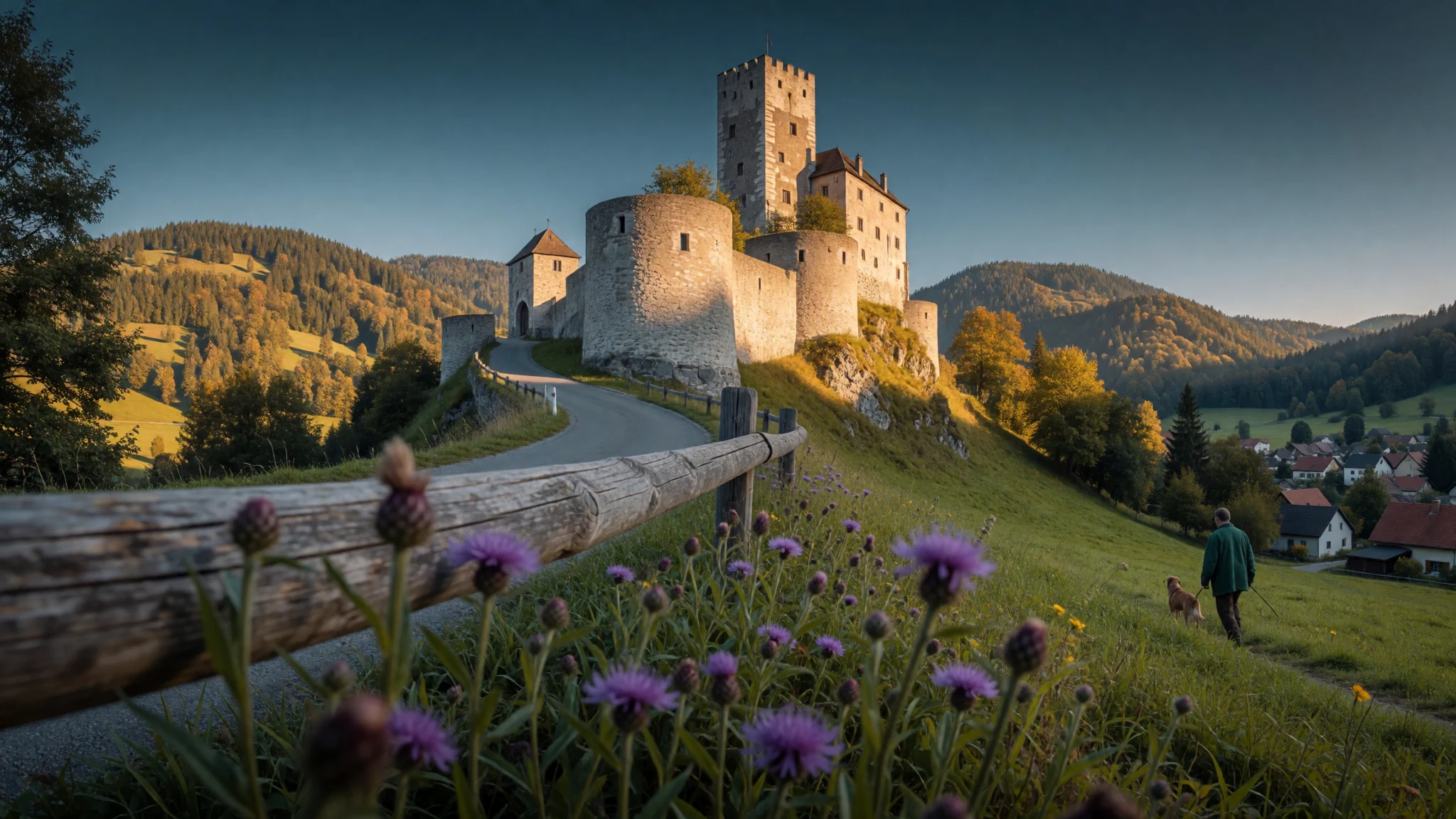
Forchtenstein Castle is a fortress-turned-treasure-house on a Burgenland hill, with a legendary prison tower, Italian-cut stone and quiet wooded country around it.
The place
Forchtenstein Castle stands on a rocky spur in northern Burgenland, Austria, above the Wulka valley and south of the town of Mattersburg. The facts record its elevation as 533 metres, enough to lift the walls clear of the farmland and give long views towards the Hungarian plain. The village of Forchtenstein gathers below, and the wooded Rosalia hills close in behind. Burgenland is an unusual province: very long from north to south, only a sliver from west to east, and Hungarian territory for centuries. That history explains the castle's other names, Fraknó vára in Hungarian and Fortnavski grad in Croatian. Austria took the territory over after the First World War, and Hungarian and Croatian communities remain. Wikidata classes the building as a castle, an art museum and a military museum, and the mix is fair: this is a fortress that doubles as a family strongroom, with weapons, art and heirlooms behind thick walls. Northern Burgenland is the better connected part of the province and close enough to Vienna for a day trip, although public transport between north and south is thin. The castle suits people who enjoy stone, armour and views more than gilded salons. The village is small, and crowds are rarely a problem outside summer weekends and school holidays. The hill can be windy and cool in spring and autumn, so a spare layer is sensible for the walk up to the gate.
Its story
Forchtenstein Castle began as a noble family's stronghold. The Lords of Mattersburg raised its first part, including a keep about 50 metres tall, and later took the name Lords of Forchtenstein. When the male line died out, the castle passed to the Habsburgs, who held it for 170 years but mostly leased it to others, so the building changed little. The turning point came in 1622, when Emperor Ferdinand II gave it to Nikolaus Esterházy, who was made a count and founded the western Hungarian branch of his family. The Esterházys strengthened the crumbling walls and made the castle a secure home for their valuables. The Ottoman threat from the east shaped this whole border country, so the work was about bastions and gates more than decoration. Italian builders carried it out, including Simon Retacco and later Domenico Carlone. Their stone came from the imperial quarry at Kaisersteinbruch, where masters such as Ambrosius Petruzzy, Pietro Maino Maderno and Mathias Lorentisch supplied portals, fountains and even cannonballs. A darker legend clings to the Black Tower. Its dark facing stone has long been stripped away, but inside is a pit about 12 metres deep, said to have held prisoners condemned to die. Folklore names Rezallia, wife of Lettus of Forchtenstein, as its frequent user, until her husband came home from service and sentenced her to the same pit. History or story, the tale is what guides are asked about most.
What to see
- The keep and Black Tower — Forchtenstein castle summit
The tall keep is the oldest part of Forchtenstein Castle and the best place to start. Look for the stripped patches where dark facing stone once covered the Black Tower, then ask staff about the deep pit inside, which carries the legend of Rezallia. Check the official site for which parts can be entered.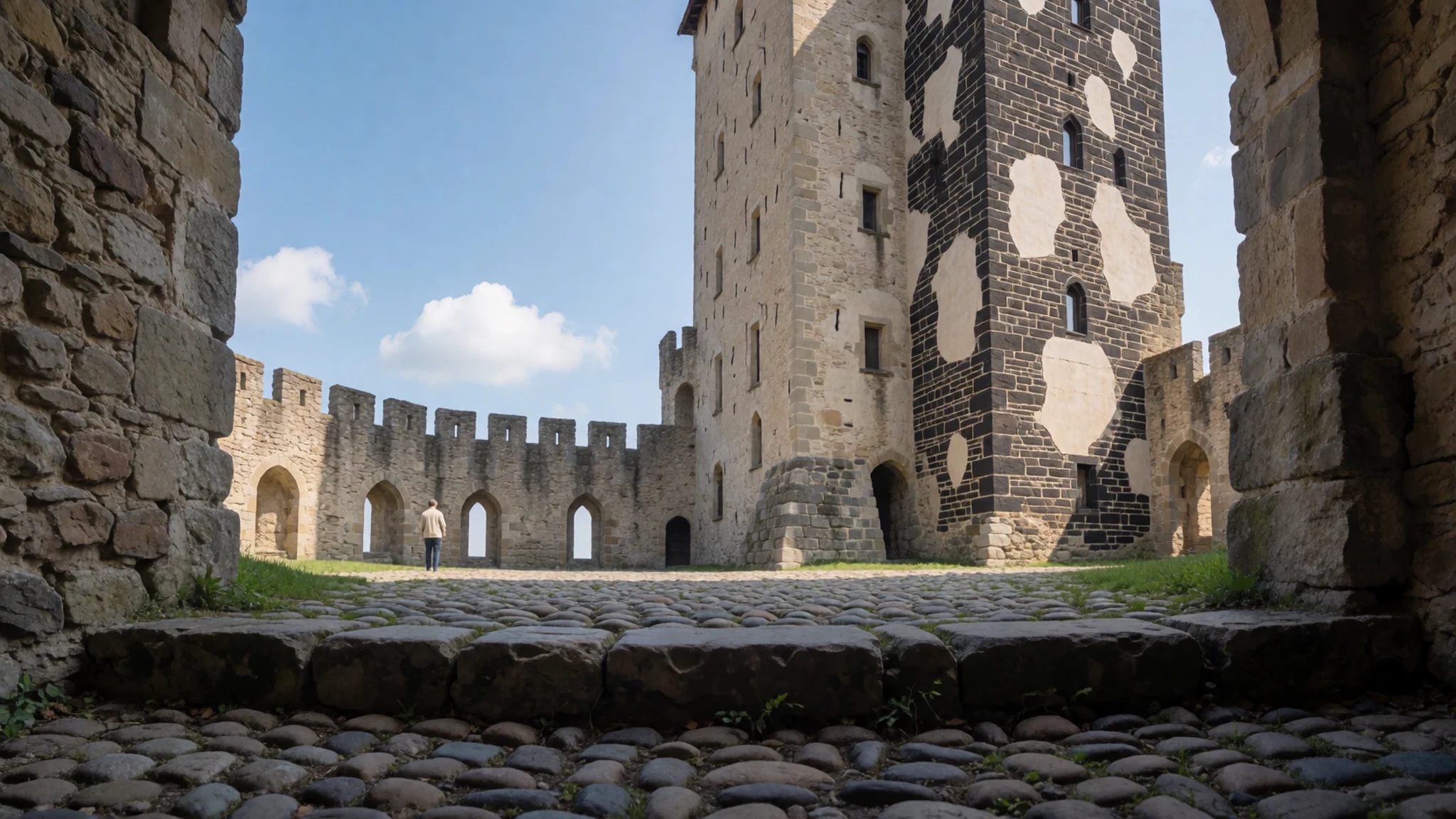
- Courtyard portals and fountains — Inner courtyard
Much of the Esterházy-era stonework is easiest to appreciate at close range. The main portals and fountains were cut from Kaiserstein limestone by masters trained in the Italian tradition, and their crisp carving contrasts with the plain defensive walls around them. Allow time to circle the courtyard slowly and look up at the details.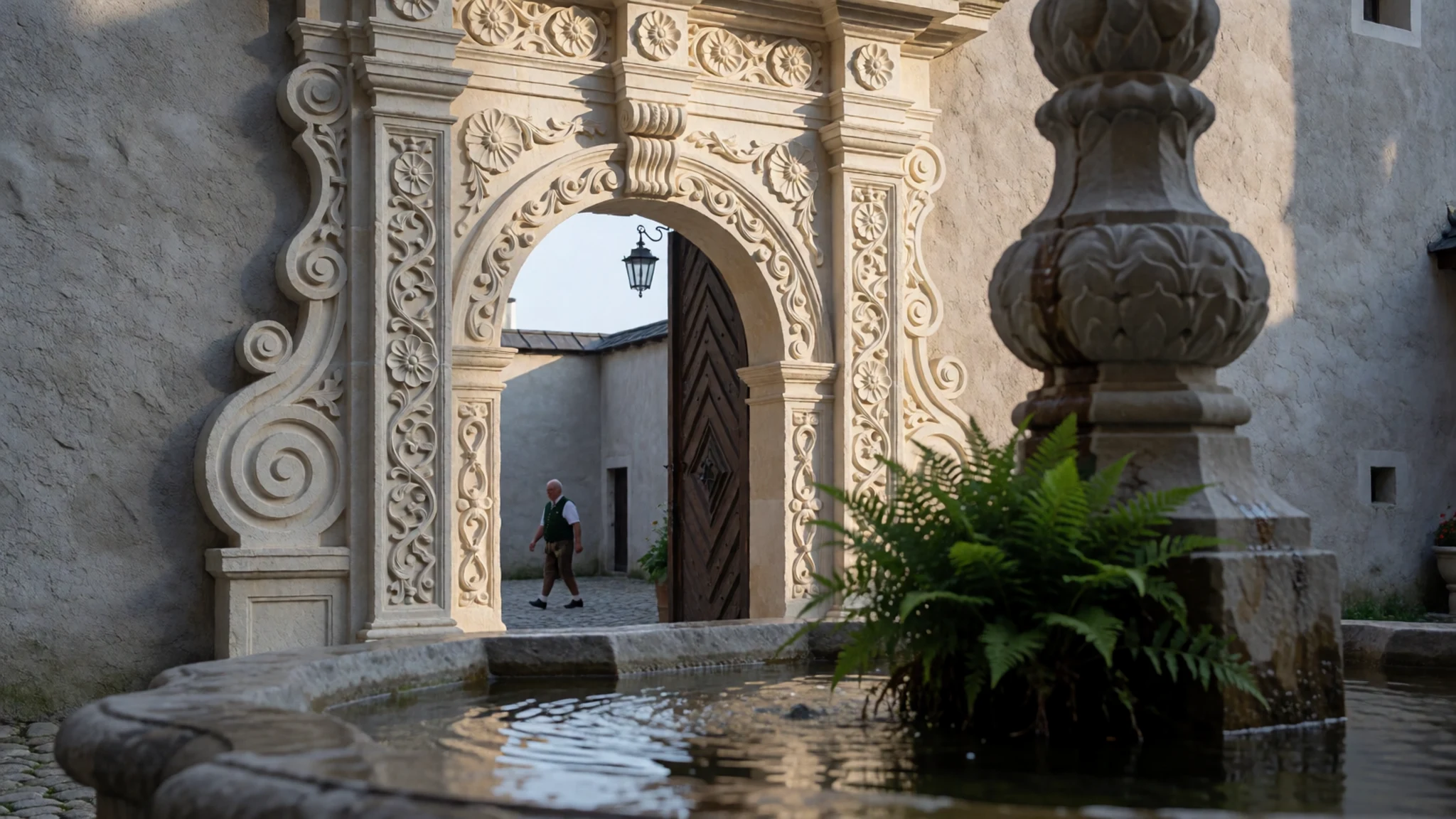
- Armoury and treasure collections — Castle interior
Because the castle is both a military museum and an art museum, its rooms hold arms, armour and family treasures gathered by the Esterházys over generations. It is a collection that rewards patience rather than speed. Opening seasons and guided-tour arrangements change, so check the official site before travelling.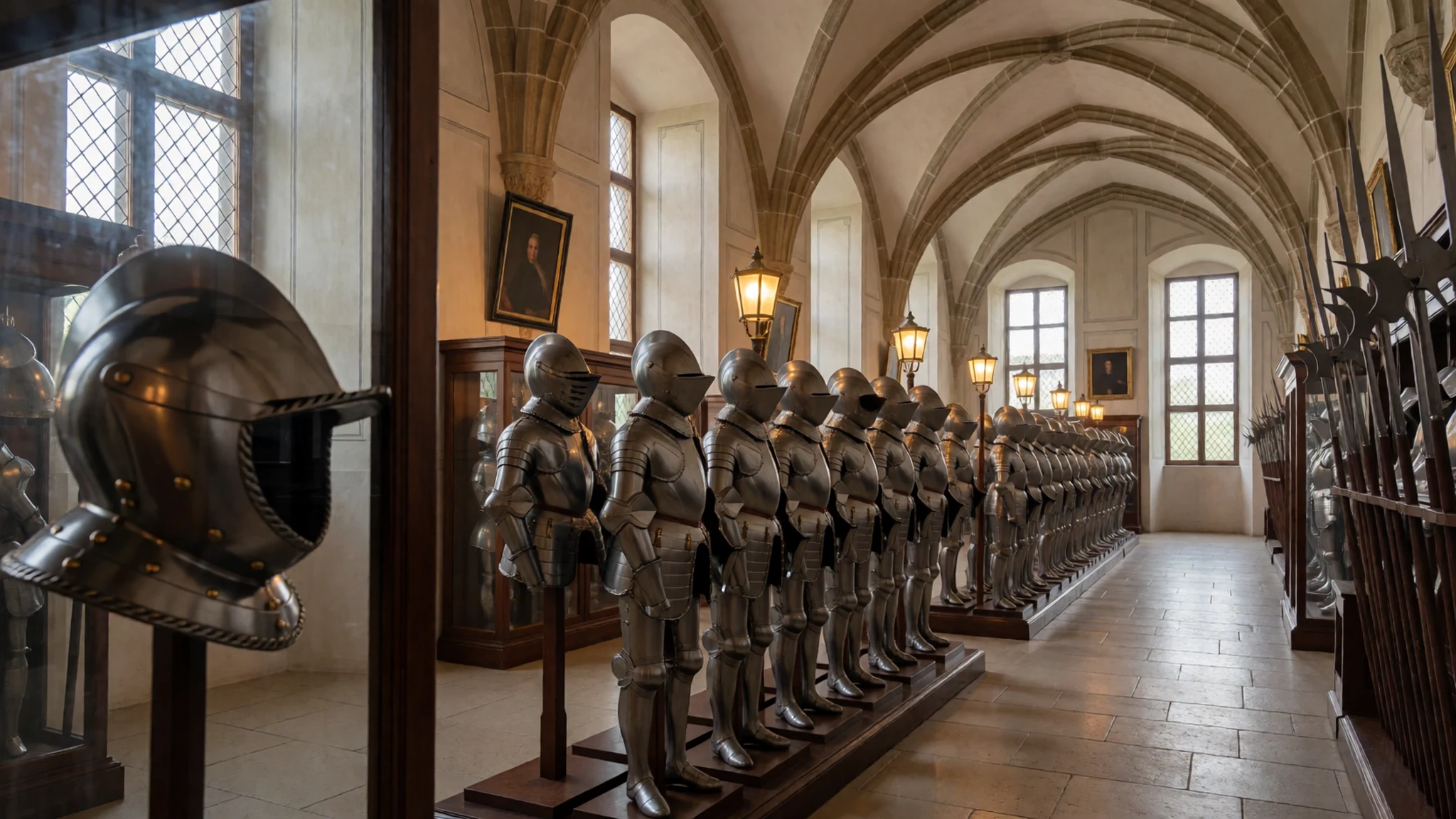
- Walls and approach from outside — Forchtenstein village and castle slopes
The fortress reads best from the road below, where bastions and towers sit hard against the rock. A slow walk around the outside shows how the Esterházy engineers adapted a medieval castle for gunpowder warfare. Photographers should come in the morning, when the western face is lit and the hill is quiet.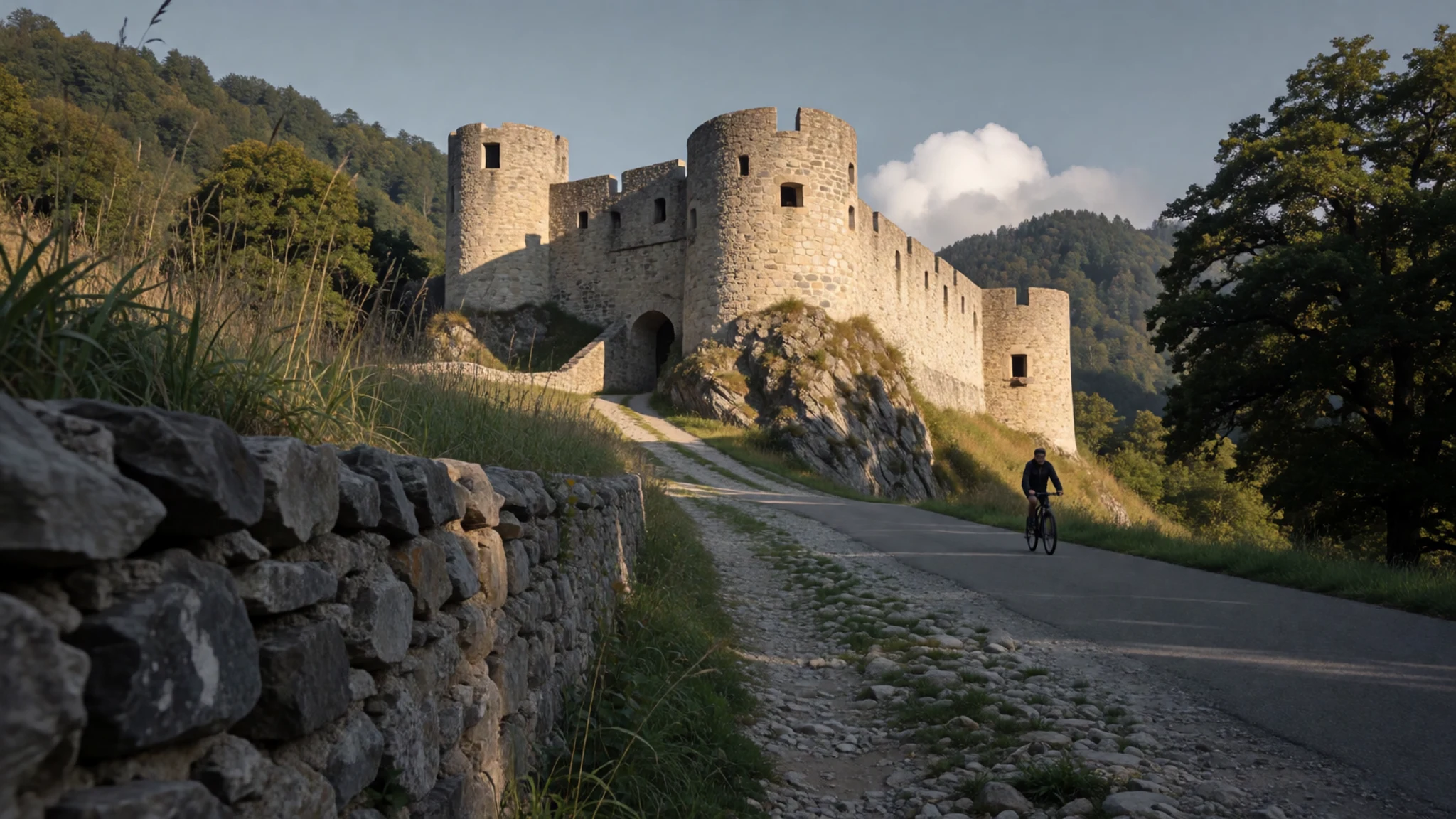
- Rosalia-Kogelberg viewpoint — Rosalia hills, near Forchtenstein
The wooded nature park behind the castle offers a different angle: Forchtenstein Castle seen from the hills, rising out of the trees. Walking here suits a half-day, in dry weather and sturdy shoes. Look for marked trails at the village and keep to them, since forest tracks can be muddy after rain.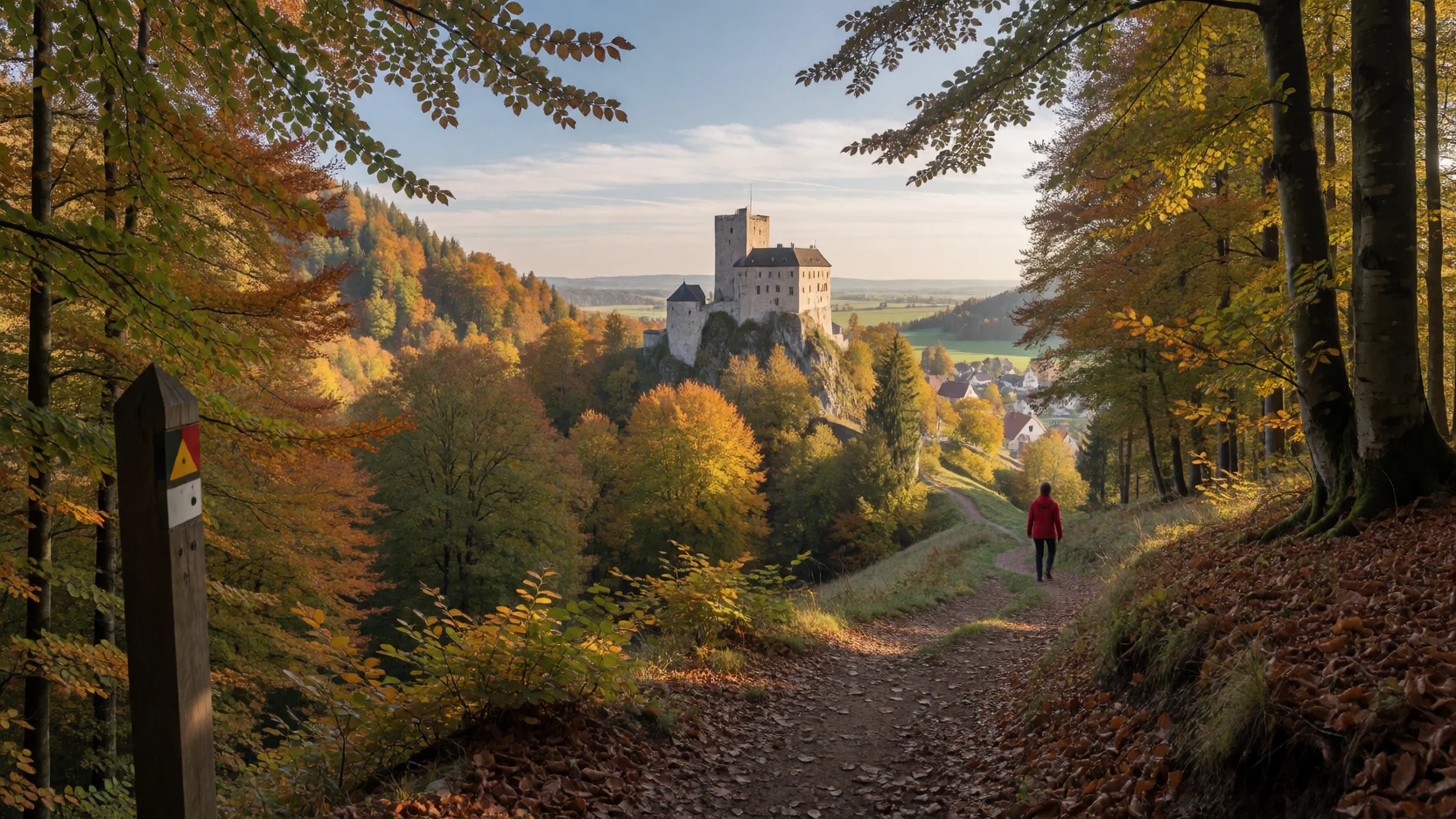
- Neusiedl Lake — Northern Burgenland
For a second day in the region, Neusiedl Lake lies to the north-east and is a recognised UNESCO cultural landscape. It is known for reed beds, migratory birds, low rural buildings and vineyards. Distances are modest by car, but public transport links across the province are limited, so plan the day carefully.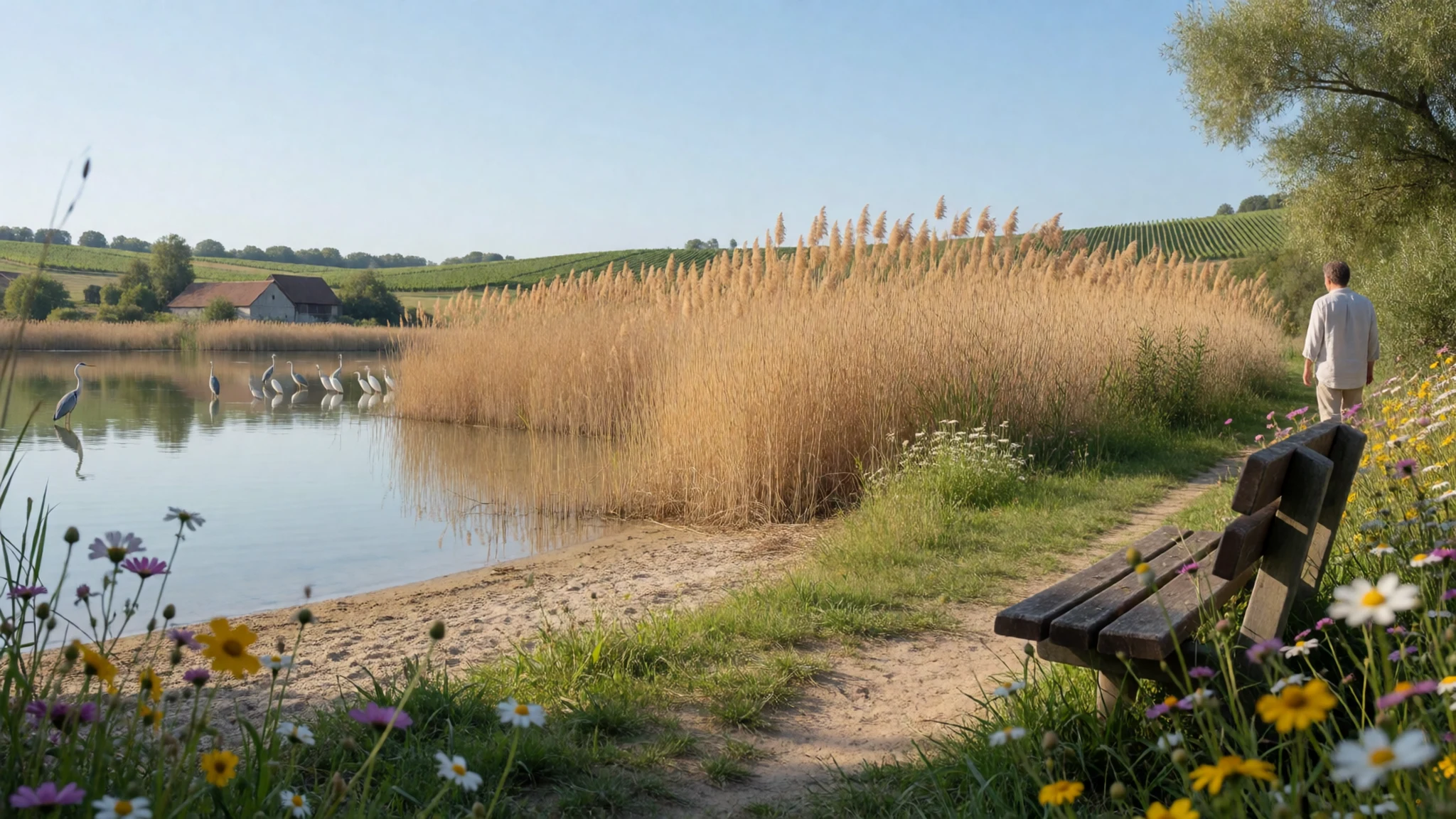
Culture
Forchtenstein Castle sits in a border region where Austrian, Hungarian and Croatian life have overlapped for centuries, and that shows in place names, surnames, church feasts and kitchens. The Esterházy family, whose Hungarian line took over the castle, still shapes how the district sees its own past, and the castle is treated locally as part of a wider Central European story rather than a purely Austrian one. Village life follows the farming year. Wine is central, with family-run taverns serving their own bottles, and autumn brings harvest festivals and St Martin's celebrations in November. In the colder months, some villages in Mid and Southern Burgenland still hold a Sautanz, a neighbourly pig-slaughter feast that is part meal, part gathering. It is a rural custom rather than a tourist show, and visitors who meet it should treat it as the private celebration it is. Religion is mostly Catholic, with village churches that are active places of worship. Conversation in shops and inns is relaxed but polite, a greeting on entering is expected, and German is the everyday language, with Hungarian and Croatian heard in places. Do not expect much nightlife; evenings are for dinner and wine. Inside the castle and its collections, follow the staff's guidance, keep to the marked routes on the walls and in the tower, and ask before photographing in the display rooms.
What to wear
Around Forchtenstein Castle, traditional dress means Tracht, the regional folk costume of Austria and its neighbours. Women wear the dirndl, a fitted bodice and full skirt with apron, in cotton, linen or wool. Men wear loden jackets, a dense felted wool, with waistcoats and sometimes leather trousers. Burgenland's Hungarian and Croatian communities add their own embroidered blouses, ribbons and headwear. These clothes appear at weddings, church festivals, harvest and wine events and brass-band parades, not on ordinary weekdays. What people wear day to day is plain and practical: jeans, fleeces, walking shoes and waterproofs, with a smarter shirt or jacket for dinner. Cyclists in lycra are a common sight on the quiet roads, and hikers are everywhere on the Rosalia trails. For a visit, dress for a hilltop. Sturdy shoes with grip suit cobbles, ramps and steep stairs, and a windproof layer matters even in late spring and early autumn. Castle interiors can be cool, so a light jumper helps in summer too. Bring a rain jacket rather than relying on forecasts, because showers blow in quickly over the hills. Winter calls for a proper coat, hat and gloves. No special modesty rules apply at the castle, but shoulders and knees covered is a courteous choice if you step into a village church.
What to eat
- Sautanz pork dishes — traditional village inns (Gasthäuser), cooler months
Sautanz is the pig-slaughter feast of Mid and Southern Burgenland, with fresh pork, sausage and blood pudding served to neighbours. It is a private rural custom, but similar pork dishes appear on traditional inn menus in cooler months.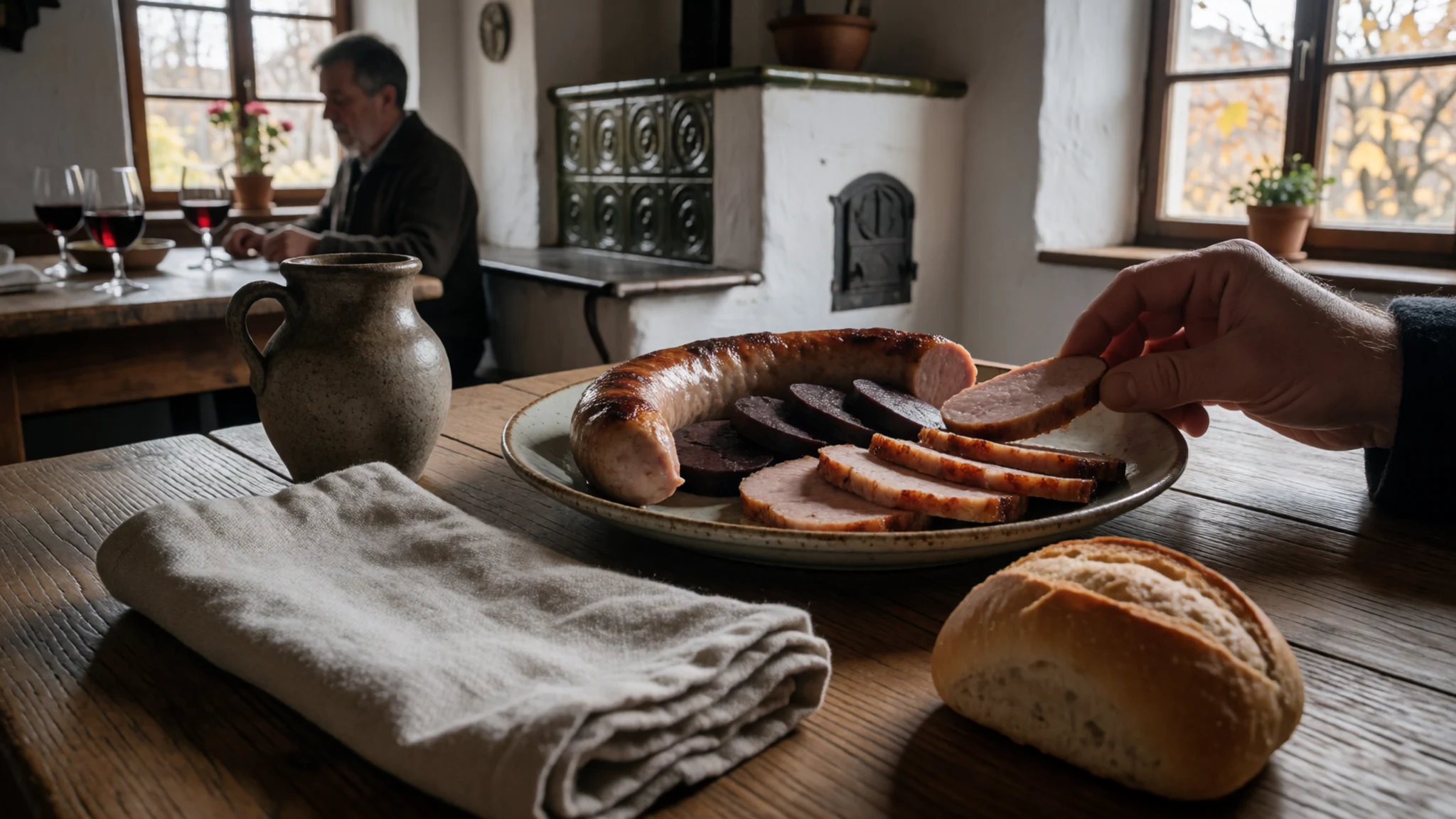
- Martinigansl (roast goose) — village inns and wine taverns, around early to mid November
Roast goose with red cabbage and dumplings is the classic dish around St Martin's in November. Many inns and wine taverns in Burgenland run goose menus in that season, so booking ahead is wise.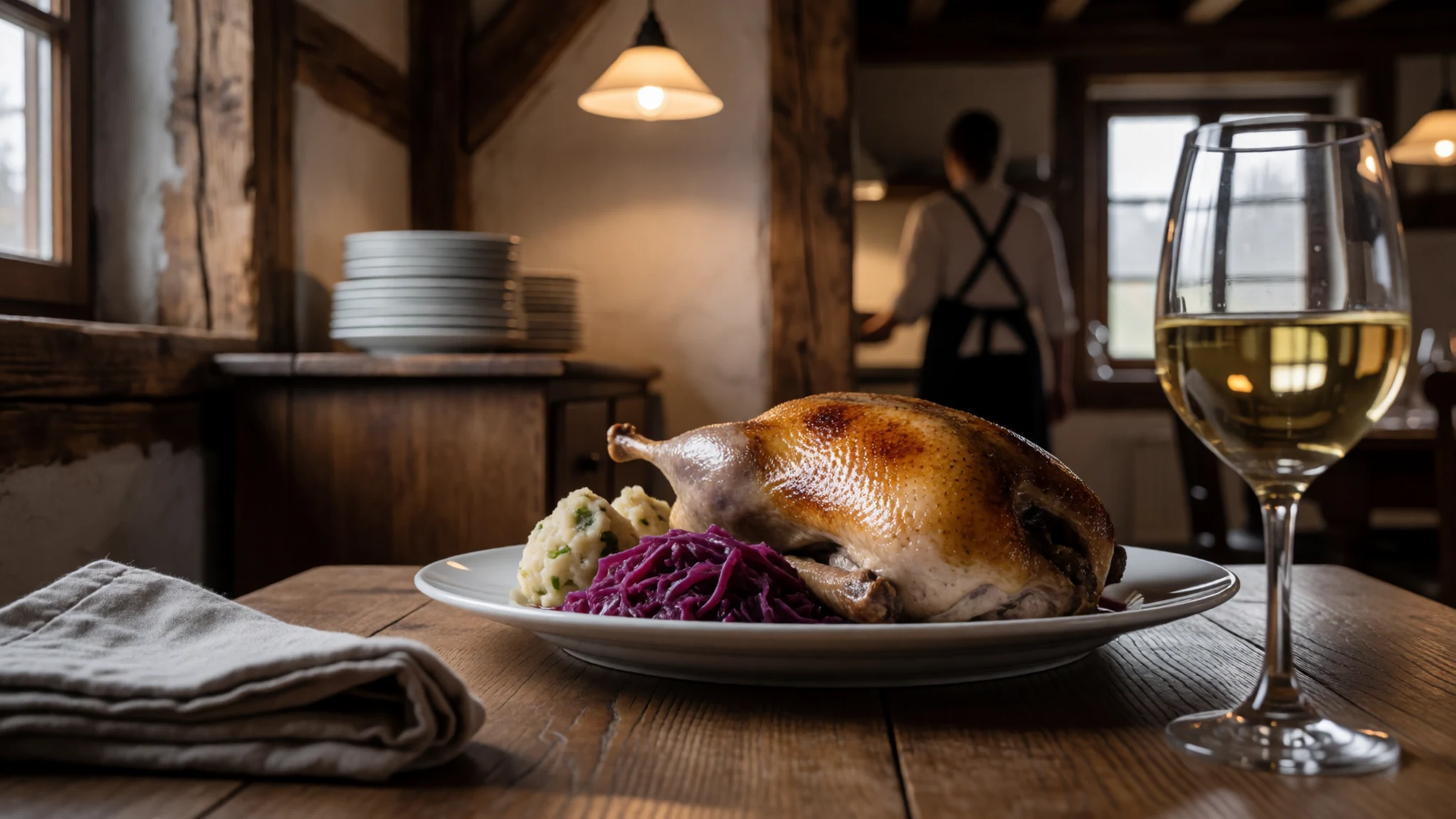
- Blaufränkisch wine — family wine taverns (Buschenschank) and cellar doors
This dark red grape is the signature of Burgenland's vineyards, and it pairs well with pork, game and goose. Tasting it from a family producer is easier and cheaper than choosing from a restaurant list. - Strudel — village bakeries and inn dining rooms
Apple, curd cheese and poppy seed strudels are the standard sweet course in Austrian inns, served warm from the oven. Portions are generous, so one is often enough to share after a main course. - Goulash — village inns and market-town eateries
Hungarian influence runs through the province's cooking, and paprika-red goulash with bread or dumplings is a reliable lunch after a morning on the castle hill. Recipes vary house by house.
Plan it
Best time. April–June and September–October, when the hill is mild and dry enough for walking; July can be hot, and winter is cold and often closed or limited, so check opening seasons.
How long. 1
Getting there. Vienna is the nearest large international airport, with Bratislava and Graz as alternatives. Regional and suburban trains from Vienna reach northern Burgenland, with Wiener Neustadt as a hub, then Mattersburg; check the ÖBB site for the last leg by bus or taxi. A car makes the village and hill trails easier.
Budget. mid
Tips
- Check the official site (https://esterhazy.at/de/burgforchtenstein/index.do) for opening dates and tours before you go
- Allow for limited buses on weekends and public holidays, and plan the return journey before you set out
- Come early in the day for quieter courtyards and better light on the walls
- Bring a layer and a rain jacket, because the hill is exposed
- Carry some cash for village taverns, as small places may not take cards
Etiquette
- Greet staff and shopkeepers when you enter
- Keep to marked routes in the tower and on the walls
- Treat village festivals and church services as local events, not shows
Nearby
Sources
- Wikidata Q877030 (CC0)
- Wikipedia: Forchtenstein Castle (rev 1364983898) (CC BY-SA 4.0)
- Wikivoyage: Burgenland (rev 5368127) (CC BY-SA 4.0)
- Photo: Forchtenstein Burg (1), C.Stadler/Bwag (CC BY-SA 4.0)
- Photo: Forchtenstein Burg (3), C.Stadler/Bwag (CC BY-SA 4.0)
- Photo: Aerial image of Forchtenstein Castle, Carsten Steger (CC BY-SA 4.0)
- Photo: BurgForchtenstein3.jpg (CC BY 3.0)
- Photo: BurgForchtenstein4.jpg (CC BY 3.0)
- Photo: Forchtenstein-Brunnen, Helmuth Furch (Public domain)
- Photo: Blick auf Burg Forchtenstein vom Naturpark Rosalia-Kogelberg, Kstipek (CC BY-SA 4.0)
- Photo: Säule vor der Burg, Karl Gruber (CC BY-SA 4.0)


