Danube-Auen National Park
Danube-Auen National Park, Austria
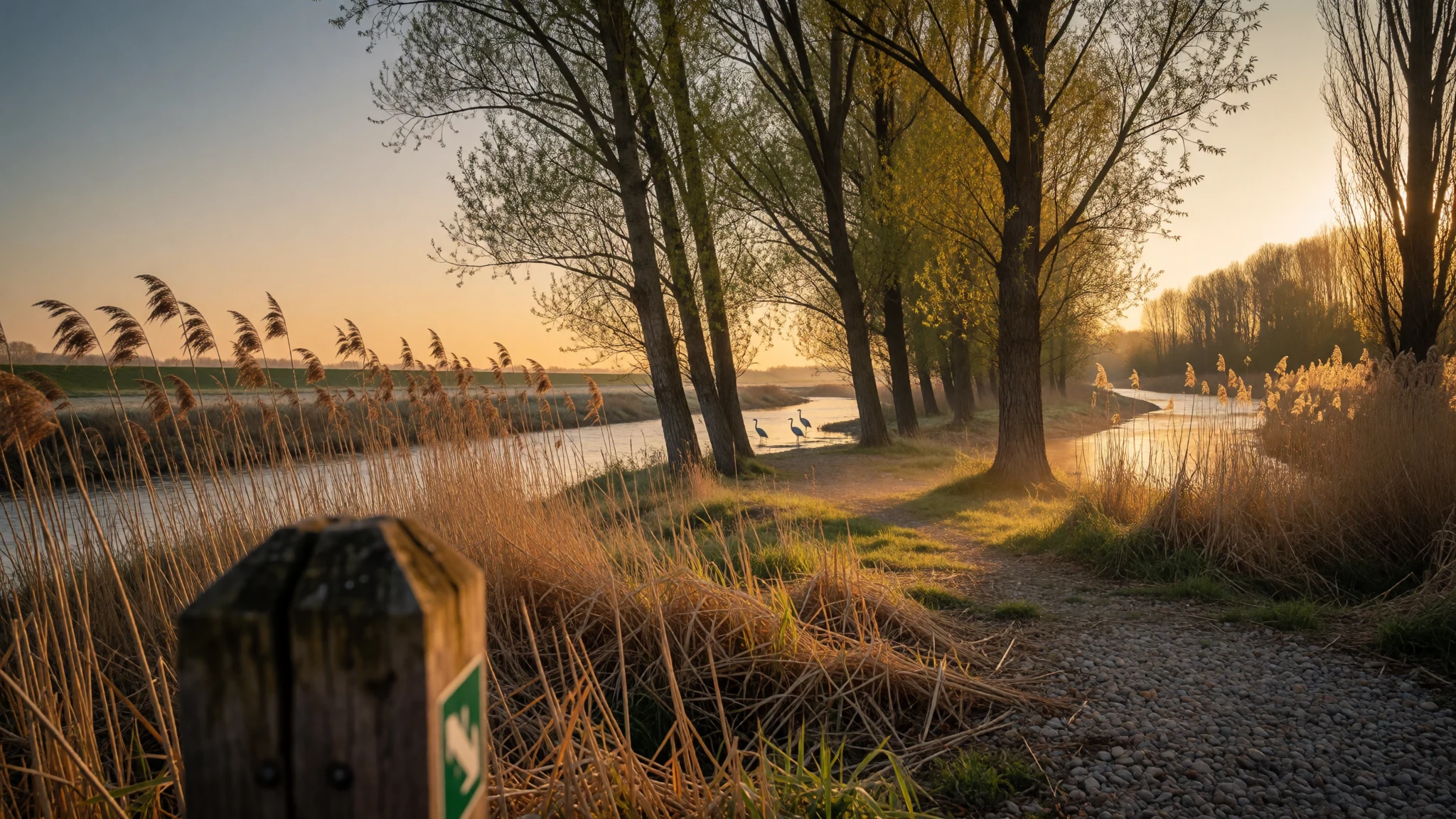
Danube-Auen National Park keeps a stretch of wild floodplain forest alive just downstream of Vienna, best explored on foot, by bike or by boat.
The place
Danube-Auen National Park is a ribbon of river country east of Vienna, following the Danube from the city's Lobau district down towards the Slovak border. Its 93 square kilometres straddle Vienna and Lower Austria, and it was founded in 1996. The German word Au, or Aue, names land that a river floods and reshapes: side channels, gravel banks, wet meadows and woodland that can stand in water when the Danube rises. That mix is what the park protects, and it is unusual to find it so close to a capital. Inside, the traffic noise fades quickly and is replaced by birdsong, creaking willows and, in summer, a lot of insects. The park touches many communities, from Groß-Enzersdorf and Orth an der Donau in the west and centre to Eckartsau, Engelhartstetten, Hainburg, Bad Deutsch-Altenburg and Petronell-Carnuntum further east. It is classed as an IUCN category II national park, which means natural processes come first and visitors are welcome to watch them. There is no single gateway or grand viewpoint. Instead the park is a string of entry points: a castle visitor centre at Orth, forest tracks in the Lobau, riverside paths near Hainburg. The terrain is flat, so the effort is in distance rather than climbing. Paths can be muddy after rain, and the water level changes what the place looks like from one season to the next. Expect gentle scenery rather than drama.
Its story
Danube-Auen National Park is the result of a long argument about what a river is for. For centuries the Danube east of Vienna spread across a wide, shifting plain, rearranging its channels with every flood. Later, engineers confined the river between embankments so that ships could pass and farmland and towns stayed dry. Many side arms were cut off, and the floodplain forest shrank to what was left beside the new channel. The surviving woods were valued for hunting, timber and fishing, and the imperial hunting lodge at Eckartsau is a reminder of that. The turning point came when plans for a hydroelectric dam on this stretch of the river met organised opposition. Protesters occupied the woodland, and the dispute became a national debate about development and nature. Out of it grew the decision to protect the floodplain, and the park was founded in 1996. Since then the work has been partly about restraint and partly about repair: reconnecting old side channels, letting gravel banks form and leaving dead wood where it falls. Visitors can read the history in the landscape, from the straight embankments to the winding backwaters behind them. Anglers, foresters and conservationists still disagree about how much wildness the river should be given. The park remains a working compromise, sharing the Danube with shipping, farming and a large city nearby.
What to see
- Schloss Orth visitor centre — Orth an der Donau, Lower Austria
The castle at Orth an der Donau serves as the park's visitor centre and is an easy place to start. Exhibitions explain how the floodplain works, and the grounds sit close to the river and to marked paths. Check the official site for opening times and guided programmes before travelling.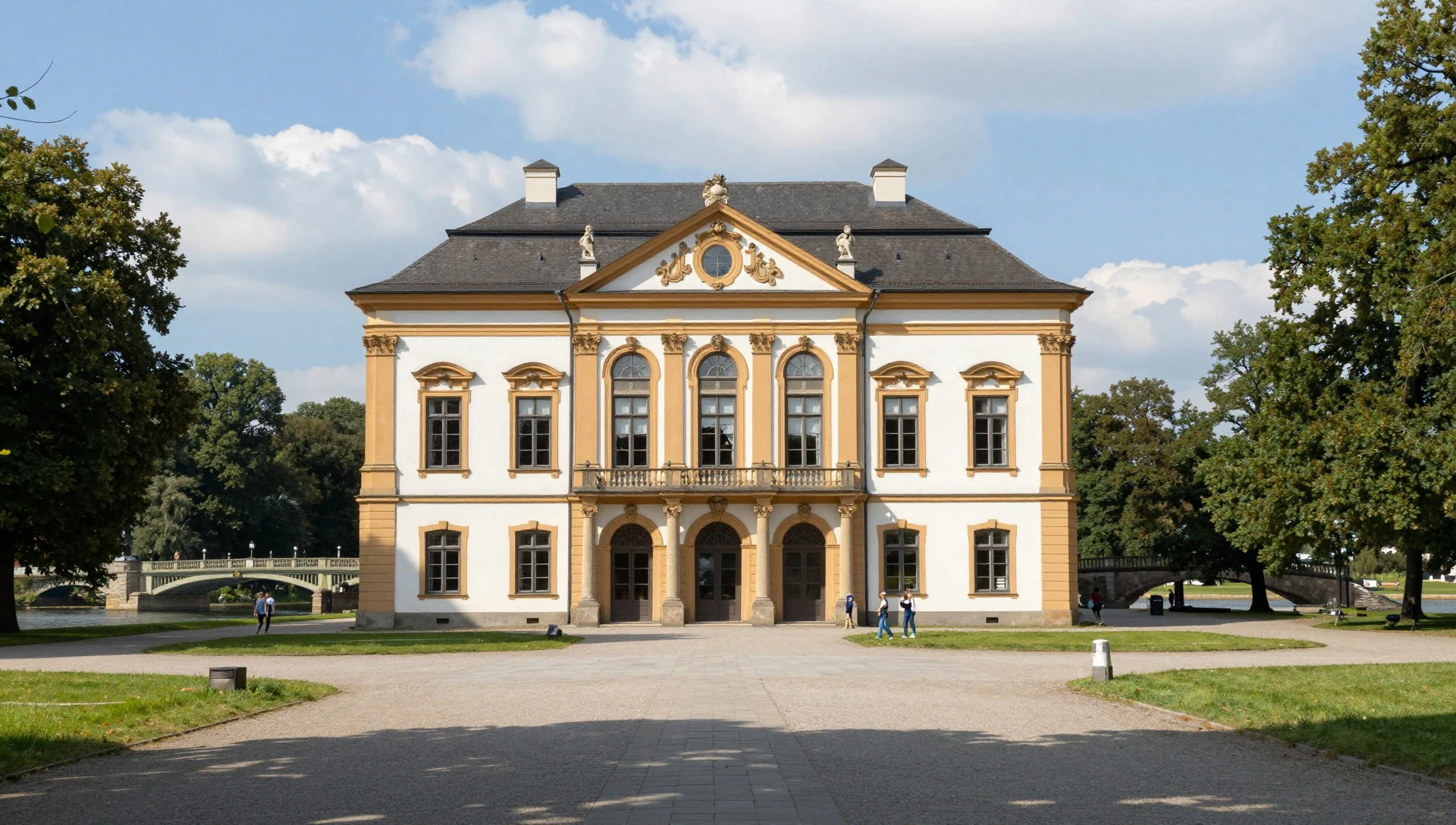
- The Lobau — Vienna, eastern edge
The Lobau is the part of the park inside Vienna's city limits, with forest tracks, quiet side channels and small lakes. It is popular with local cyclists, walkers and swimmers, so weekends feel busier than weekday mornings. Paths are flat, and the main challenge is the distance between entry points.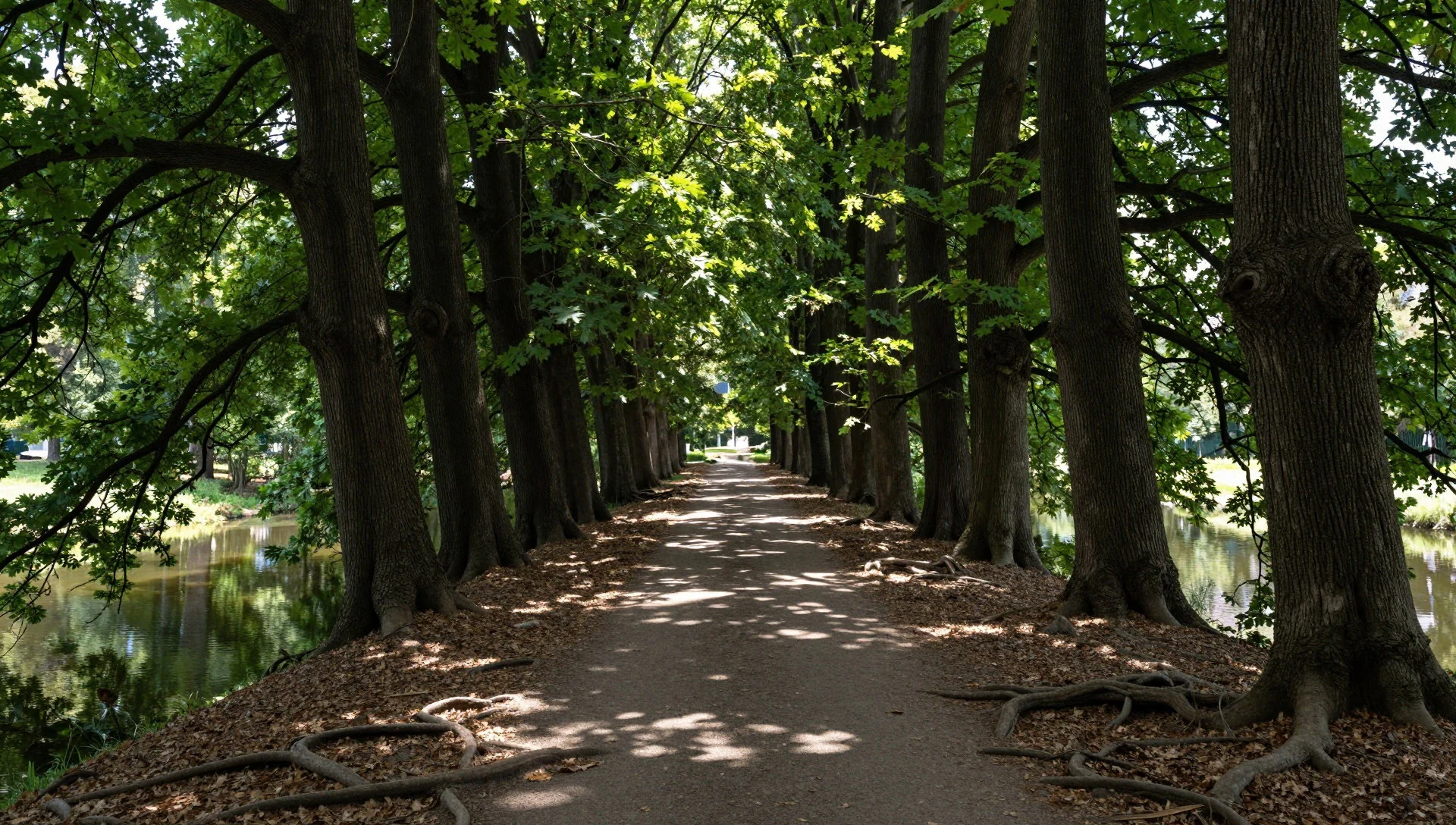
- Stopfenreuth high-water mark — Stopfenreuth, Lower Austria
In the floodplain forest at Stopfenreuth, a high-water mark shows how far the Danube has climbed in past floods. Standing beside it, the surrounding trees make more sense: this woodland is built to cope with water rising and falling, which ordinary forest could not survive.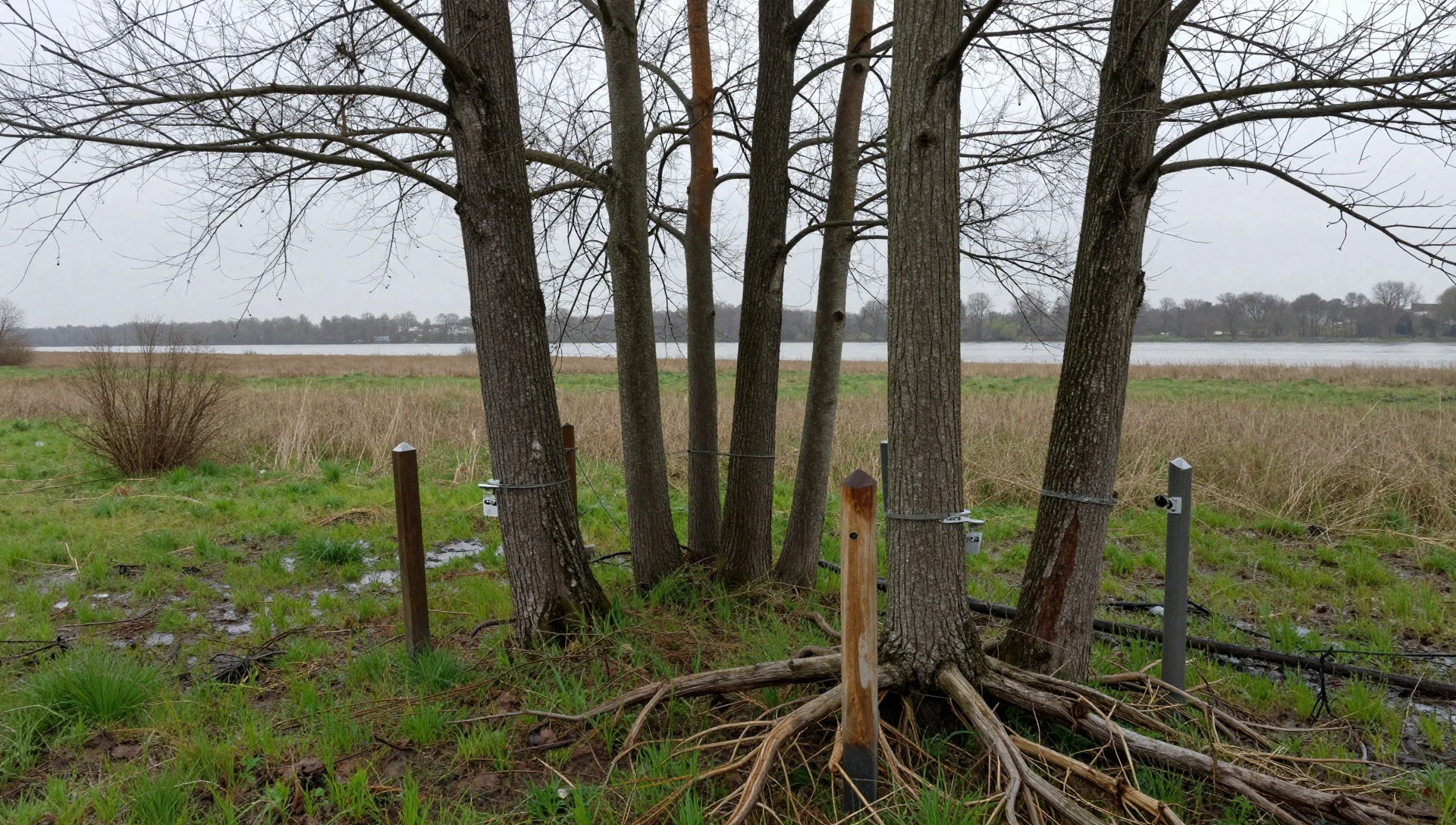
- Hainburg and the eastern end — Hainburg an der Donau and Bad Deutsch-Altenburg
Hainburg lies at the eastern end of the park, where the river and its woodland meet the hills near the Slovak border. The old town gate and walls are worth a stroll, and riverside paths lead out to quiet forest. Bad Deutsch-Altenburg and Petronell-Carnuntum, close by, add Roman remains.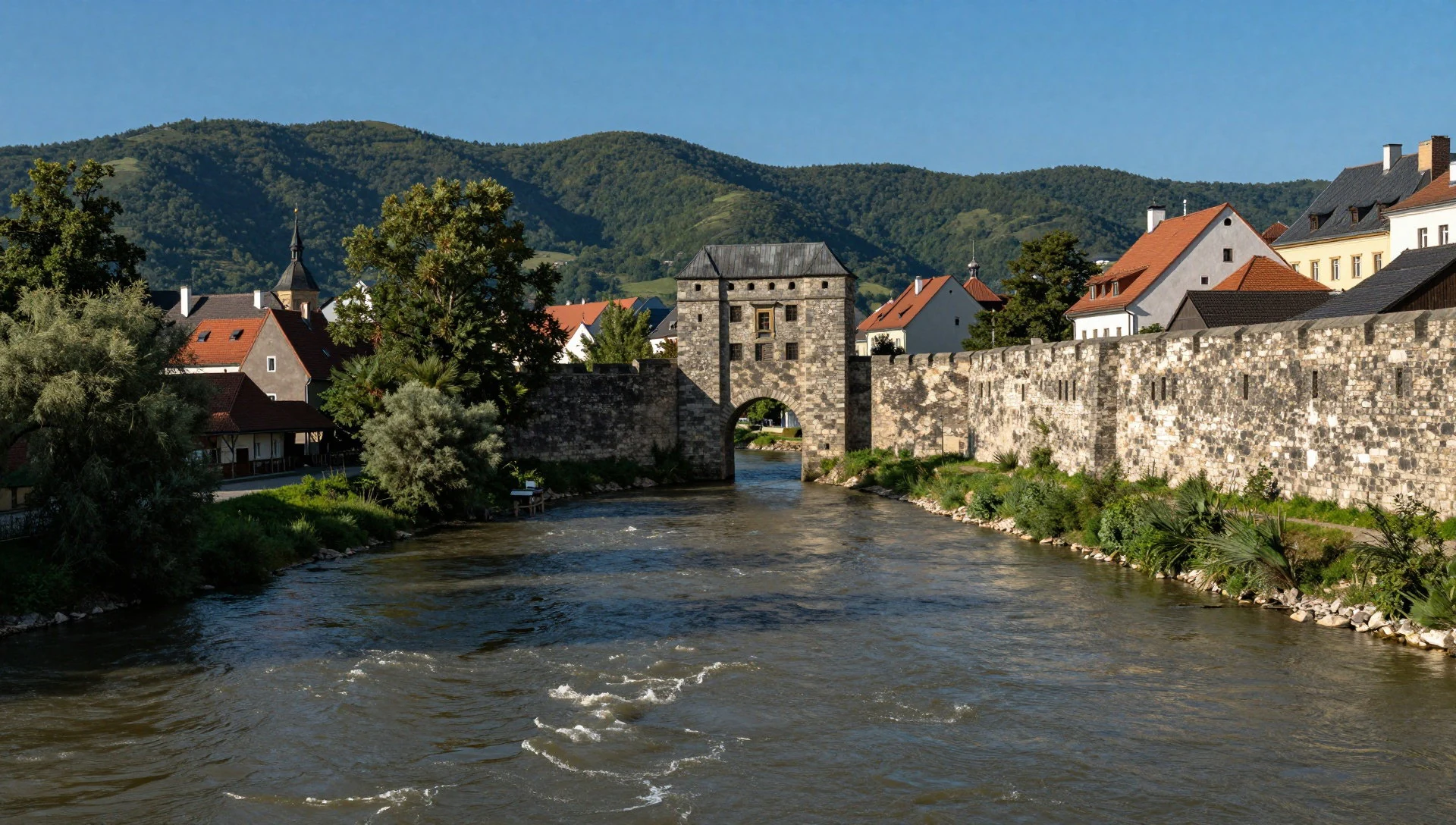
- Eckartsau and the central meadows — Eckartsau, Lower Austria
Eckartsau sits in the middle of the park and has a former imperial hunting lodge, a handy base for walks into surrounding meadows and woodland. In spring the fields between here and Orth can flood, turning the landscape into a sheet of shallow water. Check the official site for what is open.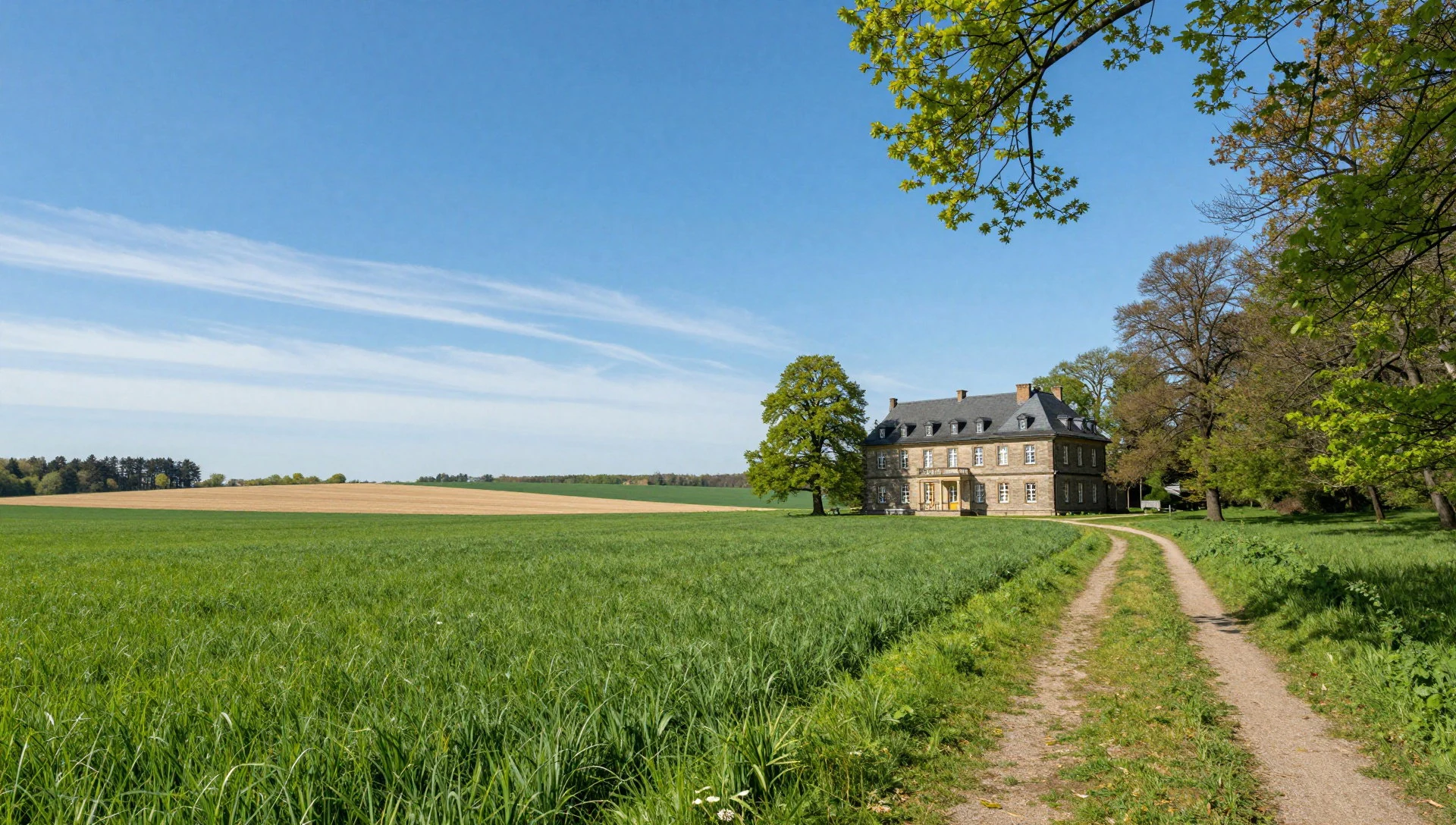
Culture
Danube-Auen National Park sits within a culture that treats the river as a weekend companion. Viennese families come out here to cycle the embankment paths, swim at designated spots in the Lobau, fish, and walk dogs under the willows. Some bathing areas there are clothing-optional, which locals take in stride. German is the working language, and a quiet 'Grüß Gott' or 'Servus' is the usual greeting on a path. Village life around the park keeps older rhythms: wine-growing, asparagus fields and apricot orchards, and inns that often close on certain weekdays, so it pays to check ahead. Conservation is a point of local pride, partly because the park's origin lies in a public protest about the river. Rangers lead guided walks, and local people often know the history of a particular channel or flood. Austrians generally value quiet outdoors, punctuality for booked tours and tidy habits such as sorting rubbish. Floods are a living memory in these villages, and the high-water marks along the paths are treated with a certain respect. Overall the atmosphere is calm, practical and a little reserved. Stay on the marked paths, keep dogs on a lead and take all rubbish home, because wildlife and nesting birds here are easily disturbed.
What to wear
Danube-Auen National Park lies in Lower Austria, where traditional dress is called Tracht. Women wear the dirndl, a fitted bodice and full skirt with an apron, in cotton or linen for everyday versions and heavier wool or silk for festive ones. Men wear Lederhosen of soft leather, or trousers with a loden jacket; loden is a dense, water-resistant felted wool in muted green or grey. Tracht appears at weddings, wine festivals, church feast days and village parades rather than every day. What people wear now is practical and understated: walking shoes, fleece or softshell jackets, cycling clothes on the embankment, and rubber boots after floods. Viennese tend to dress simply, and nobody dresses up for the park. For visitors the priority is function. Bring layers, since mornings by the water are cool even in summer, and a light waterproof for sudden showers. Long trousers and sleeves help with ticks, nettles and midges, and a hat and sunscreen matter on open levees. Choose closed shoes with good grip, because paths turn muddy; trainers are fine in dry weather, and waterproof boots are better after rain or spring floods. Churches in nearby villages expect shoulders covered, but no special dress is needed in the park itself.
What to eat
- Marchfeld asparagus (Spargel) — Village inns and farm stalls around the Marchfeld, north of the river, in spring
Spargel from the Marchfeld, the flat farmland north of the river, is a spring ritual in Lower Austria. White spears come boiled with potatoes and ham or with sauce hollandaise. Look for it on menus in village inns from about April into early summer.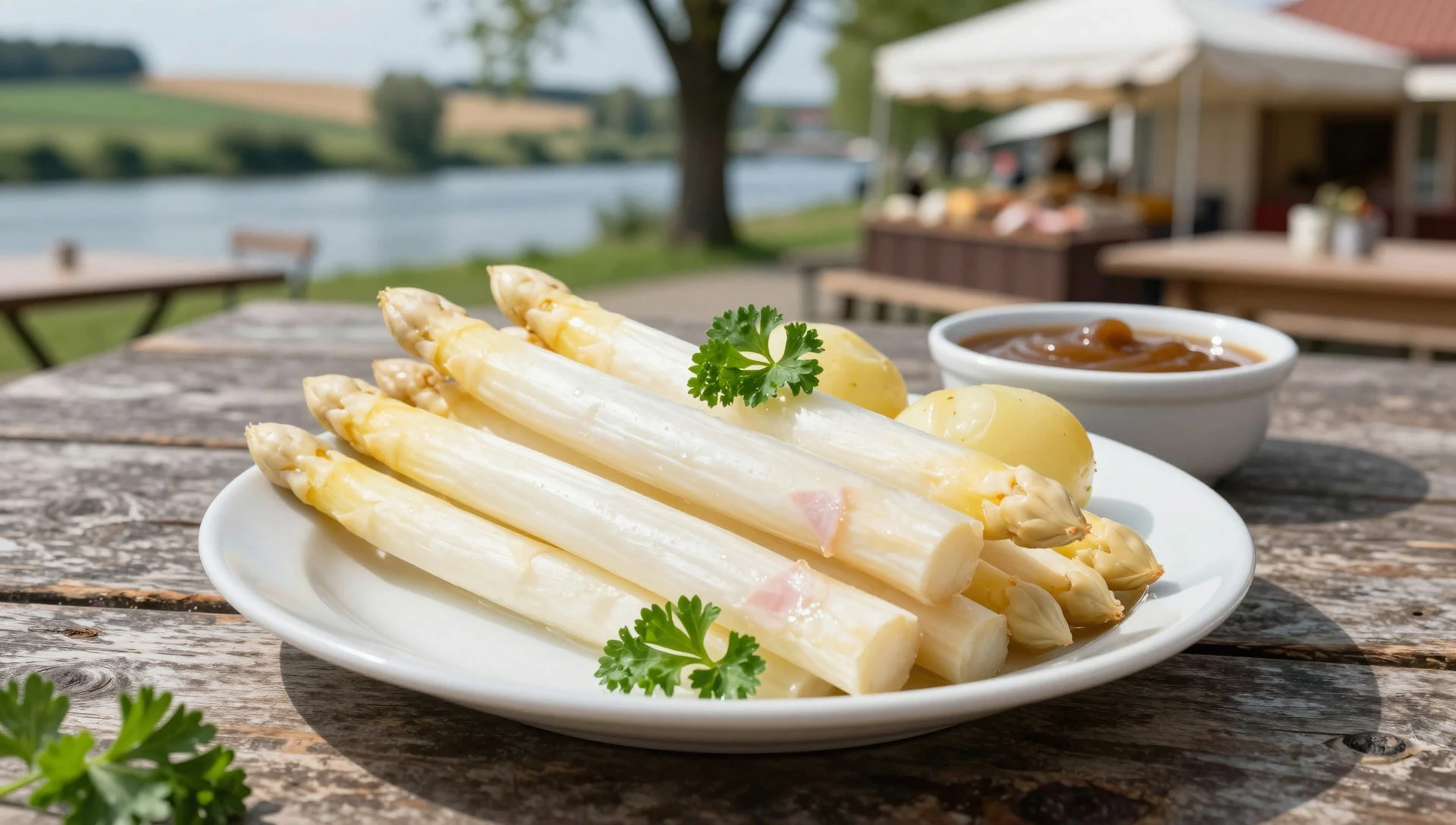
- Wiener Schnitzel — Traditional inns (Gasthaus) in the villages and towns around the park
Wiener Schnitzel is veal beaten thin, breaded and fried until the crust puffs away from the meat, served with lemon, potato salad or parsley potatoes. Village inns around the park serve it, as does nearly every Viennese Gasthaus.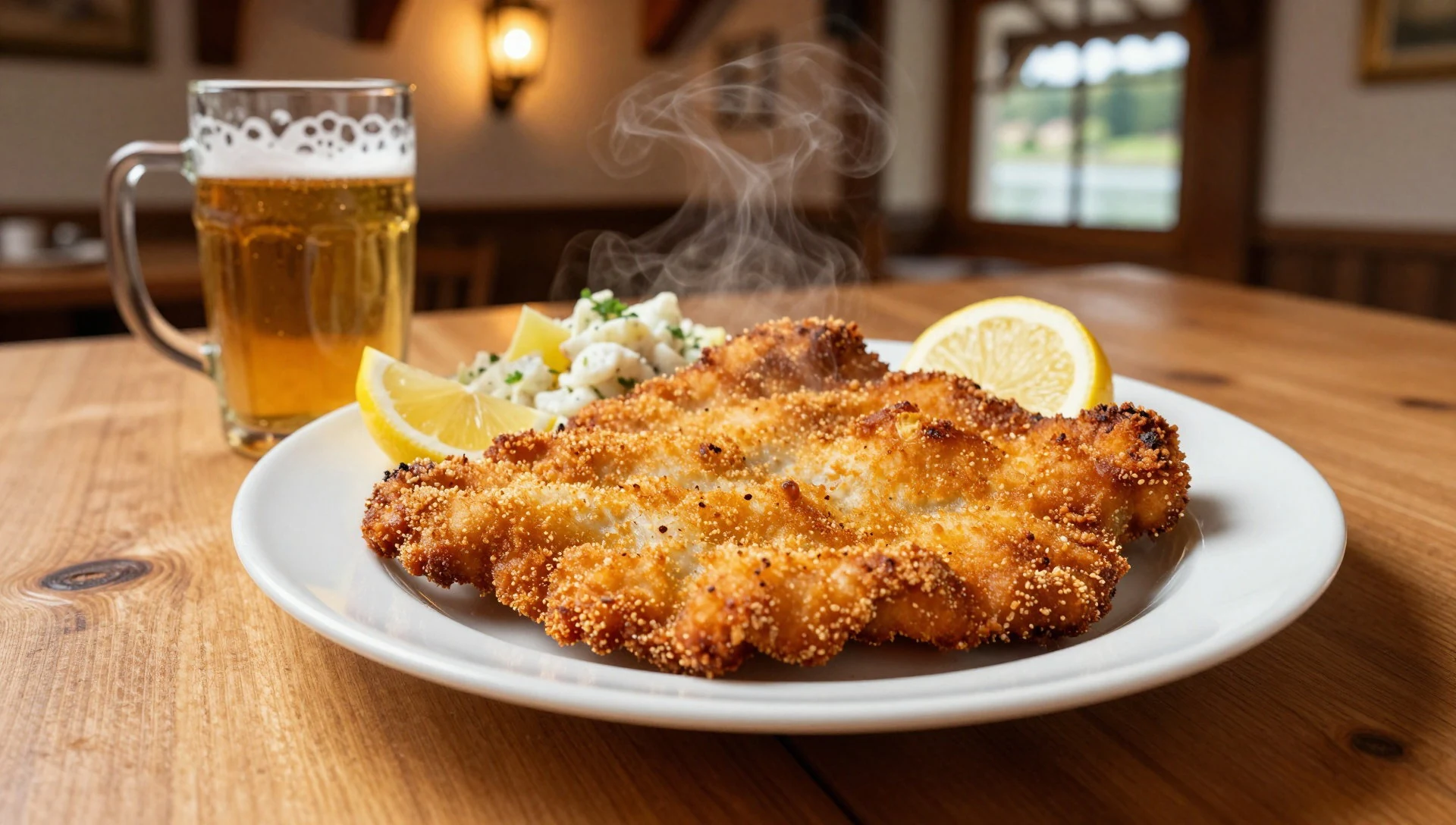
- Danube fish — Riverside inns and fish restaurants near the park
Carp, pike-perch and other freshwater fish appear fried, baked or in a creamy soup at riverside inns near the park. Ask what was caught locally, since menus shift with the season and with the height of the water. - Marillenknödel — Village inns and bakeries across Lower Austria in summer
Marillenknödel are potato-dough dumplings wrapped around a whole apricot, rolled in buttery breadcrumbs and dusted with sugar. They turn up as a summer dessert in village inns and bakeries across Lower Austria, usually when the local apricots ripen. - Heuriger platter and new wine — Wine taverns (Heuriger) in villages on the Carnuntum side of the park
A Heuriger is a wine tavern run by the grower, serving the new vintage with cold cuts, spreads and bread. Villages on the Carnuntum side of the park have them; a green branch over the door signals that it is open.
Plan it
Best time. Late April to June for birdsong, fresh leaves and spring high water; September to October for softer light and autumn colour. July and August are warm with plenty of insects, and winter is cold, grey and quiet.
How long. 1–2
Getting there. Vienna International Airport lies beside the western end of the park, and Vienna is the usual base. From the city, regional trains and buses reach towns such as Orth an der Donau and Hainburg (check ÖBB and local timetables); hiring a bicycle for the last leg to the trails is a popular choice.
Budget. low
Tips
- Check the official site, http://www.donauauen.at/, for visitor-centre hours, guided walks and tours before you travel
- Bring insect repellent from late spring, as floodplains are good habitat for midges and mosquitoes
- Start early on summer weekends, when Lobau paths fill with cyclists and swimmers
- Carry water and snacks, because entry points are far apart and cafés may be closed midweek or in winter
- Cards are widely accepted, but keep some cash for village inns and farm stalls
Etiquette
- Keep to marked paths, especially in nesting season
- Do not feed or approach wildlife, and keep dogs on a lead
- Greet people on narrow paths with a quiet 'Grüß Gott' and give cyclists space
Nearby
Sources
- Wikidata Q474886 (CC0)
- Wikipedia: Danube-Auen National Park (rev 1339859701) (CC BY-SA 4.0)
- Wikivoyage: Lower Austria (rev 5245451) (CC BY-SA 4.0)
- Donau östlich von Wien mit Nationalpark Donauauen — Karl Gruber (CC BY 3.0)
- Donau-Auen bei Hainburg — Friedrich.Kromberg (CC BY 3.0)
- Karte Nationalpark Donau-Auen — Webartists (CC BY-SA 4.0)
- Schloss Orth, Besucherzentrum — C.Stadler/Bwag (CC BY-SA 4.0)
- Danube-Auen National Park near Lobau and Groß-Enzersdorf (CC0 1.0)
- High Water Mark of the Danube, Stopfenreuth — Peter Haas (CC BY 3.0)
- Frühjahrshochwasser zwischen Schönau und Orth/D. — Friedrich.Kromberg (CC BY 3.0)
- Levee, field and woodland in Nationalpark Donau-Auen — Brent Hugh (CC BY-SA 1.0)


