Innsbruck
Innsbruck, Austria
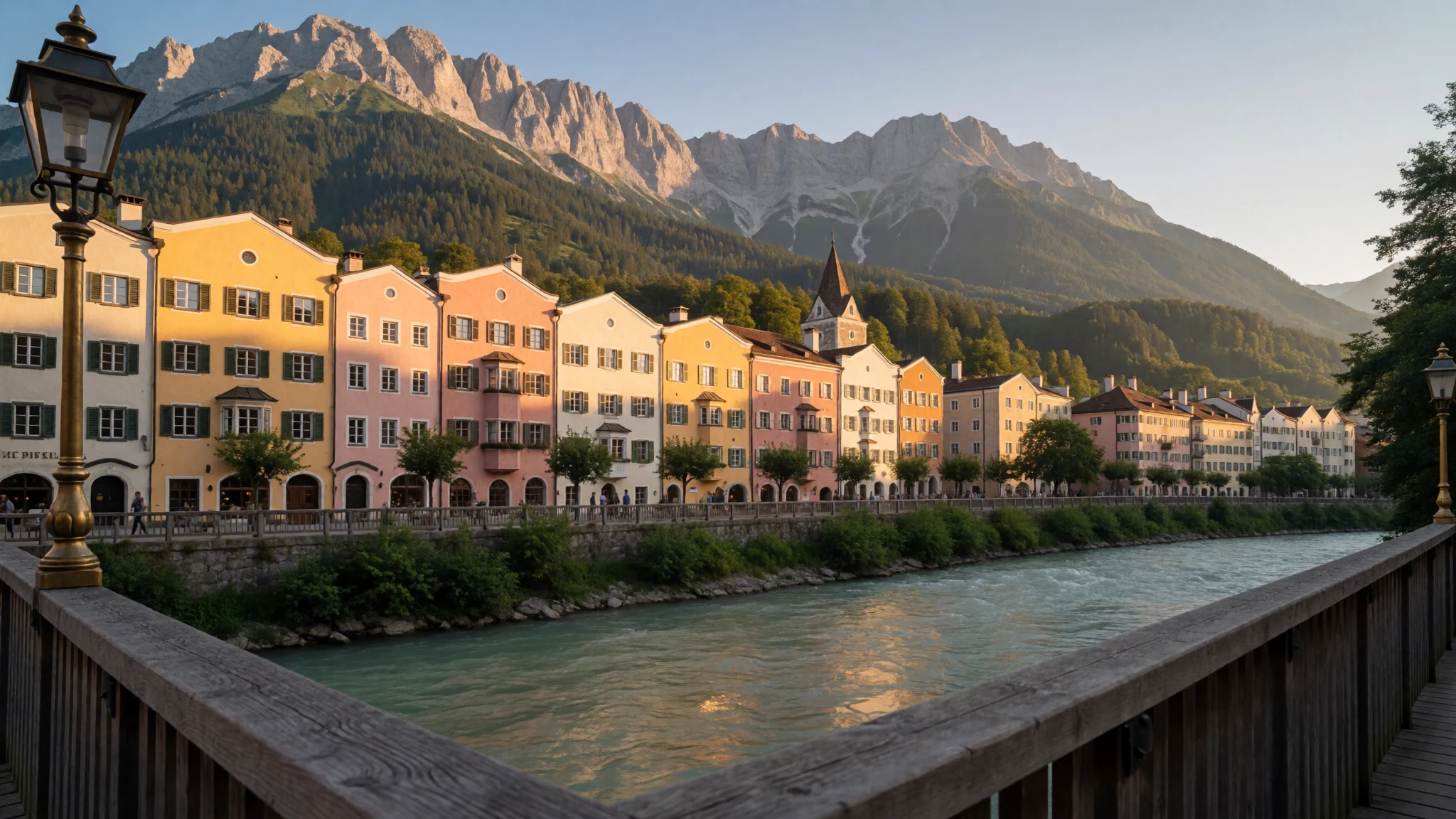
Innsbruck sets a Habsburg bridge-town on the Inn, with Olympic ski hills rising straight behind the old streets.
The place
Innsbruck, capital of Tyrol, ranks fifth by size among Austria's cities, and about 132,500 people live there at 574 metres. The Inn runs through the built-up valley floor, and the Wipp Valley continues south from the city to the Brenner Pass, about 30 kilometres off, a long-used Alpine crossing. Mountains close both sides of the valley: the Nordkette of the Karwendel Alps rises to the north, the Hafelekarspitze reaching 2,334 metres, while Patscherkofel at 2,246 metres and Serles at 2,718 metres stand to the south. The town's name joins the river Inn to its bridge. A chartered town followed in 1239. The historic centre remains compact, pinned between the river and wooded slopes, and a cable car climbs from the streets onto the Nordkette, so the high mountain is part of the city's daily map rather than a distant excursion. Nothing in the centre sits far from the river or from the wooded slope. Innsbruck is a winter-sports centre: it staged the Winter Olympics in 1964 and again in 1976, and the Winter Paralympics in 1984 and 1988. Ski jumps, pistes and summer trails sit on the same hills that frame the church towers. In the cold months the valley floor holds the markets and cafés while snow stays on the ridges; in the warm months those ridges fill with walkers and mountaineers.
Its story
Innsbruck's recorded life begins as a bridge. Oeni Pons, the Roman label, simply names a pons on the river Oenus. Wilten, now a district of the city, preserves Veldidena, the army station posted in the 4th century beside that crossing so the trade route from Verona over the Brenner to Augsburg could be watched inside Raetia. Stone Age material and place names older than Latin show the valley floor was already in use. Medieval lords then fixed the town. The Counts of Andechs acquired it in 1180; in 1248 it passed to the Counts of Tyrol. Since 1267 the civic arms have drawn the Inn bridge from overhead, a small map of the asset the town actually owned. That bridge sat on the Via Imperii, an imperial road under the king's special protection, and traffic between the north and south of Europe funnelled through the Brenner because the pass was the practical Alpine gate on this meridian. Habsburg rule in Innsbruck dates from 1363. Emperor Maximilian I made the town a residence and left the Golden Roof among the buildings of his court. Later centuries treated it as Tyrol's political seat and as one of the places where Catholic reform was organised and preached. At the start of the 19th century the Treaty of Pressburg carried the city into the Kingdom of Bavaria; after the Congress of Vienna it returned to Austria. Through each change of sovereign the same things defined Innsbruck: the river bridge, the pass to the south, and the mountain walls on either hand.
What to see
- Hofkirche — Old town
The Hofkirche stands in Innsbruck's old town and holds the tomb monument of Emperor Maximilian I. Around the memorial stand larger-than-life bronzes called the schwarze Mander, the black men, figures drawn from his family and court. The ensemble shows how a Habsburg residence city chose to stage imperial memory in bronze and stone. Opening arrangements change with the season, so the municipal website is the place to confirm them.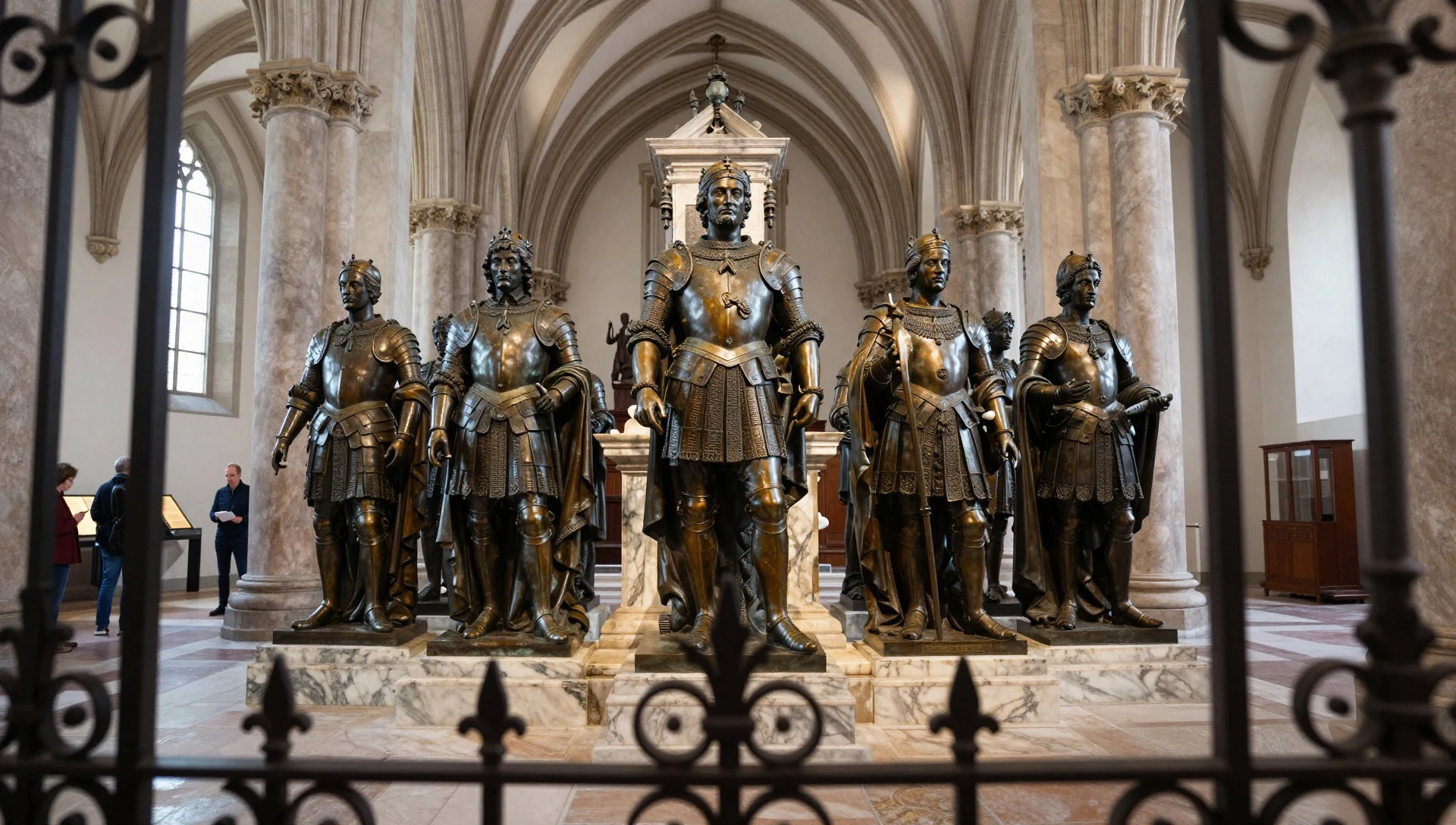
- Cathedral of St James — Old town
Innsbruck's Cathedral of St James, the Dom zu St. Jakob, is the Baroque church of the old town. Johann Jakob Herkomer and Johann Georg Fischer drew the replacement after an earthquake, and the work ran from 1717 to 1724. Paintings by Lucas Cranach the Elder are among what hangs inside. Worship still takes place here, so a visit has to share the building with services.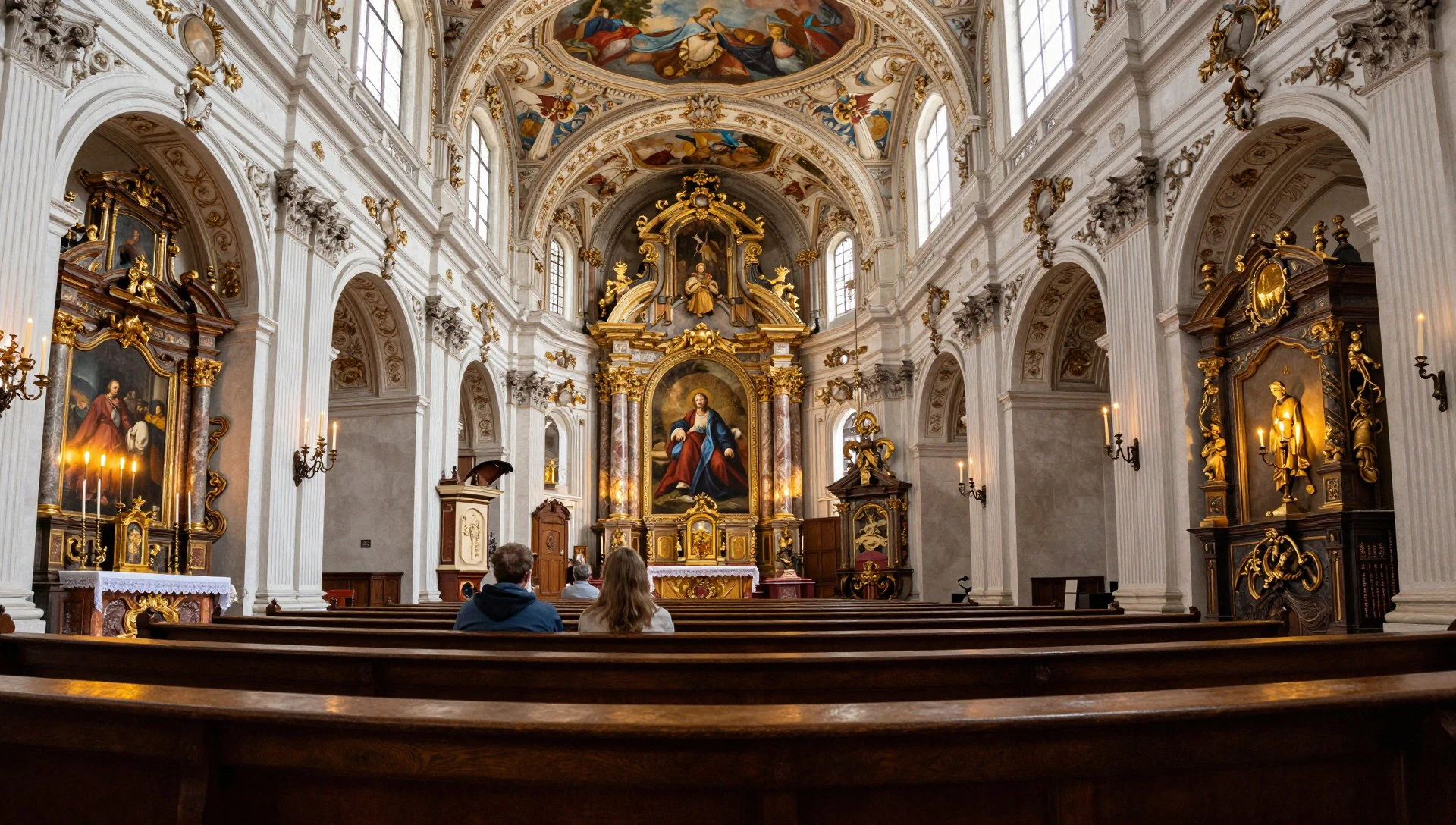
- Wiltener Basilika — Wilten
Innsbruck's Wiltener Basilika stands in the southern district of Wilten, a Baroque church raised between 1751 and 1756 and lined inside with Rococo stucco. It is distinct from the nearby Premonstratensian monastery of Stift Wilten, though the two are an easy walk apart on the south side of the city. The plasterwork belongs to the Rococo taste of those building years, not to a medieval abbey interior.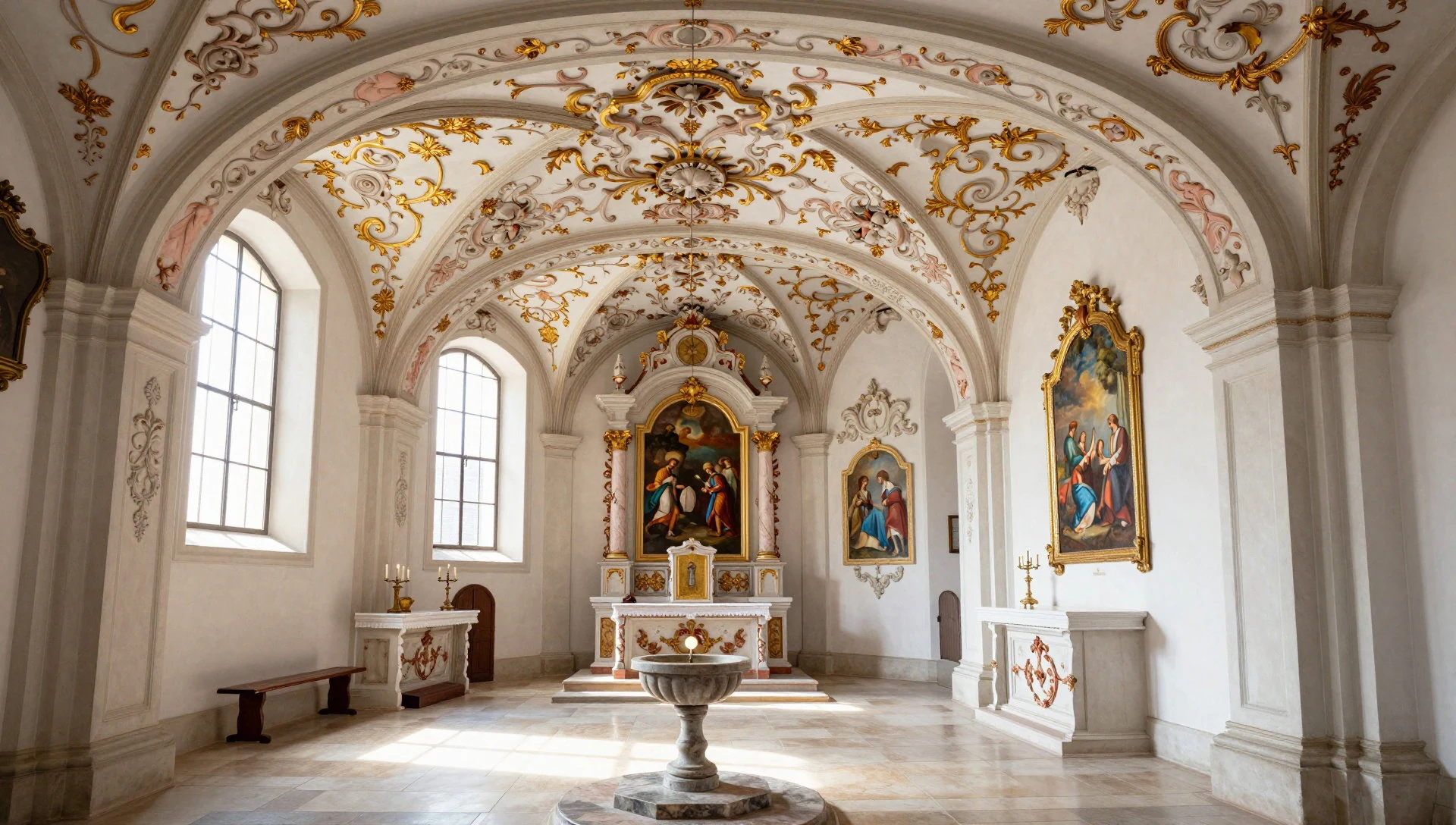
- Stift Wilten — Wilten
Innsbruck's Stift Wilten is a Premonstratensian monastery in the district of Wilten, a short walk from the Wiltener Basilika. The complex joins monastic buildings to a Baroque collegiate church, on ground whose older name, Veldidena, recalls the Roman station that watched this approach to the Brenner. It feels quieter than the old-town churches and lies nearer the southern edge of the city.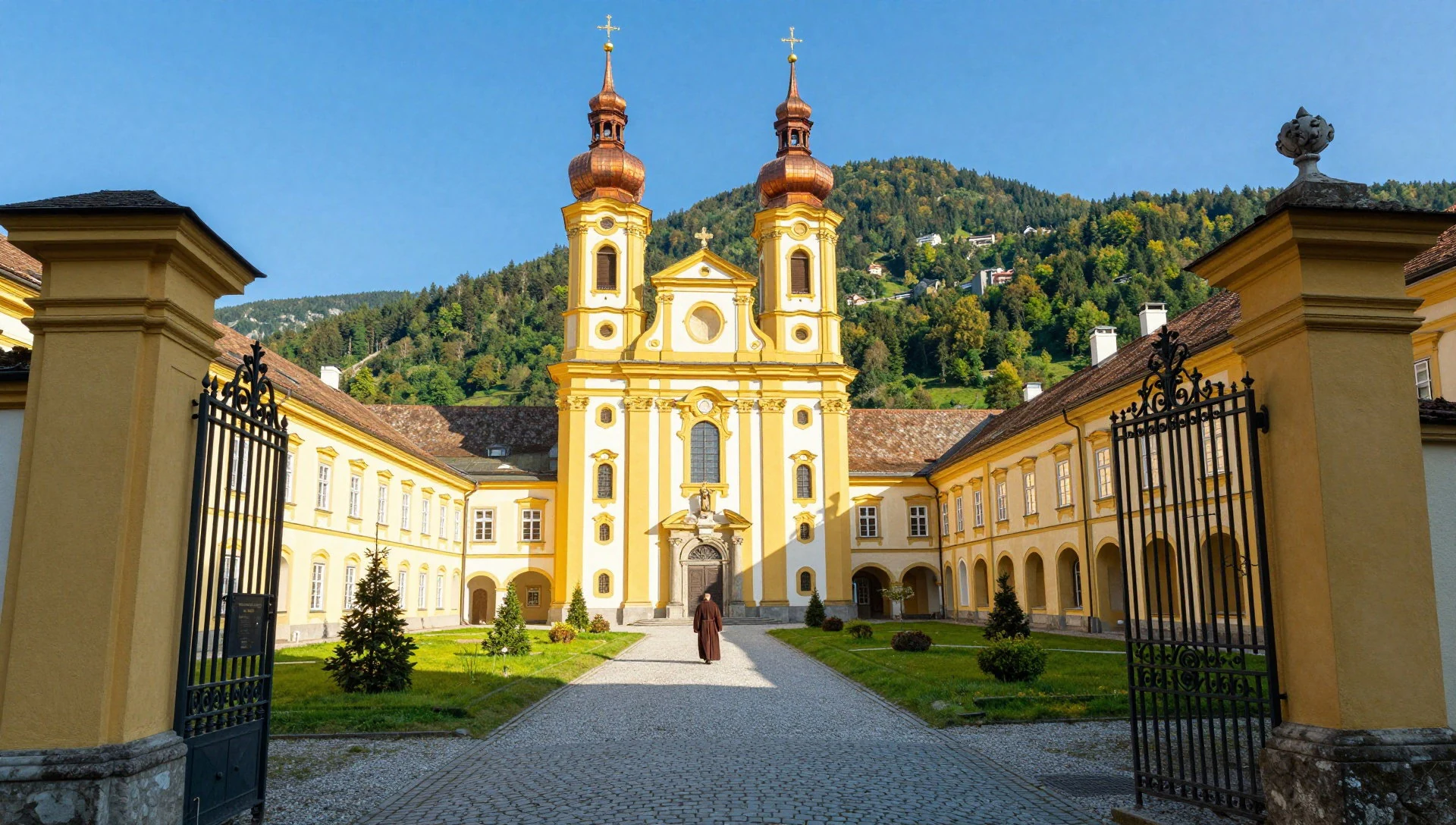
- Ambras Castle — Hills southeast of the centre
Ambras Castle stands in the hills above Innsbruck. Archduke Ferdinand II of Tyrol had the Renaissance palace raised in 1564, at 587 metres, and kept it as a private residence set above the valley. From the grounds the Nordkette shows across the roofs. Seasonal opening days are posted on the municipal website.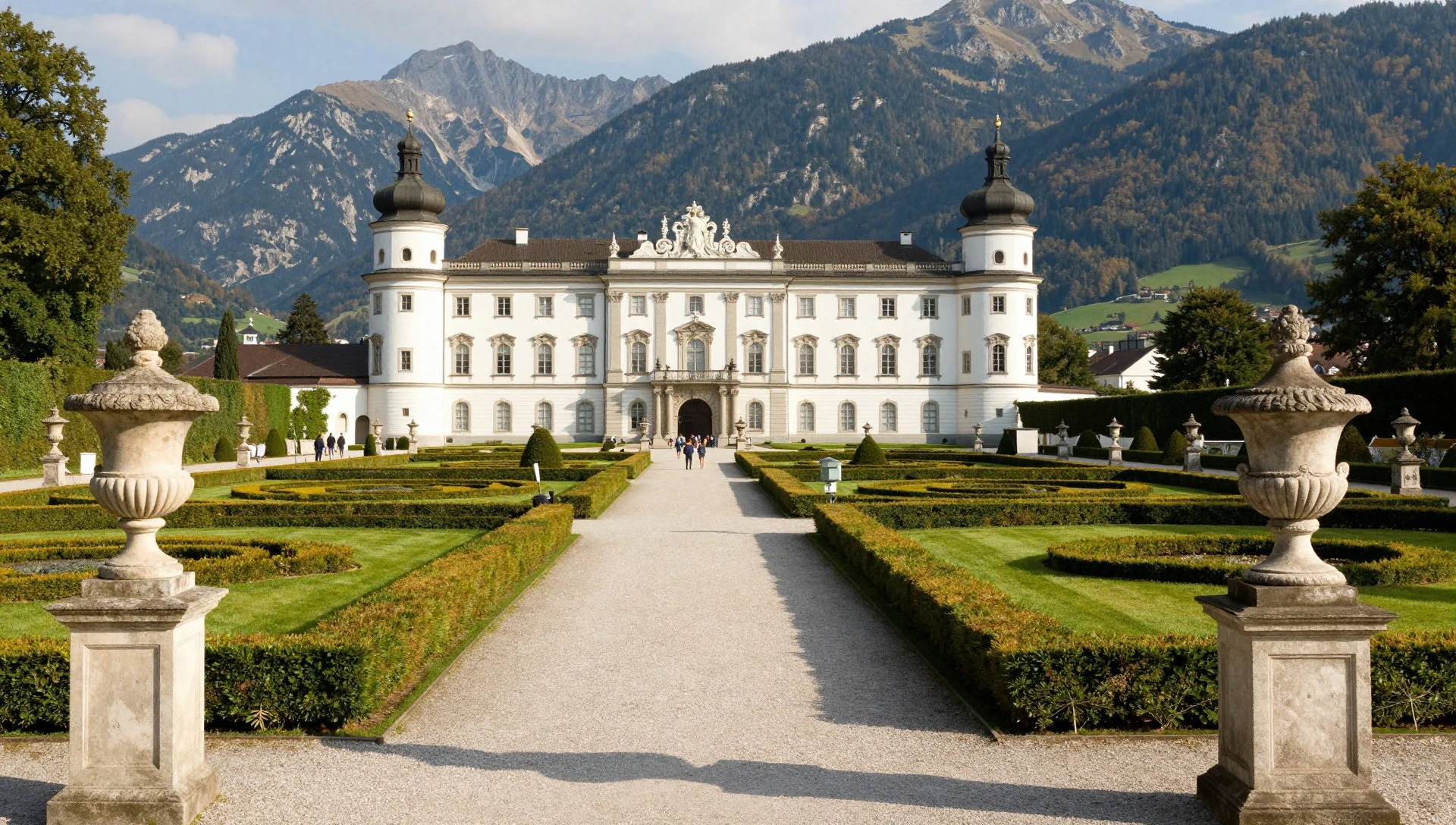
- Bergiselschanze — Bergisel
The Bergiselschanze is the ski jump on Innsbruck's Bergisel hill, south of the centre. Zaha Hadid designed the jump in 2001, replacing the stadium used for the Winter Olympics in 1964 and 1976. The ramp reads as sporting architecture and as a lookout over the Inn valley and the Nordkette. Between events the hill is simply a walk along the city's southern edge.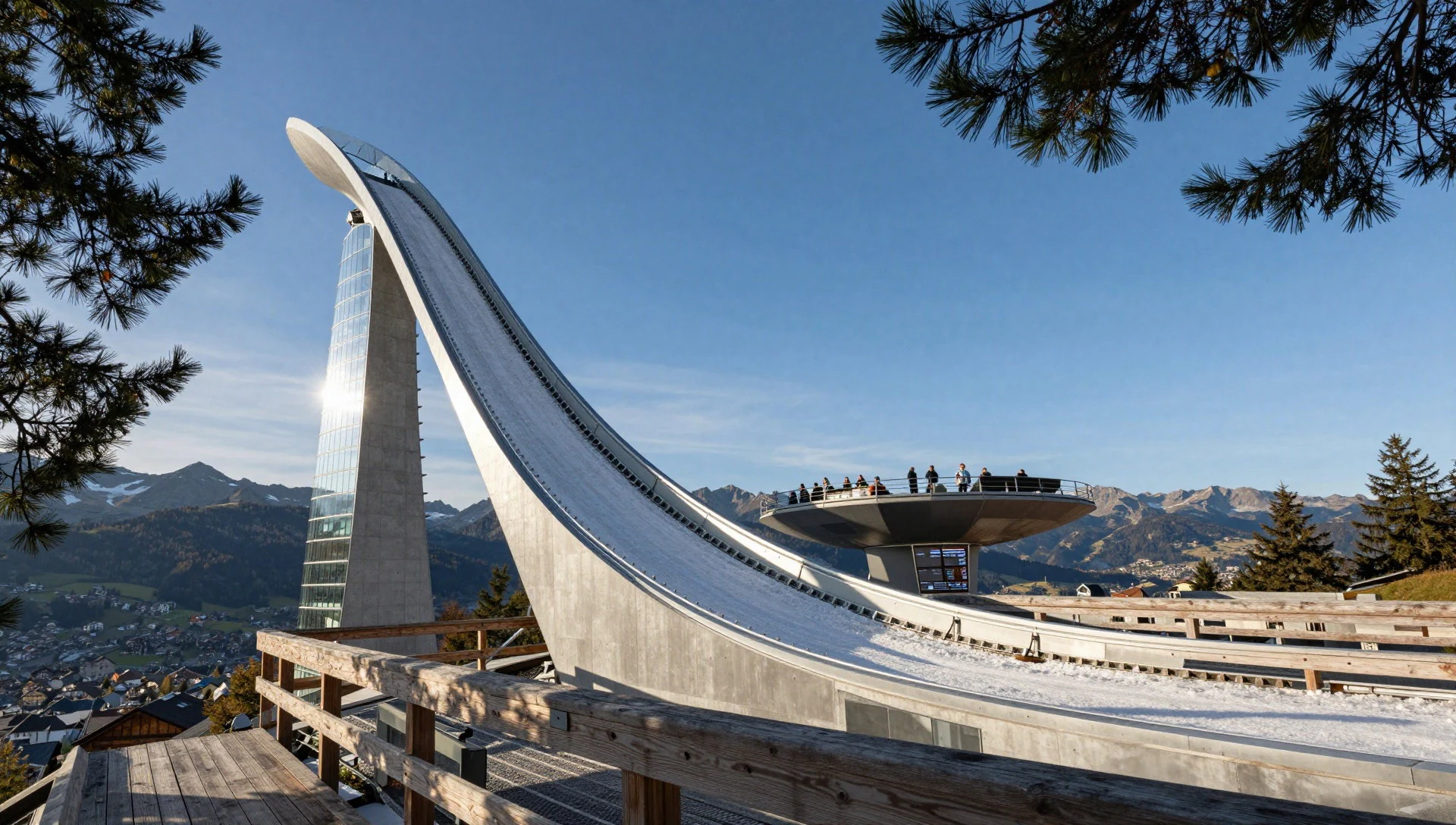
Culture
Innsbruck organises a civic year that runs from the ski slopes to a handful of regular festivals. Winter sport is the dominant custom: skiing and ski-jumping in the cold months, mountaineering once the snow pulls back, with the Nordkette reached by cable car and further chairlifts higher on the ridge. Other ski areas used from the city include Axamer Lizum, Muttereralm, Patscherkofel, Igls, Seefeld, Tulfes and the Stubai Valley. The festival list is short and steady. Tanzsommer is the summer dance season; the Innsbrucker Festwochen der Alten Musik, the Festival of Early Music, is given over to period performance; Bergsilvester marks New Year's Eve on the mountain; the Christkindlmarkt is the Christmas fair; and Los Gurkos is a short-film festival. Local memory also includes a 1971 afternoon when Douglas Adams, the worse for drink on a patch of Innsbruck grass, conceived The Hitchhiker's Guide to the Galaxy; Towel Day, kept each 25 May since 2003, nods to that book. In Innsbruck's churches, keep your voice low, step aside for anyone praying, and take photographs only where a sign or a steward allows it.
What to wear
Innsbruck keeps Tyrolean Tracht for feast days, club gatherings and the Christmas fair, not as everyday office dress. For women the Dirndl is a bodice over a blouse, a full skirt and an apron; the cloth is usually wool or a wool-cotton mix, with a sturdier weave for winter. For men, Tracht means leather breeches or long leather trousers, a woollen jacket, stout shoes and often a felt hat with a tuft of chamois hair or a small feather. Loden, a dense fulled wool that turns rain, is the alpine textile that shows up in coats and capes when the weather closes in. Those clothes signal a festival, a band, or a family occasion. On an ordinary weekday the city looks like any other alpine centre of its size: waterproof shells, knitwear, dark coats, trainers on the pavements and full ski kit on the bus towards the Nordkette. Shop staff and office workers are not in Dirndl at lunchtime. The visitor's packing list follows the gap between valley and ridge. At 574 metres the streets can feel mild while the cable-car platform is in the wind, so a warm layer and a coat that blocks drizzle matter more than smart tailoring. Churches expect covered shoulders and a hat taken off; mountain paths and hut steps want shoes with a real sole, not thin town footwear. Tracht is welcome at a festival and unnecessary as a costume for walking the old town.
What to eat
- Tiroler Gröstl — a Gasthaus in the old town
Innsbruck's Gasthäuser serve Tiroler Gröstl as a mountain plate: potato, onion and beef or pork fried in a pan, often finished with a fried egg. It is the sort of dish a tavern puts out at lunch for people coming off the Nordkette.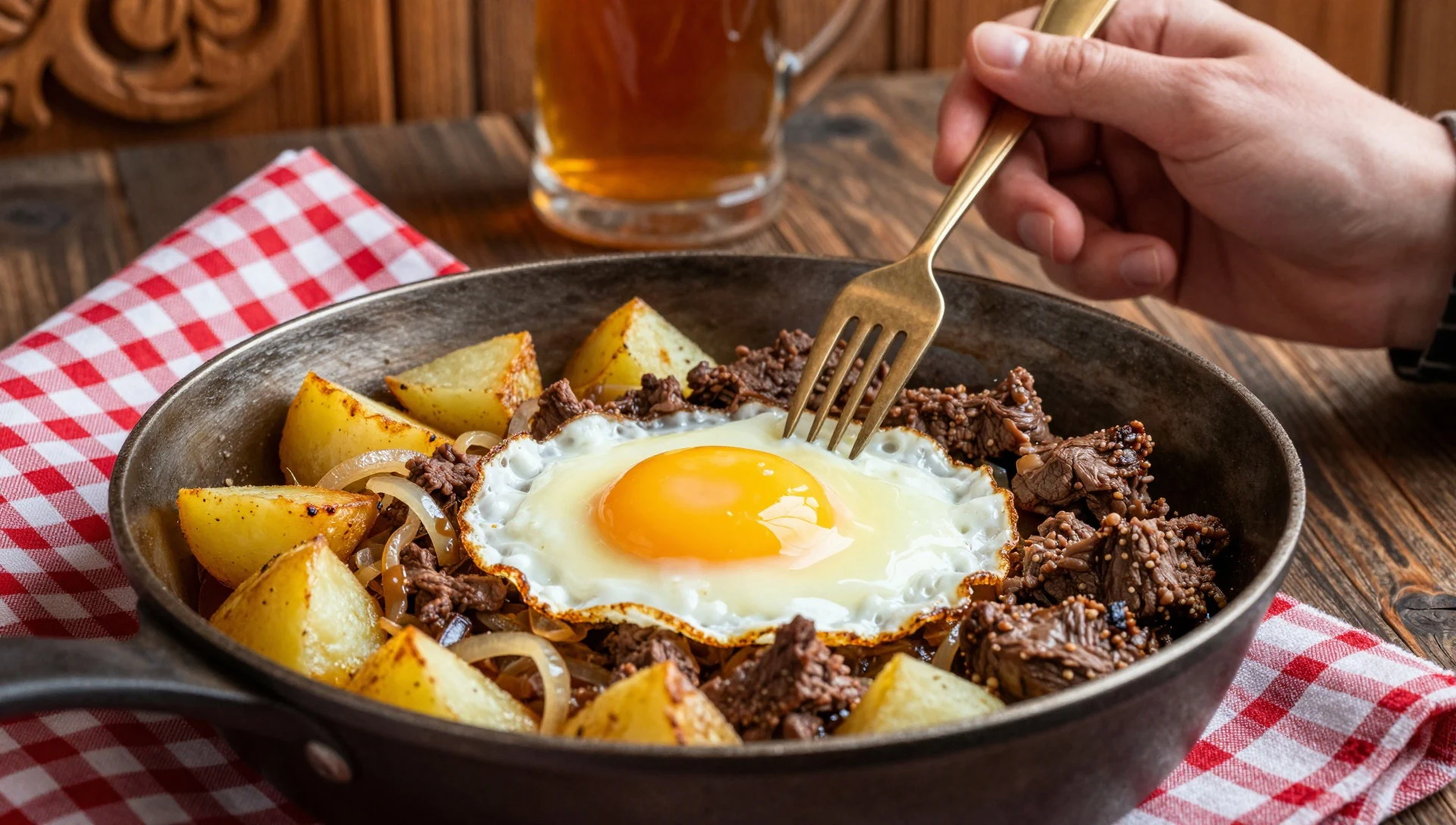
- Speckknödel — a traditional tavern
Speckknödel are Innsbruck's bacon dumplings, made from stale bread, egg and slices of cured Tyrolean ham, then simmered. Taverns serve them in a clear broth or beside sauerkraut. The portion is filling, which suits a cold valley day. They are everyday tavern food.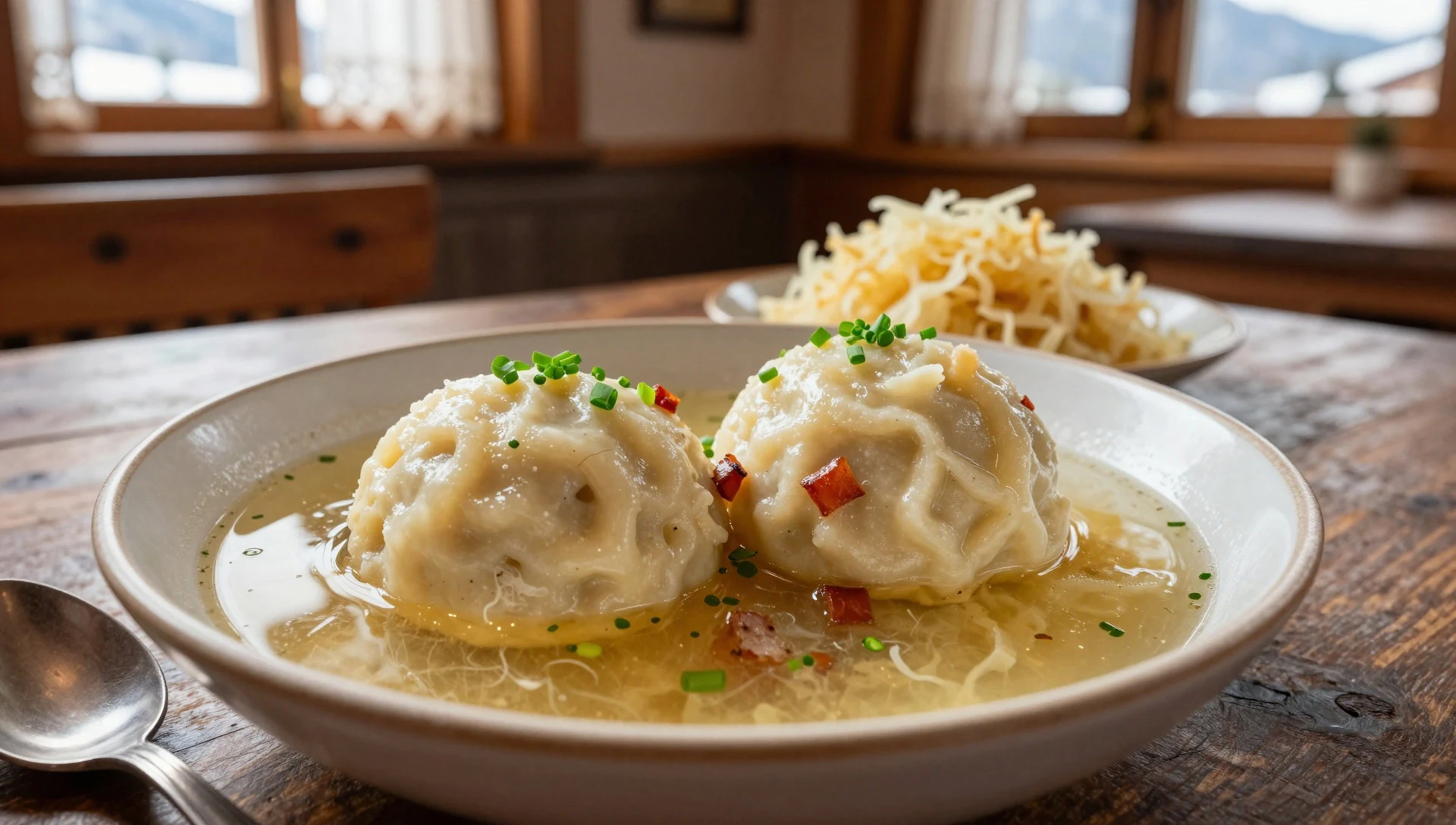
- Kaiserschmarrn — a café or a mountain hut
Kaiserschmarrn in Innsbruck is a shredded pancake, torn in the pan and dusted with sugar, usually with apple or plum compote. Cafés in the old town serve it through the afternoon, and huts above the city serve it after a walk. It arrives as a sweet plate. - Apfelstrudel — the café at the Bergisel ski jump
Apfelstrudel is the apple pastry associated with Innsbruck's mountain cafés. The café on top of the Bergisel ski jump serves it with the city and the peaks spread out beyond the tables. Thin pastry holds apple, sugar and spice. - Käsespätzle — a mountain hut or a Gasthaus
Käsespätzle are egg noodles with melted cheese and fried onion, common in Innsbruck both in town Gasthäuser and in huts on the Nordkette. It is served as a hot lunch in a hut or a tavern.
Plan it
Best time. Innsbruck is a winter-sports city, so the skiing months are the obvious time for the Nordkette, Axamer Lizum, Patscherkofel, Igls, Seefeld, Tulfes and the Stubai Valley. Summer suits mountaineering and walking on the same hills. The old town, the churches and Ambras Castle do not depend on snow. Crowds build in the school-holiday weeks of the ski season and around Bergsilvester; the municipal website is the place to check lift status.
How long. 3–4
Getting there. Innsbruck Airport has scheduled flights from Vienna, Frankfurt, London and other European cities, plus extra winter charters in the skiing season. Bus line F covers the last leg into the city centre. Confirm current routes on the municipal site at https://www.innsbruck.at/.
Budget. mid
Tips
- Book mountain huts and popular lifts ahead when schools are on holiday in the ski season.
- Use the morning for the Hofkirche and the cathedral, before coach parties reach the old town.
- Carry a warmer layer for the Nordkette cable car than the valley alone would suggest.
- Confirm opening days for Ambras Castle and the churches on the municipal website before setting out.
- Leave extra time for the airport bus in the skiing season, when winter charters add traffic.
Etiquette
- In churches, keep quiet, uncover your head, and cover shoulders.
- Stay on marked pistes and paths; the hills above Innsbruck are working sports grounds as well as scenery.
- Ask before photographing festival performers or anyone in Tracht who is not posing for visitors.
Nearby
Sources
- Wikidata Q1735 (CC0)
- Wikipedia (rev 1381825322) (CC BY-SA 4.0)
- Wikivoyage (rev 5405211) (CC BY-SA 4.0)
- Photo photos/01-innsbruck-panoramio-45.jpg (CC BY 3.0)
- Photo photos/02-b-rgerstra-e-26-24-bt0a2830.jpg (CC BY-SA 4.0)
- Photo photos/03-conradstra-e-12-img-0688.jpg (CC BY-SA 4.0)
- Photo photos/04-panorama-insbruck4.jpg (CC BY 3.0)
- Photo photos/05-austria-01454-wilten-abbey-21402649823.jpg (CC BY-SA 2.0)
- Photo photos/06-schloss-ambras-panoramio-2.jpg (CC BY 3.0)
- Photo photos/07-albrecht-d-rer-view-of-innsbruck-wga7356.jpg (Public domain)
- Photo photos/08-schlo-ambras-merian.jpg (Public domain)


