Koh Ker
Koh Ker, Cambodia
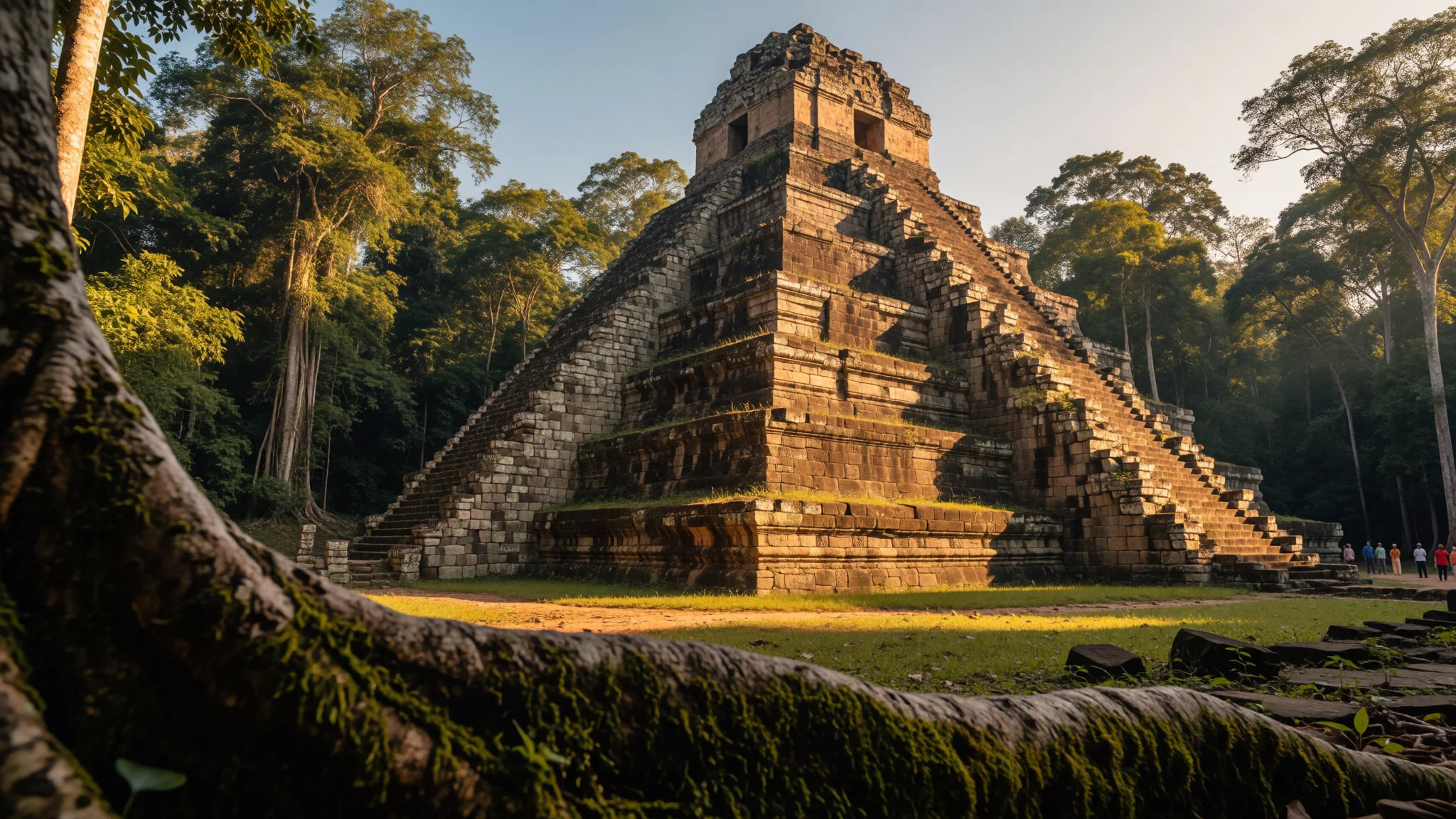
Koh Ker is a remote, jungle-swallowed former imperial capital featuring a soaring seven-tiered pyramid and dozens of scattered sanctuaries waiting to be discovered.
The place
Koh Ker sits as a remarkably remote archaeological treasure tucked away in northern Cambodia, far removed from the bustling tourist corridors of Angkor. Enclosed by dense, quiet jungle foliage, the zone covers a protected forest expanse where nature and ancient stone have steadily intertwined. More than one hundred and eighty individual sanctuaries have been documented across this forested terrain, though only a fraction of them are accessible to visitors due to the sheer density of the woods and lingering safety boundaries. The modern name designates what was once a powerful imperial seat during a fascinating chapter of the Khmer Empire's medieval history. In historical inscriptions, the urban centre appeared under names that translated to the city of lingams or the iron tree forest, reflecting its deep spiritual roots and rugged woodland surroundings. While the core monuments have been cleared and made safe, the surrounding forest still holds countless silent ruins draped in roots, lichens, and fallen leaves, giving travellers the rare sensation of stumbling upon a forgotten world rather than walking through a manicured heritage park. The climate here is deeply tropical, swinging between intense dry heat and humid monsoon rains that turn the red dirt roads into challenging tracks. Visitors arrive primarily to witness monumental stone architecture utterly swallowed by the wilderness, far from the standard tourist coaches.
Its story
Koh Ker entered its brief golden age when King Jayavarman IV ascended the throne and established the settlement as the primary seat of the entire empire. Historians debate whether he was a clever usurper who retreated to his personal stronghold or a legitimate royal heir who married into the bloodline, but his ambitions for the remote jungle city were undeniable. Under his direction, and subsequently under his successor Harshavarman II, an extraordinary building campaign transformed the woodland into a grand capital complete with a monumental reservoir known as the Rahal and dozens of temples. This feverish construction effort relied on a rigorous taxation system recorded in surviving epigraphs. The sculptors of the era developed a distinct, vigorous artistic style, chiselling massive dynamic statues of deities and mythological figures that represented a pinnacle of Khmer craftsmanship. Following this intense burst of imperial patronage, the court eventually shifted its central administration back toward the south, leaving the forest sanctuaries to the care of the encroaching trees. For centuries, the temples slumbered undisturbed in the wilderness, visited only by local villagers and forest foragers until modern researchers and preservationists began mapping the scattered ruins. Today, the dramatic history of Jayavarman IV's audacious jungle capital survives entirely through these weathered sandstone blocks, mossy inscriptions, and towering pyramid steps that pierce the jungle canopy.
What to see
- Prasat Thom and Prang — Central temple zone
Koh Ker features this extraordinary main temple complex, beginning with linear twin structures often called palaces. Behind them rises the famous seven-tiered sandstone pyramid, an architectural masterpiece that served as the grand state temple during the reign of the empire's ambitious rulers. - The Rahal Reservoir — North of the main road
This massive ancient water tank stretches across the landscape, capturing the engineering scale of the old imperial capital. Although largely dry today and heavily colonised by surrounding trees, catching a glimpse of its broad earthen embankments from the approach road reveals how vital water management was. - Prasat Pram — Southern sector
Koh Ker includes this captivating temple featuring a walled enclosure, three weathered brick towers, and two separate shrines. One of the stone towers is dramatically embraced and consumed by hundreds of thick, snake-like tree roots that cascade down the ancient masonry. - The Official Ticket Office — Main access road
Visitors must stop at this mandatory administrative checkpoint situated along the approach route to secure entry permits before proceeding deeper into the scattered sanctuary zones. Rangers and staff here manage access passes and provide the necessary orientation for exploring the wider forest area. - Prasat Krachap — Eastern sanctuary loop
Koh Ker contains these evocative brick and sandstone ruins whose collapsing towers stand as silent witnesses to centuries of tropical weather. The fallen lintels and weathered carvings scattered across the mossy ground highlight the raw, unrestored atmosphere that makes exploring these distant jungle temples so memorable. - Banteay Pichean — Outer archaeological zone
Koh Ker visitors exploring the quieter forest tracks will discover these fragmented sanctuary towers. Their breached walls and scattered stone blocks provide a striking look at how relentless jungle roots and time have steadily dismantled the once-proud medieval masonry of the Khmer empire.
Culture
Koh Ker holds a profound spiritual heritage deeply rooted in ancient Hindu traditions, long before it became the short-lived capital of the Khmer empire. Centuries ago, the woodland sanctuaries were dedicated primarily to the worship of Shiva, housing monumental stone lingas that testified to intense religious devotion. Because subsequent rulers shifted their administrative centres elsewhere, these remote jungle shrines largely escaped the later Buddhist conversions and structural modifications seen at other major historical sites across Cambodia. Today, the surrounding rural community lives a quiet, traditional agrarian life, occasionally interacting with curious travellers exploring the woodland paths. Local children attend a nearby village school and appreciate having their study time respected without daily interruptions from passing visitors seeking impromptu classroom tours. Always respect local village classrooms by not walking uninvited into learning spaces during school hours.
What to wear
Koh Ker and the surrounding Cambodian countryside see locals dressed in practical, lightweight clothing suited for heavy tropical heat and daily farm work. Traditional textiles such as hand-woven cotton and silk scarves known as krama remain ubiquitous across rural communities, worn wrapped around the neck or head for protection against the glaring sun and dust. Younger generations in nearby villages typically wear casual contemporary shirts, trousers, and sandals for everyday mobility. For travellers visiting the archaeological monuments, dressing sensibly is both a mark of respect and a practical necessity against the elements. Visitors should wear breathable, lightweight clothing that covers shoulders and knees to honour local religious customs at sacred sanctuaries. Sturdy walking shoes or trainers are essential for navigating uneven stone steps, broken masonry, and unpaved jungle tracks. A wide-brimmed hat, sunglasses, and a reliable waterproof layer or umbrella are also indispensable gear for coping with sudden tropical downpours and intense open-air sun exposure during your explorations.
What to eat
- Open-Air Noodle Soup — Prasat Thom parking area
Simple roadside food stalls near the Prasat Thom parking area serve steaming bowls of fragrant noodle soup with fresh herbs, offering a comforting and warming meal right beside the ancient temple ruins. - Fried Rice with Fresh Catch — Open-air refreshment stalls
Local cooks prepare hearty plates of stir-fried rice tossed with regional vegetables and occasionally fresh fish sourced from nearby waters, providing a satisfying energy boost for afternoon exploration. - Green Coconut Juice — Temple parking refreshment huts
Chilled whole coconuts hacked open on the spot provide icy, naturally sweet juice that serves as the ultimate refreshing remedy against the stifling tropical heat of the jungle. - Rural Khmer Cafes — Sray Yong village
The nearby village of Sray Yong features basic local eateries offering traditional home-style Cambodian dishes and sweet iced coffee for travellers seeking an authentic local meal away from the monuments.
Plan it
Best time. November through February offers the most agreeable weather with comfortable temperatures and lower humidity, whereas the rainy season brings muddy roads and high moisture.
How long. 1–2
Getting there. Hire a private car or taxi from Siem Reap for the journey northeast along paved national roads, transitioning to well-maintained local tracks for the final approach.
Budget. mid
Tips
- Leave Siem Reap early in the morning to maximize daylight hours at the temples.
- Carry sufficient cash for admission tickets, refreshments, and local transport.
- Never stray off cleared paths due to the genuine lingering danger of landmines.
- Wear sturdy footwear and watch out for occasional small venomous snakes in the grass.
- Order evening meals well in advance if dining near the site before cooks head home.
Etiquette
- Do not attempt to climb the upper tiers of the pyramid temple, as it is dangerous and strictly forbidden.
- Dress modestly with covered shoulders and knees when exploring sacred sanctuary grounds.
- Respect local school children by avoiding uninvited visits to classrooms.
Nearby
Sources
- Wikidata Q1778458 (CC0)
- Wikipedia (rev 1365403176) (CC BY-SA 4.0)
- Wikivoyage (rev 5426175) (CC BY-SA 4.0)