Callao Cave
Callao Cave, Philippines
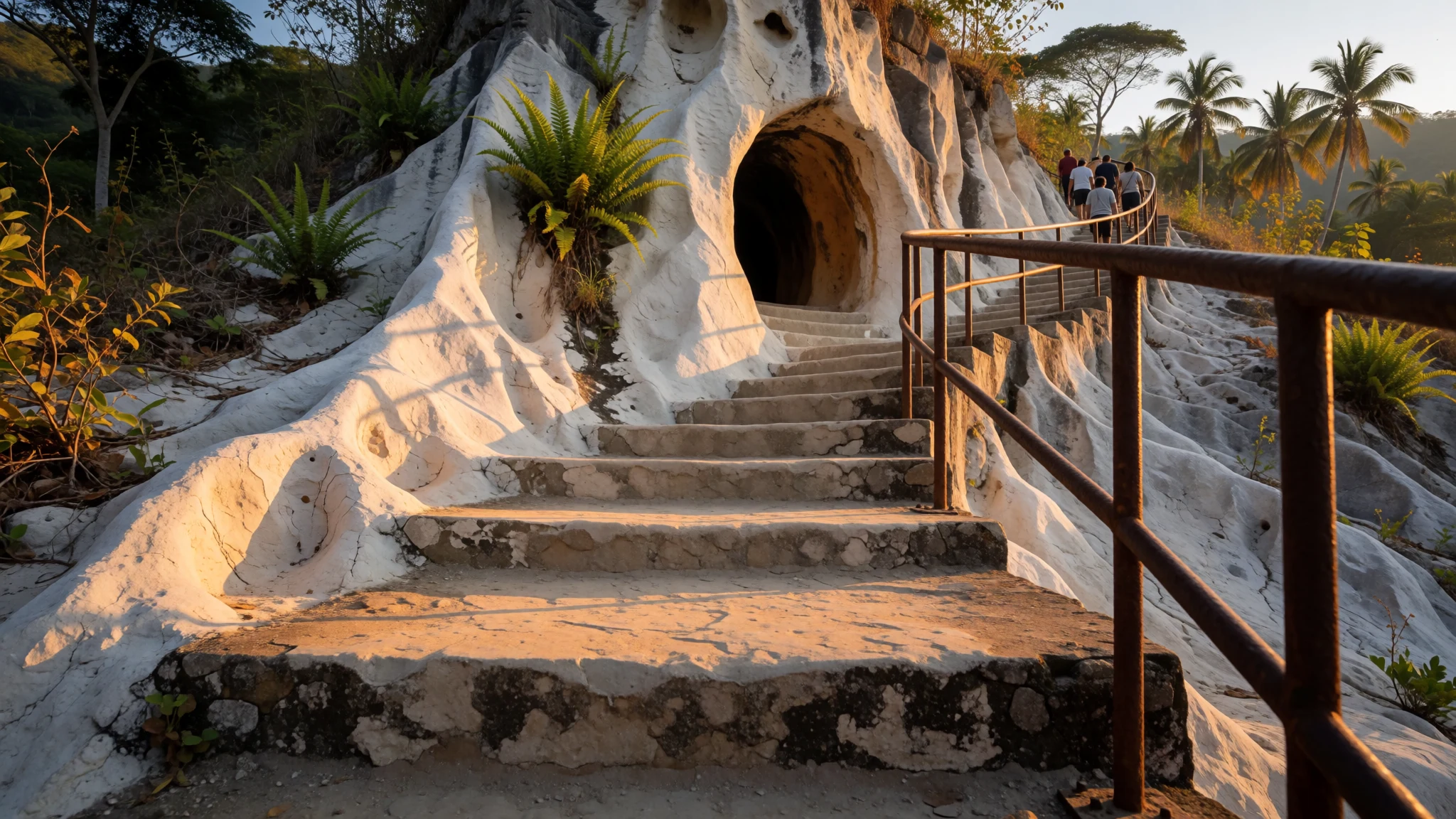
Callao Cave in Cagayan is a daylit limestone cave with a chapel inside, and the place where a new human species was identified.
The place
Callao Cave sits in Peñablanca, a municipality of Cagayan province in the north-east of Luzon, where the western foothills of the Northern Sierra Madre meet the Cagayan valley. The entrance is about 177 m above sea level and roughly 24 km north-east of Tuguegarao, the provincial capital, inside the Peñablanca Protected Landscape and Seascape. The town's name is Spanish for white rocks, and the pale limestone behind the name is everywhere: low cliffs, bare outcrops and a countryside pocked with caves, some 300 of them. Callao is the one set up for visitors. A stairway climbs from the car park to the mouth, and inside, seven chambers open one after another, lit mostly by daylight falling through holes in the roof. Guides point out formations with names such as the column, the skeleton and the elephant's head, and in the brightest chamber a small chapel has been placed among the rock, its altar under a shaft of light. The air inside is cooler and damper than the valley outside, which in the dry season is a real relief. Callao is also an archaeological site of international interest, because fossils found in this cave led to the description of a new human species. Most visitors come as a day trip from Tuguegarao, and weekends and holidays are the busiest times, so a weekday morning is calmer.
Its story
Callao Cave is known to archaeologists for what was found in it, not only for its chambers. Cagayan has been lived in since prehistoric times, and the valley holds shell middens and other traces of early hunter-gatherers who lived largely on molluscs. Later, Austronesian-speaking migrations brought the ancestors of groups such as the Ibanag, Gaddang and Itawes, and traders from China and Japan were calling on the coast long before the Spanish expedition of 1581 arrived to explore the lands north of the Caraballo range and convert the people to Catholicism. The cave itself was first excavated in 1980. Its biggest surprise came later. Fossil bones from the deposits were documented in 2007 by a team from the University of the Philippines Diliman led by Armand Salvador Mijares, and they were understood to be the remains of an archaic human who lived in the Late Pleistocene. In 2019, further study confirmed that they belonged to a previously unknown and now extinct human species, named Homo luzonensis and nicknamed Callao Man. The find matters because it adds an island in Southeast Asia to the picture of early human diversity, and it is why the cave now turns up in science books as well as on tour itineraries. The Philippine state has since recognised the site as an important cultural property. What visitors walk through is the show-cave route; the science happened in the trenches and laboratories.
What to see
- The entrance stairway and first chamber — Peñablanca, Cagayan
Callao Cave begins with a climb up a stairway from the car park, and the first chamber is a good place to adjust to the light and the damp cool. Tall white walls rise on all sides and the floor is slick in places. Take a moment here before the guides start naming formations.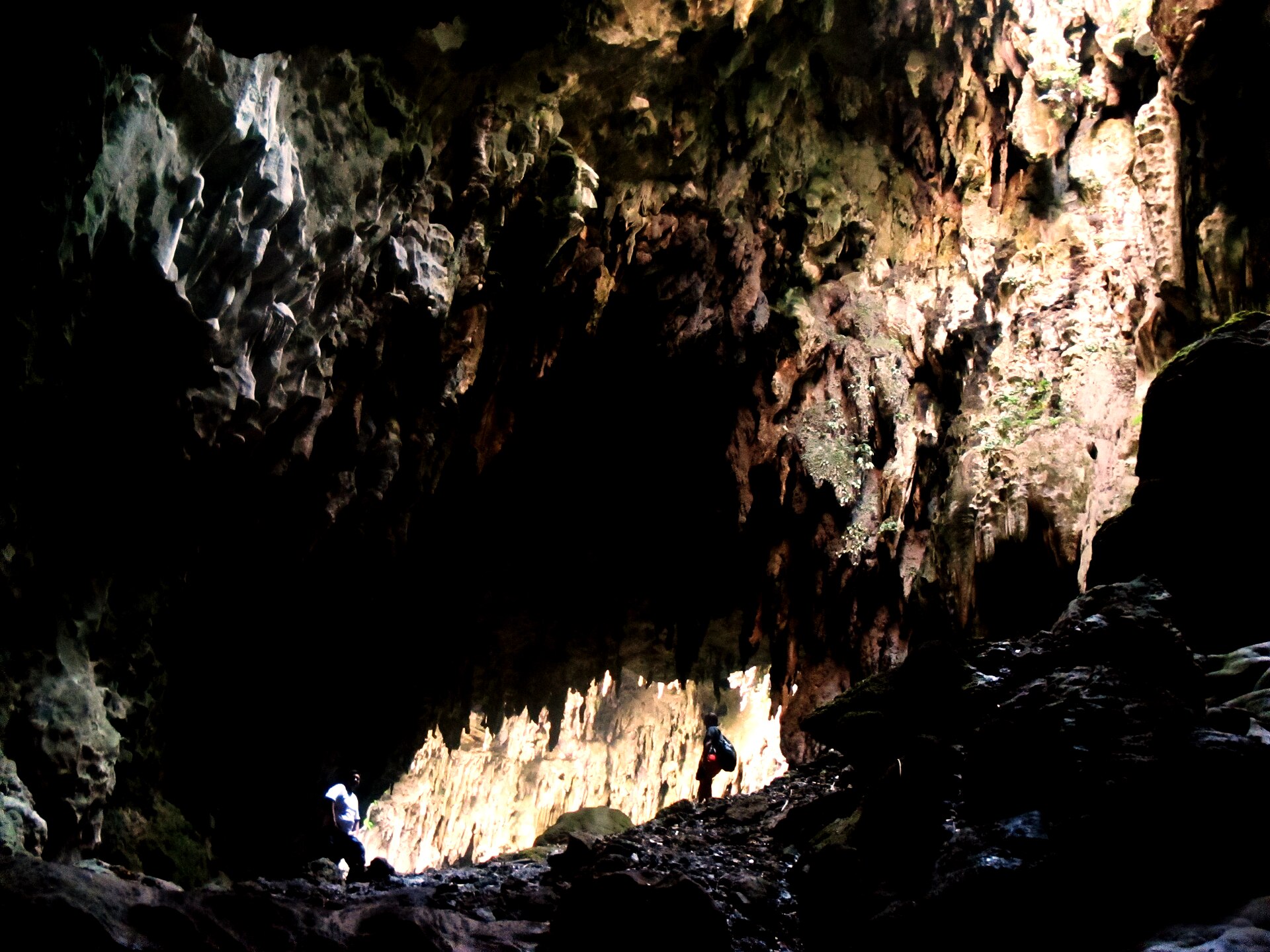
- The chapel chamber — Callao Cave, Peñablanca
Inside Callao Cave, the chapel is the image most people remember: a simple altar and pews set beneath an opening in the roof, with a column of daylight falling straight onto it. It is a working religious space as well as a photo stop, so it rewards a slower, quieter visit.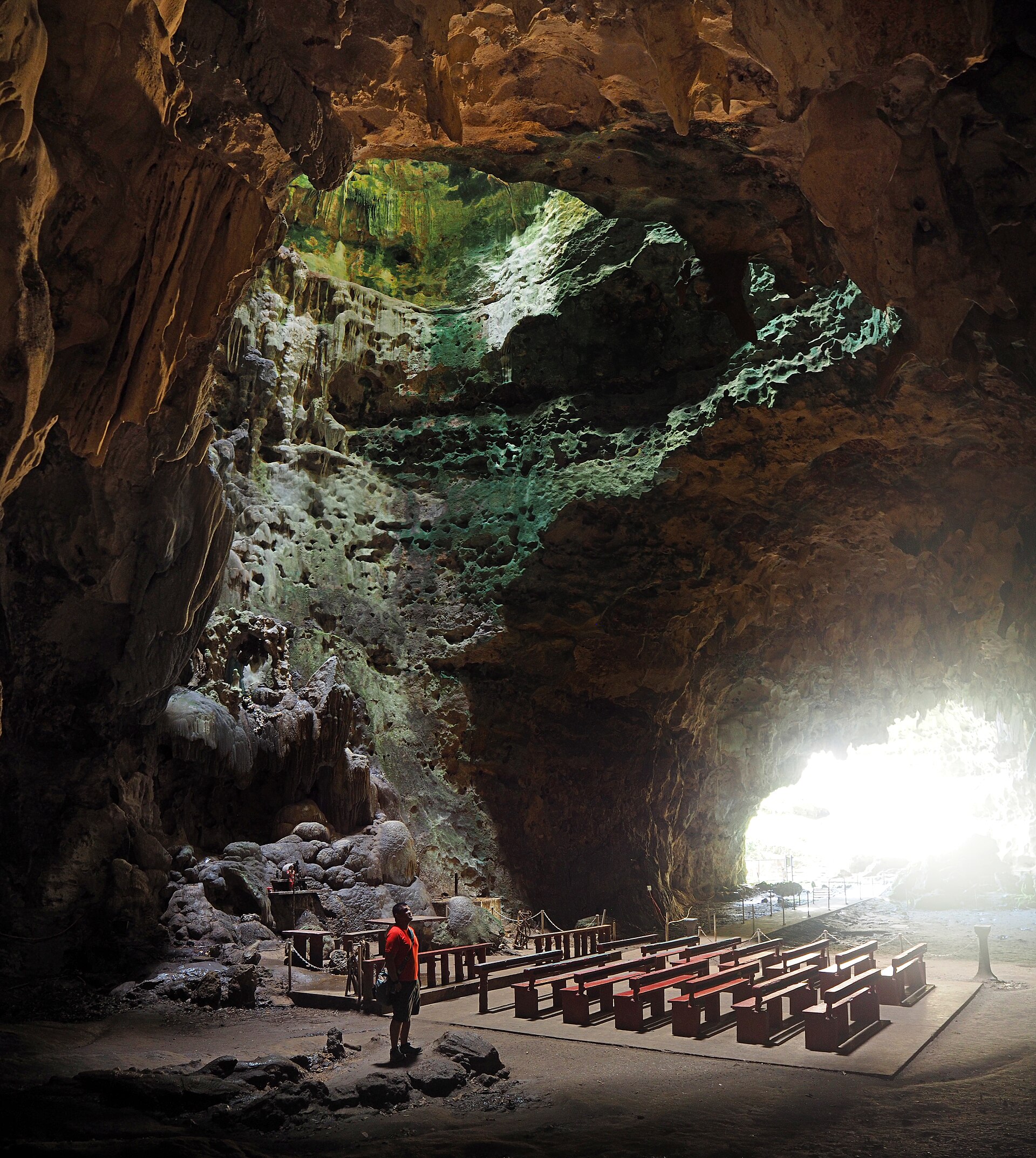
- The skylight chambers — Callao Cave, Peñablanca
Callao Cave's later chambers are lit by openings in the ceiling, and the beams cut through dust and moisture on clear mornings. Formations here include the skeleton and the elephant's head, which guides point out. Light is best around midday, though that is also when visitor numbers peak.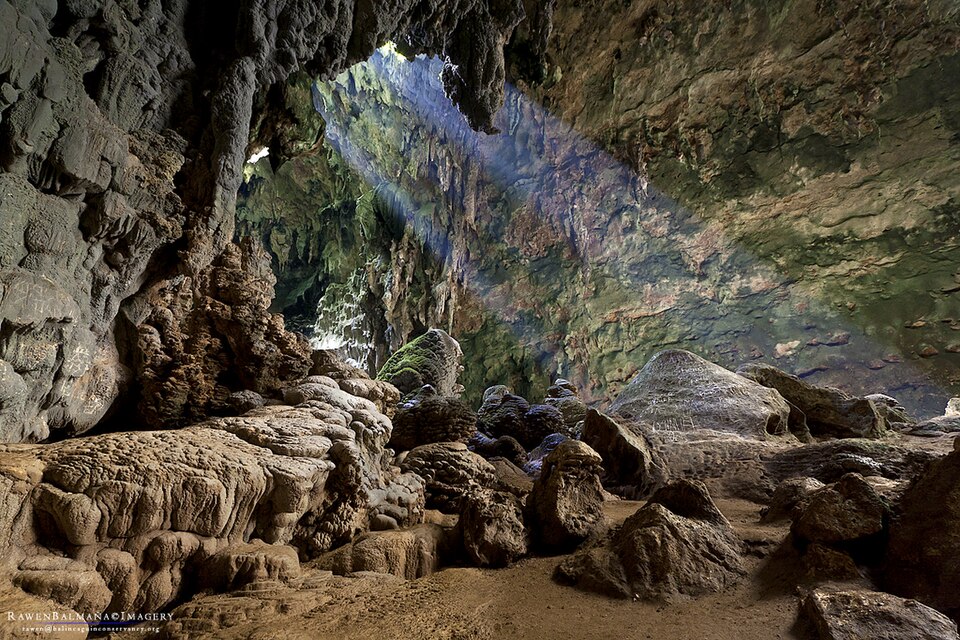
- Duba Cave — Baggao, Cagayan
Near Callao Cave, in the municipality of Baggao, Duba Cave is a wet river cave that is best treated as a swimming trip. Much of the route towards the Skylight Falls has walls with no handholds, so swimming is the only way through. A lifejacket is sensible, and local guides are the way to arrange it. - Kalamudinan Falls — Santa Margarita, Baggao
Kalamudinan Falls lies in Baggao, a day trip from the cave country, and drops from a considerable height into a pool locally known for its freshwater shrimp, called udang. It is a scenic stop for those with a vehicle and time. Ask in Tuguegarao about road conditions after rain.
Culture
Callao Cave is a place where geology, faith and science sit unusually close together. Cagayan was under Spanish rule for centuries, and Catholicism runs through local life, from town fiestas to roadside shrines, which is why a chapel inside a cave strikes locals as natural rather than odd. The province is home to several Philippine peoples, among them the Ibanag, Gaddang and Itawes, each with its own language, alongside Ilocano speakers whose families came from the west. Filipino and English are widely understood, and a few words of greeting go down well. Earlier inhabitants, believed to include the Atta, a Negrito people, were pushed towards the eastern mountains as farming communities spread. Hospitality is a point of pride in the valley, and visitors are often asked where they are from; a short friendly chat is part of the exchange. Local guides work from the entrance, and they are worth asking about the formations and the stories behind them. The cave's scientific fame, tied to the discovery of Homo luzonensis, is a source of local pride, and people are glad to talk about it. In the chapel chamber, keep your voice low, do not touch the formations or lean on the altar, and ask the guide before using flash or photographing anyone who is praying.
What to wear
Callao Cave lies in a Filipino province where the national formal dress is the barong tagalog, a light, sheer, embroidered shirt worn untucked, often made from piña (pineapple leaf fibre) or abaca blends, and the terno, a dress with raised butterfly sleeves. Both appear at weddings, fiestas and official events rather than daily life. Hand-woven cloth traditions differ between the Ibanag, Itawes, Ilocano and other communities of the north, and the best way to learn about them is to ask at a local market or town hall. Day to day, people in Tuguegarao and Peñablanca wear cotton T-shirts, shorts or light trousers, sandals or trainers, and caps against the sun. Visitors should dress for heat and wet rock. Summer temperatures can reach 40 °C in the Tuguegarao area, so choose breathable, quick-drying clothes and a hat. Sandals or shoes with real grip matter more than style, since cave steps and floors are damp and slippery. Carry a light layer for the cooler chambers and a rain jacket for the wetter months. Shoulders and knees do not need to be covered everywhere, but modest dress is the polite choice in the chapel and in town churches. For Duba Cave or waterfalls, bring swimwear, a change of clothes and a dry bag.
What to eat
- Pancit Batil Patong — Eateries around Tuguegarao city
Tuguegarao's famous noodle dish, usually stir-fried noodles topped with a fried egg and minced carabao meat, finished with a spicy broth and a squeeze of calamansi. A filling lunch after a morning in the cave. - Giant crabs of Buguey — Coastal town of Buguey and its seafront eateries
Buguey, on the coast of Cagayan, is known for its large crabs, usually served boiled or in a rich sauce. They are a coastal treat rather than a cave-side snack, so plan them as a separate trip towards the sea. - Gakka — Markets and eateries in coastal Cagayan
A tiny shell, eaten in small quantities as a local snack or side dish, and one that locals say is hard to resist. Ask in a market what is in season and how it is cooked that day. - Carabao milk candy — Alcala and Lal-lo, or stalls along the main roads
A soft, sweet milk candy made from carabao milk. The towns of Alcala and Lal-lo compete over who makes the better version, though Alcala's is easier to find outside its home town. Good as a gift or road snack. - Chicharabao — Roadside stalls and public markets in Cagayan
Crisp fried skins made from carabao instead of the usual pork. They are salty, crunchy and a fair match for a cold drink. Buy them fresh, and ask for a sample first if unsure.
Plan it
Best time. March–April, when the weather is warm but before the peak heat of summer, which can reach 40 °C around Tuguegarao. Cagayan has dry spells even in the monsoon months from June to October unless a typhoon hits directly, while sustained rain is common from November to February. Rivers can flood in the wet season, which affects access to Duba Cave and the waterfalls.
How long. 1–2
Getting there. Fly from Manila to Tuguegarao (TUG), or take a bus from Manila or the Ilocos Region to Tuguegarao, where most services terminate. From Tuguegarao, Callao Cave is a road trip of about 24 km to Peñablanca by hired vehicle or local transport; ask in the city for the current options.
Budget. low
Tips
- Go on a weekday morning to avoid weekend and holiday crowds
- Wear shoes with good grip, since the cave steps and floors are wet
- Bring water, sun protection and cash for local guides and small eateries
- Check road and river conditions after heavy rain, as flooding is common in the valley
- Wear a lifejacket for Duba Cave and follow your guide's instructions
Etiquette
- Keep your voice low and do not touch the formations or altar in the chapel chamber
- Ask permission before photographing local people, and especially anyone praying
- Check locally on safety advice before travelling into the highland areas of the Sierra Madre
Nearby
Sources
- Wikidata Q5021779 (CC0)
- Wikipedia — Callao Cave (CC BY-SA 4.0)
- Wikivoyage — Cagayan (CC BY-SA 4.0)
- Photo 01-callao-cave.jpg — Ervin Malicdem (CC BY-SA 4.0)
- Photo 02-callao-cave-9407095908.jpg — mkirader (CC BY 2.5)
- Photo 03-callao-cave-8528368420.jpg — Tessa Pagdanganan (CC BY 2.5)
- Photo 04-callao-cave-rays-of-second-skylight-6965384447.jpg — Rawen Balmaña (CC BY-SA 2.0)
- Photo 05-callao-cave-chapel.jpg — Theglennpalacio (CC BY-SA 4.0)
- Photo 06-callao-cave-penablanca.jpg — Kathleen Mae Tugano (CC BY-SA 4.0)
- Photo 07-callao-cave-penablanca-cagayan.jpg — BiyaheNiDrik (CC BY-SA 4.0)
- Photo 08-callao-caves-tuguegarao-cagayan-5050203828.jpg — elaine ross baylon (CC BY 2.5)


