Bursa
Bursa, Turkey
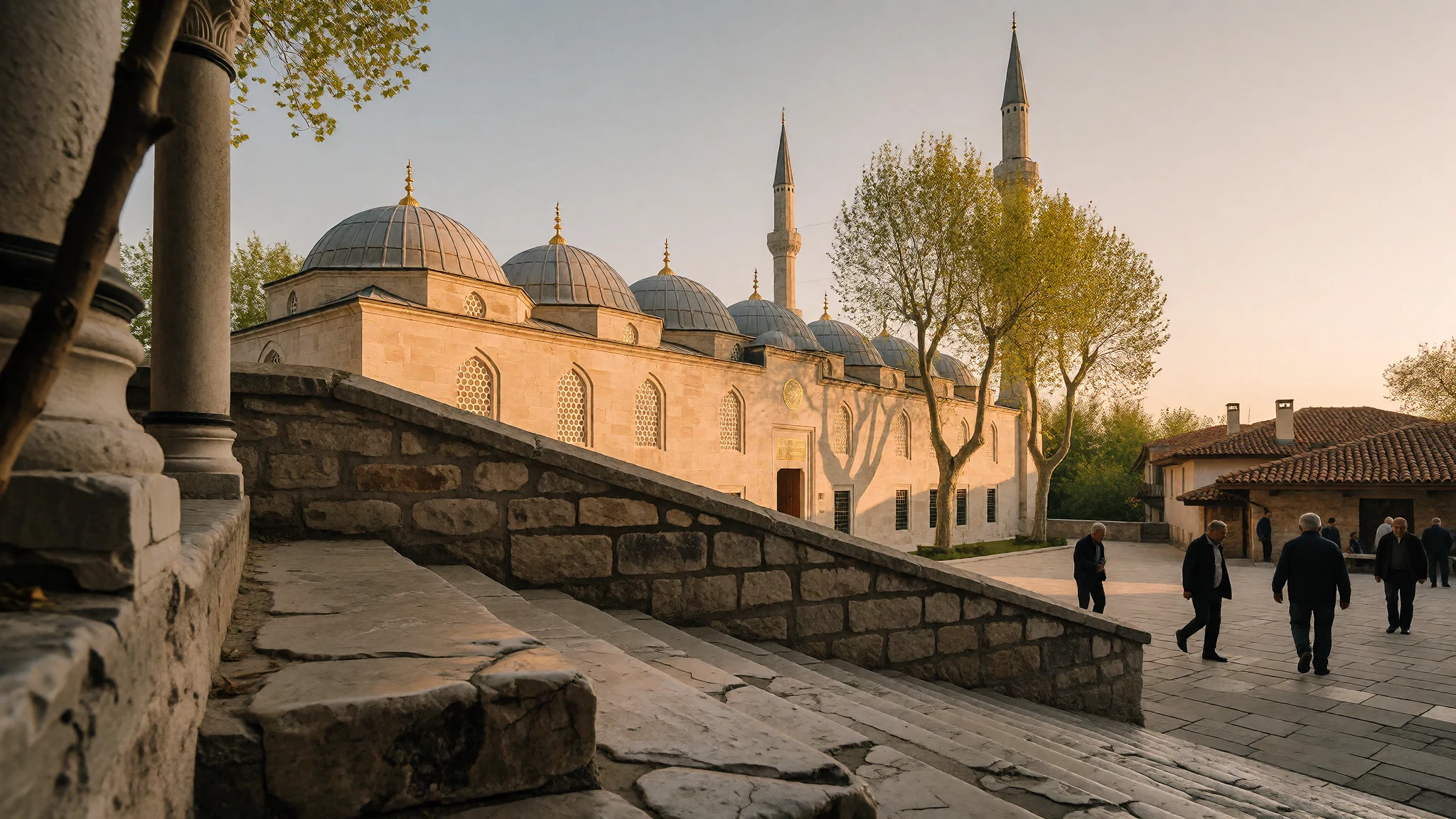
Bursa is an early Ottoman capital with sultans' tombs, silk-trading halls, thermal baths and a ski mountain, all within an easy day from Istanbul.
The place
Bursa lies in north-western Turkey, in the Marmara region, at the foot of Mount Uludağ and about 100 m above sea level. The city has roughly three million people, so it is a large, working metropolis rather than a quiet museum town, and car manufacturing is one of the engines of its economy. Even so, the old core holds together well. Early Ottoman sultans are buried here in domed tombs, and mosques, covered markets, caravanserais and wooden Ottoman houses cluster in a district that can be covered largely on foot, with trams and buses filling the gaps. Its nickname, Yeşil Bursa or Green Bursa, points to the parks, gardens and forests that run through the city and the countryside around it. The mountain behind carries a ski resort in winter and offers cooler air and walking trails in summer, while hot springs, used since antiquity, keep the tradition of the thermal bath alive. Compared with Istanbul, Bursa feels slower and more local, an Anatolian city that happens to hold a great deal of early Ottoman history. Many people come from Istanbul for a day, but a night here is worthwhile, when the bazaar quarter empties and lights come on across the plain. Summers on the plain are hot, and the mountain is the usual escape.
Its story
Bursa's story starts long before the Ottomans. The earliest known settlement in the area was at Ilıpınar Mound, in prehistory. Later, the Bithynian king Prusias I built a city here that took his name, Prusa, and was also called Prusa ad Olympum because it stood beneath the Bithynian Olympus, today's Mount Uludağ. Its hot springs were already famous, and were nicknamed the royal waters. When the last Bithynian king, Nicomedes IV, died, his will handed the whole kingdom to Rome, and Prusa became a Roman town. A letter survives from Pliny the Younger, then governing the province, asking the emperor Trajan for approval to build baths and describing a ruined mansion on the site he preferred. That exchange shows how central bathing was to the town even then. Centuries later the Ottomans, still an ambitious frontier power, took the city and made it an early capital for a few decades before the court moved on. They never abandoned it. Sultans continued to build mosques, markets and tombs here, and the first rulers of the dynasty were buried in the city. The great Grand Mosque was founded by Sultan Bayezid I, and the Green Mosque by Mehmed I, who had reunited the Ottoman lands after a bitter struggle between brothers. Bursa today is a layered record of those choices.
What to see
- Grand Mosque (Ulu Cami) — Central Bursa, near the old bazaar
The Grand Mosque was commissioned by Sultan Bayezid I and designed by the architect Ali Neccar. Twenty domes cover the prayer hall, said to stand in place of twenty separate mosques promised after a military victory. Inside, large calligraphic panels fill the walls. It is a working mosque, so visits fit around prayer times. - Green Mosque (Yeşil Cami) — Yeşil district, east of the centre
Built for Sultan Mehmed I Çelebi, who reunited the Ottomans after their civil wars, the Green Mosque is known for its tilework and the finely carved entrance. Its neighbouring tomb is just as striking in blue-green tiles. The setting on a quiet hillside makes it a calmer visit than the bazaar.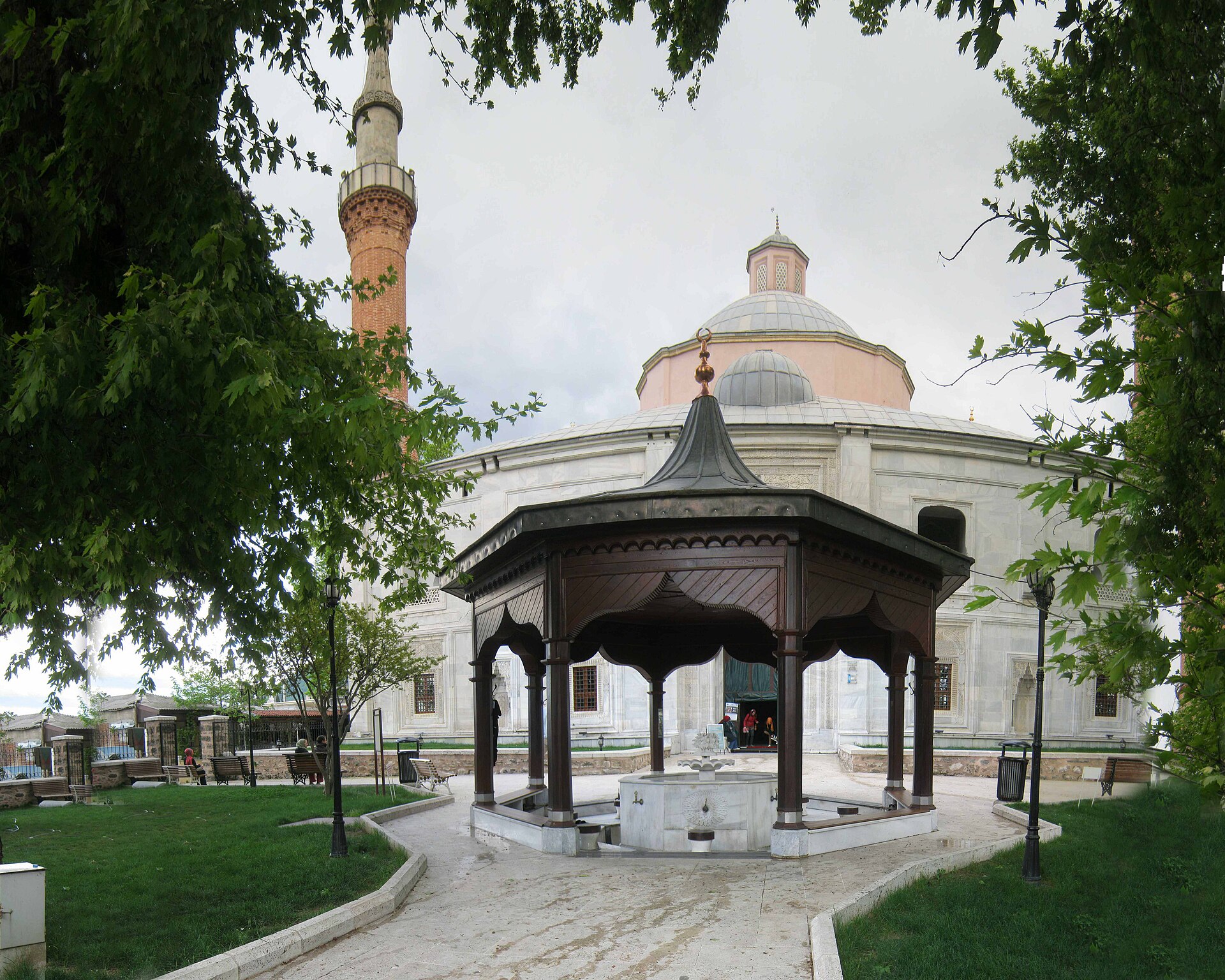
- Koza Han — Old bazaar quarter
This former caravanserai beside the Grand Mosque was the silk market, and silk is still sold here. A courtyard is ringed by two-storey arcades where merchants once lodged and kept offices upstairs. Today the tea garden in the middle is a good place to sit after the bazaar's noise.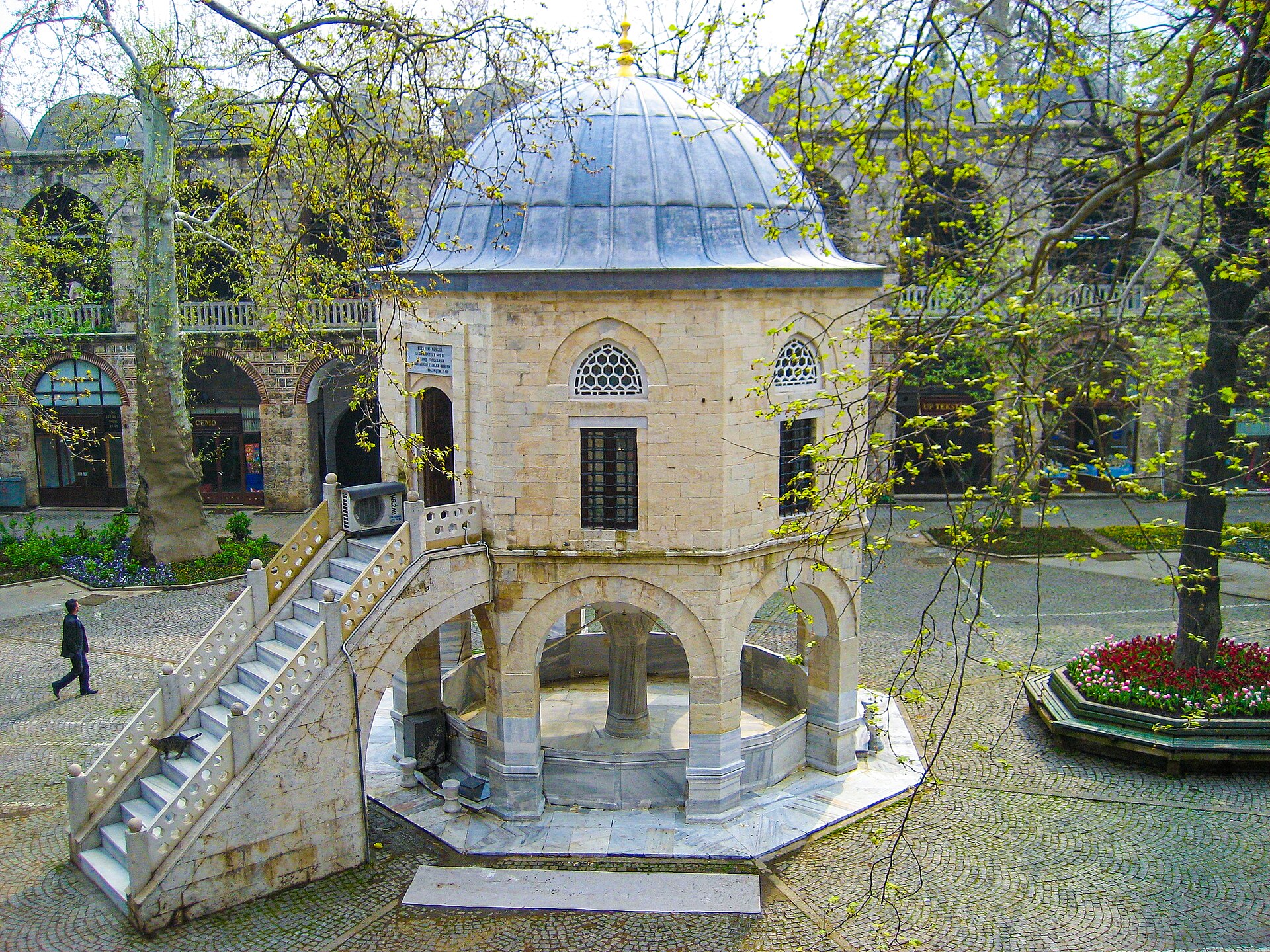
- Uludağ and the gondola — Mountain above the city
Mount Uludağ, called Olympus in antiquity, towers over the city. A gondola lift runs up from the edge of town to forest slopes, picnic spots and, in winter, the ski resort. The air is noticeably cooler than in the city, so a warm layer is sensible even on bright days. Check the official operator for running days.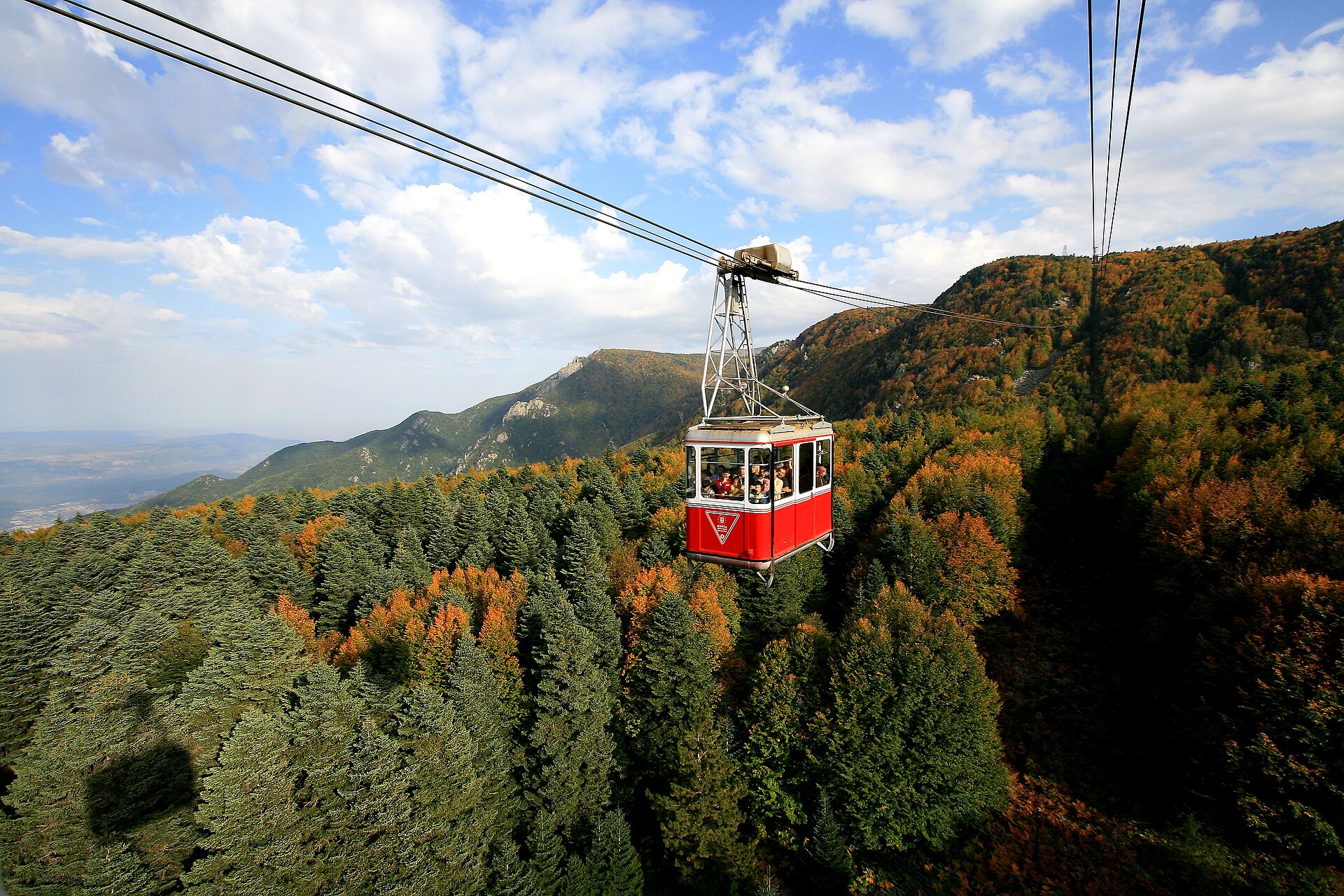
- Museum of the Ottoman House — Old town streets
A house furnished to show how a family lived in the seventeenth century gives a close look at the city's domestic past, with low seating, textiles and carved woodwork. It pairs well with a stroll through nearby streets of renovated wooden houses, and shows how people lived beyond the mosques.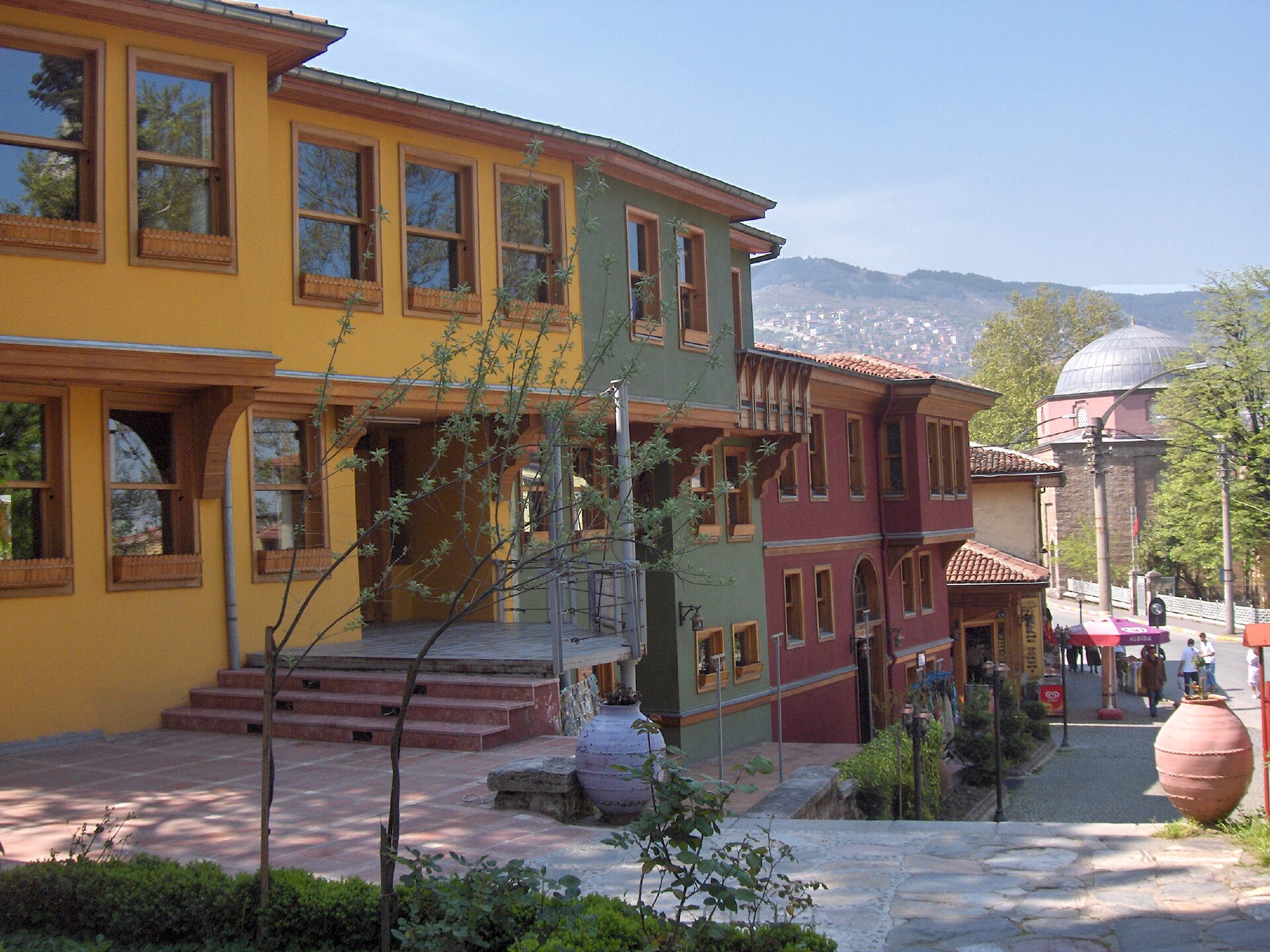
Culture
Bursa's culture is shaped by its centuries as an Ottoman seat, and by its place as a prosperous trading and bathing town. The Grand Mosque shows early Ottoman architecture drawing on Seljuk ideas, and its calligraphy panels reflect the importance of the written word in Islamic art. The city is also a place of craft: silk weaving, wood carving and metalwork all have a long history here, and the bazaar quarter still trades in textiles and household goods. Public life revolves around tea. Men and women alike meet in tea gardens, in courtyards such as those of the old caravanserais, and in parks along the river. Hospitality is taken seriously, and a shopkeeper may offer tea before any sale is discussed, with no obligation to buy. Religious life is visible but relaxed in the centre. The call to prayer sounds across the old town five times a day, and many people stop for it, though plenty of cafés and shops carry on as usual. Thermal bathing remains a social custom, with separate sections or hours for men and women in traditional baths. Local pride is attached to the Green Bursa idea, and residents like to talk about the mountain, the fruit and the food. Before entering any mosque, remove your shoes at the door, cover your shoulders and knees, and women should carry a scarf for the head.
What to wear
Bursa has long been associated with silk, and the Ottoman court wore richly woven silk brocades and velvets, including long kaftans, made in towns such as this. Traditional dress was layered: loose trousers, shirts, waistcoats and sashes, with women's outfits adding embroidered jackets and headscarves, often in cotton, silk or wool depending on season. These pieces now appear mainly at festivals, weddings, folk-dance performances and in museums, while silk scarves, cotton towels and embroidered linens are still sold as crafts. In daily life, people in Bursa dress much as in other Turkish cities: jeans, shirts and light jackets for most, smart casual in offices, and more conservative clothing, including headscarves for many women, in older and religious neighbourhoods. Visitors should dress for the weather and the sites. Summers on the plain are hot, so light cotton or linen is best, but shoulders and knees should be covered for mosques, and a scarf is useful for women. Shoes come off at mosque doors, so slip-ons help. Cobbled lanes and uneven steps call for comfortable shoes with grip. For Uludağ, bring a warm layer and a windproof jacket, as temperatures drop sharply with height, and proper boots if snow is likely in winter.
What to eat
- İskender kebap — Old-established kebab restaurants in the city centre
Bursa's signature dish: thin slices of grilled lamb or beef laid over pieces of bread, topped with tomato sauce, yoghurt and sizzling butter. It was created here in the nineteenth century by İskender Efendi. Order it at the long-established İskender restaurants in the centre. - Cantık — Pide shops and local chains across the centre
A local folded pide, filled generously with minced or sliced meat and baked until the edges crisp. It is portable, filling and cheaper than a sit-down kebab, and it makes a good lunch between mosques and the bazaar. - Inegöl köfte — Grill houses and köfte restaurants near the bazaar
Grilled meatballs, firmer and drier than the soft kind found elsewhere, served with grilled peppers, tomatoes and bread. They are a staple of Bursa's grill houses, and locals often eat them with a plain salad and ayran. - Kestane şekeri — Sweet shops around the bazaar and Koza Han
Candied chestnuts, a sweet strongly linked with Bursa, sold in boxes and by weight. The nuts are cooked in sugar syrup until glossy and soft. They travel well and make an easy gift to carry home. - Ottoman-style dishes — Restored historic buildings in the old town
Several restaurants in restored historic buildings serve dishes from the Ottoman kitchen, often built on slow-cooked meat, fruit and spice. One is a former poorhouse that no longer serves alcohol. They suit a slower, more expensive meal.
Plan it
Best time. April–May and September–October, when the plain is mild and the parks are green; summers can be hot, and the winter months suit Uludağ for skiing, though the city itself is cooler and wetter.
How long. 2
Getting there. Fly to Sabiha Gökçen (SAW) or Istanbul Airport (IST), then take a bus to Bursa's main bus station; a direct bus runs hourly from Sabiha Gökçen and takes about 90 minutes. From central Istanbul, a direct bus or a ferry across the sea is usually quicker than driving. The city has had no railway, so check whether the planned high-speed line has opened.
Budget. mid
Tips
- Visit the Grand Mosque and Koza Han in the morning, before the bazaar fills up
- Carry some cash for small shops and tea gardens, and cards for larger restaurants
- Check the official site, bursa.bel.tr, for current transport and gondola details
- Bring a warm layer if going up Uludağ, as it is far cooler than the city
- Drink plenty of water in summer and allow rest breaks on the hilly lanes
Etiquette
- Remove shoes before entering mosques and cover shoulders and knees
- Avoid walking in front of people who are praying, and keep voices low inside
- Ask before photographing people, particularly in the bazaar
Nearby
Sources
- Wikidata Q40738 (CC0)
- Wikipedia: Bursa (rev 1384523869) (CC BY-SA 4.0)
- Wikivoyage: Bursa (rev 5396221) (CC BY-SA 4.0)
- Photo: Bursa image (Metuboy) (CC BY-SA 4.0)
- Photo: Teleferik, Uludağ (Ahmet Baris Isitan) (CC BY 3.0)
- Photo: Yeşil Cami (Mustafa DUMAN) (CC BY 3.0)
- Photo: Koza Han (Christine und Hagen Graf) (CC BY 2.5)
- Photo: Irgandı Bridge (Mustafa DUMAN) (CC BY 3.0)
- Photo: Cumhuriyet Avenue tram (HALUK COMERTEL) (CC BY 3.0)
- Photo: Bust of Athena (Dosseman) (CC BY-SA 4.0)
- Photo: Ottoman houses in Bursa (JoJan) (Public domain)


