Zhoushan Archipelago
Zhoushan Archipelago, People's Republic of China
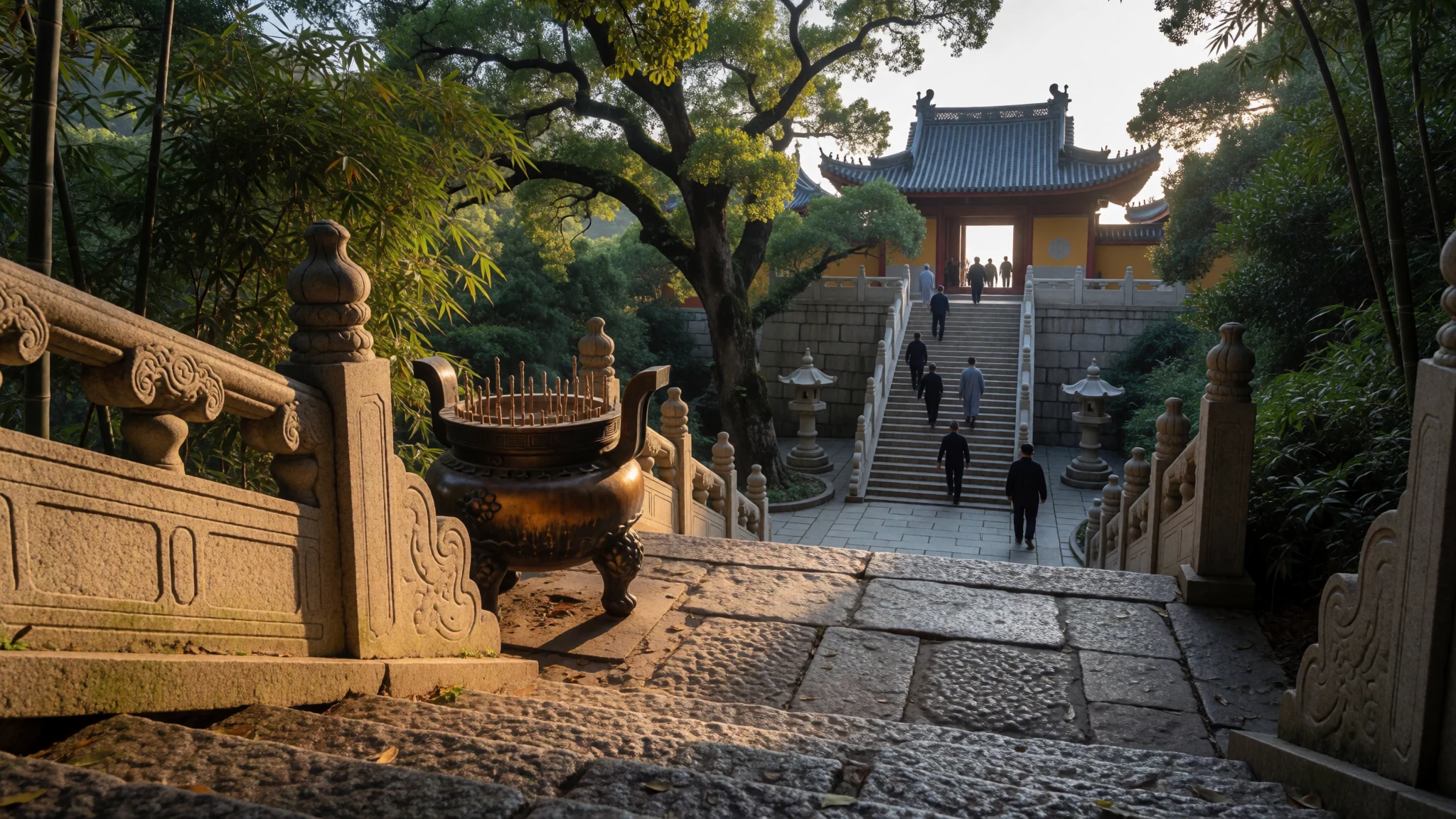
Zhoushan Archipelago offers pilgrim stairways, fishing harbours and quiet beaches within reach of Shanghai, far from the pace of the mainland cities.
The place
Zhoushan Archipelago is a spread of islands in the East China Sea, off the Zhejiang coast at the southern mouth of Hangzhou Bay and just beyond the port city of Ningbo. Administratively it is one prefecture-level city. Its urban heart is Dinghai, on Zhoushan Island, the main island of the group. The count runs to about 1,390 islands plus a great many reefs, though only around 103 have people living on them all year. Most of the rest are bare rock, too small or too exposed to settle. About 1.16 million people live across the prefecture, and most of them are on the main island and neighbouring Putuo. Dinghai, Putuo, Daishan and Shengsi share out the map between them. Fishing was long the backbone of the economy. Ship building and repair, shipping and tourism now carry much of the weight. The sea softens the climate. Winters are cool and damp, summers hot and humid, rain falls in every season, and the second half of the year tends to be sunnier. Choosing an island shapes the whole trip. Putuoshan suits pilgrimage and temple walking. Zhujiajian is known for its beaches. Gouqi offers cliffs, stone-built villages and a working fishing harbour. The main island has the shops, ferries and bus links that tie the rest together. Weekends and holidays bring crowds from nearby cities, while weekdays outside summer feel much calmer.
Its story
Zhoushan Archipelago has been lived on for about 6,000 years, since the Neolithic, when people of the Hemudu culture settled here. In the Spring and Autumn period the islands were called Yongdong, meaning the land east of the Yong River, and belonged to the state of Yue. The fishermen and sailors of the islands developed a reputation for piracy and supplied recruits to risings against the authorities. Sun En, a follower of a Taoist sect, made the islands his base for a rebellion around the year 400, and Jin forces crushed it soon afterwards. Buddhism arrived in a lasting way in 863, when the Japanese monk Egaku and a local woman surnamed Zhang placed a statue of Guanyin at Chaoyin Cave on Putuoshan. The spot later became a major pilgrimage destination. Piracy returned with force under the Ming dynasty. Between 1530 and 1560, Japanese and Chinese raiders used Zhoushan as one of their main bases and struck as far inland as Nanjing. Once the pirates were put down, the islands turned into an important commercial port. Their position at the mouth of the Yangtze region also drew European attention, and old British survey charts label the group the Chushan Islands. Dinghai still keeps a memorial park to the Opium War, where a replica stele records an imperial award from the Qing court. Today the old maritime trades continue alongside tourism and shipping.
What to see
- Putuoshan — Putuo District
Putuoshan is the sacred Buddhist island of the group, a small, green, hilly place where temples sit among old trees and stairways climb between shrines. Pilgrims and day visitors share the paths. Go on a weekday outside summer and holidays, when queues thin and the incense smoke hangs in quieter courtyards.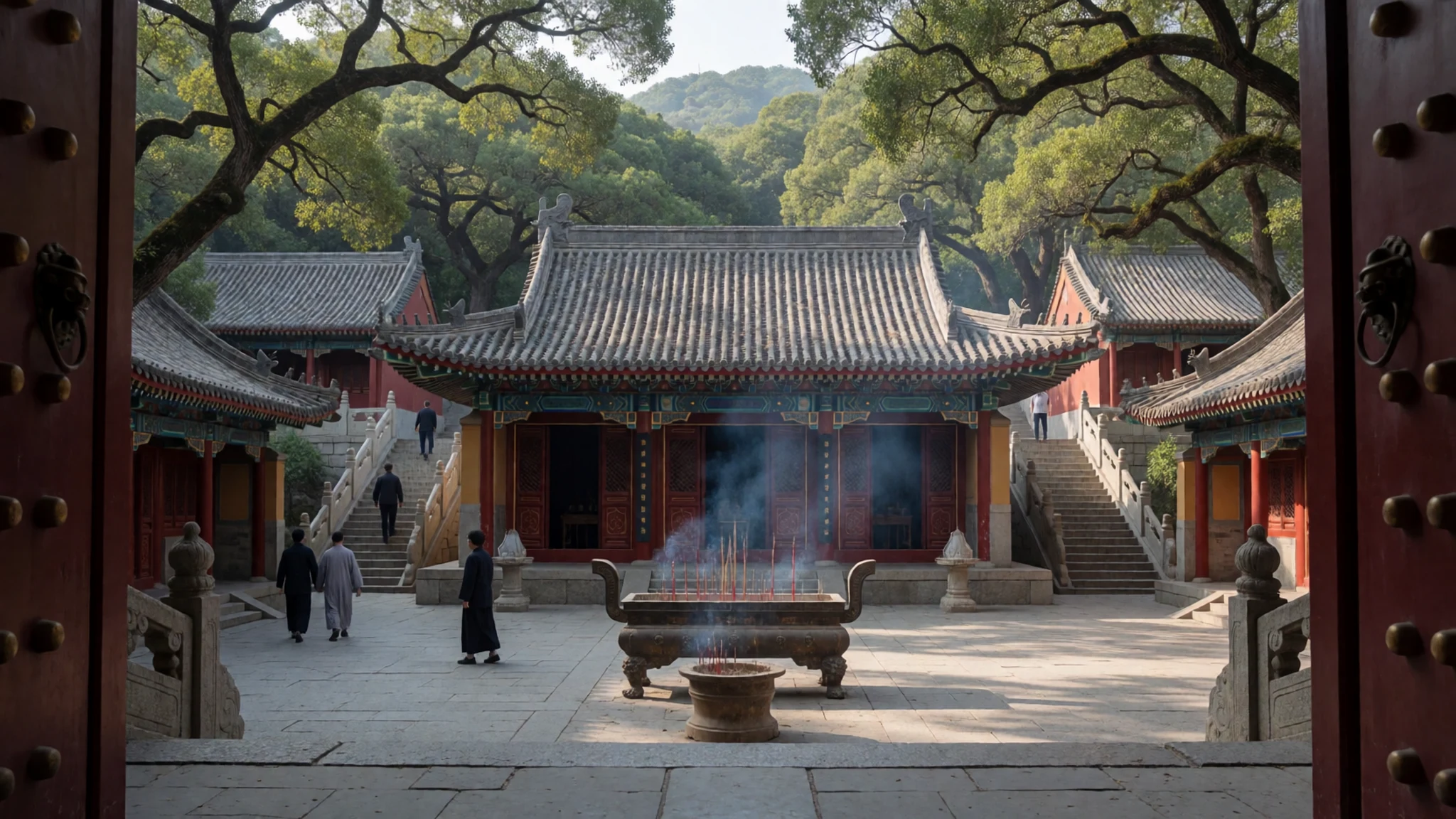
- Chaoyin Cave — Putuoshan, Putuo District
Chaoyin Cave is a sea cave on Putuoshan's coast where waves boom into the rock below a shrine to Guanyin. It is tied to the ninth-century gift of a statue by the monk Egaku. Rough seas make the sound dramatic. Stay behind railings, as the rock is wet and slippery.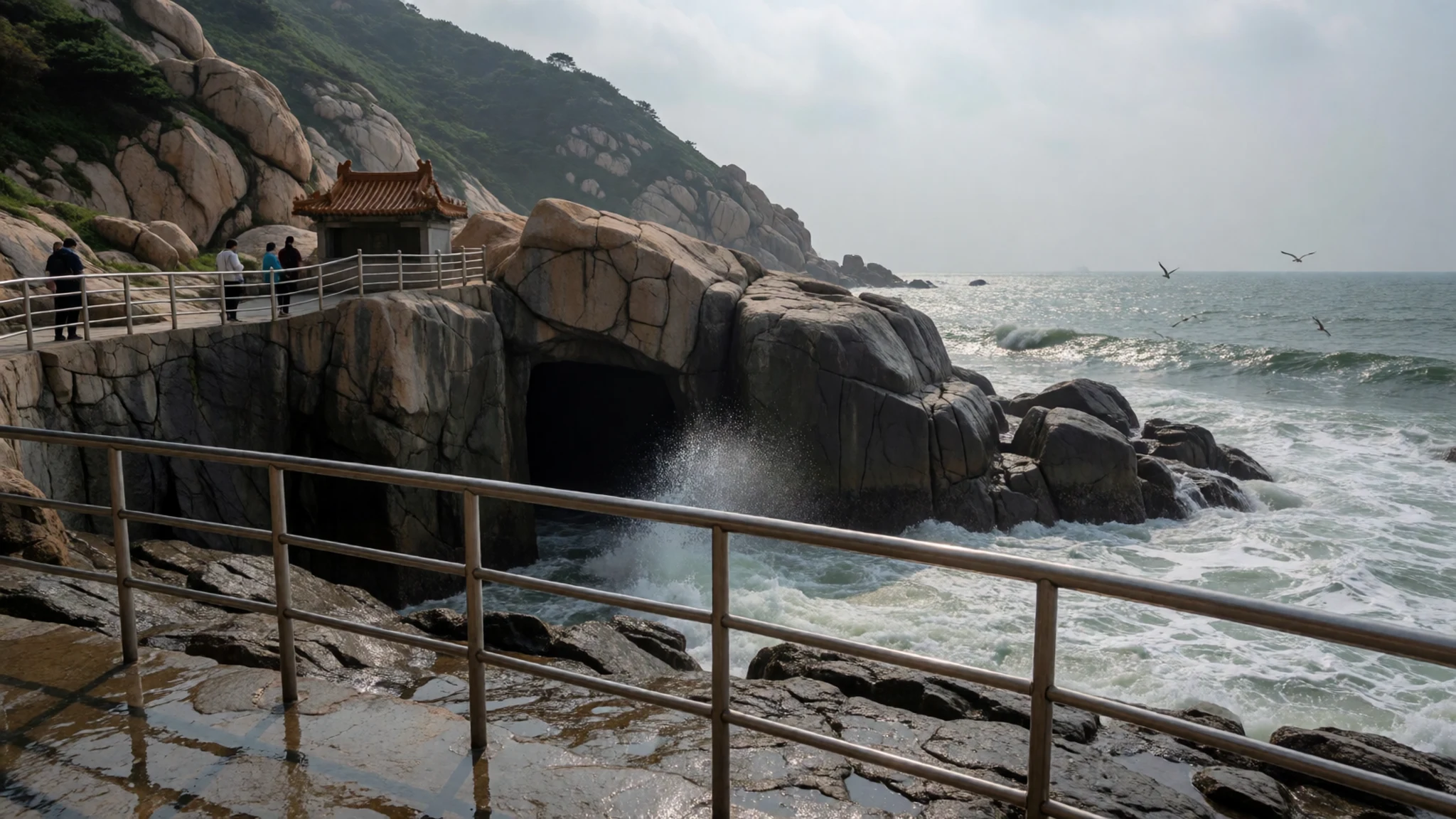
- Opium War Memorial Park, Dinghai — Dinghai District, Zhoushan Island
This memorial park in Dinghai remembers the fighting here in the Opium War, and holds a replica stele recording an award from the Daoguang Emperor. It is a short, thoughtful stop in the island's main town, useful for understanding why the archipelago mattered to both sides.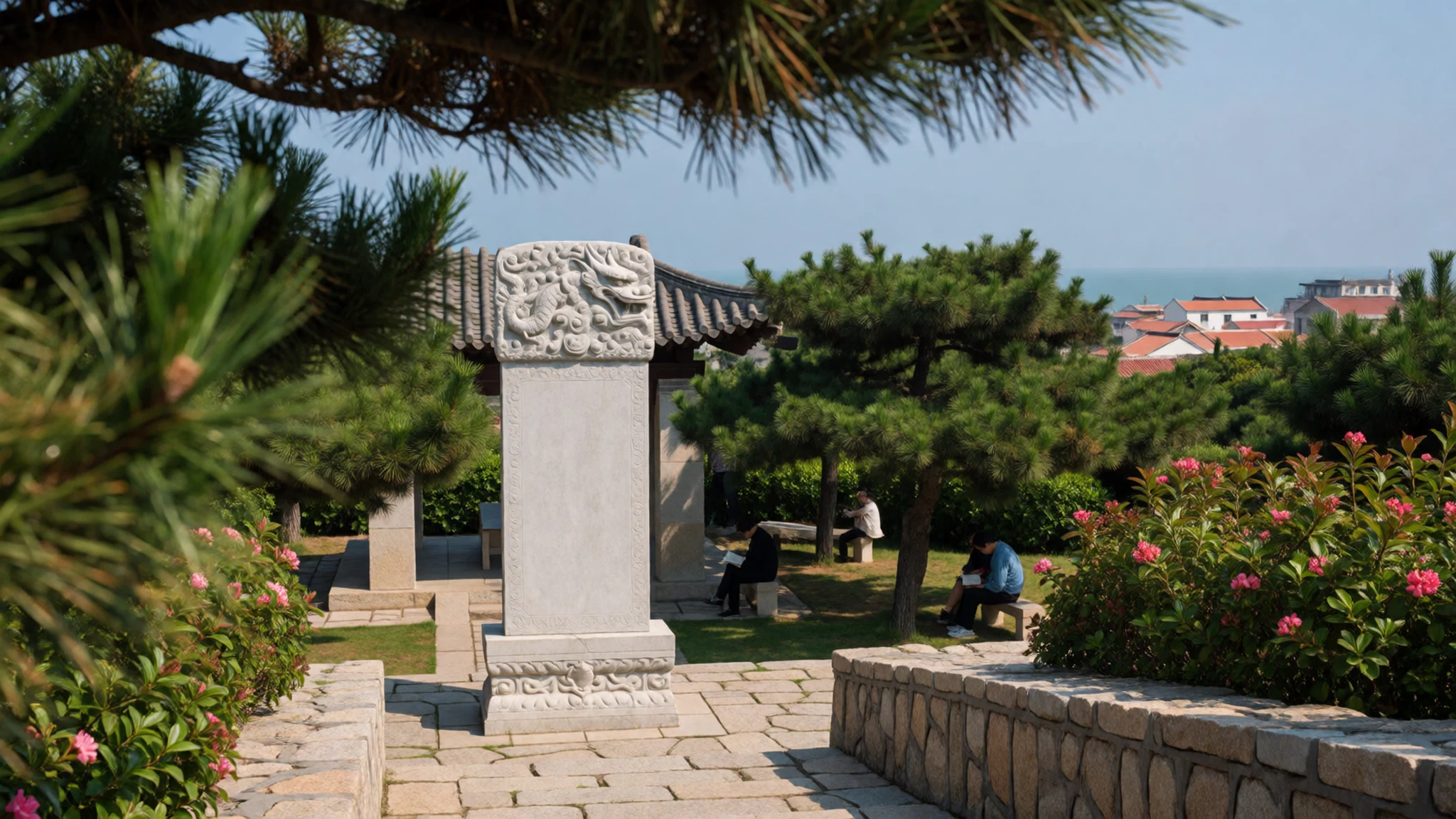
- Gouqi Island — Shengsi County
Gouqi is the place for a slower, more rural island day: steep green slopes dropping to the sea, small harbours, stone houses and fishing boats. Walking the coast and eating seafood in the village is the whole plan. Ferry times shift with weather, so keep the return leg flexible.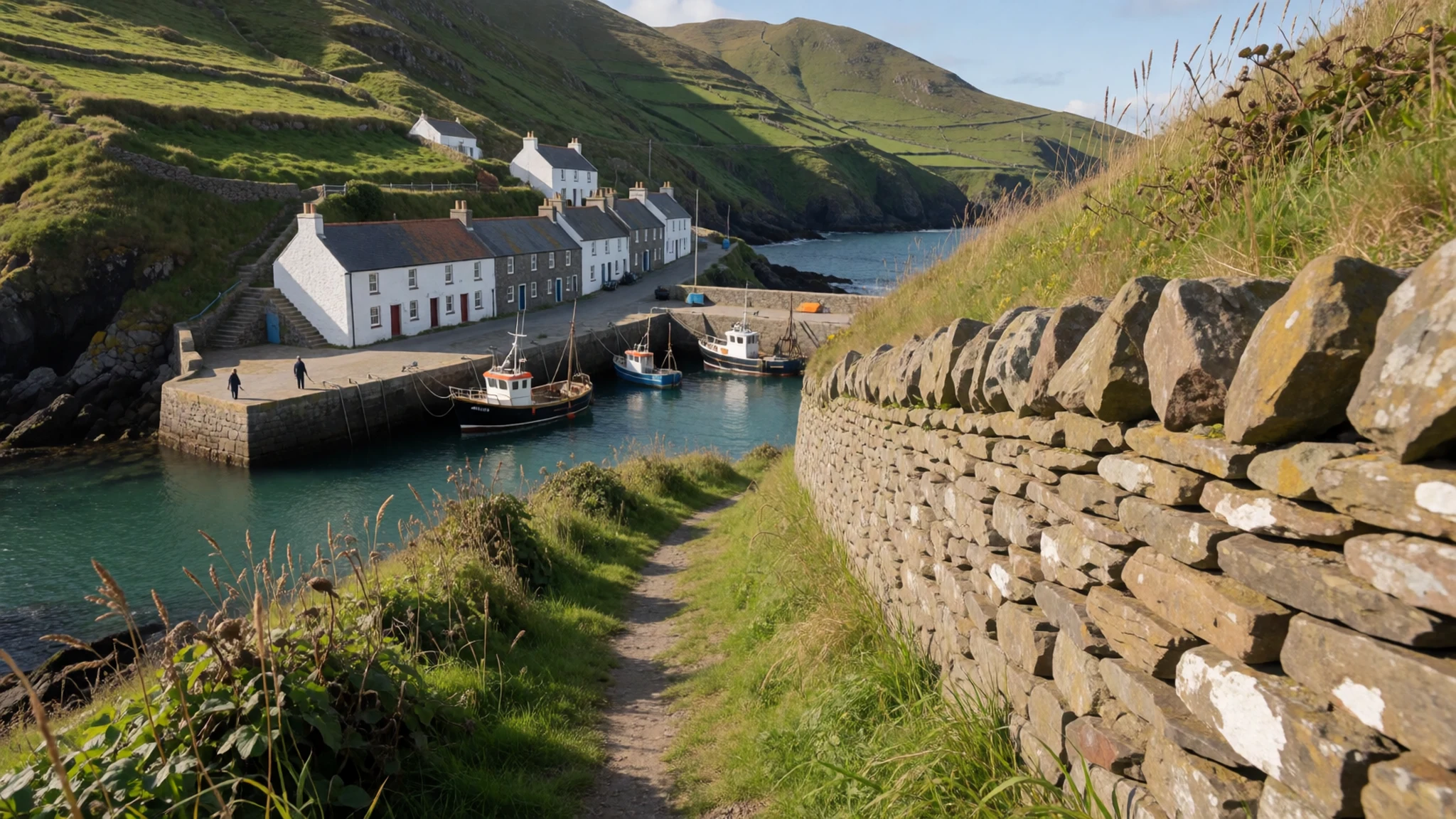
- Zhujiajian — Putuo District
Zhujiajian is the island most associated with beaches in the group, with sandy bays, rocky headlands and a short crossing to Putuoshan. It pairs well with a temple visit. Summer weekends are busy and the water is not a tropical clear blue, so expect a grey-green sea.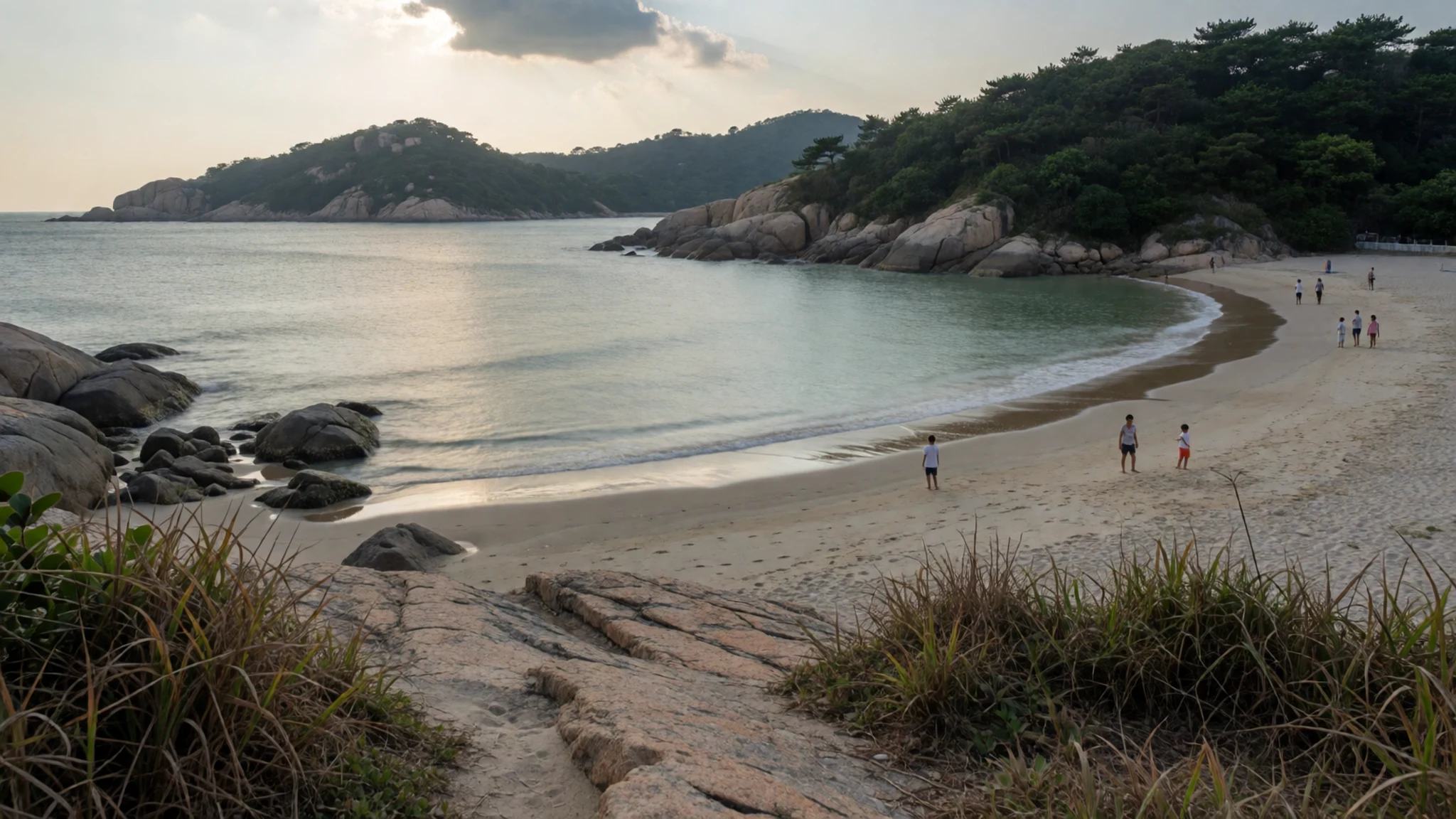
Culture
Zhoushan Archipelago's culture is shaped by the sea and by Buddhism. Fishing families have lived on the islands for centuries, and their routines follow tides, seasons and weather as much as the calendar. Harbour-side shrines and offerings to protective sea deities are an everyday part of that. Putuoshan, a small island in the group, is a centre of devotion to Guanyin, the bodhisattva of compassion, whom sailors invoke as readily as pilgrims do. Visitors will see people climbing stairways between temples, lighting incense, and bowing in halls where monks chant at set times of day. Dinghai carries a different memory, as a place where Chinese and British forces fought in the Opium War, and its memorial park treats that history seriously. Everyday island life shows in drying racks for fish, boat-repair yards, and harbours that start work in the dark. Local speech is a form of Wu Chinese, related to the dialects of Ningbo and Shanghai, so Mandarin is understood but the rhythm of conversation sounds different from the north. Ferries, weather and tides decide plans on the outer islands, and locals accept that with patience. Dress modestly at Putuoshan's temples, keep your voice low in the halls, and ask before photographing monks or worshippers, never inside a hall where a sign forbids it.
What to wear
Zhoushan Archipelago has no single famous costume to point to, and visitors should not expect to see one in daily life. Traditionally, island working dress followed coastal Zhejiang practice: plain cotton and hemp jackets and trousers, often dyed dark, with woven straw hats against sun and rain, and waterproofed outer layers for boat work. Monks wear grey or saffron-toned robes, and pilgrims on Putuoshan often carry yellow cloth bags marked with the mountain's name. Today, people in Dinghai and the other towns dress as in any Chinese coastal city: casual shirts, jackets, trainers and practical rainwear. Fishing-village workers favour rubber boots, waterproof trousers and quick-drying layers. Visitors should dress for wind, damp and sudden showers, so bring a light waterproof, a windproof layer for ferry decks and a hat for strong sun. Summer is hot and humid, so breathable fabrics help. Winter is cool and damp, and a warm mid-layer matters more than it might seem. Shoes need grip, since temple steps, harbour slipways and cliff paths are often wet. Sandals suit the beaches but not the long stairways of Putuoshan. For temples, cover shoulders and knees, and carry a scarf or light shirt in your bag in case a hall asks for it.
What to eat
- Steamed yellow croaker — Harbour-side seafood eateries in Dinghai and Zhujiajian
Yellow croaker (大黄鱼) is a prized local fish, usually steamed whole with ginger and a little soy to keep the flesh soft and sweet. Order it at a harbour-side seafood eatery in Dinghai or on Zhujiajian, and ask how the fish is priced before it is weighed.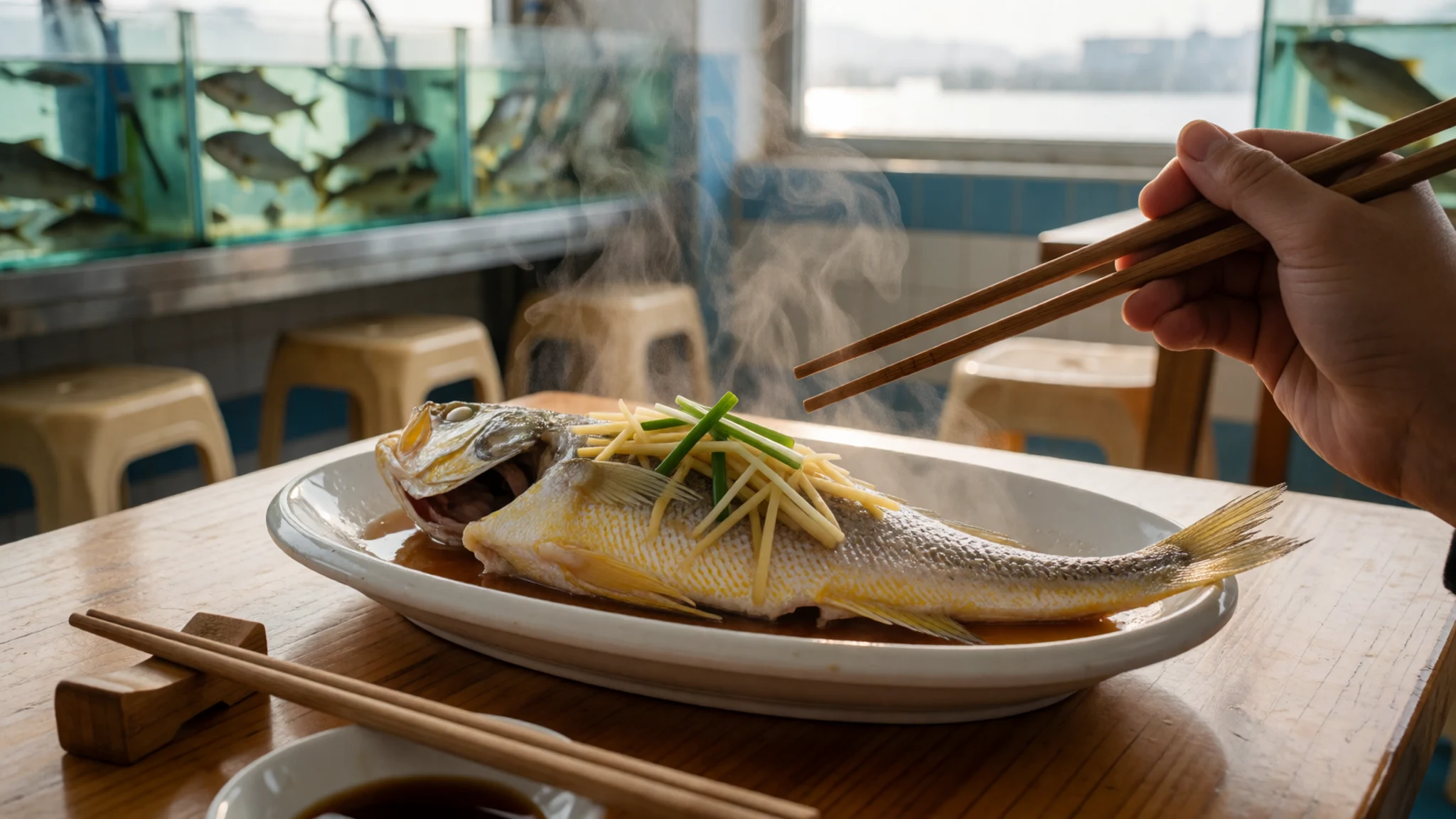
- Salt-pickled swimming crab — Local seafood restaurants and fish-market stalls in Dinghai
Swimming crab (梭子蟹) is preserved raw in brine in Zhejiang's coastal cooking, giving a salty, slippery, strongly flavoured dish eaten with rice or congee. It is an acquired taste. Try a small portion first, and choose a busy eatery with fast turnover.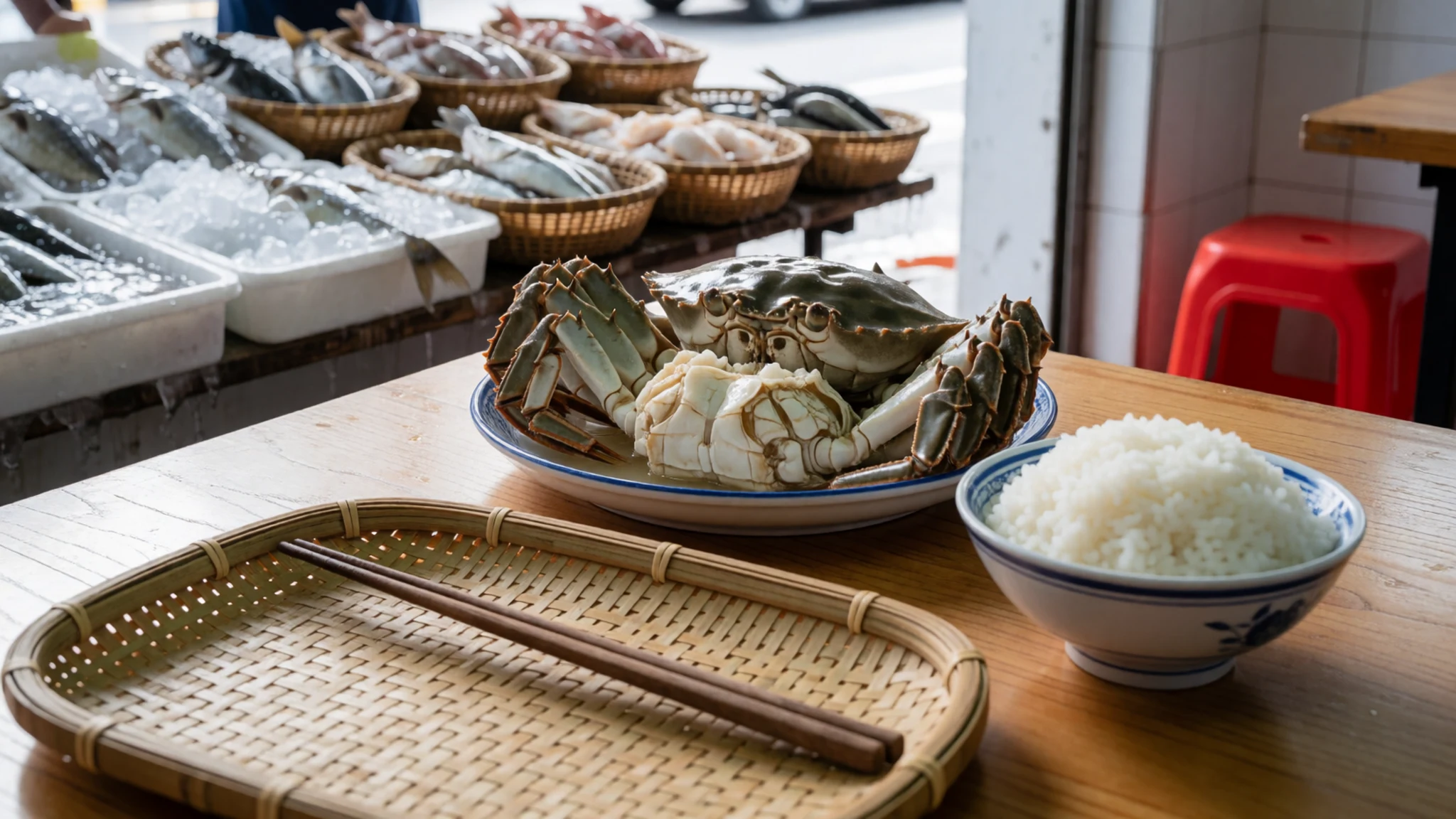
- Steamed shellfish with garlic — Fishing-village eateries on Gouqi and Shengsi islands
Clams, razor clams and mussels are steamed with garlic, spring onion and a splash of rice wine, a simple dish that lets the sea flavour speak. It is common in fishing villages. Eat at the busiest places for freshest stock. - Dried and salted fish — Harbour markets and fish-drying yards
Fish dried in the island wind and sun is a long-standing local staple, braised, steamed or fried with a little oil. It is intensely savoury and often served as a side with rice. Buy packed pieces to carry home from market stalls. - Seafood noodle soup — Noodle shops near ferry terminals and morning markets
A bowl of wheat noodles in a clear seafood broth, topped with fish, shrimp or shellfish, is the everyday breakfast or lunch near the docks. It is warming on a damp, windy day and easy to find without a menu in English.
Plan it
Best time. April–May and September–October. Spring and autumn avoid the hottest, most humid summer weather and the coldest, dampest winter days. Summer brings both heat and the heaviest rainfall, though the sea moderates it, while the second half of the year is generally sunnier.
How long. 3–4
Getting there. Zhoushan Putuoshan Airport (HSN) is on the islands. Ningbo Lishe (NGB) and Hangzhou Xiaoshan (HGH) are the usual mainland gateways, followed by road links and bridges to Zhoushan Island. Ferries then reach Putuoshan and the outer islands. Check ferry operators' official sites for current times and weather cancellations.
Budget. mid
Tips
- Weekdays outside summer and national holidays are far quieter on Putuoshan.
- Keep a flexible day at the end of the trip, as ferries are weather-dependent.
- Carry both cash and a phone payment option, since small island eateries and shops vary.
- Agree the price of seafood before it is weighed or cooked.
- Pack a light waterproof and grippy shoes for wet steps and harbour paths.
Etiquette
- Dress modestly and keep your voice low in temple halls
- Ask before photographing monks, worshippers or fishermen at work
Nearby
Sources
- Wikidata Q5009441 (CC0)
- Wikipedia: Zhoushan Archipelago (rev 1384055601) (CC BY-SA 4.0)
- Wikivoyage: Zhejiang (rev 5402892) (CC BY-SA 4.0)
- Skyline of the new city center of Zhoushan City — Maeshima hiroki (CC BY-SA 4.0)
- Zhoushan cityview — Jonipoon (CC BY 3.0)
- Gouqi island, Zhoushan, China (Unsplash) — Wu Jianxiong yeti (CC0 1.0)
- Putuo, Zhoushan, Zhejiang, China — Han Lei (CC BY 3.0)
- A picture from China every day 155 — Carsten Ullrich (CC BY-SA 2.0)
- China Sheet VIII — J. Walker (Public domain)
- A Stele Inside the Opium War Memorial Park of Dinghai — Maeshima hiroki (CC BY 3.0)
- Administrative Division Zhoushan — Chk2011 (CC BY-SA 4.0)


