Yufuin
Yufuin, Japan
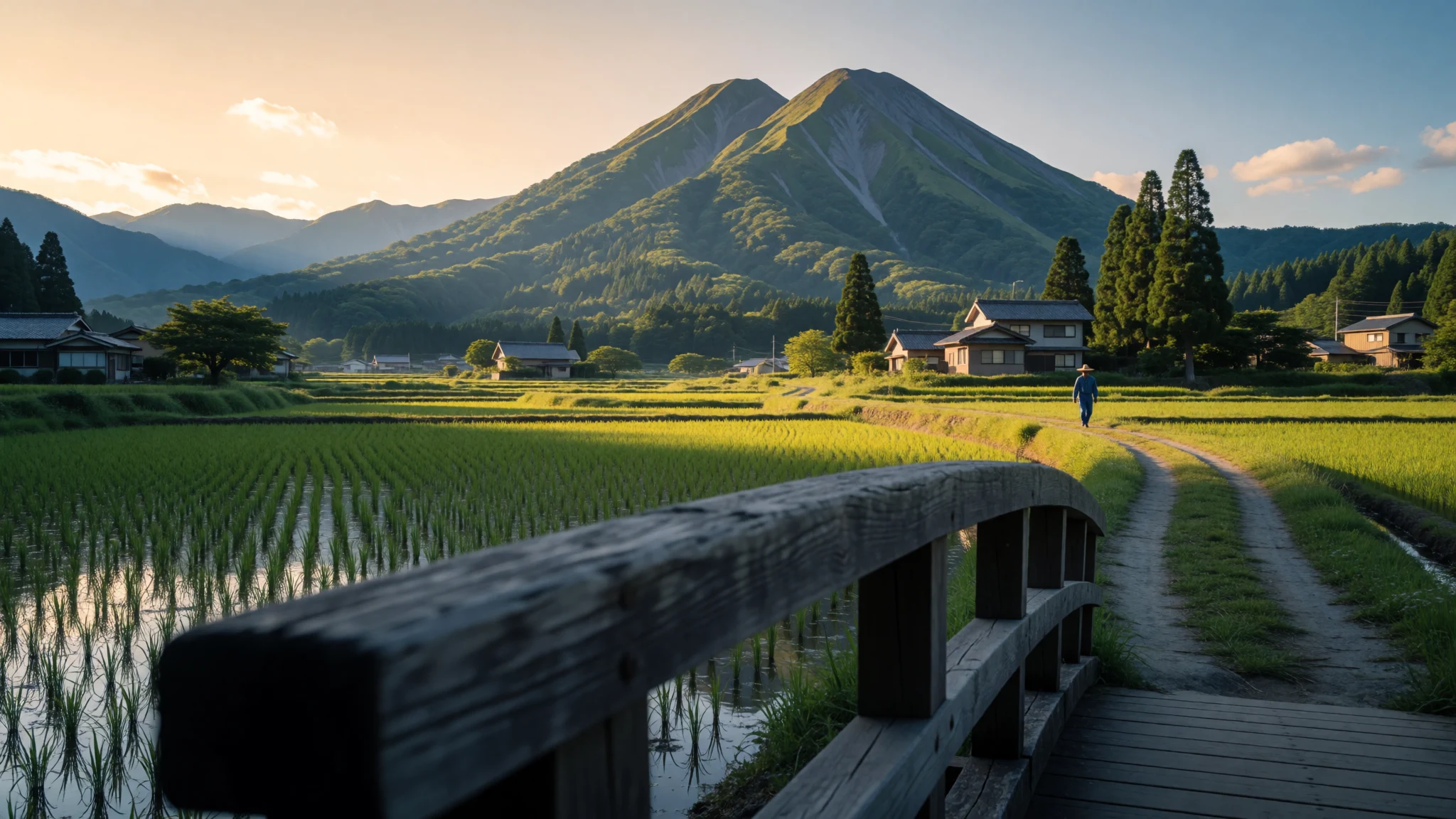
Yufuin is a quiet hot-spring town below Mount Yufu in Ōita, good for slow walks, bathing, and a jar of local yuzu pepper.
The place
Yufuin sits in a high basin in Ōita Prefecture, on the island of Kyushu in Japan, with Mount Yufu rising over the rooftops from almost every street. Administratively it is now a district of Yufu city rather than a town in its own right, but residents and visitors still use the old name, and so do the signs at the railway station. The setting explains much of the appeal. Cool air, hillsides and rice fields surround a compact centre, and the main lane from the station toward the lake is lined with small shops, galleries, bakeries and cafés. Hot-spring water is the reason most people come, whether in the bath of a ryokan (traditional inn), at a public bathhouse, or in a private open-air tub attached to a room. Beyond the centre the town thins into farmland and walking paths, and the Yufu River runs through a gorge between Mount Yufu and its neighbour Mount Tsurumi. Some honest warnings: the shopping lane gets crowded at weekends and on public holidays, especially around midday, and many people come only as a day trip from Beppu or Fukuoka, so mornings and evenings are noticeably calmer. Yufuin rewards lingering rather than box-ticking. The pleasure lies in a long breakfast, a bath, a walk toward the mountain and a slow return. It also pairs easily with nearby Beppu, whose hot-spring character is steamier and far more urban.
Its story
Yufuin became a municipality in 1955, formed as a town within Ōita District, and for decades it governed itself as a small resort and farming community. Its fortunes were tied to the volcanic ground beneath it. Hot water rising in the basin had long served local farmers and travellers, and as rail and road links improved, bathing inns multiplied. The town built a reputation for something other than size: a deliberate effort to keep a rural look, with low buildings, preserved fields and craft-led shops in place of large resort blocks. How well that effort has held is debated, since the central lane now fills with visitors, but it explains why the place still feels more like a village than a spa district. The next chapter was administrative. Yufuin, together with the neighbouring towns of Hasama and Shōnai, was merged into a new city called Yufu. The decision was controversial locally. The mayor was recalled over it and a snap election followed, in which he regained his office, which says something about how divided opinion was. Since then Yufuin has been a district of Yufu city rather than a separate town, though the name lives on in timetables, souvenir packaging and everyday talk. Travellers will meet both names: Yufu on official maps and for the mountain, Yufuin on station signs and in nearly every guidebook.
What to see
- Mount Yufu — Southeast edge of the basin
Mount Yufu is the twin-humped backdrop to Yufuin, visible from the station platform and from most of the town. Experienced walkers climb it, but the path is steep and exposed, so check conditions locally first. Even from the valley floor, it is lovely at first light, when mist often fills the basin.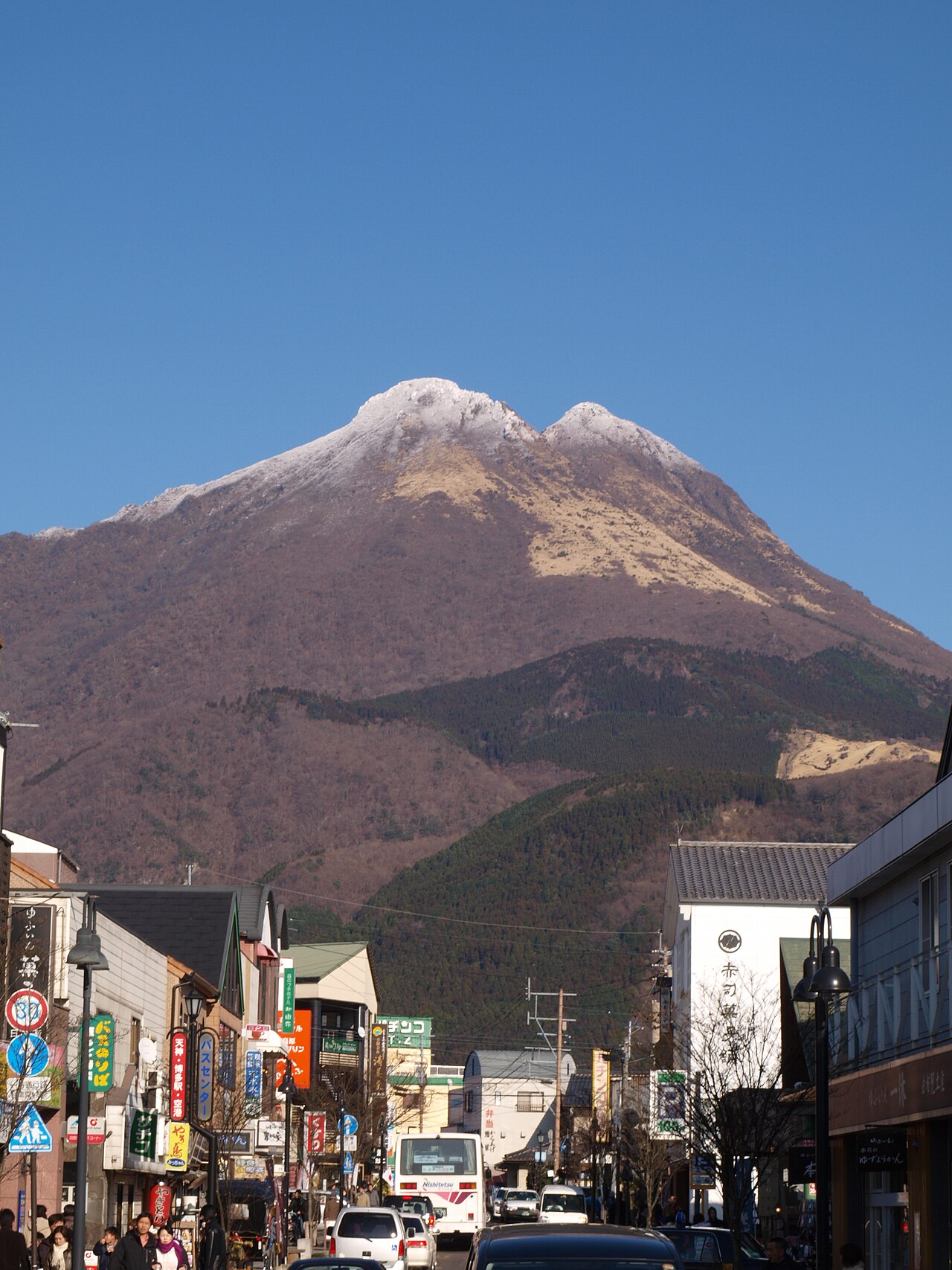
- Sagiridai viewpoint — Hills above the town
Sagiridai is a lookout above the basin from which the whole of Yufuin spreads out: scattered roofs, patchwork fields and the mountain beyond. It helps to see the town's layout before walking into it. Clear mornings and late afternoons give the best light, and the view works in any season.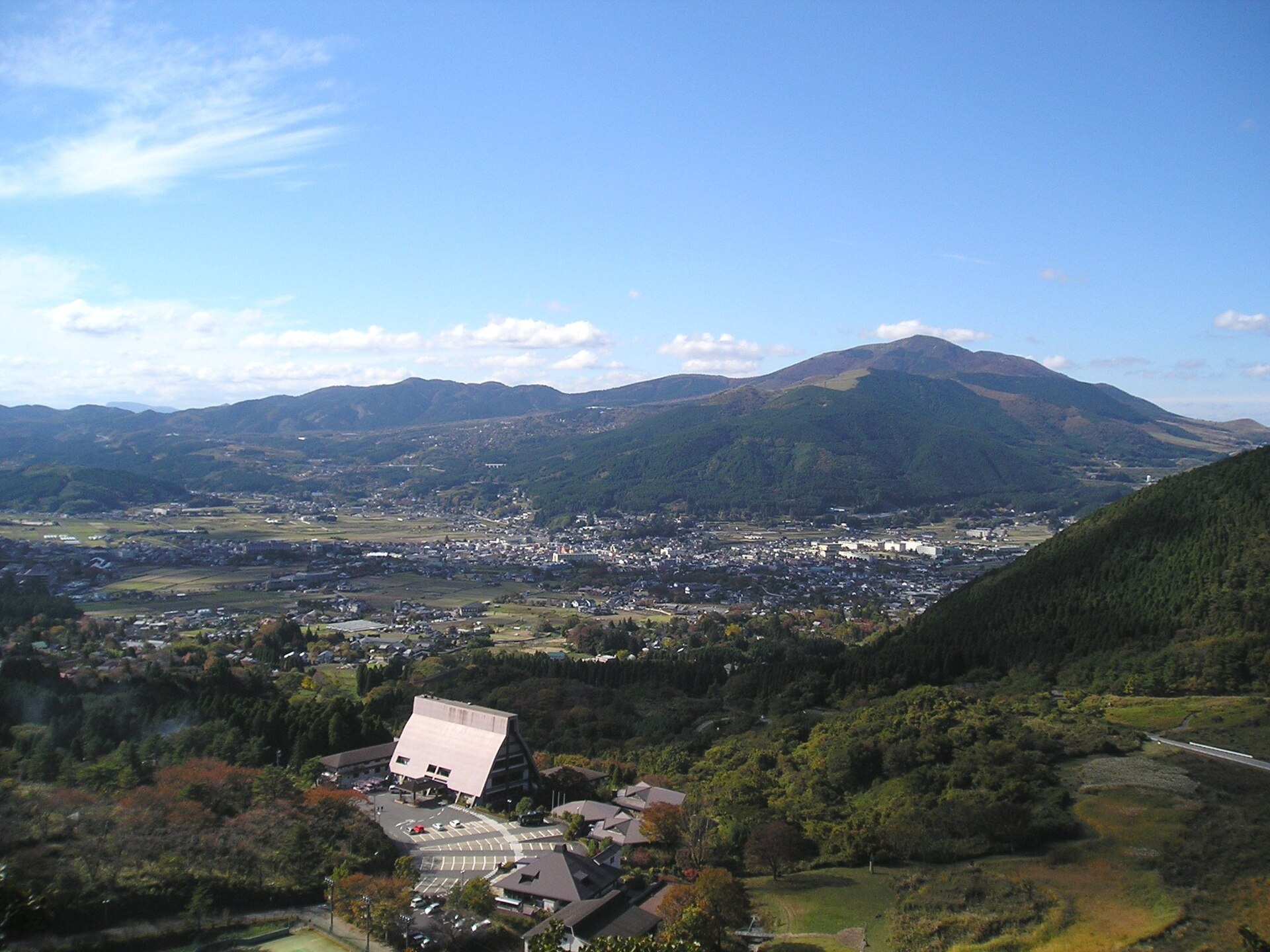
- Yufu River Gorge — Between Mount Yufu and Mount Tsurumi
The Yufu River cuts a ravine between the mountains that give the town its backdrop. Walking or driving toward it takes you out of the shopping area and into woodland and rock, with the sound of water rather than crowds. It is particularly worth the effort in autumn, when the slopes turn colour. - Hot-spring bathing in Yufuin — Town centre and ryokan districts
Bathing is the town's real business. Options include a ryokan bath, a public bathhouse and private tubs that can be hired by the group, with outdoor settings that look onto trees and hills. Policies on tattoos and day visitors vary from place to place, so ask at the door. - Day trip to Beppu — Coast of Ōita Prefecture, east of Yufuin
Beppu is the coastal counterpart to Yufuin, a hot-spring city of steam vents, bathhouses and sea views. It makes an easy contrast with the village calm of the basin. Many visitors combine the two over a few days, using the bus or rail links across the prefecture.
Culture
Yufuin's culture is that of a Japanese hot-spring town: bathing, seasonal food, crafts and a strong sense of quiet hospitality. The ryokan is the centre of this. Guests are welcomed at the door, shown to a room with tatami (woven straw) floors, and offered tea before bathing, and a multi-course evening meal built on local produce often follows. Futons are laid out on the floor after dinner. Bathing itself is a social habit as well as a pleasure, practised in shared baths separated by gender or in private tubs. Crafts have a visible place here too. The main lane includes potters, glassmakers, wood workers and small galleries, and the town has long leaned on this artisan image to set itself apart from louder resorts. Farming remains close by, and the rhythms of rice, citrus and vegetables shape what appears on menus through the year. Festivals follow the agricultural and religious calendar, and they are best checked through local tourist information, since dates shift. Like many small Japanese places, Yufuin is quiet in the evenings, with many cafés and shops closing early, and residents appreciate visitors who match that mood. Voices tend to drop on the lanes after dark, and shared spaces are kept calm. Wash and rinse thoroughly at the washing stations before entering any shared bath, and keep your towel out of the water.
What to wear
In Yufuin, traditional dress mostly means the yukata, a light unlined cotton robe tied with an obi sash, worn in summer, at festivals and, above all, by guests at ryokan, where one is usually provided for the evening and sometimes for wandering the lanes in. Formal kimono, made of silk and often layered, appear at weddings and ceremonies rather than daily life. Indigo-dyed cotton, tenugui hand towels and simple linen are common in local craft shops and echo older rural textiles. What people actually wear now is ordinary and practical: layers in cool weather, walking shoes, rain jackets and, among younger residents and shop owners, a relaxed, understated style that suits the craft-shop and café culture. Visitors dress much the same way. The town is a basin in the hills, so mornings and evenings can be cool even when the day is warm, and winter can be properly cold, so bring layers and a warm top for the walk between baths. Comfortable shoes matter for the lanes and for any trail toward the gorge or mountain, and shoes that slip on and off easily help at ryokan and some cafés. Wear clean socks without holes for places where shoes come off. There is no strict dress code, though covered shoulders and knees are polite at any shrine or temple you pass.
What to eat
- Yuzukoshō — Souvenir shops along the main lane and local food stalls
Yuzukoshō is a paste of yuzu citrus peel and chilli, a speciality of Yufuin. A little goes a long way on grilled meat, noodles or rice. Small jars make easy gifts, and shops often let visitors taste before buying. - Toriten — Local eateries and izakaya (casual pubs) across Ōita
Toriten is tempura chicken, lightly battered and fried, a staple of Ōita cooking. It is usually dipped in a tangy sauce or mustard, and it appears both as a set meal and as a bar snack. A reliable, filling choice after bathing. - Dango jiru — Home-style restaurants and rural eateries
Dango jiru is a warming soup of flat rice-flour dumplings and vegetables in a savoury broth. It is comfort food, especially in colder months, and the dumplings have a soft, chewy texture. Look for it on set menus at village-style restaurants. - Kabosu juice — Cafés, souvenir shops and drinks stands
Kabosu is a citrus fruit sitting between lemon and mandarin, and in Ōita it is squeezed into a sour, refreshing juice or squeezed over fish and noodles. It is a good drink on a warm day and an easy local flavour to try. - Seki-aji and Seki-saba sashimi — Seafood restaurants in Ōita city and the coast
Seki-aji and Seki-saba are prized mackerel caught in the fast currents of the Hōyo Channel and served as sashimi. They are pricey and best sought out in coastal restaurants rather than in the hills. Ask for the local catch of the day.
Plan it
Best time. April–May for fresh greenery and mild days, and October–November for autumn colour on the surrounding slopes. Winters in the basin can be cold, and summers are warm and humid, so book early for peak seasons and holidays.
How long. 1–2
Getting there. Fly to Oita Airport, the prefecture's main airport, then take a bus or hovercraft towards Oita city. From Oita Station, the JR Kyudai line runs west through Yufuin and onward towards Hita. The same line can be reached from the Fukuoka side. Check JR Kyushu and local bus timetables for current services.
Budget. mid
Tips
- Visit the main lane early in the morning or in the evening, when day-trippers are fewer
- Book ryokan well ahead for weekends, holidays and autumn
- Carry some cash for small shops, bathhouses and cafés, as not all take cards
- Pack layers, since the basin is cool in the mornings and evenings
- Stay overnight if possible, as the town is calmest after the day-trippers leave
Etiquette
- Wash thoroughly before entering a shared bath and keep towels out of the water
- Remove shoes where there is a step up or slippers waiting
- Keep voices low on the lanes in the evening, when the town is quiet
Nearby
Sources
- Wikidata Q8189446 (CC0)
- Wikipedia — Yufuin, Ōita (rev 1361822044) (CC BY-SA 4.0)
- Wikivoyage — Oita (prefecture) (rev 5281385) (CC BY-SA 4.0)
- Photo: Yufuin and Mount Yufu, Tomo (CC BY 2.5)
- Photo: Yufuin panorama, STA3816 (CC BY-SA 2.5)

