Yingge
Yingge, Taiwan
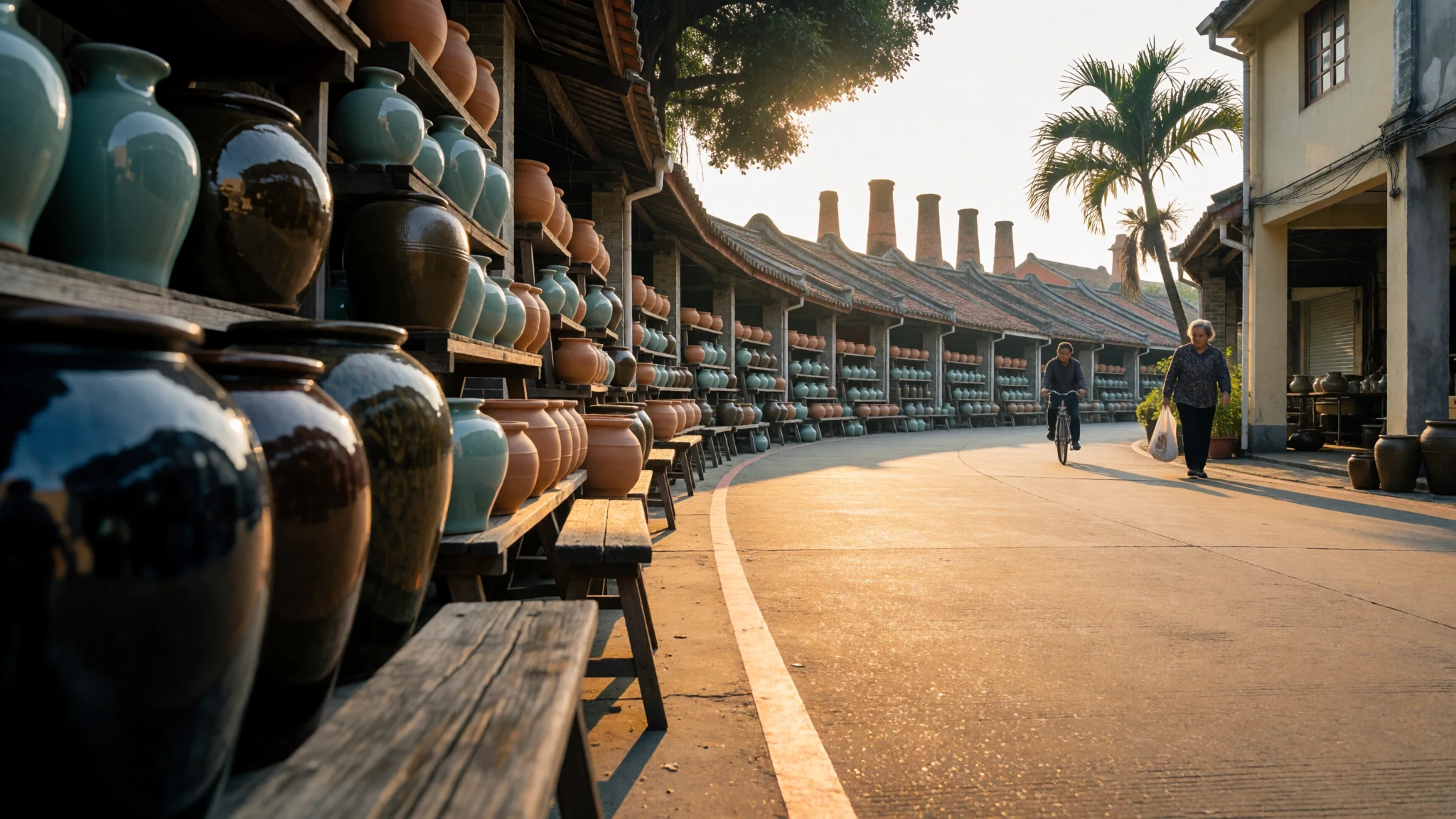
Yingge is Taiwan's pottery town, where kilns, studios and a rebuilt old street let visitors watch, buy and even make ceramics themselves.
The place
Yingge is a district on the Dahan River in the south-west of New Taipei City, in northern Taiwan, with a population of 89,363 and an elevation of about 90 metres. Its Chinese name, 鶯歌 (Yīnggē), means roughly 'oriole song', though the name is usually explained through a parrot-shaped rock on the hill just north of town. What defines the place is clay. Brickworks and factories making sturdy everyday ceramics once dominated; in recent decades the emphasis has shifted towards artisans, studios and galleries, and the town rebuilt its Old Street as a showcase for their work. The result is a compact, walkable centre where pottery shops, tea houses and cafés sit shoulder to shoulder, with a museum and a newer art museum a short stroll away. Beyond the centre are temples on the hillsides, a short trail up to the parrot rock, and quiet residential lanes. Yingge works best as a day trip from Taipei rather than a base. There is enough to fill a full day, especially for anyone who likes ceramics, but not much in the way of nightlife. Weekends bring day-trippers and school groups to the Old Street, so weekdays are calmer. The riverside setting and low hills give the town a gentler pace than the capital, though summer heat and humidity can make midday strolling tiring. Eateries on the Old Street itself are few, so meals are better sought on the streets across the bridges to the north. For events and current information, check the district's official site, https://www.yingge.ntpc.gov.tw/.
Its story
Yingge's story begins with migrants. Local tradition says Hakka settlers who cultivated tea were already living in the area by the late seventeenth century, long before the town became known for anything made of clay. Potting is said to have arrived about two centuries ago, when a man called Wu An travelled from Guangzhou and became the first potter here. A brickmaker named Chen Kun settled nearby later, and between them the two are credited with turning the area into Taiwan's ceramics centre. The settlement's official status changed repeatedly through the twentieth century. It began as Yingge Stone Village, became Yingge Village, then Yingge Street, then a small town. After the Second World War a group of its urban villages was split off to form neighbouring Shulin. When Taipei County was upgraded to New Taipei City, Yingge in turn became a district. The Japanese colonial period left its own marks, and a few early twentieth-century buildings survive near the station and the old centre, some well kept and others rather shabby. Today Yingge is described as Taiwan's largest centre of ceramic production, with hundreds of ceramic-related businesses. The industry has changed shape too: from bricks and utilitarian ware towards craft pieces, teaware and visitor workshops. That shift explains the town's present character, a working industrial place that has learnt to welcome visitors rather than a museum-piece village.
What to see
- Ceramics Old Street — Town centre
Ceramics Old Street is the heart of Yingge, a continuous row of pottery and craft shops mixed with tea houses and cafés. Browsing takes longer than it looks, since stock ranges from souvenirs to individual studio pieces. Several shops run pottery-making sessions, and most will post the finished piece home once it has dried and been fired. Weekdays are quieter.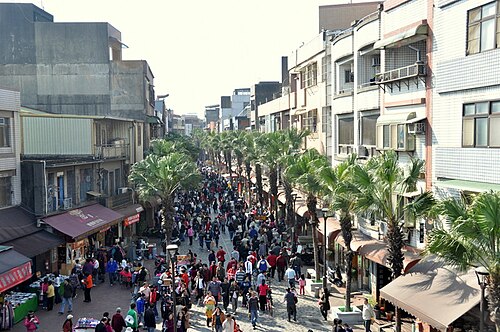
- Yingge Ceramics Museum — Town centre
Yingge Ceramics Museum traces how ceramics developed in Taiwan. The ground-floor galleries cover the basics: raw materials, categories of ware and glazes. It is a sensible first stop, because it gives the shops and the town's industrial past some context before any buying begins. Check the official site for opening arrangements and current exhibitions. - Sanying Arts Village — East of the centre
Sanying Arts Village is a park scattered with sculptures and other artworks, linked by covered walkways that help in rain or summer sun. It suits a slower half hour between the Old Street and the museums, and it is a pleasant place to sit down and look at what has been bought. - Chengfa Residence — Near Old Street
Chengfa Residence is what remains of a building put up during the Japanese colonial period. Only parts survive, but the brickwork and arches make it a popular backdrop for photographs. It is a short detour from the Old Street and gives a sense of the town's architecture before the ceramics boom of recent decades. - Yingge Rock — North of the centre
Yingge Rock, also called Parrot Rock, is the outcrop that gave the town its name. A short trail leads up to it, with three possible entrances, so it works as a modest walk rather than a hike. Wear shoes with grip, since paths can be slippery after rain, and take water in summer. - New Taipei City Art Museum — Town centre
New Taipei City Art Museum is a recently opened gallery in the middle of Yingge, adding contemporary art to a town better known for craft. It pairs naturally with the nearby arts village and the ceramics museum. Exhibitions change, so check the official site for what is on before planning a visit around it.
Culture
Yingge's culture grows from two things: craft and migration. The town's potters descend from settlers who came from southern China, and the area's early Hakka tea growers add another layer, so the district feels more like a working craft community than a showpiece. Pottery here is a livelihood as well as an art, and many shopkeepers are also makers. Teaware is a natural companion to ceramics in Taiwan, which is why tea houses and pottery galleries blur together on the Old Street, with shops offering tastings so customers can judge a pot by how it pours. Religious life is visible in the hillside temples around town. Turtle Temple takes its name from a stone said to resemble a green turtle, Hongde Temple honours a general from China's ancient warring-states era, and Sanhu Temple is unusual in Taiwan for being dedicated to three emperors, who were worshipped for prosperity in the early days of Han Chinese settlement on the island. These are working neighbourhood temples, not attractions, with incense, offerings and regulars coming and going at all hours. Hands-on workshops are another strand of local culture: shaping clay is treated as something anyone can try, and staff are patient with beginners. Visitors who buy a handmade piece are usually buying from the person who made it, and a little conversation goes a long way. At temples, keep your voice low, step over rather than onto the raised threshold, and ask before photographing worshippers.
What to wear
Yingge's traditional dress belongs to the wider Taiwanese and Hakka world. The classic Hakka garment is the blue shirt, cut loosely from plain cotton dyed with indigo and designed for farm and tea work. Floral printed cotton, bold and colourful, is also strongly linked with Hakka identity today. Both appear mostly at festivals, folk performances and on souvenir goods rather than in daily life. Indigenous peoples of Taiwan have their own woven garments, usually in bright geometric patterns and made in cotton, ramie or wool blends depending on the community. What people actually wear now is ordinary and practical: T-shirts, light trousers, trainers or sandals, a rain jacket or umbrella close at hand, and scooters mean helmets are everywhere. In pottery studios, makers tend to wear aprons and simple dark clothes that hide clay. Visitors should dress for warmth and damp. Summers are hot and humid, so light, breathable cotton or linen is best, with a hat and sun protection for the open Old Street. Spring and autumn can bring rain, so a thin waterproof is worth packing. Comfortable closed shoes suit the paved street and the short trail to Parrot Rock, which can be slippery when wet. At temples there is no strict dress code for tourists, but covered shoulders and knees are respectful. If a pottery class is planned, wear clothes that can get dirty.
What to eat
- Stinky tofu — Snack stalls around the Old Street and the station
Fermented tofu, deep-fried until crisp and served with pickled cabbage and chilli sauce. The smell announces it from some distance, while the taste is milder and savoury. It is a standard Taiwanese street snack, and Yingge has its own stalls.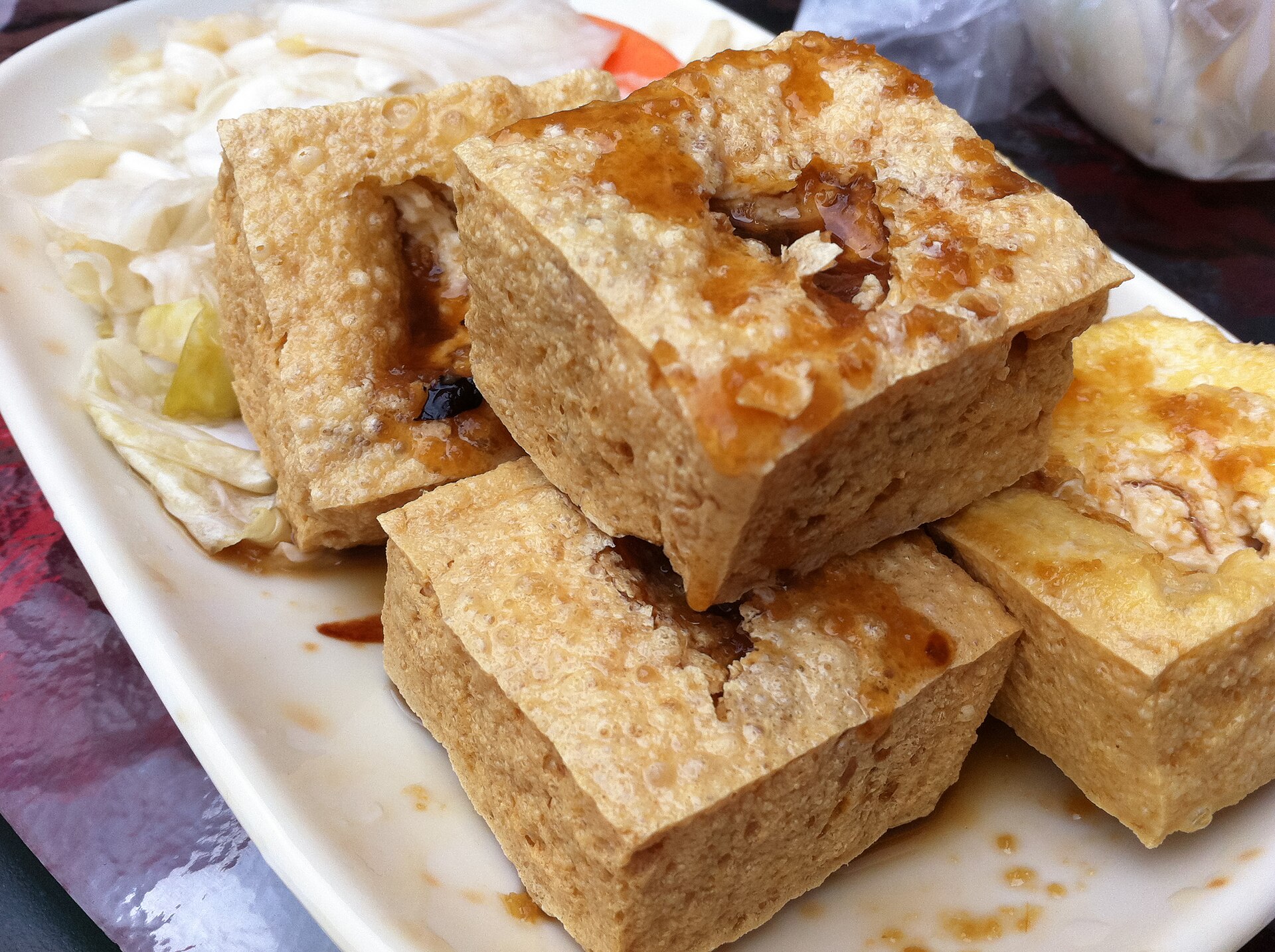
- Sushi from Grandma's booth — Town centre, near the station
A well-known sushi booth in the centre of Yingge, set in front of a convenience store and a short walk from the station. Expect simple, Japanese-style sushi, eaten on the spot or taken away while exploring. - Tea at the teaware shops — Pottery and tea shops along Old Street
Tea is the natural partner to a ceramic teapot, and the teaware-focused shops on the Old Street keep a range of leaves to sample. Tasting is usually the point, so go slowly, try a few, and then decide on a pot. - Braised pork rice (lu rou fan) — Small eateries across the bridges to the north
Small bowls of rice topped with minced pork braised in soy sauce and spices, often with a pickle or a halved egg. It is everyday Taiwanese comfort food. The streets across the bridges to the north offer better options than the Old Street. - Egg pancake and soy milk — Neighbourhood breakfast shops in the town centre
A Taiwanese-style breakfast of thin egg pancake rolled with fillings, eaten with warm or cold soy milk. Neighbourhood breakfast shops serve it early, and it makes a cheap, filling start before a day on foot among the ceramics shops.
Plan it
Best time. March–April and October–November, when it is generally milder and more comfortable for walking. Summer is hot and humid, typhoons are possible later in the season, and rain can arrive at any time of year, so carry a light waterproof.
How long. 1
Getting there. Fly to Taiwan Taoyuan International Airport and continue by taxi, or travel on via Taipei Main Station. From Taipei Main, most southbound Taiwan Railway trains stop at Yingge in about half an hour; they run frequently, most are local services, and tickets can be bought from the machines on the day. By car, take Highway 3 to the Shanxia/Yingge exit and cross Shanying Bridge.
Budget. low
Tips
- Go on a weekday if possible, as the Old Street is busier at weekends
- Book pottery-making sessions through the shops on the Old Street, and ask about shipping the finished piece home
- Eat across the bridges to the north, since the Old Street has only a few restaurants
- Carry some cash for small stalls and shops, and water in warm weather
- Check the official site for museum arrangements and events before travelling
Etiquette
- Keep your voice low and ask before photographing worshippers at temples
- Handle pottery gently and ask before picking up displayed pieces
- Sample tea politely and do not take samples without buying nothing in return
Nearby
Sources
- Wikidata Q516297 (CC0)
- Wikipedia: Yingge District (rev 1378476250) (CC BY-SA 4.0)
- Wikivoyage: Yingge (rev 5361085) (CC BY-SA 4.0)
- Photo: Yingge Old Street (Public domain)
- Photo: 鶯歌陶瓷老街 (CC BY-SA 4.0)
- Photo: Yingge District Office Building (CC BY-SA 4.0)
- Photo: Yingge Station (CC BY 3.0)
- Photo: 213巷 (CC BY 3.0)
- Photo: 7-Eleven 長虹門市 (CC BY-SA 4.0)
- Photo: Ascocystites drabowensis fossil (CC0 1.0)
- Photo: Stinky tofu in Yingge (CC BY 2.5)


