Yilan
Yilan, Taiwan

Yilan is a green, watery corner of northeastern Taiwan where hot springs, mountain forest and a volcanic island sit within an easy trip of Taipei.
The place
Yilan is a county in northeastern Taiwan, home to about 449,000 people, with its seat in Yilan City. Its shape is easiest to grasp from the air: a triangular plain of paddy, farms and small towns, open to the Pacific on one side and walled in by mountains on the others. Toucheng, Sanxing and Su'ao townships mark the three corners. The Xueshan Range rises to the northwest, and the Central Mountain Range closes off the south, so the county splits naturally into a lowland of fields and a highland of forest and gorge.
The plain owes its existence to the Lanyang River and a handful of smaller streams. In the mountains the river drops steeply and cuts hard into the rock, carrying so much sand, silt and gravel that it cannot lay it down until it reaches level ground. Over time that load has spread into fans of stones and sediment, and the river's channels braid across them in a web-like pattern.
The result is a place that feels rural even though Taipei is close. Sanxing is known for its spring onions, Wujie for melons, and the towns are low-rise and unhurried. Weekends bring Taipei visitors for hot springs and the coast, so popular spots fill up on Saturdays and Sundays, while weekdays are noticeably calmer. Rain is frequent, which is part of why the landscape is so green, and summer brings typhoon risk, so plans here need some slack.
Its story
Yilan's recorded story begins with the Kavalan people, who arrived by sea and settled beside the rivers of the plain about a thousand years ago. They lived in many small villages, speaking an Austronesian language, and farmed and fished the lowlands. The Atayal people took a different route, crossing mountain passes into the high country, where they settled along the upper rivers. Their descendants still live in Datong and Nan'ao townships.
The next wave came from across the mountains. At the end of the eighteenth century, Han Chinese settlers pushed into the plain under leaders such as Wu Sha, whose large reclamation effort began in 1787. They cleared wilderness, ploughed fields and dug irrigation channels, and they took land from the Kavalan by a mix of means that were often unfair. Some Kavalan stayed; others moved south along the coast towards Hualien and Taitung, where their communities survive.
Under Japanese rule, most of what is now Yilan belonged to Taihoku Prefecture, and a government hall built in the early twentieth century stood as the administrative centre for decades. When the Republic of China took over Taiwan in 1945, the area became part of Taipei County. Twelve southeastern townships were then separated in October 1950 to form Yilan County as it exists today. The county's story is therefore one of waves of arrival, each reshaping the plain.
What to see
- Turtle Island — Off the coast near Toucheng and Jiaoxi
Turtle Island is a protected volcanic island lying off the coast, easy to spot from the shore on clear days. It is best known for whale and dolphin watching trips. Landing needs a permit, so most visitors go by boat to look rather than step ashore. Sea conditions change quickly, so check weather and operators first.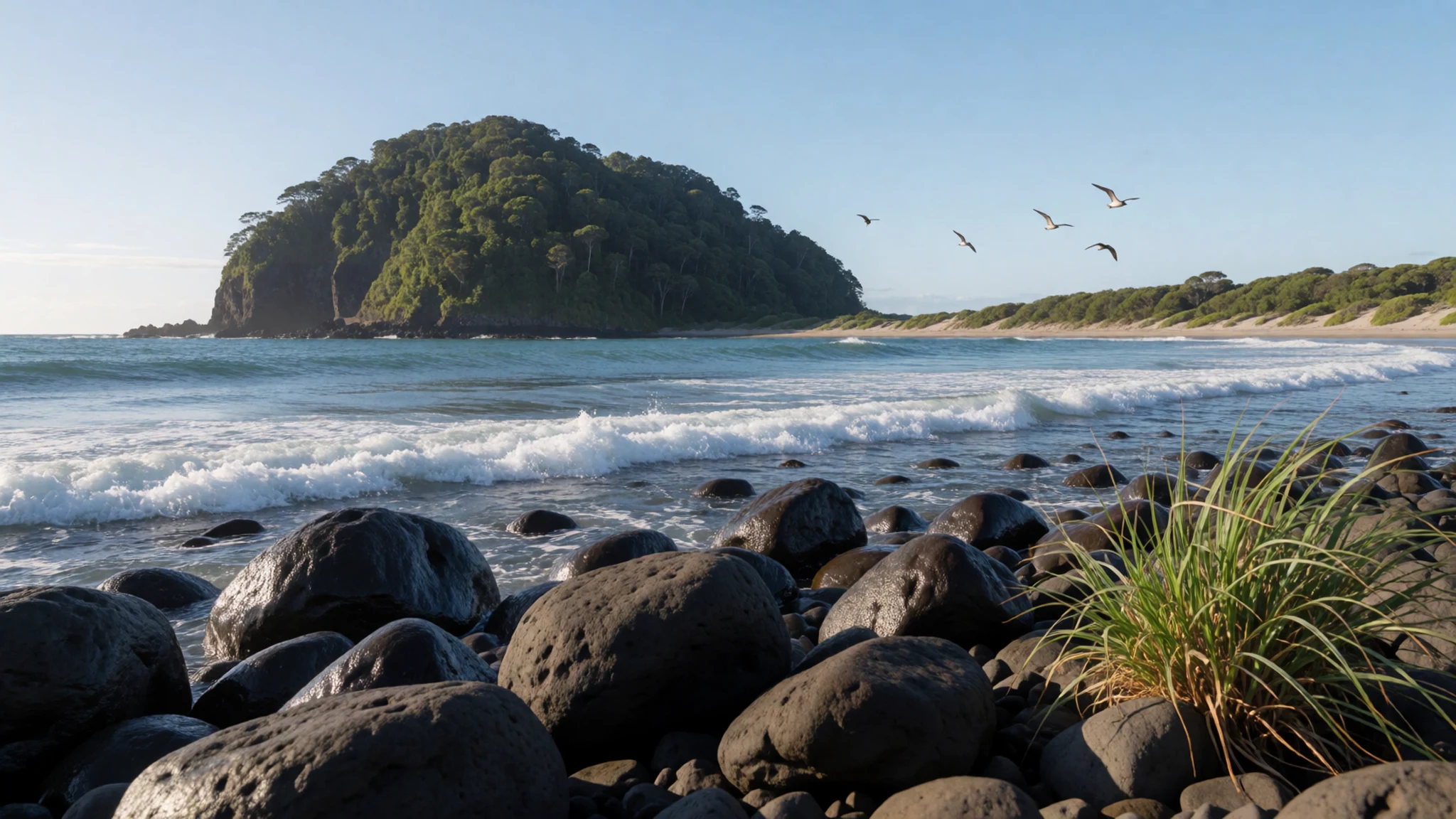
- Wufengchi Waterfalls — Jiaoxi township, foothills
Wufengchi is Yilan's best-known waterfall, a set of cascades tumbling down a wooded slope in the foothills near Jiaoxi. A short, well-made path leads up past each drop. It is a good wet-weather outing, since rain only adds volume, but the steps get slippery, so wear shoes with grip.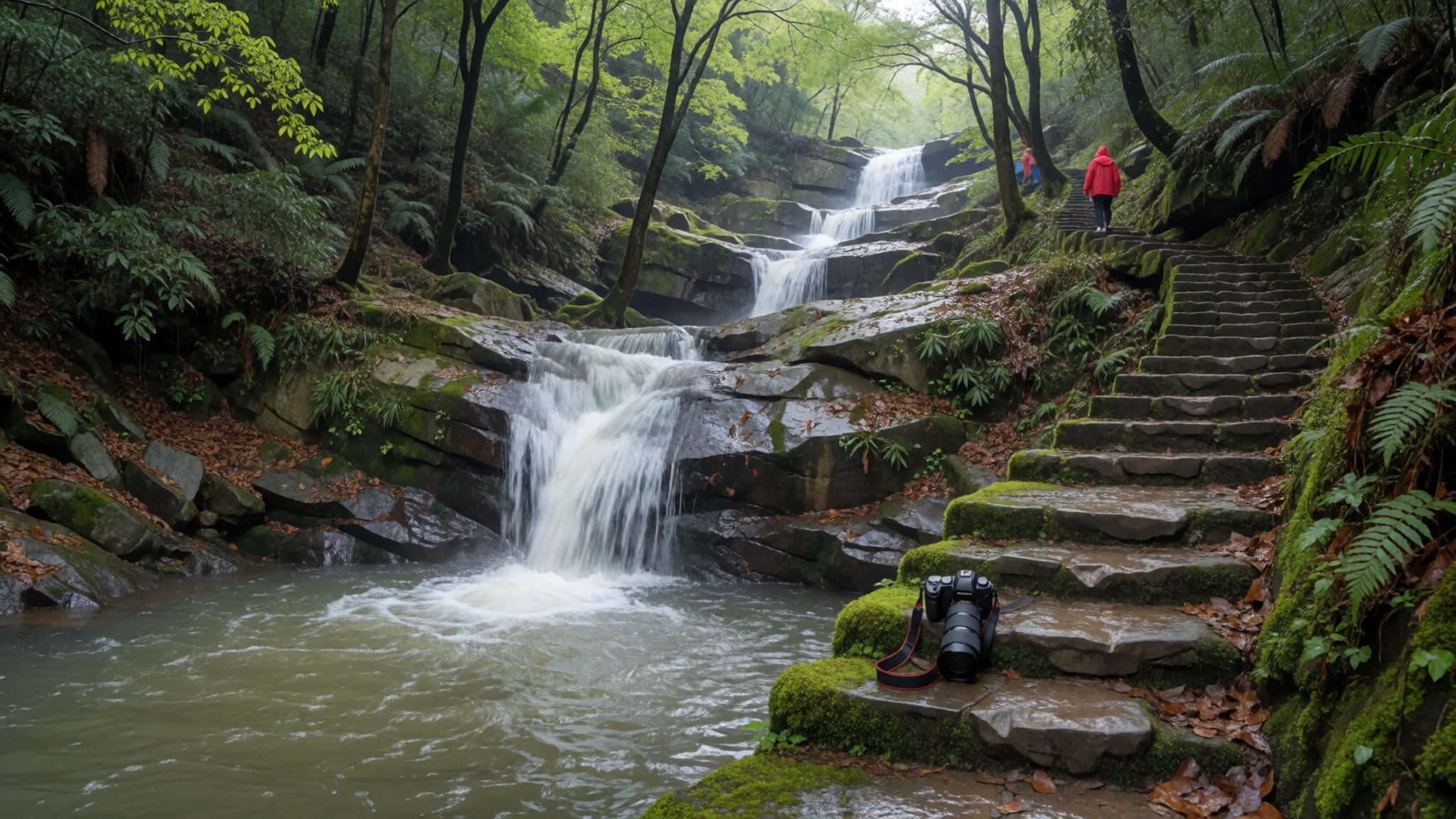
- Taipingshan Forestry Recreation Area — Mountains of Datong township
Taipingshan is a former logging area high in the mountains, now run for walking and forest bathing. Old rail routes and cool cloud forest make it a relief from lowland humidity. Hot springs lie along the same valley. The road can close in bad weather, and mist is common, so check conditions before setting out.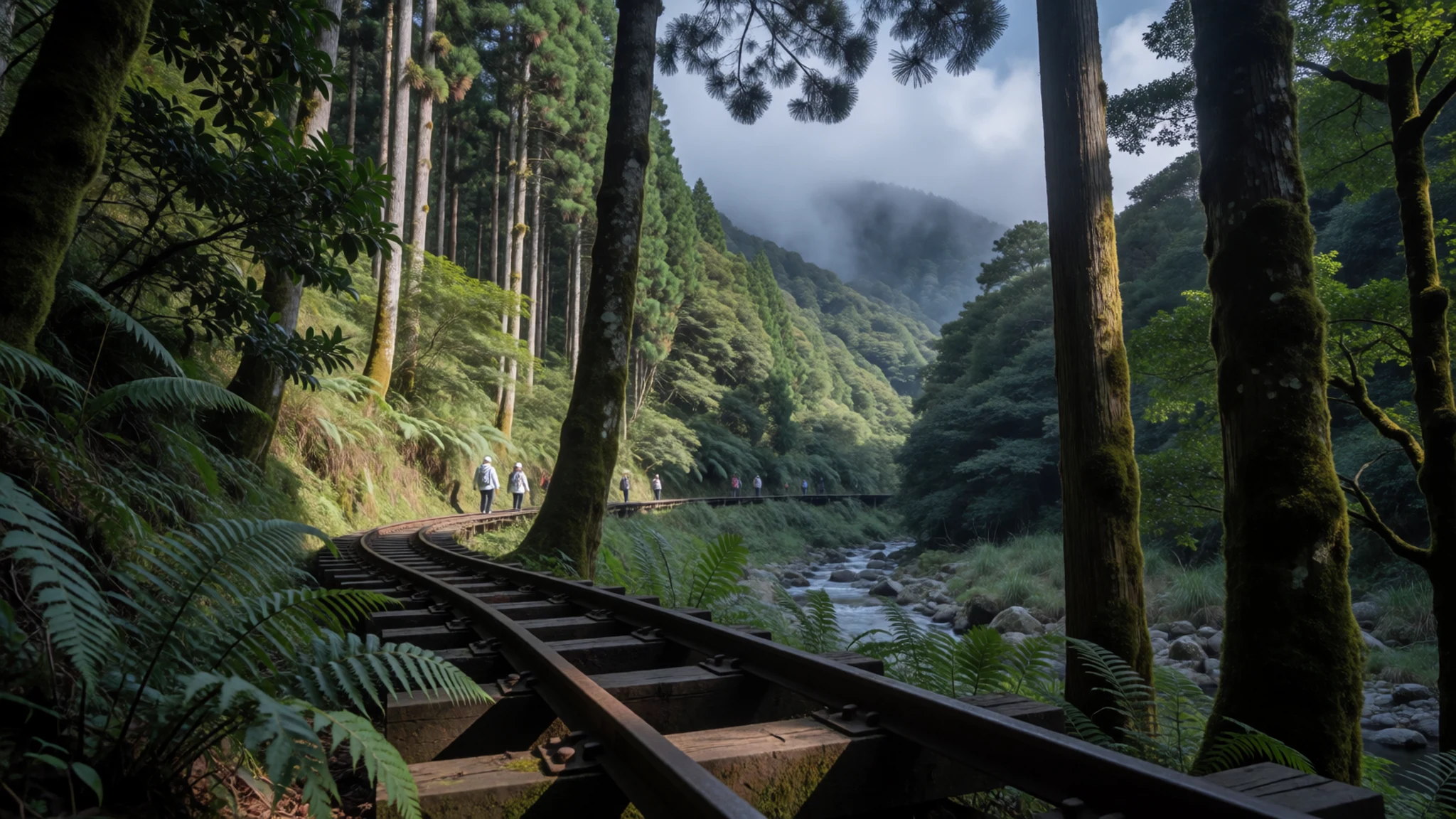
- National Centre for Traditional Arts, Wujie — Wujie township
This large cultural complex in Wujie preserves and promotes Taiwanese crafts and performing arts. It includes a recreated old street where traditional goods are made and sold, and workshops where visitors can try a craft. It suits families and rainy days. Check the official site for opening times and ticket prices.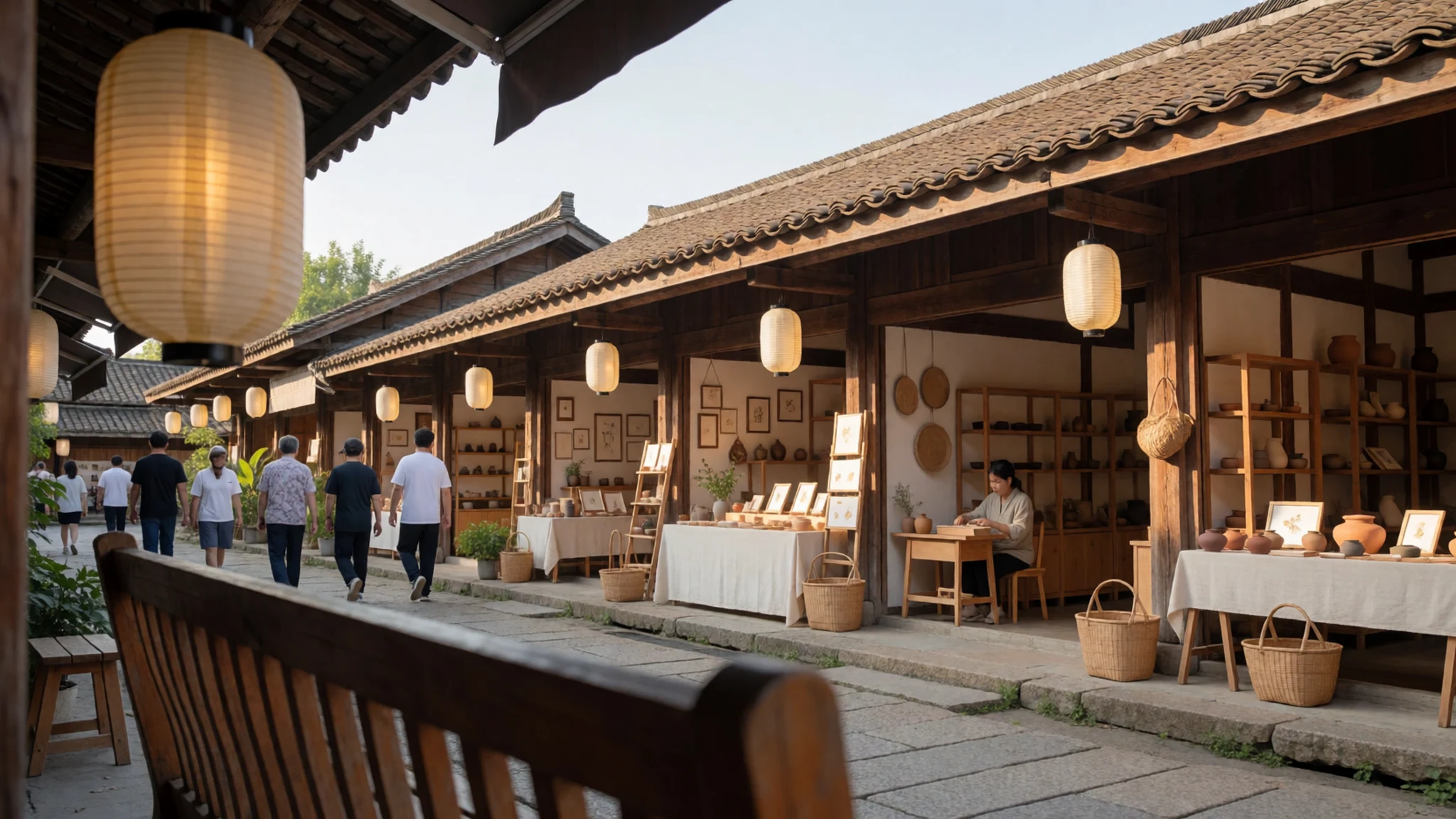
- Yilan City God Temple — Yilan City centre
The City God Temple is a working neighbourhood temple in the centre of Yilan City, busy with local worshippers who come to pray and leave offerings. Carved roofs, incense smoke and ritual objects make it a good first look at everyday religious life in town. Visit outside festival days if a quiet look matters.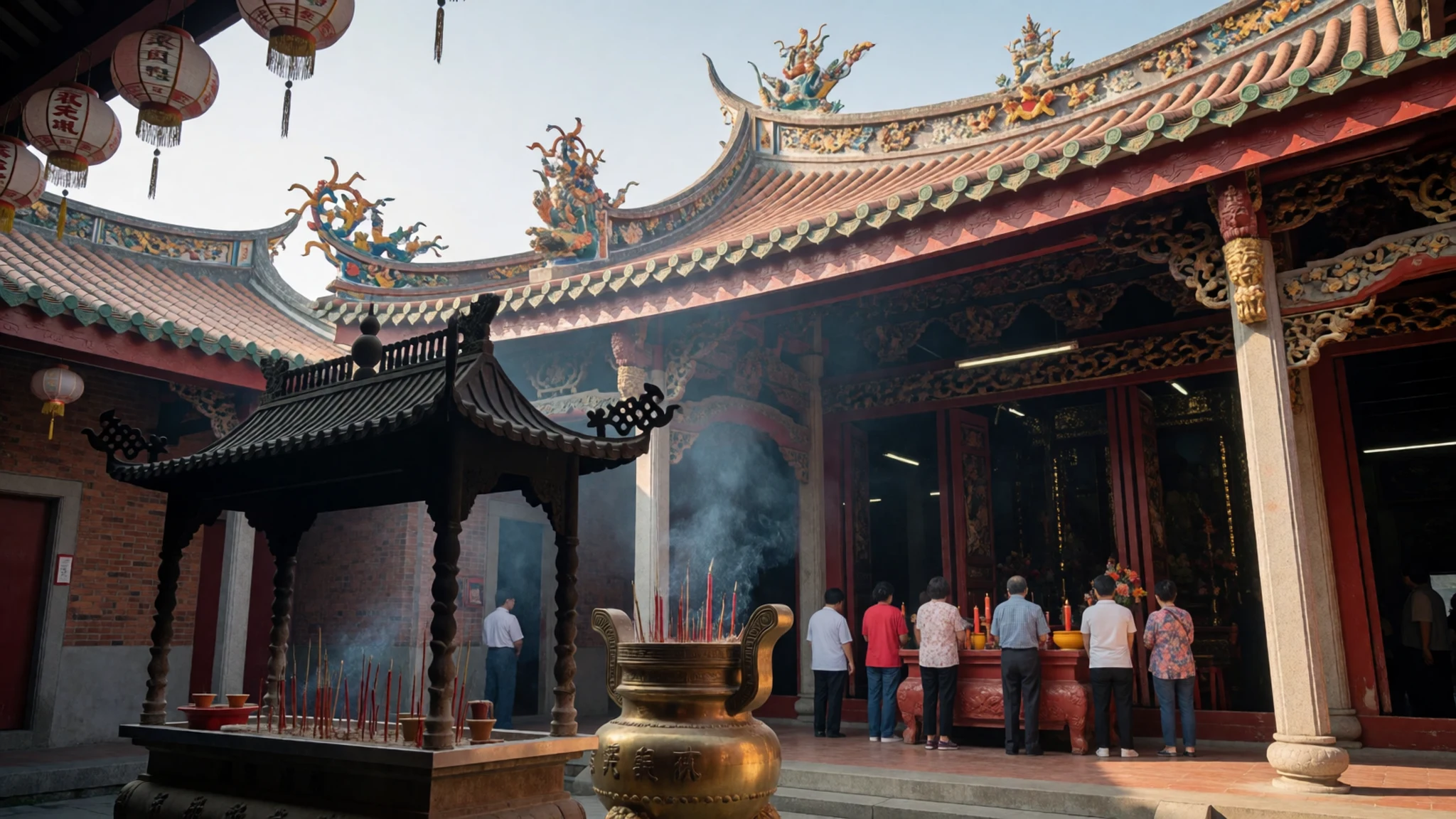
Culture
Yilan's culture grows out of its layered settlement. The Kavalan and Atayal peoples are the area's indigenous communities, and their languages, crafts and food traditions remain part of the county's identity, particularly in Datong and Nan'ao for the Atayal. Han Chinese settlers brought the temple religion, farming calendar and festivals that dominate town life, and local temples serve as meeting places as much as places of worship.
Daily religion here is hands-on. Neighbourhood temples such as the City God Temple in Yilan City fill with incense, offerings of fruit and flowers, and people consulting the gods about work, health and travel. Festival days can bring processions, drums and firecrackers, and the noise is part of the point. The arts centre in Wujie shows how crafts, puppetry and music are kept alive, with an old street of workshops and stalls.
The plain's farming life shapes everything else. Paddy, onions, melons and tea are grown here, and the seasons of planting and harvest still set the rhythm in the villages. Hot springs are part of local life too, used for relaxation after work rather than as a tourist add-on. Slower, quieter and more local than Taipei, Yilan rewards visitors who are happy to wander without a tight schedule.
At temples, keep your voice low, do not step on the raised door thresholds, and ask before photographing worshippers at prayer.
What to wear
Yilan's traditional dress belongs to its indigenous peoples. Atayal weaving is the best known, traditionally made on backstrap looms from ramie and later cotton, in bold geometric bands, often red and white, on garments and bags worn at ceremonies and marriages. The Kavalan have a long tradition of weaving with banana fibre. These textiles are now mostly made for festivals, performances and craft sales, and the arts centre in Wujie is a good place to see them being made.
Everyday dress in Yilan is simple and practical. Locals wear light cotton, T-shirts, shorts or trousers, and sandals or trainers, with raincoats and umbrellas close at hand because rain is so common. Farmers and fishers favour hats and long sleeves against the sun. Younger people in Yilan City dress much as they would in Taipei, in casual, current clothes, with a bit more outdoor gear on weekends.
For visitors, comfort and weather matter more than formality. Pack light, quick-drying clothes, a compact rain jacket and shoes with good grip for wet paths, waterfalls and forest trails. Bring a warmer layer for the mountains, which are much cooler than the plain. Temples have no strict dress code for visitors, but shoulders and knees covered is the polite choice. If you plan to use hot springs, take a swimming costume and a small towel, since many facilities expect them.
What to eat
- Niuseh bing (cow tongue biscuits) — Gift shops and bakeries in Yilan City and Luodong
A long, thin, flaky biscuit named for its resemblance to a cow's tongue, usually lightly sweet with a crisp bite. It is a standard gift from Yilan, easy to carry and good with tea.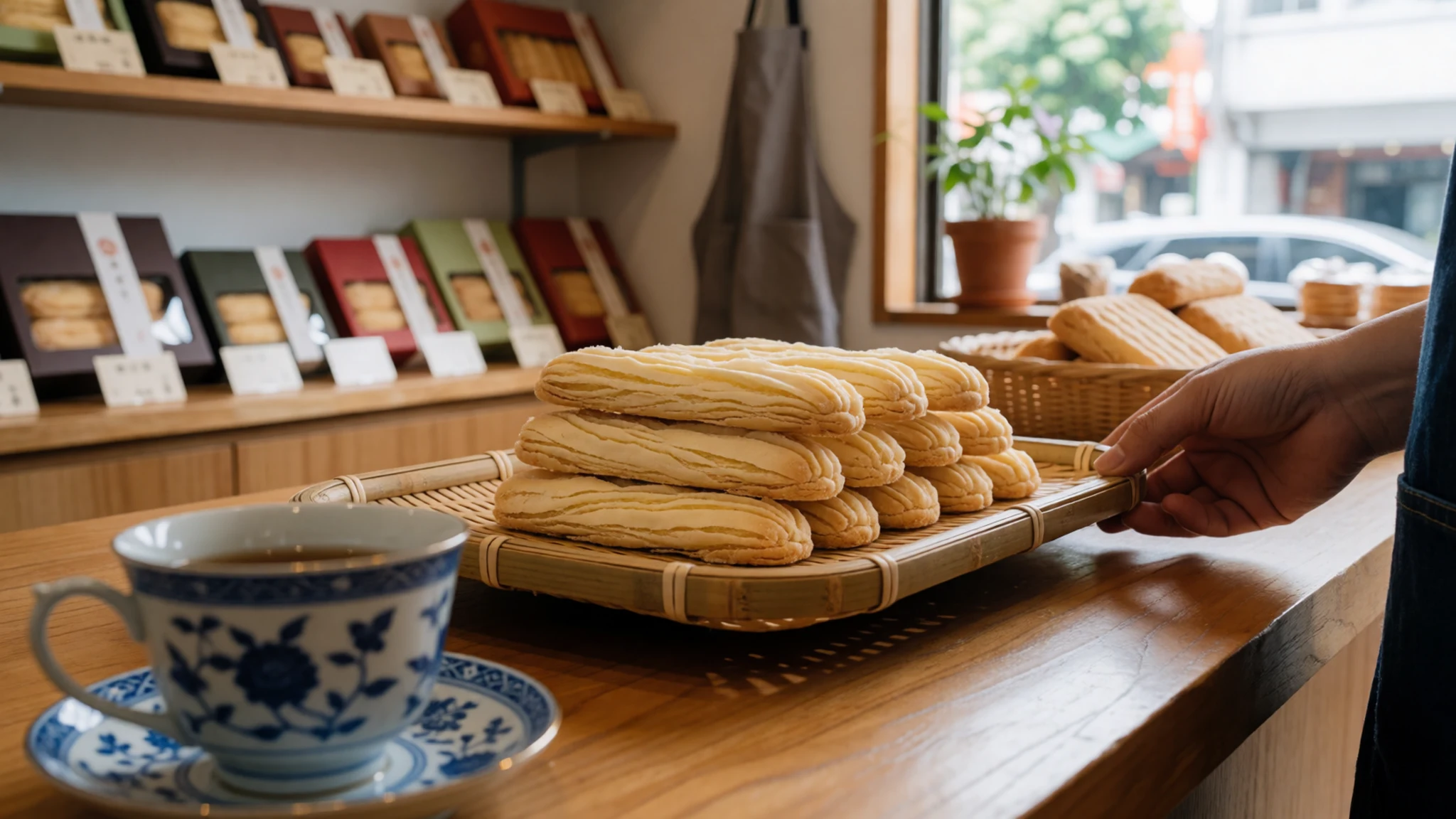
- Smoked duck (yashang) — Gift shops and market stalls around Yilan City
Duck smoked until it is dry and salty, sold sliced or whole. It is richly flavoured and is eaten as a snack or alongside rice. Yilan is closely associated with it, and it is easy to find in the area.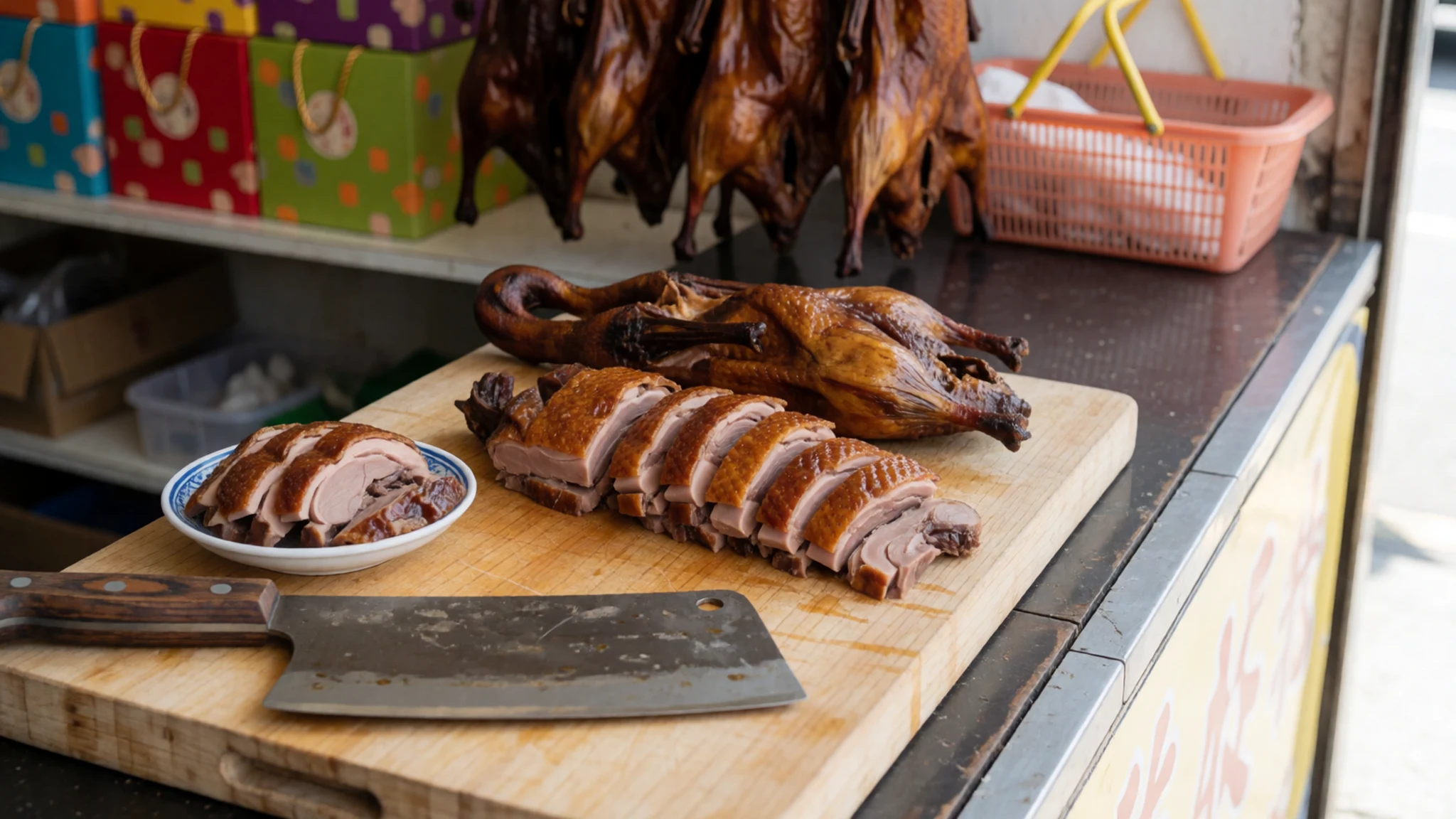
- Gaozha — Night markets and snack stalls in Luodong
A savoury fried snack made from pork, chicken lard and starch flour, with a texture closer to tofu than meat. It is crisp outside and soft within, and is best eaten warm with a dipping sauce. - Baoxin fenyuan — Dessert shops and stalls in Yilan City and Luodong
A cold dessert created in Yilan, with chewy tapioca-style balls filled with red bean. It is served over ice or soya pudding with toppings such as red beans and boiled peanuts, and it is welcome on a humid afternoon. - Sanxing spring onions — Farm shops and eateries around Sanxing
The onions of Sanxing township are Yilan's best-known crop, valued for their sweetness. They appear in pancakes, dumplings, soups and stir-fries, and even in local snacks and sauces.
Plan it
Best time. March to May and October to November, when it is mild and there are more dry spells. Winter is cool and drizzly in the northeast, and July to September is hot, humid and typhoon season, so check forecasts.
How long. 2–3
Getting there. Fly into Taipei, then take a train or an intercity bus to Jiaoxi, Yilan City or Luodong; the trip from Taipei is short. Buses leave from Taipei's main bus stations, and some are express services that skip stops, so confirm your destination before boarding. In the county, use local trains, buses or a hired scooter or car.
Budget. mid
Tips
- Book permits early for Turtle Island and Fushan Botanical Garden, which has long waiting lists, especially at weekends
- Go on weekdays if possible, since hot-spring towns fill with visitors from Taipei on Saturdays and Sundays
- Carry a rain jacket in every season, because showers come quickly
- Check road and weather updates before heading into the mountains, as landslides and typhoons can close routes
- Check the official county site (http://www.e-land.gov.tw/) for events and transport updates
Etiquette
- Rinse before entering a hot spring pool and follow the facility's rules on swimwear
- Keep your voice low in temples and do not touch offerings
- Ask before photographing people at prayer or at work in the fields
Nearby
Sources
- Wikidata Q237258 (CC0)
- Wikipedia: Yilan County, Taiwan (rev 1382654358) (CC BY-SA 4.0)
- Wikivoyage: Yilan County (rev 5234310) (CC BY-SA 4.0)
- Photo: Jiaoxi Aerial Panorama, Bob Tan (CC BY 4.0)
- Photo: Jiaoxi Township with Turtle Island, Bob Tan (CC BY 4.0)
- Photo: Yilan County in Taiwan, Bob Tan (CC BY 4.0)
- Photo: Yilan County in Taiwan from above, Bob Tan (CC BY 4.0)
- Photo: Yilan Government Hall, 1915 (Public domain)
- Photo: Yilan Plain, li-penny (CC BY 2.5)
- Photo: Map of the Taichung area, Army Map Service (Public domain)
- Photo: City God Temple in Yilan City, OU, SONGYUN (CC BY-SA 4.0)


Wildlife
- Risso's dolphin (animal)
Risso's dolphin is a large dolphin whose pale scars make it look as if it has been scratched with chalk. Yilan is best known for its whale and dolphin watching trips, so a boat outing is the way to meet one. These dolphins live in close-knit family groups and hunt squid and their relatives, diving remarkably deep to find them. Watch with a trained guide, keep a respectful distance, stay quiet, and never feed them.