Yeosu
Yeosu, South Korea
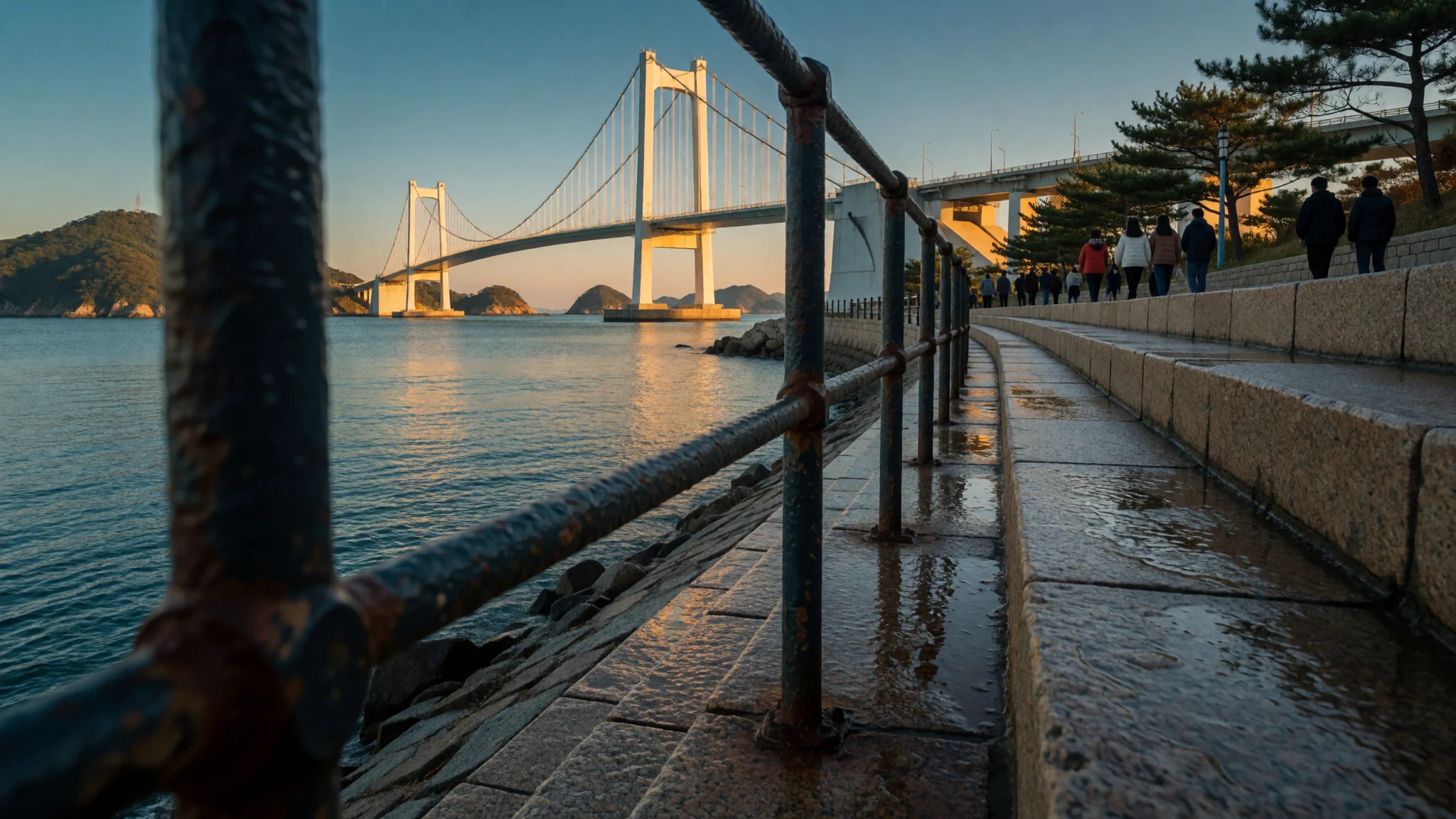
Yeosu is a south-coast port where seafood, island views and a lit harbour at night are all within a short taxi ride.
The place
Yeosu is a port city on the south coast of South Korea, home to a little over a quarter of a million people. It is made of a mainland peninsula and a scatter of islands, 365 in all, of which 48 are lived on. Hills and inlets split the city into separate districts rather than one tight grid. The compact centre sits around Jungang-dong and the harbour, facing Dolsan Bridge. Through a mountain tunnel to the west lies Yeoseo-dong, a rounded neighbourhood ringed by hills with its own small downtown. Much further west, Ssangbong-dong holds the city hall, a second port and a cluster of resort hotels. South of the harbour, across the bridge, the islands begin, and Dolsan island is the easiest to reach. The sea shapes the weather. Breezes and a warm offshore current keep summers cooler and winters milder than they are inland, and spring and autumn last longer than in many other parts of the country. The wet season is another matter, with heavy rain through the summer months. Evenings are when the harbour comes into its own, with lit bridges, seafood restaurants and cafés along the waterfront. Visitors tend to base themselves near the harbour or the former Expo site, then spread out by taxi, bus or boat. Distances look short on a map, but mountains and water make them longer in practice, so allow time for moving between districts.
Its story
Yeosu has been lived in for a very long time. Excavations on its mainland and islands turned up Neolithic pottery, grinding stones, axes and sickles, along with dwellings built on shell layers with clay floors and small kilns. Later surveys found many shell mounds on the islands, and archaeologists now read the Yeosu islands, together with parts of the neighbouring coast, as an important centre of Neolithic life. The people chose sheltered bays where shellfish were plentiful, which is still a fair description of why the town eats so well. Wikidata gives 940 as the founding date of the city. The best-known chapter is naval. Yeosu became home to the regional navy headquarters, and in the 16th century, when Japan invaded Korea, Admiral Yi Sun-sin commanded from here. He is credited with the geobukseon, the armoured turtle ship, and he is still honoured across the city in monuments, names and souvenirs. Modern Yeosu is younger than its past suggests. In 1998 the old city, the city of Yeocheon and Yeocheon County were merged into the single authority that exists today. That explains the spread-out layout, with an old harbour centre in one place and an industrial and residential district in another. The turtle ships, the shell mounds and the merged districts all explain why Yeosu feels like several towns sharing one coastline.
What to see
- Dolsan Bridge — Harbour, Jungang-dong
Dolsan Bridge links the harbour to Dolsan island, and it is the usual place to see Yeosu's night view, when the lights change colour over the water. Seafood restaurants and cafés crowd the area on both sides, so evenings are busy and a walk along the shore works better than a car.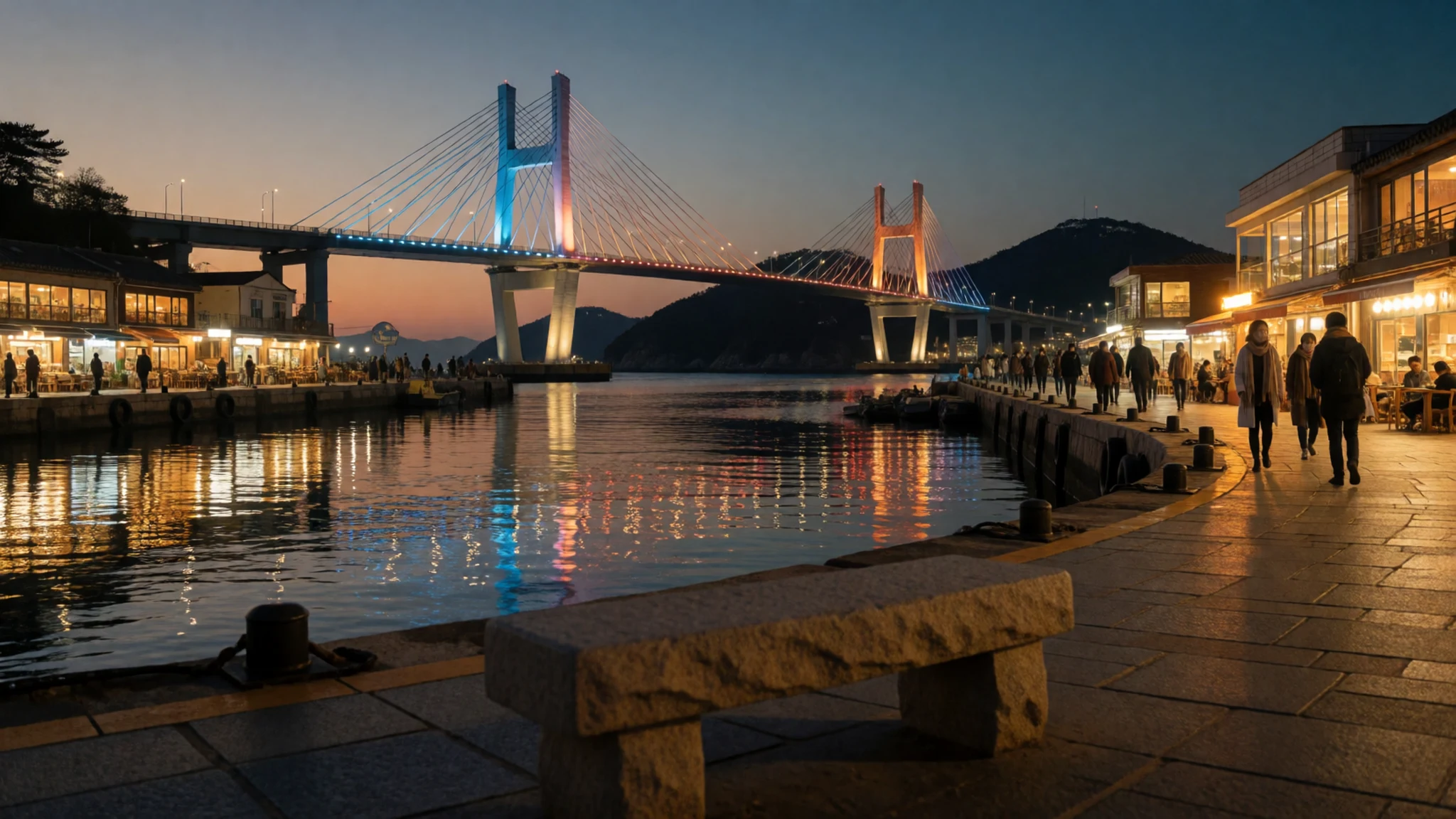
- Odong Island — East of the harbour
Odong Island is a small, wooded island reached on foot from the mainland, with a lighthouse and sea views from its paths. It makes a gentle half-day walk, especially in spring and autumn, when the weather is milder and the coastal trees are at their best.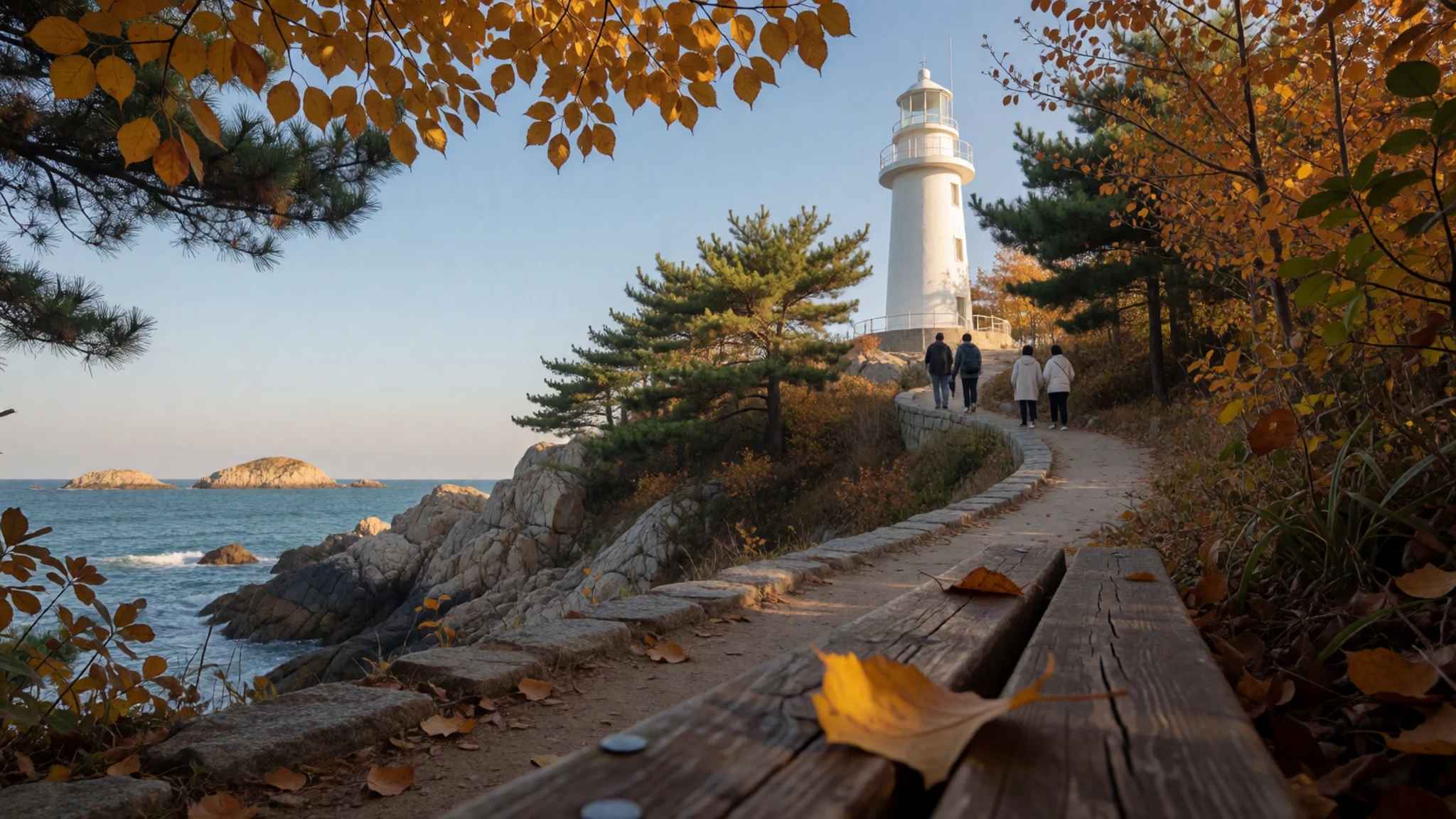
- Replica turtle ship — Waterfront near Odong Island
A full-size replica of one of Admiral Yi Sun-sin's turtle ships stands near the waterfront. You can walk through the interior, where mannequins show the crew's daily routine in cramped quarters. It is simple, but it makes the naval story of the city easy to picture.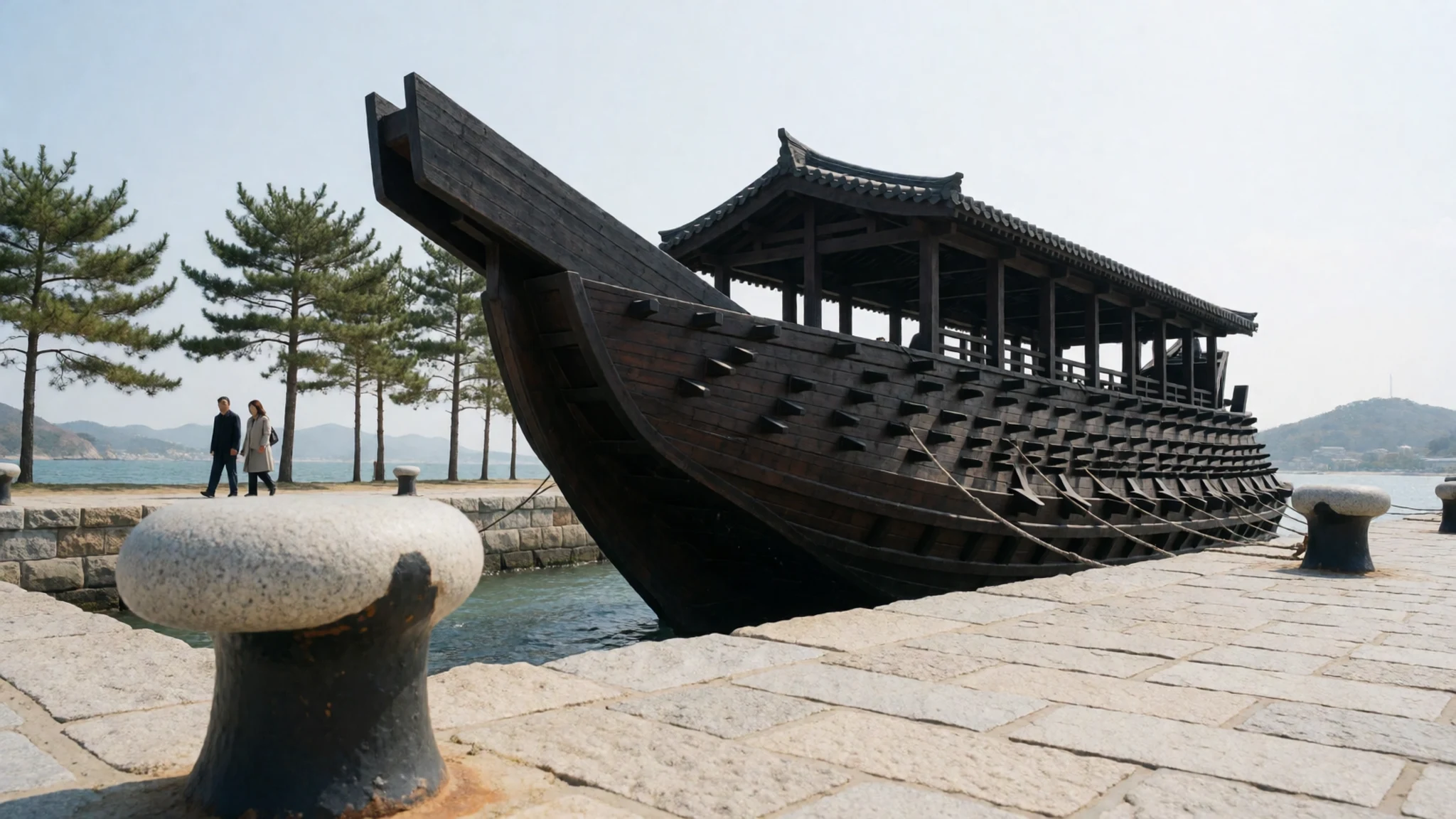
- Hyangiram Hermitage — Southern Dolsan island
Hyangiram is a small Buddhist hermitage clinging to a cliff on Dolsan island, with views over the sea and the islands of the Yeosu chain. Steps and narrow passages link the buildings. Go early, wear shoes with grip, and expect a short but steep approach.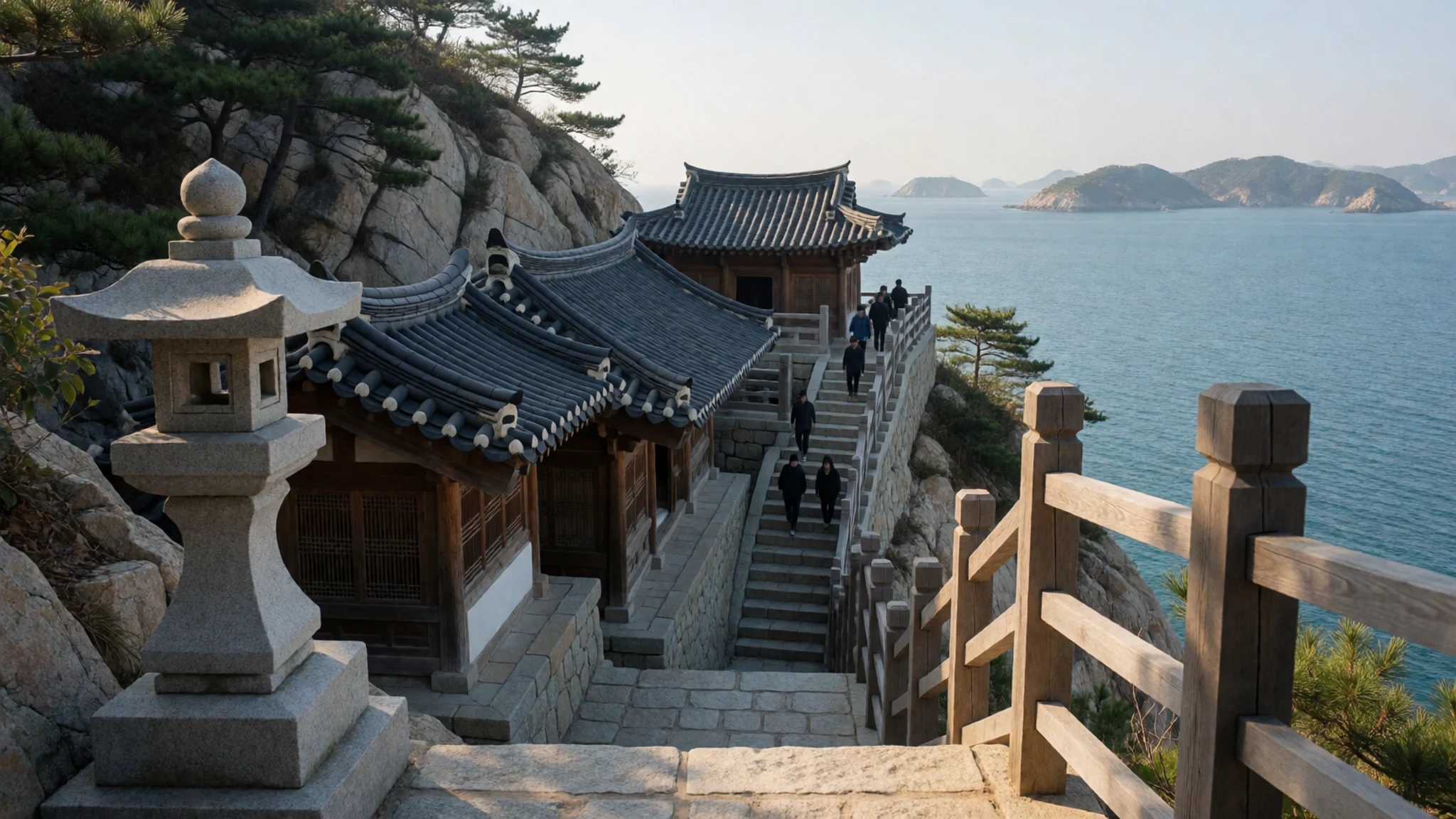
- Seo Market — Seogyo-dong
Seo Market, in Seogyo-dong, is the long-established traditional market of Yeosu, selling fish and other seafood, meat, clothing and household goods. It is a useful stop for seeing what local people cook and buy, and for picking up fruit or snacks before a day out on the islands.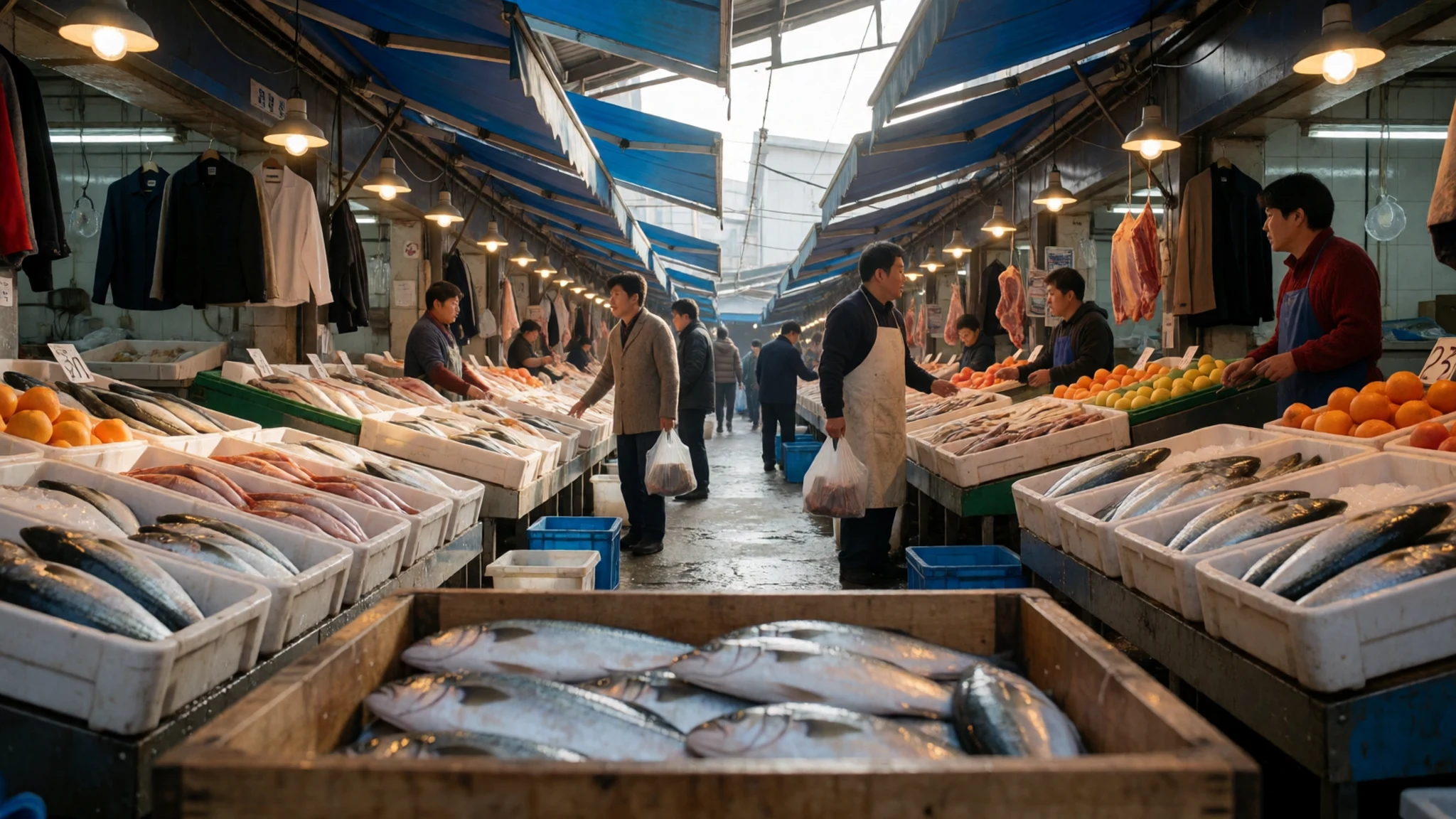
- Jinnamgwan — Central Yeosu
Jinnamgwan is a large single-storey wooden pavilion from the naval period, with a small museum attached. The timber hall and its courtyard offer a quiet pause in the middle of the city, and a good link to the history of Yeosu as a naval base.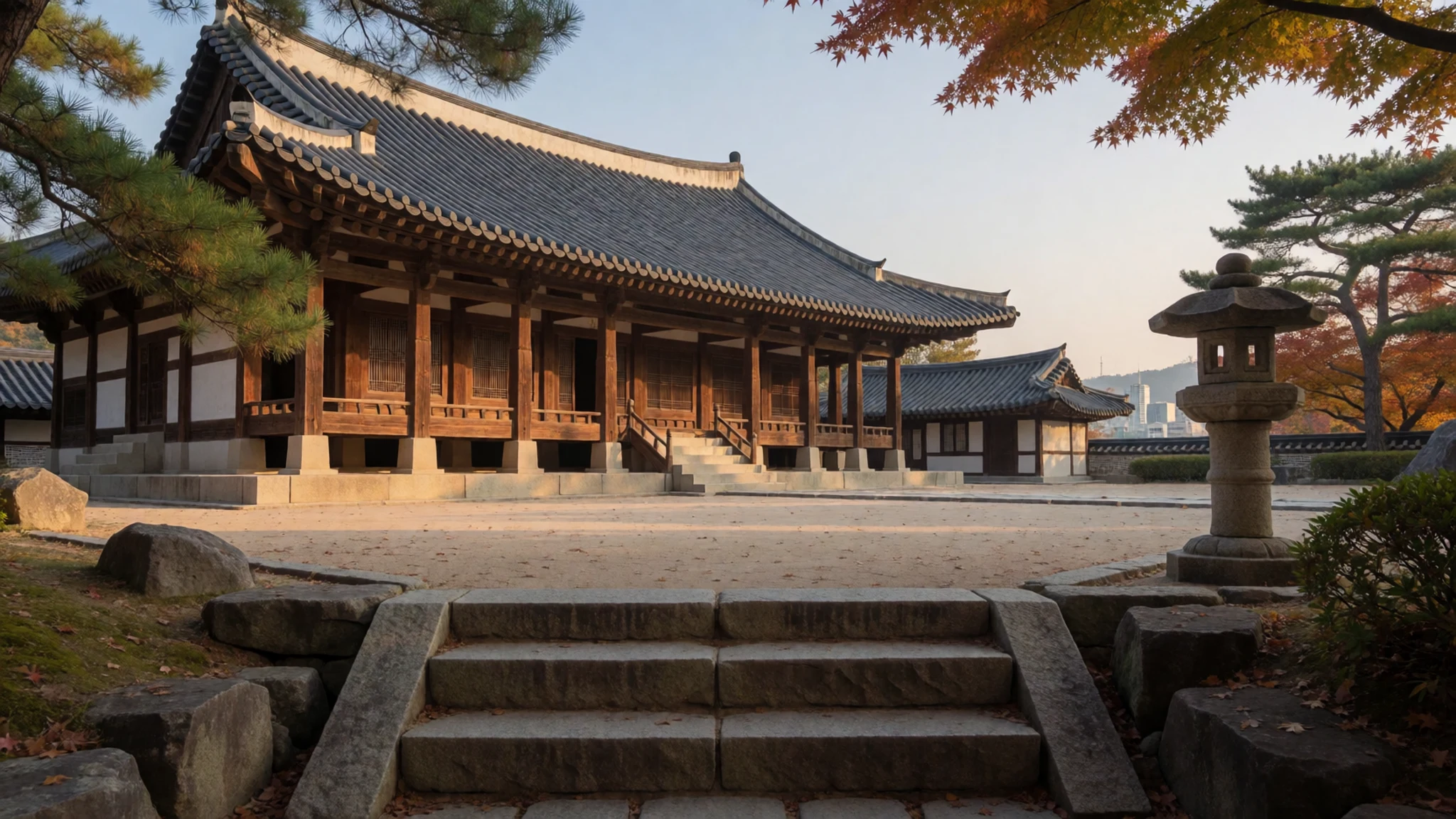
Culture
Yeosu's culture is shaped by the sea and by its naval past. Admiral Yi Sun-sin is the local hero, and his name turns up on marinas, streets and monuments; people here speak of him with real affection rather than as a textbook figure. Fishing and shellfish gathering built the town's food habits, so meals are social and generous, with shared plates of raw and cooked seafood and side dishes that keep coming. Many restaurants will refill the small dishes without charge, which says something about local ideas of hospitality. Buddhism is part of the landscape too, most visibly in cliffside hermitages like Hyangiram, where monks and pilgrims share paths with day visitors. Evenings revolve around the harbour, with families, couples and groups walking beside the water, buying coffee and watching the lights on the bridge. Public bathhouses and jimjilbang, the communal bathhouses with sleeping floors, are an ordinary part of Korean life here as elsewhere, and are used by locals as much as by cheap-sleeping travellers. Markets keep older rhythms, with stallholders calling out prices and offering tastes. At Hyangiram and other temples, keep your voice low, dress modestly and take off your shoes before stepping into any hall.
What to wear
Yeosu, like the rest of South Korea, keeps the hanbok for ceremony: a short jacket called jeogori worn over a full wrapped skirt, the chima, for women, and jacket and trousers for men. Traditional fabrics include silk for festive wear and ramie or hemp for light summer clothes. People wear hanbok at weddings, at the lunar new year and at the autumn harvest festival, and rental hanbok are popular with young visitors at heritage sites. Day to day, people in Yeosu dress like other Koreans: neat casual clothes, trainers, light jackets and plenty of outdoor gear, especially for hill walks and fishing. Colours are often muted, and fleeces or windcheaters are common on the coast. Visitors should dress for weather rather than occasion. Summers are humid and rainy, so pack light, quick-drying clothes and a compact umbrella. Winters are cold, and the sea wind makes it feel colder, so bring layers and a windproof jacket. Comfortable shoes with grip matter for steep steps at Hyangiram and for island paths. For temples, cover shoulders and knees, and wear shoes that are easy to take off. A swimsuit is only useful if you plan a beach stop on one of the islands.
What to eat
- Hoe (raw fish) — Seafood restaurants around the harbour and Dolsan Bridge
Hoe is sliced raw fish, eaten here with a spicy and sour sauce called chojang and often wrapped in lettuce with garlic, much as Koreans eat barbecue. Almost any seafood restaurant near the harbour serves it, and fresh fish from the market is the best test.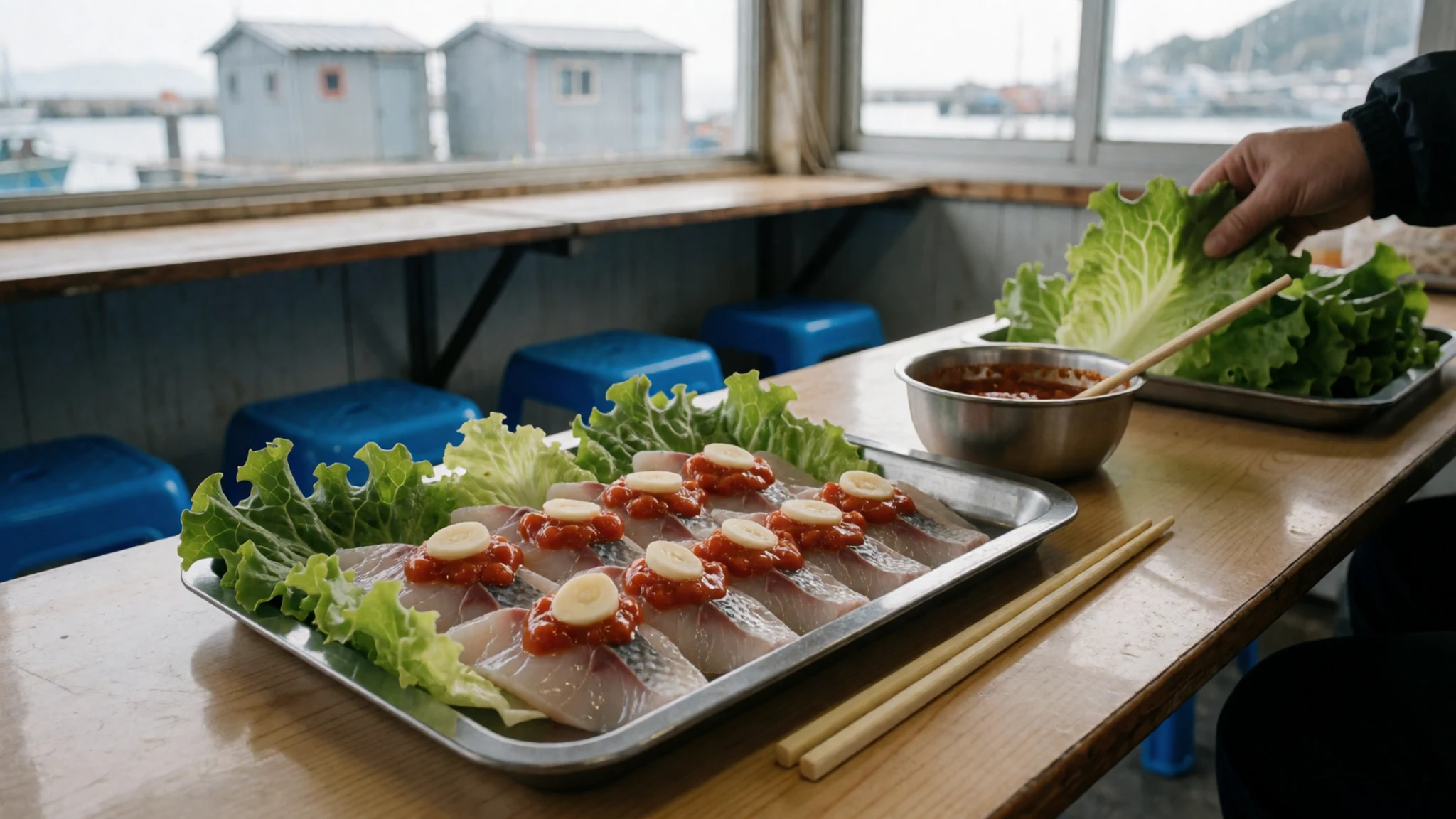
- Jeyuk-bokkeum ssambap — Korean restaurants in the city centre
Jeyuk-bokkeum is marinated pork stir-fried until glossy, wrapped in lettuce with rice and sauce, and served with many side dishes. It is a classic of Korean restaurants in Yeosu, and local taxi drivers will point out their favourite places.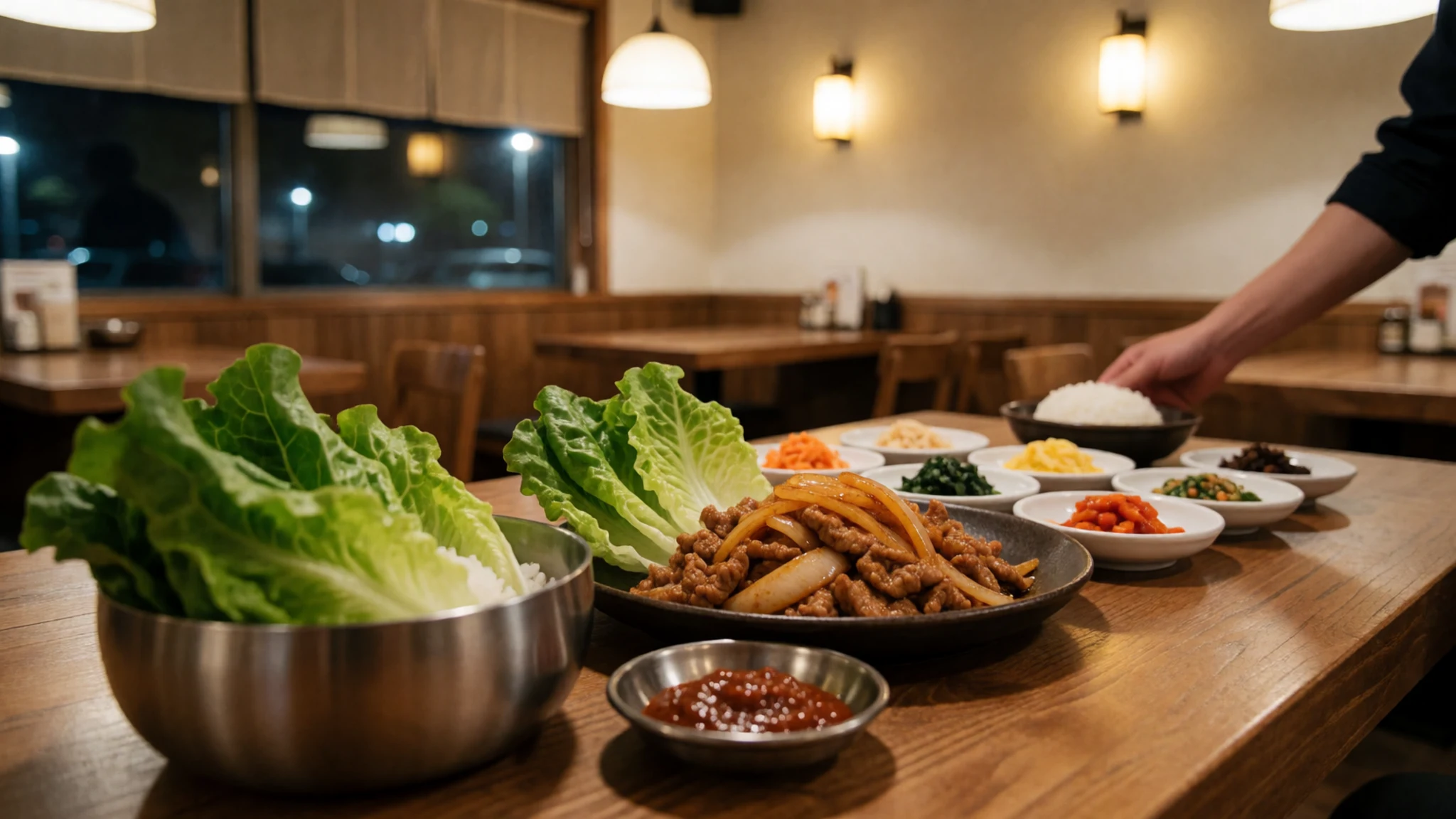
- Geobukseon bread — Bakeries near the harbour
Geobukseon bread is a sweet, filled bun named after Admiral Yi Sun-sin's turtle ship. It is a local souvenir snack, easy to eat while walking, and bakeries near the harbour also sell yuzu bread, flavoured with the citrus fruit. - Coconut coffee — Cafés in the harbour area
Coconut coffee is a sweet, creamy iced drink that one café has made a local signature. It suits the humid months well and works as an afternoon stop after the island walks or a market visit. - Seafood side dishes — Local restaurants and market eateries
A seafood meal in Yeosu usually arrives with a spread of small dishes, such as pickles, seasoned vegetables and shellfish, which are refilled on request. They show the local palate, with salty, spicy and sour tastes in balance.
Plan it
Best time. April–May and October–November, when the weather is mild and the sea air is comfortable. June to August brings heavy rain and humid heat, and winter is cold and windy.
How long. 2–3
Getting there. Trains run to Yeosu Expo Station, the southern end of the Honam line, and the fast KTX takes about three hours twenty minutes from Seoul; check the Korail website for schedules and fares. Express buses reach the city from across the country, about five and a half hours from Seoul and about two hours from Gwangju. Taxis cover the last leg to the harbour or islands.
Budget. mid
Tips
- Book weekend trains and accommodation early in spring, autumn and holiday periods
- Visit Hyangiram and Odong Island in the morning, before the crowds and the heat
- Carry a little cash for markets and small eateries, plus a card for larger restaurants
- Bring a rain jacket in summer, and a windproof layer in winter
- Check the official city website (https://yeosu.go.kr) for events, ferry times and opening hours
Etiquette
- Take off your shoes where you see a raised floor or a row of shoes at the door
- Keep your voice low at temples and hermitages
- Dress modestly when visiting religious sites
Nearby
Sources
- Wikidata Q42125 (CC0)
- Wikipedia: Yeosu (rev 1379652680) (CC BY-SA 4.0)
- Wikivoyage: Yeosu (rev 5422909) (CC BY-SA 4.0)
- Cesarexpo, Panoramic view of Expo 2012 Yeosu, via Wikimedia Commons (CC BY 3.0)
- Glabb, Dolsan Bridge, via Wikimedia Commons (CC BY 3.0)
- 주민선, 13 경도해양관광단지, via Wikimedia Commons (CC BY-SA 4.0)
- Mobius6, Yeosu Odongdo, via Wikimedia Commons (CC BY-SA 4.0)
- Mobius6, Dolsan Park, via Wikimedia Commons (CC BY-SA 4.0)
- Toobigtokale, Yi Sun-sin Marina, via Wikimedia Commons (CC BY-SA 4.0)
- Gupdaal, view from Bultanbong, West Geomun Island, via Wikimedia Commons (CC BY-SA 4.0)
- Toobigtokale, Yeosu Maritime Cable Car view, via Wikimedia Commons (CC BY-SA 4.0)


