Yeak Laom
Yeak Laom, Cambodia
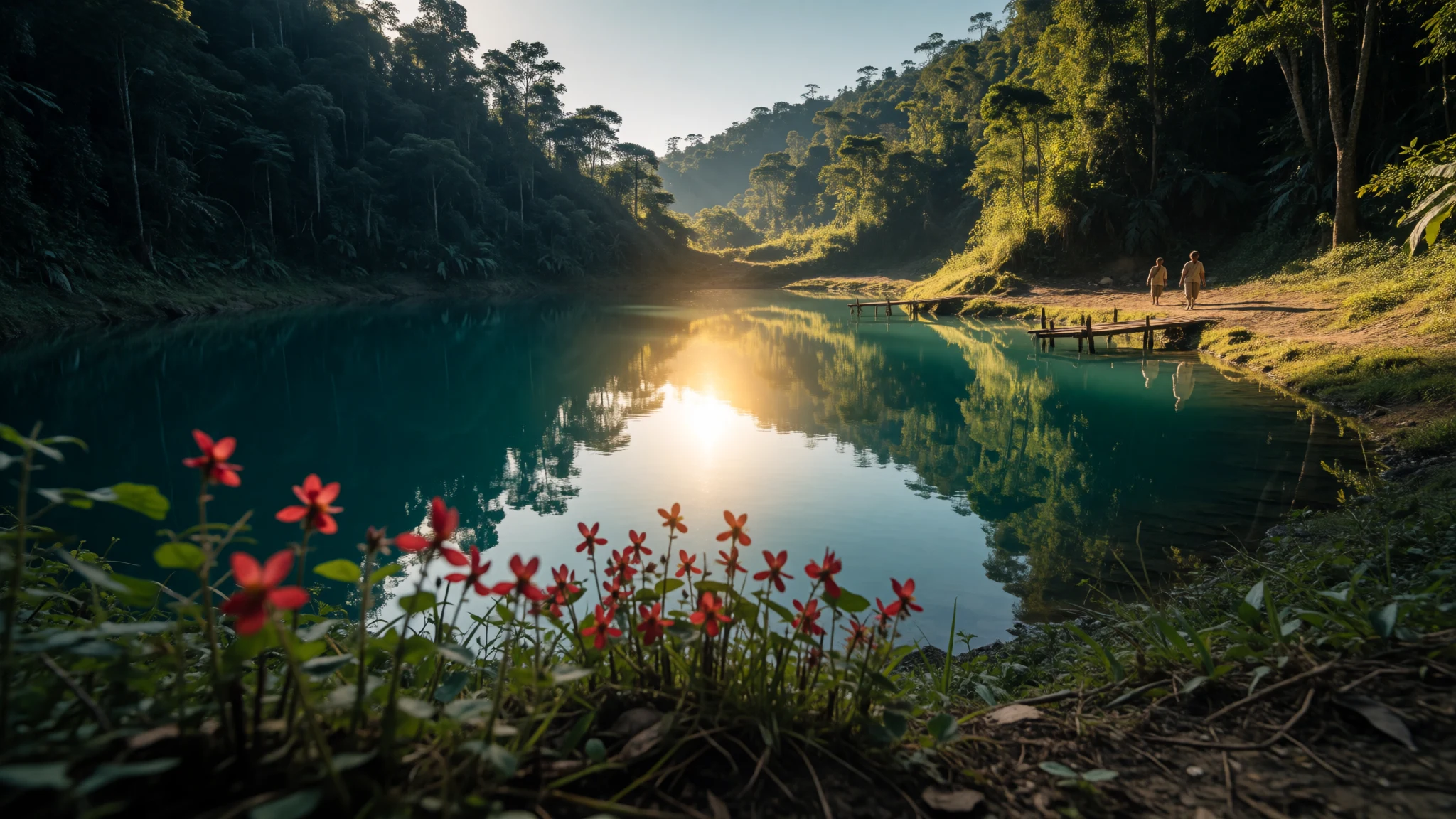
Yeak Laom is a quiet forest lake in Cambodia's northeast, where swimming, shade and highland Tampuan culture make a slow break from the temple circuit.
The place
Yeak Laom is a commune in Banlung Municipality, in Ratanakiri Province, up in the far northeast of Cambodia. This is the highland frontier, a long way from the flat rice plains and the temple crowds around Siem Reap. Red earth roads, rubber and cashew plantations and forested hills give the province a character quite unlike the rest of the country. The commune is small, with a population of about 1,855, and its fame rests on a single feature: a lake set in a round, forest-clad bowl, with the trees coming right down to the water's edge. The water is clear enough to see a fair way down, and it stays calm because the surrounding rim blocks most of the wind. A path circles the shore, and wooden platforms and jetties let people slip in for a swim. Banlung, the provincial town, is a short ride away and is where most visitors sleep and eat. Weekends and holidays bring Cambodian families and school groups who picnic under the trees, while weekday mornings can be almost empty. The setting is simple rather than polished, with little in the way of built attractions. Come for the water, the shade and the sound of the forest. Heat in the lowlands can be fierce, and the lake is the obvious relief from it. Bring a towel and insect repellent, and expect mud in the rains.
Its story
Yeak Laom sits in country that has long belonged to indigenous highland communities, among them the Tampuan, whose villages lie around the lake. The name is commonly linked to a giant, and local tradition ties the lake to spirits and to the people who lived beside it long before roads reached Ratanakiri. For the Tampuan the water and the forest around it are not scenery but part of a living landscape, with places that carry rules and meanings. Cambodia's wider history has weighed heavily on the region. The country endured colonial rule, civil war and the Khmer Rouge years, and the remote northeast was marked by all of it. Tourism arrived late, and a community-run approach to the lake grew up in the years after. The area has not been free of dispute. In 2008 the provincial governor granted a 90-year lease over about 5.1 square kilometres on Youl Mountain, covering parts of the Phnom, Sil and Lapo villages, to a company planning a tourist development. NGOs reported that much of that land might qualify as indigenous community land under a 2001 law, and that the affected communities had not taken part in the lease talks. Anyone visiting should know that the lake's calm hides questions about who controls the land and who benefits from visitors. Spending locally, and listening to the Tampuan voices on site, is a small way to take that seriously.
What to see
- The crater lake — Yeak Laom commune
The lake is the reason to come: a round body of clear water ringed by tall forest. Swimming is the main pleasure, usually from wooden platforms or steps on the shore. Go early or on a weekday for stillness, and bring a towel, since changing space is basic.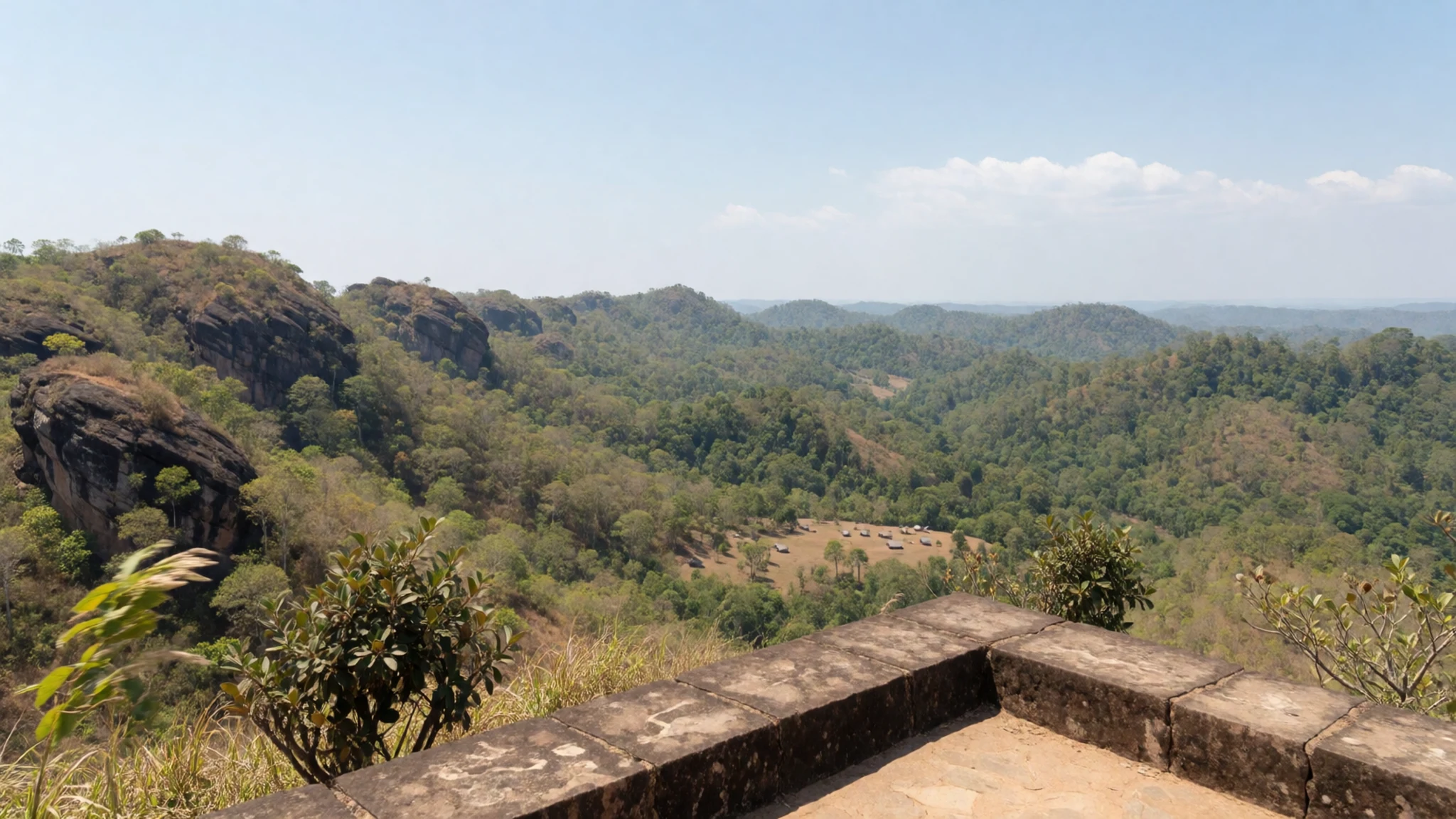
- The shoreline path — Around the lake
A forest path loops around the water, passing big trees, birdsong and the odd quiet viewpoint over the surface. It is shaded and easy underfoot in dry weather but slippery after rain. Walk it slowly in the morning, when the light comes in low and the air is coolest.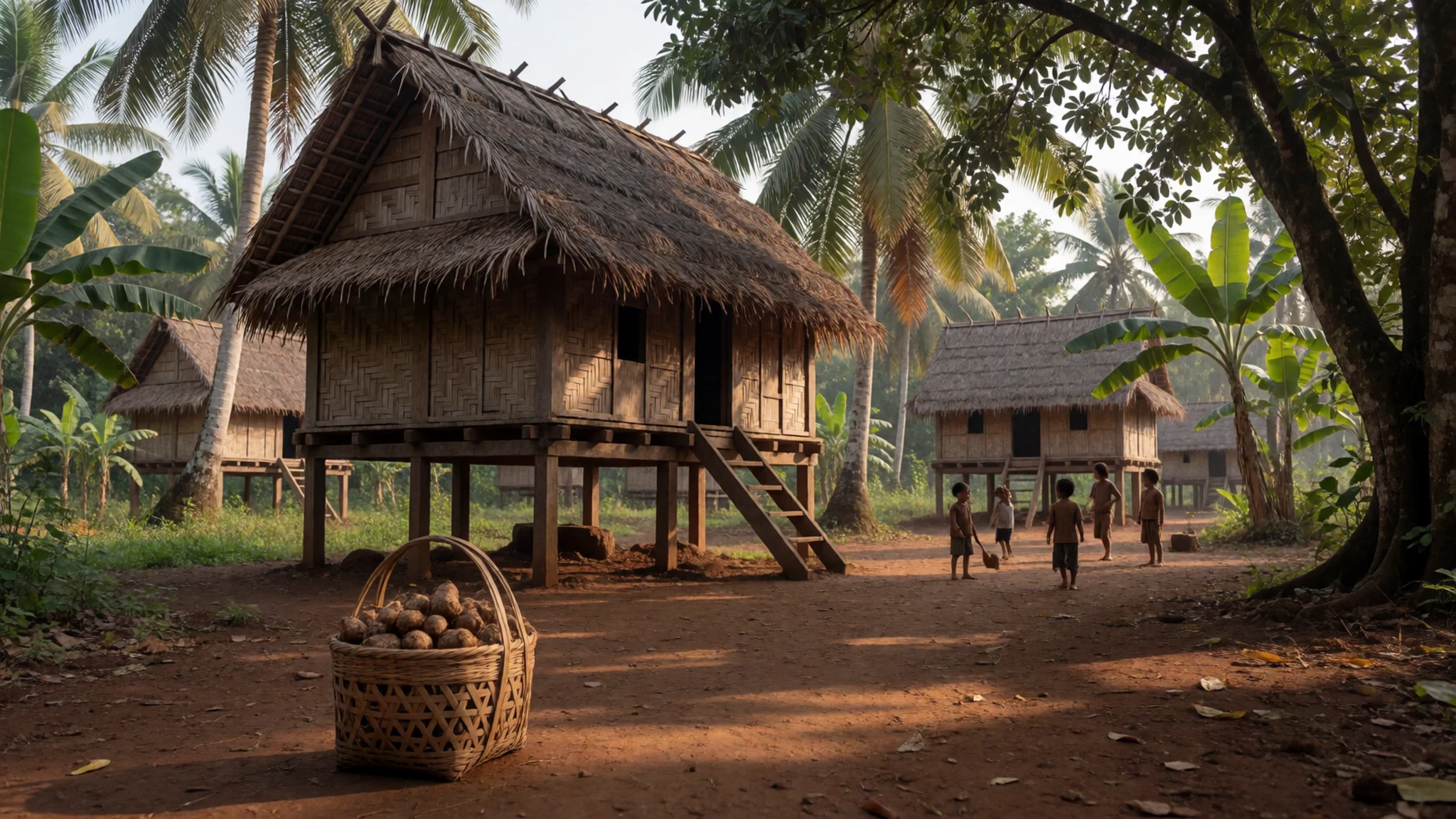
- Tampuan cultural centre — Near the lake entrance
A small centre near the lake presents Tampuan life and crafts, and is a good place to understand the people whose land this is. Opening arrangements vary, so ask locally on arrival. Buying a handmade item here puts money directly into the community.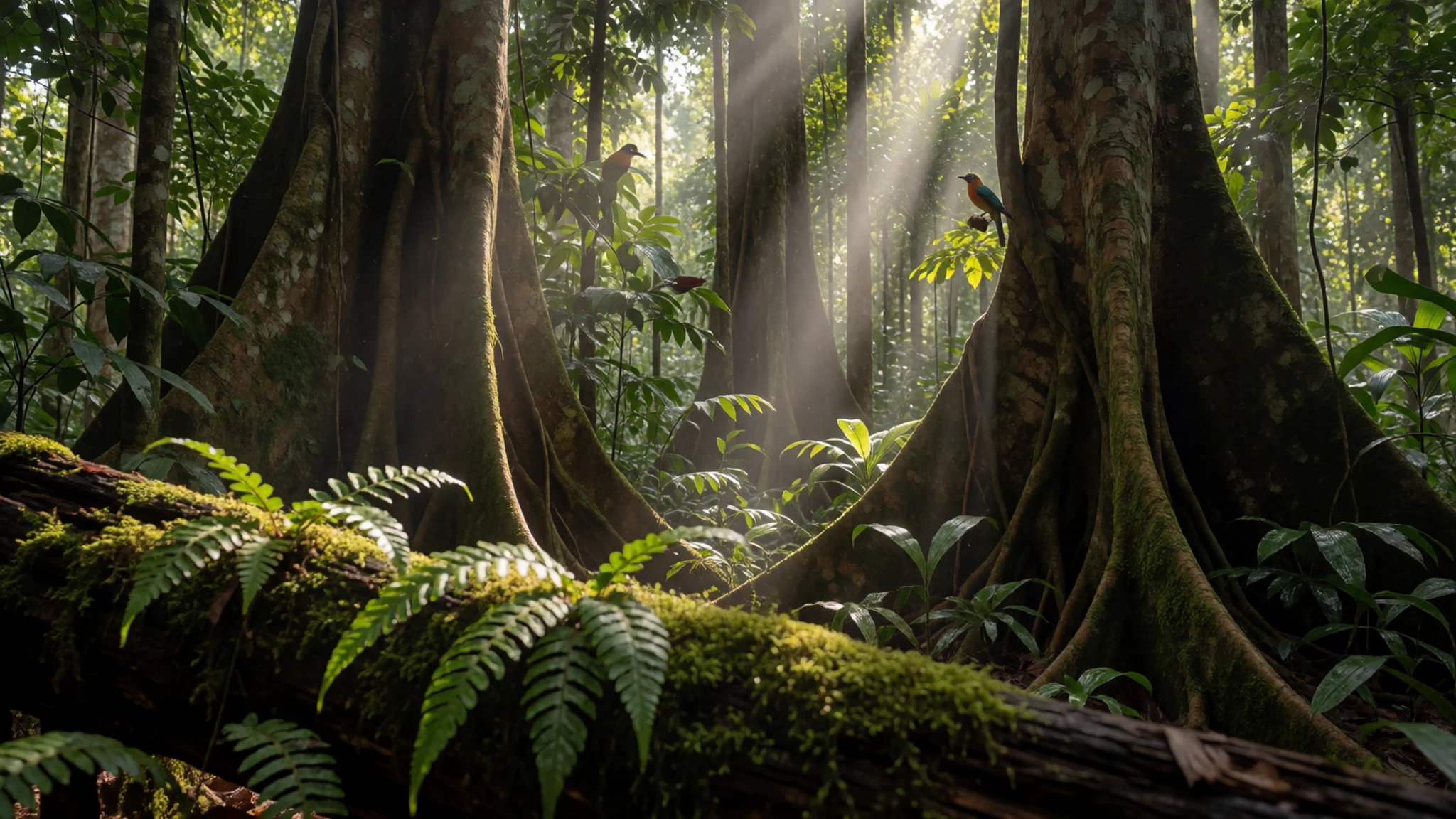
- Banlung town and its markets — Banlung
Banlung is the provincial base, with a busy central market, red dust on the streets and a mix of Khmer and highland communities. It is a useful place for supplies, cash and a bowl of noodles before heading to the lake. Evenings are slow and cool. - Villages and plantations around the lake — Surrounding commune
The roads around Yeak Laom run past highland villages, cashew and rubber plantations and patches of forest. Hiring a local guide or a motorbike driver makes the countryside easier to read. Always ask before photographing homes or people.
Culture
Yeak Laom lies in Ratanakiri, where many communities are indigenous highlanders rather than lowland Khmer, and the Tampuan are central to life around the lake. Their customs include animist beliefs, spirit-linked places in the forest and a strong tie to ancestral land. Cambodia as a whole is predominantly Buddhist, and Khmer families make up much of the weekend crowd at the lake, bringing food and sitting in groups under the trees. In towns such as Banlung, people are less used to tourists than in Siem Reap or Phnom Penh, so manners matter more. Many people in remote areas do not like being photographed, and some ask for payment. A smile and a question go further than a long lens. Cambodians generally dress modestly, and that applies at the lake too: swimming in shorts and a T-shirt is common, and skimpy swimwear draws attention. Children often approach visitors to sell bracelets and small items; a polite refusal or a small purchase are both fine. The land question around the lake is a sensitive subject, so ask open, respectful questions rather than arguing. Always ask permission before photographing people or their homes, and accept a no with a smile.
What to wear
Yeak Laom sits among Tampuan villages, where traditional dress means handwoven cotton, often dyed in dark indigo or red and decorated with bands of geometric patterns. Women traditionally wear wrapped skirts and woven tops, with beads and silver jewellery, and men wear loincloths or woven cloth for ceremonies. This clothing is mostly kept for festivals and rituals. Across Cambodia the Khmer krama, a checked cotton scarf, is the everyday cloth: it shades the head, wipes sweat and serves as a towel. Day to day, most people wear light shirts, long trousers or sarongs, and sandals or rubber shoes, with a krama over the shoulder. In the sun, many women cover up and favour long sleeves and wide hats to prevent tanning. For visitors, dress for heat and humidity, but keep shoulders and knees covered when walking through villages or Banlung. Lightweight cotton or linen trousers and a loose top work well. At the lake, shorts and a T-shirt are fine over swimwear, and quick-dry fabrics help in a damp climate. Wear grippy sandals or trainers on the forest path, which can be slick in the wet. Bring a hat, sunscreen and a light rain jacket for the wet months. A krama bought locally is a useful, inexpensive souvenir.
What to eat
- Amok — Restaurants and eateries in Banlung town
A steamed Khmer curry, soft like a mousse, served in banana leaf or a coconut shell. Fish is traditional, though chicken and tofu versions exist. It is mild and fragrant rather than hot, and a good first Cambodian dish.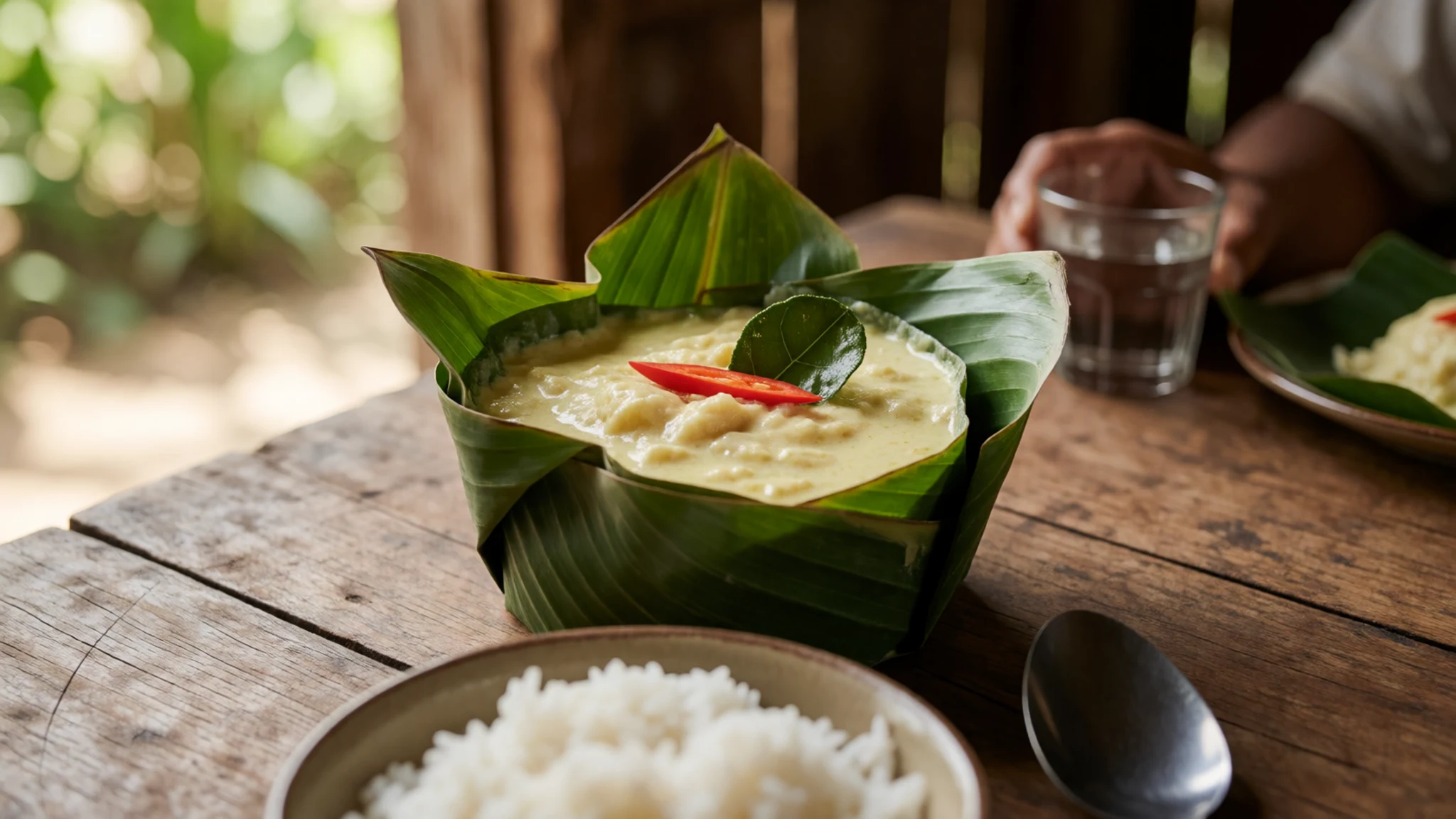
- Kuytheav — Morning stalls near Banlung's central market
A noodle soup commonly eaten at breakfast, with a clear broth and pork, beef or seafood. Herbs, lime and chilli are added at the table, so seasoning is up to the diner.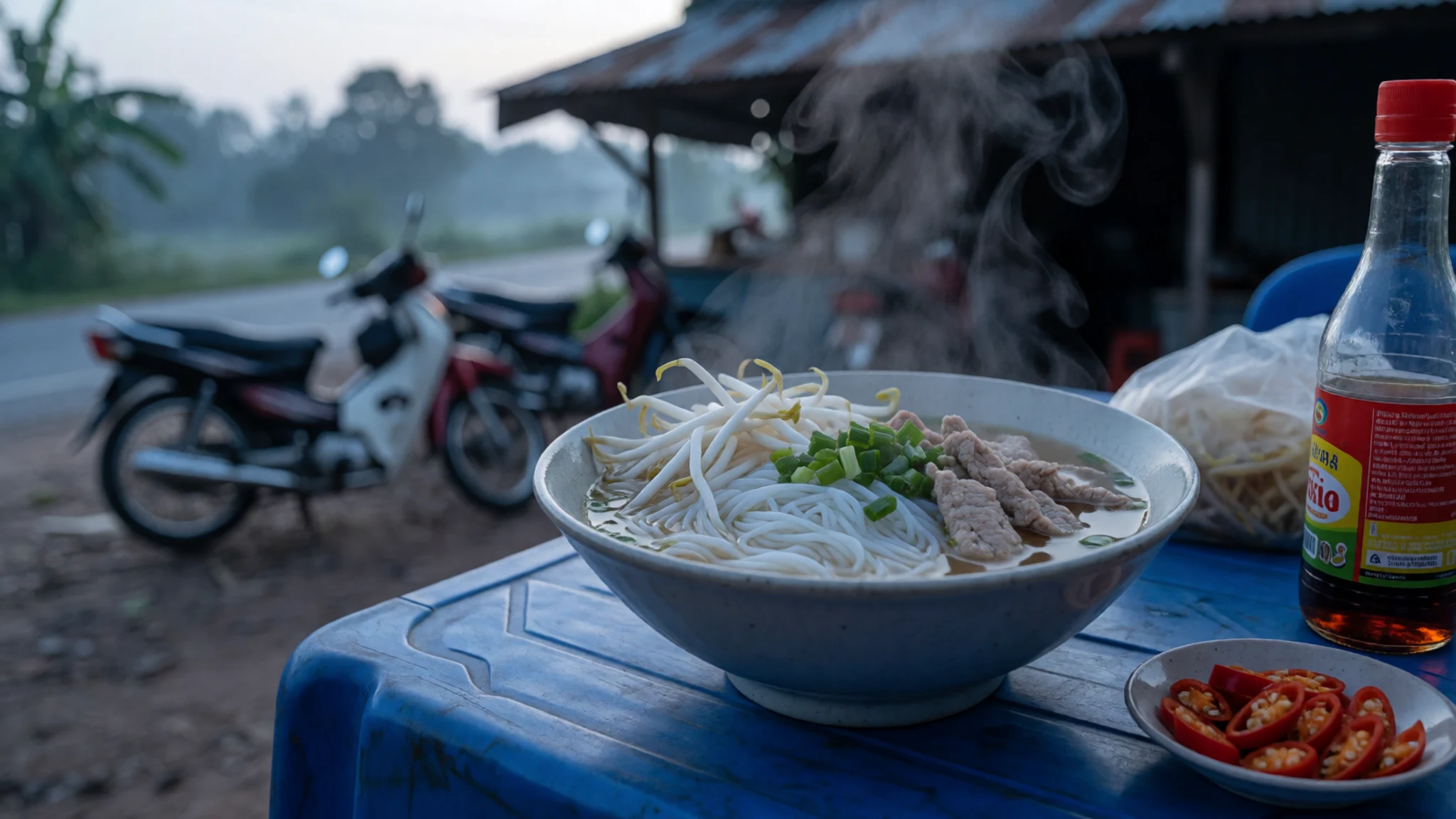
- Rice with grilled meat or fish — Roadside eateries and the lakeside food stalls on busy days
Plain rice with grilled pork, chicken or freshwater fish is the standard everyday meal, often with pickled vegetables and a sour dipping sauce. Simple, filling and cheap, it suits a day by the lake. - Prahok dishes — Family-run eateries in Banlung
Prahok is a fermented fish paste used across Khmer cooking, with a strong smell and a deep salty flavour. It appears in dips and stews. Visitors may find it intense, so try a small amount first. - Fresh fruit and cashew snacks — Banlung market and roadside stalls
Ratanakiri is cashew country, so roasted nuts are easy to find, along with seasonal fruit such as mango and pineapple. Both are practical snacks for the lake path.
Plan it
Best time. November to February is the best window: the rains have ended, days are drier and the highland air is cooler. May to October is the wet season, when roads turn muddy and paths get slippery, though the forest is lush. March and April are hot.
How long. 1–2
Getting there. Fly to Phnom Penh or Siem Reap, then continue by road to Banlung, the provincial town; a long day by bus or shared taxi, with overland routes also arriving from Vietnam and Laos. Check current services before travelling. From Banlung, Yeak Laom is a short ride by motorbike taxi or tuk-tuk.
Budget. low
Tips
- Visit on a weekday morning for the quietest water and best light
- Carry cash, as cards are rarely accepted outside Banlung's main shops
- Bring your own towel, insect repellent and a refillable water bottle
- Check the current entrance arrangements locally, since fees and hours change
- Buy crafts at the cultural centre or from local sellers to support the community
Etiquette
- Ask permission before photographing people, homes or ceremonies
- Cover shoulders and knees when walking through villages
- Keep noise down and take rubbish away, since the lake is both a leisure spot and a local resource
Nearby
Sources
- Wikidata Q8050823 (CC0)
- Wikipedia: Yeak Laom (rev 1378311457) (CC BY-SA 4.0)
- Wikivoyage: Cambodia (rev 5395048) (CC BY-SA 4.0)