Yangdong Folk Village
Yangdong Folk Village, South Korea
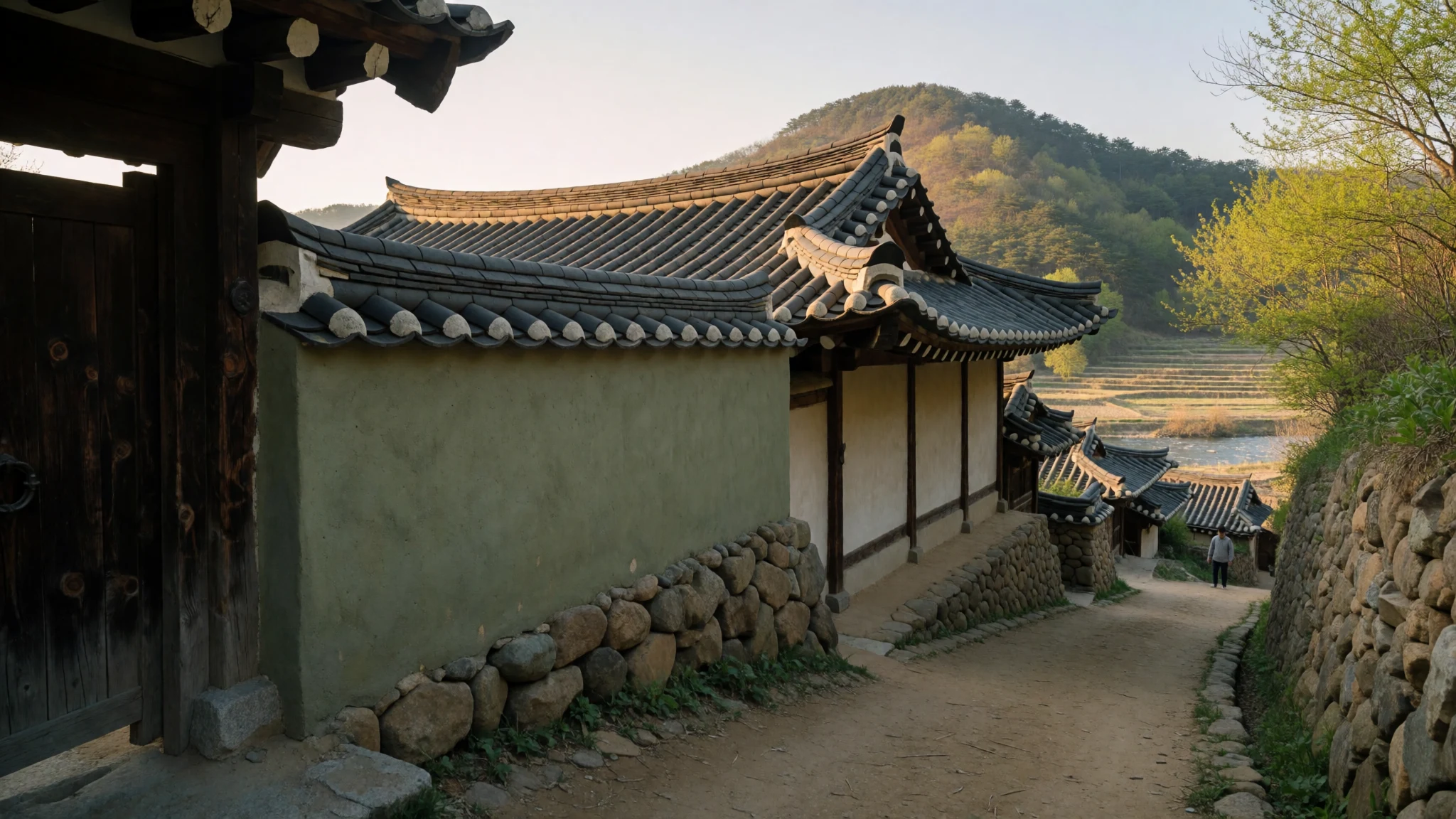
Yangdong Folk Village is a living hillside of Joseon-era scholar-aristocrat houses, still home to residents, an easy half-day from Gyeongju.
The place
Yangdong Folk Village sits in Gangdong-myeon, about 16 km north-east of Gyeongju in South Korea, with the Hyeongsan River close by and Mt. Seolchang rising behind it to the north. It is a lived-in village rather than a museum, and that shapes the visit. Many of the old houses are still family homes, the lanes are narrow, some gates stay shut, and a walk feels closer to strolling through someone's neighbourhood than touring a themed park. The houses belong to the yangban, the scholar-aristocrat class of the Joseon period, and they were arranged to suit the land. Larger tile-roofed compounds and pavilions tend to take the higher ground and slopes, while smaller thatched dwellings fill the spaces between, so the village reads as a hillside of rooftops linked by earthen lanes, stone walls and small gardens. The setting does much of the work: hills close in around the valley, fields lie below, and outside peak weekends the mood is calm and unhurried. Official recognition comes in layers. South Korea lists the village as Important Folklore Materials No. 189, and in 2010 it was inscribed by UNESCO together with Hahoe Folk Village. The practical appeal is scale. It is large enough to wander for a few hours, with good views from the upper lanes, yet it combines easily with Gyeongju's temples and ancient sites in a single day. Expect uneven paths, little shade in summer and fewer polished services than at a big-name attraction.
Its story
Yangdong Folk Village grew out of the Joseon period, when Korea was governed by Neo-Confucian ideals and the yangban held their standing through scholarship, public office and family lineage. The houses are a record of that order. Two clans, the Wolseong Son and the Yeogang Yi, are traditionally tied to the village, and their branches built homes, ancestral shrines and study pavilions across the slopes. Layout followed Confucian priorities: a more public men's quarters facing outward, more private rooms for women, a shrine for ancestral rites, and space for study and receiving guests. Position mattered too, and the grander compounds took the better ground with views over the valley. Because this was a lineage village rather than a town, it had no single founding monument. It accumulated across generations through marriages, inheritances and rebuilding, which is partly why so much has survived and why clan history matters as much as the architecture. In the modern era, descendants and other families kept living here, which helped the buildings endure at a time when many rural communities emptied out. Recognition followed: national folklore designation first, then the shared UNESCO listing in 2010 with Hahoe Folk Village, which acknowledges Korea's clan villages as a type. Today, repairs, a few guest rooms in traditional houses and craft demonstrations sit alongside residents' daily routines, and the village is best understood as a snapshot of a social system rather than the site of one famous event.
What to see
- Village entrance and main lanes — Village entrance, Gangdong-myeon
The approach to Yangdong Folk Village gives the best first read of the valley: fields in front, wooded hills behind and rooftops stepping upward. Walk the main lanes slowly before choosing a side path, and look at how stone walls, gates and chimneys mark out each family compound.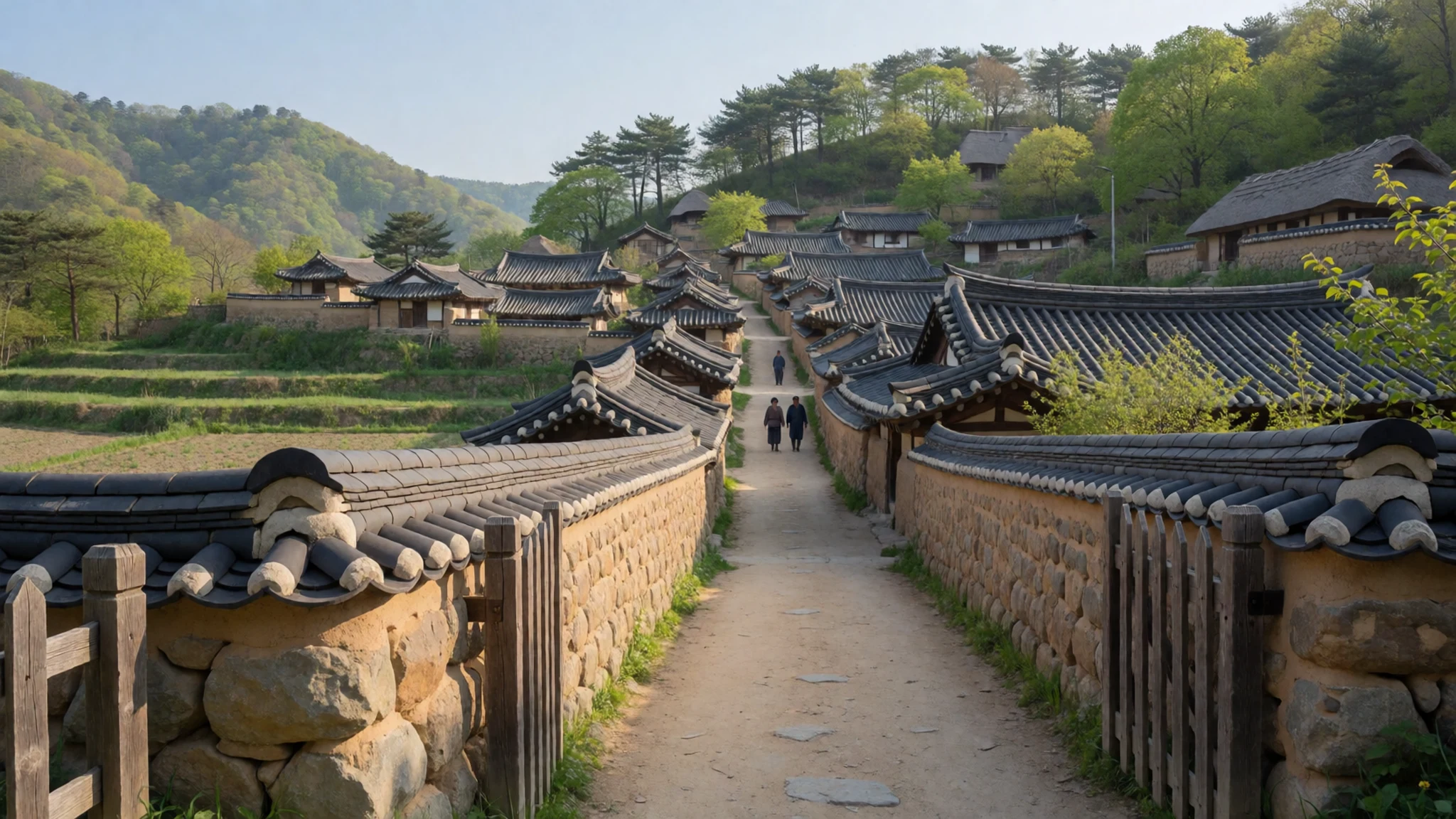
- Seobaekdang House — Yangdong Folk Village, upper lanes
Seobaekdang is one of the named houses on the slopes, and it shows the yangban style well: a tiled roof, timber verandas and a courtyard plan built around family life. Treat it as a look-from-the-lane stop unless a gate is clearly open to visitors.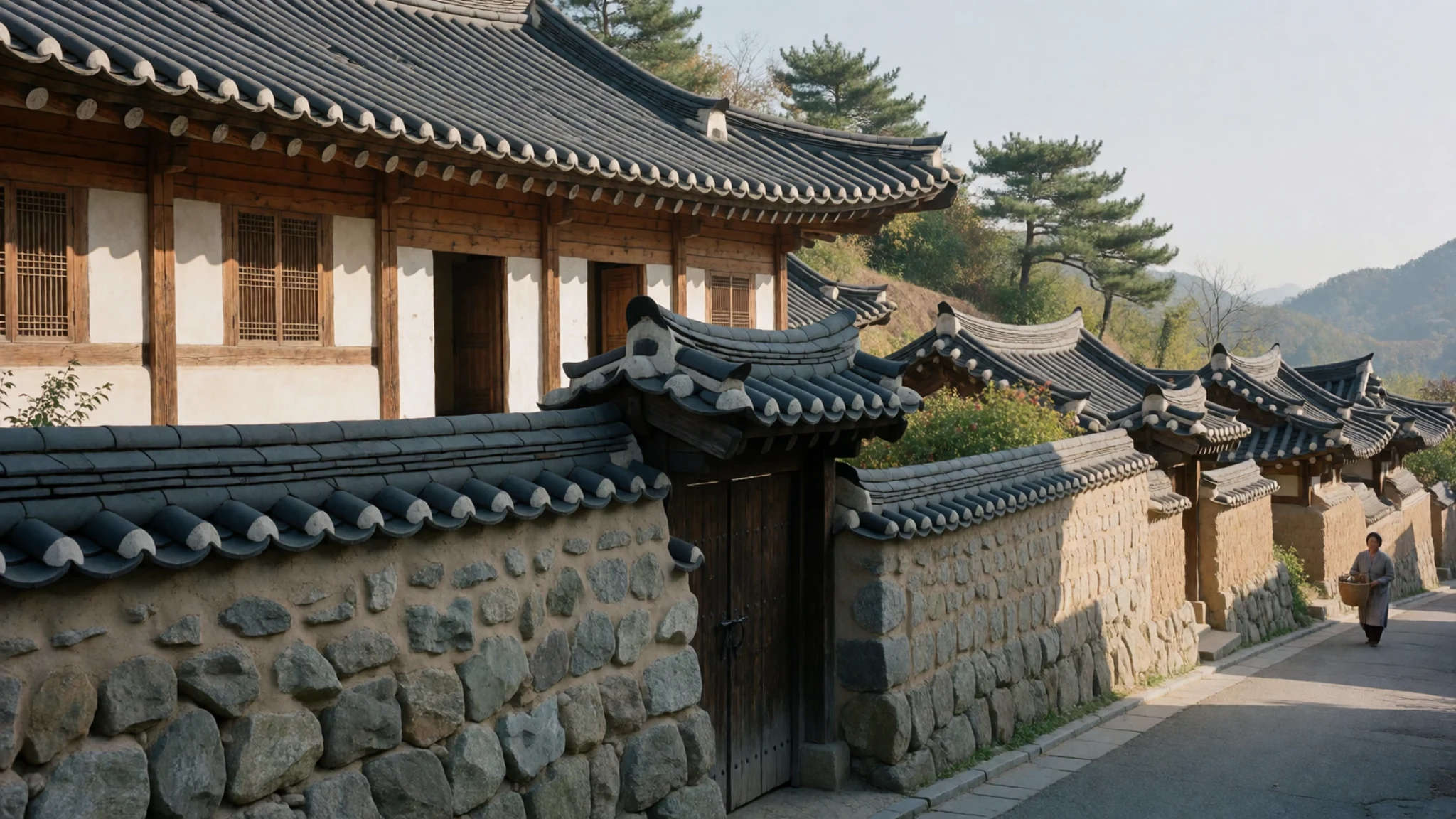
- Hyangdan House — Yangdong Folk Village
Hyangdan House is another of the village's notable compounds, set among stone walls and trees. It is a good place to study the proportions of a Joseon-era house, with its deep eaves, raised floors and the way rooms open to the yard.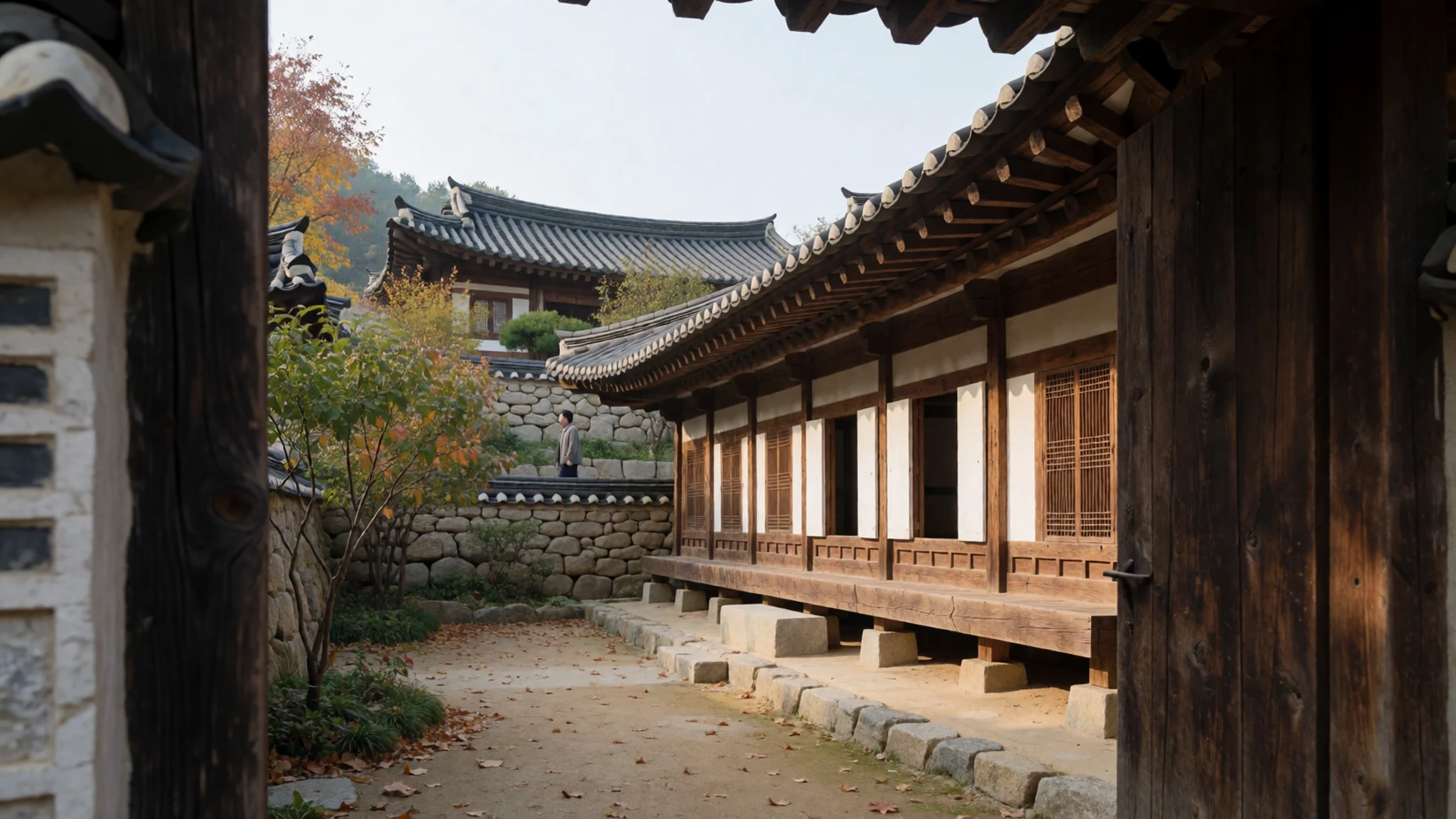
- Gwangajeong House — Yangdong Folk Village
Gwangajeong House gives a closer look at how the village's houses sit with the land, with gardens and walls following the slope. Photographers tend to like it in soft morning light, when the tiles and timber show their texture and the lanes are quiet.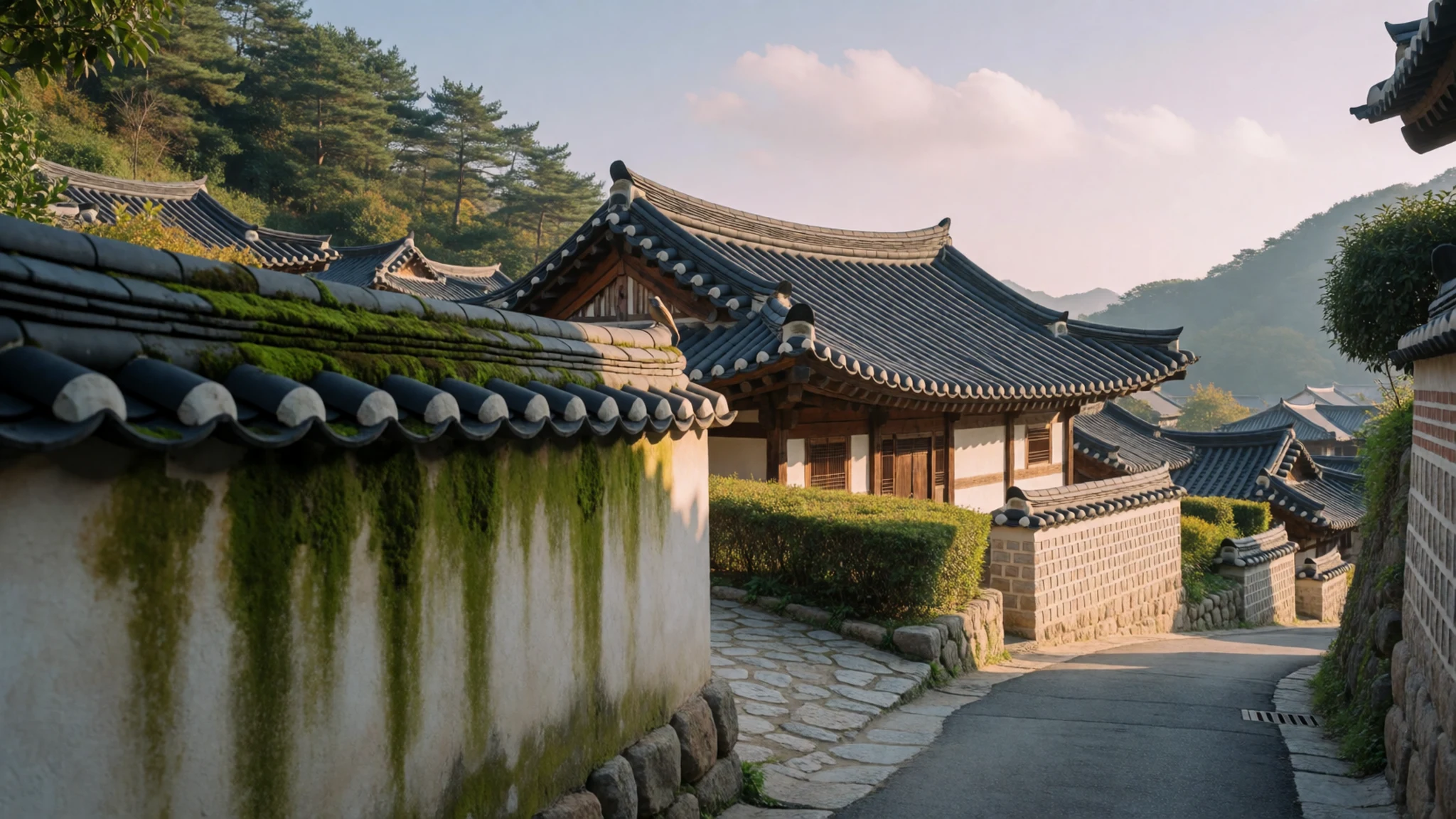
- Craft demonstrations and thatched lanes — Lower village lanes
Smaller thatched houses and occasional craft demonstrations, such as basket weaving by people in hanbok, show the everyday side of the village rather than the grand compounds. Availability varies by day and season, so treat any demonstration as a bonus rather than a plan.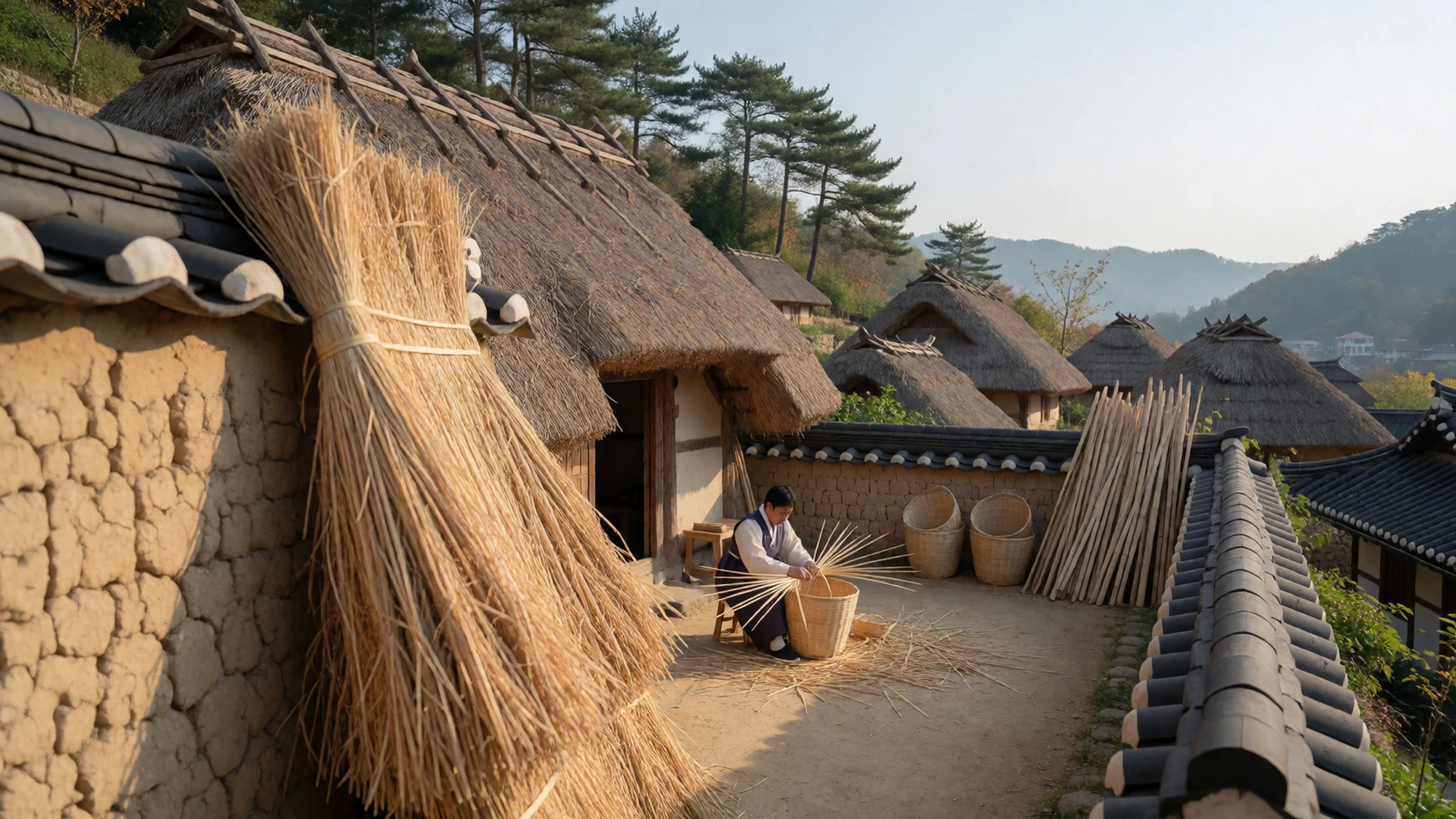
- Bulguksa, Gyeongju — Gyeongju, short drive from the village
Bulguksa is a Silla-era temple complex in the Gyeongju area, and it pairs naturally with Yangdong for a day that moves from aristocratic Confucian homes to Buddhist heritage. Seokguram Grotto lies nearby, and both are UNESCO-listed. Allow separate time and check the official site for opening details.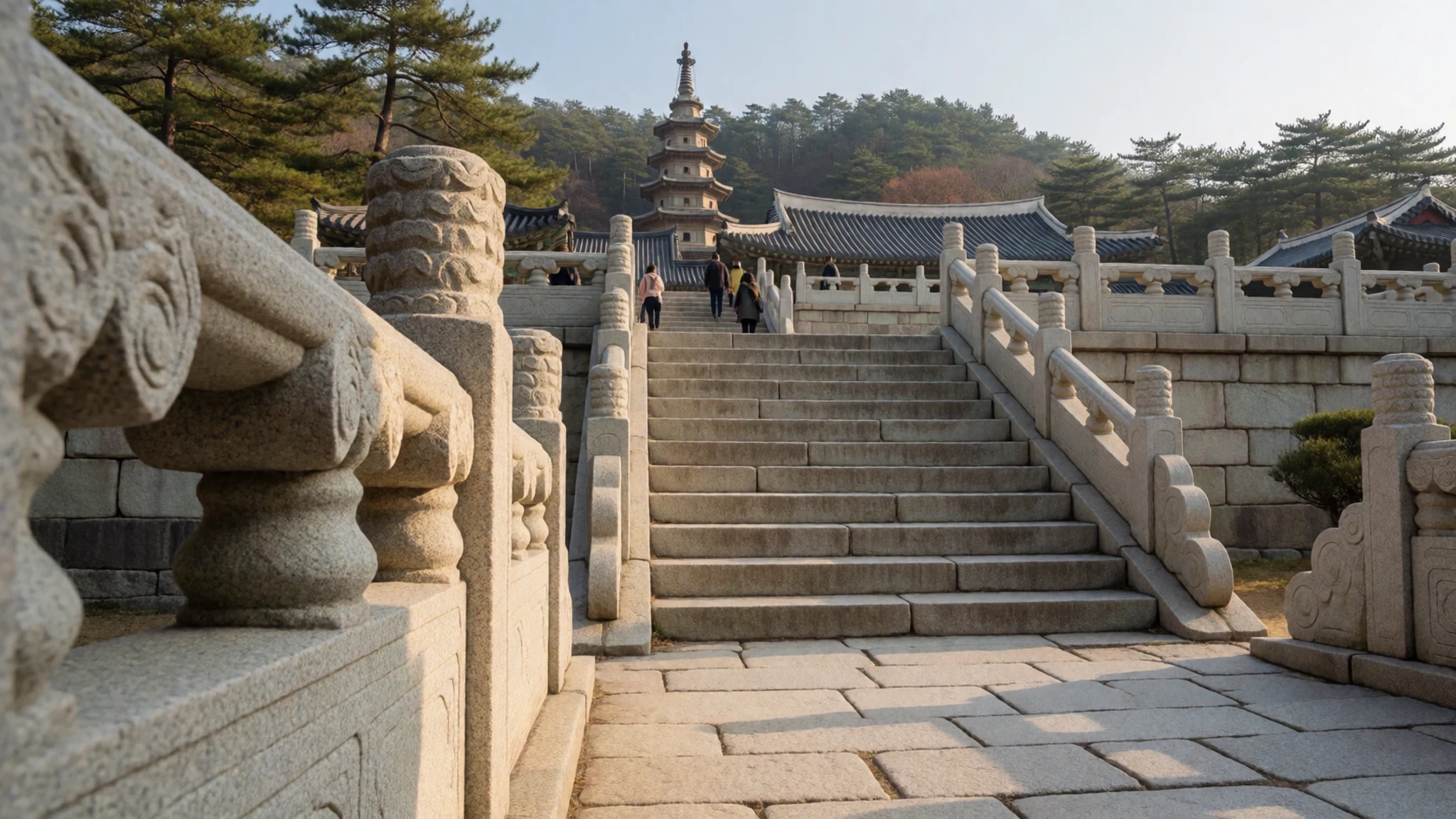
Culture
Yangdong Folk Village is shaped by Neo-Confucian values, and understanding a few of them makes the layout make sense. Lineage, ancestor rites and scholarship organised life for the yangban, so houses include shrines for ancestral ceremonies, quarters divided by role, and spaces for study and for receiving guests. The wider region around Andong and Gyeongju is still considered one of the more conservative parts of South Korea, with Confucian habits of respect for elders and for family occasions still visible. Seasonal ceremonies, family gatherings and festivals continue to matter, and some residents keep up ancestral rites. Gyeongju nearby carries a very different layer of history, that of the Silla kingdom and its Buddhist temples, so a visit often shows two quite different strands of Korean heritage side by side. Unlike many heritage sites, Yangdong has no wall around it and no ticket-gate feeling: residents hang washing, tend vegetable plots and park farm vehicles in the lanes. Visitors are guests in a community, and the most rewarding approach is quiet curiosity: look at roof lines, courtyards and stone work, notice how houses face the valley, and let the village set the pace. Photography of buildings is normal, but residents are not an attraction and many are older people who value calm. Keep to the marked lanes, speak quietly, and do not open gates, enter a courtyard or photograph people at home without a clear invitation or sign that visitors are welcome.
What to wear
Yangdong Folk Village is a good place to see how Korean traditional dress is bound up with ceremony. The hanbok consists of a short jacket (jeogori) with a skirt (chima) for women, and a jacket with loose trousers (baji) for men, with an overcoat (durumagi) added for formal or cold occasions. Traditional textiles include silk for formal wear, ramie and hemp for summer, and cotton for everyday and winter layers. Colour and cut once signalled age, status and occasion. Today hanbok is worn mainly for weddings, family festivals, ceremonies and photographs, and some people in the village may wear it during demonstrations or events. Day to day, residents dress like most rural South Koreans: practical trousers, work jackets, caps and sturdy shoes, with smarter clothes for town. Visitors wear mostly casual outdoor clothes. For Yangdong, comfortable closed shoes with good grip matter most, since lanes are uneven and can be muddy or slippery after rain. Slip-on shoes are handy because shoes come off at any house you are invited into. In summer, bring a hat, sunscreen and water, as shade is limited. In cooler months, layers work better than one heavy coat. There is no formal dress code, but modest, tidy clothing, such as covered shoulders and knees, suits a village of private homes and ancestral shrines.
What to eat
- Andong jjimdak — Restaurants in Andong, or family eateries around Gyeongju
Chunks of chicken braised with potatoes and glass noodles in a sweet, spicy dark soy sauce. It is the best-known dish of the wider region, so it is easy to find in Andong's restaurants, and many eateries around Gyeongju serve their own version.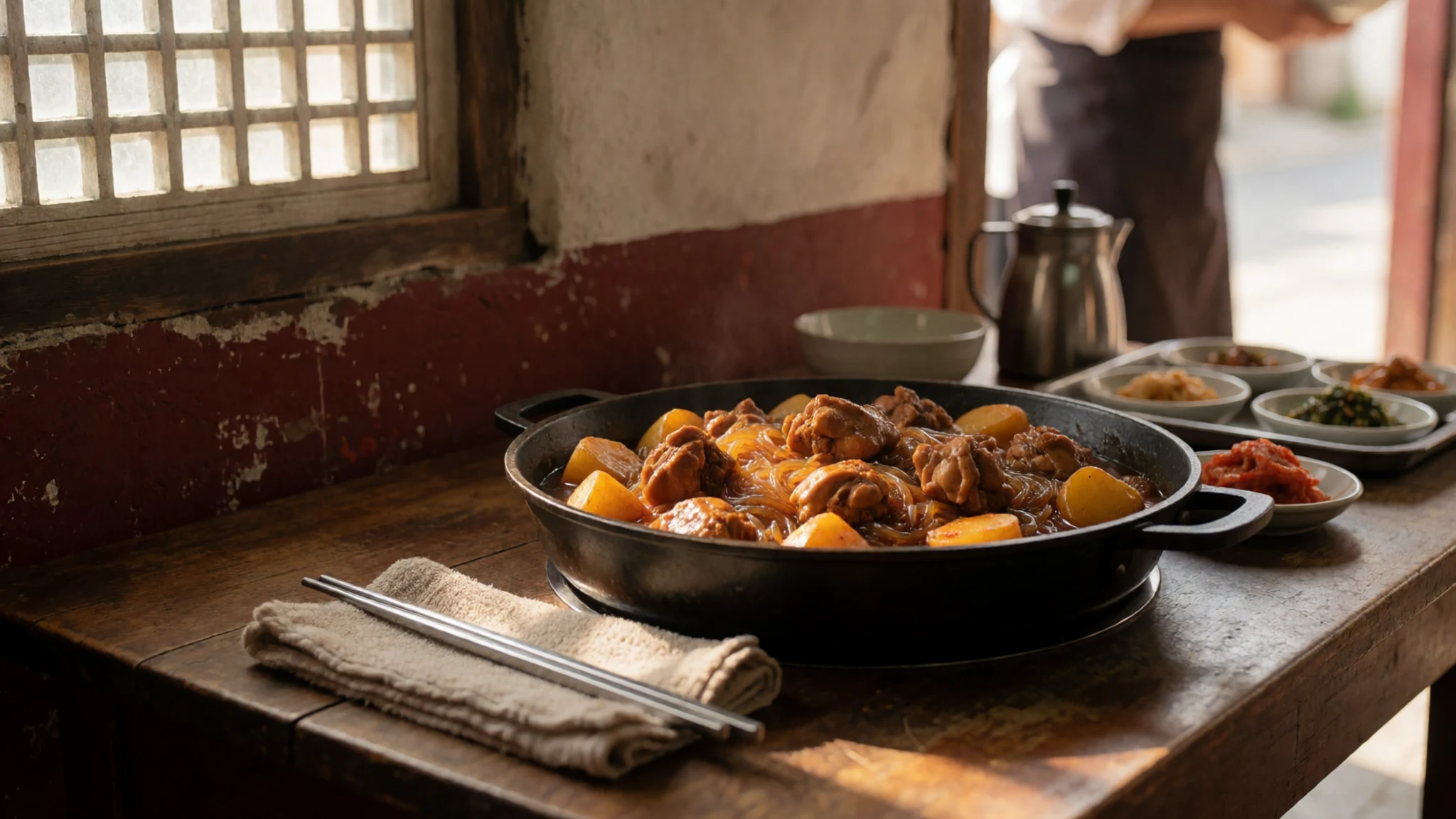
- Andong sikhye — Traditional tea rooms and eateries in Andong
A sweet rice drink that is usually cloudy white elsewhere in Korea. The Andong version uses red pepper powder, giving it a pink colour and a gentle spice. Try it chilled, with peanuts or pine nuts on the side.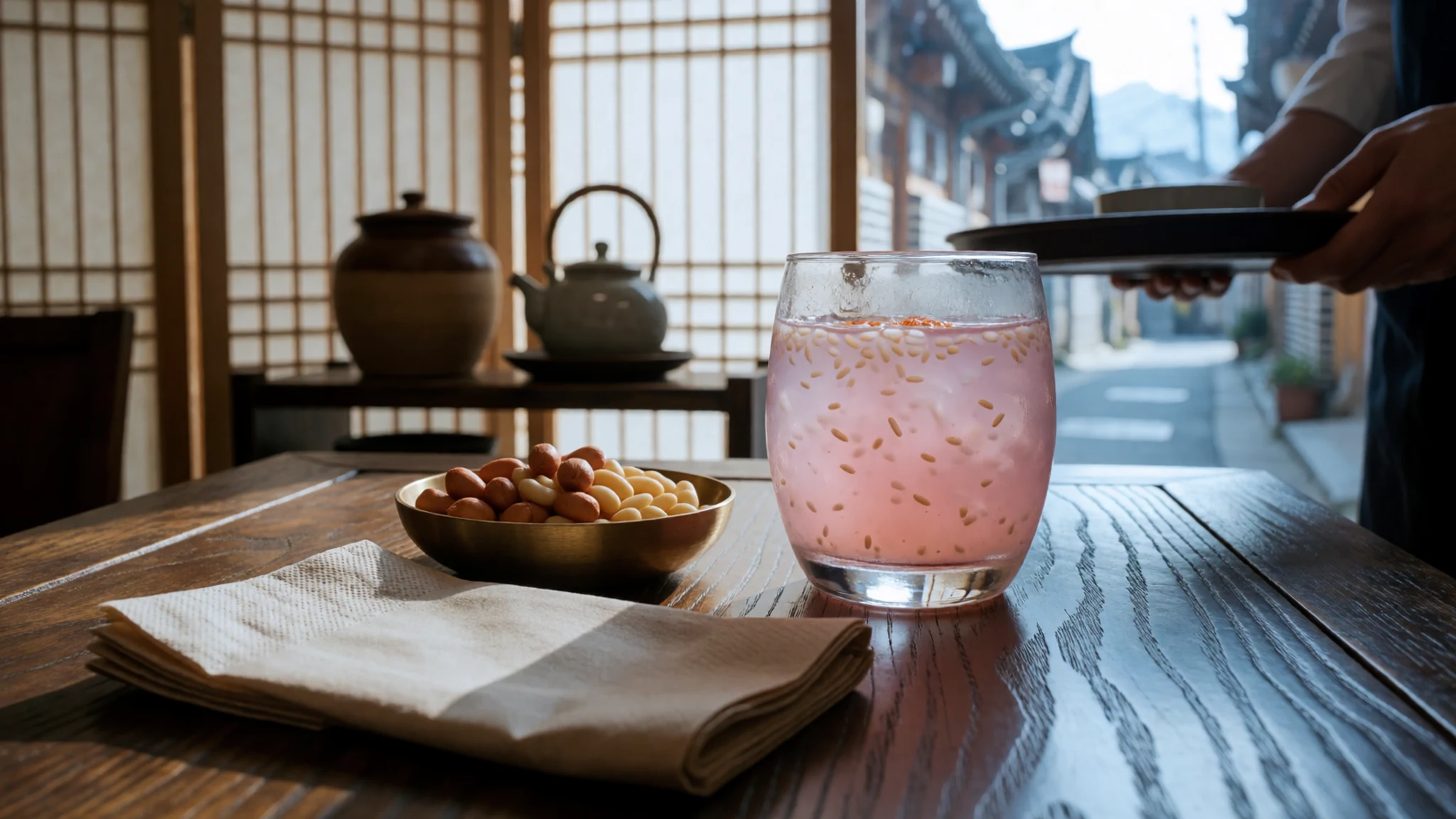
- Andong soju — Restaurants and bars in Andong
Soju is a clear spirit known across Korea, and Andong has its own regional version. It is usually drunk with a meal, in small glasses, and poured for others before oneself. Ask for a milder bottle if unsure about strength. - Ssambap — Family restaurants near the village and in Gyeongju
Rice served with a spread of small side dishes and leaves for wrapping, a common way to eat a relaxed lunch in the countryside. It suits a day of walking, and vegetarians can often ask for the leaf-and-vegetable portions. - Hwangnam bread — Bakeries around central Gyeongju
A small, sweet pastry filled with red bean paste, strongly linked with Gyeongju. It is easy to carry, so it works well as a snack for the road between sights. Choose fresh batches if you can.
Plan it
Best time. April–May for mild weather and green fields, and October–November for clear days and autumn colour. Mid-summer can be hot with little shade in the village, and winter is cold on the exposed slopes.
How long. 1
Getting there. The nearest international airport listed for the region is Daegu (TAE), with limited connections to China and Japan, while Busan and Seoul have wider international flights. The KTX high-speed line links the main cities; for the last leg, go to Gyeongju and take a local bus or taxi, about 16 km north-east, and check current routes before you travel.
Budget. low
Tips
- Arrive early in the morning for softer light and quieter lanes
- Wear sturdy, slip-on shoes, since the paths are uneven and shoes come off indoors
- Carry water and a hat in summer, as shade is limited
- Pair the village with Gyeongju's temples and sites to make a full day
- Check the official site or local tourist office for opening arrangements and any visitor rules
Etiquette
- Stay on the public lanes and do not enter private courtyards without an invitation
- Keep your voice low and do not photograph residents at home without asking
- Take rubbish back with you, as there are few bins
Nearby
Sources
- Wikidata Q495266 (CC0)
- Wikipedia: Yangdong Folk Village (rev 1366157593) (CC BY-SA 4.0)
- Wikivoyage: North Gyeongsang (rev 5347338) (CC BY-SA 4.0)
- Photo: Yangdong Village 02, Bernard Gagnon (CC0 1.0)
- Photo: Yangdongmaeul, Hennysavenije (CC BY 3.0)
- Photo: Korea-Gyeongju-Yangdong.Village-01, bifyu (CC BY-SA 2.0)
- Photo: Gwangajeong House 02, Bernard Gagnon (CC0 1.0)
- Photo: Hyangdan House 02, Bernard Gagnon (CC0 1.0)
- Photo: Seobaekdang House, Bernard Gagnon (CC0 1.0)
- Photo: Yangdong Village 07, Bernard Gagnon (CC0 1.0)
- Photo: 2008-Korea-Gyeongju-Yangdong Village-01, Kok Leng Yeo (CC BY 2.5)


