Yandang Mountain
Yandang Mountain, People's Republic of China
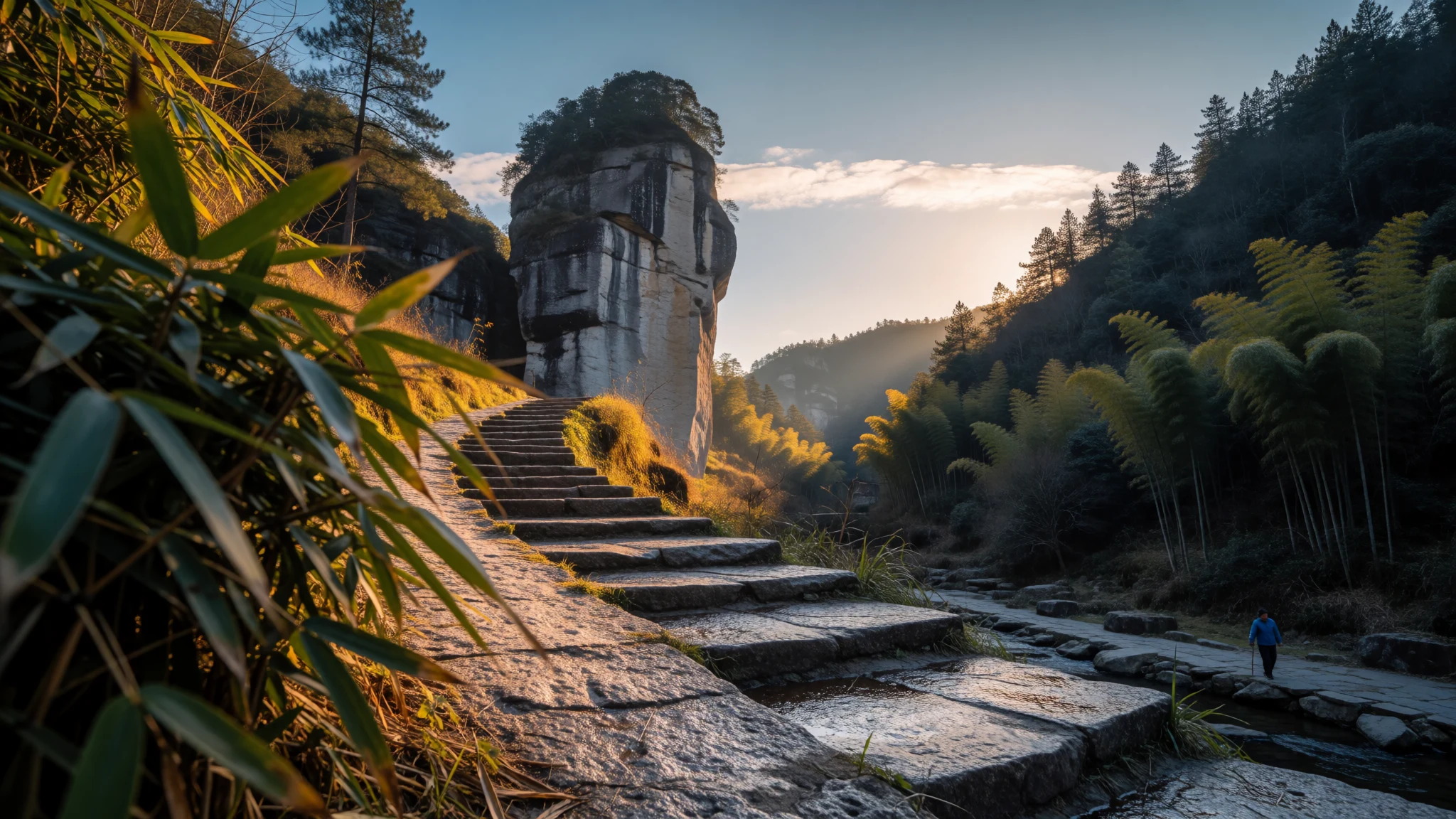
Yandang Mountain packs sheer rock pinnacles, tall waterfalls and temples built into caves into a coastal Zhejiang range that rewards short, steep walks.
The place
Yandang Mountain is a coastal range in south-eastern Zhejiang, in eastern China. It spreads across much of Wenzhou and reaches into Wenling in Taizhou prefecture. The Oujiang River splits it into a northern and a southern half, and the name is used loosely for both. When people say Yandangshan they usually mean one place: the area around an ancient volcanic caldera in the northern half, close to the small town of Yandang. The highest ground is here, topping out at 1108 m, and so is nearly all of the visitor infrastructure.
The character of the place is vertical. Rock faces rise sheer from the valleys and pinnacles stand against the sky. Between them run streams, waterfalls, bamboo groves and forested slopes. Caves are everywhere, and many of the temples are tucked inside them or built across their mouths.
The park is divided into scenic zones, each with its own gate and ticket, and each takes a few hours to walk. Some are an easy stroll from town, while others, such as Yanhu, are awkward to reach and less polished. The main zones draw large domestic crowds, and not every bit of development has been gentle on the scenery. The quieter trails outside the ticketed areas can be calm, and the mountain has become a popular weekend hike for city people. It holds national geopark status, a place in the Global Geoparks Network and China's AAAAA tourist-attraction rating. Yandang village, at the foot, is a working resort town of guesthouses and seafood eateries rather than anything quaint.
Its story
Yandang Mountain takes its name from the Chinese 雁荡山, which reads as Wild Goose Pond Mountain. The name hints at a landscape that has long been looked at as much as lived in. A long ink-and-colour hand scroll of the mountain by the painter Qian Weicheng survives today as public-domain art, and the temples scattered through the valleys show that people have been climbing here for devotion as well as for views.
The rock itself has a violent origin. The central scenic area sits on an ancient caldera, the collapsed throat of a volcano. The cliffs, spires and narrow gorges that visitors now walk beneath are what weathering has carved out of that volcanic ground over a vast stretch of time. Geologists value the mountain for exactly this reason, and it is why it was made a national geological park and later admitted to the Global Geoparks Network.
The temples tell the human half of the story. Rather than crowning summits, many were built into caves and cave mouths, using the rock as back wall and roof. Guanyin Temple at Lingfeng is the clearest case, climbing in storeys up a steeply sloping cave floor.
In recent decades the story has been tourism. The national tourism authority raised North Yandang to its top grade, new walkways and suspension bridges were added, and the mountain became an easy trip for hikers from the big cities of eastern China. That mix of volcanic ruin, cave shrines and a managed, ticketed park is why Yandang feels both ancient and carefully arranged.
What to see
- Lingfeng Scenic Area — Yandang town
Lingfeng is an easy walk from Yandang town and is built around a peak that looks split in half by a vertical cleft. Inside the cleft the cave floor slopes steeply upward, and Guanyin Temple climbs it in storeys. It makes a sensible first stop, close to town, and is calmer once the tour groups have moved on.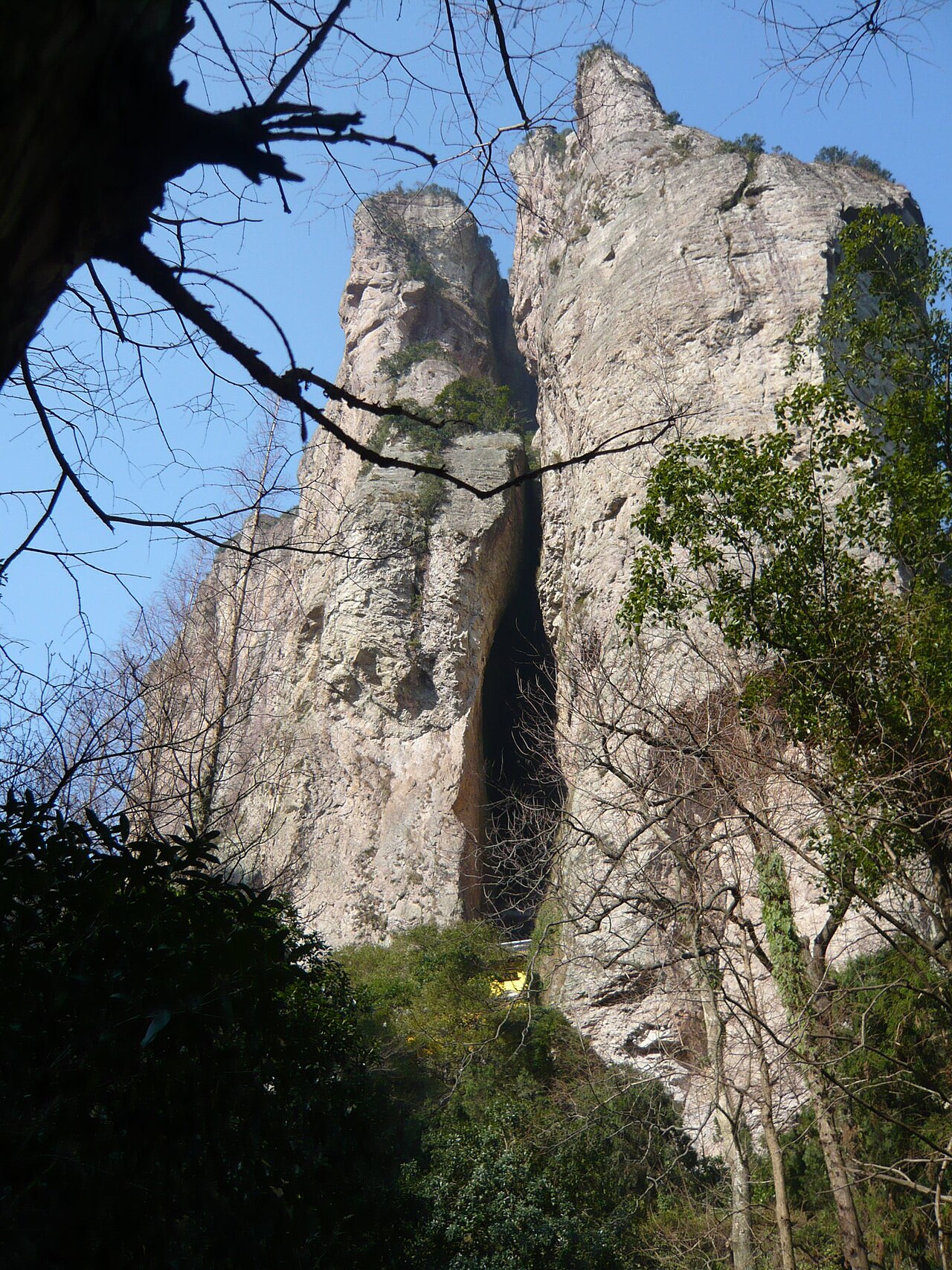
- Dalongqiu Scenic Area — Dalongqiu zone
Dalongqiu means Big Dragon Pool, and the waterfall is read as a dragon dropping down to drink from the basin below. It is the headline sight of its zone. Go after rain for the fullest flow, and expect a walk in from the entrance rather than a view from the roadside. - Lingyan Scenic Area — Lingyan zone
Lingyan holds Small Dragon Waterfall (Xiaolongqiu), a smaller sibling of the Big Dragon fall. The rock here also gives views down towards Lower Lingyan village, with tea plantations on the slopes. It suits a gentle half day, and pairs well with Lingfeng because the two zones sit close together.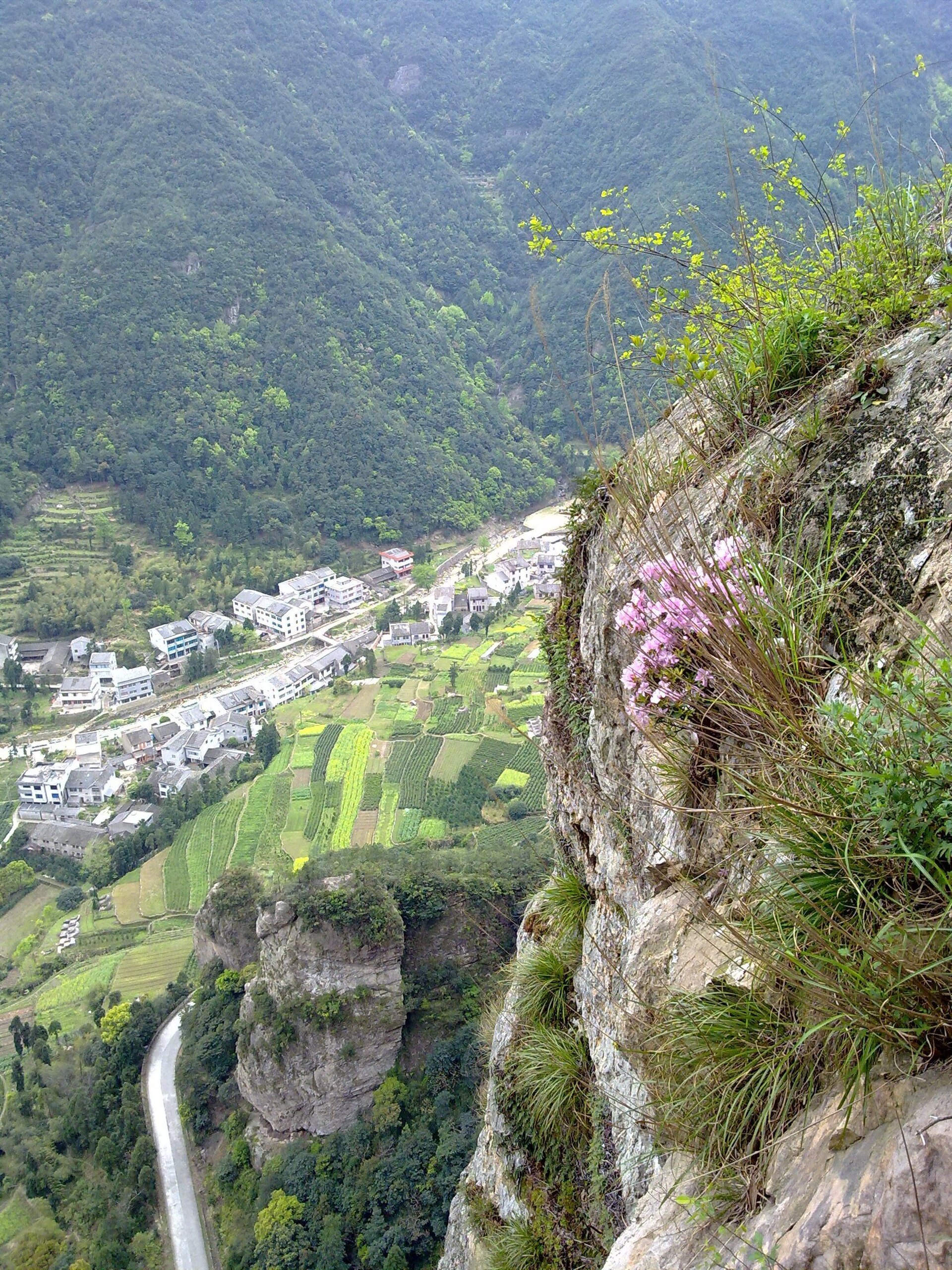
- Fangdong and Jingtianhu Scenic Area — Fangdong zone
This zone is about rock and height: tall cliffs, a suspension bridge, and a walkway cut into a cliff face high above the valley. Anyone uneasy with drops should look at the route before committing. The reward is a sense of the mountain's scale that the lower, tree-lined paths cannot give.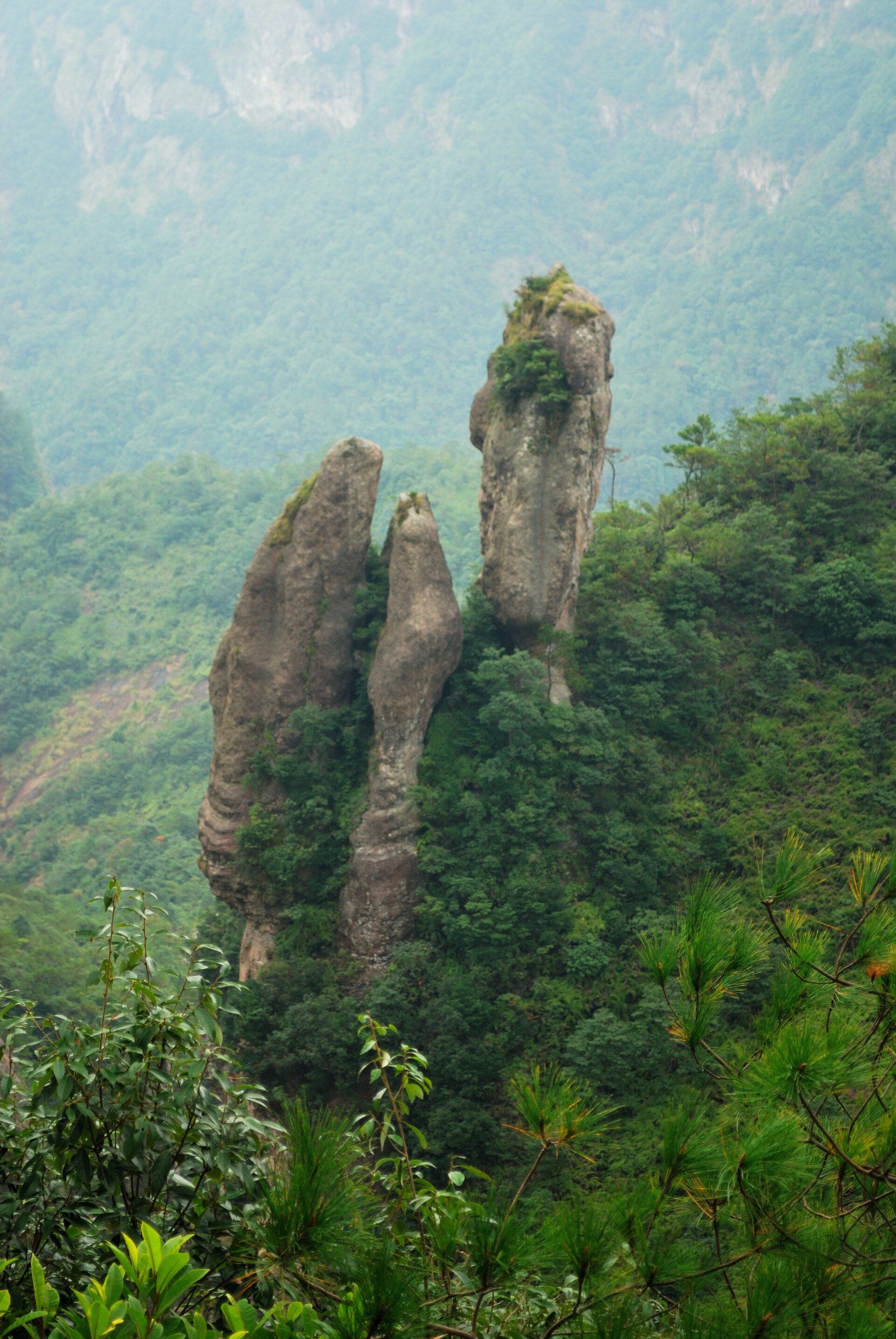
- Jingming Valley Scenic Area — Jingming Valley
Jingming Valley is a place for going slowly. Thin waterfalls, pools, cliffs and peaks have been given names for the shapes they suggest, such as a tiger turning its head. There are minor viewing platforms, side trails and teahouses, so it works well for a lazy afternoon rather than a checklist. - Yanhu Scenic Area — Yanhu zone
Yanhu is the large zone that gave the park its lake, and it has several waterfalls, hiking options and a small temple in a cave. It is awkward to reach and only half-heartedly developed for tourism, which is the point for walkers who would rather swap polish for quiet.
Culture
Yandang Mountain's culture rests on a simple habit: building worship into the rock. Many temples and shrines here sit inside caves or across their mouths, and Guanyin, the bodhisattva of compassion, is the figure most visitors meet at Lingfeng. Buddhist practice sits alongside a long Chinese habit of reading mountains as living things, which explains why the park is full of cliffs named for what they resemble: a tiger turning its head, a pair of clasped palms, a face in the rock. Signs and guides love these names, and part of the fun is squinting until the shape appears.
Domestic visitors treat the mountain as a day out as much as a pilgrimage, so incense, selfie sticks and loudspeaker-led tour groups share the same steps. The villages around the park keep a quieter rhythm, with tea plantations visible from Lingyan, and the trails beyond the main gates are where local walkers and weekend hikers tend to go. The coast nearby also gives the area a seafood-first way of eating, which shows in the restaurants of Yandang village.
A cave shrine is often small and still in daily use, so what looks like a photo spot may be someone's morning prayer. Keep your voice low, ask before photographing worshippers or monks inside a cave temple, and never step over offerings or touch the statues.
What to wear
Yandang Mountain sits in Zhejiang, a province long associated with silk, and with cotton and ramie cloth for everyday wear. Traditional Han dress is now mostly seen at festivals, in costume photography and on stage. The She people, who live in the hills of southern Zhejiang, are known for embroidered jackets and woven ribbon belts, usually worn on festival days rather than daily.
What people actually wear here is simple walking kit. Visitors from the cities arrive in quick-dry tops, light trousers, cap or sun umbrella, and trainers or trail shoes. Villagers and guesthouse staff dress in plain, practical clothes, often with a waterproof layer when it drizzles. Nobody expects anything formal, and nothing marks a foreigner out except a heavy rucksack.
For a visit, choose shoes with real grip, since stone steps and cliff walkways are slippery when wet. Bring a light rain jacket and a hat in every season, a thin fleece for cooler months and for the shade of deep valleys, and a refillable bottle. Cave temples are active places of worship, so cover shoulders and knees when going in, and avoid beachwear or very short shorts. Loose cotton keeps you comfortable in the humid summer, when the climb to a viewpoint can leave clothes soaked.
What to eat
- Seafood by the catch — Restaurants along the pedestrian street and main street in Yandang village
The coast feeds Yandang's tables, and seafood is what most restaurants in the village focus on. Pick fish, shellfish or crab from the tanks and have it steamed or stir-fried. Menus and prices look alike from place to place, so choose a busy room. - Wenzhou fish balls — Small noodle shops and breakfast counters in Yandang town
Springy fish balls are a classic of the Wenzhou coast, usually served in a light broth or with noodles. They make a good plain breakfast or lunch before a long walk, and are easy to order by pointing. - Bianrou — Casual eateries in Yandang town and in Wenzhou city
Bianrou is a Wenzhou-style wonton with a thin, almost translucent wrapper around a little pork filling, served in broth. It is light but warming, and is a handy snack between sights when the weather turns damp. - Night-cart snacks — Yandang village pedestrian street and nearby stretches of the main street
After dark a few food carts set up around the pedestrian street. Expect grilled skewers, fried snacks and sweet treats, cooked in front of you. It is the easiest way to graze for a modest spend once the park gates have closed. - Local mountain tea — Teahouses in Jingming Valley and around Lingyan
Tea is grown on the slopes around Lingyan, and teahouses in the scenic zones serve cups to walkers who need a sit-down. Ask what is local, and let the pot stand while you look at the cliffs.
Plan it
Best time. April–May and October–November are the comfortable months for walking, with cool to mild days. Summer is hot and humid on this coast, and late-summer typhoons can reach the area, so check the forecast before travelling. The brief carries no climate figures, so treat this as general guidance.
How long. 2–3
Getting there. Fly into Wenzhou Longwan International Airport, the nearest airport. Alternatively, fly into Hangzhou, Shanghai or Ningbo and take the high-speed train, since a high-speed railway station stands near the park entrance. The last stretch into Yandang village is short.
Budget. mid
Tips
- Each scenic zone has its own gate and ticket, so check the official sites for current fees and opening hours.
- Pick two or three zones and give each a half day rather than trying to see them all.
- The main zones get very crowded, so go early on a weekday and head for the quieter trails.
- Some village guesthouses are not authorised to take foreigners, so confirm when booking or stay in Yandang village.
- Carry your passport for check-in, and some cash as well as a phone payment app.
Etiquette
- Keep your voice low in cave temples and ask before photographing worshippers or monks.
- Do not step over offerings or touch statues.
- Take litter back out with you, and stay on marked paths near cliffs and waterfalls.
Nearby
Sources
- Wikidata Q21283576 (CC0)
- Wikipedia: Yandang Mountains (CC BY-SA 4.0)
- Wikivoyage: Yandangshan (CC BY-SA 4.0)
- Photo: Rock Formation at the Yandang Mountain (Glasreifen) (CC BY-SA 4.0)
- Photo: Location map of China (Uwe Dedering) (CC BY 3.0)
- Photo: Yandang Mountain hand scroll (Qian Weicheng) (Public domain)
- Photo: Lingfeng (Micromesistius) (CC BY 3.0)
- Photo: Lingyan (Micromesistius) (CC BY 3.0)
- Photo: A face in the cliff at Yandangshan (Dcpeets) (CC BY-SA 4.0)
- Photo: Temple in a cave, Yandangshan (Dcpeets) (CC BY-SA 4.0)
- Photo: 下埠宅村文昌阁 (江上清风1961) (CC BY 3.0)


