Xitou
Xitou, Taiwan
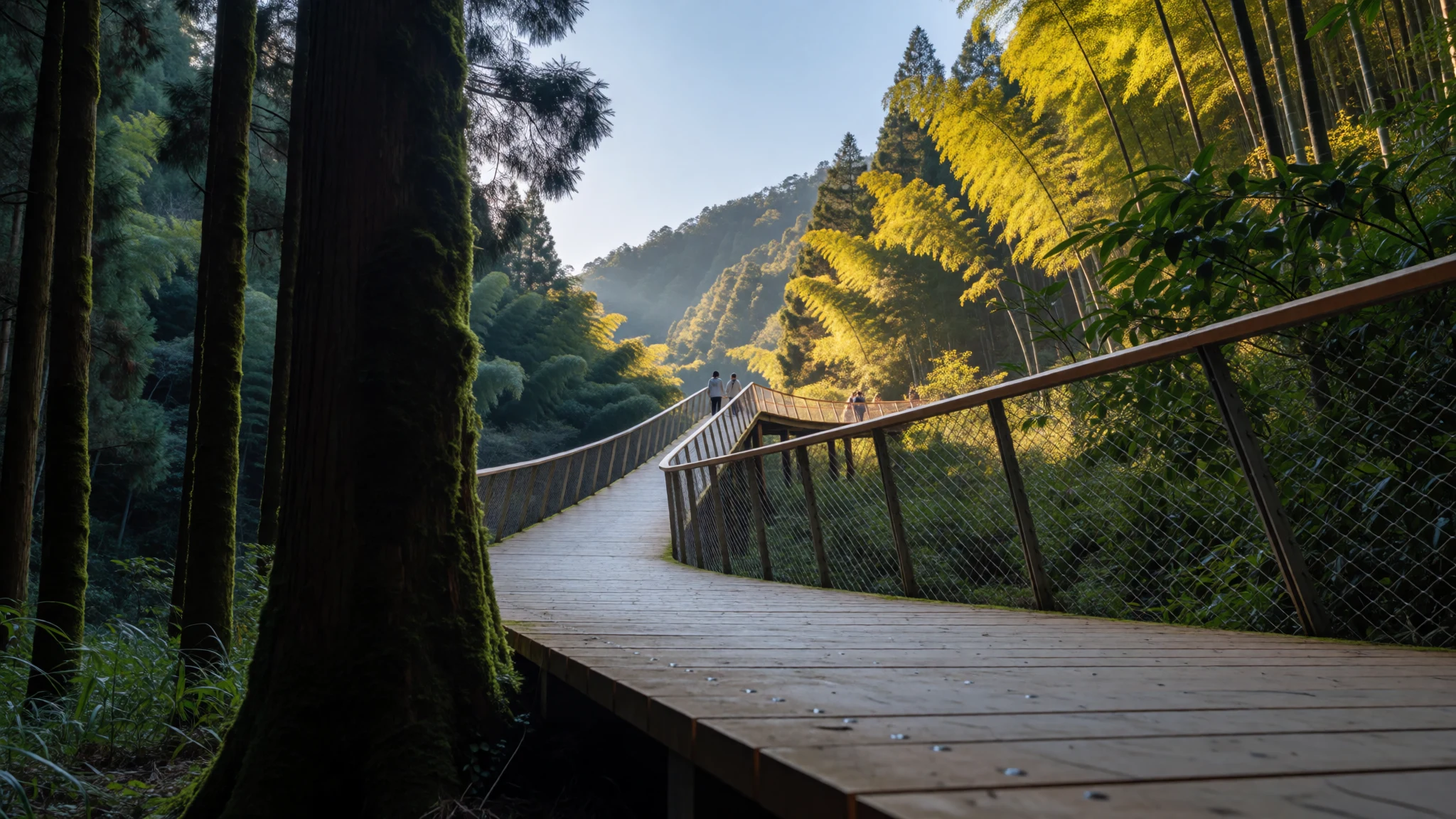
Xitou is a cool, shaded bamboo and timber forest in central Taiwan, where gentle paths and a canopy walkway make an easy mountain day.
The place
Xitou sits in Lugu Township, Nantou County, in central Taiwan, in a bowl of forested ridges that opens to one side only. The park is officially the Xitou Nature Education Area (溪頭自然教育園區), though many visitors simply call it the bamboo forest. At an average of about 1,150 m above sea level, it stays cool when the lowlands are sticky, which explains its popularity with families escaping Taichung and the west-coast cities. The park covers about 2,500 hectares and climbs to Mount Lingtou at 2,025 m. Most day-trippers stay on the lower paths among bamboo, tall conifers and a ginkgo garden, while the upper slopes see far fewer people. Rain is heavy here, with annual totals above two and a half metres, and cloud or drizzle can arrive in any month. That moisture feeds the moss, ferns and big timber, and it leaves the air smelling of wet bark. Birdwatchers have a long list to work through, with more than 70 species recorded. The land belongs to an experimental forest run by National Taiwan University, so the place works as a classroom as much as a park: signboards explain the ecology, and school groups are a common sight on weekdays. Weekends and holidays bring tour coaches and full car parks, so a weekday start gives a quieter walk. Overall, Xitou is a shaded, gently graded introduction to Taiwan's mountains rather than a rugged trek.
Its story
Xitou's history as a protected forest begins under Japanese rule of Taiwan, when the woodland served as a field site for forestry students from the University of Tokyo. Researchers valued it because tall stands of timber grew close together on a cool, wet slope that was easy to study and manage. That research role outlived the colonial period. After Japan handed Taiwan to the Republic of China in 1945, the forest was set aside as a reserve. In 1970 it received its present name, Xitou Nature Education Area, and the stated purpose became teaching people about living forest ecology, with the land continuing as part of National Taiwan University's experimental forest. The park's best-known tree was a giant often called the Divine Tree (神木), reckoned to be about 2,800 years old. On 11 September 2016, after a long spell of heavy rain, it came down, and three visitors were injured. The trunk was left where it fell, and people now come to stand beside it and judge its size. The episode serves as a lasting reminder that a forest this wet is never static and that very old trees can fail without warning. Today the story the park tells is partly about science and partly about loss and renewal, with fallen wood, young growth and school groups all sharing the same paths.
What to see
- Bamboo groves — Lower park, near the entrance
The bamboo stands are what gives Xitou its nickname. Paths wind between tall green culms that creak in the wind and filter the light to a soft green. The walk is easy and mostly flat, suited to families and older visitors, and it is at its quietest early on weekdays.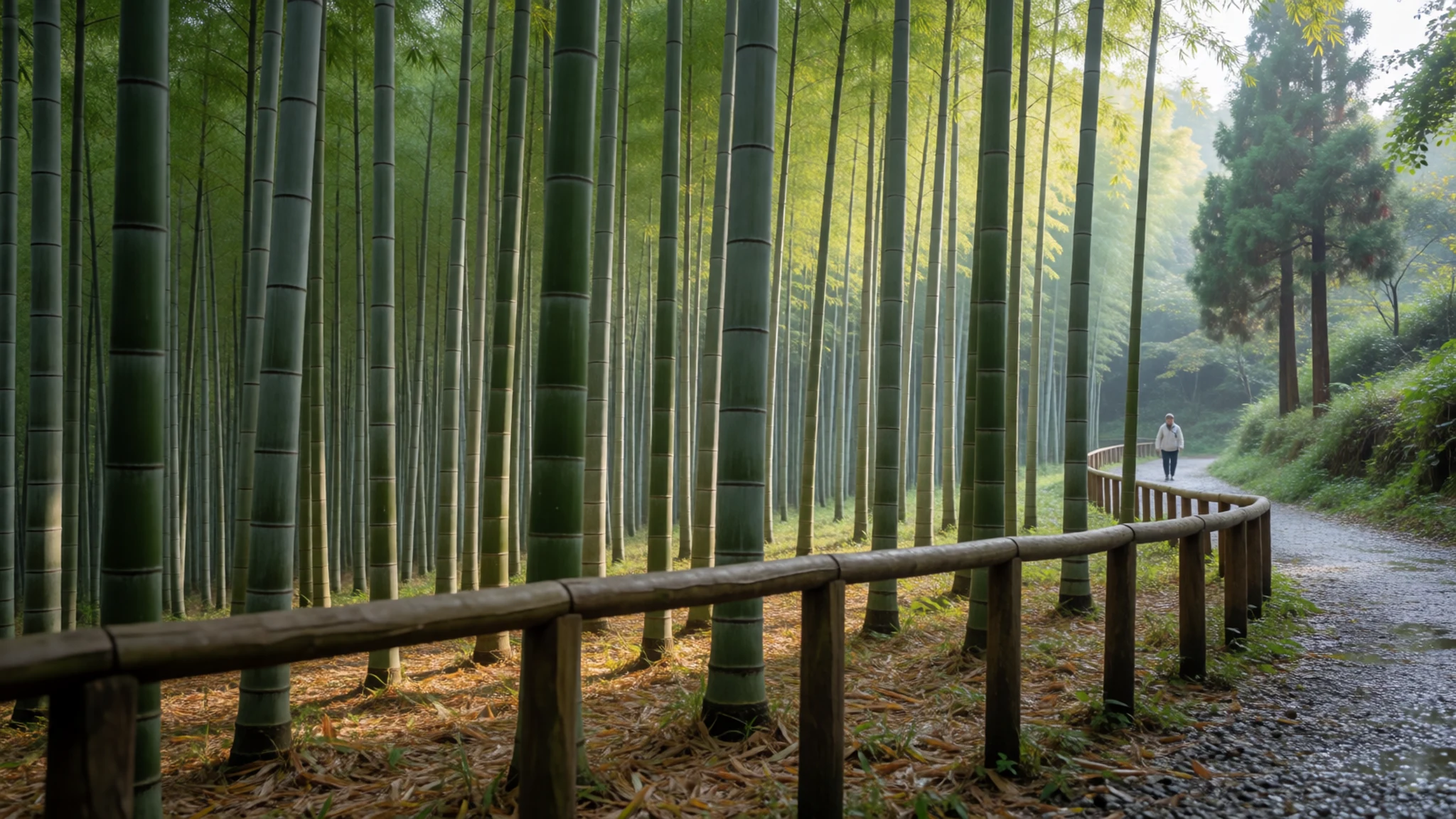
- Xitou Sky Walk — Within the park
A raised walkway carries visitors through the tree canopy, giving a view of the forest from the level of the branches rather than the trunks. It is a good way to see how dense the woodland is. Weekends can bring queues, so go early and check the official site for any closures.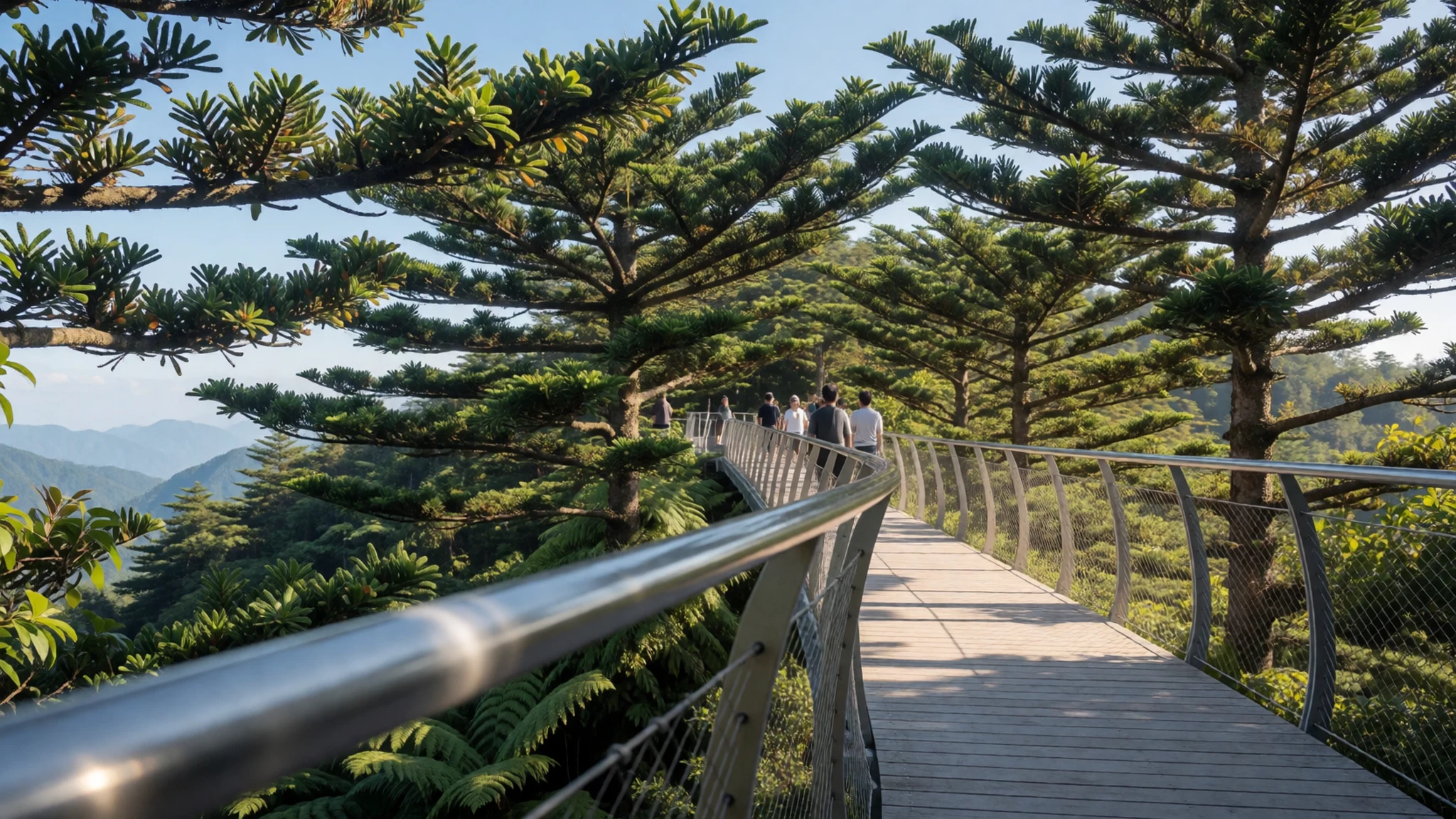
- Divine Tree viewing platform — Upper park trail
A wooden platform stands near the spot where the famous giant tree once grew. It gives a view over the clearing and a place to read about the tree's long life and its fall. The platform is a short walk from the main paths and a calm place to rest.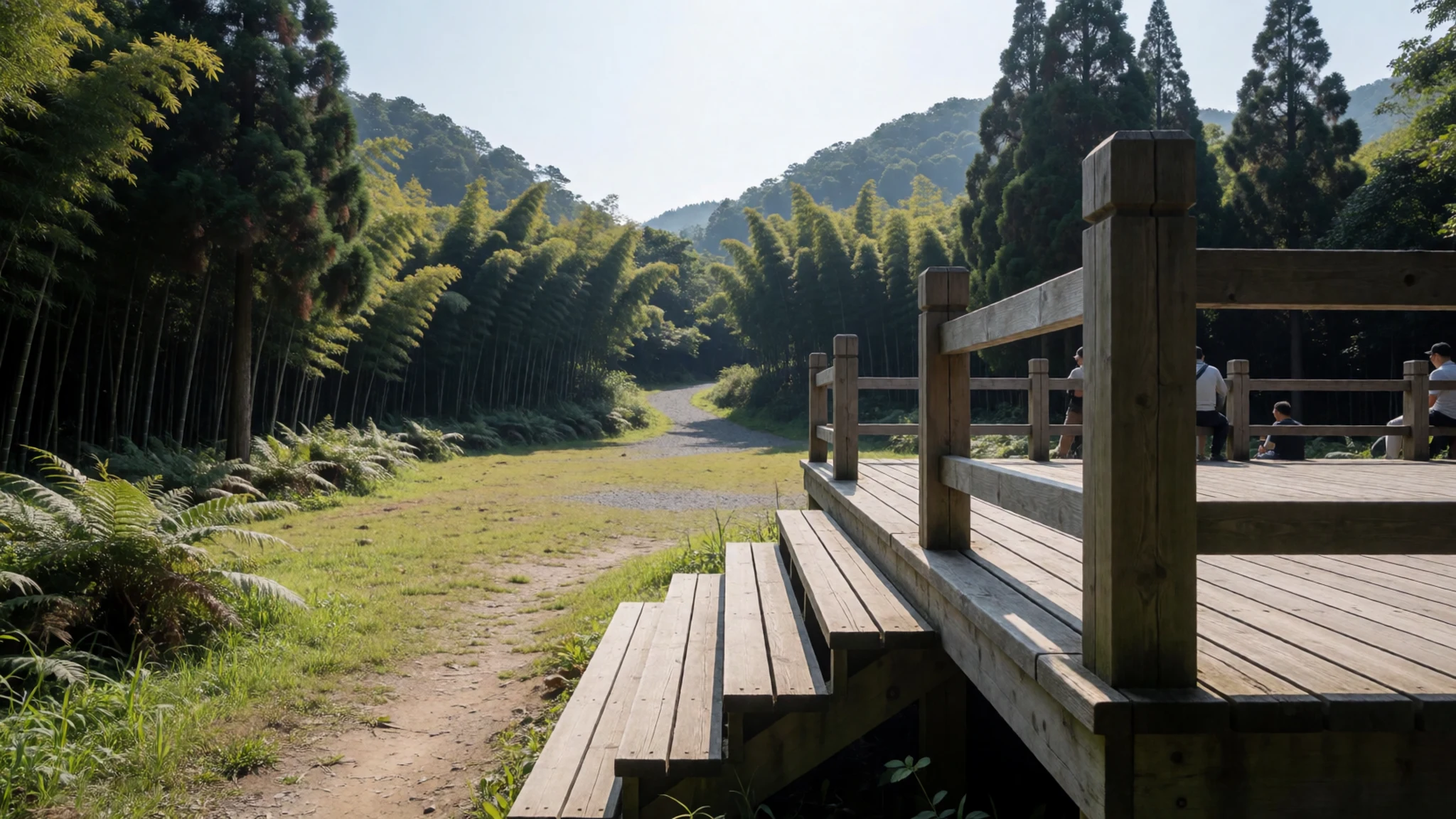
- The fallen Divine Tree — Upper park trail
The trunk that came down after heavy rain lies close to the platform, and its girth is easier to grasp in person than in any figure. Moss, fungi and seedlings are already making use of it. It is a quiet lesson in how old forests renew themselves.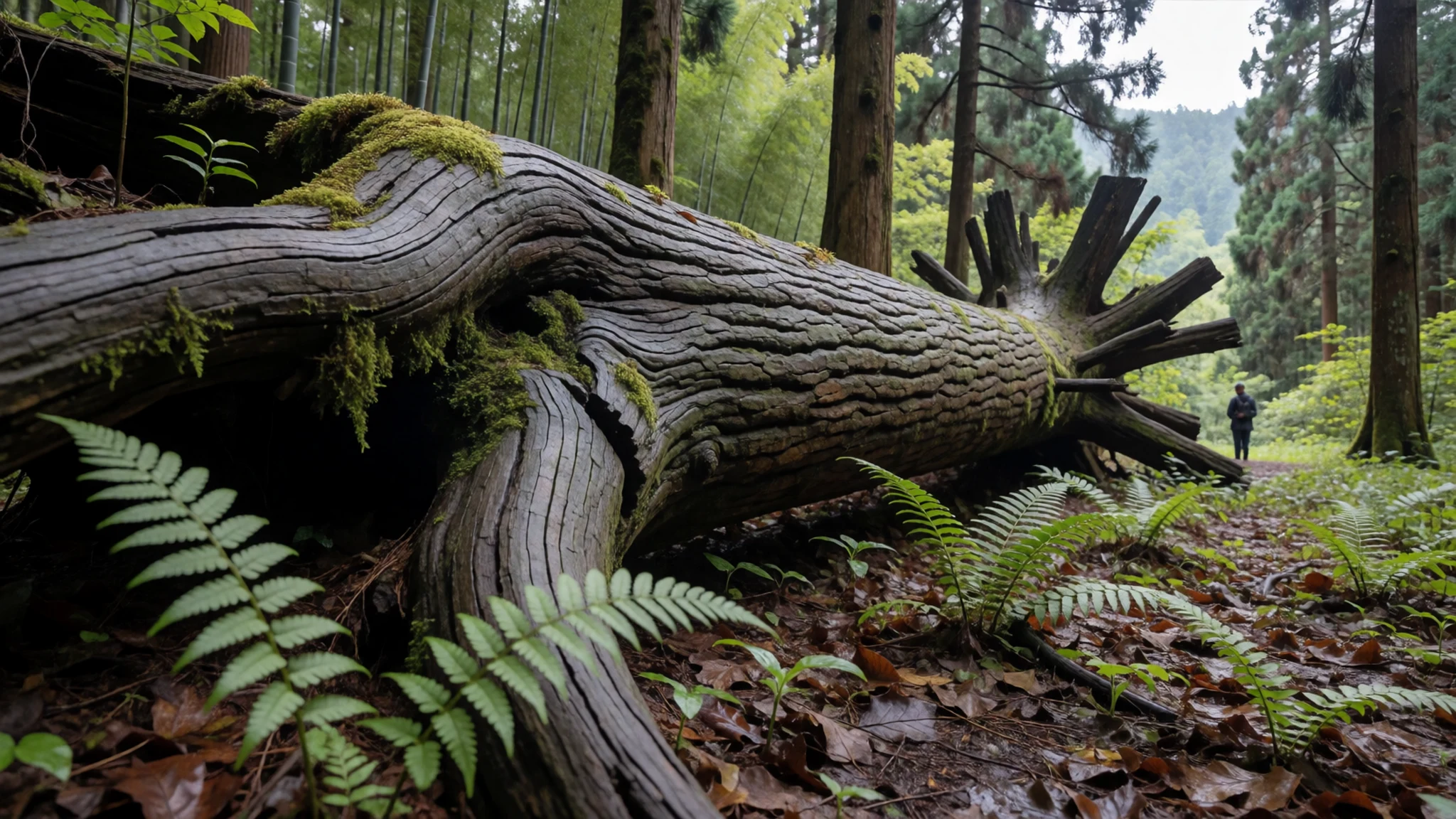
- Ginkgo garden — Lower park
A planted garden of ginkgo trees sits within the park and is worth a pause in autumn and early winter, when the fan-shaped leaves turn yellow. It is a calmer corner than the bamboo, with benches and a more open sky, and a pleasant place for a slow picnic.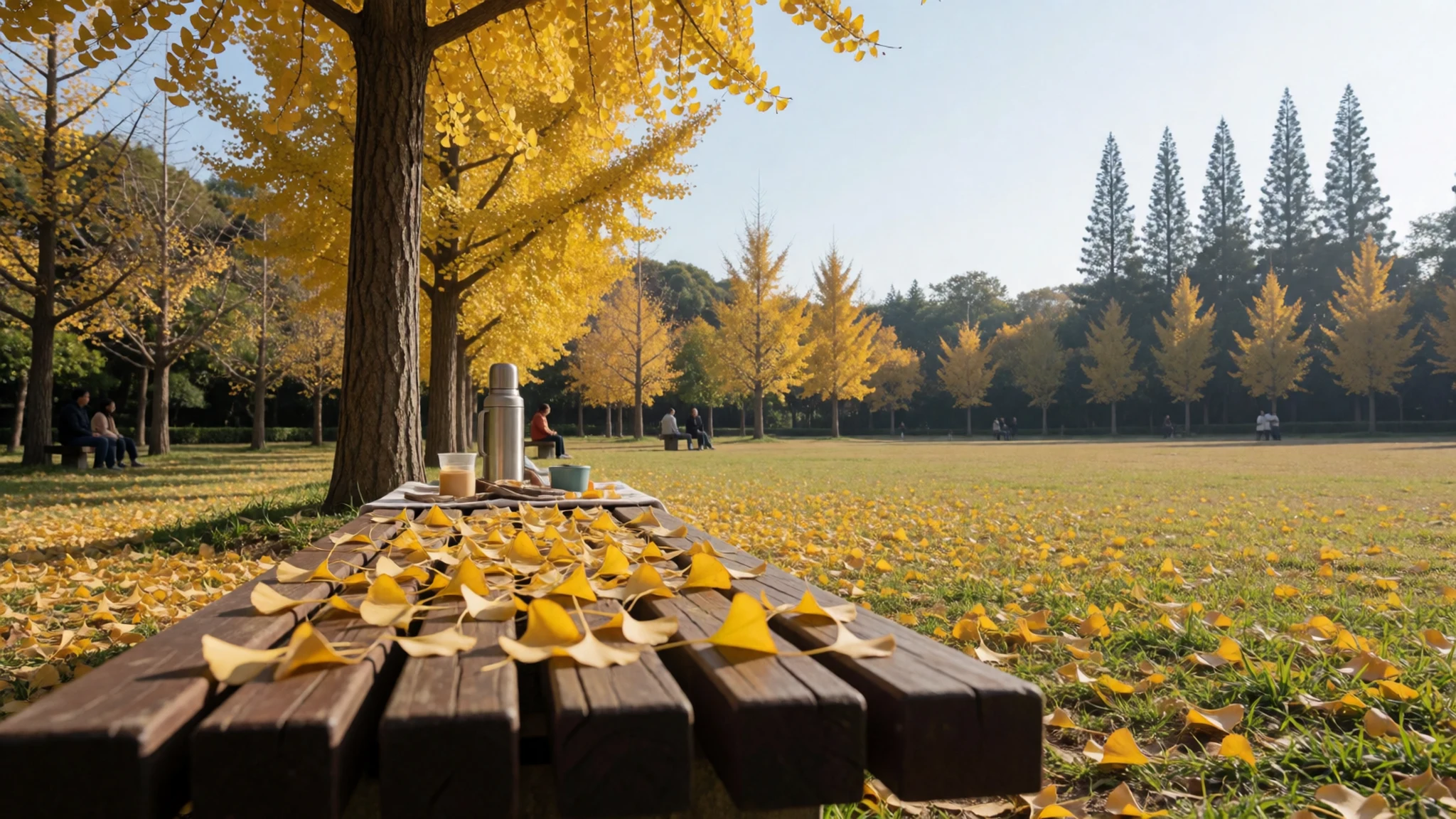
Culture
Xitou belongs to Nantou County, Taiwan's only county with no coastline, and the rhythms of the forest are tied to the surrounding highland communities. Mandarin is the common language on signs, but Taiwanese Hokkien and Hakka are heard in the towns, and the wider region is home to indigenous peoples, among them the Bunun and the Tsou. Tea is central to local life, and the Nantou hills are known for oolong, so a pot of tea after a walk is a natural habit rather than a tourist ritual. The park itself reflects a strong Taiwanese enthusiasm for hiking and for nature education: families, school parties and retired walkers share the paths, often carrying thermos flasks and wearing sun visors even under cloud. Weekday visitors may notice guides explaining plants and birds to children with real patience. The loss of the great Divine Tree in 2016 is spoken of with a mix of regret and acceptance, and the fallen trunk is treated with some reverence, not as a curiosity. Respect for the forest as a place of study and quiet is the unspoken rule. Visitors who keep their voices low, step aside for groups on narrow boardwalks and follow posted guidance fit in easily. Carry out your rubbish and stay on the marked paths, because the forest is a working research site and trampled undergrowth does not recover quickly.
What to wear
Traditional dress around Xitou is best understood through the indigenous peoples of Nantou and central Taiwan. The Bunun and Tsou, among others, have woven cloth with bold geometric patterns, often in red, black and white, made from plant fibres or cotton, and worn today mainly at festivals, weddings and cultural events rather than every day. Hakka and Hokkien communities in the lowlands have their own older tradition of plain cotton jackets in dark blue, now rarely seen outside heritage displays. What people actually wear in the park is practical outdoor clothing: quick-dry shirts, light trousers, caps or sun visors, and walking shoes or trail sandals. Layers are common, since mornings are cool and afternoons can turn damp. Local walkers also favour a light rain jacket kept in the day bag. Visitors should dress the same way. Choose breathable fabrics that dry fast, bring a waterproof layer in any season, and add a fleece or jumper for winter evenings and early starts. Shoes with a good grip matter more than style, because boardwalks and leaf-covered paths are slippery when wet. Insect repellent and a hat are sensible additions. There is no strict dress code in the forest, though covered shoulders and knees are polite if the day includes a visit to a nearby temple or a village event.
What to eat
- Donding oolong tea — Tea shops in Lugu and near the park entrance
A lightly roasted oolong from the Nantou hills, with a rounded, slightly toasted flavour. It is famous well beyond Taiwan and is usually brewed strong in small pots. Tea shops around the park entrance and in nearby Lugu serve it and often let visitors taste before buying.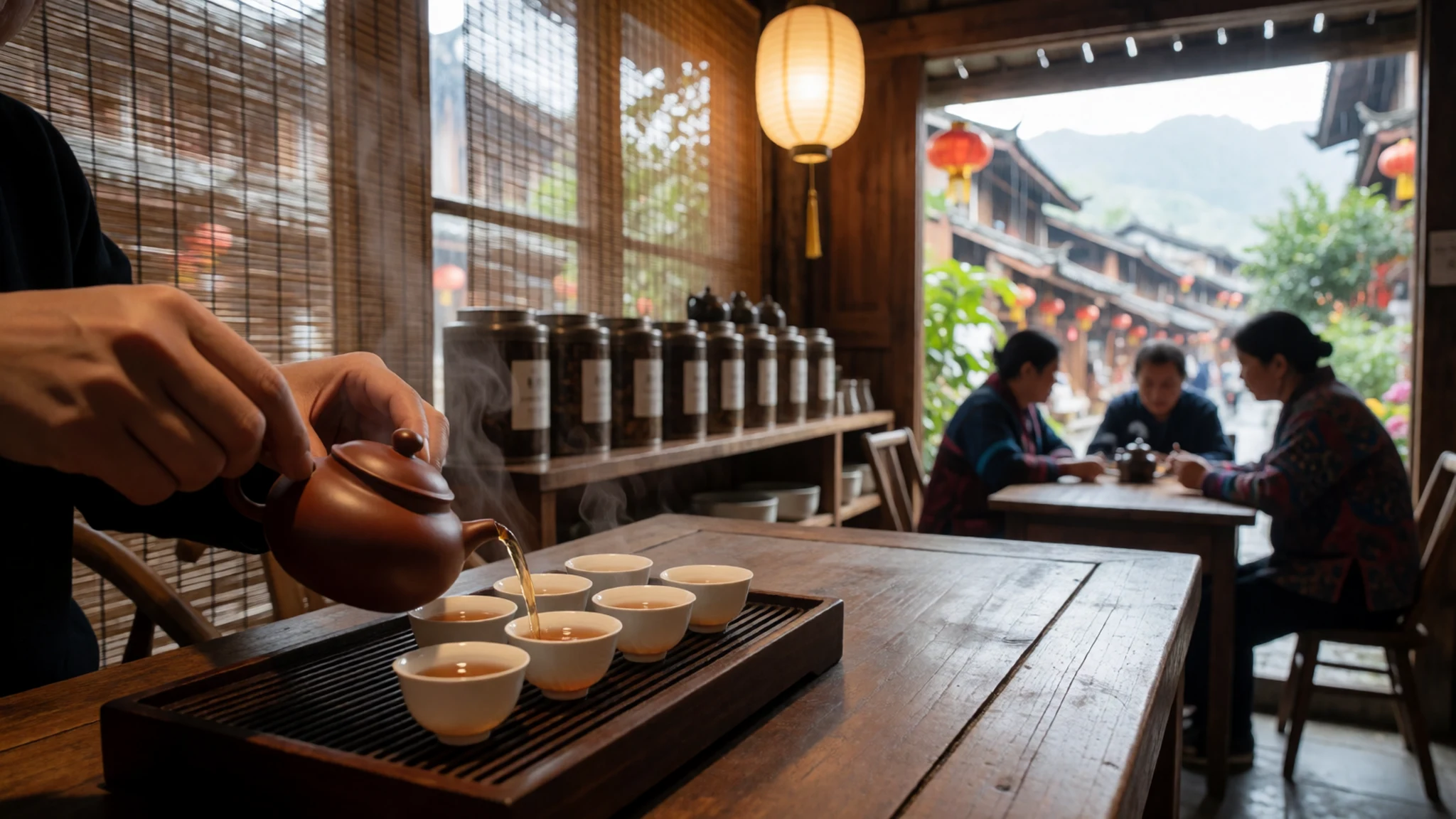
- Bamboo shoot dishes — Family-run eateries near the park entrance
Fresh shoots appear braised, stir-fried or in soups, with a crisp, slightly sweet bite. They reflect the bamboo that defines the area and are a seasonal treat in the warmer months. Simple eateries along the approach road usually have a version on the menu.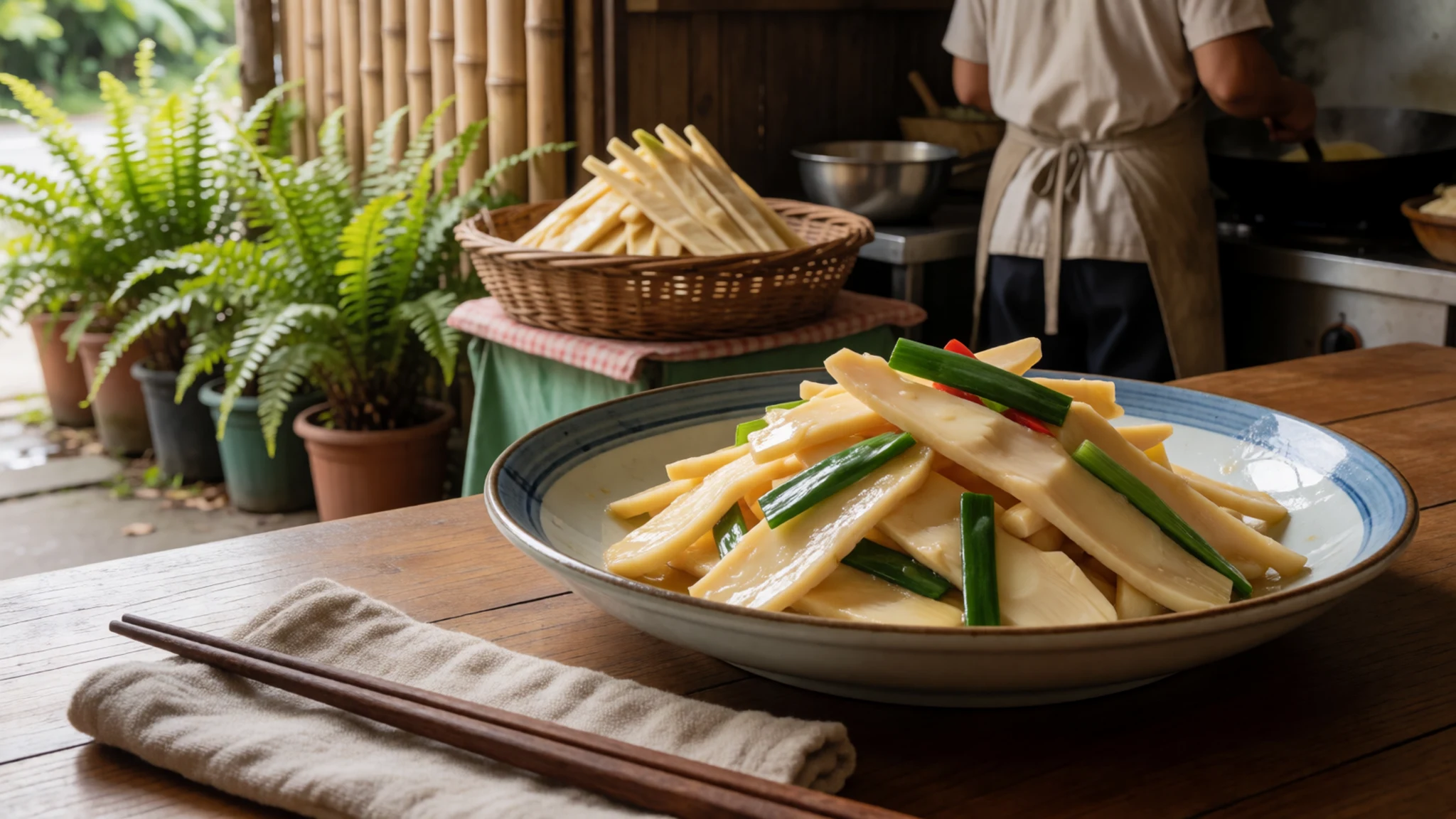
- Mountain vegetable stir-fry — Roadside restaurants in the highland towns
Local greens, ferns and fresh shoots are quickly fried with garlic and served alongside rice. The flavours are clean and slightly bitter, a good contrast to richer meat dishes. It is a standard order in highland restaurants and suits vegetarians when asked without lard. - Braised pork rice (lu rou fan) — Any small eatery in Lugu or Zhushan
Minced or diced pork braised in soy sauce and served over rice, a staple of Taiwanese everyday eating. It is filling after a walk and costs little. Almost every small town eatery makes its own version, so quality and sweetness vary. - Rice cooked in bamboo — Snack stalls near the park approach
Sticky rice steamed inside a length of bamboo takes on a faint, sweet woody scent. It suits the setting and is often sold as a snack or part of a set meal near scenic spots. Ask a stallholder how it is cooked, since methods differ.
Plan it
Best time. March–April and October–November are the most comfortable, with cool, pleasant days for walking. Winter is cold at night in the hills, and late spring and summer bring the heaviest rain and humidity, though the forest stays cooler than the lowlands in every season.
How long. 1–2
Getting there. Fly into Taichung or Taipei, then take a bus or drive to the Puli and Lugu area, which is how most visitors arrive from Taichung; a taxi or local bus covers the last stretch to the park. For a scenic route out, consider the historic train from Ershui to Shuili.
Budget. low
Tips
- Go on a weekday or arrive early, since weekends and holidays bring coaches and crowded car parks
- Carry a rain jacket in every season; showers arrive quickly in the hills
- Check the official Xitou site or the National Taiwan University experimental forest page for entry rules, fees and any trail or Sky Walk closures
- Bring cash for small stalls and eateries, and carry water on longer trails
- Combine Xitou with Sun Moon Lake or tea-country stops in Nantou if staying longer
Etiquette
- Keep to marked paths and boardwalks so the undergrowth can recover
- Take your rubbish with you and keep voices low near wildlife and school groups
Nearby
Sources
- Wikidata Q16926656 (CC0)
- Wikipedia: Xitou Nature Education Area (rev 1362686106) (CC BY-SA 4.0)
- Wikivoyage: Nantou County (rev 5379060) (CC BY-SA 4.0)
- Photo: Xitou Natural Education Park, lienyuan lee (CC BY 3.0)
- Photo: Xitou Sky Walk, SSR2000 (CC BY 3.0)
- Photo: Xitou Nature Education Area 26, 阿道 (CC BY-SA 4.0)
- Photo: Xitou Nature Education Area 25, 阿道 (CC BY-SA 4.0)
- Photo: Xitou Divine Tree viewing platform, 阿道 (CC BY-SA 4.0)
- Photo: Xitou Nature Education Area 22, 阿道 (CC BY-SA 4.0)
- Photo: Xitou Nature Education Area 35, 阿道 (CC BY-SA 4.0)
- Photo: Xitou Nature Education Area 11, 阿道 (CC BY-SA 4.0)


