Xiaoliuqiu
Xiaoliuqiu, Taiwan
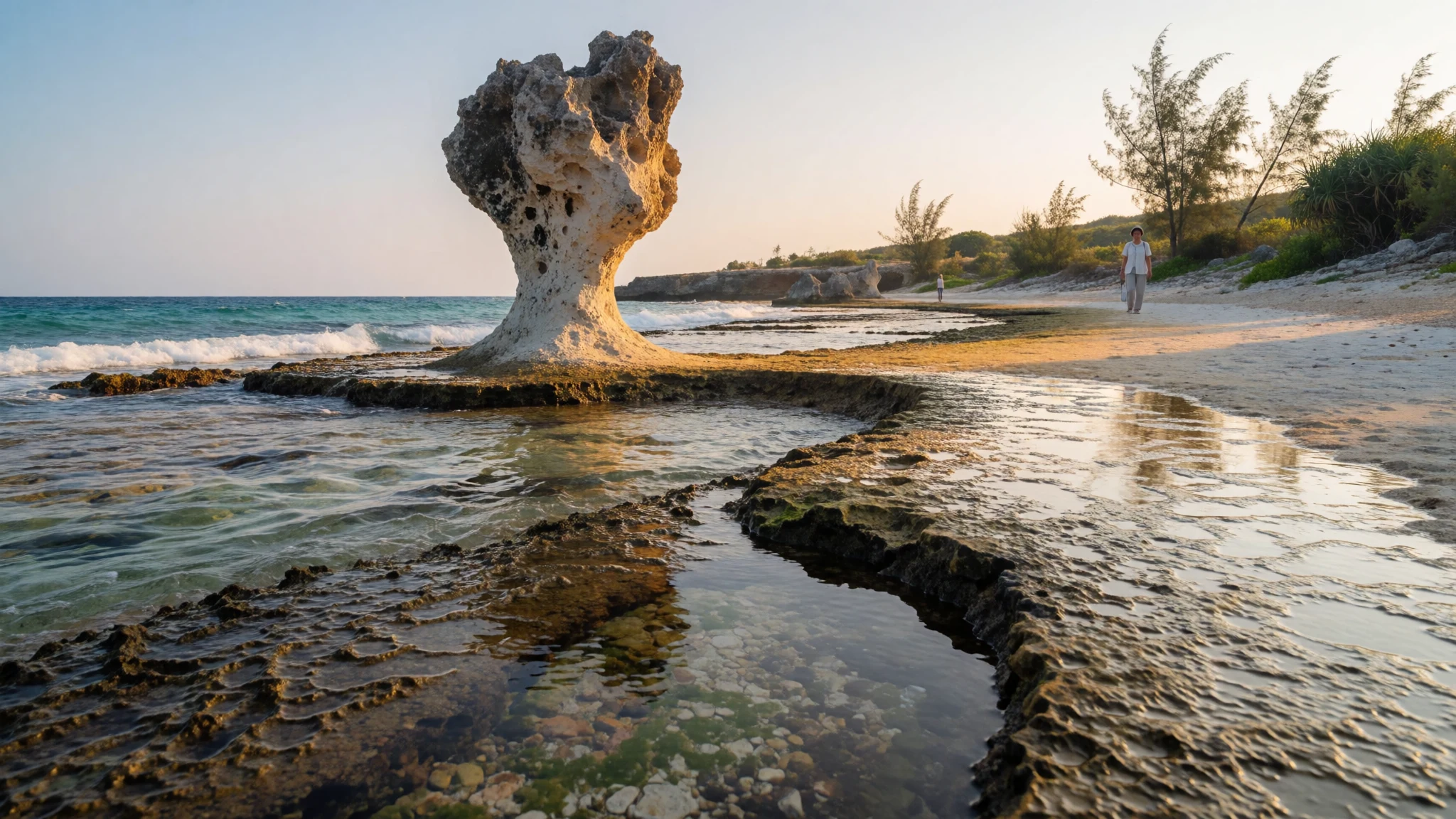
Xiaoliuqiu is a flat coral island a short ferry ride from Taiwan, where reefs, sea caves, busy temples and snorkelling share a few lanes.
The place
Xiaoliuqiu is a small coral island off the south-west coast of Taiwan, and the only island township in Pingtung County. Ferries leave from Donggang, at the mouth of the Gaoping River, and the crossing is short enough that the mainland coast, and at night the lights of Kaohsiung, stay in view. The township has about 12,000 residents, and its recorded elevation is 34 metres, which hints at how gentle the land is: the island tilts slowly and is easy going by scooter or bicycle. Its outline is often compared to a boot. Underfoot is old reef, with pale limestone, fossil coral and patches of red soil stained by iron minerals. There are no rivers, so water and electricity arrive from the mainland, and farming is limited mostly to sweet potatoes and peanuts. Fishing in the Kuroshio Current waters once supported nearly everyone, but tourism now pays better, so boats lean on migrant crews and on cage fish farms, some of which are open to visitors. Beaches, reefs, caves and eroded rock stacks ring the coast, and temples stand on almost every corner of the main settlement. Summer is hot and humid, typhoons can cancel ferries at short notice, and weekends and holidays fill the lanes with rental scooters. Midweek, outside the peak summer weeks, the island is noticeably calmer.
Its story
Xiaoliuqiu's earliest known inhabitants are thought to have been Siraya people, an indigenous group that also lived across the plains of what is now Pingtung. Later came Han settlers from Fujian, whose gods and temples still shape daily life. For Europeans the island was mostly a hazard. In the early seventeenth century, Dutch ships were wrecked on the surrounding coral and their crews were killed by islanders. The Dutch authorities in Taiwan answered with a campaign of reprisal. A first expedition was too small to achieve much, though it located a large cave that islanders used as a refuge in dangerous times. A later, bigger force trapped people inside that cave, sealed the entrances and filled it with smoke from burning pitch and sulphur over many days. It is a grim episode, and the Dutch name for the place, Golden Lion Island, recalls the first ship lost. Through the early modern era and under Japanese rule, islanders lived from fishing and small plots of land. After 1945 a few quarries sent stone and lime to the mainland, and tourism grew with Taiwan's rising incomes. Typhoons remain the constant pressure: newer buildings are designed to withstand strong wind and waves, and ferry sailings bend to the weather.
What to see
- Vase Rock — East coast shoreline
Vase Rock is a weathered column of coral limestone standing just off the shore, narrow at the base and wider at the top, hence the name. It is the island's signature landmark and a popular spot at sunset. Go early or late for softer light and thinner crowds along the shoreline path.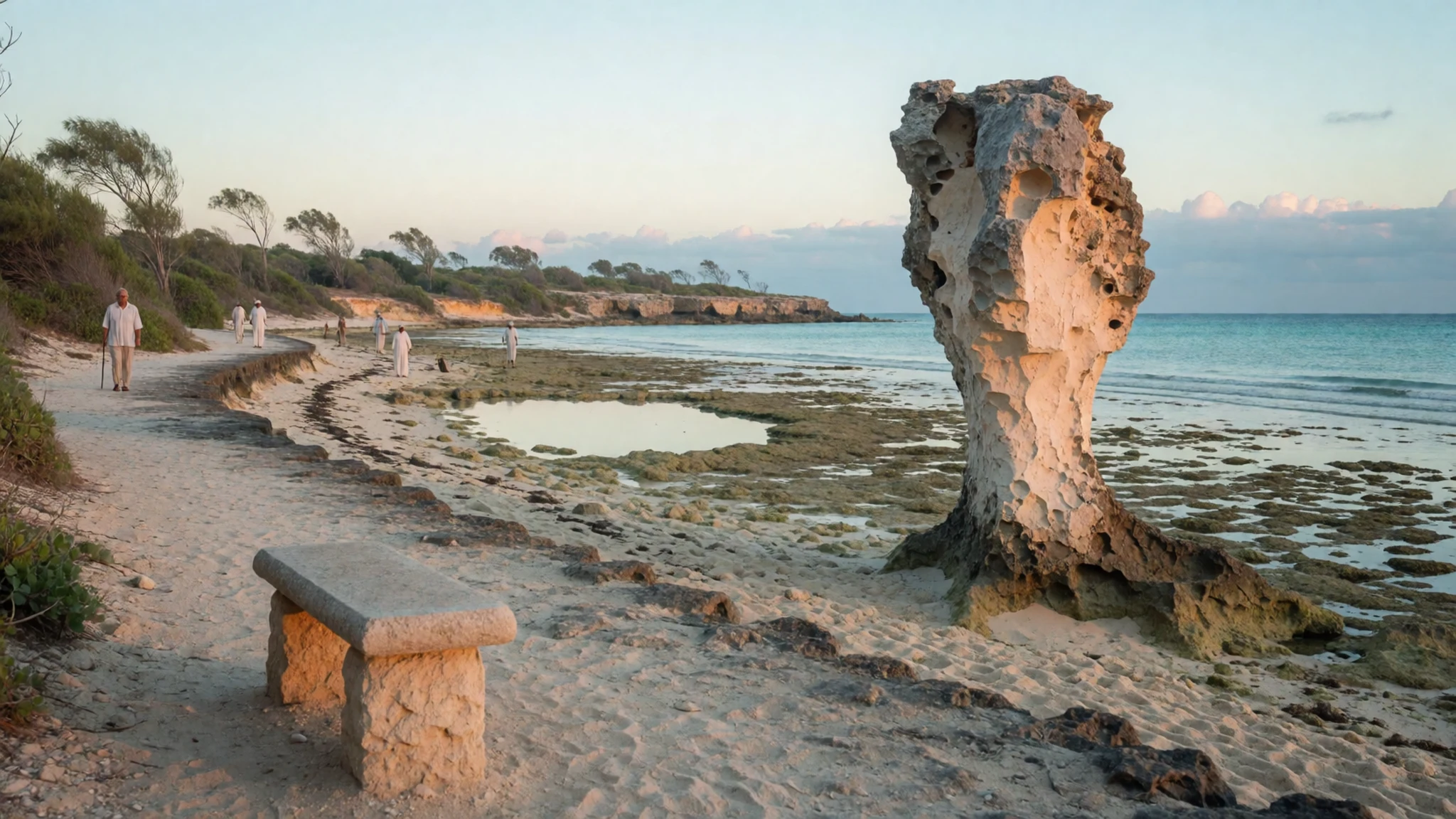
- Sanmin Street — Main settlement
Sanmin Street is the busiest commercial lane in the island's main settlement, packed with snack stalls, souvenir shops, scooter rental counters and tour operators. It is noisy and slow-moving at weekends, but it is the easiest place to sample local snacks, arrange snorkelling and get a feel for island life.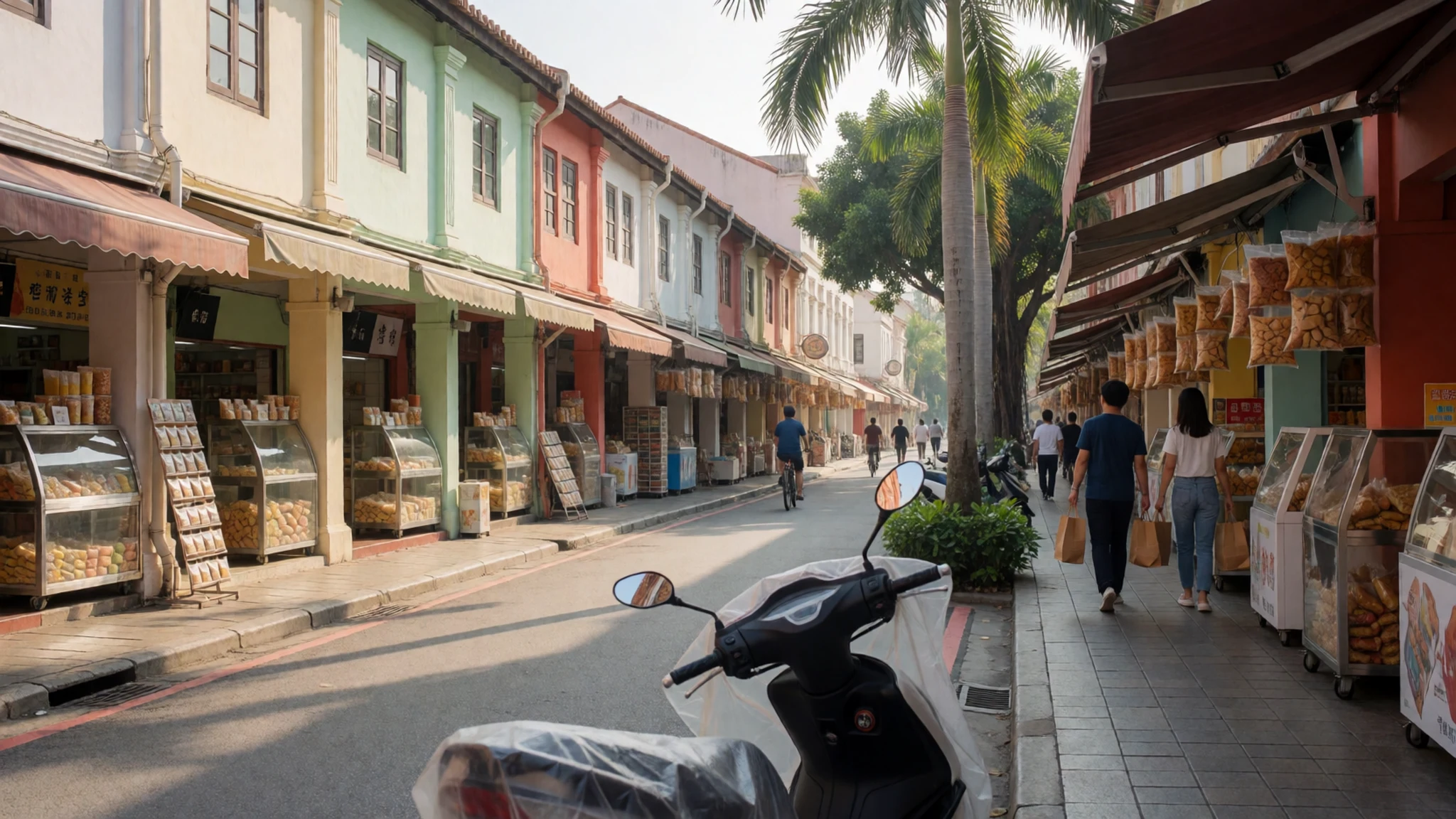
- Biyun Temple — Main settlement
Biyun Temple is a Guanyin temple, and Guanyin, the Buddhist Bodhisattva of Compassion, is the most widely worshipped deity on the island. Expect incense smoke, carved roof ridges and locals praying for safe voyages and health. It is an active place of worship, so visit quietly and keep clear of ceremonies.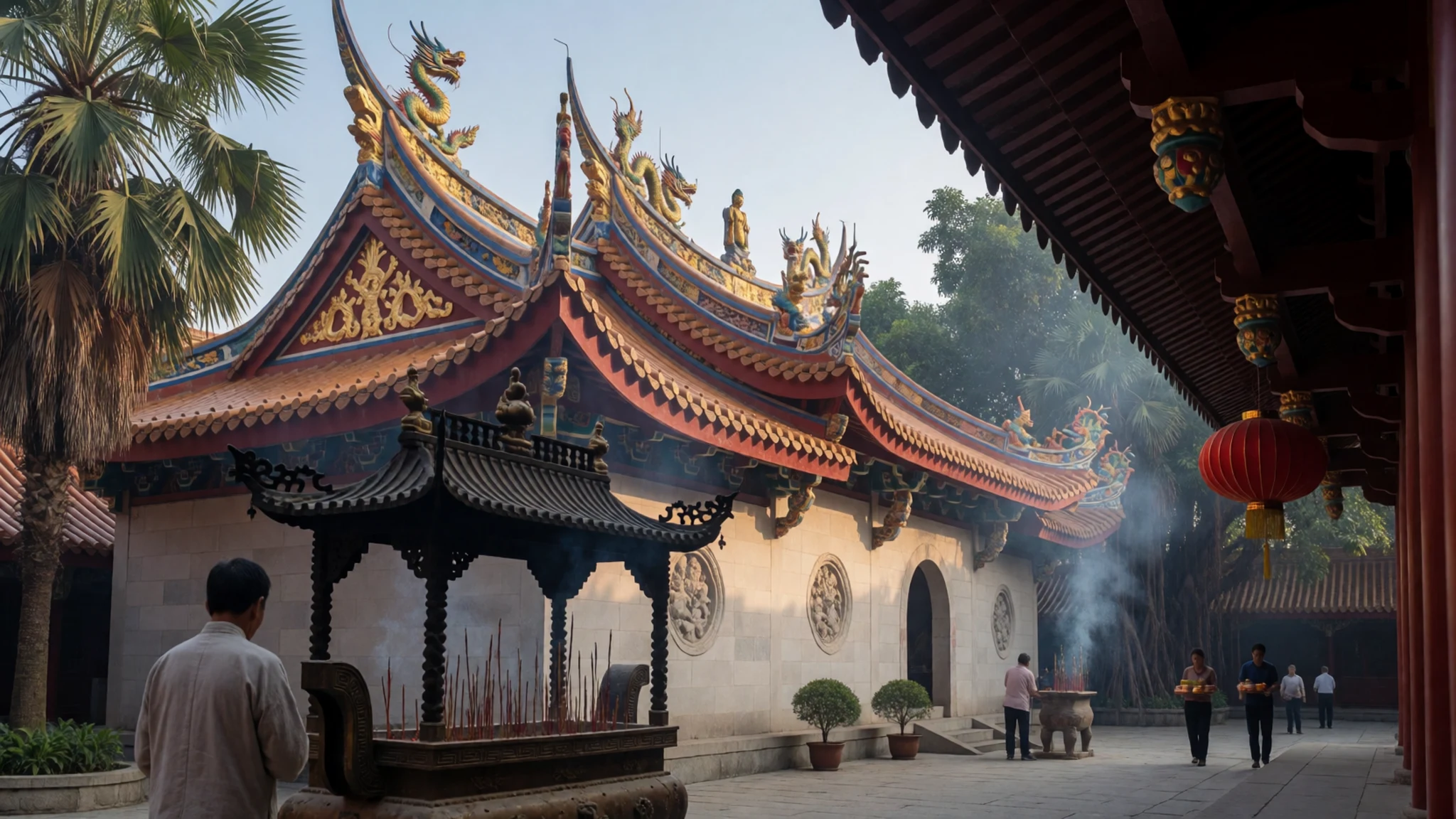
- Shangshan Fuan Temple — Island interior
Shangshan Fuan Temple is one of the many neighbourhood temples that give the island its devout character. A stone guardian lion flanks the approach, and the building is crowded with painted and carved detail. It rewards a short stop between beaches, particularly in the cooler hours of the morning.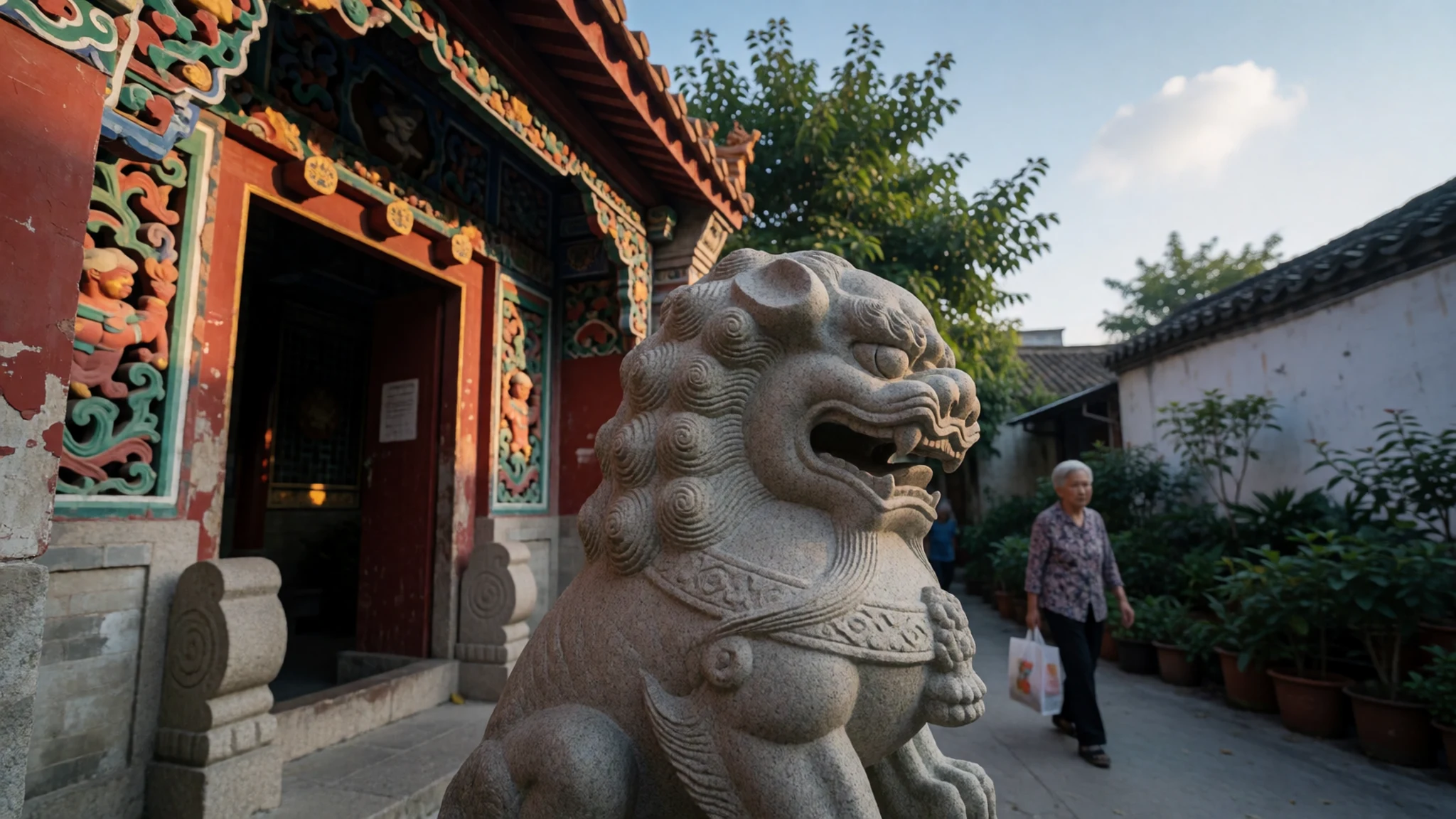
- Baisha Port — North of the island
Baisha Port is one of the two harbours where ferries from Donggang land, so most visitors meet the island here. After dark the lights of Kaohsiung glimmer across the water. It is worth a pause on arrival or departure for the view, and for a look at the working fishing boats.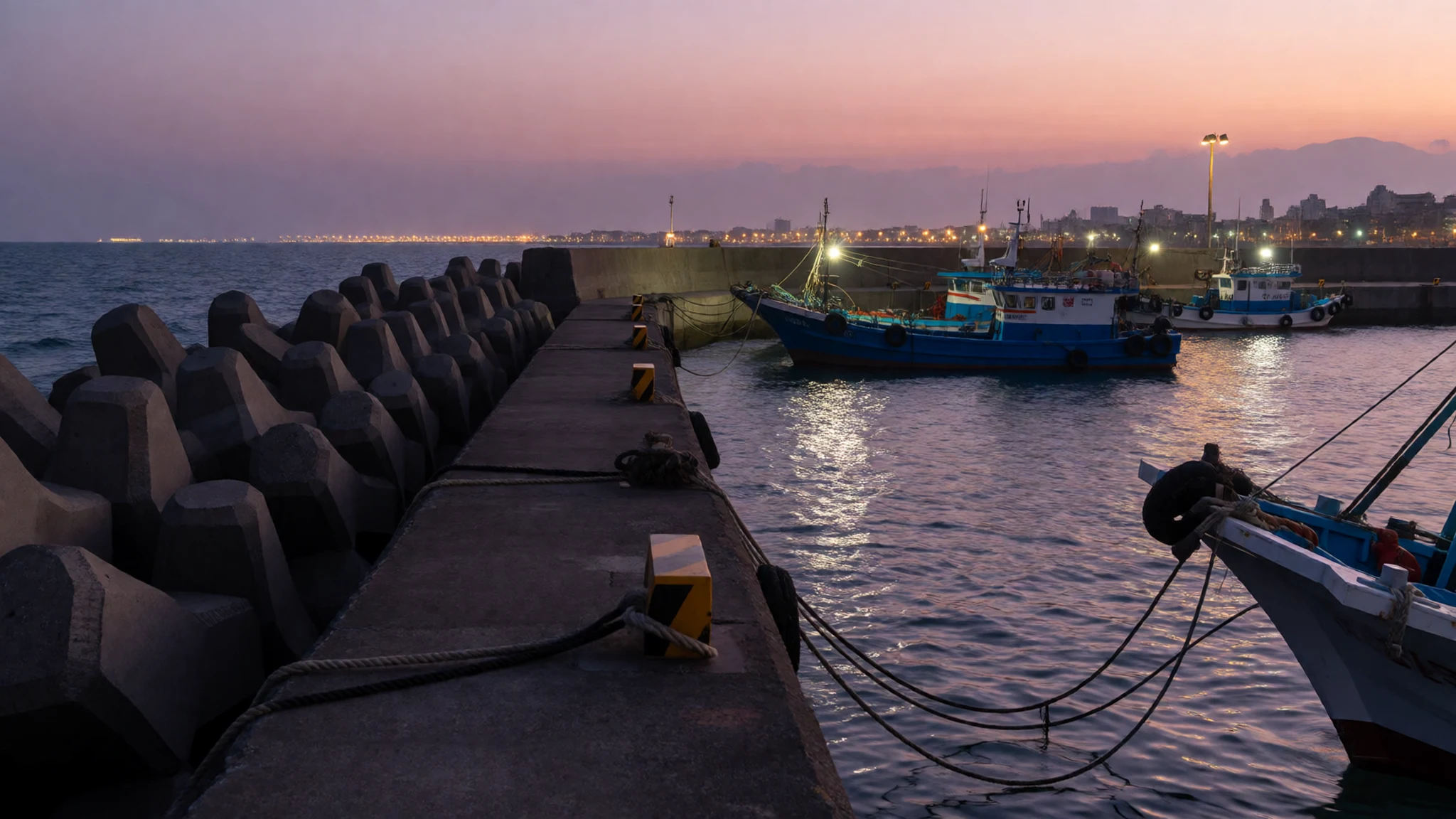
Culture
Xiaoliuqiu is a devout, close-knit island, and religion shows in daily routines. Temples number in the dozens, with many more small shrines, and residents pray and make offerings for recovery from illness, for blessings on new boats, houses and weddings, for protection at sea, and for lucky dates for funerals. Most of the gods worshipped came with the original Han settlers from the Quanzhou and Zhangzhou areas of Fujian, and the most popular is Guanyin, the Bodhisattva of Compassion. Ancestor veneration is just as visible. Away from the tourist areas, much of the southern half of the island is dotted with graves, because space is tight and burial rules are hard to apply on so small a landmass. The island's livelihood has long been the sea, so festivals and processions often centre on safe fishing and protection from storms. Islanders have also grown used to a flow of day-trippers, and most are relaxed and helpful if approached politely. Traditional food stalls, tea shops and small family eateries remain the social heart of each settlement. Dress modestly and speak softly when stepping into a working temple, and do not photograph worshippers at prayer or touch offerings, incense or altars unless invited.
What to wear
Xiaoliuqiu has no widely documented island costume of its own. Its Han families came from Fujian, and in general fishing households of that heritage wore plain cotton jackets and trousers, with straw or bamboo hats against the sun, while the Siraya, the island's earliest people, are associated with plant-fibre and woven clothing that is now seen mainly in museums and cultural events. Ceremonial dress today appears mostly around temple festivals, when processions bring out embroidered banners, bright robes and troupe costumes. Everyday wear is practical and casual. Locals and day-trippers alike are in T-shirts, shorts, flip-flops, wide-brimmed hats and long UV sleeves, and fishermen wear rubber boots and waterproof aprons at the harbour. Rash vests are common because the sun is strong, and swimwear stays on the beach rather than in the lanes. A visitor should pack light, quick-drying clothes, a hat and high-factor sun protection. Reef shoes or sturdy sandals help on rocky shores and coral rubble, and a thin rash vest is useful for snorkelling. Carry a light layer for the ferry, which can be windy and splashy. For temples, cover shoulders and knees, and keep wet swimwear out of them. A light rain jacket is worthwhile outside the driest months.
What to eat
- Green bean garlic ice — Dessert shops and ice stalls in the main settlement
Despite the name, there is no garlic: the peeled mung beans resemble minced garlic. They are cooked until soft and served over shaved ice. It is a regional dessert from southern Pingtung and a cooling choice on a hot day. Look for it at dessert shops and ice stalls.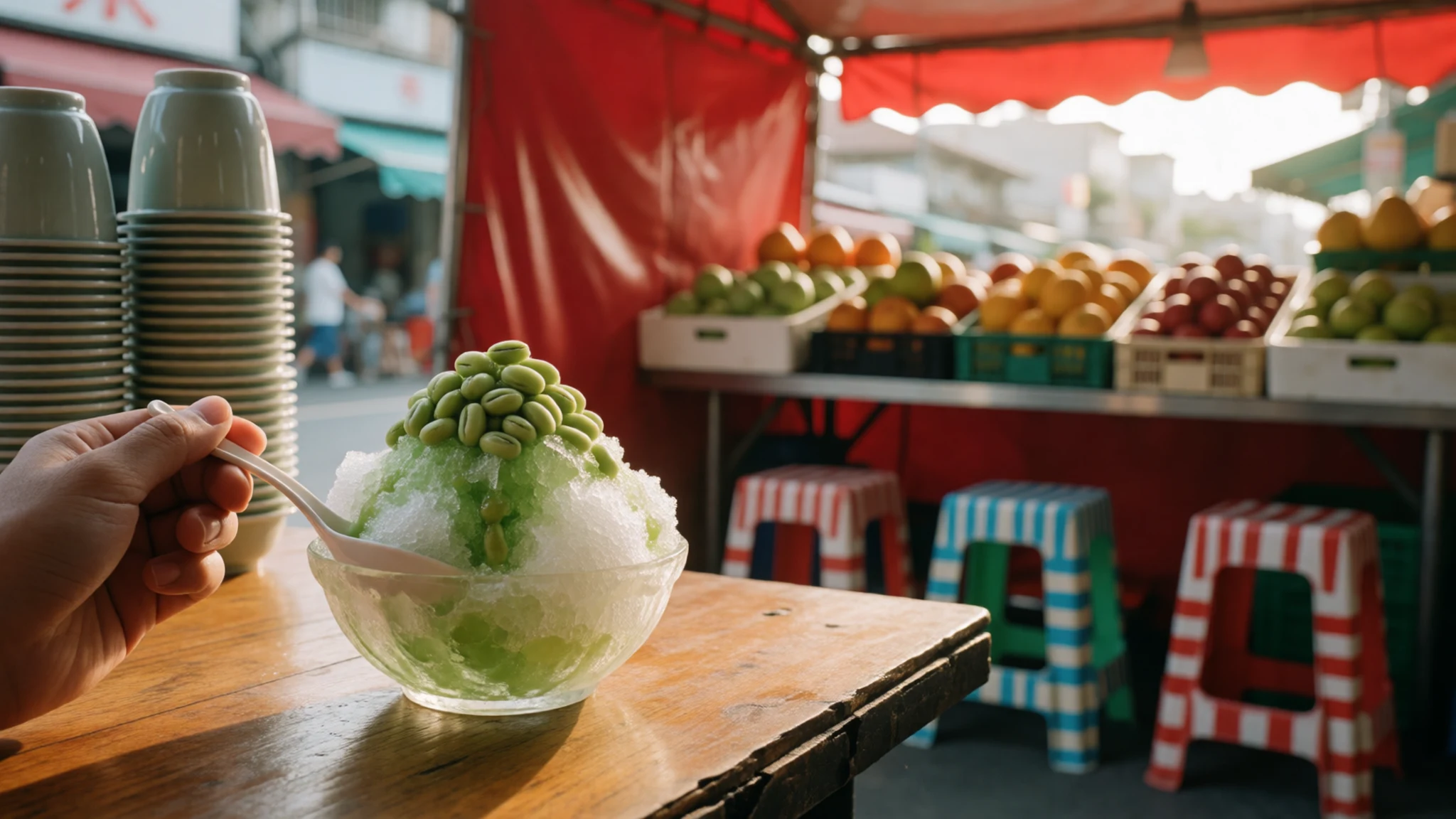
- Egg crisp cake — Snack shops around the ferry area and the main street
A crisp, lightly sweet baked cake that traces back to Hengchun's old town, in flavours such as basil, corn, onion and shallot. It travels well, which makes it a handy snack for the ferry or beach.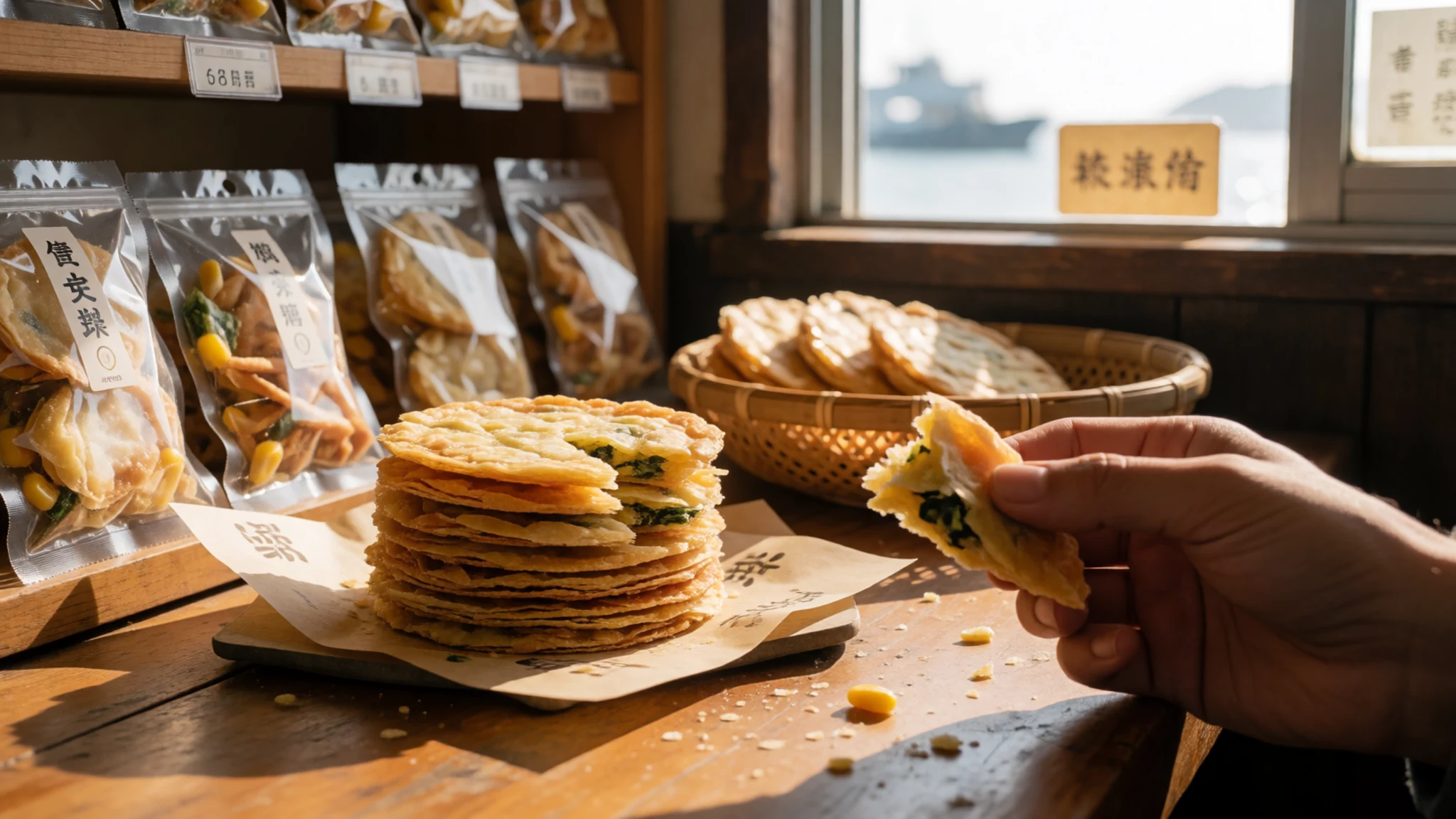
- Dragon fruit wrap — Café and snack stalls on the main street
A soft wrap made with red-fleshed dragon fruit, filled with fresh vegetables, dressing and a choice of meat. It is light, colourful and sold fresh, so it suits a hot afternoon better than a heavy meal. - Fresh seafood — Harbour-side eateries and family restaurants
With fishing as the traditional backbone of the island, simply cooked fish, squid and shellfish are the natural order of the day. Choose busy eateries, ask what came in that morning, and expect prices to rise at weekends and in summer. - Sweet potato and peanut snacks — Small snack stalls and village shops
Sweet potatoes and peanuts were the main crops once farmers moved on from coconut palms, so they appear in boiled, fried and candied forms. They make an inexpensive, filling snack, often sold from small stalls or counters.
Plan it
Best time. April–May and October–November are usually the easiest months: warm sea, manageable heat and fewer typhoon risks. July–September is hot, humid and typhoon-prone, with ferries sometimes cancelled, and weekends and holidays bring the biggest crowds.
How long. 2–3
Getting there. Kaohsiung International Airport is the usual gateway, then Taiwan Railways or a regional bus to Donggang in Pingtung County. Ferries run from Donggang to Baisha Port and Dafu Port on the island, and the crossing is short. The island's airfield handles only helicopters.
Budget. mid
Tips
- Check the ferry schedule and the weather forecast before travelling, and consult the official county site at https://www.pthg.gov.tw/liuchiu
- Book accommodation ahead for weekends, holidays and summer, and consider a midweek stay to avoid the crowds
- Carry some cash for small shops and stalls, and bring sun protection and a refillable water bottle
- Go to the coast early or late in the day for cooler air and softer light, and keep spare time in case ferries are delayed
- Use licensed guides for snorkelling and follow their instructions around reefs and currents
Etiquette
- Dress modestly, lower your voice and keep clear of ceremonies when you enter a temple
- Do not touch or stand on coral, and do not chase or touch sea turtles when snorkelling
- Take your litter back with you, since waste handling on a small island is stretched
Nearby
Sources
- Wikidata Q708227 (CC0)
- Wikipedia: Liuqiu, Pingtung (rev 1364047743) (CC BY-SA 4.0)
- Wikivoyage: Pingtung County (rev 5414430) (CC BY-SA 4.0)
- Relief location map of Taiwan, Uwe Dedering (CC BY-SA 2.0)
- Map from Formosa (Taiwan) 1:50,000 AMS Series L792, Army Map Service (Public domain)
- Vase Rock, Jessepylin (CC BY 3.0)
- Sanmin Street Liuqiu, Philipxd (CC BY-SA 4.0)
- Biyun Temple Liuqiu, Philipxd (CC BY-SA 4.0)
- Shangshan Fuan Temple Liuqiu, Cyirudine (CC BY 4.0)
- Baisha Port, Koika (CC BY-SA 1.0)
- Liuqiu helicopter airfield, Jessepylin (CC BY 3.0)


