Xel-Há
Xel-Há, Mexico
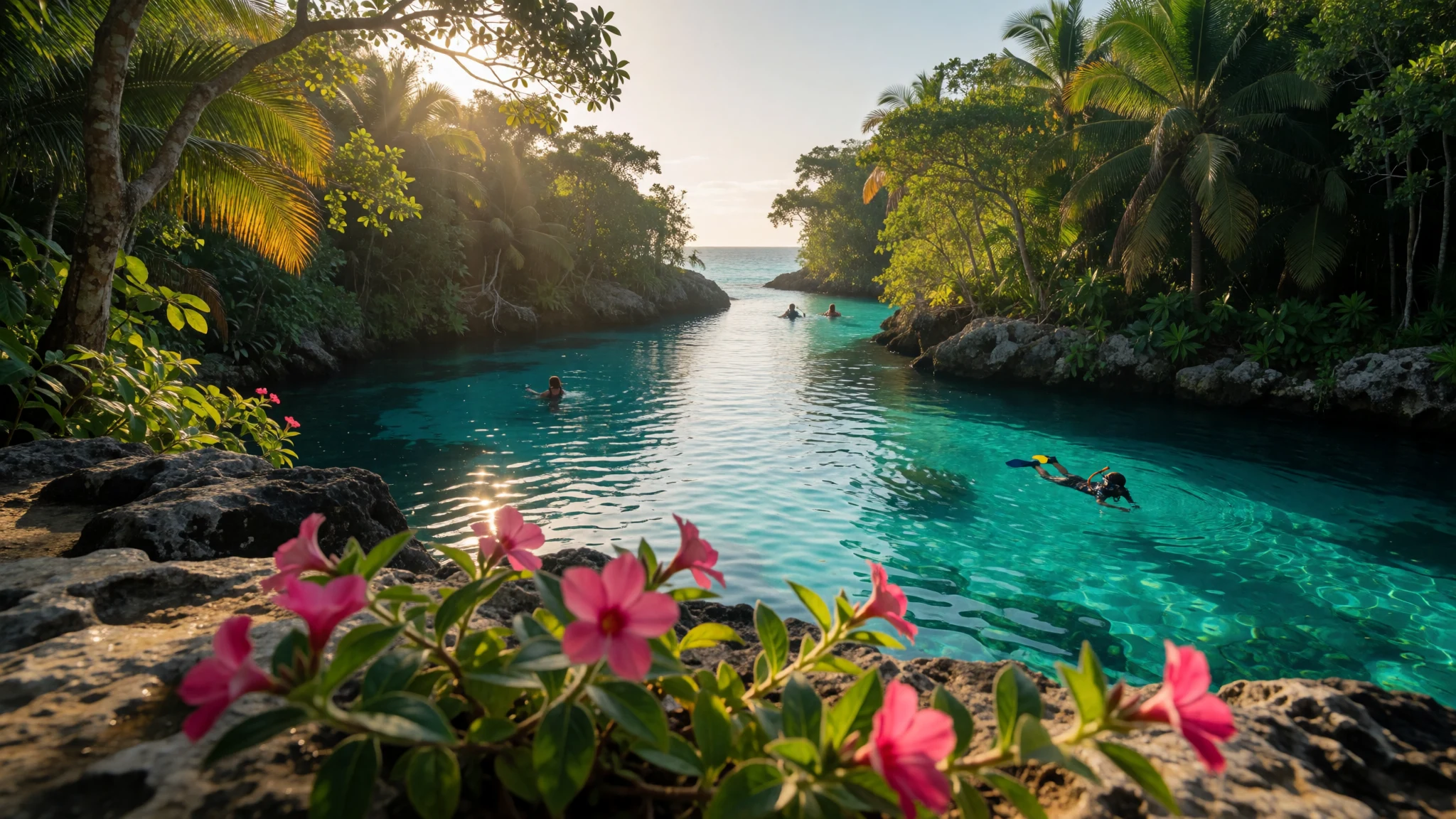
Xel-Há is a sheltered Caribbean inlet on the Riviera Maya, where clear water, jungle and a small Maya site sit side by side.
The place
Xel-Há sits on the Caribbean coast of the Yucatán Peninsula in Mexico, on the highway that links Tulum with Playa del Carmen. The name is usually glossed as 'where the water is born', and the place earns it. A shallow limestone inlet runs inland from the sea, fed by fresh water that wells up from underground rivers and mixes with the salt. The result is a layered, unusually clear lagoon, fringed with mangrove and low forest.
Two things share the name, and visitors often confuse them. One is the large commercial water park built around the inlet, with snorkelling, floating platforms and all-inclusive packages. The other is the small archaeological site on the opposite side of the highway, a quiet cluster of Maya buildings under trees, which most people drive straight past.
The land is flat and hot, with thin soil over porous rock, so there are almost no surface rivers; water moves through caves and sinkholes instead. That is why the inlet matters, and why the rules about sunscreen are strict here. The reef-lined coast, the birds in the mangroves and the shoals of small fish in the shallows are the real draw. Weekends and school holidays bring coach parties from the resorts, while early mornings on a weekday are calmer. Heat and humidity are constant, and the sea breeze only partly helps by midday.
Its story
Xel-Há was a Maya coastal settlement, and its position explains why. The sheltered inlet gave canoes a safe landing along a coast otherwise exposed to open sea and reef, and fresh water was available at the shore. The buildings that survive mostly belong to the Late Post-Classic period, when trade by sea along this coast was busy and small ports linked the peninsula with islands and the mainland further south.
The site is modest rather than monumental. Low platforms, small temples and a few columned halls are scattered through the trees. Some interiors keep traces of painted murals, and one structure is known as the House of Birds after its decoration. A group of buildings carries the name Lothrop, after an American archaeologist who worked on the east coast of the peninsula in the early twentieth century.
After the Spanish arrived, coastal towns like this one declined, partly through disease and partly because trade patterns changed. The ruins were left to the forest for centuries. Tourism arrived with the building of the coastal highway and the growth of Cancún to the north, and the inlet was developed as a leisure park while the archaeological zone stayed small and lightly visited. Today the two stories sit awkwardly together: a working Maya port reduced to a stop on the road, and a lagoon that thousands of people now swim in each season.
What to see
- The Xel-Há inlet — Inlet, east of the highway
The main lagoon is the reason most people come. Clear brackish water over pale rock holds small fish, rays and the odd turtle, and the mangrove edges are good for birdwatching. Go early, wear a reef-safe, biodegradable sunscreen if the park allows only those, and bring a snorkel mask that fits properly.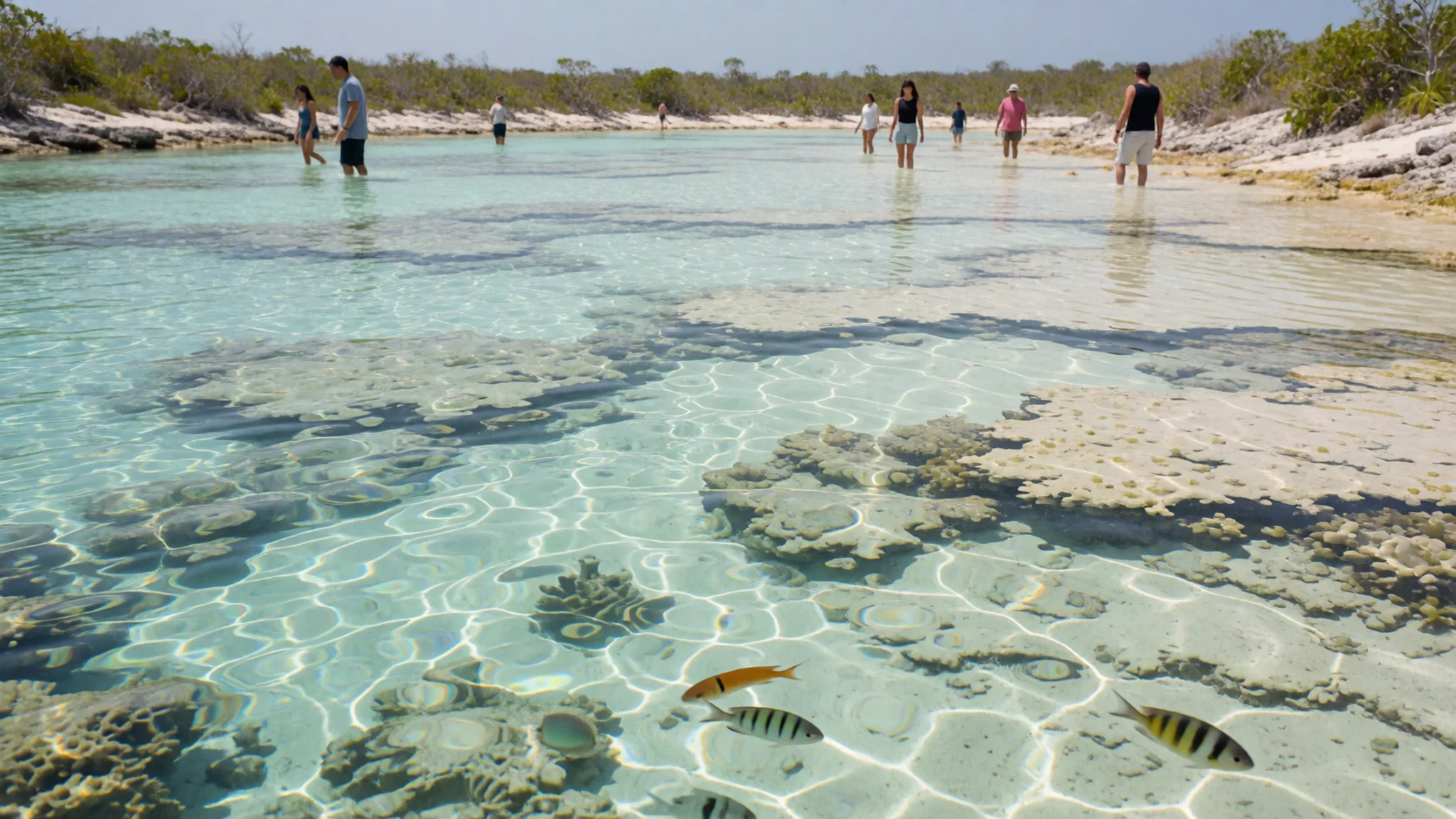
- The archaeological site — West side of the highway
Across the highway, the ruins are compact and shaded, and a visit takes an hour at an easy pace. Paths link small platforms and temples among trees. It is usually far quieter than Tulum or Chichén Itzá, which makes it a calm way to see Maya coastal architecture. Check the official site for opening arrangements.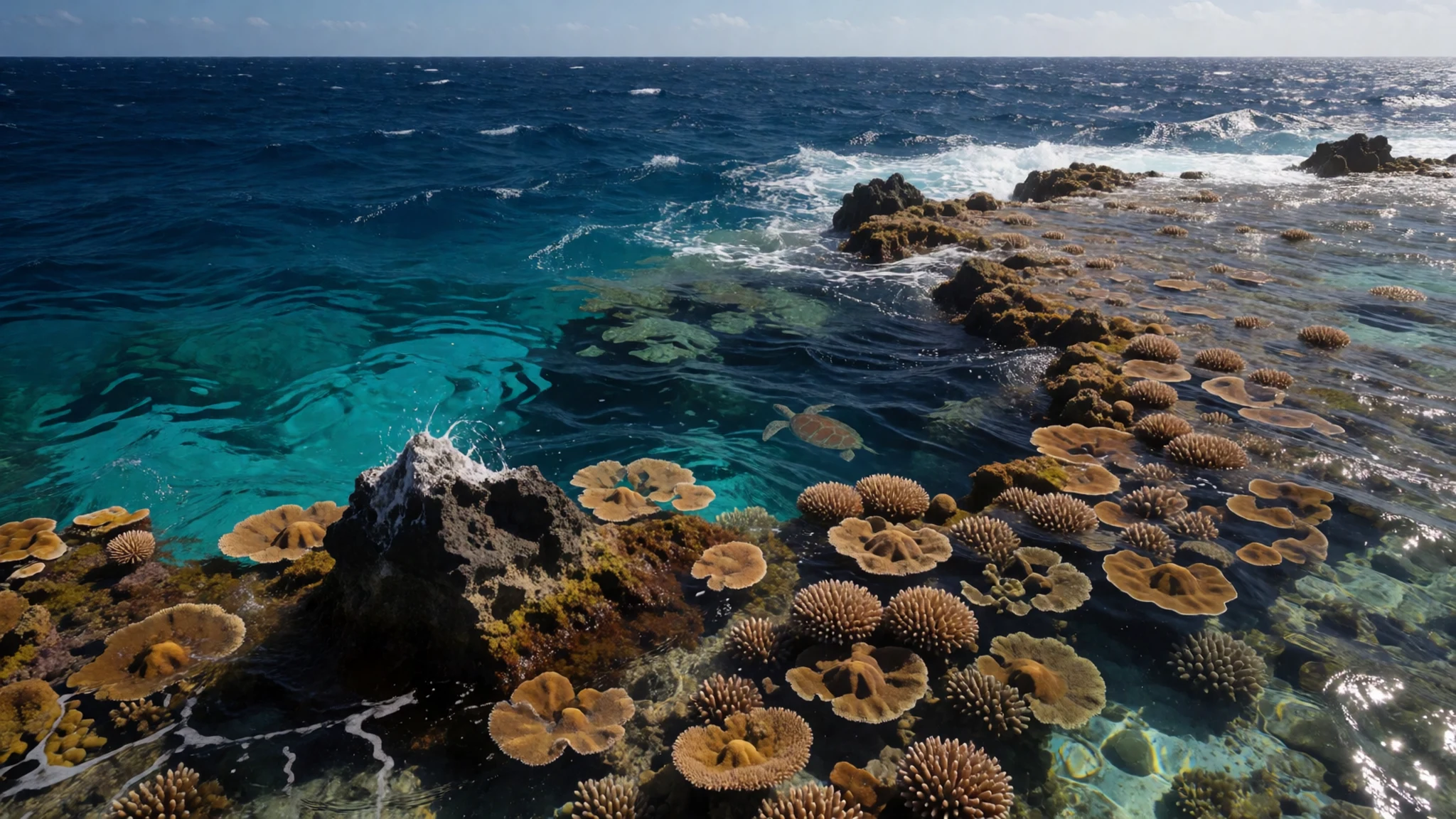
- House of Birds — Archaeological site
This small building keeps fragments of mural painting inside, protected from the weather and now faded. The figures and bands of colour show that even a minor port had decorated rooms. Lighting is dim, so a torch on a phone helps; photograph without flash to protect the pigment.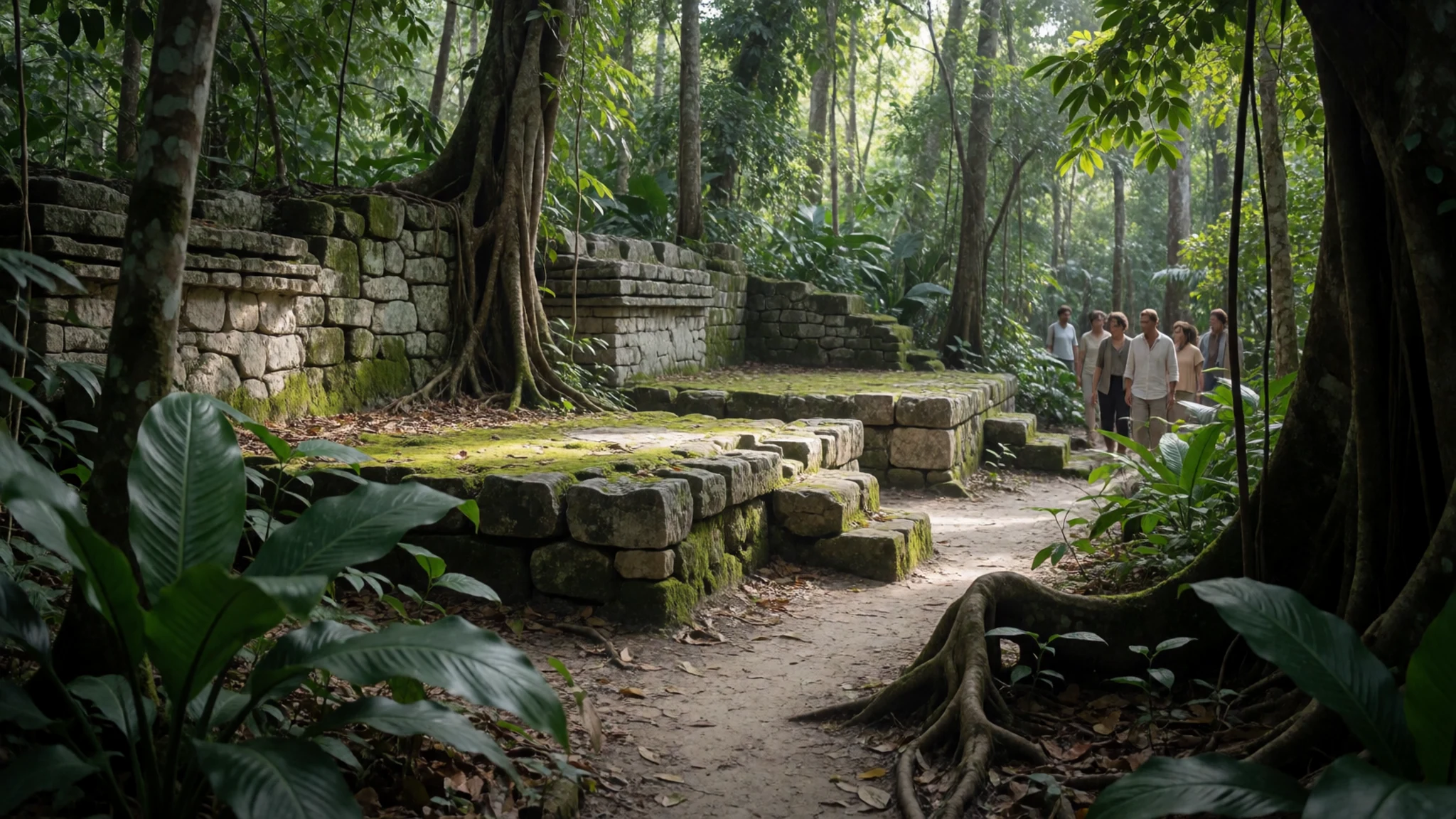
- The Palace and its columns — Archaeological site
The Palace is a long building whose row of stone columns once held up a roof of timber and thatch. It gives a sense of how people gathered in shade on a hot coast. Take a moment to look at how the stone was cut and set without much mortar.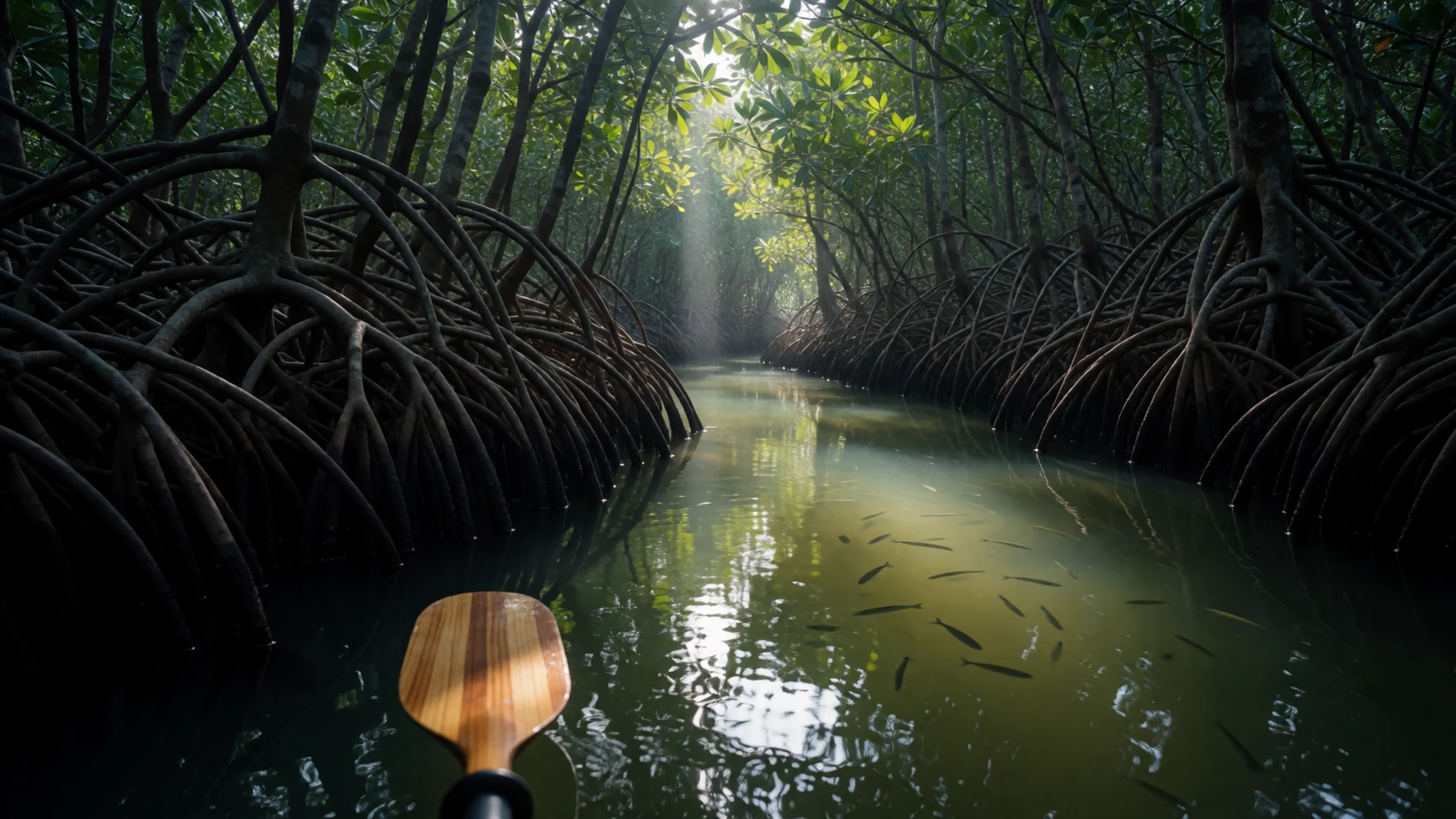
- Group Lothrop — Archaeological site
A cluster of bases and platforms built late in the Maya sequence, this group shows the modest, practical building of the final centuries before the Spanish. It is less polished than the main buildings but quieter, and the surrounding forest gives good chances to hear birds and see lizards sunning on the stones.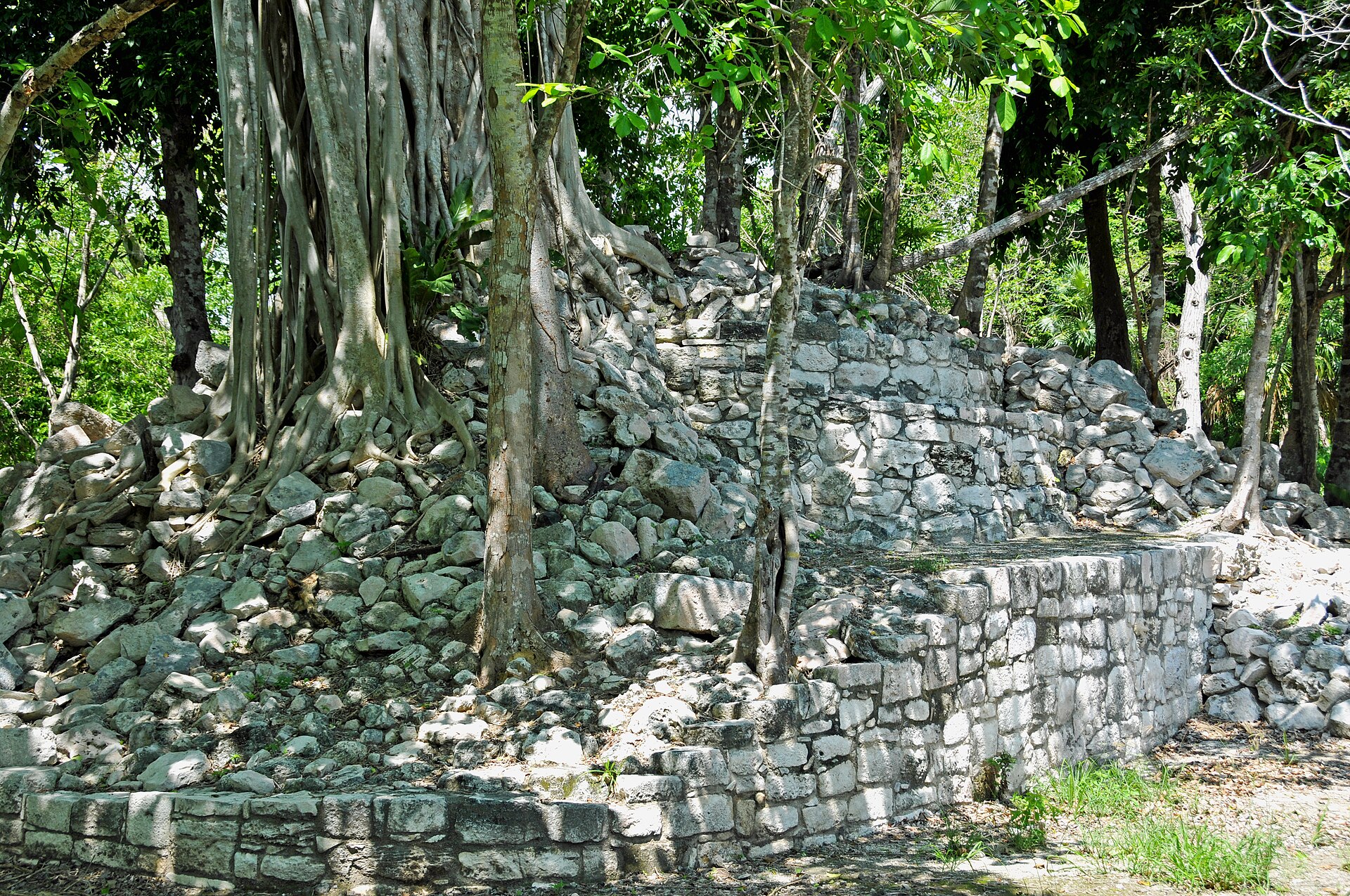
Culture
Xel-Há sits in Quintana Roo, a state shaped by Maya heritage and, more recently, by tourism. Many families in the area have Maya roots, and Yucatec Maya is still spoken alongside Spanish in villages inland. Hotel and park staff are often from nearby towns or from further afield in Mexico, and a few words of Spanish, such as 'buenos días' and 'gracias', are noticed and appreciated.
The place has meaning beyond leisure. Water, especially freshwater welling up from the ground, was sacred across the Maya world, and cenotes and caves were seen as thresholds to the underworld. The name Xel-Há speaks to that idea of water being born from the earth. Seen that way, the inlet is not only a scenic swimming spot but part of a long relationship between people and a scarce resource.
Mexican visitors make up much of the weekend crowd, so expect families, music from portable speakers and long picnics. The pace is relaxed and sociable. Food is usually shared, and staff are patient with children. Mexican courtesy tends to favour a greeting before a request, which goes a long way at ticket desks and at the water's edge.
At the ruins, please do not climb on the structures or touch the painted plaster, and keep to the marked paths so the fragile stonework and roots are left undisturbed.
What to wear
Xel-Há lies in the Yucatán, where traditional Maya dress is still worn by many women on festival days and in everyday life inland. The best-known garment is the huipil, a loose cotton dress with bright embroidery around the neckline and hem, often with flowers worked in cross-stitch. Underneath goes a plain white slip with embroidered edging, and a rebozo shawl may be worn over the shoulders. Men traditionally wear a white cotton shirt and trousers, known as the guayabera in its dressier form, with a straw hat. These are worn most often at fiestas and on Sundays.
On the coast today, people wear what suits the heat. Shorts, light cotton shirts, sandals and swimwear are the norm at the water park, and staff wear uniforms. In nearby towns, locals dress casually but neatly, and a white linen or cotton guayabera is still smart for a night out.
For a visit, pack light, quick-drying clothes, a wide-brimmed hat and sunglasses. Bring swimwear and a rash vest, which saves on sunscreen. Water shoes help on rocky entries, and sturdy sandals or trainers suit the ruins, where paths are uneven and roots cross the trail. Cover shoulders if you go into a village church. Use only the biodegradable sun protection the park permits, and carry a light shirt for the mosquitoes at dusk.
What to eat
- Cochinita pibil — Market stalls and roadside eateries in Tulum and Akumal
Pork marinated in sour orange and annatto, wrapped in banana leaf and slow-cooked until it falls apart. It is a Yucatán classic, served in tacos or on a plate with pickled red onion and habanero salsa on the side.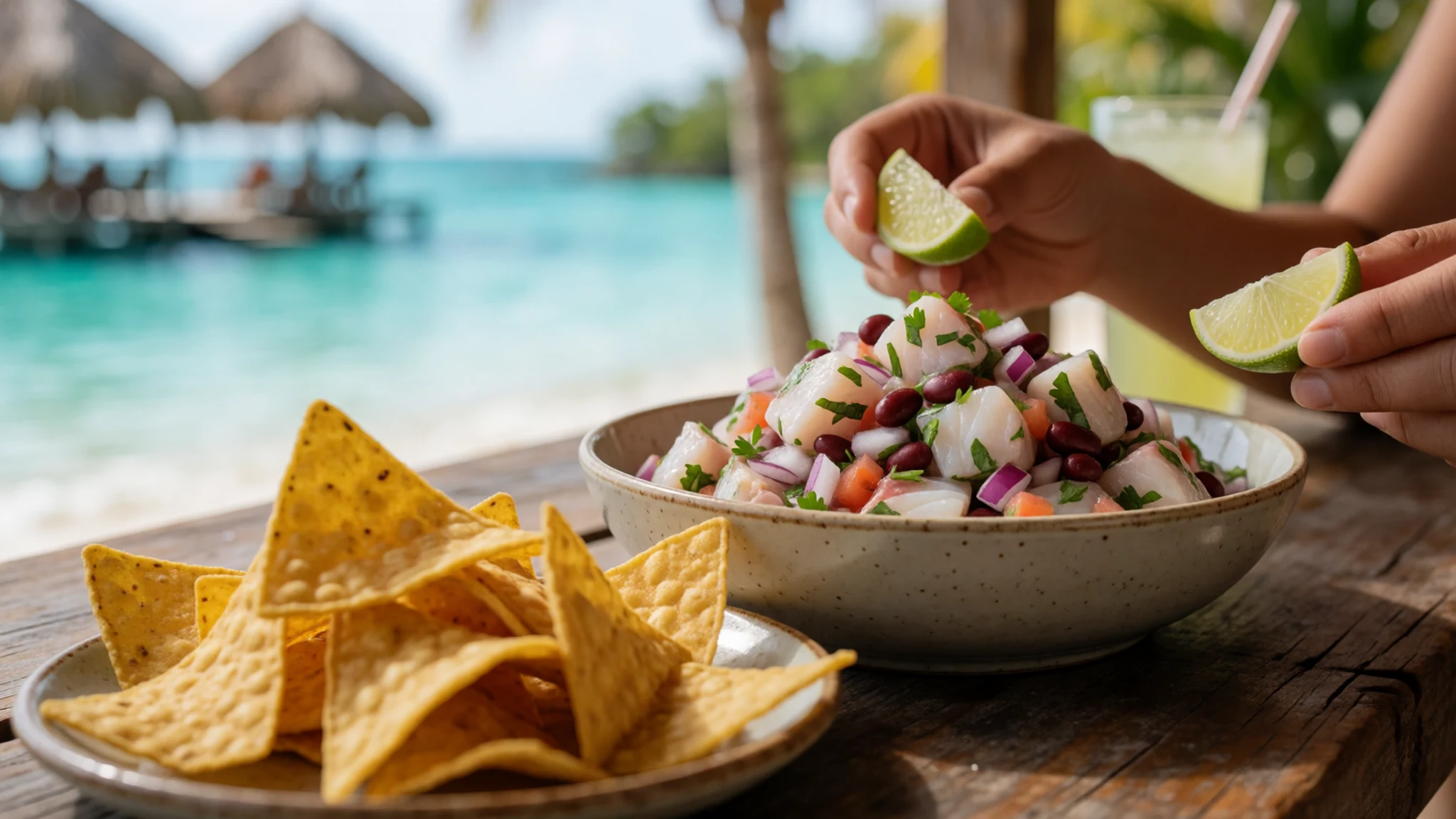
- Sopa de lima — Family-run eateries in Tulum town
A bright chicken broth with lime, shredded meat and crisp tortilla strips. The citrus is sharp but gentle, and it is a good lunch on a hot day when heavy food feels like too much.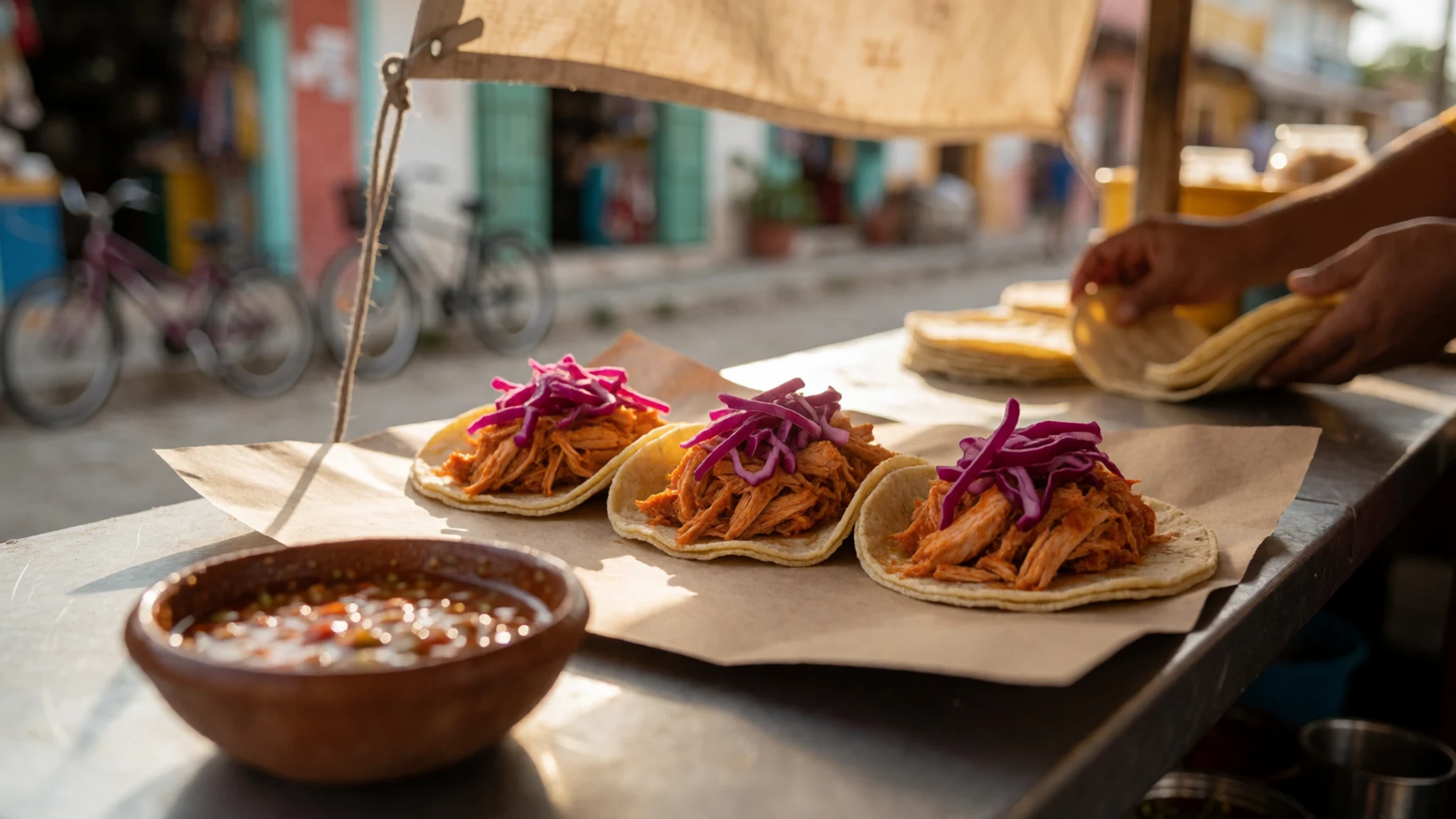
- Fresh ceviche and grilled fish — Beach shacks and seafood places along the coast road
Fish or shrimp cured in lime with onion, tomato and coriander, or fish grilled whole with garlic and chilli. The Caribbean coast keeps this simple and fresh, usually with tortilla chips or rice. - Panuchos and salbutes — Street stalls and market counters in Playa del Carmen
Fried tortillas, either stuffed with refried black beans or puffed and plain, topped with shredded turkey, lettuce, tomato and pickled onion. They make a cheap snack before or after a swim. - Agua fresca — Juice counters and market stands across the region
Cold drinks made from fruit, rice or seeds blended with water and sugar. Hibiscus, tamarind and horchata are common, and they help with the heat. Ask for them without added ice if you are cautious about water.
Plan it
Best time. November to April is the most comfortable, with lower humidity and less rain; December and the Easter weeks are busy. May to October is hot, humid and wetter, with hurricane risk peaking in late summer and autumn, though crowds thin.
How long. 1
Getting there. Fly into Cancún International Airport, then take a bus or taxi south along Highway 307 for roughly an hour and a half. Buses stop on the highway; check with the driver. Hiring a car gives the most flexibility for combining Xel-Há with Tulum.
Budget. mid
Tips
- Arrive at opening time to enjoy the inlet before the coach groups arrive
- Check the park's official site for current tickets and any all-inclusive options
- Bring cash in pesos for small purchases outside the park
- Carry drinking water and a hat, as shade is patchy
- Use only the sunscreen the park allows, and shower before getting in
Etiquette
- Do not touch or feed the fish and keep clear of coral
- Keep to marked paths at the ruins and do not climb the structures
- Greet staff politely in Spanish before asking questions
Nearby
Sources
- Wikidata Xel-Há (CC0)
- Wikipedia: Xel-Há (CC BY-SA 4.0)
- Wikivoyage: Xel-Há (CC BY-SA 4.0)
Wildlife
- Nurse shark (animal)
Remember the nurse shark as a real shark, a fish that is listed as vulnerable across the world, which makes every sighting a privilege. At Xel-Há it lives in the channels and lagoons, which the park maintains as a safe haven for the creatures that live there. Keep a respectful distance, stay quiet and calm in the water, and let a guide help you find a good spot. Never feed it or reach out to touch it; simply watching it go about its day is reward enough. - Mantis shrimp (animal)
The mantis shrimp is a sea crustacean that hunts other animals for its dinner, and it is one of the great predators of warm, shallow water. At Xel-Há it shares the channels and lagoons with the nurse shark. It spends much of its life tucked away in burrows and holes, so it can be hard to spot; a guide will help you look. Stay quiet, keep your distance, never feed it, and leave its hiding place undisturbed.