Wuzhen
Wuzhen, People's Republic of China
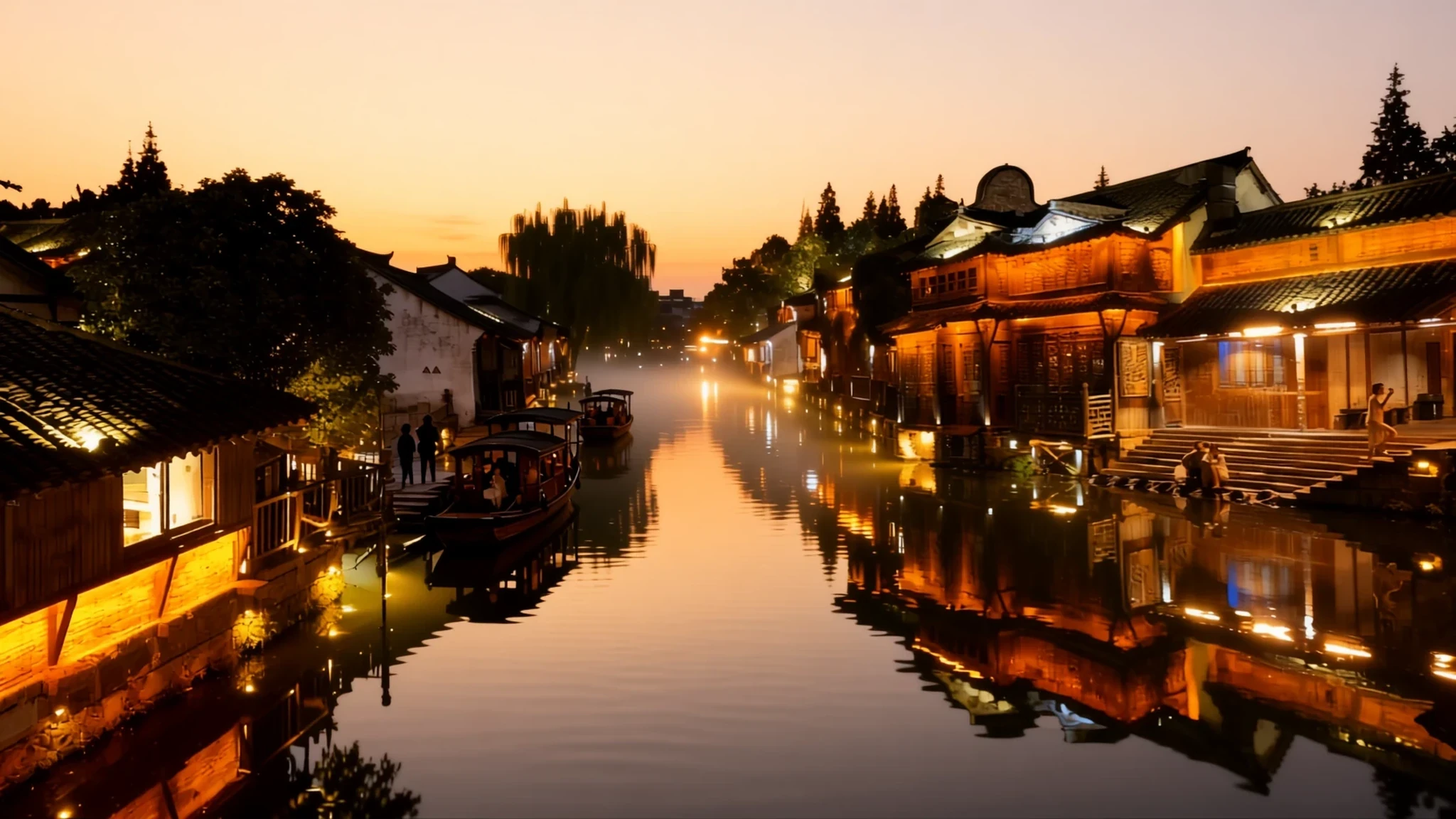
Wuzhen is a canal town of stone bridges, tiled roofs and slow water, made for walking and for watching the day go by.
The place
Wuzhen is a canal town on the flat, wet plain of northern Zhejiang, where the street and the water are the same idea. Whitewashed walls and grey tile roofs stand over narrow channels, and stone bridges rise just high enough for a low boat to pass. The town belongs to the Jiangnan pattern of rice, silk and river trade: goods and people moved by punt, houses faced the landing rather than a road, and the map is a grid of water. The visitor quarters take almost all visitors. Dongzha, to the east, is a dense lane of workshops, courtyards and shopfronts that fills from late morning. Xizha, to the west, is a longer circuit of canals, inns and covered galleries, calmer at dawn and lit along the water after dusk. Beyond the visitor lanes, Tongxiang continues in the same roof-line, with laundry, scooters and ordinary shops. The land sits close to the level of the canals, so rain lingers, stone stays slick, and mist is common when the air cools. Sound travels along the water: a kitchen radio, a hull touching a step, shoes on a bridge. Crossed on foot, Wuzhen feels compact, yet the east and west quarters do not feel alike. A morning in the lanes and an evening inside the west quarter are different towns sharing a name. The water still organises everything. A turn ends at a bridge, a landing or a former warehouse wall, and the back doors of houses open onto the same slow current that once carried the market.
Its story
Wuzhen's past is the past of a market that treated the canal as a high street. Households built their doors on the water because a boat could moor, a shutter could drop, and grain, silk and household goods could change hands without a cart. Dyeing, rice wine, bamboo and the small trades of a river halt filled the lanes, and those same crafts are now shown in demonstration rooms for people who have come to look rather than to buy cloth. Books sit in the story beside trade. Mao Dun, born in a courtyard house in the east of Wuzhen, left this town for the literary life of modern China, and the house remains, plain rooms around a skywell, as a trace of the family that raised him. An older local tradition attaches the town to Prince Zhaoming of the Liang and to an academy in his name, a tale about study beside the water that the lanes still repeat. The working town did not vanish when visitors arrived, but it did change job. The east and west quarters were repaired and arranged as a water town to be walked. Inns, night lighting and a theatre festival were added to the west, so a place known for rice wine and wet stone also keeps a stage. What a visitor walks through is therefore a living canal settlement and a careful retelling of that settlement, at the same time. The join shows in the shop boards, the density of the crowd, and the side channels where a household still hangs washing over the water and takes little notice of the cameras.
What to see
- Xizha — West quarter
Wuzhen's west quarter, Xizha, is a loop of canals, inns and wooden galleries. Covered walkways run above the water, and stone landings step down to small boats. After dark the lanes feel more like a place to sleep than a place to queue, and early morning gives the bridges back to people who stayed. An arts centre stands at the edge, a broad modern roof beside much older tiles.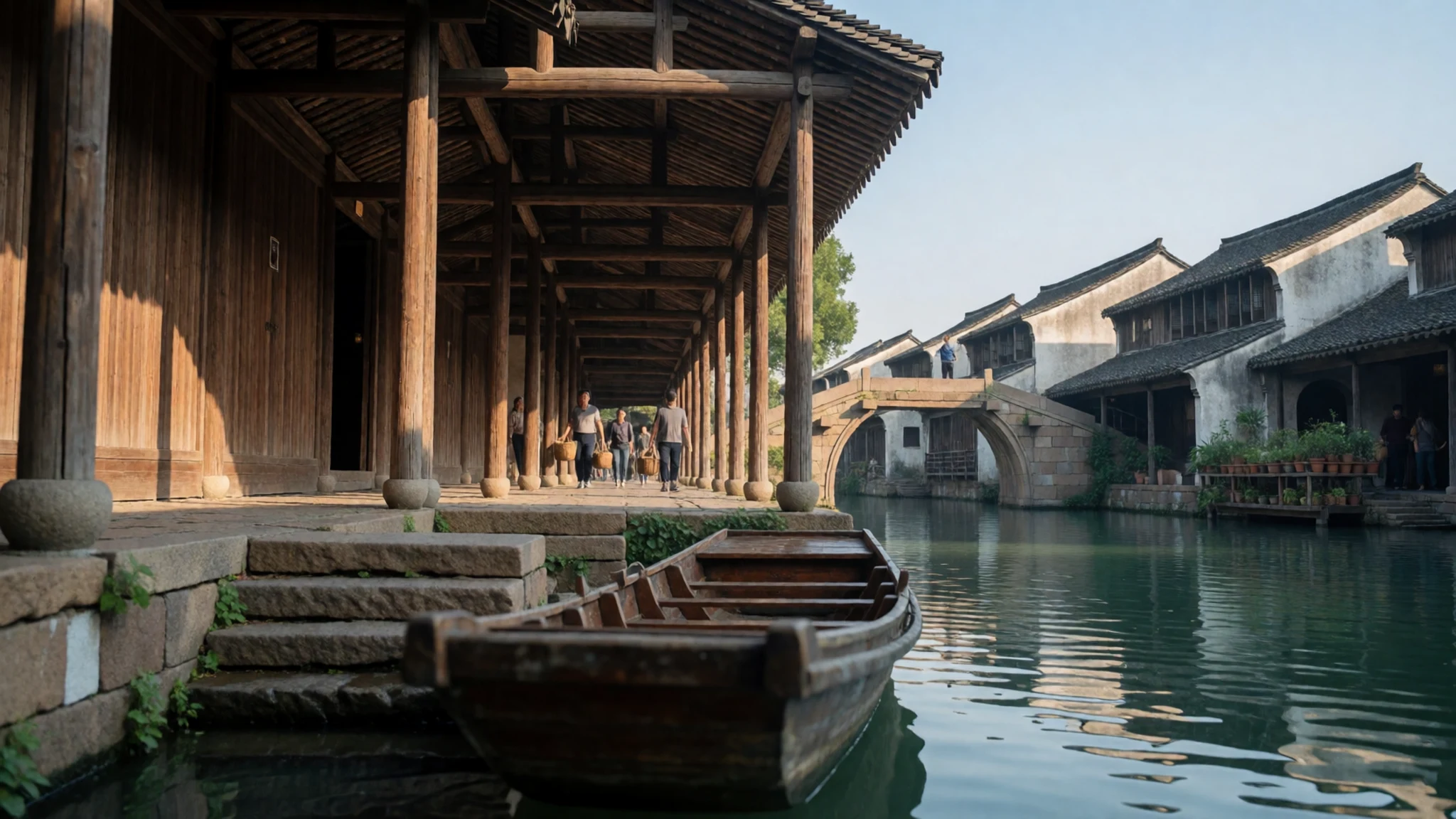
- Dongzha — East quarter
Dongzha is Wuzhen's east quarter, a tight lane of workshops, snack counters and courtyard houses beside a canal. Indigo vats, rice-wine rooms and small craft shops open onto the street, and tour groups bunch at the gate bridge. Early on, the same stones hold residents, delivery bikes and breakfast steam. The quarter is compact enough to walk before the lane becomes a queue.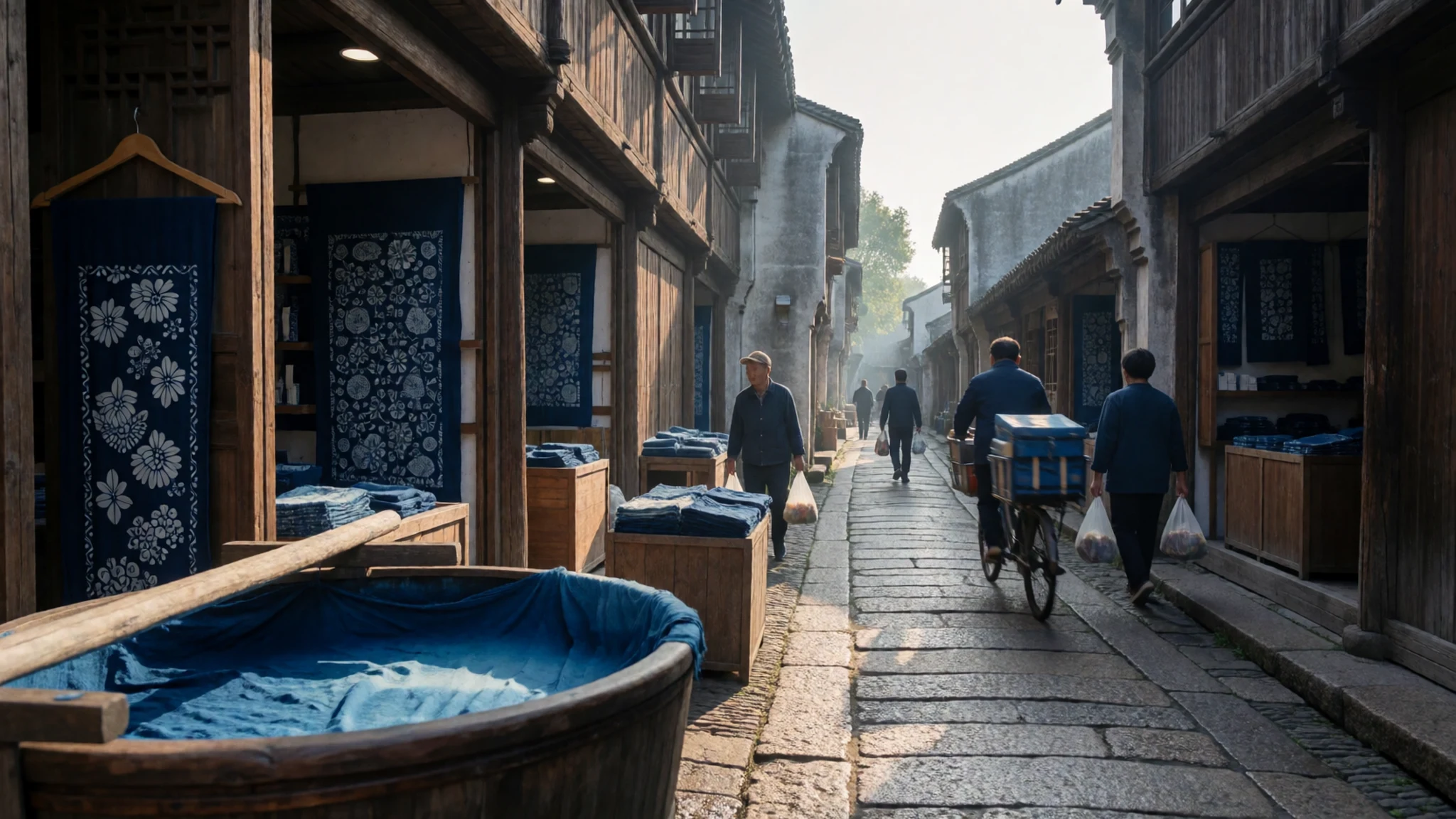
- Stone bridges — East and west quarters
The stone bridges of Wuzhen are the town's crossroads: steep arches with steps polished smooth and often slick after rain. From a crown, canals show as dark water between white walls and black tiles, and boats pass with little room to spare. That crown is also a resident's way home, so the place to pause is the side.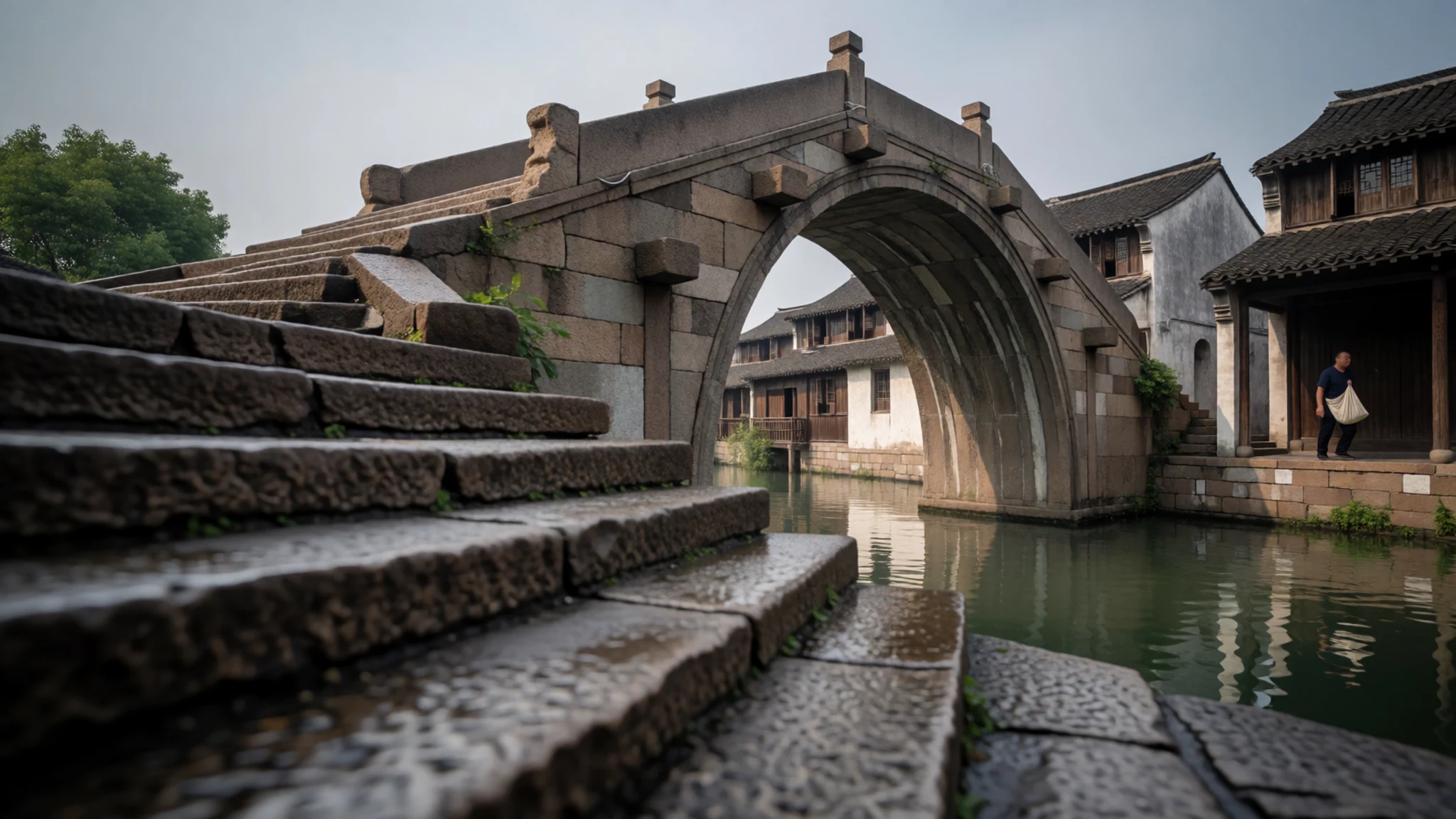
- Mao Dun's former residence — East quarter
Mao Dun's former residence is a courtyard house in the east of Wuzhen, home of the novelist Shen Yanbing. Rooms face a small skywell, furnished in the plain manner of a prosperous merchant family. Displays trace his path from this lane into the literary life of modern China. After the noise of the snack stalls, the interior is a quiet, specific place, and it earns the detour.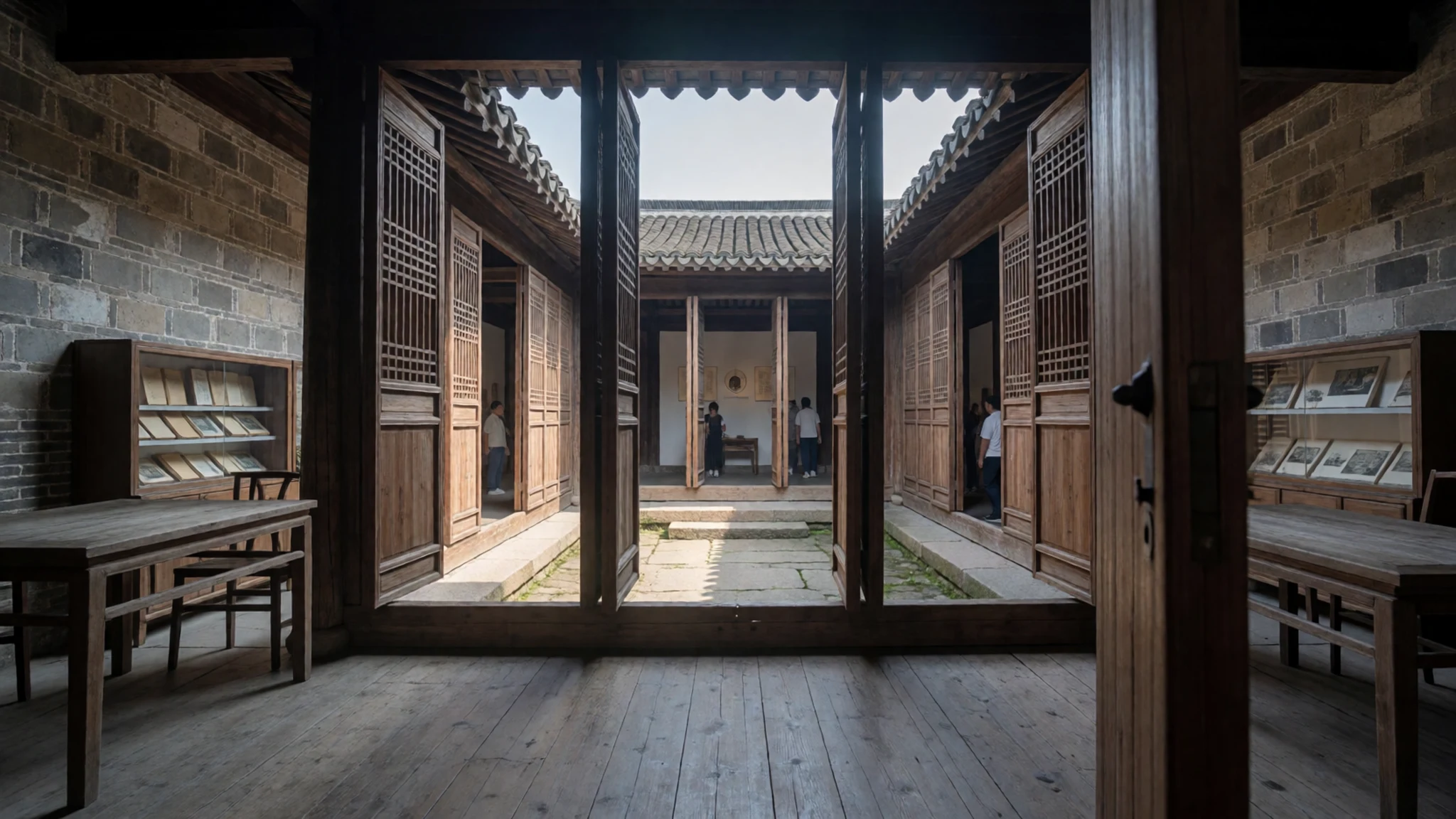
- Wuzhen arts centre — West side of the water town
Wuzhen's arts centre sits on the west side of the water town, a broad contemporary hall against the tiled lanes. It houses a theatre and exhibition space used by the town's theatre festival and by other staged work. People who came for bridges sometimes stay for a performance. Between events, the canal approach is the view: old roofs beside the path and the new hall beyond.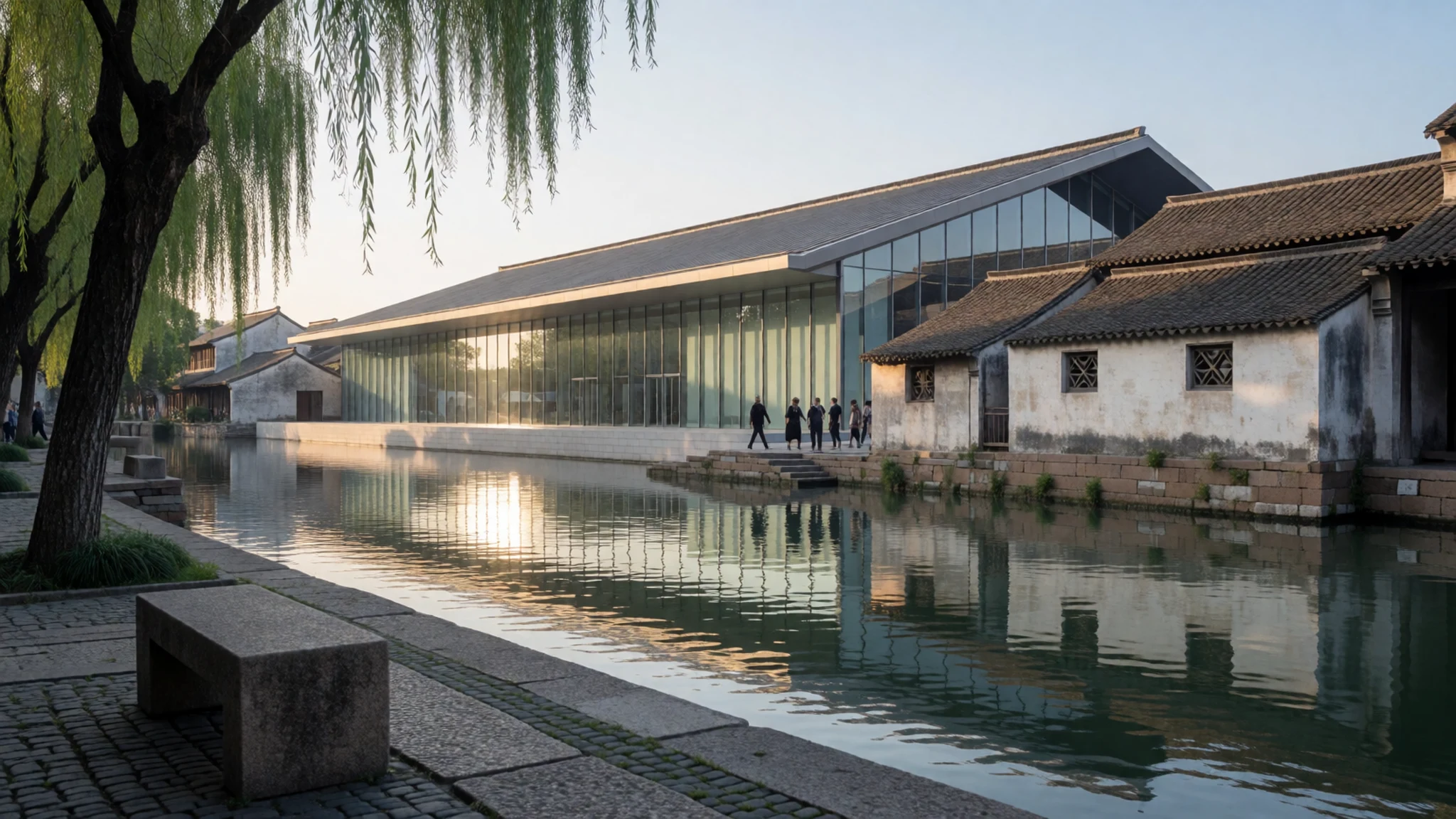
Culture
Culture in Wuzhen is water-town culture from the Jiangnan plain: canal trade, household craft and a pride in letters, now presented at close range to visitors. The opening encounter is often a craft shown rather than a craft sold. Indigo dye vats, rice-wine cellars, shadow-puppet screens and wood or bamboo workshops occupy old shopfronts, and the person at the bench may be both a resident and a demonstrator. Older locals speak Wu among themselves; Mandarin carries the signs and the welcome. Mao Dun's courtyard and the Mu Xin gallery pull the town towards fiction and painting, so the lanes are not only a backdrop for costume photographs. The theatre festival in the west quarter sets contemporary plays against wooden verandas and a purpose-built hall, and for those days the canals hold wedding parties and festival crowds at the same time. Temples and former academy rooms sit between the shops, used quietly, with incense rather than spectacle. Ordinary culture here is still a meal, a conversation and an unhurried walk; the managed quarters compress that into a visit. On the narrow bridges, keep to the side so residents can pass, and ask before you photograph a person working in a doorway or a boat.
What to wear
Dress in Wuzhen follows the Jiangnan water towns: working cloth, not court costume. Cotton and silk, a great deal of it indigo-dyed in local vats, were cut as straight jackets, loose trousers and padded layers for a damp winter. Women in the town's old displays wear side-fastening jackets over trousers, with cloth shoes that can take wet stone; men wear the same family of indigo or grey work clothes, and keep longer robes for festival and ritual. Silk was a district product as well as a garment. Households raised silkworms, and a better jacket came out for a wedding or New Year, while everyday dyeing stayed blue-black and practical. On a normal day now, people in Wuzhen dress as they do in any Zhejiang town: jeans, trainers, light padded coats, sun sleeves and umbrellas in the hot months, with aprons or plain uniforms for shop work. Visitors who want a portrait hire embroidered outfits that are prettier, and less muddy, than anything worn to a dye vat. A visitor should dress for clammy heat or for raw damp, carry a light waterproof, and choose shoes that grip polished stone and can come off at a temple step. Shoulders and knees should be covered before a shrine visit. Long hems and slick soles lose the argument with bridges, puddles and crowds.
What to eat
- Dingsheng cake — Lane stalls in Dongzha and the west galleries
Dingsheng cake is Wuzhen's walking snack: a soft steamed rice cake, lightly sweet and pink, sold from glass cases along the lanes. Eaten warm, it goes with tea and fits in the hand on a bridge. Stalls in Dongzha and the west galleries keep it beside other steamed bites.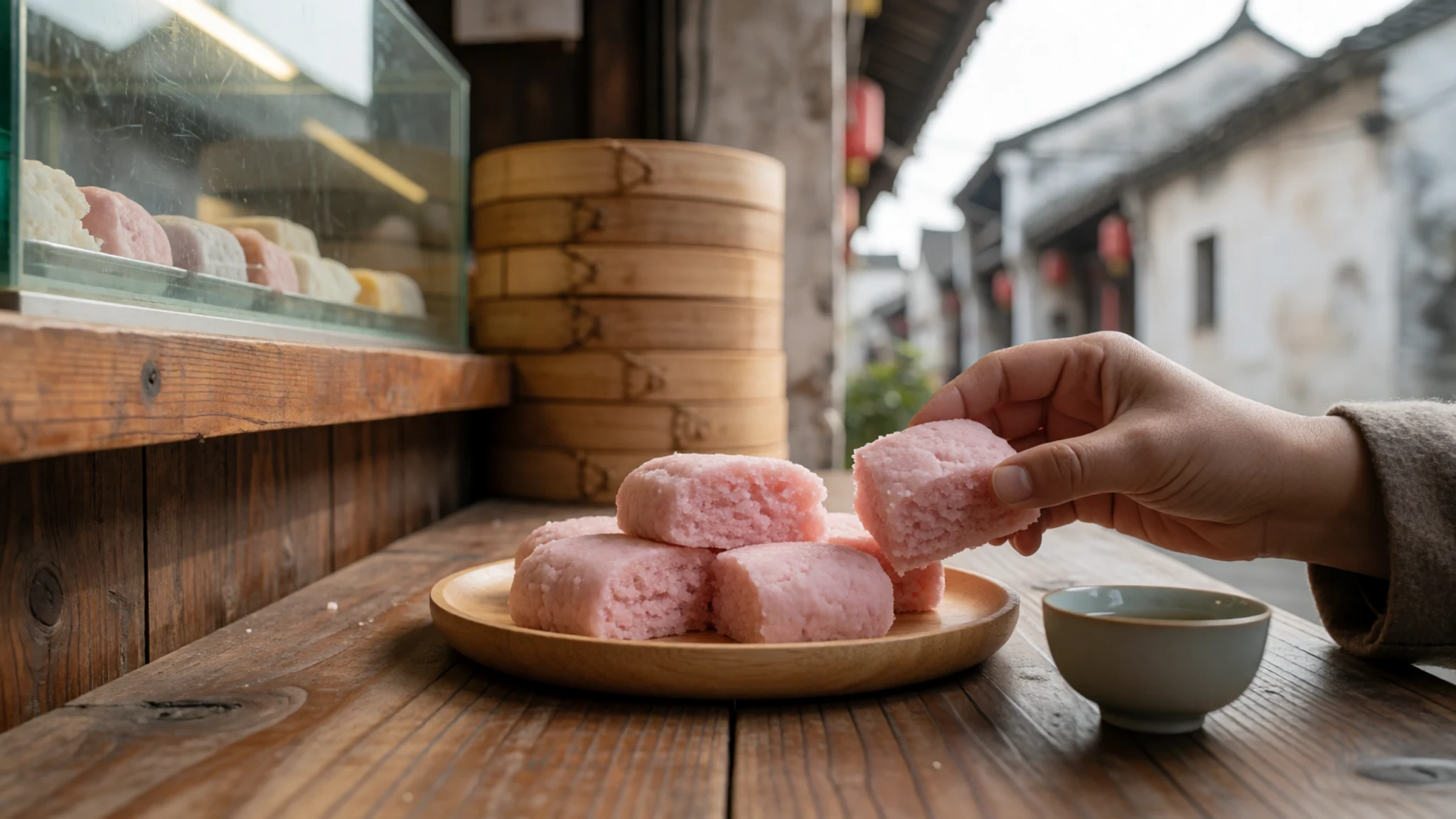
- Gusao cake — Bakeries and snack stalls near the east gate bridge
Gusao cake is a crisp filled pastry in Wuzhen, set out on trays in the eastern lanes. The name recalls a household tale of sisters-in-law. It is a dry, sweet bite for a pocket, sold from stalls near the gate bridge and along the main visitor spine.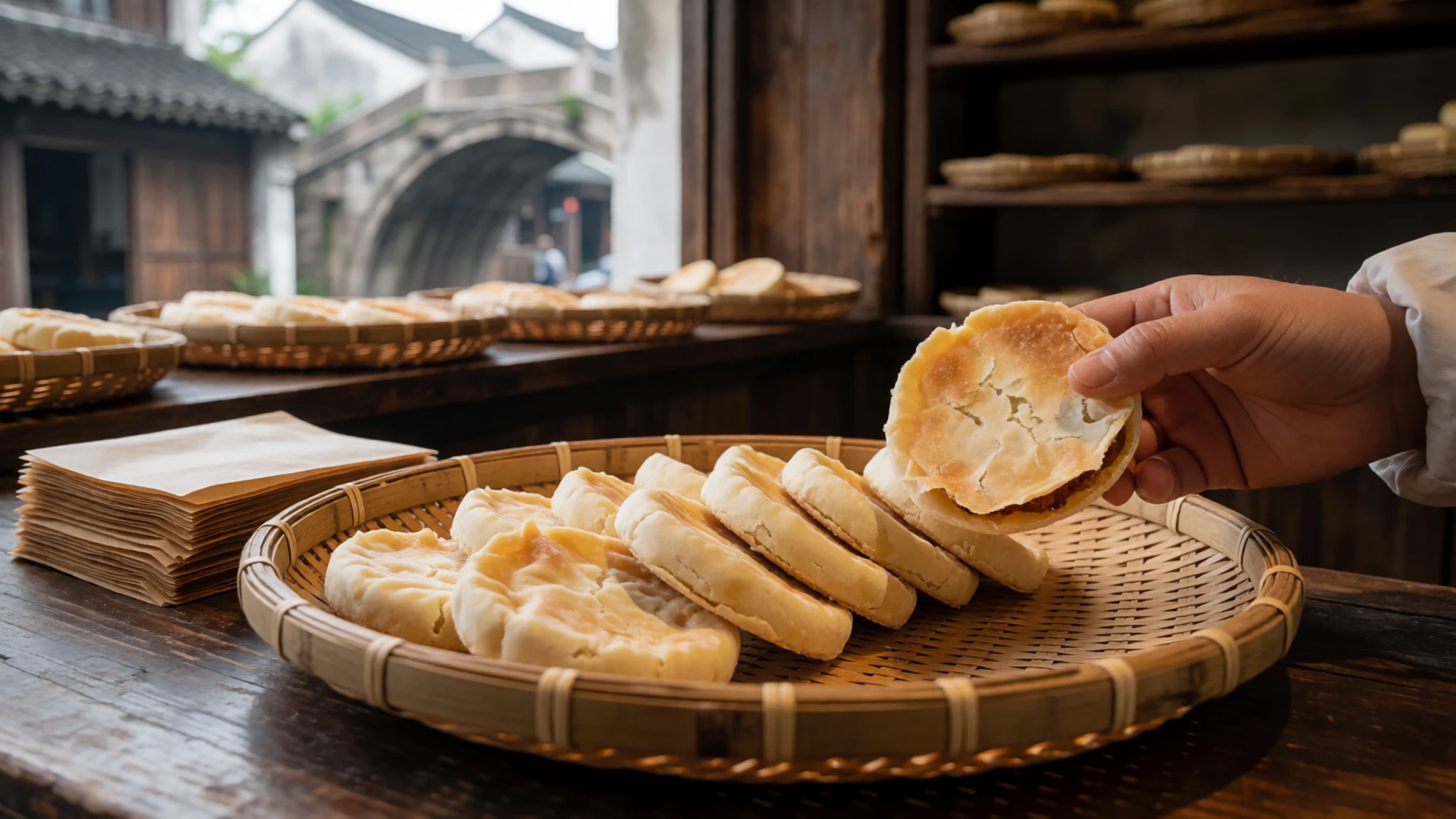
- Sanbai rice wine — Cellar displays and wine shops in the east quarter and scenic lanes
Sanbai is Wuzhen's rice wine, clear and mild. Cellar displays in the east quarter and wine shops on the scenic lanes pour it warm or cool, next to a savoury snack. It suits braised dishes better than sweet cakes. - White-cooked fish — Canal-side eateries in the west galleries and the east lane
White-cooked fish is a plain river fish in Wuzhen, poached and finished with a light sauce so the flesh stays the point. Eateries along the western galleries and the east lane serve it beside greens and tofu. The larder is the delta waterways. - Xundou cha — Tea houses and snack counters in both quarters
Xundou cha is Wuzhen's smoked-bean infusion, not a leaf tea: smoked beans and orange peel steeped until the bowl tastes savoury. Tea houses and snack counters in both quarters serve it when the lanes turn damp and cool. It sits closer to a light broth than to jasmine.
Plan it
Best time. Spring and autumn are the kinder seasons for walking Wuzhen: mild air, and stone that is less punishing underfoot. The early-summer rains last, and midsummer is hot, humid and crowded. Winter is quiet, cold and damp, better for empty bridges than for sitting out by the canal.
How long. 2–3
Getting there. Wuzhen has no airport and no rail station inside the old lanes. Travellers fly into Hangzhou or Shanghai, continue by train towards Jiaxing or Tongxiang, and finish by bus or taxi. The last leg ends at a coach park or gate, and the water town itself is on foot.
Budget. mid
Tips
- Arrive as the quarters open if crowds spoil a lane; late morning is when the east gate bunches up.
- The east and west quarters are separate visits a short walk apart, so allow time to move between them.
- Shoes should grip wet, polished stone, and a light waterproof earns its place in any month.
- Phone payment is widespread in the bigger shops; small snack stalls are happier with cash or a local pay app.
- Staying overnight in the west quarter is the way to see the canals after the daytime crowds thin.
Etiquette
- Step to the side of a narrow bridge so residents with bags can cross.
- Ask before photographing people at work in a doorway, a boat or a kitchen.
- Take shoes off where pairs are lined up at a threshold, and keep voices down inside temple halls.
Nearby
Sources
- Wikidata (CC0)
- Wikipedia (CC BY-SA 4.0)
- Wikivoyage (CC BY-SA 4.0)