Wulai
Wulai, Taiwan
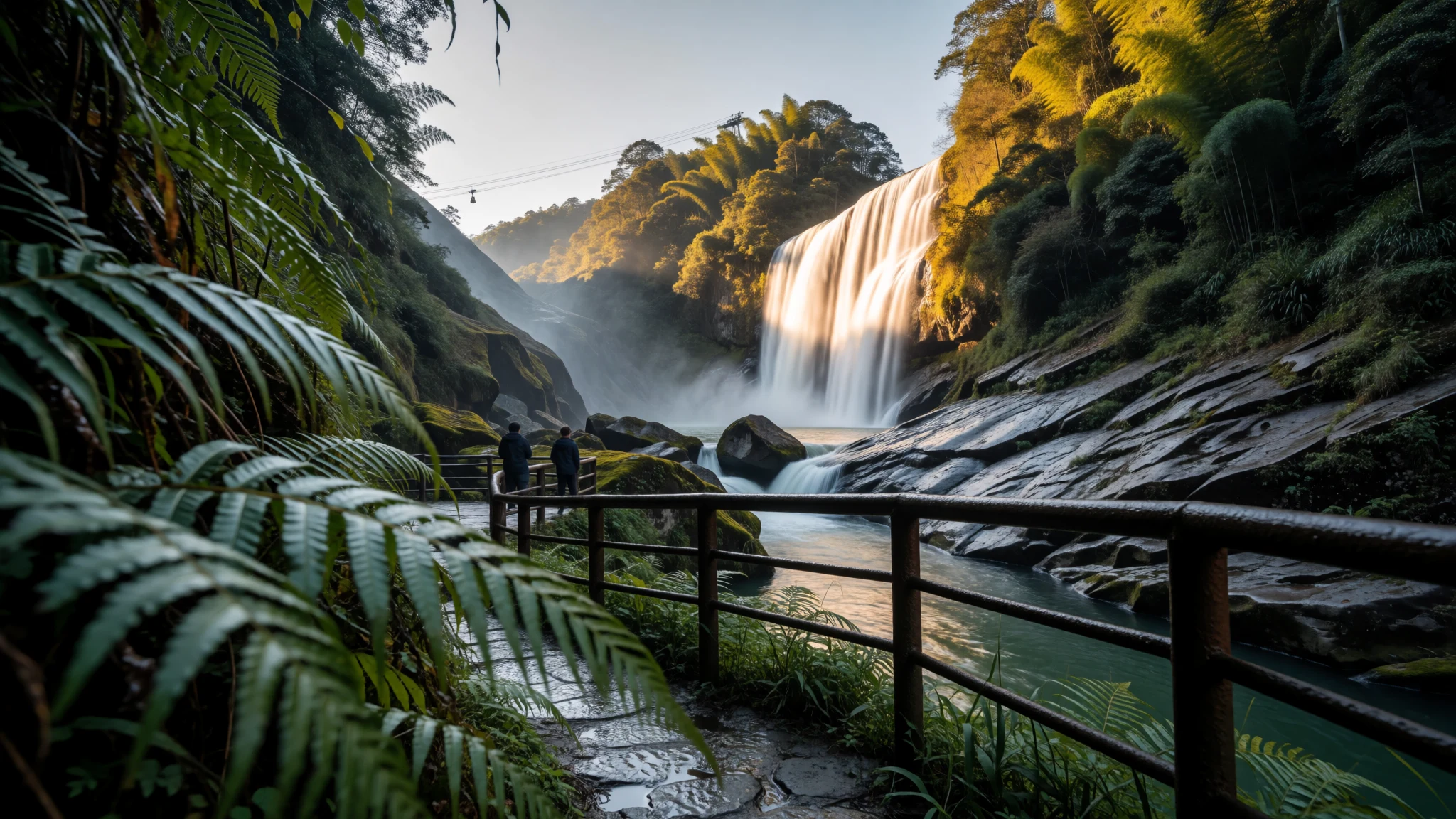
Wulai is an Atayal mountain town where clear hot springs, a tall waterfall and forested gorges sit just beyond Taipei's southern edge.
The place
Wulai is a mountain district at the southern edge of New Taipei City, right beside the Taipei boundary, and the home of the Atayal people, whose own name for it is Ulay. About 6,100 people live here, most of them along the Nanshi River, where the valley floor lies around 250 metres above sea level. Behind the small town the land rises into forested ridges that fill most of the district, so a short ride from the capital's suburbs ends among steep slopes, gorges and waterfalls. The town is a compact strip. A busy old street of snack stalls and craft shops runs along one bank, a bridge leads across to quieter lanes and a free riverside bathing spot on the other, and an aerial tramway climbs towards the waterfall and a small leisure area above. Hot springs are the main draw for people from Taipei, who treat them as the cure for a cold, damp winter; the water is clear and has no sulphur smell. Weekends bring crowds and slow buses, while weekdays are calmer. Most people come for the day, and the town is easy to walk from end to end, but a night in a room with its own spring-fed tub changes the pace completely, because the street empties by evening and the valley goes quiet and cool. The river looks gentle in dry weather, yet the mountains behind it can send down fast water after heavy rain.
Its story
Wulai's recent history is mostly a story of administrative labels laid over an older Atayal homeland. The Atayal are an indigenous mountain people of northern Taiwan, and Ulay is the district's name in their language. Under Japanese rule the area was set apart as an "Aboriginal area" within Taihoku Prefecture, a category that treated the mountain communities separately from the lowland towns. After Taiwan passed from Japan to the Republic of China in 1945, Wulai became a rural township of Taipei County. In 2001 the president of the day, Chen Shui-bian, visited a local school and presided over a graduation ceremony there, a sign of the attention this small township could draw. A bigger change came on 25 December 2010, when Taipei County became the special municipality of New Taipei City and Wulai was raised from township to district. The latest turning point was physical rather than political. In August 2015 Typhoon Soudelor badly damaged the valley, taking out several resorts and spoiling springs. The Nanshi River shifted its course and its banks were heavily eroded. Landslides came with the storm, and over-building on the hillsides was held responsible for weakening the ground. The rebuilt town is a reminder that the springs and waterfalls visitors enjoy belong to steep, unstable country, and that its beauty and its hazards come from the same mountains.
What to see
- Wulai Old Street — Town centre, east bank of the Nanshi River
Wulai Old Street is where most visits begin, a lively strip beside the river lined with snack stalls, craft shops and small eateries. Look for bamboo-tube rice, wild vegetables and millet wine. It is often packed at weekends, so a weekday morning gives room to browse. The Atayal museum is on the same street.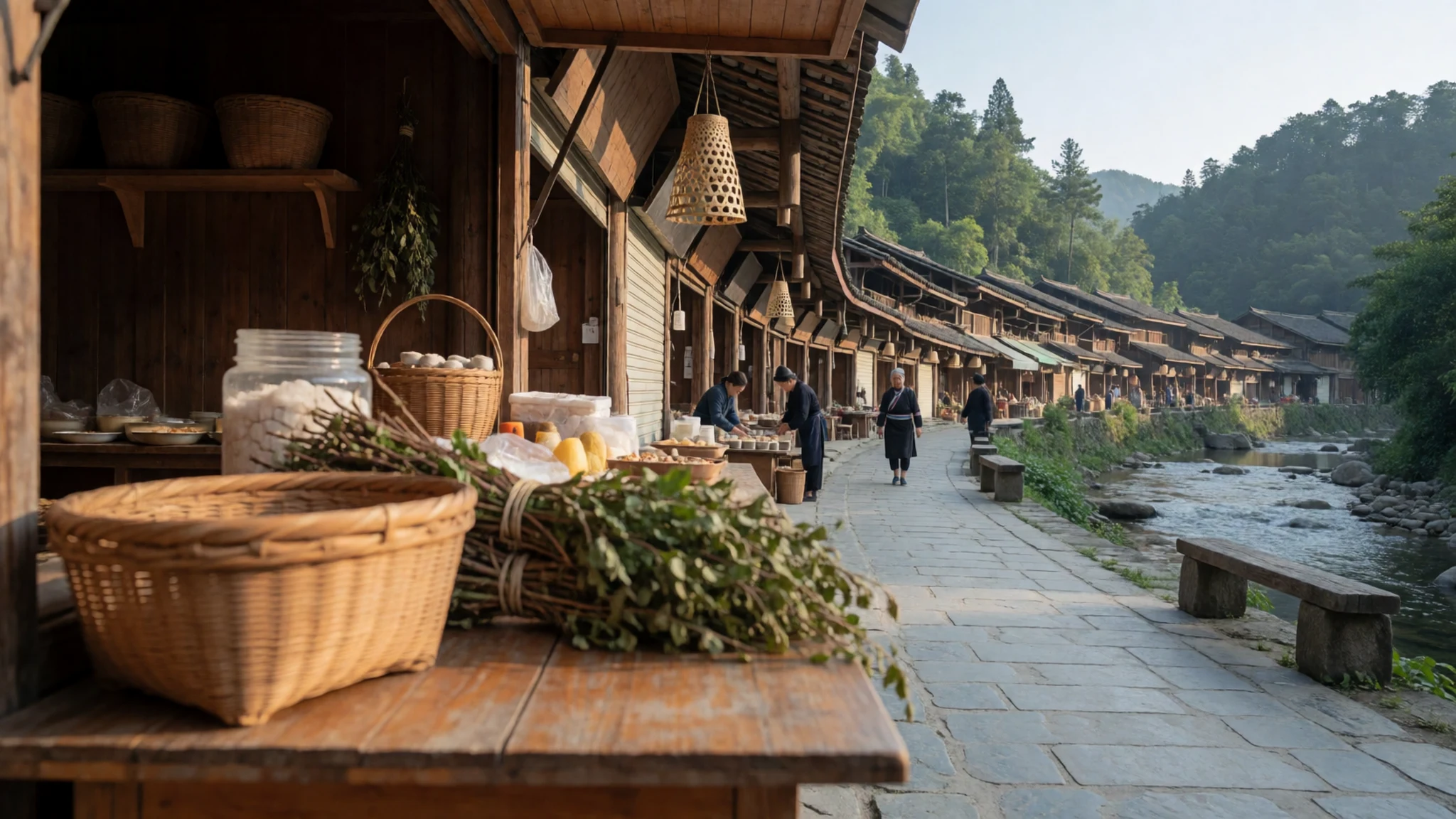
- Wulai Waterfall — Upper valley above the town
Wulai Waterfall drops about 80 metres, and a viewing deck gives a clear look at the whole fall. After heavy rain it is loud and throws spray; in dry months it runs thinner. Storms have reshaped this valley before, so check the official site for current access before setting out.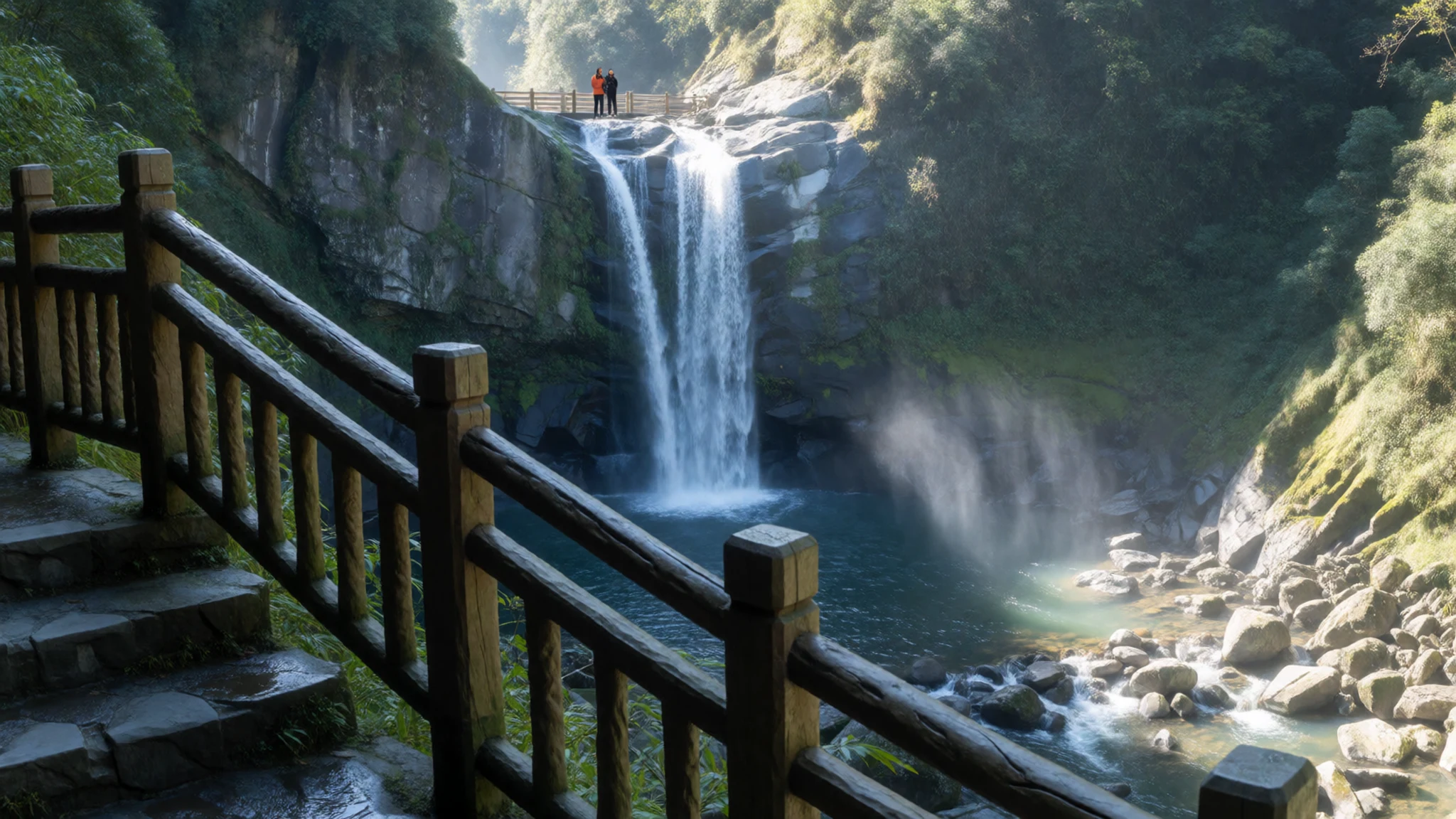
- Aerial tramway and gorge views — Vigor Village area, valley floor to upper station
Wulai's aerial tramway rises from the Vigor Village area towards the waterfall and a leisure area above. From the top station the gorge opens out below, with the river and town small beneath the ridges, and the waterfall is seen from an unusual angle. Check the official site for operating days and fares, and expect queues at weekends.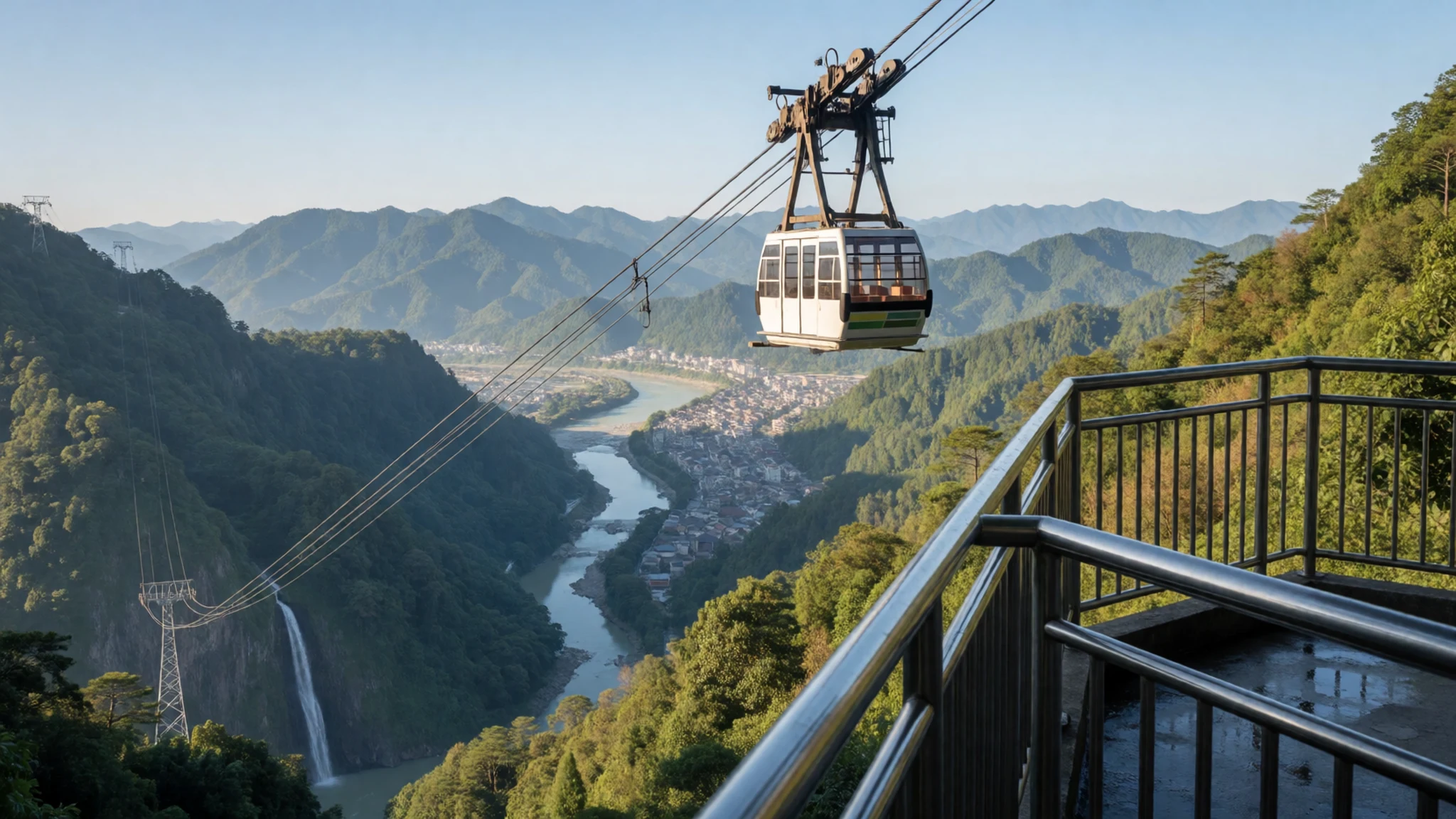
- Wulai Atayal Museum — Wulai Old Street
The Wulai Atayal Museum stands on the old street and explains the culture of the people who live in these mountains. It makes a sensible first stop, because it gives meaning to the food, weaving and patterns that appear in the shops outside. Check opening hours and entry terms on the district's official site.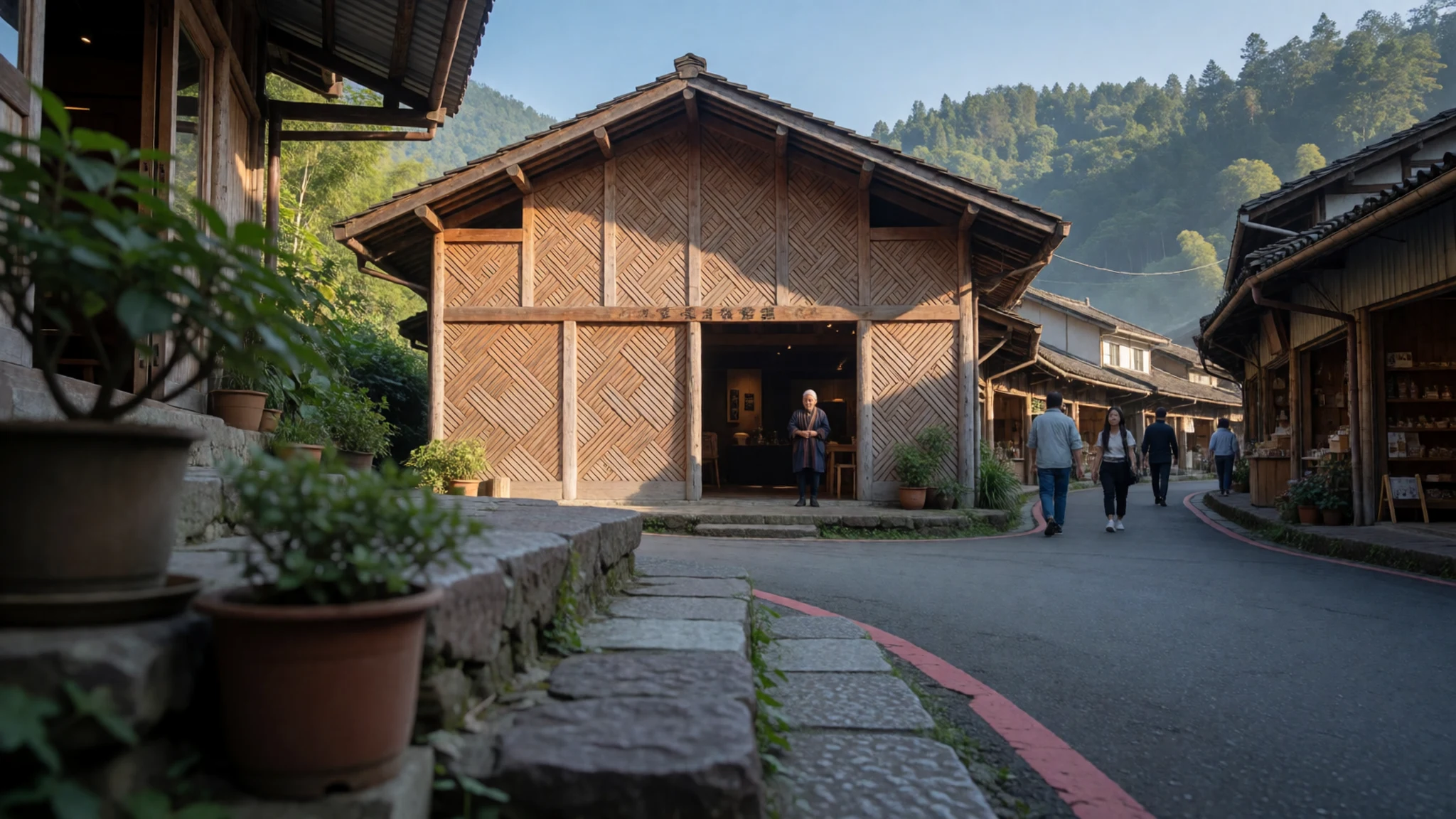
- Xinxian Trail — South of the town centre
The Xinxian Trail is a short walking path of about 1.3 kilometres that passes a series of small waterfalls. It suits an easy outing among running water and forest without a serious hike. Wear shoes with real grip, because rocks, steps and boardwalks stay wet for much of the year.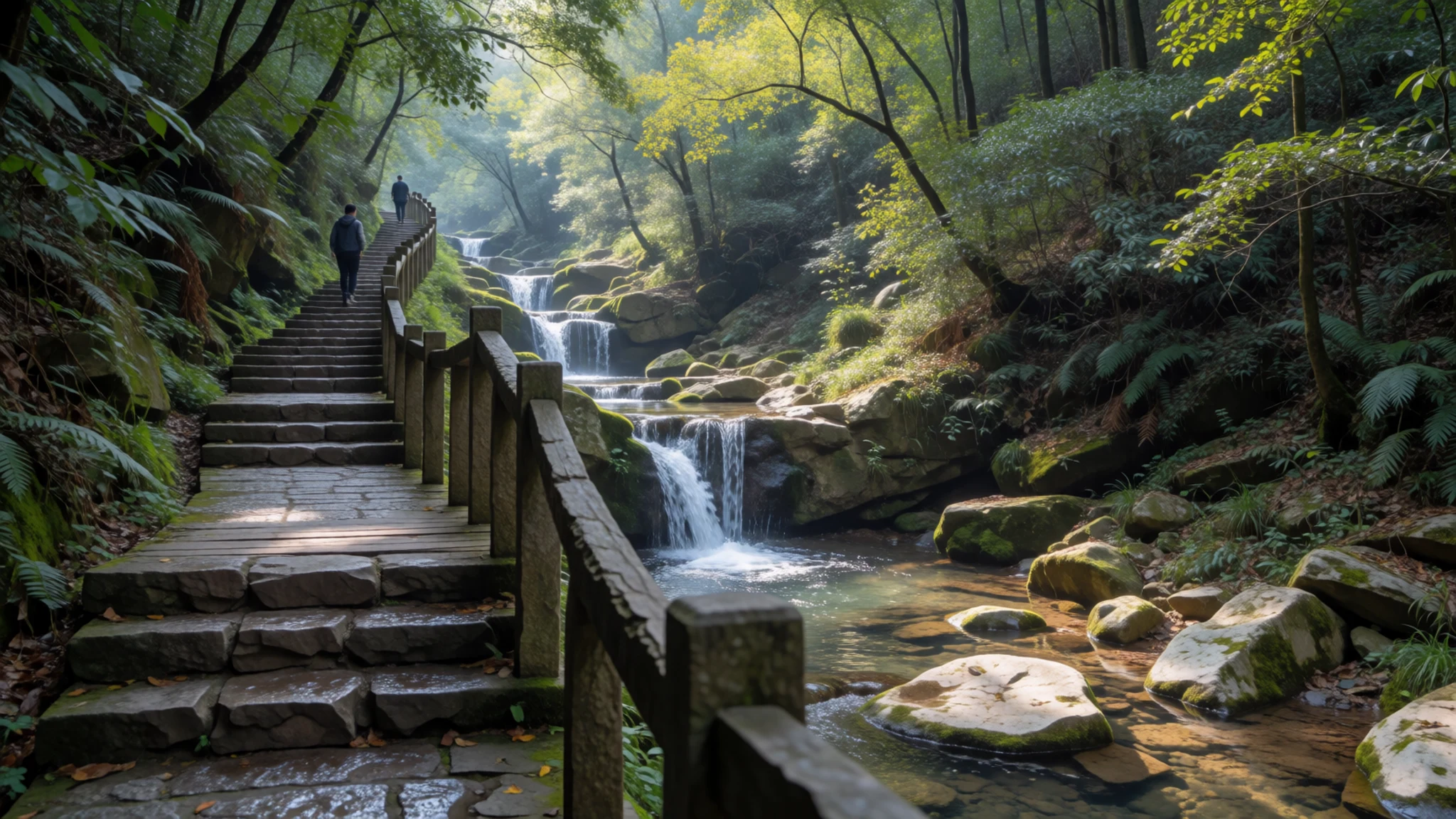
- Free riverside hot springs — West bank of the Nanshi River, across the bridge
Across the bridge from the old street, a path leads down to a rustic outdoor spring area beside the river, which features a sauna, various pools and changing facilities. Swimwear is required here, unlike in the Japanese-style public baths in town. River levels change, so only paddle when the current is weak.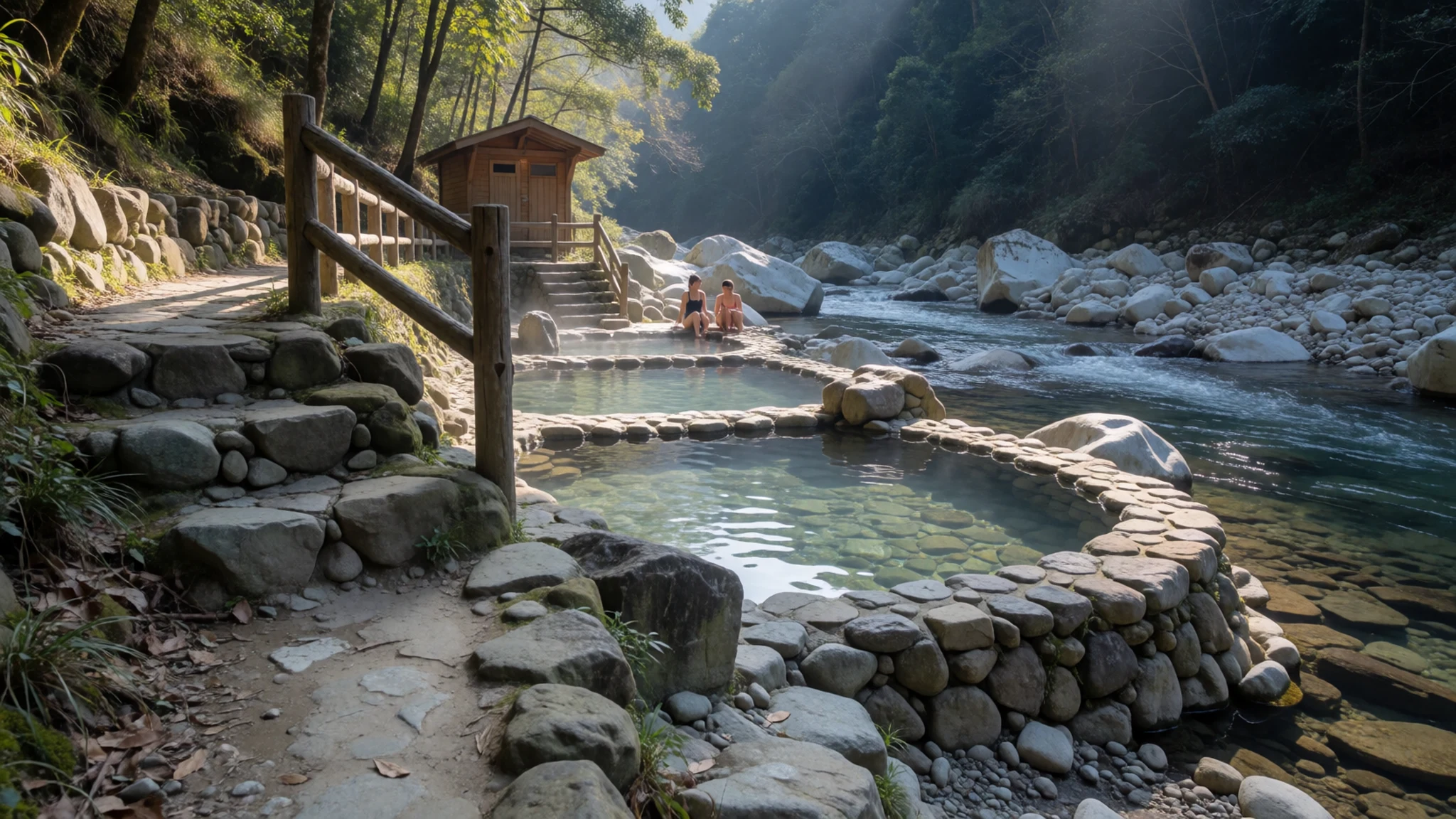
Culture
Wulai's culture is Atayal first, with Japanese and wider Taiwanese layers on top. The Atayal are an indigenous people of the northern mountains, and in this district they remain a central part of local life. That shows in the food, in the craft sold along the old street and in the museum devoted to their heritage. Weaving, bamboo cooking, millet wine and the aromatic maqaw spice are everyday threads of that heritage rather than museum pieces. Hot-spring bathing is the second strand. For Taipei residents a soak in Wulai or Beitou is the standard answer to winter damp, and the public baths follow a Japanese-style routine of washing thoroughly first and then soaking quietly. Weekend visitors are mostly Taiwanese families and couples, so the mood is relaxed and domestic rather than hushed. Treat the stalls and the museum as an invitation to ask and listen, not only to photograph, and buy craft directly from the people who make it where you can. Wulai is a living community of about 6,100 people, not a theme park, and it is polite to ask before photographing residents. In the public baths, wash and rinse thoroughly before entering, tie up long hair, and leave swimwear off in the gender-segregated indoor-style pools but keep it on at the open riverside springs.
What to wear
Traditional Atayal dress in Wulai is built on hand-woven cloth, historically made by women from ramie, a plant fibre, on simple back-strap looms. Garments are typically in natural white with bands of red and darker colours in geometric patterns such as diamonds and stripes, often finished with beads or shell ornaments. Today this clothing is worn mainly for festivals, performances and ceremonies, and weaving remains closely tied to Atayal identity. Woven patterns also appear on bags, scarves and souvenirs sold along the old street. In daily life, people in Wulai dress as most Taiwanese do: T-shirts, light trousers, waterproof jackets and sturdy sandals or trainers, chosen with rain and humidity in mind. Visitors should dress for a damp mountain valley. Quick-drying layers, a light waterproof or compact umbrella and shoes with good grip are sensible, since trails, steps and bridges stay slippery. Pack swimwear for the open riverside springs and a towel for any bath, because the public Japanese-style baths in town are gender-segregated and worn without clothing. There is no special dress code in the town, though modest clothing is wise at Atayal community events or anywhere that looks private.
What to eat
- Bamboo-tube rice (zhu tong fan) — Stalls and Atayal restaurants along the old street
Seasoned rice steamed inside a length of green bamboo, so the grains pick up a faint woody sweetness. It is the dish most closely tied to Wulai. The tube is split open at the table and eaten alongside meat or vegetables.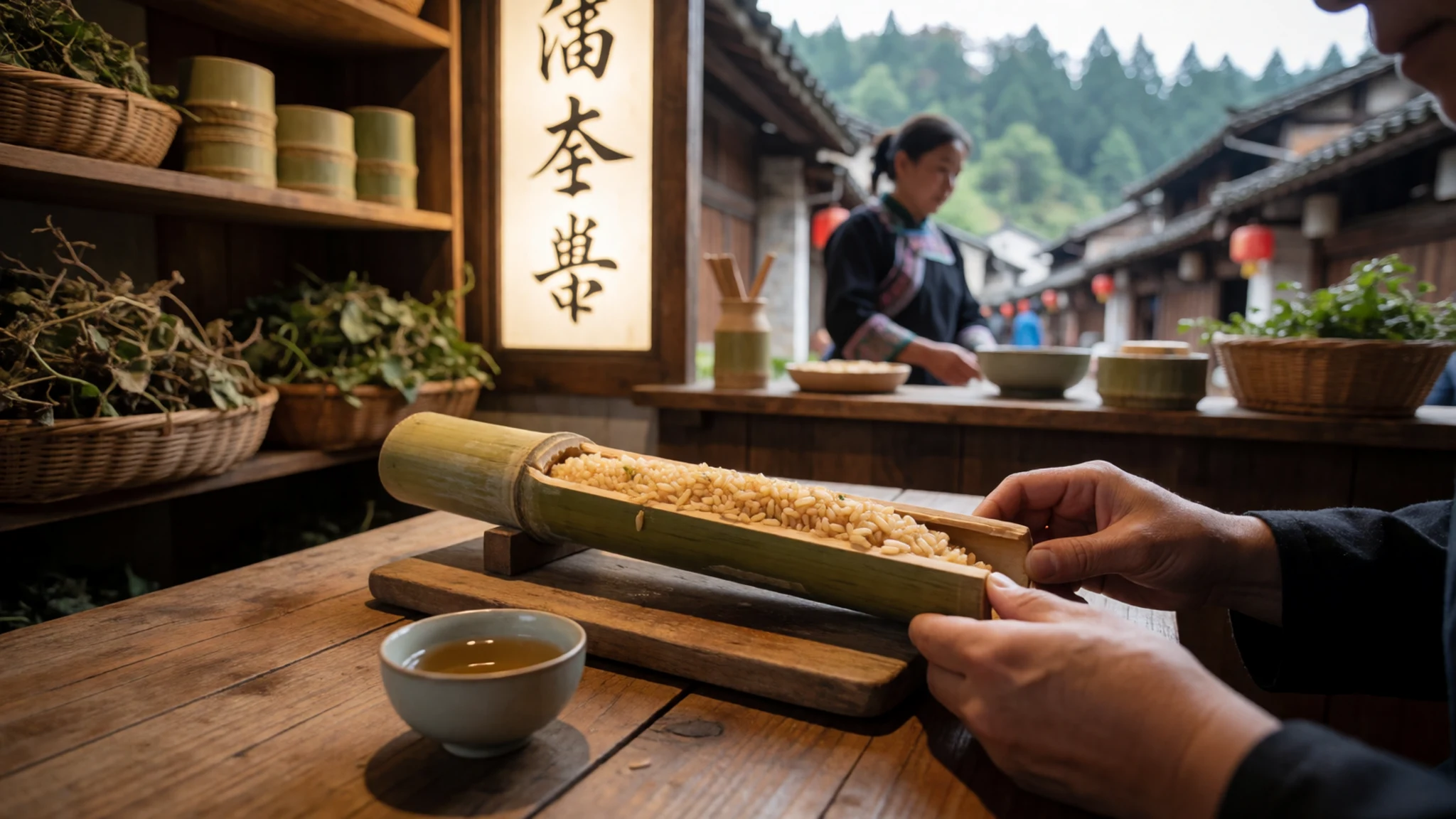
- Maqaw-seasoned dishes — Atayal restaurants in the town centre
Maqaw is the Atayal name for Litsea cubeba, a mountain berry spice with a citrusy, peppery lift. It seasons grilled meat, soups and marinades. Ask whether a dish contains it if strong aromatics are not to your taste.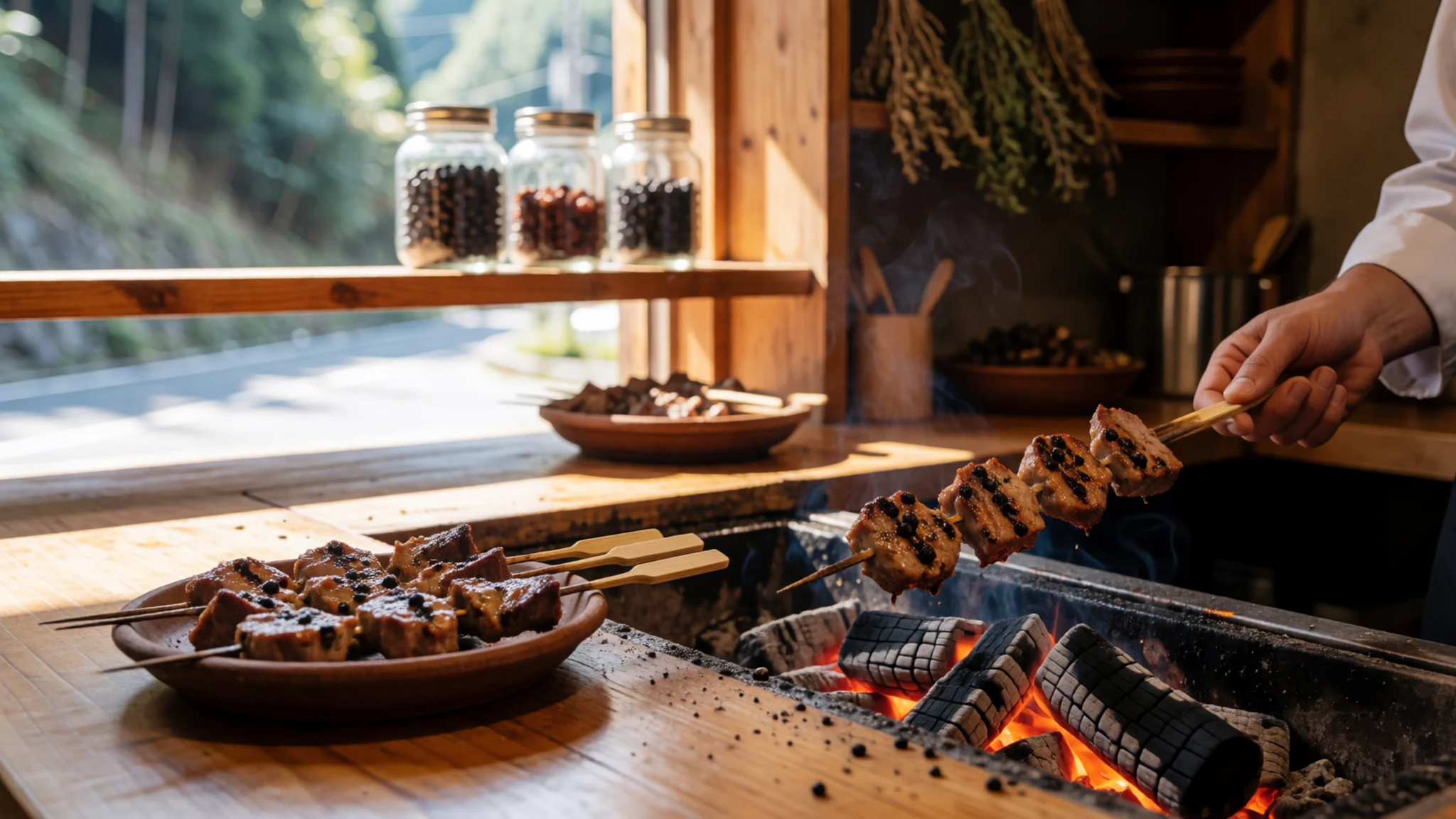
- Wild mountain boar (shan zhu) — Atayal-run restaurants and grill stalls on the old street
Wild boar is a classic of Atayal cooking, usually grilled or stir-fried, with a gamier flavour than farmed pork. Vegetarians and anyone avoiding game should read menus carefully, since it appears in many set meals. - Bird's nest fern (shan su) — Mountain-style restaurants in town
A crisp, slightly bitter wild fern shoot, usually stir-fried with garlic and sometimes with pork. It is a staple side dish at Wulai's restaurants and an easy first Atayal flavour for cautious eaters. - Millet wine (xiao mi jiu) — Old-street shops and Atayal restaurants
A sweet, lightly cloudy wine made from millet, and an Atayal specialty. It is sold in bottles as a souvenir and poured with meals. It is stronger than it tastes, so go slowly, especially before a hot bath.
Plan it
Best time. November to March, when Taipei's cold, damp winter makes a hot-spring soak most appealing, and weekdays are far quieter than weekends. Late summer and autumn bring typhoon risk, so check forecasts and road conditions before going.
How long. 1–2
Getting there. Fly into Taiwan Taoyuan or Taipei Songshan and head into Taipei first. Take the Green Line MRT to Xindian, the terminus, then bus 849 from the stop in front of the station to Wulai, the final stop; it takes about 40 minutes, longer at weekends. A taxi from Xindian MRT takes about 30 minutes but costs far more.
Budget. low
Tips
- Go on a weekday or early in the morning; at weekend peaks the bus can be too full to board.
- Tap your EasyCard when boarding the bus and again when getting off.
- Carry some cash for stalls and small shops, and bring swimwear and a towel.
- Check the weather and the official site (https://www.wulai.ntpc.gov.tw/) for access conditions after heavy rain.
- Most people day-trip from Taipei, but a night in an inn with a private spring tub gives a quiet valley evening.
Etiquette
- Wash and rinse thoroughly before entering any public bath, tie up long hair and follow the swimwear rule posted at each pool.
- Avoid the baths if you have high blood pressure, heart disease or open wounds.
- Ask before photographing residents, and buy Atayal craft directly from makers where possible.
Nearby
Sources
- Wikidata Q32728 (CC0)
- Wikipedia: Wulai District (rev 1378280799) (CC BY-SA 4.0)
- Wikivoyage: Wulai (rev 5422780) (CC BY-SA 4.0)
- Photo: Wulai Vigor Village — Bernard Gagnon (CC BY-SA 2.5)
- Photo: A bridge in Wulai — Alexander Synaptic (CC BY-SA 2.0)
- Map: Formosa (Taiwan) 1:50,000 AMS Series L792 — Army Map Service (Public domain)
- Map: Taichung area, Taiwan (AMS Topographic Maps) — Army Map Service, 1954 (Public domain)
- Photo: Wulai Scenic Train — Bernard Gagnon (CC BY-SA 1.0)
- Photo: Children playing in the Wulai River — Benjiho (CC BY 3.0)
- Photo: Wulai Falls from the Gondola — Benjiho (CC BY 3.0)
- Photo: Wulai Gorge from the Gondola station — Benjiho (CC BY 3.0)


