White Stupa
White Stupa, Mongolia
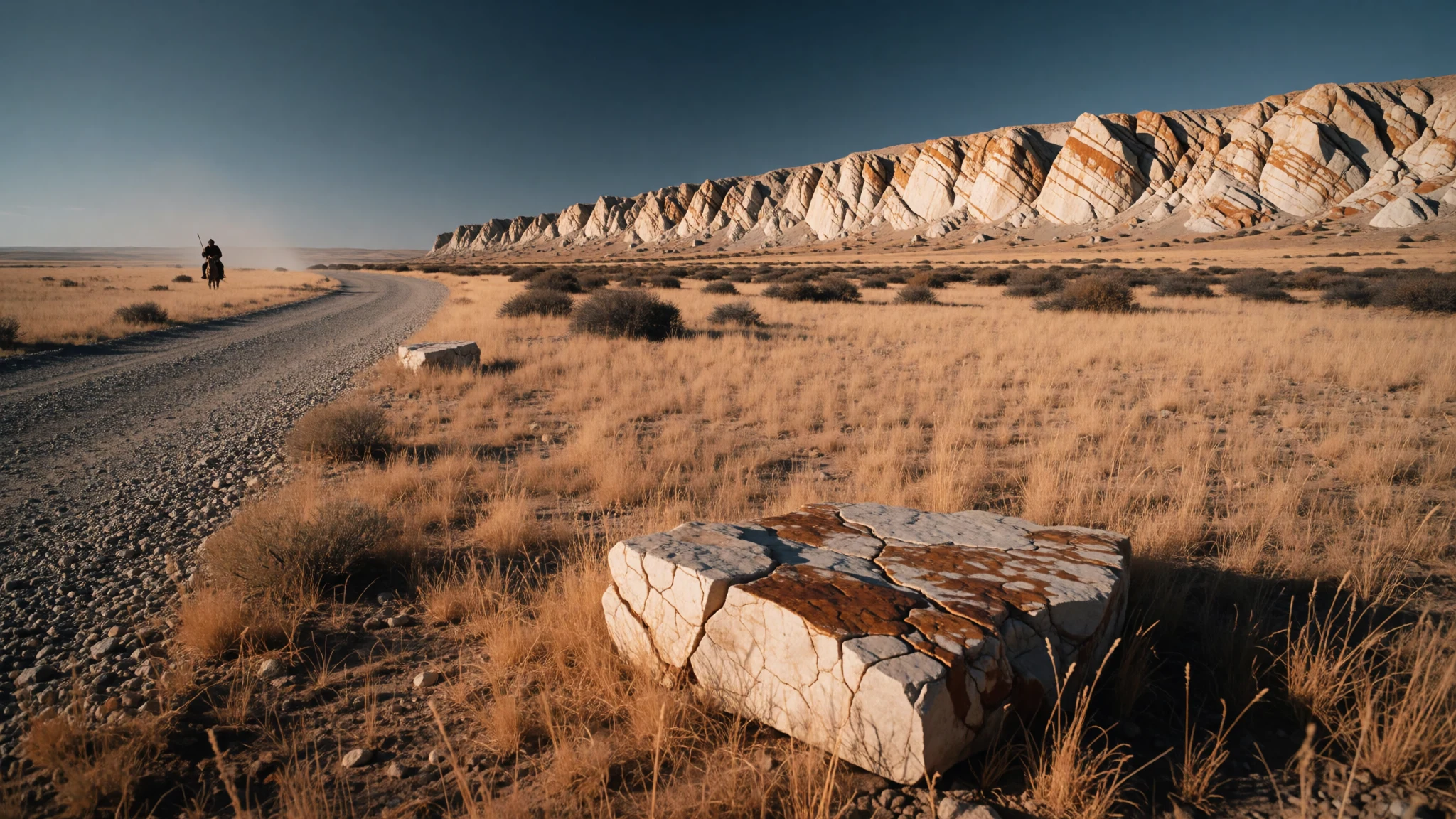
White Stupa is a Gobi copper deposit still in development, and a quiet window onto southern Mongolia's land, sky and changing economy.
The place
White Stupa, known in Mongolian as Tsagaan Suvarga (цагаан суварга), is a copper deposit and mine still being developed in Mandakh sum, part of Dornogovi aimag in southern Mongolia. It is not a sight in the usual sense. The ground here is working geology and future industry, and nothing in the research behind this reading points to a visitor centre, a marked trail or any public access. Anyone intrigued by the name should know that before planning a route.
The setting is the Gobi side of the country: dry, open land where the horizon runs long and trees are rare. Southern Mongolia is thinly settled, so distances between towns are felt in hours of driving rather than read off a map, and a plan that looks tidy on screen can swallow a whole day. The country's nickname, Land of Blue Skies, fits; clear days are common through the year. Winters are bitterly cold, and summers are generally hot, with cool nights and, outside the Gobi, a good deal of rain.
The name means white stupa, after the domed Buddhist monument, though the site itself is geological and industrial, not religious. The Mongolian government counts the deposit among its strategically important ones, which explains why a remote patch of desert steppe appears in national planning. Most travellers will meet it, if at all, as a name on a map or in a mining report, and as one reason the south of Mongolia is changing.
Its story
White Stupa is a young story with very old foundations. The deposit began as a geological event far older than any people on the steppe. In the Late Devonian, molten rock rich in metals pushed up into the crust and cooled into bodies of granite-like stone. Hot, mineral-laden fluids later cut quartz veins through that rock and left copper-bearing chalcopyrite along with molybdenite. Younger Carboniferous volcanic and sedimentary layers then settled across the top and hid the whole system from view.
Finding and measuring it was work for geologists, not herders. An international group of researchers mapped this deposit and others of the same type across the region, and one of their public-domain maps is credited with this reading. It shows how the ore sits within the older rock, which is the kind of detail that decides whether a deposit becomes a mine.
Mining in Mongolia has its own longer history. The Soviet era brought large modern industry, including a big open-pit copper mine at Erdenet in the north. Before that, a nomadic people built little in stone: the best-known marks are the short-lived Mongol Empire capital at Karakorum and, later, Tibetan Buddhist monasteries. White Stupa, still in development, belongs to the next chapter, in which a country of herders decides how its mineral wealth is dug up and who benefits. That question is still open, and this part of the Gobi is one place where it is being answered.
What to see
- Tsagaan Suvarga mine area — Mandakh sum, Dornogovi
The deposit lies in Mandakh sum, Dornogovi, and is still being developed, so it is best understood as a place on the map rather than an open site. Ask a Mongolian tour operator about access before heading near it. The geological map shown here reveals how the ore sits in the rock beneath.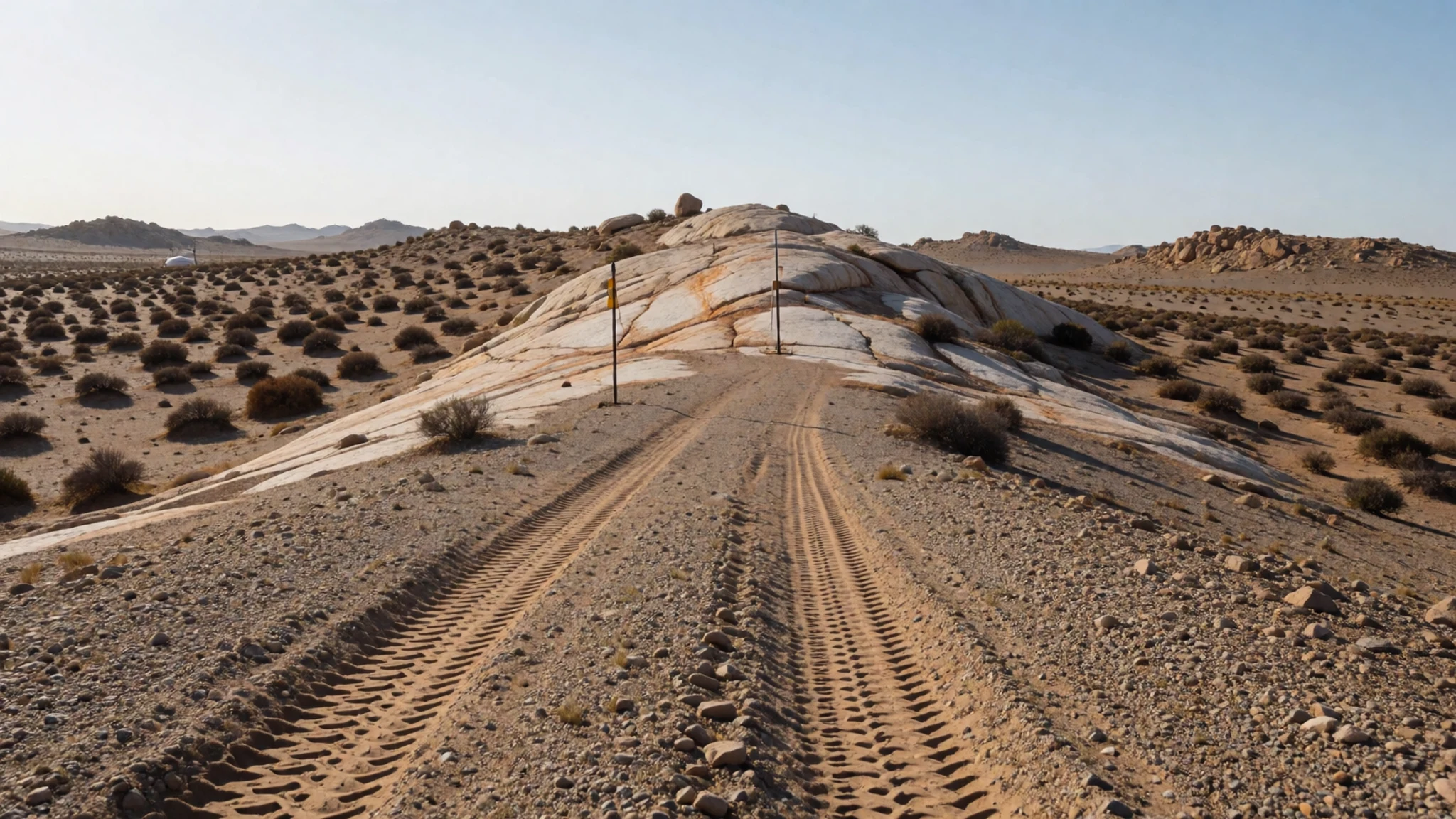
- Gobi steppe around Mandakh — Dornogovi aimag
The surrounding land is the real reason to be here: open, dry steppe and low rocky ridges under a very large sky. Early morning and late afternoon give the best light and the least heat. Travel with a driver who knows the tracks, carry spare water, and expect long gaps between settlements.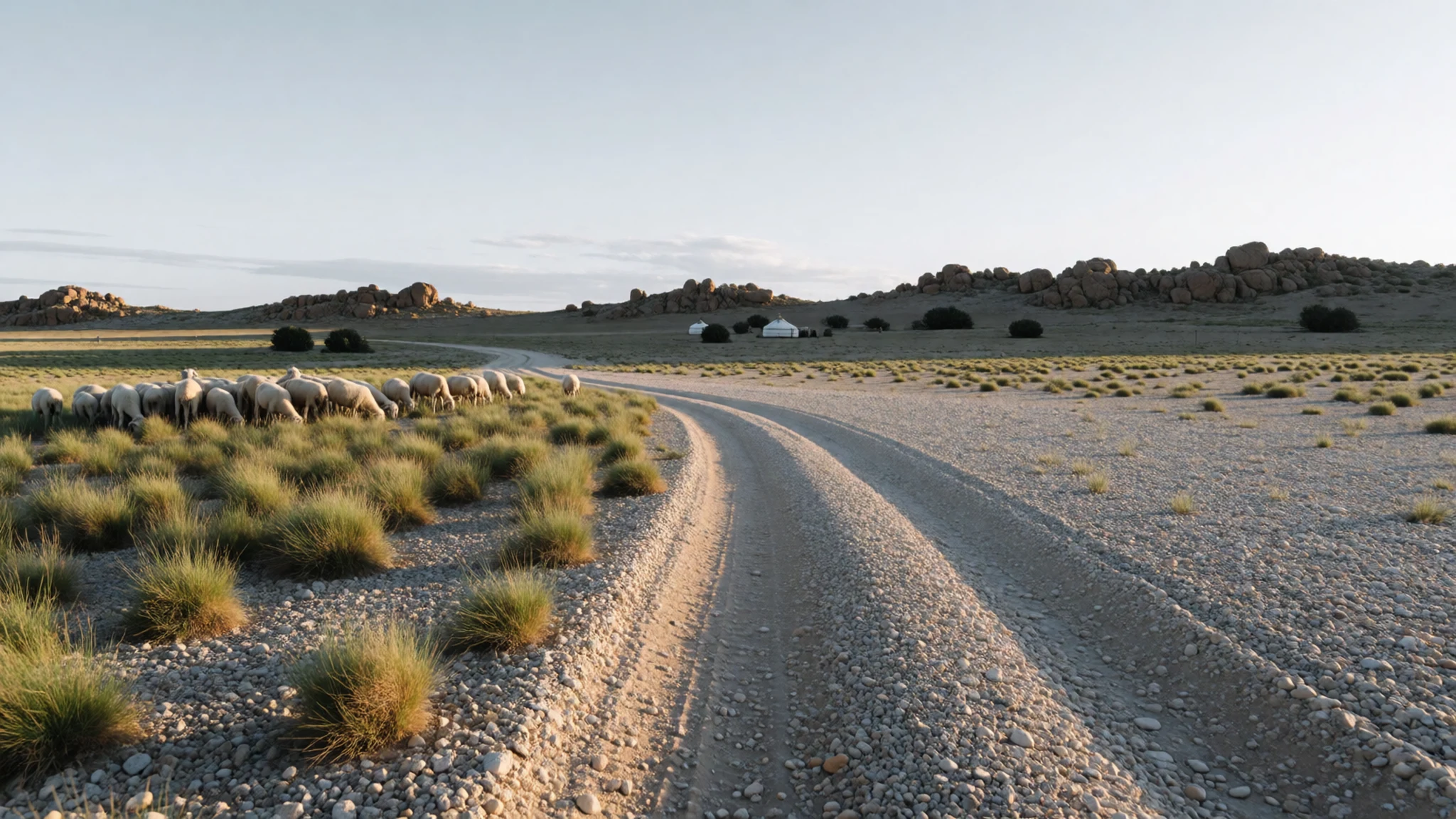
- Erdene Zuu Monastery — Kharkhorin, Övörkhangai
A Tibetan Buddhist monastery at Kharkhorin, near where Karakorum, the short-lived Mongol Empire capital, once stood. It is an active religious site with resident lamas, and a place where post-empire history shows plainly. It lies far to the north-west, so pair it with a wider Mongolia trip.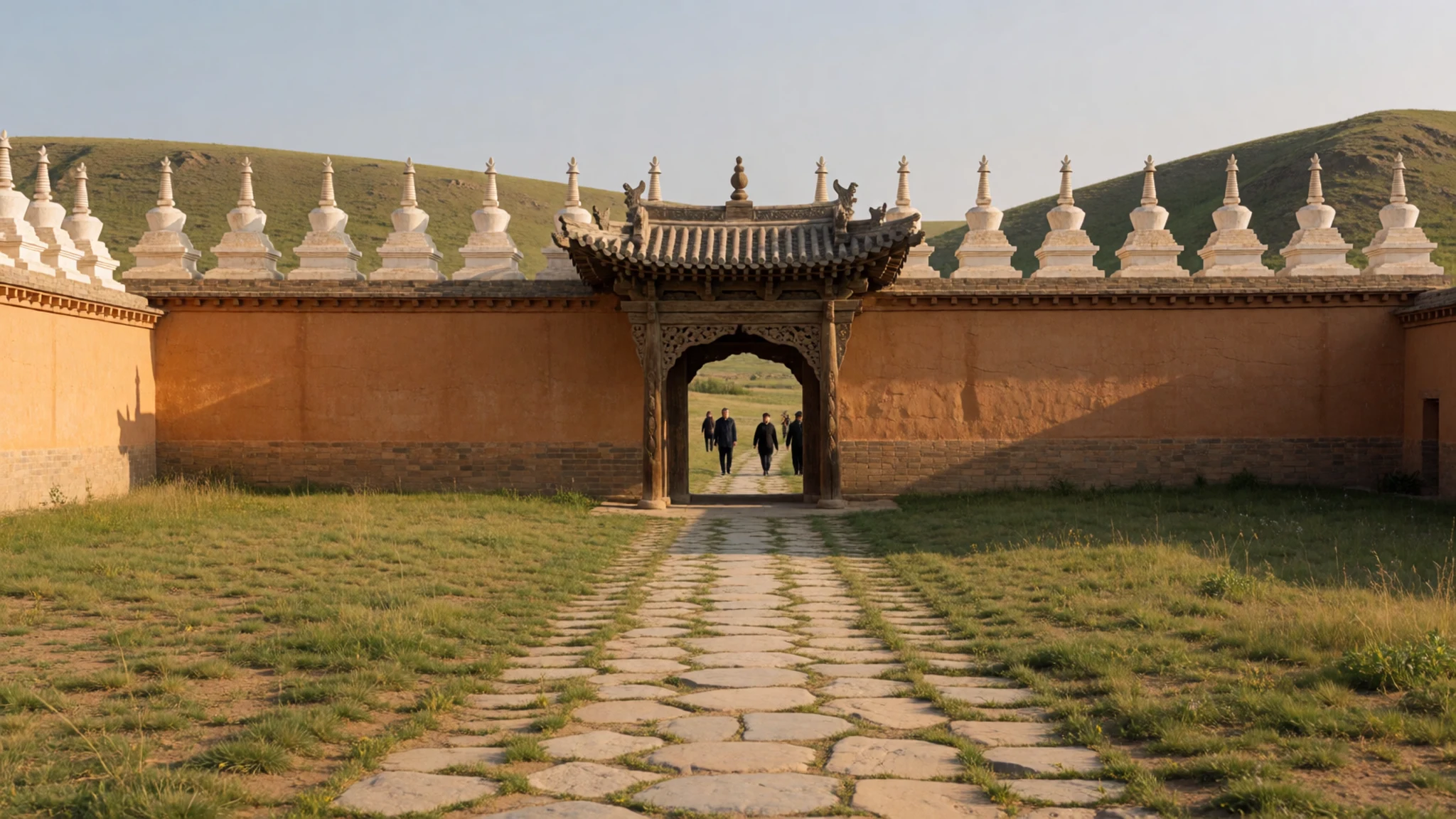
- Gandan Monastery — Ulaanbaatar
A working monastery in the capital with many resident lamas, still standing after the Stalinist religious purges that closed most of the country's monasteries. Go for the chanting and the atmosphere rather than architecture alone, and treat it as worship first and sightseeing second. Most visitors pass through Ulaanbaatar anyway, so it fits an easy half-day.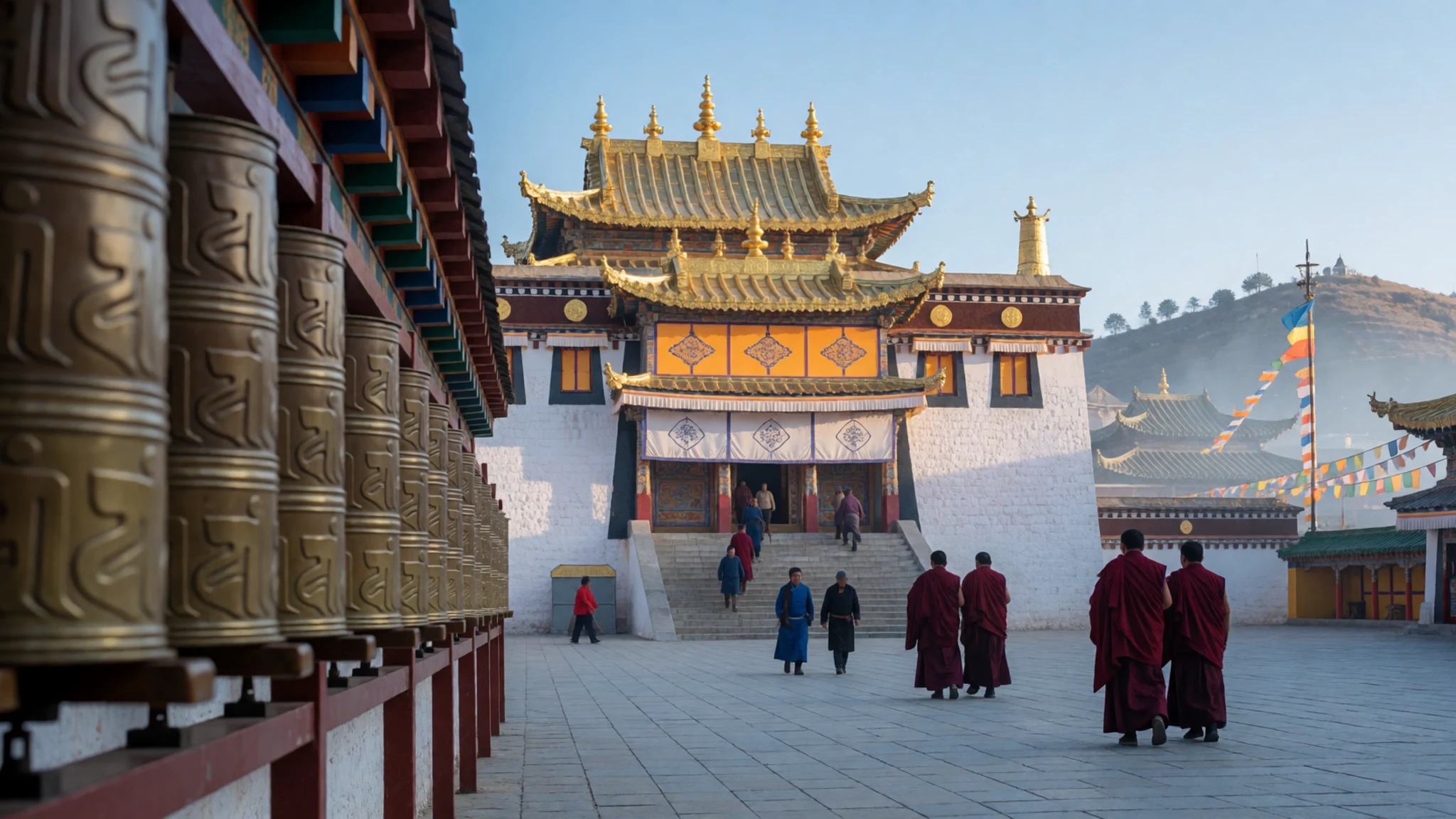
- Amarbaysgalant Monastery — Selenge aimag
An active monastery in Selenge, in the north, home to many resident lamas. It is a long drive from Ulaanbaatar, so allow a full day and arrange transport in advance. Like the other surviving monasteries, it makes more sense once the story of the purges is known.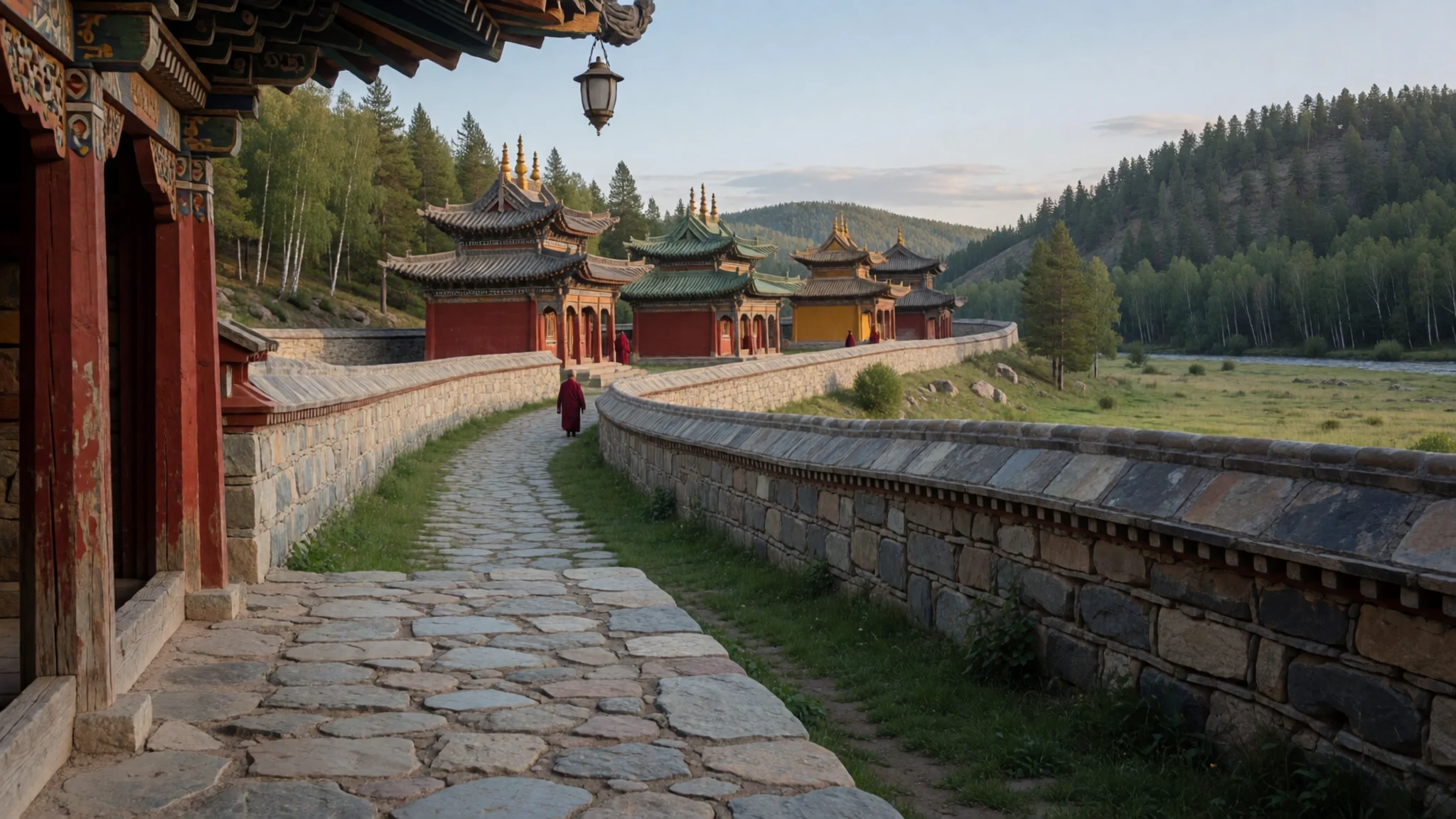
- Erdenet open-pit copper mine — Orkhon aimag, northern Mongolia
A Soviet-era industrial landscape in the north: a very large open-pit copper mine that anchors a modern city. It is not pretty, but it shows what mining means in Mongolia and gives context to deposits such as White Stupa. Check with a tour company before expecting any access.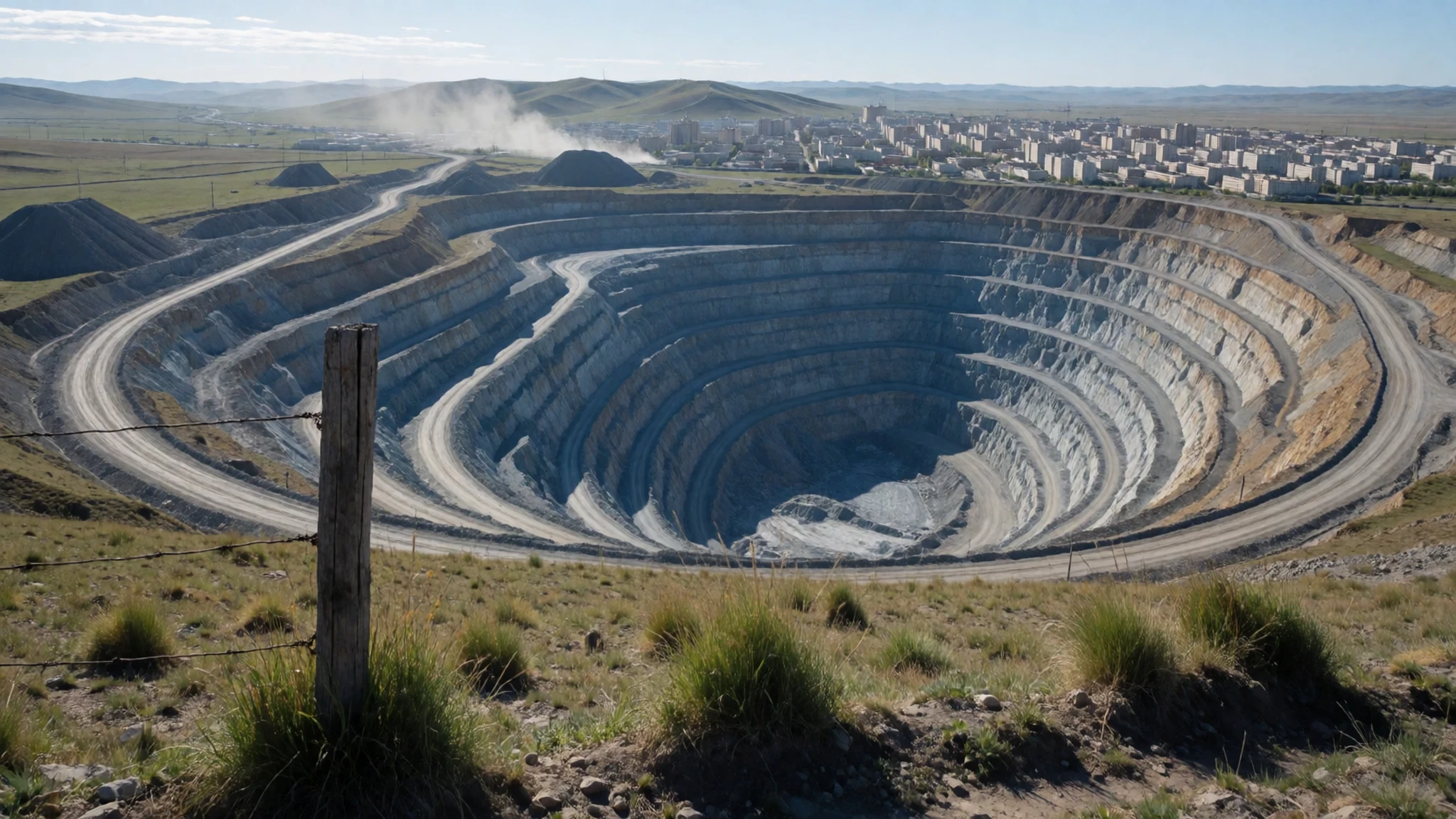
Culture
White Stupa sits in a country where plain speaking is normal. Mongolians tend to say what they think, and a direct answer is not rudeness; it is simply how conversation works. Visitors used to hedged politeness may need to adjust, and Western pleasantries often land differently from how they were meant.
Herding is the cultural backbone of the south. Families keep horses and other livestock on open pasture, and hospitality to strangers is taken for granted. A guest entering a ger is offered milk tea and dried snacks almost at once. Items are passed and received with the right hand, palm up, and turning down a gift is considered quite rude.
Buddhism also shapes everyday life, visible in stupas, in monasteries and in the name of this place itself. Many monasteries were damaged or closed during the Stalinist purges, and the active ones that remain are living places of worship, not museums.
Politics deserve a little care. Feeling towards China runs high among many Mongolians, and the Chinese province of Inner Mongolia is usually called southern Mongolia. Visitors do best to avoid clothing connected with China and to leave the subject alone unless a host raises it.
Whenever a herding family welcomes you into their ger, take the tea or snacks with your right hand, palm up, and try at least a small taste rather than refusing.
What to wear
In Mongolia, including the southern Gobi around White Stupa, traditional dress centres on the deel, a long wrap-over robe that fastens at the side and is cinched with a sash. Summer deels are lightweight cotton or silk; winter ones are lined with sheepskin or padded against the cold. Leather boots with upturned toes (gutal) and wool or felt hats complete the outfit. The deel is still everyday wear for many herders and comes out for festivals and family occasions, often in bright silk brocade with trim at collar and cuffs.
Day to day, most people wear what suits the work and the weather. In towns that means jeans, jackets, trainers and fleeces. Herders often pair a deel with practical boots and a modern jacket, and hi-vis vests and hard hats are part of the picture around working mines.
Visitors should dress for a dry, sunny, changeable climate: a wide-brimmed hat, sunglasses, sunscreen, light long sleeves and trousers against sun and dust, and a warm layer because nights can turn cool after a hot day. Sturdy closed shoes or boots suit stony ground. At monasteries, cover shoulders and knees and take hats off indoors. Winter visitors need serious insulation: thermal base layers, a down coat and insulated boots. Avoid anything associated with China.
What to eat
- Buuz — Canteens and tea shops in any town, or a herding family's ger on request
Steamed dumplings filled with minced mutton, often called Mongolia's national dish. They are juicy, mild and eaten by hand, usually with only a little salt. A plate of them makes a sensible first meal after a long drive across the steppe.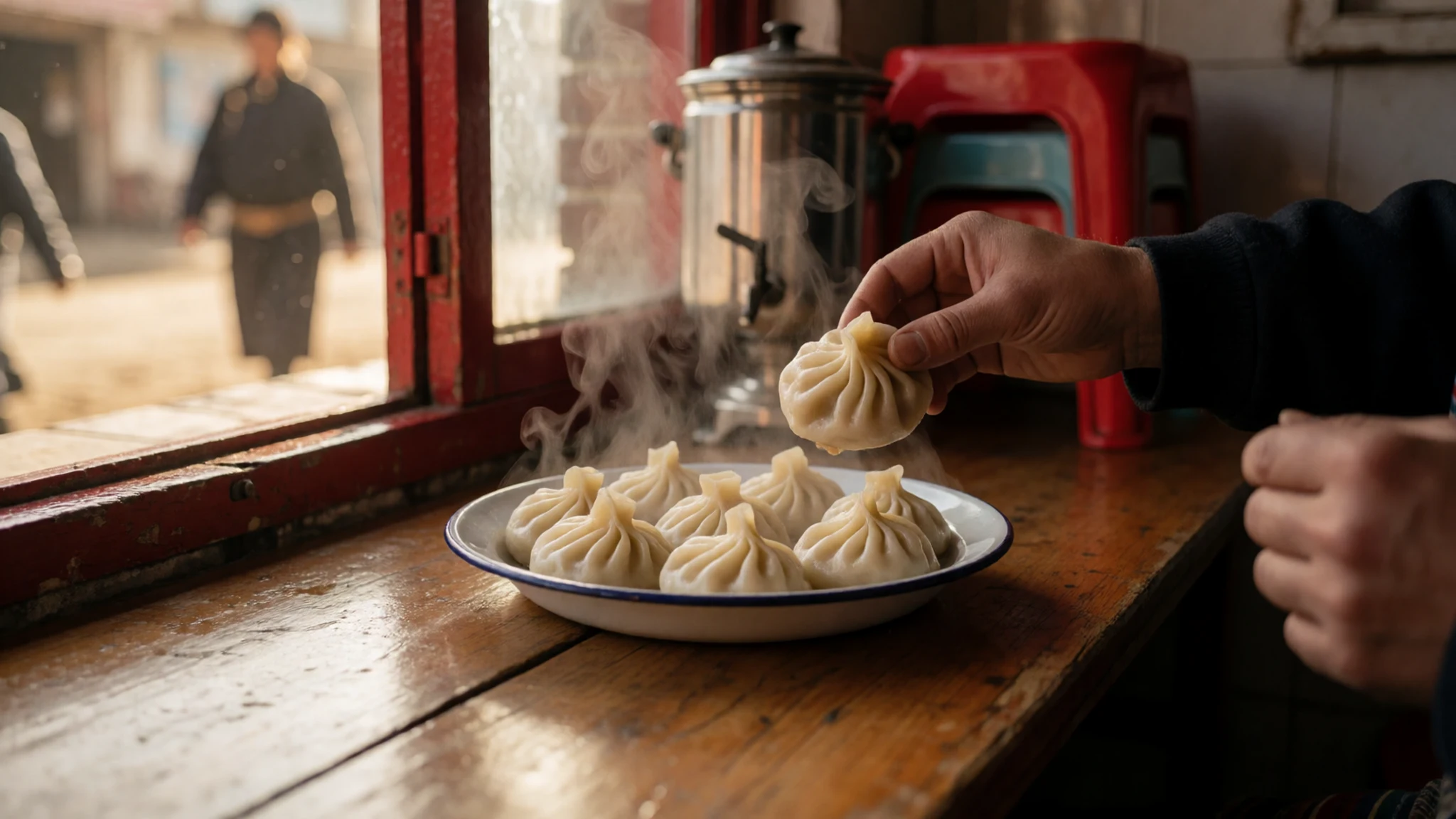
- Khuushuur — Roadside canteens, bus-station eateries and market stalls
Flat pockets of dough stuffed with meat and onion and fried until crisp at the edges. Once a festive food, it is now everywhere and very filling; a few make a meal. Eat it hot, before the grease sets.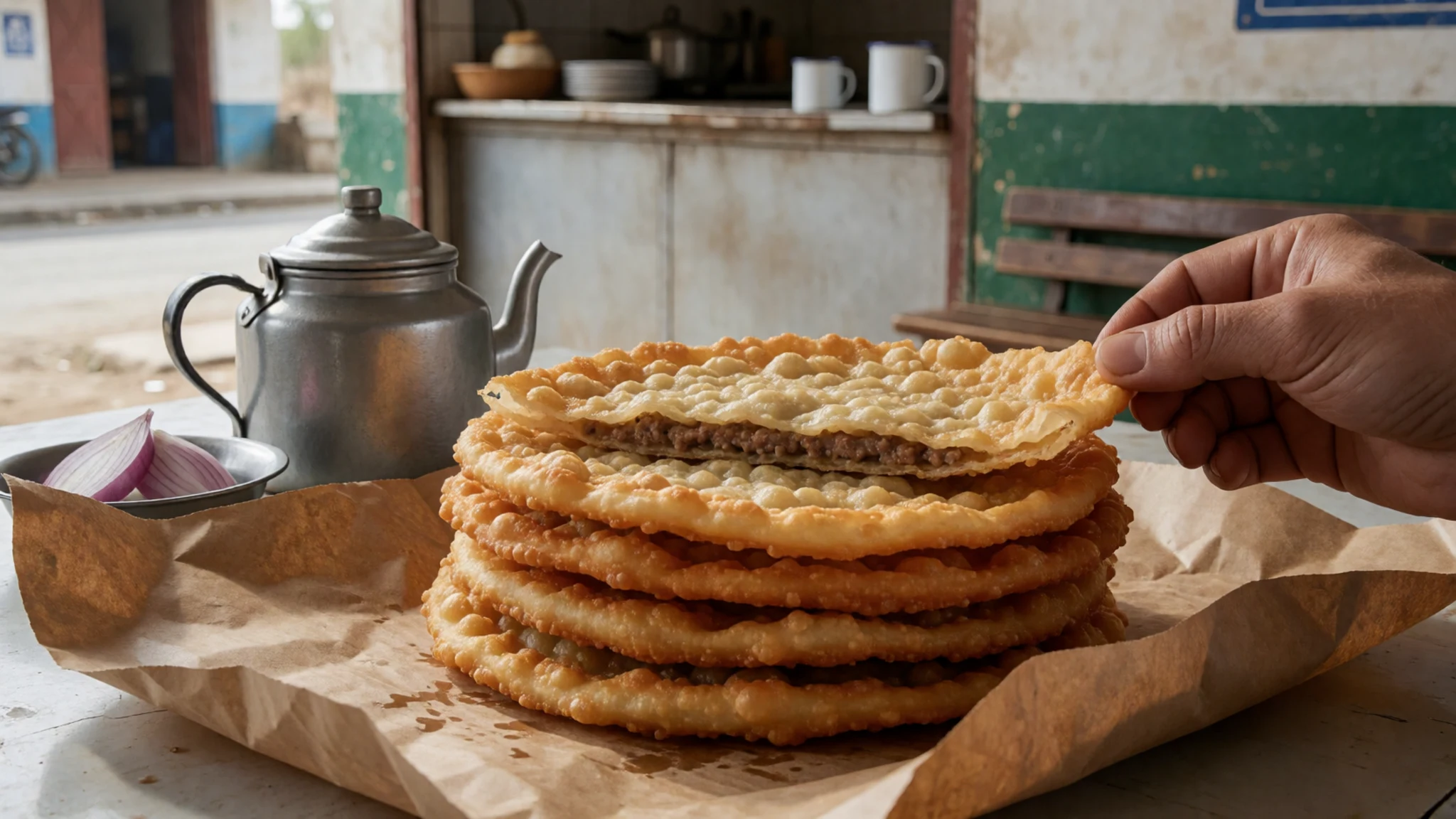
- Tsuivan — Town canteens and simple restaurants
Noodles stir-fried with meat and a modest handful of vegetables. Ketchup often arrives on the side, which surprises newcomers. It is a dependable, hearty plate after a day of driving across open country. - Süütei tsai (salted milk tea) — Any ger visit, plus canteens and tea shops
A cup of boiled milk and water, lightly salted and sometimes with a few tea leaves. It is the first thing offered to guests in a ger, and it can be bulked into a meal with toasted millet or rice. Expect an acquired taste. - Aaruul — Town markets, and from herding families
Dried curds, sold in bags and eaten as a snack. They are rock hard and meant to be dissolved slowly in the mouth, where they turn into a tangy, cheesy paste. Take a small piece when offered and be patient.
Plan it
Best time. Late May to June and September are the kinder months: the Gobi is dry, days are warm and nights cool. July and August can be hot, and winters are bitterly cold, so the cold season suits only well-equipped travellers.
How long. 2–3
Getting there. Fly into Ulaanbaatar, then travel south by road towards Dornogovi aimag and Mandakh sum. The last leg is on steppe tracks, so arrange a driver who knows the area. There is no public transport to the deposit, and access to the mine itself should be checked in advance.
Budget. mid
Tips
- Ask a Mongolian tour operator whether any access to the mine area is possible before planning around it
- Hire a driver and guide who know Gobi tracks, and carry extra water, food and an offline map
- Carry cash for smaller towns, as card payments may not work outside Ulaanbaatar
- Make your approach known to guard dogs at gers and fenced yards, and do not surprise them
- Check current visa rules on Mongolia's official immigration pages: a visa-free scheme for UK and EU tourists was time-limited, and Indian citizens need to apply for a visa
Etiquette
- Receive tea, snacks and gifts with your right hand, palm up
- Try at least a small taste of any food offered in a ger rather than refusing
- Avoid clothing or conversation about China unless your host raises it
Nearby
Sources
- Wikidata Q16966164 (CC0)
- Wikipedia: Tsagaan Suvarga mine (CC BY-SA 4.0)
- Wikivoyage: Mongolia (CC BY-SA 4.0)
- Tsagaab Suvarga copper molybdenum porphryr geologic maps (Gombosuren Badarch et al.) (Public domain)
