West Point Island
West Point Island, United Kingdom
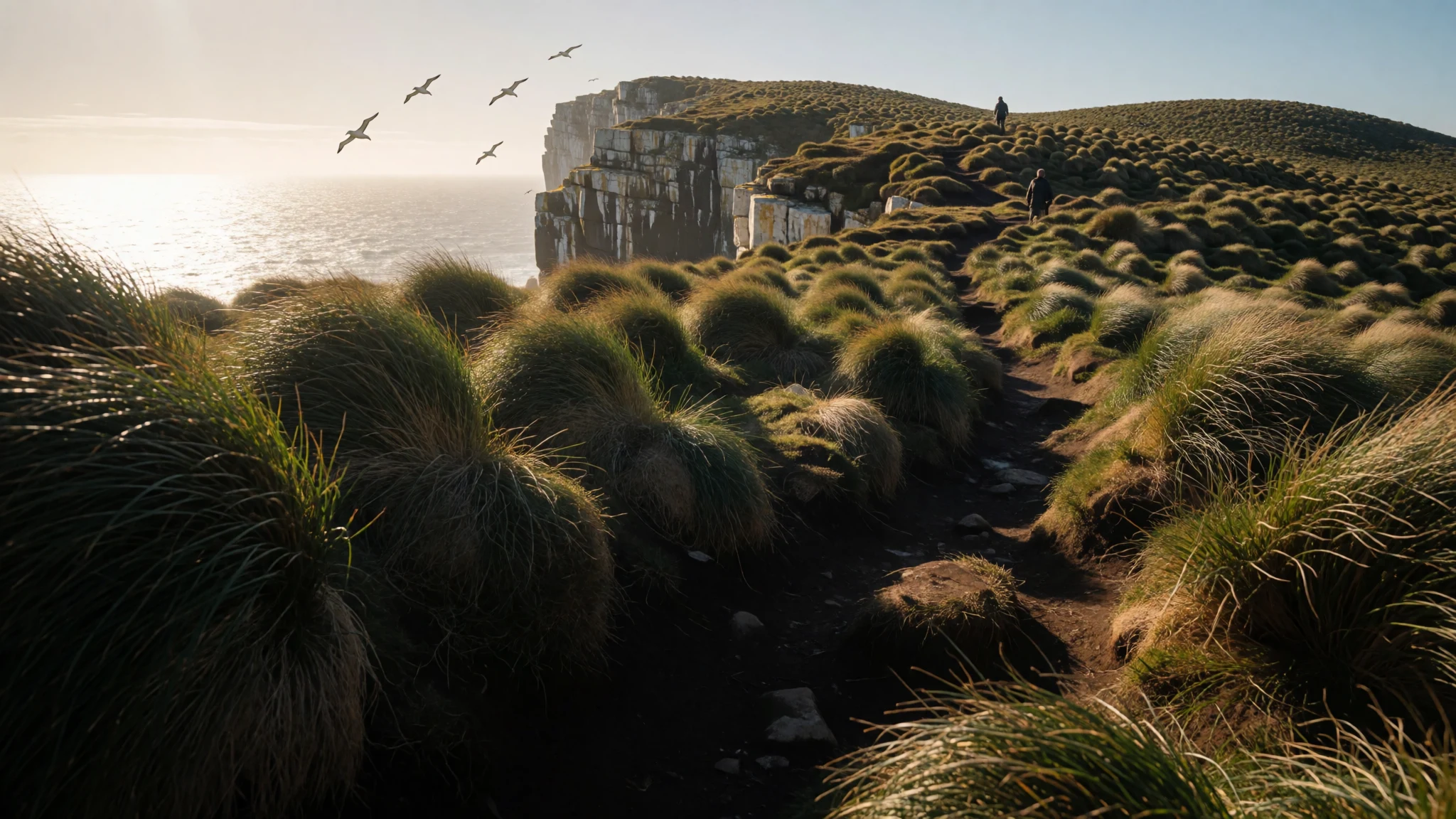
West Point Island packs albatross and rockhopper colonies, the highest sea cliffs in the Falklands and a family sheep farm into one windy day ashore.
The place
West Point Island lies at the north-west corner of the Falkland Islands, just off the tip of West Falkland. A narrow channel called the Wooly Gut separates the two, its name a local nod to the katabatic winds that pour through it. The island was first known as Albatross Island, and Spanish-language sources call it Isla Remolinos; the English name points to the birds, the Spanish one to eddies and wind.
The island is compact. Its west side faces the open South Atlantic and ends in a wall of cliffs, the highest in the Falklands, crowned by Cliff Mountain. The east side is softer, with grazing land and a small settlement at Westpoint Cove, where a short airstrip runs beside the houses. Between the two, rough hills carry tussock grass and sheep tracks.
This is private land. Roddy and Lily Napier own it, farm sheep on it and welcome visitors, so the settlement is a working home rather than a resort. There is no town, no café strip and no road network worth the name; people get about by Land Rover or on foot.
Weather is the main variable. Wind is close to constant, cloud can arrive within minutes, and a bright morning can turn grey and wet by lunch. Most visitors come off cruise ships or small boats, so the island's day follows the ship schedule, and a typical visit lasts a few hours rather than a weekend. On a day with no ship in, the place is very quiet.
Its story
West Point Island has had two lives: first as a killing ground, then as a farm and a place to watch wildlife. In the early 19th century, as across much of the Falklands, sealers and oil-hunters came ashore to take seals and penguins for their oil. They took so many that the trade collapsed in the area, which left the coast quieter and gave the colonies a chance to recover over the following generations.
Sheep arrived with a farm founded in 1879 by Arthur Felton. His great-nephew, Roddy Napier, owns the island today with his wife Lily, so one family line has held the land for well over a century. Wool and mutton paid for the settlement, and the farm still runs alongside the visitor trade.
Tourism began in 1968. Lars-Eric Lindblad, a tour pioneer, brought down a Chilean ship, the Navarino, carrying the first paying cruise visitors the archipelago had seen, and she called at West Point. Lindblad took to the island and to the Napier family, and the friendship lasted for decades. Over that time he helped turn the farm's cliffs and colonies into a regular stop for expedition ships.
Many such vessels still anchor offshore in summer and send passengers in by Zodiac and tender. The albatrosses that gave the island its first name now bring in much of its income, though the sheep have not gone away.
What to see
- The albatross and rockhopper colony — Western side of the island
The big seabird colony sits on the western side, a short Land Rover ride from the settlement or a walk of roughly half an hour. Black-browed albatrosses nest on ledges while rockhopper penguins crowd the slopes below, often in the same view. Noise and smell arrive before the birds do. Wind can be fierce, so a hat that stays on matters.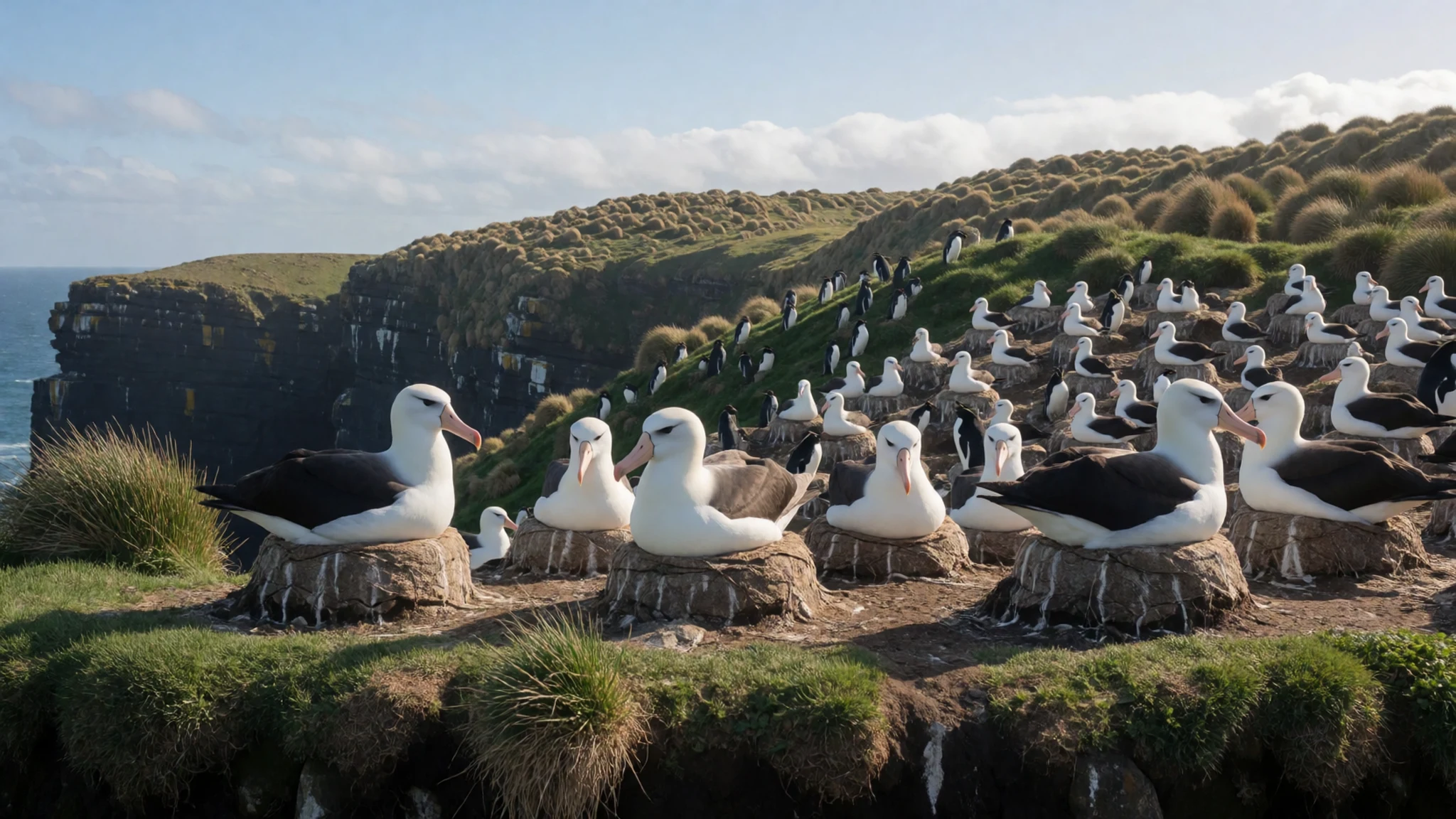
- Albatross chicks on their nests — Colony on the western slopes
In the breeding season, albatross chicks sit upright on tall mud-and-grass pedestals while the adults glide in against the wind. Watching a landing shows how little room an albatross needs and how much it trusts the updraught. Binoculars help, but the birds are close enough for a phone camera. Keep still and let them settle.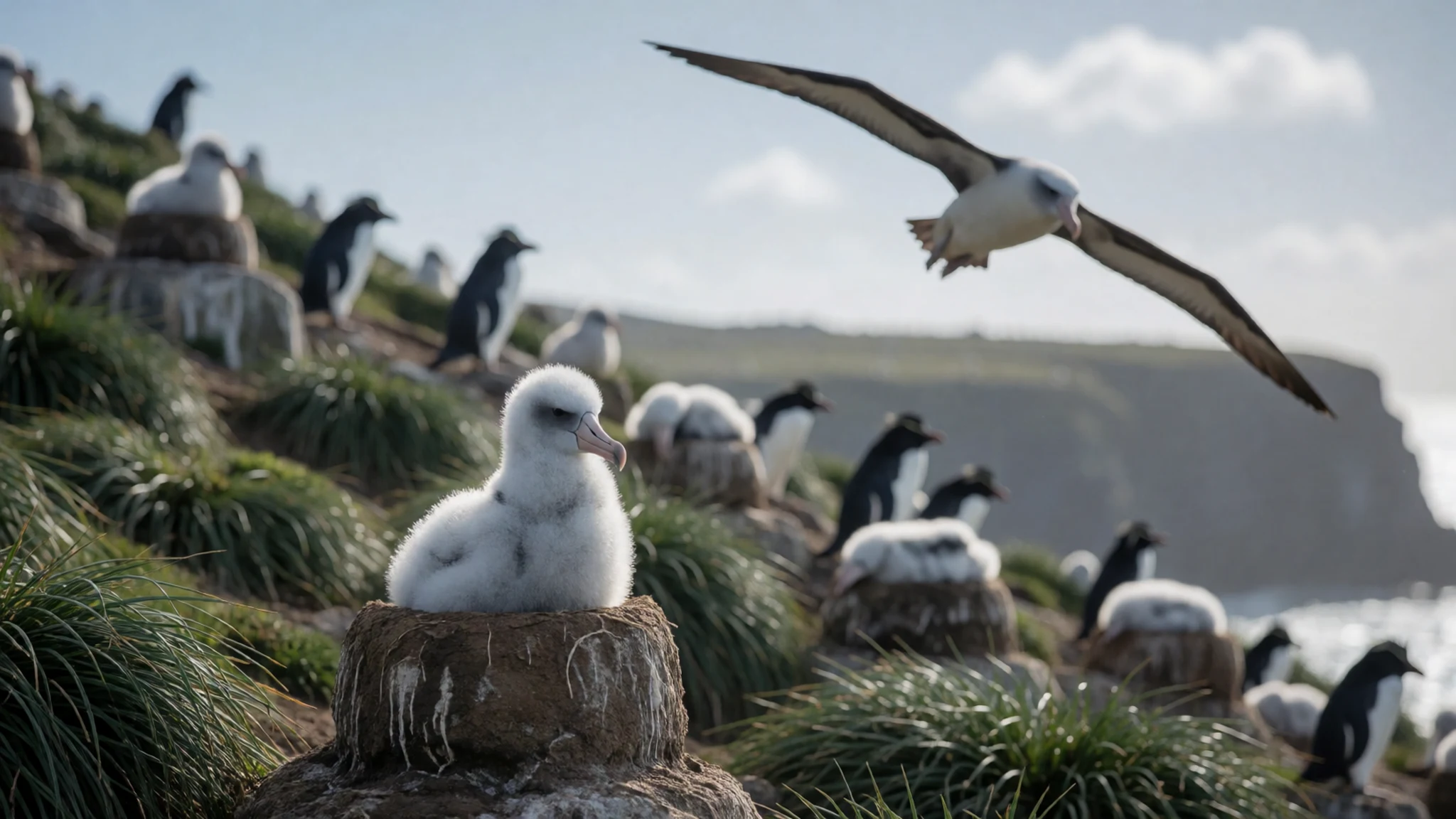
- West-facing cliffs and Cliff Mountain — West coast
The cliffs on the west coast are the highest in the Falklands, with Cliff Mountain as the summit above them. At the top the ground simply stops and the South Atlantic begins, with spray drifting up on rougher days. Stay well back from the edge; the turf is soft, the gusts are sudden and there are no barriers.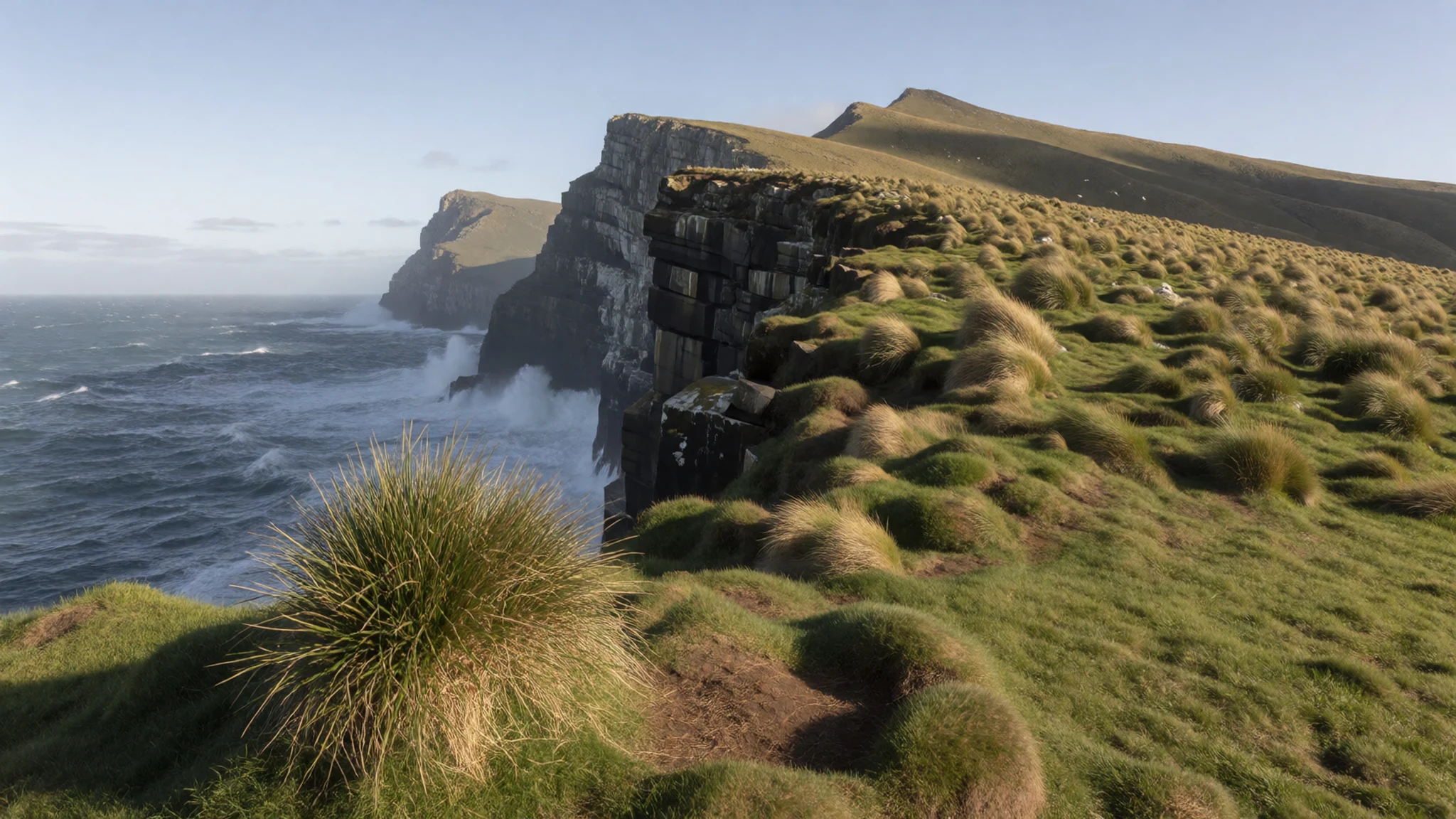
- Westpoint Cove settlement — North-east of the island
The settlement on the north-east shore is the island's only cluster of buildings: farmhouse, sheds and a short airstrip. It is a family home first, so visits are arranged around farm life. The cove is sheltered by the standards of this coast, which is why boats land here rather than under the cliffs.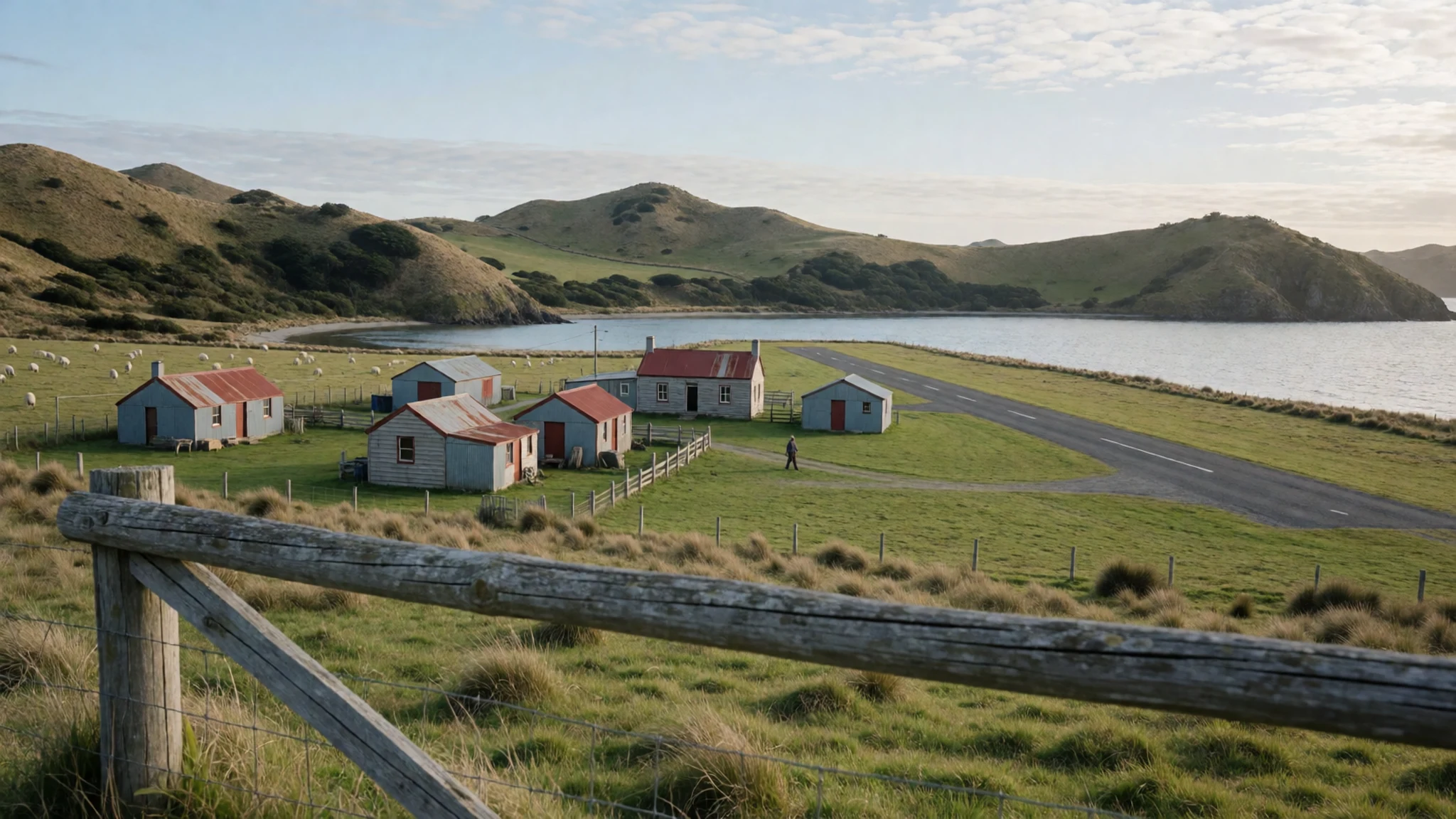
- The Wooly Gut — Channel between West Point Island and West Falkland
The Wooly Gut is the narrow channel between the island and West Falkland. Its name refers to the katabatic winds that sweep through, and on a blustery day the water looks it. It is best appreciated in passing, from the shore or from a boat, rather than as a destination in its own right.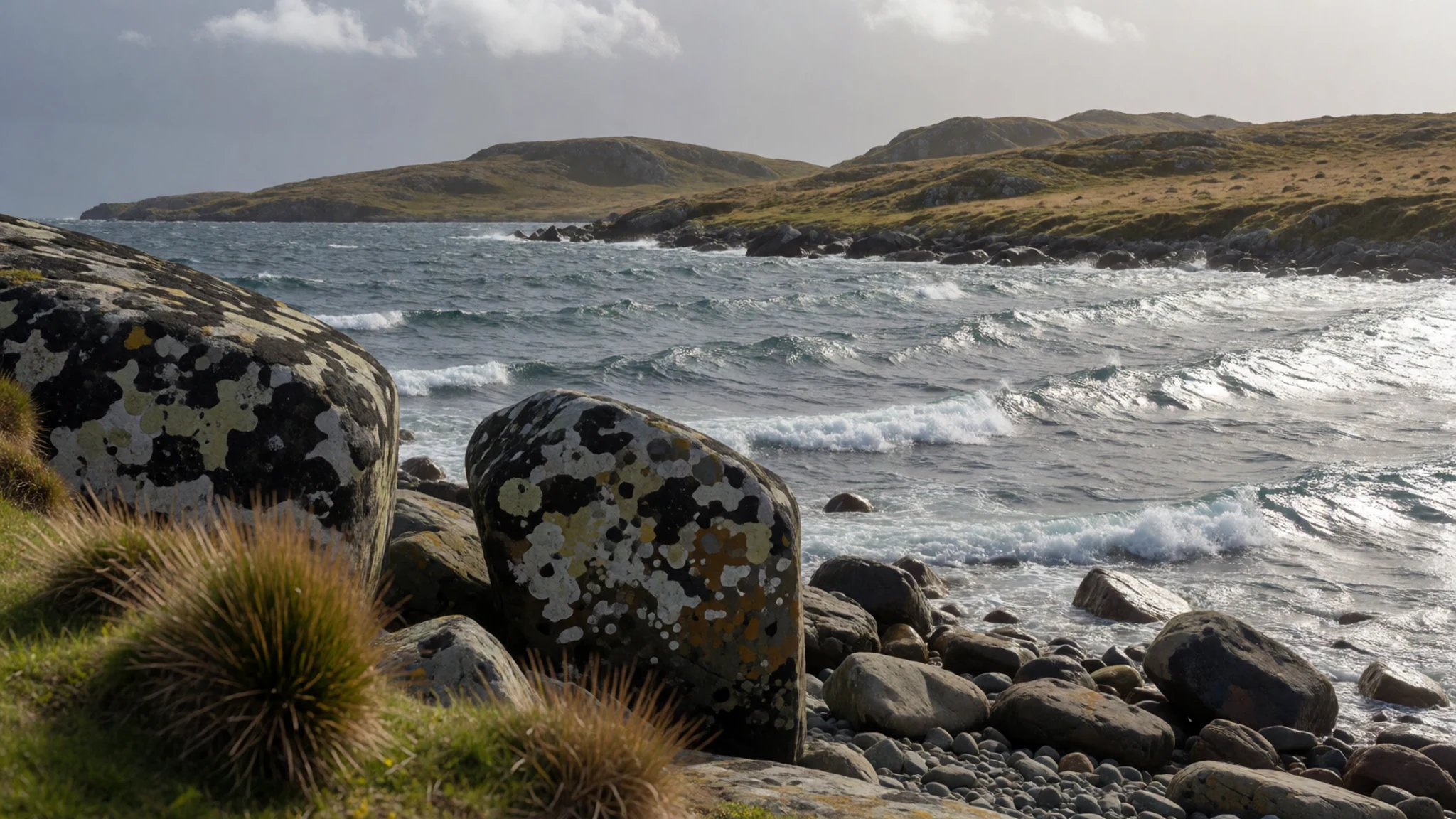
Culture
West Point Island's culture is the culture of the Falklands "camp", the local word for farmland outside Stanley: sheep, wool, long distances and a habit of self-reliance. Place names and farm buildings are British in origin, but isolation has produced its own practical, understated manner. Neighbours depend on one another, and radios and small aircraft stand in for roads.
The island's history shows two attitudes to wildlife. In the early 1800s seals and penguins were hunted for oil until the trade ran out. Today the same birds are the reason people come, and the family that farms the land also looks after the colonies. Tourism here grew out of a friendship between the Napier family and a cruise pioneer, and it still feels personal rather than industrial: guests are hosted rather than processed.
For a visitor that means small numbers, short visits and a real sense of being on someone's land. Conversation tends to turn to weather, birds and sheep, and questions about farm life are generally welcome. Nobody is putting on a performance, and there are no souvenir stalls to browse. The pleasure is simply being allowed to sit near a working colony at the edge of the inhabited world.
Keep to the marked routes and stay well back from nesting albatrosses and penguins, and ask the family before walking near the farm buildings or through the paddocks.
What to wear
West Point Island has no ceremonial costume of its own. Working dress in the Falklands comes from sheep farming and British country wear, and the key textile is wool, much of it from local flocks: thick jumpers, knitted hats and socks, and waxed or oilskin jackets over moleskin or heavy cotton trousers, finished with rubber boots. This is everyday kit, worn year-round on farms rather than saved for festivals.
What people wear now follows the same logic. Islanders dress for the wind, so layers, windproof shells and a hat are normal even in summer, with smarter clothes kept for Stanley. Nobody on the island is dressing to be looked at.
A visitor should copy the locals. Pack a waterproof, windproof outer layer, a warm mid-layer of wool or fleece, a hat and gloves, and sunglasses and sunscreen, since the open ground offers little shade. Boots matter most: waterproof, with grip for wet turf and loose stones, and clean before landing so no seeds or soil are carried in. Quick-drying trousers beat jeans, which stay damp for hours. There is no religious dress code, but keep pockets zipped and caps fastened, because the wind near the cliffs takes loose items quickly.
What to eat
- Roast Falklands lamb or mutton — Farm settlement tables and pubs in Stanley
Sheep are the island's livelihood, so lamb and mutton are the natural centrepiece of a proper meal across the islands. Expect a roast with root vegetables and gravy, hearty after a day in the wind. Quality depends on the cook, not the menu.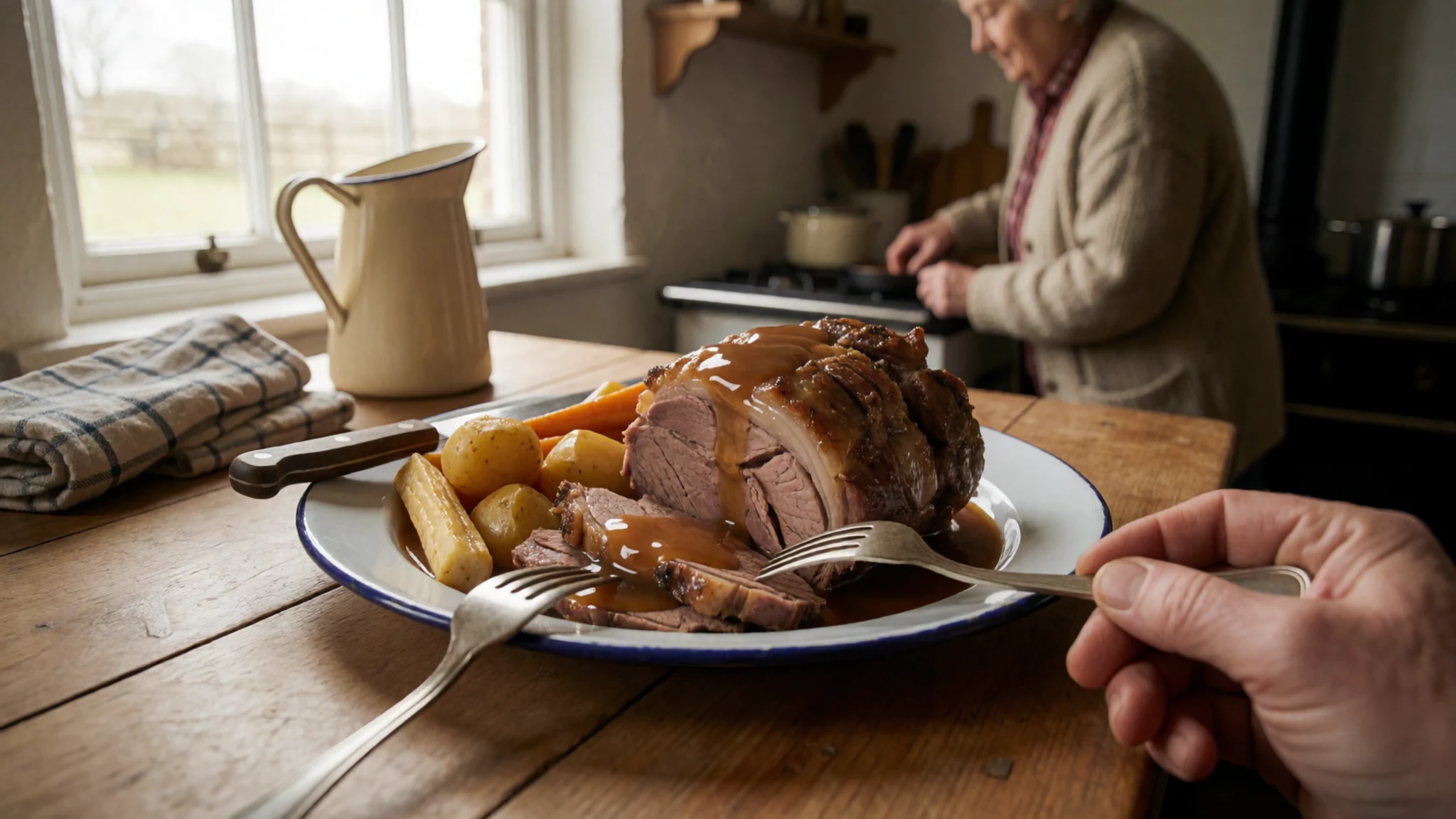
- Home baking at smoko — A farm settlement kitchen
Smoko is the Falklands word for the mid-morning tea break, and it comes with scones, cake or biscuits baked at home. On a farm it is the easiest way to sit down and talk with the people who live there.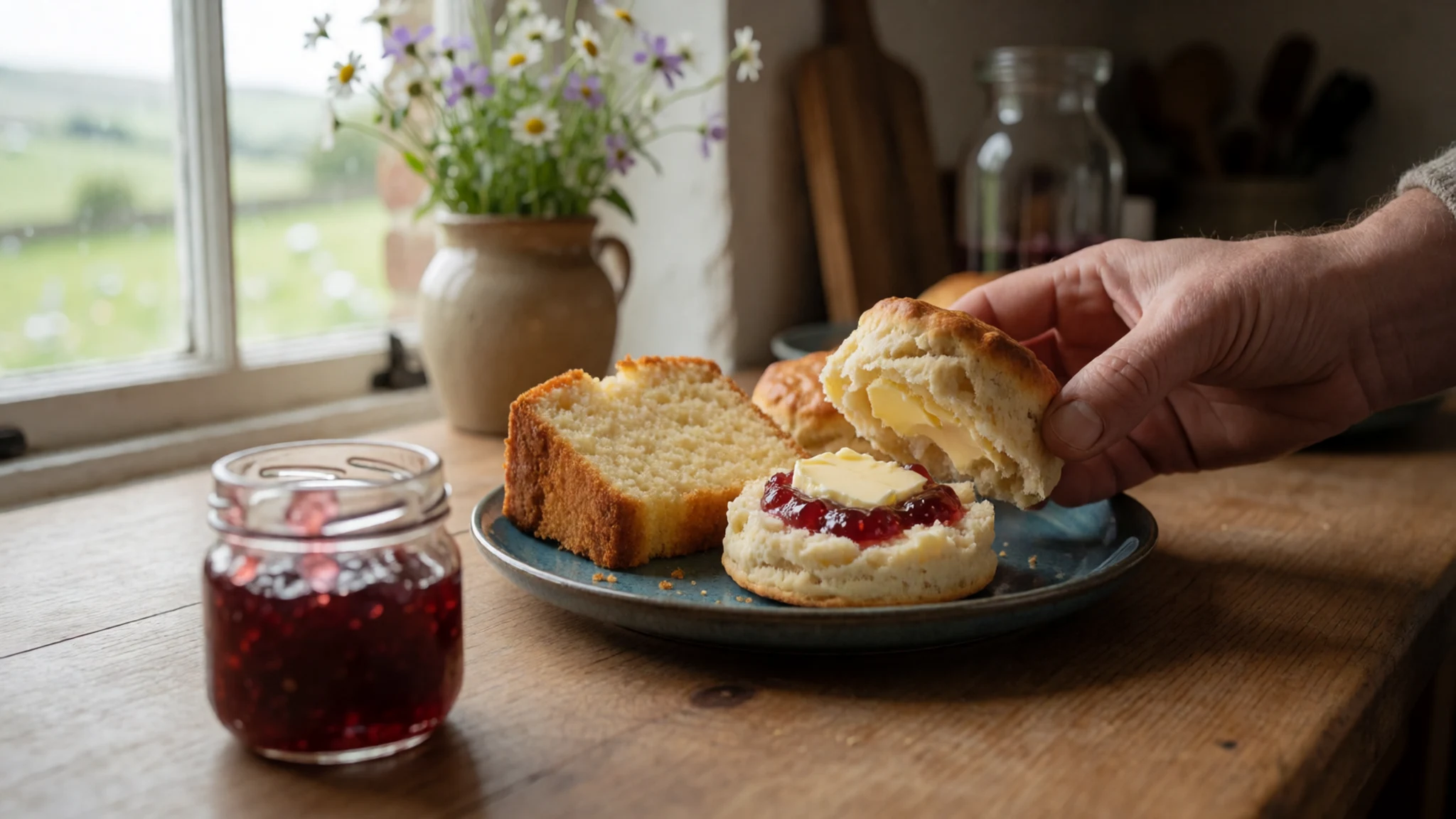
- Diddle-dee jam — Shops in Stanley and settlement tables
Diddle-dee is a small red berry from the island heathland, boiled into a tart jam. It goes well with scones and bread, and sometimes alongside lamb. Jars are easy to take home and make a more useful souvenir than most. - Fish and chips — Pubs and takeaways in Stanley
Fish and chips is as familiar in Stanley as in any British port, made with fish from the surrounding South Atlantic. It is simple and filling, and it suits a cold, windy evening after a day outdoors. - Fried calamari — Restaurants and pubs in Stanley
Squid is caught in Falklands waters and often appears on menus as lightly fried calamari. A plate in Stanley is a reasonable way to taste the local sea; portions tend to be generous, so it works well for sharing.
Plan it
Best time. November to March, the southern summer, when the seabirds are on land and cruise ships call. Wind and showers are possible on any day; winter brings short days, cold weather and very few visits.
How long. 1
Getting there. Most visitors arrive on an expedition or cruise ship and land by Zodiac or tender. The island has an airstrip that FIGAS planes can use, though it is not often used, and a day trip by boat from Carcass Island is sometimes possible. Stanley is the usual base; check the official site (https://www.falklandislands.com/things-to-do/west-point-island-p677231) for current options.
Budget. high
Tips
- Book through a cruise or a Falklands tour operator well ahead, as independent access is limited and the weather decides.
- Bring a windproof outer layer and a hat even when the morning looks bright.
- Carry binoculars and a camera strap you trust; the birds are close and the wind is strong.
- Do not count on shops or cafés on the island; take water and snacks.
- Leave slack in the schedule, because wind and swell can change or cancel a landing.
Etiquette
- Keep to the paths and stay clear of nests and chicks.
- Ask the family before entering farm buildings or paddocks.
- Clean your boots before landing and take all litter away.
Nearby
Sources
- Wikidata Q1890823 (CC0)
- Wikipedia: West Point Island (rev 1377169354) (CC BY-SA 4.0)
- Wikivoyage: West Point Island (rev 4527988) (CC BY-SA 4.0)
- Photo: West Point Island in the Falkland Islands (Liam Quinn) (CC BY-SA 2.0)
- Photo: Black-browed Albatross amidst Rockhopper Penguins (Liam Quinn) (CC BY-SA 2.0)
- Photo: Black-browed Albatross and Chick 5545223285 (Liam Quinn) (CC BY-SA 2.0)
- Photo: Black-browed Albatross and Chick 5545227227 (Liam Quinn) (CC BY-SA 2.0)
- Photo: Black-browed Albatross and Chick 5545241073 (Liam Quinn) (CC BY-SA 2.0)
- Photo: Black-browed Albatross and Chick 5545244283 (Liam Quinn) (CC BY-SA 2.0)
- Photo: Black-browed Albatross and Chick 5545253991 (Liam Quinn) (CC BY-SA 2.0)
- Photo: Black-browed Albatross and Chick 5545260037 (Liam Quinn) (CC BY-SA 2.0)


Wildlife
- Black-browed albatross (animal)
The black-browed albatross is a large seabird, the everyday albatross that turns up across more of the world than any cousin in its family. At West Point Island it nests on ledges above the rockhopper penguins that fill the slopes, so you can often see both together. Stay well back, speak softly, and, if possible, walk with a guide. Please never feed it; wild birds should find their own food. - Rockhopper penguin (animal)
Remember the rockhopper as the penguin that bustles about in great crowds on the hillside. Its western kind belongs to chilly subantarctic seas near the southern tip of South America and the islands around it. On West Point Island you will find rockhoppers packed onto the slopes beneath nesting albatrosses. Watch from a distance, move slowly and quietly, and let a guide lead you. Never offer food; it harms the wild habits of the birds. - Black-browed albatross (bird)
The black-browed albatross is a large seabird, the everyday albatross that turns up across more of the world than any cousin in its family. At West Point Island it nests on ledges above the rockhopper penguins that fill the slopes, so you can often see both together. Stay well back, speak softly, and, if possible, walk with a guide. Please never feed it; wild birds should find their own food. - Rockhopper penguin (bird)
Remember the rockhopper as the penguin that bustles about in great crowds on the hillside. Its western kind belongs to chilly subantarctic seas near the southern tip of South America and the islands around it. On West Point Island you will find rockhoppers packed onto the slopes beneath nesting albatrosses. Watch from a distance, move slowly and quietly, and let a guide lead you. Never offer food; it harms the wild habits of the birds.