Wayag
Wayag, Indonesia
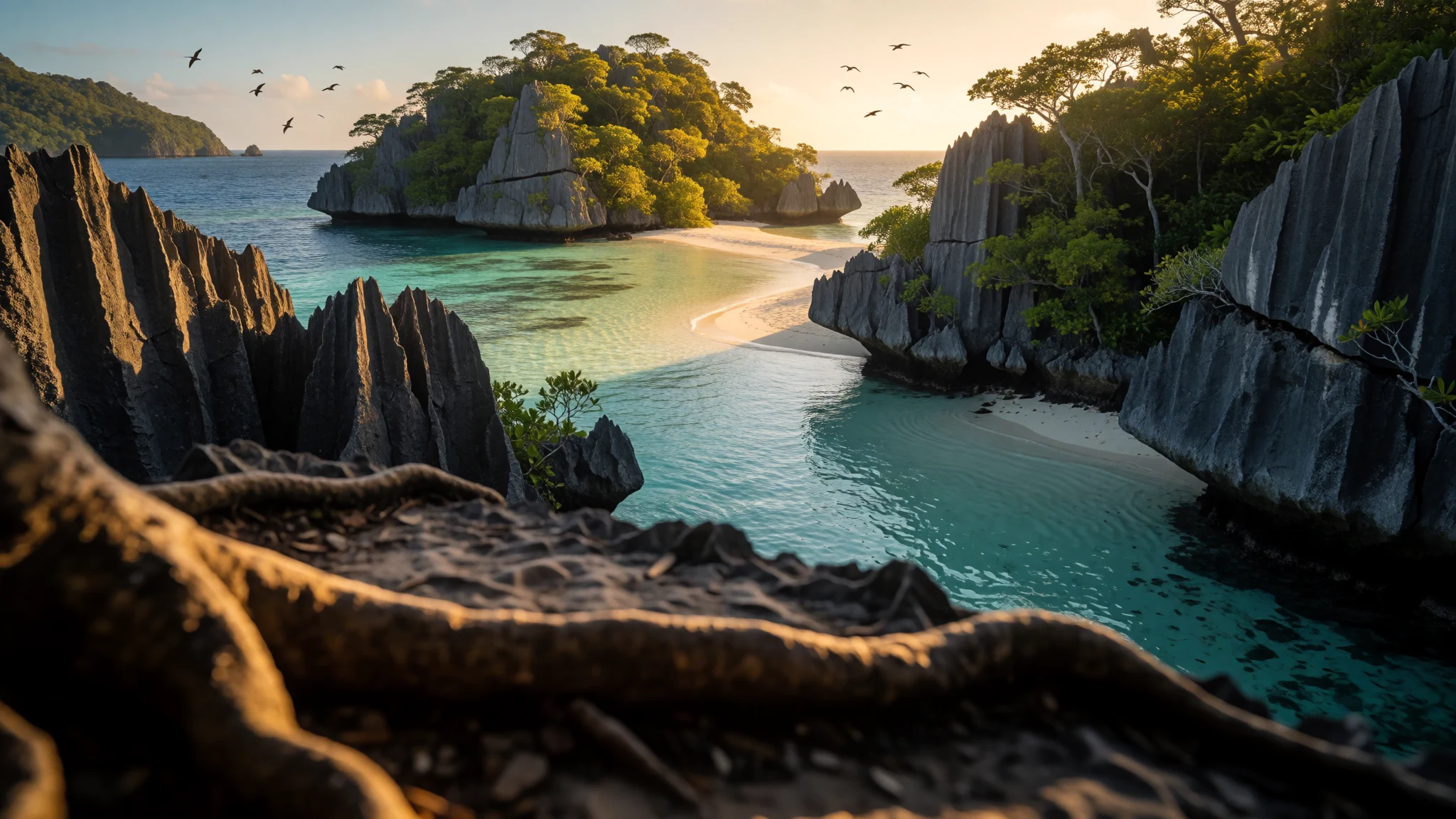
Wayag is a maze of forested limestone islets and turquoise shallows in northern Raja Ampat, reachable only by a long sea crossing.
The place
Wayag sits at the northern edge of Raja Ampat Regency, in Southwest Papua Province, Indonesia, almost on the equator. Wikidata lists the main island under the label Lage Peley, with an elevation of just 17 m, so this is a place defined by arrangement rather than height. Many small limestone islets, eroded at the waterline into mushroom shapes and covered in dense forest, rise from still, shallow water that shifts between pale green and deep blue. Narrow channels wind between them, and small white beaches sit in the gaps. Seen from the one well-known viewpoint, the islets scatter across the lagoon like a green archipelago in miniature. At water level the scale changes: the rock walls close in, the quiet is wide, and the only movement is a boat's wake or a bird crossing a channel. There are no towns here. Wayag lies within the protected waters of Raja Ampat, so visits are controlled by permits and run mostly from liveaboard boats or from trips organised out of the regency's larger settlements. Remoteness is the point and also the cost: the sea crossing is long, weather decides the schedule, and facilities on the islands are minimal. Heat and humidity are constant, showers can arrive in any month, and the sun on open water is strong. Few places reward the effort of getting there so directly, but the effort is real.
Its story
Wayag's story begins with limestone. The islets are old seabed, built up from marine life, then lifted and worn by rain and tide into steep, undercut towers. Forest took hold on rock with almost no soil, which is why the green clings so tightly to the stone. For most of its human history the lagoon was a place for fishing and passing canoes rather than permanent settlement, and coastal communities across Raja Ampat have long managed their waters through customary rules about when and where to fish. Outside attention arrived mainly in recent decades, as divers began to praise the wider Raja Ampat reefs and aerial photographs of the Wayag lagoon travelled around the internet. A name on a chart became a destination that people plan whole journeys around. That brought the usual tension: more boats and footsteps on fragile rock and reef, set against local livelihoods that benefit from visitors. Authorities and communities responded with a permit system and conservation rules, and the area now sits inside the protected waters of Raja Ampat. The arrangement is still evolving, and its success depends on boat operators, guides and visitors following the rules when nobody is watching. Wayag therefore reads as a place still in the middle of its story: remote enough to stay quiet, and valuable enough that its future is actively argued over.
What to see
- The ridge viewpoint — Main islet, Wayag lagoon
The classic Wayag picture is taken from a ridge on one of the larger islets, reached by a short, steep scramble over sharp limestone and tree roots from a small landing beach. Footing is rough and slippery after rain, so sturdy shoes matter. Early morning or late afternoon avoids midday glare and the crowd that gathers when boats arrive together.
- The channels by small boat — Inner lagoon
Gliding through the channels in a small boat shows Wayag from a different angle, with undercut rock walls overhead and water clear enough to see sand and coral below. Engines are kept low in the narrow passages. Between the ridge and the reef, this is where the quiet of the place is easiest to feel.
- Snorkelling the islet edges — Reef margins around the islets
The shallows around the islets hold coral gardens and schools of small reef fish, and snorkelling needs no more than a mask and fins. Currents can pick up in the channels, so stay close to the boat and follow the guide's briefing. A long-sleeved rash vest protects skin and coral better than sunscreen alone.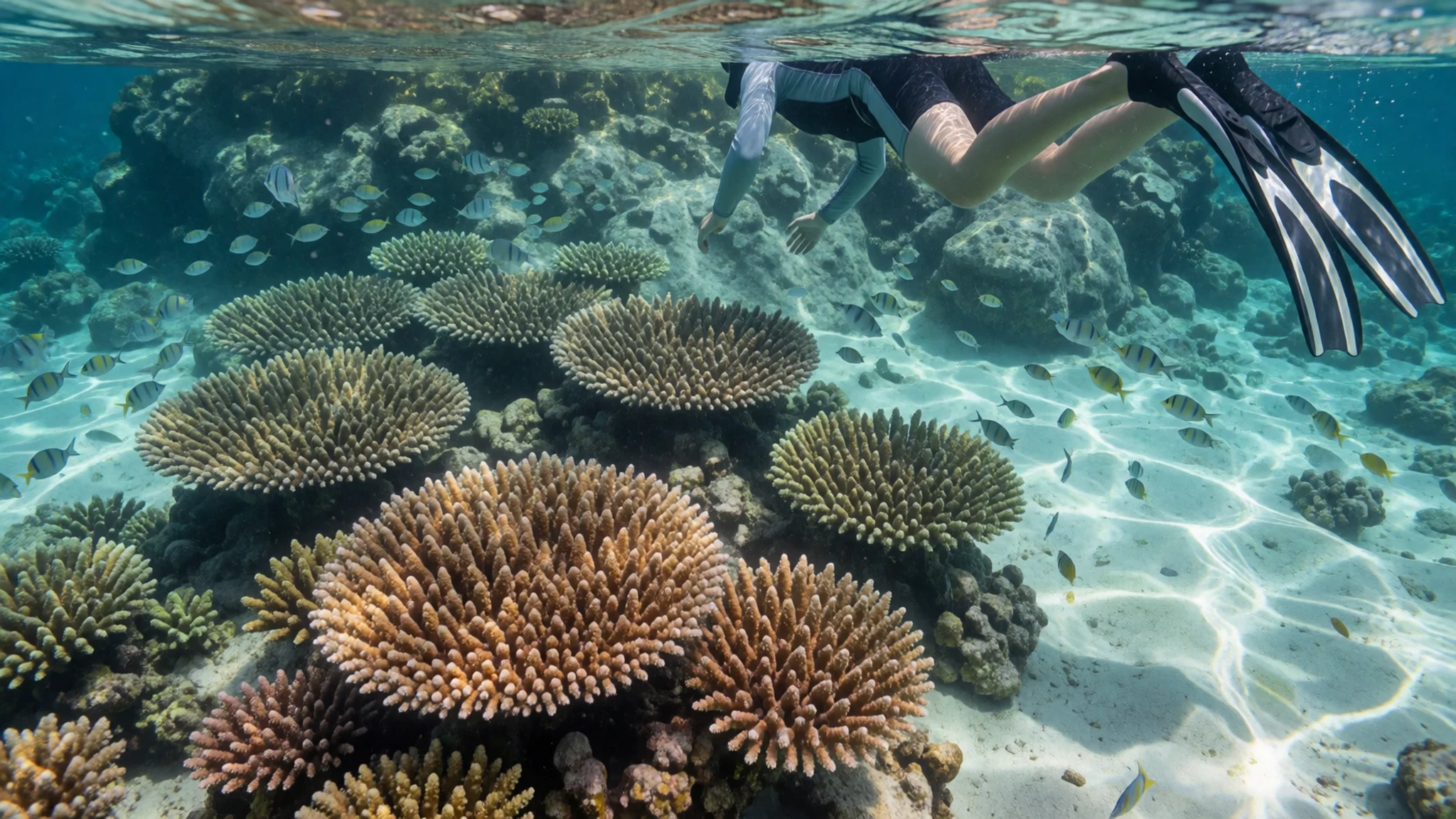
- The anchorage at dusk — Sheltered anchorage
Evenings in the Wayag anchorage are the calmest part of a visit. Boats settle among the islets, the heat drops, and the sky turns orange behind the silhouettes of the rock towers. Seabirds and bats often leave the forest at dusk. Mobile signal is absent or patchy, which makes this a rare stretch offline.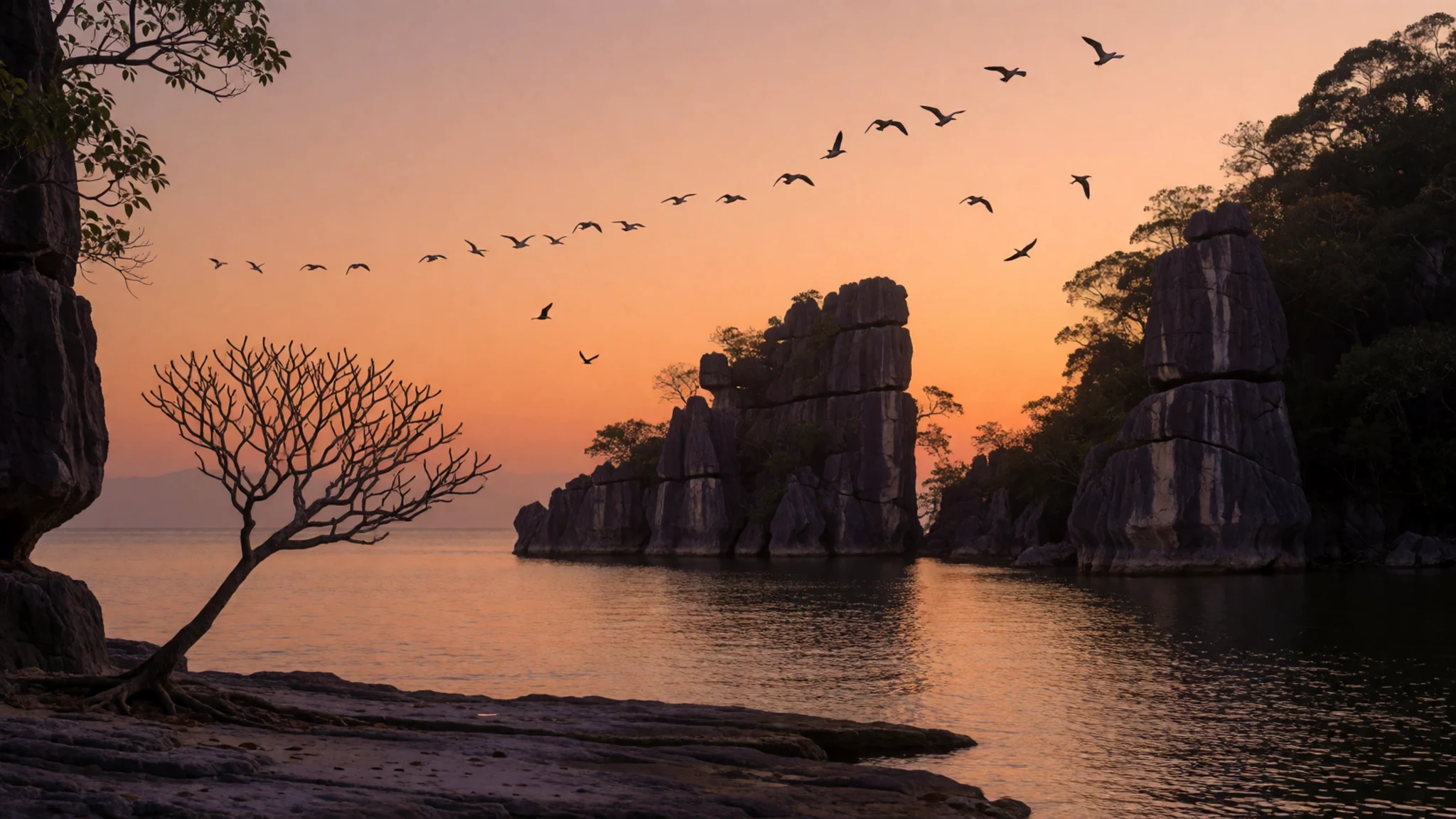
- The pocket beaches — Between the islets
Small beaches of pale sand lie between the limestone walls, good for a swim and a rest from the boat. Some are resting spots for wildlife, so guides will say where it is fine to land. Litter goes back aboard, and paths are better than pushing through the fringe vegetation.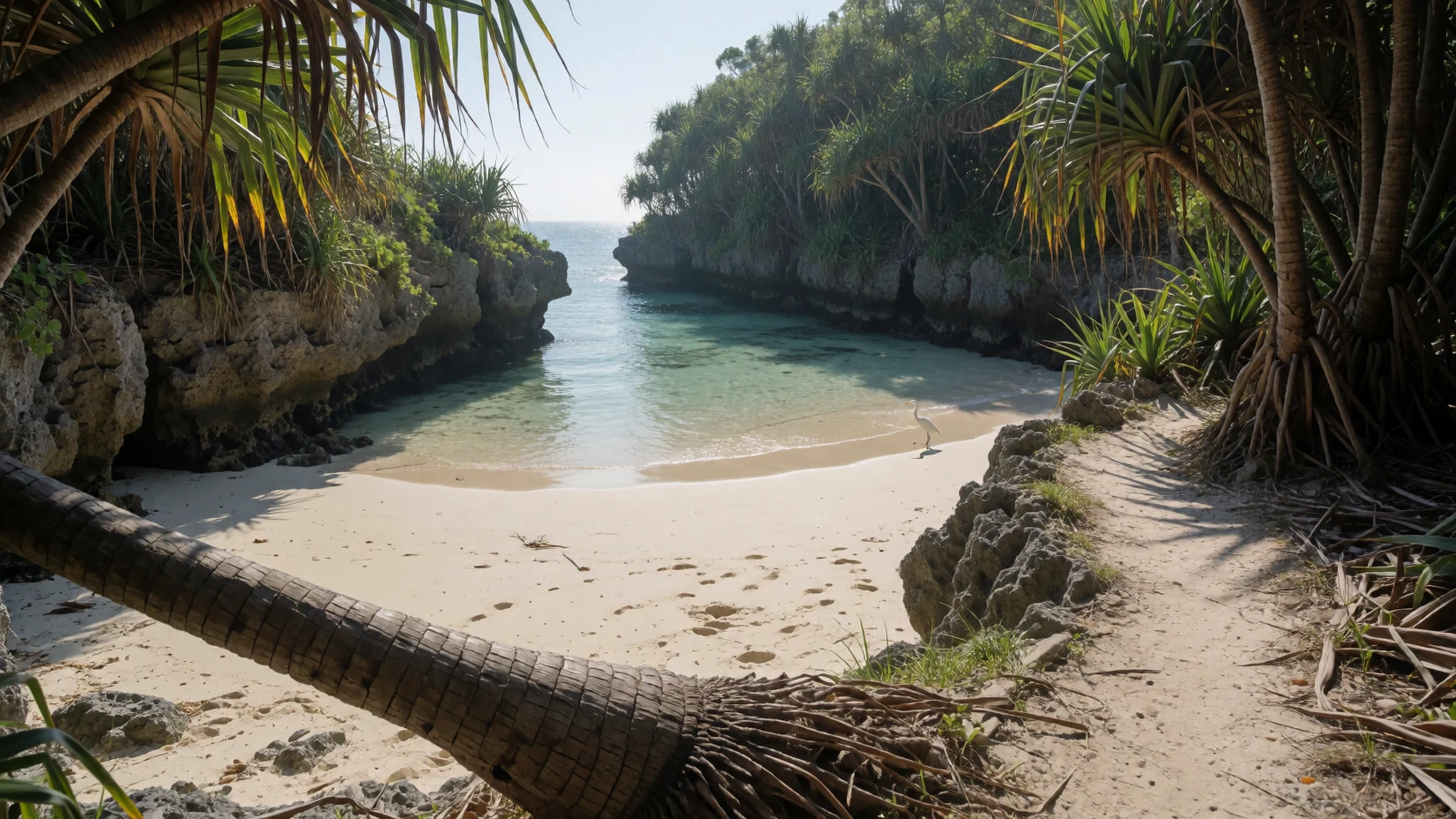
Culture
Wayag has no permanent village, so the culture a visitor meets comes from the wider Raja Ampat coast and the Papuan communities who live along it. Their ties to the sea are both practical and spiritual: fishing grounds, reefs and islets carry family names and rules about use. Customary closures of reef areas, known in eastern Indonesia as sasi, give fish stocks time to recover and sit alongside the formal park rules. Most coastal villages are Christian, and Sunday is a quiet day built around church, while larger towns such as Sorong are more mixed, with communities from across Indonesia. Boat crews and guides often come from nearby islands and carry detailed knowledge of tides, weather and safe landing spots, so their advice on the water deserves to be followed. Some people may show open curiosity about foreign visitors, with staring, laughter or requests for a photograph together; it is meant kindly and is not rudeness. Buying fruit, crafts or a simple meal directly from villagers is the most useful way to spend money, and accepting a cup of coffee when offered is part of the courtesy. Indonesia is conservative in many regions, so modest dress in villages is sensible. Ask permission before photographing anyone, and wait for a clear yes before you lift the camera.
What to wear
Wayag has no resident population, so the clothing that matters belongs to the surrounding Papuan and Raja Ampat communities. Traditional dress varies between peoples and is mostly worn for ceremonies, dances and festivals: skirts of plant fibre, beadwork and shell ornaments, and headdresses with feathers. Everyday carrying bags called noken, looped from bark or plant fibre, are still widely used across Papua. Batik cloth from Java and sarongs are common across Indonesia, and turn up at weddings and formal gatherings. Day to day, most people on the coast wear T-shirts, shorts or lightweight trousers and sandals or flip-flops, with neat shirts and dresses for church on Sundays. Visitors need clothes for sun, salt and rough limestone rather than for style. Light, quick-dry layers and a long-sleeved rash vest handle the heat and the glare off the water. A wide-brimmed hat and sunglasses with a strap are worth bringing, as is something dry for cooler evenings at sea. Footwear should be sturdy, closed and grippy for the ridge scramble, plus water shoes or reef sandals for landing on rock and coral. Swimwear is fine on the boat and at the lagoon, but in villages cover shoulders and knees, and match local habits when bathing near communities.
What to eat
- Papeda with yellow fish soup — Local eateries in Sorong
Papeda is a glossy, sticky porridge made from sago, eaten with a turmeric-yellow fish soup soured with lime. It is a staple of Papua and Maluku and tastes mild, which suits the sharp broth. Look for it in Sorong's local eateries.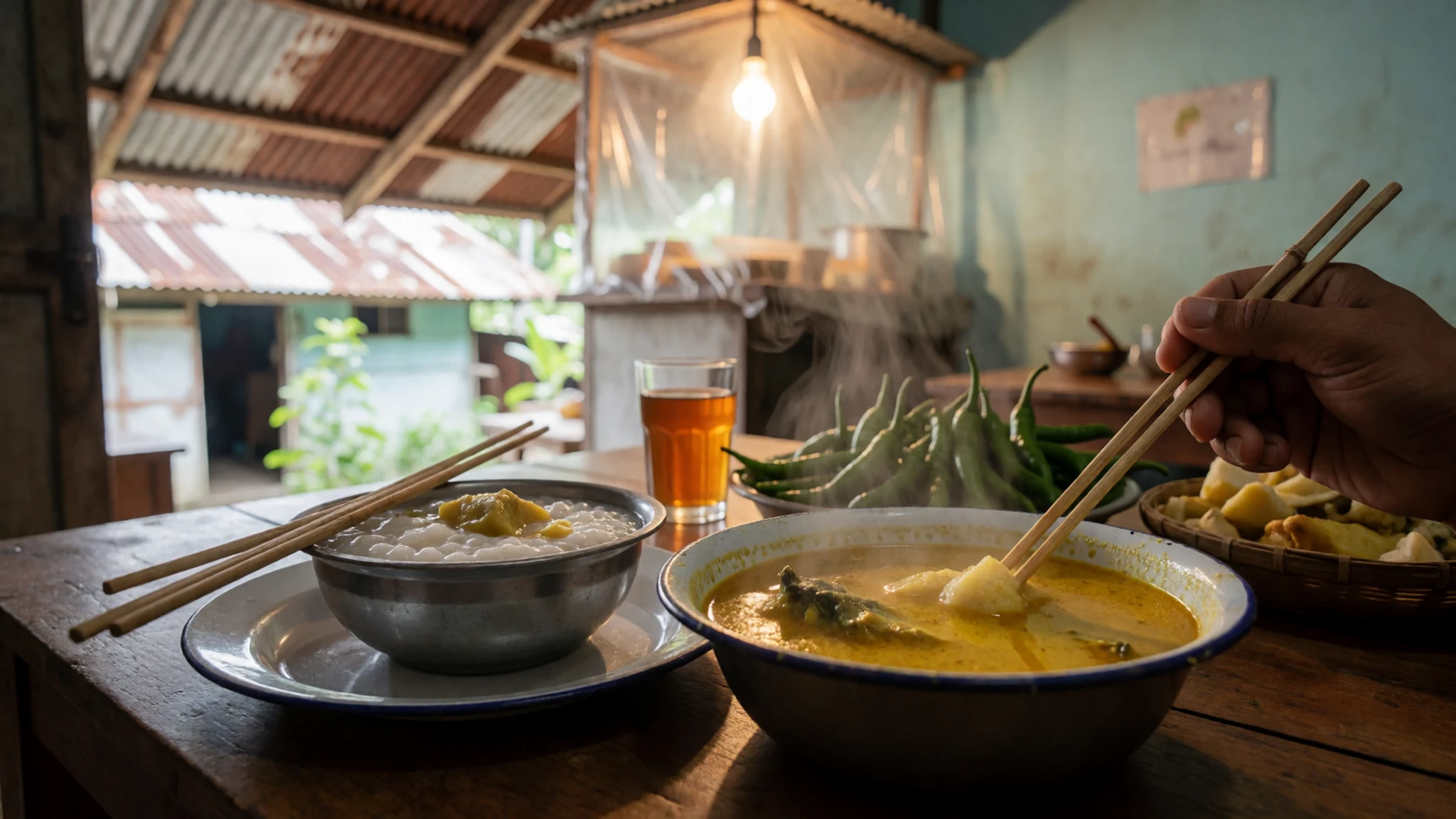
- Ikan bakar — Harbour-side stalls in Sorong and Waisai, or aboard the boat
Fresh reef or open-water fish is grilled over coconut husk or charcoal and served with rice and a chilli sambal. Cooking is simple, and the quality comes from the catch. Stalls near the harbour are the usual place, and boat crews often grill the day's fish aboard.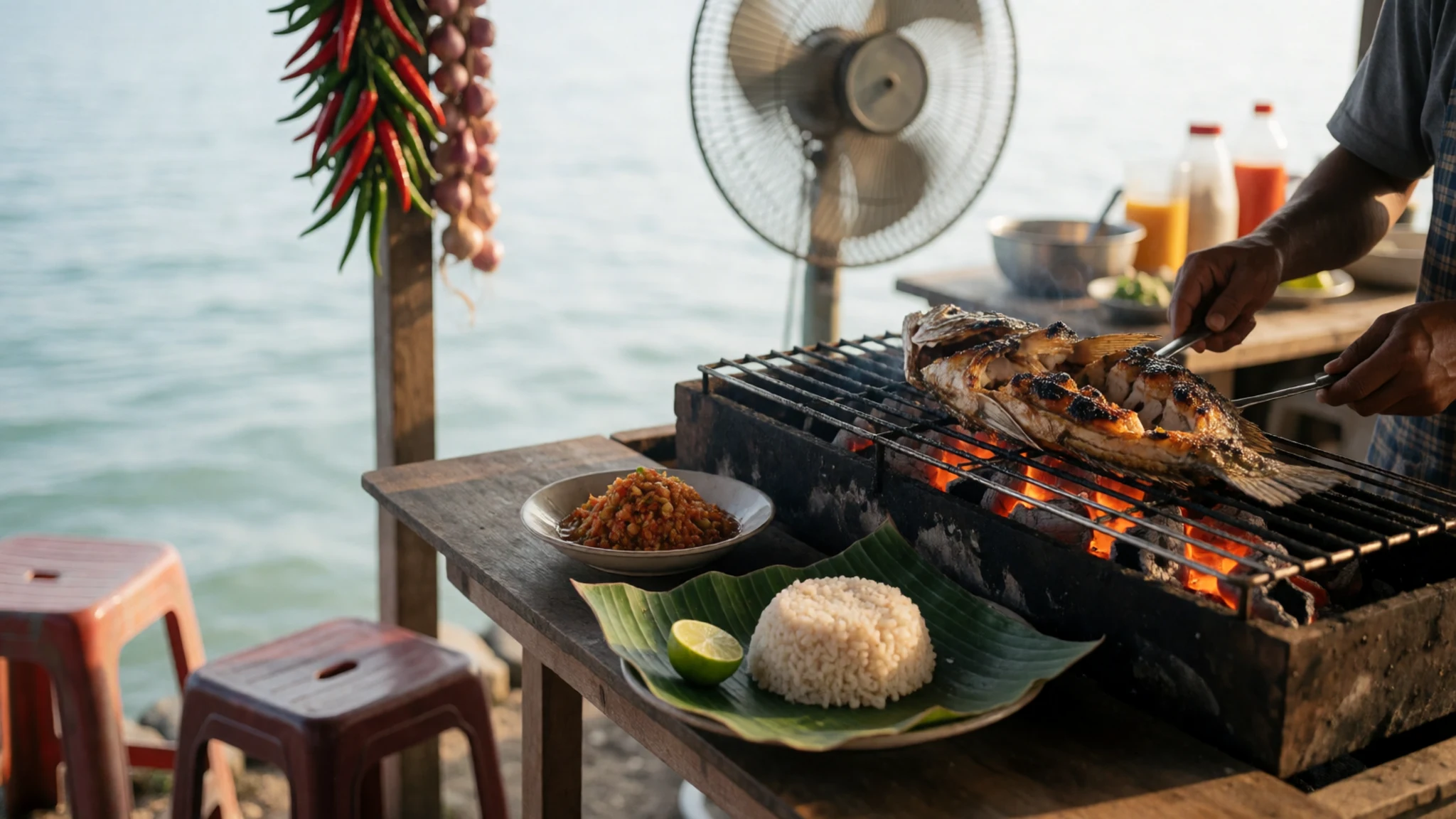
- Nasi padang — Nasi padang eateries in Sorong
Padang-style rice with a spread of small dishes, such as rendang, curried vegetables and fried fish, is sold in eateries across Indonesia and is easy to find in Sorong. Diners take only what they eat from the dishes placed on the table, which keeps the bill honest. - Nasi goreng — Homestays, boat galleys and roadside warungs
Fried rice with egg, shallots and chilli is the dependable meal across the archipelago and often turns up for breakfast on boat trips and in homestays. It may come with a fried egg or crackers. Ask for it with less chilli if that suits. - Pisang goreng — Market stalls and small kiosks in Sorong and Waisai
Banana fritters, fried in a light batter until crisp outside and soft within, are sold as a snack and as the sweet course. Eaten hot with sweet black coffee, they make a good pause at the end of a day on the water.
Plan it
Best time. October to April is the usual window, with October–November and March–April generally the easiest months for the long crossing, because the sea is calmer. The climate is hot and humid all year, and rain can arrive in any month, so ask operators about current conditions before booking.
How long. 4–6
Getting there. Fly to Sorong's Domine Eduard Osok Airport, usually via Jakarta, Makassar or another Indonesian hub. From Sorong, boats run to Waisai on Waigeo, then a further long sea transfer to Wayag; liveaboard trips normally collect guests in Sorong. Allow a buffer day around flights.
Budget. high
Tips
- Book boats or liveaboards well ahead; space is limited and the long crossing needs a confirmed operator
- Ask your operator to confirm the current conservation permit rules and fees, and check official Raja Ampat tourism sources before you travel
- Carry cash, because card machines and ATMs are scarce outside Sorong
- Bring reef-safe sun protection, plenty of drinking water and a dry bag; there is little shade on the water
- Do the ridge climb early or late to avoid midday heat and crowded boats
Etiquette
- Do not touch or stand on coral, and keep to landing spots your guide approves
- Ask before photographing people in villages, and dress modestly there
- Take all litter back aboard
Nearby
Sources
- Wikidata Q23304706 (CC0)
- Wikivoyage: Indonesia (rev 5427177) (CC BY-SA 4.0)
- Pulau Wayag (69211407), Tjetjep Rustandi (CC BY 3.0)
- Quiet Atmosphere Of Wayag (69211405), Tjetjep Rustandi (CC BY 3.0)
- Wayag Island, Raja Ampat (14280693998), Elias Levy (CC BY 2.5)
- Wayag Island, Raja Ampat (14466123504), Elias Levy (CC BY 2.5)
- Wayag Island, Raja Ampat (14467281965), Elias Levy (CC BY 2.5)
- Wayag Island, Raja Ampat (14487430093), Elias Levy (CC BY 2.5)
- Wikipedia (CC BY-SA 4.0)


Wildlife
- Bat (animal)
A fruit bat is a bat whose name hints at its love of fruit, and some kinds are nicknamed flying foxes. Look for them as evening arrives, when bats tend to leave the woodland, often at the same time as seabirds. Keep a good distance, speak softly and let a guide choose where to stand, so the animals stay calm and undisturbed. Never offer them food, however tempting; simply enjoy watching them take to the dusky sky.