Wave Rock
Wave Rock, Australia
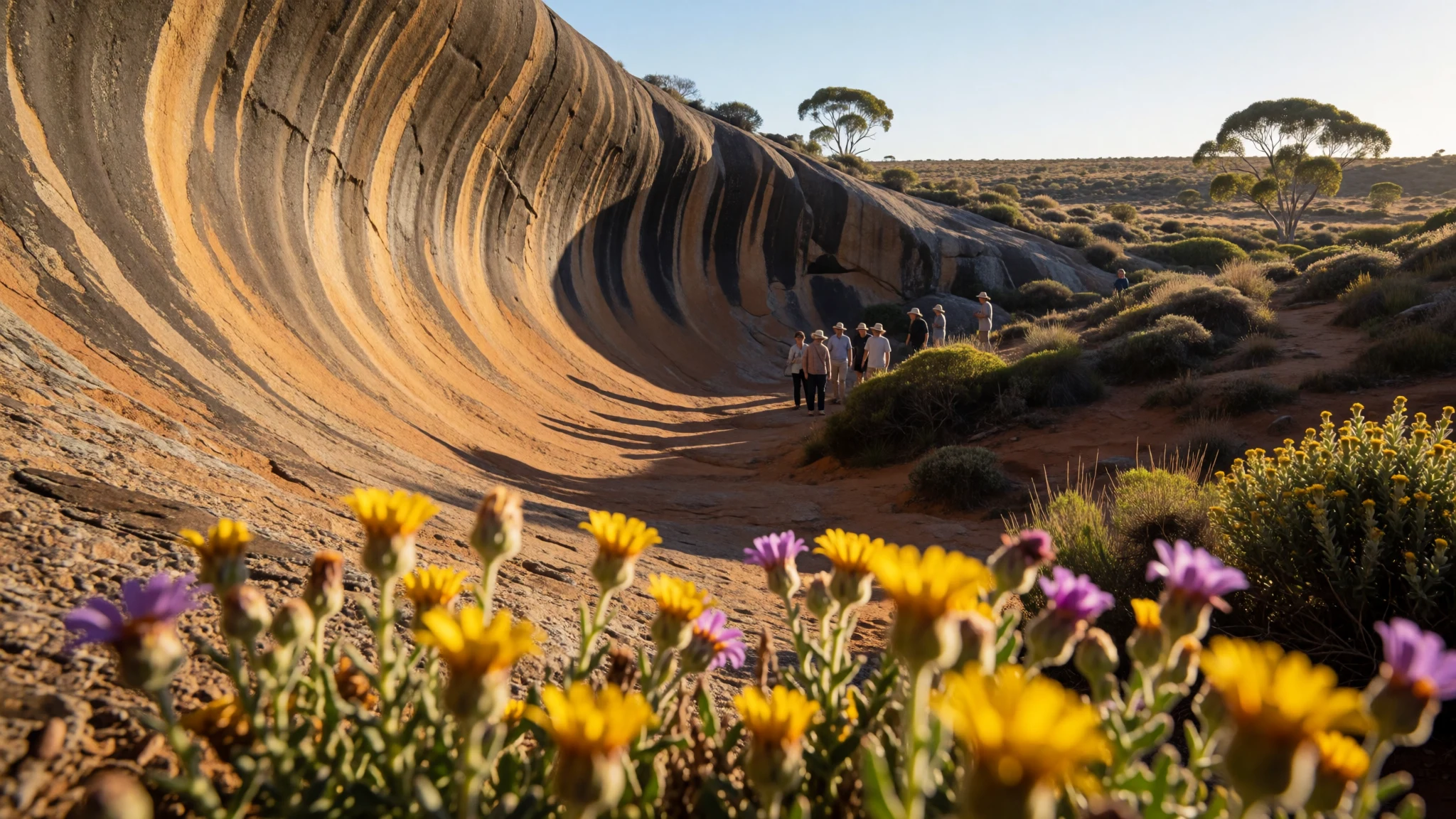
Wave Rock is a granite cliff curled like a frozen breaker, set in the dry wheatbelt of Western Australia and well worth the long drive.
The place
Wave Rock, called Katter Kich in Nyungar, stands on the north side of a solitary granite hill known as Hyden Rock. The wave itself is about 15 m high and around 110 m long, curving outwards at the base like a surfer's dream stopped mid-break. Its face is banded in greys, rusty reds and ochres, streaks left by rainwater washing minerals down the stone over a very long time.
The hill is an inselberg, a bare granite island rising out of flat farmland. It lies about 3 km east of the small town of Hyden and 296 km east-southeast of Perth, which makes it a long day trip or, better, an overnight stop. The surrounding country is wheatbelt: wide paddocks, salmon gum and mallee scrub, enormous skies and very few people.
The rock sits inside Hyden Wildlife Park, a 160 ha nature reserve, and more than 100,000 people visit each year. That sounds like a lot, but the place rarely feels packed, because the distance filters the crowds. Western Australia is huge and thinly settled, and the drive here is part of the experience: hours of paddocks, silos and sheep country before the granite appears.
The wave is the headline, but the hill behind it is as much of the visit. A path leads up and over the top, where the view runs across farmland, salt lakes and nearby granite outcrops. The official site, https://waverock.com.au/, is the place to check current opening and entry details.
Its story
Wave Rock is a Nyungar place, and Katter Kich is its name in that language. Granite country like this has long been part of the cultural landscape of the people of the region, and the rock and its surroundings should be understood as more than a photo stop.
Geologically, the shape is the product of slow weathering rather than any sudden event. The granite was once buried. Moisture in the ground chewed away at the base of the hill where the rock met the soil, hollowing it into the concave sweep seen today. Later, the soil was stripped away and the curved face was left exposed. Rain running down the top since then has carried dissolved minerals over the surface, painting the vertical stripes that make the wave look like it is moving.
The wider state helps explain why the rock matters to visitors. Western Australia covers about a third of the Australian land mass, and much of its interior is ancient, flat, eroded and dry. Against that, an outcrop that rises and curls stands out sharply, which is why a small town like Hyden has built a tourism trade around it.
The reserve now protects the hill and the surrounding bush. Tourism here is modest in scale, a few cafes, caravan parks and walking tracks, but it is the main reason most people stop in Hyden at all. Visiting well means remembering that this is both a geological curiosity and an Indigenous landscape, in a state where the treatment of sacred sites remains a live and painful public argument.
What to see
- The wave face — Hyden Wildlife Park
The main sight is the curving north wall of Hyden Rock, about 15 m high and 110 m long. The stripes are most vivid after rain and in low sun. Walk along the base to appreciate the overhang, then step back for the full curl.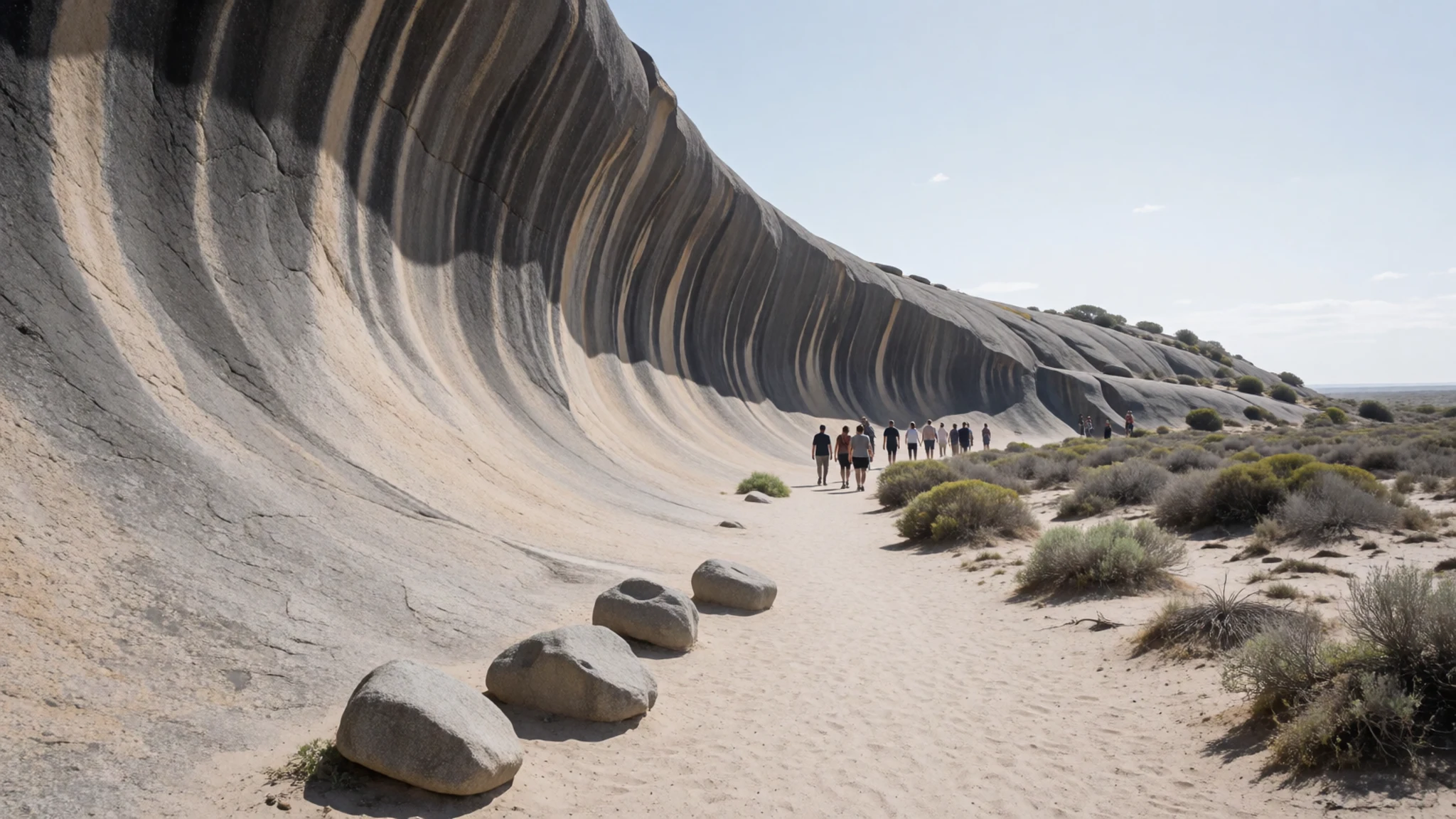
- Walk over the top of Hyden Rock — Hyden Rock summit
A path climbs the back of the granite and brings you out above the wave. The surface is smooth and can be slippery, so wear shoes with grip. From the top the paddocks and salt lakes spread out flat in every direction, and the sense of space is the reward.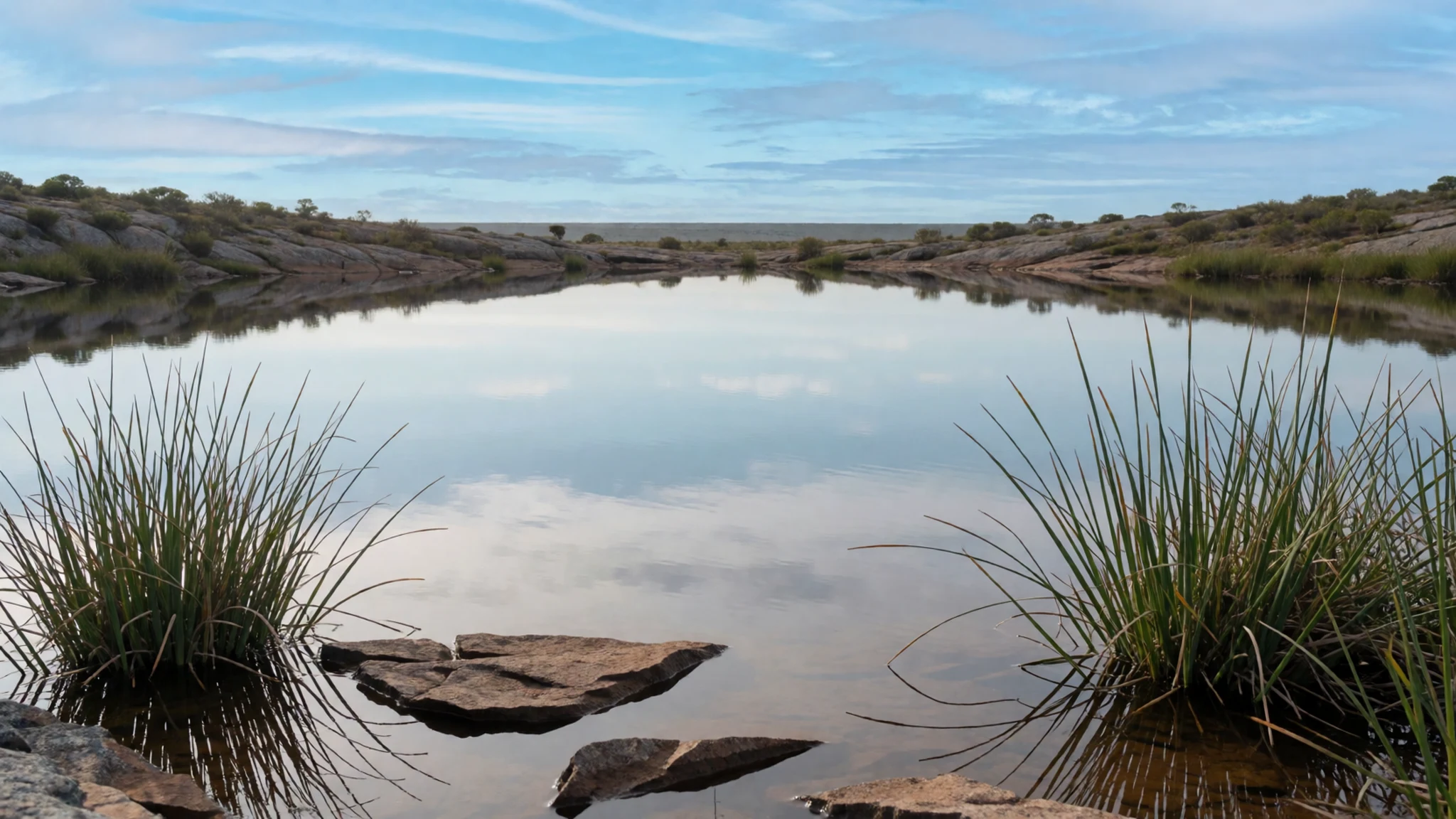
- Lake Magic — Near Wave Rock
A salt lake visible from the rock and reachable nearby. Its colour shifts with water level and light, from pale and chalky to pink-tinged. It is quiet, flat and good for a short stroll or a sunset look back toward the granite.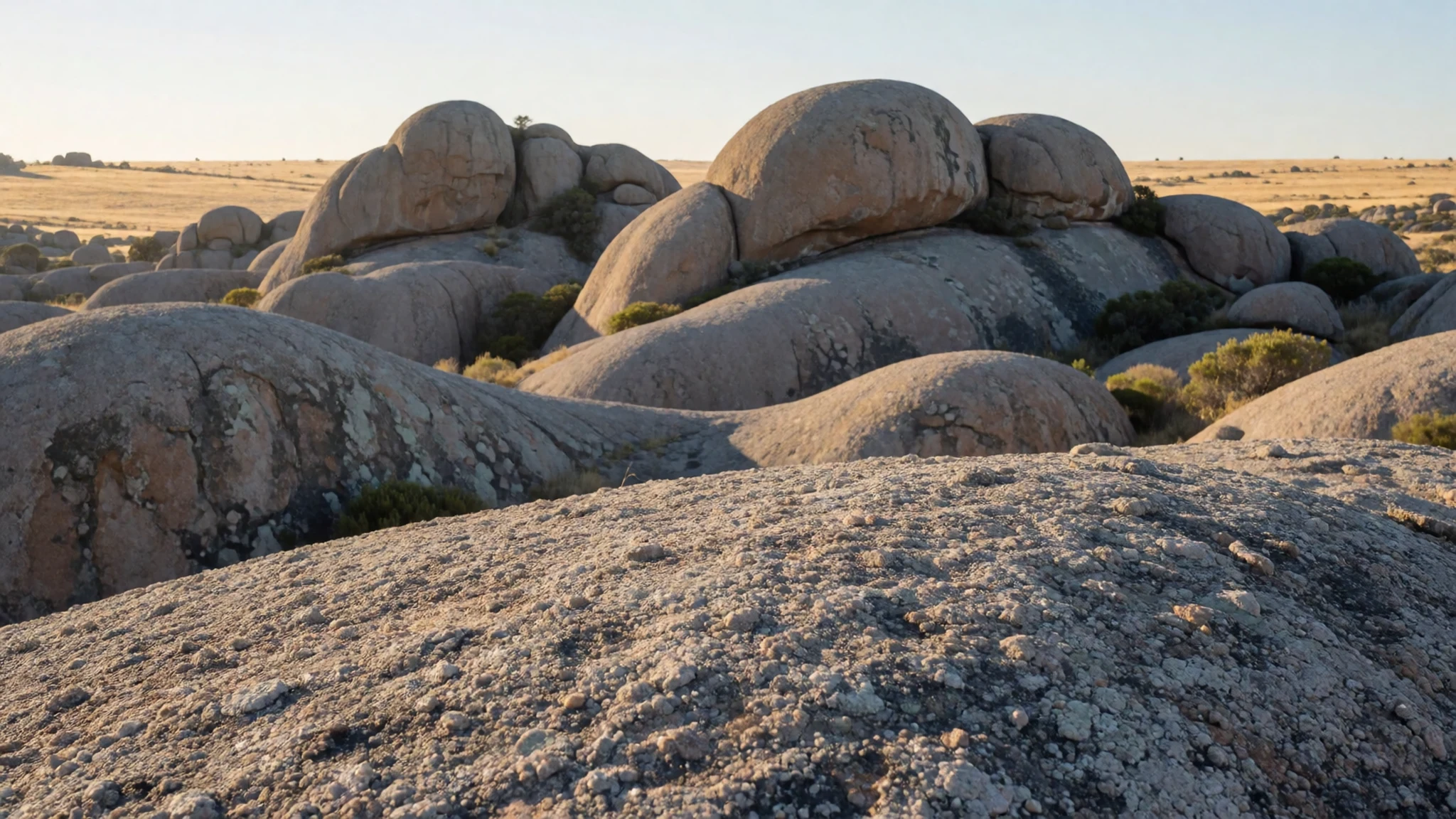
- The Humps — East of Hyden
Another granite outcrop in the same landscape, seen from Wave Rock as a low rounded lump on the horizon. It is a reminder that the wave is one of several such hills here, and a worthwhile extra stop if there is time and the roads are dry.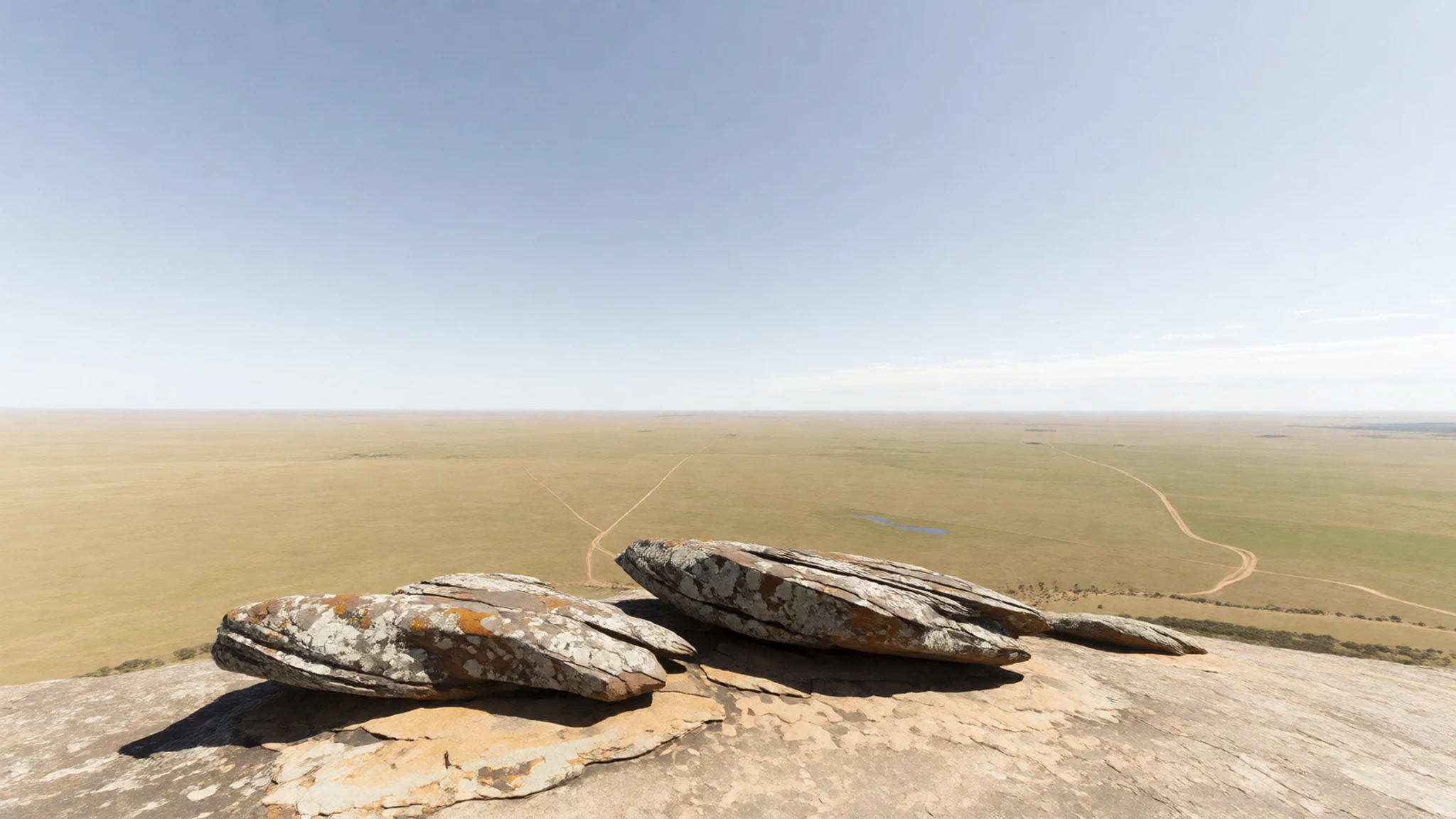
- Hyden Rock surface — Top of Hyden Rock
Away from the famous face, the top of the hill shows the texture of bare granite: weathered pools, cracks, lichen and tough little plants. Spend a few minutes looking closely, especially after rain, when small pools catch the sky.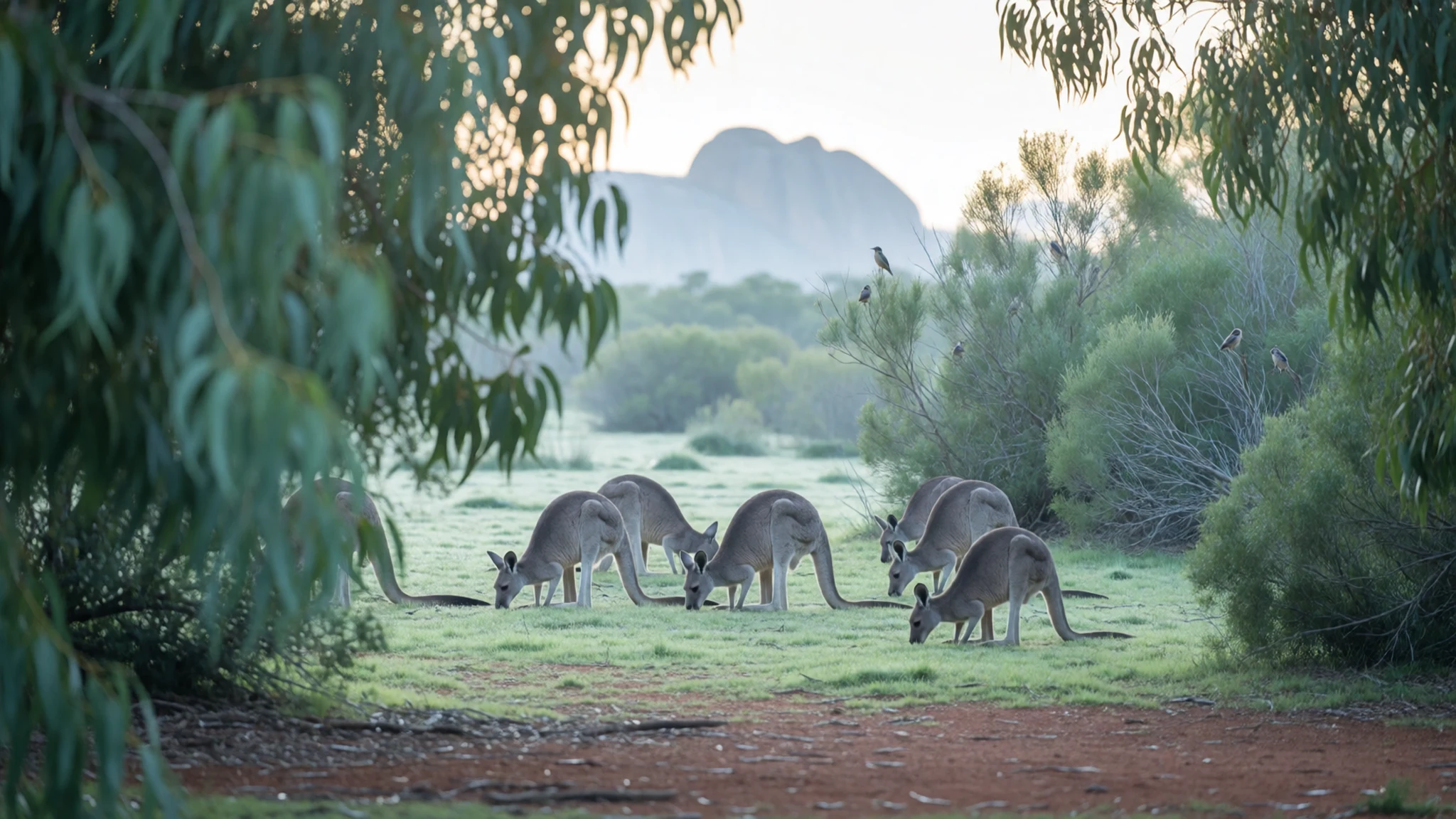
Culture
Wave Rock sits in Nyungar country, and Katter Kich is the name to know alongside the English one. Learning even that much changes how the place reads: it is not just a geological oddity but a landmark with a human history far older than the farms around it.
The wider state carries a heavy conversation about land. Mining drives much of the Western Australian economy, yet the lack of proper consultation with Indigenous landowners has seen sacred sites destroyed, among them Juukan Gorge, a 40,000-year-old gorge blown up in 2020. That history shapes how many Australians think about tourism at places like this, and it is reasonable for a visitor to approach with some humility.
Hyden itself is a farming town, small and friendly, where people are used to long distances and plain talk. Expect a relaxed, practical atmosphere: utes in the street, cafes closing early, and a habit of chatting with strangers at the pub. Evenings are quiet, and the night sky away from the town is excellent.
Plan on self-reliance. Services thin out quickly once you leave Perth, so fuel, water and food are worth sorting before long legs of the drive. Locals appreciate visitors who slow down, drive carefully on rural roads and take their rubbish away.
Stay on the marked paths and off fragile vegetation, and do not scratch, chalk or carve the rock or leave rubbish on the granite.
What to wear
Wave Rock has no single regional costume of its own, so the clothing story here has two threads: Nyungar tradition and the working dress of the wheatbelt.
Traditionally, Aboriginal peoples of south-western Australia used cloaks made from animal skins, notably kangaroo, worn for warmth in cooler months and often decorated or shaped for the wearer. Today, ceremonial and cultural dress is worn by Nyungar people at events and gatherings, and contemporary Aboriginal artists and designers use printed textiles that carry stories of country.
What people actually wear in Hyden is practical: work shirts, jeans or moleskin trousers, boots, broad-brimmed hats and sunglasses. Farm clothing is the default, with a clean shirt and boots for the pub. Nobody dresses up, and nobody minds if you do not.
For visitors, think sun, flies and slippery granite. A wide-brimmed hat, sunglasses and high-factor sunscreen matter all year. Light long sleeves and long trousers protect against both the sun and flies, which can be annoying in warm months. Shoes need real grip, such as trail shoes or light walking boots, because the rock surface is smooth and polished in places. In winter, mornings can be cold and the wind sharp, so bring a fleece or light jacket. There is no formal dress code at the rock, but modest, comfortable clothing suits the setting.
What to eat
- Pub meal in Hyden — Pubs in Hyden
Country pubs across Western Australia are dependable for an evening meal, and Hyden's small-town options follow the pattern: steak, schnitzel, fish and chips, generous portions and cold beer. A good end to a day on the rock.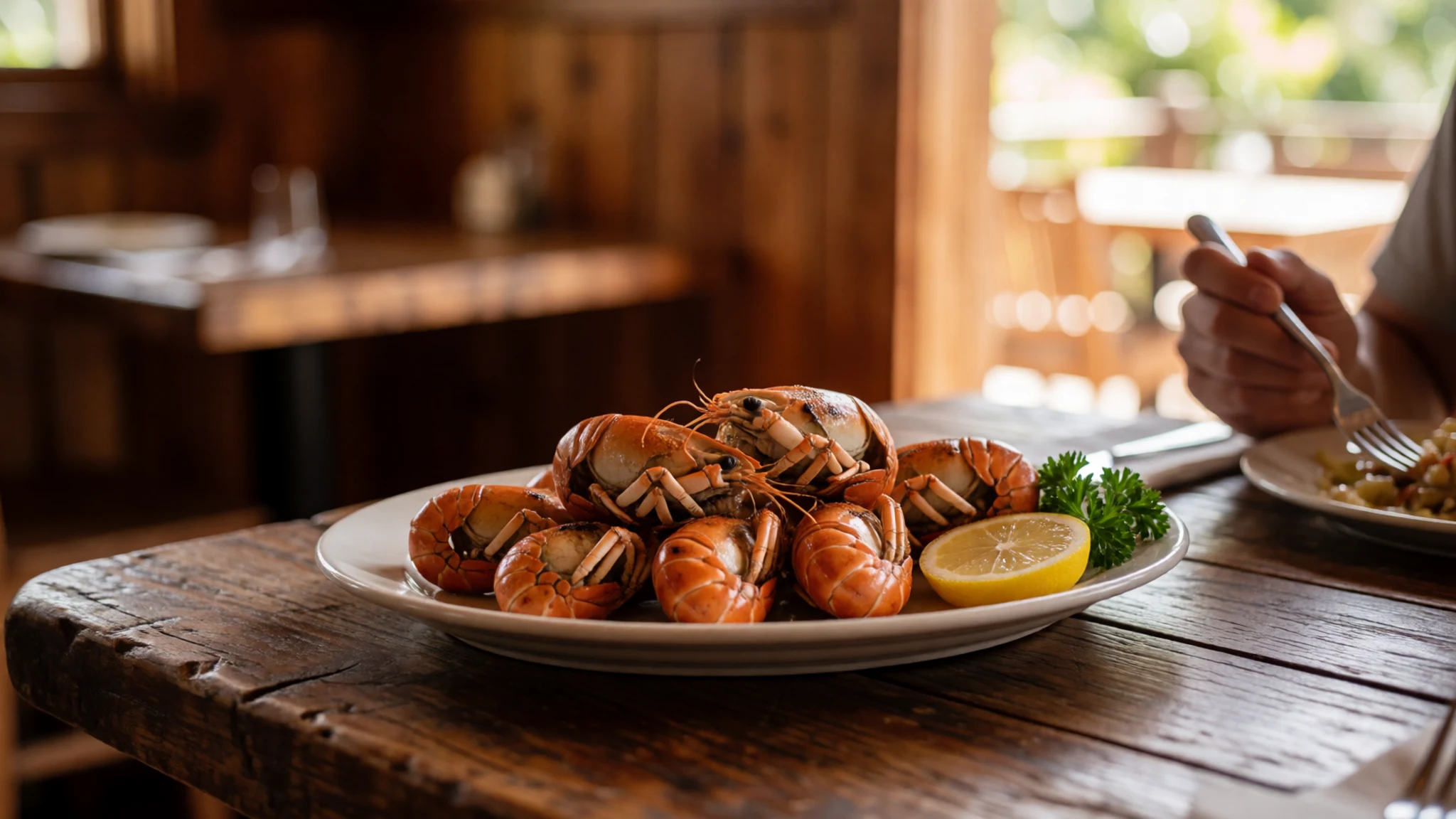
- Roadhouse burgers and sandwiches — Roadhouses along the route from Perth
On the long drive from Perth, roadhouses sell sandwiches, burgers and sometimes proper cooked meals. They are not fancy, but they are fuel, coffee and a toilet stop in a region where choices are few.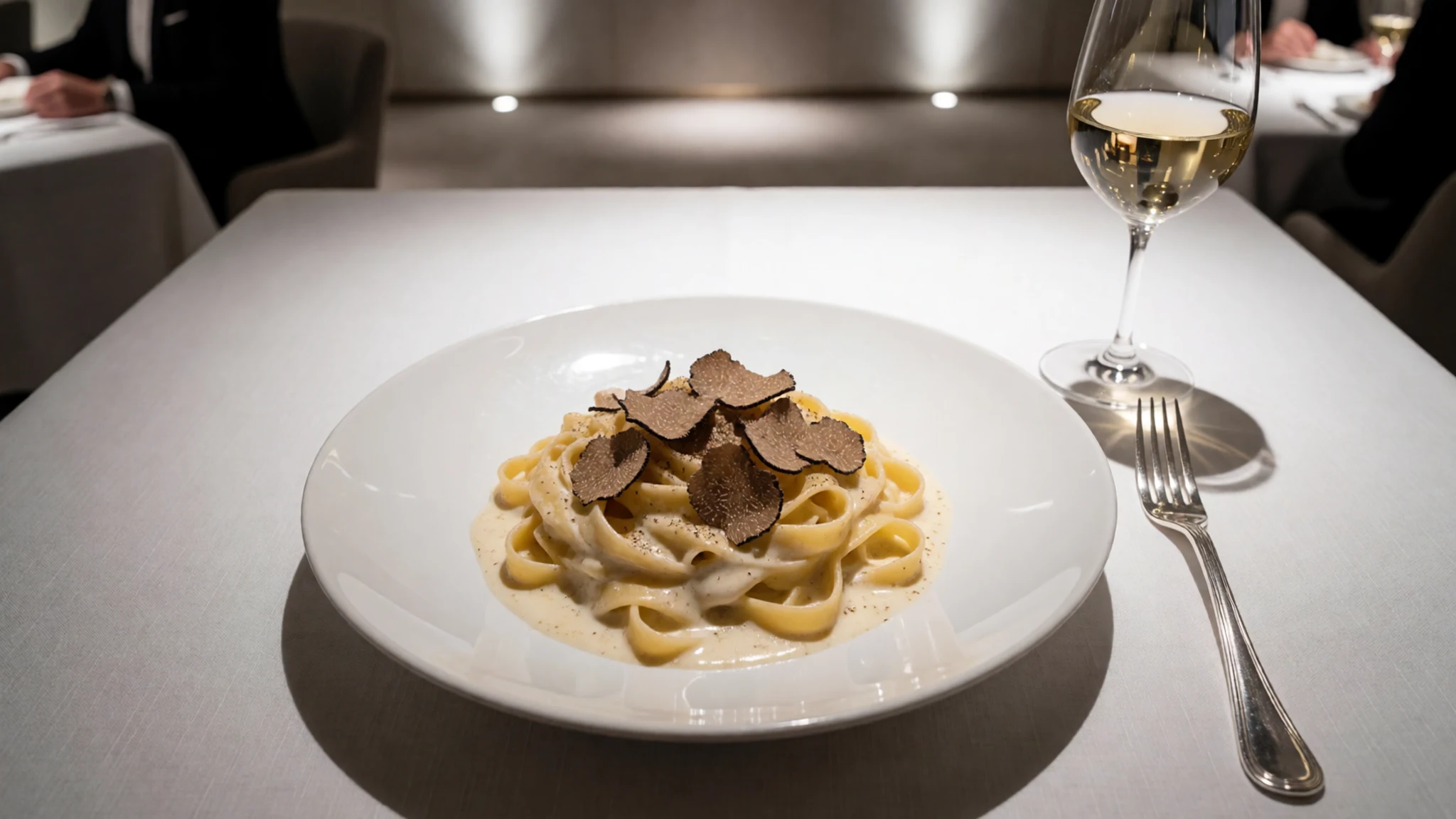
- Cafe breakfast and coffee — Cafes near Wave Rock and in Hyden
Small cafes near the rock and in town serve eggs, toasted sandwiches, cakes and flat whites. Opening hours can be short and seasonal, so confirm locally rather than assuming. - Marron — Restaurants and farms in the south-west
A freshwater crustacean from the south-west, with delicate meat quite unlike sea prawns or lobster. Some restaurants in the region serve it in season. It is a Western Australian speciality, though less likely on a Hyden menu than in the wetter south. - Western Australian truffles — Restaurants and truffle farms in the south-west
The state grows black truffles, with festivals around Manjimup. They are an upmarket extra rather than a Hyden dish, but worth knowing about if the trip continues south after the wheatbelt.
Plan it
Best time. September to November is a good window: spring brings milder weather and, in a good year, wildflowers across the wheatbelt. Summer can be very hot and flies are a nuisance, so go early in the day if you travel then. Winter is cooler, with a better chance of rain.
How long. 1–2
Getting there. Fly to Perth Airport, the state's main international gateway, then drive about 296 km east-southeast to Hyden; Wave Rock is about 3 km further east of the town. Public transport is limited, so most visitors hire a car or join a tour from Perth.
Budget. mid
Tips
- Fill up with fuel and carry plenty of water before leaving Perth
- Arrive early or late in the day for softer light and cooler walking
- Check the official site, https://waverock.com.au/, for current entry details
- Wear shoes with real grip for the walk over the top
- Book accommodation ahead in busy spring weekends, as options are small
Etiquette
- Stay on marked paths and keep off the rock face where signed
- Take all rubbish with you and do not mark the granite
- Drive carefully on rural roads and watch for wildlife at dawn and dusk
Nearby
Sources
- Wikidata Q1754627 (CC0)
- Wikipedia: Wave Rock (rev 1369754092) (CC BY-SA 4.0)
- Wikivoyage: Western Australia (rev 5395173) (CC BY-SA 4.0)
- Photo: Wave Rock, Australia — Jonathan LaRocca (CC BY 2.5)
- Photo: Wave rock (2005) — Kaliumfredrik (CC BY 3.0)
- Photo: Amazon Campus Hyderabad — Kavali Chandrakanth KCK (CC0 1.0)
- Photo: Hyden Rock surface — Gabriele Delhey (CC BY 3.0)
- Photo: Lake Magic seen from Wave Rock 01 — Calistemon (CC BY-SA 4.0)
- Photo: Lake Magic seen from Wave Rock 02 — Calistemon (CC BY-SA 4.0)
- Photo: On top of Wave Rock — Ndaaunhi (CC BY-SA 4.0)
- Photo: The Humps seen from Wave Rock — Calistemon (CC BY-SA 4.0)


Wildlife
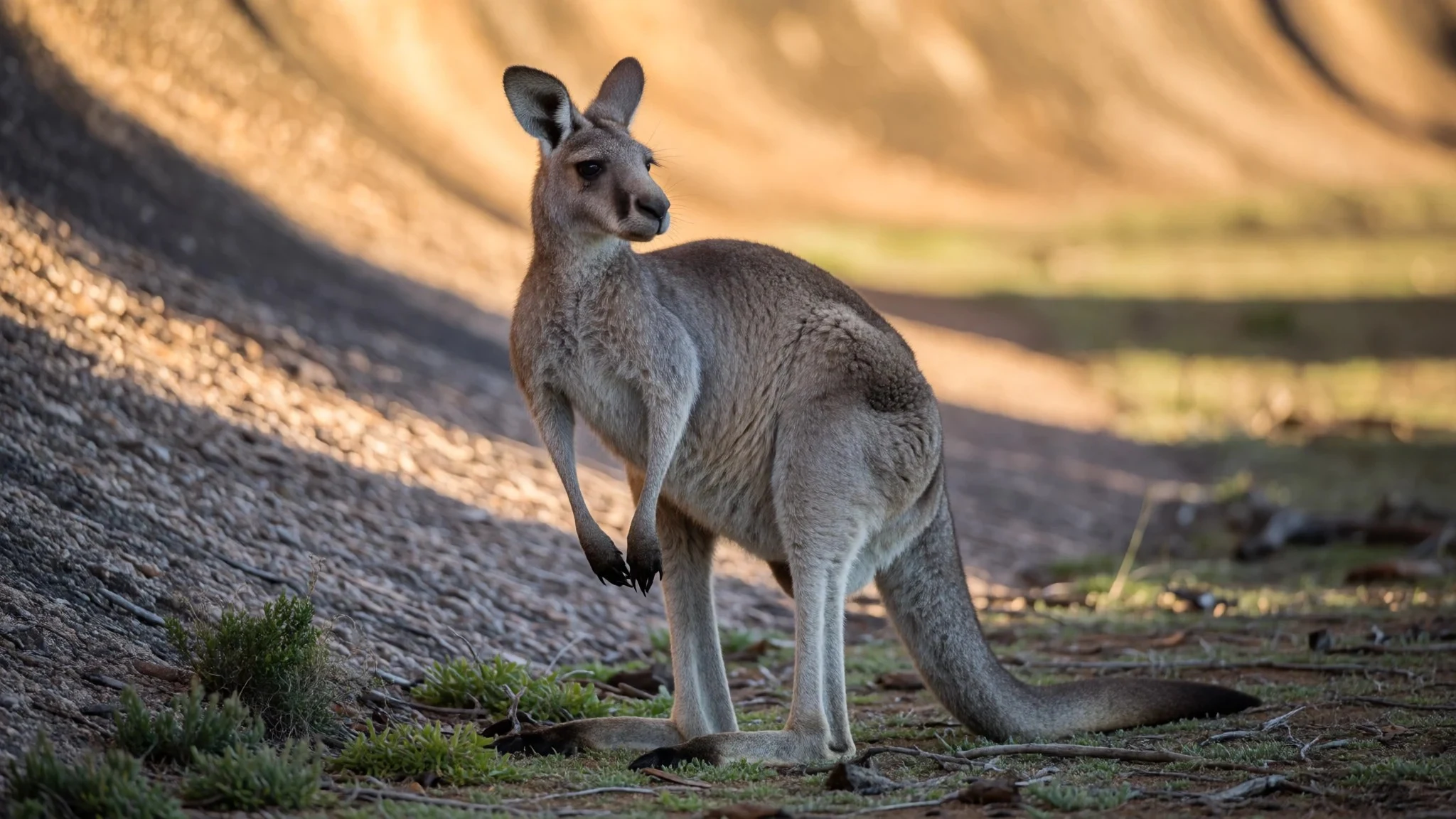
- Western grey kangaroo (animal)
The western grey kangaroo is a big, very common kangaroo, sometimes called the mallee or black-faced kangaroo, and it lives across nearly all of southern Australia. At Wave Rock you may spot one in its natural habitat as you walk the marked trails that link the different rock formations. Keep to the paths, move quietly, and watch from a respectful distance so it stays relaxed. Never feed it; let it carry on being wild.