Canberra
Canberra, Australia
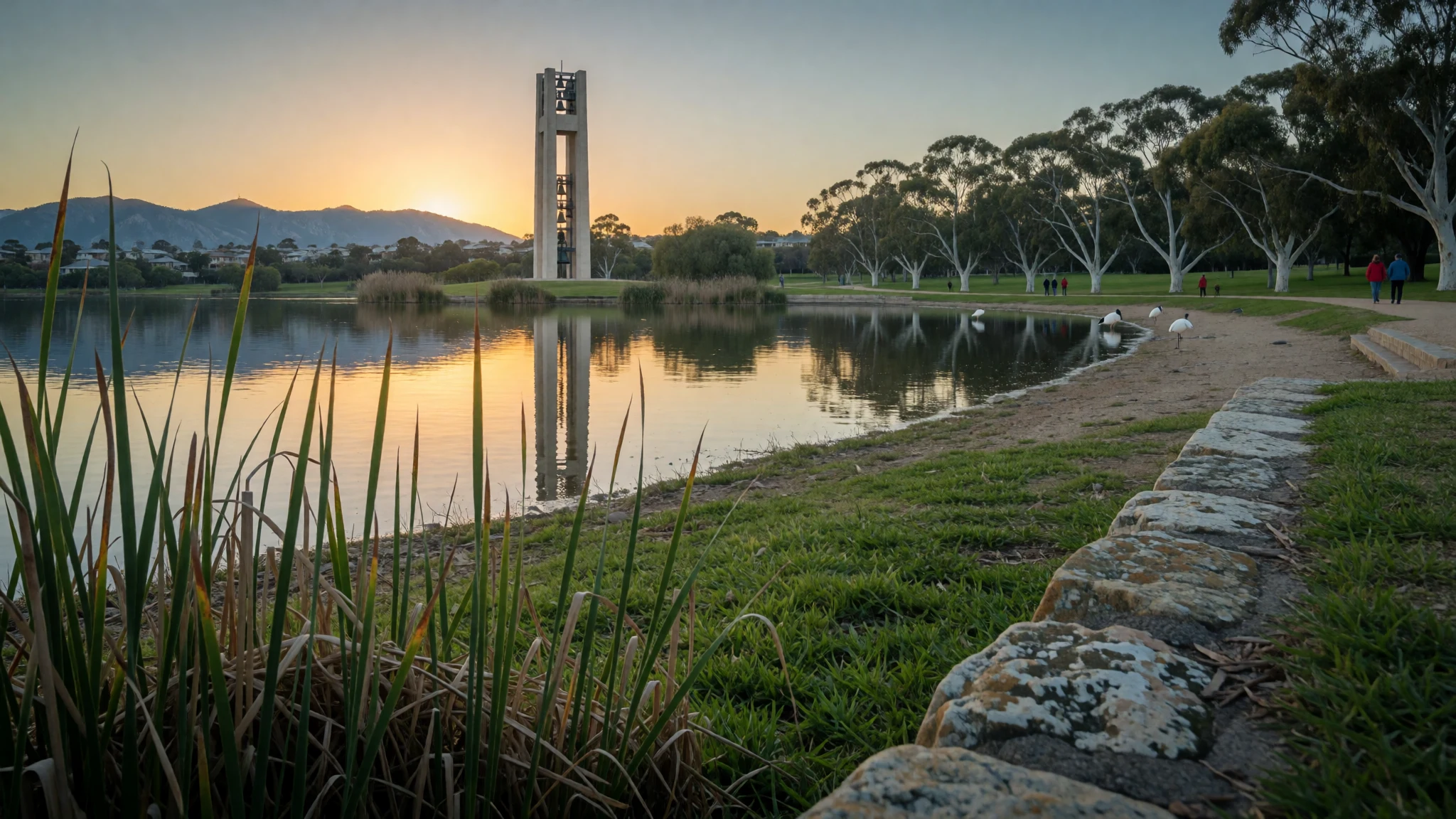
Canberra is Australia's planned capital, where lakeside museums, bush ridges and a calm pace reward anyone curious about how a nation tells its story.
The place
Canberra is the capital of Australia, a planned city of nearly half a million people on high inland ground, 578 metres above sea level. It is not on the coast, which surprises many first-time visitors, and it sits inside the Australian Capital Territory, a small patch of land surrounded by New South Wales. To the south and west the Brindabella ranges rise, the northern end of the Australian Alps, and their ridgelines frame the skyline from many suburbs. The centre is arranged around Lake Burley Griffin, an artificial lake, with the national institutions spread along its shores: parliament, the galleries, the library, and the war memorial a little way off along a broad ceremonial avenue. Distances are larger than the map suggests, because the city is built around wide roads, roundabouts and green belts rather than dense streets. Beyond the lake lie town centres such as Civic, Braddon, Kingston and Manuka, each with its own cafes and eateries. Bush reserves reach almost into the suburbs, so a walk up Mount Ainslie or Black Mountain is a short drive from a museum. The climate is continental: cold, frosty winters, hot dry summers, and clear, mild springs and autumns that suit walking. Canberra is quieter than Sydney or Melbourne, and weekends can feel hushed, though festivals fill much of the calendar. It works best as a two- or three-day stop for people interested in how a country presents itself. Those expecting a beach-and-skyline city may be disappointed; those who like collections, walks and good coffee tend to leave pleased.
Its story
Canberra stands on country that has belonged to Aboriginal peoples for many thousands of years. The Ngunnawal and Ngambri are the best-known groups connected to the area, and others, such as the Ngarigo, also claim ties to it. Early British settlers described a clan living around Sullivan's Creek, with ceremonial ground at the foot of Black Mountain, and another, the Pialligo clan, whose land lay near today's airport. People managed the landscape with fire, grew yams and hunted. Rock shelters, paintings, engravings, burial places, quarries and stone tools survive as evidence, and Ngunnawal men still hold ceremony beside the Murrumbidgee River. European farming came in the early decades of the nineteenth century, and buildings such as St John's Anglican Church and Blundells Cottage remain from that era. The modern city exists because of federation, when the separate Australian colonies joined as one nation. Sydney and Melbourne each wanted to host the new government, and neither would yield, so a fresh site between them was chosen as a compromise. A purpose-built capital was founded and formally named Canberra in 1913. The name is usually linked to an Aboriginal word, spelt Kanbarra in Ngunawal. The layout that followed was designed rather than grown, which explains the lake, the axes between hills, and the sense that every view was composed. Walking its avenues today means moving through both a young planned city and a very old landscape.
What to see
- Mount Ainslie lookout — Mount Ainslie, north of the centre
Mount Ainslie gives the clearest picture of how Canberra was laid out. From the summit lookout, the avenue runs straight from the war memorial across the lake to the parliament buildings. Go on a clear morning or near sunset, and take the walking track if energy allows. Wind can be sharp, so carry a layer.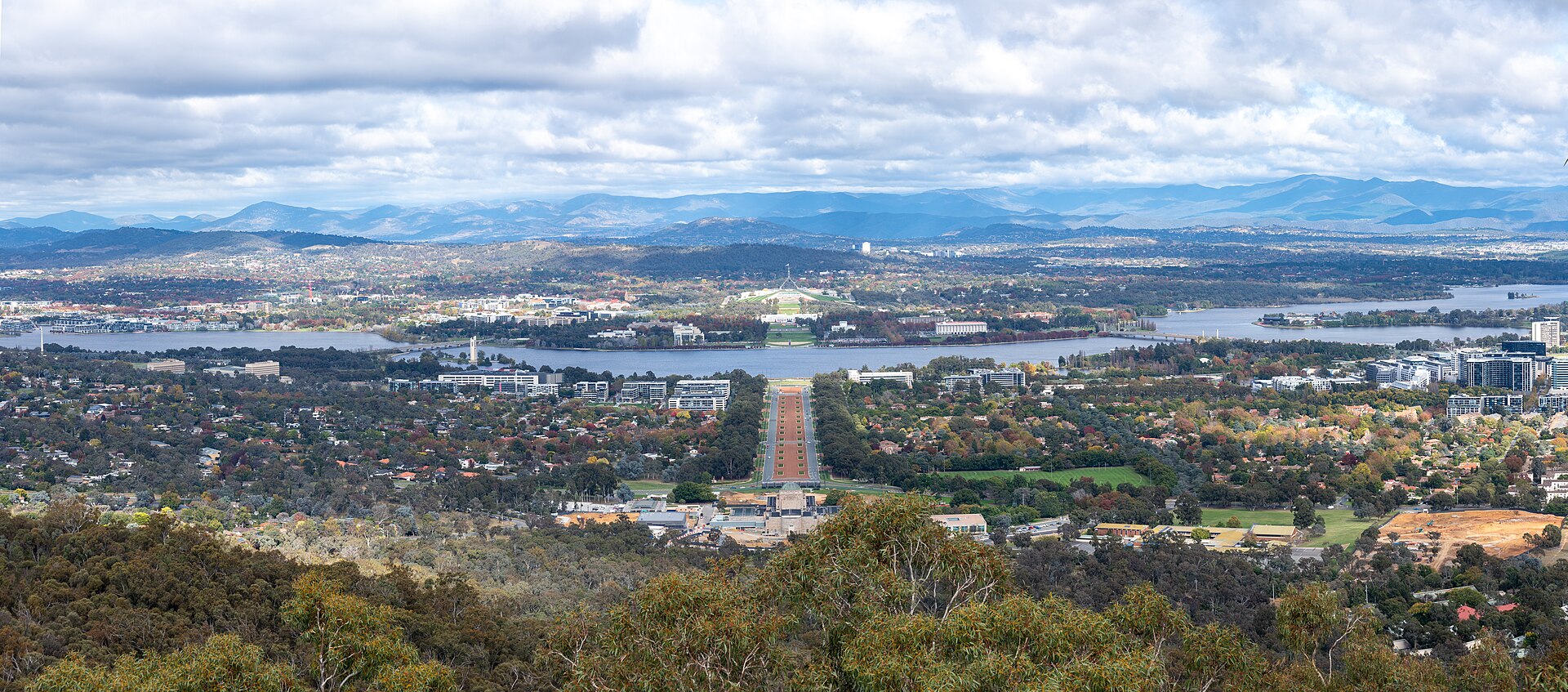
- Australian War Memorial — Campbell, at the north end of the ceremonial avenue
The Australian War Memorial combines a commemorative shrine, a large museum and a quiet courtyard of names. It is sombre and absorbing, and a thorough visit takes hours. The site faces the parliament buildings down a long avenue. Check the official website for ceremonies, tours and any closures before planning the day.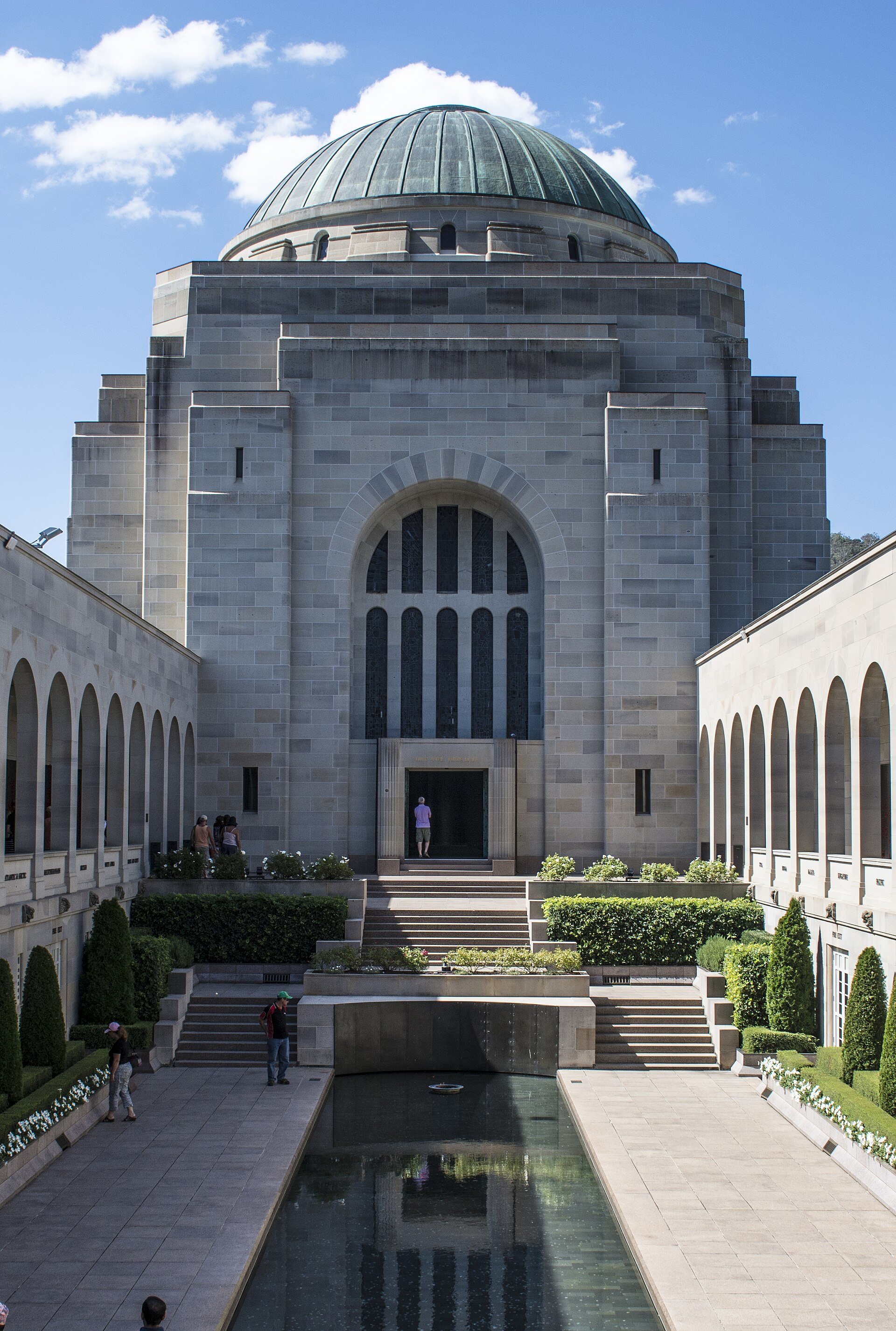
- Old and new Parliament Houses — Parkes and Capital Hill
Old Parliament House, a white building from the early years of the capital, now works as a museum of democracy, while the current Parliament House sits on the hill behind it. The new building has a grass-covered roof visitors can often walk on. Security checks apply, and sitting days change what is open.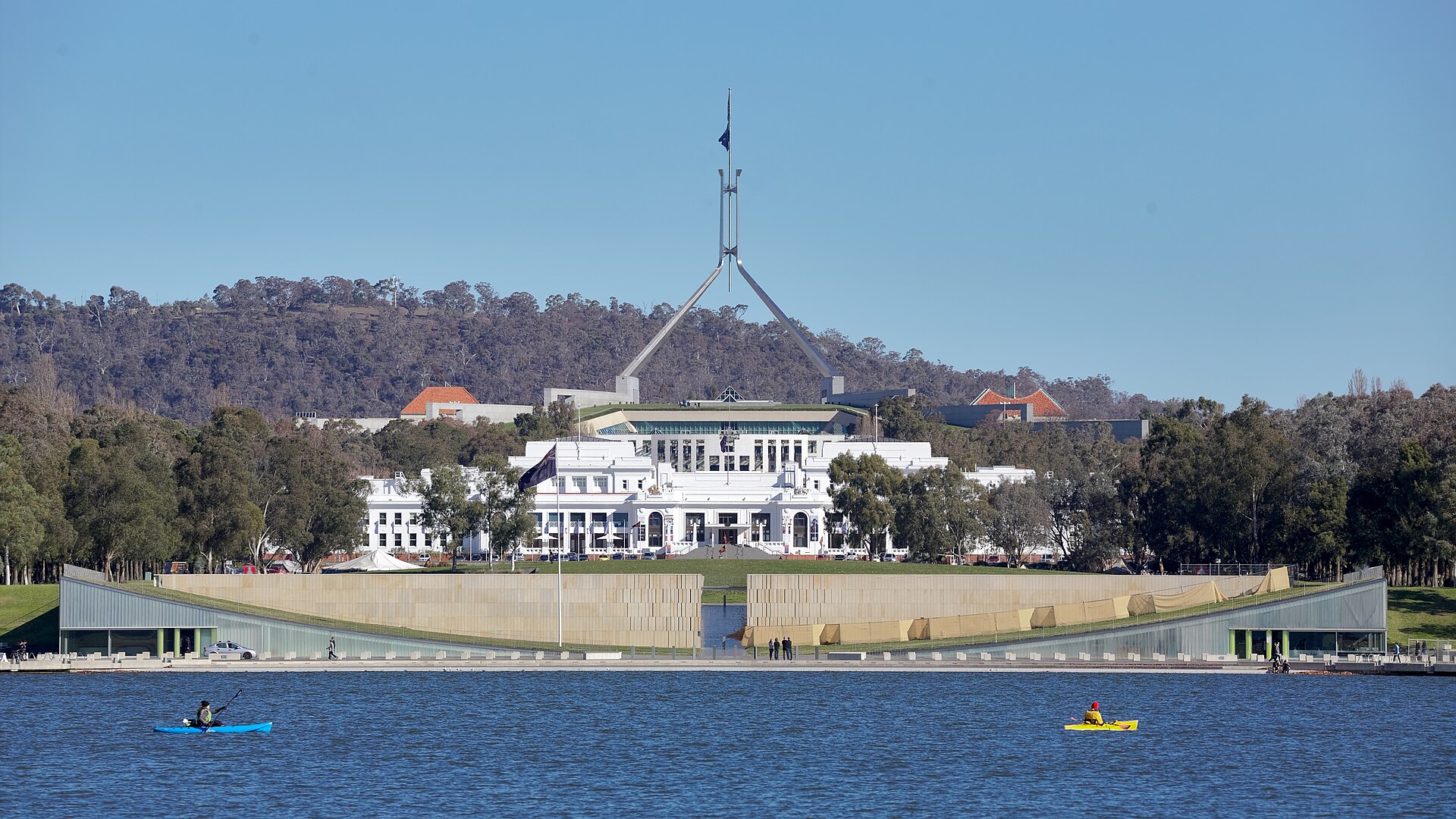
- National Gallery of Australia — Parkes, near the lake
The National Gallery of Australia holds a wide national collection, including Aboriginal and Torres Strait Islander art, which is the reason to go. The concrete building is fronted by a sculpture garden that is pleasant even in cooler weather. Special exhibitions are ticketed separately, so check the gallery's website first.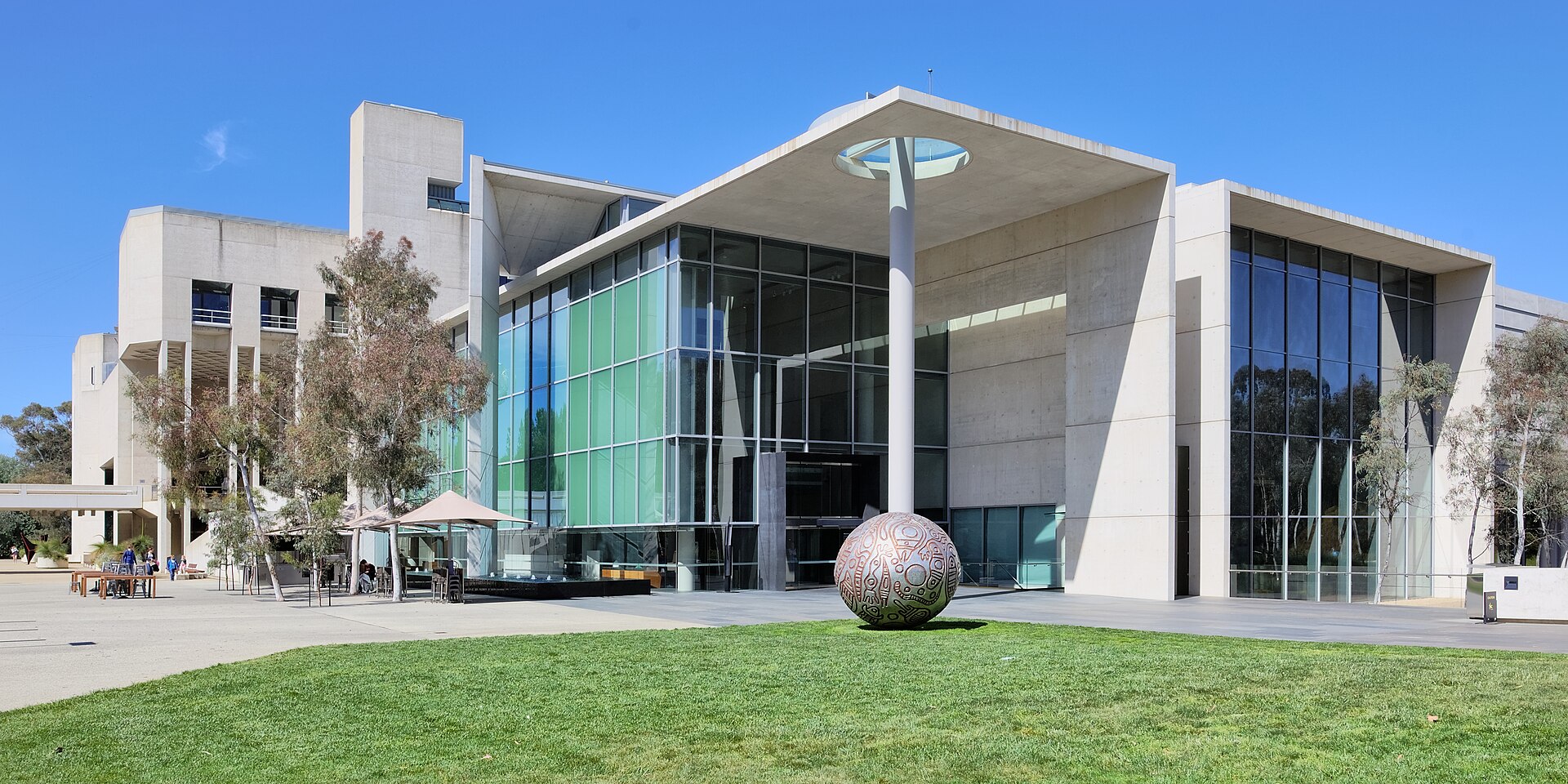
- National Carillon — Aspen Island, Lake Burley Griffin
The National Carillon stands on a small island in Lake Burley Griffin, a tall tower of bells reached by a footbridge. Its reflection in still water makes it a favourite for photographs at dawn. Recitals are scheduled rather than constant, so check the official listings. The shoreline path around the lake is flat and easy.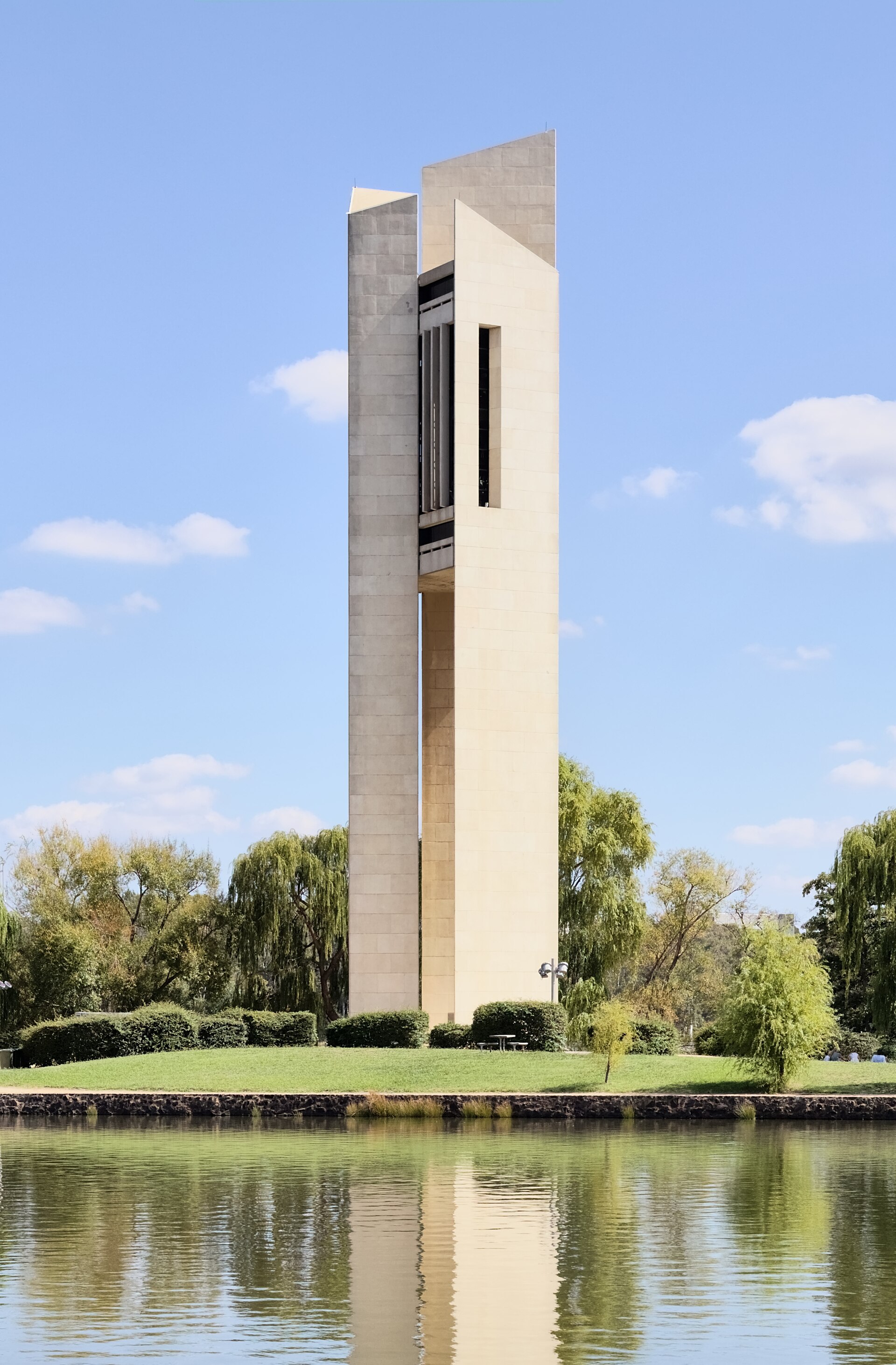
- Floriade at Commonwealth Park — Commonwealth Park, lakeside
Floriade is Canberra's spring flower festival, held in Commonwealth Park through September and October, with tulips as the main feature alongside many other beds and displays. Weekends and fine days draw crowds, so a weekday morning is calmer. Dates and entry arrangements change, so check the official site before travelling.
Culture
Canberra's character comes from being a government and university town. Many residents work for the public service, parliament, embassies or the research institutions, and the city has a well-informed, politely reserved feel. The Australian National University in Acton and the University of Canberra in Bruce bring in students from across Australia and overseas, which keeps the cafes and cinemas busy and the population younger than the quiet streets suggest. Aboriginal heritage is part of the city's story, and acknowledgements of the Ngunnawal and Ngambri peoples are common at public events and in institutions. Embassies add to the mix, and the calendar reflects this: the Multicultural Festival each February includes an international food fair, the Thai Food and Cultural Festival is held in September at the Royal Thai Embassy, and Floriade brings spring crowds to the lake. Summernats, a festival of modified cars at the start of the year, is loud and has a very different audience, so those who dislike engine noise might plan around it. Coffee culture is serious, and many eateries close on Sundays, so Sunday plans deserve a check. Public buildings across the territory are smoke-free. Everyday manners are relaxed: people queue, thank bus drivers and speak casually. At the Australian War Memorial and other memorials, keep your voice low, follow signs about photography, and treat the space as a place of remembrance.
What to wear
Canberra has no single city costume, but the older dress traditions of the region belong to the Aboriginal peoples of south-eastern Australia. Cloaks sewn from possum skins, decorated on the inner face with burnt designs, were worn for warmth and ceremony, alongside woven fibre bags and ochre body painting. Today these are made and worn by community members for ceremony, cultural events and exhibitions, and some appear in museum collections. Everyday clothing is practical and understated. Office wear in the centre is smart-casual, often a jacket or knitwear, while students and weekenders favour trainers, jeans, puffer jackets and outdoor labels. Walkers and cyclists dress for the weather rather than the occasion. Visitors should plan for big swings in temperature. Winter mornings are cold and frosty, so bring a warm coat, a scarf and closed shoes. Summer is hot, dry and bright, calling for a wide-brimmed hat, sunglasses, sunscreen and light cotton layers. Spring and autumn suit a jumper and a light rain jacket. Comfortable walking shoes matter, since sights are spread out and bush tracks can be rough. No special dress code applies to museums or galleries, but smarter, quieter clothes suit memorials and parliamentary visits, and shoulders and knees need not be covered anywhere.
What to eat
- Flat white and brunch — Cafes in Braddon, Civic and Kingston
Coffee is a serious matter here, and the flat white, a small milky espresso drink, is the local standard. Pair it with eggs, toast or a seasonal brunch plate. Cafes are nearly everywhere, but Braddon and the Civic lanes are the easiest places to start. - Modern Australian dinner — Restaurants in Manuka, Kingston and suburban shopping centres
Modern Australian cooking blends local produce with Asian and European techniques, usually served as shared plates or a set menu. Locals often say some of the best tables are tucked into small suburban shopping centres, so ask residents rather than relying only on the central strips. - Noodles and Asian eateries — Dickson's main strip and nearby side streets
Canberra's student and diplomatic communities have built a wide range of Asian eateries, from bowls of noodle soup to dumplings, curries and grilled skewers. Lunch queues are common near the offices. Many places are small and informal, with cash and cards both usually accepted. - International festival food — Festival sites in the city centre and at the Royal Thai Embassy, Yarralumla
At the Multicultural Festival in February, a large international food fair offers dishes from many countries on one site, from dumplings to flatbreads and sweet pastries. The Thai festival in September brings curries and street snacks. Dates change, so check the official listings. - Canberra district wine — Cellar doors in the countryside north of the city
The cool-climate vineyards just outside the territory produce wines such as riesling and shiraz, and many have cellar doors open for tastings and lunch. A designated driver or organised tour is wise. Opening days vary by season, so check each winery's website before setting off.
Plan it
Best time. September to November for spring colour and Floriade, and March to April for settled autumn days. Winters are cold and frosty, and summers are hot and dry.
How long. 2–3
Getting there. Canberra Airport has flights from all Australian state capitals, and a stopover link to Nadi in Fiji; Sydney is the nearest major international gateway, with Melbourne as an alternative. From the terminal, the city centre is a short road trip by taxi, ride share or local bus. Check the official site, act.gov.au, for current transport details.
Budget. mid
Tips
- Hire a car or plan taxis and ride shares, as sights are spread out and the city is not very walkable
- Check whether eateries are open on Sundays, since many close
- Book popular exhibitions, tours and Floriade-season accommodation well ahead
- Carry layers and water, as temperatures swing widely across a day and the air is dry
- Climb Mount Ainslie at sunrise or sunset for the best view and softer light
Etiquette
- Keep quiet and respectful at the War Memorial and other memorials
- Expect security checks at Parliament House and follow staff instructions
- Do not leave the marked paths in bush reserves, and take rubbish away
Nearby
Sources
- Wikidata Q3114 (CC0)
- Wikipedia: Canberra (rev 1382572761) (CC BY-SA 4.0)
- Wikivoyage: Canberra (rev 5427636) (CC BY-SA 4.0)
- EOS 6728 — Tim J Keegan, via Wikimedia Commons (CC BY-SA 2.0)
- View from Mount Ainslie Lookout — The 3B's, via Wikimedia Commons (CC BY 2.5)
- The National Carillon, Canberra — Thennicke, via Wikimedia Commons (CC BY-SA 4.0)
- Canberra (Australian War Memorial) — Goran Has, via Wikimedia Commons (CC BY 2.5)
- Torre Telstra, Canberra — Nelson Pérez, via Wikimedia Commons (CC BY 3.0)
- National Library of Australia, Canberra, 2023 — Kgbo, via Wikimedia Commons (CC BY-SA 4.0)
- The National Gallery of Australia — Thennicke, via Wikimedia Commons (CC BY-SA 4.0)
- Old and new Parliament Houses — Thennicke, via Wikimedia Commons (CC BY-SA 4.0)


