Adelaide
Adelaide, Australia
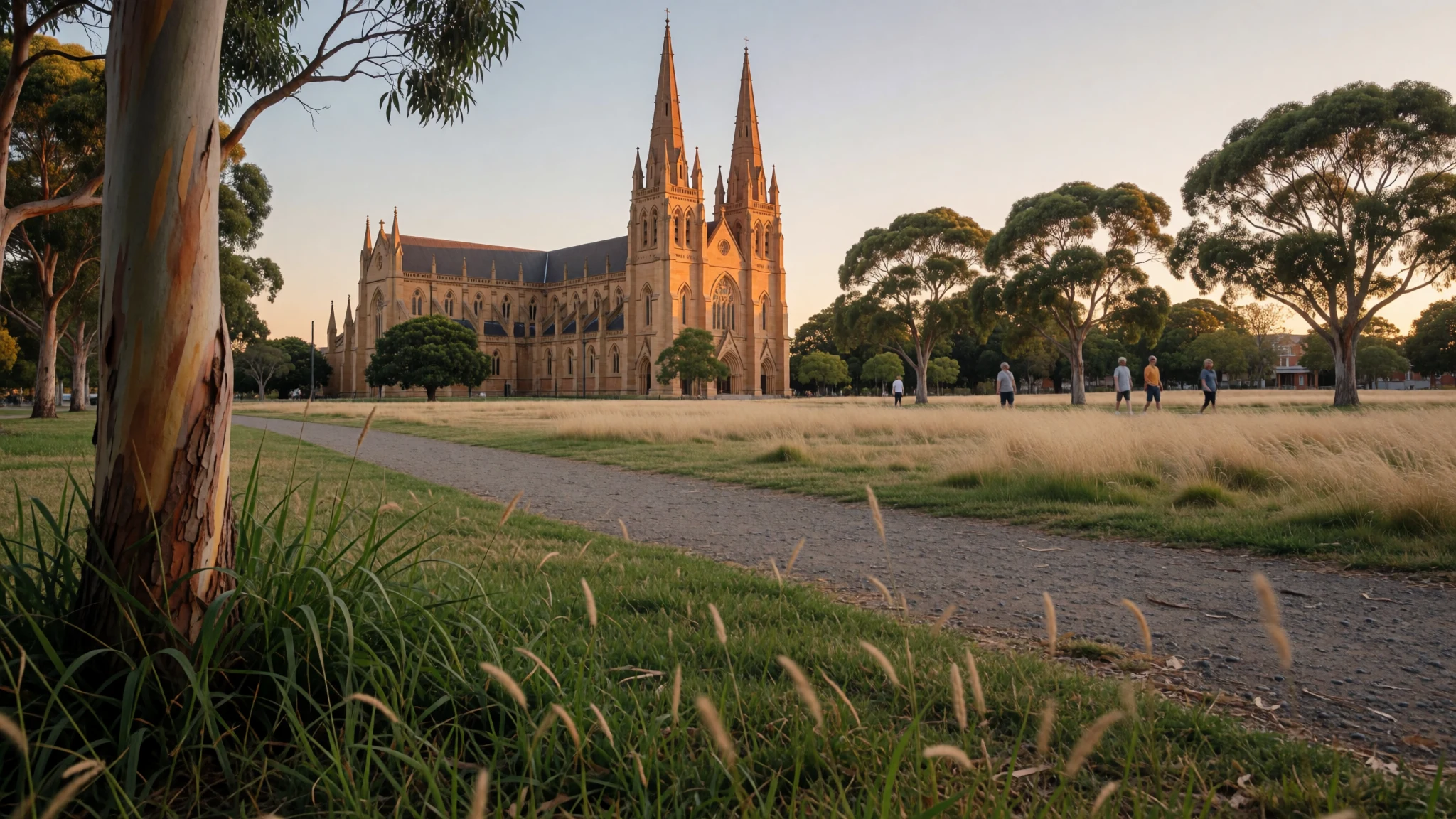
Adelaide is a calm, walkable city of parks, churches and old Kaurna country, with hills, vineyards and beaches close by.
The place
Adelaide is the capital of South Australia, a city of about 1.4 million people on a flat plain between the shallow Gulf St Vincent and the wooded Mount Lofty Ranges. The centre stands barely above the sea, about 1 metre by the record, which is why walking it is so easy. Colonel William Light laid it out as a tidy grid with wide streets and several open squares, then wrapped it in a ring of parkland that still keeps the centre apart from the suburbs. North of the River Torrens sits North Adelaide, a smaller grid with its own parks and a cathedral. Beyond the ring, the metropolitan area runs to over 430 suburbs, stretching about 96 km from north to south but only about 20 km from the coast to the eastern foothills. The traditional owners, the Kaurna, call the city-centre country Tarndanya. Anyone expecting Sydney's bustle will not find it. Adelaide runs at a calmer pace, with short journeys, relaxed cafés and countryside within easy reach: hills and vineyards to the east, sandy beaches to the west, with a tram line running to the seaside suburb of Glenelg. The honest trade-off is that evenings can be quiet outside festival season, and summer afternoons are hot and dry. Spring and autumn suit the city best, when walking between parks, galleries and markets is a pleasure rather than an endurance test.
Its story
Adelaide stands on land that Aboriginal people have lived on for many thousands of years. At Hallett Cove, in the southern suburbs, archaeological evidence of Aboriginal presence reaches back about 40,000 years. The Kaurna people were the original inhabitants of the plain, and their country took in the open ground north and south of the city as well as the wooded foothills to the east. The plain was open and grassy, dotted with trees and shrubs, and was shaped by careful management over many generations. The Kaurna name for the city-centre area, Tarndanya, means 'male red kangaroo rock', after a rock formation that has since been destroyed. The River Torrens was Karrawirra Pari, the red gum forest river. In 1836 the British founded Adelaide as the planned capital of a colony settled freely rather than as a convict station. It was named after Adelaide of Saxe-Meiningen, wife of King William IV. Colonel William Light designed the centre with a grid of streets, generous squares and a belt of parkland around it. That belt, the Park Lands, is now listed as national heritage, and it is the clearest reminder today that the city was drawn on paper before it was built. Walking its edges, it is possible to feel both layers at once: a colonial plan laid over a much older landscape.
What to see
- St Peter's Cathedral — North Adelaide
St Peter's Cathedral in North Adelaide is the easiest single church to pick if time is short. Adelaide is known for its church architecture, and this one rewards a slow walk around the outside, where the stonework and spires show best in morning light. Check the cathedral's own site for visiting arrangements.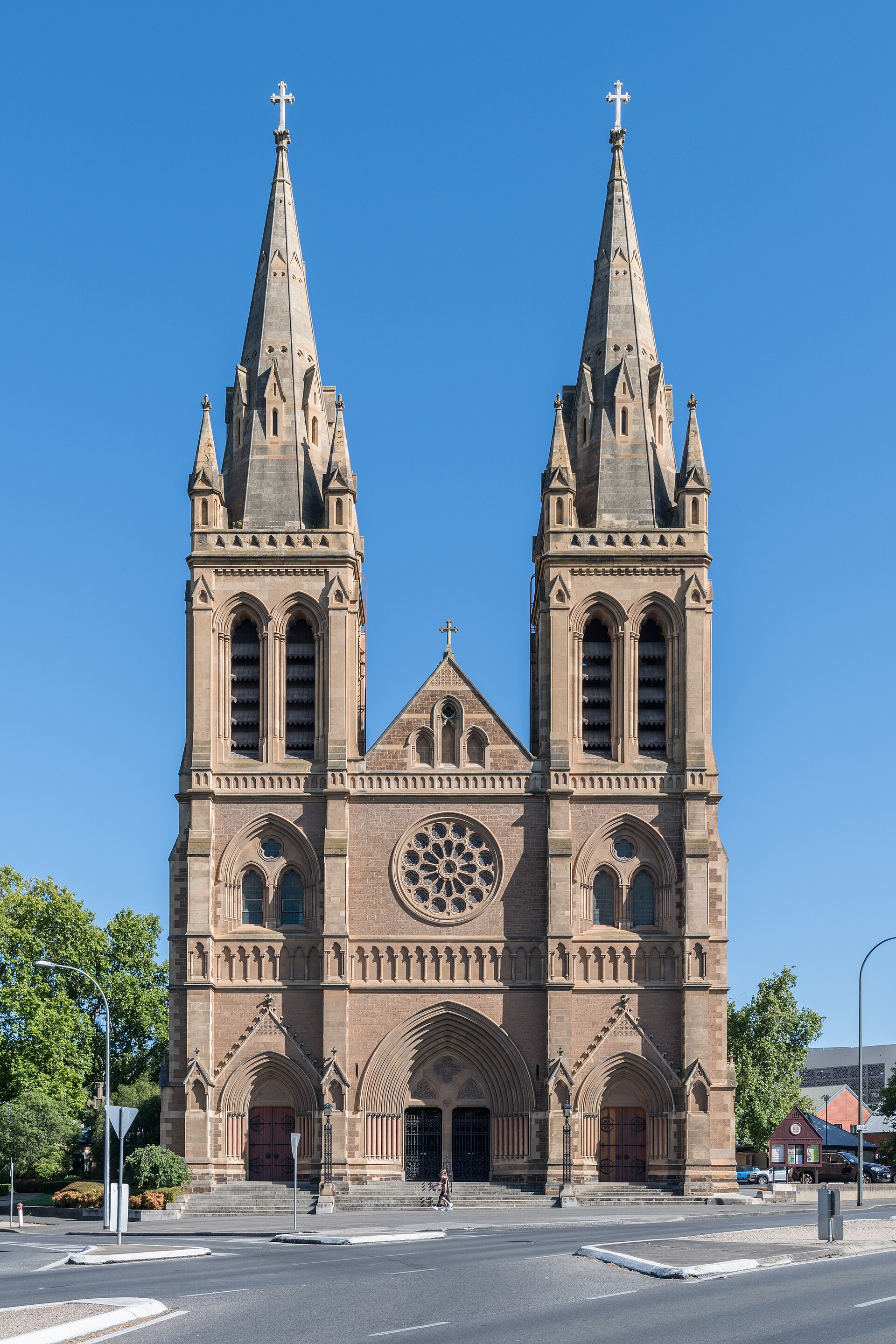
- The Park Lands — Around the city centre
The ring of parkland around the centre and North Adelaide is the city's defining feature. It is heritage-listed and made up of lawns, gum trees, sports fields and gardens. A loop on foot or by bicycle shows how Light's plan still works, with the suburbs held firmly at a distance. - River Torrens and Elder Park — Between the centre and North Adelaide
The River Torrens, once Karrawirra Pari to the Kaurna, runs between the city centre and North Adelaide. Its banks suit a gentle stroll, with views back to the skyline. Late afternoon is pleasant in summer, when the heat eases and locals come out to walk.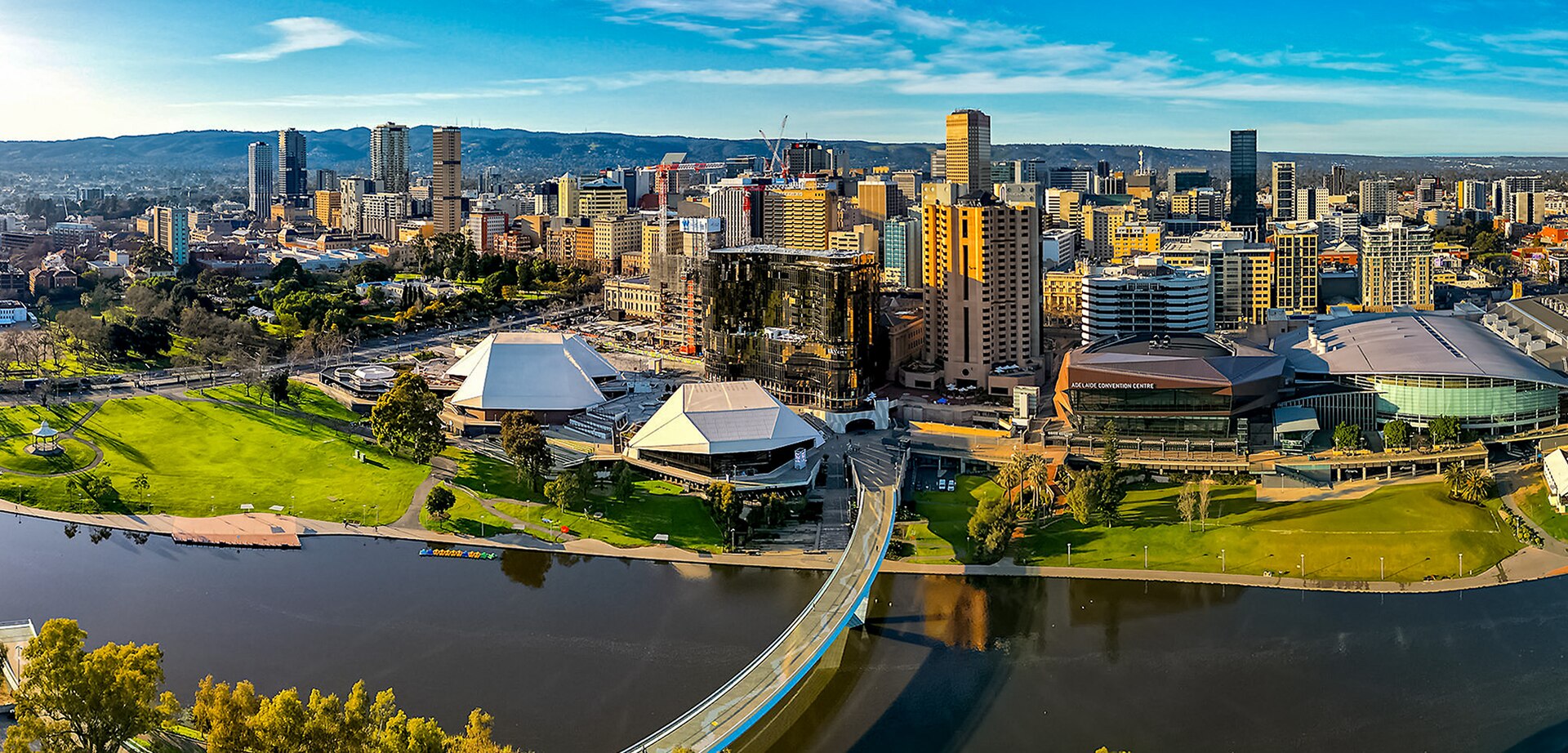
- North Terrace — North side of the city centre
North Terrace is the city's grand cultural boulevard, lined with sandstone buildings, including the former School of Mines, now part of the university precinct. It is best on foot, taking in the façades and the shade of the street trees, and it links several of the main institutions.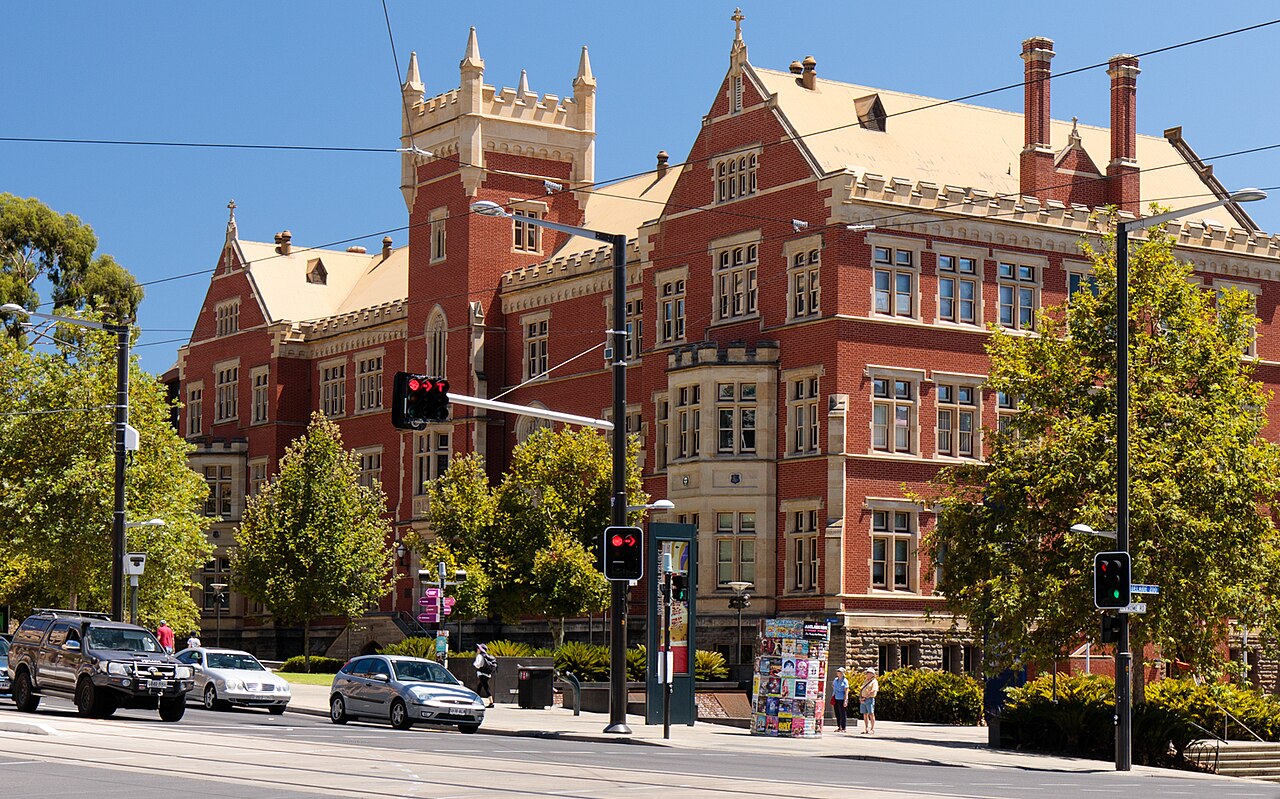
- Victoria Square — Central Adelaide
Victoria Square is one of the open squares in Light's original plan, at the geometric heart of the city. It is a useful orientation point: trams, markets and the old post office are all close, and the square is a good place to sit and watch daily city life unfold.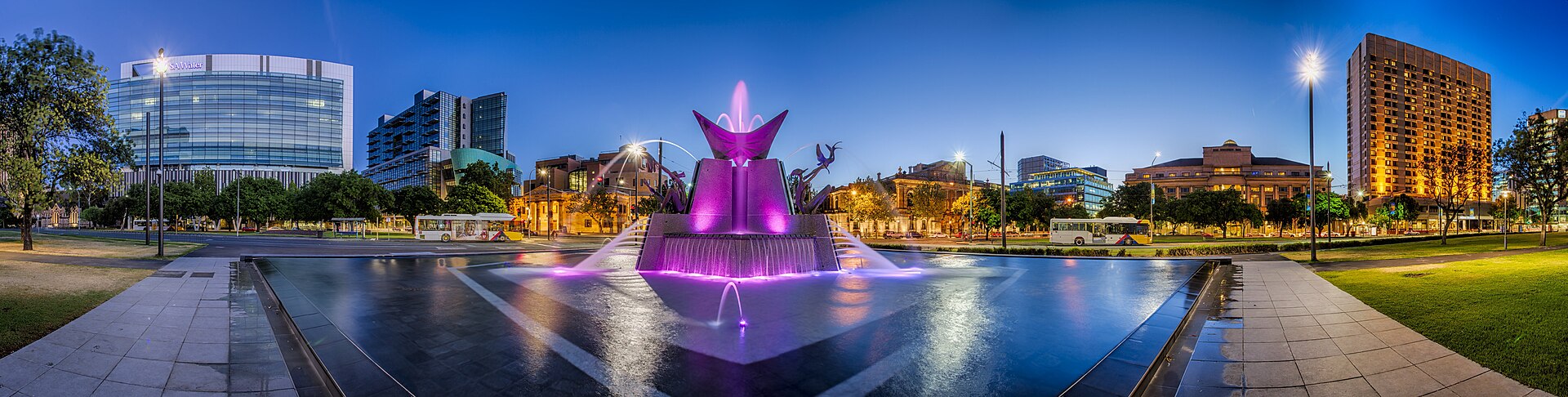
Culture
Adelaide's culture mixes a deep Aboriginal heritage with a planned colonial city and a calm, civic-minded outlook. The Kaurna people remain central to the story of Tarndanya, and many public events, galleries and institutions now begin with an acknowledgement of Kaurna country. The settlers arrived in 1836 with ideas of order and free settlement, and the legacy shows in the churches, the squares and the ring of parkland. Adelaide is often described as a city of churches, and its architecture reflects that, with spires standing out above low rooftops. Daily life is relaxed. People walk or cycle in the Park Lands, meet at markets, and spend weekends in the hills, at the beach or among vineyards. The city hosts a calendar of arts and food festivals, which is when the evenings feel liveliest. Humour is dry and friendly, and strangers chat easily in queues and on trams. Pubs and cafés are the social hubs, and sport, especially Australian football, is followed closely. Tipping is appreciated for good service but is not expected in the way it is in some countries. Slow service is usually met with patience rather than complaint. In a church or at a Kaurna cultural site, keep your voice low, ask before photographing anyone, and follow any signs about where you may walk or take pictures.
What to wear
Adelaide's traditional dress begins with the Kaurna, who historically wore cloaks made from animal skins, such as kangaroo or possum, sometimes decorated with patterns, along with body ornaments and woven items made from local plant fibres. Today these designs and techniques are part of cultural revival, and they appear in ceremonies, exhibitions and public events rather than daily wear. The settler tradition added the wool and cotton of the colonial period, and the city still has a feel for tailoring at weddings and formal occasions. What people wear now is practical and casual. Shorts, linen shirts, sundresses and trainers are normal in warm months, with light jackets and jumpers for cooler evenings and the winter. Smart casual is enough for most restaurants and theatres, and suits are mostly for business and race days. Sunglasses and hats are everyday items because the sun is strong. A visitor should pack for sun first: a wide-brimmed hat, sunscreen, breathable cotton or linen, and comfortable walking shoes for the Park Lands, pavements and hill trails. In winter, a light waterproof and a warm layer are worth carrying. Churches do not demand strict dress, but covered shoulders and knees are a courteous choice, and beach clothing belongs by the sea, not in the city centre.
What to eat
- Pie floater — Pubs and cafés across the city; the Mile End South area is the local pointer
An Adelaide classic: a meat pie, usually beef, served upside down in a bowl of thick pea soup and often topped with tomato sauce. It is a hearty, slightly odd comfort dish, offered at pubs and cafés across the city. - The AB — Late-night takeaway shops and yiros bars in the city
Adelaide's answer to the snack pack: yiros meat piled over hot chips and dressed with tomato, chilli, garlic and barbecue sauces. It is not halal, so check before ordering. It is a filling late-night order rather than a refined meal. - King George whiting — Seafood restaurants and fish-and-chip shops, especially near the coast
A prized local white fish with a sweet, delicate flavour, usually served lightly crumbed or grilled with salad and chips. It suits a lunch by the water, and the season and price vary, so ask what is fresh. - Frog cake — Bakeries and cafés around the city
A sponge cake covered in green fondant, filled with cream and a layer of jam, and shaped like a small frog. It is a nostalgic South Australian treat, sweet enough to share, and goes well with a flat white. - Market produce and cheese — The central covered market and food stalls near the city centre
South Australian produce, from local cheeses and cured meats to olives, fruit and bread, is best sampled at a covered market. Putting together a picnic for the Park Lands is a pleasant way to taste the region without a restaurant bill.
Plan it
Best time. March–April and October–November, when days are mild and sunny and the Park Lands are at their best; summer is hot and dry, and winter is cooler and wetter.
How long. 2–3
Getting there. Adelaide Airport has direct flights from Singapore, Kuala Lumpur, Denpasar, Dubai, Doha and Auckland, plus frequent domestic services from every mainland capital. From the airport, a taxi, rideshare or airport bus reaches the city centre; check the official site for current options.
Budget. mid
Tips
- Carry water, a hat and sunscreen, as the sun is strong even on mild days
- Check the city's official site for festival dates and book accommodation early if you are visiting during one
- Cards are widely accepted, but carry a little cash for small stalls
- Save the local emergency number in your phone before you arrive
- Allow a day for the hills, vineyards or coast beyond the city
Etiquette
- Acknowledge that the city stands on Kaurna country, and treat cultural sites with respect
- Keep voices low in churches and ask before photographing people
- Queue patiently and stay on marked paths in the Park Lands
Nearby
Sources
- Wikidata Q5112 (CC0)
- Wikipedia: Adelaide (rev 1384394068) (CC BY-SA 4.0)
- Wikivoyage: Adelaide (rev 5423590) (CC BY-SA 4.0)
- Photo: Adelaide aerial view, Doug Barber (CC BY-SA 1.0)
- Photo: Adelaide skyline, December 2022, Ardash Muradian / Georgfotoart (CC BY-SA 2.0)
- Photo: Adelaide, February 2017, Mark Pegrum (CC BY-SA 2.0)
- Photo: St Peter's Cathedral, DXR (CC BY-SA 4.0)
- Photo: Adelaide General Post Office, Shou-Hui Wang (CC BY-SA 2.0)
- Photo: SAHMRI, Jackstarshaker (CC BY-SA 4.0)
- Photo: Brookman Building, North Terrace, Andrew Shipway (CC BY-SA 2.0)
- Photo: Victoria Square, Silveryway (CC BY-SA 2.0)


