Brisbane
Brisbane, Australia
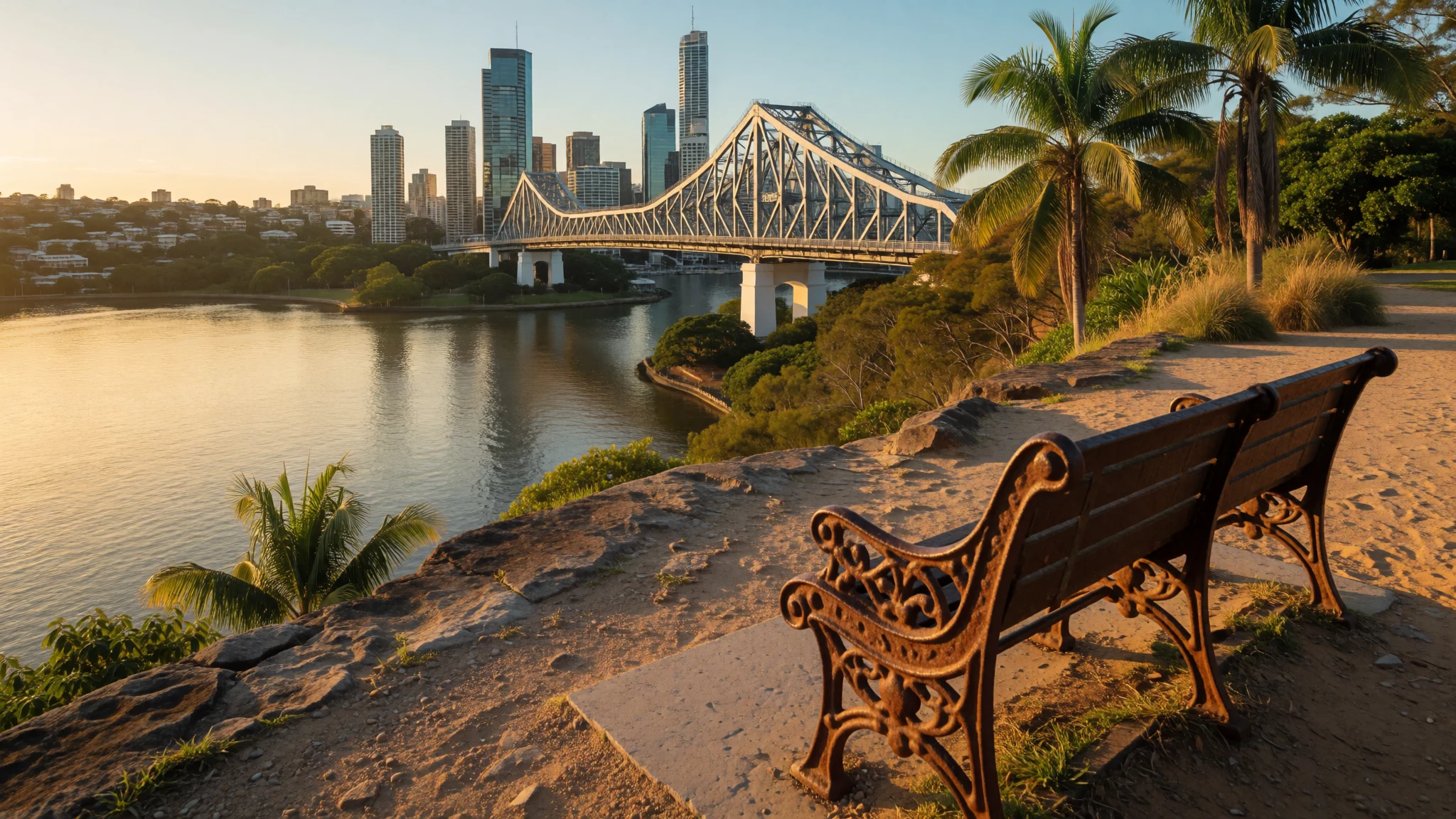
Brisbane is a warm, easygoing river city of galleries, riverside walks and subtropical evenings, and a handy base for Queensland's coast.
The place
Brisbane is the capital of Queensland, a river city of about 2.7 million people in Australia's sunny south-east corner. The centre sits on a tight peninsula formed by a loop of the Brisbane River, with the towers of the business district packed into the bend and the suburbs fanning out across a hilly floodplain. The Turrbal and Yagara name for the place is Meanjin. Moreton Bay and the Pacific lie to the east, and ranges rise behind the outer suburbs to the west. The river does much of the city's organising. Ferries and bridges link the banks, paths follow the water for long stretches, and the best first view is usually from a clifftop park looking across at the towers. Neighbourhoods have distinct characters: the business district for civic buildings and offices, the south bank for galleries, gardens and a man-made city beach, Fortitude Valley for live music and late nights, West End for cafés and bookshops. The climate is subtropical. Summers are long, hot and humid, with violent afternoon storms; winters are mild and dry, with warm days and cool nights. That makes outdoor life the default, and parks, cafés and the riverbank fill whenever the weather allows. Brisbane is more spread out than it looks on a map, so most visitors combine walking in the centre with ferries, buses and trains for everything else.
Its story
Brisbane's story starts long before the colonial name. People of the Yagara, Turrbal and Quandamooka nations have lived in this region for more than 22,000 years, and the river, called Maiwar, was the centre of daily, economic and ceremonial life. Camps stood at places such as Kurilpa and Barambin, and Musgrave Park in today's West End is still a gathering place. European charting came first: Matthew Flinders surveyed parts of Moreton Bay in 1799. In 1823 John Oxley located the river with the help of castaways he met along the coast, and recommended the area as a site for a convict settlement. The colonial authorities founded it in 1824 at Redcliffe, as a place of punishment for convicts who had offended again in the Sydney colony, and moved it a year later to North Quay on the river. The river-front outpost took its name from Sir Thomas Brisbane, then Governor of New South Wales. Under Captain Patrick Logan the station earned a reputation for harshness, even by the standards of the convict system. Over the following decades the penal station gave way to a free town, which grew into the capital of Queensland. Floods have repeatedly reached the low-lying streets by the river, and the city has rebuilt and adapted each time. Today Indigenous place names sit alongside the colonial ones, and the older history is increasingly told in the city's galleries and public spaces.
What to see
- Brisbane City Hall and King George Square — Central business district
Brisbane City Hall stands beside King George Square in the centre of the grid, a civic landmark restored in the 2010s. Its clock tower runs tours that go up in historic cage lifts, ending with views over rooftops and river. The square outside is an easy meeting point and has free public Wi-Fi.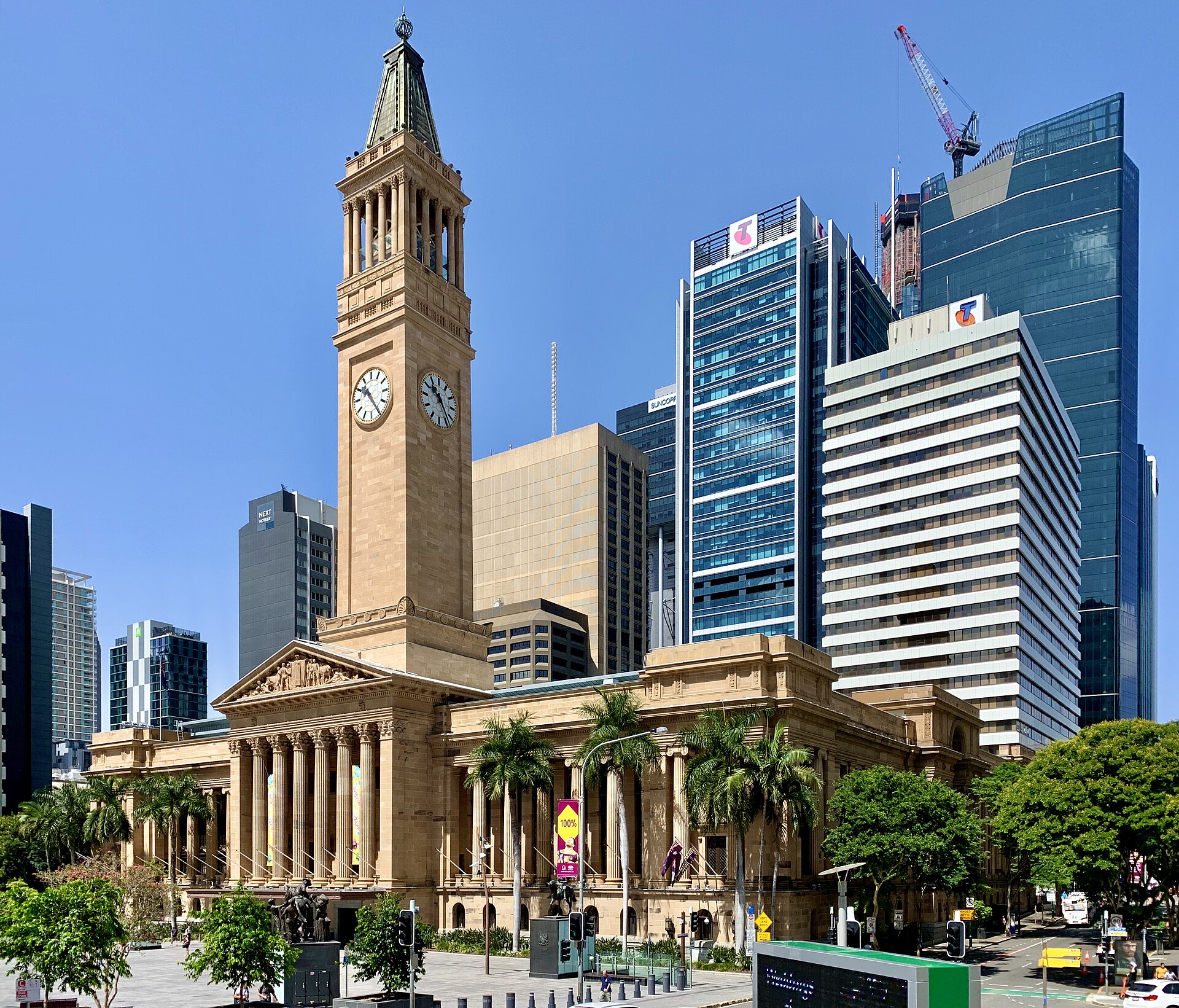
- Cathedral of St Stephen — Central business district
The Cathedral of St Stephen is a Gothic Revival Catholic church in the city centre, heritage-listed and the seat of the Archbishop of Brisbane. Services are held regularly, and guided tours run on weekday mornings. Inside it is cool and quiet, a useful pause from the midday sun between walks. - The University of Queensland — St Lucia
The University of Queensland sits on a bend of the river at St Lucia, reached by ferry or bus. Sandstone cloisters, ornamental lakes and jacaranda-lined avenues make for an easy half-day wander. The jacarandas flower in late spring and turn the grounds purple, while the campus is quieter in university holidays. - Wheel of Brisbane — South Bank
The Wheel of Brisbane is a Ferris wheel on the south bank of the river, with enclosed, climate-controlled gondolas. A single ride gives a slow look at the city towers, the river's loops and the hills beyond, and works best on a clear late afternoon. Check the official site for current opening times and fares. - Queensland Gallery of Modern Art (GOMA) — South Bank
The Queensland Gallery of Modern Art, known as GOMA, stands beside the Queensland Art Gallery on the south bank. The Asia Pacific Triennial brings contemporary work from across Asia and the Pacific, and the Australian Cinémathèque screens international and silent film. Programmes and entry arrangements change, so check ahead.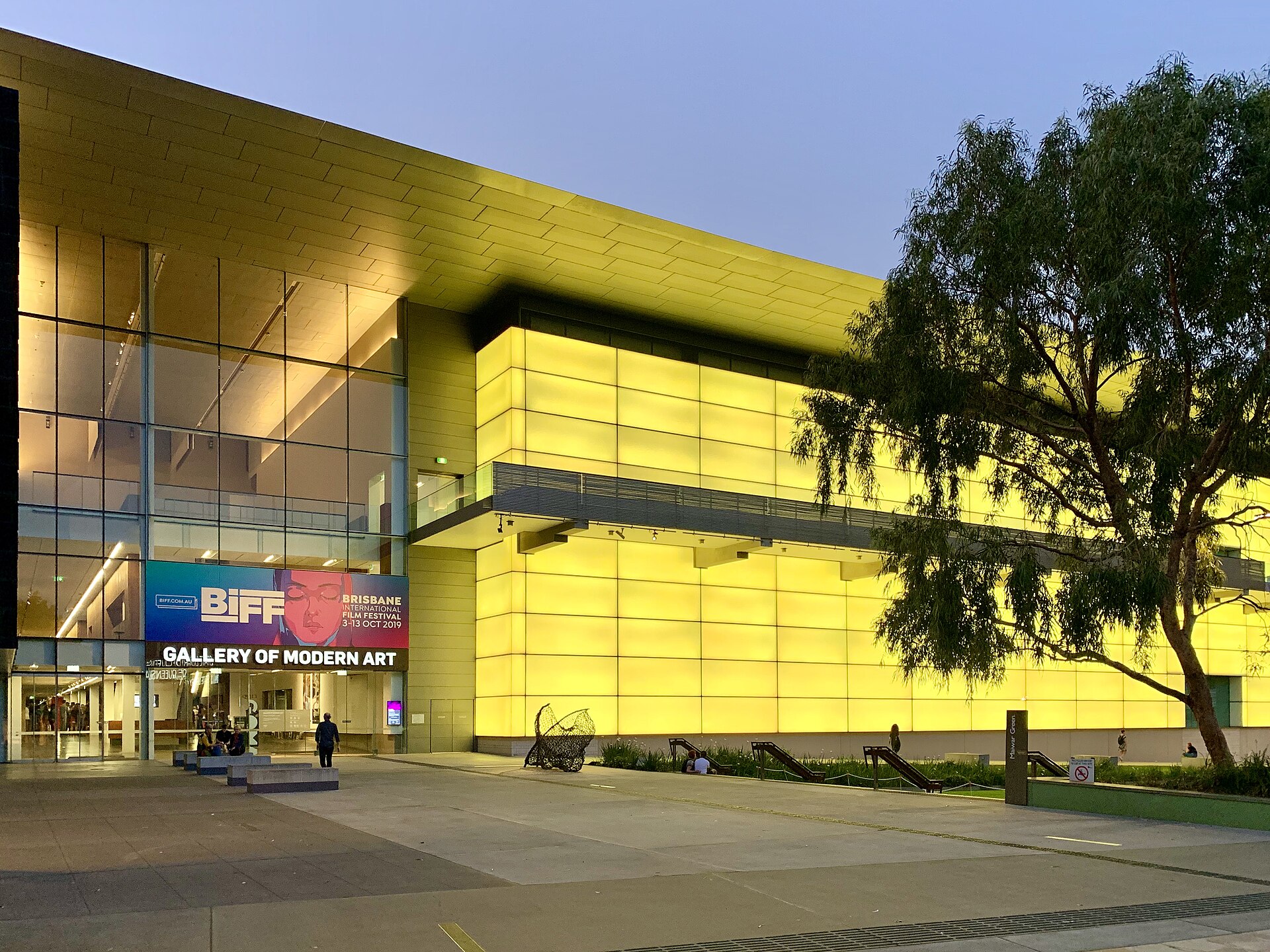
Culture
Brisbane's cultural life leans towards the outdoors and the visual arts. The south bank holds the Queensland Art Gallery and the Queensland Gallery of Modern Art, which together anchor a calendar that includes the Asia Pacific Triennial, a showcase of contemporary art from Asia and the Pacific. GOMA also houses the Australian Cinémathèque, which programmes international cinema, restored prints and silent films with live music, mostly on Wednesday and Friday evenings and at weekend matinees. Beyond the galleries, daily life revolves around the climate: breakfast cafés, riverside barbecues, swimming, markets and evening walks once the heat drops. Sport matters too, with rugby league and cricket both widely followed. The region's first peoples, the Turrbal, Yagara and Quandamooka, remain part of the city's identity, and many venues, events and tours now present Aboriginal and Torres Strait Islander art, language and history. Attitudes are casual and friendly: first names are the norm, conversations with strangers at bus stops and in cafés are easy, and a dry sense of humour is common. Queuing is orderly and tipping is appreciated but not expected. At St Stephen's and other churches, keep your voice low, dress modestly and ask before photographing worshippers during a service.
What to wear
Brisbane has no single regional costume, because the city grew from colonial settlement on land that belongs to older traditions. The Turrbal, Yagara and Quandamooka peoples, like other Aboriginal and Torres Strait Islander communities, have their own ceremonial dress, made from plant fibres, feathers, shell and body paint in ochre, and worn mainly for ceremony, dance and cultural events rather than daily life. You are most likely to see it at festivals and public performances. Everyday clothing is light and relaxed. Cotton and linen shirts, shorts, sundresses, sandals and sunglasses cover most days, with sport and surf labels common, and a smarter casual look for restaurants and the Valley's bars. Offices lean casual too, though suits appear in the business district. Visitors should dress for sun and humidity first. Pack breathable fabrics, a wide-brimmed hat, high-factor sunscreen and comfortable walking shoes or sandals with grip for riverside paths and hills. A light waterproof helps in the stormy summer months, and a thin layer is worth carrying for winter evenings and heavily air-conditioned galleries and trains. Churches and cathedrals expect no more than covered shoulders and knees, and beachwear should stay at the water's edge rather than in cafés or shops.
What to eat
- Moreton Bay bugs — Seafood restaurants along the river and bay, and fish markets
These small, sweet, flat-headed crustaceans come from the waters of the bay. They are usually split and grilled, or served with garlic butter and lemon. The meat is firm and delicate, and the dish suits a long lunch with cold white wine. - Queensland mud crab — Seafood eateries in the suburbs and bayside towns
Mud crab is cooked whole and eaten with the hands, often in a chilli, pepper or garlic sauce. It is messy, rich and sweet, and best shared. Expect to pay more than for most dishes, and expect napkins and a bowl for the shells. - Flat white and bakery pastry — Cafés and bakeries in West End, the Valley and inner-city streets
Brisbane takes its coffee seriously, and a flat white, a small milky espresso drink, is the standard order. Pair it with a croissant or a savoury pastry from one of the French-style bakeries in the inner suburbs. - Japanese rice bowls and bento — Small eateries and food courts in the central business district
Casual Japanese takeaway counters are a regular lunch for city workers: rice bowls with chicken or beef, noodle soups and bento boxes, cooked to order and reasonably priced. They are quick, filling and easy on a walking day. - Queensland mangoes — Weekend farmers' markets and roadside fruit stalls
In the warm months, local mangoes appear at fruit stalls and in cafés as juice, smoothies and desserts. Ripe ones are fragrant and juicy. Tropical fruit more broadly, along with macadamia nuts, is a good thing to look for in local markets.
Plan it
Best time. April–May and September–October for warm, dry, sunny days without the summer humidity. December to February is hot, humid and stormy; June to August is mild by day and cool at night, and still good for outdoor plans.
How long. 2–4
Getting there. Brisbane Airport (BNE) has flights from all Australian capitals and many international cities, and a train link runs from the airport to the city. Gold Coast Airport is a cheaper alternative with a bus and train connection. Long-distance trains arrive at Roma Street Station in the inner city.
Budget. mid
Tips
- Do outdoor walks and climbs in the morning, before the heat and afternoon storms
- Use ferries and the river paths to move around; they are cheap and give the best views
- Carry water, sunscreen and a hat even on cloudy days
- Cards are accepted almost everywhere, so little cash is needed
- Check official sites for gallery programmes and tour times, as these change; the city council site is https://www.brisbane.qld.gov.au/
Etiquette
- Keep voices low and ask before photographing worshippers in churches
- Greet staff and bus drivers politely; a quick thank-you is normal
- Respect Aboriginal and Torres Strait Islander sites and ask before photographing people at cultural events
Nearby
Sources
- Wikidata Q34932 (CC0)
- Wikipedia: Brisbane (rev 1381696698) (CC BY-SA 4.0)
- Wikivoyage: Brisbane (rev 5414682) (CC BY-SA 4.0)
- Skylines of Brisbane from Kangaroo Point Cliffs Park, 2020 — Kgbo, via Wikimedia Commons (CC BY-SA 4.0)
- Brisbane CBD, Kangaroo Point Bridge seen from Kangaroo Point, 2024 — Chris Olszewski, via Wikimedia Commons (CC BY-SA 4.0)
- Brisbane City Hall, Feb 2020 — Kgbo, via Wikimedia Commons (CC BY-SA 4.0)
- St John's Cathedral, Brisbane, 2020 — Kgbo, via Wikimedia Commons (CC BY-SA 4.0)
- Central Business District, Reddacliff Place — -wuppertaler, via Wikimedia Commons (CC BY 4.0)
- Queensland Gallery of Modern Art at dusk, 2019 — Kgbo, via Wikimedia Commons (CC BY-SA 4.0)
- Brisbane Story Bridge at Dusk — John from Redcliffe, Australia, via Wikimedia Commons (CC BY-SA 2.0)
- Portrait of Major-General Sir Thomas Brisbane, 1842 — engraved by Frederick Bromley, painted by Robert Frain, via Wikimedia Commons (Public domain)


