Cape Hillsborough National Park
Cape Hillsborough National Park, Australia
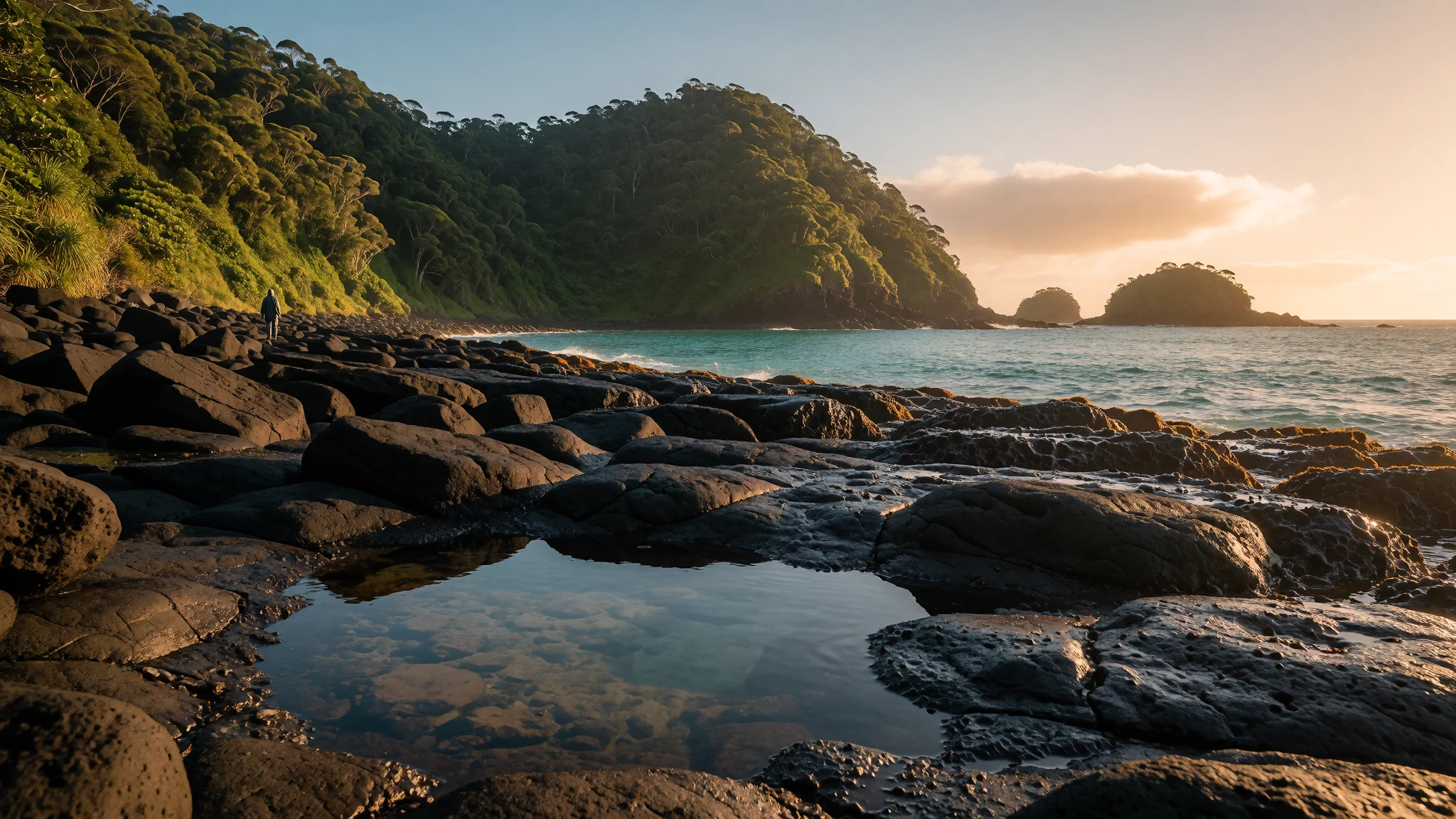
Cape Hillsborough National Park puts rainforest, rocky headlands and wild wallabies on the same Queensland beach, within easy reach of Mackay.
The place
Cape Hillsborough National Park is a volcanic peninsula on the central Queensland coast, with rainforest-covered hills that drop almost to the sea. Mackay, the closest main hub, sits roughly 40 km away, giving the park a wonderfully secluded feel without making it tricky to reach. The land is a jumble of headlands, small bays and rocky islets, and the highest point reaches 249 m. Within a short walk the scenery changes from open beach to mangrove, dry eucalypt woodland and dense vine forest, which is why the park is usually explored in short pieces rather than one long hike. It sits in the O'Connell River catchment and in what ecologists call the Central Mackay Coast bioregion. Rainfall averages 1106 mm a year, mostly in the warm months, so the hills stay green while the beaches are dry and bright for much of the rest of the year. The tides do much of the shaping of a visit. At low water the sand and rock flats widen and small islands can be reached on foot; at high water the beaches shrink to a thin strip below the trees. Wildlife is the other draw. Wallabies and kangaroos come down onto the sand around dawn, and the forest holds skinks, birds and butterflies. Crowds stay modest compared with the better-known Whitsunday coast to the north, though dawn can be busy in school holidays. Heat and humidity are real from late spring onward, and saltwater crocodiles live along this tropical coast, so the water is for looking at, not swimming.
Its story
Cape Hillsborough National Park takes its name from the headland at the tip of its peninsula, which Lieutenant James Cook named in 1770 during his first voyage to the Pacific. He honoured Wills Hill, Earl of Hillsborough, a British politician who sat on the Board of Trade and Plantations. The name is a European label laid over a coast that Aboriginal people had known for a very long time, and the hills, shoreline and tidal flats were part of their country long before any ship appeared offshore. The rock itself tells an older story. The peninsula is of volcanic origin, and its steep, broken shape comes from that ancient activity, softened since by weather, sea and forest. Protection came in the twentieth century, and the area became a national park in 1985. Boundaries have not stood still: in 2010 the Queensland government announced the addition of 204 hectares, a reminder that conservation here is still being negotiated, one parcel of land at a time. Today the park shows how a small piece of coast can hold several habitats at once, from mangrove mud to hoop pine forest. It also shows the pressures on such places, with visitors drawn by the beach wallabies, heat and storms shaping the seasons, and rangers balancing access against the animals' need to be left alone.
What to see
- Casuarina Beach at dawn — Casuarina Beach
Casuarina Beach is where Cape Hillsborough's wallabies and kangaroos gather around sunrise, feeding on the sand beside the tideline. Arrive before first light, stay several metres back and keep voices low. Numbers vary with season and weather, so treat a sighting as a pleasure rather than a promise.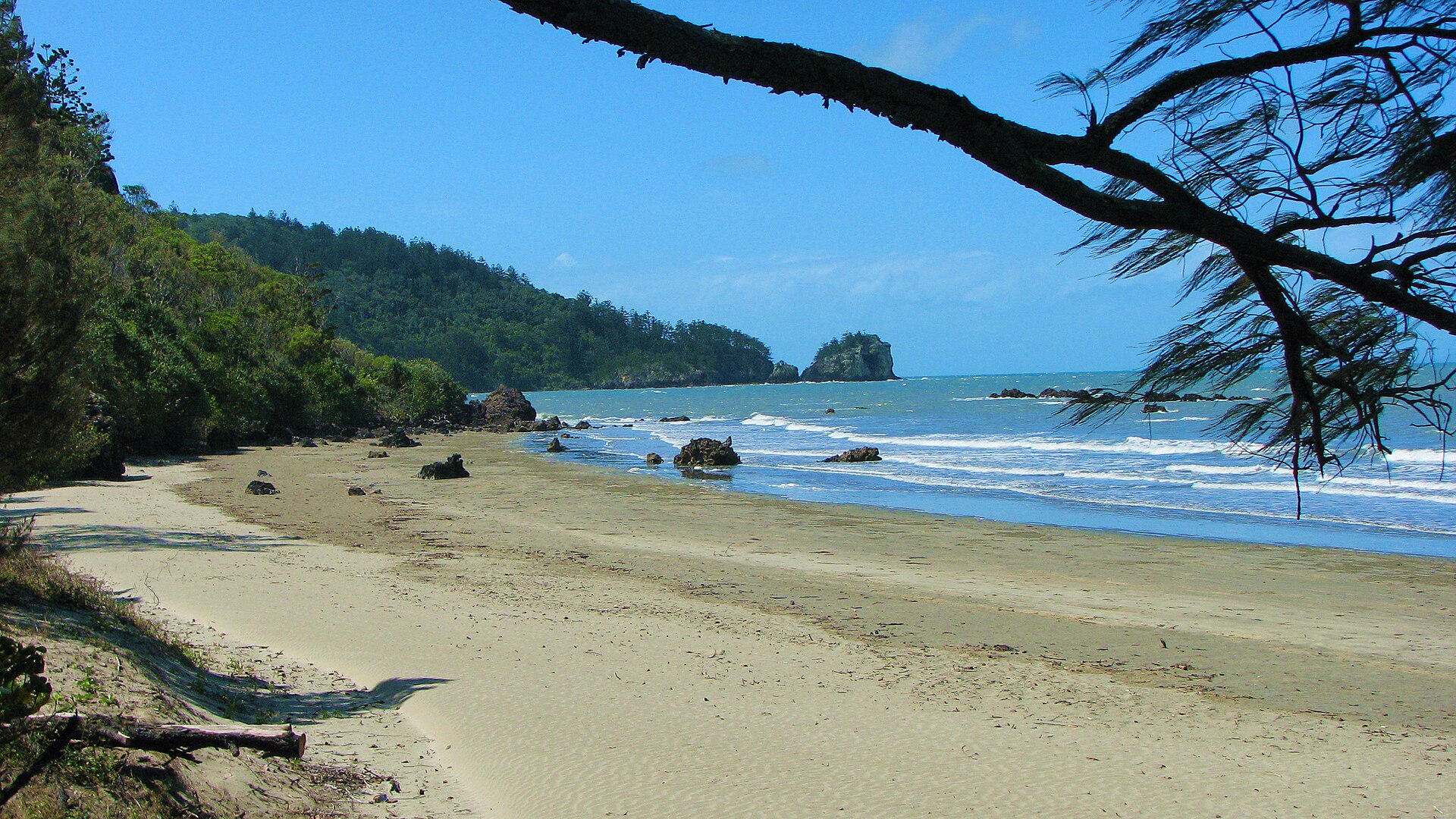
- Andrews Point track — Andrews Point
The Andrews Point track climbs a headland through dry woodland to open views over the coast, rocky islets and the protected shoreline below. It is a short, moderate walk that is best done in the cool early hours. Carry water, wear sturdy shoes and allow time at the top, where sea breezes are welcome.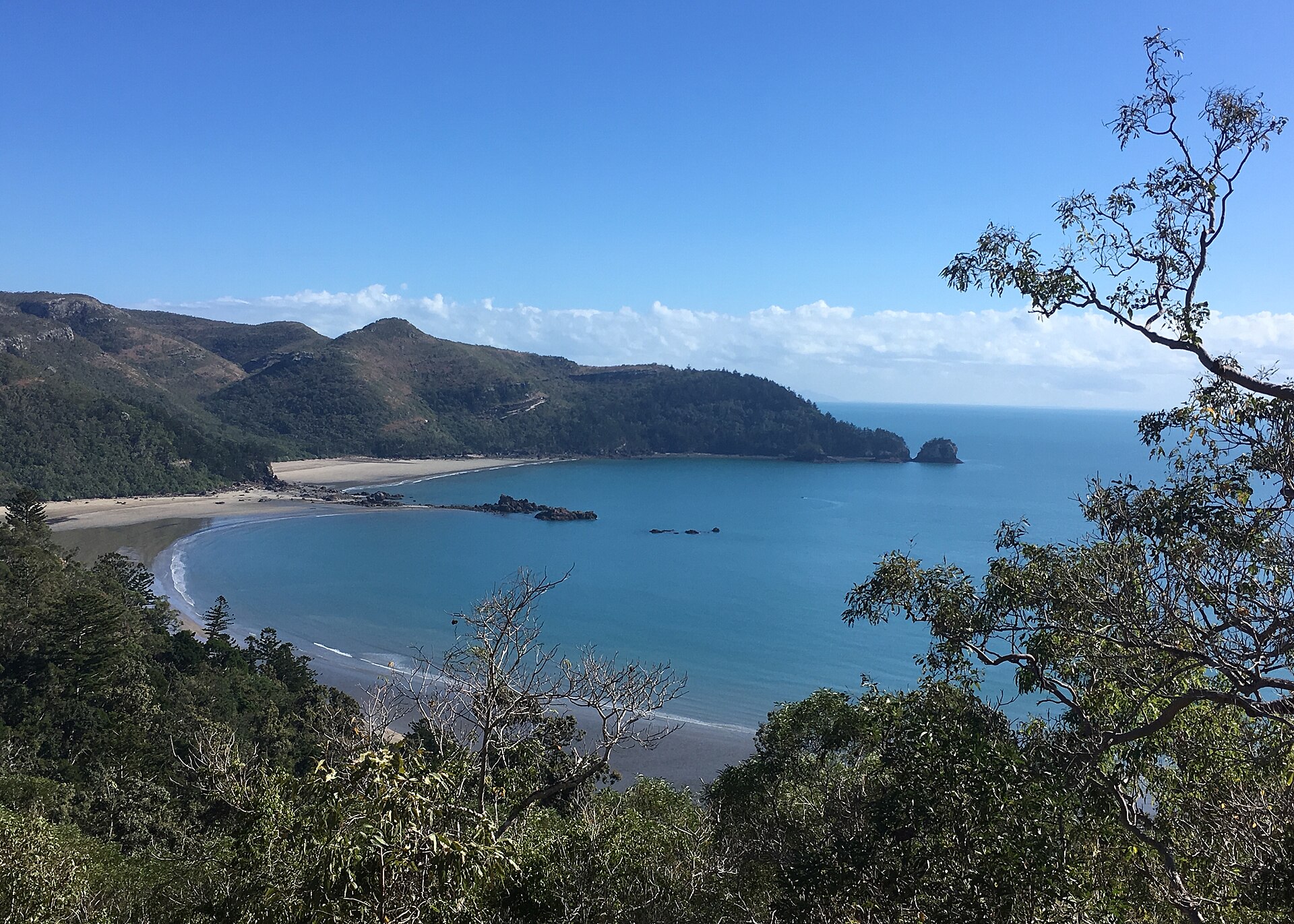
- Wedge Island at low tide — Beach near the cape
At low tide a sand and rock causeway links the beach with Wedge Island, a small rocky outcrop just offshore. Check the tide tables before setting out and leave plenty of time to return, because the water comes back faster than most walkers expect. The crossing shows how much the tides rule this coast. - Rainforest walks and hoop pines — Forest tracks inland of the beach
The park's rainforest tracks pass hoop pine, an upright conifer with layered, tufted crowns, and thick vine thicket that holds humidity even on bright days. The shade makes these walks a good choice around midday. Listen for birds and watch the leaf litter, where skinks flick through the dappled light.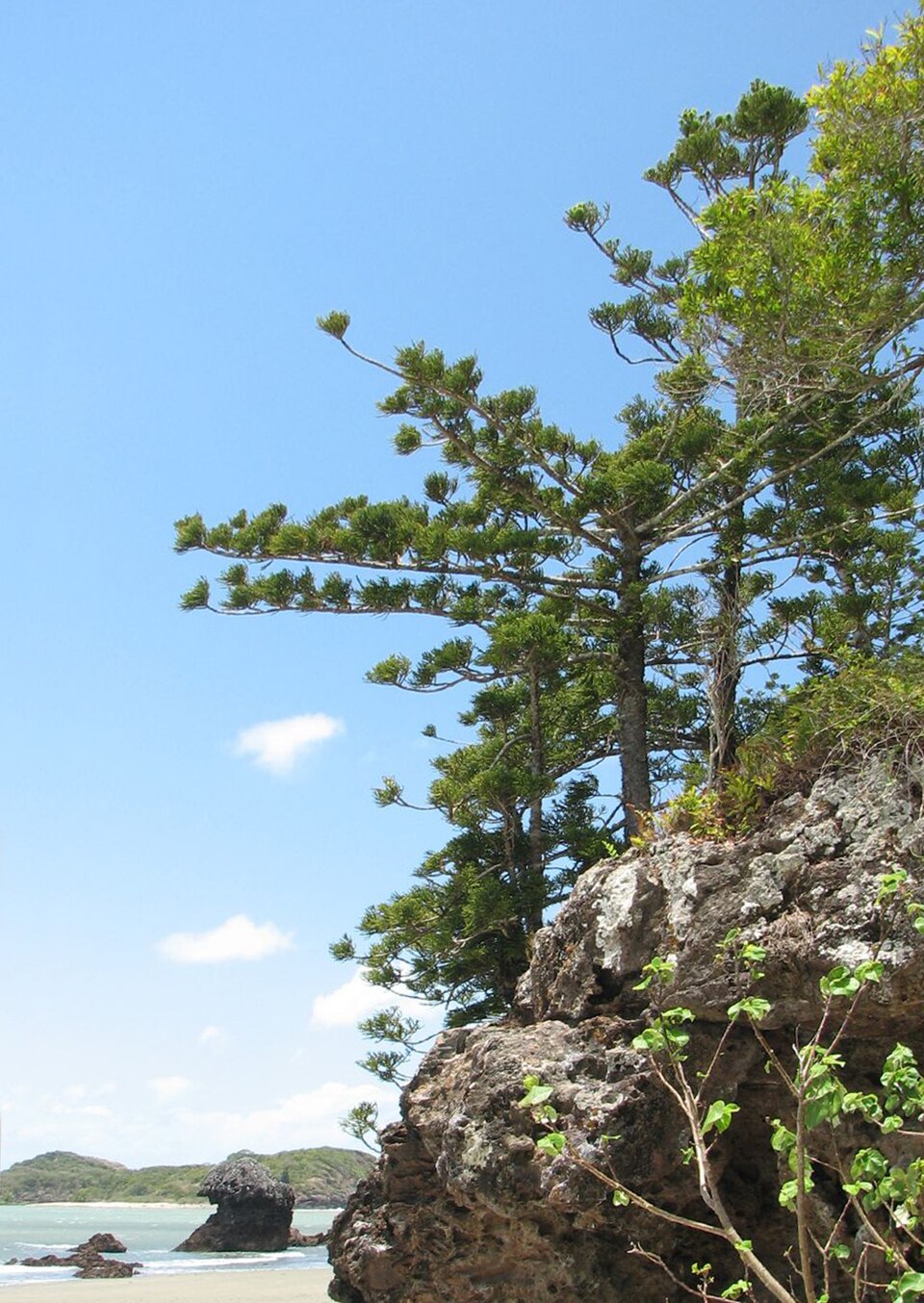
- Mangrove boardwalk — Tidal shoreline near the main beach
The mangrove boardwalk carries visitors over tidal mud and tangled roots without any wading, which suits families and anyone short of time. It shows the shoreline's quieter side, with crabs, mudskippers and wading birds busy at low tide. Mosquitoes can be keen near dusk, so bring repellent.
Culture
Cape Hillsborough National Park sits on Aboriginal country, and the most useful cultural habit for a visitor is to treat it that way: as a living landscape with a long human history, not an empty backdrop. Information boards and park staff are the best route to local knowledge, and it is worth reading them before heading to the beach. Queensland's wider outback and coastal culture is relaxed, outdoorsy and plain-spoken, and that carries into the park. People rise early, walk before the heat and plan around the tides. Small coastal communities nearby depend on farming, especially sugarcane, and on visitors passing through, so a friendly greeting and patience at a roadside café go a long way. Wildlife shapes the local etiquette as much as people do. Rangers and residents are firm that the wallabies on the sand are wild, not tame, and feeding them harms their health and changes their behaviour. Dogs are generally not allowed in national parks in Queensland, so check the park's official website before travelling with a pet. Litter, loud music and drones can all disturb animals and other walkers, and are best left at the accommodation. Tracks may close after storms or for conservation work, and ignoring a closure puts both walkers and fragile ground at risk. Keep a respectful distance from the wallabies, never feed them, and stay on the marked tracks so the forest and the animals can carry on undisturbed.
What to wear
Cape Hillsborough National Park lies in Aboriginal country, where traditional dress varied by region and was historically made from natural materials such as woven plant fibre, skins, shell, feathers and ochre body painting. These items are now mostly worn for ceremony, dance and cultural events rather than daily life, and visitors should treat them as important cultural property, not costume. Everyday dress on this part of the Queensland coast is practical and casual. People wear light cotton shirts, shorts, wide-brimmed hats and flip-flops around town, with work shirts and sturdy boots on farms and cane fields. Swimwear is common on beaches, though tropical sun and stinging marine life mean many locals cover up with long-sleeved sun shirts. A visitor should dress for heat, humidity and rough ground. Choose light, breathable layers in pale colours, a hat with a brim, sunglasses and a long-sleeved top for sun protection, and bring a thin waterproof jacket in case of rain. Closed, grippy walking shoes suit the headland and forest tracks, while reef shoes or sandals are better on rocky flats at low tide. Insect repellent belongs in the same bag as sunscreen. There are no religious dress rules in the park, but modest, sensible clothing is welcome in nearby towns, cafés and community events, and beachwear is best kept for the sand.
What to eat
- Fish and chips — Fish and chip shops in Mackay and coastal towns
Fresh local fish is sold along the Queensland coast, usually in fish and chip shops. Order whatever is the day's catch, grilled or fried, and eat it on a beach or park bench with the wind off the sea. - Barramundi — Seafood restaurants and eateries around Mackay
Barramundi is a firm white fish found in Australia's northern waters and widely served in Queensland. It appears grilled, pan-fried or in curry, and works well with lime, chilli or a simple salad. - Queensland prawns — Seafood outlets and fishing-town markets near Mackay
Prawns are a staple of coastal Queensland tables, eaten cold with lemon and bread, or cooked on the barbecue. They suit a picnic after a morning walk and are often sold fresh from seafood outlets. - Bowen mango — Roadside fruit stalls and weekend markets in season
Bowen, to the north, is known for its mangoes, and the fruit turns up at roadside stalls and markets in season. Eaten fresh and cold on a hot day, a ripe mango is hard to beat. - Café breakfast — Cafés in Mackay and nearby coastal communities
Coastal Queensland takes breakfast seriously, with eggs, toast, bacon and strong coffee served early to catch walkers before the heat. It is a sensible end to a dawn trip to the beach.
Plan it
Best time. May to October, when the weather is generally drier and cooler and walking is far more comfortable. Summer is hot, humid and wetter, with storms that can close tracks, and the warm sea carries stinging marine life as well as saltwater crocodiles. Rainfall averages 1106 mm a year.
How long. 1–2
Getting there. Fly to Mackay Airport, which has direct flights from several Australian cities, or to Brisbane and connect on. The last leg is by road, about 40 km from Mackay, so a hire car is the easiest way to arrive. Check the park's official website for track and access updates: http://www.nprsr.qld.gov.au/parks/cape-hillsborough
Budget. mid
Tips
- Be on the beach before sunrise if you want to see wallabies, and check tide times first
- Carry plenty of water, a hat and sunscreen, as shade is patchy on the headland tracks
- Check the official park website for closures after storms before you set out
- Bring insect repellent, especially for mangroves and dusk
- Phone signal can be patchy, so download maps and book accommodation ahead in school holidays
Etiquette
- Keep your distance from wildlife and never feed the wallabies
- Stay on marked tracks and take all rubbish with you
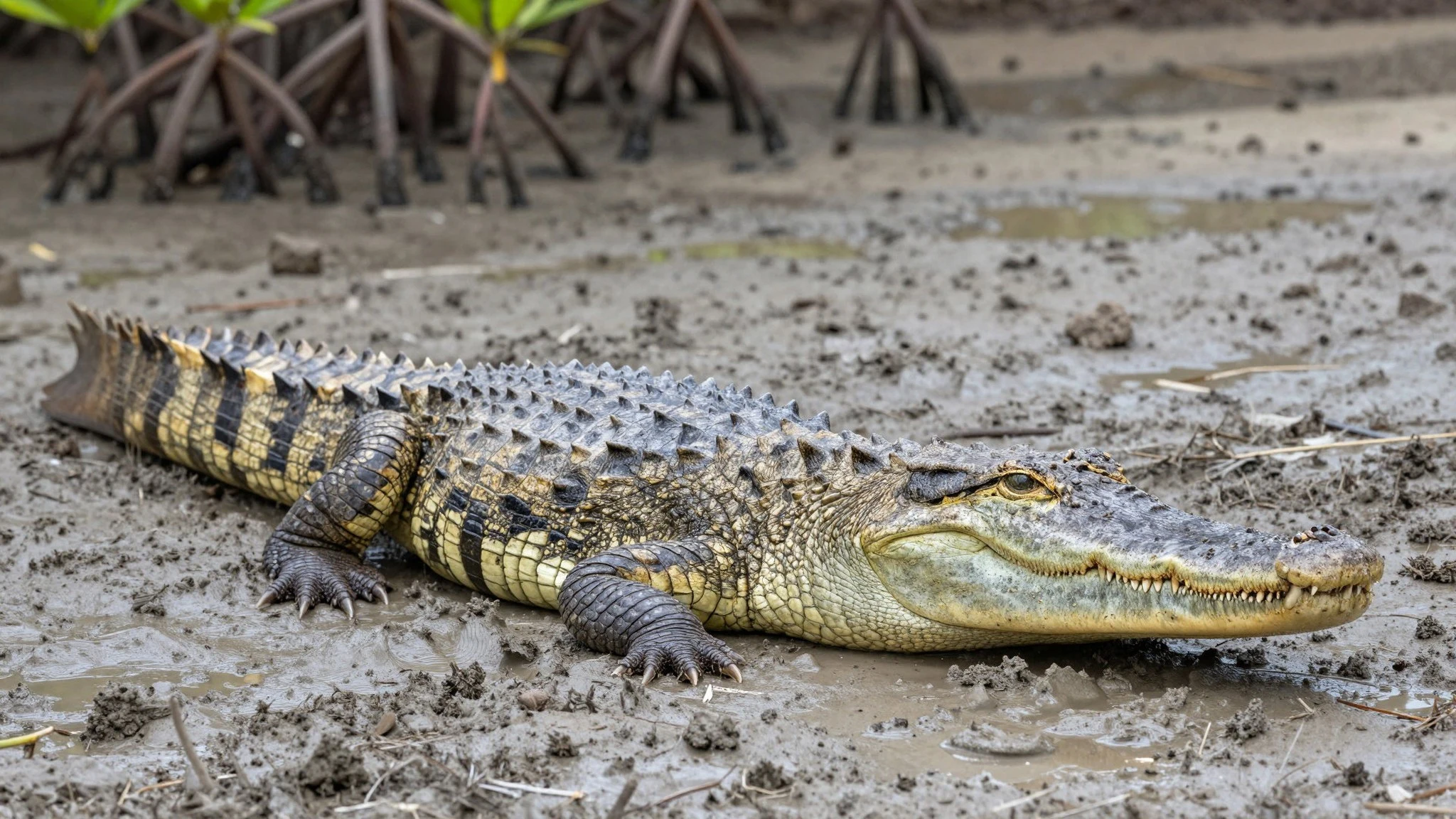
- Do not swim in tidal water, as saltwater crocodiles live on this coast
Nearby
Sources
- Wikidata Q1034237 (CC0)
- Wikipedia: Cape Hillsborough National Park (rev 1362707866) (CC BY-SA 4.0)
- Wikivoyage: Queensland (rev 5381291) (CC BY-SA 4.0)
- Photo: Cape Hillsborough National Park, Rob and Stephanie Levy (CC BY 2.5)
- Photo: Coastal landscape, Kimberly Melissa Booth (CC BY-SA 4.0)
- Photo: Location map of Queensland, Uwe Dedering (CC BY 3.0)
- Photo: Hoop pine, Rob and Stephanie Levy (CC BY 2.5)
- Photo: Bar-sided forest-skink, Bernard Dupont (CC BY-SA 2.0)
- Photo: Blue-throated rainbow-skink, Bernard Dupont (CC BY-SA 2.0)
- Photo: Blue-throated rainbow-skink (cropped), Bernard Dupont (CC BY-SA 2.0)
- Photo: Blue-throated rainbow-skink, Bernard Dupont (CC BY-SA 2.0)


Wildlife
- Saltwater crocodile (animal)
The saltwater crocodile is a water-loving reptile that is dangerous to people, so think of it as an animal to admire from far away. It lives in salty waters, brackish wetlands and rivers across northern Australia, and this tropical coast is part of its home. From late spring the heat and humidity build, which makes the water tempting, but it is for looking at, never swimming. Keep well back, stay quiet, and never feed it.