Broome, Western Australia
Broome, Western Australia, Australia
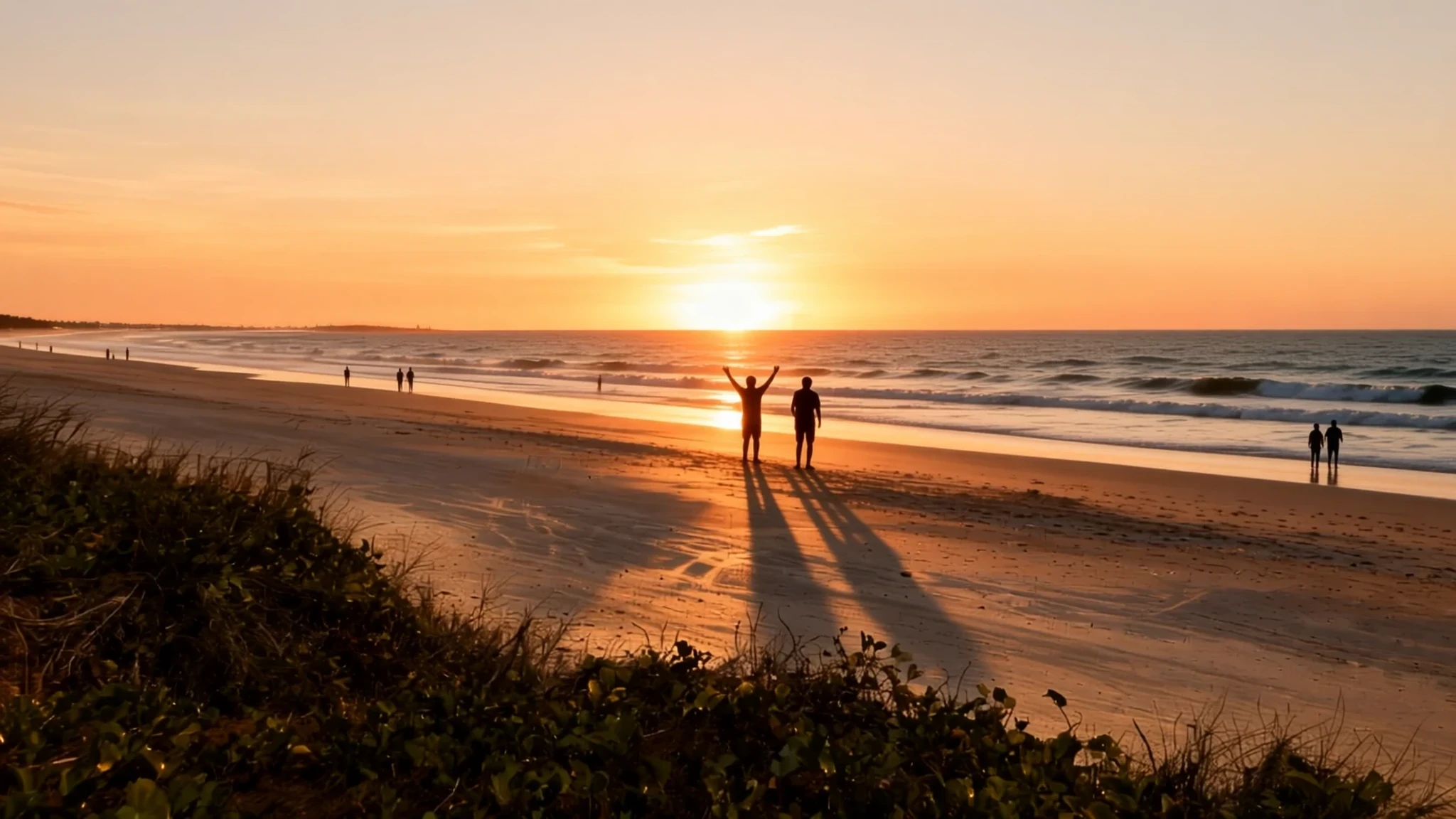
Broome is a pearling town on a red-sand coast, where dry-season sunsets and the Staircase to the Moon make the long trip north worthwhile.
The place
Broome sits on a peninsula on Western Australia's Kimberley coast, so water lies on both sides of the town. Roebuck Bay runs along the eastern shore, and its intertidal mudflats and red sand beaches serve as a stopover for migrating shorebirds travelling the East Asian–Australasian Flyway between northern Asia and Australia. On the western side, the Indian Ocean meets the coast. With around 15,000 residents, Broome is the largest town in the Kimberley, and it still feels like a relaxed outpost rather than a city. The Yawuru people know the place as Rubibi.
Town Beach, on the bay side, is the spot for the Staircase to the Moon, a natural effect in which a falling tide and a rising moon line up to make a stepped path of light across the mudflats. Visitors gather there in the evening, and a food and craft market often operates on those nights. Cable Beach, a short drive away, is the long, wide stretch that most people picture when they think of Broome.
The climate shapes daily life. The dry months are mostly clear and warm, while the wet season from December to March brings humid air and sudden, heavy downpours. Tropical cyclones and summer storms make rainfall unpredictable, so a wet year can differ sharply from a dry one. The town is small enough to explore on foot or by bike, and the beaches and museums are easy to reach from the centre.
Its story
Long before the town existed, this coast was crossed by animals that left prints in the mud. Dinosaur footprints from the Early Cretaceous, roughly 130 million years old, were discovered at Gantheaume Point in the 1960s. They lie just out to sea and are exposed only at very low tide. Some of the prints were cut from the rock and stolen in 1996, and most have since been recovered.
The land is the country of the Yawuru people, whose connection to it runs far deeper than any written record. Before the newcomers came, Yawuru life drew its food and materials from the sea and the bush, with hunting, gathering and fishing guided by detailed knowledge of the seasons. Trade networks reached across the Dampier Peninsula and the wider Kimberley, carrying goods and knowledge between language groups. In 2006, the Yawuru people gained official legal recognition of their rights over the ancestral land and sea they have traditionally occupied.
European contact came more slowly than is often assumed. William Dampier is often credited as the first European to reach Broome, but he only visited the north of what became the Dampier Peninsula. In 1699 he explored the coast as far as La Grange Bay, then turned north and left the Australian coast. Settlement came later, tied to the pearling industry. The town was founded in 1883 and grew up around the luggers and divers who worked the bay. In 1942 Japanese forces attacked the town, an event that still shapes how the local museum tells its story.
What to see
- Cable Beach — West of the town centre
Cable Beach, a short drive west of the town centre, is a long stretch of pale sand backed by low dunes, and most visitors head there in the late afternoon. That is when the light turns gold and camel trains walk the tideline for sunset rides. The beach is wide, but car parks fill on dry-season evenings. Bring water and a hat; shade is scarce.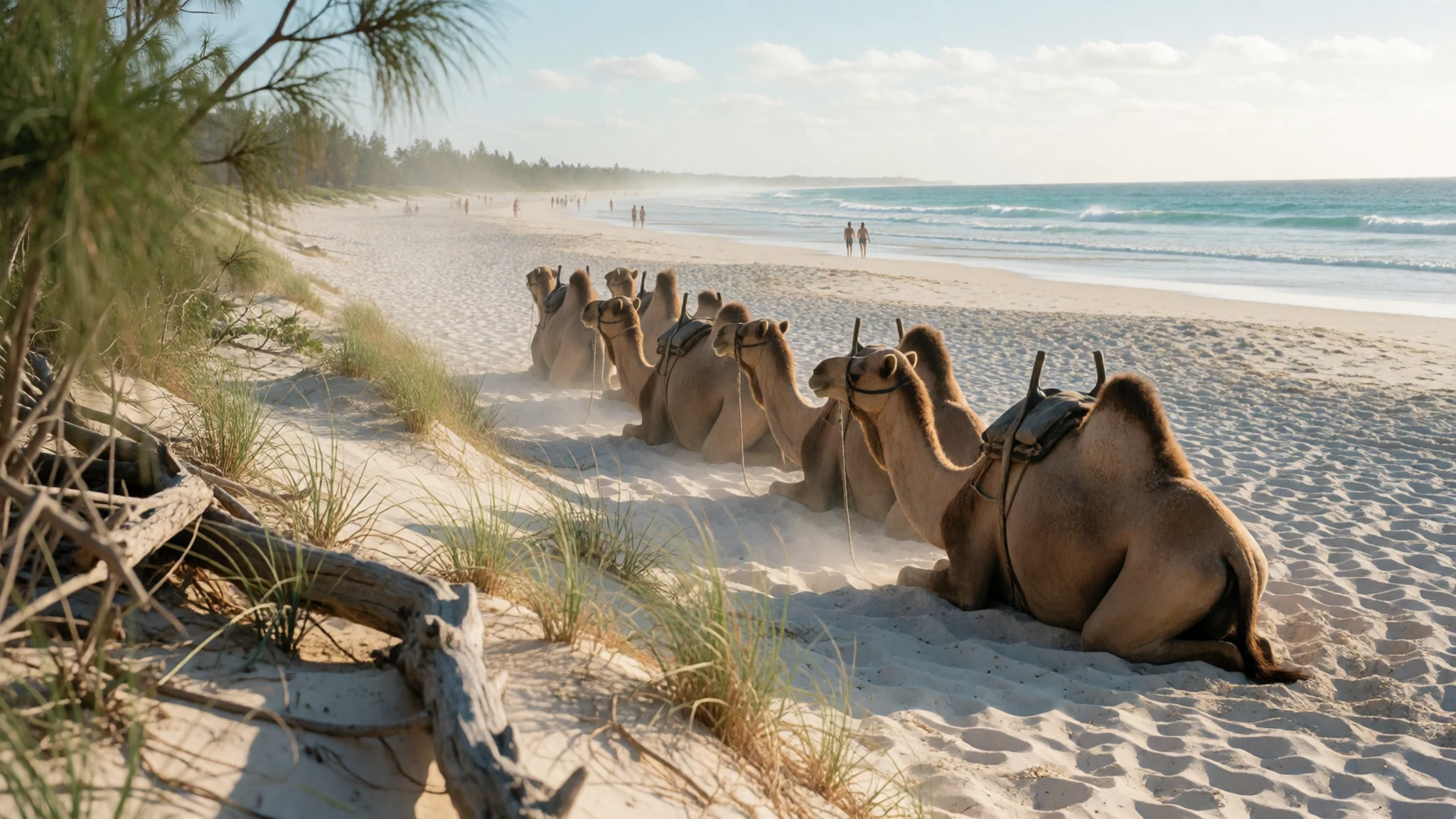
- Staircase to the Moon, Town Beach — Bay side of the town
The Staircase to the Moon is best seen from Town Beach on the bay side of the peninsula, when a low tide leaves the mudflats exposed and a rising moon comes up over the water. The reflections form a stepped path of light. A food and craft market often runs on the sand on these nights. Check dates before you go.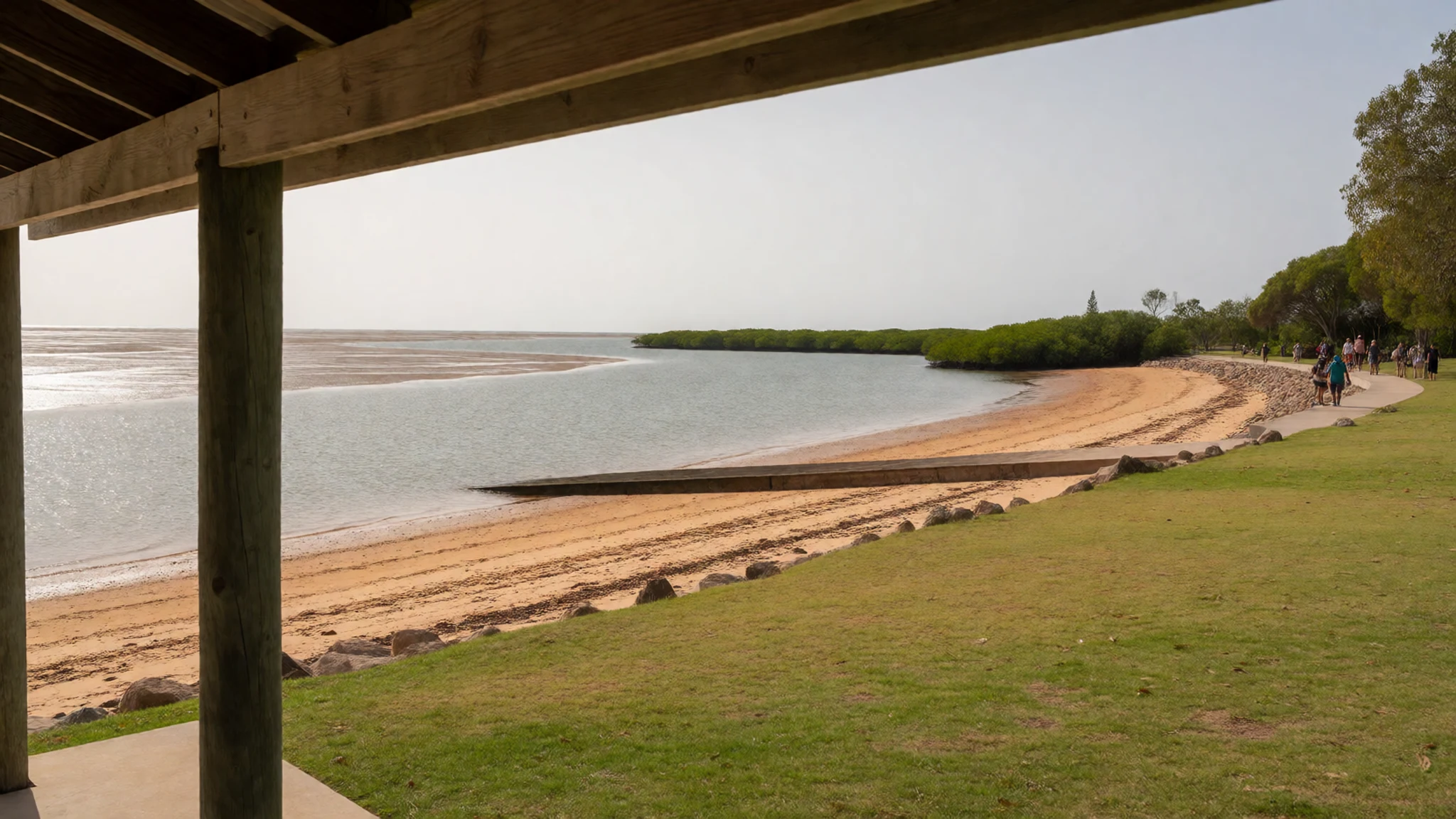
- Broome Historical Museum — Town centre
The Broome Historical Museum covers local history, with a strong focus on the pearling industry. Its displays also address the Japanese attack on Broome on 3 March 1942, which is a sober part of the town's story. The collection gives useful context before visiting the pearl luggers and the beaches.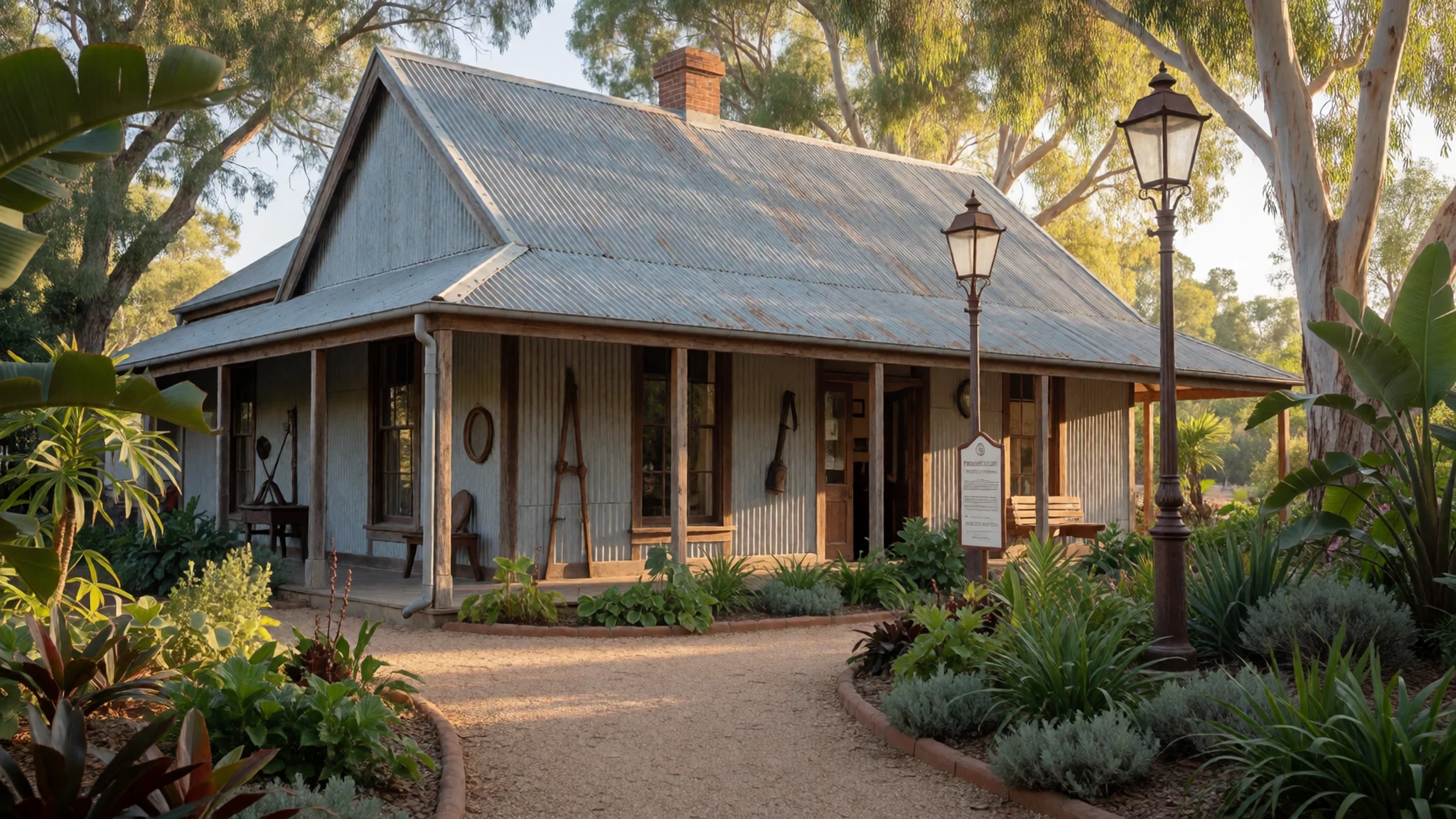
- Pearl Luggers — Willie Creek, north of town
Willie Creek is where the Pearl Luggers operate, selling pearls and showing two restored pearl fishing vessels beside the showroom. The guided tour gives a clear account of how the pearling industry worked, from the boats to the trade. It is a good stop if you want the history without the museum.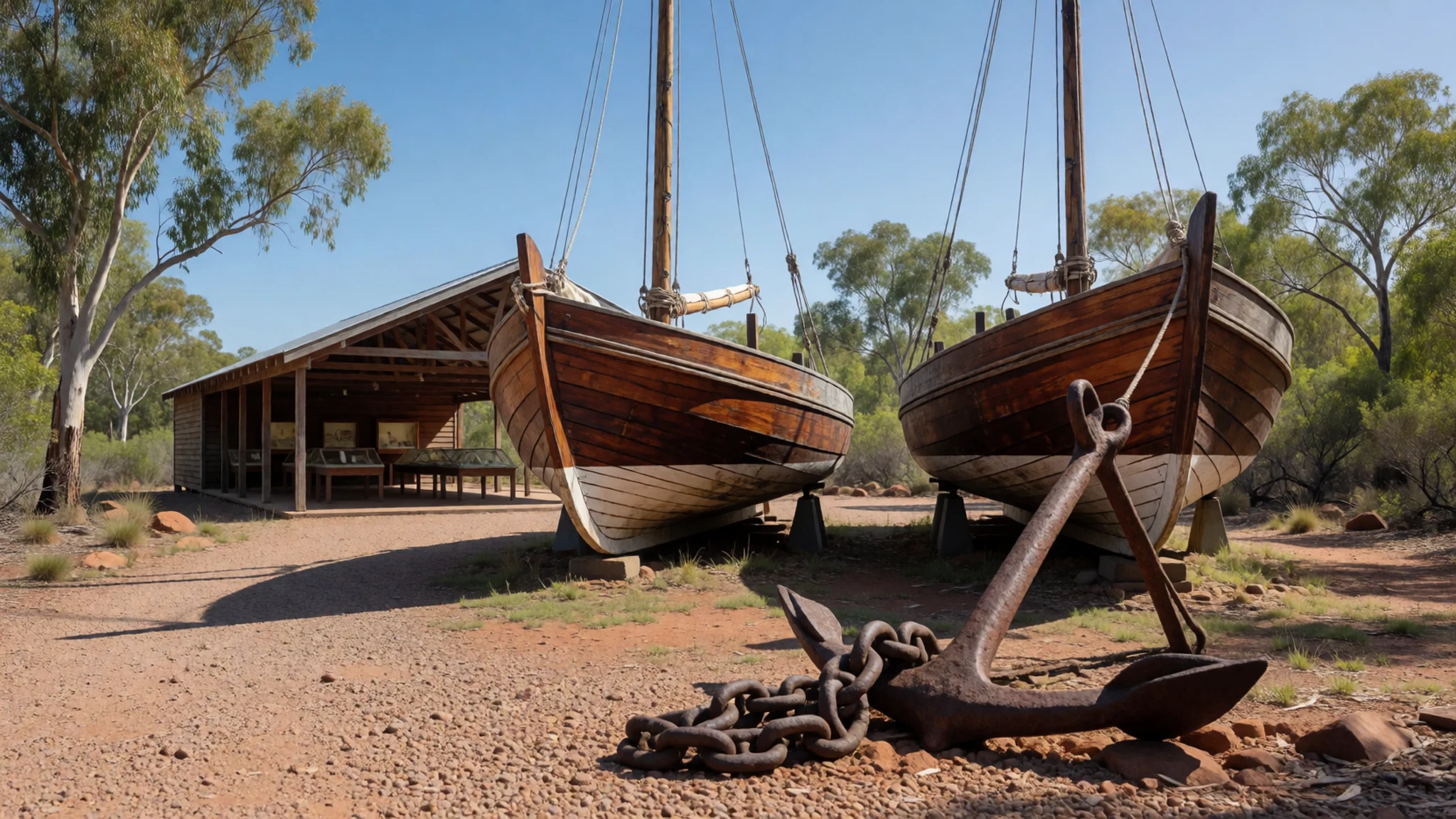
- Malcolm Douglas Crocodile Park — Out of town
Malcolm Douglas Crocodile Park, a short drive out of town, lets visitors see several crocodile species up close, along with birds and other wildlife. Feeding happens in the afternoon and it is messy, so wear clothes you do not mind getting splashed.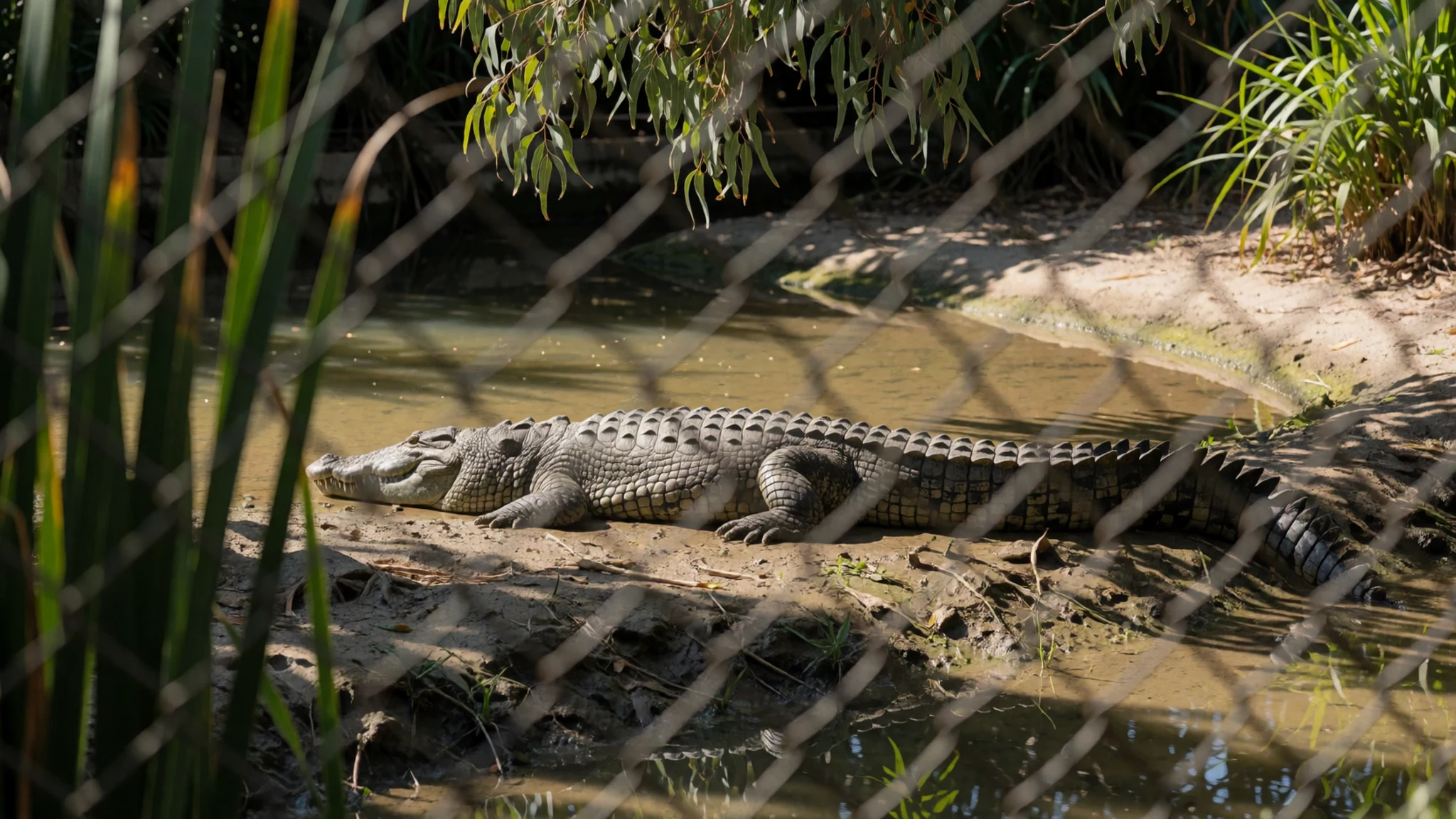
Culture
Broome sits on Yawuru country, and the Yawuru were formally recognised as native title holders in 2006, so Aboriginal culture is part of the town's everyday life rather than a side attraction. Art is one way into it. Short Street Gallery sells contemporary Aboriginal art from the Kimberley, Pilbara and beyond. The Marrugeku dance company, led by Dalisa Pigram and Rachael Swain, makes new performances that bring Indigenous and non-Indigenous Australians together, and it works from bases in Broome and Sydney. Broome is also home to the Sun Picture Garden, an open-air cinema where films screen under the stars. The Sisters of St John of God run a heritage centre in town that exhibits their work with local Aboriginal people, which gives a gentle way into the town's social history. Ask before photographing Aboriginal people or sacred sites, and buy art only from galleries that name the artist and their community.
What to wear
Traditional dress on this coast was practical and often ceremonial, made from natural materials such as plant fibres, shell, feathers and ochre. Much of the visual culture lay in body decoration and painting rather than tailored clothing. Details differ between language groups, and Yawuru knowledge of ceremonial dress is best learned from Yawuru-led organisations and cultural centres. The pearling era added its own working dress, mostly simple cloth clothing suited to hot water and boats.
Today most people in Broome dress for the heat: shorts, T-shirts, linen shirts and sundresses, with flip-flops for the beach and closed shoes for town. Aboriginal designs appear on clothing and textiles sold in local shops and galleries, and many people wear them with pride. Evenings at better restaurants call for smart casual rather than formal wear.
For a visit, choose loose, light cotton or linen in pale colours, which breathe better in the humidity. Bring a wide-brimmed hat and sunscreen for the open beaches. Sturdy closed shoes suit the rocky tracks and mudflats, and sandals are fine in town. At cemeteries and other places of remembrance, including the Japanese Cemetery, dress modestly, with shoulders and knees covered.
What to eat
- Fresh fish and seafood — A seafood restaurant near Cable Beach
Fish is the obvious order on this coast, and the strongest choice is a seafood restaurant near Cable Beach, where fish dishes feature on most menus. Grilled fish with salad, and prawns, are common. Booking ahead is sensible in the dry season, when evenings are busy.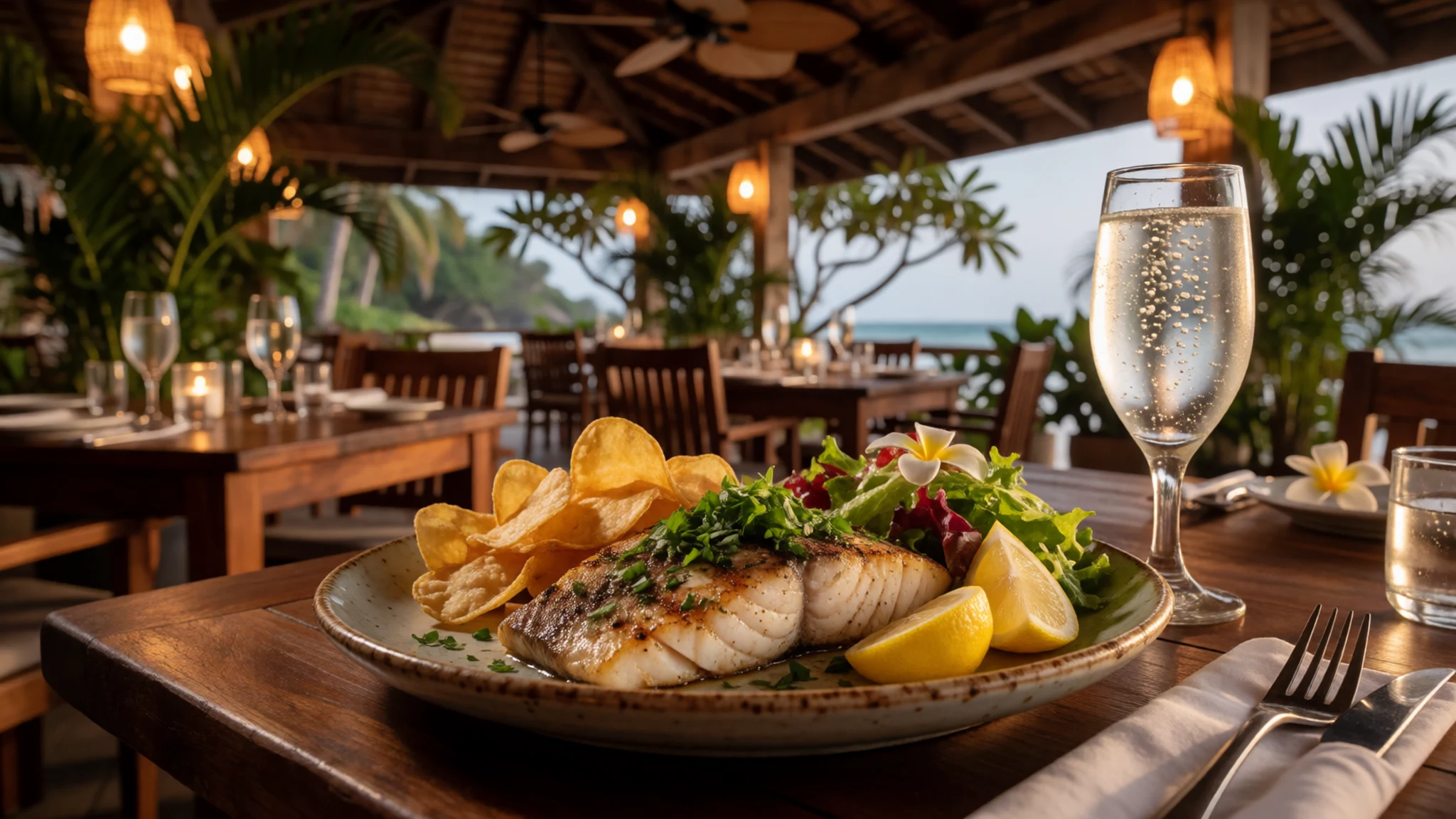
- Pub meals — A town-centre tavern
Pub food is hearty and unfussy, with steak, chicken parmigiana and fish and chips as reliable options. Pubs keep a good range of beer, and they suit an early dinner after a day on the beaches. The kitchen can be busy at peak times.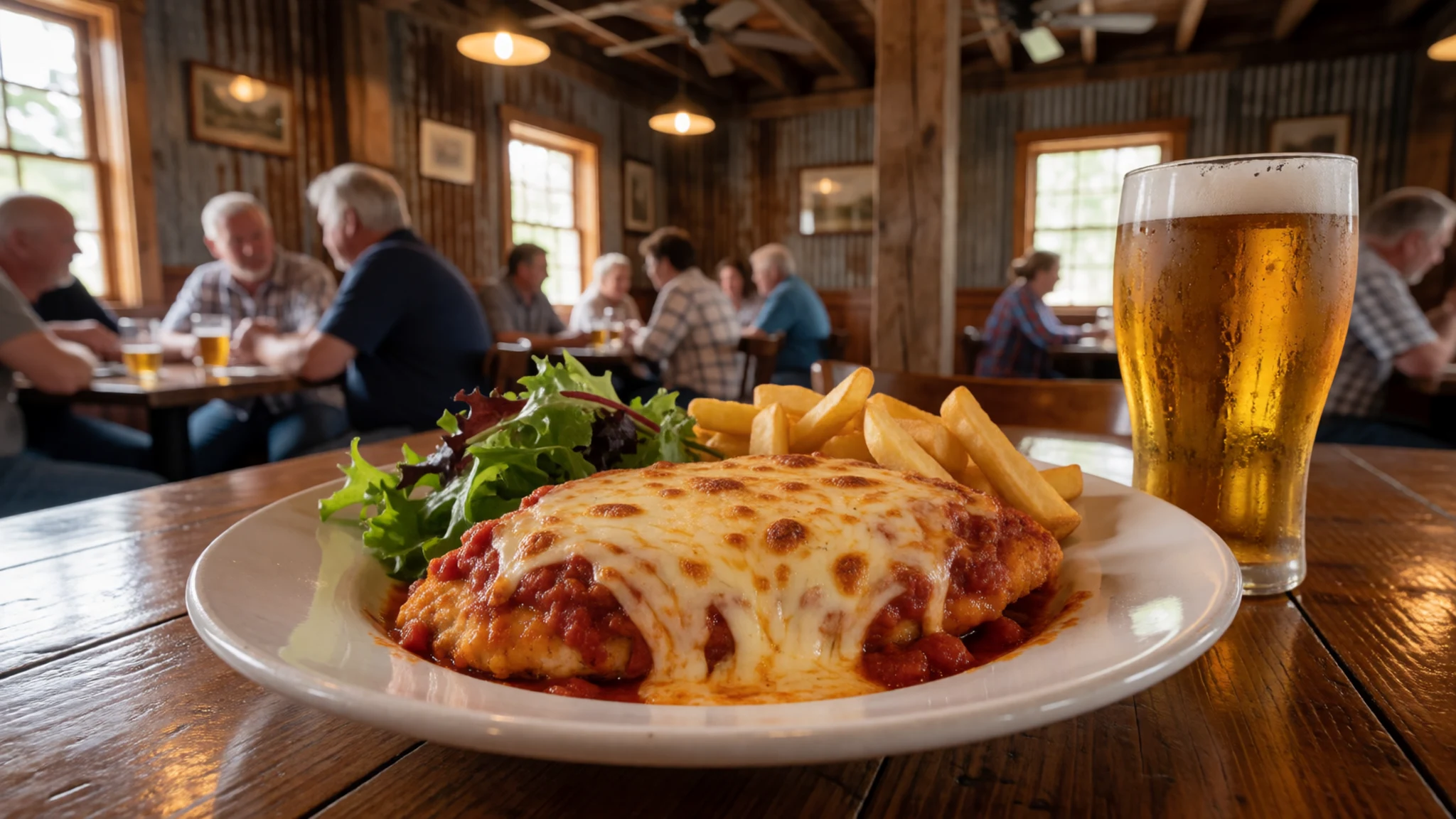
- Chinese-style noodles and dishes — Chinatown, the old quarter near the centre
Chinatown is the place for noodle bowls, stir-fries and dumplings, and several small eateries serve both sit-in and takeaway meals. The dishes reflect the mix of communities that shaped the pearling town. Takeaway is handy for a picnic on the beach. - Cafe breakfasts and light lunches — Cafes around the Courthouse Market and in Chinatown
Relaxed cafes make a good start to the day, with eggs, toast, fruit bowls and strong coffee. Starting early suits the cooler hours before the heat builds. A light lunch works well too, since the afternoon can be too hot for long walks. - Food stalls on Staircase nights — Town Beach on Staircase nights
On Staircase nights, Town Beach hosts stalls selling hot food, cold drinks and local crafts. Eating on the sand while the tide turns is part of the appeal. Queues can form at the most popular stalls, so arrive before the peak. - Alcoholic ginger beer and brewpub plates — A local brewpub
The local brewpub makes an alcoholic ginger beer, because the heat is thought to be too much for standard beer. Plates of pub food accompany it at lunch or early dinner. Service can be uneven, so allow time before ordering.
Plan it
Best time. April to November is the dry season, with mostly clear skies and maximum temperatures around 30 °C. May to September is the most comfortable stretch for walking and beach days. December to March is the wet season, with humid air, erratic downpours, cyclone risk and maximum temperatures near 35 °C.
How long. 2–3
Getting there. Fly into Broome Airport, the main way in for most visitors; check schedules, as services change. Overland, the Integrity bus from Perth takes about 36 hours along the coast, and the road from Darwin is about 1,870 km.
Budget. mid
Tips
- Book accommodation early for the dry-season months, when the town fills up
- Go to Cable Beach for sunset, but arrive early for parking
- Start walks and bike rides early in the morning, before the heat builds
- Drink more water than you think you need; the dry air takes sweat before you feel it
- Check tide times for the Staircase to the Moon and for the Gantheaume Point prints, which show only at low tide
- Carry some cash for markets and small stalls; cards work in most shops and restaurants
Etiquette
- Dress modestly at the Japanese Cemetery and other places of remembrance
- Ask before photographing Aboriginal people, and respect signs about sacred sites
- Keep to marked paths on the reef flats and dunes, and leave the dinosaur prints untouched
Nearby
Sources
- Wikidata Q606294 (CC0)
- Wikipedia, Broome, Western Australia (rev 1381843087) (CC BY-SA 4.0)
- Wikivoyage, Broome (rev 5396002) (CC BY-SA 4.0)
- Photo: 00 1980 Broome, Western Australia (W. Bulach) (CC BY-SA 4.0)
- Photo: Broome, Western Australia 11 (Kat Clay) (CC BY 2.5)
- Photo: Views of Broome Historical Museum 07 (Ridiculopathy) (CC0 1.0)
- Photo: Staircase to the Moon (Johnorchard) (CC BY-SA 4.0)
- Photo: Cable Beach Panorama (Bidgee) (CC BY 3.0)
- Photo: Cable Beach Sunset Camel Ride (Binarysequence) (CC BY 3.0)
- Photo: Japanese Cemetery Broome 1939 (SLNSW) (Public domain)
- Photo: Broome Japanese Cemetery headstones (Martin Kraft) (CC BY 3.0)


