Bondi Beach
Bondi Beach, Australia
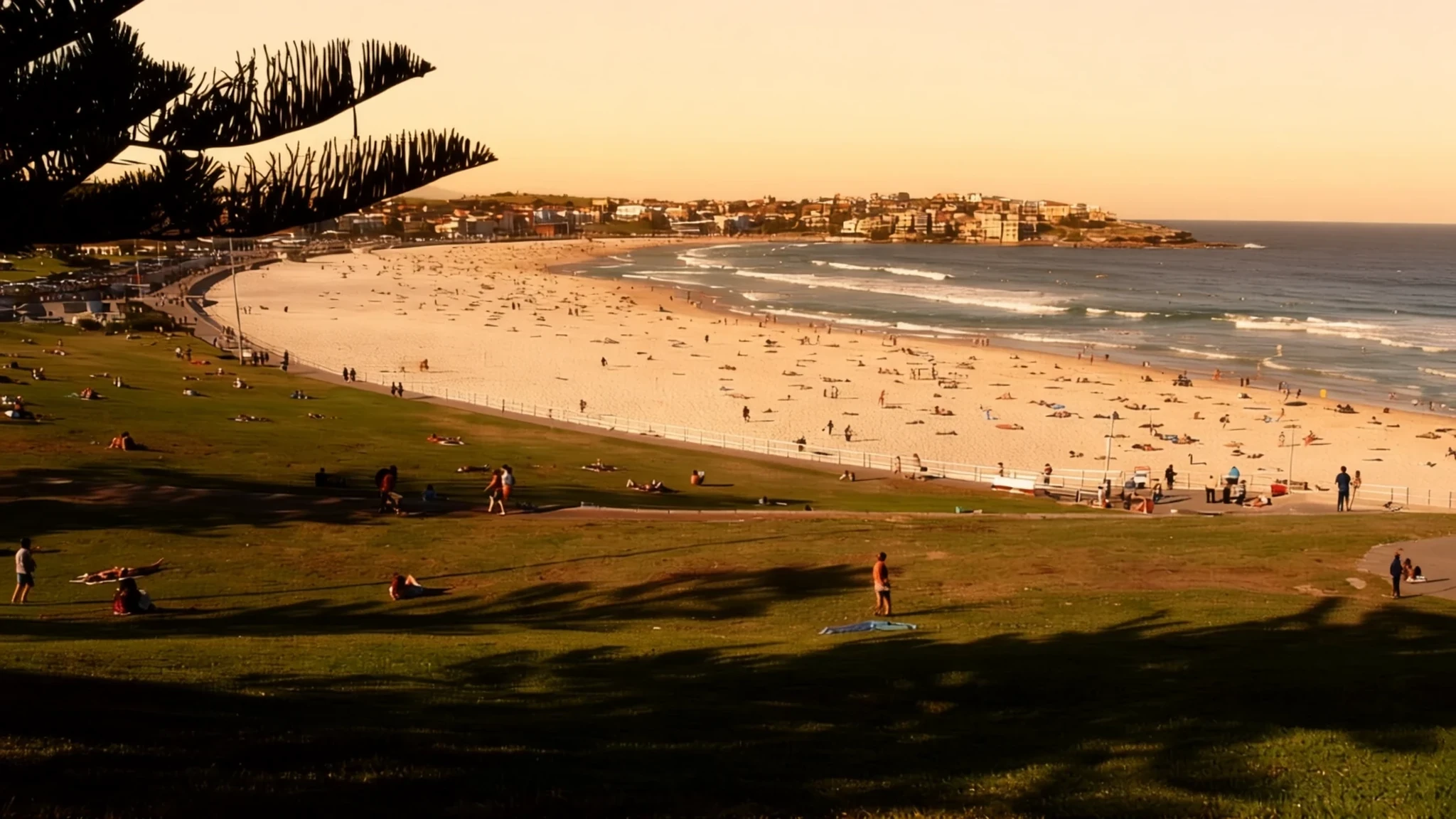
Bondi is Sydney's best-known beach: a short bus ride from the city, with dependable waves, a cafe-lined beachfront and crowds to match.
The place
Bondi Beach is both a beach and the suburb around it, sitting about 7 km east of Sydney's central business district in the Eastern Suburbs. The area falls within Waverley Council, and the 2021 census counted 11,513 residents, roughly 11,500 people, living on streets that climb gently away from the sand to about 19 m above sea level. Bondi Junction and North Bondi are close neighbours, and the names are easy to mix up: Bondi Junction is a busy rail hub a fair walk from the sand, not a station on the beach.
The beach is the reason most people come. It is the closest surf beach to central Sydney, which makes it a day trip for locals and a first stop for visitors, and on warm weekends the sand fills from end to end. Backpackers fill the hostels around the beach mainly in the summer months, and British visitors arrive in numbers over the Christmas holidays, so the crowd is young and international only at those times.
The atmosphere is relaxed rather than polished. Cafés, small boutiques and a steady stream of joggers line the esplanade, and rock pools and headlands at either end offer quieter corners when the main sand is packed. Summer heat is real, the water often feels cooler than the air, and the lifeguards' flags matter more here than many first-time visitors expect.
Its story
Bondi Beach's story begins long before the suburb had a name. Aboriginal peoples, including the Bidjigal, Birrabirragal and Gadigal, lived across the Waverley and Bondi areas for tens of thousands of years, leaving paths, rock carvings, stone artefacts and shelters. The eastern beaches were part of their country, and any account of the sand that skips that history misses most of it.
European land claims followed in the nineteenth century. In 1809 the road builder William Roberts was granted land in the district. In 1851 Edward Smith Hall and Francis O'Brien bought a large block that took in most of the beach frontage and called it the Bondi Estate. O'Brien afterwards acquired his father-in-law's stake, gave the land the name O'Brien Estate, and threw the beach open to visitors as a site for picnicking and an entertainment resort. Popularity brought friction. O'Brien threatened to close public access, and the municipal council argued that the government needed to step in. In mid-1882 the beach was made a public beach.
Access improved quickly afterwards. A tramway reached the beach in 1884, and the local council built the first surf bathing sheds on the sand in 1903. Those changes turned a private picnic spot into the crowded public beach people know now, and the argument over who should control the sand is still part of the place's history.
What to see
- Bondi Icebergs — Rock pool at one end of the beach
A rock swimming pool set into the rocks, with a restaurant and bar upstairs that look over the whole sweep of sand. The name comes from the swimmers who keep bathing here through the cooler winter months, when the water is at its chilliest. Go early for a swim before the beach fills, or book a table upstairs for the view. Check the official site for current opening and lap-swim details before you go.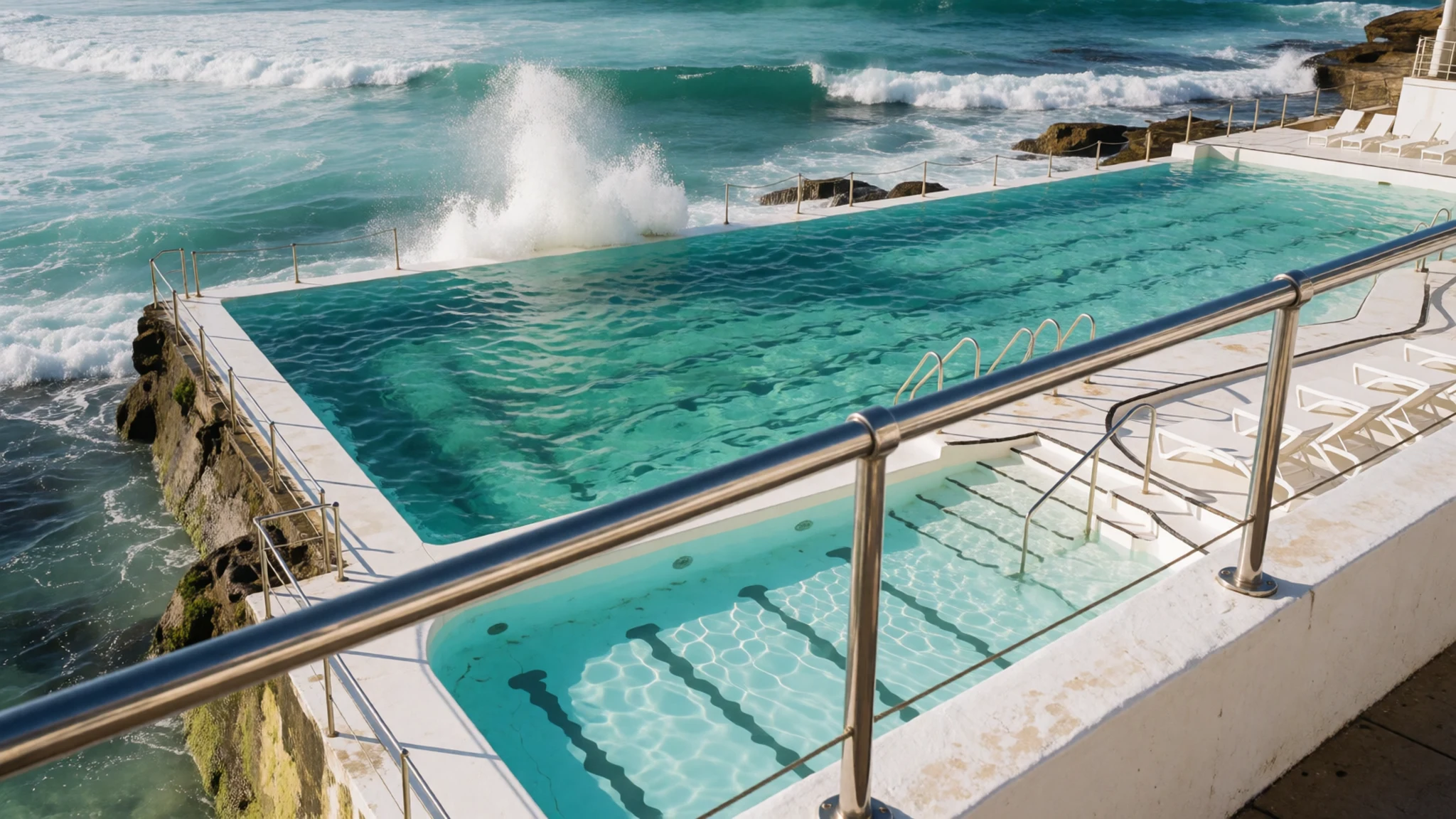
- Sculpture by the Sea — Bondi to Tamarama coastal walk, Marks Park and Tamarama Park
An annual outdoor exhibition of sculpture spread along the clifftop walk from Bondi to Tamarama, with more than a hundred separate works on the lawns and in the parks. Pieces range from playful to unsettling, and some sit so close to the cliff edge that the sea becomes part of the artwork. It runs for a set period each year, so check the official site for dates and any walk closures.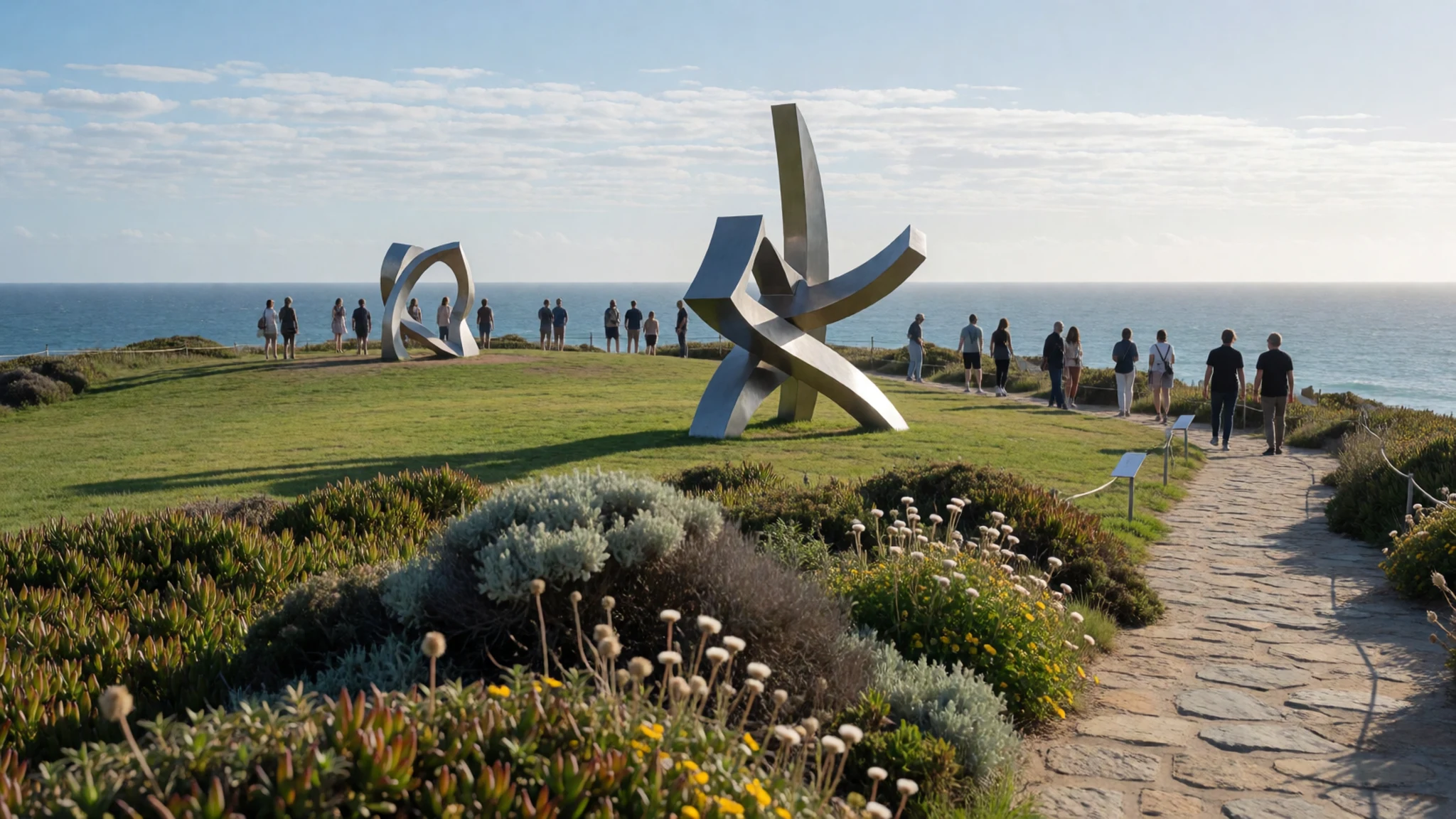
- Bondi Pavilion — Historic building on the beachfront
The historic pavilion on the beachfront is worth a quick look, because it often hosts displays that explain the beach's history and its surf culture. The displays are usually free to see, and the building makes a good break from the sun. Check the official site for current opening times before you plan the rest of the day.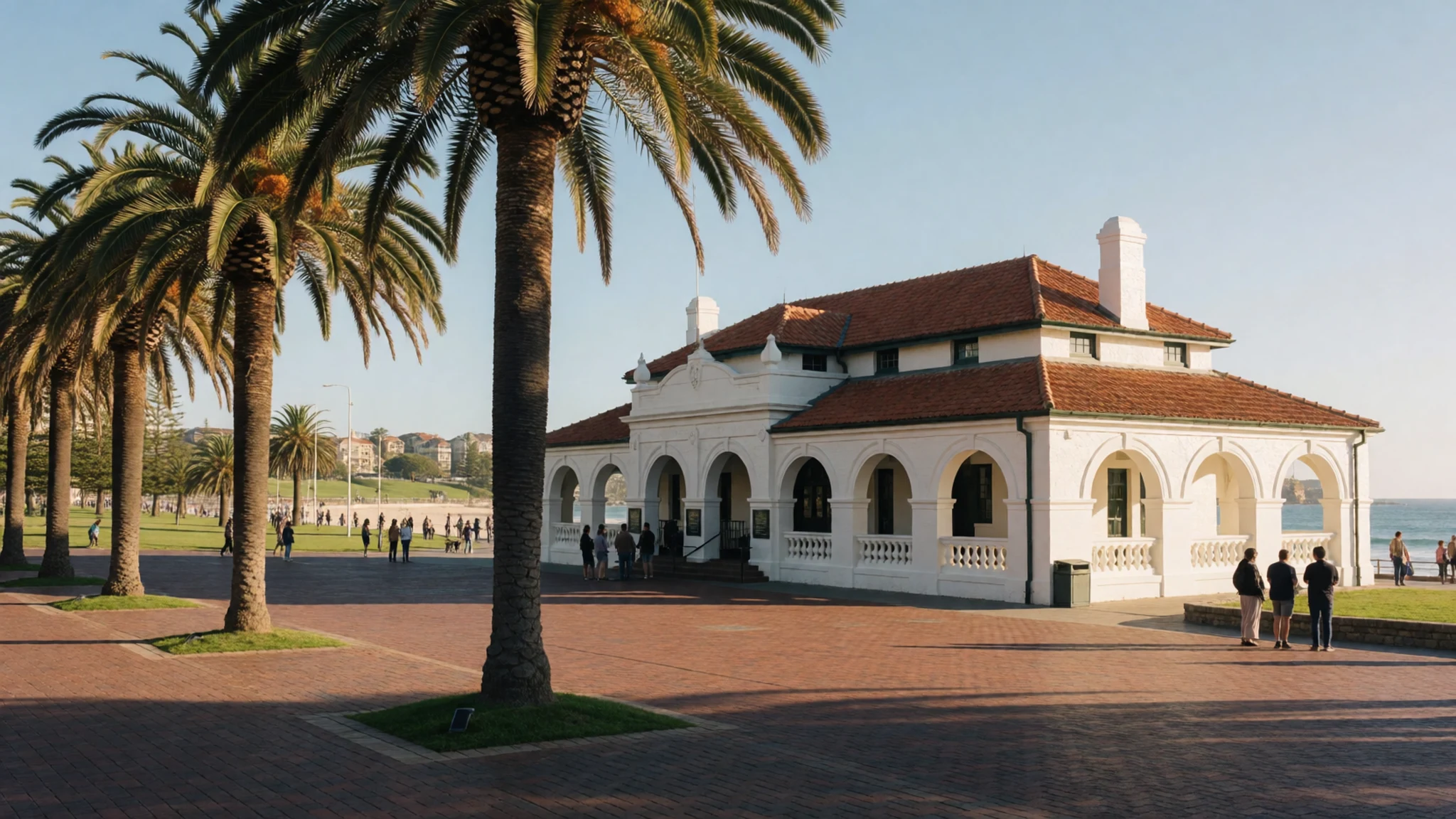
- The coastal walk to Tamarama — Clifftop path running south from the beach
A clifftop path runs south from the beach, passing small coves and rock pools with the sea below for most of the way to Tamarama. The cliffs are steep in places and the path can be crowded on weekends. Wear shoes with grip, carry water, and bring something to sit on, since shaded benches are few.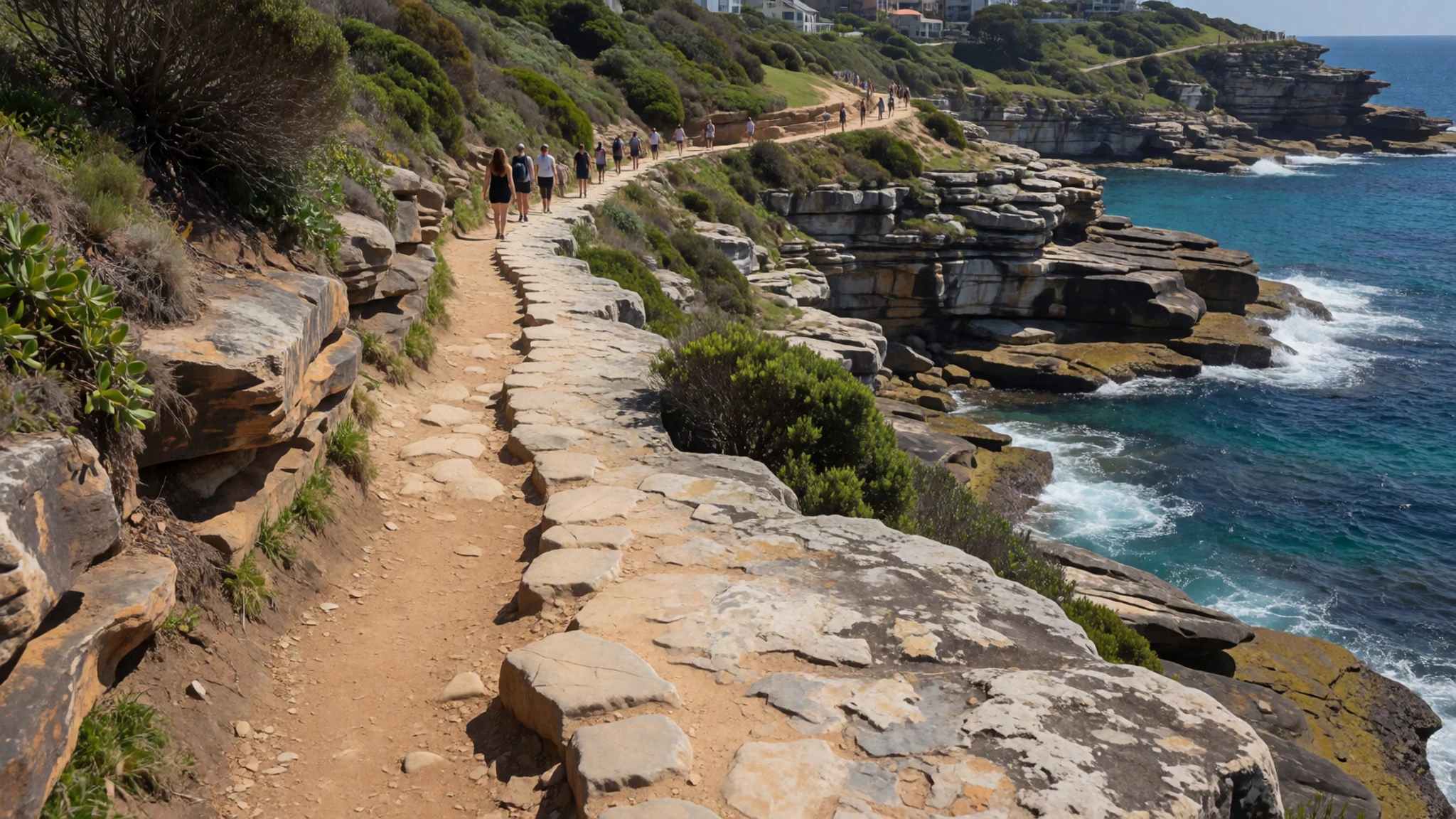
- Bondi Winter Magic ice rink — Beachfront, during the winter festival
Each winter the council sets up an ice rink on the beachfront as part of the Bondi Winter Magic festival, open to the public. It is a surprising sight, with skaters circling while the surf rolls in just beyond the railings. Dates change from year to year, so check the Waverley Council listings before you go.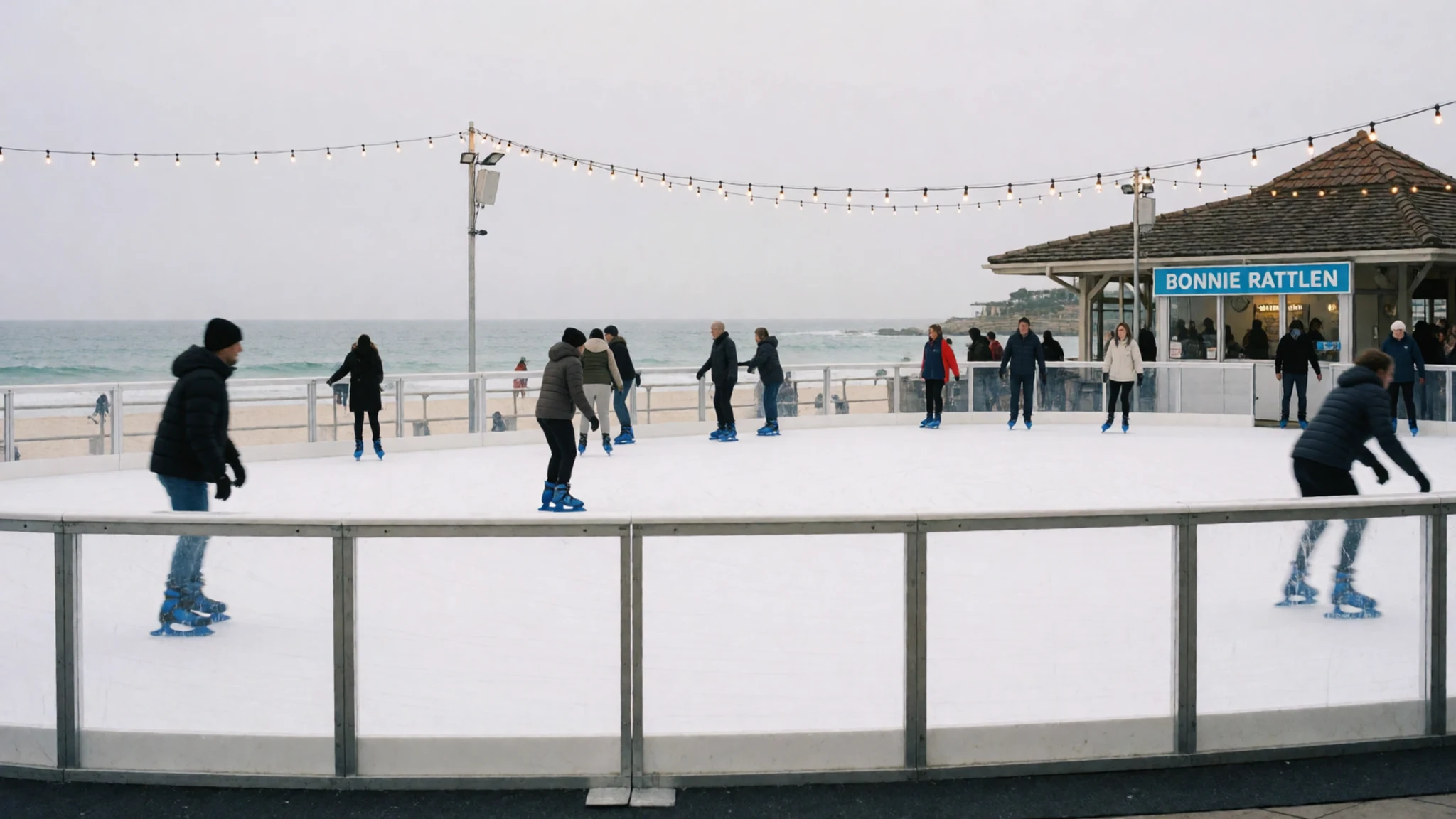
Culture
Bondi Beach has long drawn writers and performers as well as swimmers. Poets including Les Murray, Joanne Burns and Brook Emery have written about the coast, and the beach has served as a backdrop for television, from the home renovation series The Block, whose first season was filmed here in 2003, to the reality series Being Lara Bingle and the long-running Bondi Rescue. Screen images shape how many people arrive, often with a particular scene already in mind.
Festivals keep the calendar busy. The Vans Bowl-A-Rama skateboarding competition takes place at the Skate Bowl each February, and the annual Miss Bondi pageant is a familiar part of local life. In summer the beach fills with backpackers, and in the lead-up to Christmas a large group of British visitors gathers on the sand, so the mood is loud, young and international.
Local life runs on the sand and in the cafés, with people swimming before work and sitting on the grass to watch the surf. Keep to the swimming area between the flags, follow lifeguard instructions without argument, and stay off the rock platforms when the swell is big. Never photograph people in swimwear at close range without asking first.
What to wear
Bondi Beach has no traditional dress of its own, but the Gadigal, Birrabirragal and Bidjigal peoples, whose culture belongs to this coast, have their own clothing and adornment traditions. Visitors who want a genuine piece of that heritage should look for jewellery, prints and textiles made by Aboriginal artists and sold through reputable Indigenous-owned galleries, rather than mass-produced souvenir designs. Ask who made a piece before you buy it.
What people wear now is almost entirely a beach wardrobe. Board shorts and bikinis dominate the sand, flip-flops (thongs, locally) are everywhere, and linen shirts and sundresses take over along the esplanade and in the cafés. Surfers zip into wetsuits, and rash vests or long-sleeved swim tops are common among people who spend long hours in the sun.
For a visit, pack for strong sun and sea breezes. A wide-brimmed hat, high-factor sunscreen and sunglasses are essential, and a light layer helps in the evening when the wind picks up. Swimwear is fine on the sand and the coastal walk, but cover up before going into a restaurant or shop. For the clifftop path and rock pools, choose shoes with real grip rather than flip-flops, because the rock is slippery and the path is uneven.
What to eat
- Gelato — Small Italian-style shops along the beachfront strip
Gelato is the treat many visitors come back for. Rich, creamy scoops are sold in small shops along the beachfront strip, and the best ones are worth queueing for on a hot afternoon. Pick dark chocolate or pistachio for something heavier, or a fruit sorbet for something lighter.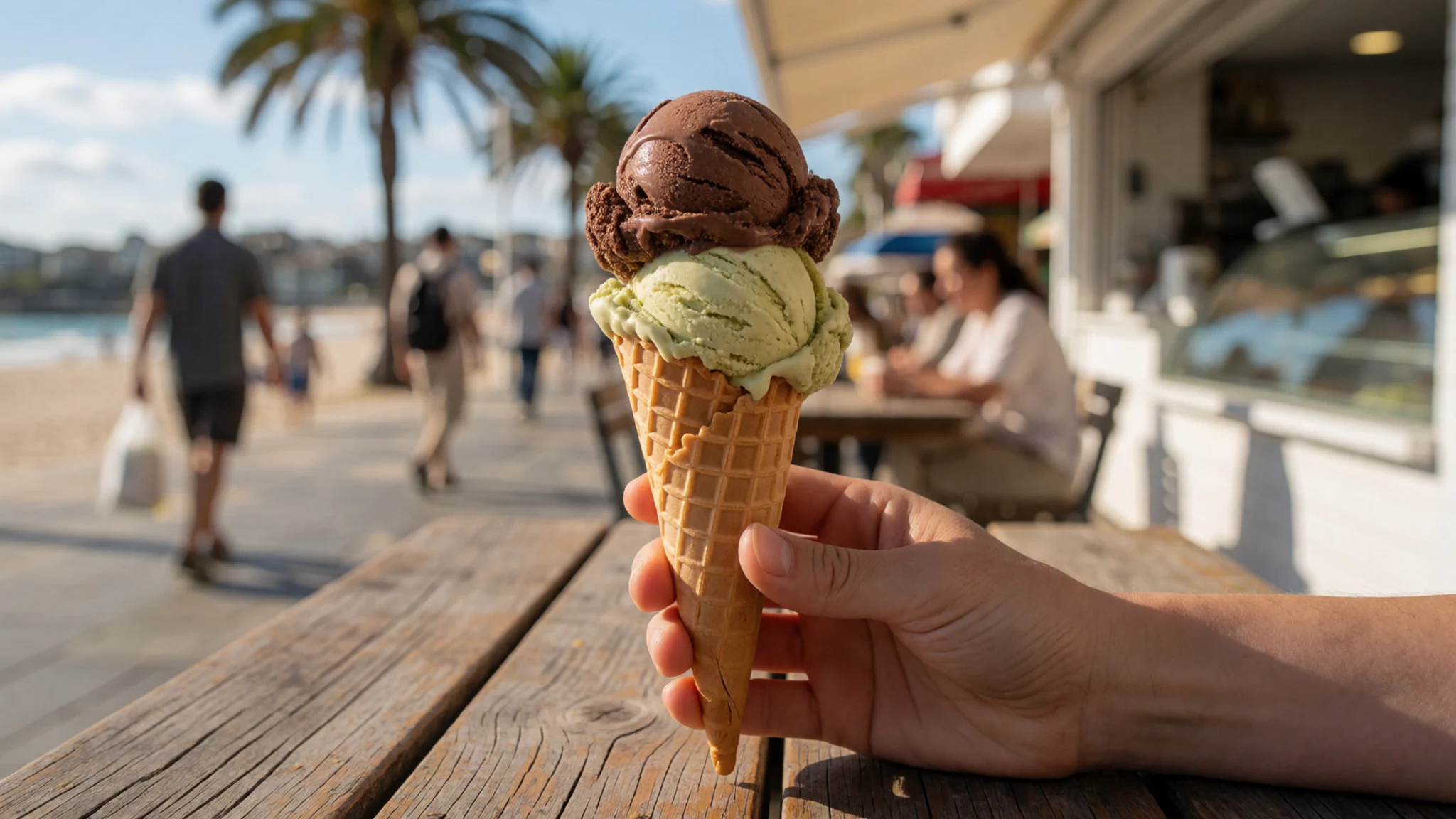
- Deep-fried Mars bar — Seafood takeaways on the beachfront
The deep-fried Mars bar is the beach's most talked-about oddity: a chocolate bar dipped in batter and fried, sold at the seafood takeaways near the sand. It is sweet, hot and very rich, so most people share one. Buy it as a novelty, then order fish and chips to balance it out.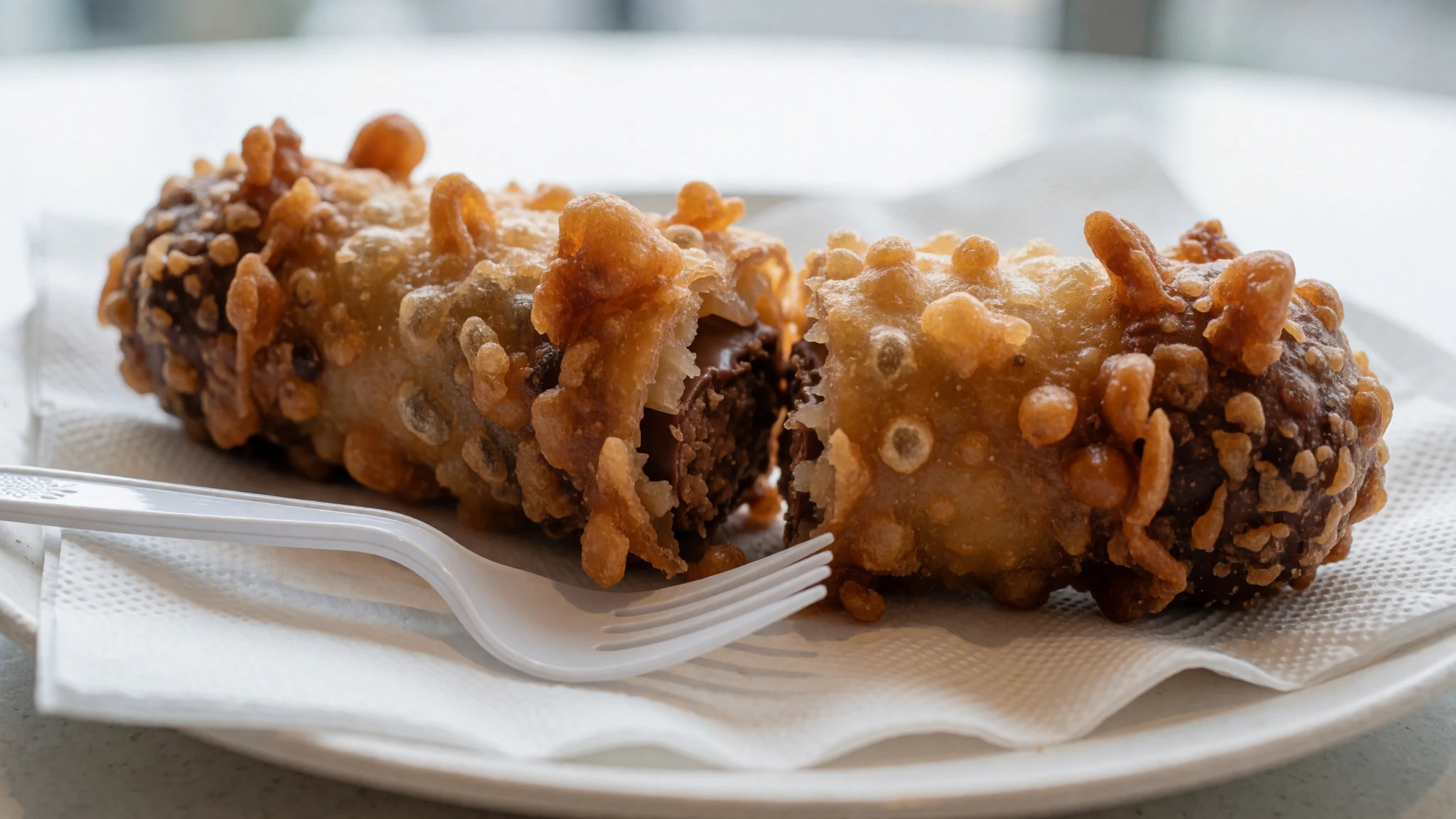
- Pizza and pasta — Trattorias on the side streets behind the beach
Trattoria-style restaurants on the side streets blend Italian and Australian cooking, with wood-fired pizza, handmade pasta and salads built around local seafood. The mood is relaxed and the tables sit close together. Book ahead on summer weekends, when the places nearest the beach fill early.
- Coffee and brunch — Cafés and espresso bars on the streets around the beach
Bondi's café culture is strong. Espresso bars serve flat whites, smashed avocado on sourdough and fresh juices, often from tables on the pavement. The quieter ones sit a short walk from the sand, where the crowd is calmer and the coffee arrives quickly.
Plan it
Best time. Late spring and autumn, roughly October to November and March to April, bring warm weather and a comfortable sea with fewer crowds than the peak months. December to February is the busiest stretch, with holiday crowds and the most heat. June to August is cooler and quieter, though the water is cold and the surf can be rough.
How long. a day or two
Getting there. From Sydney Airport, take the train to Central, then the Eastern Suburbs line to Bondi Junction. From the interchange there, take the express 333 bus or another service to the beach. Walking from the station is a longer trip than it looks on a map.
Budget. mid
Tips
- Go early or late in the day, when the sand is calmer and the crowds are thinner
- Swim between the flags where lifeguards are on duty, and check the conditions board first
- Carry water and sunscreen, since shade on the sand is limited
- Bring some cash for small kiosks, though cards work almost everywhere
- Book restaurant tables on summer weekends, as the places closest to the beach fill quickly
- Check the council and Bondi Icebergs websites for event dates and opening details
Etiquette
- Take your rubbish home, since bins fill quickly in summer
- Keep off the rock platforms when the swell is heavy
- Cover up when you leave the sand for cafés and shops
Nearby
Sources
- Wikidata Q673418 (CC0)
- Wikipedia, Bondi Beach (rev 1383092582) (CC BY-SA 4.0)
- Wikivoyage, Sydney/Bondi Beach (rev 5356913) (CC BY-SA 4.0)
- Bondi Beach, Sydney, NSW (Maksym Kozlenko, via Wikimedia Commons) (CC BY-SA 4.0)
- Bondi from above (Nick Ang, via Wikimedia Commons) (CC BY-SA 4.0)
- Bondi Bay, Sydney from The Powerhouse Museum (via Wikimedia Commons) (Public domain)
- Bondi Beach (Phil Whitehouse, via Wikimedia Commons) (CC BY 2.5)
- Bondi Beach improvement parade, December 1929 (EB Studios, State Library of NSW, via Wikimedia Commons) (Public domain)
- Power (222843753) cropped (Adrian Gigante, derivative by Georgfotoart, via Wikimedia Commons) (CC BY 3.0)
- A rip current at the northern end of Bondi beach (Chen Hualin, via Wikimedia Commons) (CC BY-SA 4.0)
- Bondi Beach, Sydney (Nicolas Lannuzel, via Wikimedia Commons) (CC BY-SA 2.0)


