Byron Bay
Byron Bay, Australia
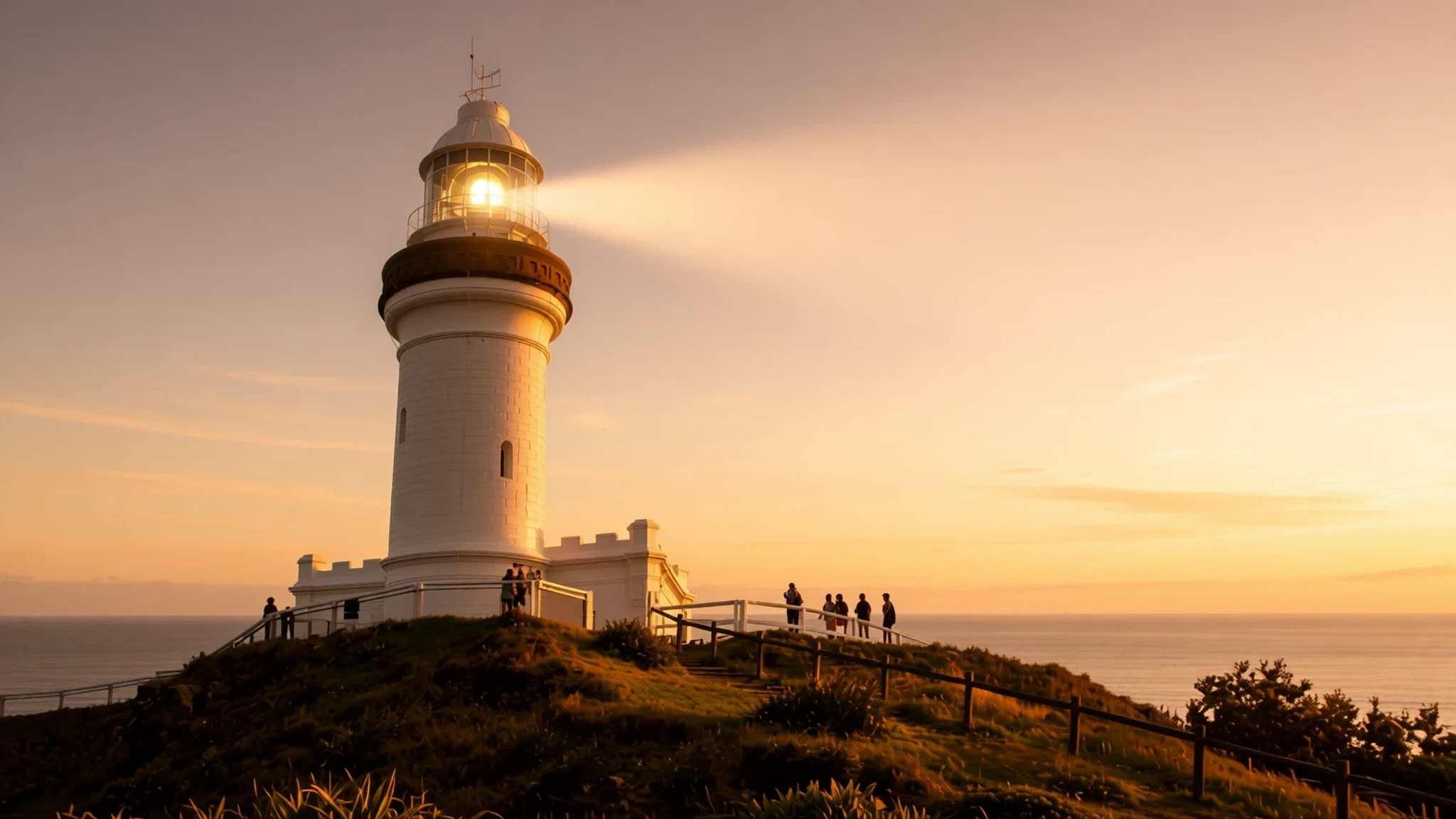
A small surf town on Australia's far north-east coast, where a lighthouse headland, long beaches and an easy-going streak keep people coming back.
The place
Byron Bay sits on the far north-east corner of New South Wales, home to about 6,300 people in a town that still feels like a village when the morning surf is up. It lies on Bundjalung Country, and the land around it is far older than any name on the map. The centre is a grid of low streets close to the water, with cafés, surf shops, yoga studios and a few pubs along the main shopping strip. Cape Byron, the headland next door, marks the most easterly point of the Australian mainland and has the lighthouse that most visitors climb to first.
The bay itself is a wide, gentle curve rather than the deep bay its name suggests, and the beaches are the main reason to stay. Main Beach is the busy centre, Wategos is tucked around the headland and quieter, and Tallow stretches south for a long way. The town sits only about five metres above sea level, so everything feels flat and close to the sea, with green hills of the hinterland rising behind.
Expect a relaxed mix of surfers, families, retirees and people who came for a month and stayed years. Summer brings crowds, heat and sometimes heavy evening rain, while the cooler months are mild and dry enough for long walks. Prices are higher than in many country towns, and parking near the centre becomes frustrating at weekends, so plan each day around one or two beaches rather than trying to cover them all.
Its story
Byron Bay and the coast around it lie on the traditional lands of the Bundjalung Nation, including the Arakwal, Minjungbal and Widjabul people, who have lived along this shore for at least 22,000 years. Their traditional account holds that the land and its people were shaped by Nguthungulli, a figure who rests at what is now Julian Rocks. The older name for the township, Cavvanbah, is usually translated as "meeting place", which hints at the role this stretch of coast played long before any town was built.
In 1770 Lieutenant James Cook found shelter here and named the headland after John Byron, a naval officer who had sailed the world and was grandfather to the poet. European settlement followed in the 1830s. A massacre took place in the 1850s on land south of Suffolk Park, where a quarry now stands, and that episode is part of the region's history that local accounts now address openly.
The first real industry was timber. Australian red cedar was felled in the hills and the logs were sent down steep slopes towards waiting ships, a practice that left place names such as Possum Shoot and Skinners Shoot. Once the cedar was largely gone, many former timber workers took up farming. Gold was found on the beaches in 1870, and a brief rush followed. Over the following decades the economy shifted towards farming, and later towards the surf and the counterculture that gave the town its present character.
What to see
- Cape Byron lighthouse — Cape Byron, north of the town centre
The walk up to Cape Byron lighthouse is the usual first outing. The path climbs through coastal bush to the headland. Cook anchored nearby in 1770 and named the cape after John Byron. It is mainland Australia's easternmost point, so sunrise and late afternoon are best, when the light is soft and the trail cooler. Bring water and a hat; the top has little shade.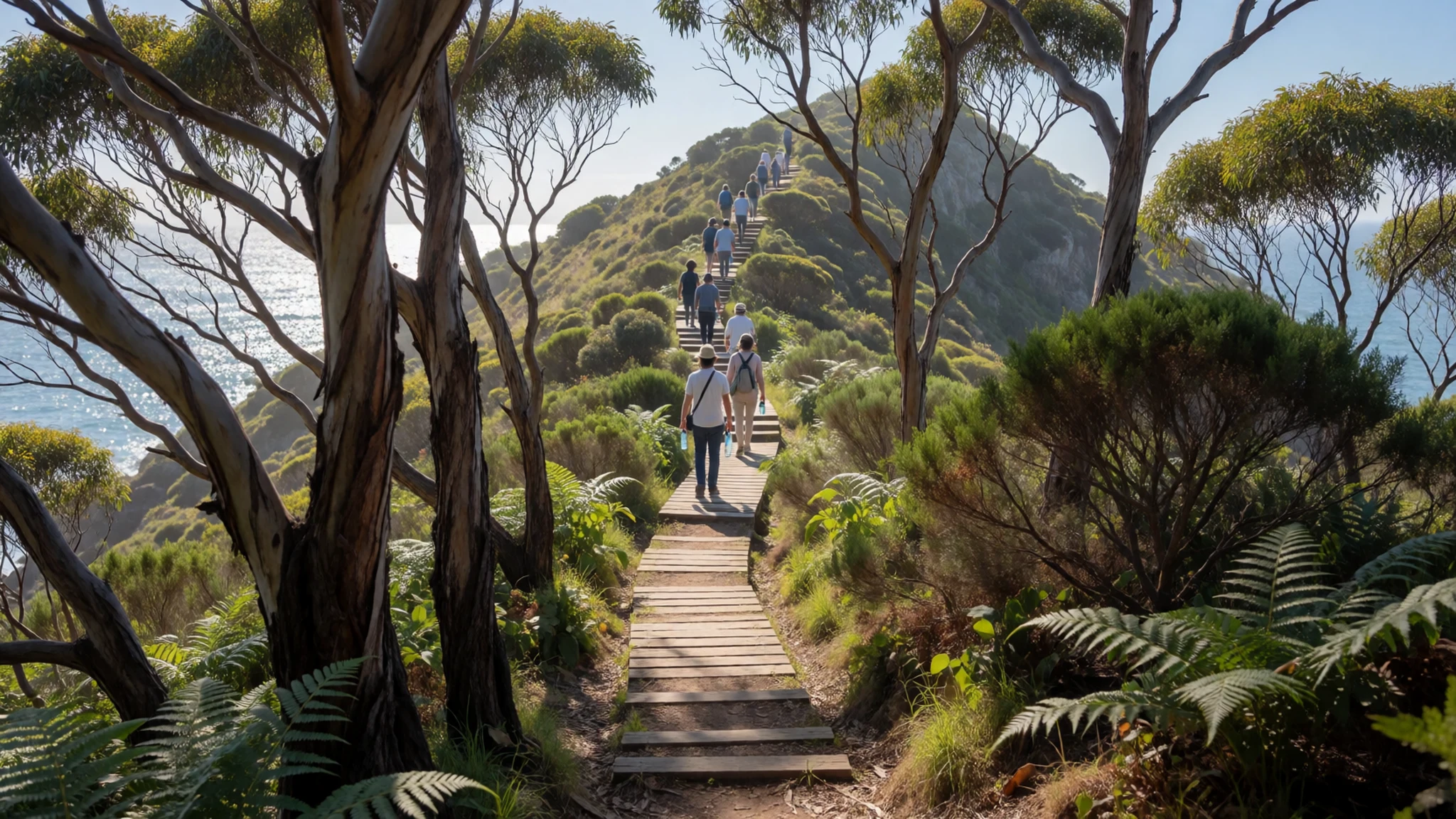
- Main Beach and the Pass — Town centre, east of the lighthouse road
Main Beach is the town's busiest stretch, with gentler waves close to shore and the Pass at its southern end, where surfers crowd in on summer days. Swimming is generally easier here than at the more exposed points, but check the surf lifeguard flags before going in. Mornings are calmer and less crowded, so arrive early if you want a parking space or a patch of sand near the water.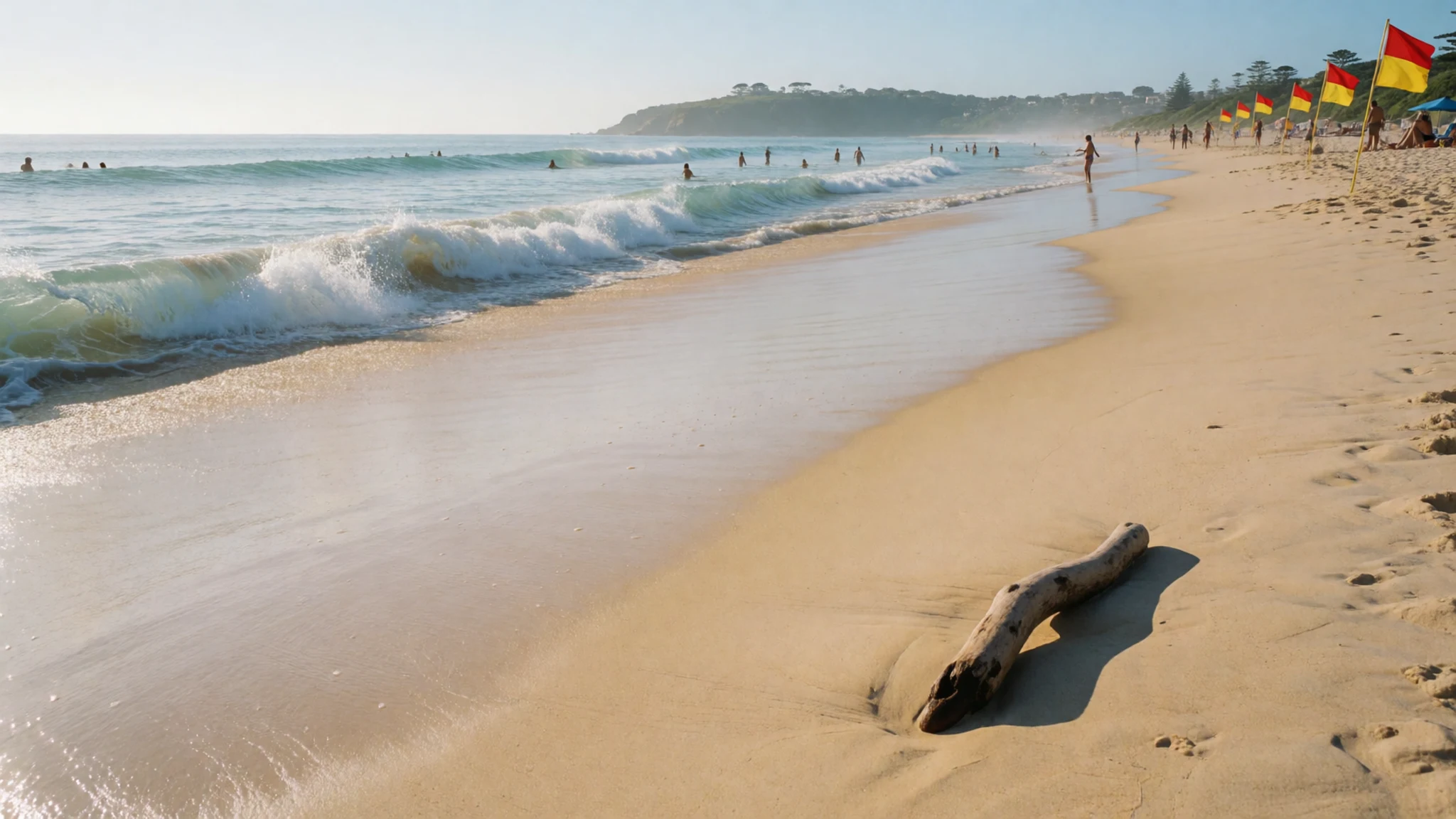
- Wategos Beach — North side of Cape Byron headland
Wategos sits just around the corner from the Pass, on the north side of the headland, and is partly hidden from the main beach. It is smaller and usually calmer than Main Beach, which makes it a favourite for families and anyone who prefers a quieter swim. Walk over from the town centre and bring a towel, since shade on the sand is limited.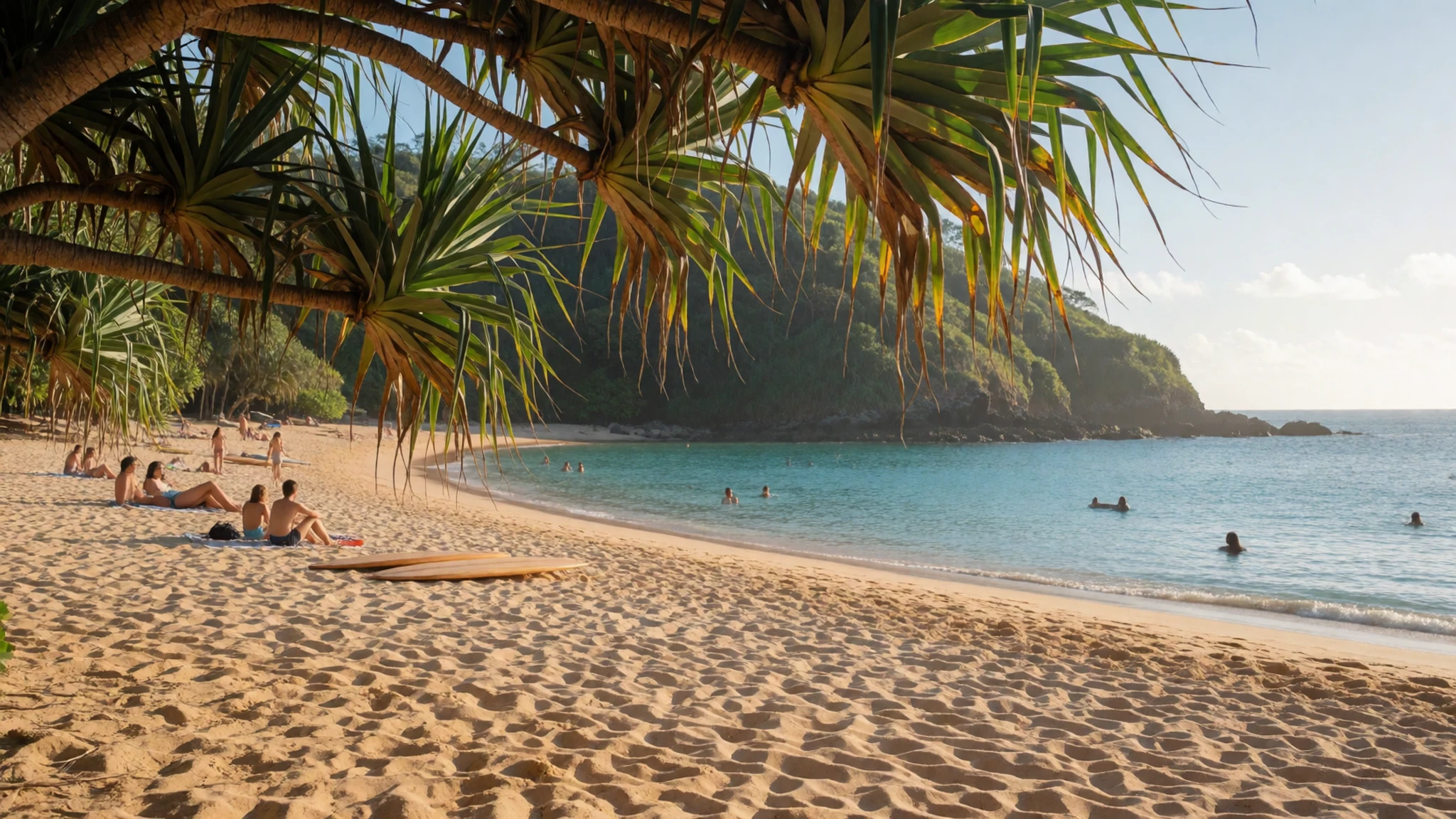
- Tallow Beach — South of Cape Byron
Tallow Beach stretches south from the lighthouse and is the stretch most non-surfers overlook, which suits anyone wanting space. It is long, open and good for walking or a slow swim. Because it is wide and exposed, check for rips before going in and keep an eye on the wind, which can be strong in the afternoon.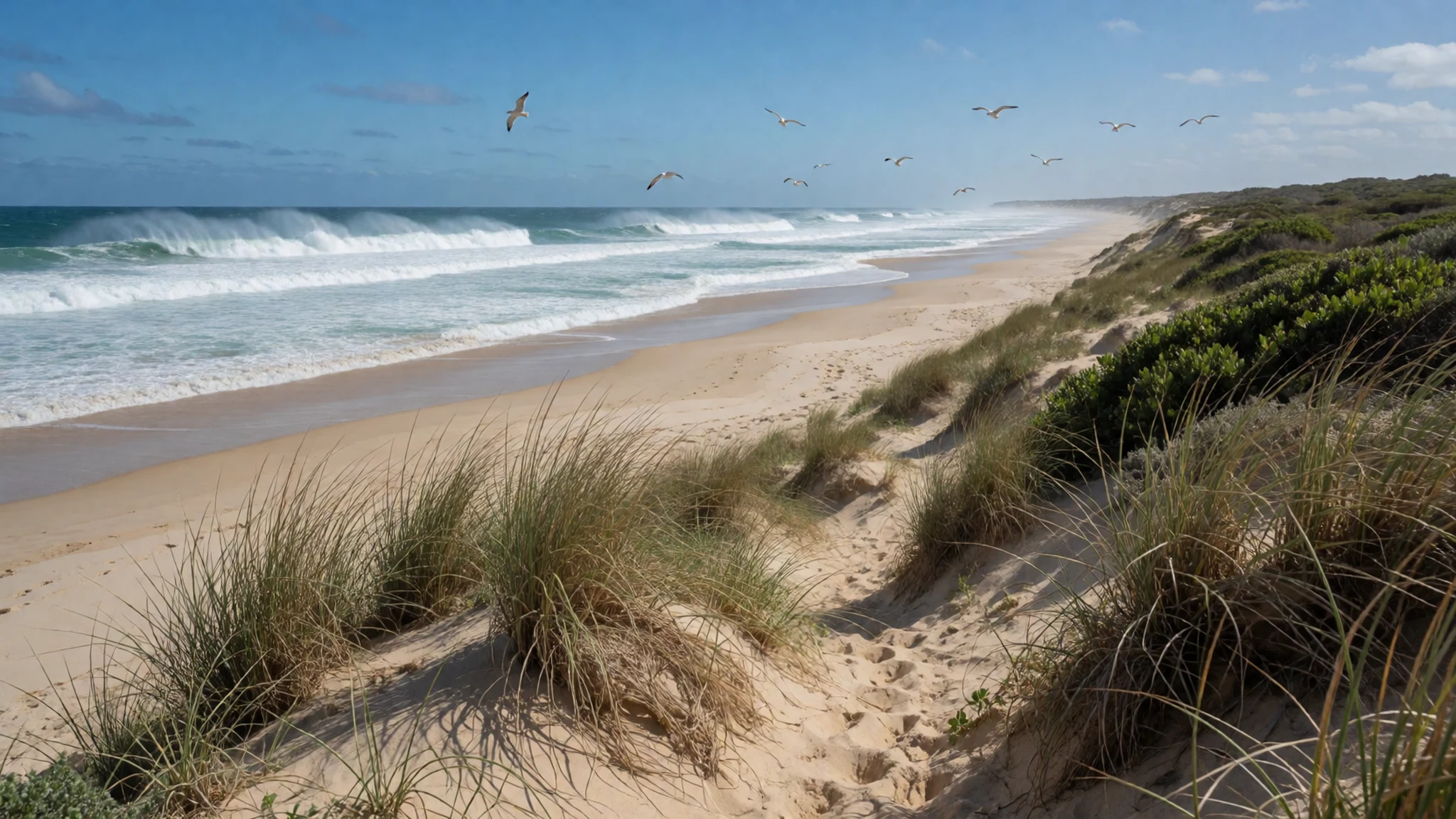
- Belongil Beach — West of the town centre
Belongil Beach lies to the west of town, away from the crowds, and offers a quieter option for long walks. It looks back towards the lighthouse, so the headland makes a good backdrop for a sunrise stroll. The beach has a looser, less polished feel than the centre, which many visitors find restful. Go early for the best light and fewer people.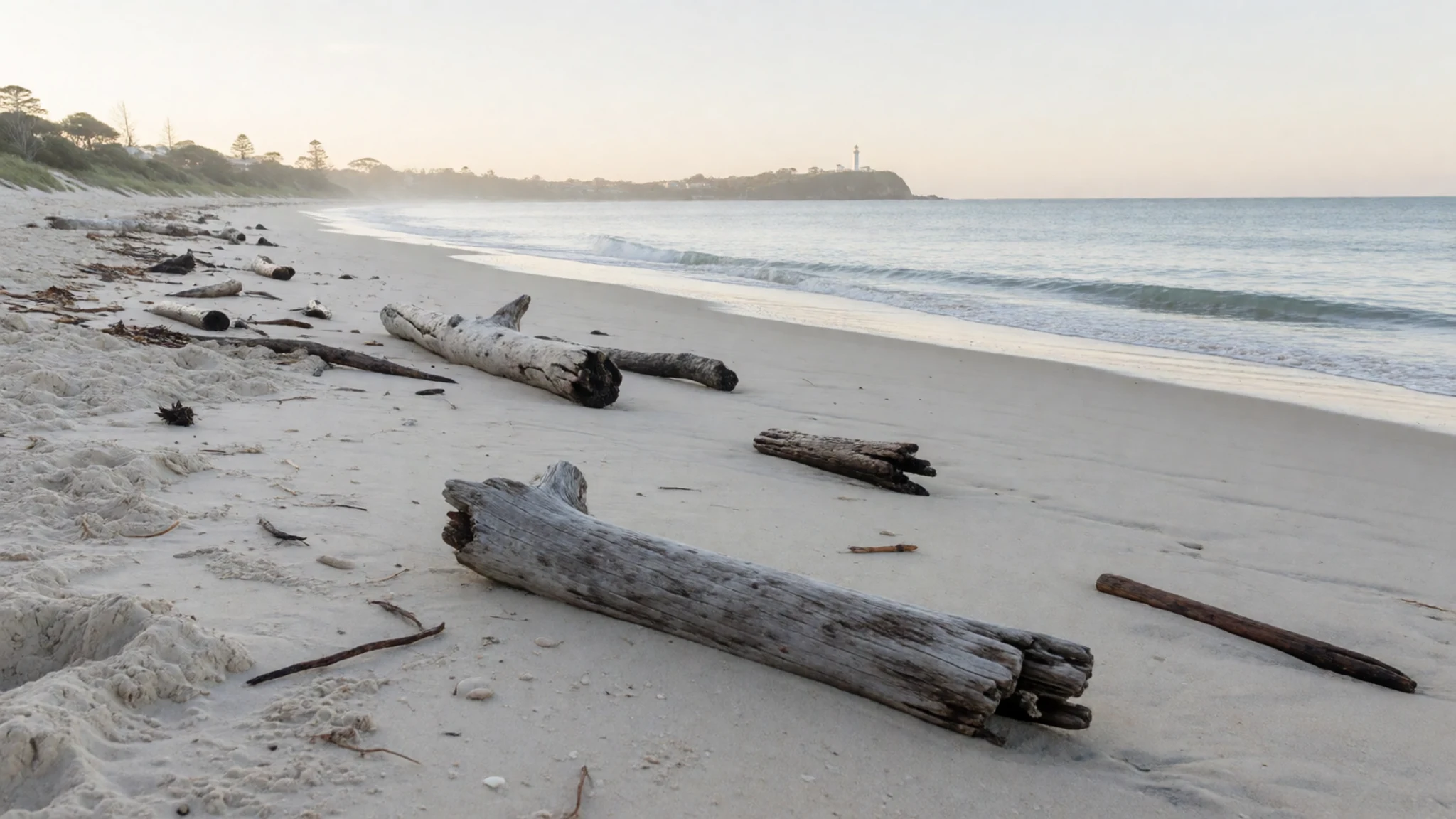
Culture
Byron Bay has long attracted people who have chosen alternative ways of living, so you will meet a wide range of views here on health, diet, natural remedies and parenting. Vaccination is one topic where opinions run strong, and you may hear views that differ sharply from mainstream Australian health advice. Local conversation tends to be open and talkative, so you may be drawn into a debate over coffee or after a yoga class.
The wider culture is also shaped by the Bundjalung people, whose Country this is. Their knowledge of land and sea runs far deeper than the town's recent history, and the cultural centres and community-run tours in the region offer a better introduction than any guidebook. Listen rather than assume, and treat named places and sites with care.
The town is relaxed about dress and timing, but the beaches have clear rules. Follow the lifeguard flags, stay on marked tracks through the dunes, and never drop in on another surfer's wave. Keep noise down in residential streets late at night, because sound carries easily in the coastal air. If you disagree with someone's health views, keep the conversation curious and polite rather than trying to win the argument.
What to wear
Byron Bay has no single traditional dress that visitors see in everyday life. The Bundjalung people, whose Country this is, have their own traditions of textiles and body decoration, but the details of those garments and materials are best learned from Bundjalung cultural organisations rather than from a travel guide. Respect that knowledge by not wearing Aboriginal designs or sacred motifs as a costume.
What people wear now is shaped by the beach. Locals and visitors alike favour board shorts, bikini tops, sundresses and loose cotton or linen, with thongs or bare feet for the sand. Surf brands are everywhere, and the town's wellness culture shows in plenty of natural-fibre clothing and soft, easy layers. Dressing up is rare, so a clean casual outfit is enough for most dinners.
For a visit, dress for sun and salt. Pack a wide-brimmed hat, sunglasses with UV protection and a rash vest if you plan to surf or swim for long periods. Light cotton or linen keeps you cool in summer, and a light layer helps on cooler evenings. Wear sturdy closed shoes for the Cape Byron walk, since the path has loose surfaces and steps. Cover shoulders and knees when you visit any Aboriginal cultural centre or community event.
What to eat
- Flat white and a long breakfast — Cafés in the town centre and near Belongil Beach
In Byron Bay, good coffee is a daily ritual, and a flat white or long black is the usual order. Breakfast often means eggs on sourdough, avocado on toast or a bowl of granola with fresh fruit, served at tables that spill onto the footpath. Go early, because the lunch crowd arrives quickly.
- Seafood fish and chips — Seafood spots on the main strip near the centre
Fish and chips here are a long way from the greasy paper parcel of other beach towns. Seafood is cooked to order and the chips are thick and crisp. Eat it with a view of the water if you can. Expect to pay more than in a suburban shop.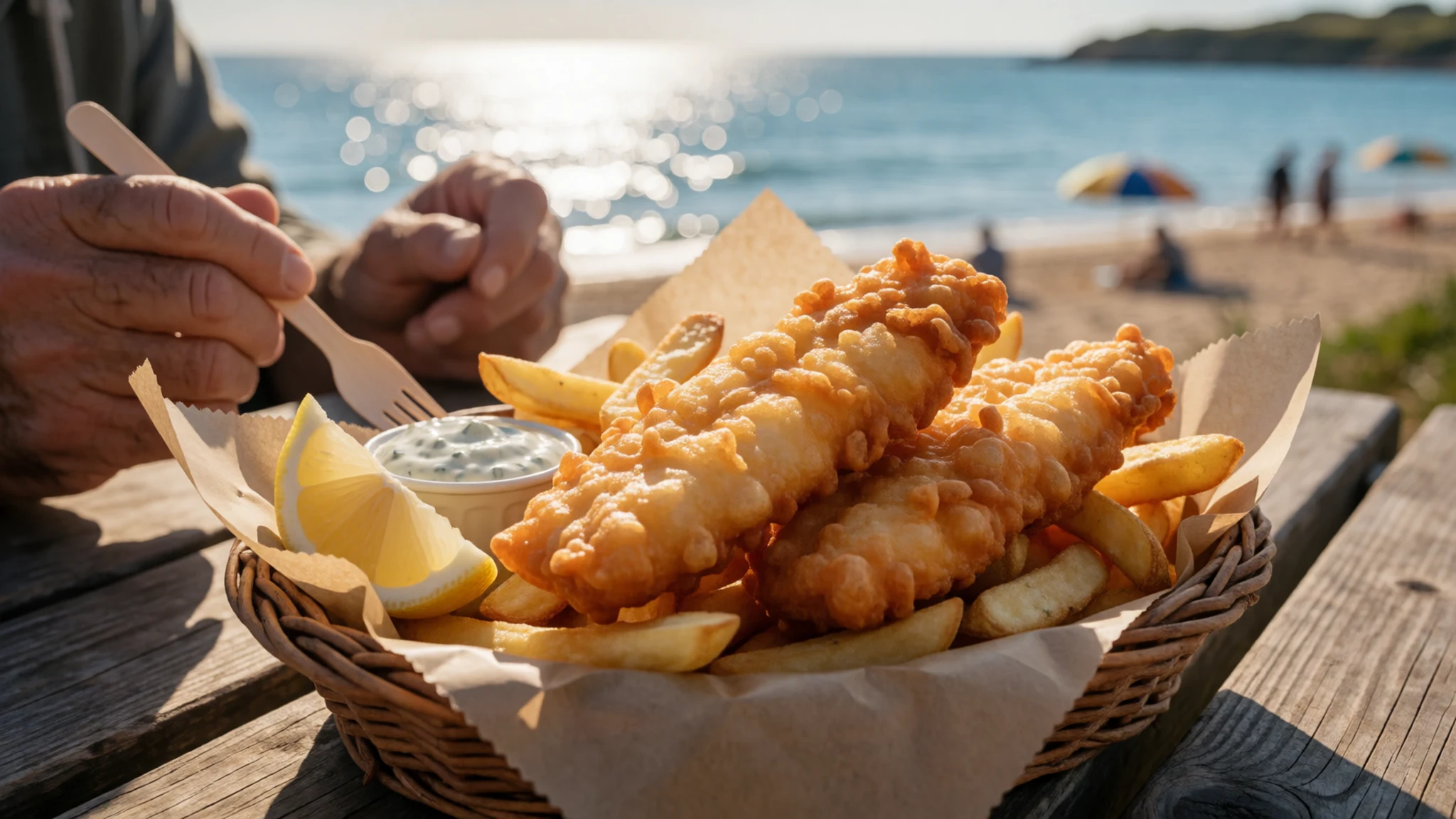
- Vegetarian and vegan bowls — Plant-based cafés and eateries around the town centre
Vegetarian and vegan food is everywhere in Byron, from grain bowls with roasted vegetables to tofu wraps and smoothie bowls. Many places are built around local produce and seasonal salads. It is an easy place to eat plant-based, so you will rarely go hungry if you skip meat.
- Casual gourmet burgers — Relaxed eateries and pubs near the town centre
Burgers are a staple of the town's casual eateries, usually with a thick patty, fresh toppings and a side of chips. Many pubs and bars serve food alongside drinks, so a burger and a beer makes an easy meal. Sharing one between two can keep the cost sensible. - Native ingredients — Modern bistros and eateries in the town centre
Native ingredients such as finger lime and lemon myrtle appear on some menus across the region. Ask staff which ingredients are local, since the best kitchens are happy to say. Sharing a dish is an easy way to taste several at once.
Plan it
Best time. Byron Bay is at its best from April to June and again from September to October, when the weather is mild and the crowds thinner. Summer is hot and humid, with evening rain at times, which suits beach lovers who do not mind the heat. Winter days are mild, so bring a layer for evenings.
How long. 2–3
Getting there. Ballina/Byron Airport is about 30 minutes' drive away, with flights from Sydney and Melbourne; book a door-to-door shuttle for the last leg. Gold Coast Airport is about an hour away and can be cheaper for flights and car hire. Coaches between Sydney and Brisbane stop in Byron, and driving from Sydney takes around seven hours.
Budget. mid
Tips
- Book airport shuttles online ahead of arrival, since door-to-door services are the easiest option
- Go to Main Beach or the Pass early in the morning to find parking and space
- Walk or hire a bike between beaches, because parking near the centre fills fast at weekends
- Check the surf lifeguard flags before swimming, as conditions change quickly
- Carry water and sun protection, especially on the Cape Byron walk
- Book popular restaurants ahead for weekend evenings
- Expect higher prices than in inland towns, and check the official site for current tourism information
Etiquette
- Stay on marked paths and tracks, especially near Cape Byron and the dunes, as a mark of respect for Bundjalung Country
- Do not drop in on another surfer's wave, and give way to whoever is closest to the peak
- Keep conversations about health and medicine polite, even when you disagree
Nearby
Sources
- Wikidata Q1018597 (CC0)
- Wikipedia (rev 1382978756) (CC BY-SA 4.0)
- Wikivoyage (rev 5396265) (CC BY-SA 4.0)
- Broken Head From Tallow Beach October 2008, Unknown author (Public domain)
- Byron Bay Lighthouse, Beach and Hinterland in the Northern Rivers, Kpravin2 (CC BY-SA 4.0)
- Cape Byron Lighthouse from trail up, Ningalooreef (CC BY-SA 4.0)
- Byron Lighthouse looking south 2004-28-12, Bigbewo (Public domain)
- Wategos Bay and the Byron Bay Lighthouse, BobTanGo (CC BY 4.0)
- Wategos Beach panorama, BobTanGo (CC BY 4.0)
- Belongil Beach, Ningalooreef (CC BY-SA 4.0)
- Byron Bay Lighthouse, Arno Zwaag (CC BY-SA 2.5)


