Wakatobi
Wakatobi, Indonesia
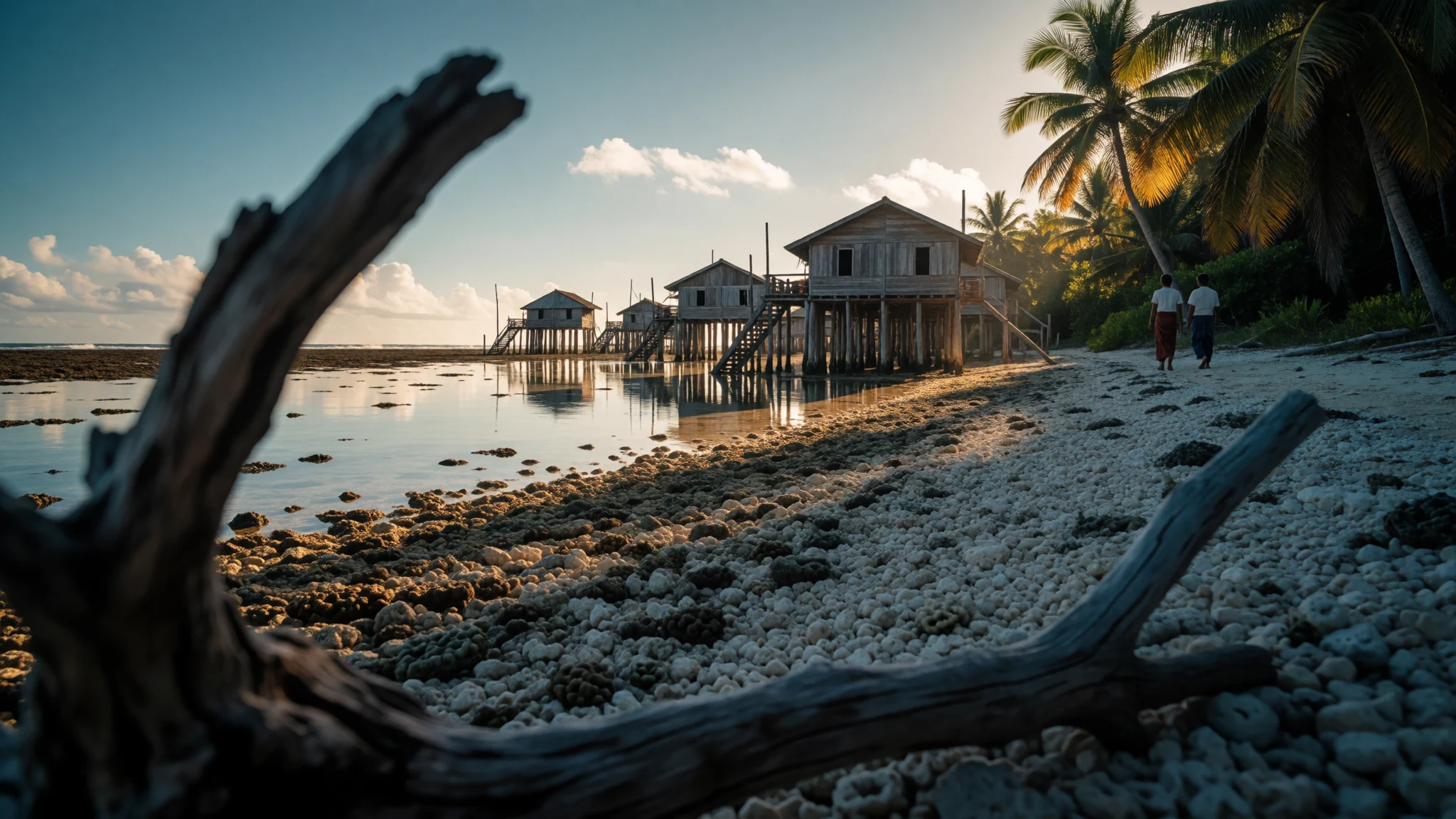
Wakatobi is a remote island group off Southeast Sulawesi, with coral slopes, Bajo houses on stilts and beaches on the same sea.
The place
Wakatobi sits in Indonesian waters off the south-eastern tip of Sulawesi. Wangi-Wangi, Kaledupa, Tomia and Binongko lend their names to the regency, and lesser islets sit in the channels between them. It lies south of the equator and well east of Java, so the trip from a large airport is already long. Government sits with Southeast Sulawesi. Daily ground is harbours, coconut groves, garden plots and houses on stilts over the tide. The coast changes character. Pale beaches appear in the staged photographs, and other shores are rock where the swell breaks hard. Wangi-Wangi holds the main town and the air link. The remaining islands are quieter, and a plan that assumes a casual boat day will stall when wind or a missed departure keeps the jetty closed. For Wakatobi the sea is the centre of the place. Coral runs out from the shallows and down the slope. The staged frames show a broad reef and, on a dive around Kaledupa, a dense stand of sea fans. Travellers pay for that view, then meet the conditions that come with it. Channels have current. The surface roughens when the monsoon wind rises. Clear water over coral does not make the ride from the jetty comfortable. People live in the same seascape. On Wangi-Wangi a Bajo village stands over the lagoon inside the national park, and at Sampela Bajo families still fish from platforms and small boats. The day follows the catch, the market and the prayer times. Indonesian serves school and offices; speech at home may be local. After dark the generator marks the hours, and the heat stays even when the wind is kind.
Its story
Wakatobi is a recent name for an older sea. The word binds Wangi-Wangi, Kaledupa, Tomia and Binongko, islands that now share a regency, yet boats were working those channels long before an acronym helped a clerk. The Bajo, often written Bajau in English, made the older life. In Wakatobi they still live in stilt settlements: a floating village on Wangi-Wangi, and the platforms at Sampela, where a child grows up beside the tide and a boat is a working tool. Those islands looked toward Buton. Baubau, Buton's harbour, faces the same water, and from there the routes ran on toward the islands east of Sulawesi. Fish, cassava and cloth moved in both directions, and Islam moved with them. It became the public faith of the villages and still marks the week. Wakatobi was a working margin of a trading sea, easy to misread because houses were timber and wealth was the catch. A national park line was drawn around reefs and settlements, meant to push back destructive fishing and to stop the coral being treated as endless. The staged photographs hold the scene in view: sea fans at Kaledupa, a reef slope, and daily work in the Bajo village at Sampela. A boundary on a map survives only if the families on the platforms still have a living. Travellers walk into that tension. The dive boat asks the reef to be a destination. The net over the water asks it to be a livelihood. The argument continues under the houses, with the tide.
What to see
- Floating Bajo village — Wangi-Wangi
The floating Bajo village on Wangi-Wangi stands in Wakatobi National Park, houses of timber set on stilts over a lagoon. From the water it can look like a single raft of roofs. Closer in, it is jetties, canoes, cooking smoke and the traffic of a real neighbourhood. The staged photograph catches the settlement from outside. Walkways are private space.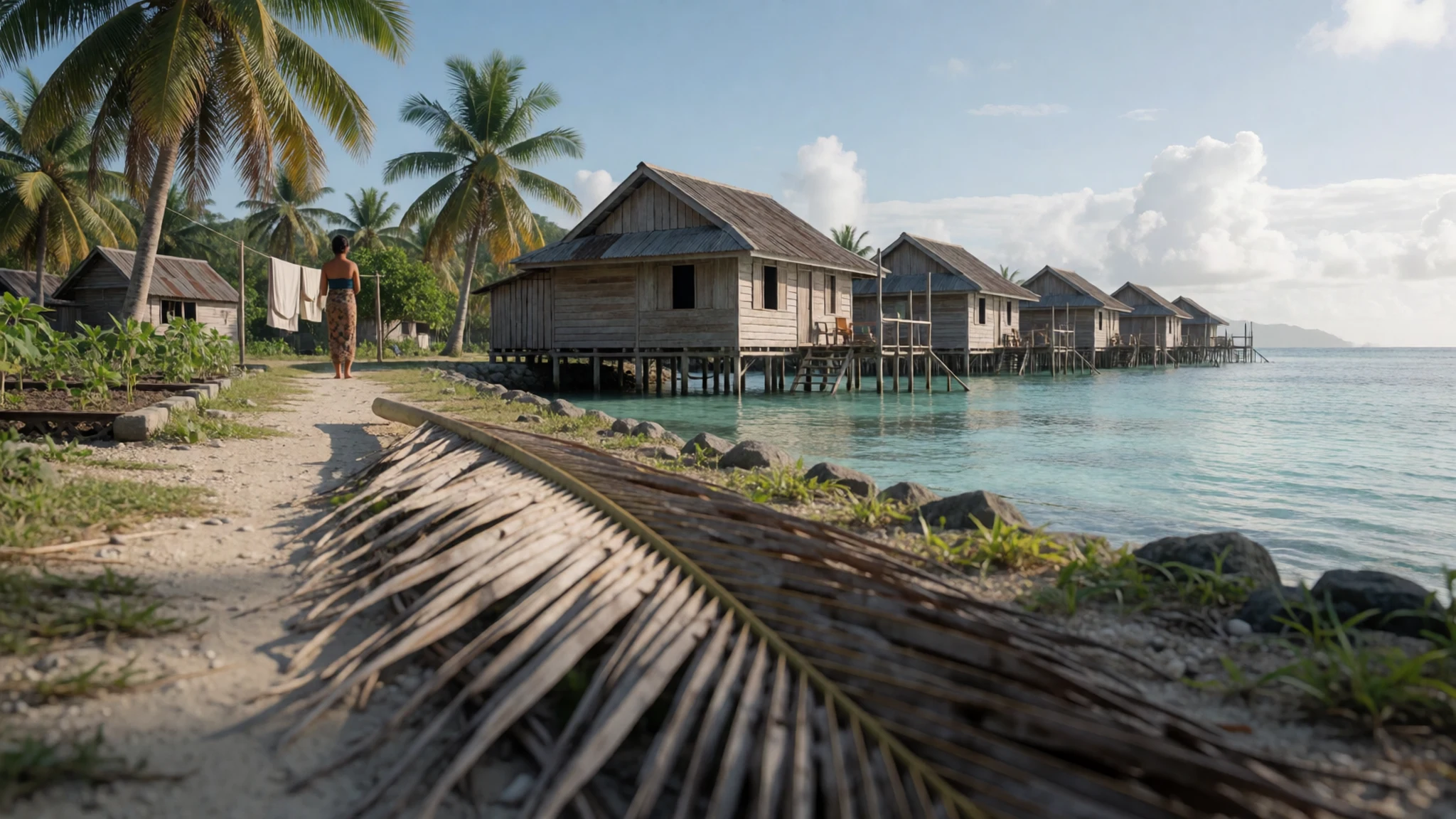
- Sampela — Sampela, off Kaledupa
Sampela is a Bajo village in Wakatobi, raised on stilts off Kaledupa, and the staged photograph shows ordinary daytime work rather than a festival. People mend gear, move between platforms and handle boats in a space that is kitchen, street and boatyard at once. The wood is weathered, the distances are short, and the water below is the public road. Visitors who arrive by boat are stepping into a home.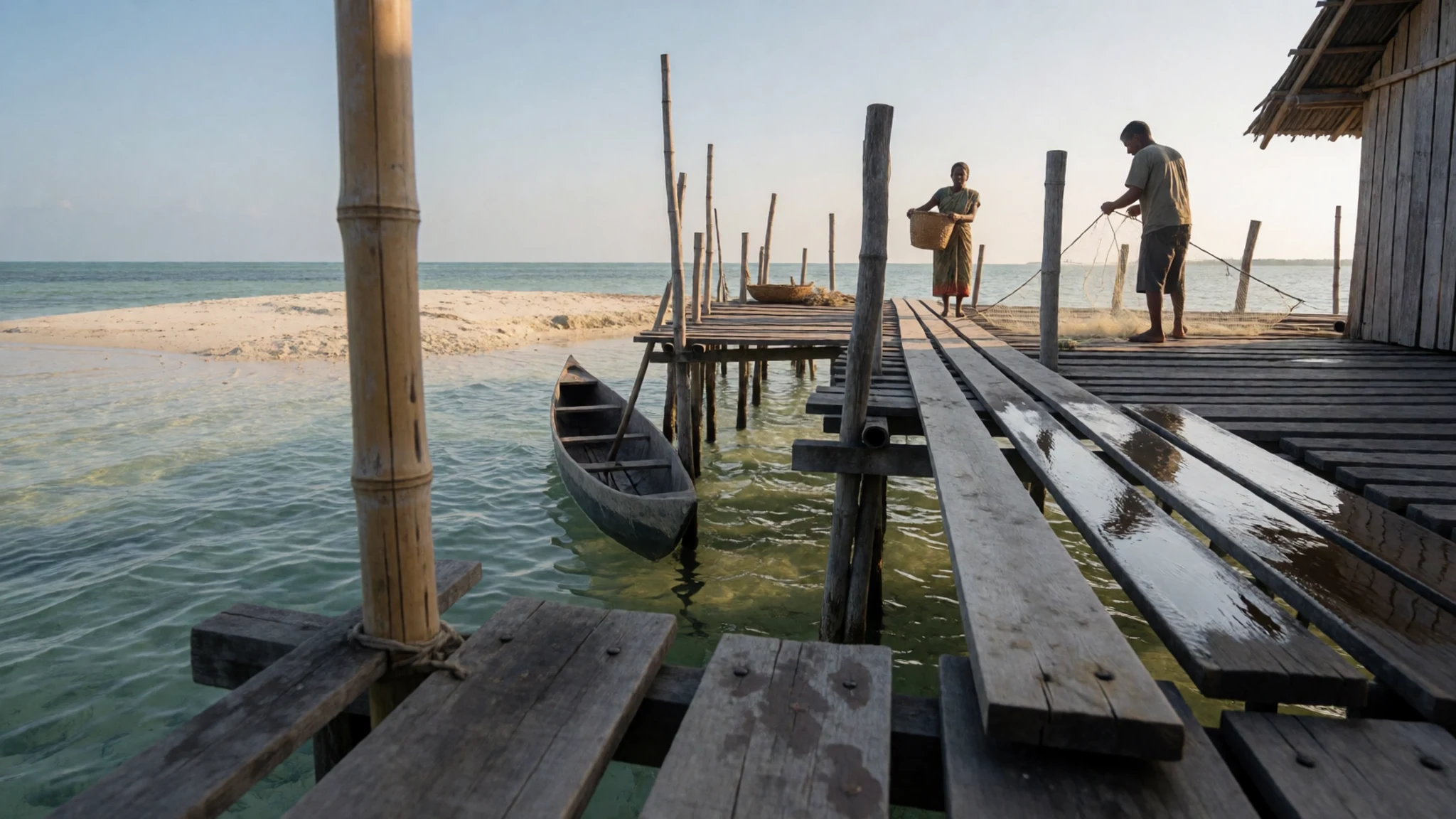
- Sea fans off Kaledupa — Kaledupa
A dive around Kaledupa, in Wakatobi, passes stands of sea fans, and the staged photograph shows them packed along a reef in clear water. They are animals, flexible colonies that take food from the current, which is why the thickest groups sit where the water moves. That movement is also the difficulty. What begins as an easy fin over sand can turn into a hard swim beside the wall.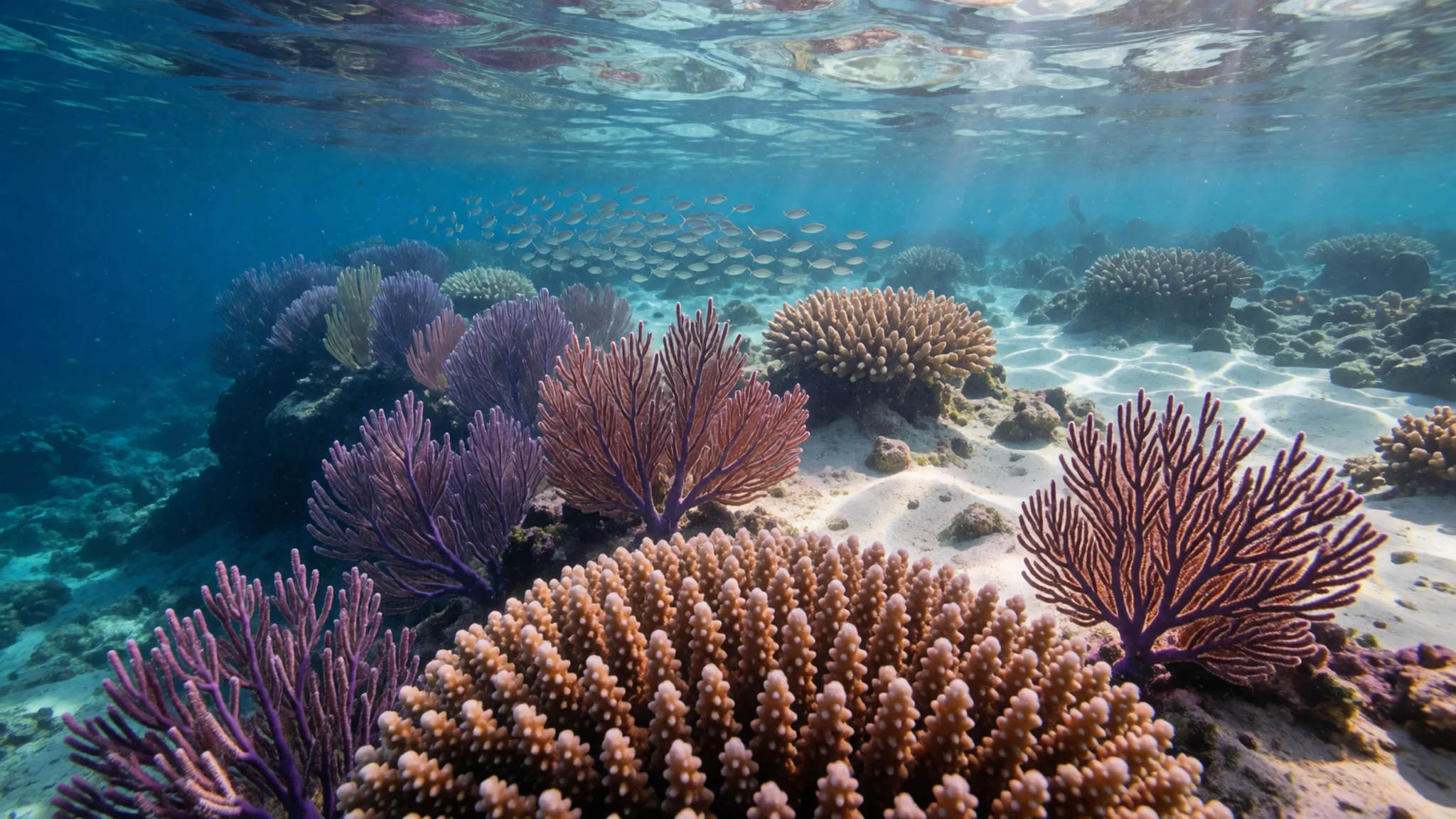
- Coral slopes — Reefs of the national park
Coral at Wakatobi, as in the staged reef photograph, builds a slope of hard colonies in clear water, with small fish above the ledges and open blue beyond. The caption does not name a single pinpoint site, so the picture stands for the park's reefs in general. The structure is the point. Coral here forms shelves and pockets, and those pockets are where creatures tuck in when a fin passes.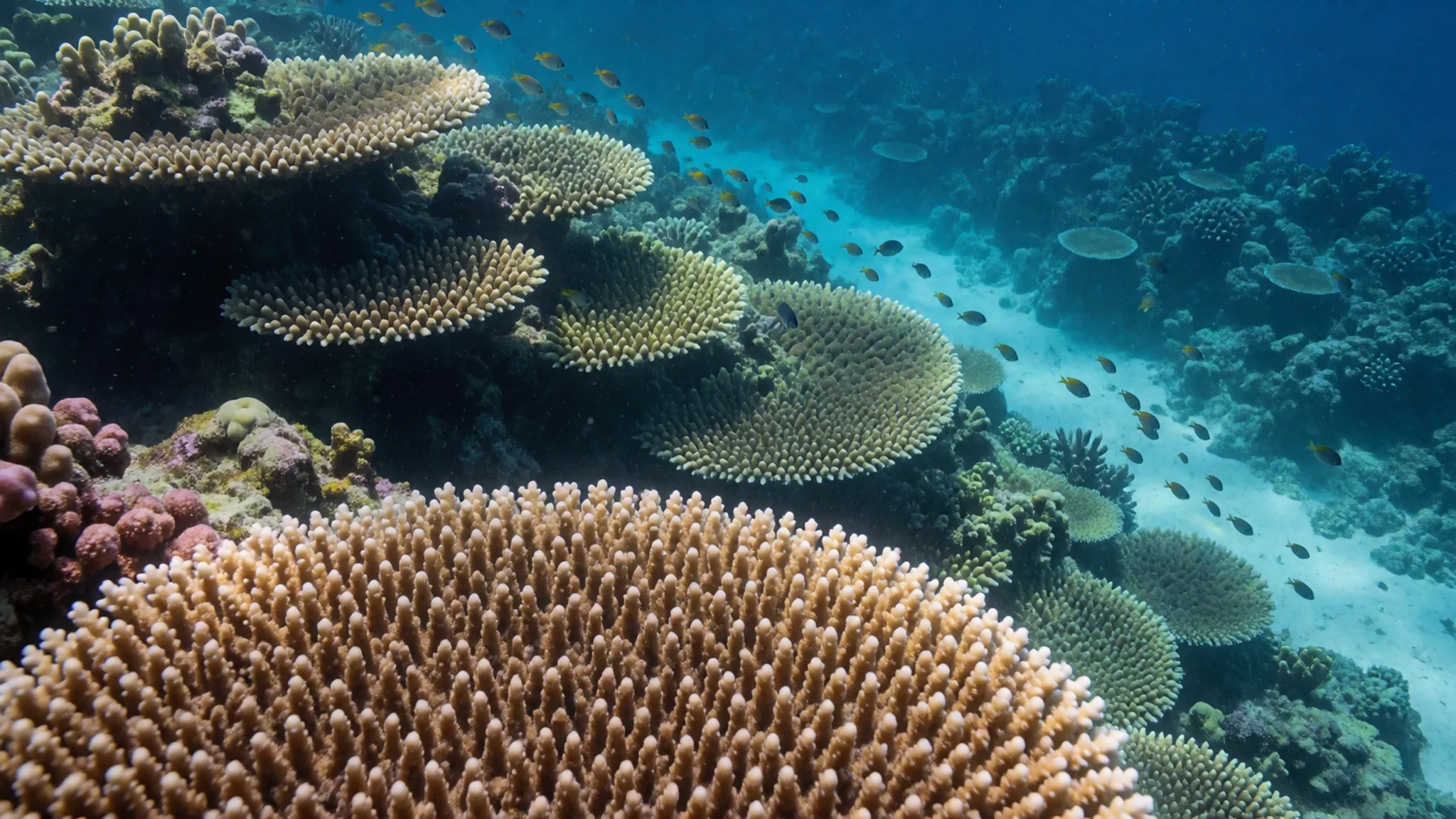
- Beaches and rocky shore — Wakatobi coast
Beaches in Wakatobi range from the pale, open shore in the staged beach photograph to rocky points where waves hit a solid face. Sand can be hot underfoot at midday, shade is scarce, and the water at a calm-looking entrance may hide current or coral just below the surface. Rocky coves are better for looking than for a careless scramble when the swell is up.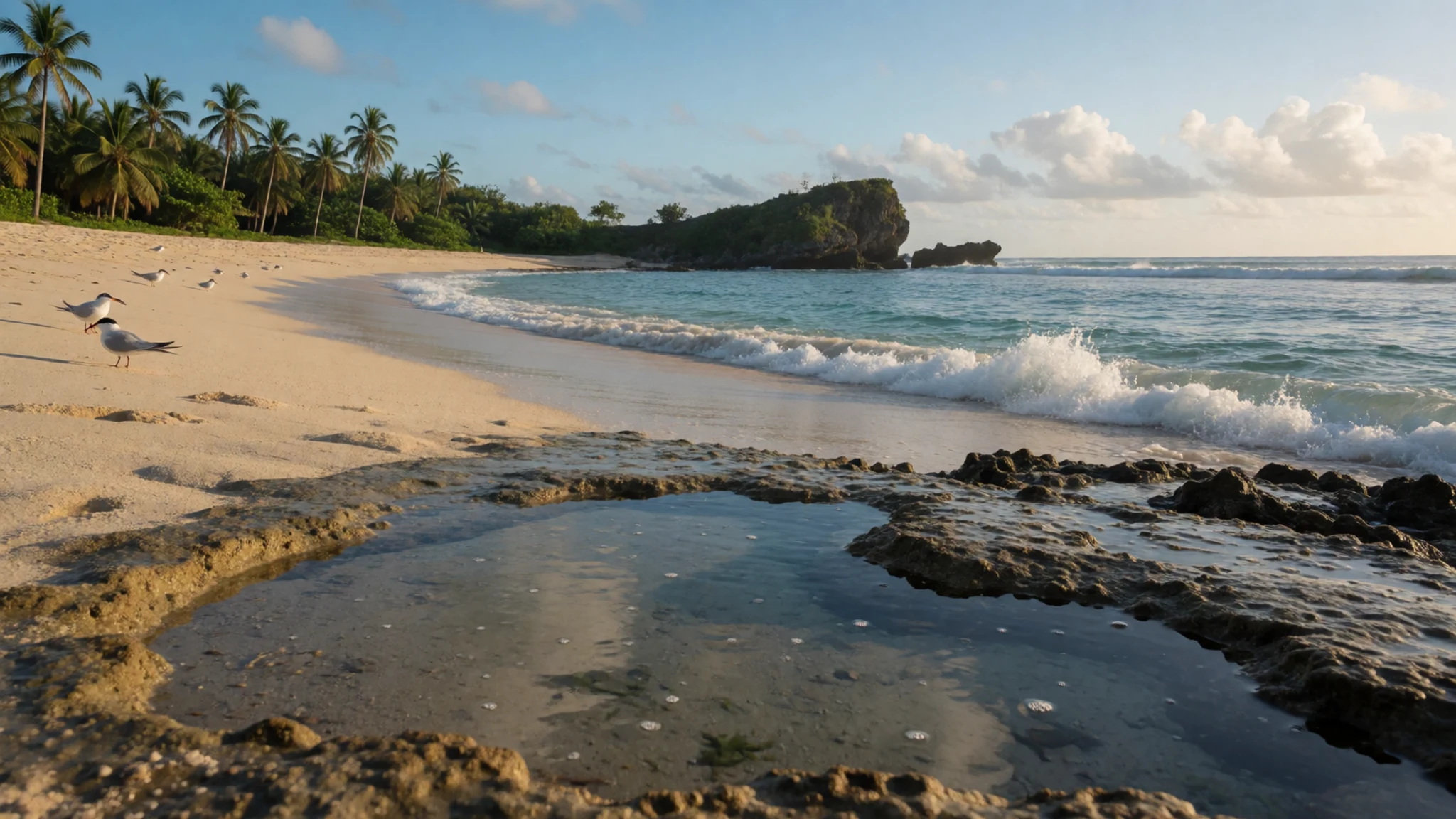
- Tomia and Binongko — Tomia and Binongko
Tomia and Binongko in Wakatobi complete the set of islands in the regency's name, and they suit travellers who have time beyond the main dive strip. Both are quieter than Wangi-Wangi, with villages, gardens and reef a short boat ride from the houses. Services thin out quickly. An extra night is wiser than a rushed return when the sea is up.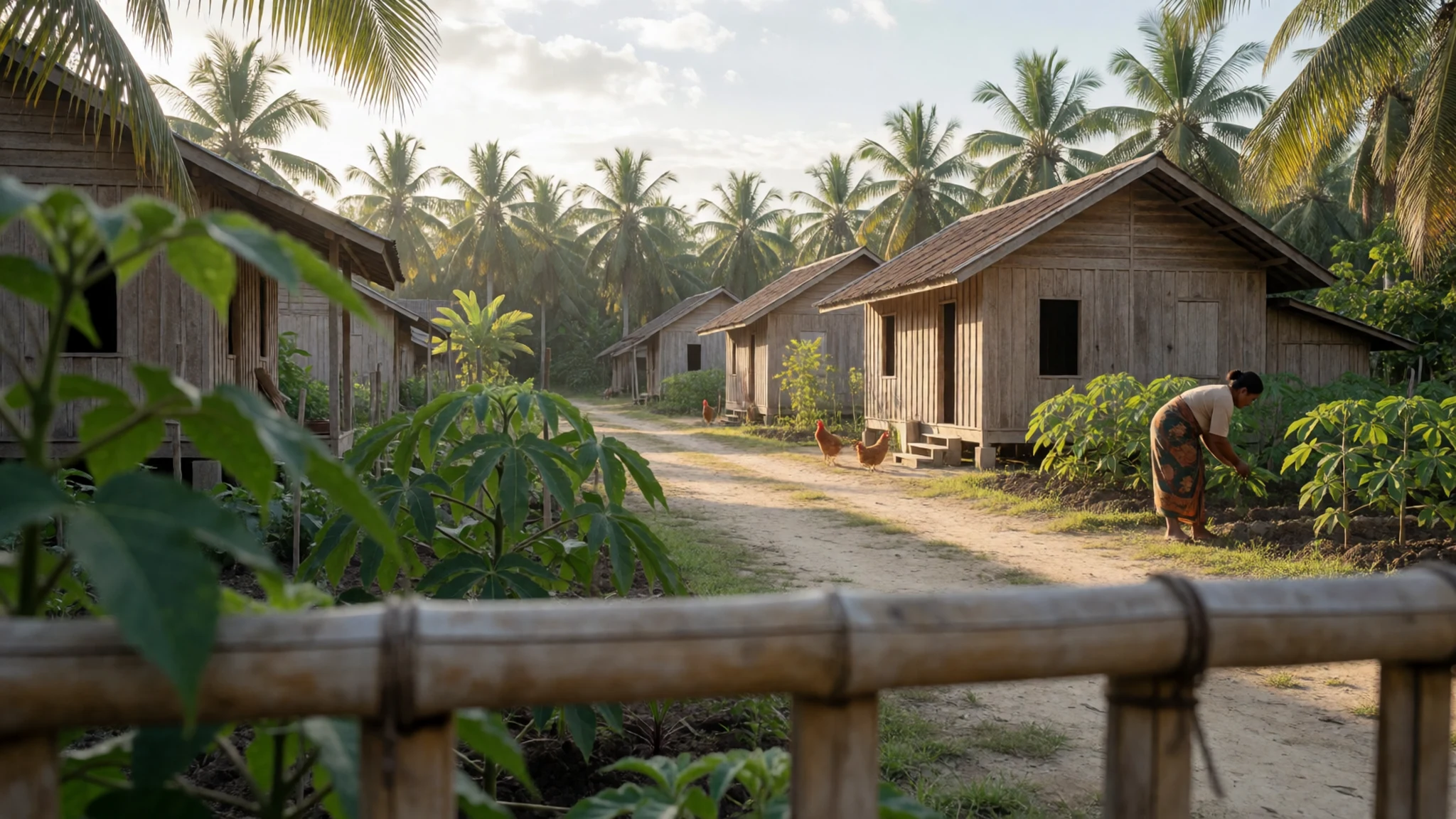
Culture
Culture in Wakatobi is maritime before it is urban. The Bajo communities, on the floating village at Wangi-Wangi and at Sampela, keep a life organised by boats, platforms and the catch, and that life is still visible in the working day rather than only in a festival costume. Land villages share Southeast Sulawesi's broader habits: Islam in public life, respect for elders, and a week shaped by prayer. A guest is noticed at once in a small settlement, offered a seat, and expected to behave like a guest, which means accepting a refusal if a photograph or a visit is unwelcome. Language is layered. Indonesian carries school, government and the talk with strangers. At home people may use Bajo or other local speech, and a visitor who guesses that the national language covers every conversation will miss the shift. Ceremonies follow the Islamic calendar alongside older courtesies around boats and houses: shoes come off at a threshold, the head stays above a seated elder, and the left hand is a poor choice for passing food. Ask before you photograph people in Wakatobi, especially in the Bajo villages, and stay off private walkways unless someone has invited you on.
What to wear
Fashion in Wakatobi follows the sea and the mosque more than any runway. Traditional dress for formal moments is the wider clothing of Southeast Sulawesi and Buton: a sarong or woven kain around the waist, a long-sleeved shirt or a modest blouse, and for some ceremonies a cloth with a woven border whose motifs mark island and family. The Bajo, spending the day on boats and platforms, have long favoured practical sarongs that can be hiked up, plus a shirt that survives spray. What people wear now is the ordinary mix of a Muslim harbour town in Indonesia. Men wear T-shirts, football shirts and shorts or trousers; women wear T-shirts or blouses with a sarong or long skirt, and a hijab is common in the villages and in town. A visitor should dress for heat, sharp coral and conservative streets. On the boat, a long-sleeved rash vest and leggings save skin from sun and from a brush with the reef; fins go over reef boots where the entry is rock. In Wangi-Wangi town and in any village, including the Bajo settlements, swimwear stays on the boat. Cover shoulders and knees, remove shoes at a house door, and wear shoes that can cope with wet timber and coral rubble.
What to eat
- Kasuami — home kitchens and simple warungs on Wangi-Wangi
Kasuami is the cassava staple of Wakatobi and nearby Buton, steamed until it sets into a firm cake that people slice and eat with fish. It is everyday food, not a banquet dish, and it turns up in home kitchens and simple warungs more often than on a resort menu.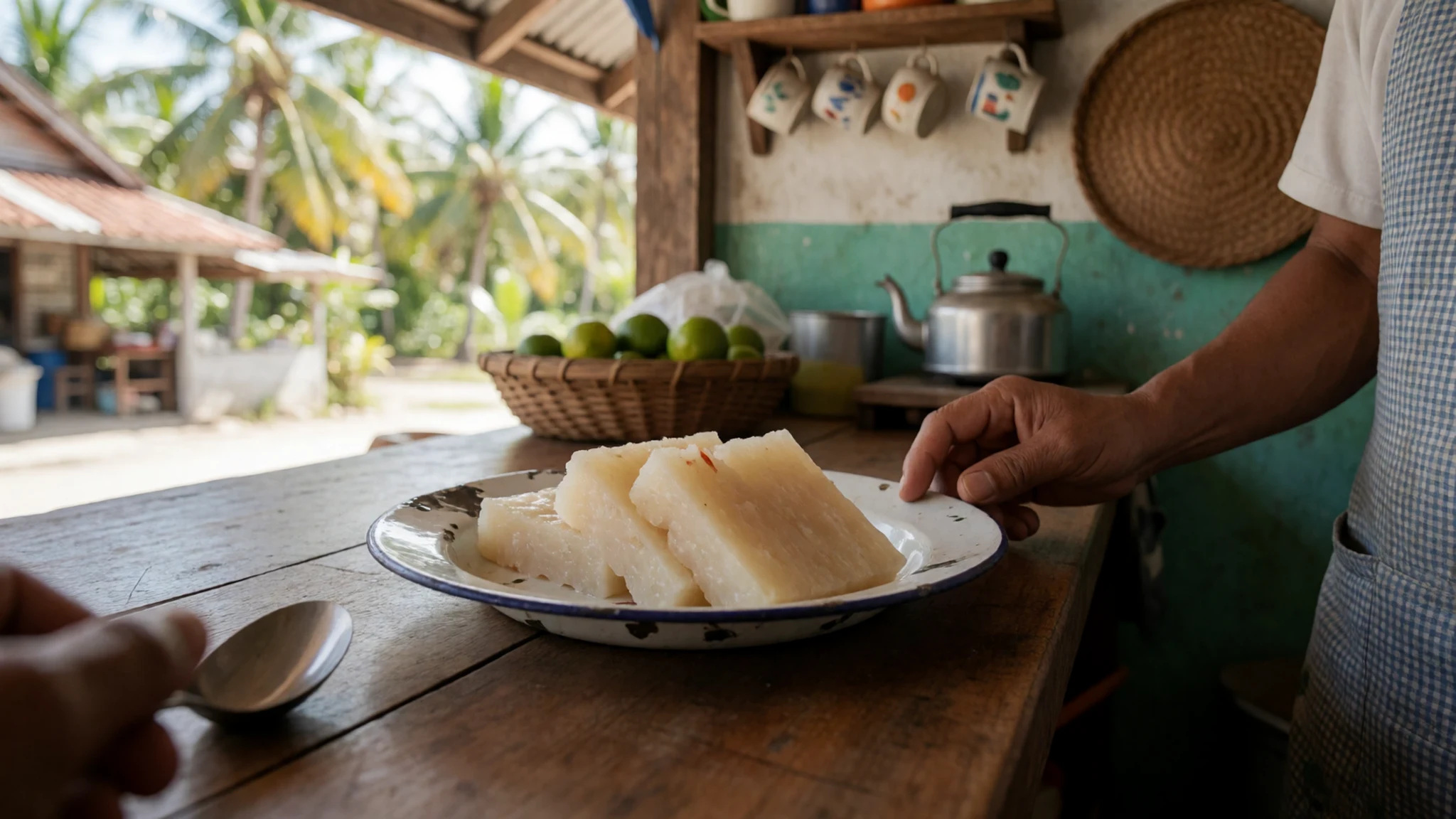
- Ikan bakar — harbour warungs on Wangi-Wangi and village eateries by the water
Grilled fish in Wakatobi is the meal the jetty is for: a whole fish scored, charcoal-cooked and served with rice, sambal and lime. Harbour warungs on Wangi-Wangi and village eateries facing the water grill whatever the boats landed that morning. The flesh takes smoke and chilli.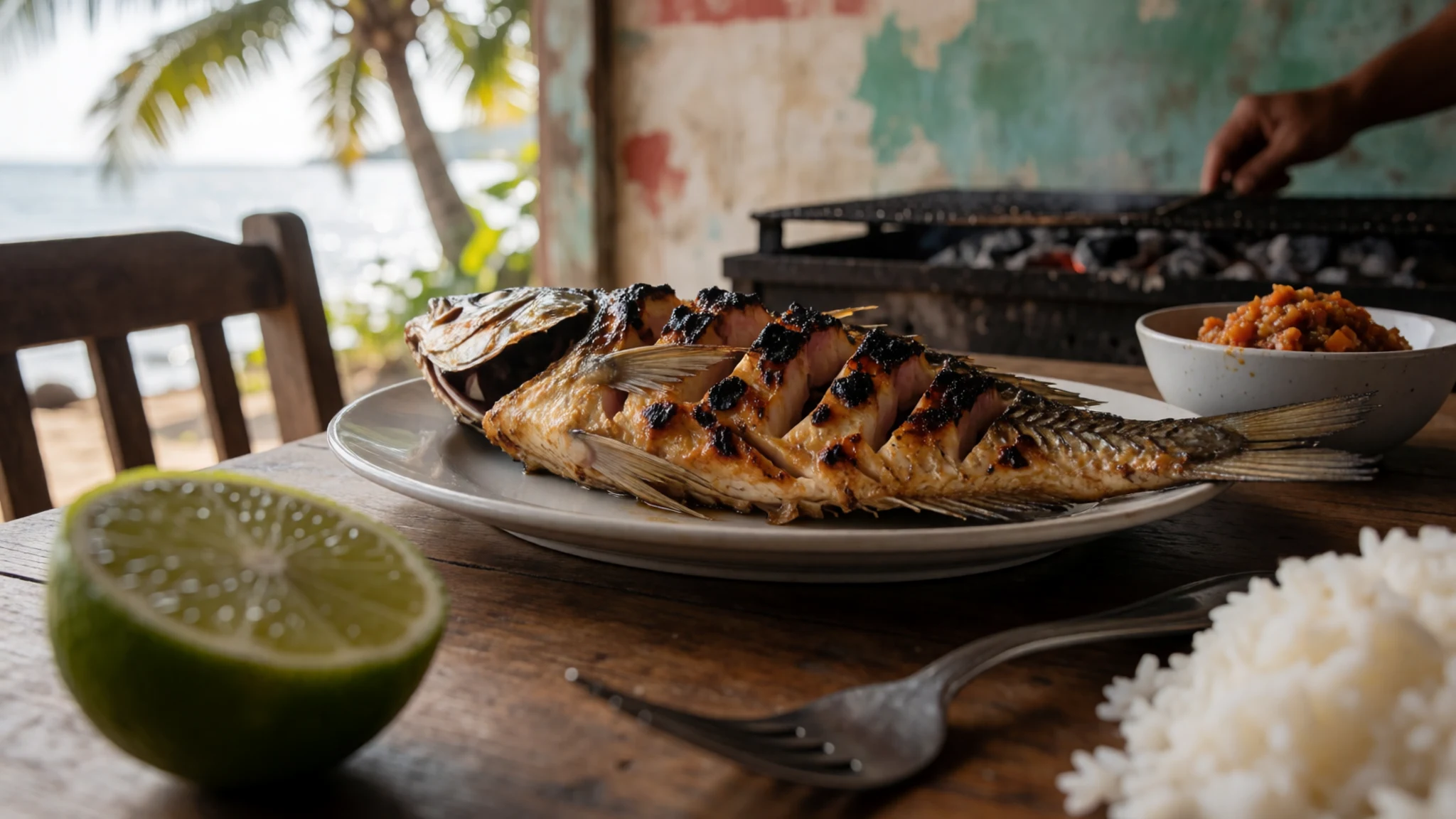
- Sinole — morning markets on Wangi-Wangi and village stalls
Sinole is a grilled sago snack from the Buton islands, including Wakatobi, cooked in a bamboo tube until the outside chars. It is cut into pieces and eaten with grated coconut or a little palm sugar, and it suits a gap between fish meals. The texture is dense and smoky. - Lapa-lapa — morning markets on Wangi-Wangi and ferry stalls
Lapa-lapa is rice packed in young banana leaf and steamed, a portable meal across Buton and Wakatobi. The leaf perfumes the rice, and the packet travels well on a boat, which is why it appears in markets early and in bags on the ferry. Fillings vary with the stall. - Kuah ikan — family kitchens and village eateries
Kuah ikan, a sour or yellow fish soup, is the bowl that accompanies rice and kasuami in Wakatobi home cooking. Turmeric, chilli, tomato or tamarind may colour the broth, depending on the cook, and the fish is whatever was landed. It is served hot at a shared table.
Plan it
Best time. April to November is the drier, more workable season in Wakatobi, though the wind can rise in mid-year. December to March is wetter and the channels are rougher. Heat is steady in every month.
How long. 4-5
Getting there. Reach Wakatobi through Matahora Airport on Wangi-Wangi, via Kendari, or by ferry from Baubau on Buton. Check sailings near the date and leave spare time for weather, since island hops are by boat.
Budget. high
Tips
- Book rooms and dive boats well ahead in the calmer months.
- Keep a spare day for delayed flights or a ferry that waits on the wind.
- Carry cash, because card payments thin out beyond Wangi-Wangi town.
- Keep fins and hands off the coral.
Etiquette
- Ask before photographing people, above all in the Bajo villages.
- Cover shoulders and knees ashore, and leave swimwear on the boat.
- Remove shoes at a house door and give local boats the jetty.
Nearby
Sources
- Wikidata (CC0)
- Wikipedia (CC BY-SA 4.0)
- Wikivoyage (CC BY-SA 4.0)