Waiheke Island
Waiheke Island, New Zealand
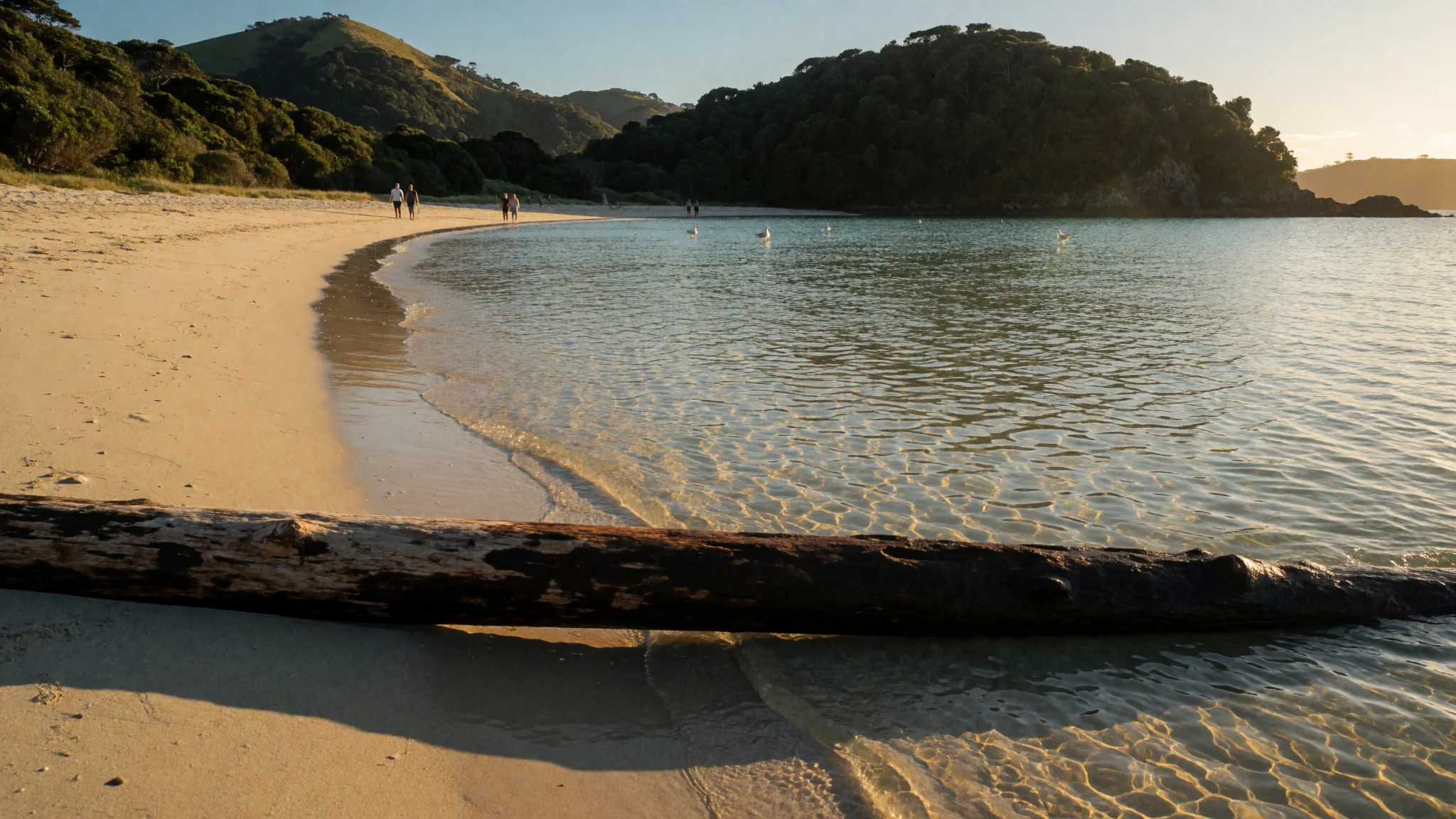
Waiheke Island is a short ferry ride from Auckland to vineyards, sculpture gardens and quiet bays, with a slow pace that feels far from the city.
The place
Waiheke Island lies in the Hauraki Gulf, a short ferry ride from Auckland, and close enough that some residents commute to the city for work. About 8,730 people live here year-round, and the population grows in summer when holiday homes fill up. The island is long and narrow, running west to east, and very hilly, with few flat stretches. Its high point, Maunganui, reaches 231 m. Most of the coast is a string of small bays. Sandy beaches such as Oneroa, Onetangi and Palm Beach alternate with rocky headlands and patches of native bush.
The ferries dock at Matiatia, on the western end. Oneroa, a short climb above it, is the island's main village, with cafés, shops, galleries and a beach below. Onetangi, on the north coast, has a long, open beach and a smaller, quieter settlement behind it. Ostend, in between, is where much of everyday island life happens, with the supermarket, the pubs and the Saturday market crowd. The east is emptier, a landscape of farmland, bush and winding roads that suit a slow drive.
Vineyards cover many of the sunnier slopes, and sculpture turns up in parks and private gardens. The climate is mild, with warm, humid summers and gentle winters where frost is rare. Water is a real local concern, because the island has no mains supply and most households collect rain from their roofs. In a dry summer, water trucks fill empty tanks, and visitors are expected to use it sparingly.
Its story
Waiheke Island has carried more than one Māori name. Te Motu-arai-roa, 'the long sheltering island', seems to be the older one, while Motu-Wai-Heke, 'island of trickling waters', was in use when Europeans first arrived. The shape of the land has changed too. Around 17,000 years ago, in the last ice age, sea levels stood more than 100 m below today's, and Waiheke was a high ground on a broad plain attached to the North Island. The gulf around it is that plain drowned by rising water.
Settlement here began early in Māori history, and Waiheke was one of only a couple of gulf islands large enough to support permanent communities. The Marutūāhu tribes, notably Ngāti Maru and Ngāti Pāoa, held the island over the centuries. Ngāpuhi war parties from the Bay of Islands fought Ngāti Pāoa here more than once. Ships hunting seals and whales also used the island's bays for repairs.
The vegetation tells its own story. Ancient kauri once grew on the eastern side, while the west was covered mainly in kānuka and mānuka, probably regrowth after eruptions of nearby Rangitoto Island in the 14th century damaged the original forest. During the Musket Wars, Ngāti Pāoa and other Tāmaki Māori left for safer ground in the Waikato, and Waiheke was briefly almost empty. When Ngāti Pāoa came back to the Auckland area, Waiheke became their main home. Today's regenerating bush, vineyards and holiday homes sit on top of that long record.
What to see
- Oneroa and Alison Park — Oneroa
Oneroa is the island's main village, set on a ridge above a sheltered beach. Cafés and galleries line the street, and Alison Park nearby is a gentle introduction to the island's sculpture, with artworks among the trees. Allow time for a stroll down to the sand.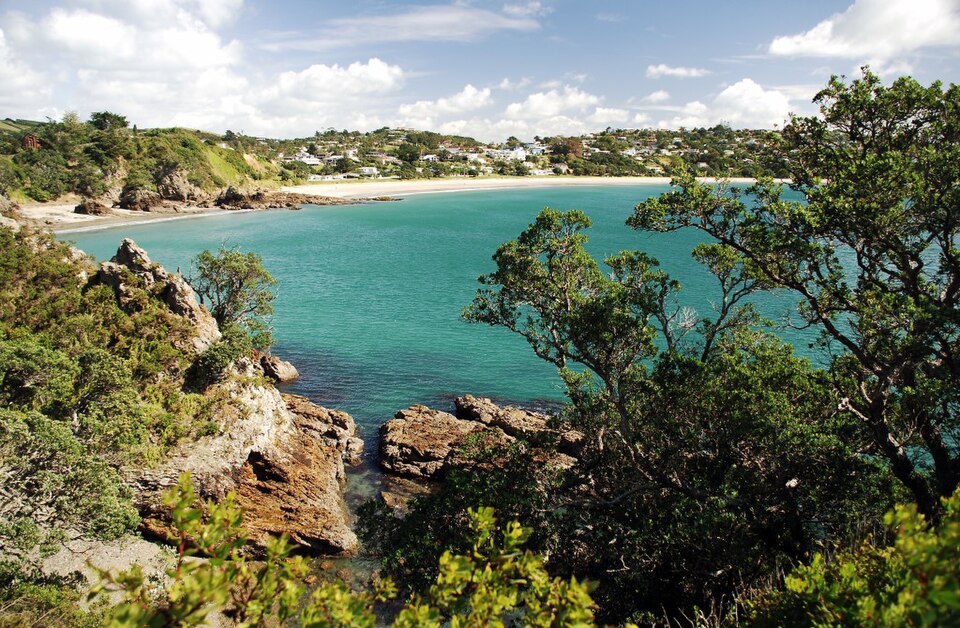
- Stony Batter — Eastern Waiheke
At the eastern end of the island, Stony Batter preserves Second World War gun emplacements and a network of tunnels. A short, mostly open walk from the car park leads to them. Bring a torch for the tunnels and expect wind on the exposed hillside. - Connells Bay Sculpture Park — Connells Bay
A private garden of modern sculpture, set among bush and farmland above the water. It can be seen only on guided tours, which last a couple of hours and need to be booked well ahead. Check the park's own site for dates and arrangements before planning the day around it. - Waiheke Island Historic Village — Waiheke Island Historic Village, near Ostend
A small museum complex in an old woolshed, with a restored cottage from the 1930s, a photograph gallery and a textile display. It is a modest place, but a useful way to see everyday island life before the vineyards and holiday homes arrived. - Onetangi Beach — Onetangi
Onetangi is a long, open bay on the north coast, popular for swimming on warm days and for walking at low tide. A small settlement of shops and beach bars sits behind it, and native bush grows in the nearby reserve. It gets busy on summer weekends.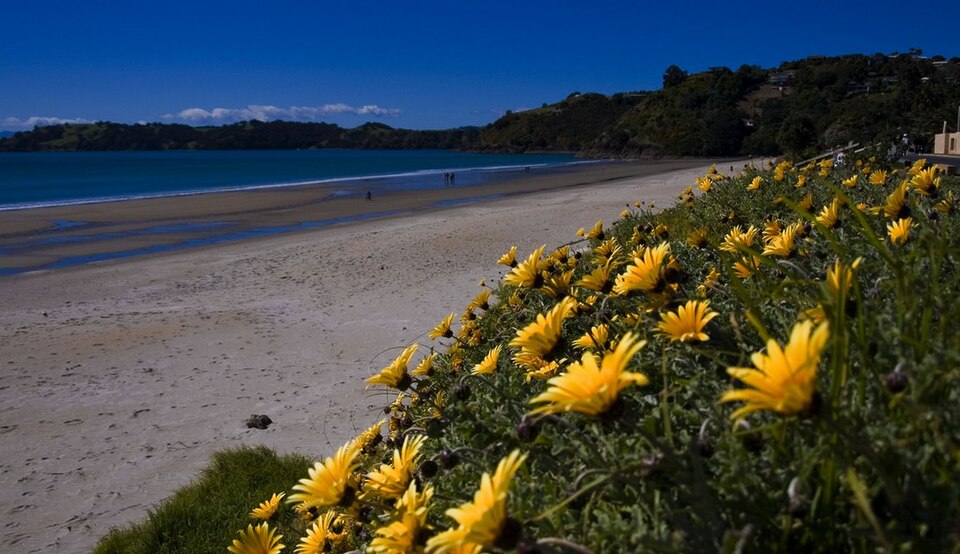
Culture
Waiheke Island's culture is layered. Underneath is Māori history, and Ngāti Pāoa remain tied to the island after generations of living here, fighting, leaving and returning. Place names such as Matiatia, Onetangi and Oneroa are Māori, and visitors will hear them said with care on the ferry and in local conversation. Then came sealers, whalers and farmers, and later artists, potters and retirees looking for a calmer life near the city. That mix explains why a small island has so many galleries, open studios and garden sculptures, and why a market stall can sit beside a serious winery.
Island life also runs on a few practical habits. Many homes are built as 'baches', informal holiday houses in the New Zealand style, and summers fill them with families who swim, fish and barbecue. Because the island has no mains water, conserving it is a shared courtesy, not a fashionable gesture. Accommodation hosts may ask guests to keep showers short and to avoid wasting water.
Wine is central to the visitor economy, with tastings that suit lazy afternoons more than competitive drinking. The tone in cafés and cellar doors is relaxed, informal and friendly, and people are generally happy to give directions or talk about the island.
If you pass private gardens, sculptures or driveways, stay out unless a sign or a booked tour says visitors are welcome, and leave any gate exactly as you found it.
What to wear
Waiheke Island has no single island costume, but the traditional dress of its Māori people is well established. The korowai is a cloak woven from harakeke (New Zealand flax), often finished with feathers or tassels, and worn at ceremonies, graduations and important gatherings. Piupiu, skirts of rolled flax strips, are worn for kapa haka performance, and carved pounamu (greenstone) pendants are worn as personal and family treasures. These pieces are for specific occasions, and visitors will mostly see them at cultural events rather than in the street.
Day to day, islanders dress for comfort. Expect shorts, linen shirts, sundresses, sandals and sun hats in summer, with wool jumpers, light waterproof jackets and boots once the wind picks up. Wine-tasting afternoons are smart-casual at most, and nobody dresses formally for a cellar door.
Visitors should plan around weather and terrain. Summers are warm and humid, so light, breathable clothes, a hat and strong sun protection are essential, since the sun can be fierce even on a breezy day. Bring a light layer for the ferry and for evenings, and a waterproof jacket in case rain arrives. The island is hilly, with gravel paths and uneven ground at places such as Stony Batter, so sturdy walking shoes or trainers are better than flip-flops. Bring swimwear and a towel for the bays. If you are invited onto a marae, follow your hosts' lead on dress and footwear.
What to eat
- Local red wine tasting — Cellar doors across the island, including around Onetangi and the eastern bays
Waiheke is known for red wines that do well in the island's warm, dry summers and stony soils. Tastings come with small plates, so they work as a long, easy lunch. Book ahead in summer, and arrange a driver or tour. - Fresh fish and oysters — Seafood restaurants and bars in Oneroa
Seafood is a natural fit for an island in a gulf. Many restaurants in Oneroa and around the bays serve local fish, oysters and chowder, often with a sea view and a glass of island wine on the side. - Guinness pie — Irish-style pub in Ostend
A hearty pub dish of slow-cooked beef in a dark stout gravy under pastry. It is a comfort meal for cooler or wetter days, served in an Irish-style pub, where Guinness is on tap. - Cheese, fruit and deli picnic — Delis and groceries in Oneroa and Ostend
A quick way to eat well is to assemble a picnic from a good deli, with local cheese, fruit, vegetables and ready meals. Take it to a beach or a sunny grassy spot, and carry water with you. - Beach bar lunch — Beach bars along Onetangi
At Onetangi, informal bars serve simple food on the sand side of the road: fish, chips, salads and cold drinks. It suits swimming days, with sandy feet welcome, and gets crowded on warm summer weekends.
Plan it
Best time. November to March for warm, humid summers and swimming weather, though December to March can bring dry spells that strain the island's rainwater supplies. Winters are mild, with rare frost, which suits quiet walks and fewer crowds.
How long. 2–3
Getting there. Fly into Auckland Airport, then travel to the downtown ferry terminal. Passenger ferries run to Matiatia on Waiheke, taking about 40 minutes, with frequent daytime sailings and fewer late at night. Car ferries also operate, so check the operator's timetable before travelling.
Budget. mid
Tips
- Book winery tastings and sculpture tours well ahead, especially in summer and on weekends
- Check the last ferry back to Auckland before settling in for the evening
- Carry a refillable water bottle, as public fountains are scarce and water is limited
- Bring a layer and a sun hat, as the weather changes quickly on the gulf
- Hire a bike, bus pass or driver rather than relying on walking, because the island is hilly
Etiquette
- Use water sparingly, as the island depends on collected rainwater
- Stay out of private gardens and driveways unless invited or on a booked tour
- Take rubbish with you from beaches and walks
Nearby
Sources
- Wikidata Q909136 (CC0)
- Wikipedia: Waiheke Island (rev 1386392788) (CC BY-SA 4.0)
- Wikivoyage: Waiheke Island (rev 5432975) (CC BY-SA 4.0)
- Photo: Oneroa.jpg (CC BY 3.0)
- Photo: Relief map of New Zealand (CC BY-SA 4.0)
- Photo: Relief location map of Pacific Ocean (CC BY 3.0)
- Photo: Waiheke Island seen from above west (Public domain)
- Photo: Onetangi Beach (CC BY 3.0)
- Photo: Sandcastle on Waiheke Island New Zealand (Public domain)
- Photo: Palm Beach New Zealand (CC BY 3.0)
- Photo: Onetangi Reserve (CC BY-SA 4.0)


