Cape Kidnappers
Cape Kidnappers, New Zealand
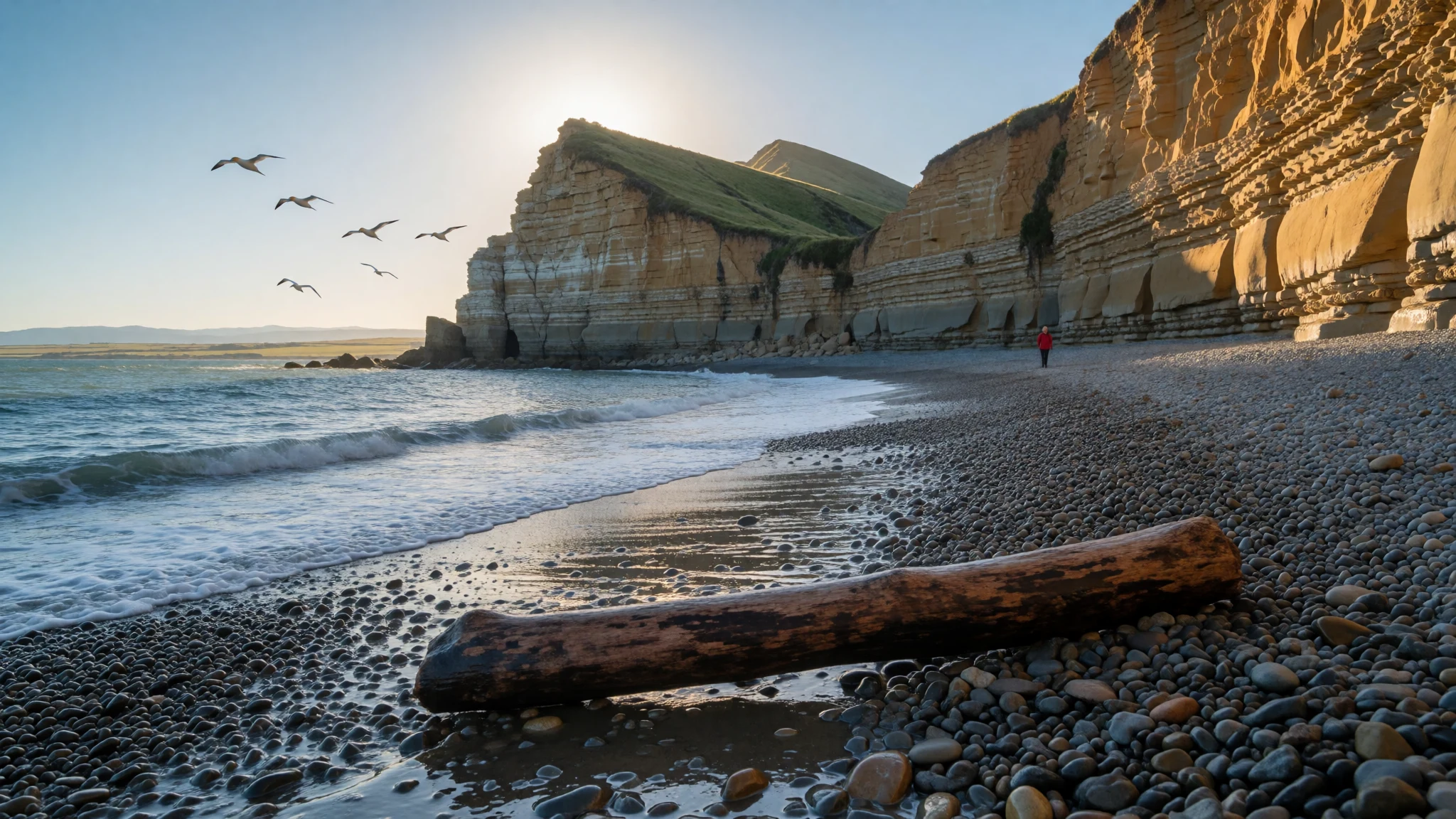
Cape Kidnappers is a working sheep-farm headland on Hawke Bay where thousands of gannets nest on the cliff-top, reached on foot along the shore.
The place
Cape Kidnappers, officially Cape Kidnappers / Te Kauwae-a-Māui, is the hooked headland that closes the southern end of Hawke Bay on the North Island's east coast. A narrow peninsula about 8 km long pushes out into the Pacific, and the cape sits roughly 20 km south-east of Napier. The cliffs are built from soft, layered material: sandstone, conglomerate, mudstone, river gravel, pumice and silt. That mix explains the crumbling faces and the slips that sometimes close the shoreline route. Behind the cliffs the land is farmed, with sheep and cattle on steep green slopes and a golf course set between the coastal village of Te Awanga and the point. Road access stops at Clifton, which is where most visitors begin the trip to the colony. The draw is the birds. More than 6,500 pairs of Australasian gannets breed here, on the mainland rather than on an offshore rock, so people can walk to them. Since 2007 a predator-proof fence has crossed the peninsula, and a pest-control programme behind it keeps stoats, ferrets and feral cats from coming back. Inland, the Hawke's Bay plains are good farming country, with Napier and Hastings as the nearest towns. Wind, tide and rain decide how a day here goes, and the headland offers very little shade.
Its story
Cape Kidnappers took its English name from an afternoon in October 1769, when James Cook's ship Endeavour lay off this coast. A fishing canoe came alongside to trade fish. Taiata, a boy of about twelve who travelled with the Tahitian navigator Tupaia, was leaning over the ship's side when men in the canoe grabbed him and tried to paddle off. Cook's journal says the crew fired on the canoe, killing two Māori and wounding a third. The boy took his chance, jumped into the sea and was lifted aboard unhurt. Cook called it a daring attempt at abduction, and the word went onto the chart. Ngāti Te Whatuiāpiti remember the same event differently. In their account, a chief named Te Rangikoianake and his son Hawea went out to free what they believed was a Māori child held against his will on a strange vessel. The Crown acknowledged that perspective in the Heretaunga Tamatea Deed of Settlement in 2015. Both accounts agree on the shape of the day: a misunderstanding across two cultures that ended with gunfire and with people dead. Today the cape carries a dual name, English and Māori, which keeps both histories on the map. Anyone standing on the headland is looking at a place where first contact went badly wrong.
What to see
- The gannet colony on the plateau — Cape Kidnappers headland
The main colony sits on flat ground near the tip of Cape Kidnappers, with nesting adults packed close together in spring and chicks being fed by their parents. It is loud, close and smelly, and the views back along Hawke Bay are wide. Most visitors walk or join a tour from Clifton.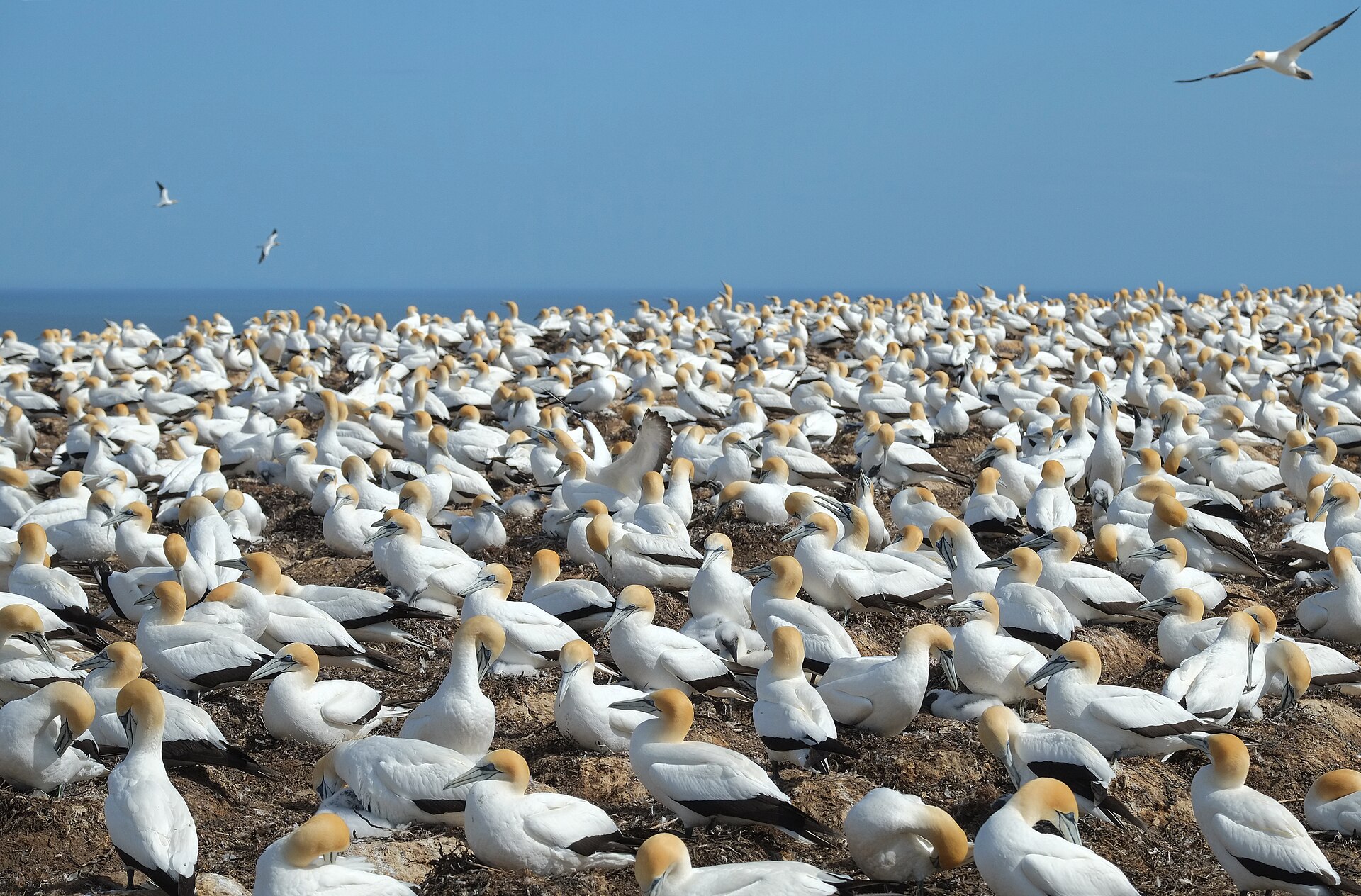
- Black Reef colony — Just west of Cape Kidnappers
A second, smaller gannet colony lies just west of the cape at Black Reef. Photographs show it filled with nesting adults in spring. It is usually seen on the way to or from the main colony, so allow a few minutes there rather than a separate trip.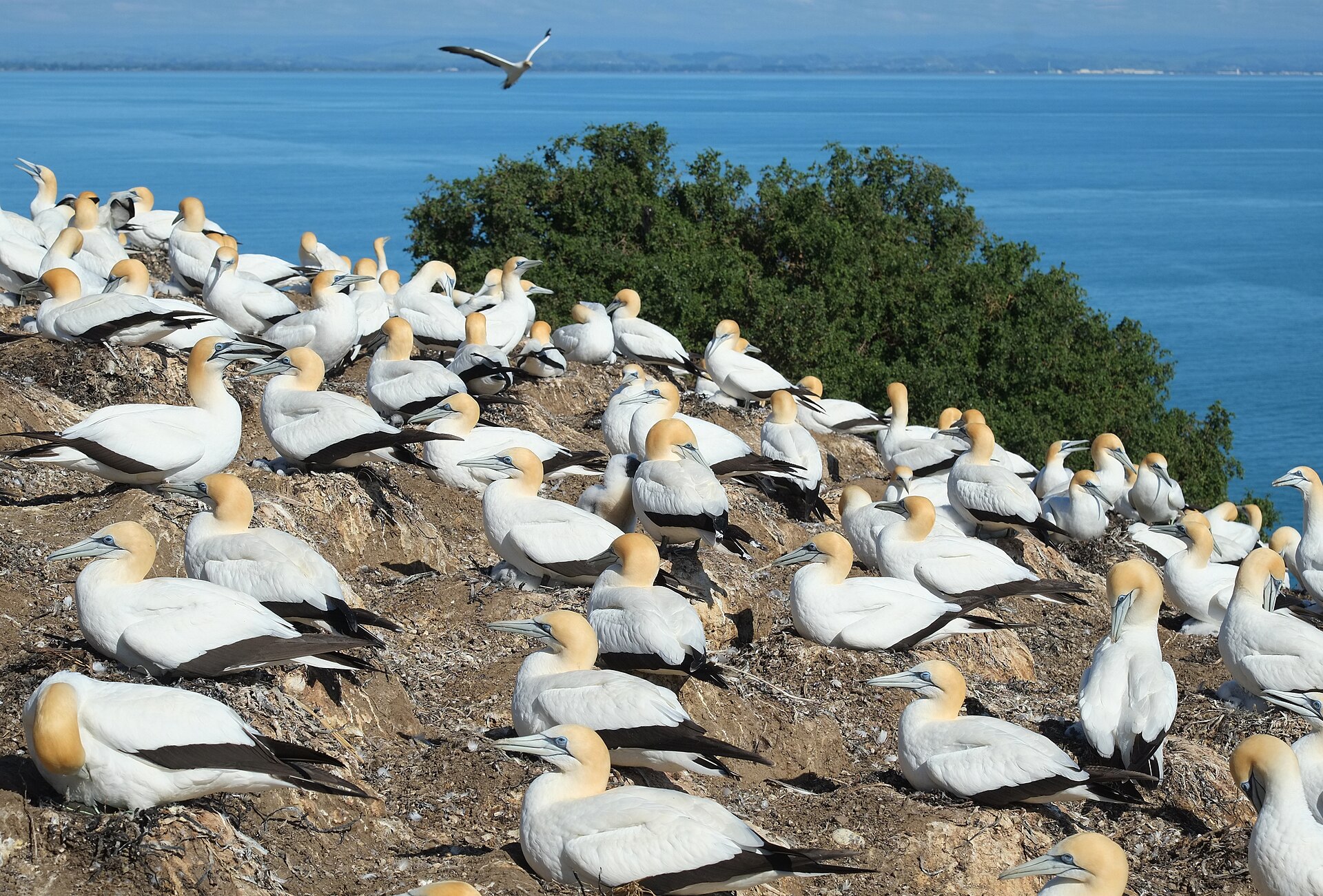
- Te Awanga coast and wineries by bicycle — Te Awanga
Te Awanga has a dedicated cycleway along the coast linking its wineries, and a local firm rents classic beach-cruiser bikes for it. The riding is easy and flat, which suits a slow afternoon after the colony. Check the operator's current details before planning around it. - Te Mata Peak — Near Havelock North
A road runs to the top of Te Mata Peak, near Havelock North, so the panorama over the plains, the bay and the farmland toward the cape needs no hiking. Go on a clear day, and expect wind at the summit. It works well on the morning after a cliff walk. - National Aquarium of New Zealand — Marine Parade, Napier
On Marine Parade in Napier, the aquarium has a reef tank and a spiralling travelator that carries visitors beneath a large oceanarium, giving an underwater feel without getting wet. It is a sensible fallback for rain or a high tide that rules out the shoreline walk. Check the official site for opening details.
Culture
Cape Kidnappers sits in a region where Māori and British histories meet, and the double name on the map reflects that. Te Kauwae-a-Māui is the Māori name, and Ngāti Te Whatuiāpiti are among the iwi (tribes) with ties to the area. Their account of the 1769 encounter was formally recognised in a 2015 settlement with the Crown. Hawke's Bay was also one of New Zealand's original colonial provinces, and it still keeps its own anniversary day, Hawke's Bay Show Day, held on the Friday before Labour Day in late October. Outside that heritage, the culture of the peninsula is mostly farming and conservation. The land around the cape and the colony is made up of large working farms with sheep and cattle, and the fence across the peninsula exists because local people and agencies chose to protect the birds and the ground they nest on. Wine, cycling and golf shape the nearby coast, while Napier and Hastings supply the shops, markets and museums. Conversations here often turn to weather, tides and whether the track is open. People tend to be relaxed and direct, and they value anyone who has read the conditions before heading out. When walking to the gannets, keep to the marked route, stay well back from the nesting birds, close every farm gate behind you and never touch or feed the chicks.
What to wear
Cape Kidnappers has no single costume of its own, but the Māori tradition behind the area includes the kākahu, a cloak woven from harakeke (flax), and the korowai, a cloak decorated with feathers. These are worn at formal gatherings, ceremonies and graduations, and are treated with great respect. Visitors will rarely see them on the headland itself, but they appear at community events and cultural venues in the region. What people wear day to day is practical and outdoorsy: merino and other wool layers, shorts and boots for farm work, windproof jackets, caps and sun hats, with smart-casual shirts and dresses for the wineries and restaurants of Te Awanga and Napier. For a visit, plan for variable weather and an exposed walk. Wear sturdy closed shoes with a good grip, as the shoreline route involves uneven ground, wet rock and loose stones. Carry a windproof layer, a waterproof jacket, a hat and strong sunscreen, because shade is scarce and the sun is harsh. Quick-drying trousers or shorts are more sensible than jeans. There are no dress codes for the colony. If invited onto a marae (a Māori meeting ground) as part of a tour or event, dress modestly and follow the hosts' guidance on shoes and protocol.
What to eat
- Hawke's Bay wine with local cheese — Cellar doors around Te Awanga and Hastings, or a Napier wine tour
The region is known for Syrah, Merlot, Chardonnay and Sauvignon Blanc, often tasted alongside local cheeses. Cellar doors around Te Awanga and Hastings serve tastings, and wine tours run from Napier. Tasting and driving do not mix, so book a tour or a designated driver. - Fish and chips on the seafront — Takeaway shops near Marine Parade, Napier
Fried fish, usually a local catch, with thick chips and wrapped in paper, is the classic easy meal after a day outdoors. Eat it on a bench with the sea in view and keep an eye on gulls. - Roast or grilled lamb — Country eateries and restaurants in Hastings and Havelock North
With sheep grazing across the peninsula, lamb is an obvious regional dish, served as roasted shoulder, chops or slow-cooked pieces with seasonal vegetables. Ask what the kitchen sources locally and whether the cut is the day's special. - Seasonal fruit and vegetables — Roadside stalls and farmers' markets around Hastings
The Hawke's Bay plains are farmland, and in season stalls sell fresh fruit and vegetables by the roadside. It is simple, cheap picnic food for the walk, though availability depends on the time of year. - Hāngī — Cultural tours and community events in the Hawke's Bay region
Hāngī is Māori food cooked slowly in an earth oven, typically meat and root vegetables with a smoky, tender finish. It is usually shared at community events and with cultural tours rather than found daily, so ask local visitor information about opportunities.
Plan it
Best time. October to March, in spring and summer, when the colony is active with nesting adults and chicks. Winter is cooler and the track and sea conditions are less predictable. Walking depends on low tide, so plan the day around tide times in any season.
How long. 1–2
Getting there. To get there, fly into Hawke’s Bay Airport on the north-western edge of Napier. Air New Zealand runs everyday connections from Auckland, Wellington, and Christchurch. From Napier it is a drive of about 20 km south-east via Hastings to Clifton, where the road ends and the colony walk or tour begins. Coaches serve the region, and the main highway runs through Napier and Hastings.
Budget. mid
Tips
- Walking access along the shore depends on low tide, so check tide times and the current track status with an operator or the official source before leaving
- Book tours and any colony access ahead in the busy summer months, and check the official site for current details rather than relying on old timetables
- Carry plenty of water, sun protection and a windproof layer, as the headland has little shade and exposed stretches
- Check recent weather and slip reports, as the soft cliffs have closed the shoreline route before
- Cycle or tour the Te Awanga wineries on a separate half-day when tides do not suit the walk
Etiquette
- Stay on the marked route and keep well back from nesting gannets and chicks
- Close farm gates and leave livestock alone, since the land is privately worked
- Take all rubbish home and do not disturb the predator-proof fence
Nearby
Sources
- Wikidata Q496590 (CC0)
- Wikipedia: Cape Kidnappers (CC BY-SA 4.0)
- Wikivoyage: Hawke's Bay (CC BY-SA 4.0)
- Cape Kidnappers, New Zealand — Nicolas Aub (CC BY 2.5)
- Cape Kidnappers — ShakyIsles (CC BY-SA 4.0)
- Relief map of New Zealand — M.Bitton (CC BY-SA 4.0)
- Two sheep grazing on the steep slope towards Cape Kidnappers — Pseudopanax (Public domain)
- Cape Kidnappers landslide — BaliPablo (CC BY-SA 4.0)
- Main gannet colony on plateau — Pseudopanax (Public domain)
- Gannet feeding chick in main colony — Pseudopanax (Public domain)
- Black Reef gannet colony — Pseudopanax (Public domain)


Wildlife
- Australasian gannet (animal)
Think of the Australasian gannet, also called tākapu, as a seabird that slowly grows whiter with age. Young birds are mottled, dark on top and pale underneath, and it takes five years before they look fully grown. At Cape Kidnappers, the breeding colony sits on the mainland, so you can reach the birds on foot. Watch from a polite distance, keep your voice low, move gently, and never feed them.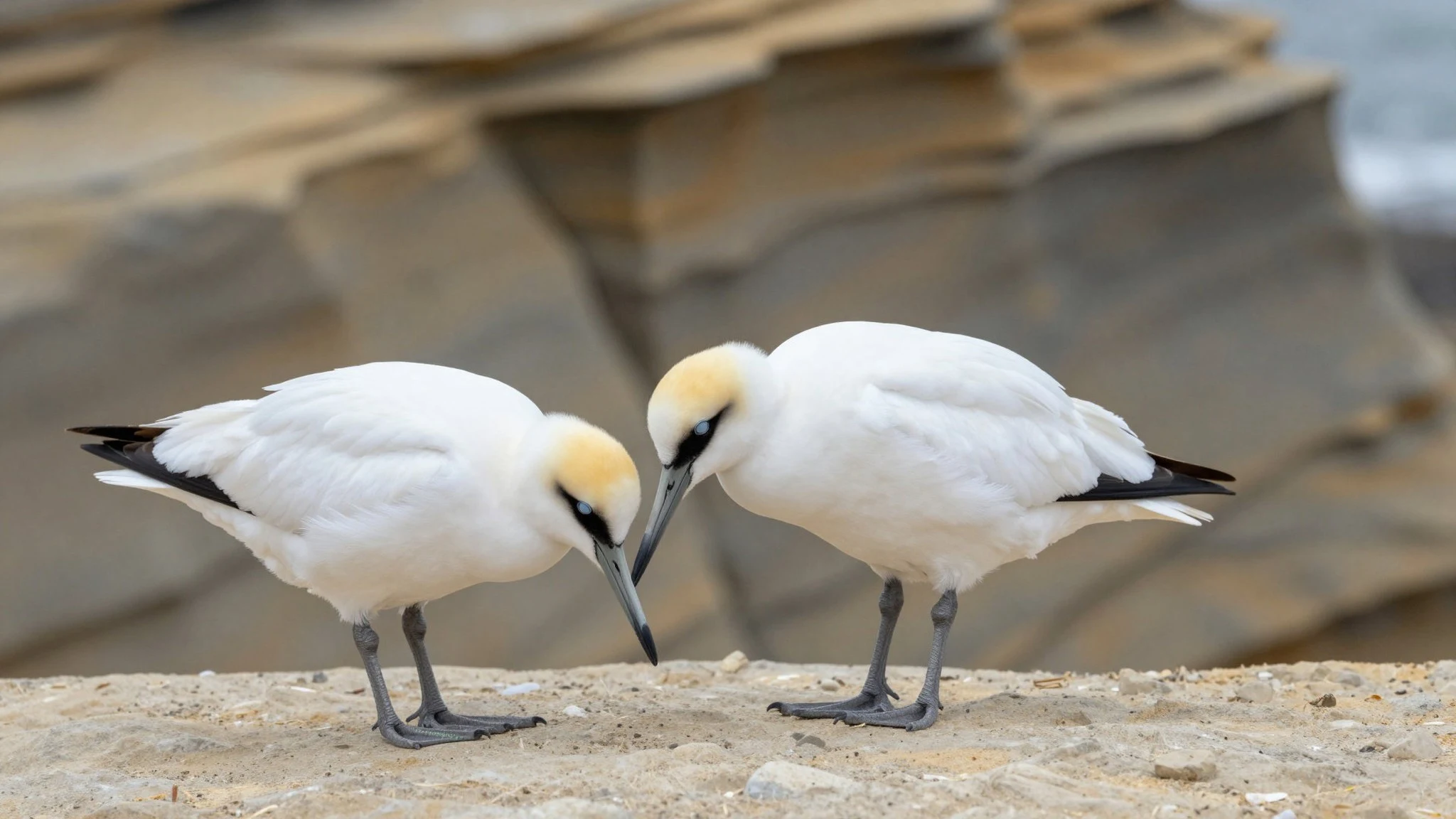
- Australasian gannet (bird)
Think of the Australasian gannet, also called tākapu, as a seabird that slowly grows whiter with age. Young birds are mottled, dark on top and pale underneath, and it takes five years before they look fully grown. At Cape Kidnappers, the breeding colony sits on the mainland, so you can reach the birds on foot. Watch from a polite distance, keep your voice low, move gently, and never feed them.